
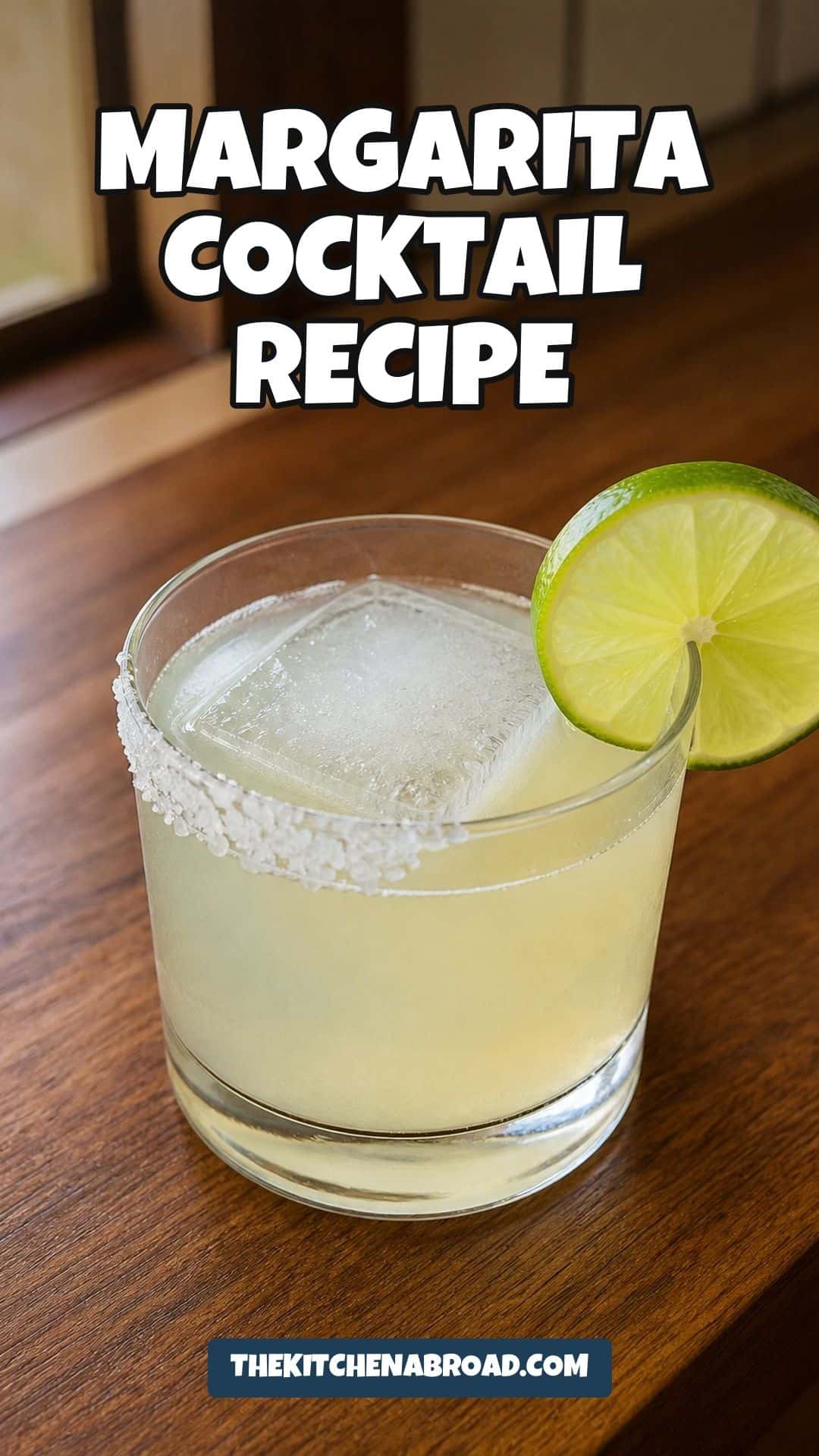
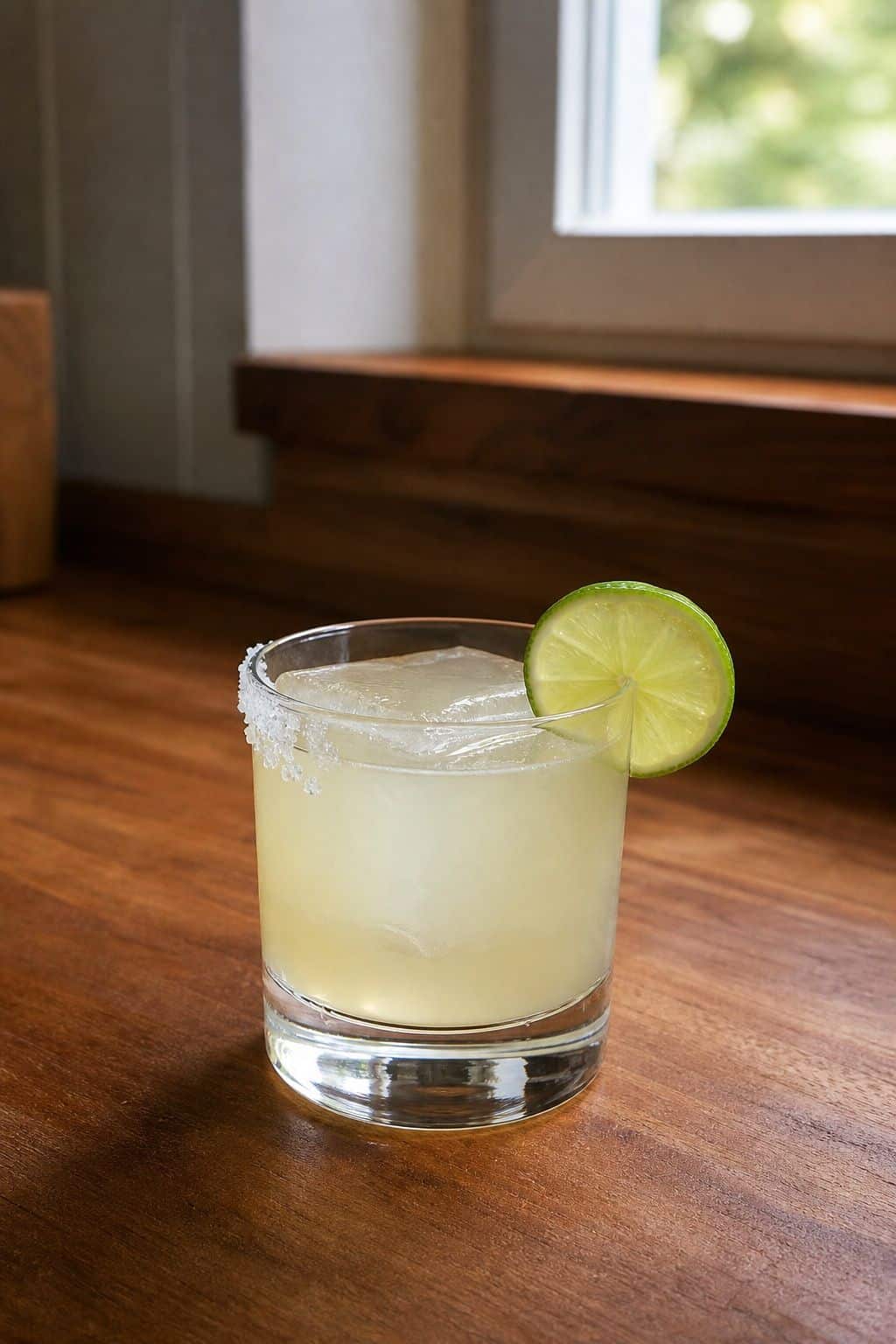
A classic margarita recipe is a 2:1:1 build: 2 oz blanco tequila, 1 oz Cointreau, 1 oz fresh lime juice. Shake hard with ice, double strain over fresh ice in a half-salt-rimmed rocks glass, garnish with a lime wheel. Total time, about 3 minutes from start to first sip.
The classic margarita traces back to a 1948 Acapulco vacation house, where a Dallas socialite named Margarita Sames mixed tequila, Cointreau, and lime juice for the friends she had on the patio. The spec that came out of that party (2 parts tequila, 1 part orange liqueur, 1 part lime) became the cocktail’s canonical ratio, and seventy-eight years later it is still the one to learn first. The version below is built on that 2:1:1 baseline with permission to dial it tarter, sweeter, or stripped down to a Tommy’s, depending on the night.
Gear That Helps Here
A Boston shaker, a Hawthorne strainer, a hand juicer for the limes, and a rocks glass with room for one big ice cube. Cointreau is the bottle that does most of the work.


Recommended Reads
Where the Margarita Came From
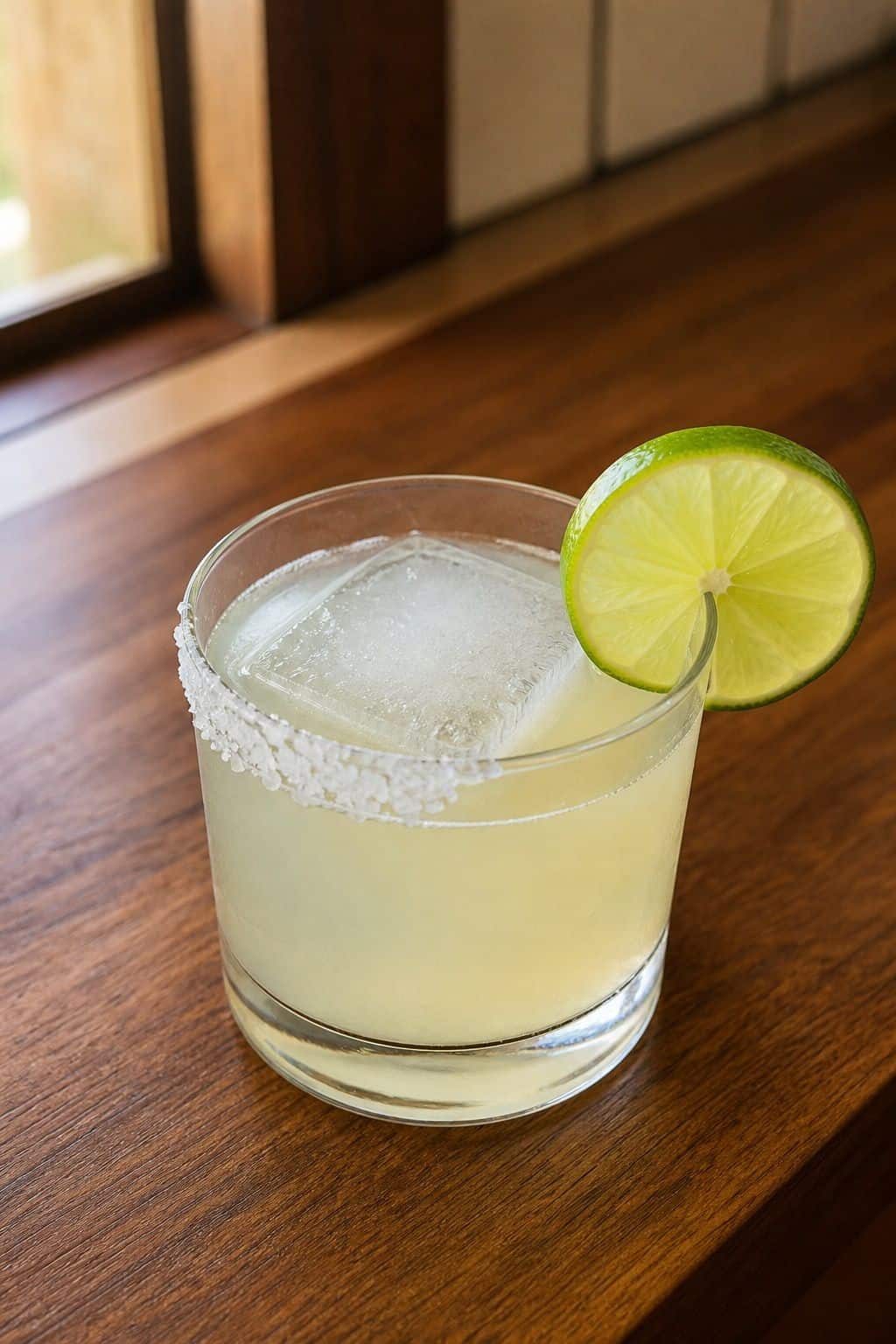
There are a half-dozen origin stories floating around the margarita, and the one cited most often by drinks historians places the cocktail in Acapulco in 1948. Margarita Sames, a wealthy Dallas hostess on holiday with her husband, threw a poolside party at the family’s vacation house and started mixing tequila with Cointreau and fresh lime for her guests. One of those guests was Tommy Hilton, the hotelier, who liked the drink enough to put it on the bar list at his properties.
From there it spread. By the 1950s the drink had a name (whether Sames invented it or it predated her, depending on which historian you read), and through the next two decades it became the standard tequila cocktail in American bars. The 2:1:1 ratio she used at that Acapulco house is the one most modern recipes still default to, including this one.
The competing stories (a Tijuana bartender in 1938 named Carlos Herrera, a Galveston socialite in 1948, a Daisy cocktail variation that predates them all) keep cocktail historians arguing, but they all converge on the same thing: tequila, orange liqueur, lime juice. Once you know the ratio, the origin story matters less.
A Few Notes on the Ingredients
Blanco (silver) tequila is the default for a classic margarita. It is clean, citrus-forward, and stays out of the way of the lime. Reposado works if you want a softer, oakier drink, but it changes the character; once you go reposado you are making a slightly different cocktail. Stick with a 100% agave bottle in either case (Espolòn, El Jimador, Casamigos, Cascahuín all sit in the right range for a home bar). Mixto tequila with caramel coloring and added sugar will read flat in a glass this small.
Cointreau is the orange liqueur of the gold standard. It runs 40% ABV, which is drier than most triple secs, and that dryness is what keeps the margarita from sliding into syrup territory. Triple sec works in a pinch, Grand Marnier gives a richer cognac-driven version (technically a Cadillac margarita at that point), but Cointreau is what gets reached for at every cocktail bar in the country for a reason. Buy a 375 ml bottle if you’re not sure you’ll use it; the 750 ml lasts forever once you start making these.
Fresh lime juice is non-negotiable. Bottled lime cordial, the green plastic squeeze bottle, sweet-and-sour mix: all of these will produce something margarita-adjacent but not the actual drink. Two medium limes will yield about an ounce of juice. Roll them on the counter under your palm first to break the membranes, then squeeze. If you want to sweeten beyond what the Cointreau provides, agave nectar (1:1 with water if it is thick) reads more natural than simple syrup and tracks with the spirit. Half an ounce of agave is plenty.
Recipe: Margarita
Prep time: 3 minutes | Total time: 3 minutes | Serves: 1
Ingredients
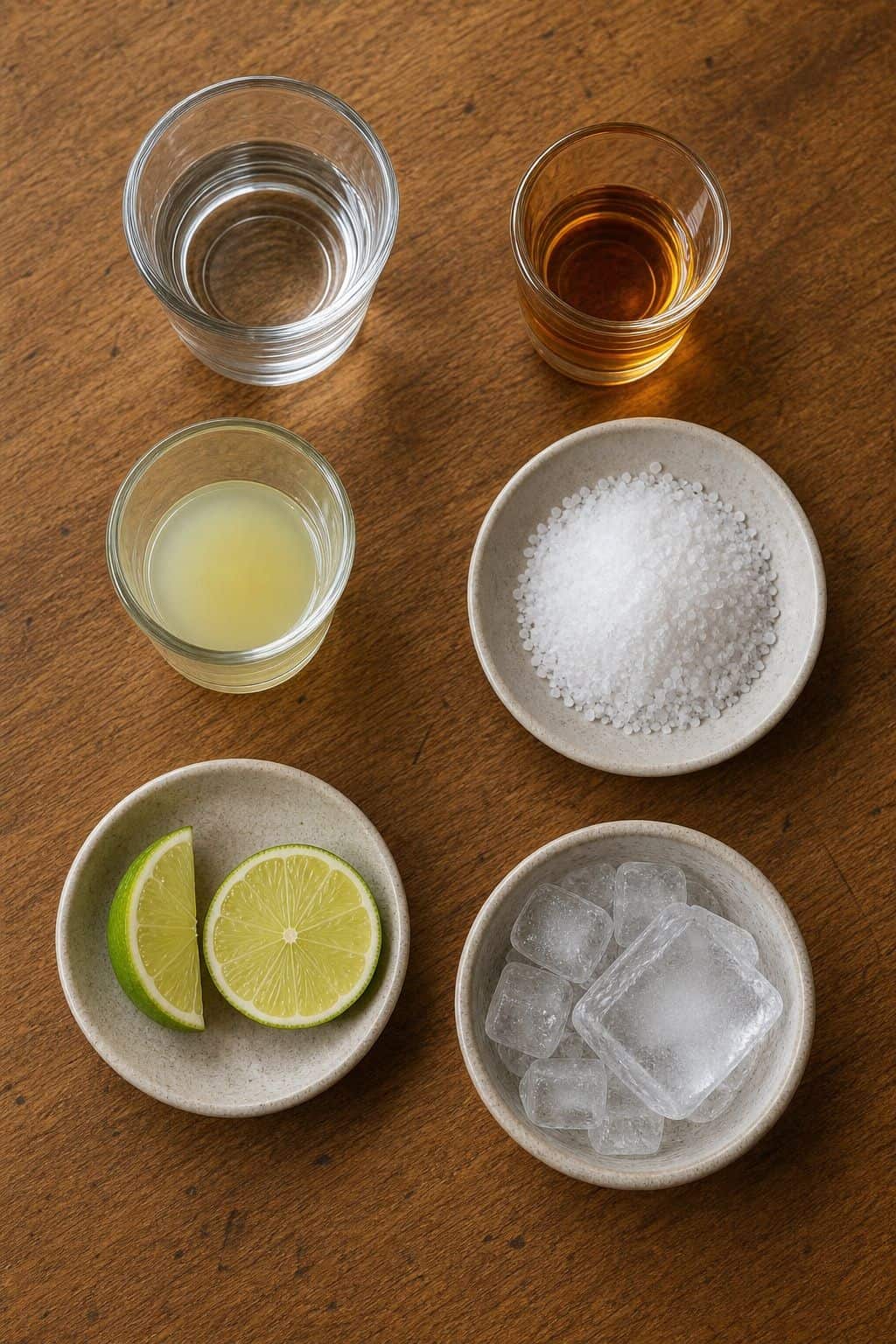
- 60 ml (2 oz) blanco tequila, 100% agave
- 30 ml (1 oz) Cointreau
- 30 ml (1 oz) fresh lime juice, from about 2 medium limes
- Kosher salt or flaky sea salt, for the rim
- 1 lime wedge, for the rim
- 1 lime wheel, for garnish
- Ice cubes (plus 1 large cube for the glass, if you have one)
Instructions
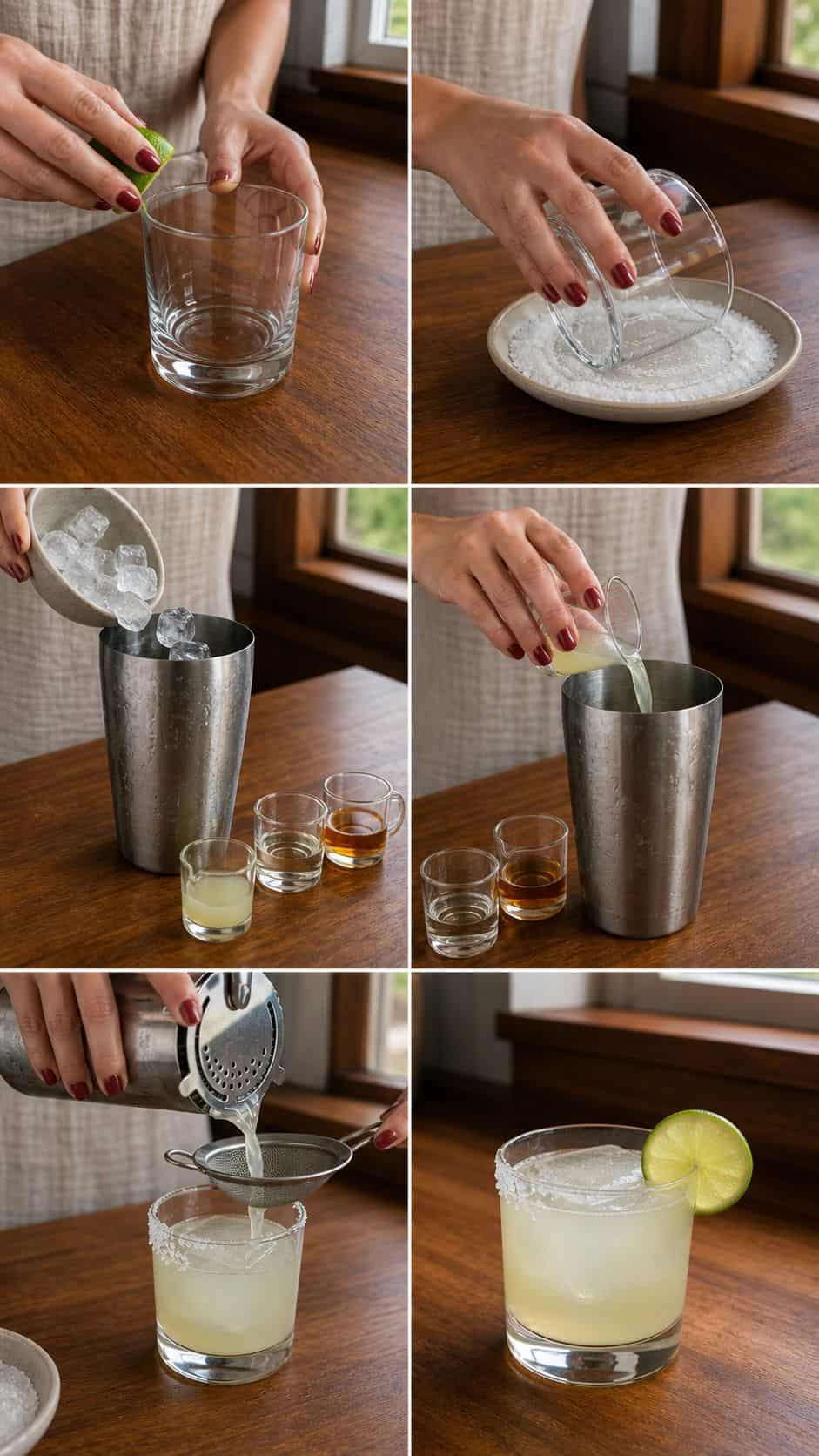
- Pour a thin layer of kosher salt onto a small plate. Run a lime wedge around the outer edge of half the rocks glass (more on the half-salt rim below), then press that wet half-rim into the salt and turn the glass gently so the crystals stick in an even line. Set the glass aside; if you want to go the extra mile, drop a single large ice cube in now and let it chill the glass while you build.
- Fill a Boston shaker with ice (cubes, not crushed; you want dilution that is controlled, not panicked). Pour in 60 ml (2 oz) blanco tequila, 30 ml (1 oz) Cointreau, and 30 ml (1 oz) fresh lime juice.
- Seal the shaker and shake hard for 12 to 15 seconds. You are looking for the metal to frost over and your hand to ache slightly. A weak shake is the most common home-bar mistake; commit to it.
- Double strain through a Hawthorne strainer and a fine mesh strainer into the prepared rocks glass over fresh ice. The fine mesh catches the small ice chips and any lime pulp; the drink should land clear and cold.
- Float the lime wheel on top, or notch it and perch it on the rim. Serve immediately; a margarita over-dilutes fast once it is sitting on the bar.
Notes
The biggest pitfall at home is under-shaking. A 12 to 15 second shake gives the drink the right amount of dilution to bring the tequila and lime into balance; a polite 5-second wrist flick leaves the drink hot, separated, and harsh on the first sip.
The second pitfall is rim salt that is too fine. Table salt over-salts the sip and dissolves into the liquid the moment ice melts past the rim. Kosher or flaky sea salt holds its line and gives the brief saline contrast the drink is built around.
A margarita does not store. Mix and serve. If you are scaling up for a group, batch the spirits ahead (see the pitcher math below) and shake or stir individual servings to order so the dilution stays right.
Tips and Variations
The 3:2:1 Tarter Build
If 2:1:1 tastes too sweet to you (especially with a softer tequila), shift to a 3:2:1 spec: 1.5 oz tequila, 1 oz Cointreau, 0.5 oz lime. This is the older “Cadillac” ratio that some bartenders still default to. The drink reads boozier and slightly less acidic; the orange comes forward.
The other direction is to keep 2:1:1 and add 0.25 oz of agave nectar to sweeten without changing the structure. Either is fine; pick based on whether you want more spirit or more sugar.
Tommy’s Margarita (No Orange Liqueur)
The Tommy’s margarita was invented at Tommy’s Mexican Restaurant in San Francisco in the 1980s by Julio Bermejo. It strips the Cointreau out entirely and replaces it with agave nectar. The build is 2 oz blanco tequila, 1 oz fresh lime, 0.5 oz agave nectar (thinned 1:1 with water), shaken hard and served on the rocks with no salt rim.
If you want to taste a high-quality tequila with as little in the way as possible, this is the spec. It reads cleaner, more agave-forward, and is the bartender’s-tequila-night drink in most cocktail bars now. Use a tequila you actually like neat.
Batch Math for a Pitcher of 8
Scale the 2:1:1 spec by 8 and you get 16 oz tequila, 8 oz Cointreau, 8 oz fresh lime juice. Combine in a pitcher and add 6 to 8 oz of cold water to account for the dilution a shaker normally provides; without it the drink will read hot when you pour over ice.
Refrigerate the pitcher for at least 30 minutes before guests arrive so it pours cold. Salt-rim the glasses ahead and line them up on a tray. Pour over fresh ice as people order; if you pour into pre-iced glasses too far ahead, the cubes melt and the drink reads watered down by the time anyone picks it up. Serve a Paloma alongside as the second-bottle option for the tequila drinkers in the room.
The Half-Salt Rim Is the Right Move
A full salt rim sounds dramatic and looks great but commits the drinker to a salty sip every time they go in. A half-salt rim (salt only on one half of the glass) lets the drinker choose: salt side for the savory contrast, clean side for a straight sip. PUNCH and several New York cocktail bars have used this for years.
To do it cleanly, tilt the glass at a 45-degree angle and run the wet lime wedge along only the outer edge of one side. Then press only that side into the salt. The line should be sharp; the un-salted half is just the rim.
Frozen vs On-the-Rocks (When Each Is Right)
Frozen margaritas are not the same drink as on-the-rocks. The blender adds a ton of water (from the crushed ice) and mutes the citrus and the tequila. Frozen is the right call when it is 95 degrees and you want a slushie that happens to have tequila in it, or when you are entertaining and want to serve a tray of pre-made drinks that do not require shaking each one.
On the rocks is the right call any other time. The drink is brighter, more balanced, and tastes like the ingredients you put in it. For the same reason, a frozen margarita asks for slightly more tequila and slightly more lime than the 2:1:1 base; the dilution swallows some of the flavor and you have to compensate. For a seasonal twist on the rocks version, the Apple Cider Margarita is where this spec goes in the fall.
What to Serve It With
A margarita is built for salty, citrus-forward food. Chips and guacamole are the obvious move and remain the right one. Beyond that, anything with lime and chile pairs well: shrimp tacos, fish tacos, ceviche, esquites, carne asada. The drink’s acid cuts richness, so a plate of carnitas or al pastor reads especially well with one in hand.
For a cocktail-party menu, pair the margarita with a tray of pork tinga tostadas, a bowl of warm queso fundido, and a citrus-dressed slaw. Save the heavier tequila cocktails like the Long Island Iced Tea for later in the evening; the margarita is the opening drink that sets the table.
Frequently Asked Questions
What is the best ratio for a margarita?
The modern home-bar default is 2:1:1 (2 oz tequila, 1 oz orange liqueur, 1 oz fresh lime). Older bar manuals run a 3:2:1 with more tequila and less acid for a boozier drink. Both are correct; 2:1:1 is the friendlier starting point.
What tequila is best for margaritas?
A 100% agave blanco (silver) tequila in the $25 to $45 range is the sweet spot. Espolòn Blanco, El Jimador Blanco, Casamigos Blanco, and Cascahuín Blanco all work. Skip anything labeled “mixto” or with caramel coloring; the added sugar makes the drink read flat.
Cointreau vs triple sec: which is better?
Cointreau, almost every time. It runs 40% ABV and is drier than most triple secs, which keeps the drink balanced rather than sweet. Triple sec works as a budget swap (and not every triple sec is bad), but a bottle of Cointreau is worth the upgrade if you make margaritas more than twice a year.
Do you have to use simple syrup in a margarita?
No. The Cointreau provides enough sweetness on its own at the 2:1:1 spec. If you find the drink too tart (especially if your limes are very sharp), add 0.25 oz of agave nectar, which reads more natural than simple syrup. Tommy’s margarita drops the Cointreau and uses 0.5 oz of agave instead.
Should a margarita be shaken or stirred?
Shaken, hard. The citrus juice means the drink needs aeration and quick dilution that only a shaker provides. A stirred margarita reads heavy and flat. Shake 12 to 15 seconds until the shaker frosts, then double strain over fresh ice.
Key Takeaways
- The classic margarita spec is 2:1:1: 2 oz blanco tequila, 1 oz Cointreau, 1 oz fresh lime juice.
- Fresh lime juice is non-negotiable; bottled lime ruins the drink.
- Cointreau is the orange liqueur of the gold standard; triple sec only as a budget swap.
- Shake hard (12 to 15 seconds) and double strain over fresh ice in a half-salt-rimmed rocks glass.
- For a Tommy’s, drop the Cointreau and use 0.5 oz of agave nectar instead.
- For a pitcher of 8: 16 oz tequila, 8 oz Cointreau, 8 oz lime, plus 6 to 8 oz of water to mimic shaker dilution.
Final Thoughts
The margarita is one of the few cocktails where the home version, made with care, beats the version most bars will pour you. Bars over-sour-mix it; chain restaurants over-sugar it; the home build with fresh lime and Cointreau is the actual drink.
Learn the 2:1:1 ratio first. Once it is muscle memory, the variations open up: tarter, sweeter, Tommy’s, frozen, pitcher-batched, fall-spiced. The base is a small spec with a lot of room to move inside it.
Buy good tequila, buy a bottle of Cointreau, keep a bag of limes in the fruit drawer, and you are three minutes from a drink any night you want one. For the wider best fall cocktails roundup, the margarita slots in as the year-round anchor.
Margarita
A classic margarita recipe is a 2:1:1 build: 2 oz blanco tequila, 1 oz Cointreau, 1 oz fresh lime juice. Shake hard with ice, double strain over fresh ice in a half-salt-rimmed rocks glass, garnish with a lime wheel.
Ingredients
- 60 ml (2 oz) blanco tequila, 100% agave
- 30 ml (1 oz) Cointreau
- 30 ml (1 oz) fresh lime juice, from about 2 medium limes
- Kosher salt or flaky sea salt, for the rim
- 1 lime wedge, for the rim
- 1 lime wheel, for garnish
- Ice cubes (plus 1 large cube for the glass, if you have one)
Instructions
- Pour a thin layer of kosher salt onto a small plate. Run a lime wedge around the outer edge of half the rocks glass (more on the half-salt rim below), then press that wet half-rim into the salt and turn the glass gently so the crystals stick in an even line.
- Fill a Boston shaker with ice (cubes, not crushed; you want dilution that is controlled, not panicked). Pour in 60 ml (2 oz) blanco tequila, 30 ml (1 oz) Cointreau, and 30 ml (1 oz) fresh lime juice.
- Seal the shaker and shake hard for 12 to 15 seconds. You are looking for the metal to frost over and your hand to ache slightly. A weak shake is the most common home-bar mistake; commit to it.
- Double strain through a Hawthorne strainer and a fine mesh strainer into the prepared rocks glass over fresh ice. The fine mesh catches the small ice chips and any lime pulp; the drink should land clear and cold.
- Float the lime wheel on top, or notch it and perch it on the rim. Serve immediately; a margarita over-dilutes fast once it is sitting on the bar.
Notes
The biggest pitfall at home is under-shaking. A 12 to 15 second shake gives the drink the right amount of dilution to bring the tequila and lime into balance; a polite 5-second wrist flick leaves the drink hot, separated, and harsh on the first sip.
The second pitfall is rim salt that is too fine. Table salt over-salts the sip and dissolves into the liquid the moment ice melts past the rim. Kosher or flaky sea salt holds its line and gives the brief saline contrast the drink is built around.
Last update on 2026-10-03 / Affiliate links / Images from Amazon Product Advertising API