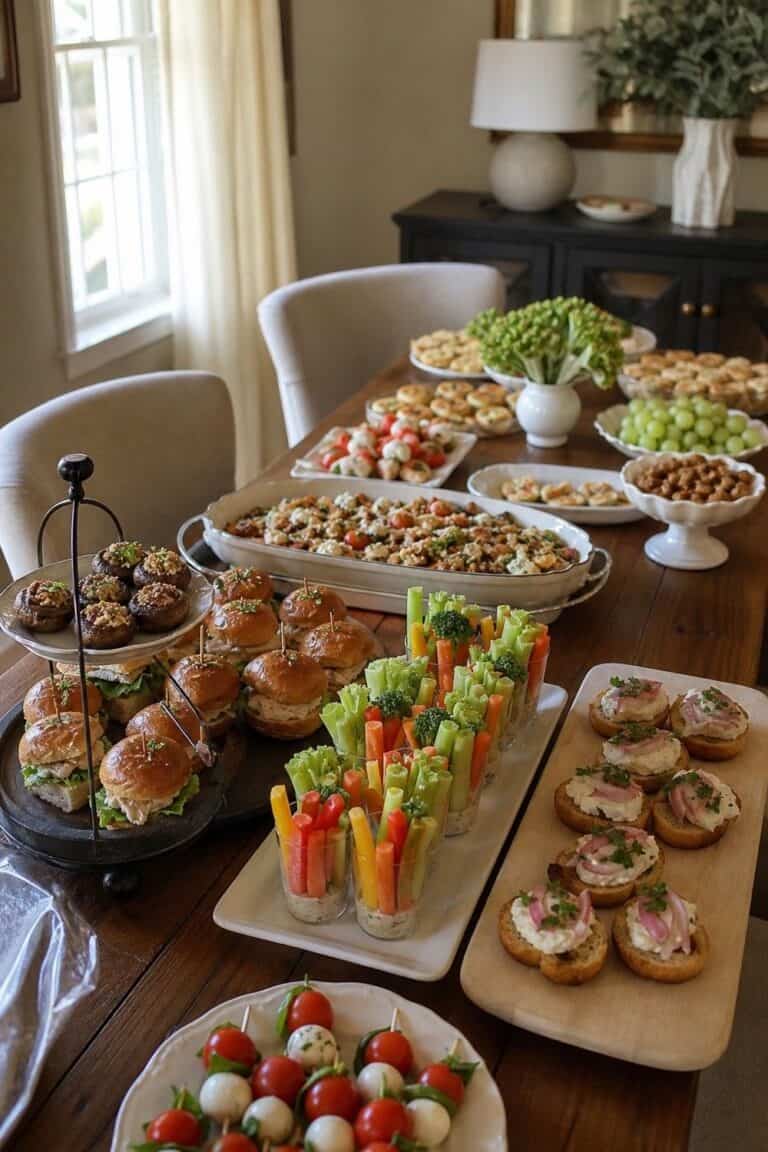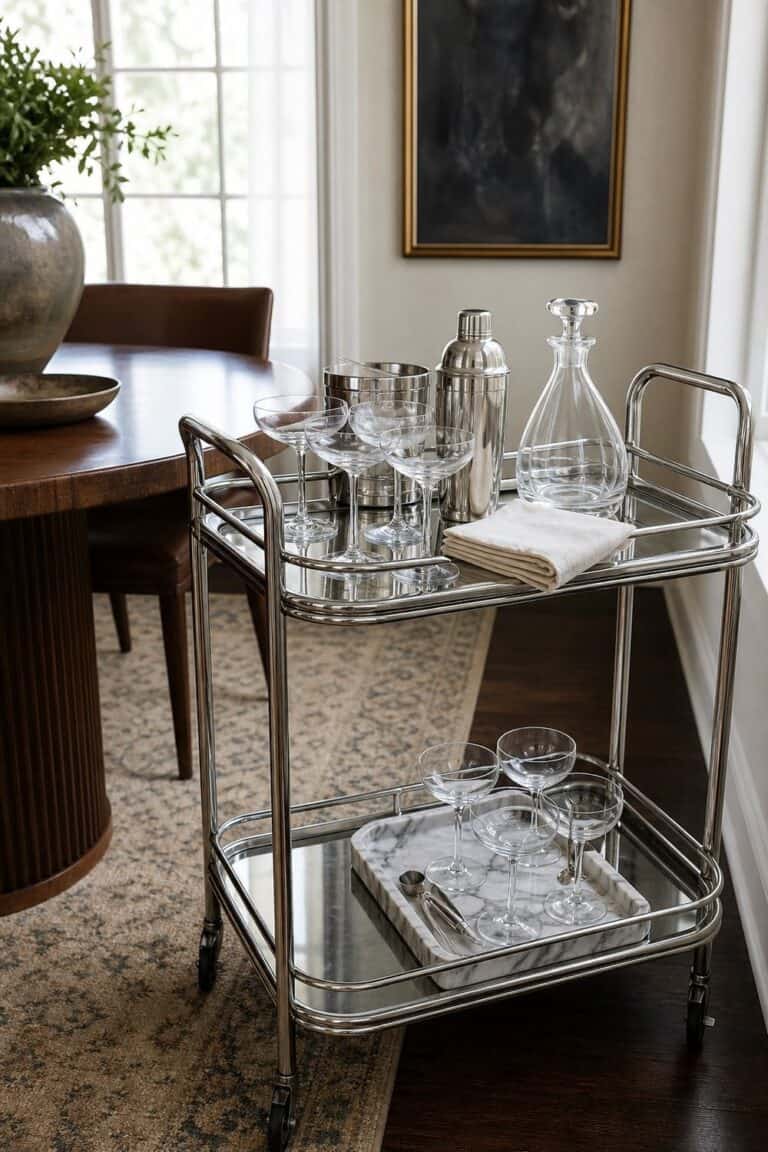
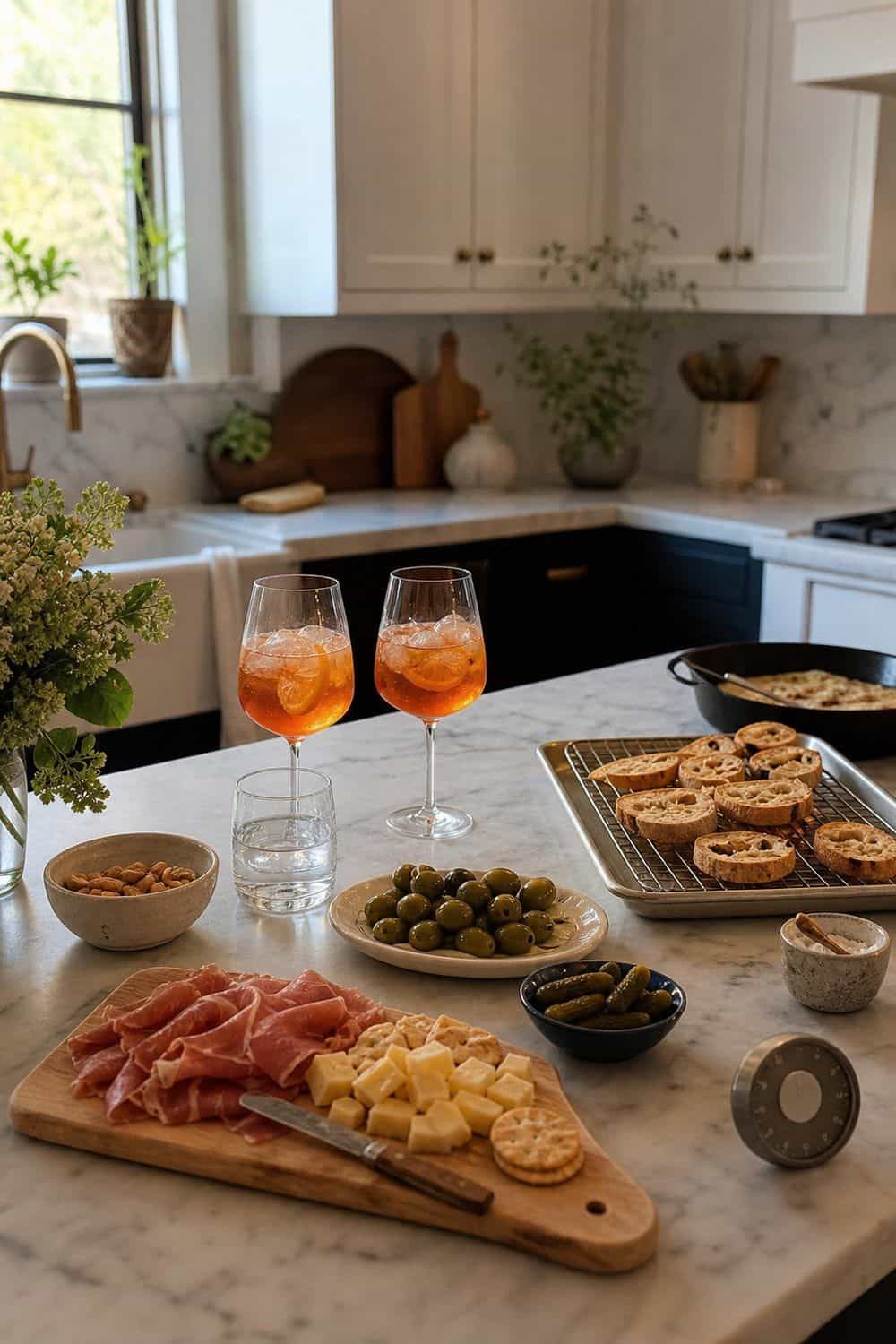
For aperitivo at home, pour one bitter or sparkling drink plus one alcohol-free option, then set out a few salty, one-bite snacks: olives, chips, taralli, Parmigiano, a little salumi and something on bread. Serve it in the hour before dinner and keep portions small, because the point is to make people hungry, not full.
Most people over-cater aperitivo. They build a giant board, guests fill up on brie and grapes, and the lasagna that took all afternoon goes half eaten.
The Italian version is much lighter. A bitter drink, a bowl of olives, some chips, maybe a piece of cheese, standing around the kitchen while dinner finishes. These 25 aperitivo hour ideas follow that logic: most need no cooking, a few need ten minutes, and none of them should ruin anyone’s appetite.

A few things make the setup easier: a glass pitcher for spritzes, a proper olive bowl, a bag of good taralli, a long board for salumi and a stack of small ceramic bowls.


What is aperitivo, and how is it different from happy hour?
Aperitivo is the Italian habit of having a light drink and a few salty snacks before dinner to open the appetite. The word comes from the Latin aperire, to open. Campari and Aperol were made for exactly this hour.
Happy hour is about cheap drinks. Aperitivo is about timing. It sits in the hour before a meal, usually somewhere between 6 and 8 pm in Italy, and it ends when dinner starts. If the snacks grow into a full meal, Italians call it apericena instead.
Drinks: one bitter, one bubbly, one without alcohol
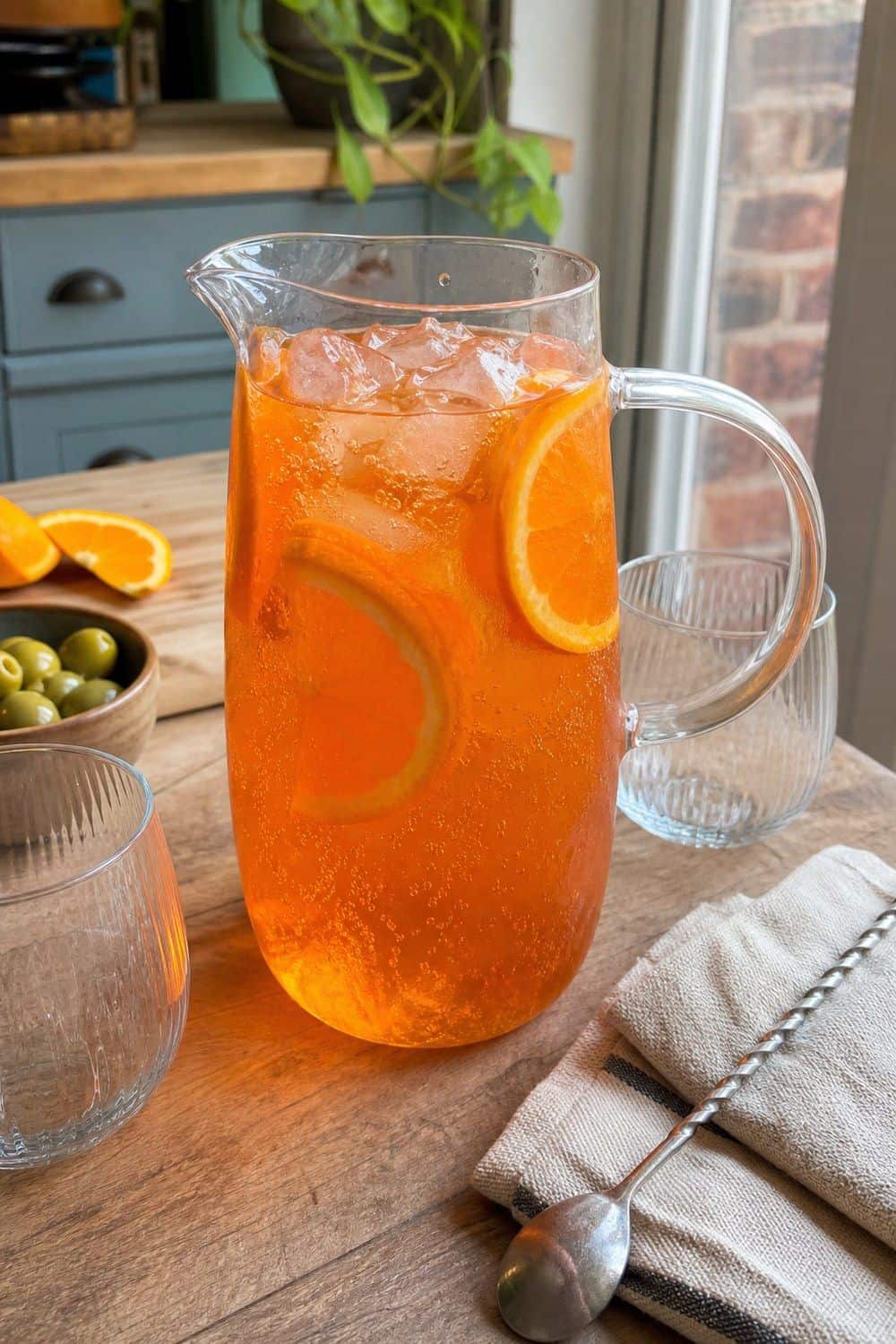
1. A pitcher of Aperol spritz
Mix a small pitcher so guests can pour their own first round. The classic ratio is three parts prosecco, two parts Aperol, one part soda, with lots of ice and orange slices. Add the prosecco right before people arrive and mix a second batch later instead of one huge pitcher that goes flat. If you need a bigger vessel for a crowd, there are good options in this roundup of drink dispensers and pitchers.
2. A Campari or Select spritz for the bitter crowd
Aperol is the sweet one. Campari is redder, more bitter and better with salty food, and Select sits in between. Put one bottle out next to the Aperol and let people choose. A grapefruit slice works better than orange with Campari.

3. A zero-proof spritz station
Give the alcohol-free drink the same glass, the same ice and the same garnish as the spritz. Bitter orange soda, tonic, a nonalcoholic aperitif if you can find one, sparkling water and citrus. Nobody should have to ask what they’re allowed to drink. For a seasonal twist, the same idea works with this pomegranate rosemary spritz.
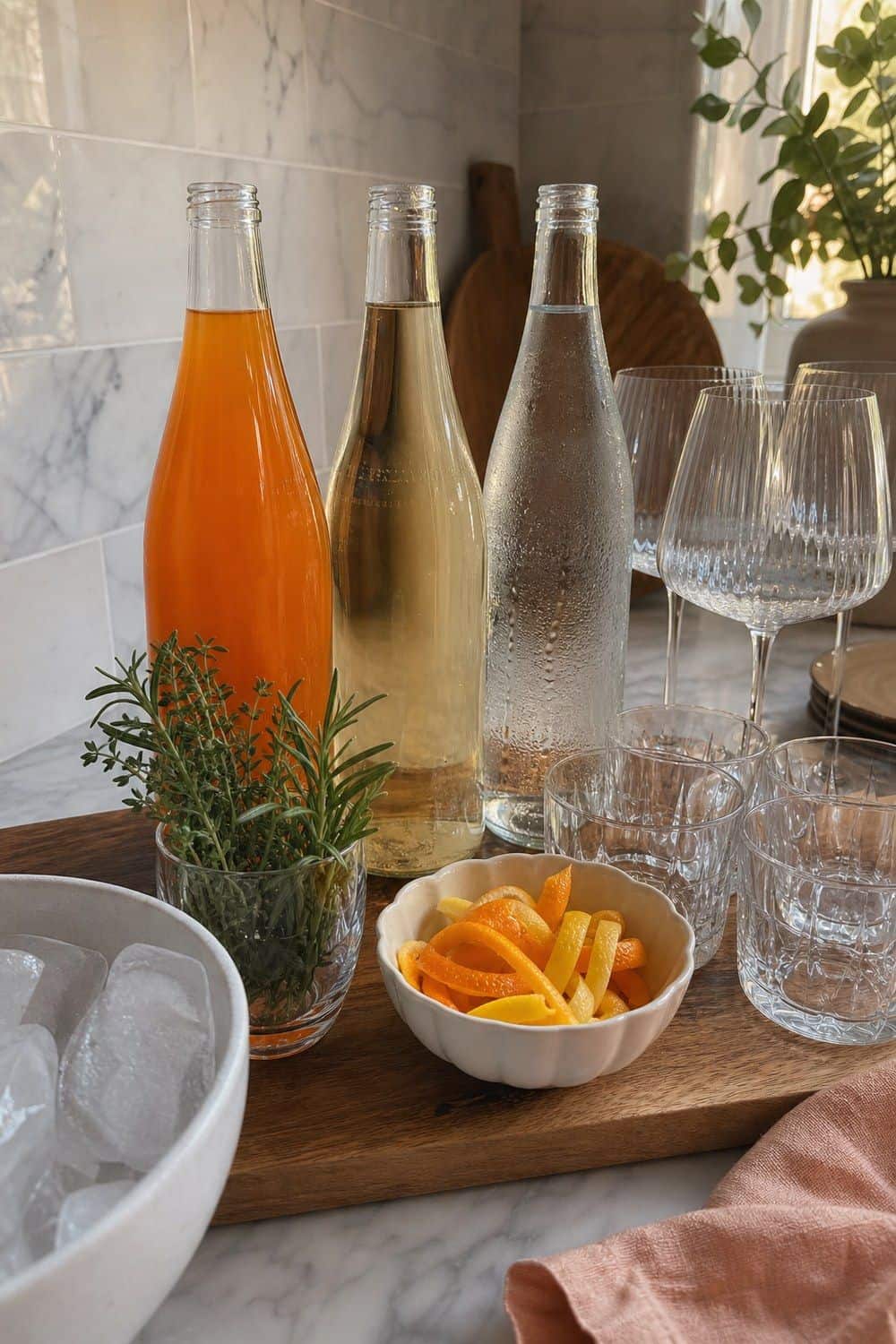
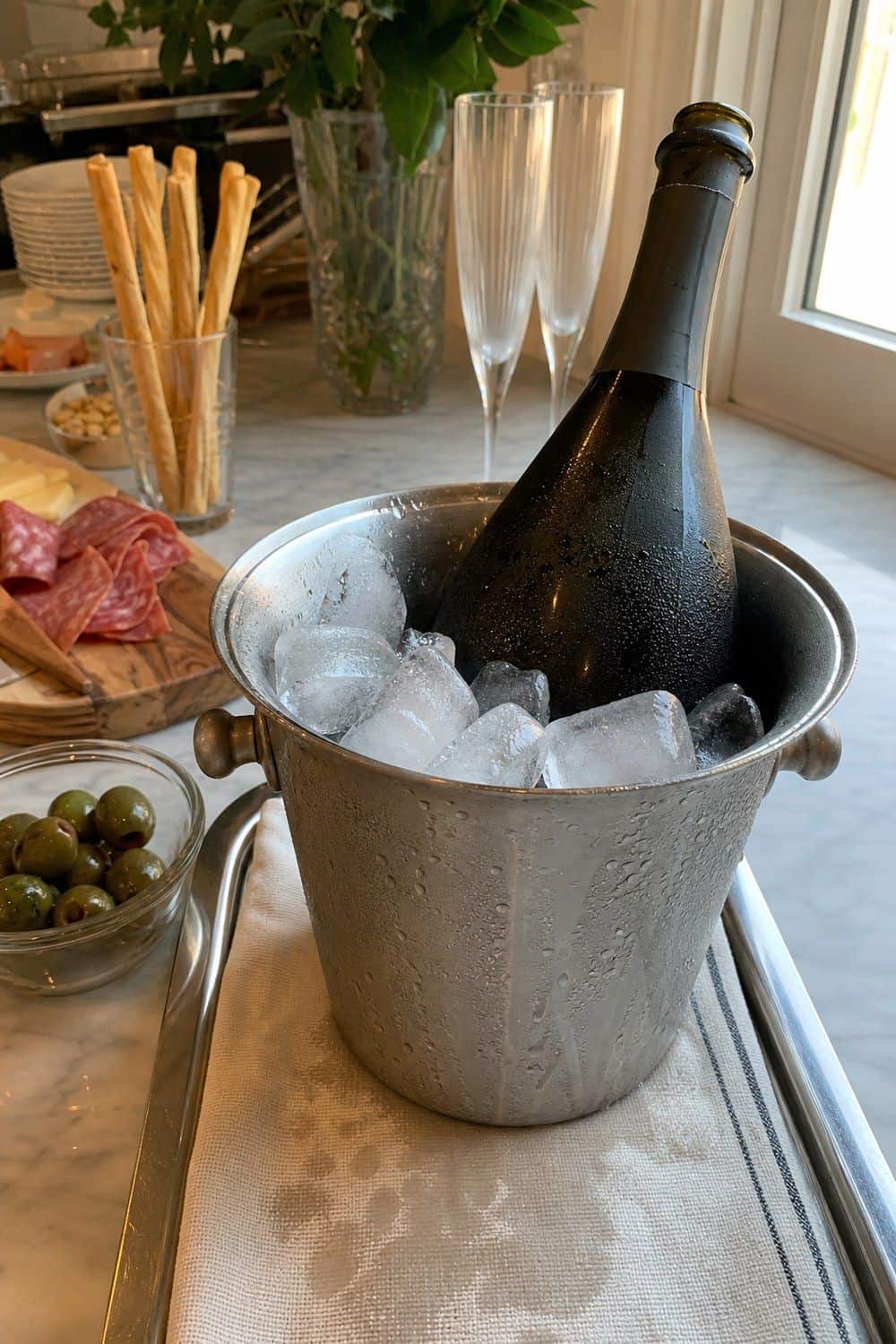
4. Prosecco in a small ice bucket
A bucket that fits two bottles keeps the prosecco next to the glasses, so you aren’t opening the fridge every five minutes. Keep backups chilling in the kitchen and put a towel under the bucket for the drips.
5. Bitter orange sodas
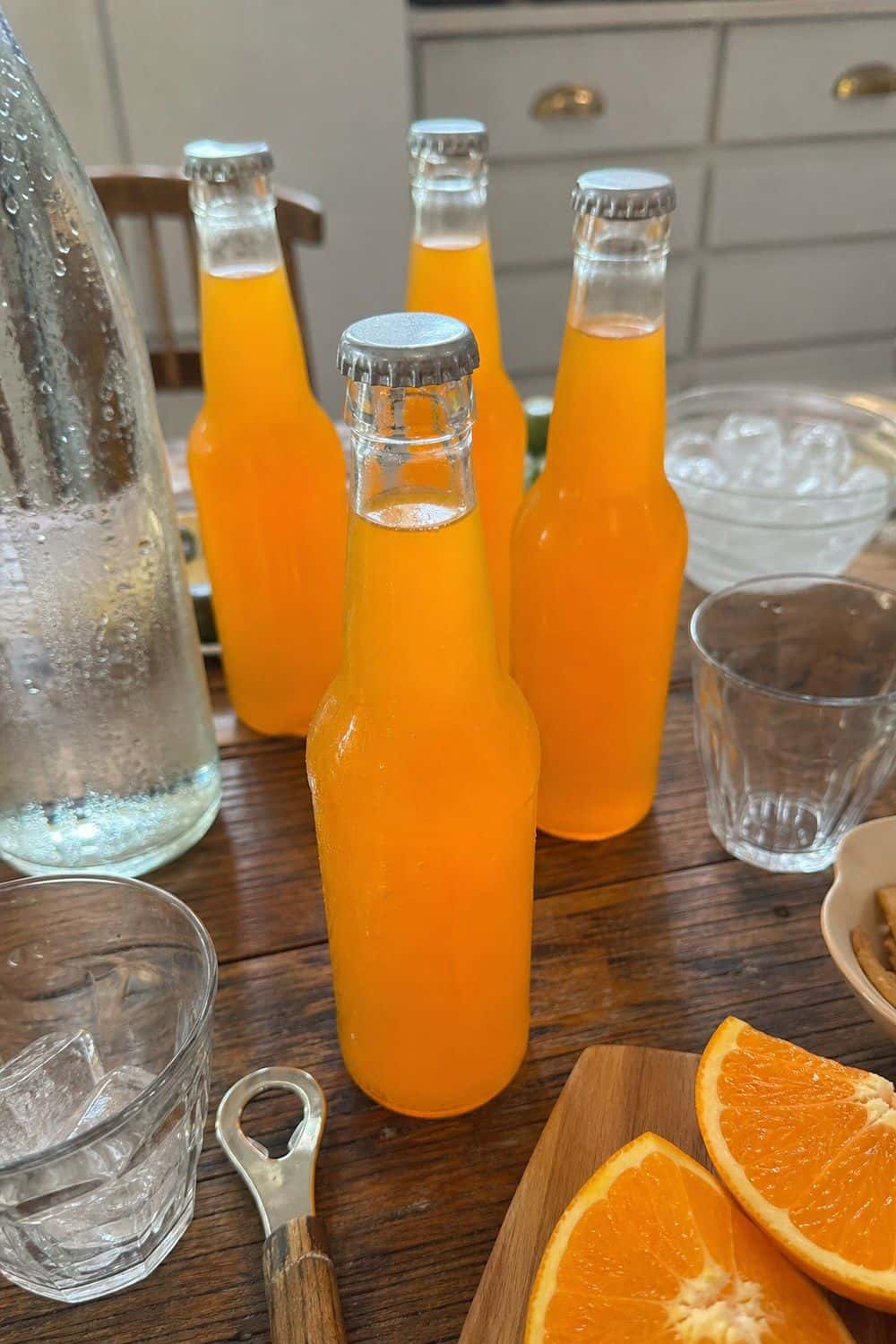
Little bottles of Italian bitter soda (San Pellegrino Sanbitter and Crodino are the usual ones) are the easiest drink on this list. Chill them hard, put out an opener, done. They’re also what people switch to between spritzes.
6. A citrus garnish plate
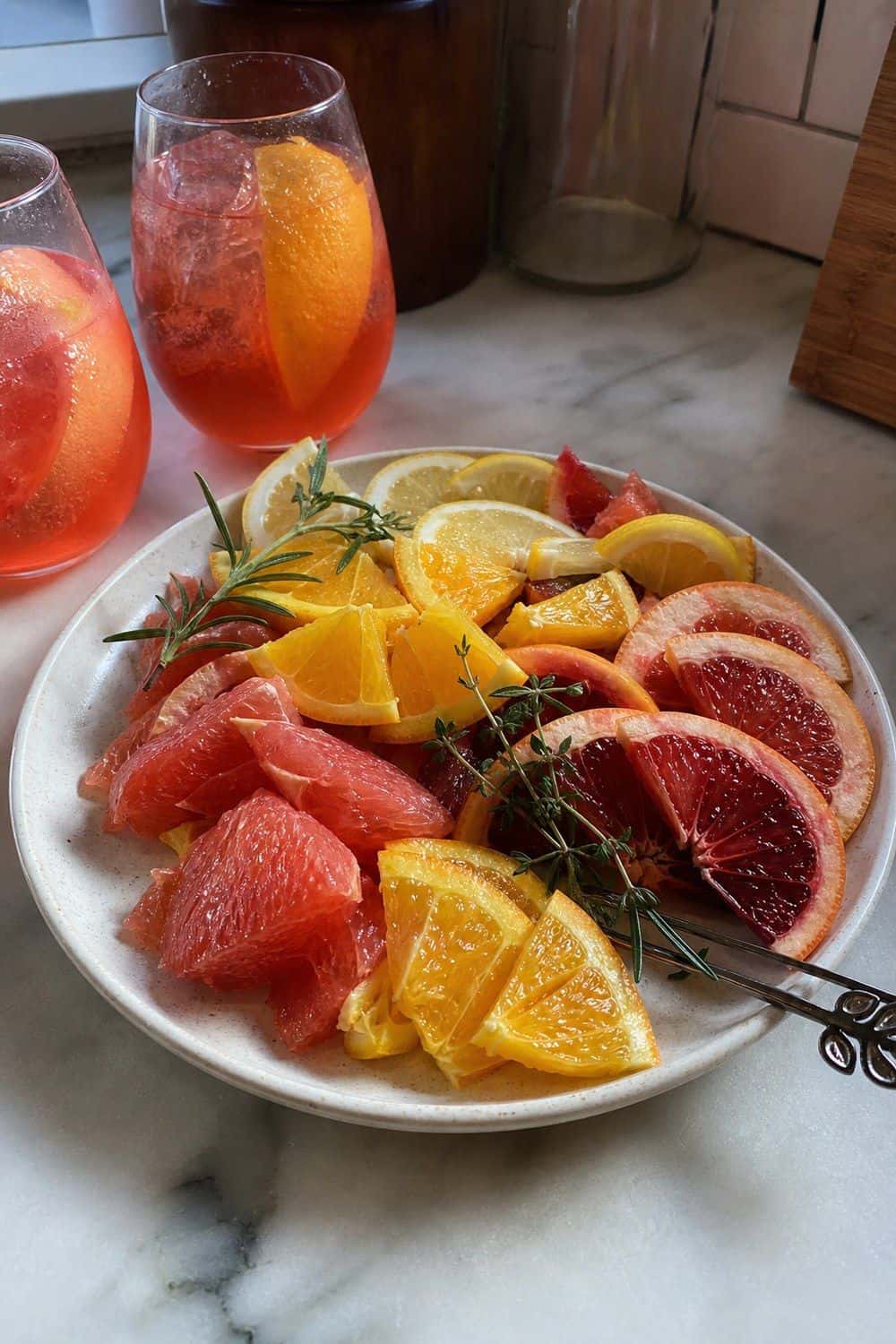
A small plate of orange wheels, lemon wedges and grapefruit makes every glass look finished. Cut a mix of wheels and wedges, pat them dry, and leave a small fork on the plate so fingers stay out.
Salty things straight from a jar or a bag
This is where aperitivo lives. Salt makes people thirsty, bitter drinks wake up the appetite, and you didn’t have to cook any of it.
7. Castelvetrano and Cerignola olives
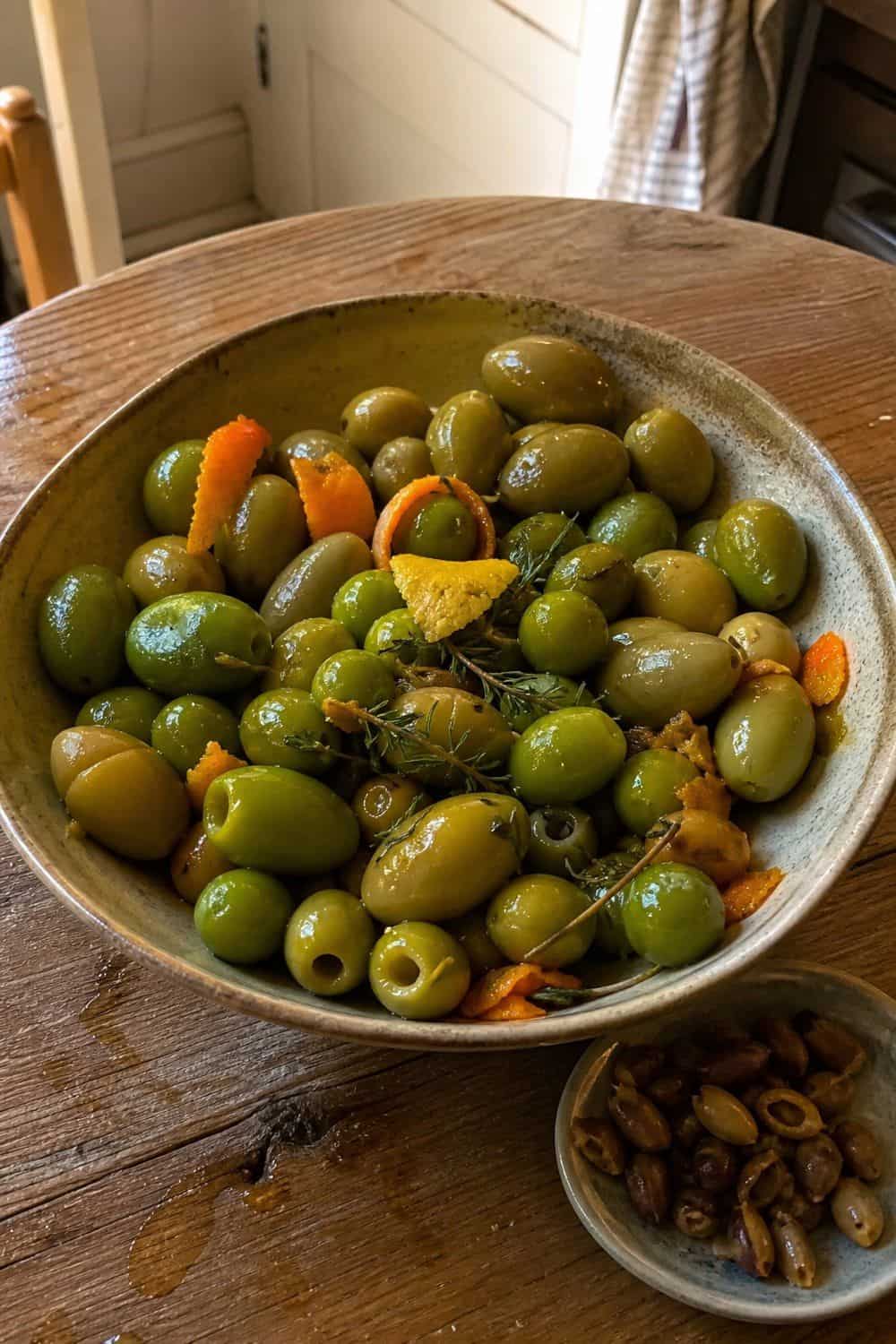
Bright green Castelvetrano olives are buttery and mild; Cerignola are huge and meaty. Drain them, add a strip of orange peel, and serve them in a wide bowl with a second little dish for pits. That pit dish matters more than you’d think.
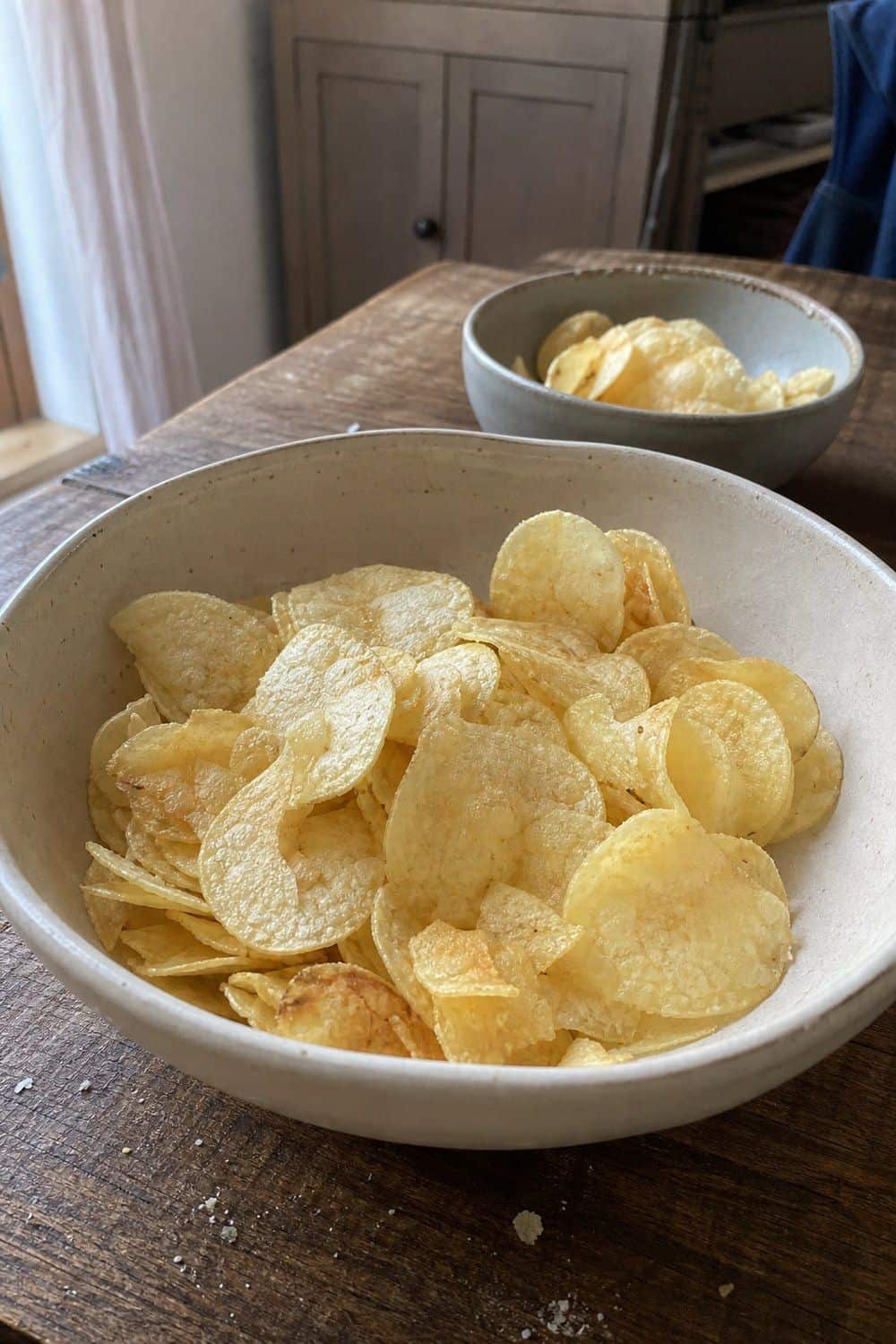
8. Potato chips in a real bowl
Every bar in Italy puts out chips with the spritz, and nobody’s embarrassed about it. Plain salted is best; loud flavors fight the drink. Pour them into a wide bowl and refill from the kitchen instead of dumping the whole bag.
9. Taralli or Italian crackers
Taralli are small, crunchy ring-shaped crackers from Puglia, often flavored with fennel or black pepper. They’re the dry anchor of the table. Keep them away from anything oily, or they lose their snap.

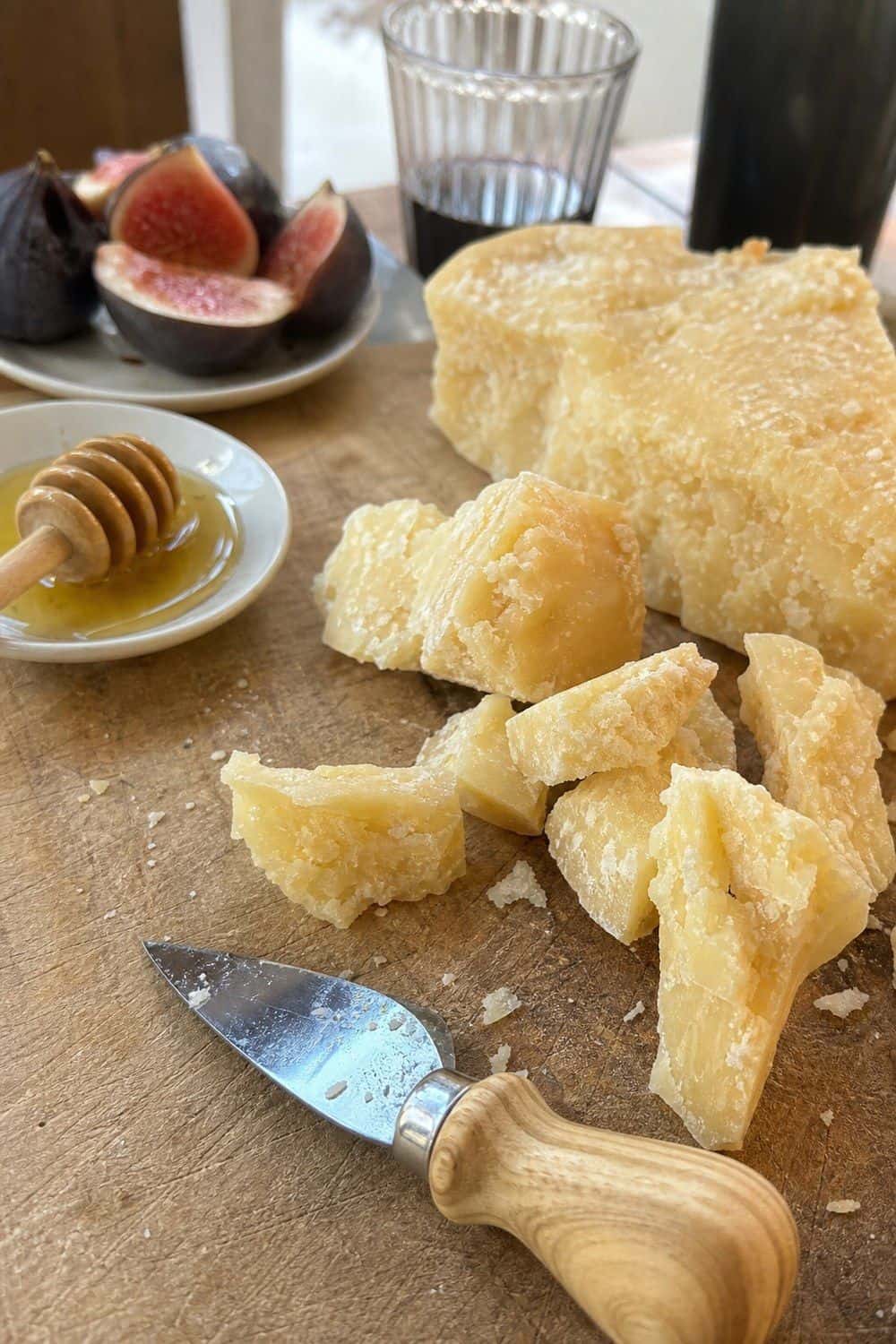
10. Parmigiano chunks with a small knife
Break a wedge of Parmigiano Reggiano into rough chunks instead of slicing it neatly. Take it out of the fridge 30 minutes early so the flavor opens up, and add a drizzle of honey or aged balsamic if you want something sweet against the bitter drinks.
11. A small salumi plate
A few folds of prosciutto, mortadella or salami is plenty. Keep it modest and leave space on the plate so slices are easy to pick up. A few pickled vegetables or grissini on the side cut through the fat. For a bigger grazing setup on a different night, this wine night snack board goes further.

Small bites worth ten minutes of work
12. Tramezzini triangles
Tramezzini are soft, crustless Venetian sandwiches on white bread. Fill them with tuna and mayo, egg, or ham and cheese, cut into small triangles and cover with a damp towel until serving so the edges don’t dry. Two fillings are enough.

13. Crostini with tomato or ricotta
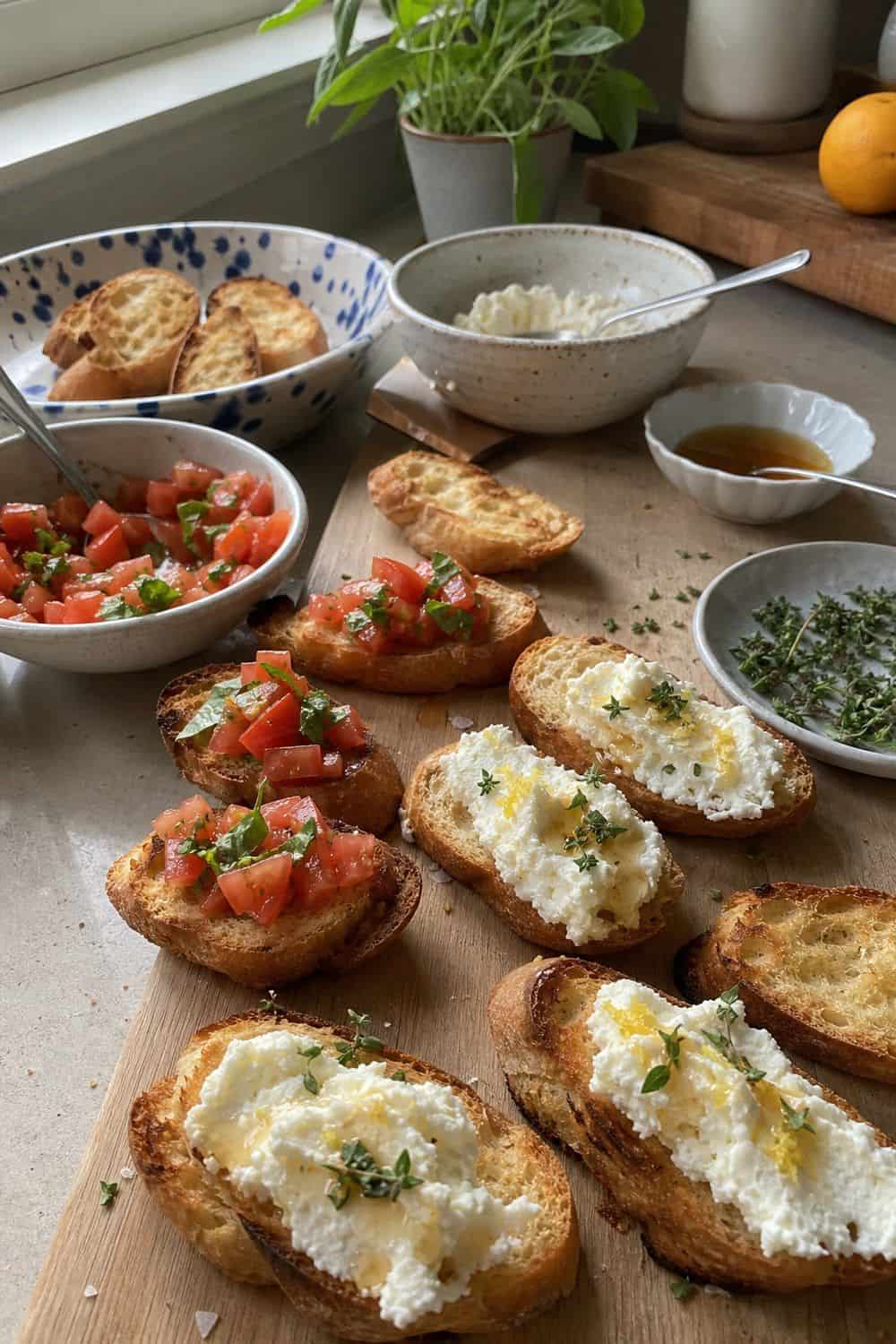
Toast thin slices of baguette until they snap. Top half with chopped tomato, basil and salt; top the other half with ricotta, lemon zest and flaky salt. Assemble right before serving, or the bread goes soggy. If you love the tomato version, build out a whole tomato toast board next time.
14. Focaccia in small squares
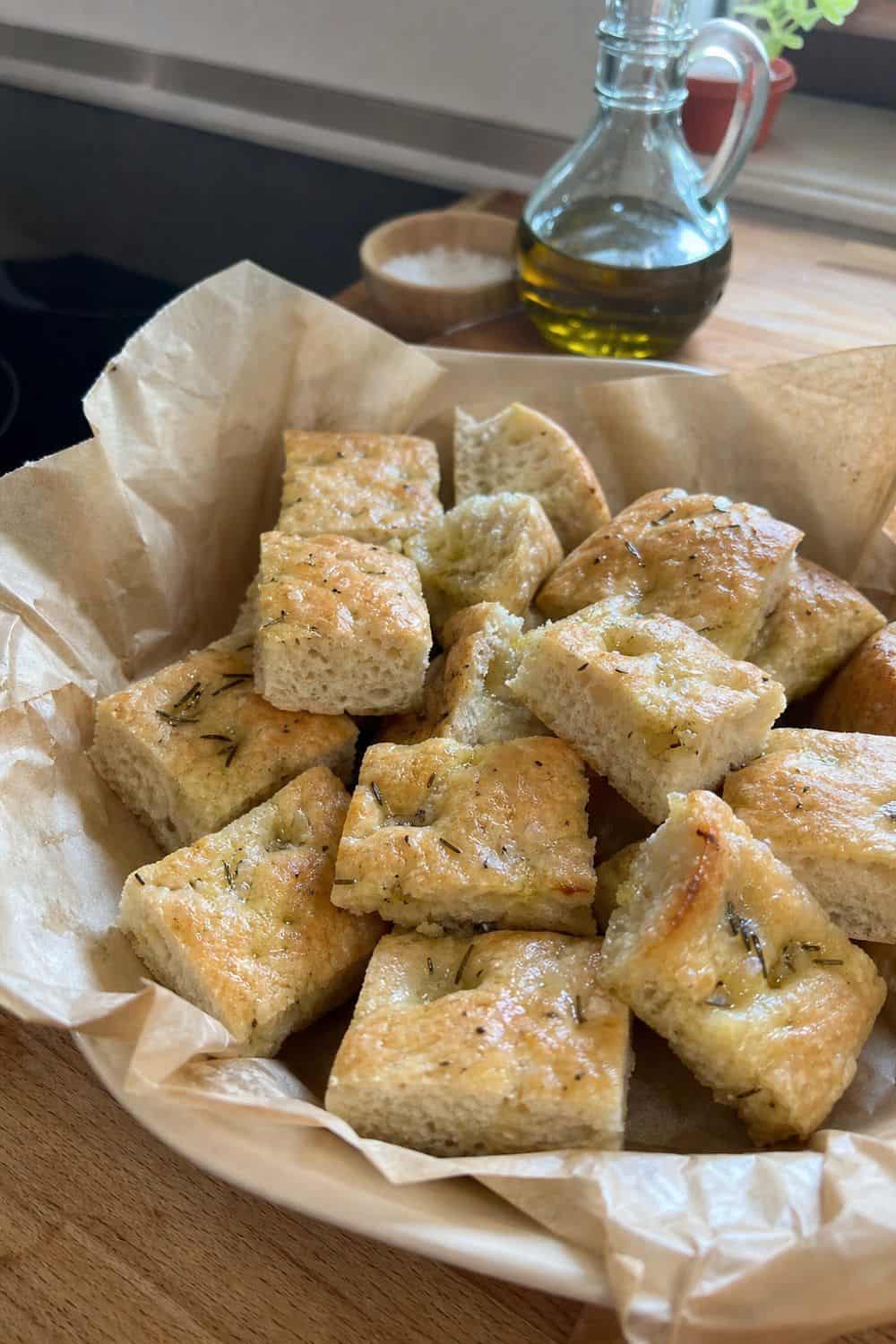
Cut store-bought or homemade focaccia into squares smaller than you’d serve at dinner, about 4 cm. Warm them for a few minutes in the oven and line the basket with parchment to catch the oil.
15. Marinated artichokes in a low bowl
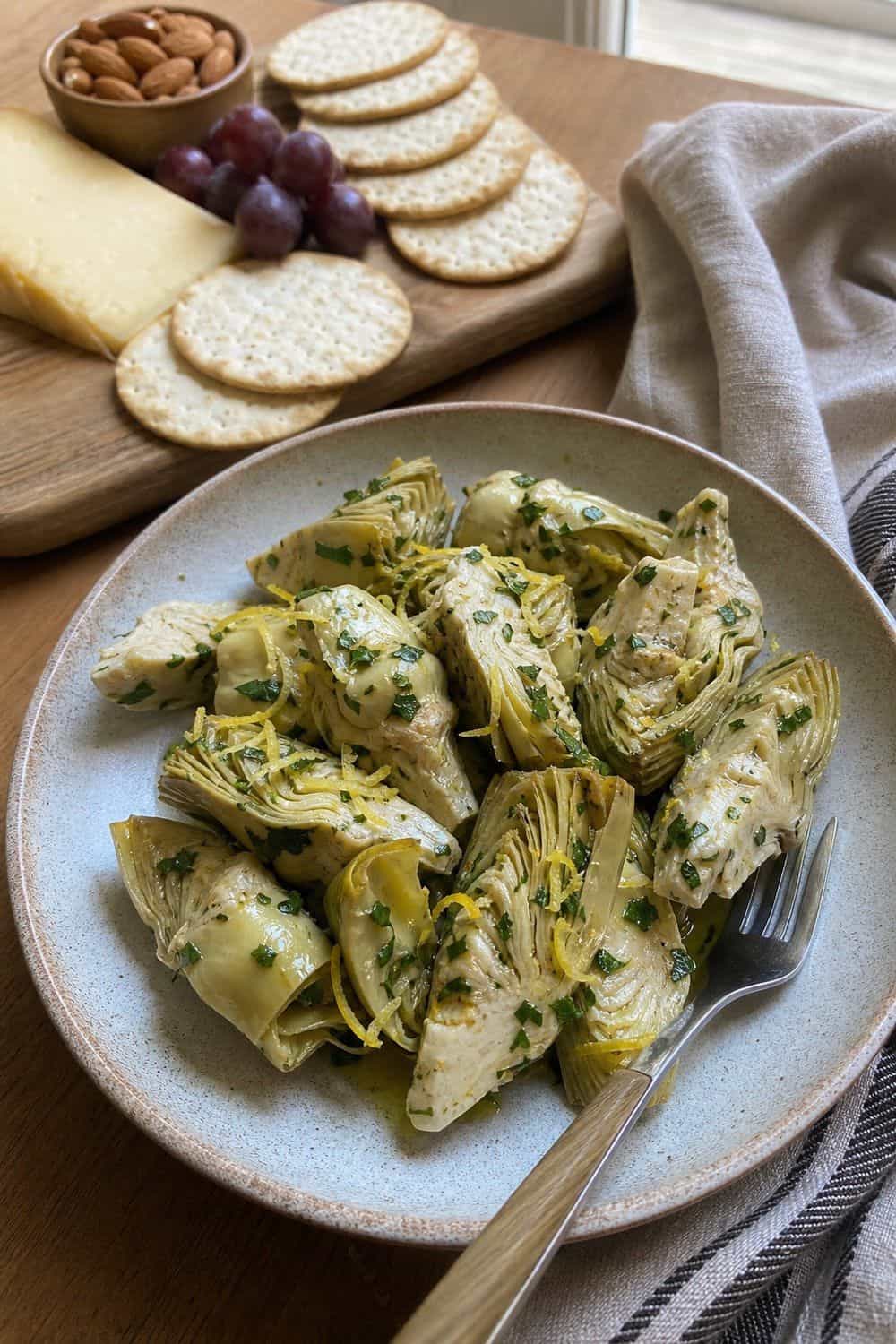
Jarred artichokes look much better out of the jar. Drain off some oil, add lemon zest and parsley, and set a small fork in the bowl.
16. Marinated white beans
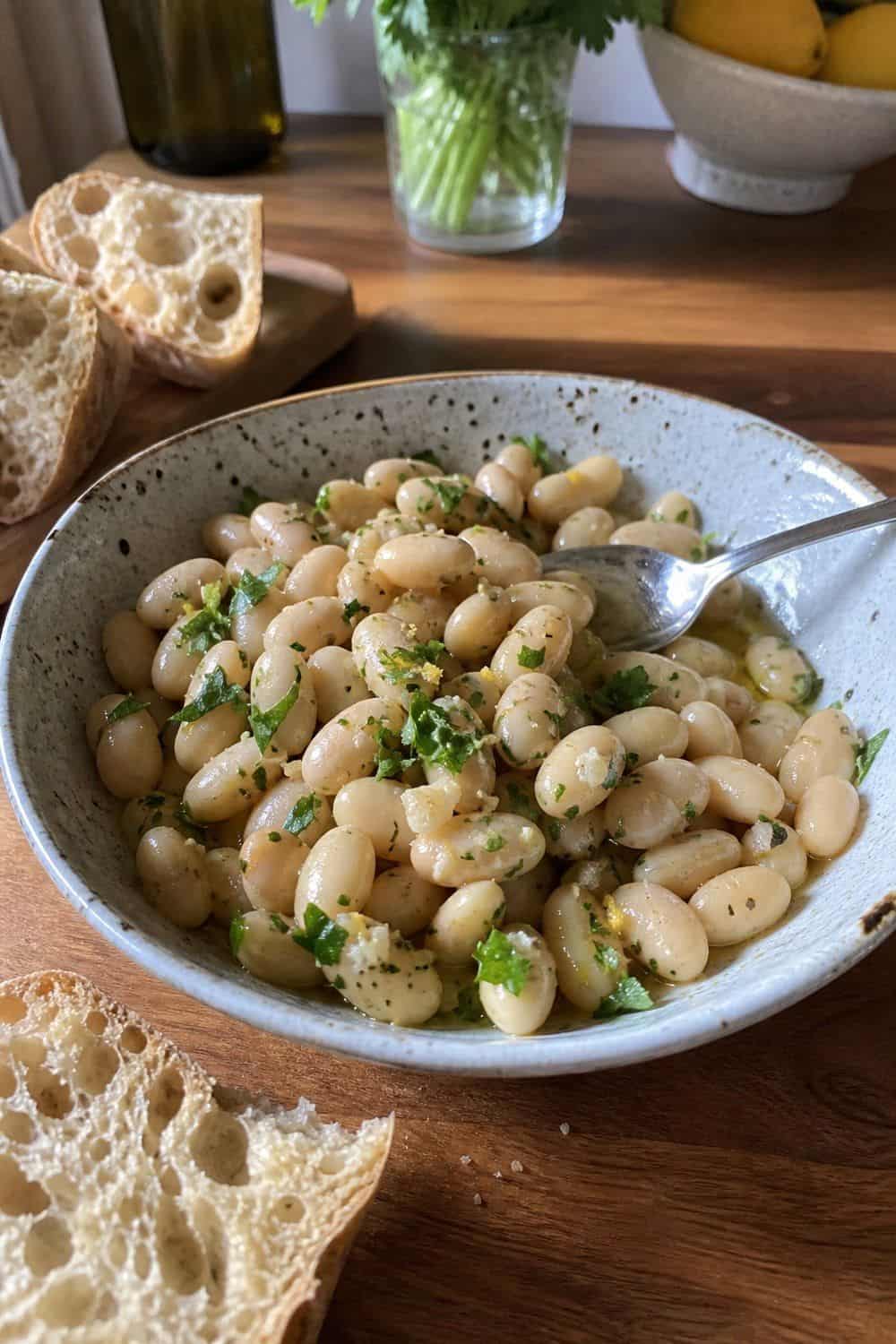
Toss a drained can of cannellini with olive oil, lemon, a crushed garlic clove, rosemary and salt. They taste better after an hour, so make them first. Serve with bread for scooping.
17. Tuna-stuffed peppers
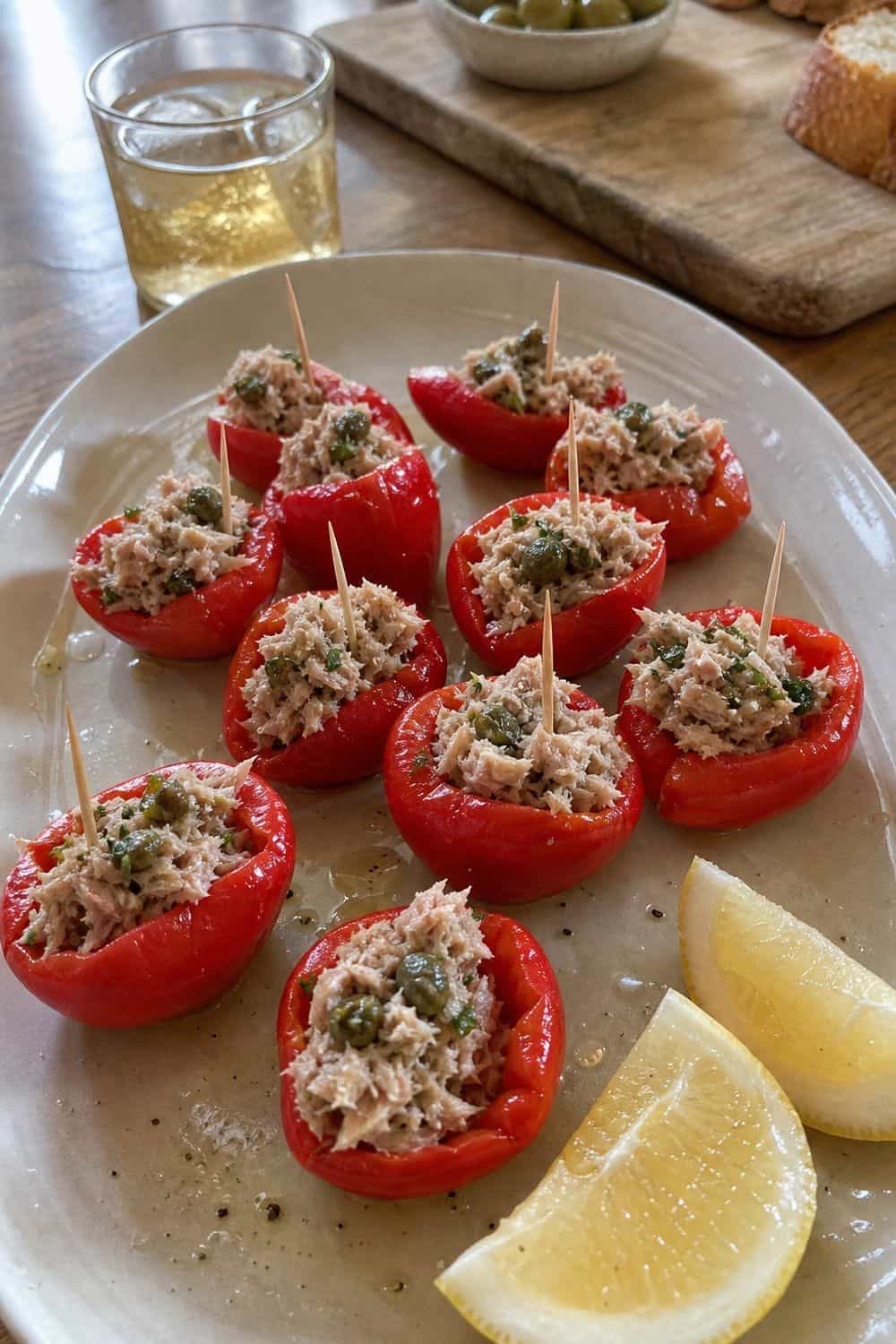
Small peppers or peppadews filled with tuna, capers, lemon and olive oil are a classic Piedmont aperitivo bite. Buy them ready-made if you see them. Keep them cold until serving and put toothpicks nearby.
18. Burrata or mozzarella in the center
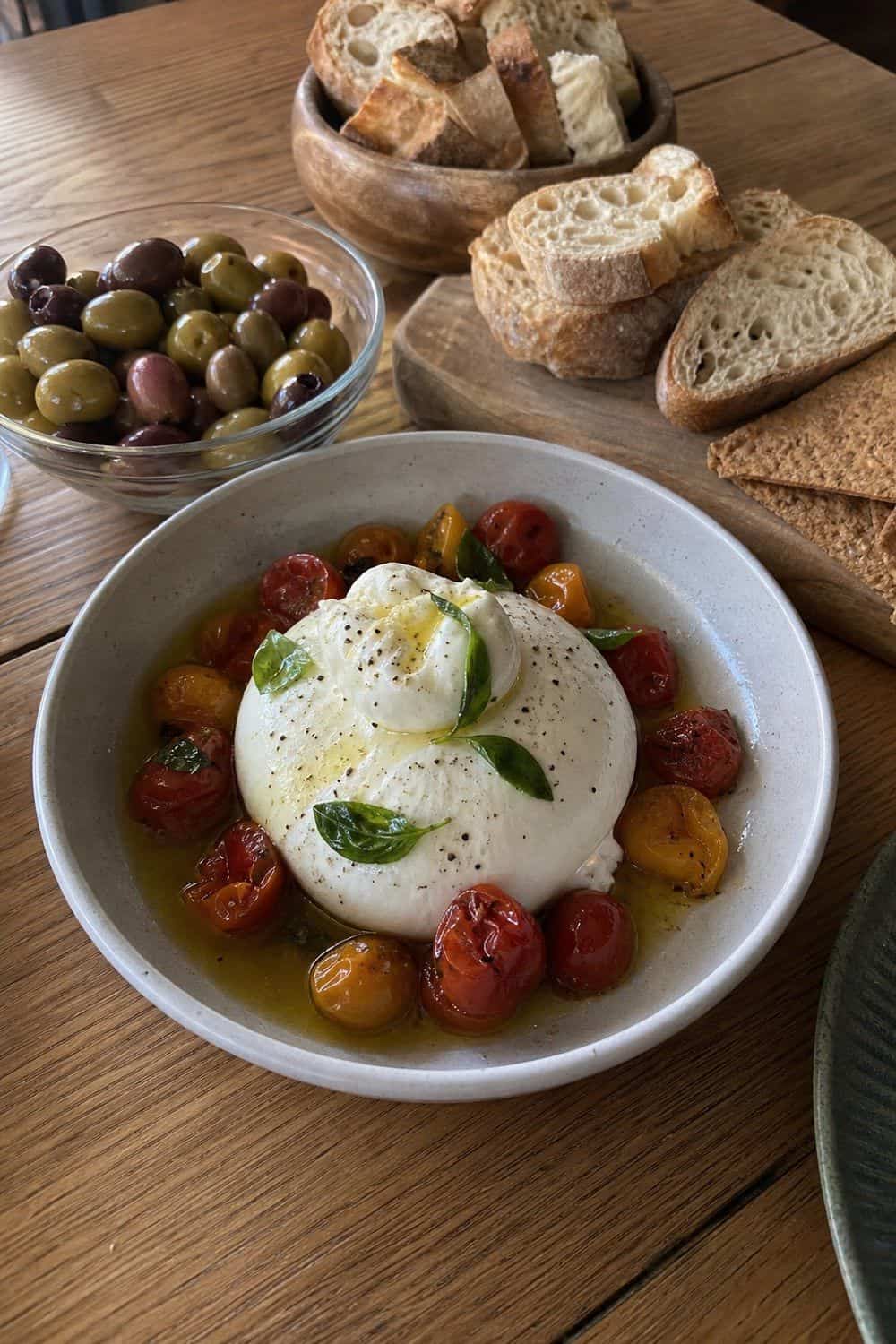
Burrata in a shallow bowl, with olive oil, black pepper and a few tomatoes, gives the table a centerpiece. Set it out close to arrival and put it back in the fridge after the hour; soft cheese shouldn’t sit out longer than two hours, per the FoodSafety.gov guidance on perishable food.
19. A tiny tinned fish plate
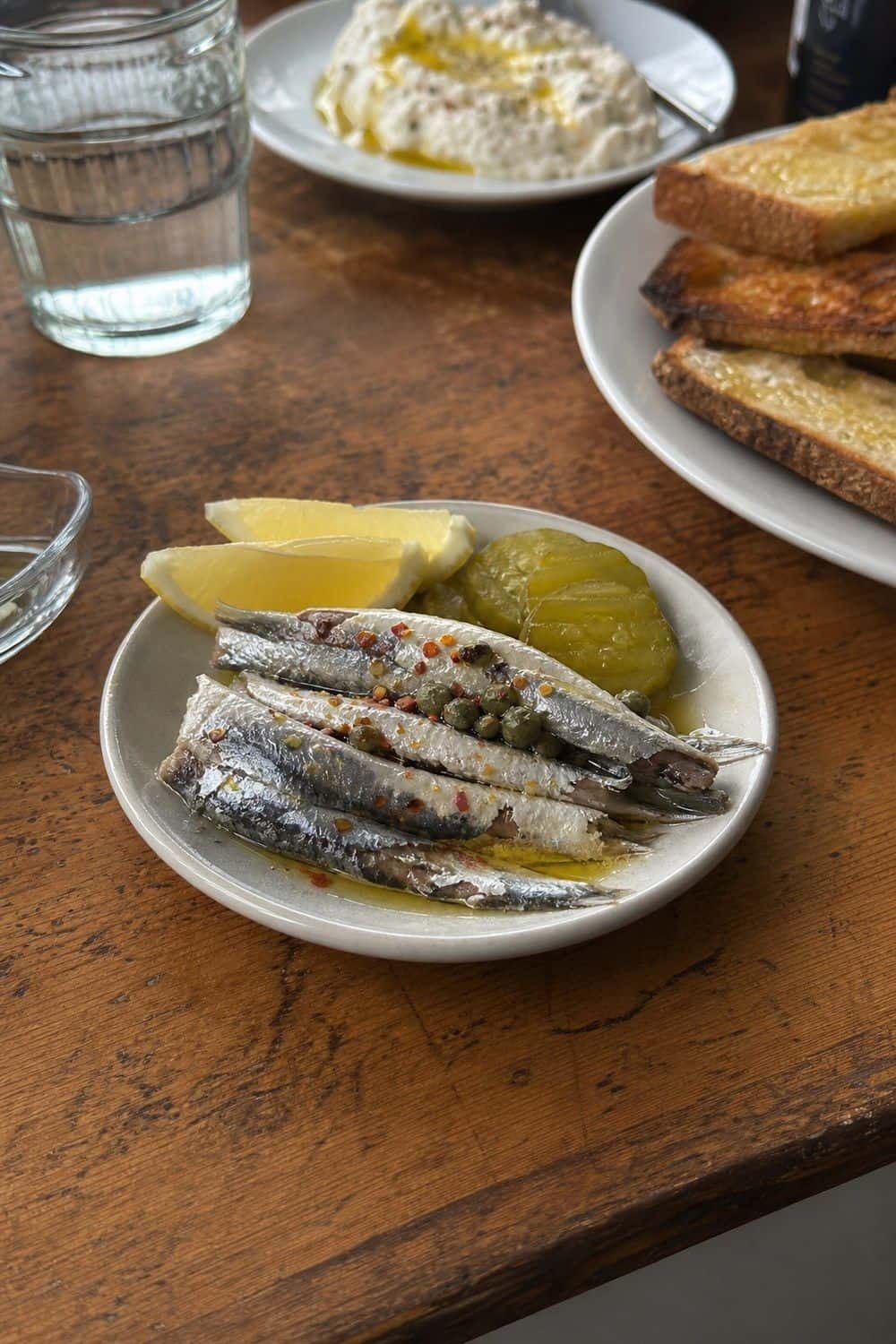
Open a tin of good sardines or anchovies onto a small plate with lemon, buttered toast and cucumber. Keep it off to the side. The people who love it will find it; the rest won’t have to look at it.
How should you set up an aperitivo table?
The food above is the easy part. The setup is what makes it feel relaxed instead of like a buffet line.
20. Make everything standing-friendly
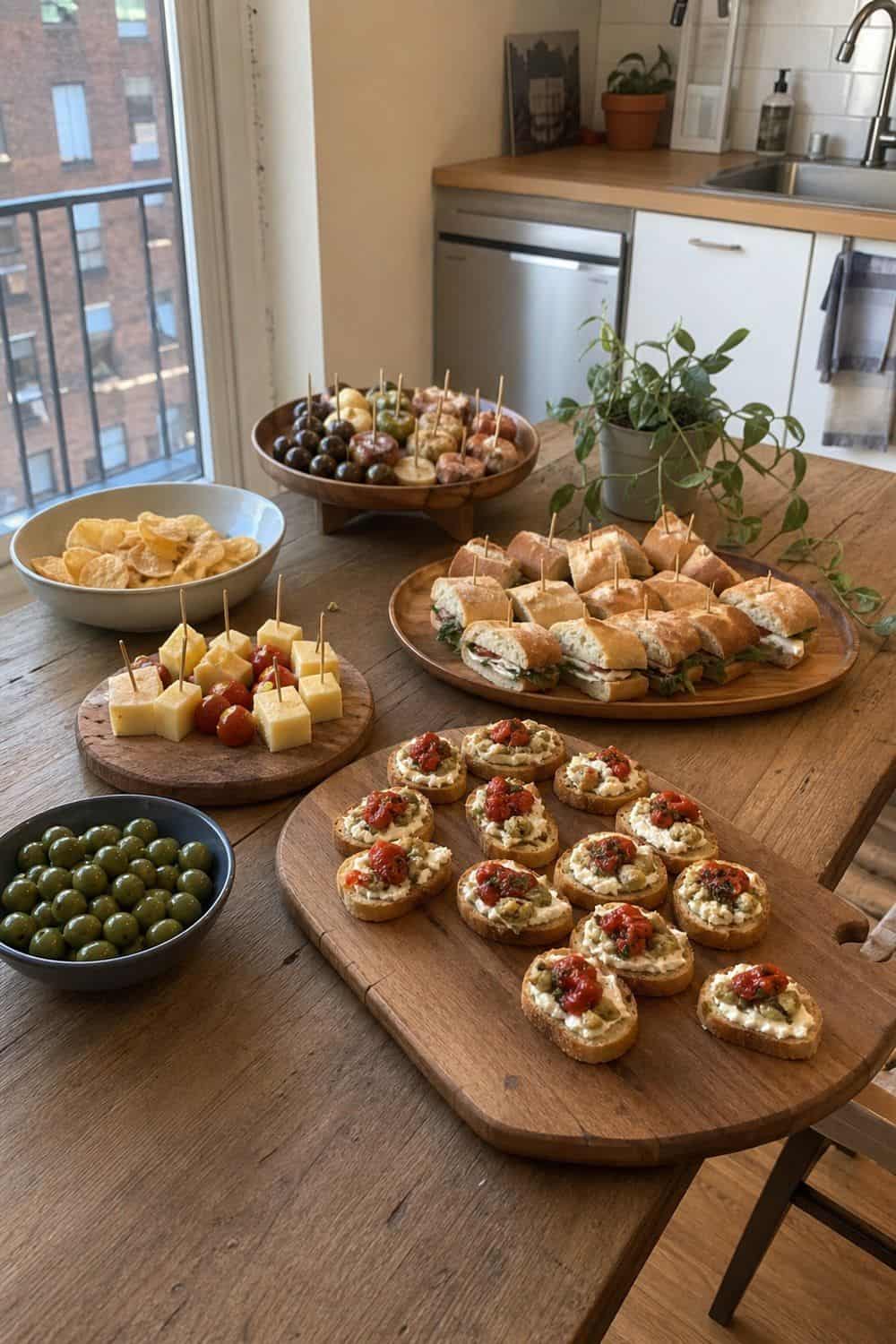
Every bite should be finished in one or two mouthfuls with one hand, because the other is holding a glass. Olives, chips, crostini, cheese chunks. If it needs a knife and fork, save it for dinner.
21. Separate drink and snack trays
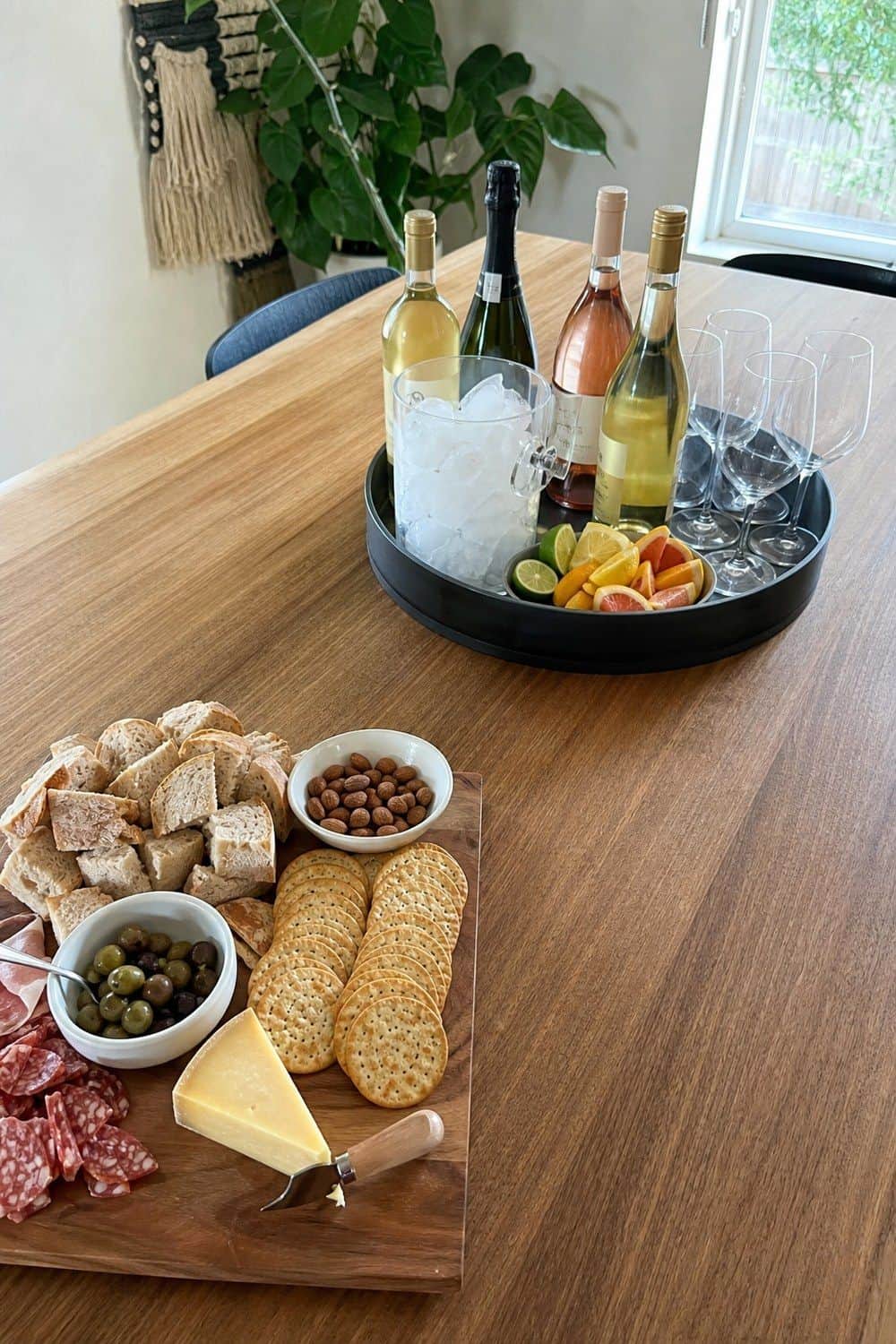
Bottles, ice and glasses on one tray, food on another. This keeps condensation away from the crackers and lets you refill one side without moving everything.
22. Ceramic bowls instead of packaging
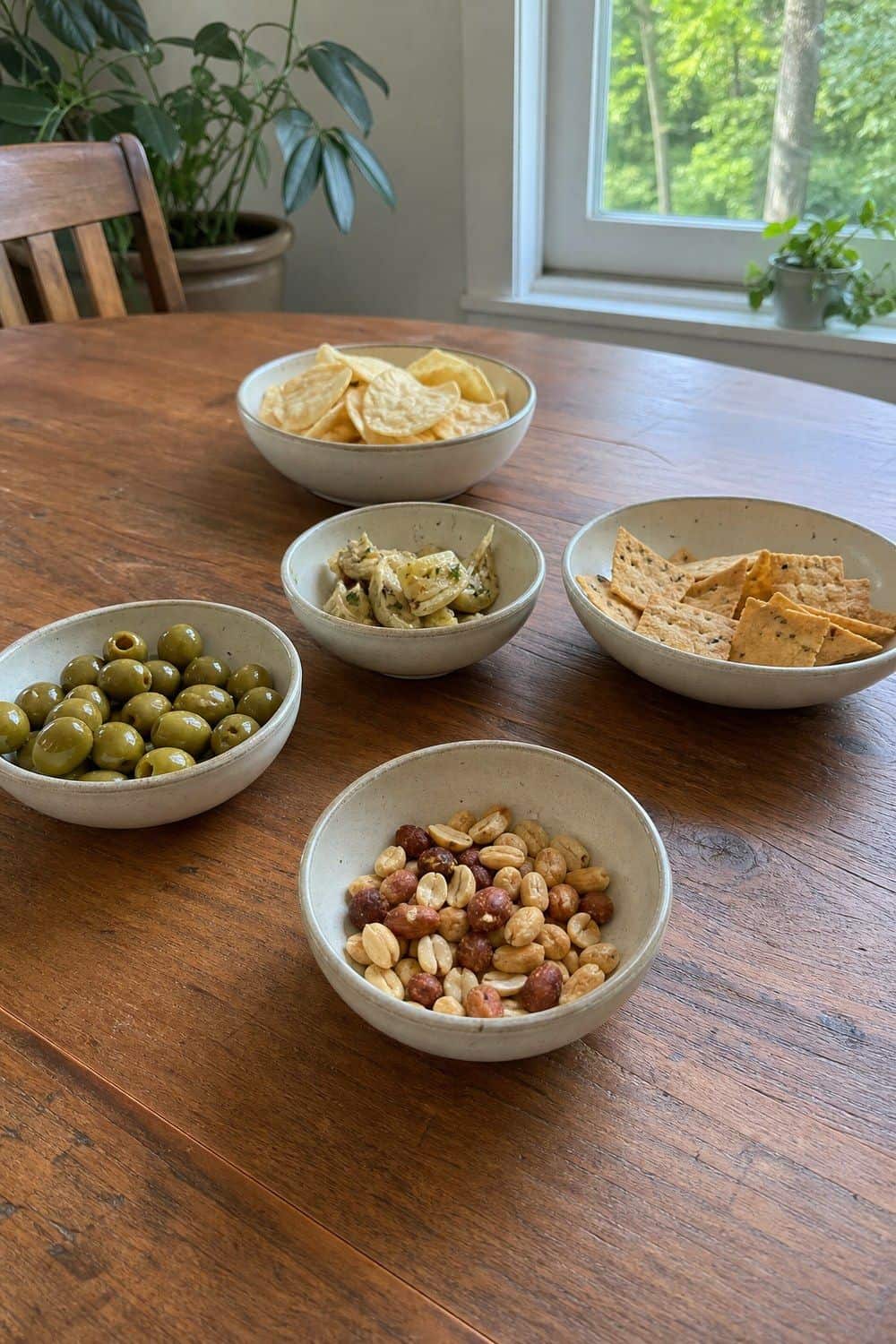
Move everything out of jars and bags. Pick bowl sizes that match how much you want out: a small, half-full bowl looks generous, a huge bowl with three olives left looks sad.
23. Time it for the hour before dinner
Drinks go out first, then the cold snacks, then anything warm a few minutes before people arrive. When dinner is ready, clear the aperitivo table. That’s the signal to sit down.
24. A labeled nut bowl
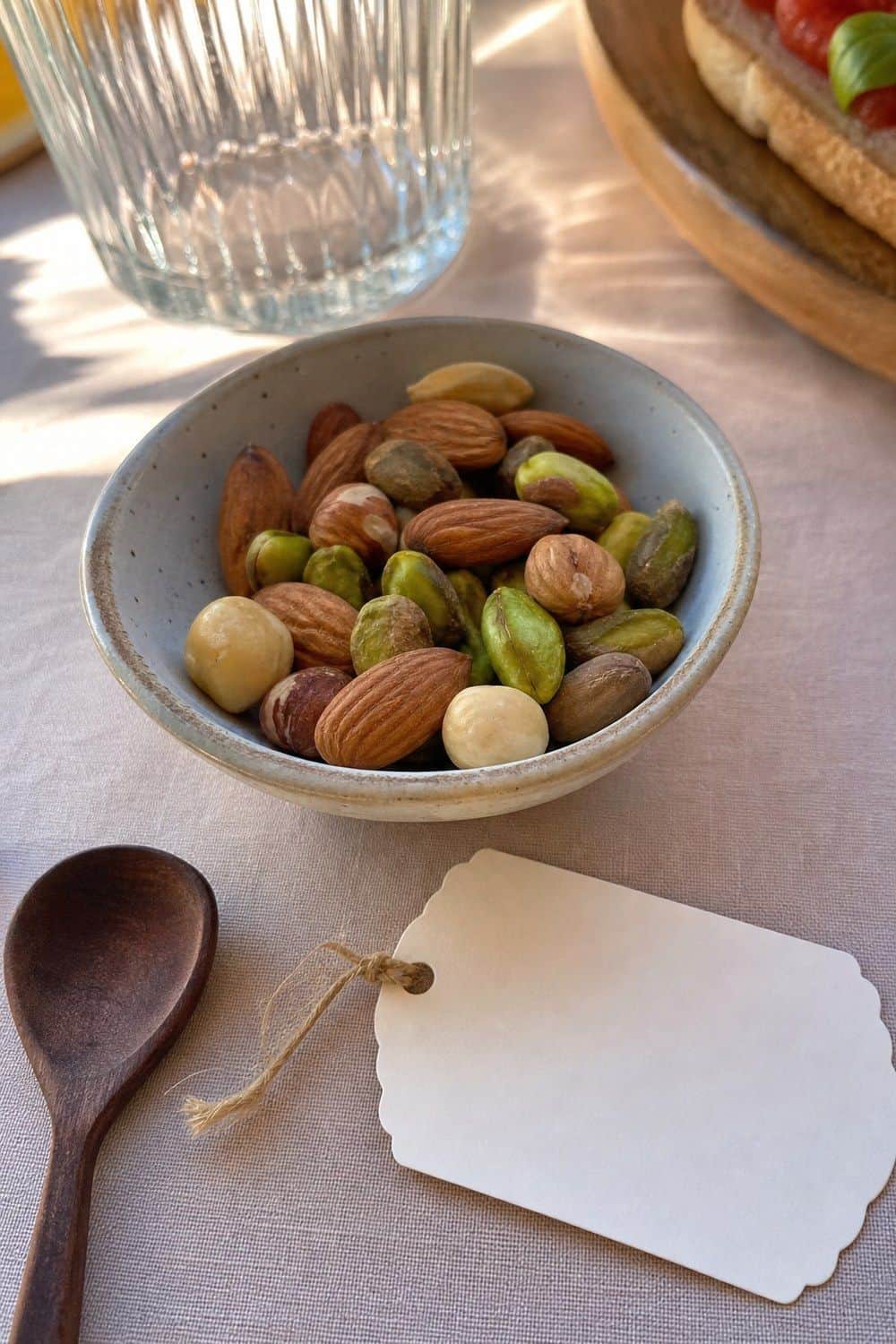
Almonds, pistachios or hazelnuts in a small bowl with a spoon and a small card. Put it slightly away from the other food if anyone has allergies.
25. A reset tray for pits and empties
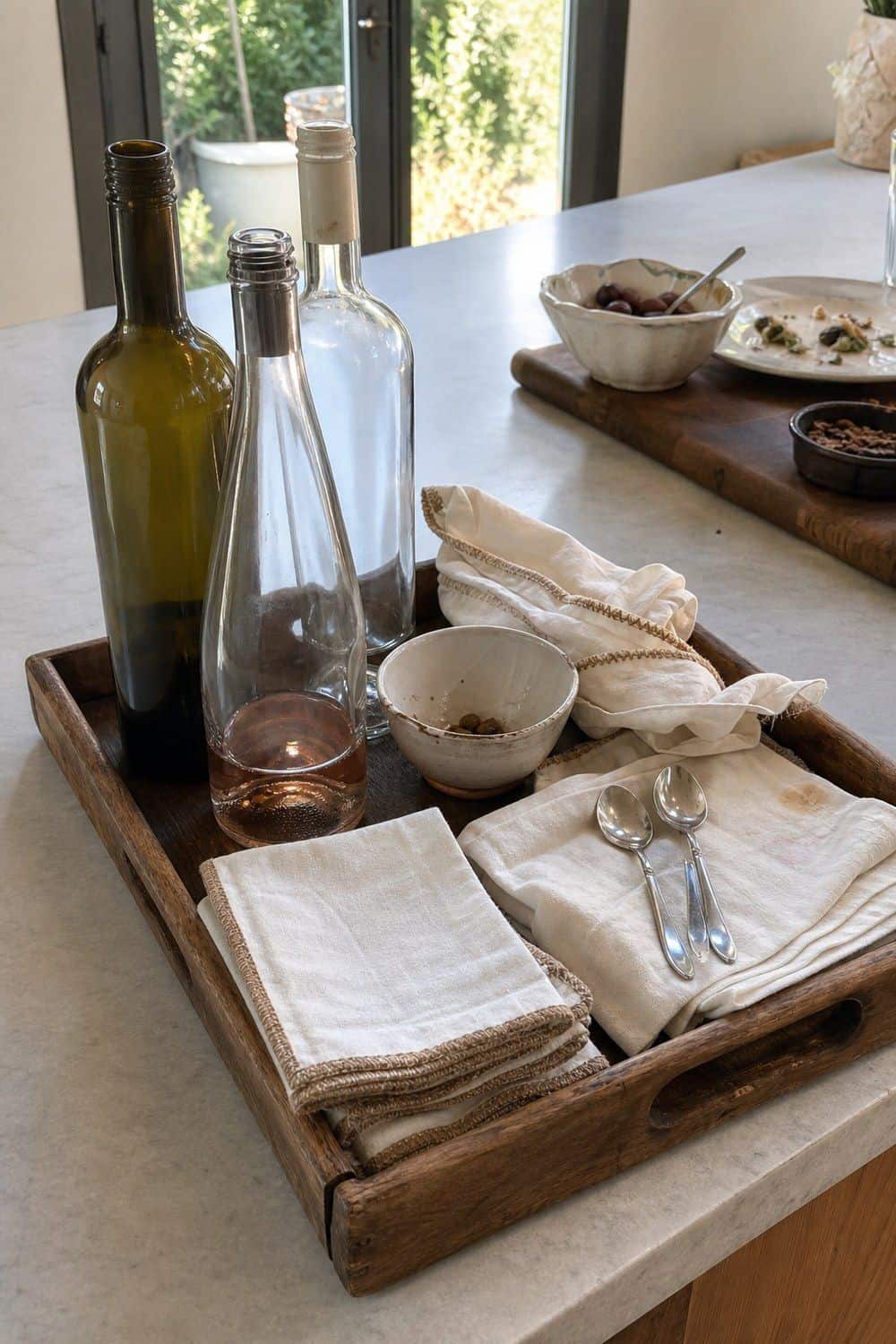
Set one tray just off the spread for empty bottles, used napkins and olive pits, with a stack of fresh napkins on it. Guests tidy up without being asked, and you clear the whole thing in one trip when dinner lands.
A simple aperitivo formula for six people
If you want a shopping list instead of 25 ideas, this covers six people for an hour:
- 1 bottle of Aperol or Campari and 2 bottles of prosecco
- 6 bottles of bitter orange soda for the alcohol-free option
- 1 jar of olives and 1 bag of plain chips
- 1 bag of taralli and about 200 g of Parmigiano
- 100 to 150 g of salumi
- 1 bread bite: crostini, focaccia or tramezzini
Aperitivo FAQ
What do you serve at aperitivo?
Serve one bitter or sparkling drink, one alcohol-free option and a few salty, one-bite snacks such as olives, chips, taralli, cheese, salumi and something on bread. Everything should be easy to eat standing up.
What time is aperitivo?
Aperitivo usually starts in the early evening, about an hour before dinner. In Italy that tends to land between 6 and 8 pm, and it ends when the meal begins.
Can aperitivo be alcohol-free?
Yes, aperitivo works without alcohol. Bitter orange sodas, tonic with citrus and nonalcoholic aperitifs mixed with sparkling water all have the bitterness that makes the hour feel like aperitivo.
How much food do you need for aperitivo?
Plan on four to six small bites per person if dinner follows. If aperitivo is replacing dinner, you’re making apericena, and you’ll need roughly double plus something substantial like pasta salad or focaccia.
What is the most popular aperitivo drink?
The Aperol spritz is the best-known aperitivo drink outside Italy. Inside Italy, Campari spritz, Negroni, Americano, prosecco and a plain glass of white wine are all just as common.
Key takeaways
- Aperitivo is a light, salty, pre-dinner hour, not a meal.
- Pour one bitter or bubbly drink and one equally nice alcohol-free option.
- Olives, chips, taralli and Parmigiano need no cooking at all.
- Keep every bite one-handed and clear the table when dinner is ready.
Plan the dinner that comes after
Aperitivo only works if there’s a meal behind it. Pick the main course first, then build the hour backward so the snacks don’t compete with it. For a full menu that starts with a spritz and ends at the table, use this summer dinner party menu as your plan.
Last update on 2026-11-07 / Affiliate links / Images from Amazon Product Advertising API