
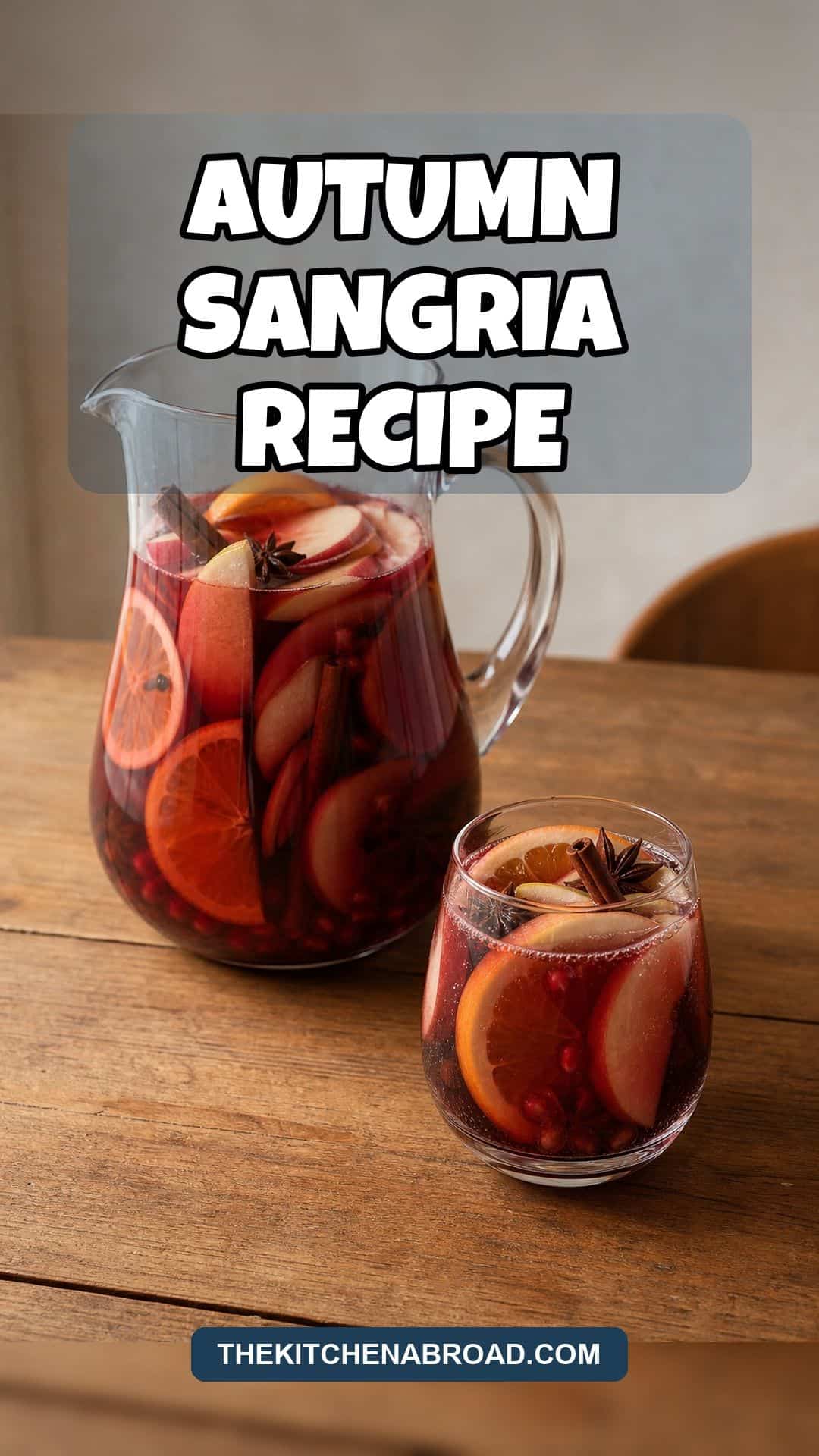
Autumn sangria is a wine-based punch built on apple cider, seasonal fruit (apples, pears, pomegranate), and warming spices (cinnamon, clove, star anise). Use a fruity Spanish Garnacha for red, dry Riesling for white. The base needs at least 4 hours in the fridge to integrate, and a chilled prosecco float at service lifts the carbonation right before guests sit down.
Autumn sangria reads as the dinner-party drink that does the most work for the least effort: one pitcher anchors cocktail hour, the meal, and the rest of the night. Pair it with a cheese-and-charcuterie board, a slow-roasted pork loin, or a turkey at Thanksgiving, and the wine’s tannins and the cider’s apple-pectin sweetness cover everything from sharp aged cheddar to sage-rubbed meat. Build the base the night before, finish with a sparkling float at service, and the host’s job is more or less done by 4 p.m.
Gear That Helps Here
A wide-mouthed glass pitcher (1.5 to 2 liters) is the only mandatory piece. The fruit sits visible, the spices float, and the prosecco float at service has somewhere to land. A chilled wine bucket holds the sparkling for the table, a long bar spoon stirs without bruising the apple slices, and good rocks or wine glasses serve the drink the way it deserves to be poured.

![Newness Soup Ladle, [Rustproof, Heat Resistance, Integral Forming] Resilient 304...](https://www.thekitchenabroad.com/wp-content/plugins/aawp/public/image.php?url=YUhSMGNITTZMeTl0TG0xbFpHbGhMV0Z0WVhwdmJpNWpiMjB2YVcxaFoyVnpMMGt2TXpFMlYxVjZSRk5hYlV3dVgxTk1NVFl3WHk1cWNHYz18MTc4NjQwODQxMQ= "Autumn Sangria Recipe")


Recommended Reads
- Caramel Apple Punch Recipe
- Apple Cider Margarita Recipe
- Pomegranate Rosemary Spritz Recipe
- Spiced Pear Lemonade Recipe
- Christmas Dinner Ideas
Why Fall Sangria Works as a Whole-Meal Drink
Sangria as a category does something most cocktails can’t: it pairs across an entire meal without becoming repetitive. The wine base gives it body and tannin to stand up to cheese and meat. The cider and fruit sugar add a roundness that meets sage, rosemary, brown butter, and roasted squash. The spices (cinnamon, clove, star anise) thread through fall flavors the way mulled wine does in winter, but without the heat, which means guests aren’t drinking something hotter than the room.
The pairing math: pork loin or roast turkey + Garnacha-based red sangria = wine acidity cutting fat, fruit sweetness meeting savory herbs. A cheese board + white Riesling sangria = wine sweetness balancing sharp aged cheese, pear and apple complementing soft brie. The sangria sits between an aperitif and a wine pairing and does the work of both.
One historical note: sangria is Spanish in its modern form (19th-century Andalusia), but the fall variant is unambiguously American. Spanish sangria rarely includes cinnamon. The cinnamon-and-clove fall version emerged from food blogs in the early 2010s as the pumpkin-spice category expanded into cocktails.
A Few Notes on the Ingredients
Wine choice matters more than most recipes admit. For the red version, look for a fruity Spanish Garnacha (Borsao, Las Rocas), a Beaujolais, or a young Tempranillo. Heavy oaked reds (California Cab, Malbec) fight the fruit and turn the sangria woody. For the white version, an off-dry German Riesling is the cleanest choice. Sauvignon Blanc tastes thin against apple cider, and oaked Chardonnay turns the drink soapy. Pinot Grigio works in a pinch.
Apple cider has to be the real thing. Fresh-pressed, unfiltered cider from a farm stand or the chilled aisle (Trader Joe’s seasonal, local orchards in October) tastes significantly different from shelf-stable jug cider. The shelf-stable version is heat-pasteurized and tastes flat. If shelf-stable is your only option, add a splash of fresh lemon juice to the sangria to revive it.
For fruit, use crisp apples (Honeycrisp, Pink Lady, Fuji) and firm pears (Bosc, Anjou). Tossing the sliced apples in lemon juice before they hit the wine prevents the brown-apple problem that ruins the look of overnight sangria. Pomegranate seeds add the jewel-tone visual lift that the wants. Use them sparingly, no more than a small handful per pitcher, since their tartness can dominate.
The spirit (brandy for red, pear liqueur or applejack for white) is non-negotiable. It does the math of bumping the alcohol back up after the cider dilutes the wine. Skip it and the sangria reads as juice that knows wine.
Recipe: Autumn Sangria
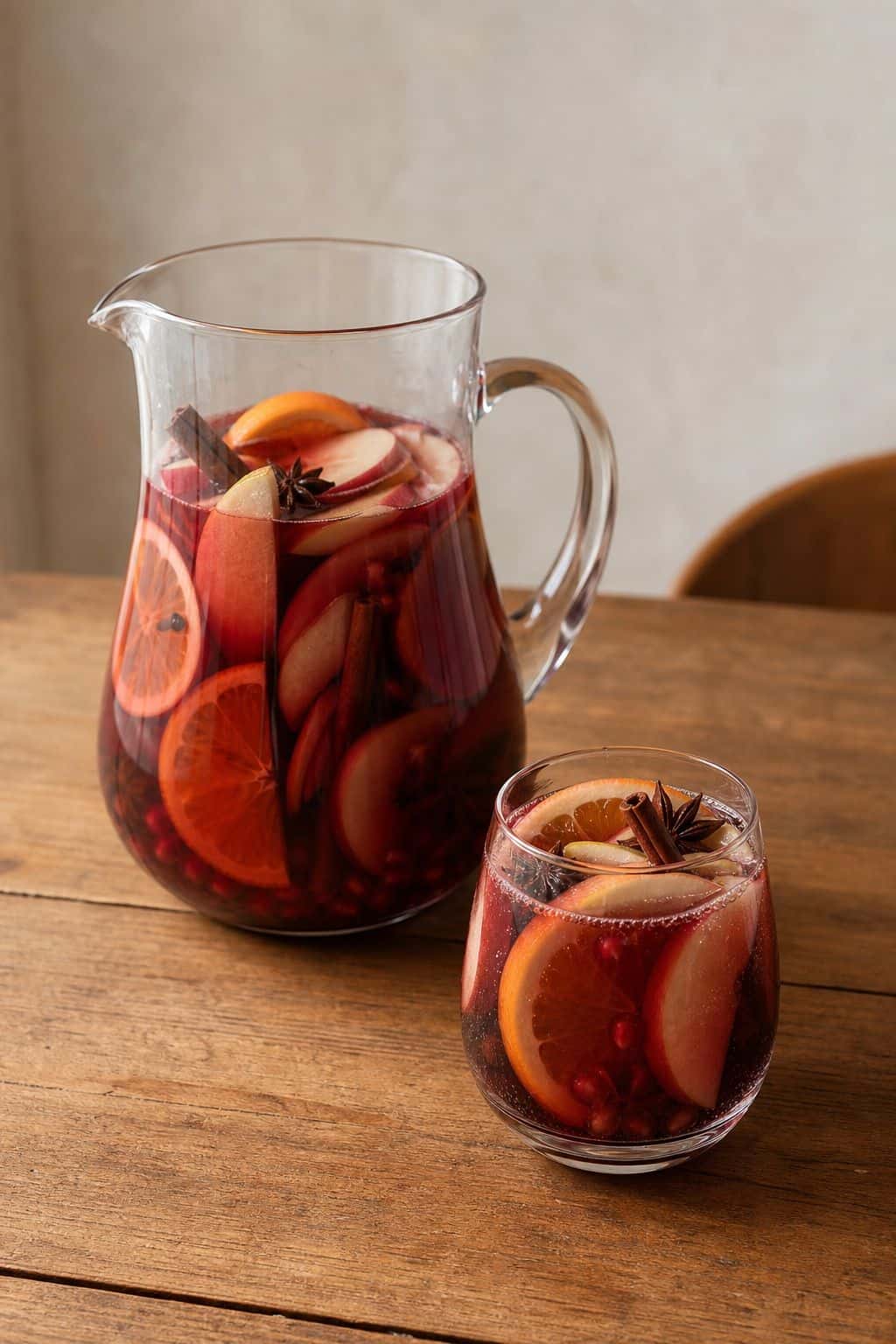
Prep time: 15 minutes | Chill time: 4 hours minimum (overnight is better) | Total time: 4 hours 15 minutes | Serves: 6 to 8
Ingredients
- 1 bottle (750 ml) Spanish Garnacha or off-dry Riesling
- 360 ml (1 1/2 cups) fresh unfiltered apple cider
- 120 ml (1/2 cup) brandy (for red) or pear liqueur (for white)
- 60 ml (1/4 cup) fresh lemon juice, from about 2 lemons
- 60 ml (1/4 cup) simple syrup, or to taste
- 2 crisp apples (Honeycrisp or Pink Lady), cored and sliced into thin rounds
- 1 firm pear (Bosc or Anjou), cored and sliced into thin rounds
- 1 orange, sliced into thin rounds
- 60 g (1/2 cup) pomegranate seeds
- 2 cinnamon sticks
- 4 whole cloves
- 3 star anise pods
- 240 to 360 ml (1 to 1 1/2 cups) chilled prosecco or sparkling cider, for serving
Instructions
- Toss the sliced apple and pear with the 60 ml (1/4 cup) fresh lemon juice in a small bowl. Coat every cut surface. This single move is the difference between a sangria that looks bright the next morning and one that looks like a graveyard of brown apple slices.
- Combine the bottle of wine, 360 ml (1 1/2 cups) apple cider, 120 ml (1/2 cup) brandy or pear liqueur, and 60 ml (1/4 cup) simple syrup in a large glass pitcher. Stir gently with a bar spoon until integrated.
- Add the lemon-tossed apples and pears (and any lemon juice still in the bowl), the orange rounds, the pomegranate seeds, the 2 cinnamon sticks, the 4 cloves, and the 3 star anise pods.
- Cover the pitcher with plastic wrap or a lid and refrigerate for at least 4 hours. Overnight is better. The fruit pectin needs time to break down and pull the wine’s acidity into balance with the cider’s sweetness.
- Taste right before service. The sangria should read as wine forward with a clear apple note and warm spice in the finish. If it leans tart, add a tablespoon more simple syrup. If it leans flat, a squeeze of lemon snaps it back.
- Pour into rocks or wine glasses, leaving room at the top of each glass for the float. Top each pour with about 45 ml (1 1/2 ounces) of chilled prosecco (for the red) or sparkling cider (for the white). The float restores the carbonation that overnight maceration kills.
Notes
Don’t add the prosecco to the pitcher. It goes glass by glass at service. Adding it to the full pitcher means the second guest’s glass is flat by the time the third guest’s pour begins.
The 4-hour minimum is real. At 1 hour, the sangria tastes like wine with fruit floating in it. At 4 hours, the fruit’s sugar has integrated. At 12 hours (overnight), the spices have bloomed and the sangria has a cohesive arc.
If the sangria has been sitting in the fridge for more than 24 hours, fish out and discard the cinnamon, cloves, and star anise. Past that window the spices over-extract and the drink reads as a winter potpourri.
Tips and Variations
Red vs white: pick by the menu
Red sangria fits a meat-and-cheese dinner (turkey, pork, hard cheese boards, sage and rosemary mains). White sangria fits a lighter or seafood-leaning menu (roast chicken, soft cheese, butternut squash, salads). For a Friendsgiving spread that covers both, make a half batch of each.
Sparkling cider for a non-alcoholic float
The prosecco float adds alcohol and carbonation. If you want carbonation without bumping the proof, use a chilled sparkling cider (Martinelli’s, Treetop) or a dry sparkling water (Topo Chico). The drink loses about half a percent ABV per glass with this swap, which is the right call for guests pacing themselves.
Toss the apples in lemon, always
The lemon-juice step takes 30 seconds and is the difference between sangria-looking sangria and a pitcher that looks like the apples turned. Don’t skip it even if you’re serving the same hour.
Two cinnamon sticks, four cloves, three star anise: stop there
Past those numbers, the spice eats the wine. The spice-to-bottle ratio is the line between a sangria that’s spiced and a sangria that tastes like mulled wine that forgot to be warm. Stick to the count, don’t free-pour.
Make-ahead and storage
Sangria base (everything but the float) holds for 48 hours in the fridge. Fish out the whole spices at 24 hours. The fruit will look slightly soft after 24 hours but still tastes fine. For a longer make-ahead window, prep all the fruit (lemon-tossed) and dry components in a sealed container, hold the wine and cider separately, and combine the morning of.
Glassware and How to Serve
Rocks glasses with a single large ice cube hold the sangria’s body without over-diluting. Standard white-wine glasses work for the white version. Avoid stemless wine tumblers, which warm in the hand and kill the chilled-drink moment within minutes.
Serve from the pitcher at the table, or pour at the bar and hand the glasses around. The pour itself is part of the dinner-party theater, and the fruit and spice in the pitcher do the photographic work. A small footed bowl of extra pomegranate seeds on the table lets guests top up their own glass between courses.
Frequently Asked Questions
How long does autumn sangria need to sit?
Four hours minimum, overnight is better. The fruit pectin needs that time to break down and the spices need time to bloom. At 1 hour, the sangria still tastes like wine with fruit floating in it.
What wine is best for fall sangria?
For the red version, a fruity Spanish Garnacha (Borsao, Las Rocas) or a Beaujolais. For the white version, an off-dry Riesling. Avoid heavy oaked reds (Cabernet, Malbec) and oaked Chardonnay. The wine should be fruit-forward, not woody.
Should fall sangria be red or white?
Both work. Red fits meat-heavy menus (turkey, pork, hard cheeses). White fits lighter menus (roast chicken, soft cheese, vegetable-forward spreads). Make both if the meal spans the range.
How do you keep apples from browning in sangria?
Toss the sliced apples in fresh lemon juice before they hit the wine. The acid stops the enzymatic browning. This is the only reliable fix, and it takes 30 seconds.
Can you make sangria the night before?
Yes, and it tastes better. Build the base (wine, cider, brandy, syrup, fruit, spices) the night before. Refrigerate. Fish out the whole spices at 24 hours so they don’t over-extract. Add the prosecco float glass by glass at service.
Key Takeaways
- Use Garnacha for red, off-dry Riesling for white. Skip oaked wines.
- Fresh unfiltered apple cider tastes significantly better than shelf-stable.
- Toss apples in lemon juice before adding to prevent browning.
- 4 hours minimum in the fridge, overnight is better.
- Add prosecco float glass by glass at service, never to the pitcher.
- Fish out whole spices at 24 hours to prevent over-extraction.
Final Thoughts
Autumn sangria is the host’s drink. It does the work, holds in the fridge, and frees up the cocktail hour for the food. A pitcher on the table reads as generous in a way a cocktail menu never can.
If the menu is meat-heavy, go red. If it’s lighter, go white. Either way, the move is the prosecco float at service, which is what separates fall sangria from sad sangria that’s been sitting in a pitcher too long.
Autumn Sangria
Autumn sangria is a wine-based punch built on apple cider, seasonal fruit (apples, pears, pomegranate), and warming spices (cinnamon, clove, star anise). Use a fruity Spanish Garnacha for red, dry Riesling for white.
Ingredients
- 1 bottle (750 ml) Spanish Garnacha or off-dry Riesling
- 360 ml (1 1/2 cups) fresh unfiltered apple cider
- 120 ml (1/2 cup) brandy (for red) or pear liqueur (for white)
- 60 ml (1/4 cup) fresh lemon juice, from about 2 lemons
- 60 ml (1/4 cup) simple syrup, or to taste
- 2 crisp apples (Honeycrisp or Pink Lady), cored and sliced into thin rounds
- 1 firm pear (Bosc or Anjou), cored and sliced into thin rounds
- 1 orange, sliced into thin rounds
- 60 g (1/2 cup) pomegranate seeds
- 2 cinnamon sticks
- 4 whole cloves
- 3 star anise pods
- 240 to 360 ml (1 to 1 1/2 cups) chilled prosecco or sparkling cider, for serving
Instructions
- Toss the sliced apple and pear with the 60 ml (1/4 cup) fresh lemon juice in a small bowl. Coat every cut surface.
- Combine the bottle of wine, 360 ml (1 1/2 cups) apple cider, 120 ml (1/2 cup) brandy or pear liqueur, and 60 ml (1/4 cup) simple syrup in a large glass pitcher. Stir gently with a bar spoon until integrated.
- Add the lemon-tossed apples and pears (and any lemon juice still in the bowl), the orange rounds, the pomegranate seeds, the 2 cinnamon sticks, the 4 cloves, and the 3 star anise pods.
- Cover the pitcher with plastic wrap or a lid and refrigerate for at least 4 hours. Overnight is better. The fruit pectin needs time to break down and pull the wine's acidity into balance with the cider's sweetness.
- Taste right before service. The sangria should read as wine forward with a clear apple note and warm spice in the finish. If it leans tart, add a tablespoon more simple syrup. If it leans flat, a squeeze of lemon snaps it back.
- Pour into rocks or wine glasses, leaving room at the top of each glass for the float. Top each pour with about 45 ml (1 1/2 ounces) of chilled prosecco (for the red) or sparkling cider (for the white).
Notes
Don't add the prosecco to the pitcher. It goes glass by glass at service. Adding it to the full pitcher means the second guest's glass is flat by the time the third guest's pour begins.
The 4-hour minimum is real. At 1 hour, the sangria tastes like wine with fruit floating in it. At 4 hours, the fruit's sugar has integrated. At 12 hours (overnight), the spices have bloomed and the sangria has a cohesive arc.
Last update on 2026-08-08 / Affiliate links / Images from Amazon Product Advertising API