
Quick answer: The case for avocado deviled eggs rests on a single structural move: the avocado is not a flavor swap, it is a fat swap. One small ripe Hass per 6 yolks is the working ratio, mashed with the yolks plus a full tablespoon of fresh lime juice, a teaspoon of Dijon, and 1/4 teaspoon salt. The lime does double duty as antioxidant and acid, locking the filling green for the 4-hour window between piping and serving. Twelve halves, 28 minutes, the modern green-piped version that takes the Easter table somewhere the canonical mayo plate cannot.
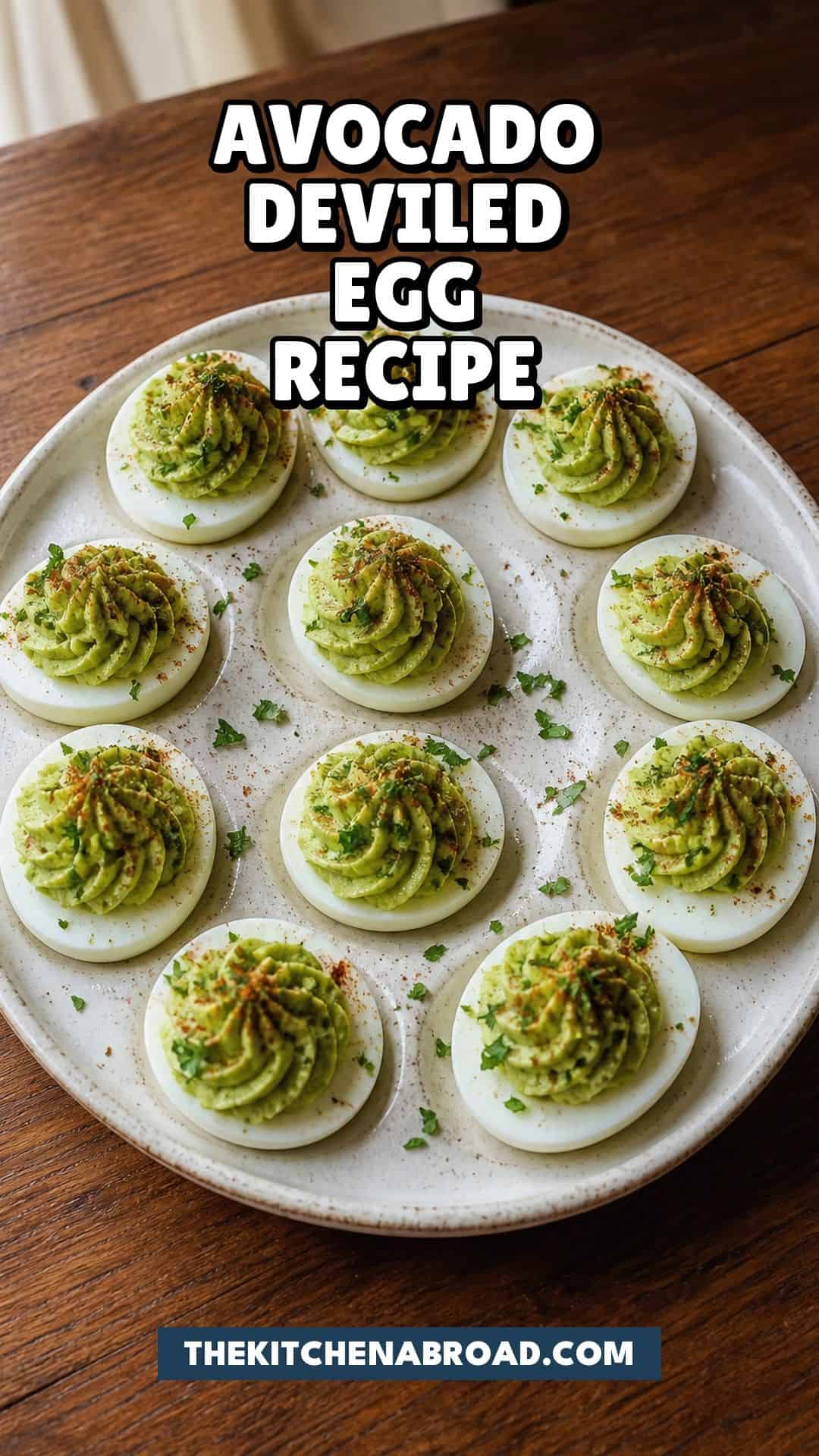
This is the modern creamy-avocado-mash variant of the American deviled egg, which is to say the one that belongs on the Easter brunch table next to the ham, on the Cinco de Mayo spread next to the elote, on the paleo-friendly appetizer board where mayo-based foods feel out of place. Avocado replaces mayonnaise structurally; lime replaces lemon to hold the green; cilantro pulls the filling into Tex-Mex anchor territory. For the reference standard, our canonical mayo-Dijon-paprika version holds that lane; for the single-ingredient pimenton upgrade, the smoked paprika variation takes the smoky turn. This post owns the dairy-free, green-piped, modern lane.
Recommended Products
The kit is short and reusable: a pastry piping bag with a star tip for the green rosette that signals deliberate composition, a ceramic deviled-egg platter with shallow wells so the twelve halves stay steady, an 8-inch chef’s knife for halving the boiled eggs cleanly without dragging the white, a hand-held lime juicer for the antioxidant pour that does the structural work, and a stainless steel pot tall enough to steam the eggs over an inch of simmering water.


Recommended Reads
- Deviled Eggs Recipe
- Deviled Eggs with Smoked Paprika
- Best Easter Dinner Ideas
- Best Easter Snacks
- Friendsgiving Appetizer Ideas
Where Avocado Deviled Eggs Came From
The American deviled egg is a Reconstruction-era inheritance: mayonnaise, mustard, paprika, a Pyrex platter, the Southern church-supper backbone that carried the dish through the 20th century. Its first real reinvention came from Tex-Mex’s national breakout in the 1980s, when avocado and jalapeno moved out of the Southwest and into mainstream American party food. Cooks in Texas and the broader South began folding avocado into the canonical filling around that period, and by the late 1980s “Tex-Mex deviled eggs” had become a regional standard in Southern Living and Houston Chronicle clippings.
The full structural swap, where avocado replaces mayonnaise rather than joining it, arrived with the 2010s Whole30 and paleo wave. Cooks chasing dairy-free, sugar-free, mayo-free versions of buffet classics found that one ripe Hass had enough fat to do the binding job mayo had done for a hundred years. From there, the avocado version became the default “deviled egg with a twist” on modern Easter and bridal-shower spreads, the green a deliberate contrast to the pale-yellow original. The recipe below holds to that lineage: Southern classic, Tex-Mex re-read, modern dietary-flexible green.
A Few Notes on the Ingredients
- Hass avocados: Hass carries the highest fat-to-flesh ratio of any common variety, and that fat is what replaces mayonnaise structurally rather than just flavoring the filling. Fuerte and Bacon mash thin and the filling slumps under the star tip rather than holding the rosette.
- Ripeness: The avocado should yield gently to thumb pressure at the stem end, with no soft spots and no fibrous strings. Under-ripe will not mash smooth, and over-ripe browns faster and tastes flat.
- Lime juice: Use lime, not lemon. Lime sits in the savory-herbal register that pairs with cilantro and Tex-Mex notes, and fresh lime juice has slightly more ascorbic acid by volume than lemon, which slows the enzyme that browns avocado. A full tablespoon per small Hass is the working dose.
- Cilantro: Pick cilantro or chive, not both. Cilantro pushes the filling toward guacamole-deviled territory, which is the Tex-Mex anchor this recipe is built for. Chive keeps it dinner-party neutral but throws away the cultural through-line.
- Greek yogurt: The optional tablespoon adds quiet tang without dairy heaviness and lifts the brightness. Skip it for Whole30, paleo, or dairy-free compliance and use extra avocado in its place.
- Timing: Once the avocado meets air, the clock starts. Filling alone holds 8 hours pressed flat under plastic; piped onto whites, the cut surfaces dull within 4 hours.
Recipe: Avocado Deviled Eggs
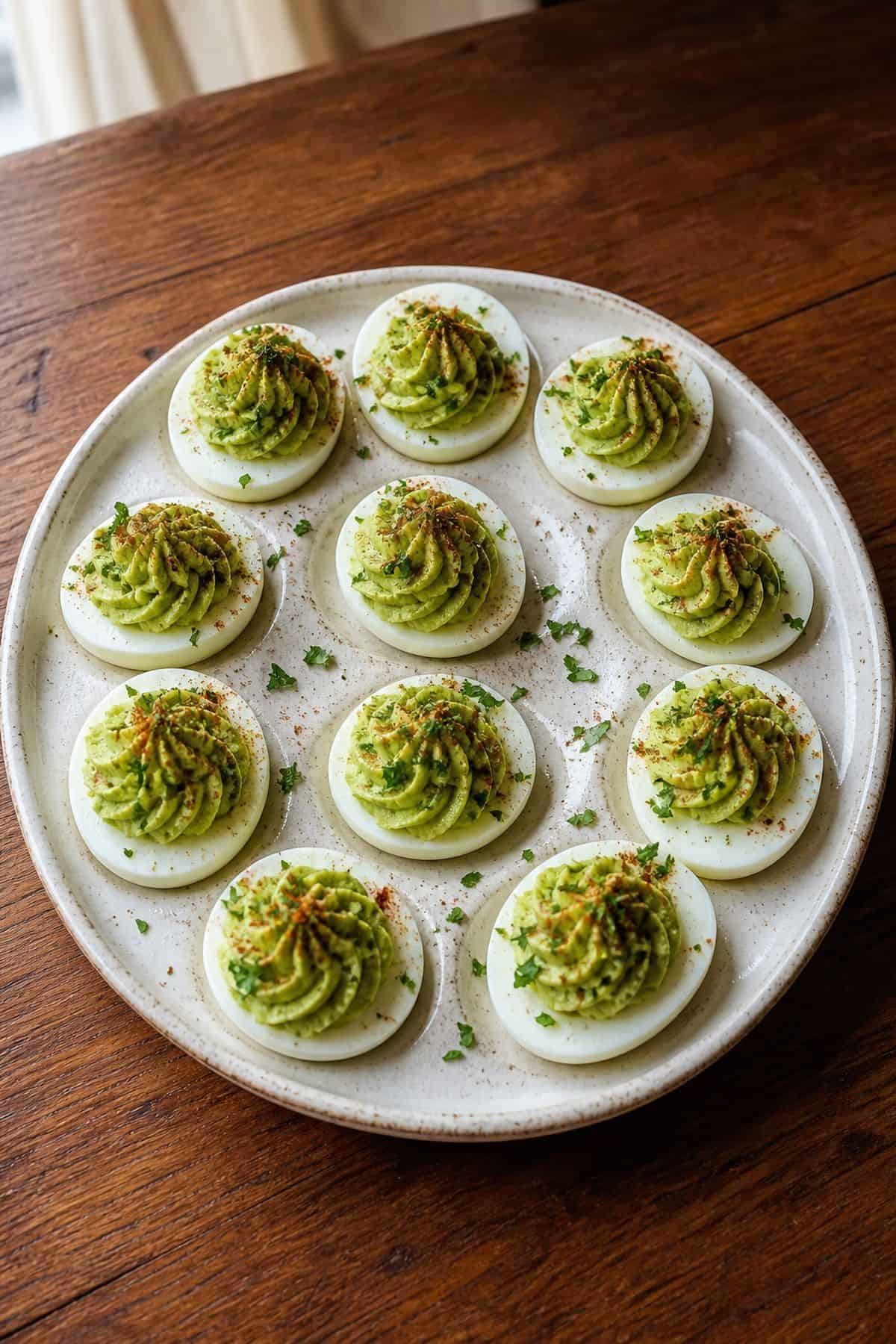
Prep time: 15 minutes | Cook time: 13 minutes | Total time: 28 minutes | Serves: 6 (12 halves)
Ingredients
- 6 large eggs
- 1 small ripe Hass avocado
- 1 tbsp (15 ml) fresh lime juice
- 1 tbsp (15 g) plain Greek yogurt or extra avocado
- 1 tsp Dijon mustard
- 1/4 tsp fine sea salt
- 1 pinch black pepper
- 1 pinch cayenne
- 2 tbsp (4 g) fresh cilantro, finely chopped, plus extra for garnish
- Smoked paprika, for dusting (optional)
Instructions
- Set a steamer basket in a large stainless steel pot and add 1 inch (2.5 cm) of water. Bring to a steady boil over high heat with the lid on so the steam builds. Lower the 6 eggs directly from the fridge into the basket, replace the lid, and set a digital timer for 13 minutes. Keep the heat on high for the full duration.
- While the eggs steam, fill a large bowl with cold water and ice. At the 13-minute mark, transfer the eggs straight from the basket to the ice bath using a slotted spoon. Let them sit in the ice bath for 10 full minutes; the shock is what releases the membrane from the white and stops the cook before the yolk turns gray.
- Peel the eggs one at a time under a thin stream of cold running water. Tap the wide end first to crack, then roll the egg gently against the counter and start the peel where the air pocket sits. The shell should come off in two or three large pieces.
- Halve the eggs lengthwise with a sharp 8-inch chef’s knife. Wipe the blade between cuts so the yolks separate cleanly. Pop the yolks out into a medium bowl and arrange the whites on the ceramic platter, hollow side up.
- Halve, pit, and scoop the flesh of the small ripe Hass avocado into the bowl with the yolks. Add the 1 tbsp (15 ml) lime juice immediately so the antioxidant starts working before the air does. Add the 1 tbsp (15 g) Greek yogurt (or extra avocado), 1 tsp Dijon, 1/4 tsp salt, pinch of black pepper, pinch of cayenne, and the 2 tbsp (4 g) chopped cilantro.
- Mash with a fork until completely smooth and pipe-able, roughly 60 seconds. The filling should hold a soft peak when you lift the fork; if it slumps flat, the avocado was too large or the yolks too few. A pulse in a small food processor is acceptable here if your avocado is borderline ripe and the mash leaves visible lumps.
- Transfer the filling to a piping bag fitted with a Wilton 1M open star tip. Pipe a tall rosette into each white, working from the outside in so the swirl finishes at a peak in the center.
- Dust the tops lightly with smoked paprika, holding the shaker 6 inches (15 cm) above the platter for an even coat. Scatter extra chopped cilantro across the platter rather than directly onto the rosettes so the green stays sharp. Serve within 4 hours of assembly.
Notes
The assembled platter holds cleanly for 4 hours once piped. After that the cut surfaces of the rosettes begin to dull from bright green to olive, even with lime in the filling, because the air contact at the piped surface eventually overwhelms the antioxidant load. For Easter brunch, pipe at 11 a.m. for a noon meal, not the night before.
The filling alone, with plastic wrap pressed directly to the surface so no air pocket sits between wrap and avocado, holds 8 hours in the fridge. This is the make-ahead path: boil and peel the eggs the day before, mix the filling the morning of, store it pressed flat in a piping bag or covered bowl, and pipe within the 4-hour window before serving.
The ripeness rule is non-negotiable. An under-ripe Hass mashes lumpy and gives a filling with visible green-white streaks; an over-ripe one tastes oxidized before it even hits the lime. Buy three days ahead if you can, ripen on the counter, then refrigerate the moment the avocado yields to thumb pressure.
Tips and Variations
Why Avocado Replaces Mayonnaise Structurally (Not Just Flavors It)
Mayonnaise does two jobs in a canonical deviled egg: it binds the dry crumbly yolk into a pipe-able paste, and it lubricates the filling so it pushes through a star tip without dragging. A ripe Hass avocado has enough fat (roughly 22 grams per medium fruit, mostly monounsaturated) and enough water-bound flesh to do both jobs at once. The result is not a “mayo-flavored” filling; it is a structurally different filling that happens to look similar from across the room. This is why the avocado version is not a substitution recipe but its own lane.
The 4-Hour Browning Window (Why Lime Buys You Time)
Avocado browns because polyphenol oxidase, the enzyme that lives in the flesh, reacts with oxygen in the air to produce melanin-like compounds. Ascorbic acid in lime juice slows that reaction by donating electrons to the enzyme before oxygen can. A full tablespoon of fresh lime per small Hass is the working antioxidant dose; less and the filling dulls within two hours. Even with the full dose, piped rosettes hold their cut-surface green for about 4 hours before the dulling becomes visible. Storage in the bowl, with plastic pressed directly to the surface, doubles that window to roughly 8 hours.
How Ripe the Avocado Needs to Be
The avocado should yield gently to thumb pressure at the stem end without leaving an indent that sits. The little brown nubbin where the stem was should pop off cleanly to reveal bright green underneath; if it lifts to expose brown, the avocado is past its prime. Soft spots indicate localized over-ripeness and bring brown streaks into the filling. Under-ripe Hass will not mash smooth no matter how long you work the fork, and the filling will read pebbly through the star tip. Buy three days ahead and ripen on the counter for control.
The Tex-Mex Variation with Pickled Jalapeno
Pull the dish further into Tex-Mex territory by folding 1 tablespoon of finely diced pickled jalapeno into the filling and topping each rosette with a thin slice of fresh jalapeno (or a ring of pickled). The brine from the jar adds a vinegar lift that compounds with the lime, the heat sits in the back of the palate without overwhelming the avocado, and the visual reads explicitly Mexican-inflected on a Cinco de Mayo or taco-night spread. Cilantro becomes mandatory in this variation; the cilantro-jalapeno-lime triangle is what makes it read coherent rather than scattered.
Making This Dairy-Free / Whole30 / Paleo Compliant
Skip the Greek yogurt entirely and use extra avocado in its place (an additional 1 tablespoon mashed flesh). The filling holds together on avocado alone because the yolks add their own binding fat. Verify your Dijon mustard is sugar-free for Whole30, which most are but some specialty brands are not. Smoked paprika and cayenne are compliant across all three protocols. The result is identical in texture and flavor to the version with yogurt, just a quarter-teaspoon less brightness on the back of the palate. For keto, the dish is naturally compliant; one half-egg runs roughly 1 gram of net carbs.
What to Serve It With
Avocado deviled eggs land naturally on a short list of modern American spreads: Easter brunch alongside glazed ham, asparagus, and hot cross buns where the green contrasts the pinks and yellows of the rest of the table; summer picnics where mayo-based foods feel risky in the heat; Mexican-themed parties (Cinco de Mayo, taco night, fiesta showers) where the cilantro and lime do the cultural anchoring; and the “healthier appetizer table” for paleo, Whole30, keto, or dairy-free crowds where mayo-based versions are off-limits. Pairs cleanly with crisp white wine, mezcal palomas, sparkling water with lime, and anything citrus-forward.
FAQ
How do you keep avocado deviled eggs from turning brown?
Two tactics stack: a full tablespoon of fresh lime juice mashed directly into the filling, and plastic wrap pressed flush to the surface in storage. The lime’s ascorbic acid slows polyphenol oxidase (the browning enzyme) by donating electrons before oxygen can. The pressed plastic eliminates the air pocket that would otherwise sit between the wrap and the filling. Assemble within 4 hours of serving and the piped rosettes stay bright green through the meal.
Can you make avocado deviled eggs the night before?
Not fully assembled, no. The cut surfaces of the piped rosettes start to dull within 4 hours regardless of lime content. The make-ahead path is split: boil and peel the eggs up to 24 hours ahead and store them whole in the fridge, mix the filling the morning of and keep it sealed in a piping bag with plastic pressed against the contents, then pipe within 4 hours of serving. Filling alone holds 8 hours under proper seal; piped eggs hold 4.
How ripe should the avocado be?
The avocado should yield gently to thumb pressure at the stem end without leaving a lasting dent, and the stem nubbin should pop off to reveal bright green underneath. Soft spots indicate over-ripeness and bring brown streaks into the filling; under-ripeness leaves a lumpy mash that will not pipe smoothly. Buy three days ahead, ripen on the counter, and refrigerate the moment the fruit hits the right yield to lock the window.
Lime or lemon for avocado deviled eggs?
Lime. Two reasons. Fresh lime juice carries slightly more ascorbic acid by volume than lemon, which means more antioxidant per tablespoon for the browning fight. And lime sits in the savory-herbal flavor register that pairs with cilantro and the Tex-Mex DNA the recipe is built on; lemon turns the filling vaguely brunchy and breaks the cultural anchor. This is why guacamole has used lime for a century, and the same logic carries cleanly into the deviled-egg context.
Can you freeze avocado deviled eggs?
No. Avocado weeps liquid on thaw and the texture turns watery and grayed; egg whites turn rubbery and lose their structural snap once frozen and defrosted. Neither component holds up. Make the recipe within 24 hours of serving and plan around the 4-hour piped window rather than freezing.
Are avocado deviled eggs paleo, Whole30, or keto compliant?
Yes for all three, with one adjustment. Skip the Greek yogurt and use an additional tablespoon of avocado flesh in its place; the filling binds on avocado alone because the yolks contribute their own fat. Verify your Dijon mustard is sugar-free for strict Whole30 compliance (most are, but a few specialty brands sneak honey or cane sugar in). The recipe is naturally keto-friendly at roughly 1 gram net carbs per half-egg.
Key Takeaways
- The working ratio is 1 small ripe Hass avocado per 6 yolks, plus 1 tablespoon fresh lime juice and 1 teaspoon Dijon. Avocado replaces mayonnaise structurally, not just by flavor.
- Use ripe Hass only. Fuerte and Bacon varieties run too watery to hold a piped rosette; ripeness matters more than variety even within Hass.
- Lime, not lemon. More ascorbic acid for the antioxidant fight, and the savory-herbal flavor register anchors the cilantro and Tex-Mex notes.
- The 4-hour piped window is the hard rule. Filling alone holds 8 hours pressed flat under plastic; assembled rosettes hold 4 before the cut surfaces dull.
- Pick cilantro or chive, not both. Cilantro for the Tex-Mex anchor; chive for dinner-party neutral. We recommend cilantro for this recipe.
- Naturally dairy-free, paleo, Whole30, and keto compliant when the optional Greek yogurt is replaced with extra avocado.
Final Thoughts
The avocado deviled egg is not a swap recipe and not a “healthier” recipe. It is the modern green-piped variant of an American classic, built on the structural truth that one ripe Hass per 6 yolks does exactly the binding work that 3 tablespoons of mayonnaise does in the canonical version. The lime is not garnish; it is the antioxidant load that holds the filling green for the 4-hour window between assembly and the table.
The single move that changes the result most is the ripeness check on the avocado. An under-ripe fruit ruins the texture and an over-ripe one ruins the color, and the difference is 24 hours on the counter either way. Buy three days ahead, watch the yield, and refrigerate the moment the avocado is ready. Add the lime in the mash, pipe through a Wilton 1M, scatter cilantro across the platter, and the recipe sits cleanly in its own lane on the Easter table.
Make a dozen halves for a small Easter brunch, twenty-four for a Cinco de Mayo spread, thirty-six for a summer picnic that runs hot. Prep the eggs the night before, hold the filling pressed flat under plastic, and pipe within 4 hours of serving. The green stays sharp, the rosettes stand tall, and the platter clears as fast as the canonical version does, just from the opposite end of the buffet.
Avocado Deviled Eggs
Avocado deviled eggs replace some or all of the mayonnaise with ripe avocado, lime, mustard, and cooked egg yolks. Use a ripe but not stringy avocado, season with enough acid and salt, and fill the eggs close to serving so the green filling stays fresh.
Ingredients
- 6 large eggs
- 1 small ripe Hass avocado
- 1 tbsp (15 ml) fresh lime juice
- 1 tbsp (15 g) plain Greek yogurt or extra avocado
- 1 tsp Dijon mustard
- 1/4 tsp fine sea salt
- 1 pinch black pepper
- 1 pinch cayenne
- 2 tbsp (4 g) fresh cilantro, finely chopped, plus extra for garnish
- Smoked paprika, for dusting (optional)
Instructions
- Steam or boil eggs until hard-cooked, then chill in ice water.
- Peel eggs, halve lengthwise, and remove yolks.
- Mash avocado with lime juice, mustard, salt, and pepper.
- Add yolks and mash until smooth. Mix in mayonnaise or yogurt if you want a softer filling.
- Taste and adjust with more lime or salt.
- Spoon or pipe into the egg whites.
- Top with herbs, paprika, jalapeno, or hot sauce. Serve chilled.
Notes
The filling is best the day it is made. Lime slows browning but does not stop it completely.
Last update on 2026-08-11 / Affiliate links / Images from Amazon Product Advertising API