
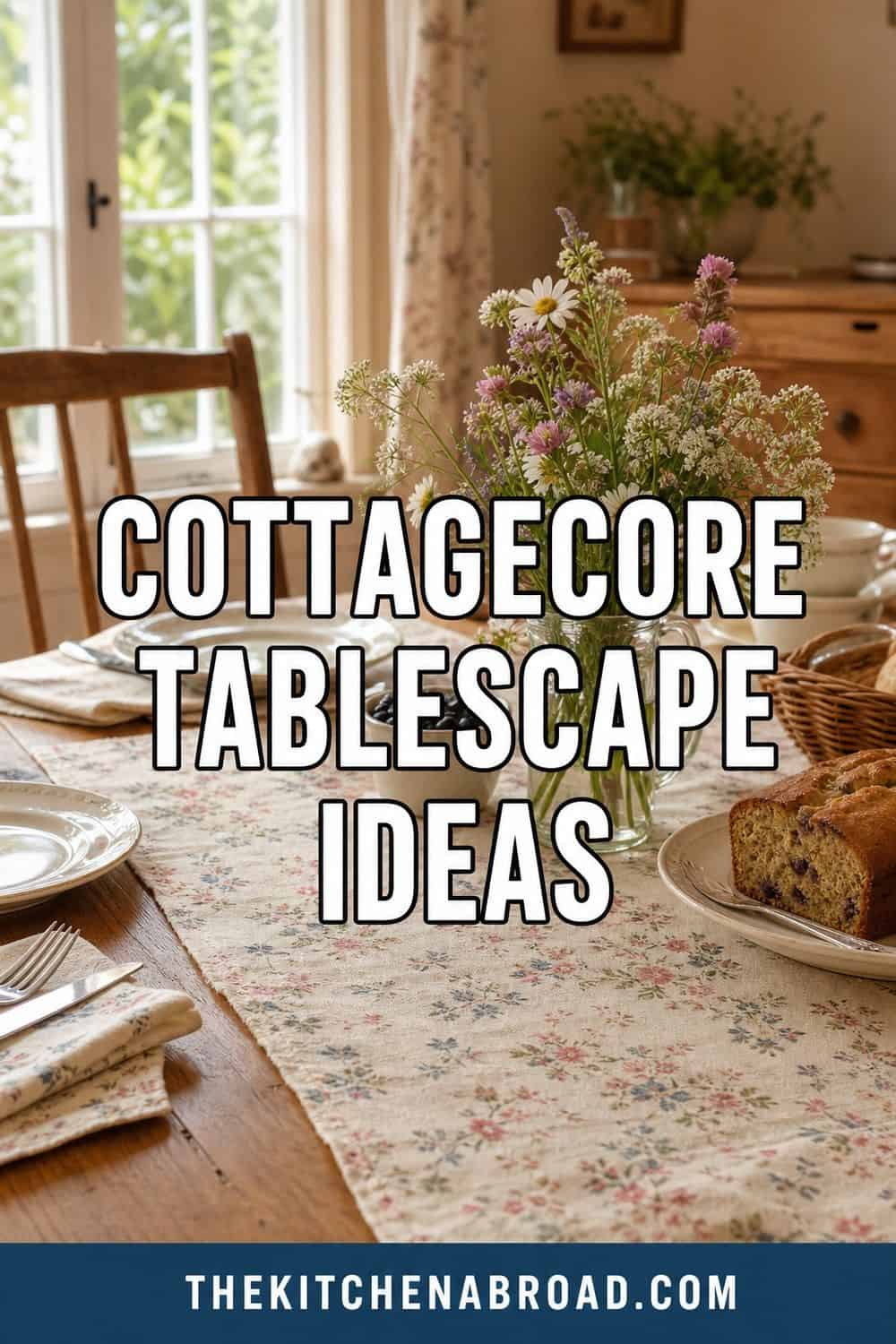
The best cottagecore tablescape ideas start with one floral anchor, then layer vintage china, linen napkins, low bud vases, wicker, candlelight, and useful serving pieces like a bread basket, butter dish, cake stand, or pitcher. Keep flowers below eye level, repeat a soft color palette, and leave room for platters and glasses. The table should feel garden-collected and nostalgic, but still easy to eat from.
A cottagecore table can get crowded quickly if every floral plate, lace detail, candle, vase, and ribbon shows up at once. The prettiest version usually has one strong pattern, a few useful layers, low flowers, and enough open space for food.
For a softer home-hosted version, think less event styling and more garden tea table that can handle real plates, bread, butter, water, and dessert. The goal is vintage charm with practical sightlines, budget-friendly pieces, and serving flow that still works once guests sit down.
Top Recommended Products


You Might Also Like These Blog Posts
- Cottagecore Dinner Party Ideas
- Tablescape Ideas
- Garden Party Food Ideas
- Mother’s Day Tea Hosting Ideas
- Vintage Garden Dinner Party Ideas
1. Faded Floral Tablecloth

Floral cotton sets the mood before any plates or flowers reach the table. Choose a faded garden print, small botanical pattern, or soft rose cloth in cream, blush, sage, butter yellow, or faded blue. A washable fabric matters if the table will hold bread, butter, tea, jam, or dinner plates instead of sitting untouched for a photo.
Once the cloth is patterned, keep some other layers quieter. Solid napkins, simple glassware, and low flowers give the table air so the print feels charming rather than crowded.
2. Lace Runner Down the Center
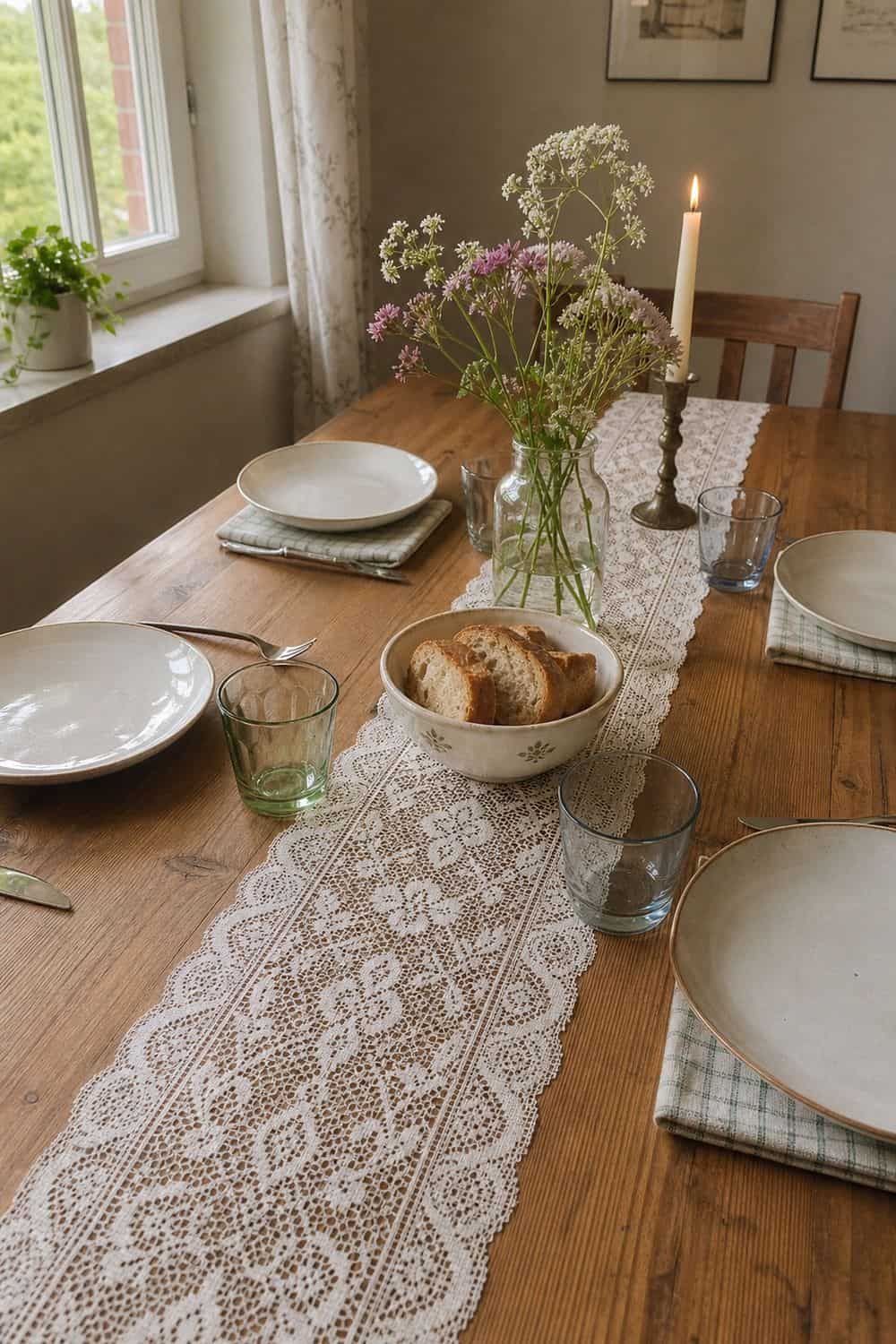
A lace runner gives the center of the table a little softness without using a full printed cloth. It looks prettiest over bare wood, a plain cream tablecloth, or rumpled linen where the lace can show its texture.
Treat the runner as a narrow lane for bud vases, candles, or one low fruit bowl, then leave the place settings calmer. If the china, napkins, and flowers are already patterned, skip the lace or choose a very simple trim so the table feels layered rather than tangled.
Check the runner width before setting plates. A wide lace piece can bunch under glasses, while a narrow one keeps the center pretty and usable.
3. Vintage Floral China by Color

Vintage floral china feels collected when the plates share one quiet thread. Choose pieces with a similar background color, border tone, or flower family, then repeat that color in napkins, ribbon, glassware, or the actual flowers. Pink roses, blue vines, and green sprigs can sit together if one shade clearly leads the table.
Check size alongside pattern. Dinner guests need room for a proper meal, so save tiny dessert plates for bread, sweets, or side salads instead of forcing them into the main place setting.
4. Transferware Salad Plates
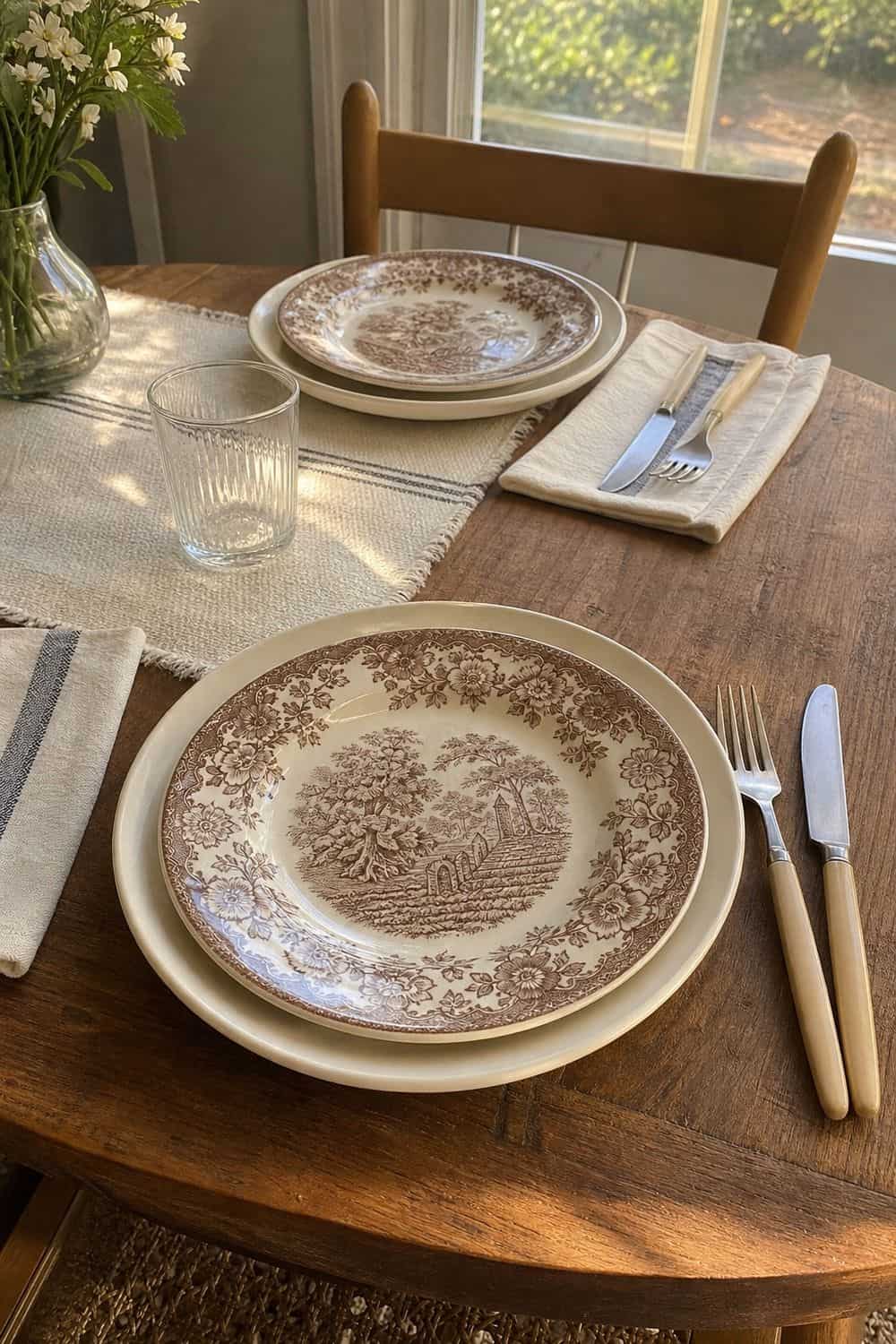
Transferware salad plates are a lovely way to bring in pattern without making every layer floral. Set blue, brown, pink, green, or red transferware over plain dinner plates, then pull that same color into one other detail, such as napkins, ribbon, flowers, or glassware. The repeat is what makes the table feel collected instead of random. This also lets you use a few thrifted or inherited plates even if you do not own a full matching set for every seat.
5. Dusty Rose Linen Napkins

Linen napkins can pull one color from the tablecloth or china and make the whole setting feel calmer. Dusty rose is especially pretty with faded florals, cream plates, wicker, brass, and soft green stems, but sage, butter yellow, cream, and faded blue work just as well if they suit your pieces better.
Fold the napkins simply across the plate, under the fork, or beside a bread plate. A soft cottagecore table does not need fancy shapes; the relaxed fold is part of the charm.
6. Napkins With Velvet Ribbon
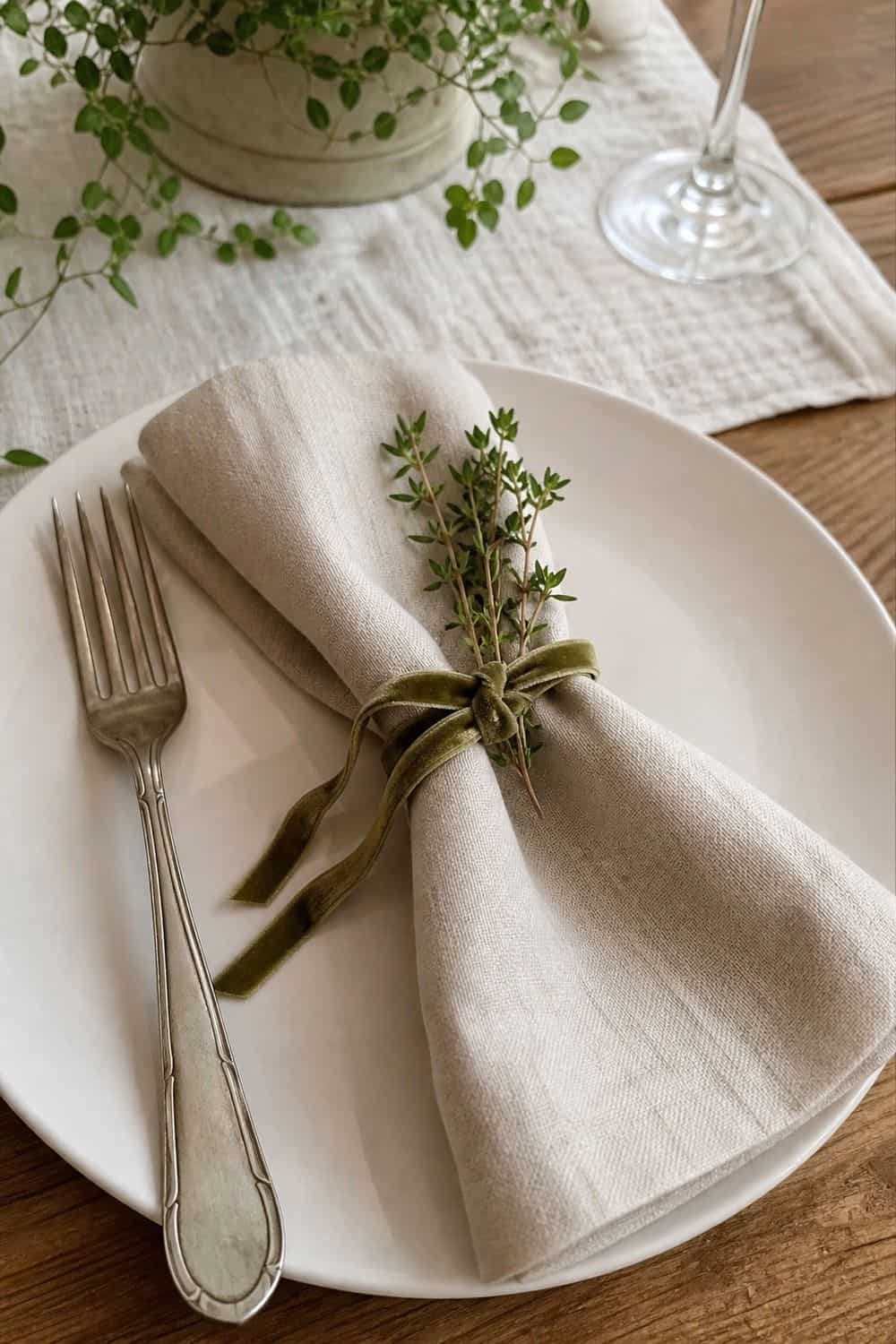
Narrow velvet ribbon gives each place setting a handmade detail without adding another dish or vase. Tie it around napkins, cutlery bundles, small menu cards, or seed packet favors, using one ribbon color pulled from the flowers or plates. Keep the bows loose enough for guests to open easily. A table can look lovely before dinner and still become irritating if everyone has to tug apart a tight knot before they can eat, especially at brunch or afternoon tea service.
7. Bud Vases With Garden Flowers

Several small bud vases usually work better on a dinner table than one tall bouquet. They keep the flower line low, let guests see each other, and can be shifted when platters arrive. Try roses, chamomile, cosmos, ranunculus, sweet peas, daisies, herbs, or clipped garden stems.
Mix heights gently, but sit down and check the view across the table. Leave blank space between vases so bread, water, and serving spoons still have somewhere to land once the meal starts and plates arrive.
8. Jam Jars for Casual Flowers

Jam jars are a budget-friendly way to make flowers feel casual and collected. They work well for grocery-store stems, garden clippings, daisies, mint, chamomile, or small roses. Wash each jar thoroughly and remove sticky labels before it goes near linens or plates. Two or three jar heights can look sweet, but keep them low enough for conversation. If the jars are tiny, group them along a runner instead of sprinkling them everywhere, which can make the table feel messy rather than charming.
9. Flowers in a Ceramic Pitcher
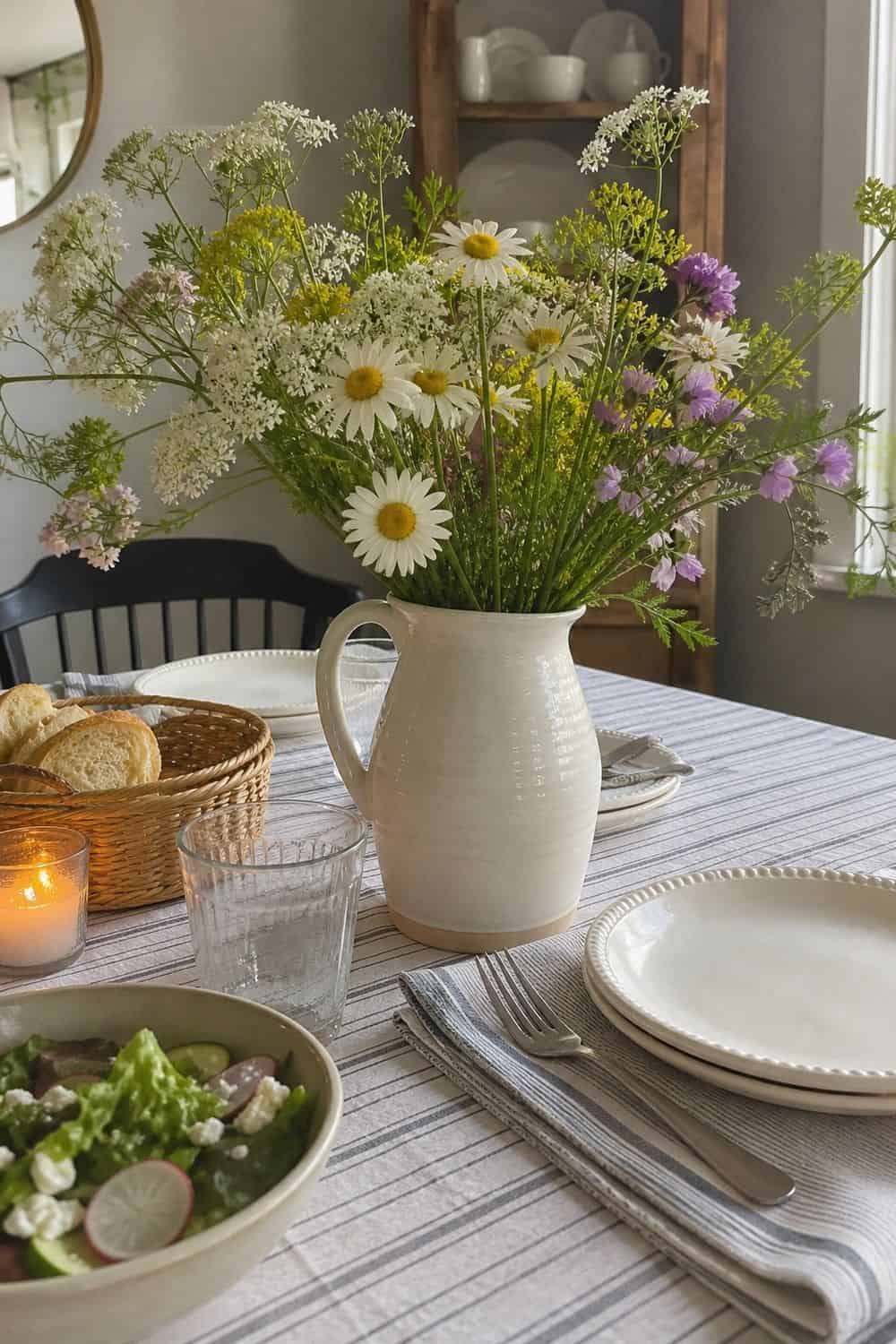
A ceramic pitcher can hold a fuller arrangement when the table needs one stronger focal point. It feels more cottage kitchen than a glass cylinder vase and works beautifully with roses, herbs, loose greenery, or seasonal stems. Place it at the table end, on a sideboard, or slightly off-center so guests are not peering around it all meal. If the pitcher is tall, let it be the welcome moment before dinner, then move it aside when platters arrive. Table flowers should never make conversation difficult.
10. Potted Herbs as Living Decor

Potted herbs bring a garden feeling to the table without adding another floral print. Mint, thyme, rosemary, basil, lavender, or chives can look lovely in small pots, especially when the menu uses herbs too. Clean the pot exteriors, add saucers, and keep damp soil away from plates and linens.
If the herbs fit the meal, guests can snip a little for tea, bread, or salad. Keep strongly scented herbs away from delicate desserts or wine so the fragrance does not compete.
11. Wicker Bread Basket
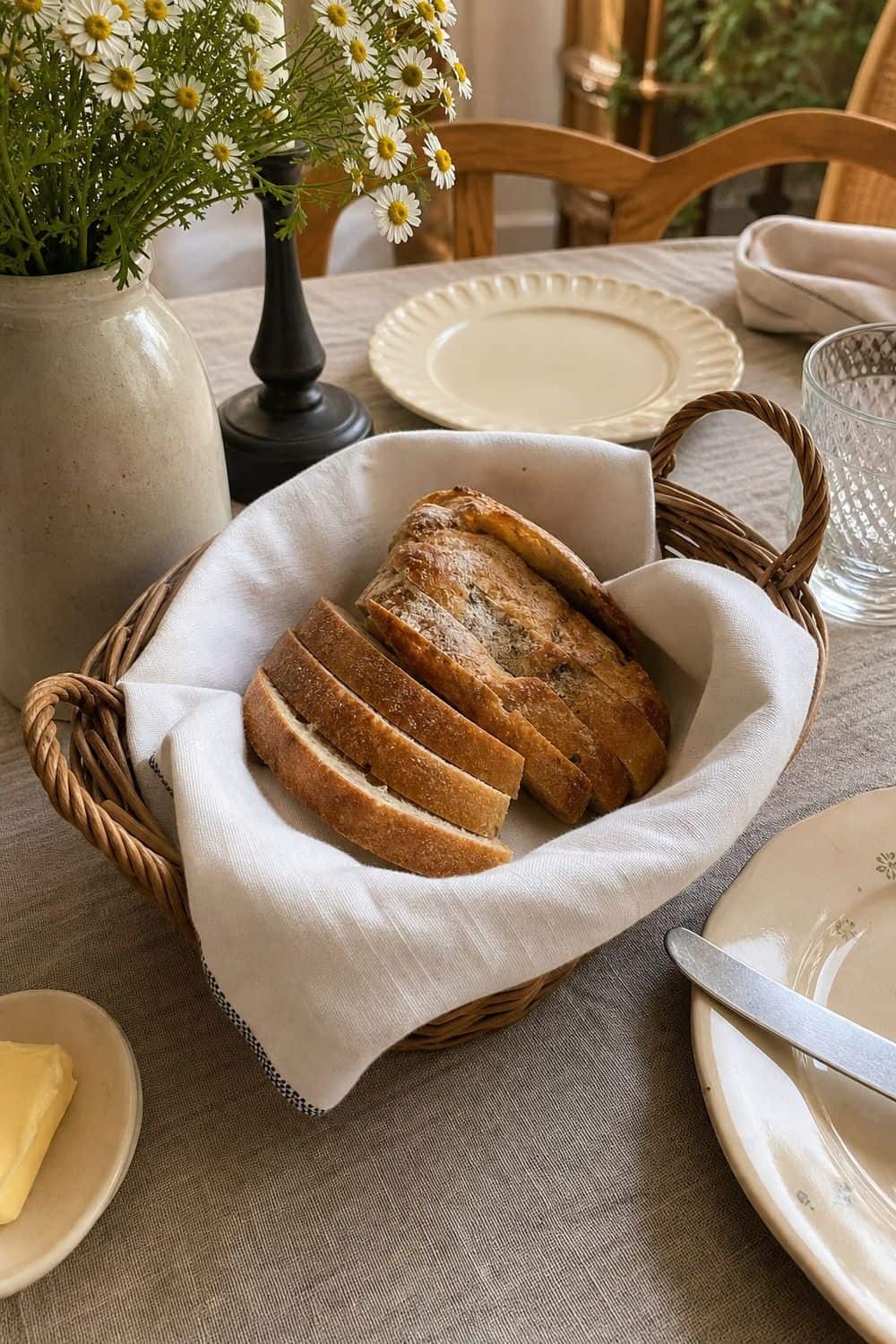
Bread service can carry a lot of cottage charm while still doing a real job. Fill a wicker basket with rolls, biscuits, sourdough slices, scones, or focaccia depending on the meal. Line it with a linen napkin to catch crumbs and soften the texture.
Place the basket where guests can reach it without leaning over candles or vases. If the table is narrow, pass it once and then move it to a sideboard between courses so the center stays usable.
12. Butter in a Covered Dish
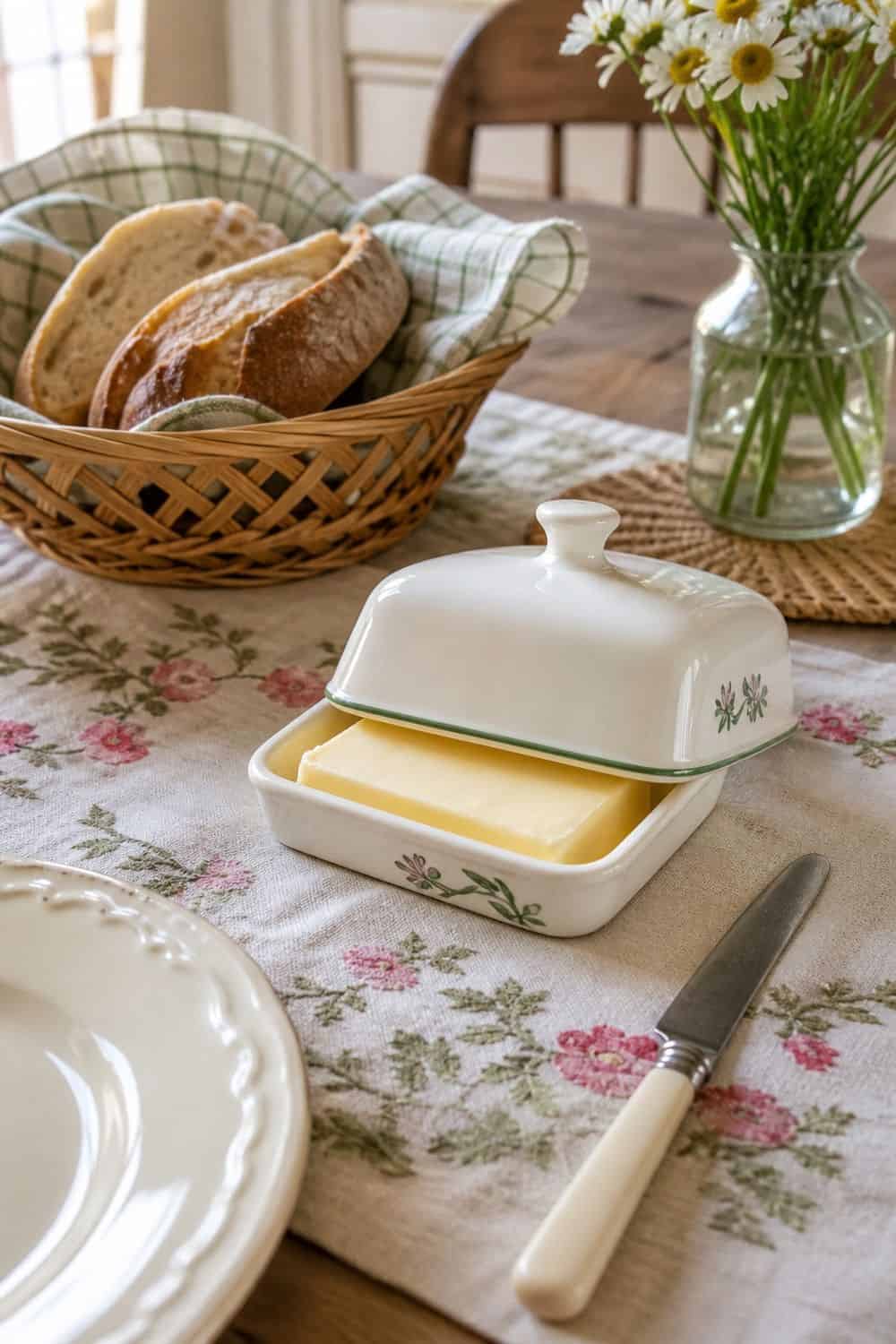
A covered butter dish is small, useful, and perfectly suited to a floral cottage table. It works for salted butter, herb butter, honey butter, or softened butter served with bread, biscuits, scones, or breakfast pastries. Set a small butter knife beside it before guests sit down so no one has to search the kitchen mid-meal.
If jam, honey, or lemon curd is also on the menu, keep those nearby and treat the bread area like a tiny service station. That is what makes the table feel genuinely hospitable.
13. Jam in Mini Bowls
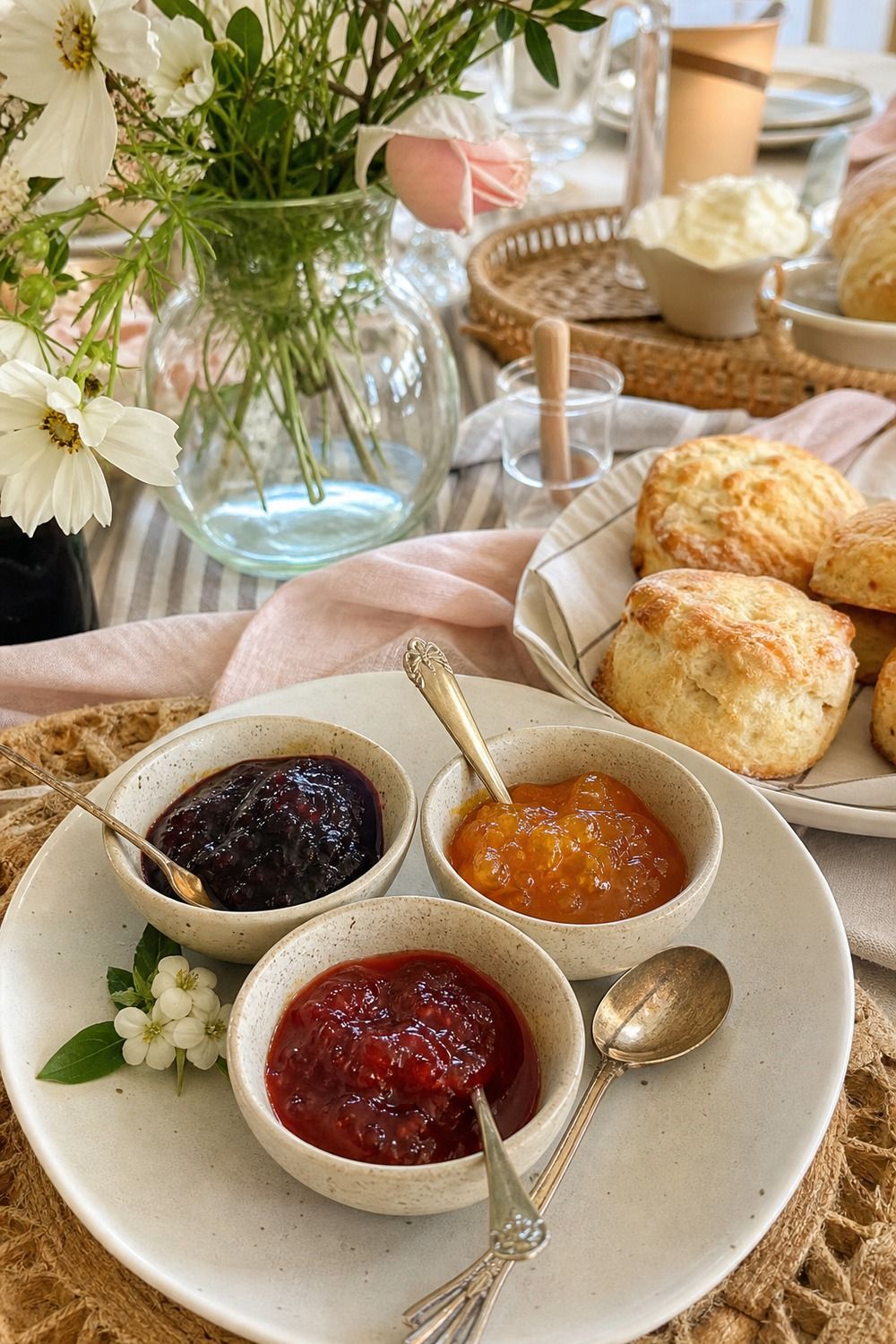
Mini bowls make jam, honey, lemon curd, chutney, whipped butter, or berry compote feel ready for the table. They also keep sticky jars from crowding a small setting. Use one spoon per bowl and place them near bread, biscuits, cheese, or tea service. This is a nice place to repeat color: a blush bowl beside rose napkins, a cream bowl near floral plates, or a green bowl with herb stems. Keep portions small so the table does not turn into a condiment display.
14. Cake Stand for the Sweet Centerpiece

Dessert can become the centerpiece when it sits on a cake stand. Loaf cake, scones, shortbread, berry tart, tea cakes, or a simple frosted cake all fit the cottagecore mood without adding more flowers. A white ceramic or glass stand gives dessert height while staying quiet beside floral plates and lace.
Place it at the table end or on a sideboard if the main table is tight. Keep plates, forks, and a knife nearby so dessert service feels easy after dinner.
15. Taper Candles in Mismatched Holders

Mismatched candle holders can look collected if they share a gentle material story. Brass, ceramic, glass, and silver all work, but the heights should vary softly rather than turning into a skyline. Use unscented tapers around food and keep flames away from flowers, ribbon, napkins, and loose sleeves.
If the table is narrow, use fewer holders and tuck them between bud vases instead of lining the whole center. Candlelight should soften the meal, not make serving feel risky or make guests dodge flames when passing bread.
16. Beeswax Candles for Warmth
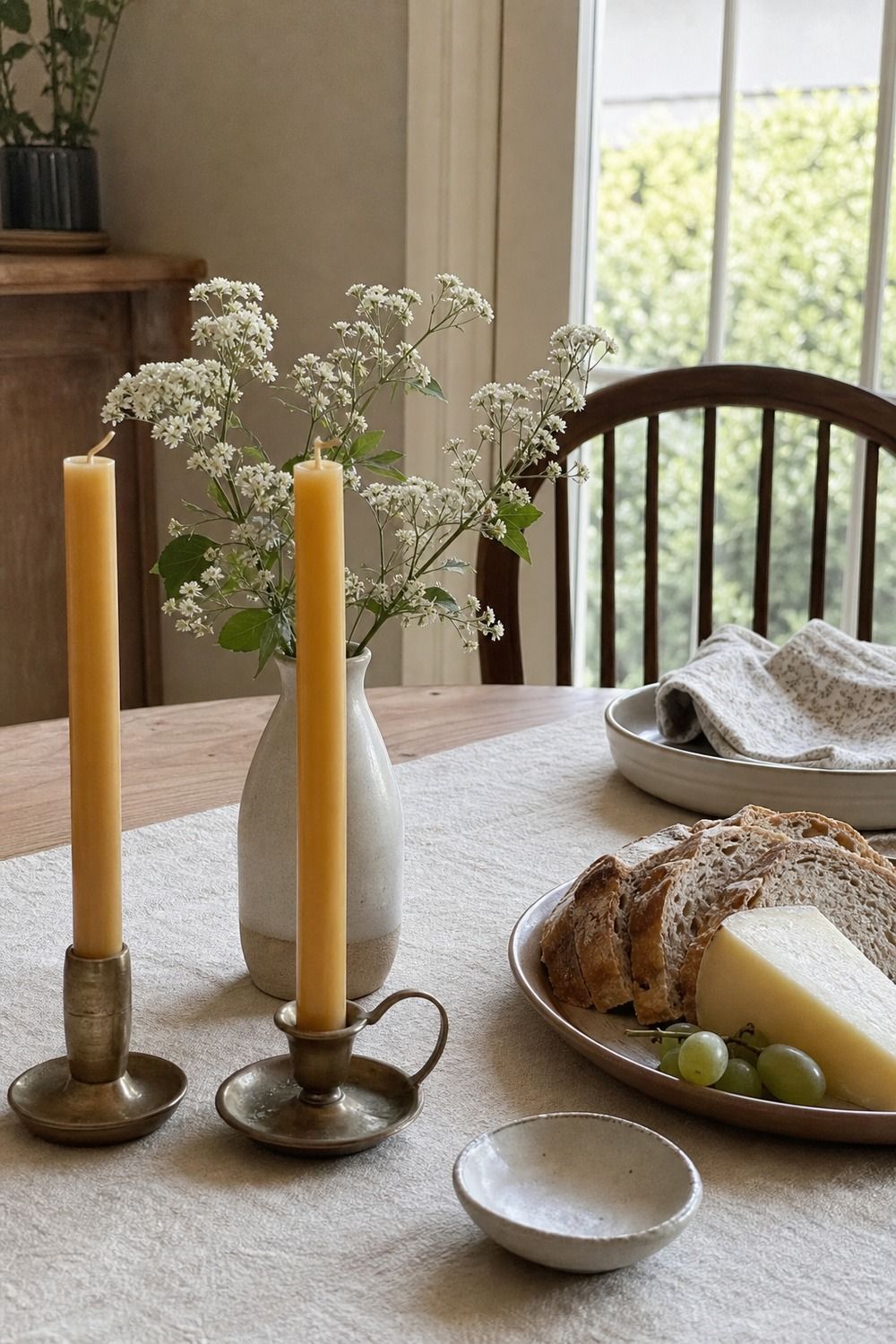
Beeswax or ivory tapers feel softer than bright white candles, especially with cream linens, wicker, wood, and vintage china. They bring warmth without adding another print or prop. Choose unscented candles for meals and trim wicks before guests sit down. Leave space between candles and flowers so heat does not wilt stems or create a safety issue. If the table already has floral cloth, china, and bud vases, plain beeswax candles may be the quietest and prettiest finishing layer for evening.
17. Sage Green Glassware
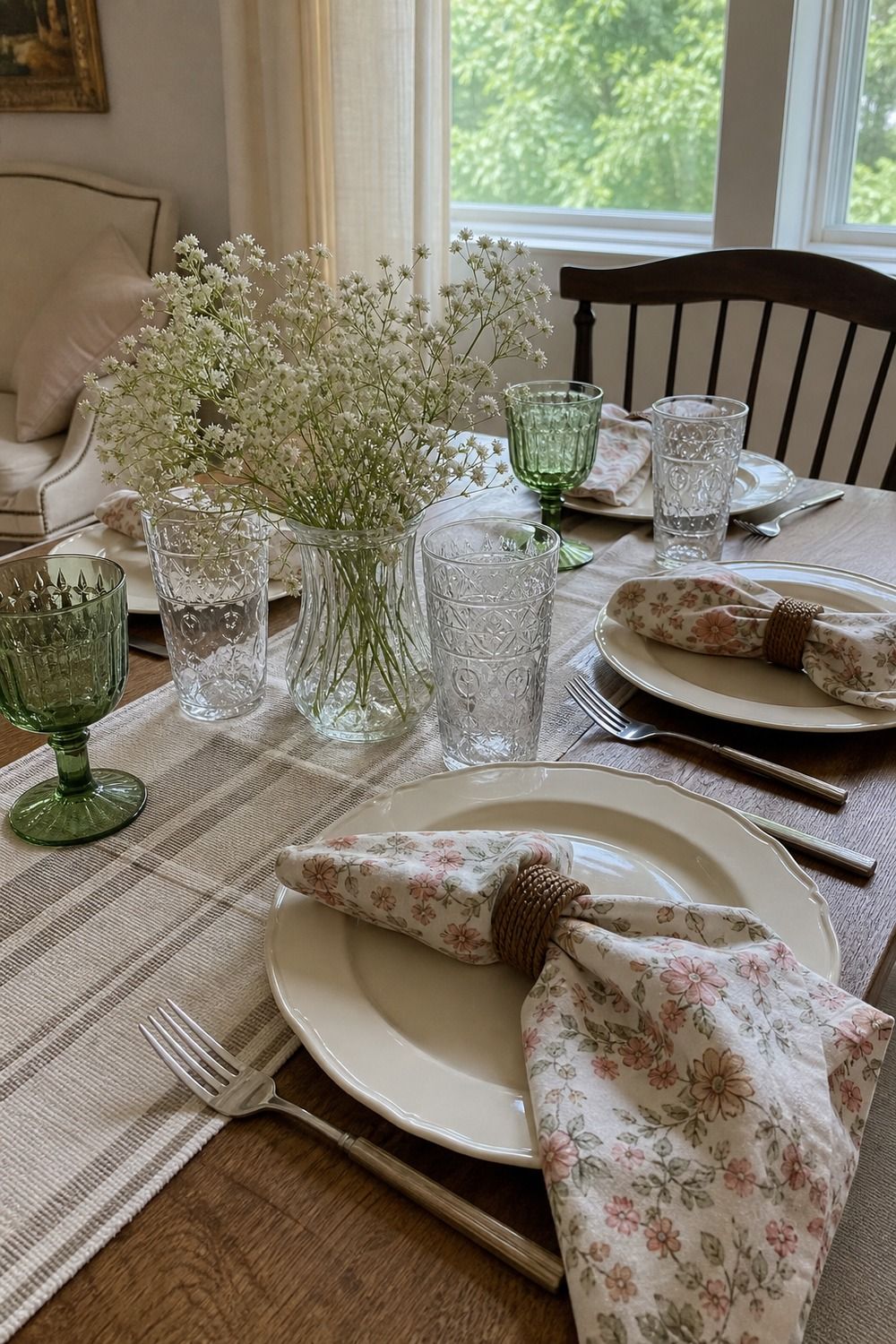
Sage green drinking glasses echo the garden palette without adding another floral motif. They can make cream plates, blush napkins, and low flowers feel more connected, especially when there is a lot of white, wood, or linen on the table. If the tablecloth and plates are already patterned, keep the glass shape simple. Ribbed, pressed, clear, sage, blush, or amber glass can all work, but too many colored shapes will compete. Let the glassware be a color accent, not a second centerpiece.
18. Floral Teapot
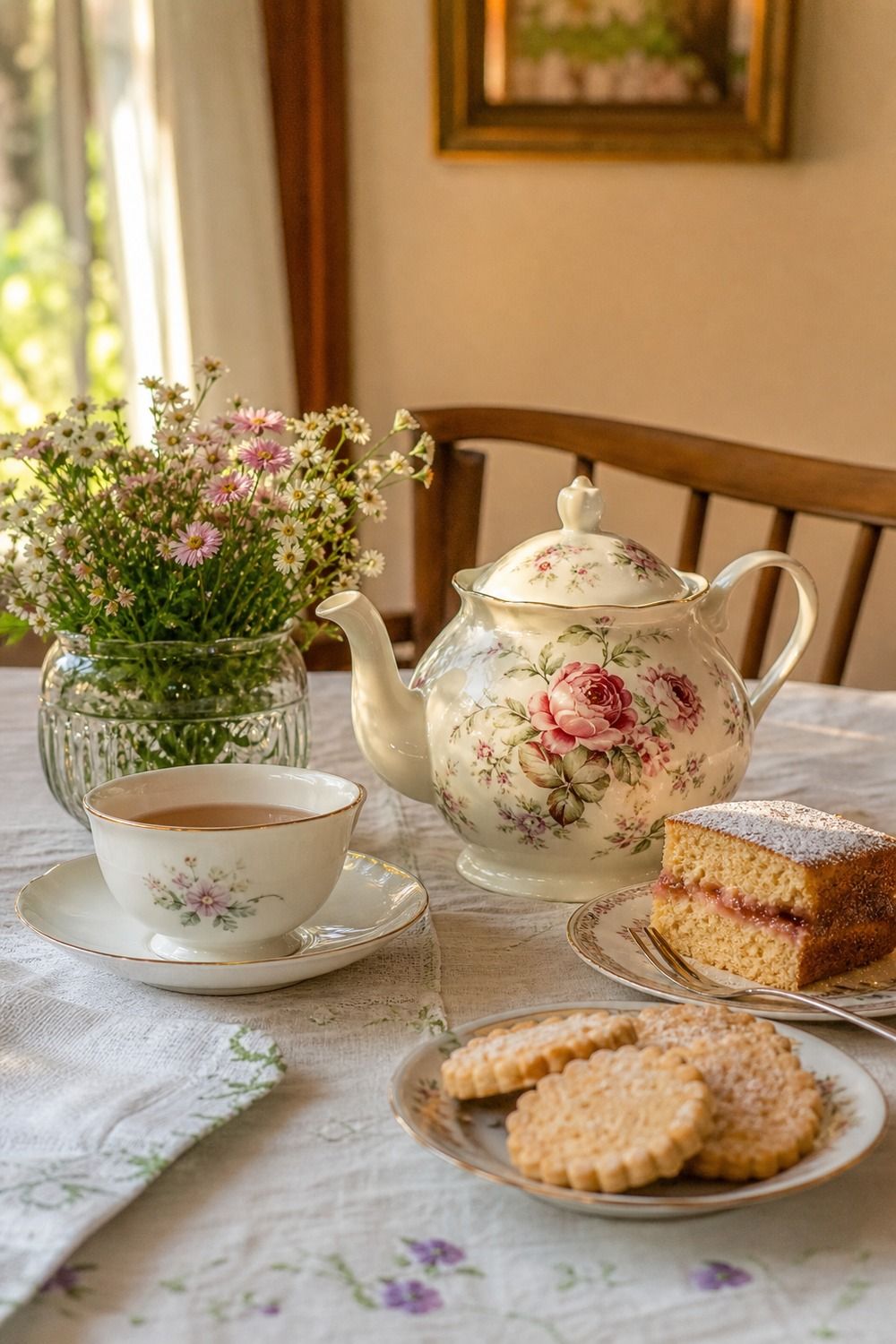
Tea service fits a cottagecore dinner table, brunch, or afternoon spread. A floral ceramic teapot can hold tea, hot water, or a gentle herbal blend, and it instantly makes the table feel a little more old-fashioned. Bring it out when there is room for cups, spoons, milk, honey, or lemon. If the table is full during dinner, keep the teapot on a sideboard until dessert. It should feel like a soft hosting detail, not another object guests have to work around.
19. Scalloped Name Cards at Each Plate
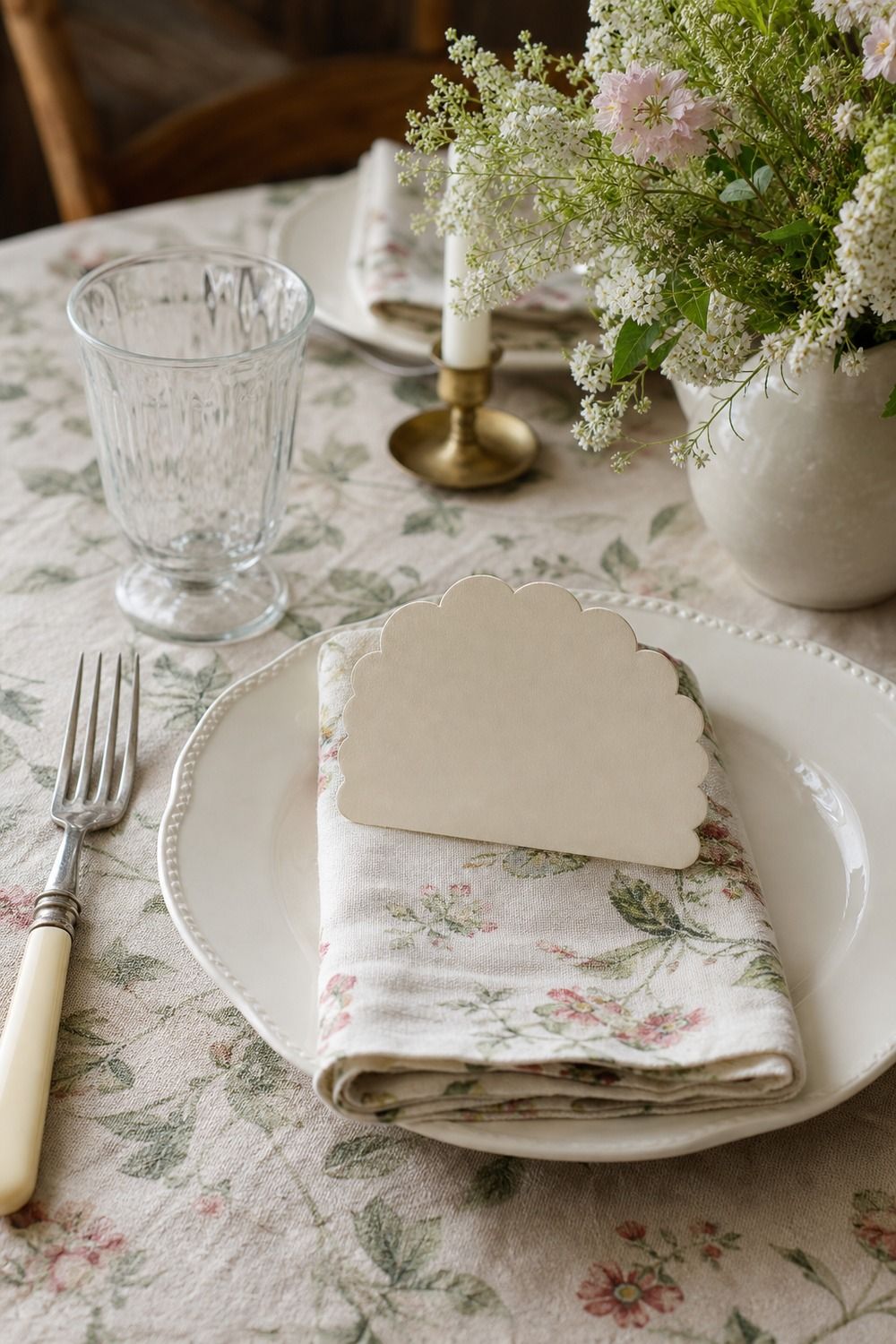
Scalloped place cards add a small handmade feeling without taking much room. Cream, kraft, blush, sage, or floral-edged cards all suit the table, especially with a handwritten name or a tiny pressed-flower look. Place each card above the plate, tucked into a napkin, or beside the water glass. Add a small herb sprig or flower only if it does not crowd the setting. For casual dinners, place cards can still help guests settle quickly, especially when the table is small or the seating is close.
20. Seed Packet Favors
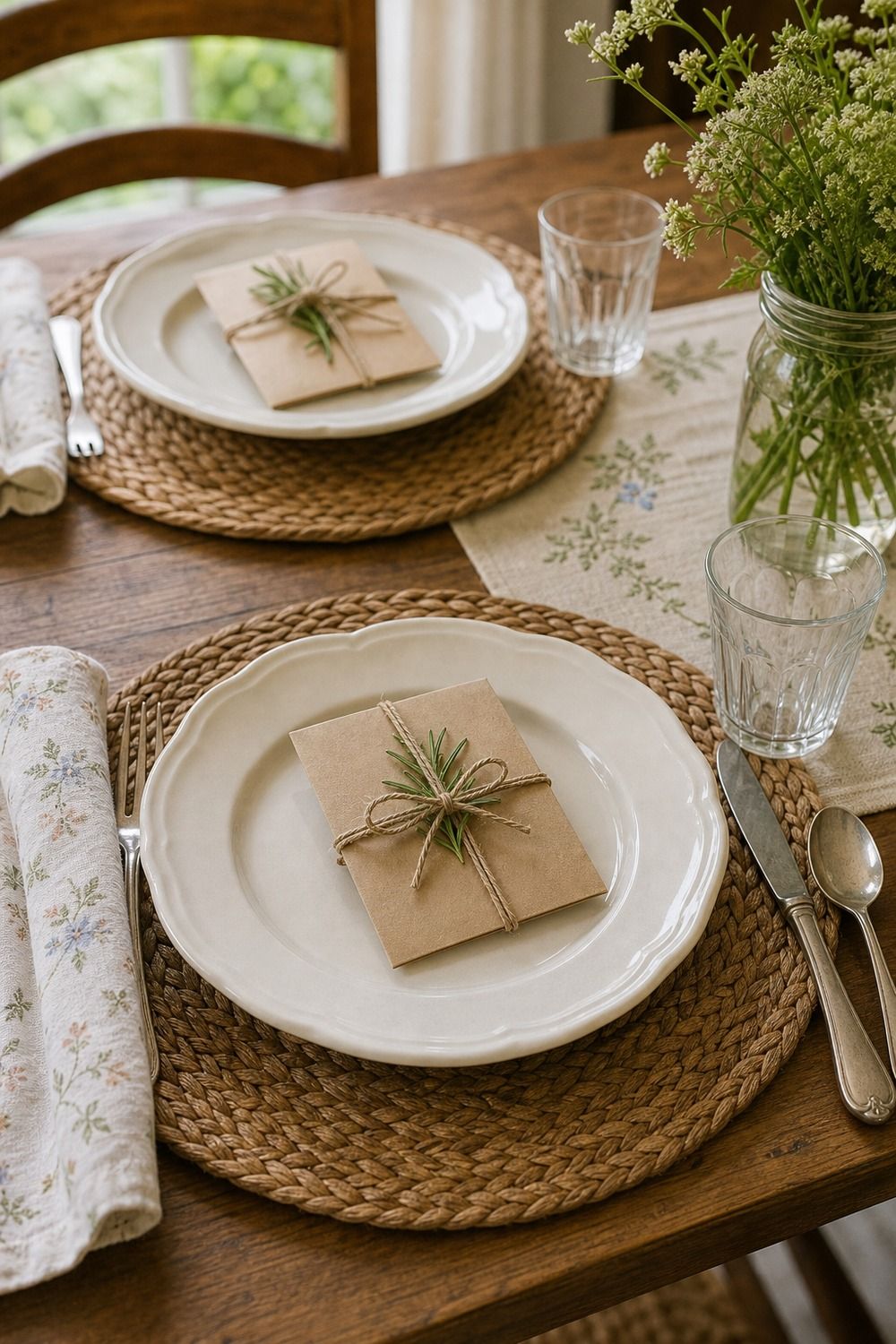
Seed packets can double as favors, place cards, or a small garden-themed detail. They work especially well for spring brunch, tea, birthdays, showers, or casual garden dinners. Tie one to a napkin, place it above the plate, or gather packets in a small basket near the exit. Choose seeds guests can realistically plant, such as herbs, cosmos, zinnias, or easy wildflowers. Keep packets clean and away from food if they came straight from a garden shop, because the favor should feel sweet, not dusty.
21. Water in a Floral Pitcher

Water, lemonade, iced tea, or elderflower drink feels more connected to the table when it comes from a floral pitcher. It is also more inviting than leaving a bottle in the middle of the setting. Put the pitcher where guests can reach it without knocking into candles or vases, and choose one that is comfortable to lift when full. If it is tall or heavy, keep it on a sideboard and refill glasses from there. The prettiest drink service is still the one people can use without worry.
22. Low Fruit Bowl for Color
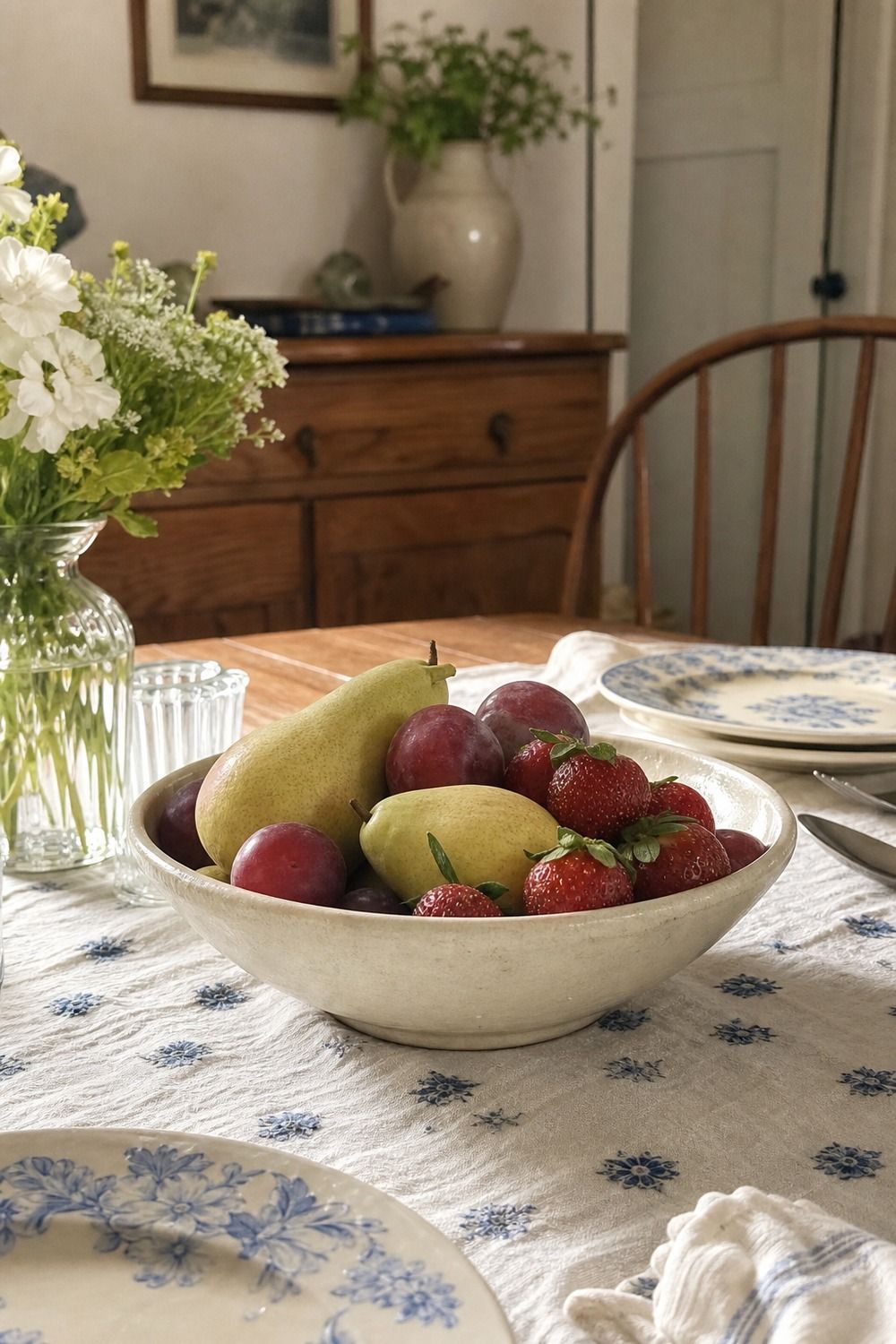
Fruit adds color without another floral arrangement. Strawberries, cherries, pears, figs, grapes, lemons, or small apples can make the table feel abundant and seasonal. Choose a low or footed bowl that keeps sightlines open, then place it near dessert, tea, or brunch items where the color makes sense.
Do not overfill the bowl so much that guests cannot pass plates around it. Use fruit you can serve later, not purely decorative pieces that have nowhere to go after the table is cleared.
23. Flower Line Below Eye Level
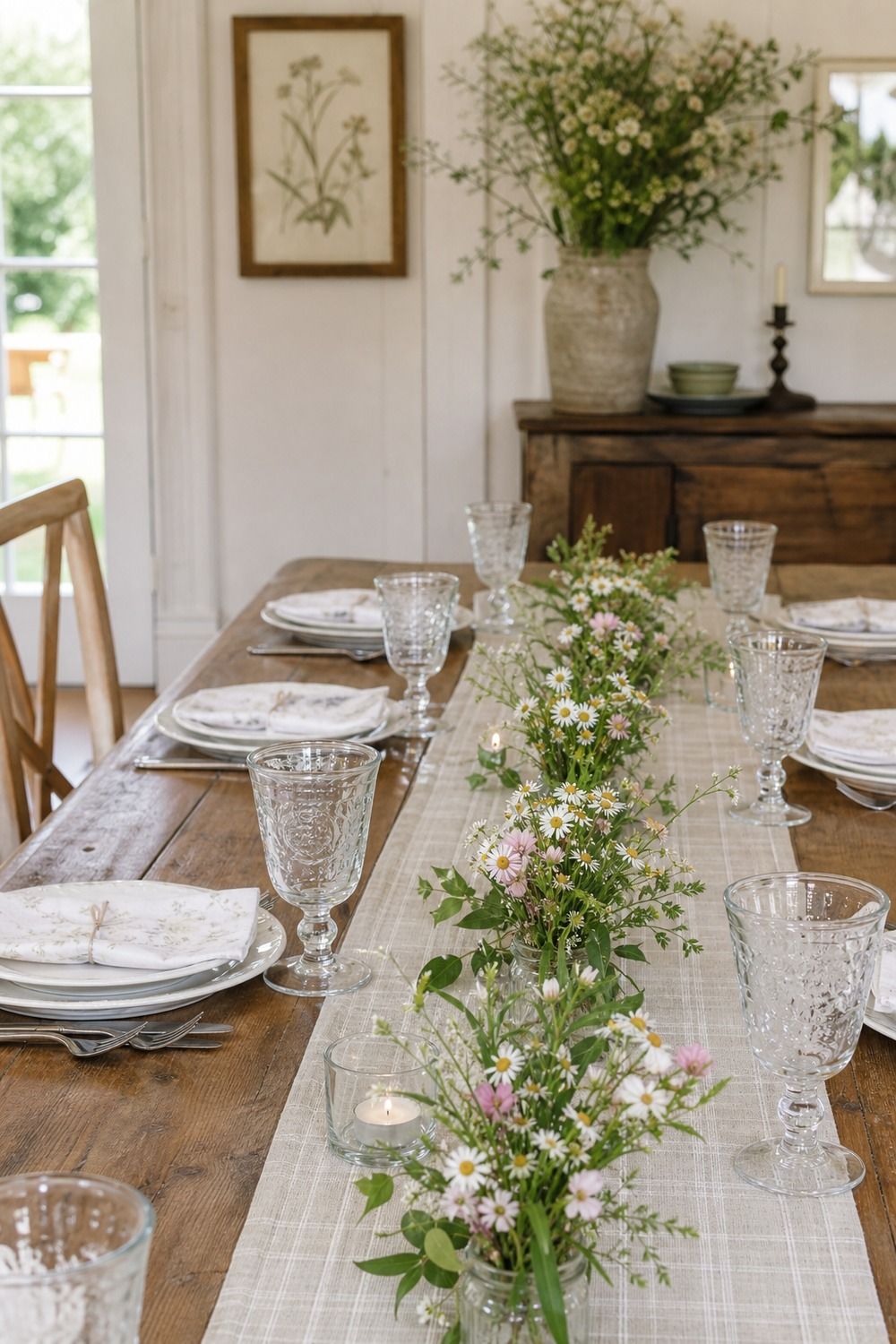
This is the most important hosting rule for a floral table: seated guests should be able to see each other. Low vases, short jars, loose garden stems, and off-center pitchers make conversation and serving easier.
Sit down before the meal and check the view across the table. If you have to lean around stems, lower the flowers or move the tallest vessel to a sideboard.
A cottagecore tablescape can be lush and romantic without becoming a wall between people. The flowers should frame conversation, not interrupt it when platters begin moving around the table.
24. Space for Serving Platters
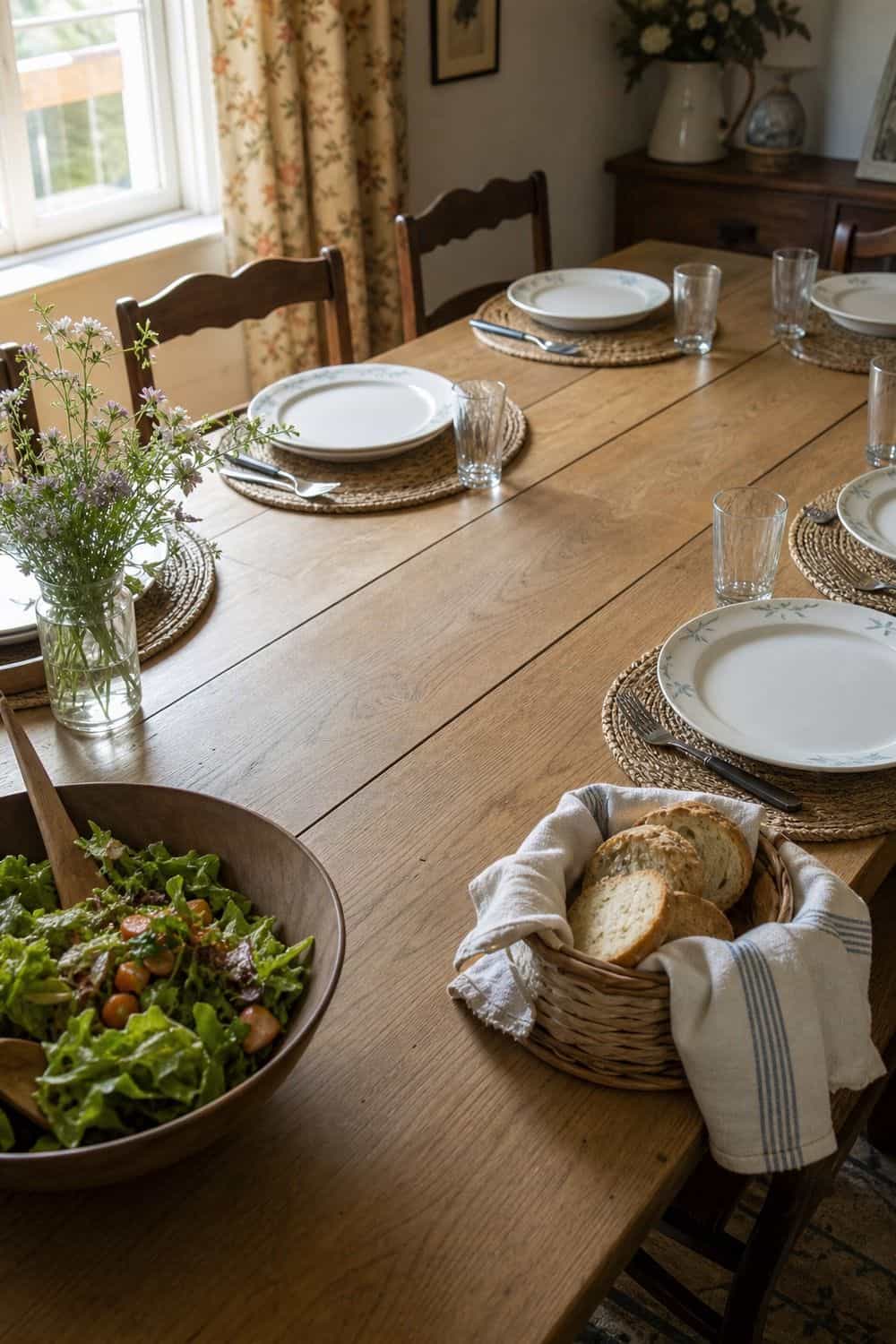
Cottagecore tables can fill up quickly with plates, flowers, candles, bread, butter, jam, glasses, and favors. Before the meal, decide where the main platter will actually go. Leave room for an oval serving dish, bread basket, water pitcher, butter dish, and guests’ glasses.
If the table is small, move dessert, extra flowers, or the teapot to a sideboard until needed. The table should support the meal and stay easy to pass around, even when the whole mood is soft and pretty.
A quick test with empty platters helps before the meal starts. If the food has nowhere to land, the prettiest table will feel awkward fast.
25. Floral Pattern Overload
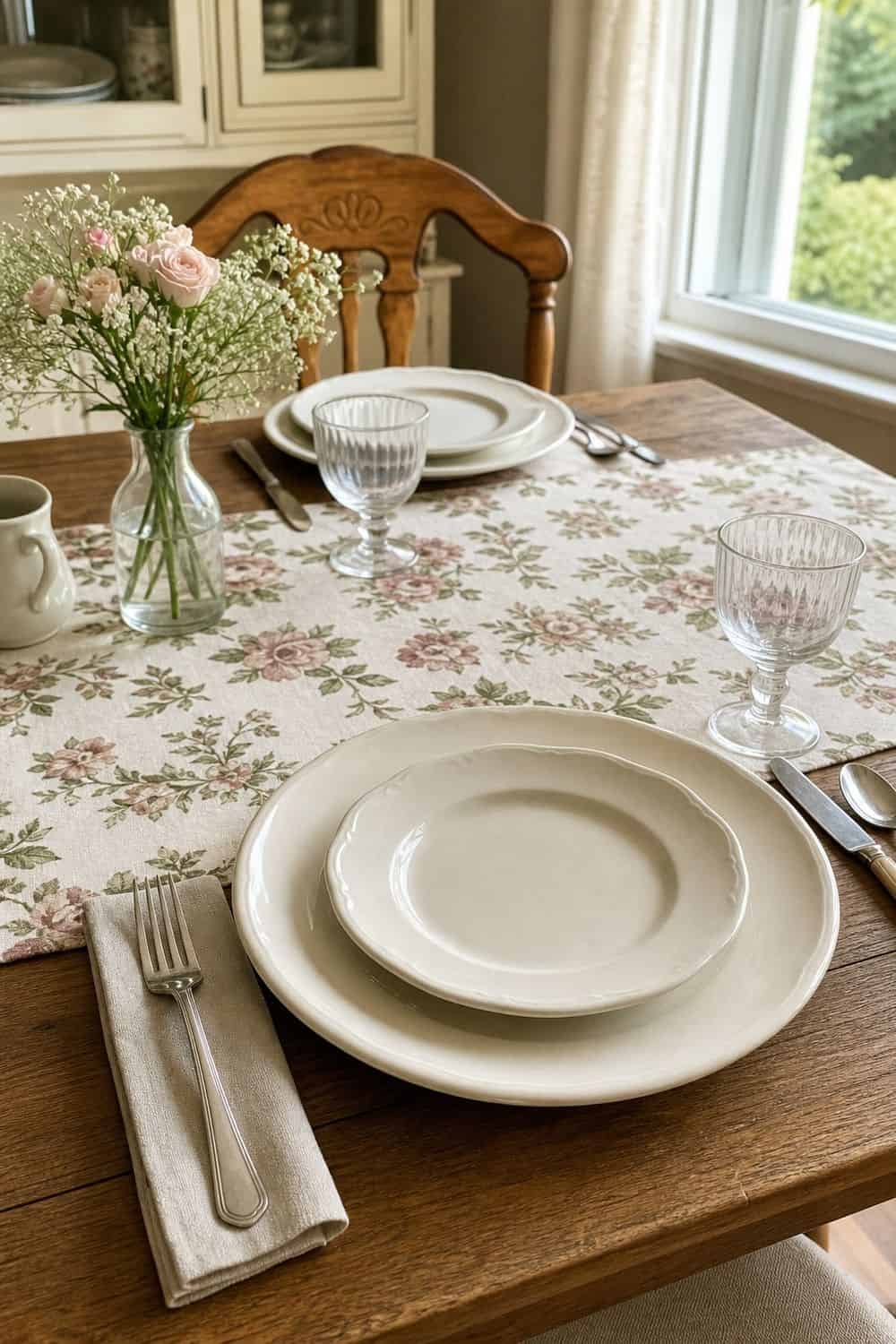
The easiest way to keep a floral table from feeling noisy is to choose one main floral pattern and let the rest of the table support it. If the tablecloth is floral, use solid napkins and quieter plates. If the china is floral, choose a plainer cloth or a narrow lace runner.
Texture can do a lot of the work: linen, wicker, wood, glass, ceramic, brass, and lace all soften the table without adding more printed flowers. Cottagecore feels best when the layers have room to breathe.
How to Keep a Cottagecore Table Practical
Use a palette before choosing pieces: cream, blush, sage, butter yellow, faded blue, dusty rose, warm wood, and soft green all work well. Then follow the pattern rule: one main floral, one vintage china family, and solids or quiet textures around them.
Keep flowers clean, low, and lightly scented. Use unscented candles near food, clean jars and vessels thoroughly, and place tall pitchers or fuller arrangements off to the side when conversation or serving matters more.
Budget-friendly cottagecore tablescape ideas can be very strong: thrifted plates, jam jars, grocery-store flowers, ribbon, seed packets, simple candles, borrowed serving pieces, homemade bread, and a cake stand all give the table charm without buying a full matching set.
Frequently Asked Questions
What is a cottagecore tablescape?
A cottagecore tablescape is a soft, nostalgic table style built from floral linens, vintage china, garden flowers, lace, candles, wicker, wood, herbs, and homemade food details. It should feel collected and garden-inspired while still leaving room for serving and conversation.
How do you decorate a cottagecore table?
Start with a floral tablecloth or vintage china, then add linen napkins, bud vases, lace, wicker, candles, herbs, and a few useful serving pieces. Keep the flowers low and choose one main color story so the table feels layered, not cluttered.
What colors work for a cottagecore table setting?
Cream, blush, sage green, dusty rose, butter yellow, faded blue, warm white, soft brown, and muted floral tones all work well. Choose two or three colors first, then repeat them through linens, flowers, china, glassware, or ribbon.
How do you mix vintage china for a tablescape?
Mix vintage china by choosing plates that share one color family, floral motif, or border tone. Balance busy plates with solid napkins, simple glassware, low flowers, and one repeated accent color so the setting feels collected.
What flowers are best for a cottagecore table?
Roses, chamomile, daisies, sweet peas, cosmos, ranunculus, lavender, herbs, and small garden-style stems all work well. Choose flowers that fit low vases and avoid strong fragrance near food.
How do you keep a cottagecore table from looking cluttered?
Use one main floral pattern, keep flowers below eye level, limit small props, and leave open space for platters, glasses, and serving pieces. If the china is busy, choose quieter linens. If the cloth is floral, use solid napkins.
Can a cottagecore tablescape be budget-friendly?
Yes, a cottagecore tablescape can be very budget-friendly. Use thrifted plates, jam jars, grocery-store flowers, ribbon, seed packets, simple candles, borrowed serving pieces, homemade bread, or a small cake. Cottagecore styling often looks best when it feels collected over time.
Are candles good for a cottagecore table?
Yes, candles are a good fit if they are unscented and placed safely. Use taper or beeswax candles in mismatched holders, and keep flames away from flowers, ribbon, napkins, sleeves, and serving dishes.
Final Thoughts on Cottagecore Tablescape Ideas
The best cottagecore tablescape ideas make a table feel soft, floral, and collected without making it hard to use. Choose one floral anchor, keep the flowers low, repeat a gentle palette, and let useful pieces carry some of the charm.
When the bread basket, pitcher, candles, napkins, and serving platters all have room to work, the table feels romantic and ready for real hosting.
Last update on 2026-09-18 / Affiliate links / Images from Amazon Product Advertising API