
Dark academia tablescape ideas work best when you start with a dark cloth, add brass candlesticks and unscented tapers, use amber glassware, stack one or two books off-center, add dried florals or fruit, and keep the middle low enough for conversation. The table should feel moody and literary, but still leave room for plates, glasses, serving dishes, and guests.
A dark academia table setting is more about restraint than piling every vintage object onto the table. The right pieces create a candlelit, bookish mood while still making dinner easy to serve and comfortable to eat.
The strongest dark academia tablescape ideas stay focused on the table: fabric, candlelight, glassware, plates, place cards, centerpieces, and the small practical choices that keep the look from turning into Halloween clutter.
Top Recommended Products


You Might Also Like These Blog Posts
- 25 Dark Academia Dinner Party Ideas for Easy Hosting
- 25 Moody Dinner Party Ideas for Easy Hosting
- 25 Old-World Dinner Party Ideas for Easy Hosting
- 25 Old-World Tablescape Ideas for Easy Hosting
- 25 Vintage Garden Tablescape Ideas for Easy Hosting
1. Dark Linen as the Table Base
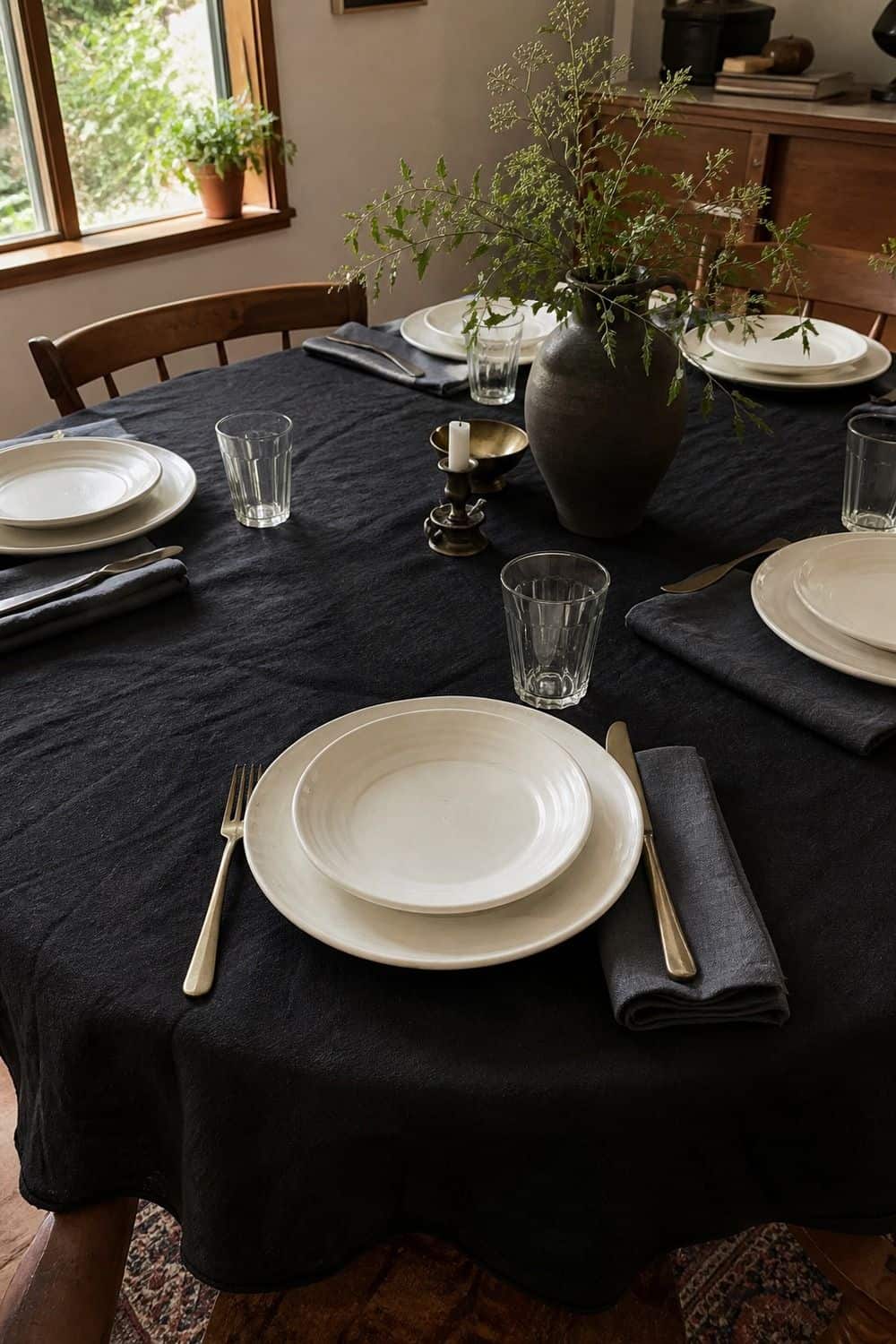
Linen sets the mood before any props arrive. Black, espresso, charcoal, forest green, or burgundy fabric gives the table a scholarly depth while keeping the surface soft and matte. A black linen tablecloth is strongest when it looks like fabric, not shiny costume material.
Let the weave, wrinkles, and candlelight create the mood. Check the cloth for lint and crumbs after plates are set. Dark linen looks rich, but it also announces every pale speck. If a full cloth feels too heavy for a small table, use a runner and let warm wood show at the edges.
2. Velvet or Plaid Runner Down the Center
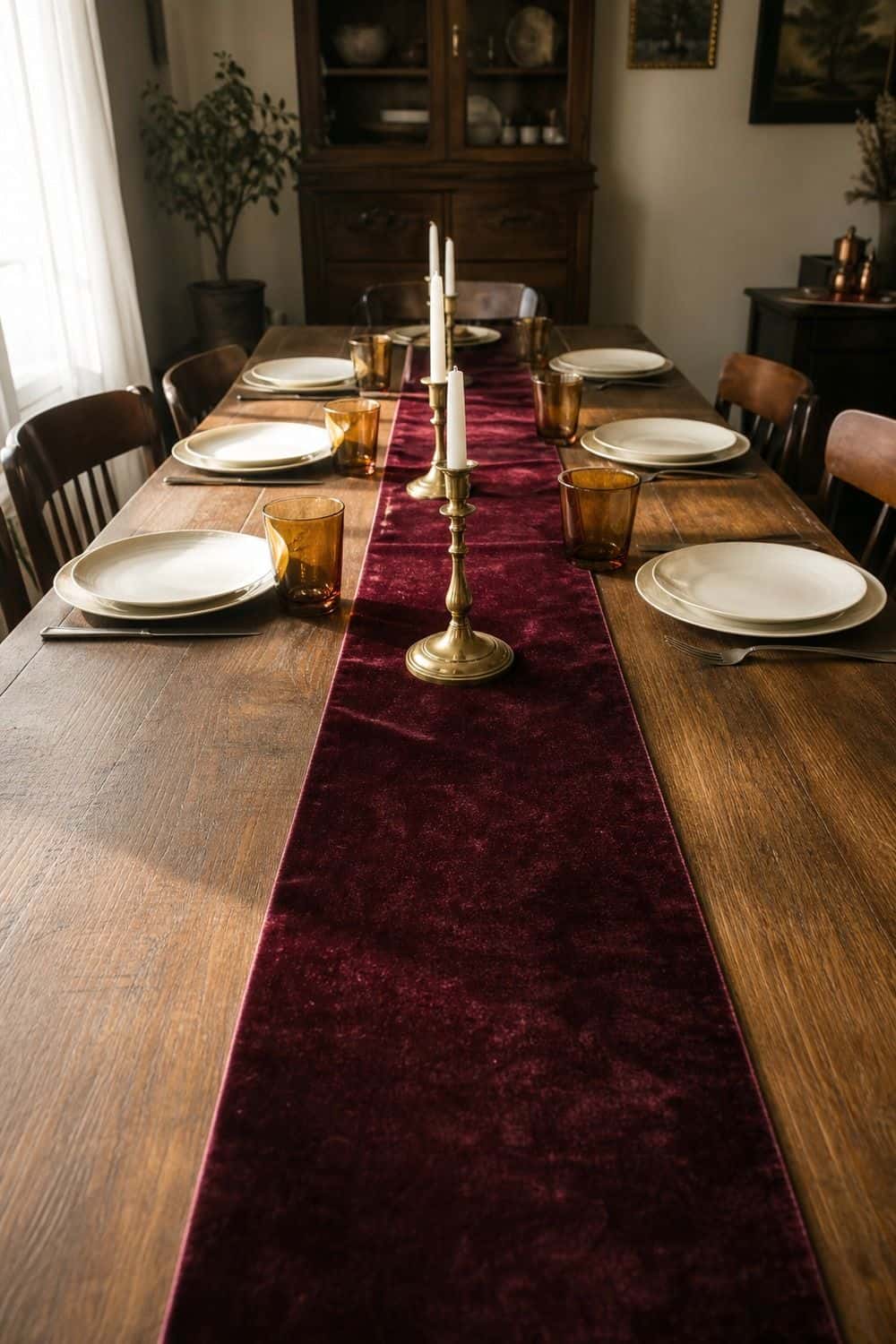
Texture keeps a dark tablescape from looking flat. A runner adds a controlled layer down the center without covering every inch of the table or crowding place settings. A burgundy velvet table runner leans gothic and warm, while plaid can feel more collegiate and bookish.
Either one works best when the plates and glassware stay simple. Keep the runner narrow enough for plates, elbows, and serving pieces. If guests have to move fabric every time they reach for a glass, the table is overstyled. Use one strong textile moment, then let candles, books, and glass do the rest.
3. Brass Candlesticks in Mixed Heights
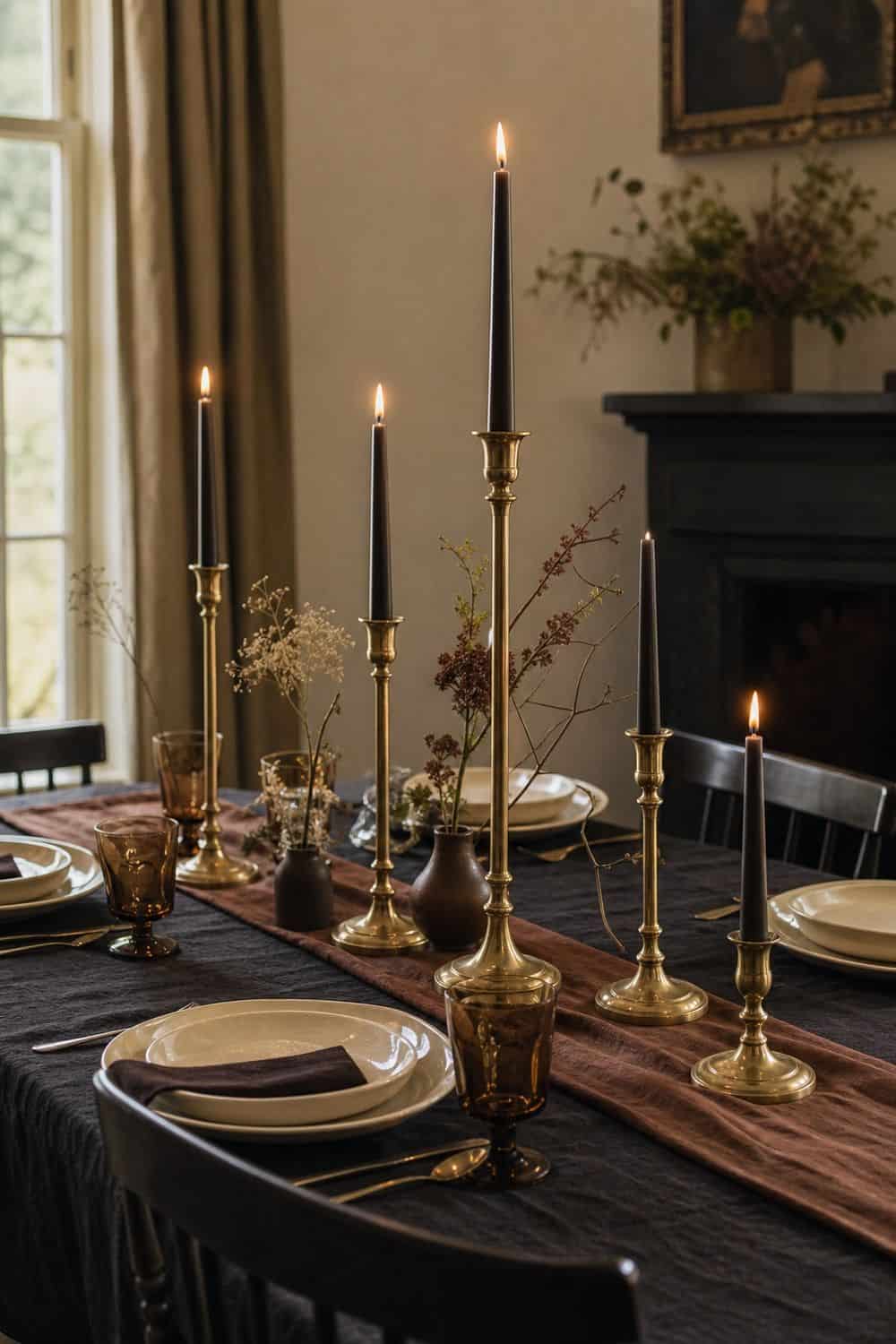
Candlelight is the central line of a dark academia table, but it should be arranged with conversation in mind. Mixed heights create rhythm without needing a large centerpiece, and the safest layout leaves clear space between flame, fabric, greenery, menus, and sleeves. Brass candlestick holders bring warmth against dark linens and amber glass. Space them out so the light travels down the table rather than gathering in one crowded cluster, and keep the tallest holders away from direct sightlines. Diners can see faces, plates, and serving bowls without leaning around candles, so test the arrangement from a seated chair instead of only checking it from above.
4. Black or Ivory Taper Candles
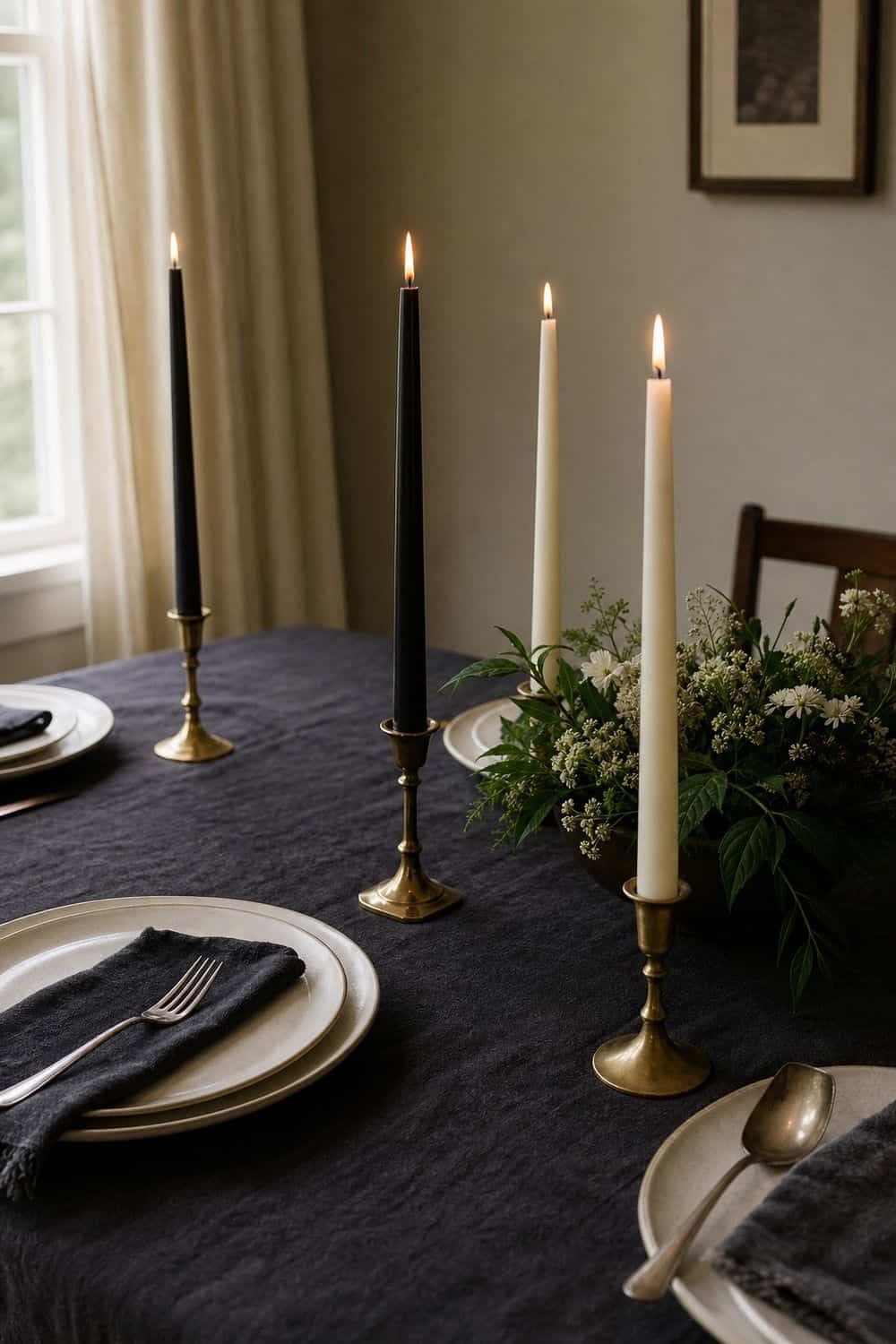
Taper color changes the whole mood. Black tapers feel dramatic and literary; ivory tapers brighten the table and make food easier to see in a dim room. Black taper candles work best with brass, dark linen, and cream plates. Choose unscented candles for dinner so fragrance does not compete with the food. Battery tapers are useful in homes with kids or pets, or on crowded tables where open flame feels risky. Warm-toned versions still give the table that candlelit shape. Avoid heavily scented candles on the dining table. The setting should smell like dinner, not perfume.
5. Two Vintage Books Off-Center
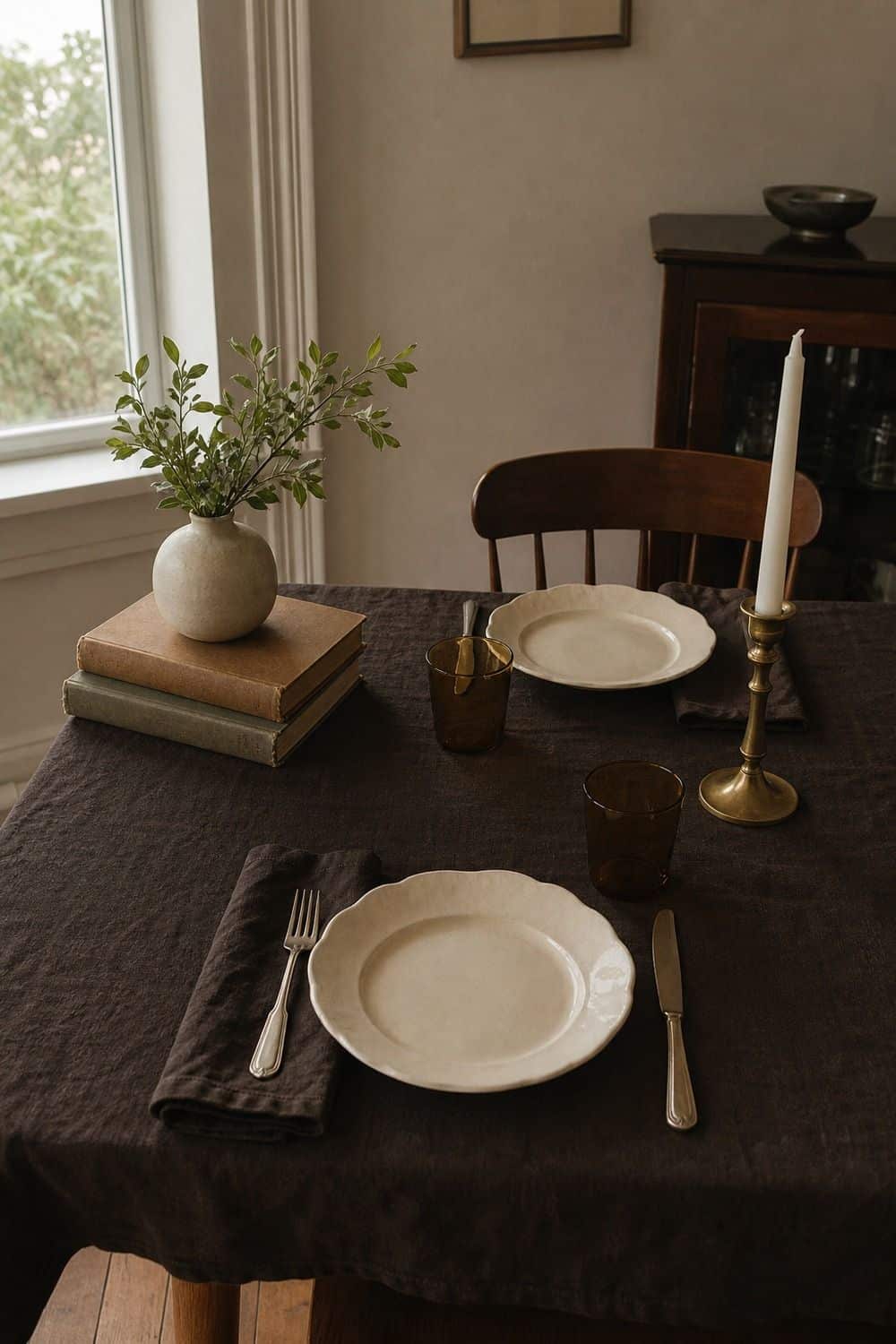
Books are the easiest way to give the table a literary mood, but they should never take over the eating surface. Place one or two off-center, under a vase, near the menu, or beside a low centerpiece.
Vintage hardcover books work best in faded black, brown, burgundy, cream, or deep green. Keep fragile, valuable, or dusty books away from food and open flames. The stack should create height and context, not clutter. If guests need to move books to set down a glass, the table has crossed from styled to inconvenient.
6. Amber Bottles as Bud Vases
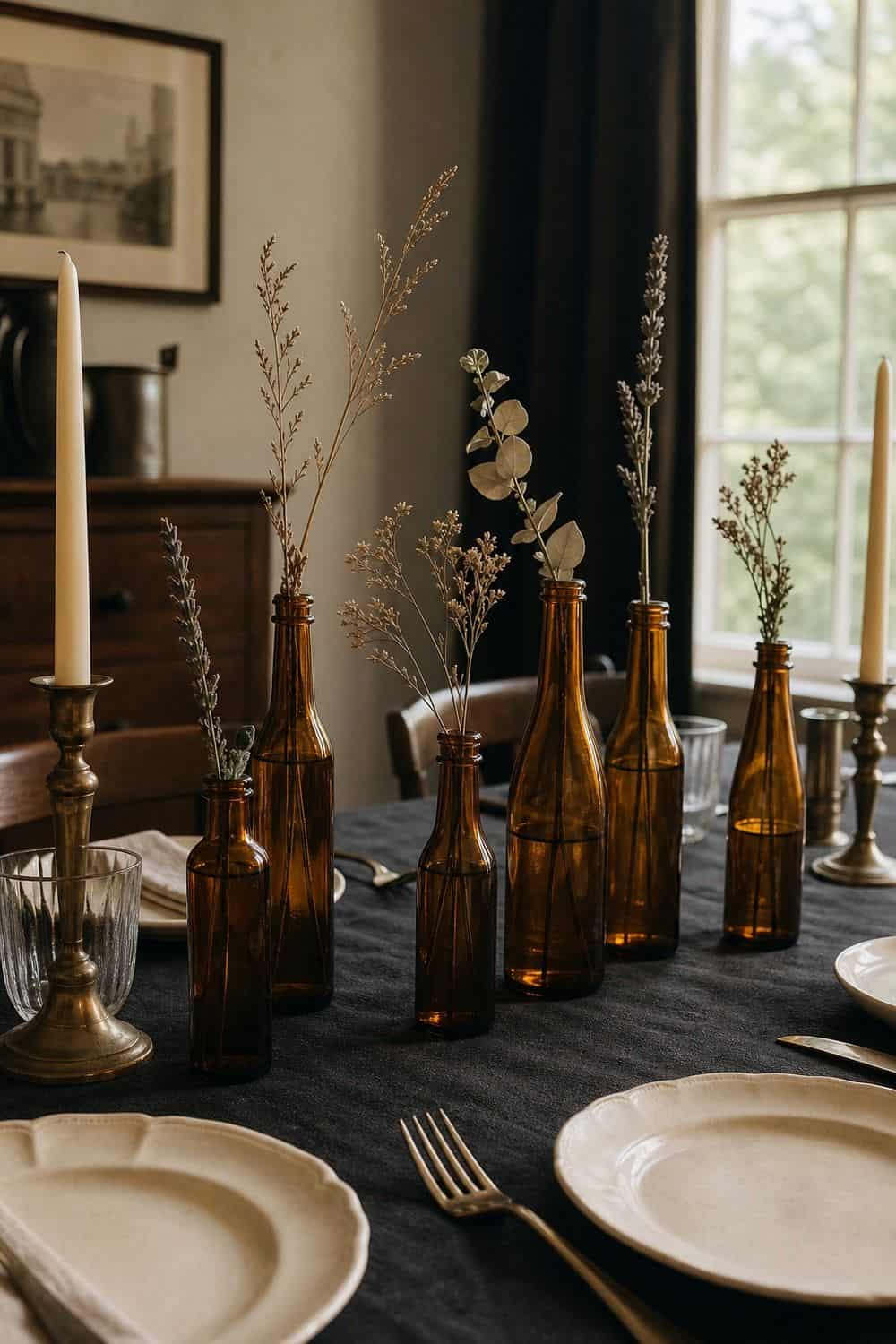
Amber glass brings an apothecary feeling to the table without taking up much room. A few bottles can hold single stems, dried flowers, herbs, or bare branches. Amber glass bud vases are useful because they add color, height, and glow while staying narrow.
They echo old libraries and cabinets of curiosities without making the table feel like a display shelf. Keep stems low and sparse. One branch, one dried bloom, or a small herb sprig often looks more refined than a packed arrangement. Repeat the amber tone in glassware or candlelight so the vases feel connected to the whole setting.
7. Dark Plates With Light Napkins
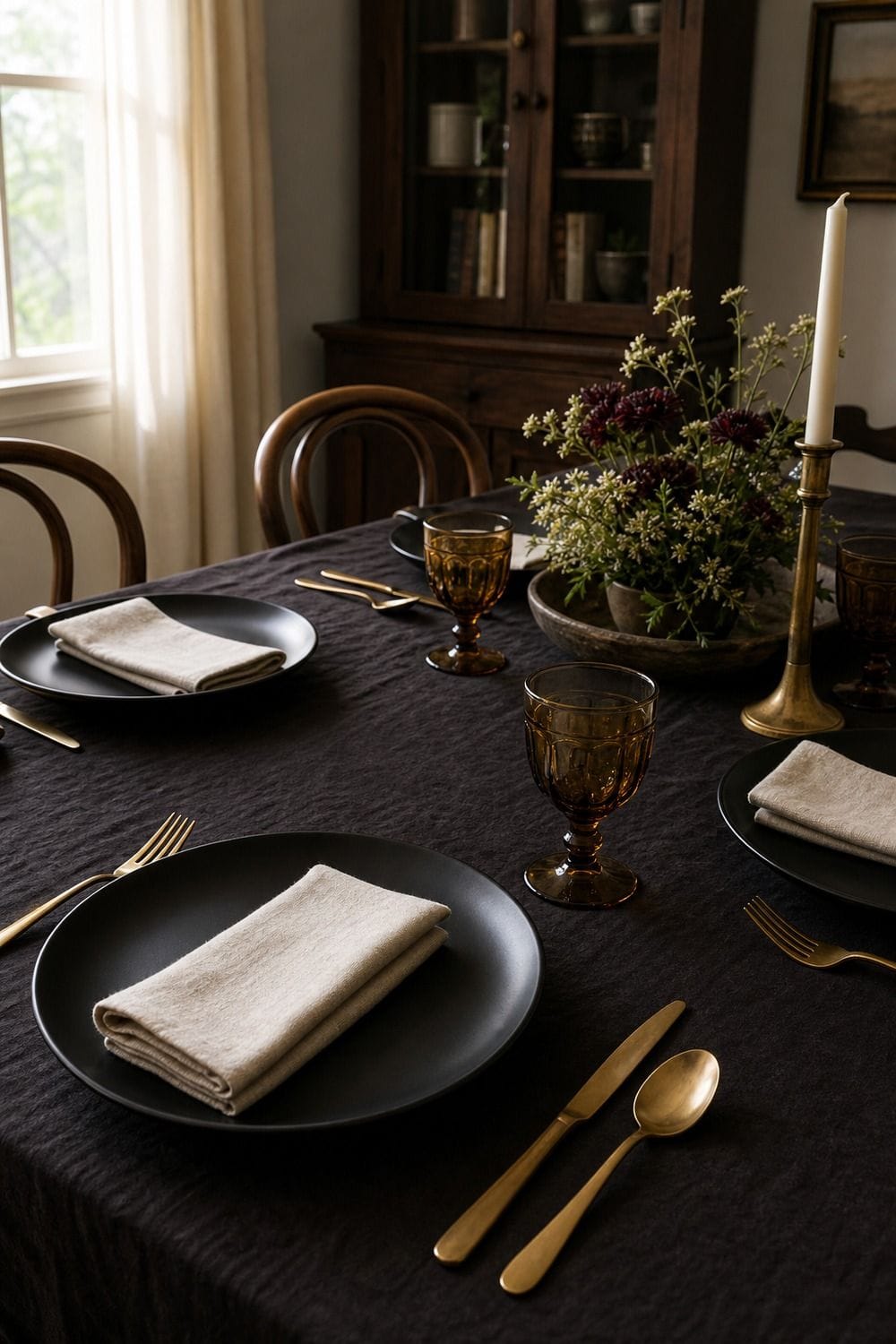
Black or charcoal plates make the place setting feel dramatic, but contrast matters. Light napkins, cream menus, or pale bread plates keep the table readable in low light. Matte black dinner plates work especially well when food has color and texture. They can make roasted vegetables, pears, greens, and pale sauces stand out, but very dark food may disappear on them. Pair the plates with ivory, oatmeal, parchment, or pale gray napkins if the table feels too heavy. The napkin becomes the visual pause between black cloth and black plate.
8. Amber or Smoke Glass Goblets
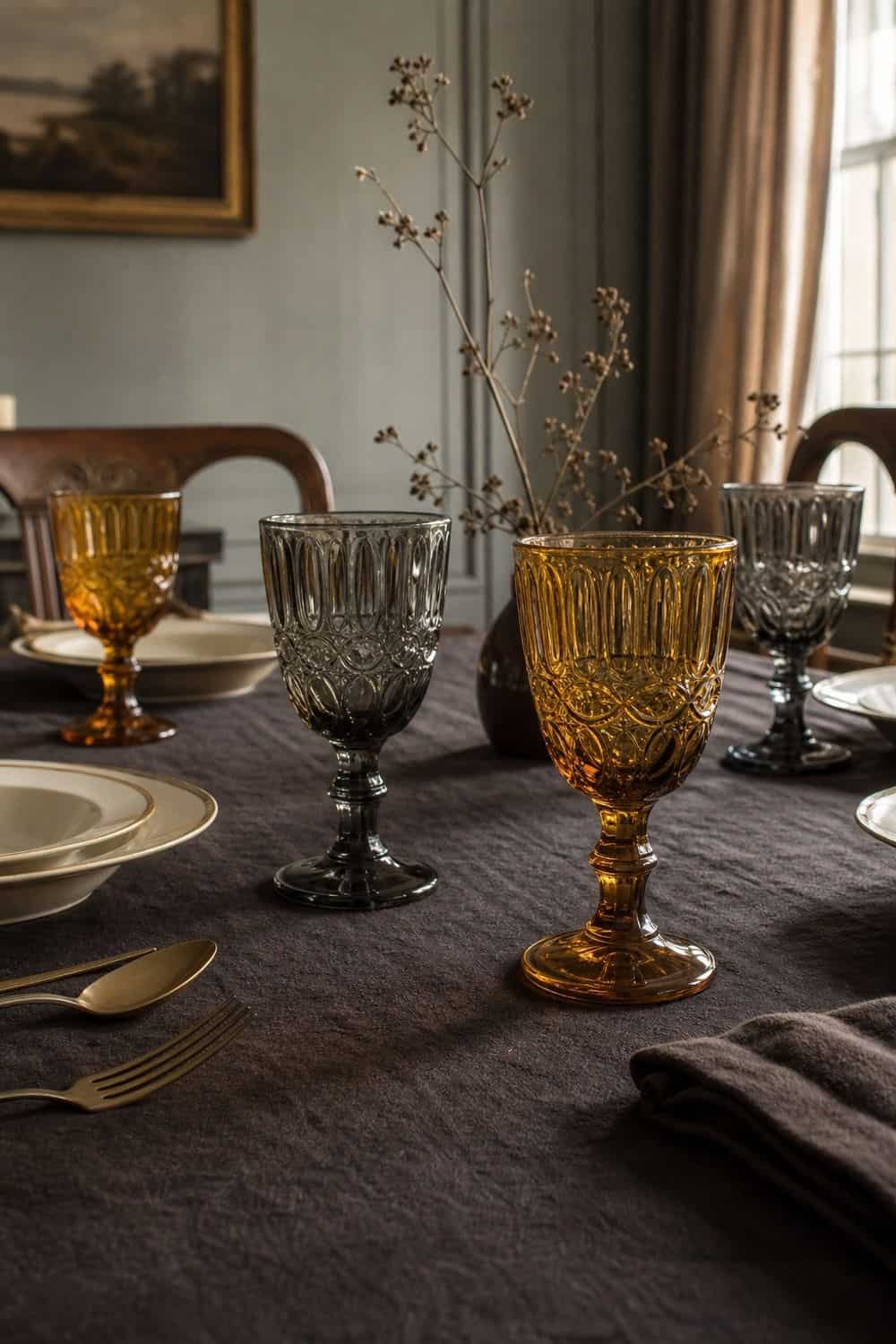
Glass color gives the table a vintage glow even before candles are lit. Amber, smoke, or deep green goblets catch warm light and make the table feel collected. Amber glass goblets can be used for water if wine glasses are clear, which gives every place setting the same moody note. They also make a simple table feel more finished. Check that the glasses are comfortable to hold and not too tall for the sightline. A tablescape still has to support conversation. If budget is tight, use colored goblets only for the main drink and keep the rest of the glassware simple.
9. Brass or Gold Flatware
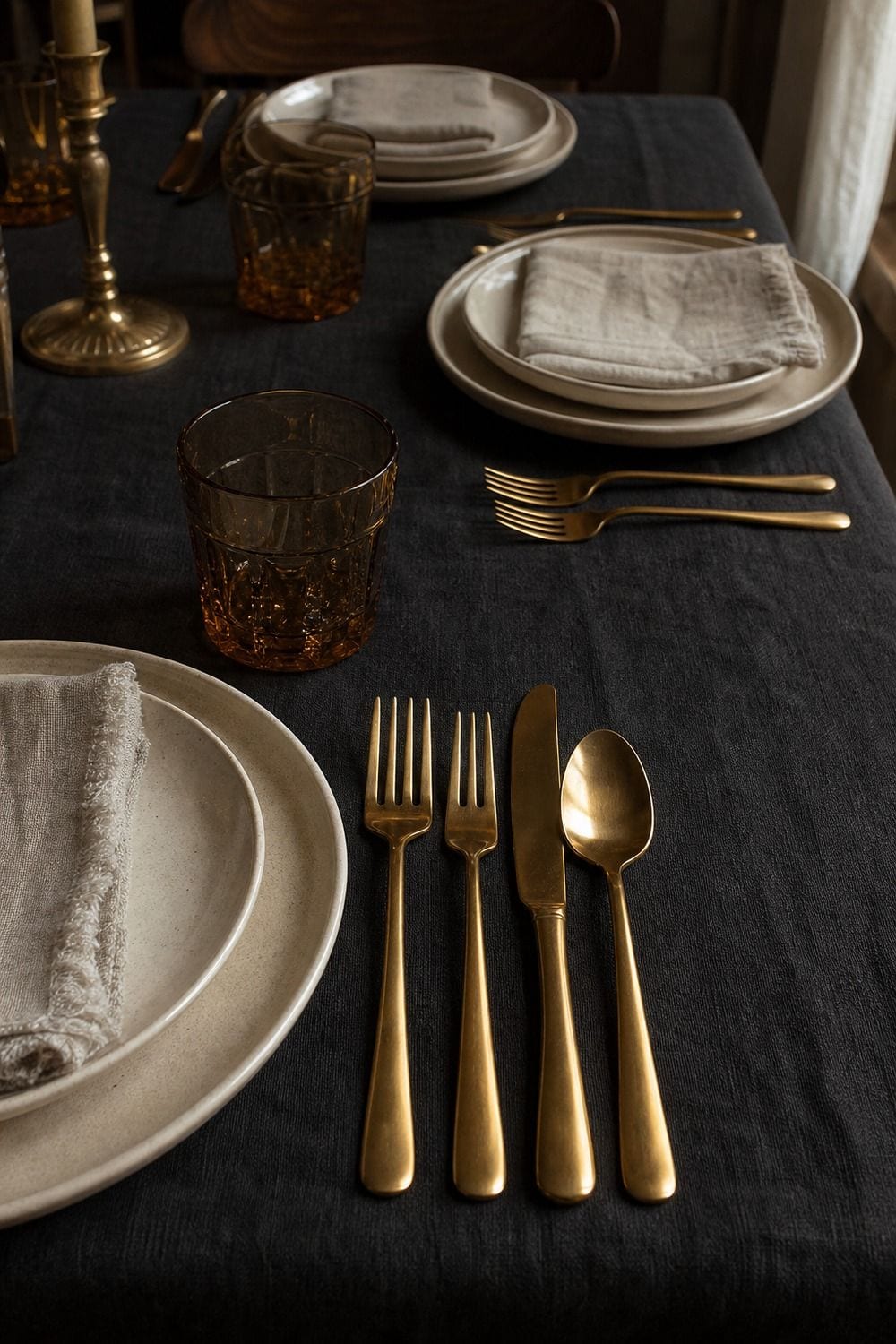
One metallic finish is enough for this style. Brass or aged gold warms up dark cloth, books, dried flowers, and black plates without adding more objects to the table. A gold flatware set gives every place setting a repeated element, which helps thrifted or mismatched pieces look deliberate.
The metal also catches candlelight in a subtle way. Keep the finish consistent across the table if possible. Mixing silver, bright gold, and brass can look accidental unless the rest of the setting is very restrained. Think about weight as well as color.
10. Dried Florals Instead of Bright Bouquets
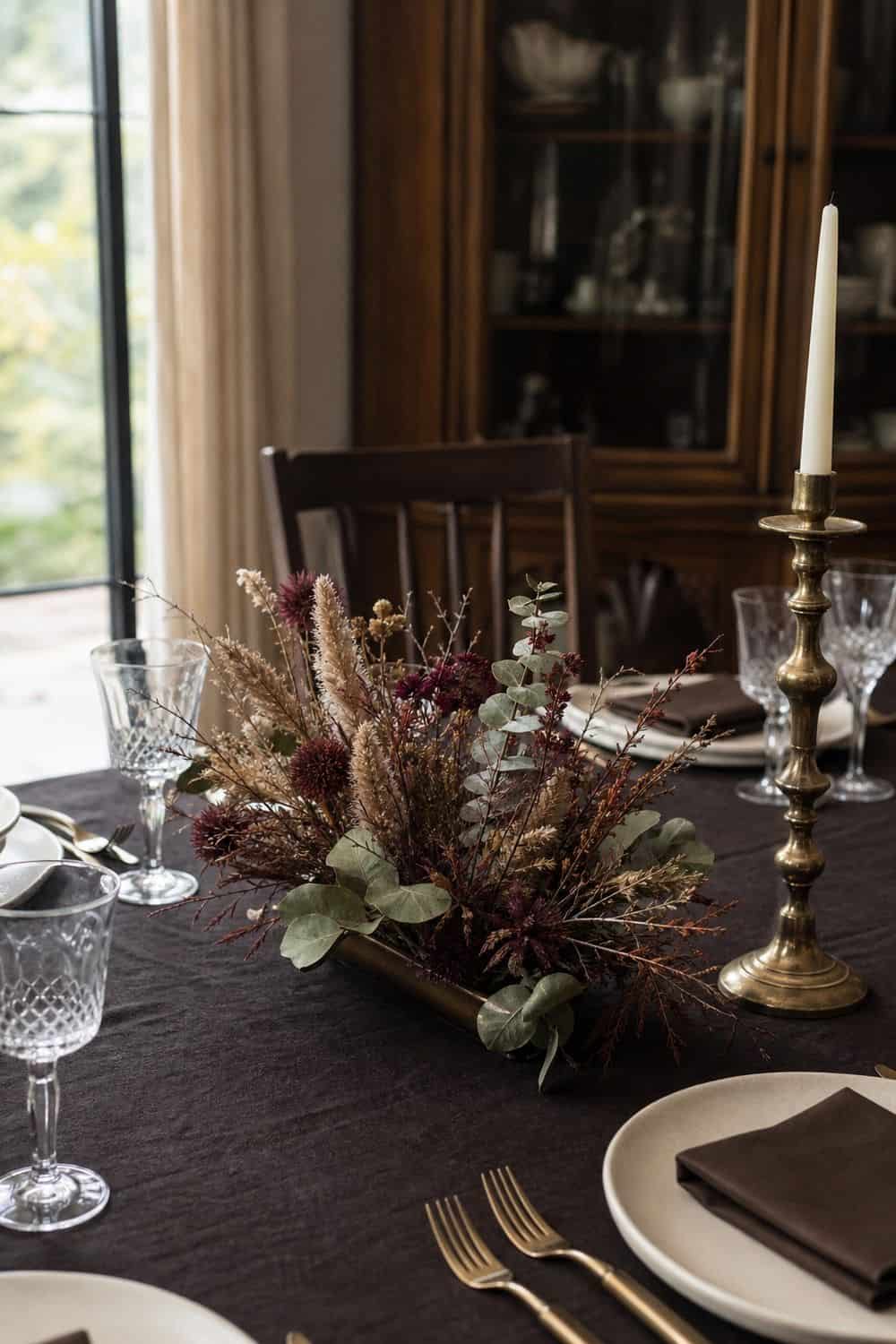
Bright fresh bouquets can fight the mood, especially if the palette is deep and literary. Dried grasses, burgundy blooms, eucalyptus, thistle, branches, and dark foliage suit the table better. A dried floral bouquet should feel slightly wild but not messy. Keep the arrangement low enough for conversation and narrow enough that plates and glasses still fit. Place shedding stems away from food. Dried flowers are atmospheric, but loose bits near bread or dessert feel careless. If the table is small, use a few stems in amber bud vases instead of one wide arrangement.
11. Grapes or Figs in a Footed Bowl
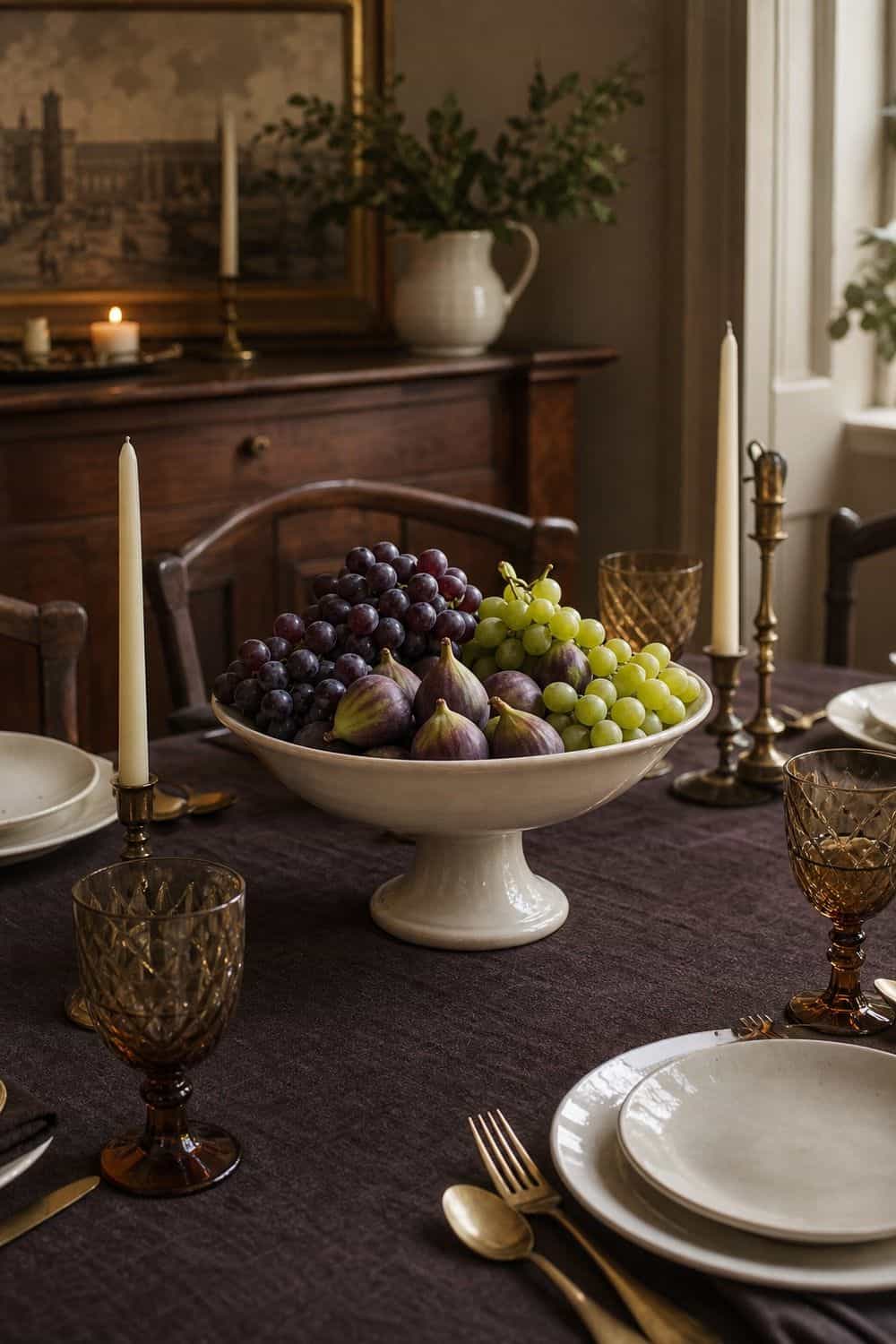
Fruit gives the table an old-world still-life note while staying edible and food-safe. Grapes, figs, pears, pomegranates, and dark plums look especially good with brass and linen. A footed fruit bowl creates height without needing tall flowers. It can sit at the center or slightly off-center, depending on where serving dishes need to land. Keep the fruit fresh and easy to move. If dinner is family-style, the bowl should lift away quickly when the main course arrives. This is a good substitute for extra props because it looks moody and still belongs at a dining table.
12. A Glass Cloche With One Curiosity
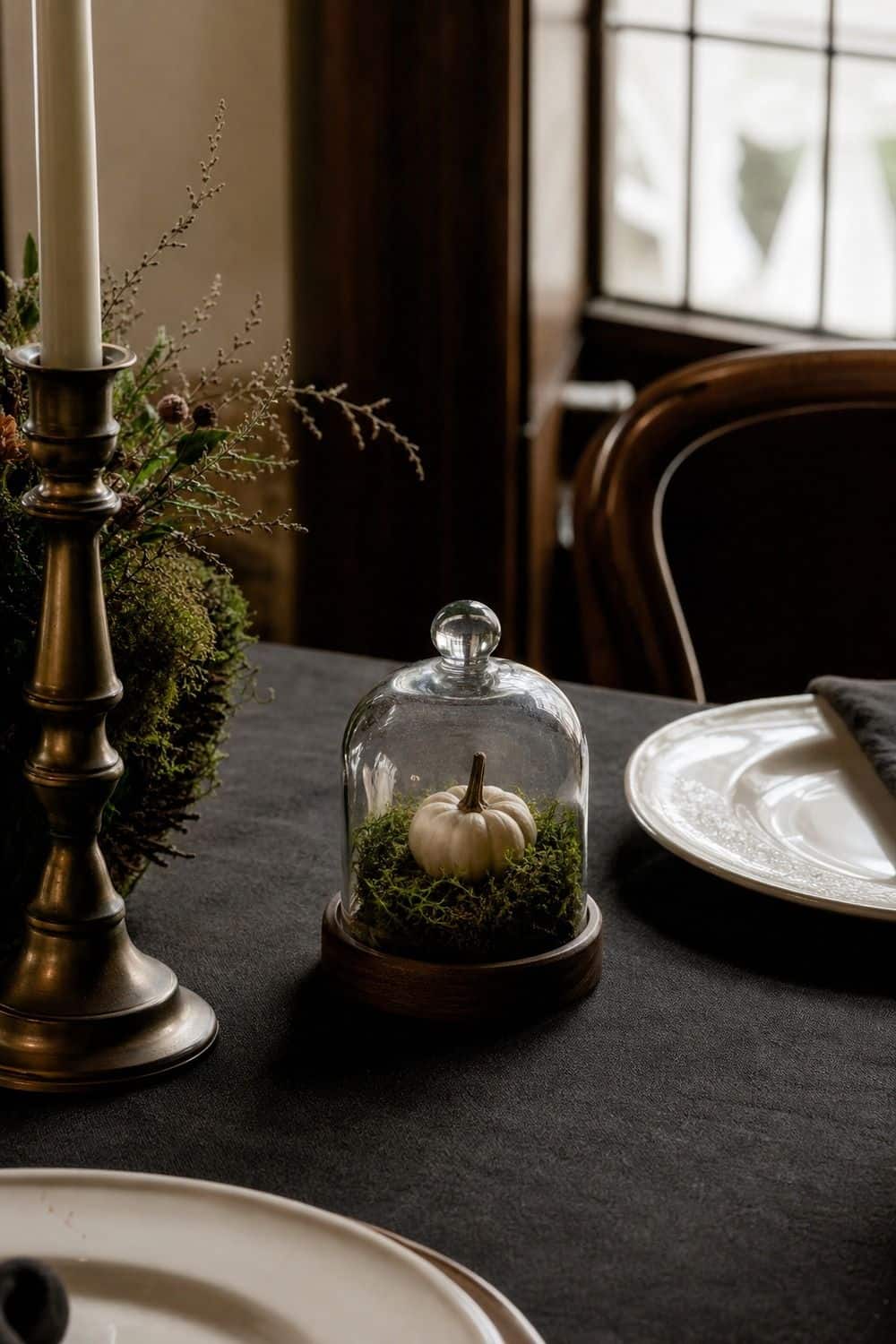
One contained curiosity can make the whole table feel academic, but restraint is the entire trick. Use one cloche with moss, a tiny pumpkin, a feather, dried mushrooms, or a small object.
A glass cloche dome contains the detail so it reads collected rather than scattered. Place it away from serving zones and never where guests need space for plates or glasses. Keep the object clean, unscented, and optional. Dusty curiosities beside food push the table in the wrong direction. If the table is narrow, move the cloche to a sideboard where it can still support the mood.
13. Ornate Place Cards
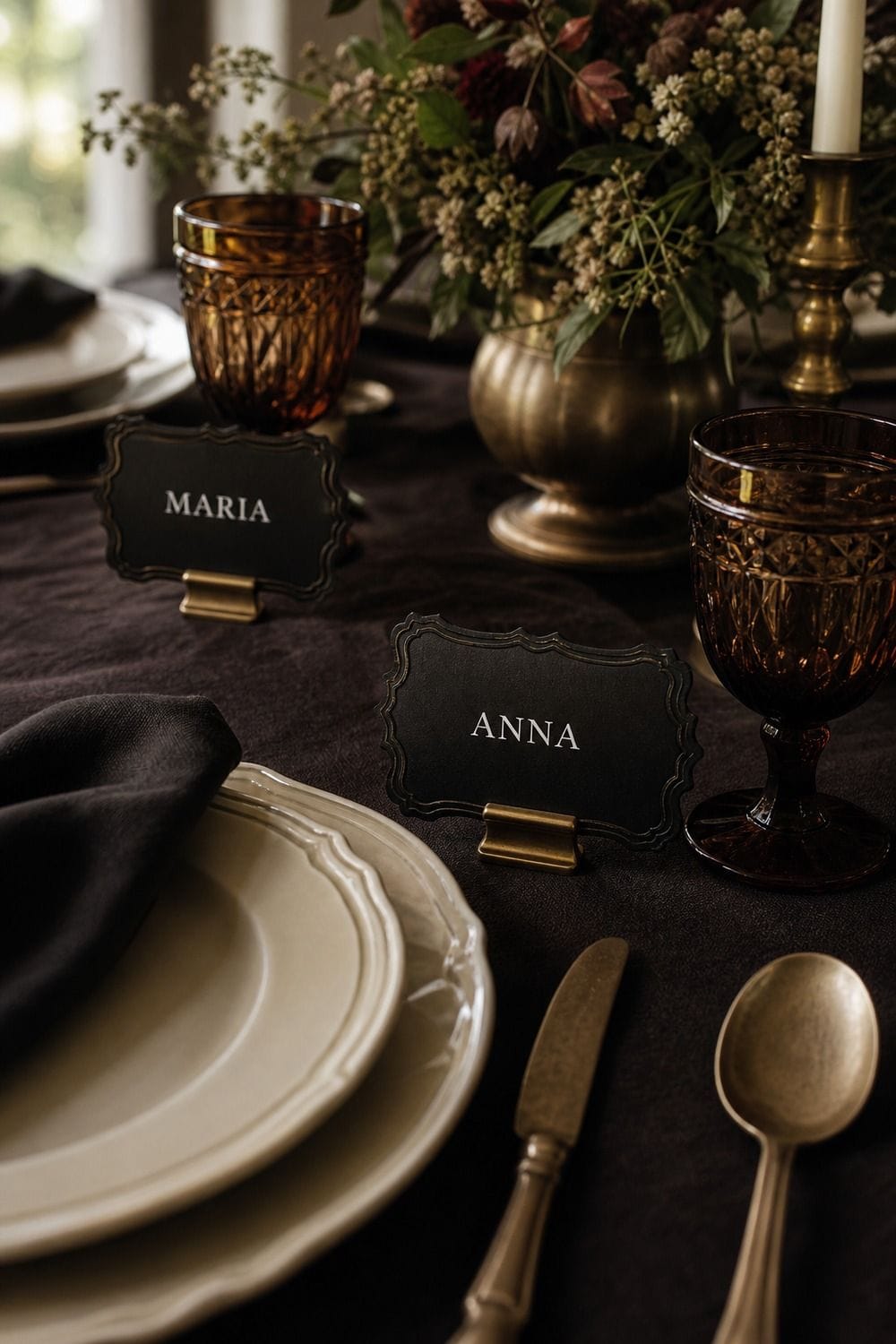
Small place cards make the table feel hosted rather than merely decorated. Black cards with gold or white writing, or cream cards with brown ink, both fit the literary mood. Black place cards are strongest when the writing is large enough to read in low light. Use a metallic pen only if it stays legible from a normal seated angle. This detail is useful for seated dinners, especially when you want conversation to flow. For a buffet or casual table, a menu card may be enough. Keep the shape simple. An ornate edge or small ribbon is fine, but the card should not compete with the plate setting.
14. Napkins With Ribbon or Twine
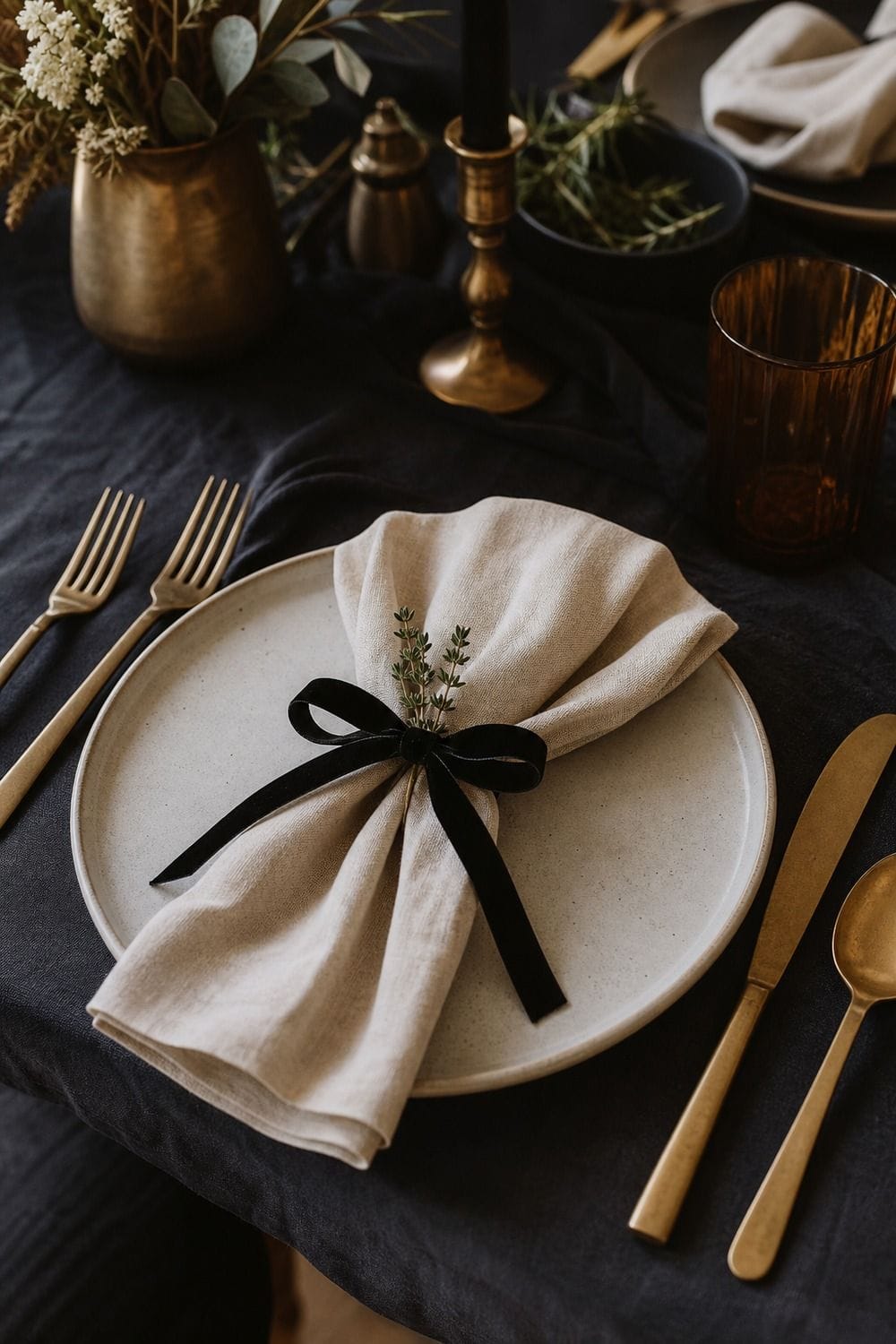
Napkin styling is a small detail that can carry the theme without using more table props. Velvet ribbon, twine, leather cord, or a herb sprig all work if the fold stays simple.
Black velvet ribbon adds softness and a gothic note, especially against cream napkins or stoneware plates. Tie it loosely so guests can undo it without fuss. Avoid elaborate knots, wax seals, or anything that makes people work before eating. The napkin should look considered, then get out of the way. If you use greenery, choose a sturdy herb or stem that will not shed onto the plate.
15. A Small Bust or Statue as an Accent
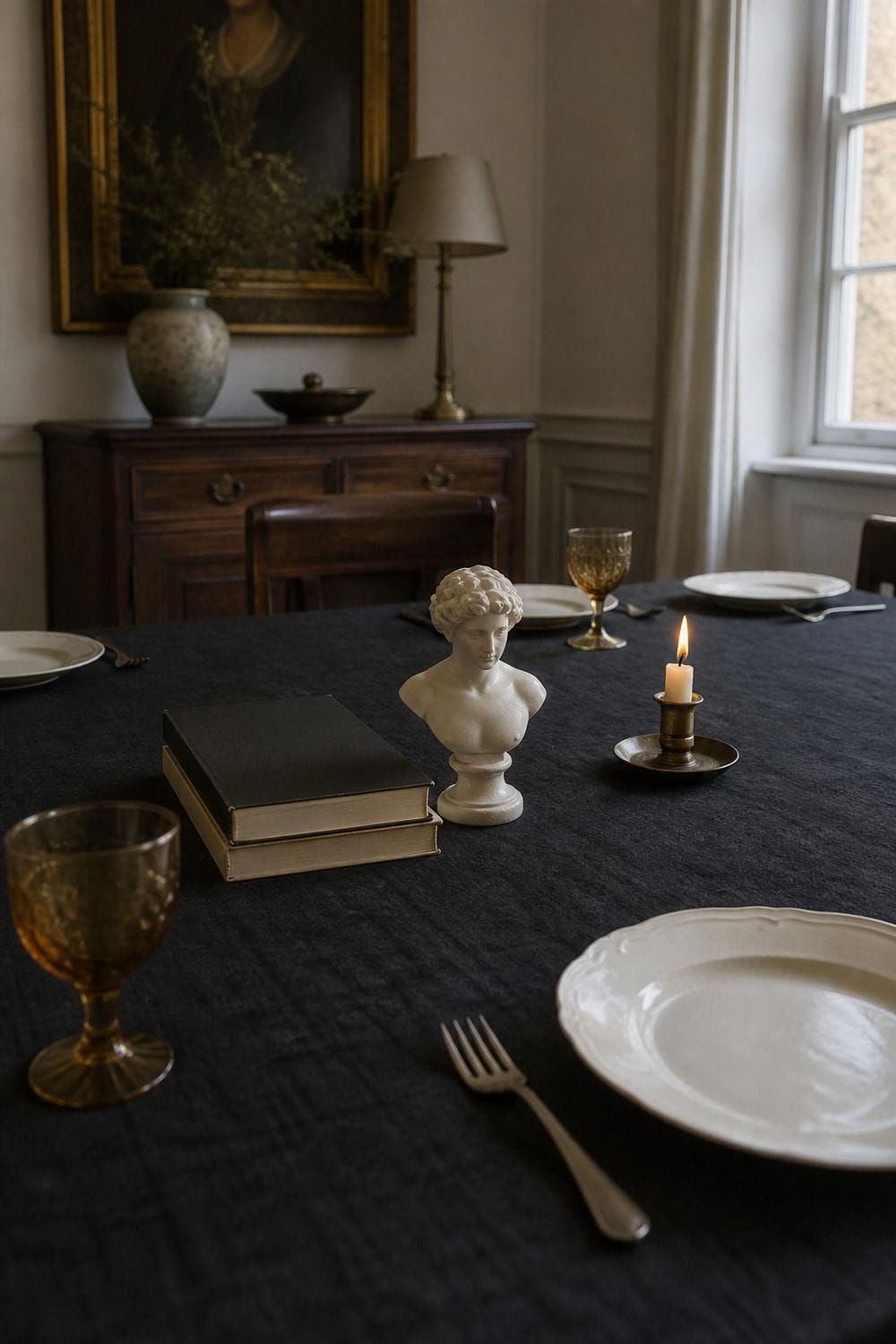
Classical references can give the table an academic edge when they are used sparingly. One small bust, statue, or sculptural object is enough. A small Greek-style bust works best near the center edge, on a sideboard, or beside a book stack. Keep it away from sauces, bread, and anything that needs to be passed, and check that its base will not scratch a tray or mark dark cloth. The mistake is treating the table like a shelf. Guests need eating space more than they need a complete museum scene.
16. A Mirror Tray for Candle Reflection
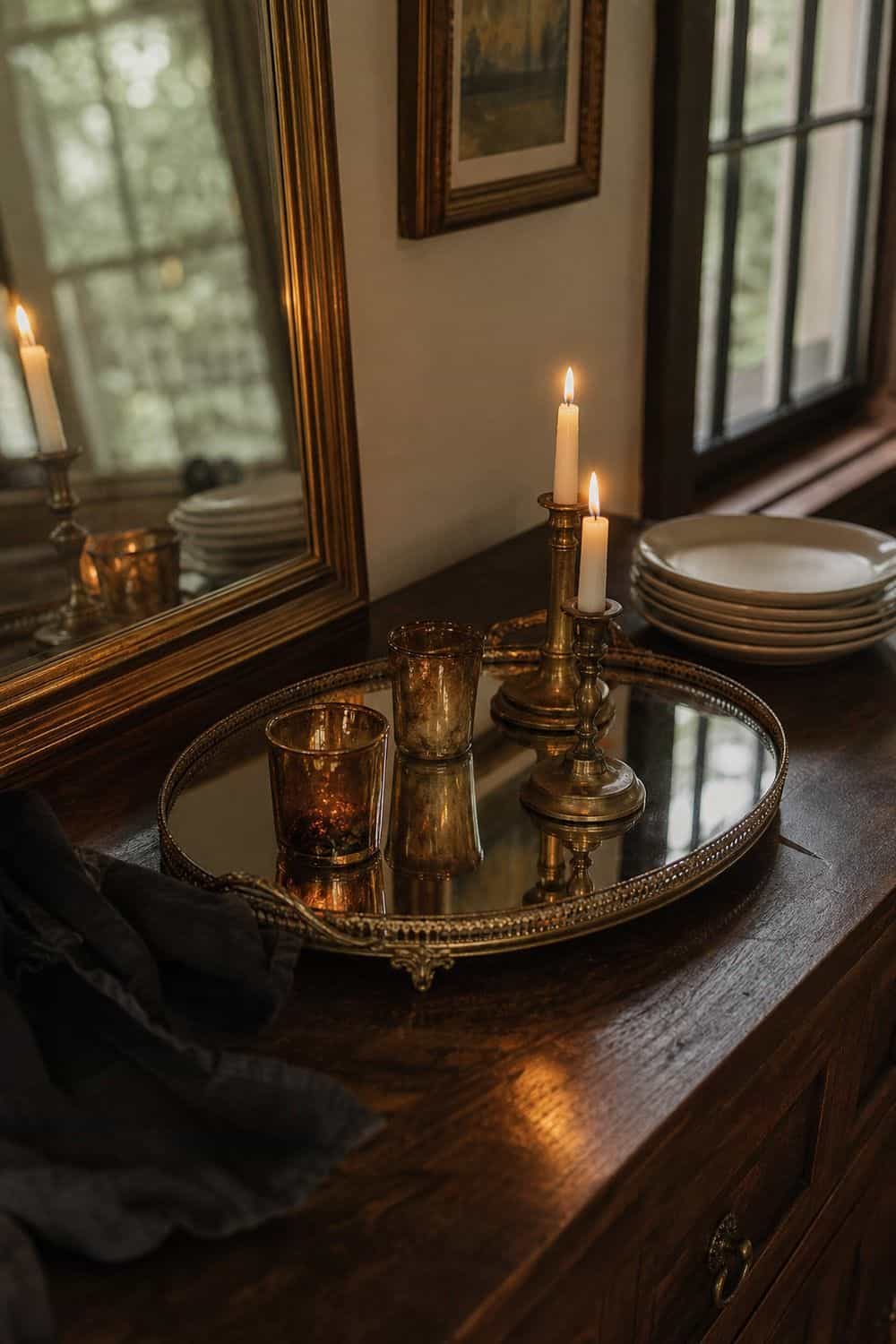
Dark tables need a little reflection so the setting does not become visually heavy. A mirror tray can bounce candlelight and make glassware feel brighter. An antique mirror tray is best on a sideboard or as a small candle base, not in the middle of a crowded dinner table. It can hold tapers, votives, extra glasses, or the welcome drink. Make sure the tray is stable and not so large that it turns into a serving obstacle. Reflection should support the table, not add glare or clutter.
17. Ferns or Ivy for Greenery
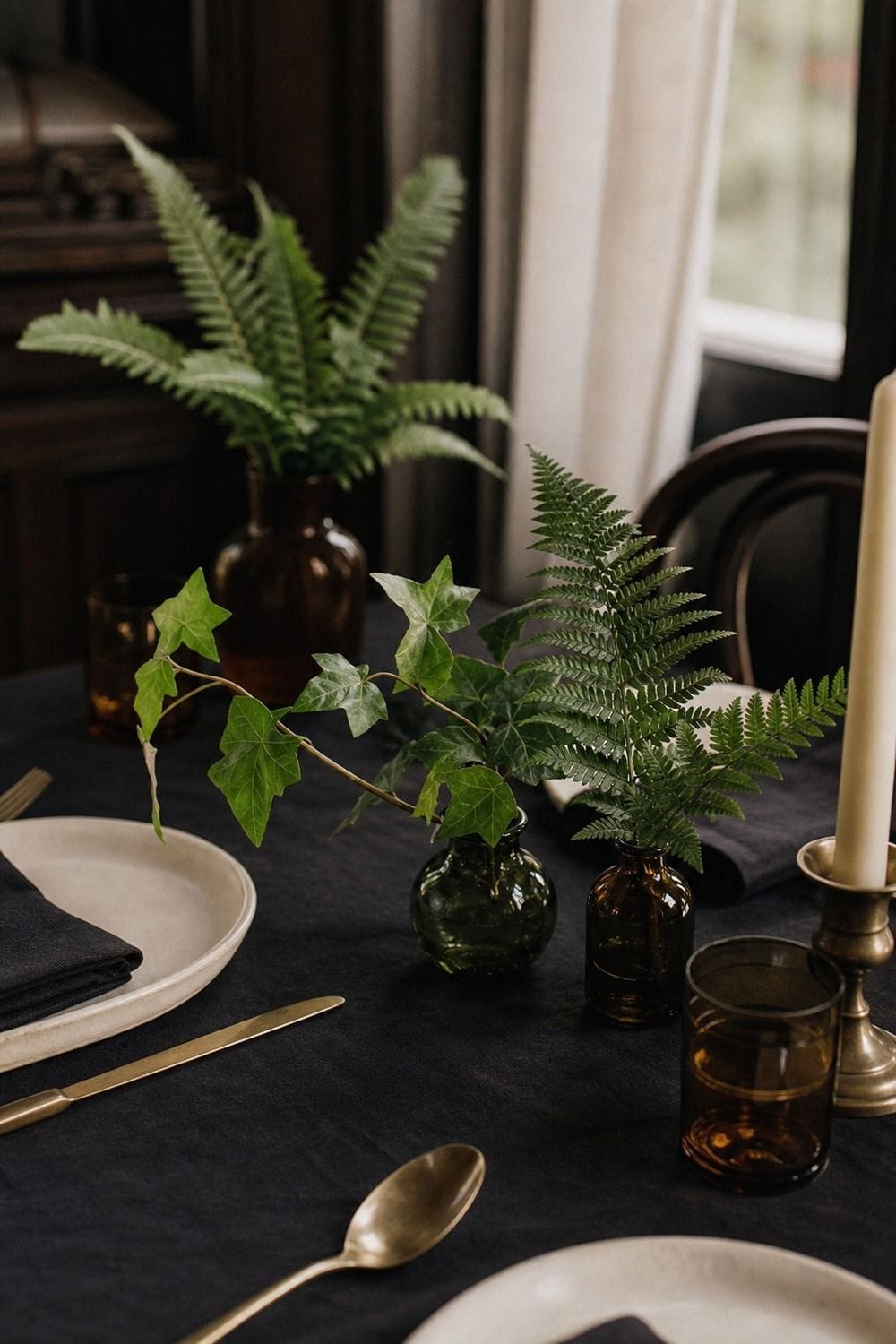
Greenery keeps the table from feeling too dry or theatrical. Ivy, ferns, eucalyptus, rosemary, or herbs can soften books, brass, and dark linens. Faux ivy garland is useful when fresh greenery would wilt, shed, or be hard to source.
Use a small amount near the centerpiece and keep it well away from candles, hot dishes, and serving platters. For a cleaner look, place two or three fern fronds in bud vases instead of running garland down the table. The goal is a quiet library-garden note, not a leafy runner that guests have to dodge.
18. Centerpiece Scale That Leaves Room for Dinner
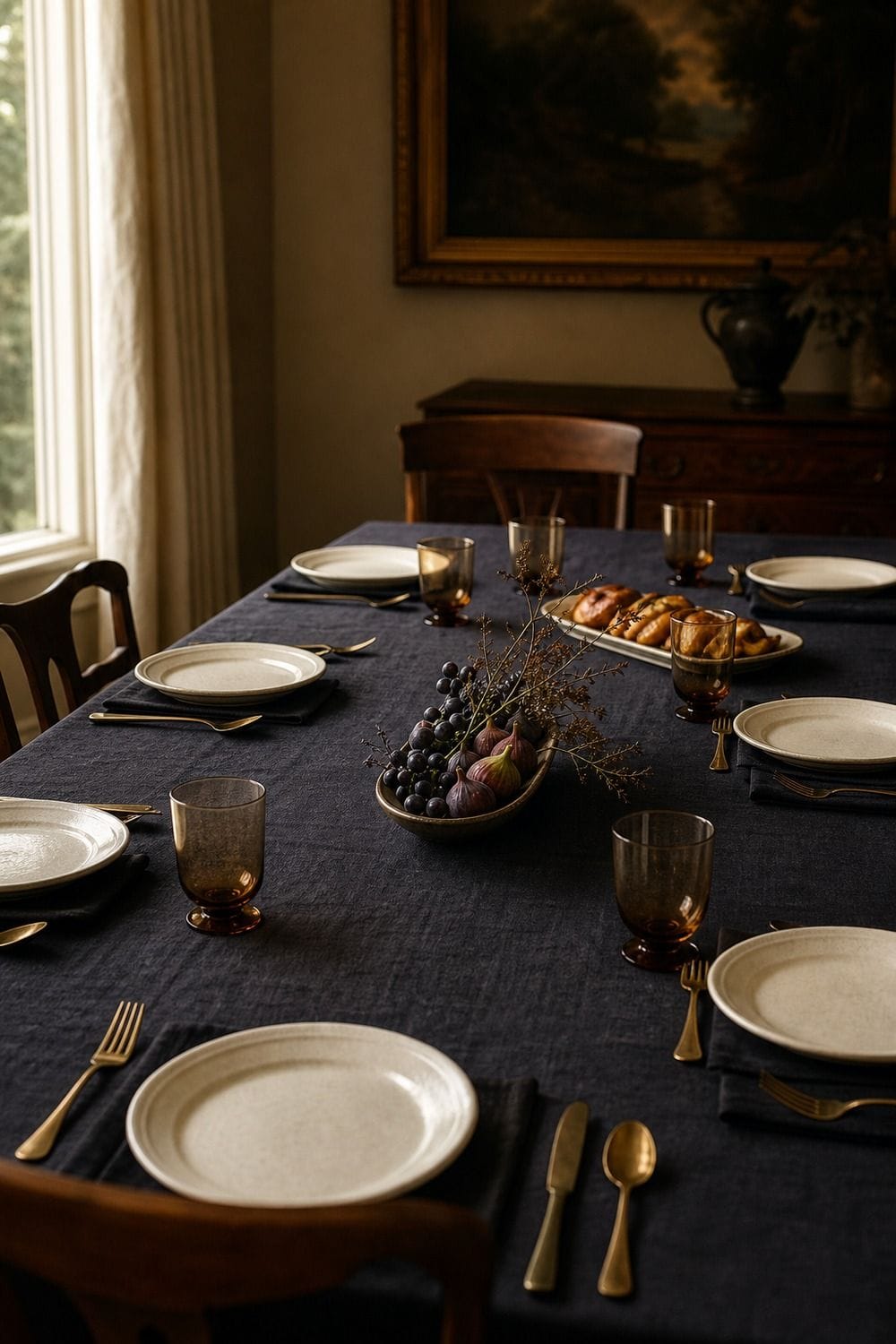
This is the practical rule that saves the whole tablescape. A low, narrow centerpiece leaves room for plates, glasses, elbows, serving dishes, and conversation, which matters most once guests sit down and the table starts being used. A low centerpiece bowl can hold figs, grapes, pears, dried flowers, moss, or small seasonal fruit. Choose a shape that runs with the table rather than spreading into every place setting, and leave enough open space for family-style platters to land without shifting decor. The table should still feel generous once the meal arrives.
19. Menus Printed on Cream Paper
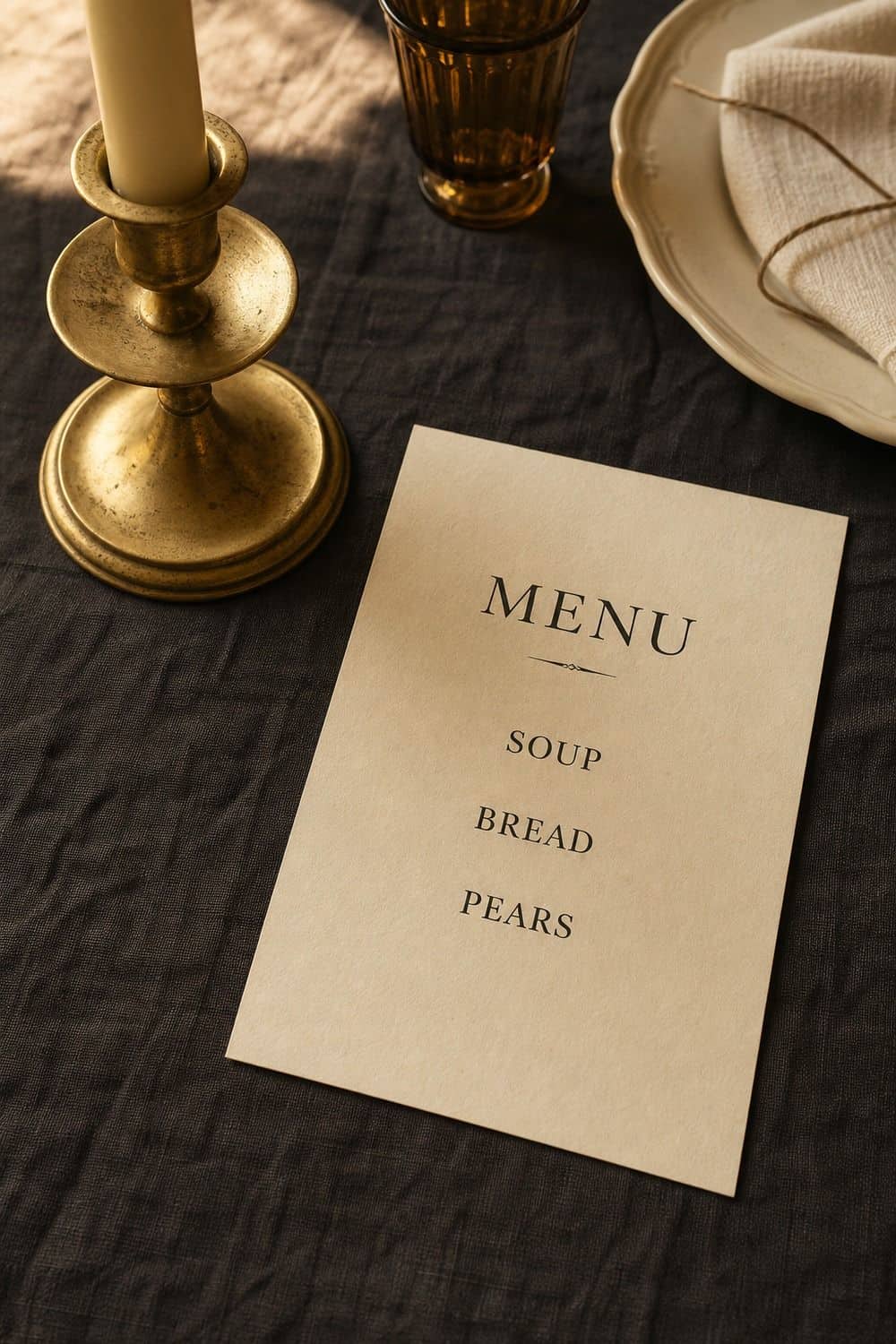
Paper details add the bookish feeling without adding more objects. A simple menu on cream paper can look like a page from an old volume when paired with dark linen and brass. Cream cardstock paper gives enough weight for menus, quote cards, or small food labels. Use a serif font, brown or black ink, and short wording. Do not overfill the page. A menu should tell guests what they are eating, not become a wall of decorative text. For a casual dinner, one menu near the centerpiece or sideboard is enough.
20. One Antique Frame Near the Table
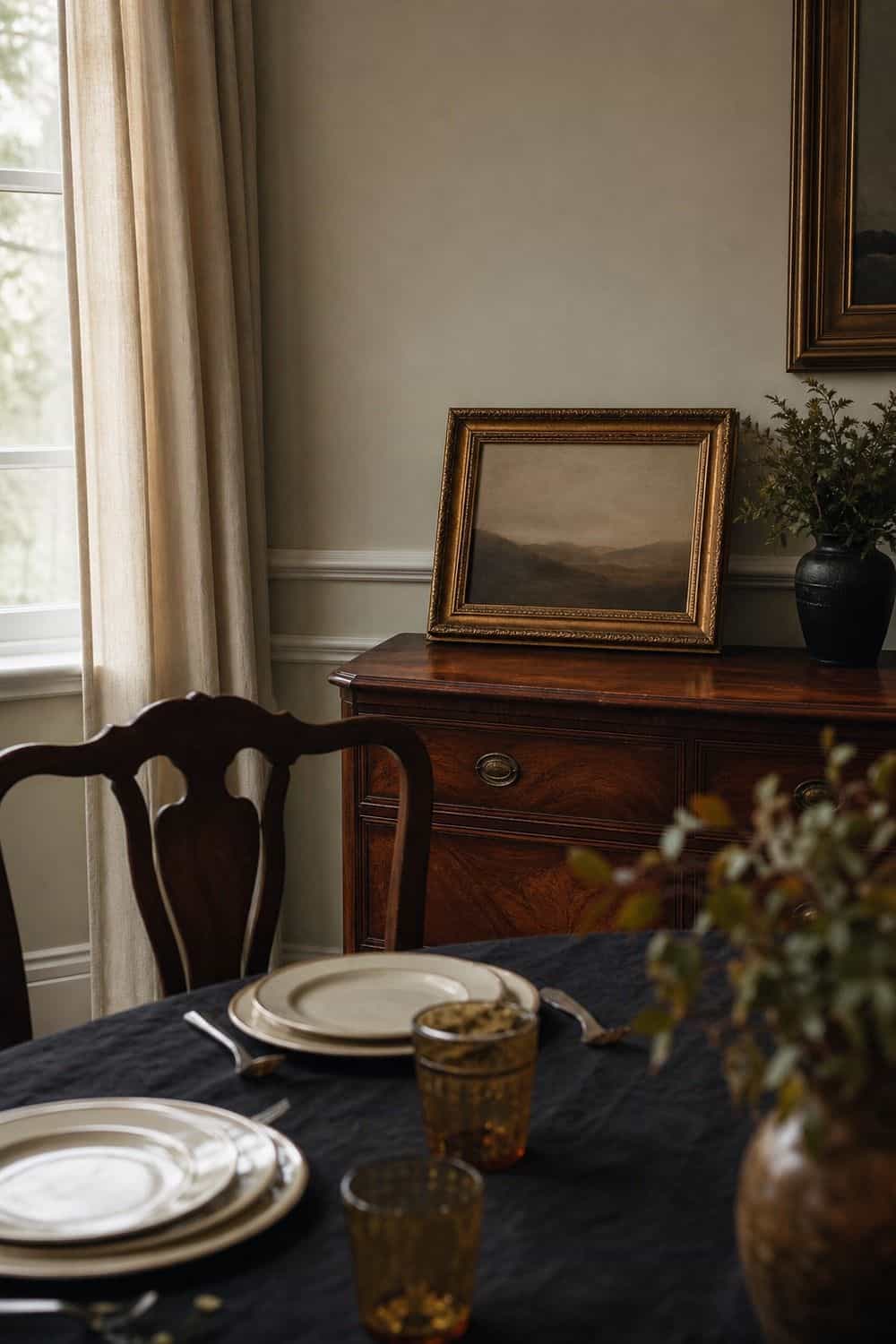
Surrounding decor can support the tablescape without crowding the plates. A single frame on the buffet, bar cart, or wall nearby can extend the old-world mood. An antique gold picture frame works with brass candlesticks and warm glassware. Use it for a small print, a handwritten menu, a quote, or even an empty layered frame if it looks deliberate. Keep the frame off the eating surface unless the table is very large. Nearby atmosphere is often more useful than more objects in the center. It changes the room’s mood while the dining surface stays clear.
21. A Sideboard Styled Like a Library Bar
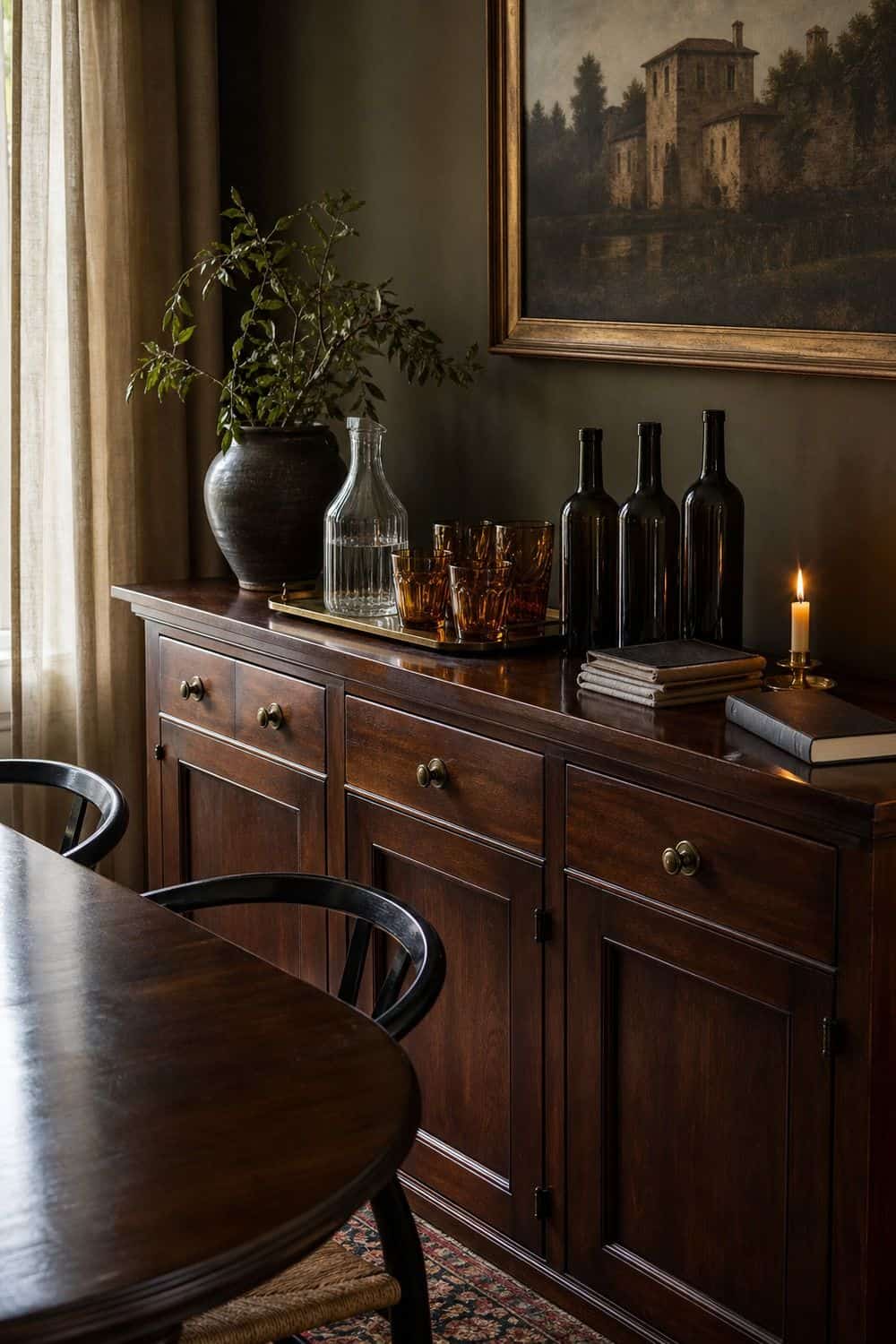
A sideboard lets the table stay usable. Move extra glasses, wine, water, dessert plates, napkins, and candles to a nearby surface so guests can refill without crowding the place settings.
A bar cart tray can gather bottles, glasses, and a small stack of napkins so the setup feels considered. Add one book or small candle if there is safe space. Keep the sideboard visually connected to the table with the same brass, amber, or dark linen detail. It should feel like part of the tablescape, not a separate storage zone.
22. Warm Lamps Instead of Overhead Light
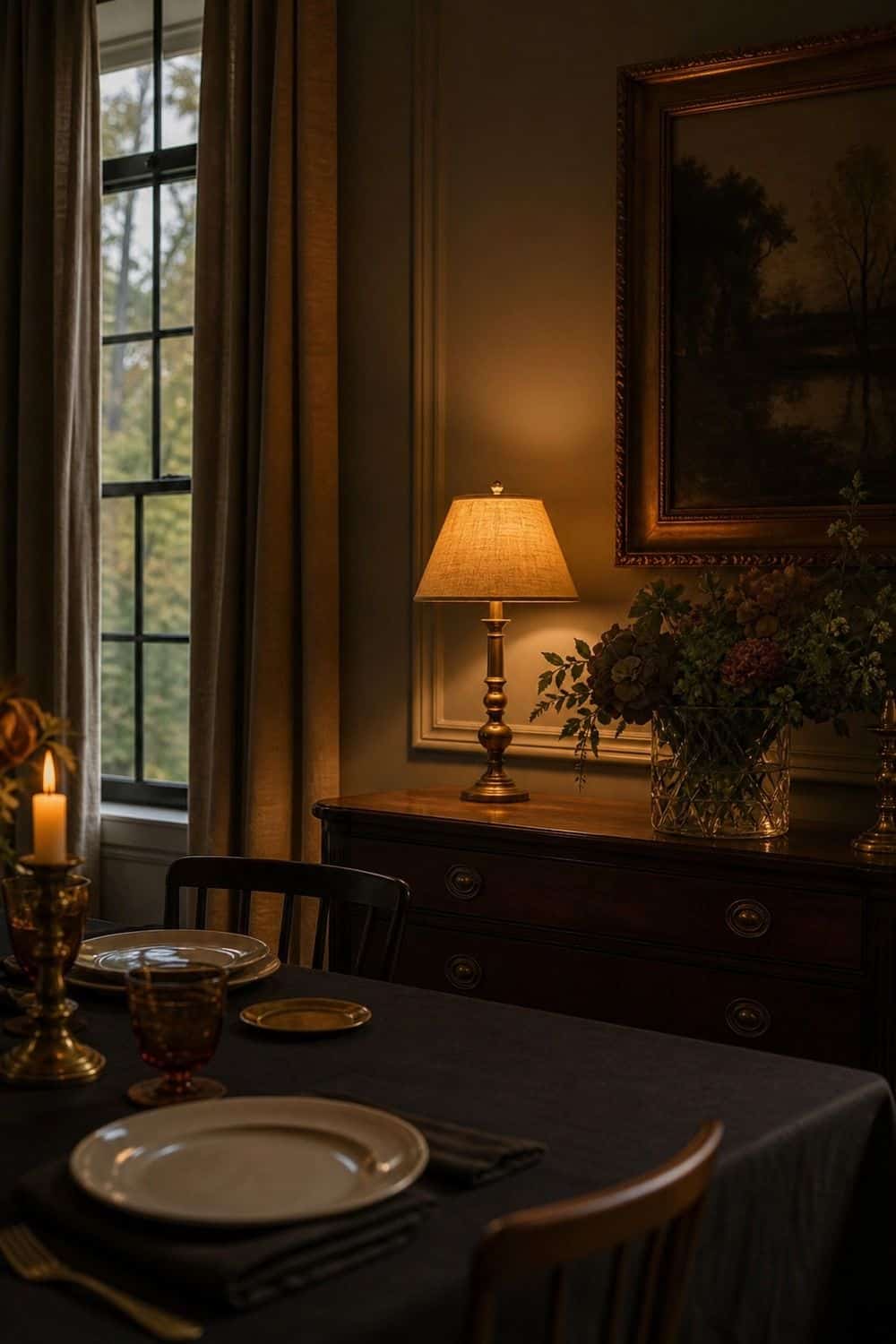
Overhead light can flatten a dark academia table instantly. Warm lamps, sconces, shaded bulbs, and candlelight give the room depth while keeping dinner safe to navigate. A cordless table lamp is useful on a sideboard, buffet, or small dining table where outlets are awkward.
Choose a warm bulb so the light works with candles instead of turning the room blue-white. Guests still need to see food, stairs, glassware, and bags. If the table looks good but nobody can read the menu, add more warm light. Avoid cold task lighting directly above the table unless it is dimmed heavily.
23. Restraint Around Obvious Halloween Props
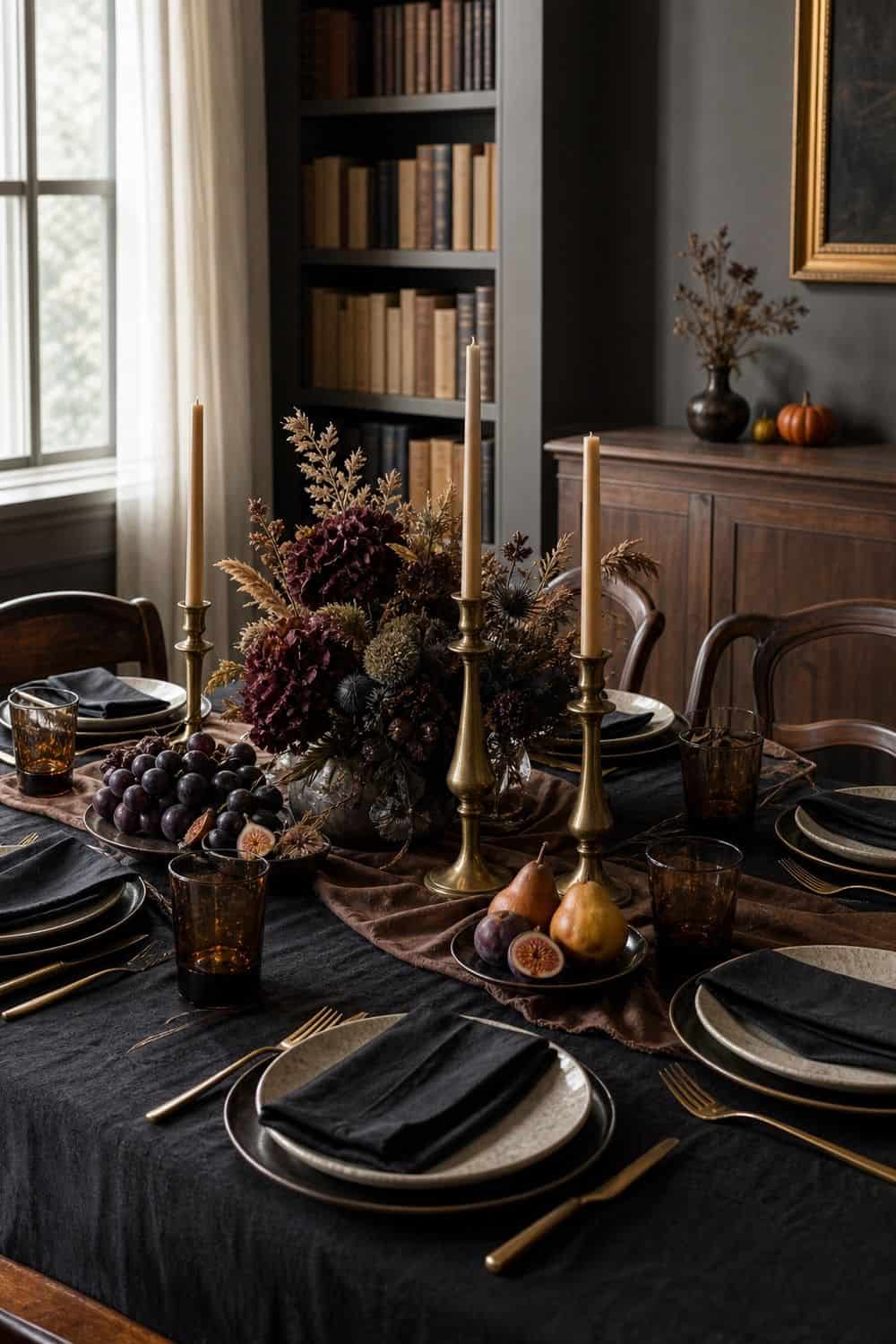
Gothic details can overlap with dark academia, but the table does not need novelty props to work. Books, brass, linen, glassware, fruit, dried flowers, and candlelight are stronger year-round choices. A decorative skull bowl is optional and should be treated as a seasonal accent, not the foundation of the table. If you use one, keep it on a sideboard or dessert area rather than beside dinner plates. For non-Halloween dinners, skip plastic spiders, fake cobwebs, and joke props. They pull the table away from literary and toward party-store spooky. Restraint is what makes the look feel adult and reusable.
24. A Small-Table Version With Five Pieces
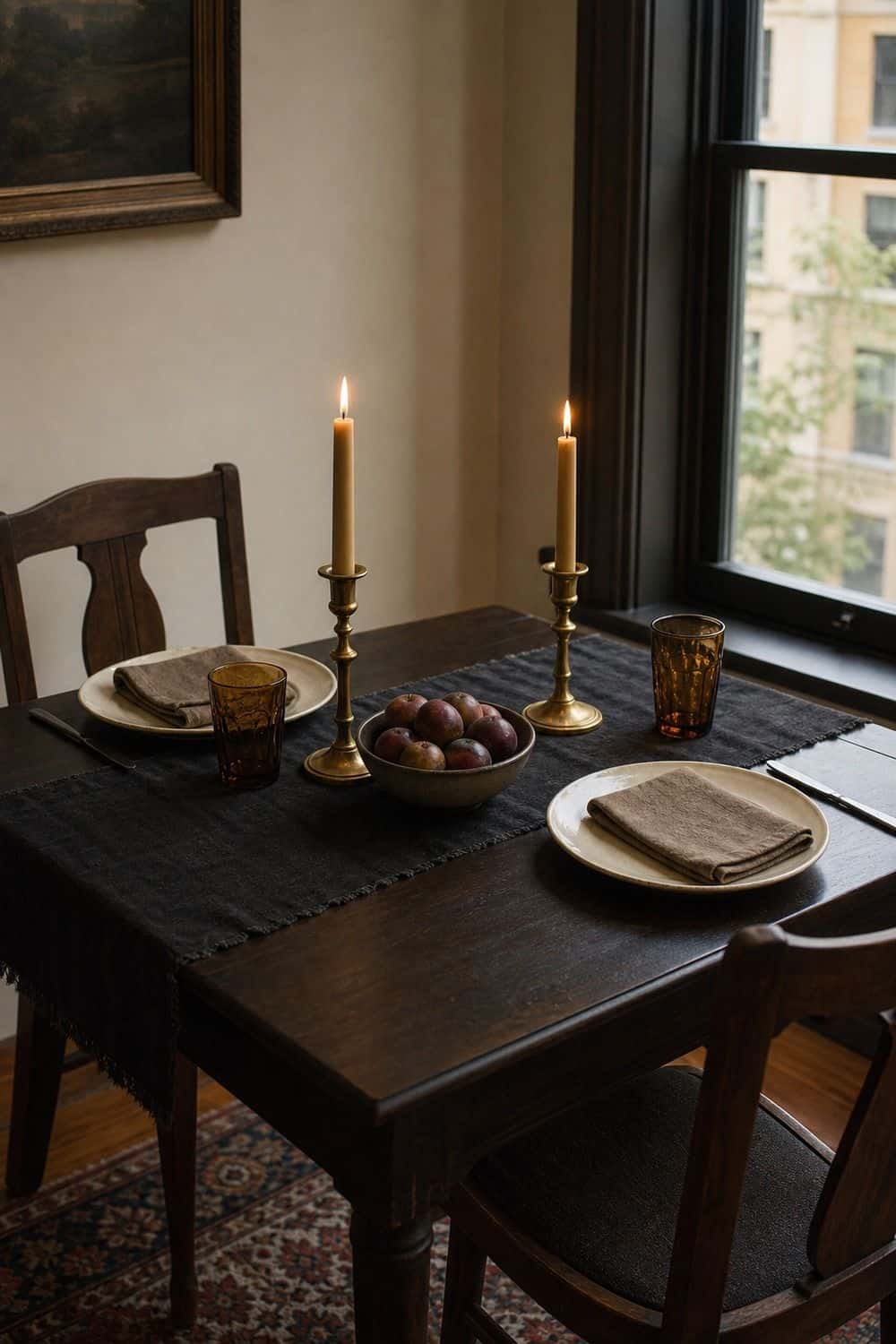
Small tables need a formula, not a miniature version of every idea. Use a dark runner, two candlesticks, amber glasses, folded napkins, and one low bowl of fruit or dried flowers. A dark table runner gives the mood without swallowing the entire surface. It also leaves room for dinner plates, water glasses, and a serving bowl if the table is narrow. Choose five strong pieces and stop. Extra books, statues, cloches, and garlands can overwhelm a two-person or compact table quickly. If you need more atmosphere, move it to the wall, sideboard, or windowsill instead of the place settings.
25. A Quick Table Photo Before Dinner
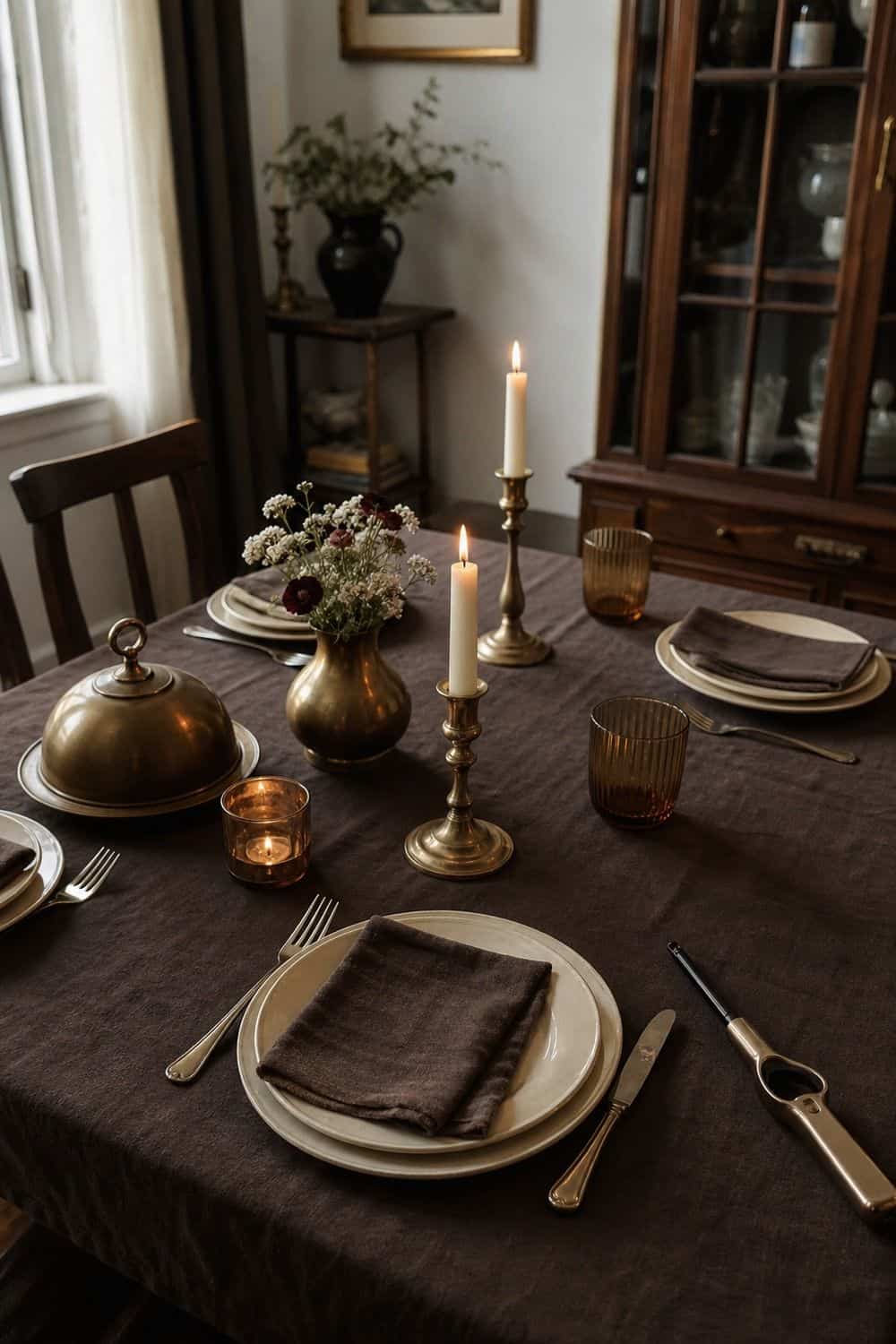
The table often looks best in the quiet moment before food arrives. Light the candles, take a quick photo, then remove any extra props that will interfere with plates or serving dishes.
A candle lighter wand makes it easier to light tapers and votives without reaching across linens, books, or glassware. It is especially useful when candles are staggered down a long table. This workflow protects both the photo and the meal. You can enjoy the styled table, then make it more comfortable before guests sit down. Keep the lighter nearby for relighting, but store it away from children, pets, and the main tablescape.
Dark Academia Tablescape Styling Notes
The easiest way to keep this style usable is to treat the table like a dinner surface first and a mood board second. Dark linen, candles, books, fruit, and brass can carry the atmosphere, but plates, glasses, elbows, serving spoons, and sightlines still need room.
If the setting starts to feel crowded, move the most decorative pieces to a sideboard or nearby shelf. The table will still read as dark academia when the palette is consistent and the candlelight is warm, even if the center stays low and practical.
Frequently Asked Questions
What is a dark academia tablescape?
A dark academia tablescape is a moody, literary table setting built from dark linens, candlelight, vintage books, brass, amber glass, dried flowers, fruit, and old-world details. It should look atmospheric while still being comfortable for dinner.
What colors work best for a dark academia table?
Black, espresso, burgundy, plum, forest green, navy, ivory, antique gold, and amber all work well. Keep the palette limited so the table feels restrained rather than crowded with dark decor.
How do I decorate a dark academia table without making it look like Halloween?
Use books, candles, brass, linen, glassware, fruit, and dried florals instead of plastic spiders, fake cobwebs, or novelty props. A restrained table feels literary and moody without needing obvious seasonal decor.
What should I use as a dark academia centerpiece?
Use a low bowl of grapes or figs, a few amber bud vases, dried florals, a small book stack, or one glass cloche. Keep the centerpiece low and narrow so guests can see each other.
Can I make a dark academia tablescape on a budget?
Use thrifted books, dark fabric, basic taper candles, handwritten menus, fruit, and mismatched plates in a tight color palette. Repetition and restraint matter more than buying every themed piece.
Are scented candles okay on a dinner table?
Unscented candles are better for dinner because fragrance can compete with food. If you want scent, use it in the entry before guests sit down, then keep the table candles unscented.
How do I make a small dark academia table?
Use a dark runner, two candlesticks, amber glasses, cloth napkins, and one low bowl of fruit or dried flowers. Move extra decor to a sideboard or windowsill so the table stays usable.
What products help create a dark academia tablescape?
Dark linen, brass candlesticks, black taper candles, amber goblets, vintage books, dried florals, cream cardstock menus, and a low centerpiece bowl all help create the look while keeping the table practical.
Final Thoughts
Dark academia tablescape ideas work best when the table feels moody, literary, and still easy to use. Start with dark linen, candlelight, books, brass, amber glass, and one low centerpiece, then pare back anything that gets in the way of eating, talking, and lingering comfortably.
Last update on 2026-09-18 / Affiliate links / Images from Amazon Product Advertising API