

Stir 3/4 teaspoon of salt into 4 cups of full-fat plain yogurt, tie it up in cheesecloth over a bowl, and let it drain in the fridge for 24 to 48 hours. You get about 1.5 cups of thick, tangy labneh. Strain a full day for a spreadable dip, closer to two days for something firm enough to roll into balls.
Spoon salted yogurt into a cloth on Friday evening and by Sunday brunch you have labneh. That is the whole trick behind this homemade labneh recipe: two ingredients, five minutes of work, and a fridge that does the rest.
Labneh is strained yogurt taken much further than Greek yogurt, until it is thick and tart enough to spread like soft cheese. It is eaten across the Levant with olive oil, za’atar and warm bread, and once you have a container of it, it starts replacing cream cheese, sour cream and mayo all over your kitchen.



Is labneh the same as Greek yogurt?
No. Both are strained yogurt, but Greek yogurt drains for a few hours and labneh drains for one to two days. That extra time pulls out far more whey, so labneh ends up denser, tangier and closer to a fresh cheese than to anything you eat with a spoon.
A good way to picture it: Greek yogurt is a dip, labneh is a spread. Push it further, to the 48-hour mark, and it firms up enough to shape by hand.
Which yogurt makes the best labneh?
Full-fat, plain and unflavored. Fat is what makes labneh silky, and low-fat yogurt drains into something thin and grainy. Check the label for live cultures and as few ingredients as possible; yogurts thickened with starch or gelatin hold on to their whey and strain badly.
Regular full-fat yogurt gives the best flavor. Greek yogurt works as a shortcut because it has already lost some whey, so it reaches labneh texture in about 12 to 18 hours, with a slightly milder taste.

Should labneh strain in the fridge or on the counter?
Strain it in the fridge. Some cooks leave the bundle on the counter for a tangier result because the cultures stay more active in the warmth, and in cool climates that is a long tradition. But yogurt is a perishable dairy food, and a 24 to 48 hour drain is far beyond the two hours that food safety guidance allows perishables out of the fridge.
The fridge version is milder and cleaner, and it is forgiving. Forget it for an extra half day and you just get thicker labneh. If you want more tang, strain longer rather than warmer.
Homemade labneh recipe
Prep time: 5 minutes. Straining time: 24 to 48 hours. Total time: 24 to 48 hours, almost all of it hands-off. Makes about 1.5 cups.
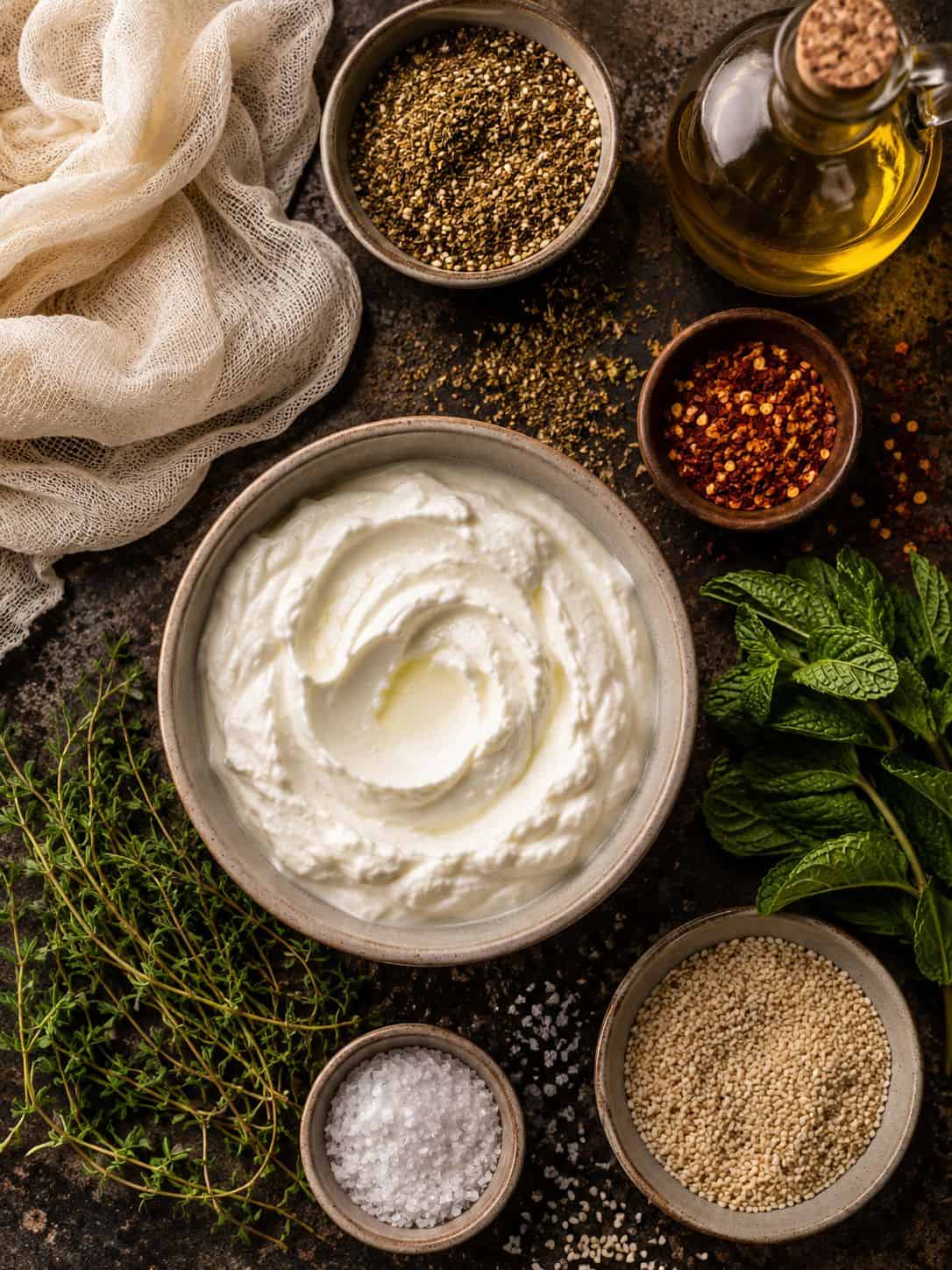
Ingredients
- 4 cups full-fat plain yogurt (not flavored)
- 3/4 teaspoon fine sea salt
- Optional toppings: extra virgin olive oil, za’atar, fresh herbs, red pepper flakes, toasted sesame seeds, sumac
Instructions
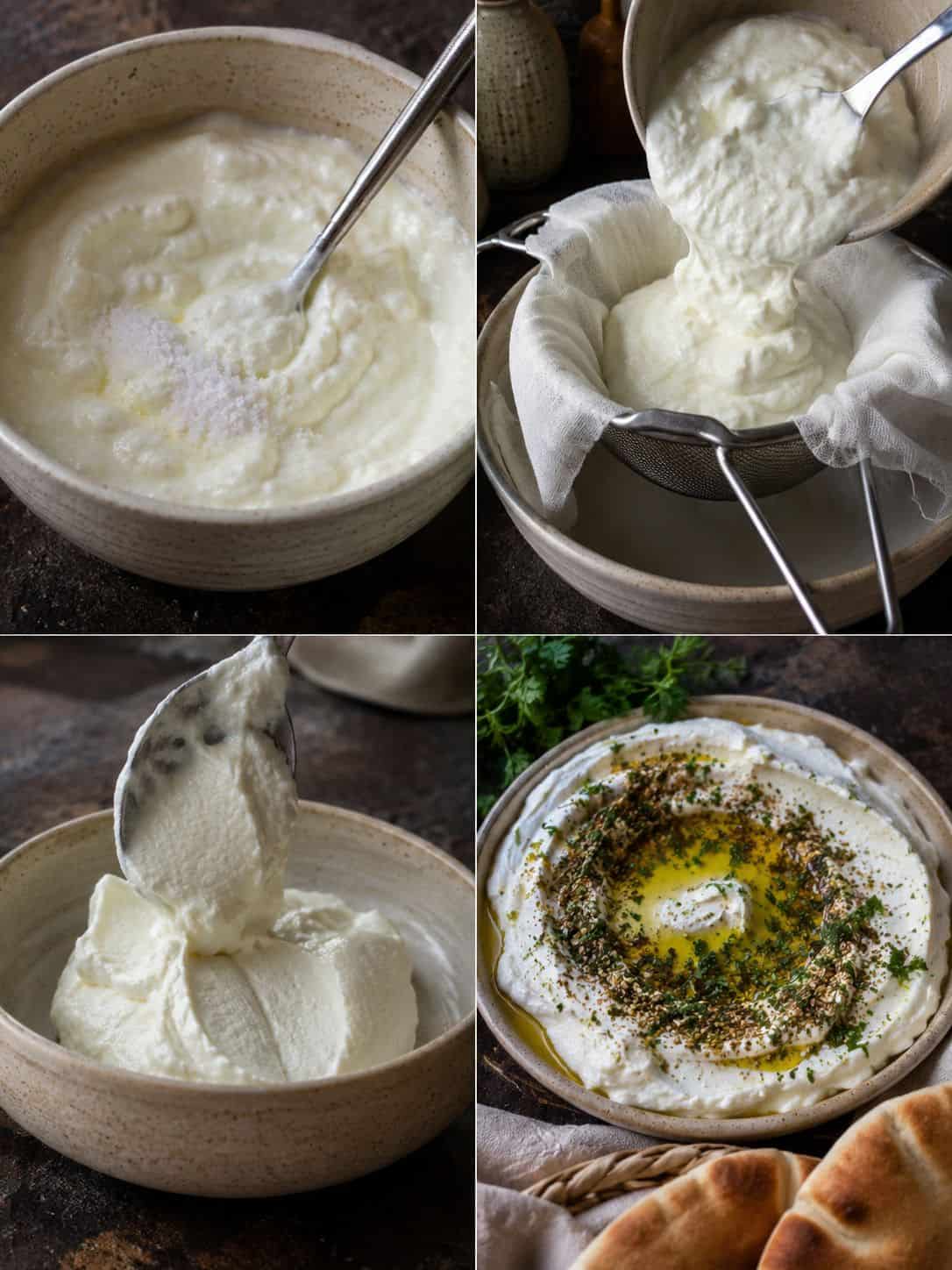
- Stir the yogurt and salt together in a medium bowl for about 30 seconds, until the salt disappears.
- Line a fine-mesh sieve or colander with two layers of cheesecloth or a flour sack towel. Set it over a deep bowl so the bottom of the sieve sits at least 2 inches above the base, leaving room for the whey.
- Pour the salted yogurt into the center of the cloth. Gather the corners and tie them loosely with kitchen twine or a rubber band, snug but not tight.
- Put the whole setup in the fridge and leave it for at least 24 hours.
- Check it at 24 hours. If it still looks like thick sour cream, give it more time. If a spoon pressed into it leaves a clean dent that holds, it is ready. For a cream-cheese texture, go to 36 to 48 hours.
- Unwrap the labneh into a clean container and smooth the top with the back of a spoon.
- To serve, spread it in a shallow bowl, pour over plenty of olive oil and finish with za’atar, a pinch of salt or your other toppings. Serve with warm pita, crackers or raw vegetables.
Notes
Store labneh in an airtight container in the fridge for up to 2 weeks, with plastic wrap pressed onto the surface so it does not form a skin. Keep the drained whey in a jar in the fridge and use it within a week.
How long should you strain labneh?
It depends on what you want to do with it, and you decide by the hour.
At 24 hours, labneh is soft and spreadable, about like hummus. It is the right stage for dips and for dolloping onto soup. Around 30 hours it holds its shape on a plate but still feels creamy, which is the best all-round texture for toast and sandwiches.
At 36 to 48 hours you have something close to cream cheese. That is the stage for labneh balls. Roll small pieces between oiled palms, coat them in za’atar, dried herbs or crushed red pepper, and pack them into a clean jar covered with olive oil. Kept in the fridge, they last up to a month.
What to eat labneh with

The classic plate is hard to beat: a shallow bowl of labneh, a pool of olive oil, a heavy dusting of za’atar and torn warm pita. If you like a crunchier topping, swap the za’atar for dukkah, the Egyptian nut and spice mix.
Mornings are where labneh earns its fridge space. Spread it thick on sourdough with sliced avocado, chili oil and flaky salt, or go sweet with honey, figs and chopped pistachios. For more plates in that spirit, these aesthetic breakfast ideas use the same build-a-toast logic.
For guests, spread a thick layer across a wide board, press wells into it with the back of a spoon and fill them with olive oil. Scatter pine nuts, pomegranate seeds, cherry tomatoes and mint over the top and set pita and crackers alongside. It takes five minutes and anchors a Mediterranean dinner party table on its own.
Then start swapping. Stir labneh into pasta at the end instead of cream, use it under grilled meat in place of sour cream, or fold it into mashed potatoes for tang. Mixed with roasted garlic and black pepper, lemon zest and dill, or a spoon of harissa, it becomes a sandwich spread in seconds.
And keep the whey. It is tart and full of flavor, and it goes straight into bread dough, pancake batter, smoothies or soup.
Labneh questions
Can I use Greek yogurt to make labneh?
Yes, and it is faster. Greek yogurt is already partly strained, so it reaches labneh thickness in about 12 to 18 hours instead of 24. The flavor is a little milder than labneh made from regular full-fat yogurt.
What can I use instead of cheesecloth?
A flour sack towel, muslin, a nut milk bag or a thin clean cotton kitchen towel all work. Avoid paper towels, which tear once they are wet. You need something that lets whey through and holds the solids back.
How do I know when labneh is done?
Press a spoon into the surface: if the dent holds and the texture looks like thick cream cheese, it is done. If it still feels loose and yogurt-like, give it another 6 to 12 hours in the fridge.
How long does homemade labneh last?
Homemade labneh keeps up to 2 weeks in an airtight container in the fridge. Labneh balls stored under olive oil in the fridge last up to a month.
Can you freeze labneh?
You can, but it turns slightly grainy once thawed. Use frozen labneh in cooked dishes such as sauces or baking, and keep fresh labneh for spreading.
Key takeaways
- Labneh needs only full-fat plain yogurt and salt: 4 cups to 3/4 teaspoon.
- Strain in the fridge, 24 hours for a dip and 36 to 48 hours for a cream-cheese texture or labneh balls.
- Low-fat yogurt drains thin and grainy, so skip it.
- Greek yogurt cuts straining to about 12 to 18 hours.
- Labneh keeps 2 weeks in the fridge; balls under oil keep up to a month.
Start a batch tonight for the weekend
Tie up the yogurt before bed and it is spreadable by tomorrow night. Once you have a tub, put it in the middle of a summer snack plate with cucumbers, olives and bread, and see how fast it goes.
Homemade Labneh Recipe That Beats Store-Bought Every Time
Homemade labneh is made by straining full-fat yogurt through cheesecloth for 24 to 48 hours. The result is a thick, tangy, cream-cheese-like spread that works on everything from toast to salads.
Ingredients
- 4 cups full-fat plain yogurt (not Greek, not flavored)
- 3/4 teaspoon fine sea salt
- Optional toppings: extra virgin olive oil, za’atar, fresh herbs, red pepper flakes, toasted sesame seeds, sumac
Instructions
- Add the yogurt and salt to a medium bowl. Stir until the salt is completely mixed in, about 30 seconds.
- Line a fine mesh sieve or colander with two layers of cheesecloth (or a flour sack towel). Set the sieve over a deep bowl, making sure the bottom of the sieve sits at least 2 inches above the bowl’s base. The whey needs room to collect.
- Pour the salted yogurt into the center of the cheesecloth. Gather the edges together and tie them loosely with kitchen twine or a rubber band. You want the bundle snug but not tight.
- Place the whole setup in the refrigerator. Let it strain for 24 hours minimum. Check it at the 24-hour mark. If the labneh feels like thick sour cream, it needs more time. If it holds its shape when you press a spoon into it, it is ready.
- For a thicker, cream cheese-like texture, strain for 36 to 48 hours total. The longer you strain, the thicker and tangier it gets.
- Unwrap the labneh and transfer it to a clean container. Smooth the top with the back of a spoon.
- Drizzle generously with extra virgin olive oil and sprinkle with za’atar, a pinch of salt, or your preferred toppings. Serve with warm pita, crackers, or raw vegetables.
Notes
Storage: Keep labneh in an airtight container in the refrigerator for up to 2 weeks. Press plastic wrap directly onto the surface before sealing to prevent a skin from forming.
Labneh balls: If you strain for the full 48 hours, the labneh will be firm enough to roll into small balls. Roll them in za’atar, dried herbs, or crushed red pepper, then store in a jar covered with olive oil. They keep for up to a month in the fridge and make a stunning appetizer.
Last update on 2026-10-03 / Affiliate links / Images from Amazon Product Advertising API
