
Paksiw na salmon sa gata is a Filipino braised fish dish where salmon is simmered in vinegar, coconut milk, garlic, and ginger until the fish is tender and the sauce is rich and tangy. The vinegar provides the sour base while the coconut milk rounds it into something deeply satisfying. The whole dish takes about 20 minutes and is served over steamed rice.
This Filipino coconut salmon recipe brings together two of the best flavor contrasts in Southeast Asian cooking: vinegar-sharp and coconut-rich. Paksiw na salmon sa gata is the kind of dish that feels deeply unfamiliar if you have never tried it, and completely indispensable once you have. It is tangy, creamy, aromatic with ginger and garlic, and ready in under 25 minutes. Salmon works particularly well here because its natural fat content holds up beautifully against the acidic braising liquid, keeping the flesh moist even as it absorbs all the surrounding flavor.

Recommended Products


What Is Paksiw and How Does Gata Change It?
Paksiw is one of the foundational cooking methods in Filipino cuisine. The word refers to braising meat or fish in vinegar alongside aromatics like garlic, ginger, and peppercorns. The result is a dish that is sour, savory, and deeply aromatic. Classic paksiw na isda uses just vinegar and water as the braising liquid. The addition of gata, which is coconut milk, transforms the dish into something richer and more balanced. The coconut milk tempers the acidity, adds a subtle sweetness, and creates a sauce that coats the fish rather than sitting as a thin broth beneath it.
Paksiw na salmon sa gata is sometimes confused with ginataang salmon, which is a different dish. Ginataang salmon uses coconut milk as the primary cooking liquid with very little or no vinegar. Paksiw keeps the vinegar as the defining flavor element and adds coconut milk as a moderating force. The vinegar tang is still present in the finished dish; it is just softer and more integrated into the sauce. If you are curious about how fish sauce and other condiments compare as flavor builders in these kinds of dishes, this guide comparing oyster sauce and fish sauce covers the flavor profiles clearly.
Choosing Your Salmon and Vinegar
Salmon belly is the traditional cut for paksiw because it has the highest fat content and holds together well during braising. The fat renders slowly into the cooking liquid, contributing to the richness of the finished sauce. That said, salmon fillet works well too and is far easier to find outside the Philippines. Skin-on fillet is preferred because the skin protects the flesh from breaking apart during the 10 to 12 minutes of gentle simmering. Boneless, skinless fillet works but requires more careful handling when removing the fish from the pot.
Vinegar selection matters more than most recipes acknowledge. Philippine cane vinegar (sukang maasim or sukang iloco) is the traditional choice with a mild, slightly sweet acidity that does not overpower the fish. Rice vinegar is the closest substitute with a similar gentle profile. White distilled vinegar works but is sharper and more abrasive, so use about 20% less than the recipe calls for if that is all you have. Calamansi juice can replace part of the vinegar for a citrus note, though the flavor profile shifts noticeably in that direction.
A note on coconut milk: full-fat canned coconut milk is the right choice here. Light coconut milk produces a thinner sauce that does not coat the fish in the same way. The difference in texture is noticeable. If the finished sauce looks richer than you prefer, a small splash of water stirred in at the end will loosen it without stripping flavor.
How to Make Filipino Coconut Salmon Recipe
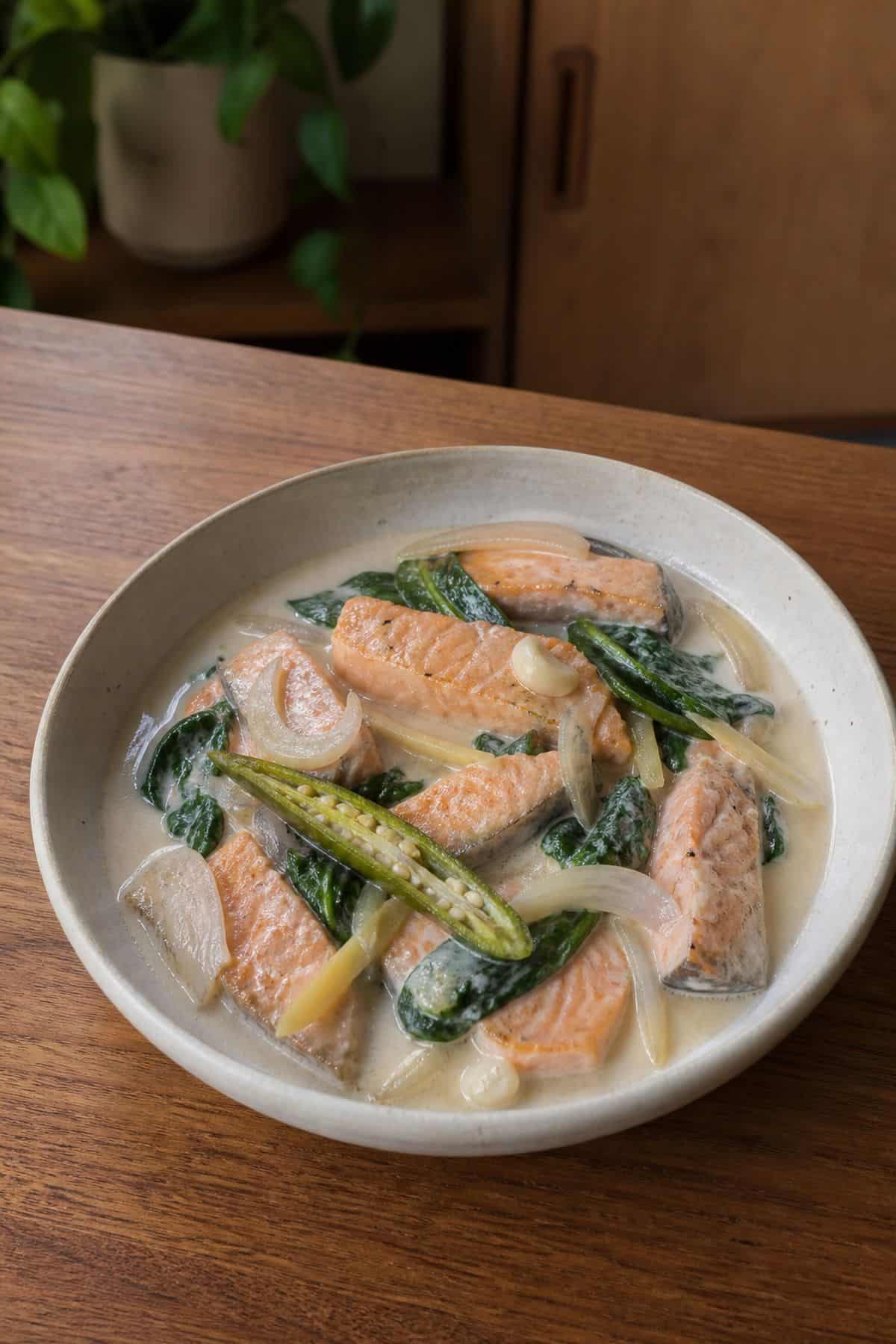
Ingredients
- 600g (1.3 lb) salmon fillet or belly, cut into portions
- 200ml (3/4 cup) full-fat coconut milk
- 80ml (1/3 cup) cane vinegar or rice vinegar
- 80ml (1/3 cup) water
- 1 tablespoon fish sauce
- 6 cloves garlic, smashed
- 1 thumb-sized piece of ginger, sliced
- 1 long green chili (siling mahaba), sliced lengthwise
- 1 small onion, sliced
- 100g (3.5 oz) kangkong or spinach leaves
- Salt and black pepper to taste
Instructions
- Combine vinegar, water, garlic, ginger, and onion in a wide pan or pot. Bring to a boil over medium-high heat and cook for 3 minutes to mellow the raw vinegar sharpness.
- Lay the salmon portions skin-side down in the pan. Season with fish sauce, salt, and pepper. Cover and cook on medium heat for 5 minutes.
- Pour the coconut milk over the salmon. Add the sliced chili. Reduce heat to medium-low and cook uncovered for 5 to 7 more minutes until the salmon is cooked through and the sauce has thickened slightly.
- Add the kangkong or spinach in the last 2 minutes of cooking. Stir gently around the fish rather than directly over it to keep the portions intact.
- Taste and adjust with more fish sauce or a splash of vinegar as needed. Serve hot over steamed rice.
Notes
Do not rush the initial vinegar boil. Cooking the vinegar with the aromatics before adding the fish mellows its raw sharpness and integrates the garlic and ginger into the braising liquid. If you add the coconut milk too early, before the vinegar has cooked down slightly, the sauce can split at high heat. Adding it after lowering the heat and once the fish has started cooking prevents this. Salmon overcooks quickly; check it at the 5-minute mark after the coconut milk goes in by pressing gently on the thickest part of the fillet. It should flake under light pressure but still hold its shape. For a different take on salmon prepared with equal care and simplicity, the Finnish salmon soup (lohikeitto) uses a cream-based broth that showcases the same quality of the fish from a completely different cultural angle.
Variations, Serving, and Storage
The traditional pairing for paksiw na salmon sa gata is steamed white rice, which absorbs the tangy coconut sauce and rounds out the meal. The dish is not typically served with a separate vegetable side because the kangkong or spinach cooked directly in the sauce handles that role. For a fuller spread, green beans in oyster sauce makes a clean and complementary vegetable side that brings a different flavor dimension without competing with the paksiw.
For a hotter version, add two or three bird’s eye chilies (siling labuyo) along with the long green chili. They do not need to be sliced; leaving them whole releases heat gradually into the sauce without making it aggressive. A piece of lemongrass bruised and added with the ginger brings a citrus fragrance that integrates well with the coconut milk. Remove it before serving.
Eggplant is a traditional addition to paksiw dishes and works well here. Cut it into 2-centimeter pieces and add it to the pan with the vinegar at the start so it has time to soften. By the time the salmon goes in, the eggplant will be partially cooked and will finish in the coconut milk sauce alongside the fish. Bitter melon (ampalaya) is another option for those who enjoy its characteristic sharpness against the richness of the gata. Slice it thin and add it with the vinegar so it softens completely.
Leftovers keep in the fridge for up to 2 days. The coconut milk sauce thickens considerably when cold. Reheat gently in a covered pan over low heat with a splash of water to bring it back to a pourable consistency. Avoid boiling leftovers as the fish breaks apart easily on second heat and the coconut milk can separate at high temperatures. Freezing is not recommended because the coconut sauce texture changes after thawing.
FAQ
What is the difference between paksiw and ginataan?
Paksiw uses vinegar as the primary braising liquid, with coconut milk added optionally in the gata version. Ginataan uses coconut milk as the base with little or no vinegar. The flavor profiles differ substantially: paksiw is sour-forward with coconut richness layered in, while ginataan is creamy and mild throughout.
Can you use salmon fillet instead of salmon belly?
Yes. Salmon fillet works well and is easier to find outside the Philippines. Skin-on fillet is best because the skin protects the flesh during braising. Boneless skinless fillet is fine but handle it carefully when serving so it does not break apart.
What type of vinegar is traditional for paksiw?
Philippine cane vinegar (sukang maasim or sukang iloco) is traditional because of its mild, slightly sweet acidity. Rice vinegar is the best substitute. White distilled vinegar works but is noticeably sharper, so use less of it to avoid an overpowering result.
How do you prevent salmon from becoming overcooked?
Keep the heat at medium-low once the coconut milk is added and check the salmon after 5 minutes. It is done when it flakes under gentle pressure but still holds its shape. Remove it from the heat immediately since salmon continues cooking from residual heat in the hot sauce for another minute after the burner is off.
What vegetables pair well with paksiw na salmon?
Kangkong (water spinach) is the traditional choice and wilts quickly in the sauce. Regular spinach works equally well. Eggplant and bitter melon are classic Filipino additions. Long green chili is used in most versions of this dish not just for heat but also for the aromatic layer it adds to the coconut broth.
Key Takeaways
- Boil the vinegar with aromatics before adding the fish to mellow its raw sharpness and build a well-integrated sauce base.
- Add coconut milk only after reducing heat to prevent curdling and keep the sauce smooth and cohesive.
- Salmon belly has the highest fat content and holds up best during braising; skin-on fillet is the most practical substitute for most home cooks.
- Philippine cane vinegar or rice vinegar gives the most authentic flavor; white distilled vinegar is sharper and should be used in smaller quantities.
- Check doneness at 5 minutes after adding coconut milk; salmon overcooks fast and continues cooking from residual heat after the burner is off.
Final Thoughts
Paksiw na salmon sa gata is not a dish that announces itself loudly. It looks simple in the pot and it is simple in the pot, but the combination of vinegar, coconut milk, garlic, and ginger does something to salmon that no single ingredient can do alone. The vinegar firms the flesh and cuts through the fat; the coconut milk turns that tang into something you want to pour over rice and eat slowly. This is weeknight Filipino cooking at its best: fast, economical, and far more satisfying than its short ingredient list would lead you to expect.
Filipino Coconut Salmon Recipe (Paksiw na Salmon sa Gata)
Paksiw na salmon sa gata is a Filipino braised fish dish where salmon is simmered in vinegar, coconut milk, garlic, and ginger until the fish is tender and the sauce is rich and tangy.
Ingredients
- 600g (1.3 lb) salmon fillet or belly, cut into portions
- 200ml (3/4 cup) full-fat coconut milk
- 80ml (1/3 cup) cane vinegar or rice vinegar
- 80ml (1/3 cup) water
- 1 tablespoon fish sauce
- 6 cloves garlic, smashed
- 1 thumb-sized piece of ginger, sliced
- 1 long green chili (siling mahaba), sliced lengthwise
- 1 small onion, sliced
- 100g (3.5 oz) kangkong or spinach leaves
- Salt and black pepper to taste
Instructions
- Combine vinegar, water, garlic, ginger, and onion in a wide pan or pot. Bring to a boil over medium-high heat and cook for 3 minutes to mellow the raw vinegar sharpness.
- Lay the salmon portions skin-side down in the pan. Season with fish sauce, salt, and pepper. Cover and cook on medium heat for 5 minutes.
- Pour the coconut milk over the salmon. Add the sliced chili. Reduce heat to medium-low and cook uncovered for 5 to 7 more minutes until the salmon is cooked through and the sauce has thickened slightly.
- Add the kangkong or spinach in the last 2 minutes of cooking. Stir gently around the fish rather than directly over it to keep the portions intact.
- Taste and adjust with more fish sauce or a splash of vinegar as needed. Serve hot over steamed rice.
Notes
Do not rush the initial vinegar boil. Cooking the vinegar with the aromatics before adding the fish mellows its raw sharpness and integrates the garlic and ginger into the braising liquid. If you add the coconut milk too early, before the vinegar has cooked down slightly, the sauce can split at high heat. Adding it after lowering the heat and once the fish has started cooking prevents this. Salmon overcooks quickly; check it at the 5-minute mark after the coconut milk goes in by pressing gently on the thickest part of the fillet. It should flake under light pressure but still hold its shape. For a different take on salmon prepared with equal care and simplicity, the Finnish salmon soup (lohikeitto) uses a cream-based broth that showcases the same quality of the fish from a completely different cultural angle.
Last update on 2026-08-09 / Affiliate links / Images from Amazon Product Advertising API
What does “dl” stand for in the measurement for the water and coconut cream? regina
Hi! dl means deciliter. 2 dl of coconut cream is roughly about 3oz or ⅓ cup. 🙂
Please forgive my correction:
2 dL is closer to 7 oz. One cup is about 2.4 deciliters.
I hope people will do their own online conversions for this recipe!
I intend to try it out, as it looks really delicious and easy!
Hi, thanks for your correction! That is the exact measurements, thats correct. I often just round it up because the few little difference in such a small recipe don’t matter much when you’re cooking at home for fun 🙂 I’m from Europe and we use metric and would just use the closest, and most commonly used, imperial alternative to most of my recipes. This just takes away the guessing game and makes it easier for home cooks to digest and whip up in the kitchen.