
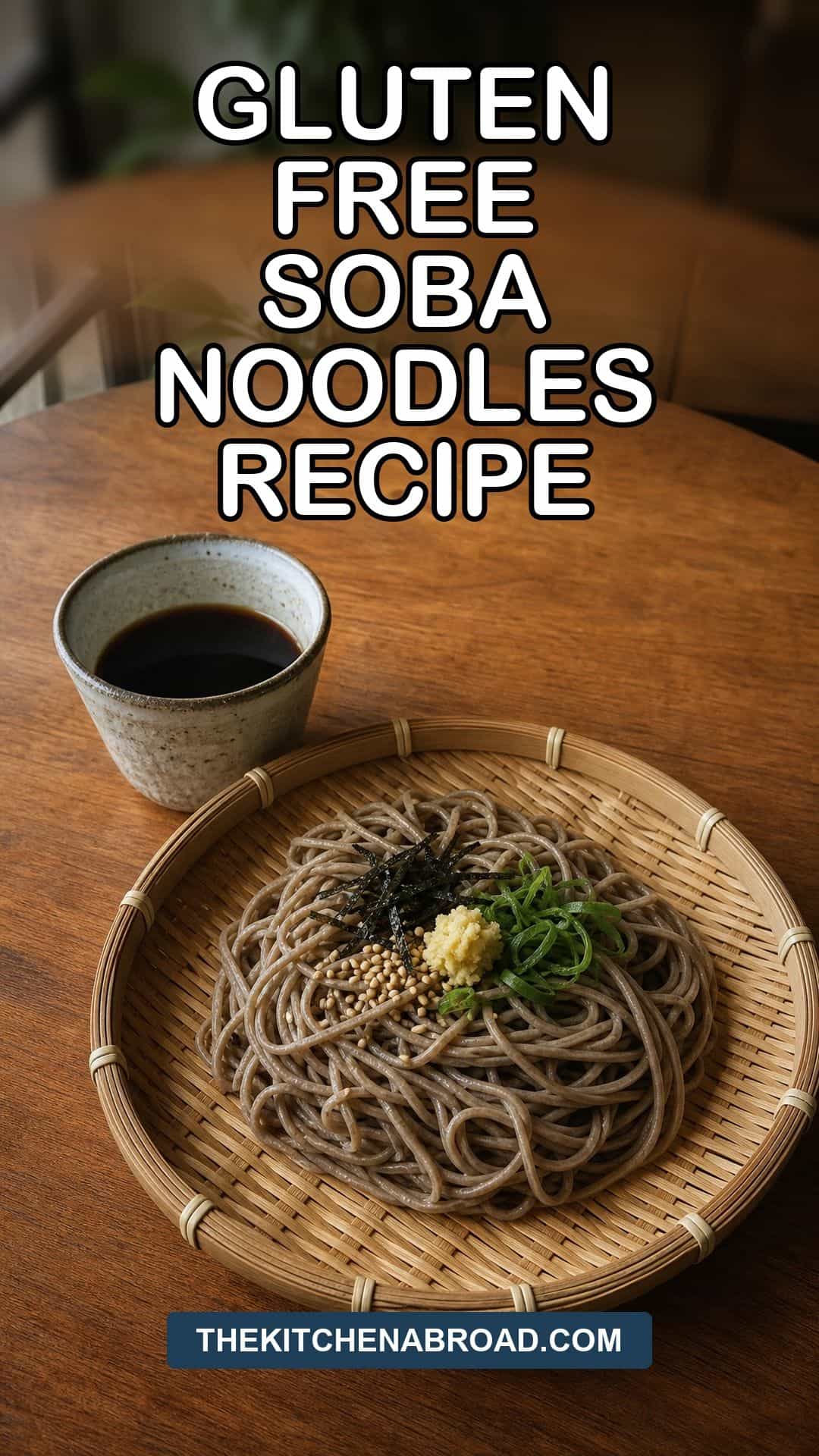
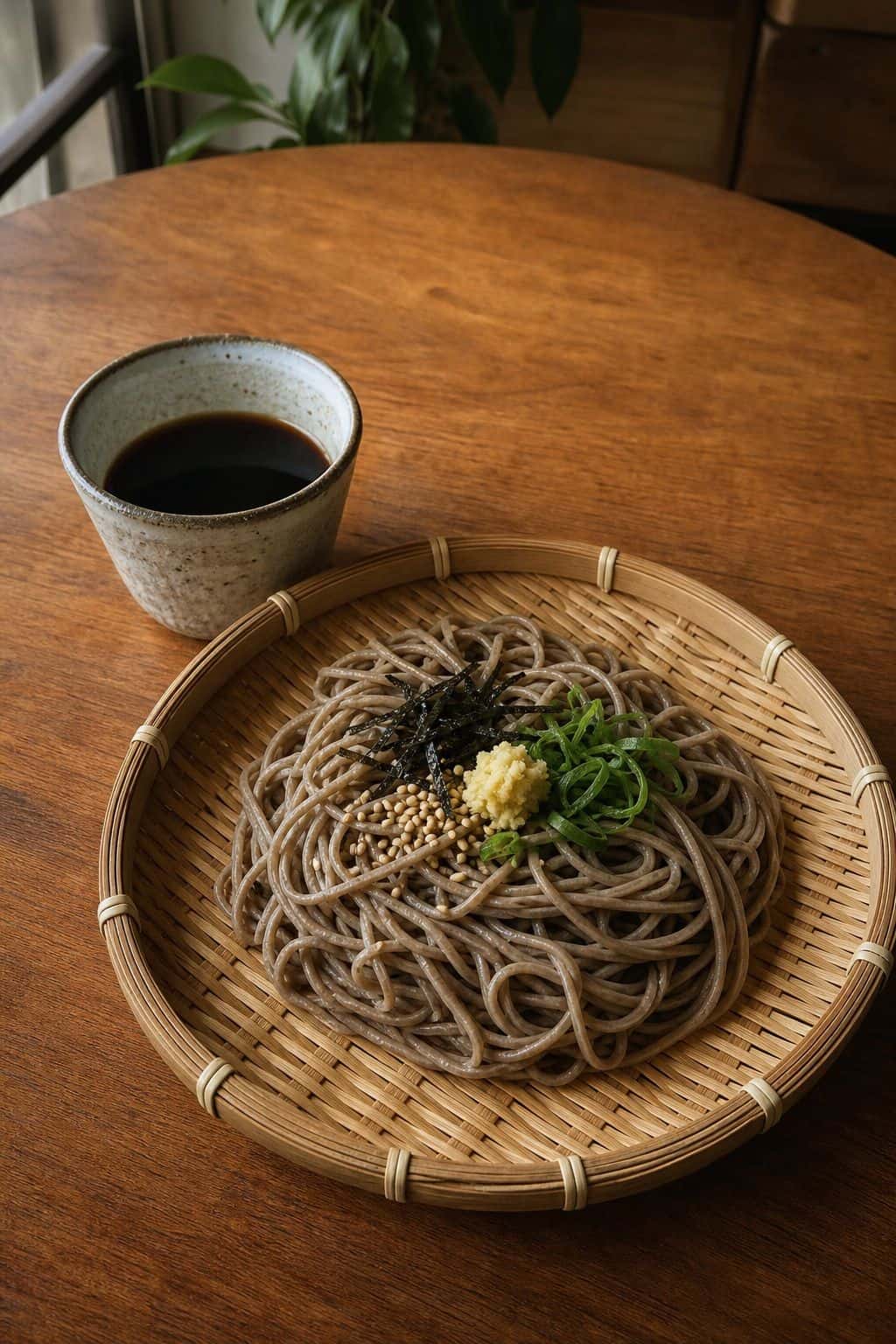
A bowl of gluten free soba noodles done the honest way: juwari (十割), 100 percent buckwheat, no wheat blended in, drained on a bamboo zaru, and served cold alongside a small cup of dashi-tamari dipping sauce. The version below uses certified gluten-free juwari from Eden Foods, King Soba, or Hakubaku, boils in unsalted water for 4 to 5 minutes, gets rinsed under cold water with a gentle hand rub to strip the surface starch, and lands at the table with grated ginger, sliced scallions, toasted sesame seeds, and nori strips on the side. Fifteen minutes from start to finish, four servings, and a recipe that respects the gluten-free label instead of pretending most soba already qualifies.
Here is the thing nobody tells you when you go shopping for soba: most of it is not gluten-free. Standard soba is nihachi, an 80/20 blend of buckwheat and wheat flour, cleanly fine for general eaters and completely off-limits for anyone with celiac or a real wheat sensitivity. The version we are making today is juwari soba, 100 percent buckwheat, naturally gluten-free when the bag is certified, and the original way soba was eaten in Edo-period Tokyo. Buy juwari from Eden Foods, King Soba, or Hakubaku, read the label twice, and the rest of the recipe is just water, a small saucepan of dipping sauce, and a cold-water rinse. If you want the Korean cousin to this dish, our Korean buckwheat noodles (naengmyeon) is the cold-soup variation , broth and ice instead of dashi and zaru. This post is the Japanese one, served zaru-style, on a wooden tray, with sauce on the side.
What You’ll Need
Certified 100 percent buckwheat juwari noodles (the entire premise of the post , read the bag, no wheat flour in the ingredients list), a large stainless stock pot with enough volume that the noodles can fan out without clumping, a bamboo zaru basket for draining and serving, a bottle of soy sauce for the dipping base (or tamari if you are staying strictly gluten-free), and a Microplane for grating fresh ginger and any daikon you want to add. None of this is optional. The juwari label in particular is the entire success metric for this recipe , if the package says nihachi or lists wheat, it is not gluten-free.


Recommended Reads
- Korean Buckwheat Noodles (Naengmyeon)
- Banana Buckwheat Pancakes
- Buckwheat Cookies
- Thai Chicken with Cashew Nuts
- Easy Chicken Pad Thai
Where Soba Comes From
Soba is Edo-period Japan in a bowl. Buckwheat had been eaten in Japan for centuries as porridge and dumplings, but the noodle form took off during the Edo period (1603 to 1868), when Tokyo, then called Edo, swelled past one million residents , mostly single male laborers working construction, fish markets, and merchant houses. Cheap, fast, hot food was the city’s defining need, and yatai (street stalls) selling boiled buckwheat noodles in a quick dashi broth fed the workers between shifts. By 1860, Edo had more than 3,726 registered soba shops on the city ledgers, more soba shops than any other category of restaurant, and most of them were tiny standing-counter operations open from noon until well past midnight.
The split between juwari and nihachi happened inside that boom. Buckwheat is fragile flour , almost no gluten, almost no binding capacity , which makes 100 percent buckwheat noodles harder to roll, harder to cut, and harder to cook without breakage. Adding 20 percent wheat flour (the nihachi formula, ni for two, hachi for eight) gives the dough enough structure that any apprentice can roll it. Most Edo soba shops took the nihachi shortcut for production speed, and most modern soba follows the same recipe. Juwari (ju for ten, 100 percent buckwheat) was always the harder, rarer specialty, and the modern American gluten-free, celiac-aware, and Whole30 audience has rediscovered it for the same reason it existed in the first place: it is the version with no wheat at all.
A Few Notes on the Ingredients
- 100 percent buckwheat juwari noodles: This is the entire gluten-free point. Read the back of the package carefully. The ingredient list should say buckwheat flour and water, full stop. If it lists wheat flour anywhere , even “small amount” or “binder” , the noodles are nihachi, not juwari, and not safe for celiac. Eden Foods 100% Buckwheat Soba, King Soba 100% Organic Buckwheat, and Hakubaku Organic 100% Buckwheat are the three brands sold widely in the U.S. with clean labels. Most “soba” you find at a general grocery store is not gluten-free.
- Dipping sauce (mentsuyu tare): A small saucepan of dashi (kombu and shiitake), tamari, mirin, and sake, simmered briefly and chilled. The ratio runs roughly 6:1:1:1 after the dashi is built , more dashi than seasonings. Bottled mentsuyu concentrate is the legitimate shortcut if you do not want to make it from scratch, but verify the bottle is gluten-free; most bottled mentsuyu uses regular soy sauce, which contains wheat.
- Tamari, not regular soy sauce: Standard Kikkoman soy sauce is brewed with wheat and is not gluten-free. For a true gluten-free recipe, swap in tamari (San-J and Kikkoman both sell certified gluten-free tamari) or Coconut Aminos if you want a lower-sodium option. Same umami depth, no wheat.
- Fresh ginger, grated: The sharp, peppery bite that the dipping sauce needs. Use a fresh knob of ginger and a Microplane , powdered ginger from the spice cabinet does not deliver the same edge and tastes dusty in a cold sauce.
- Scallions, sliced thin: The condiment that goes into the dipping cup, not onto the noodles. Slice both white and green parts on a sharp diagonal so the rings are thin enough to float on the sauce instead of sinking.
- Toasted sesame seeds: The finishing crunch on top of the noodles. Toast them in a dry pan for 60 seconds until fragrant if your jar is more than a few months old; old sesame seeds taste flat.
- Nori strips: A sheet of nori cut into thin ribbons with kitchen shears, scattered over the noodles right before serving. Umami garnish that adds sea salt and a subtle ocean flavor that mirrors the kombu in the dashi.
Recipe: Gluten-Free Soba Noodles with Dipping Sauce (Mori Soba)
Prep time: 10 minutes | Cook time: 5 minutes | Total time: 15 minutes | Serves: 4
Ingredients
- 10 oz (280 g) 100 percent buckwheat soba noodles (juwari, certified gluten-free)
- 4 cups (1 L) water, for boiling
For the dipping sauce (mentsuyu tare):
- 2 cups (480 ml) dashi, made from kombu and dried shiitake (see note below for a quick substitute)
- 1/3 cup (80 ml) tamari (certified gluten-free)
- 3 tbsp (45 ml) mirin
- 2 tbsp (30 ml) sake
- 1 tsp sugar
For the toppings:
- 2 inches fresh ginger, grated on a Microplane
- 4 scallions, sliced thin on the diagonal
- 2 tbsp toasted sesame seeds
- 1 sheet nori, cut into thin strips with kitchen shears
Instructions
- Make the dipping sauce first so it has time to chill. Combine the dashi, tamari, mirin, sake, and sugar in a small saucepan and bring to a simmer over medium heat. Simmer for 2 minutes, just long enough to cook off the alcohol from the sake and dissolve the sugar, then remove from the heat. Transfer to four small dipping bowls (or one pitcher), cover, and refrigerate until cold, at least 30 minutes if you have the time.
- Bring a large pot of unsalted water to a rolling boil. Do not salt the water. Soba is mineral-rich and pre-seasoned by nature, and salt clouds the broth and turns the cooking water bitter. A full rolling boil is the goal , the noodles need room to move.
- Add the soba noodles by fanning them out across the surface of the pot rather than dropping them in as a single bundle. Stir gently once with chopsticks or a wooden spoon to prevent the strands from sticking together. Cook for exactly the time on the package, typically 4 to 5 minutes for juwari. Test a strand at 4 minutes , juwari is more fragile than nihachi and overcooks fast.
- Drain the noodles into a colander and immediately rinse under cold running water, rubbing the noodles gently between your hands for 20 to 30 seconds. The water will cloud as the surface starch comes off , this is the entire point. Starch left on the noodles equals gummy, sticky, dull-tasting soba. Keep rinsing and rubbing until the water runs clear.
- Drain hard. Lift the colander, shake it firmly, and let the noodles sit for 30 seconds to release the last of the water. Wet noodles dilute the dipping sauce. Divide the drained noodles into four portions and lay each portion on a bamboo zaru basket or a flat plate.
- Serve cold. Set a small bowl of cold dipping sauce next to each plate of noodles, and arrange the grated ginger, sliced scallions, toasted sesame seeds, and nori strips on a separate small dish at each setting. Diners pick up a small bundle of noodles with chopsticks, dip the bottom third of the bundle into the sauce, stir in a pinch of ginger or scallion if they want, and slurp the noodles in one motion.
Notes
The juwari label is the entire gluten-free premise of this recipe. Most “soba” on American grocery shelves is nihachi (80 percent buckwheat, 20 percent wheat flour) and is not safe for celiac or anyone strictly avoiding wheat. Read the bag, twice, and confirm the ingredient list is buckwheat flour and water. Eden Foods, King Soba, and Hakubaku all sell 100 percent buckwheat soba in U.S. supermarkets and online; verify the package says certified gluten-free if shared-facility cross-contact is a concern.
The cold-water rinse with the hand rub is the technique that separates good soba from mushy soba. Once the noodles come out of the pot, plunge them into cold running water and gently rub the strands between your fingertips to strip the surface starch. You will see the water turn cloudy and then run clear , that visual cue is what tells you the rinse is finished. Skip this step and the noodles will be sticky, gluey, and will dilute the dipping sauce as soon as they hit it.
Slurping is the cultural norm, not a faux pas. Loud slurping aerates the noodles as they enter the mouth, cools them, and is considered a sign of appreciation in Japan. If you grew up being told to eat quietly at the table, soba is the dish that politely asks you to do the opposite. For a quick dashi shortcut, soak a 4-inch square of kombu and 2 dried shiitake caps in 2 cups of cold water for 30 minutes, then warm to just below a simmer, strain, and use immediately. Do not boil , kombu turns bitter past 140°F.
Tips and Variations
Reading the Label (Juwari vs Nihachi for True GF)
This is the part most gluten-free soba recipes online skip, and it is the whole game. Soba is a category, not a guarantee. Standard soba sold in Japan, in Asian markets, and in most American supermarkets is nihachi: 80 percent buckwheat, 20 percent wheat flour. The wheat is added because buckwheat has almost no binding protein and breaks easily, so the wheat gives the dough enough structure to roll thin and cut clean. Juwari (十割) soba is the 100 percent buckwheat version, no wheat at all, and the only soba that qualifies as gluten-free. Even within the juwari category, look for certified gluten-free labeling if shared-facility production is a concern , buckwheat is often milled in facilities that also process wheat, and trace cross-contact can affect anyone with celiac. Eden Foods 100% Buckwheat Soba, King Soba 100% Organic Buckwheat, and Hakubaku Organic 100% Buckwheat are the three brands with the cleanest U.S. distribution. Read the ingredient list. If it says “wheat flour” anywhere on the label, the noodles are not gluten-free.
Why Soba Cooks in Unsalted Water (vs Pasta)
Italian pasta cooks in heavily salted water because semolina dough is bland on its own and needs the seasoning to taste of anything. Buckwheat is the opposite problem. Buckwheat is mineral-rich, naturally savory, slightly bitter, and already carries enough seasoning in the grain itself. Salting the cooking water clouds the broth, throws off the balance of the dipping sauce later, and turns the noodle flavor muddy. Bring the water to a hard rolling boil, drop the noodles in, and leave the salt shaker in the drawer. The dipping sauce supplies all the salt the dish needs. This is one of the most common mistakes home cooks make when they treat soba like pasta , same boiling water, same colander, but completely different rules on salt.
The Cold-Water Rinse and Starch-Rubbing Technique
Once the noodles are drained, the cold rinse is non-negotiable. Hold the colander under cold running water and use your fingertips to rub the noodles gently against each other in small handfuls. The water will go cloudy fast , that cloudiness is the surface starch lifting off the strands. Keep rinsing and rubbing for 20 to 30 seconds, until the water running off the noodles is clear. Then drain hard, shake the colander, and let the noodles sit for half a minute so the residual water beads off. This single step is the difference between shiny, springy, properly-finished soba and the sticky, gluey, clumpy version most home kitchens end up with. The starch on the surface of the noodles also dilutes the dipping sauce the moment the two meet, so a thorough rinse protects the flavor of the sauce too. Treat it as part of the recipe, not a clean-up step.
Building Mentsuyu Dipping Sauce from Scratch
Mentsuyu, literally “noodle stock,” is the dipping sauce that anchors zaru soba, and it is worth making from scratch at least once. Build a quick dashi by soaking a 4-inch square of dried kombu and 2 dried shiitake caps in 2 cups of cold water for 30 minutes (or up to overnight in the fridge for deeper flavor). Warm the soaking liquid to just below a simmer, strain out the kombu and shiitake, and you have dashi. Combine 2 cups of that dashi with 1/3 cup tamari, 3 tablespoons mirin, 2 tablespoons sake, and a teaspoon of sugar in a small saucepan, simmer for 2 minutes, and chill. The ratio after dilution lands roughly at 6 parts dashi to 1 part tamari to 1 part mirin to 1 part sake, which is the working balance you will see in most Japanese cookbooks. Bottled mentsuyu concentrate is the legitimate shortcut for weeknights, but verify the brand is gluten-free; most bottled mentsuyu uses wheat-brewed soy sauce.
Hot Soba Variation (Kake Soba in Hot Broth)
The recipe above is zaru soba, the cold dipping-sauce version that defines Japanese summer eating. The other side of the soba universe is kake soba, the hot version, where the noodles sit in a bowl of hot broth instead of beside a cup of cold sauce. To convert: build the same dashi-tamari-mirin-sake mentsuyu, but dilute it differently. Combine 1 part mentsuyu with 3 parts additional dashi for a hot soup base (so 1 cup mentsuyu to 3 cups dashi), warm to just below a simmer, and pour over freshly cooked, hot-rinsed noodles in deep bowls. Top with sliced scallions, a piece of tempura or grilled chicken if you want, and a sprinkle of shichimi togarashi. Same juwari noodles, same gluten-free credentials, completely different mood , kake soba is what you eat on a cold night, zaru soba is what you eat on a hot afternoon.
What to Serve It With
Zaru soba is the Japanese summer lunch in its purest form: a single tray of cold noodles, a small cup of dipping sauce, a side of grated condiments, and a glass of cold barley tea or sake. It needs almost nothing else, and that minimalism is the point. For a hot-weather dinner, pair the soba with a side of vegetable tempura (the same mentsuyu doubles as tempura dipping sauce , pour the leftover dipping sauce into a slightly deeper cup and add grated daikon), or a simple piece of grilled salted mackerel. For a gluten-free dietary spread, the soba works as a clean carbohydrate base alongside grilled fish, sashimi, and pickled vegetables. As a simple noodle bowl on a Tuesday night, just the noodles and the sauce is enough , fifteen minutes from start to finish, one pot, one small saucepan, four bowls. If you want the same gluten-free noodle energy from a different cuisine, our Korean buckwheat noodles (naengmyeon) is the cold-broth variation from across the Sea of Japan, and the easy chicken pad thai on rice noodles is the Thai cousin if you want a hot, sweet-savory option.
Frequently Asked Questions
Are soba noodles gluten-free?
Only juwari soba (100 percent buckwheat) is gluten-free, and only when the package is labeled certified gluten-free. Standard soba is typically nihachi, an 80 percent buckwheat and 20 percent wheat flour blend, and is not safe for anyone with celiac disease or strict wheat avoidance. Read the ingredient list on the bag carefully. If wheat flour is listed anywhere, the noodles are not gluten-free. Eden Foods, King Soba, and Hakubaku all sell 100 percent buckwheat juwari soba in U.S. supermarkets and online.
What is the difference between juwari and nihachi soba?
Juwari (十割) soba is 100 percent buckwheat, no wheat flour added. Nihachi (二八) soba is a blend, 80 percent buckwheat and 20 percent wheat flour, where the wheat acts as a binder to make the dough easier to roll thin and cut. Juwari is the gluten-free version. Nihachi is the more common version, easier to produce, and what most soba shops in Japan and most “soba” brands in the U.S. actually sell. The ji-suffix on a package usually signals juwari; nihachi or unspecified blends almost always contain wheat.
Do you salt the water when boiling soba?
No. Unlike Italian pasta, soba is boiled in unsalted water. Buckwheat is mineral-rich and naturally savory, and salting the cooking water clouds the broth, turns the noodle flavor muddy, and throws off the balance of the dipping sauce that comes later. Bring the water to a rolling boil, drop the noodles in, and skip the salt shaker entirely. The dipping sauce (tamari-based mentsuyu) supplies all the seasoning the dish needs.
Are soba noodles served hot or cold?
Both, depending on the dish. Zaru soba (the recipe above) is the cold version, served on a bamboo zaru basket with a separate cup of chilled dipping sauce, and is the classic Japanese summer preparation. Kake soba is the hot version, served in a bowl of hot dashi-based broth, and is what you eat on a cold winter night. The same juwari noodles work for both, and the mentsuyu dipping sauce simply gets diluted differently for the hot soup version (roughly 1 part mentsuyu to 3 parts additional dashi).
What sauce goes with soba noodles?
The traditional dipping sauce is mentsuyu, also called soba tsuyu, a chilled mixture of dashi (kombu and shiitake), tamari or soy sauce, mirin, and sake. The ratio after dilution lands around 6 parts dashi to 1 part tamari to 1 part mirin to 1 part sake, with a small pinch of sugar to round it out. For a true gluten-free version, swap regular soy sauce for certified gluten-free tamari, since most soy sauce is brewed with wheat. Bottled mentsuyu concentrate is a legitimate shortcut if you verify the brand is gluten-free.
Where do I buy juwari (100 percent buckwheat) soba in the U.S.?
Three U.S.-distributed brands sell certified 100 percent buckwheat juwari soba on Amazon, in Whole Foods, and in most large Asian groceries: Eden Foods 100% Buckwheat Soba, King Soba 100% Organic Buckwheat, and Hakubaku Organic 100% Buckwheat. All three carry clean ingredient lists (buckwheat flour and water, sometimes salt) and are widely available. If your local store carries only nihachi blends, order online , the price difference is small and the gluten-free guarantee is worth it.
Key Takeaways
- Only juwari (十割, 100 percent buckwheat) soba is gluten-free. Standard soba is nihachi, an 80/20 buckwheat-wheat blend, and contains wheat. Read the bag, twice.
- Three U.S. brands sell certified 100 percent buckwheat juwari: Eden Foods, King Soba, and Hakubaku. Verify the ingredient list is buckwheat flour and water.
- Swap regular soy sauce for certified gluten-free tamari in the dipping sauce. Standard soy sauce is brewed with wheat and breaks the gluten-free chain.
- Boil soba in unsalted water at a rolling boil for 4 to 5 minutes. Buckwheat is mineral-rich and naturally savory; salting clouds the flavor.
- Rinse the cooked noodles under cold running water and rub them gently between your hands to strip surface starch. The water should run clear before you stop. This is the single biggest technique upgrade.
- Serve cold on a bamboo zaru with a small cup of chilled dipping sauce and grated ginger, sliced scallions, toasted sesame, and nori on the side. Slurping is encouraged.
Final Thoughts
This is the recipe that earns its label honestly, which is more than you can say for most gluten-free soba recipes online. The wedge is small but it matters: most “soba” sold in the U.S. is nihachi, an 80/20 blend with wheat flour, and is not safe for celiac. Juwari soba , 100 percent buckwheat, certified gluten-free, sold by Eden Foods, King Soba, and Hakubaku , is the one that qualifies, and the difference is two words on the back of the package. Read the label, buy the right bag, and the rest of the recipe is just boiling water, a small saucepan of dashi and tamari, and a cold-water rinse.
The two non-negotiables are the juwari label and the cold-water starch rub. Skip the label check and you have a wheat-blend nihachi noodle in a recipe you thought was gluten-free, which is the worst of both worlds. Skip the cold rinse and the noodles are sticky, gluey, and dilute the sauce as soon as they meet it. The label is a 30-second read at the store. The rinse is a 30-second hand rub at the sink. Both belong in the recipe.
If you cook this once on a hot afternoon and the noodles come out springy and clean, it tends to become the standby gluten-free lunch you keep coming back to. Fifteen minutes from start to finish, one pot, one small saucepan, four bowls, and a version of soba that respects the Edo-period roots of the dish and the modern celiac reader at the same time. Lay the noodles on the zaru. Pour the cold sauce into the cup. Pick up a small bundle with chopsticks, dip the bottom third, and slurp. That is the dish.
Gluten-Free Soba Noodles with Dipping Sauce (Mori Soba)
A bowl of gluten free soba noodles done the honest way: juwari (十割), 100 percent buckwheat, no wheat blended in, drained on a bamboo zaru, and served cold alongside a small cup of dashi-tamari dipping sauce.
Ingredients
- 10 oz (280 g) 100 percent buckwheat soba noodles (juwari, certified gluten-free)
- 4 cups (1 L) water, for boiling
- 2 cups (480 ml) dashi, made from kombu and dried shiitake (see note below for a quick substitute)
- 1/3 cup (80 ml) tamari (certified gluten-free)
- 3 tbsp (45 ml) mirin
- 2 tbsp (30 ml) sake
- 1 tsp sugar
- 2 inches fresh ginger, grated on a Microplane
- 4 scallions, sliced thin on the diagonal
- 2 tbsp toasted sesame seeds
- 1 sheet nori, cut into thin strips with kitchen shears
Instructions
- Make the dipping sauce first so it has time to chill. Combine the dashi, tamari, mirin, sake, and sugar in a small saucepan and bring to a simmer over medium heat.
- Bring a large pot of unsalted water to a rolling boil. Do not salt the water. Soba is mineral-rich and pre-seasoned by nature, and salt clouds the broth and turns the cooking water bitter. A full rolling boil is the goal , the noodles need room to move.
- Add the soba noodles by fanning them out across the surface of the pot rather than dropping them in as a single bundle. Stir gently once with chopsticks or a wooden spoon to prevent the strands from sticking together.
- Drain the noodles into a colander and immediately rinse under cold running water, rubbing the noodles gently between your hands for 20 to 30 seconds. The water will cloud as the surface starch comes off , this is the entire point.
- Drain hard. Lift the colander, shake it firmly, and let the noodles sit for 30 seconds to release the last of the water. Wet noodles dilute the dipping sauce.
- Serve cold. Set a small bowl of cold dipping sauce next to each plate of noodles, and arrange the grated ginger, sliced scallions, toasted sesame seeds, and nori strips on a separate small dish at each setting.
Notes
The juwari label is the entire gluten-free premise of this recipe. Most "soba" on American grocery shelves is nihachi (80 percent buckwheat, 20 percent wheat flour) and is not safe for celiac or anyone strictly avoiding wheat. Read the bag, twice, and confirm the ingredient list is buckwheat flour and water. Eden Foods, King Soba, and Hakubaku all sell 100 percent buckwheat soba in U.S. supermarkets and online; verify the package says certified gluten-free if shared-facility cross-contact is a concern.
The cold-water rinse with the hand rub is the technique that separates good soba from mushy soba. Once the noodles come out of the pot, plunge them into cold running water and gently rub the strands between your fingertips to strip the surface starch. You will see the water turn cloudy and then run clear , that visual cue is what tells you the rinse is finished. Skip this step and the noodles will be sticky, gluey, and will dilute the dipping sauce as soon as they hit it.
Last update on 2026-08-08 / Affiliate links / Images from Amazon Product Advertising API