
The best holiday serving dish organization ideas start with a real inventory, then sort serveware by holiday or serving job so platters, bowls, china, cake stands, and gravy boats are easy to pull before guests arrive. Protect fragile pieces with padded cases and separators, store heavy platters low, label every bin clearly, and keep a temporary pull zone for the current menu. A good system also includes a post-holiday reset, so clean, dry dishes go back in a way that makes sense next year.
Holiday serveware has a way of spreading into every hidden corner of the kitchen: the turkey platter in a deep cabinet, the cake stand in a closet, the gravy boat wrapped in paper, the extra dessert plates somewhere no one remembers. That is why holiday serving dish organization ideas need to be more specific than everyday dish storage.
The goal is not to own less by default or to make every platter visible all year. It is to know what you have, protect the pieces that matter, keep useful dishes close during hosting season, and build a pull-and-reset rhythm that makes holiday meals calmer from the first prep day to the final cleanup.
Top Recommended Products


You Might Also Like These Blog Posts
- 20 Holiday Fridge Ideas for Party Prep and Leftovers
- 20 Thanksgiving Fridge Ideas for a Less Stressful Holiday
- 25 Christmas Kitchen Organization Ideas for Baking and Hosting
- 25 Butler Pantry Ideas for Better Storage and Hosting
- 24 Kitchen Cabinet Organization Ideas for Better Everyday Storage
1. Inventory Every Holiday Serving Piece Before You Store It
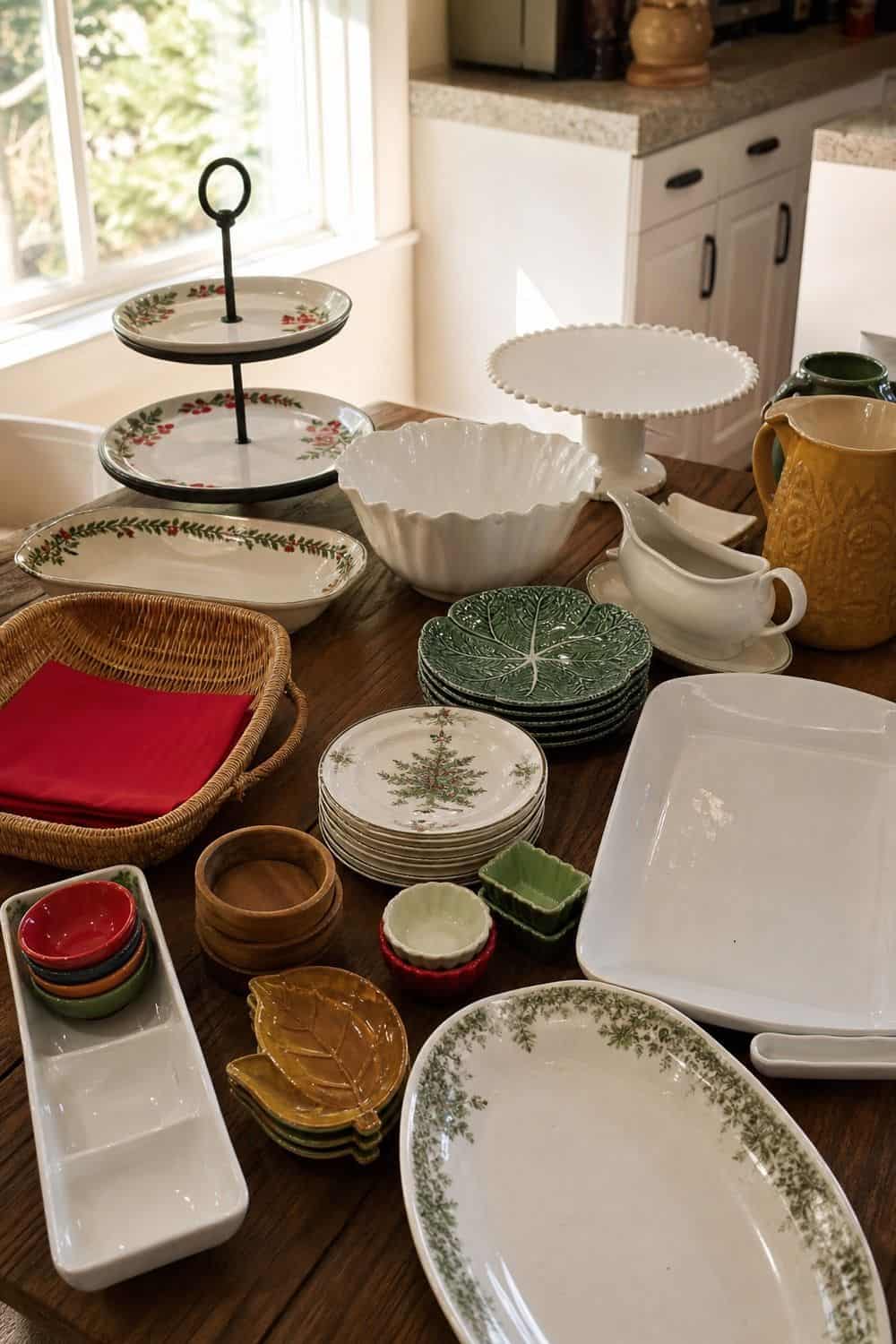
The first pass should happen with the actual serveware in front of you, not from memory. Lay out platters, serving bowls, cake stands, tiered trays, gravy boats, pitchers, bread baskets, chip-and-dip dishes, seasonal plates, and any dish that only appears for Thanksgiving, Christmas, Easter, or larger family meals.
Write down what you own, where it currently lives, and whether it still earns its storage space. A kitchen inventory notebook helps you catch chipped pieces, missing lids, duplicate platters, awkward hand-wash trays, and items that no longer match the way you host.
This first step turns mystery boxes into a usable holiday serveware list, which makes every later storage decision less sentimental and more practical.
2. Sort Serveware by Holiday Instead of by Shape
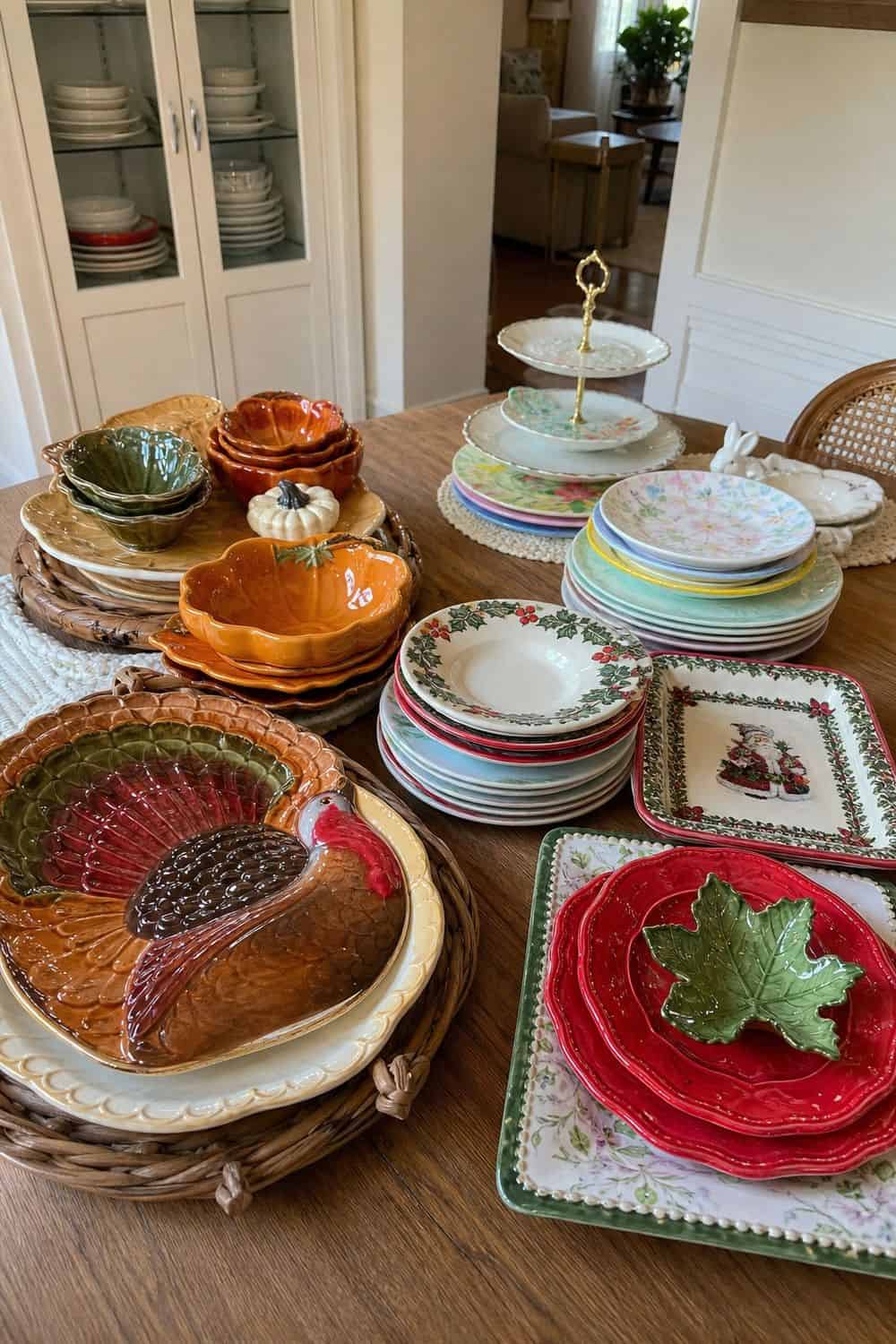
A turkey platter, Christmas cookie tray, and spring dessert stand might all be flat serving pieces, but storing them together by shape can make holiday prep harder. If you usually host different menus for different occasions, label bins or shelves by holiday so the right dishes come out together.
Holiday storage labels work especially well for themed platters, patterned dessert plates, seasonal mugs, and special serving bowls that only make sense once a year. Keep neutral white, wood, glass, or metal pieces in a general hosting zone if they work across several holidays.
3. Create a General Hosting Shelf for Pieces Used All Season
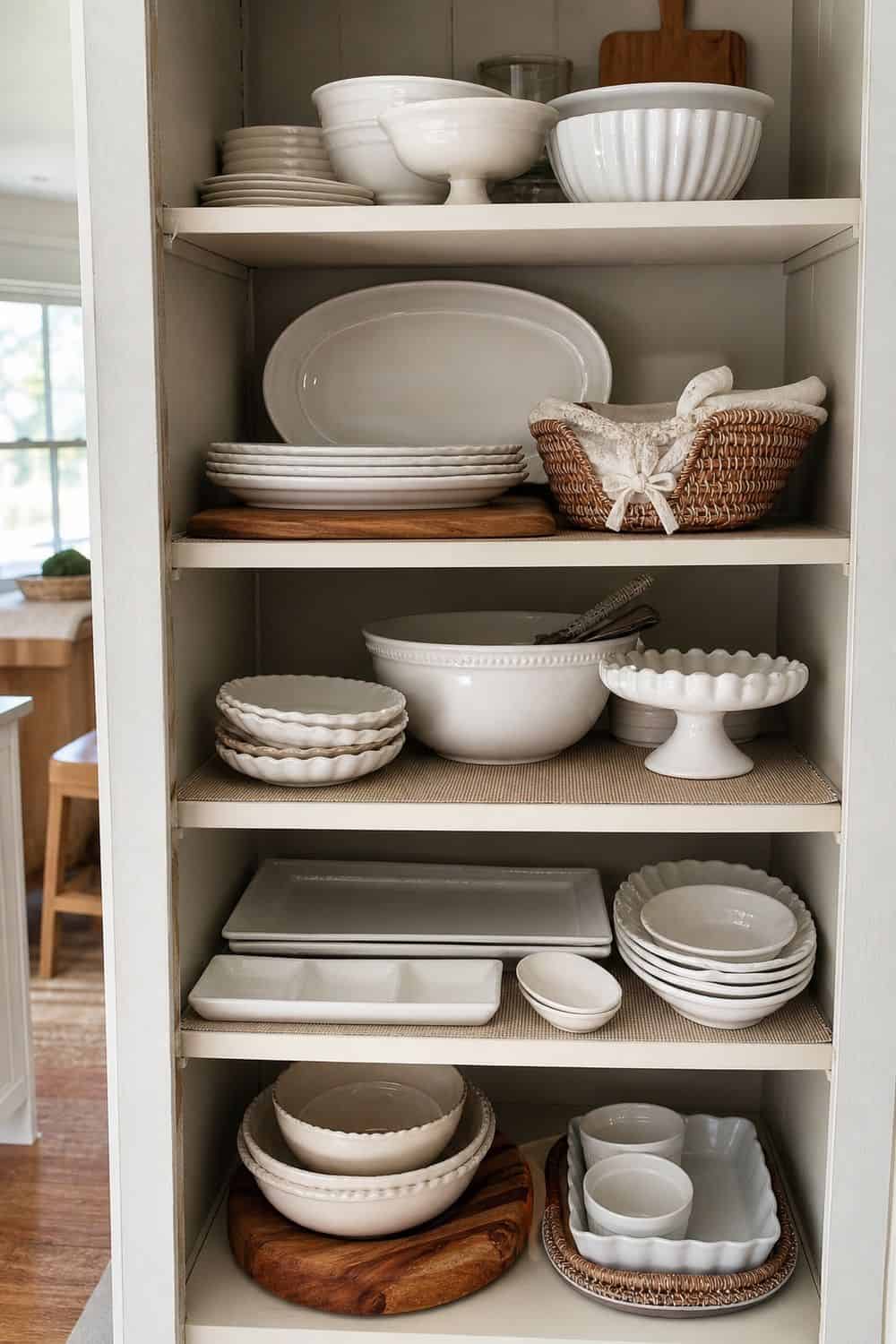
Some serving dishes are not tied to one holiday at all. Neutral platters, white serving bowls, salad bowls, bread baskets, appetizer plates, and sauce dishes often get used from November through New Year’s, so they deserve easier access during the busy hosting stretch. Use adjustable shelf risers to create a short-term hosting shelf in a cabinet, pantry, hutch, or butler pantry. Keep the pieces visible and grouped by how they are used, then reset the shelf after the season so daily dishes can reclaim the space.
4. Store Fragile Holiday Plates in Padded China Cases
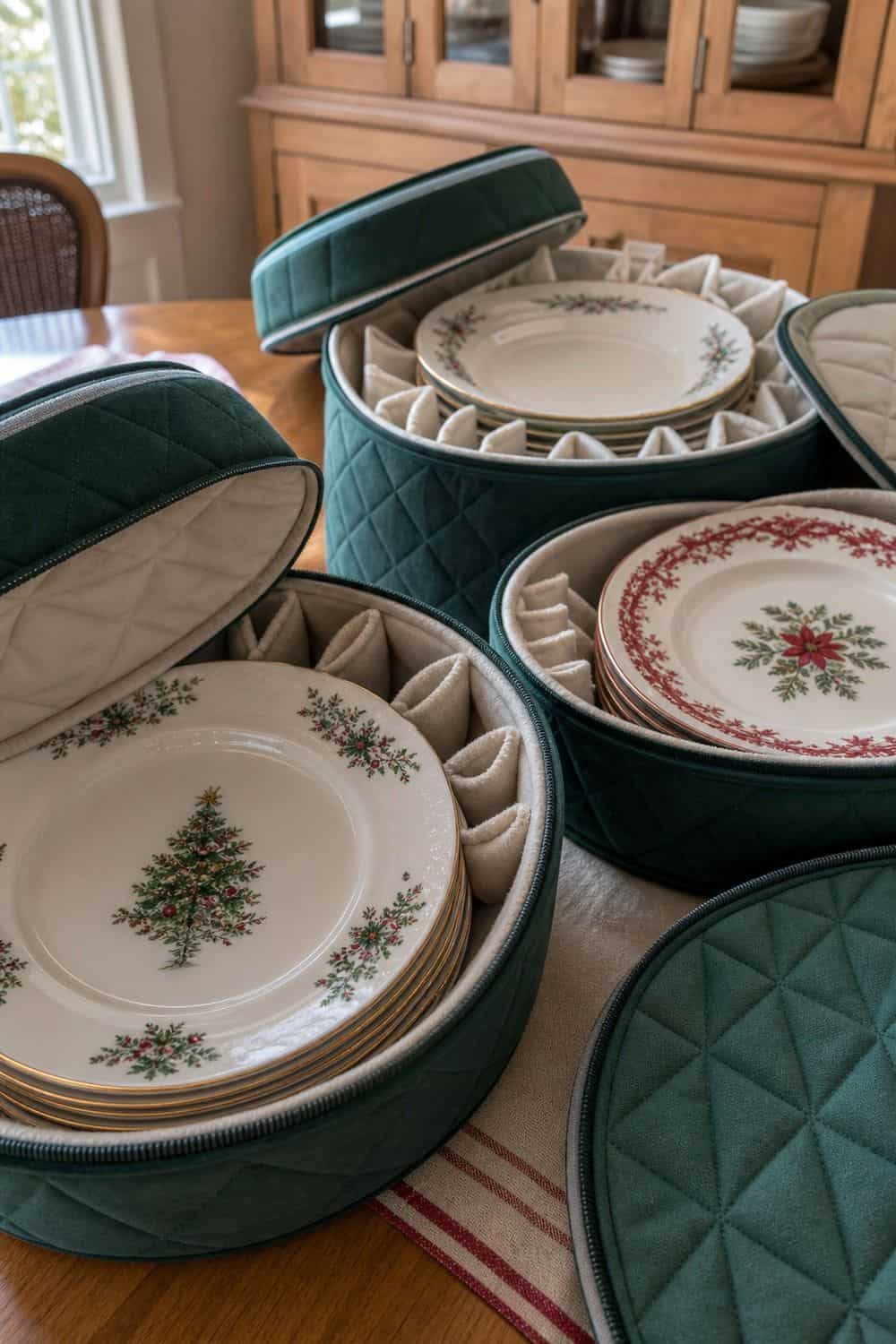
Special-occasion plates need more protection than everyday dinnerware, especially if they have painted rims, gold details, vintage glaze, or sentimental value. Padded china storage cases keep dinner plates, salad plates, dessert plates, and saucers separated from daily cabinet movement. Avoid packing cases so tightly that the bottom pieces carry too much weight. If the set is heavy, split it into smaller cases by plate size or holiday meal role. Store the cases in a low-traffic spot where they will not be bumped every time someone reaches for a baking dish.
5. Put Felt Separators Between Stacked Plates and Bowls
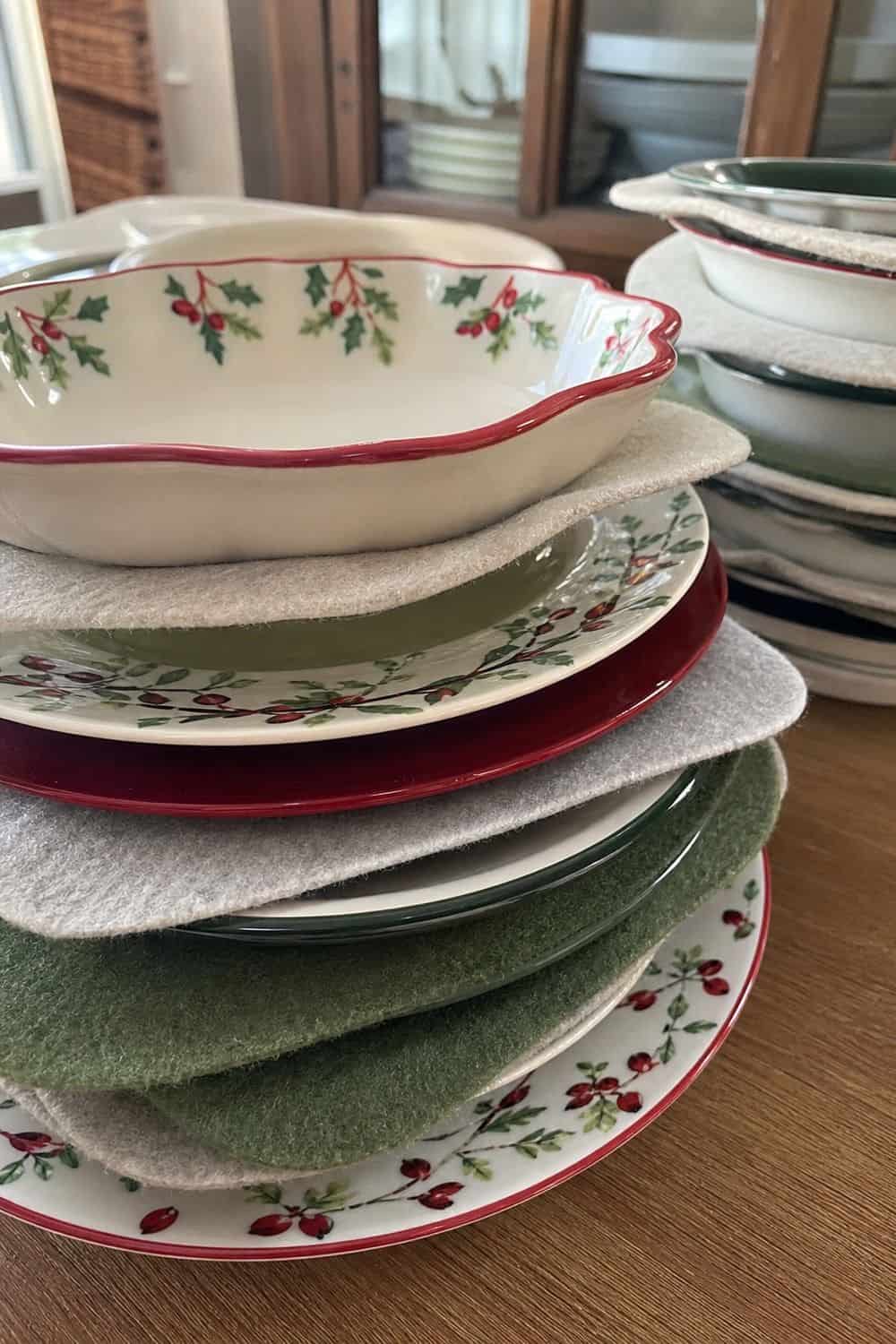
Glossy platters, painted plates, ceramic bowls, and vintage holiday dishes can scratch when they slide against each other in a stack. Felt plate separators add a soft layer between pieces, which matters most when dishes are lifted in and out of storage only a few times a year. Use separators between stacked plates, shallow bowls, small trays, and serving dishes with decorated surfaces. For lighter protection, clean cloth napkins or coffee filters can help, but heavier china and sentimental pieces deserve proper padding and a stack height that does not strain the bottom item.
6. Store Oversized Platters Vertically in a Divider Rack
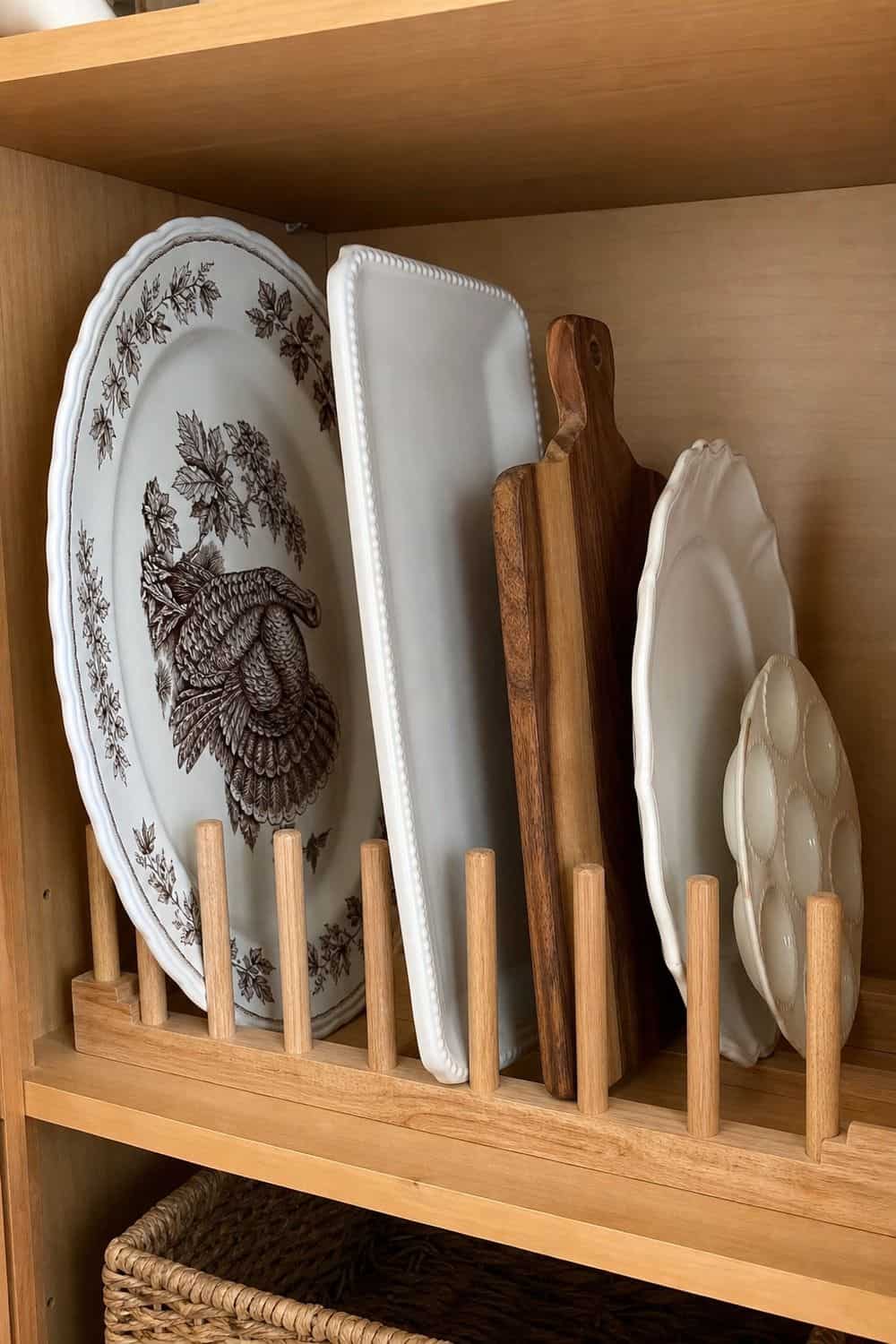
Large oval platters, turkey platters, rectangular trays, charcuterie boards, and long appetizer plates are hard to use when they are buried under a heavy stack. Vertical storage lets you see the exact platter you need and slide it out without lifting five other pieces first. The best spot is usually a sturdy lower cabinet, pantry shelf, or hutch section where the pieces can stand upright without wobbling or hitting the cabinet door. Leave enough room between dividers for rims, handles, and heavier boards so nothing scrapes when you pull it forward.
7. Keep Heavy Stoneware and Turkey Platters on Low Shelves
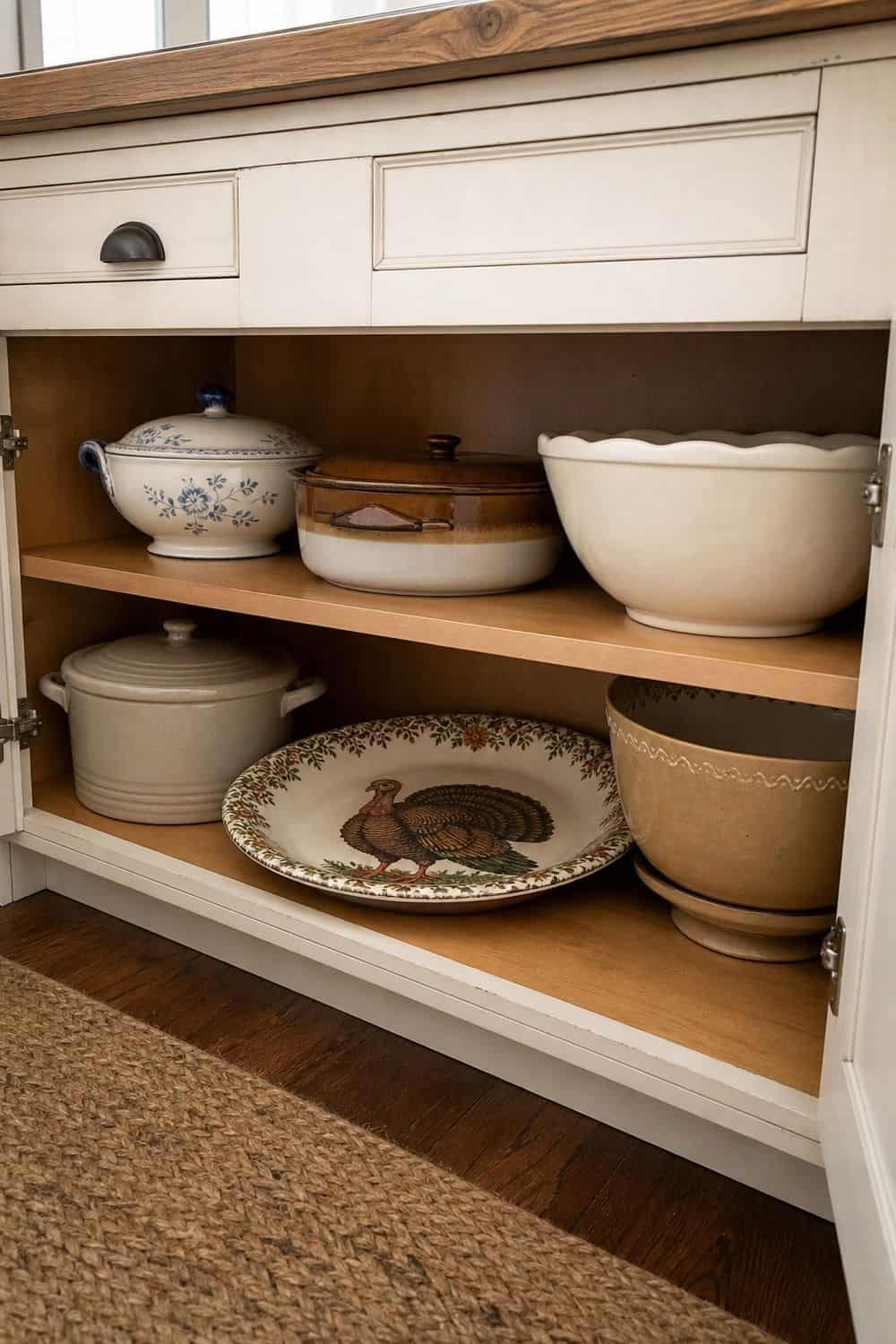
Holiday serving pieces are often heavier than they look, especially stoneware casseroles, punch bowls, turkey platters, soup tureens, and oversized serving bowls. Store them low enough that you can lift with both hands and see the full edge before pulling them forward.
A heavy duty cabinet shelf liner adds grip under pieces that might slide on painted wood or slick cabinet shelves. Keep the shelf uncrowded, avoid stacking fragile dishes on top of weighty stoneware, and never store a platter above shoulder height just because it fits there.
8. Give Serving Bowls Their Own Nested Zone
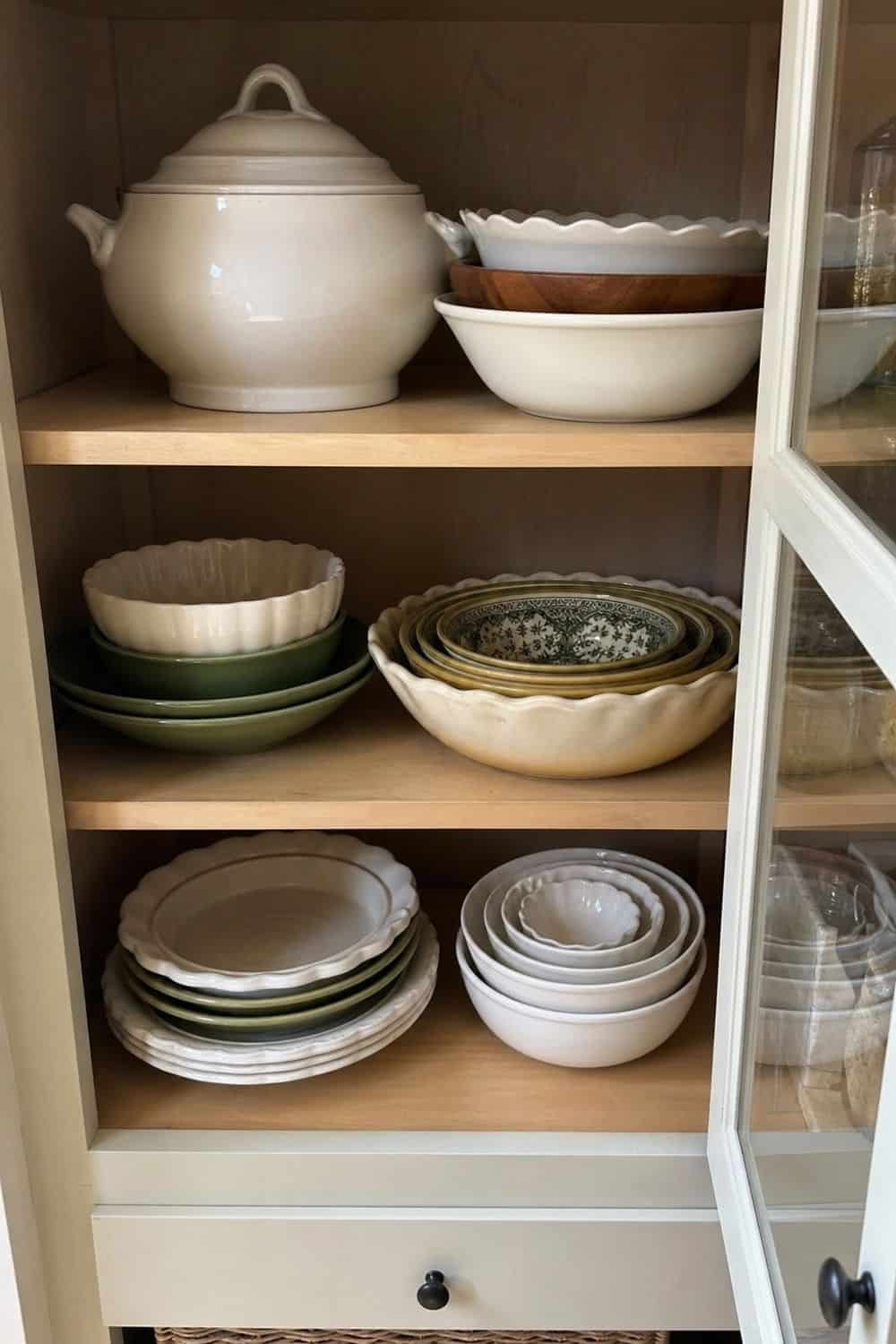
Serving bowls are different from mixing bowls because they need to look presentable on the table and match the food being served. Group salad bowls, mashed potato bowls, soup tureens, fruit bowls, pasta bowls, and side-dish bowls in their own zone so they are not mixed into everyday prep tools.
Nest bowls by material and size, then protect the fragile ones with serving bowl storage bags or soft padding. Very deep bowls should not hide smaller pieces that are needed quickly, so keep the menu workhorses near the front during holiday season.
9. Match Lids, Domes, and Inserts With the Serving Piece
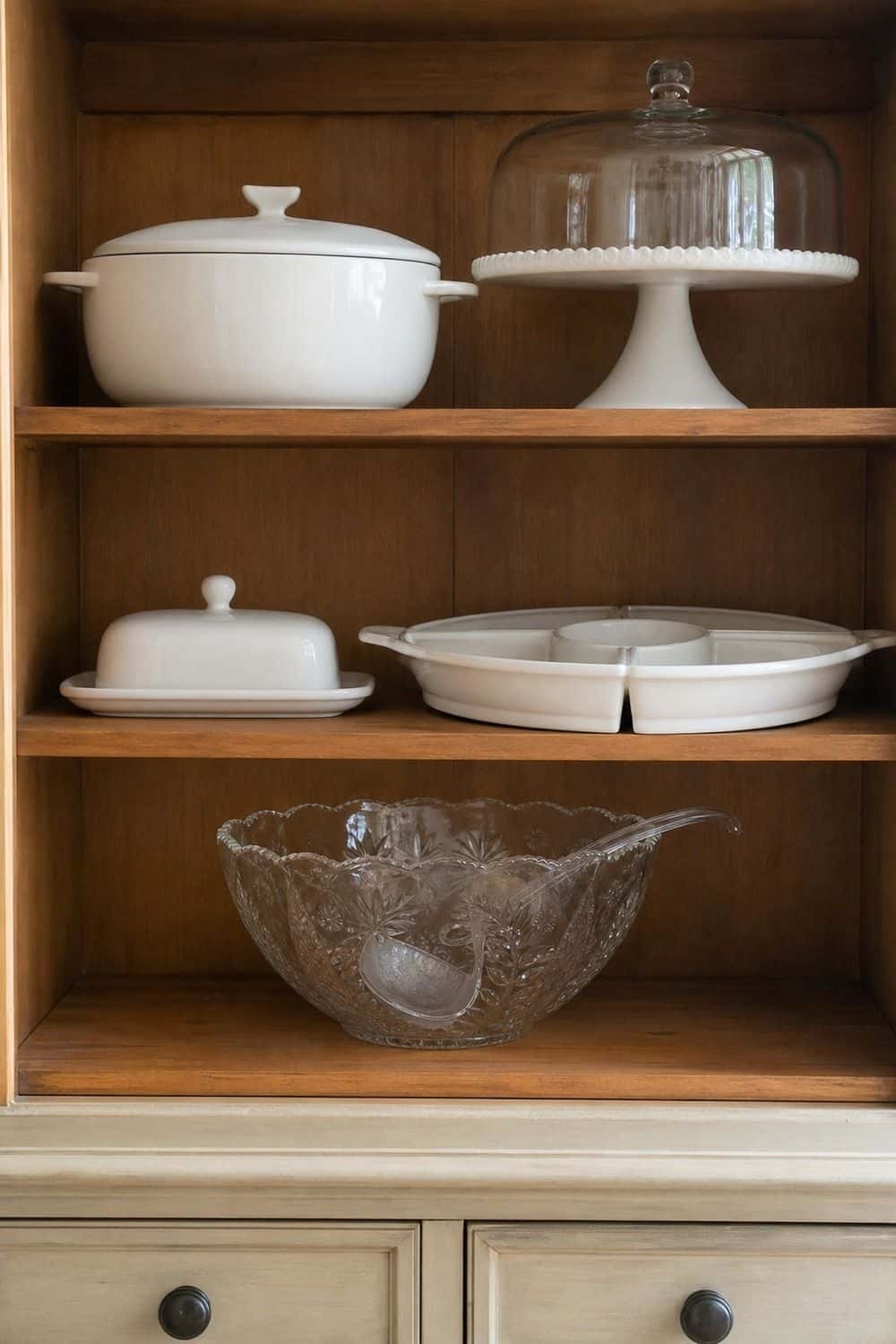
A covered casserole, cake stand, butter dish, divided server, or punch bowl is less useful when the matching lid, dome, insert, or ladle has wandered somewhere else. Treat the accessory as part of the serving piece, not as a separate cabinet category. A lid organizer rack can hold casserole lids and shallow inserts upright near the dishes they belong to. For smaller parts, use a labeled bag or small bin tucked beside the piece, especially for cake stand domes, punch bowl ladles, gravy boat saucers, and divided-server inserts.
10. Keep Trivets With Oven-to-Table Serveware
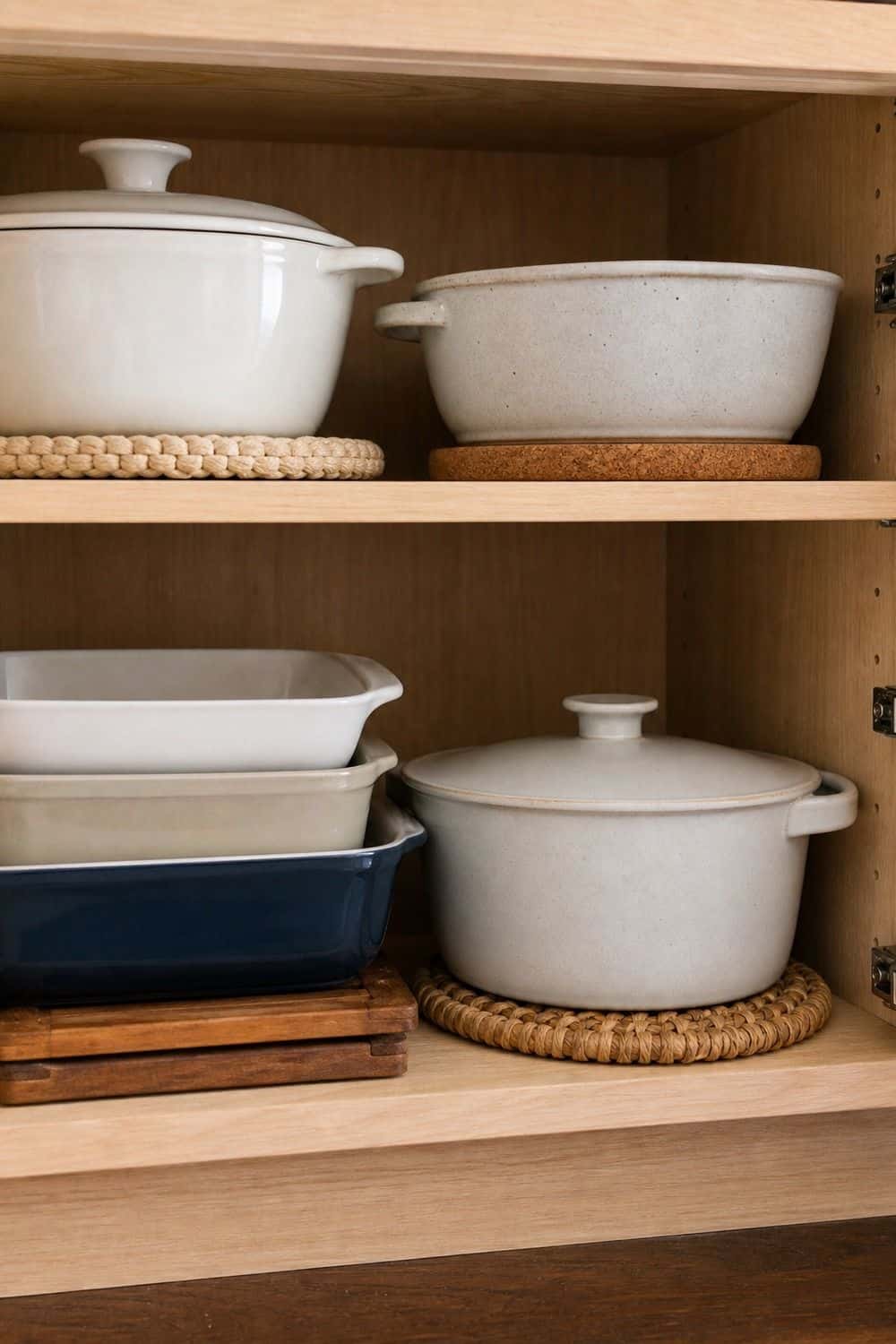
Hot side dishes, baked casseroles, ceramic platters, and oven-to-table bowls need a safe landing place before they reach the holiday table. Store heat resistant trivets with the serving pieces they support so no one is searching for table protection while food is ready. Check the actual oven-safe limits before warming any dish. Decorative platters, painted trays, and vintage pieces should not be treated like bakeware unless the maker says so. Keep a small trivet stack near the hot serving zone, not in a random drawer across the room.
11. Separate Decorative-Only Pieces From Food-Safe Workhorses
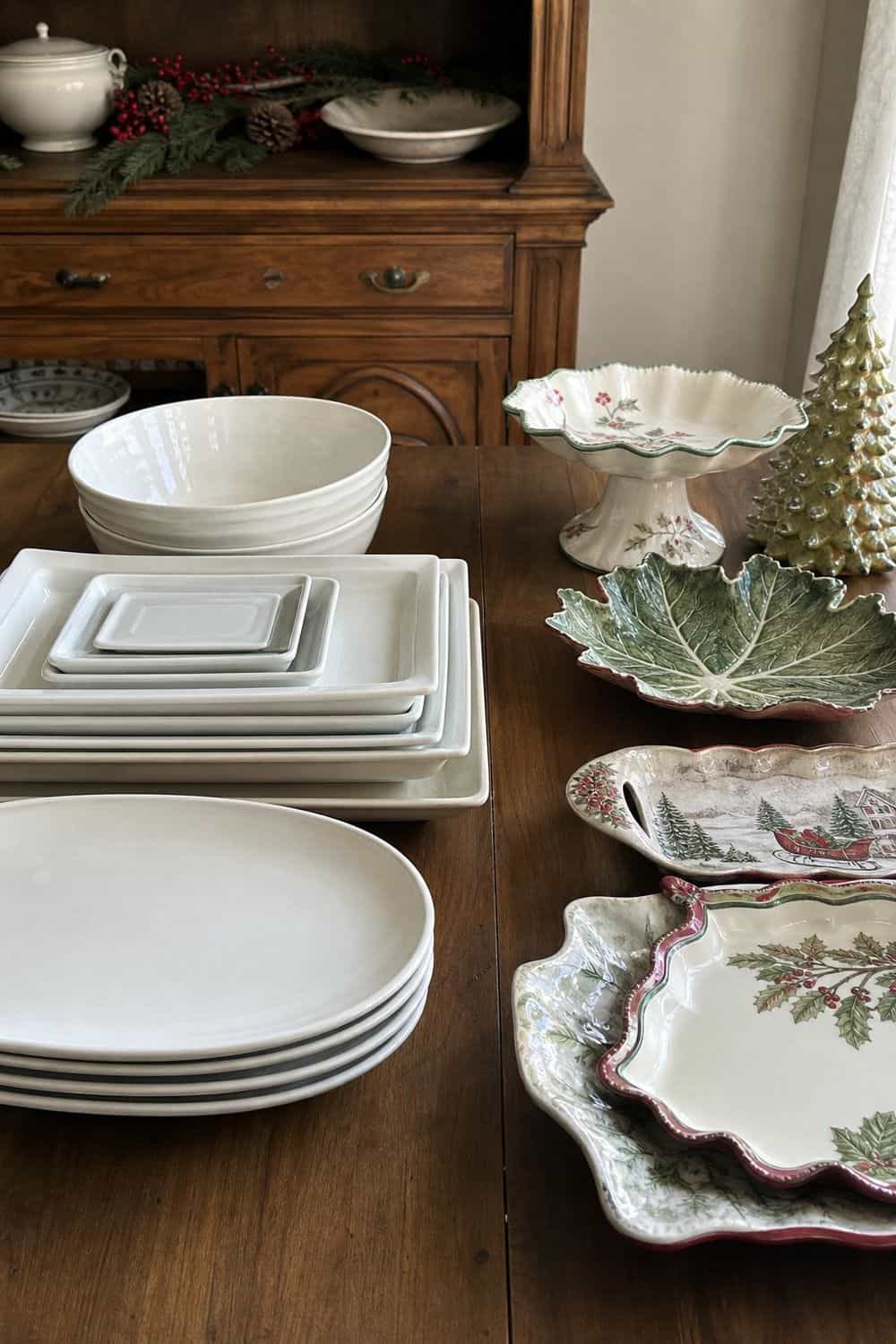
Seasonal trays can be charming, but not every holiday dish should hold hot food, saucy sides, carved meat, or desserts that need refrigeration. Create a clear divide between decorative-only pieces and durable food-safe workhorses so the right platter gets used when the kitchen is busy.
Oven-safe serving platters belong with the dishes used for warm food and buffet service. Painted, delicate, hand-wash, or sentimental pieces can have their own shelf with a note that keeps them for cookies, wrapped treats, or display instead of heavy holiday cooking.
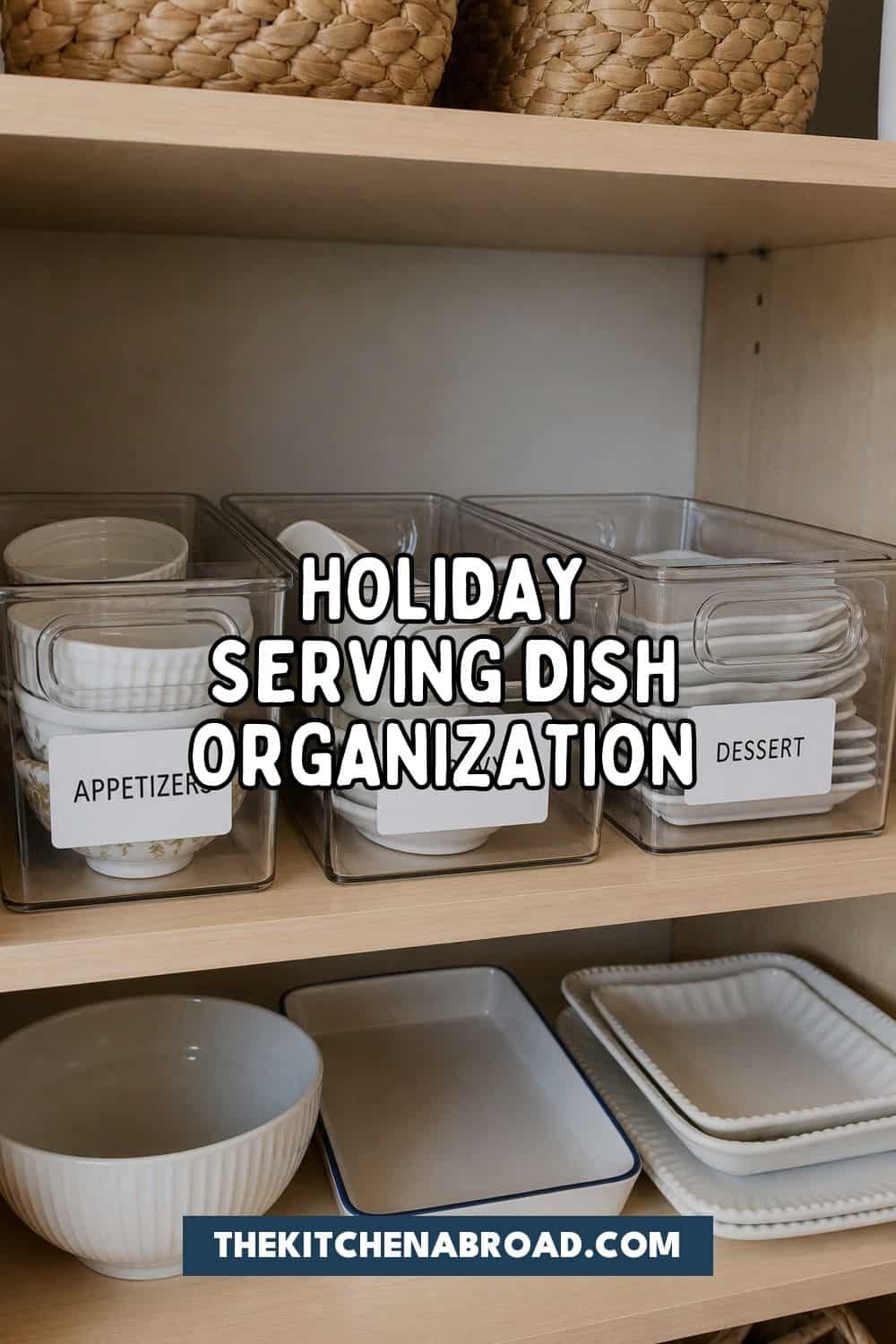
12. Use Clear Bins for Small Holiday Serving Pieces
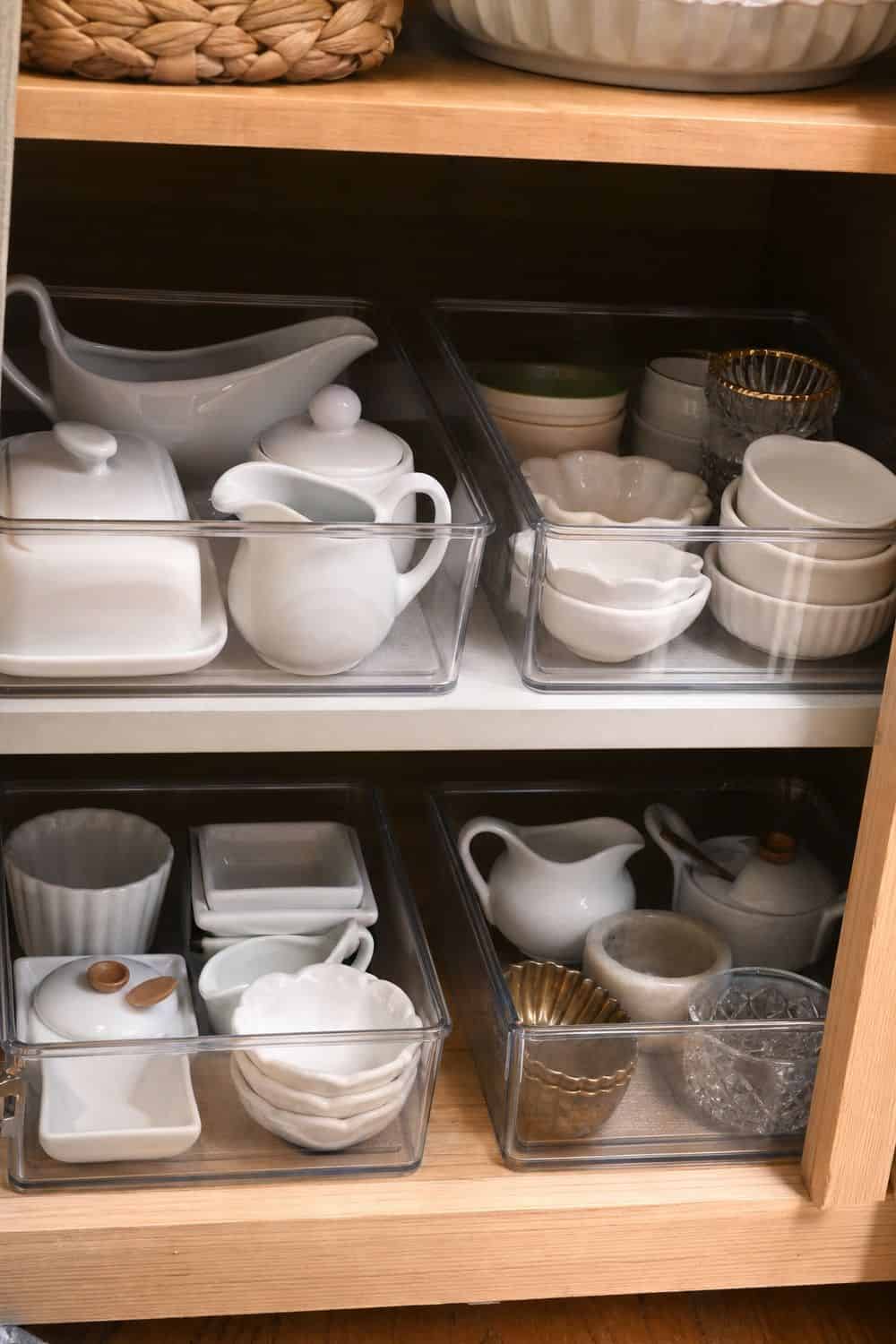
Small holiday serving pieces disappear easily inside large cabinets. Gravy boats, butter dishes, dip bowls, ramekins, condiment dishes, sauce pitchers, salt cellars, small appetizer plates, and mini dessert dishes need containment that still lets you see what is inside.
Clear plastic storage bins work best when each bin has a narrow serving purpose. Put sauces and gravy in one, appetizer extras in another, dessert pieces in another, then keep the bins on a shelf that can be pulled forward without disturbing larger platters.
13. Label Bins by Course or Serving Job
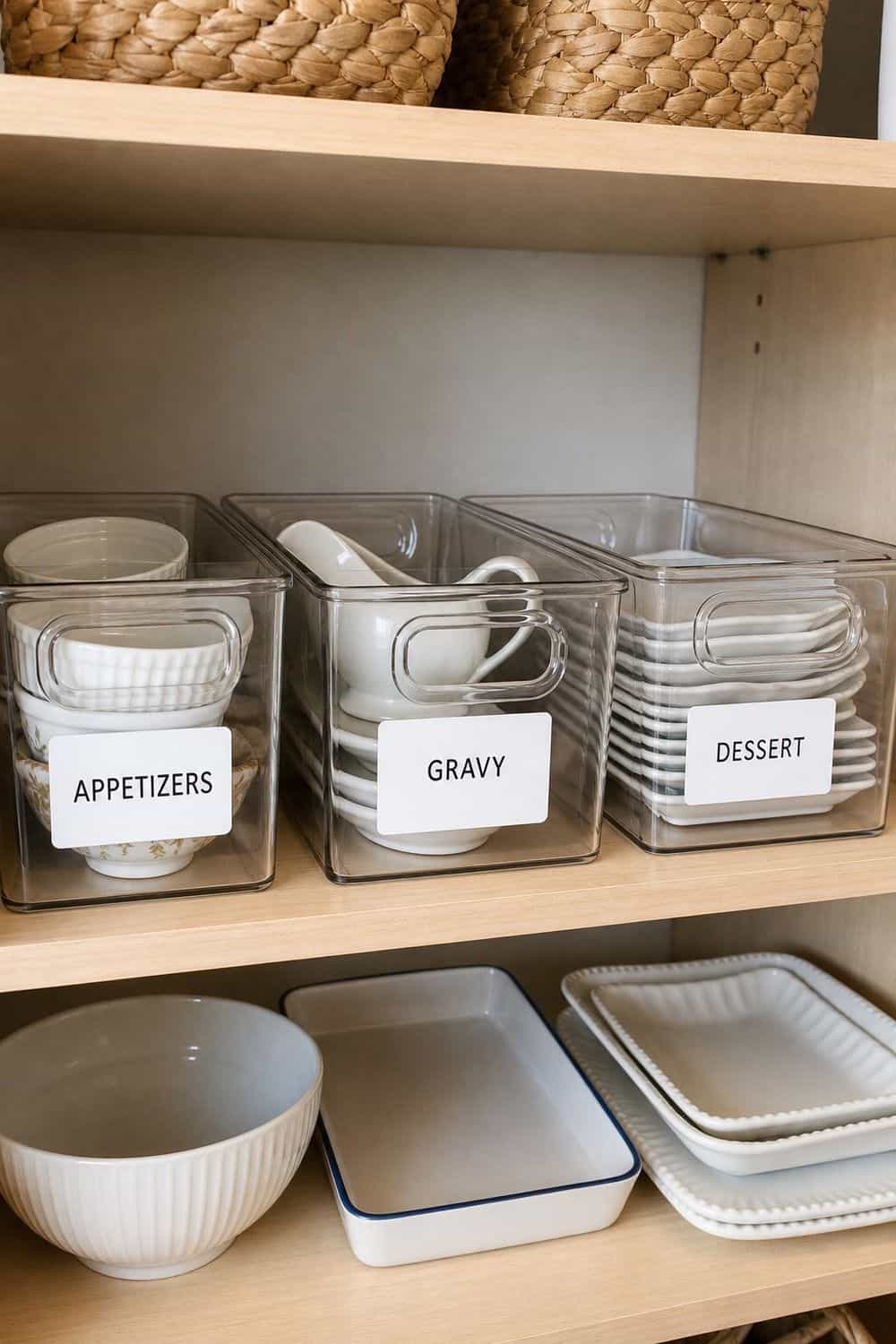
Vague labels like “holiday stuff” do not help when someone else is setting the buffet. Label bins by the job the pieces perform: dessert serving, sauces and gravy, appetizers, bread and butter, hot sides, Christmas cookie trays, or Thanksgiving platters. Course-based labels also help family members pull the right bin, return pieces correctly, and notice when a serving spoon or small plate belongs with a different holiday setup. Choose one clear role for the spot, then move unrelated extras before they become part of the setup.
14. Store Cake Stands Where the Bases Will Not Tip
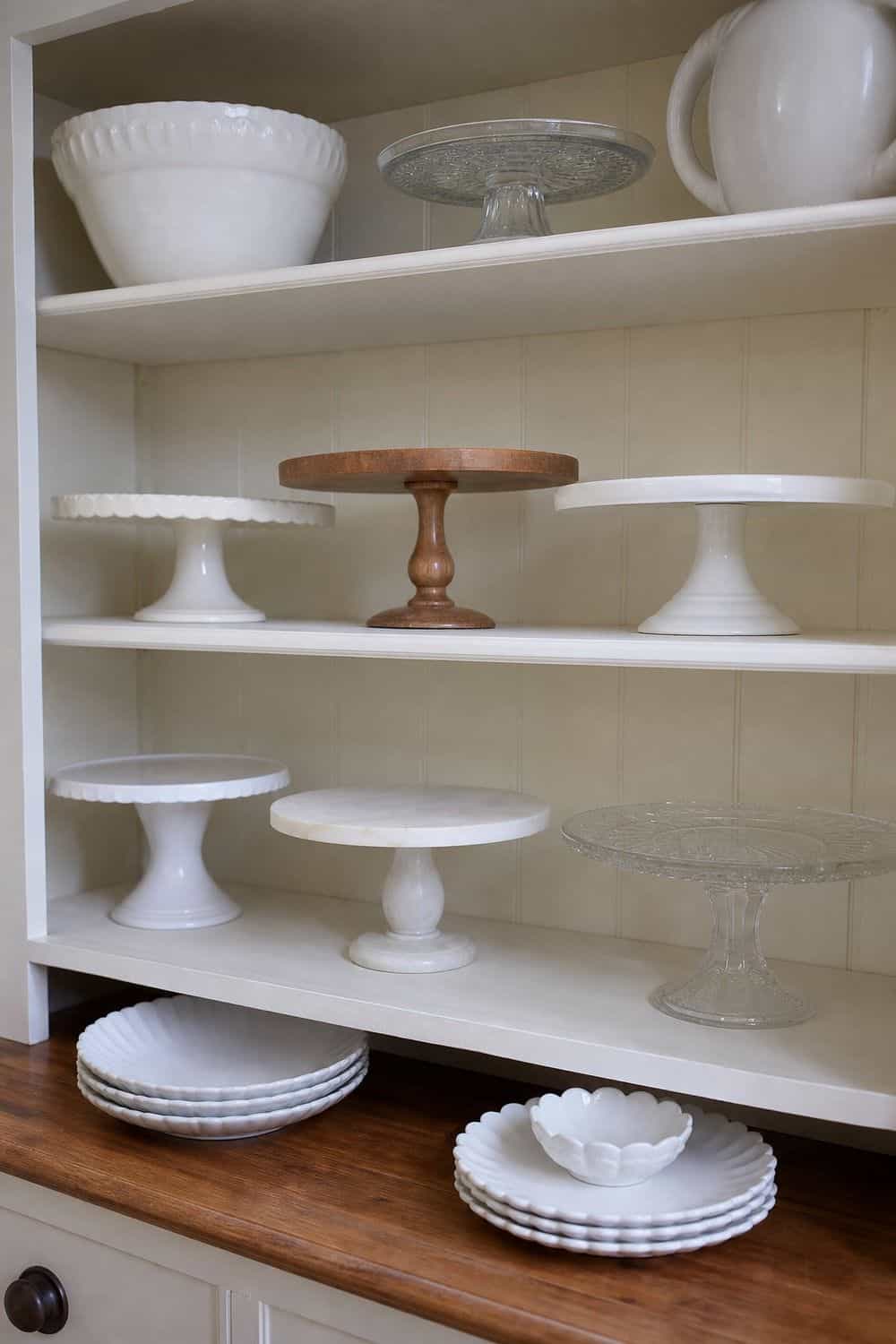
Cake stands are awkward because the pedestal base takes up height, chips easily, and can wobble if other dishes press against it. Give each stand a stable place where the base sits flat and the top does not have to support serving bowls or stacks of plates.
A cake stand storage bag can protect pieces that move to a closet, pantry, or off-season shelf. Keep domes, dessert plates, and pie servers in the same dessert-serving zone when possible.
Do not balance heavy items on the dome just to save space. That is how a piece meant for the prettiest dessert table becomes the chipped piece nobody wants to use.
15. Use a Tiered Tray Zone for Dessert and Appetizer Stands
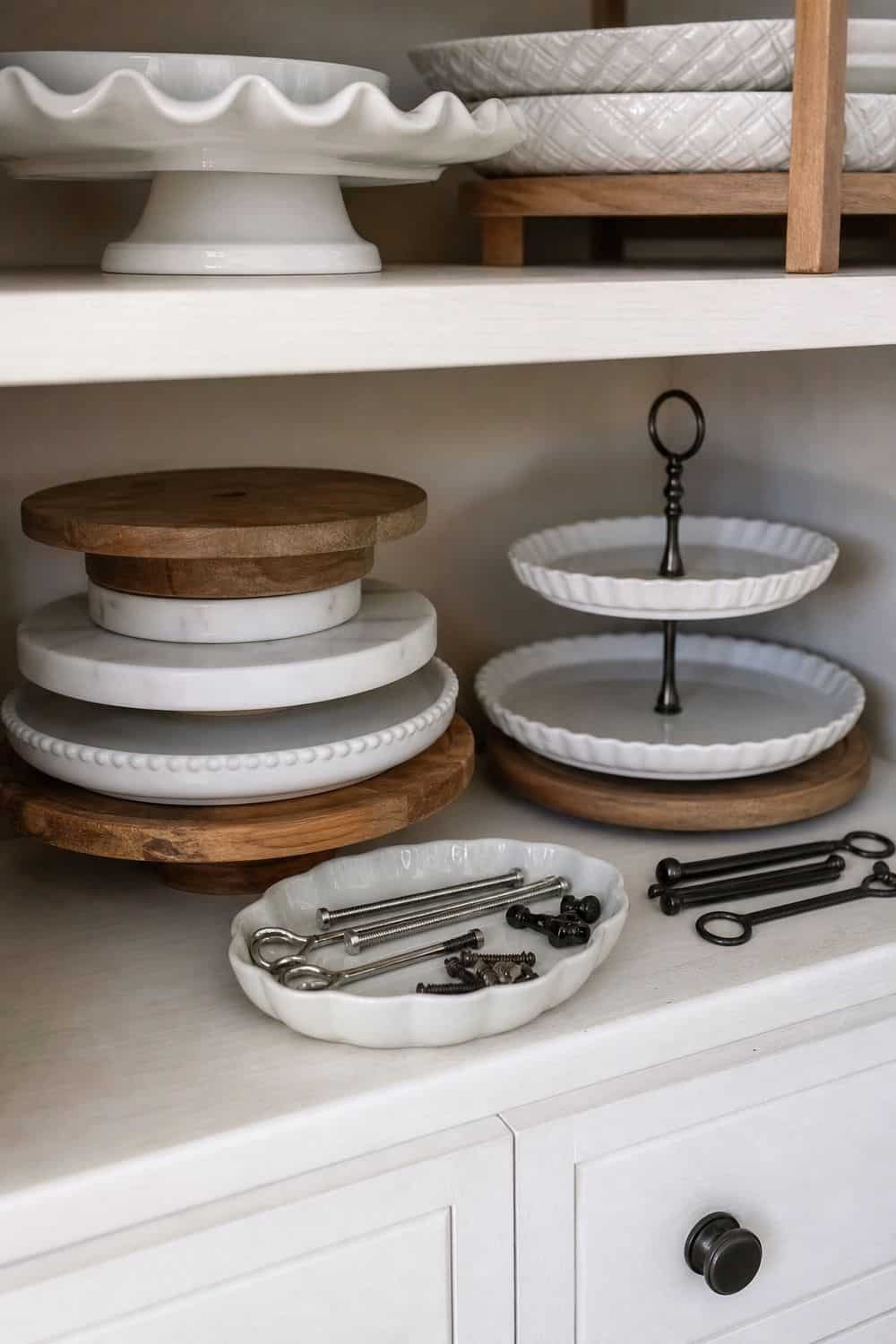
Tiered stands are helpful during crowded holiday meals because they lift cookies, appetizers, cupcakes, fruit, or small bites into vertical space. The storage problem is that collapsible rods, plates, screws, and center posts are easy to separate from the stand.
Keep each tiered serving tray stand with its hardware in one labeled bag or bin. If you own more than one, store them by use: dessert tower, appetizer stand, tea tray, or kids’ treat display. That makes setup faster and prevents missing parts on the day guests arrive.
16. Create a Platter Pull Bin for the Current Holiday
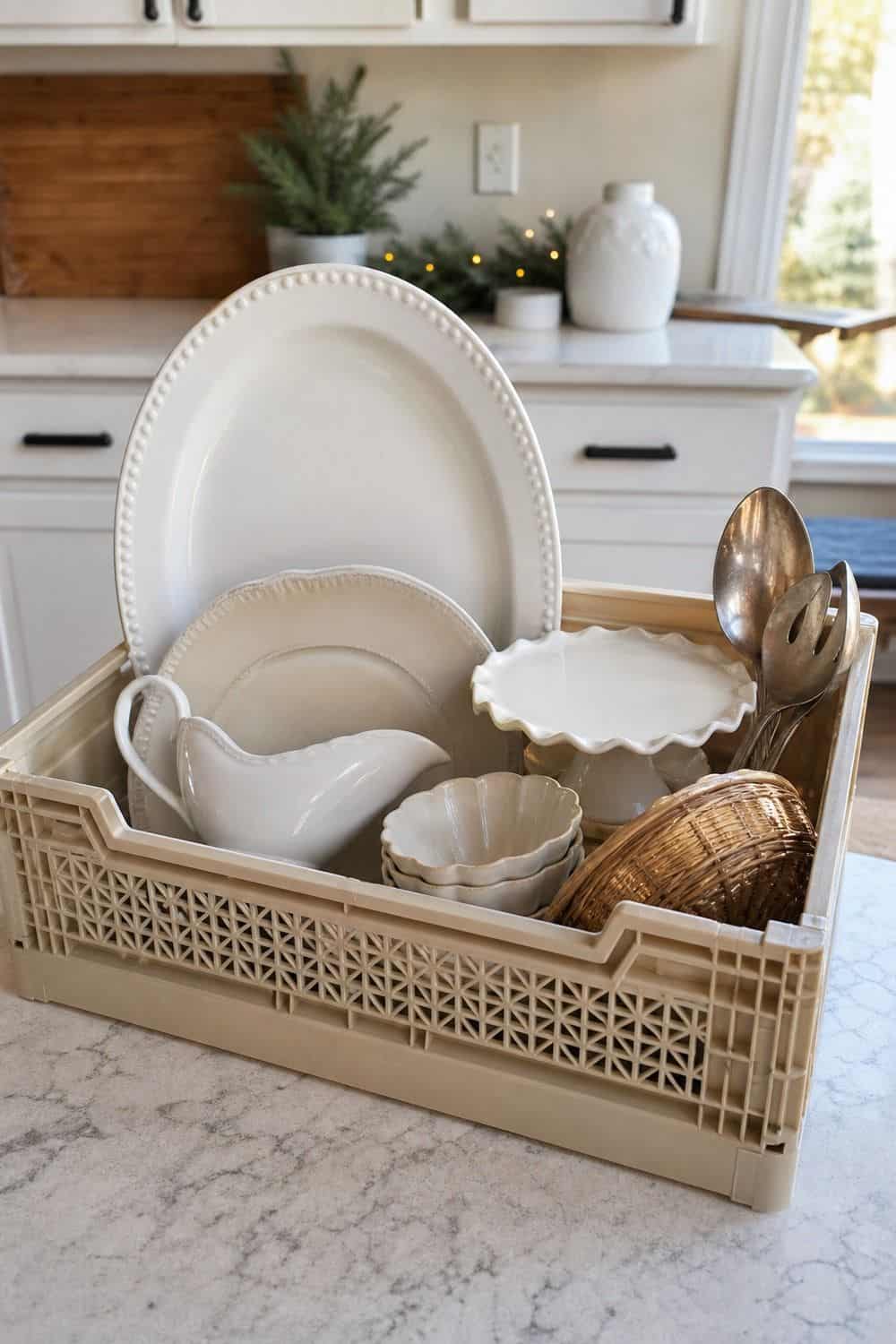
One or two weeks before hosting, pull the serving pieces that match the menu and place them in a temporary staging spot. A collapsible storage crate can hold the main platter, side bowls, gravy boat, dessert stand, bread basket, sauce dishes, and backup serving pieces.
This is not long-term storage. It is a pre-holiday check that reveals missing lids, too-small platters, chipped bowls, or a forgotten serving utensil while there is still time to fix the problem.
Keep the crate somewhere clean and out of the main cooking path, close enough that you can add a platter or remove one as the menu changes.
17. Keep Serving Utensils With the Dishes They Serve
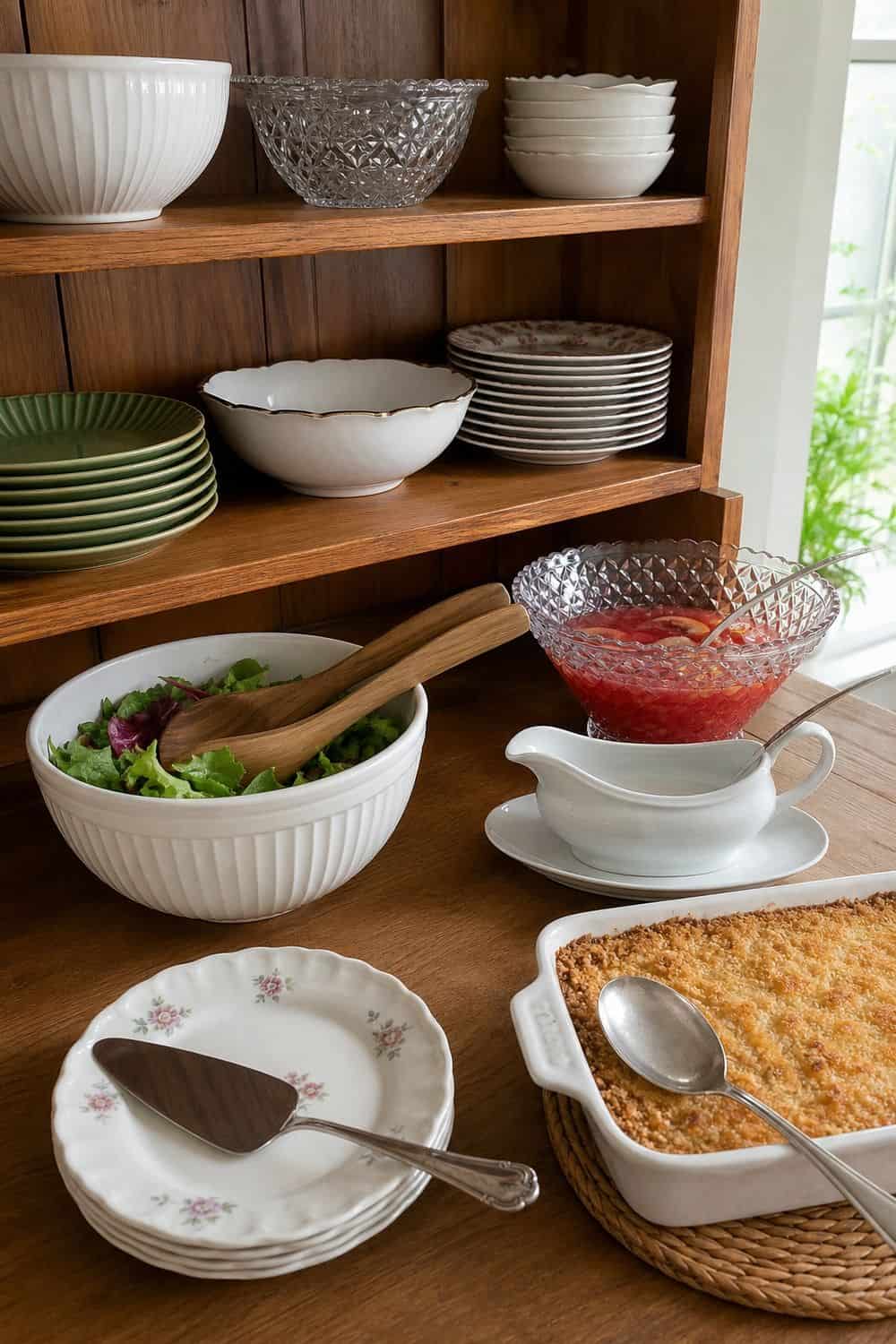
Holiday serving slows down when the right spoon, ladle, tongs, or pie server is somewhere else. Pair salad tongs with the salad bowl, a ladle with the punch bowl or gravy boat, a pie server with dessert plates, and wide serving spoons with side-dish bowls. A serving utensil caddy can sit near the pulled serveware during the week before hosting. For off-season storage, wrap or bag special utensils with the dishes they serve so the holiday table does not depend on last-minute drawer hunting.
18. Reserve a Hutch or Glass Cabinet for Display-Worthy Pieces
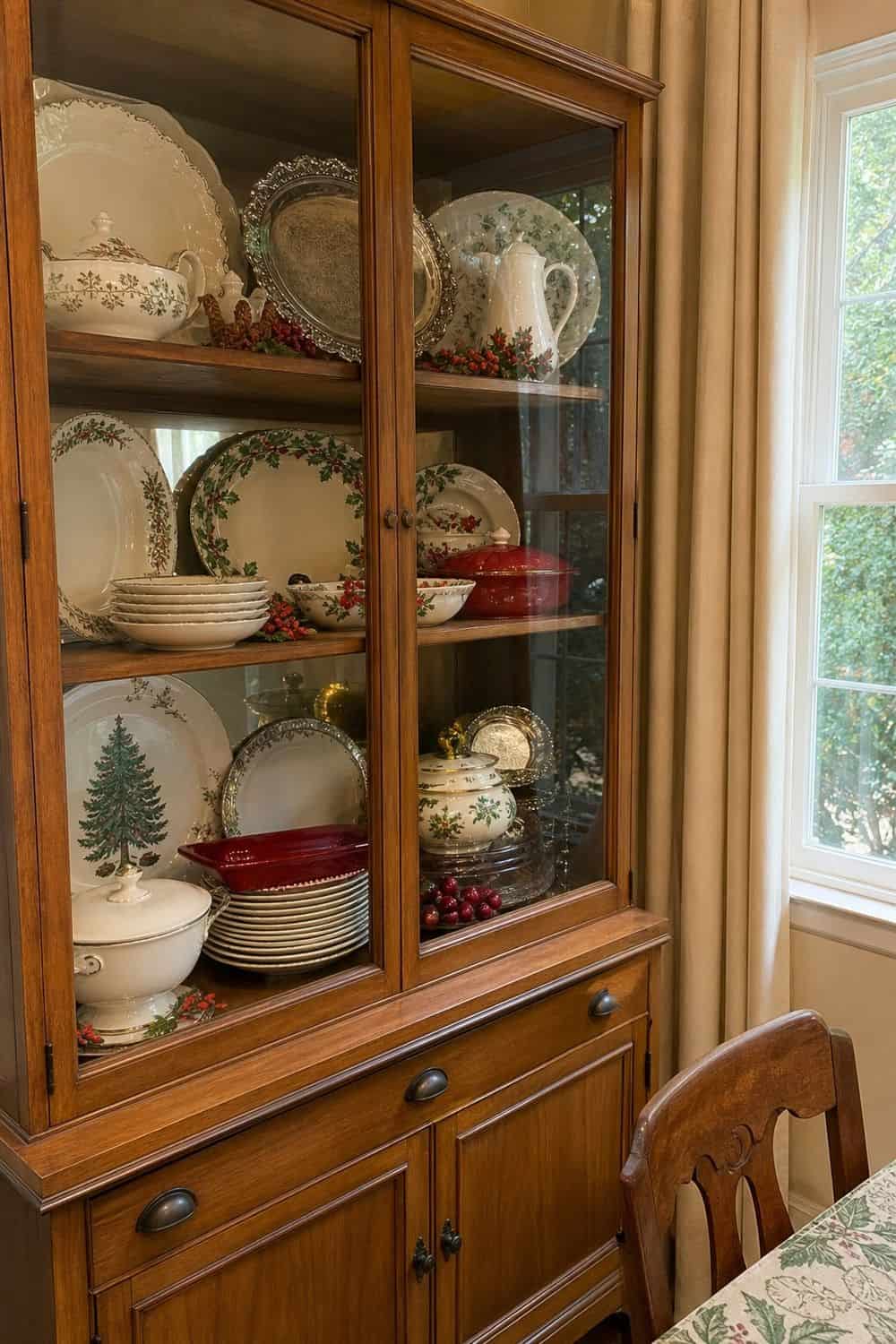
Inherited china, pretty seasonal platters, and favorite holiday dishes can double as decor if they are stable and easy to reach. A hutch or glass cabinet works well for pieces that deserve to be seen but should not sit in daily dish traffic.
Use plate display stands for a few flat pieces instead of crowding every shelf. Leave room to remove dishes without knocking into neighboring items, and avoid burying pieces used at every holiday meal behind objects that are purely decorative.
19. Use Deep Pull-Outs for Bulky Serving Bowls and Tureens

A pull-out cabinet organizer turns a difficult cabinet into a tray that brings the heavy pieces forward. Check the weight rating before storing stoneware, glass, or stacked serving bowls on a pull-out shelf. Keep the tallest pieces near the back and leave enough hand space to lift each bowl without scraping the cabinet frame. Reserve upper shelves for light items, seasonal pieces, or backups that do not need to move every day. Deep pull-outs work best when the heaviest bowls can slide toward you instead of being dragged from the back of a cabinet.
20. Store Remote Off-Season Pieces in Hard-Sided Totes
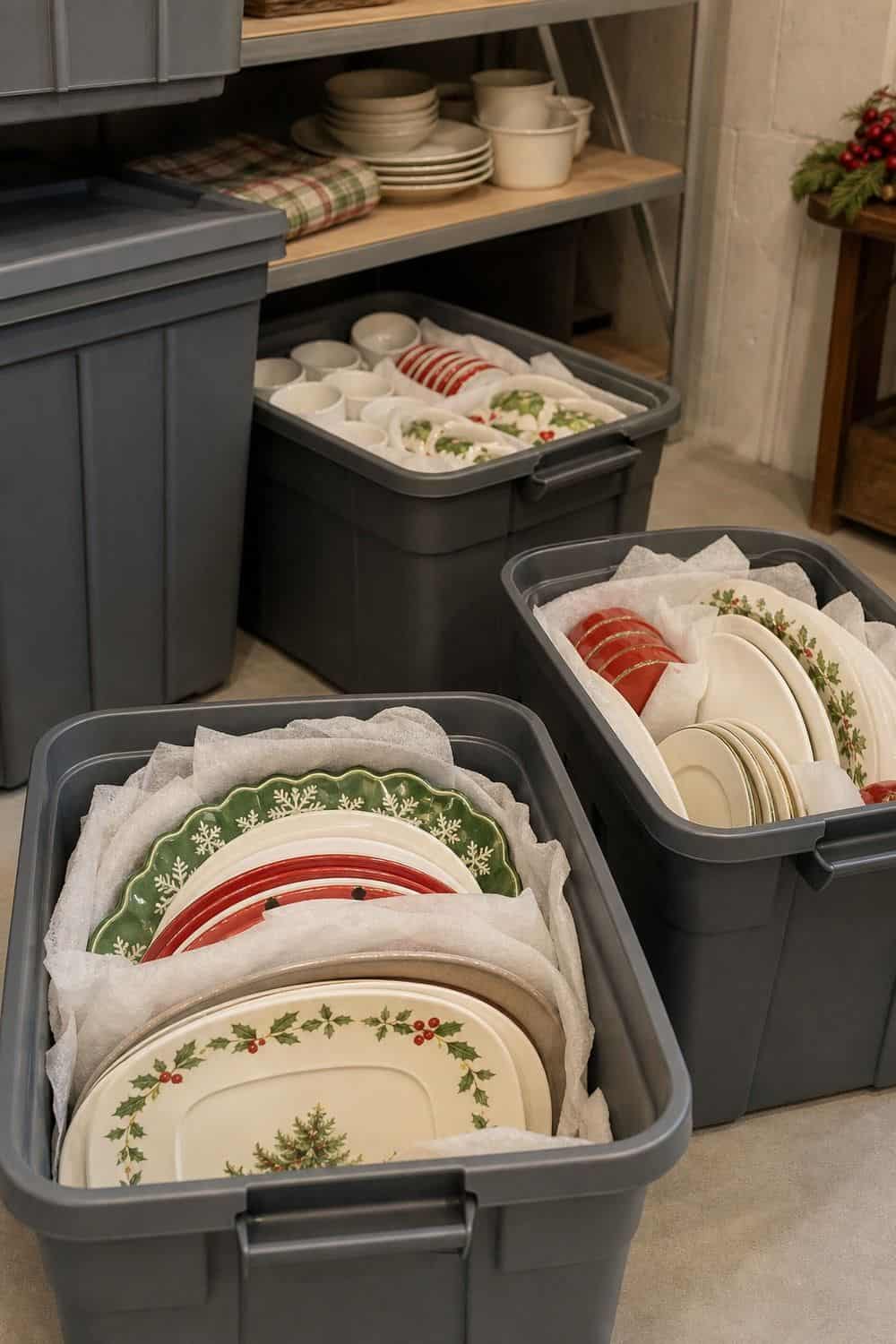
Not every holiday serving dish needs prime kitchen space all year. Once-a-year cookie trays, extra place settings, highly themed platters, backup serveware, and pieces used only for one large gathering can move to remote storage after they are cleaned and labeled. Latching storage totes are sturdier than crushed cardboard and easier to stack safely. Avoid damp basements, hot attics, freezing garages, and high-traffic areas for delicate china or sentimental pieces. If a tote holds fragile dishes, keep it light enough to carry without tipping.
21. Make a Quick Map for Pieces Stored in More Than One Place
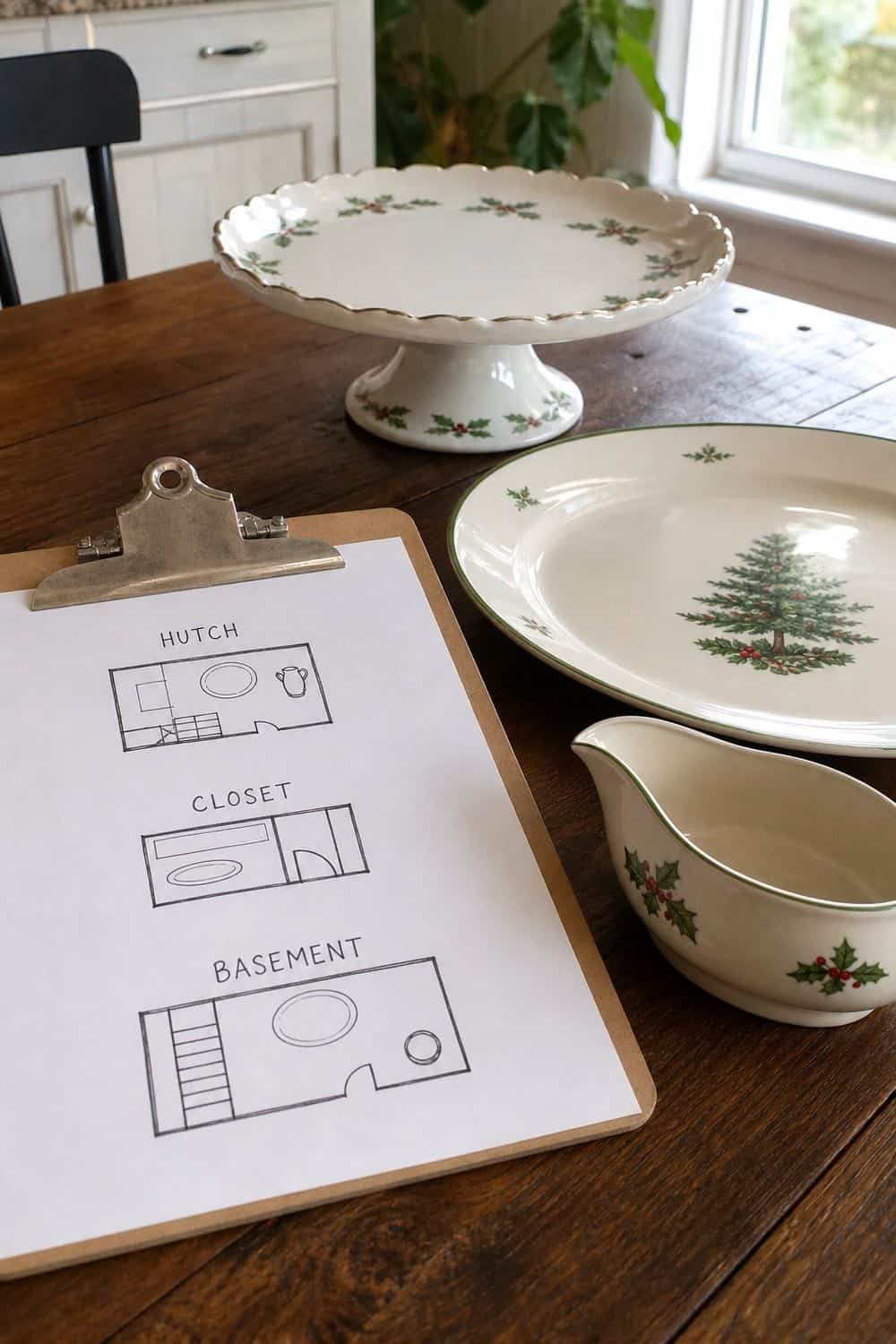
Holiday serveware often lives in more than one room. Platters may be in the dining hutch, dessert stands in a closet, extra plates in a basement tote, and gravy pieces in a kitchen cabinet. A quick storage map prevents the yearly search.
Use a magnetic dry erase board inside a pantry door, a phone note, or a page in your kitchen binder. List the holiday, the serving category, and the storage location. Update it after the reset so next year starts with directions instead of guesswork.
22. Protect Pitchers, Gravy Boats, and Handles From Pressure
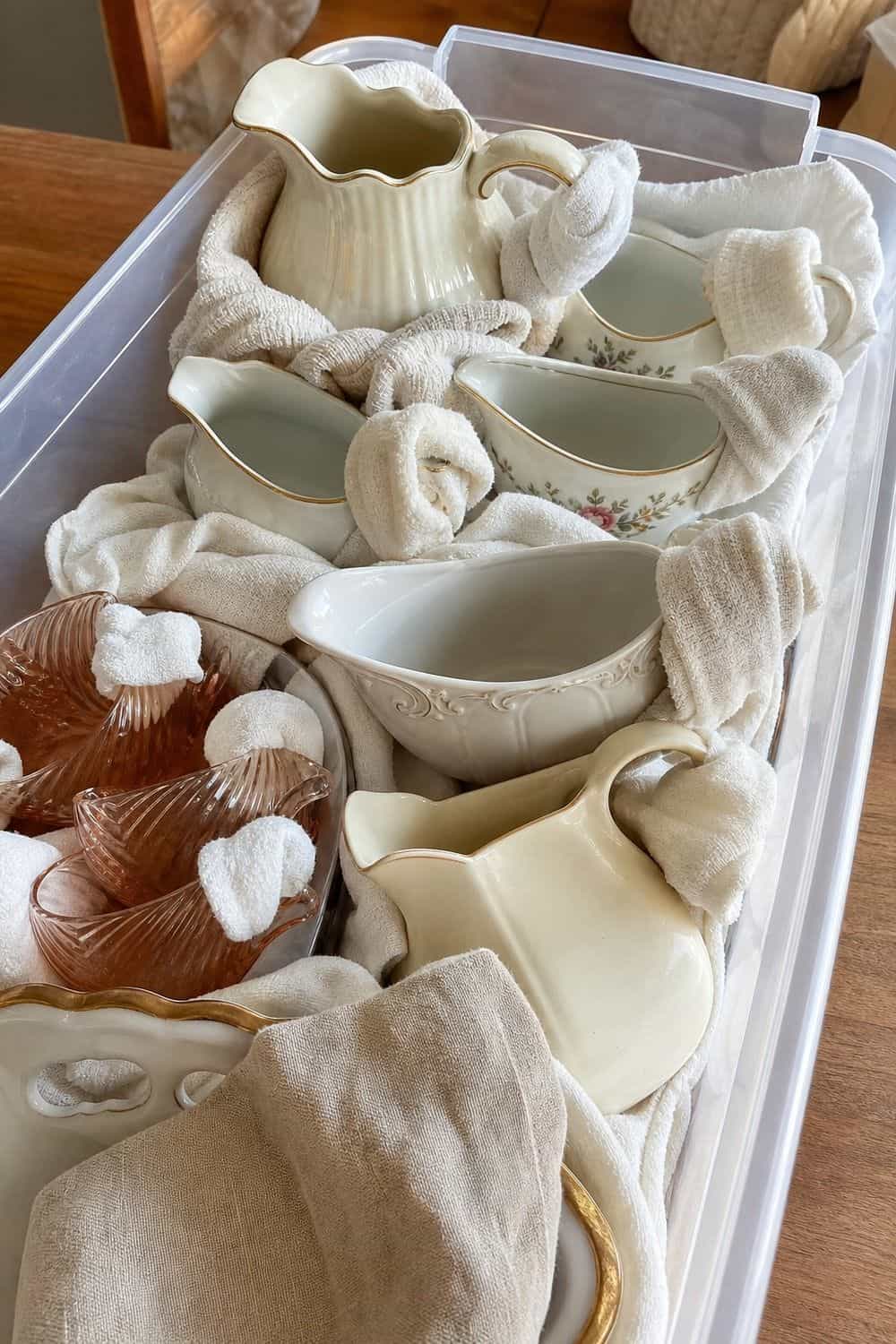
Handles, spouts, feet, and narrow rims are the first parts to chip when irregular serving pieces are packed beside heavy plates. Gravy boats, creamers, pitchers, punch cups, delicate sauce dishes, and handled trays need more breathing room than flat dishes. A stemware storage box can work for divided protection when the compartments fit the shape. Add soft padding around spouts and handles, then store these pieces away from stacks that press sideways. The goal is to stop fragile shapes from absorbing the weight of everything else in the bin.
23. Cull Duplicate Serving Pieces After Each Holiday Meal
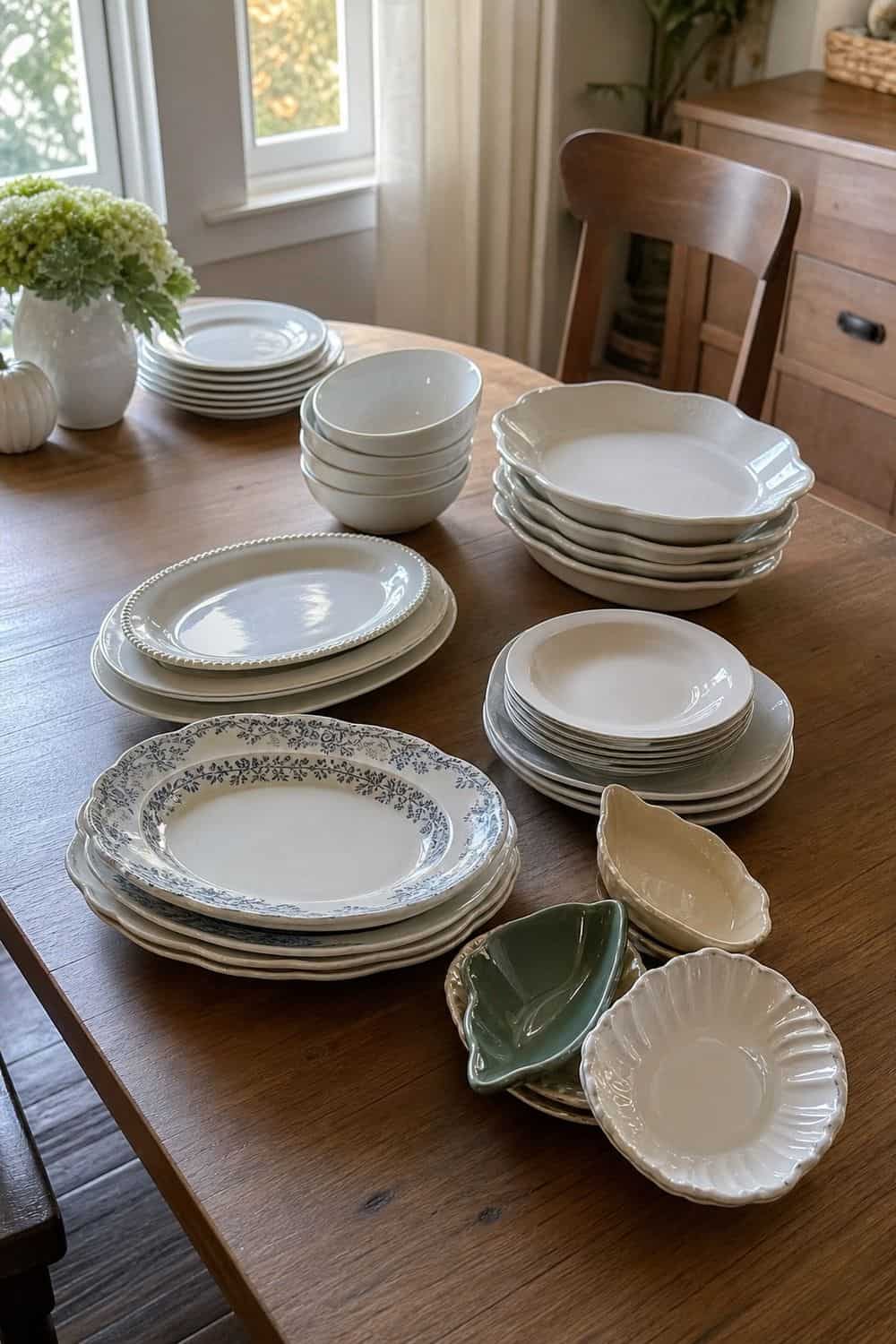
Right after a holiday meal, you know which serving pieces actually worked. That is the best time to remove duplicate platters, chipped dishes, awkward hand-wash trays, novelty pieces you skipped again, and bowls that never fit the food you make.
A labeled donation box makes the decision clear before everything drifts back into storage. Keep sentimental pieces if they matter, but do not let three unused trays crowd out the platter you reach for every year. Holiday serveware should match real menus, not imagined ones.
24. Clean and Dry Everything Completely Before Packing
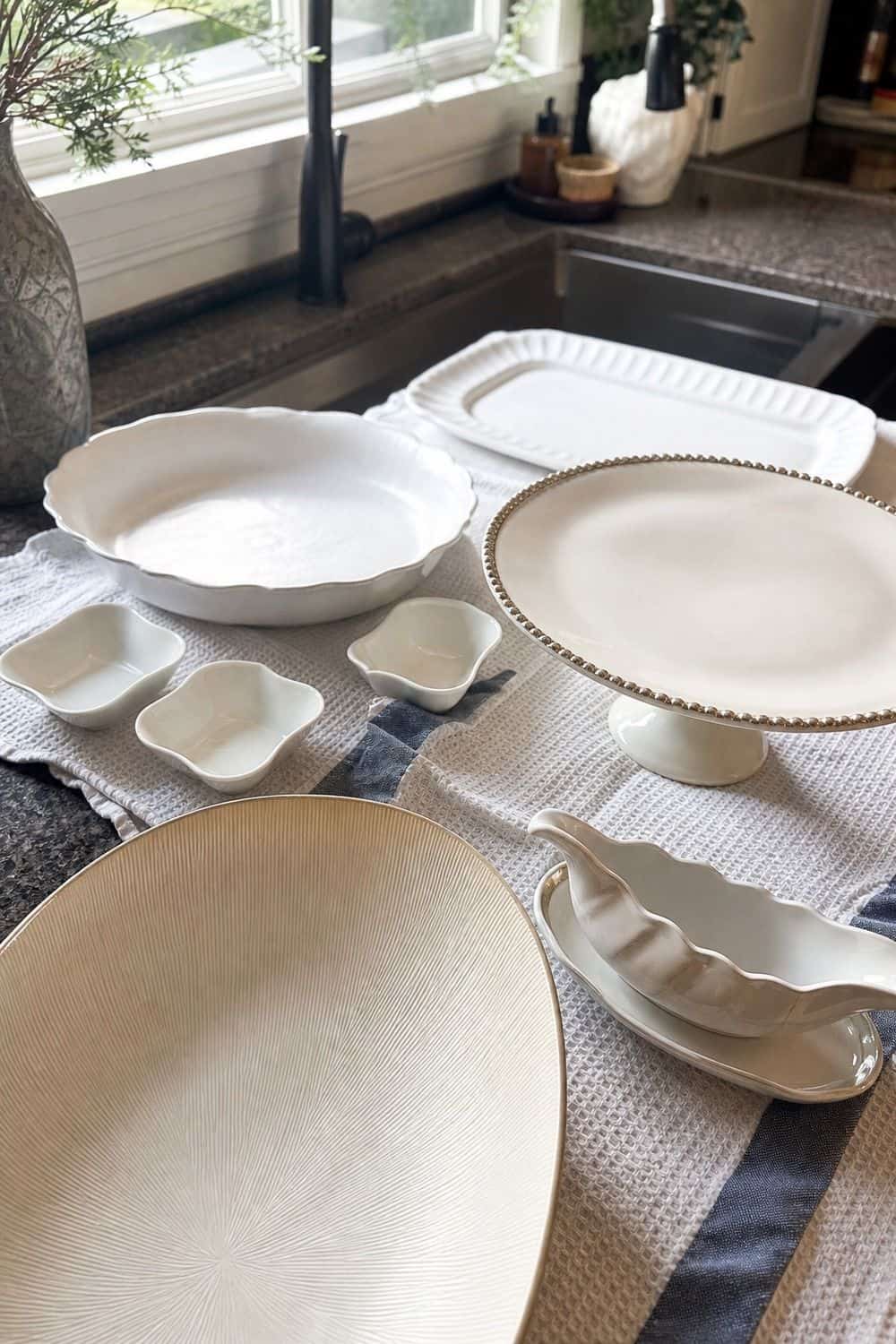
The post-holiday reset should never start with damp dishes. Platters, serving bowls, cake stands, covered dishes, gravy boats, and small sauce pieces need to be fully clean and dry before they go into cases, bins, totes, or padded bags.
Microfiber dish towels help dry raised rims, handles, pedestal bases, and the underside of lids where water can hide. Check for food residue around edges and decorative grooves. This small step prevents musty smells, staining, and unpleasant surprises when the same pieces come out next year.
25. Build a Next-Holiday Reset Routine Before the Dishes Go Away
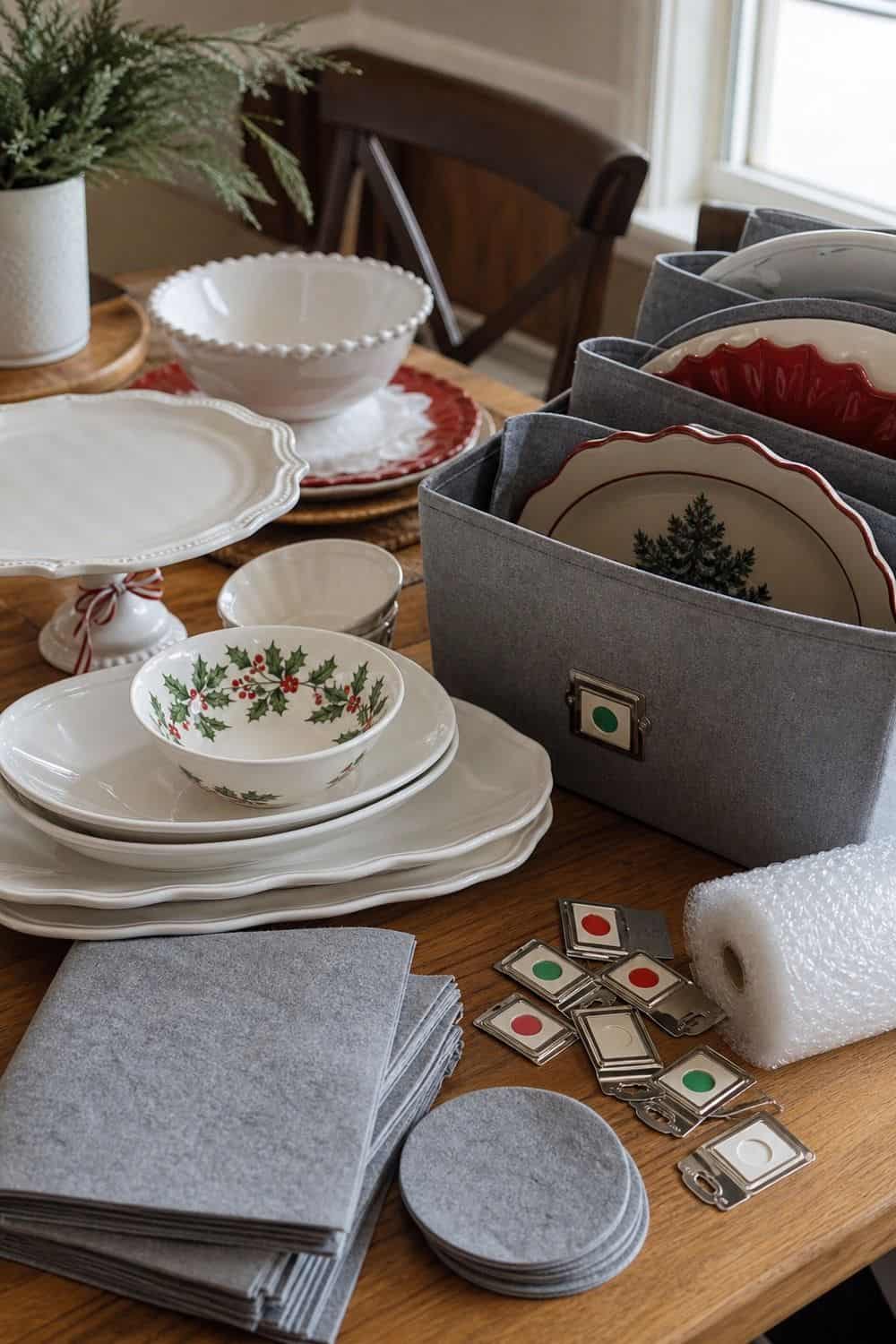
The season should end with a repeatable reset: wash, dry, inspect, pare back duplicates, pad, label, and return every serving piece by holiday or serving job.
Storage bin label clips are useful when categories change from year to year because you can update a tote without peeling old labels. Update the inventory before the dishes go away.
Note missing pieces to buy later, such as a second gravy boat, a larger appetizer platter, more dessert plates, or a sturdier bread basket. The system should make the next holiday easier, not just make this year’s cleanup look tidy.
Frequently Asked Questions
How should I organize holiday serving dishes?
Organize holiday serving dishes by the way you use them: platters, hot sides, cold sides, desserts, sauces, drinks, and decorative pieces. If your holidays are very different, sort by holiday instead. The best system is the one that lets you pull the right pieces before cooking starts.
Where should heavy serving platters be stored?
Heavy platters, stoneware bowls, tureens, and turkey dishes should live on low shelves or sturdy pull-outs where you can lift them with both hands. Avoid high cabinets for anything oversized or slippery. A low, uncrowded shelf is safer than a perfect-looking stack that is difficult to move.
How do I protect fragile holiday dishes in storage?
Use padded china cases, felt separators, soft cloth, or divided boxes for fragile holiday dishes. Keep stacks low, separate decorated surfaces, and give handles or spouts extra room. Fragile pieces should be clean and completely dry before storage so padding does not trap moisture.
Should serving utensils be stored with serving dishes?
Yes, special serving utensils are easier to use when they stay with the pieces they serve. Pair pie servers with dessert dishes, ladles with gravy boats or punch bowls, and tongs with salad or appetizer platters. This keeps holiday setup from turning into a drawer search.
How often should I sort holiday serveware?
Sort holiday serveware after each major hosting season, while you still remember what worked. Keep the pieces you used, repair or replace what was missing, and donate duplicates that stayed untouched. A short reset after the meal is easier than trying to remember everything next year.
What is the biggest mistake to avoid?
Avoid storing pieces by where they happen to fit instead of how they are used. A platter buried under cake stands, gravy boats stored without ladles, and heavy dishes stacked too high will slow down every holiday setup.
Final Thoughts
The best holiday serving dish organization ideas make the next meal easier before the menu is even written. Keep the serving pieces easy to reach, protect the fragile ones properly, and return everything by holiday or serving job after the meal. When platters, bowls, stands, and utensils go back with a clear purpose, next year’s setup starts with a shelf you understand instead of a cabinet search.
Last update on 2026-09-18 / Affiliate links / Images from Amazon Product Advertising API