
The best pantry organization containers are clear or clearly labeled, sized to your shelves, and matched to the food they hold. Use airtight containers for dry goods that go stale, open bins for packaged snacks, pull-out bins for deep shelves, and breathable storage for pantry produce.
Buying pantry containers is easiest when you shop by job instead of buying one matching set for everything. Flour, cereal, cans, chip bags, tea packets, potatoes, and snack bars all need different access, lid, airflow, and shelf-clearance decisions.
This guide to the best pantry organization containers focuses on what each container should hold, what to measure before buying, and which mistake usually makes that container annoying to use after the first week.

Top Recommended Products


You Might Also Like These Blog Posts
- Pantry Organization Ideas
- Pantry Labels
- Pantry Inventory Ideas
- Kitchen Organization
- No Pantry Kitchen Organization
Pantry Organization Containers Worth Buying
1. Airtight Pantry Containers for Everyday Dry Goods
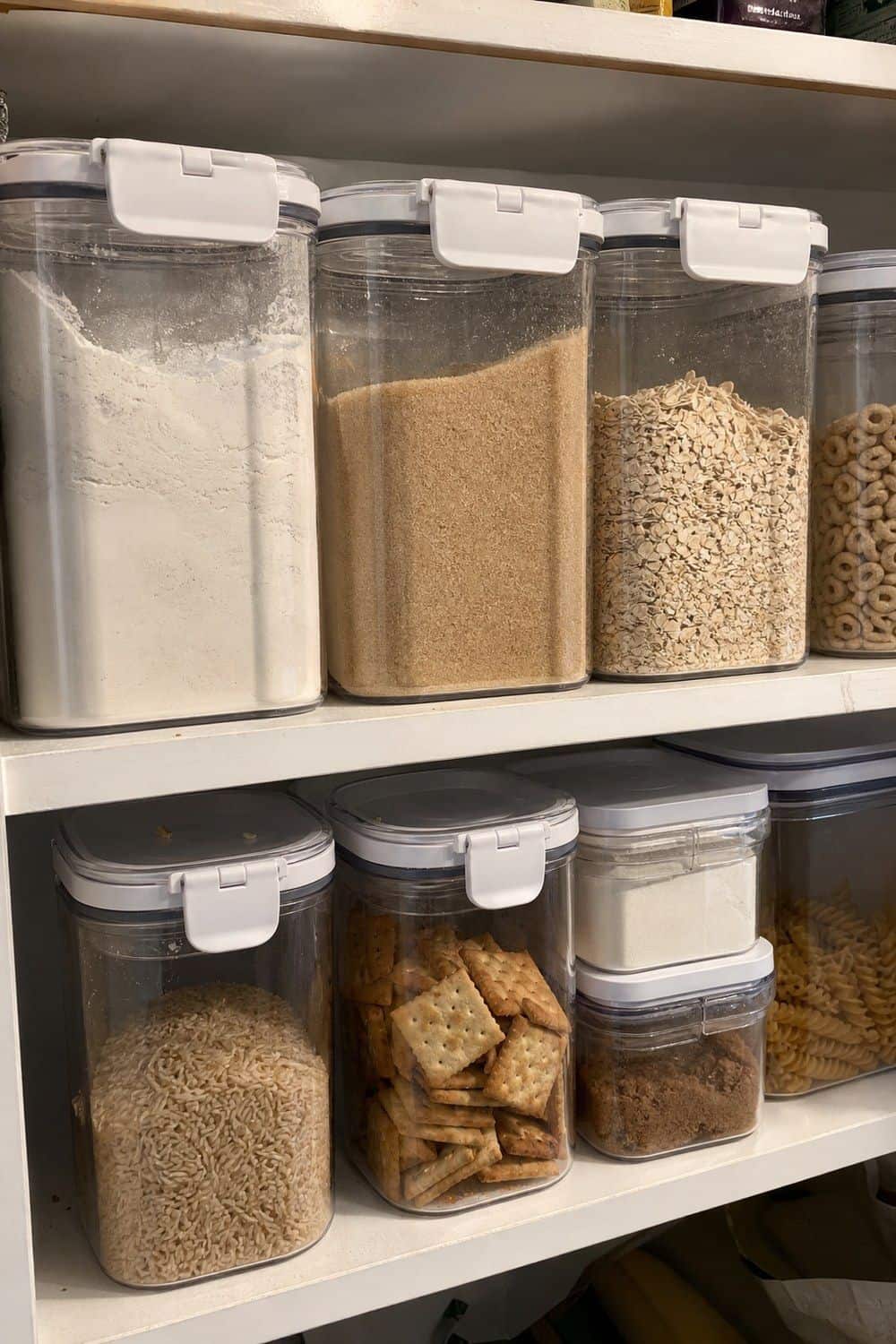
Airtight pantry containers are best for dry goods that go stale, spill easily, or attract pests once the original package is opened. Use them for flour, sugar, rice, oats, crackers, cereal, nuts, seeds, and baking staples that your household actually finishes.
Choose containers with lids that seal tightly and open without fighting you every day. Square and rectangular shapes usually make better use of shelf space than round containers.
Decant only what you can identify and rotate. A container looks tidy, but it still needs a label, date, or package note so you know what is inside and when it was opened.
2. Stackable Pantry Containers for Vertical Shelf Space
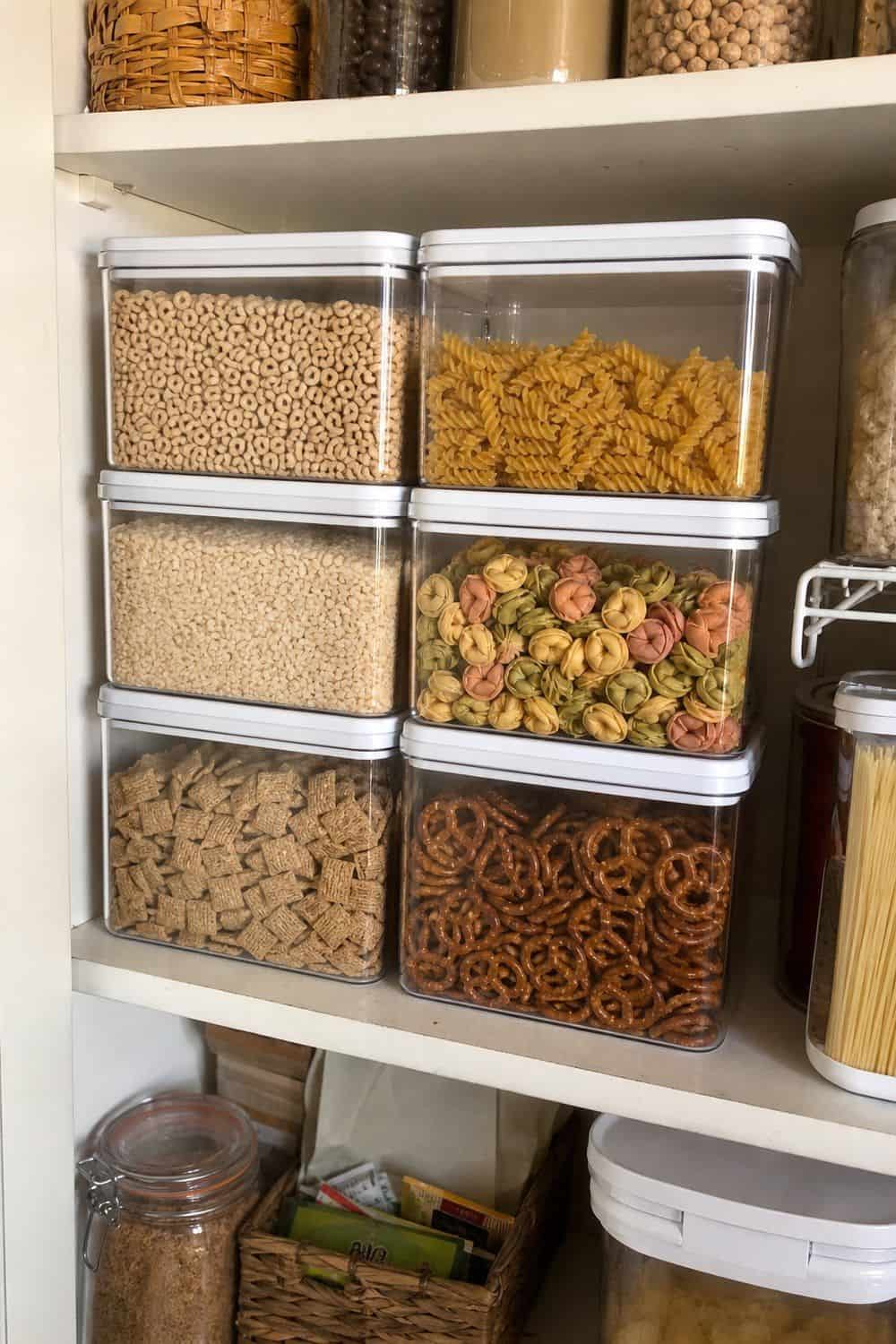
Stackable pantry containers help when your shelves have height but not much width. Square or rectangular containers usually use corners better than round jars, especially for rice, pasta shapes, oats, crackers, and baking staples. Measure shelf height before buying, then include the lid and the space your hand needs to lift the container out.
Stable, flat lids are important. A wobbly stack may look tidy on day one, but it can turn a normal restock into a shelf avalanche fast. Leave the heaviest containers on lower stacks so the system stays easy to use.
3. Clear Pantry Bins for Category Zones
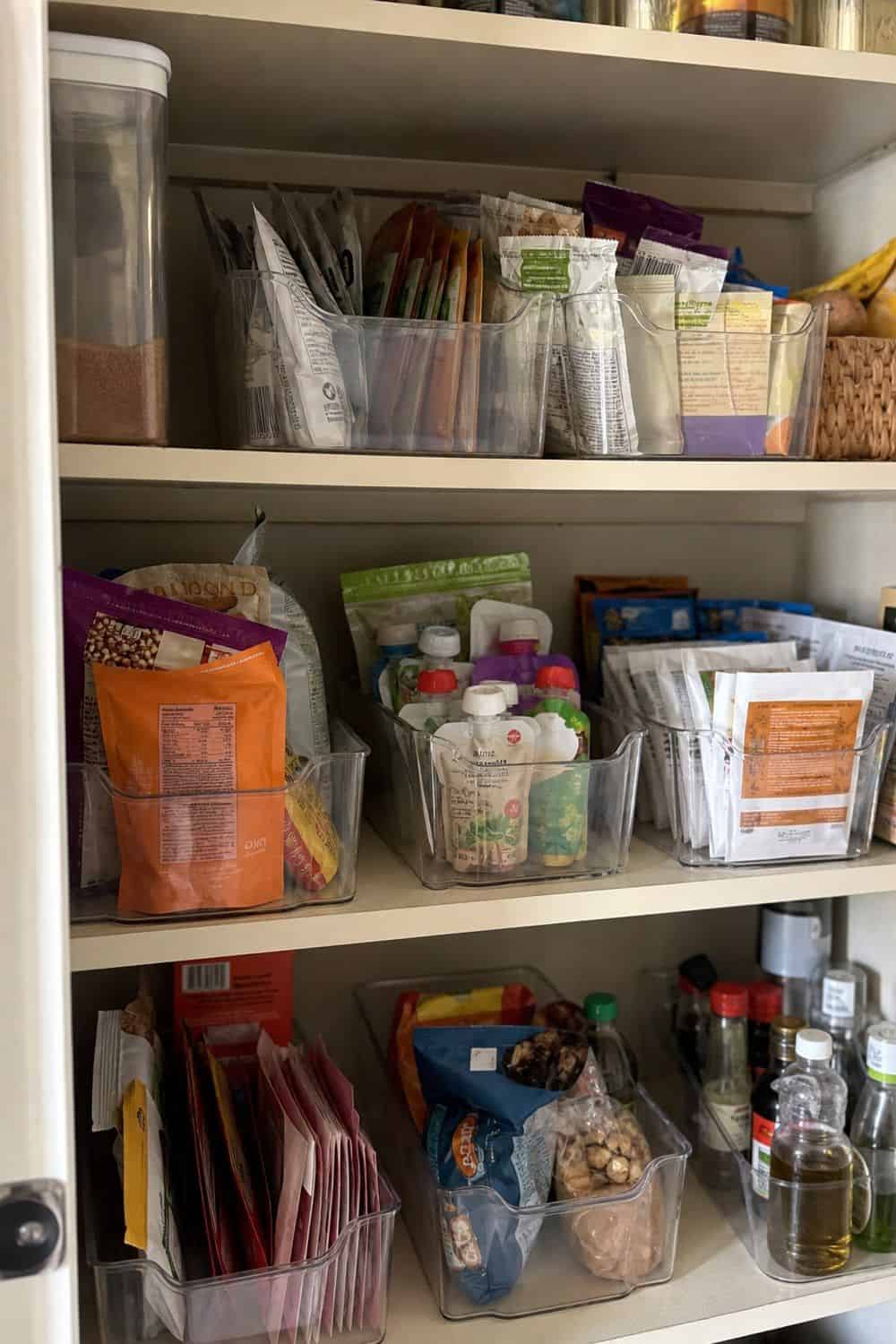
Clear pantry bins create categories without forcing every item into a matching jar. Use them for breakfast foods, baking extras, school snacks, dinner shortcuts, sauces, packets, or backstock that still belongs in original packaging. Handles matter if the shelf is deep, because a bin should pull out smoothly so the back items do not disappear.
Label the front by category instead of by every single product. The system stays more flexible when groceries change from week to week, especially when one bin shifts from pasta night to lunch packing or baking extras.
4. Glass Pantry Jars for Open-Shelf Storage
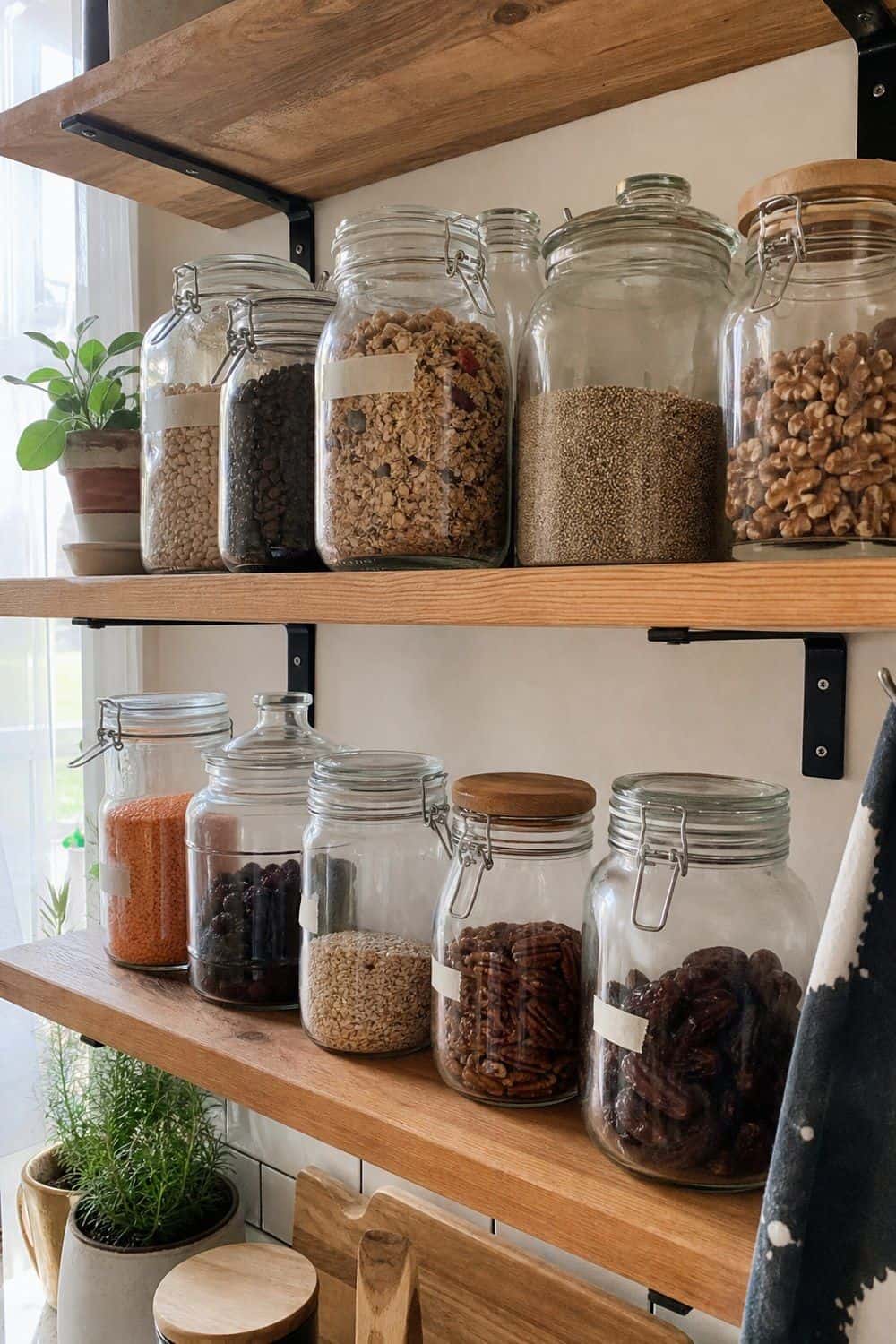
Glass pantry jars are best for visible shelves, countertop-adjacent storage, or ingredients you want to identify quickly. Use them for beans, grains, nuts, seeds, dried fruit, coffee, tea, or small baking staples. Glass feels cleaner and more polished than plastic, but it is heavier and less forgiving on high shelves.
Check lid seal and jar weight before buying several. Avoid glass in kid-height zones or crowded pantries where breakage would make daily use stressful during rushed meals or unloading groceries.
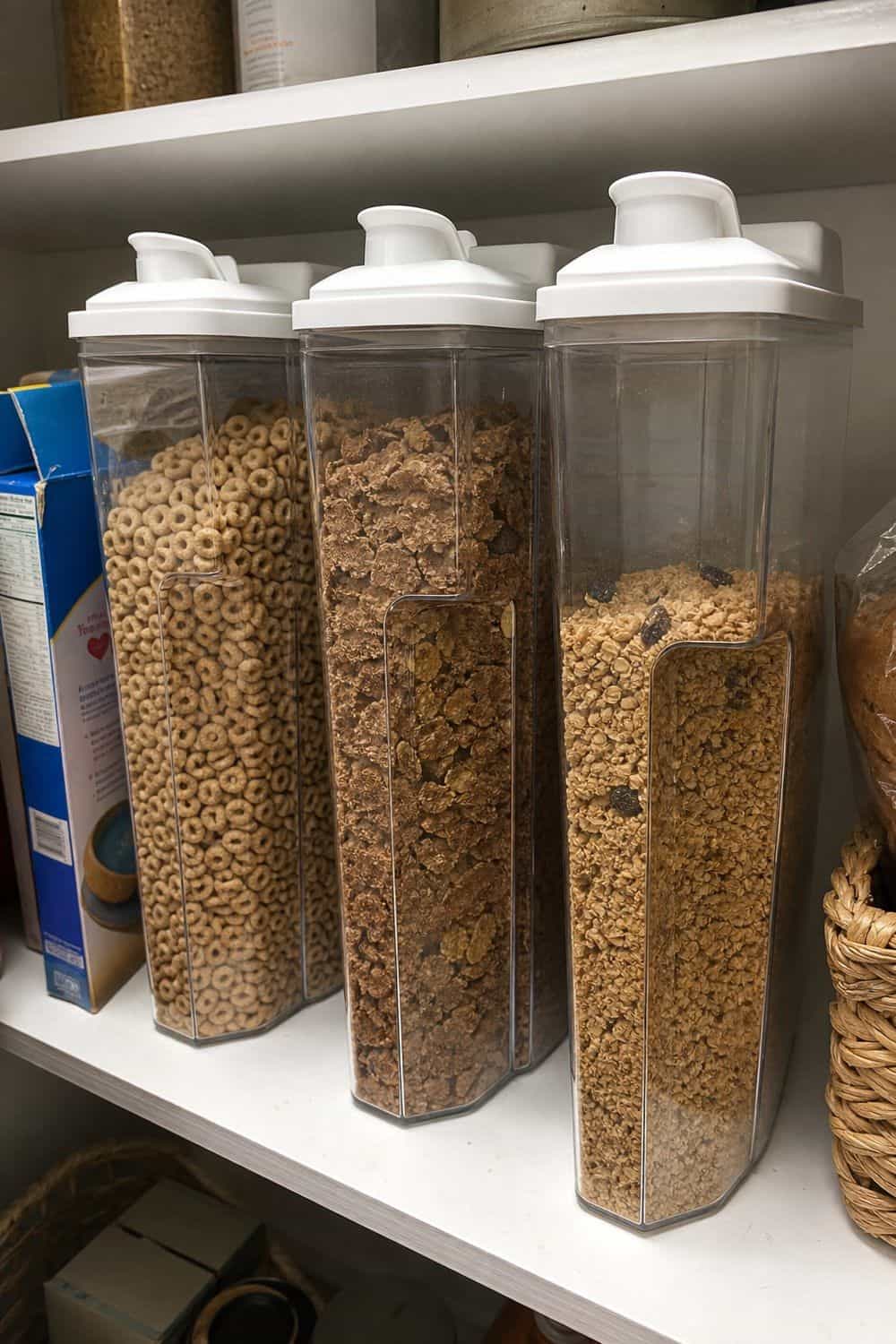
5. Cereal Storage Containers for Tall Boxes
Cereal storage containers solve the tall-box problem by keeping cereal, granola, crackers, and loose snack mixes fresher and easier to pour. Look for a rectangular shape, a secure spout, and enough height for the cereal your household buys most.
Measure shelf height carefully, because many cereal containers are too tall for standard pantry shelves. Avoid buying a full matching row until you know the lid pours cleanly and the container fits under your shelf without tilting forward during breakfast, especially if kids pour from the container themselves.
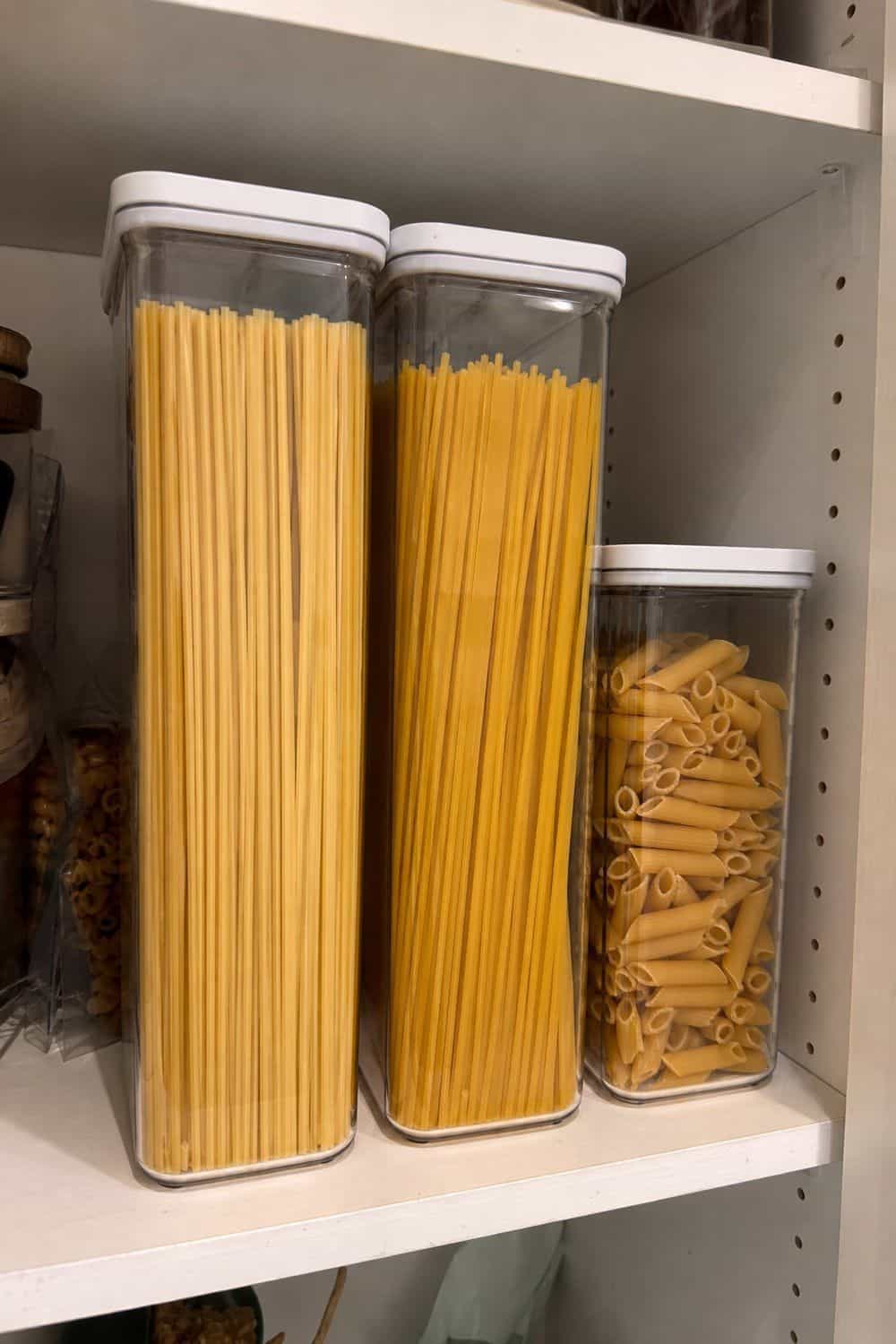
6. Pasta Storage Containers for Long Noodles
Pasta storage containers need different proportions than flour or snack bins. Spaghetti, linguine, and lasagna sheets need tall or long containers, while rigatoni, macaroni, and specialty shapes need wider openings for scooping.
Choose a container that matches the pasta you actually buy, not just a generic canister set. The buying mistake is forcing long noodles into short containers or choosing a narrow opening that makes it hard to pour pasta without breaking or spilling pieces during dinner prep and restocking.
7. Flour and Sugar Containers for Scoopable Staples
Flour and sugar containers should be wide enough for a measuring cup or scoop to move easily. Use them for all-purpose flour, bread flour, sugar, powdered sugar, almond flour, and other baking staples that are messy in paper bags. Capacity matters here: a container should hold a full bag with a little room at the top. Avoid narrow jars that look good on a shelf but make baking slower because every scoop hits the sides.
Look for a lid that can be opened with one hand while baking. If you bake often, a rectangular container with a flat back can sit closer to the wall and leave more room for bowls.

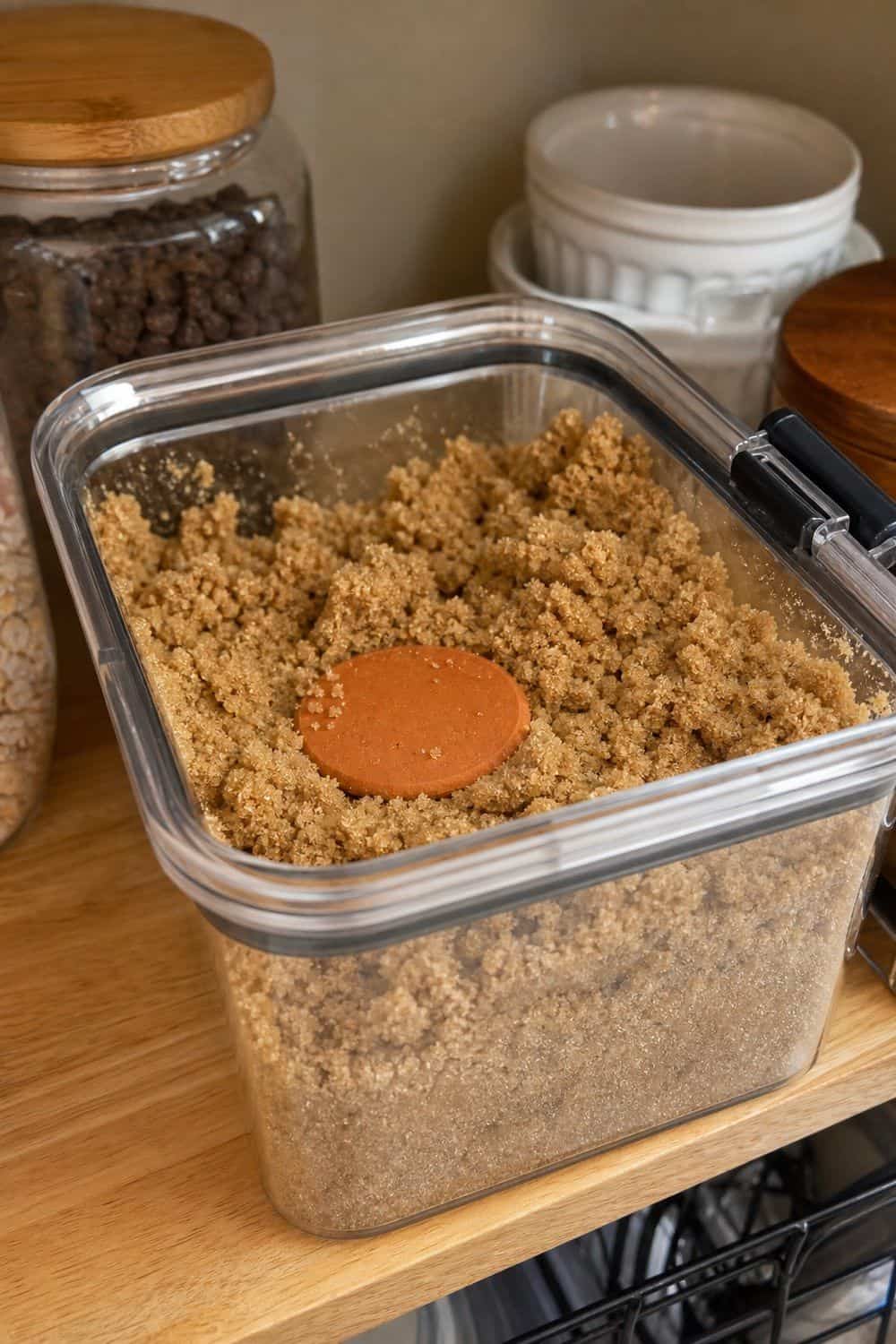
8. Brown Sugar Container for Soft Texture
Brown sugar deserves its own container if you bake often. A tight lid helps prevent the sugar from hardening, and some containers include a terracotta disk or have room to add one. Use this for brown sugar, muscovado, or other soft sugars that need moisture control.
The container does not need to be large unless you buy in bulk. Avoid storing brown sugar in a loose-lid canister beside flour and white sugar, because it will become difficult to scoop quickly.
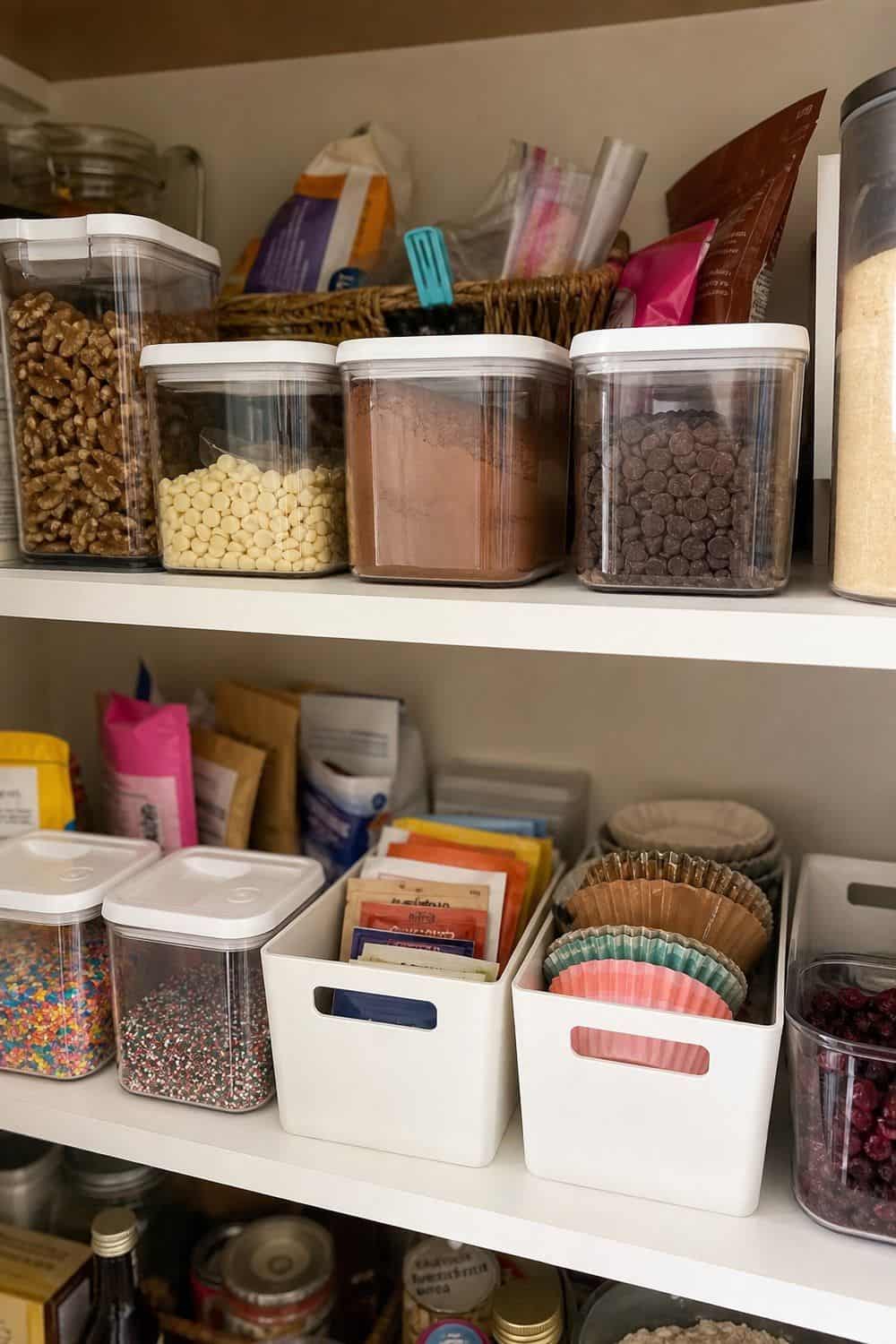
9. Baking Ingredient Containers for Small Extras
Baking ingredient containers keep small extras from scattering across the pantry. Use them for chocolate chips, sprinkles, yeast packets, baking powder, baking soda, cocoa, nuts, dried fruit, and decorating supplies.
A mix of small lidded containers and one clear bin can work better than one huge box. Keep expiration dates visible or transfer them to a label. Avoid deep containers for tiny packets, because yeast and decorating pieces can vanish underneath bigger baking supplies quickly between baking days and holidays.
10. Bulk Food Storage Containers for Large Bags
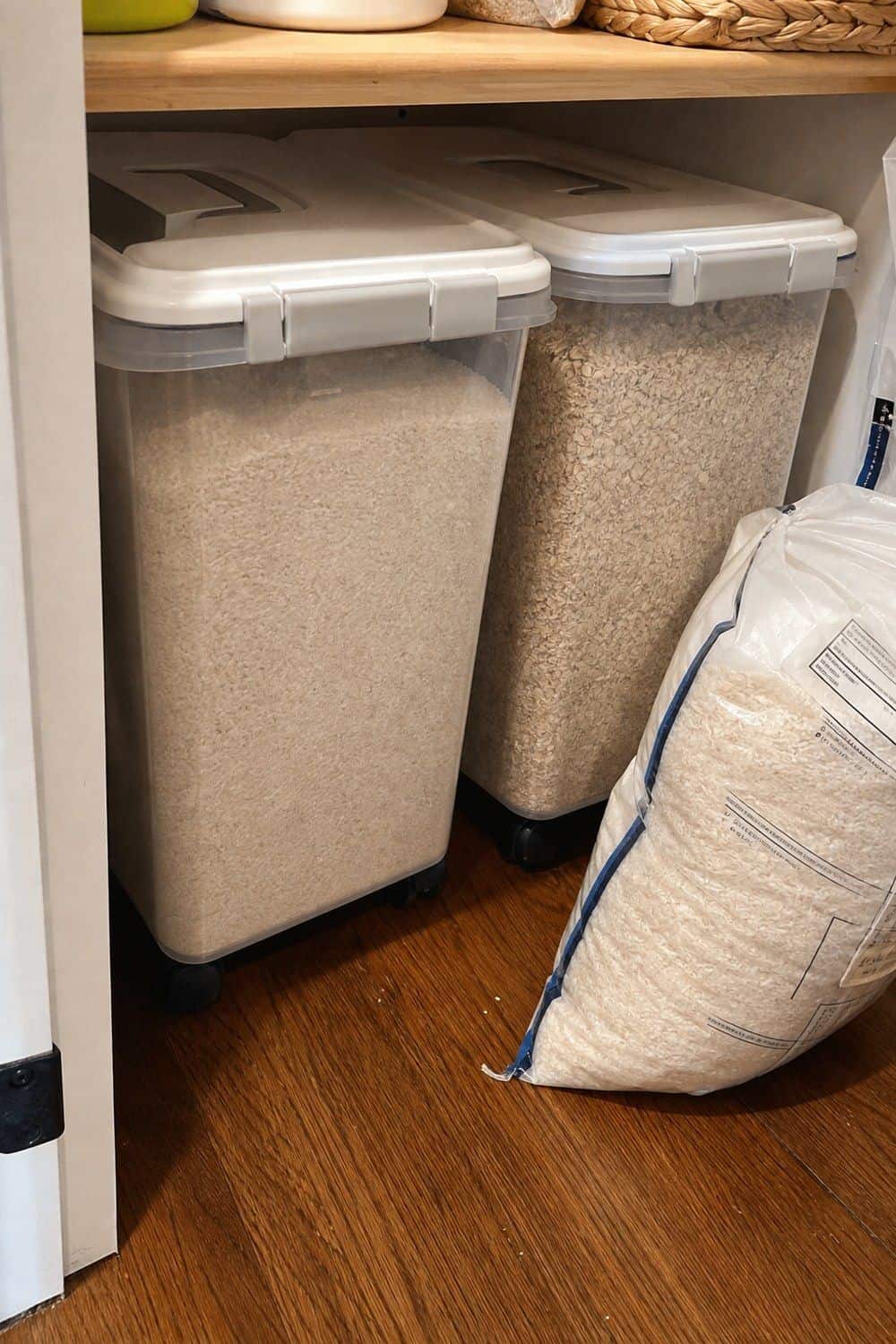
Bulk food storage containers are made for big bags that overwhelm normal pantry shelves. Use them for rice, flour, oats, pet food, protein powder, or warehouse-store staples. Look for capacity, sturdy handles, wheels if the container lives on the pantry floor, and a lid that seals well enough for the food type. Measure floor clearance and door swing before buying. Avoid placing heavy bulk containers on high shelves, where pulling them down can be awkward or unsafe at restock time.
11. Snack Organizer Bins for Grab-and-Go Food
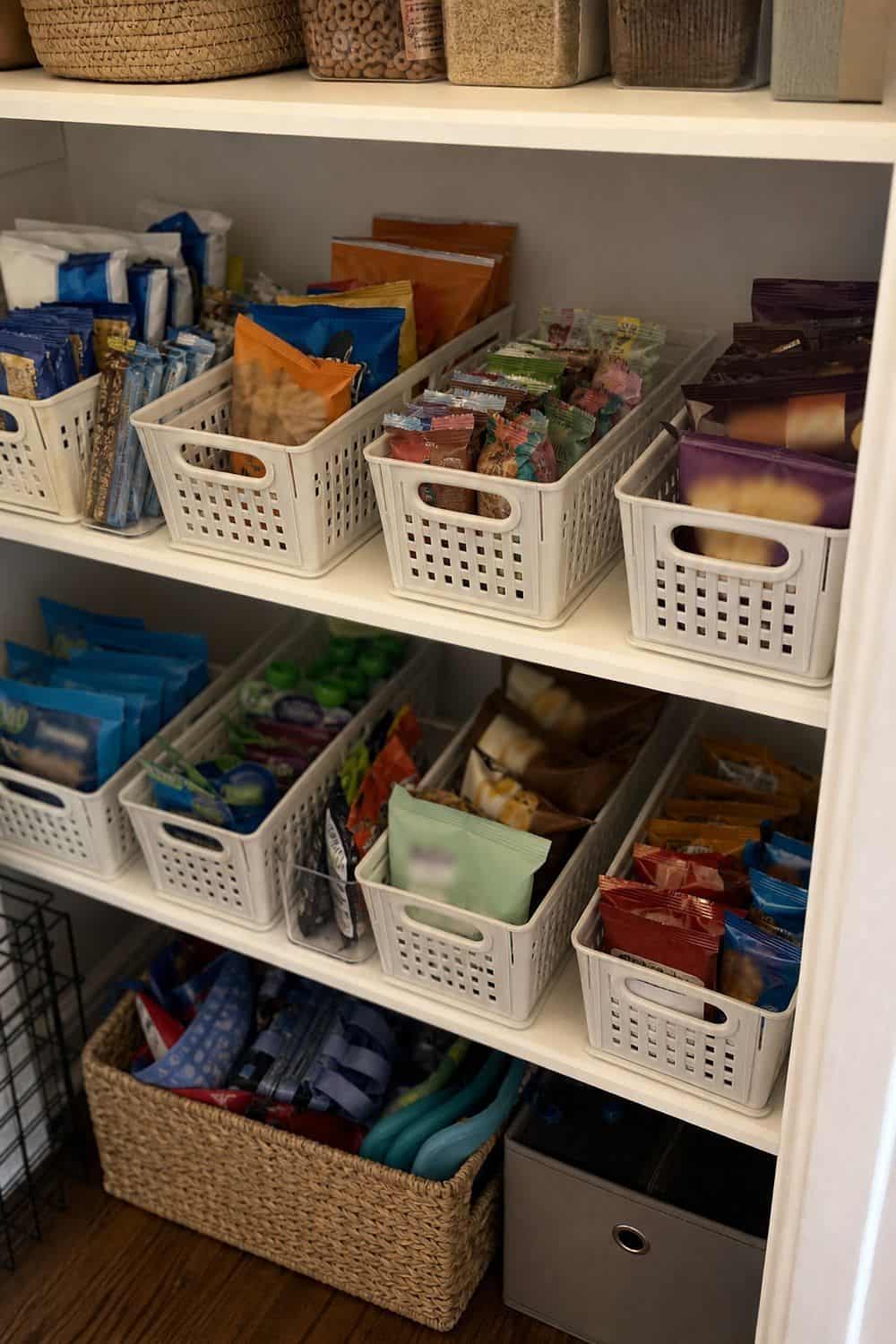
Snack organizer bins are most useful for foods that stay in packages: granola bars, fruit snacks, crackers, popcorn, nut packs, chips, and school snacks. Use open bins at kid height if children pack lunches or grab snacks independently.
The bin should be easy to refill without cramming. Choose a size that matches the shelf and the number of snacks you normally keep, not a huge basket that hides old food under new food.
If snacks disappear too quickly, divide daily snacks from backstock. The visible bin stays useful without turning the pantry into a free-for-all during lunch packing, homework, or late-afternoon hunger.
12. Chip Bag Organizer for Bulky Bags
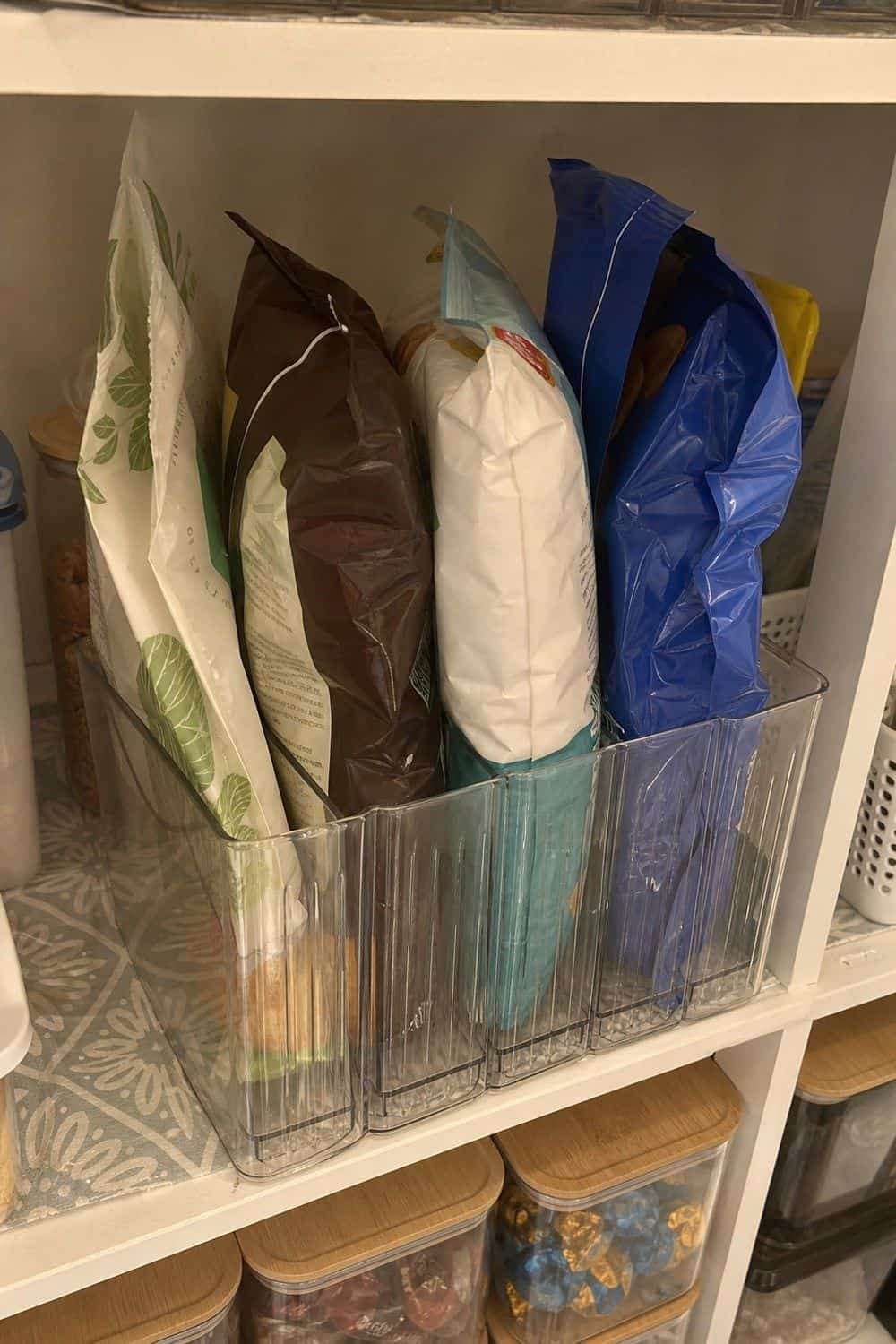
A chip bag organizer keeps bulky bags upright instead of letting them flop over the whole shelf. Use tall bins or divided organizers for chips, pretzels, tortilla chips, popcorn bags, crackers, and bread products. Clips are still useful because most bags should stay in their packaging. Measure bag height and shelf depth before buying. Avoid trying to decant bulky chips into small airtight containers, because the food breaks, the container fills too fast, and the package information gets lost easily.
13. Can Organizer Rack for Pantry Cans
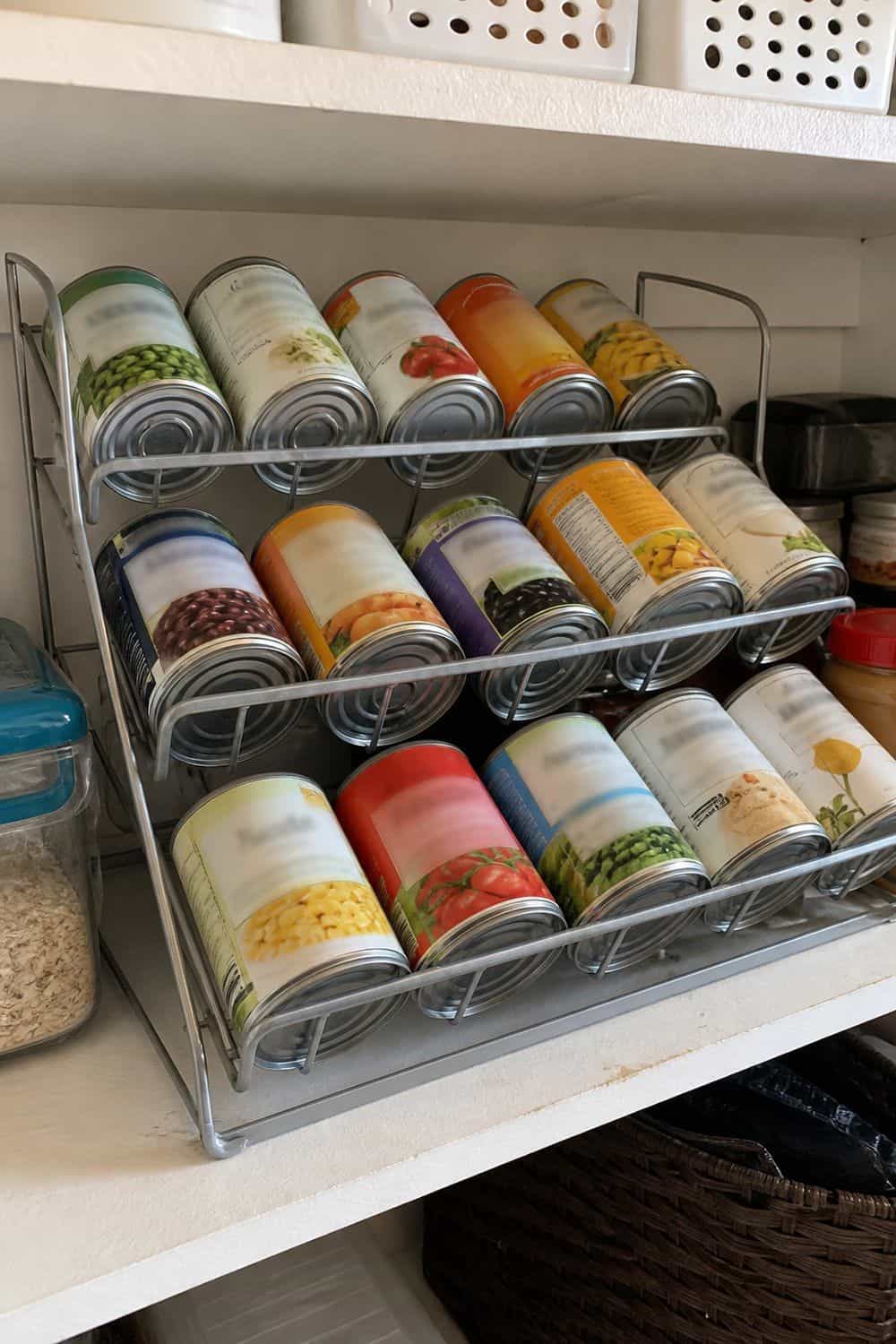
A can organizer rack makes canned food easier to see and rotate. Use it for beans, tomatoes, coconut milk, tuna, soup, and canned vegetables. Tiered racks are good for visibility, while rolling racks can help with first-in-first-out use if the shelf is deep enough. Check shelf depth, can height, and the number of cans you keep before buying. Avoid racks that hold only one can size if your pantry has a mix of small tomato paste cans and taller soup cans.
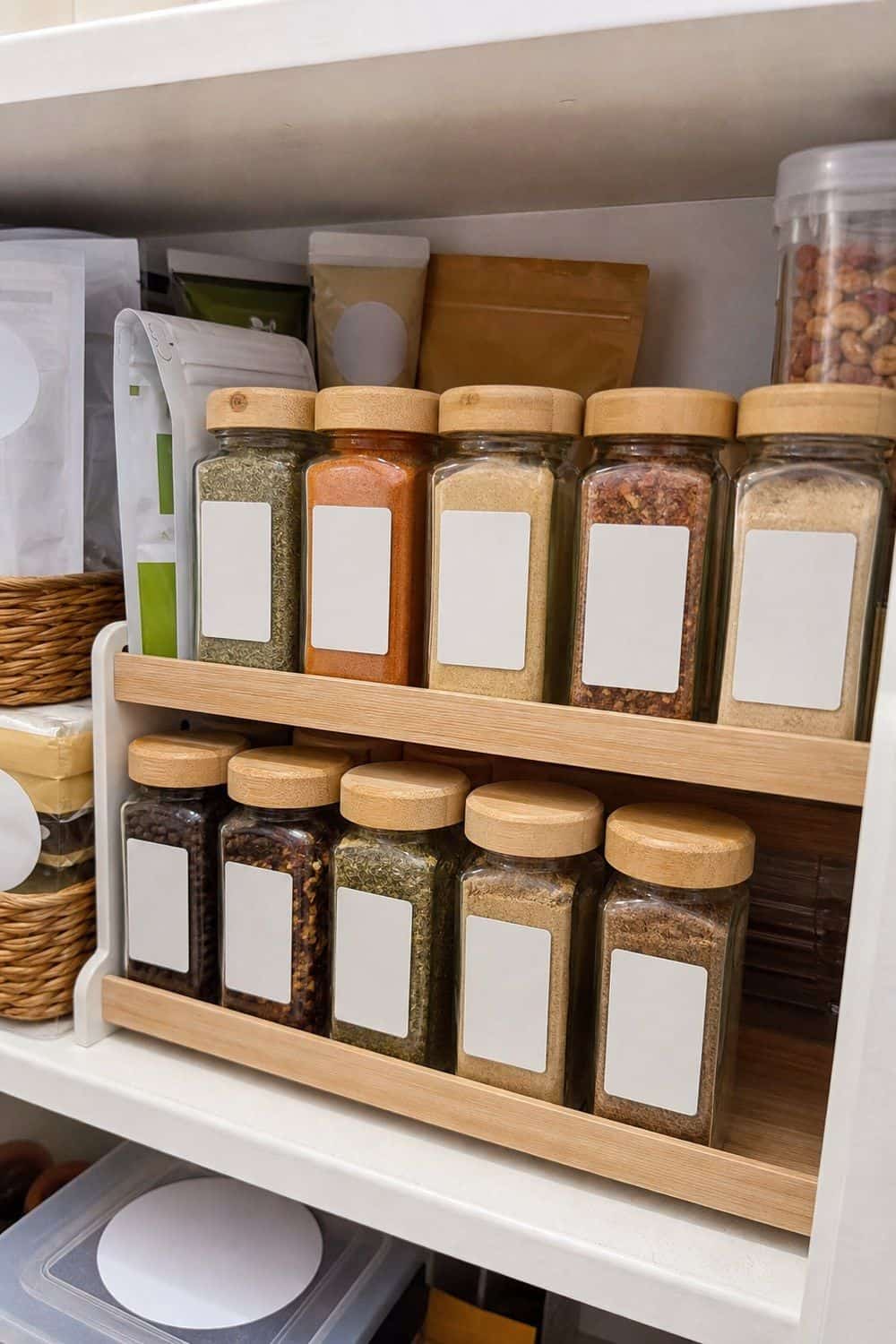
14. Spice Jars with Labels for Pantry Spices
Spice jars with labels can make pantry spices, baking spices, and refill bags easier to manage when the jars fit your shelf or drawer. Check jar height, lid type, label placement, and whether you prefer labels on the lid or side. Uniform jars help most when you actually refill them. Avoid transferring spices into matching jars if you will not keep up with labels and refill dates, because mystery spices are worse than mismatched packaging in daily cooking and baking.
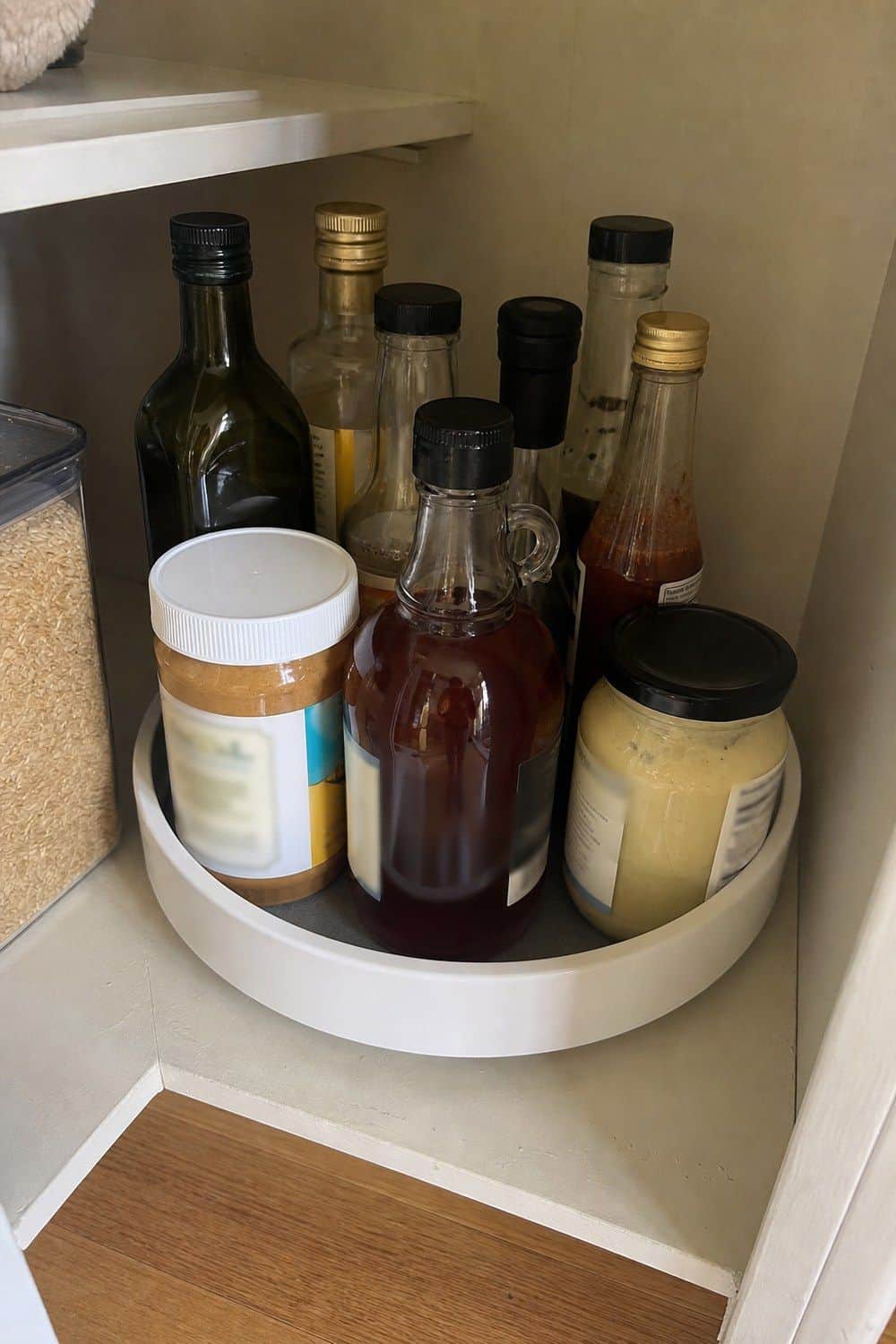
15. Lazy Susan Pantry Turntable for Bottles
A lazy Susan pantry turntable is ideal for round bottles and jars that get lost in corners. Use one for oils, vinegars, sauces, syrups, nut butters, honey, or condiments. Raised edges help prevent bottles from sliding off, and a non-slip base keeps the turntable from drifting when it spins. Measure bottle height and shelf depth first. Avoid using a turntable for square boxes or floppy bags, because they waste the round space and tip easily during use, cleaning, or quick weeknight cooking.
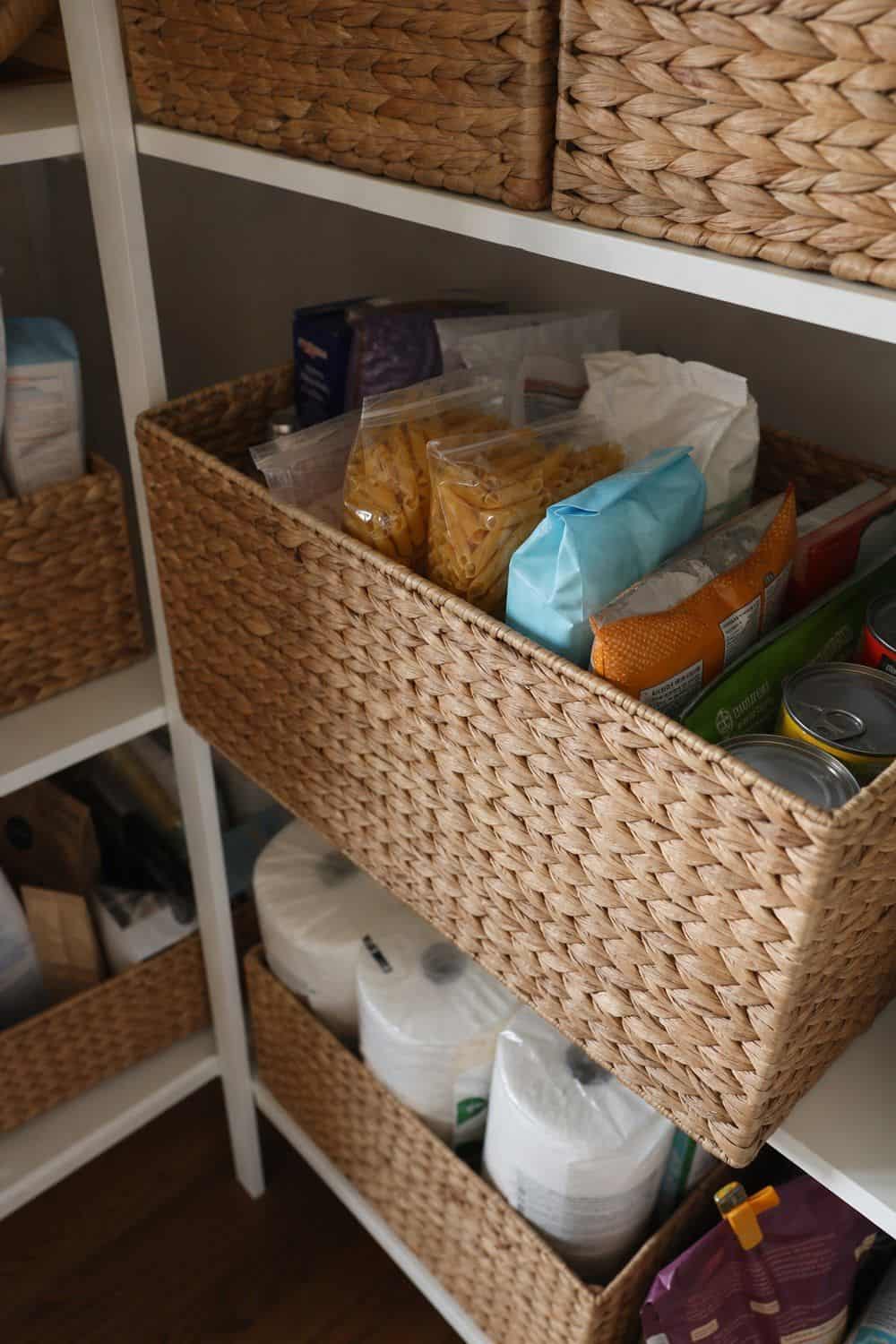
16. Pull Out Pantry Bins for Deep Shelves
Pull out pantry bins solve the problem of food disappearing at the back of deep shelves. Use long bins with handles for pasta, snacks, baking backstock, packets, or dinner shortcut categories. The bin should glide out far enough that you can see the back without unloading the shelf. Keep heavier items on lower shelves so pulling feels controlled. Avoid bins without handles in deep pantries, because they often become stuck behind other containers.
Leave a small gap above the bin so it can tilt slightly as it comes out. If the shelf is packed tight to the top, even a good pull-out bin becomes frustrating.

17. Deep Pantry Baskets for Backstock
Deep pantry baskets are helpful for backstock that does not need airtight storage. Use them for paper goods, unopened snacks, extra pasta, extra cans, baking refills, and overflow pantry items. Baskets hide visual clutter, so labels need to be larger and clearer than they would be on a transparent bin. Choose a basket that can be pulled out fully. Avoid using deep baskets for mixed small items unless you want to dig through layers before every grocery trip or restock.
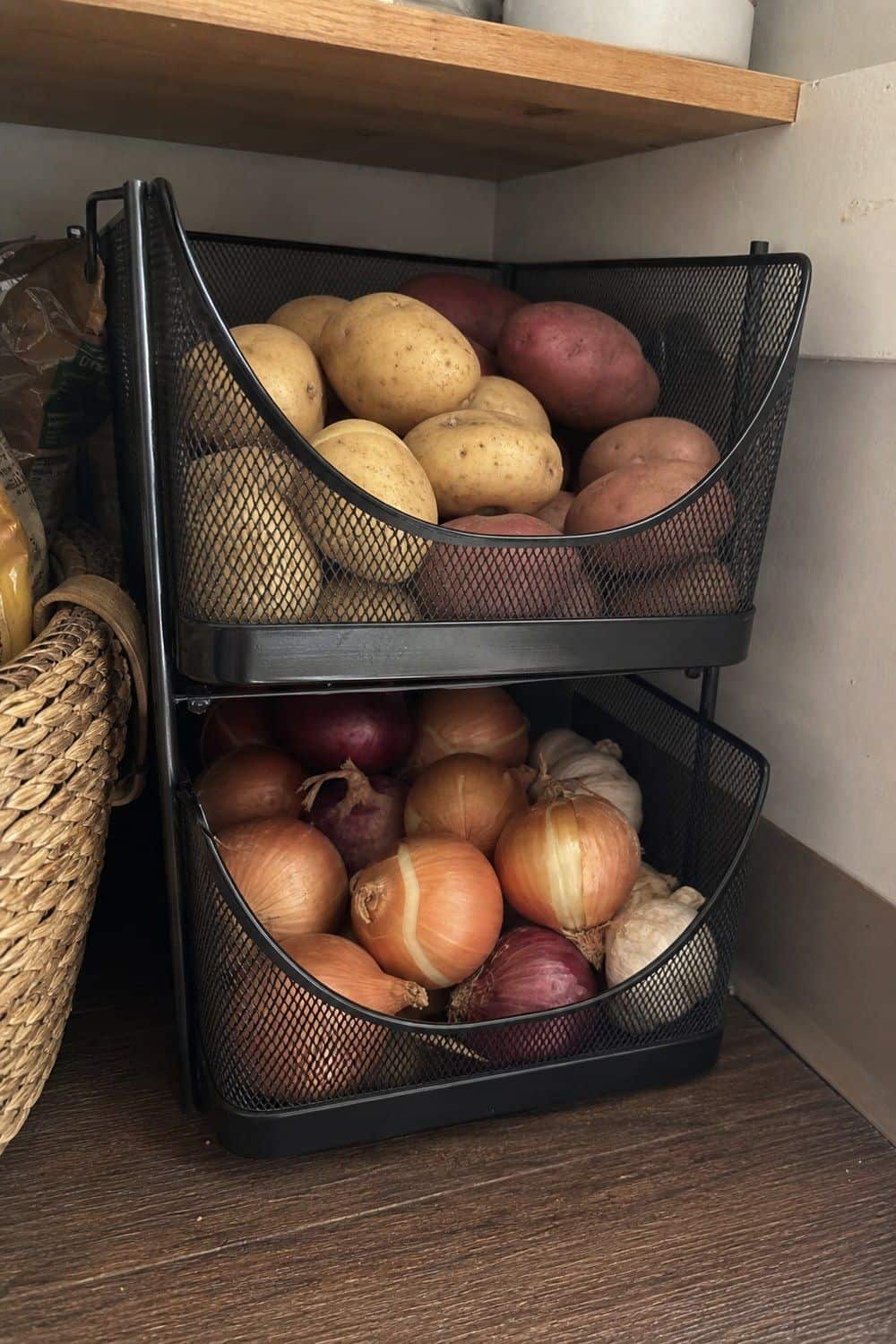
18. Potato and Onion Storage Bin for Pantry Produce
A potato and onion storage bin should be breathable, dark, and easy to check. Use it for potatoes, onions, garlic, shallots, and other pantry-friendly produce, but do not treat it like an airtight dry-food container. Airflow helps reduce trapped moisture, and separation can keep strong odors from spreading. Place the bin away from heat and wet zones. Avoid deep closed containers where forgotten produce can sprout, soften, or spoil before you notice it.
Choose separate compartments if you store several produce types together. A washable liner or removable basket is helpful because pantry produce can shed skins, dirt, and occasional soft spots.
19. Tea Bag Organizer Box for Drink Packets
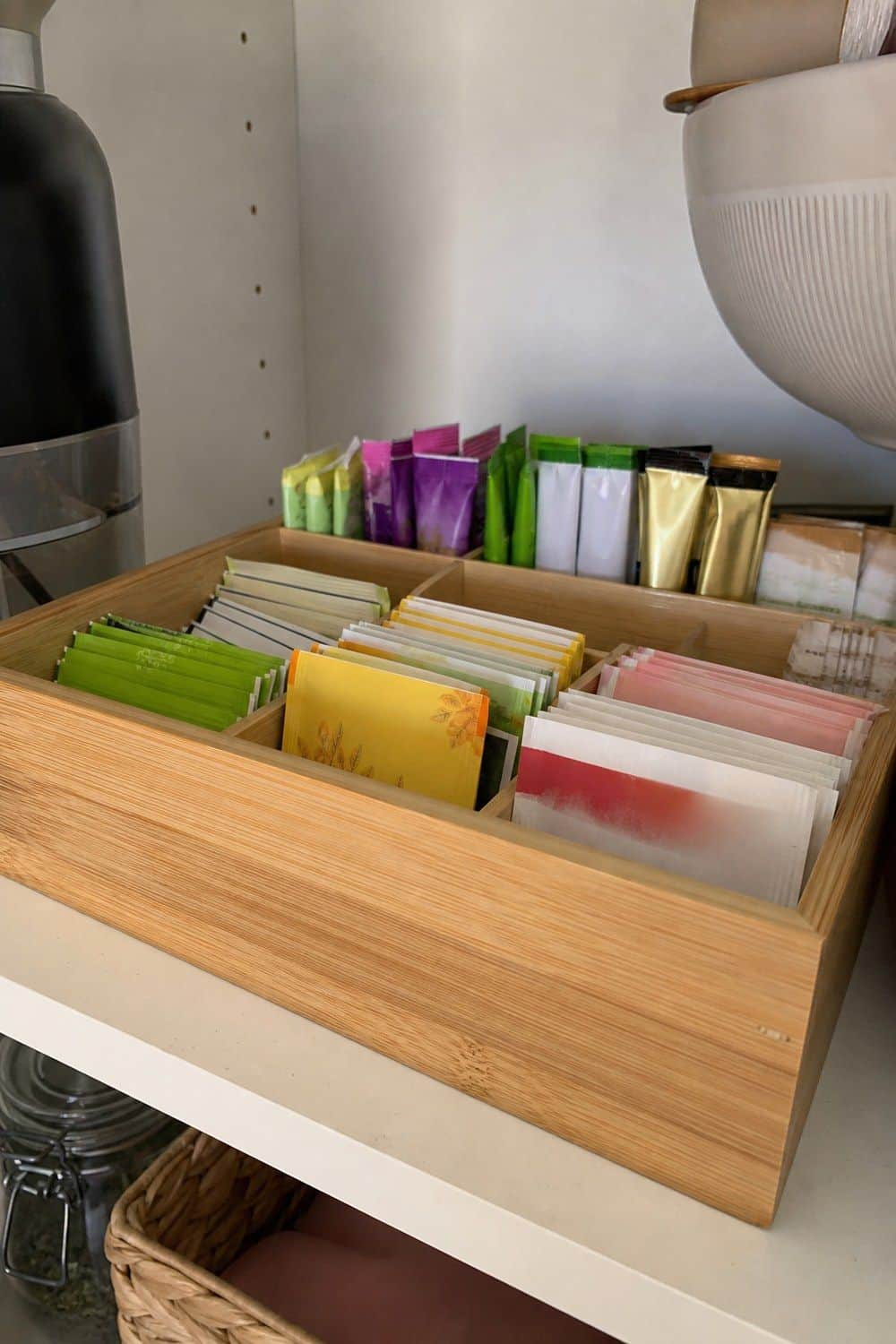
A tea bag organizer box keeps drink packets visible without letting tiny envelopes scatter across the pantry. Use shallow sections for tea bags, hot chocolate packets, drink mixes, sweeteners, coffee filters, or electrolyte packets. Clear lids are helpful if the box sits in a cabinet, while open sections are better for daily tea shelves. Keep strong-smelling teas away from neutral baking supplies. Avoid deep boxes for tea packets, because the flavors at the bottom are easy to forget later, even when the box looks tidy from above.
20. Over Door Pantry Baskets for Extra Storage
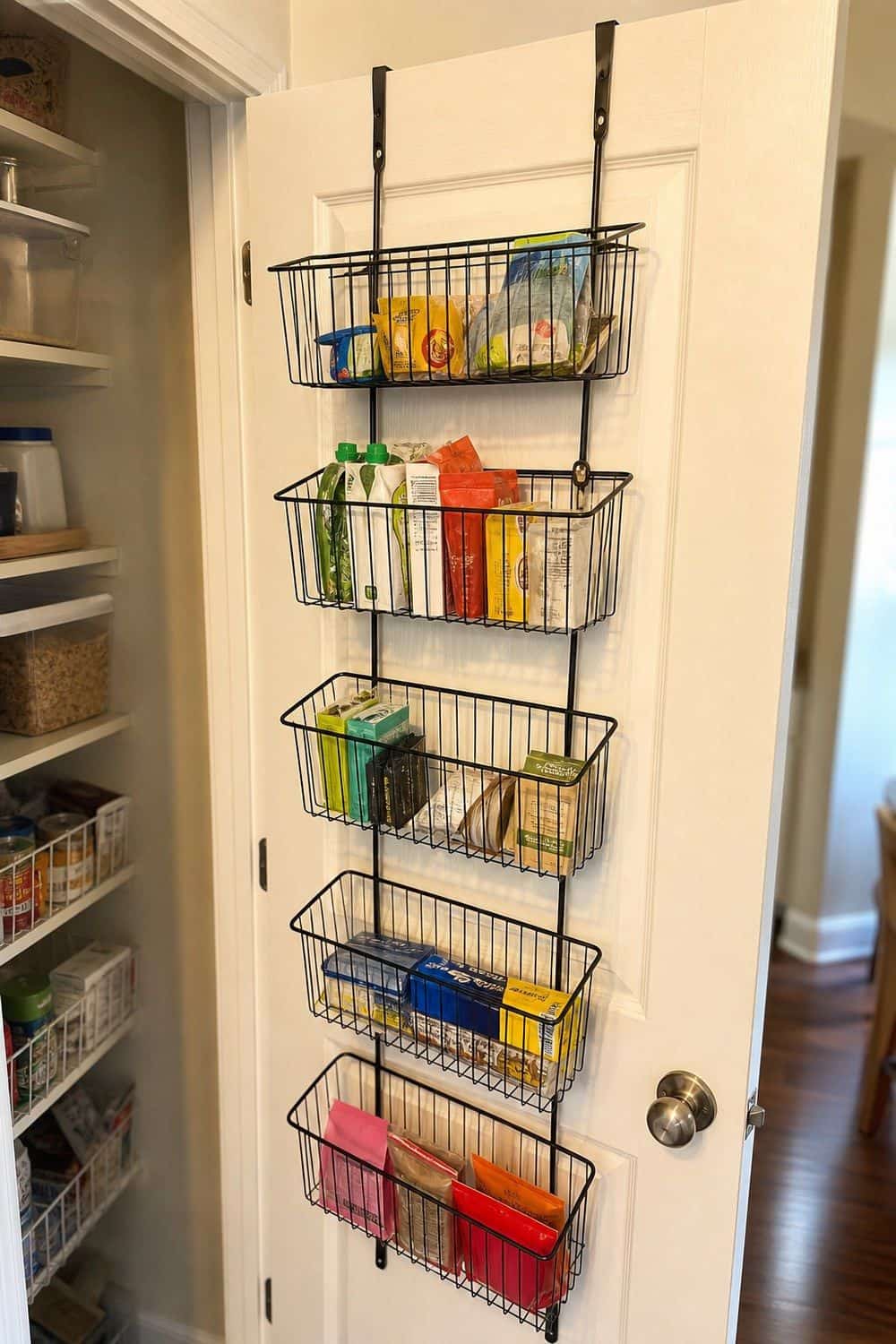
Over door pantry baskets add storage when shelves are full but the pantry door has clearance. Use them for lightweight items such as small snacks, foil boxes, wrap rolls, seasoning packets, drink mixes, or backup bags. Check door swing, basket depth, and weight limits before buying, especially if the door already rubs the frame. Avoid storing glass jars, heavy cans, or tall bottles on the door, because they can rattle, tip, or make the door hard to close safely during daily use.
How To Choose The Best Pantry Organization Containers
The best pantry organization containers start with measurements. Check shelf width, depth, height, door clearance, and whether each container needs to hold a full bag. A container that almost fits will become irritating every time you restock.
Match the material to the job. Glass is useful for attractive visible storage, plastic is lighter for stacking and high shelves, baskets are better for packaged backstock, and wire or metal can help when airflow or durability matters.
Not everything should be decanted. Cooking directions, allergens, expiration dates, and package-specific instructions may need to stay with the food. Labels, easy-to-clean lids, and a little empty space around each container make the system easier to maintain.
Frequently Asked Questions
What pantry organization containers should I buy first?
Start with containers for the categories that currently create the most mess. For many homes, that means airtight dry-good containers, clear snack bins, a can organizer, and one or two deep bins for backstock. Measure first so you do not buy containers that waste shelf height or block the pantry door.
Are airtight pantry containers worth it?
Airtight pantry containers are worth it for foods that go stale, spill easily, or attract pests, such as cereal, flour, sugar, rice, oats, crackers, and pasta. They are less necessary for individually wrapped snacks or foods that need instructions from the original package.
Are glass or plastic pantry containers better?
Glass pantry containers are heavier, attractive, and good for visible shelves or countertop-adjacent storage. Plastic pantry containers are lighter, easier to stack, and safer for high shelves or kid-access zones. The better choice depends on weight, breakage risk, cleaning habits, and where the container will live.
What size pantry containers do I need?
Choose pantry container sizes based on the package size you buy and the shelf space you have. Flour and sugar usually need wide containers that hold a full bag. Cereal needs tall pourable containers. Snacks often need open bins, while bulk staples need larger floor or lower-shelf containers.
Should I decant everything in my pantry?
No. Decant foods that benefit from an airtight seal, easier pouring, or better visibility. Keep original packaging when you need cooking directions, expiration dates, allergen information, or product-specific instructions. Open bins are often better for packaged snacks, packets, and foods that change often.
What containers are best for deep pantry shelves?
Pull-out pantry bins, deep baskets with handles, turntables, and can racks usually fit deep shelves well. You should be able to see and reach the back without unloading the shelf. Keep heavy deep-shelf containers low for safer pulling.
How do I organize snacks in pantry containers?
Use open snack organizer bins for packaged snacks, bars, crackers, popcorn, fruit snacks, and lunchbox items. Group snacks by type or user, and keep kid-friendly bins at a reachable height. Avoid overstuffing, because packed bins are harder to refill and hide older snacks.
What is the best way to store flour and sugar in the pantry?
Store flour and sugar in wide-mouth, airtight containers that fit a full bag and leave space for a scoop. Keep them on a shelf that is easy to reach while baking. Label the container with the ingredient and date if you transfer flour from its original packaging.
How do I keep pantry containers from becoming clutter?
Leave room around containers so they can be pulled out easily, label categories clearly, and avoid buying more containers than your pantry can hold. Refill only the foods you actually use. If a container stays empty or collects random packets, repurpose it or remove it.
Final Thoughts
The best pantry organization containers are the ones that solve a real shelf problem: sealing, stacking, scooping, pouring, pulling, sorting, or keeping packaged food visible. Measure first, match each container to the food type, and leave enough room for the pantry to stay usable after grocery day.
Last update on 2026-09-17 / Affiliate links / Images from Amazon Product Advertising API