
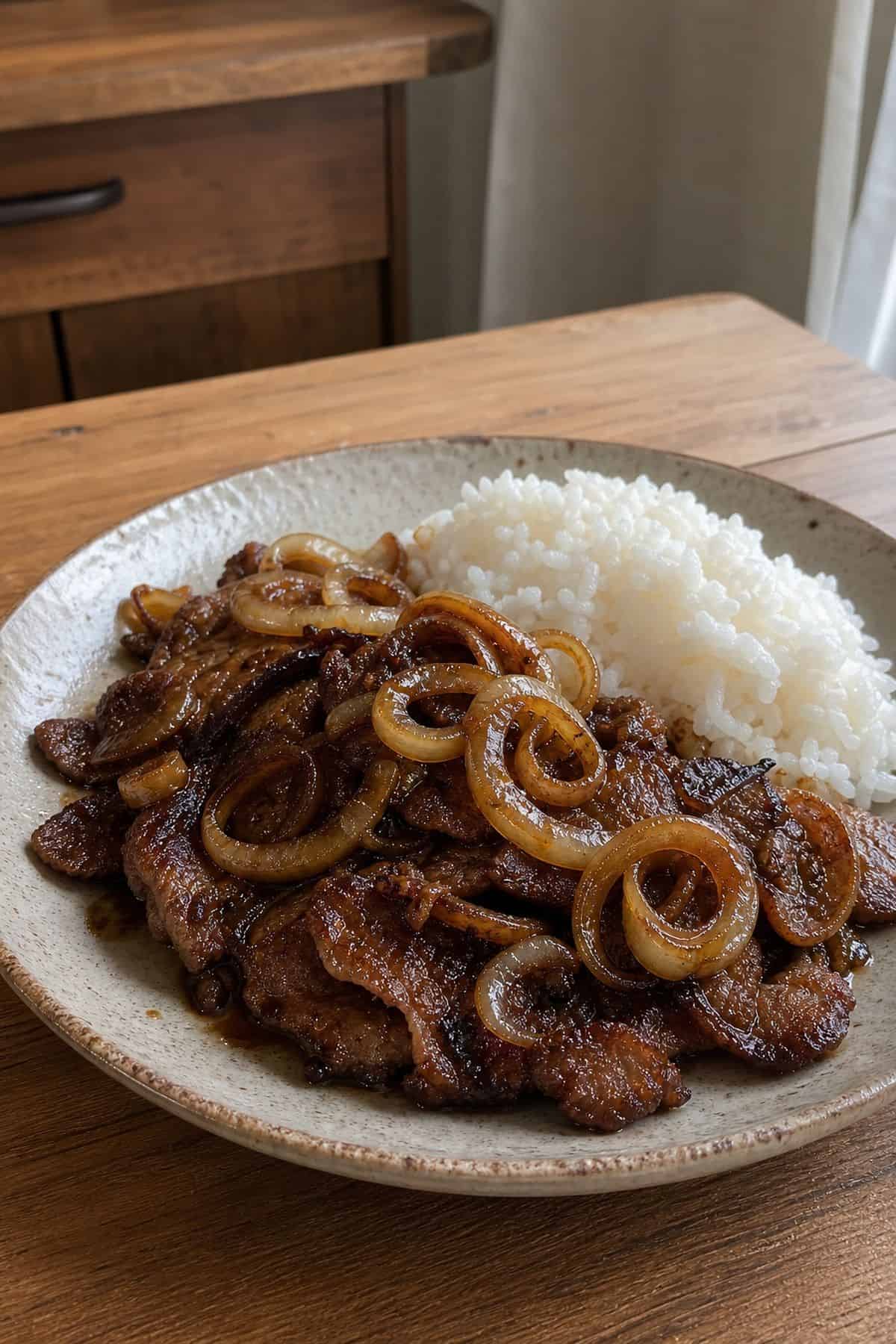
Pork bistek tagalog is a Filipino comfort dish of thin-sliced pork marinated in soy sauce and calamansi juice, then pan-fried until golden and topped with sweet caramelized onion rings. The tangy, salty, slightly sweet glaze makes it irresistible over steamed white rice. Most home cooks can have it on the table in about an hour, and it feeds a crowd without breaking the bank.
If you grew up in a Filipino household, you already know the smell. Soy sauce hitting a hot pan, onions going soft and golden, that sharp hit of calamansi cutting through the richness. Pork bistek tagalog is one of those dishes that every family makes a little differently, and every version somehow tastes like home. My version leans heavy on the caramelized onions because, honestly, that is the best part. The pork gets tender, the sauce gets sticky, and you end up eating way more rice than you planned.
This recipe works with pork loin, pork chops, or even pork shoulder if you want something with more fat. The marinade does most of the heavy lifting, so even if you are new to Filipino cooking, you will get a dish that tastes like it took years to perfect. I have made this for weeknight dinners, family gatherings, and potlucks where it always disappears first.


Recommended Bistek Tagalog Kitchen Tools


What Makes Pork Bistek Tagalog Different from Beef Bistek
Most people think of beef when they hear “bistek tagalog,” and that is the more traditional version. But pork bistek has been a staple in Filipino kitchens for just as long, especially in households where beef was too expensive for a regular Tuesday dinner. Pork cooks faster, absorbs the marinade better, and has a milder flavor that lets the soy-calamansi glaze really shine.
The biggest difference is texture. Beef bistek gives you that chewy, hearty bite. Pork bistek, when sliced thin and marinated properly, practically melts on your tongue. The fat from the pork also renders into the sauce, making it richer without needing any added oil or butter. If you have been making beef bistek your whole life, try the pork version once. You might not go back.
How to Pick the Right Pork Cut for Bistek
Not all pork cuts work equally well here. The cut you choose changes the entire dish.
Pork loin is the most common choice. It is lean, slices cleanly, and cooks fast. The downside is that it can dry out if you overcook it, so watch your timing. Pork shoulder (also called pork butt) has more marbling and fat, which means more flavor and a more forgiving cook. It takes a bit longer to get tender, but the result is worth the wait. Pork chops work great if you want bone-in pieces, and the bone adds flavor to the sauce as it simmers.
Whatever you choose, slice the pork thin, about a quarter inch. Thinner slices mean more surface area for the marinade, which means more flavor in every bite. If you are having trouble slicing thin, pop the pork in the freezer for 20 minutes. It firms up just enough to make clean cuts easy.
The Marinade That Makes Everything Work
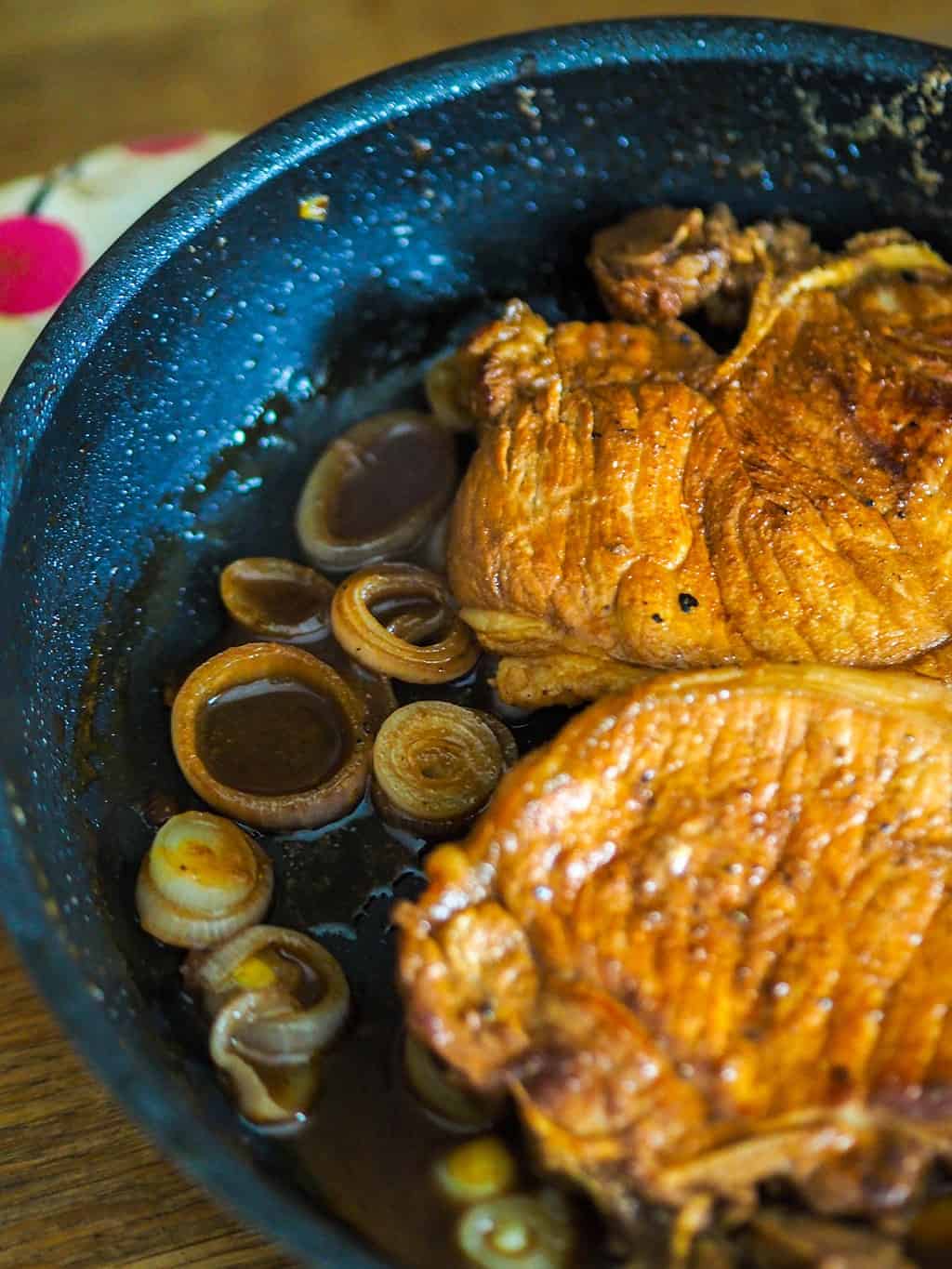
The marinade is the soul of this dish. It is dead simple: soy sauce, calamansi juice (or lemon juice if you cannot find calamansi), minced garlic, and cracked black pepper. That is it. Four ingredients doing all the work.
Soy sauce brings the salt and umami. Calamansi brings the acid, which tenderizes the pork and adds a bright, citrusy tang that balances all that saltiness. Garlic adds depth. Black pepper adds just enough heat to keep things interesting. The ratio I use is about 1/3 cup soy sauce to 3 tablespoons calamansi juice for every pound of pork. Marinate for at least 30 minutes, but if you can do an hour, even better. Do not go past four hours though. The acid starts breaking down the meat fibers too much, and you will end up with mushy pork instead of tender pork.
One thing I always do: save the marinade after you pull the pork out. You are going to use it as the braising liquid later, and it turns into the most incredible sticky glaze.
Tips for Perfectly Caramelized Onions on Your Bistek
The onions are not just a garnish here. They are a main character. I use two large white onions, sliced into thick rings, and I cook them separately from the pork so they get proper caramelization without steaming.
Heat a tablespoon of oil in a wide pan over medium-high heat. Add the onion rings in a single layer (do not crowd them) and let them sit without touching for two to three minutes until the bottom turns golden brown. Flip once, cook another two minutes, then pull them out and set aside. They should be soft with charred edges, sweet and slightly smoky. Do this before you cook the pork so the onions can rest and keep their shape instead of turning to mush in the sauce.
Some cooks add the onions at the end for a crunchy topping. Others simmer them in the sauce. I do both: half go into the sauce to dissolve and thicken it, half get piled on top right before serving for that contrast of soft and crispy.

Recipe: Pork Bistek Tagalog with Caramelized Onions

Prep Time: 15 minutes (plus 30-60 minutes marinating)
Cook Time: 25 minutes
Total Time: 40 minutes (plus marinating)
Servings: 4
Ingredients
- For the pork and marinade:
- 1 lb (450g) pork loin or pork shoulder, sliced thin (about 1/4 inch)
- 1/3 cup soy sauce
- 3 tablespoons fresh calamansi juice (or 2 tablespoons lemon juice + 1 tablespoon lime juice)
- 4 cloves garlic, minced
- 1/2 teaspoon freshly cracked black pepper
- For cooking:
- 2 tablespoons vegetable oil
- 2 large white onions, sliced into 1/2-inch rings
- 1/2 cup water or pork broth
- 1 tablespoon brown sugar (optional, for extra glaze)
- Steamed white rice, for serving
Instructions
- Combine the pork slices, soy sauce, calamansi juice, garlic, and black pepper in a bowl. Toss to coat evenly, then cover and refrigerate for 30 minutes to 1 hour.
- Remove the pork from the marinade and pat dry with paper towels. Reserve the marinade for later.
- Heat 1 tablespoon oil in a large skillet over medium-high heat. Add the onion rings in a single layer and cook without moving for 2 to 3 minutes until golden on the bottom. Flip once, cook 2 more minutes, then transfer to a plate.
- Add the remaining tablespoon of oil to the same pan. Lay the pork slices flat (work in batches if needed) and sear for 2 to 3 minutes per side until browned and lightly caramelized.
- Pour in the reserved marinade and the water. Bring to a simmer, reduce heat to medium-low, and cook for 12 to 15 minutes until the pork is fork-tender and the liquid has reduced by about half.
- If using brown sugar, stir it in during the last 3 minutes. The sauce should be thick and glossy.
- Return half the caramelized onions to the pan and toss gently with the pork for 1 minute. Transfer everything to a serving plate and pile the remaining onion rings on top.
- Serve immediately with plenty of steamed white rice.
Notes
- Storage: Leftovers keep well in the fridge for up to 3 days. Reheat in a pan over medium heat with a splash of water to loosen the sauce.
- Freezing: You can freeze the marinated raw pork (before cooking) for up to 2 months. Thaw overnight in the fridge before cooking.
- Make-ahead tip: Marinate the pork the night before. The longer marinating time gives you even deeper flavor the next day.

Common Mistakes That Ruin Pork Bistek Tagalog
I have seen a few things go wrong with this dish over the years, and they are all easy to avoid.
Skipping the sear. Some cooks dump the pork straight into the sauce. Big mistake. That initial sear in a hot, dry-ish pan gives you browning and flavor that simmering alone cannot replicate. Take the two extra minutes to brown the pork properly.
Overcrowding the pan. If you pile all the pork in at once, it steams instead of searing. Work in batches if needed. You want every piece making full contact with the hot pan surface.
Marinating too long. More than four hours and the calamansi acid turns the pork mushy. The sweet spot is 30 minutes to 2 hours. Set a timer if you need to.
Using too much liquid. The sauce should reduce into a sticky glaze, not a soup. If your sauce is too thin at the end, turn up the heat and let it bubble down for a few minutes. You want it thick enough to coat the back of a spoon.
Frequently Asked Questions
Can I use lemon instead of calamansi for bistek tagalog?
Yes, you can. Calamansi has a unique flavor that is a cross between lemon and lime, so the best substitute is a mix of 2 parts lemon juice to 1 part lime juice. Pure lemon juice works too, but add it in slightly smaller amounts since it is more acidic than calamansi.
What is the best side dish for pork bistek tagalog?
Steamed white rice is the classic pairing and honestly the only one you need. The sauce is made to be spooned over rice. You could also pair it with a light pasta salad for a fusion twist. If you want vegetables on the side, sauteed kangkong (water spinach) or steamed bok choy both work well without competing with the bold flavors of the bistek.
Can I make bistek tagalog in a slow cooker?
You can, but you will lose the seared crust on the pork. If you go the slow cooker route, sear the pork first in a hot pan, then transfer everything to the slow cooker. Cook on low for 4 hours. The onions will dissolve into the sauce, so add fresh caramelized onions on top before serving.
How do I make pork bistek tagalog less salty?
Use low-sodium soy sauce, or cut the regular soy sauce with a tablespoon of water. You can also add a teaspoon of brown sugar to balance the salt. Another trick: add more calamansi juice. The acidity offsets the saltiness without diluting the flavor.
Is pork bistek tagalog healthy?
It is a solid protein-heavy dish. A serving has roughly 280 calories, 22g protein, and 14g fat (depending on your cut). The sodium is on the higher side because of the soy sauce, so if you are watching sodium, use the low-sodium version. Pair it with vegetables and you have a balanced meal.
Key Takeaways
- Slice the pork thin (1/4 inch) and marinate for 30 minutes to 2 hours in soy sauce and calamansi for the best flavor and tenderness.
- Sear the pork in a hot pan before simmering. This step gives you the golden crust and deep flavor that makes bistek tagalog special.
- Cook onions separately so they caramelize instead of steaming. Add half to the sauce, half on top for texture contrast.
- Save the marinade and use it as the braising liquid. It reduces into a thick, glossy, salty-sweet glaze.
- Do not marinate longer than four hours or the calamansi acid will make the pork mushy instead of tender.
Pork bistek tagalog is the kind of recipe that looks impressive on the plate but takes almost no effort to make. The marinade does the work, the sear gives you the color, and the caramelized onions tie everything together. Whether you are cooking for your family on a weeknight or bringing a dish to a gathering (my bacon-wrapped dates make a killer appetizer alongside it), this one always delivers. Make it once, and it will earn a permanent spot in your rotation.
Pork Bistek Tagalog with Caramelized Onions
Pork bistek tagalog is a Filipino comfort dish of thin-sliced pork marinated in soy sauce and calamansi juice, then pan-fried until golden and topped with sweet caramelized onion rings.
Ingredients
- For the pork and marinade:
- 1 lb (450g) pork loin or pork shoulder, sliced thin (about 1/4 inch)
- 1/3 cup soy sauce
- 3 tablespoons fresh calamansi juice (or 2 tablespoons lemon juice + 1 tablespoon lime juice)
- 4 cloves garlic, minced
- 1/2 teaspoon freshly cracked black pepper
- For cooking:
- 2 tablespoons vegetable oil
- 2 large white onions, sliced into 1/2-inch rings
- 1/2 cup water or pork broth
- 1 tablespoon brown sugar (optional, for extra glaze)
- Steamed white rice, for serving
Instructions
- Combine the pork slices, soy sauce, calamansi juice, garlic, and black pepper in a bowl. Toss to coat evenly, then cover and refrigerate for 30 minutes to 1 hour.
- Remove the pork from the marinade and pat dry with paper towels. Reserve the marinade for later.
- Heat 1 tablespoon oil in a large skillet over medium-high heat. Add the onion rings in a single layer and cook without moving for 2 to 3 minutes until golden on the bottom. Flip once, cook 2 more minutes, then transfer to a plate.
- Add the remaining tablespoon of oil to the same pan. Lay the pork slices flat (work in batches if needed) and sear for 2 to 3 minutes per side until browned and lightly caramelized.
- Pour in the reserved marinade and the water. Bring to a simmer, reduce heat to medium-low, and cook for 12 to 15 minutes until the pork is fork-tender and the liquid has reduced by about half.
- If using brown sugar, stir it in during the last 3 minutes. The sauce should be thick and glossy.
- Return half the caramelized onions to the pan and toss gently with the pork for 1 minute. Transfer everything to a serving plate and pile the remaining onion rings on top.
- Serve immediately with plenty of steamed white rice.
Notes
Storage: Leftovers keep well in the fridge for up to 3 days. Reheat in a pan over medium heat with a splash of water to loosen the sauce.
Freezing: You can freeze the marinated raw pork (before cooking) for up to 2 months. Thaw overnight in the fridge before cooking.
Last update on 2026-08-26 / Affiliate links / Images from Amazon Product Advertising API
Looks delicious ?