
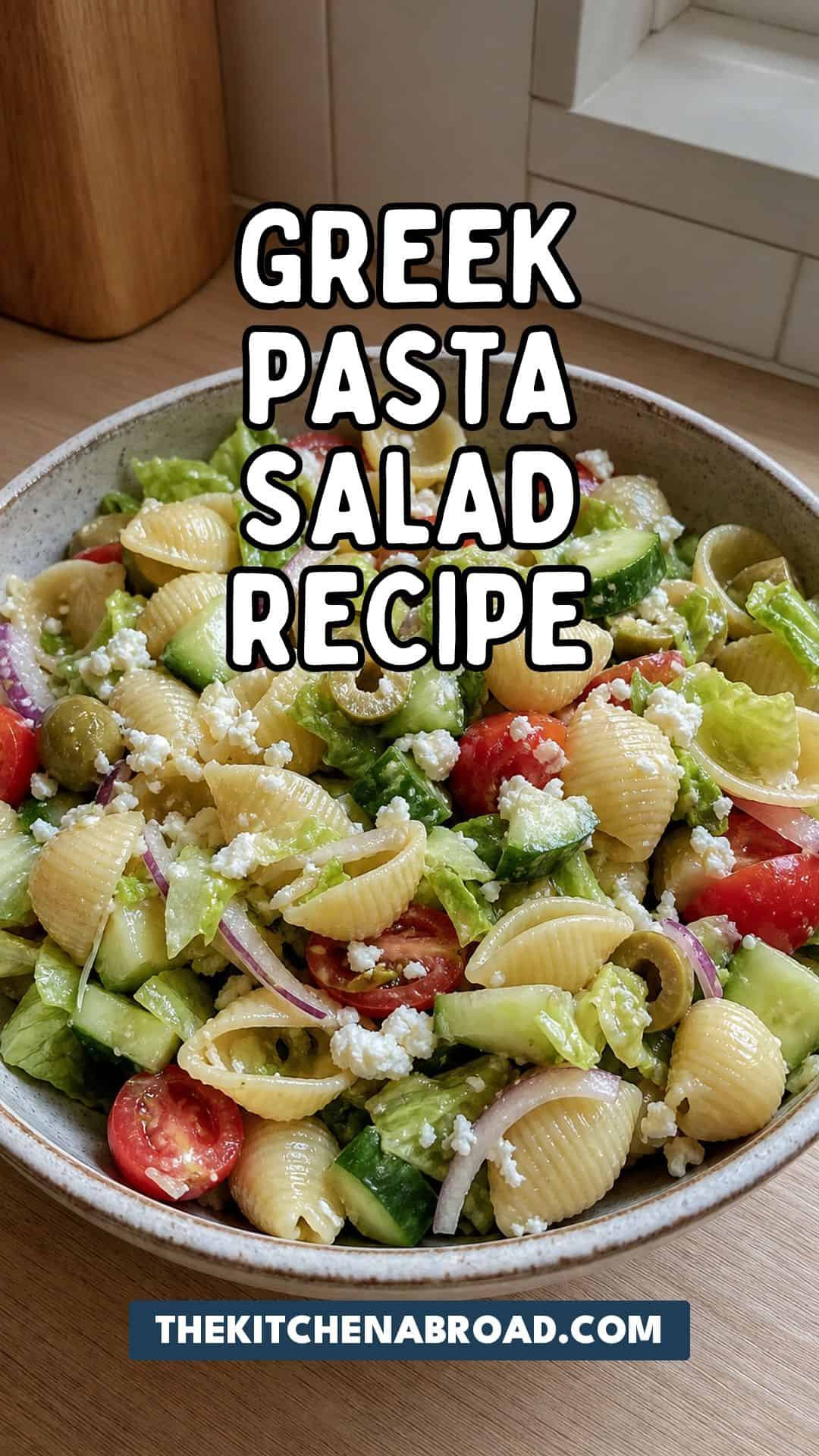
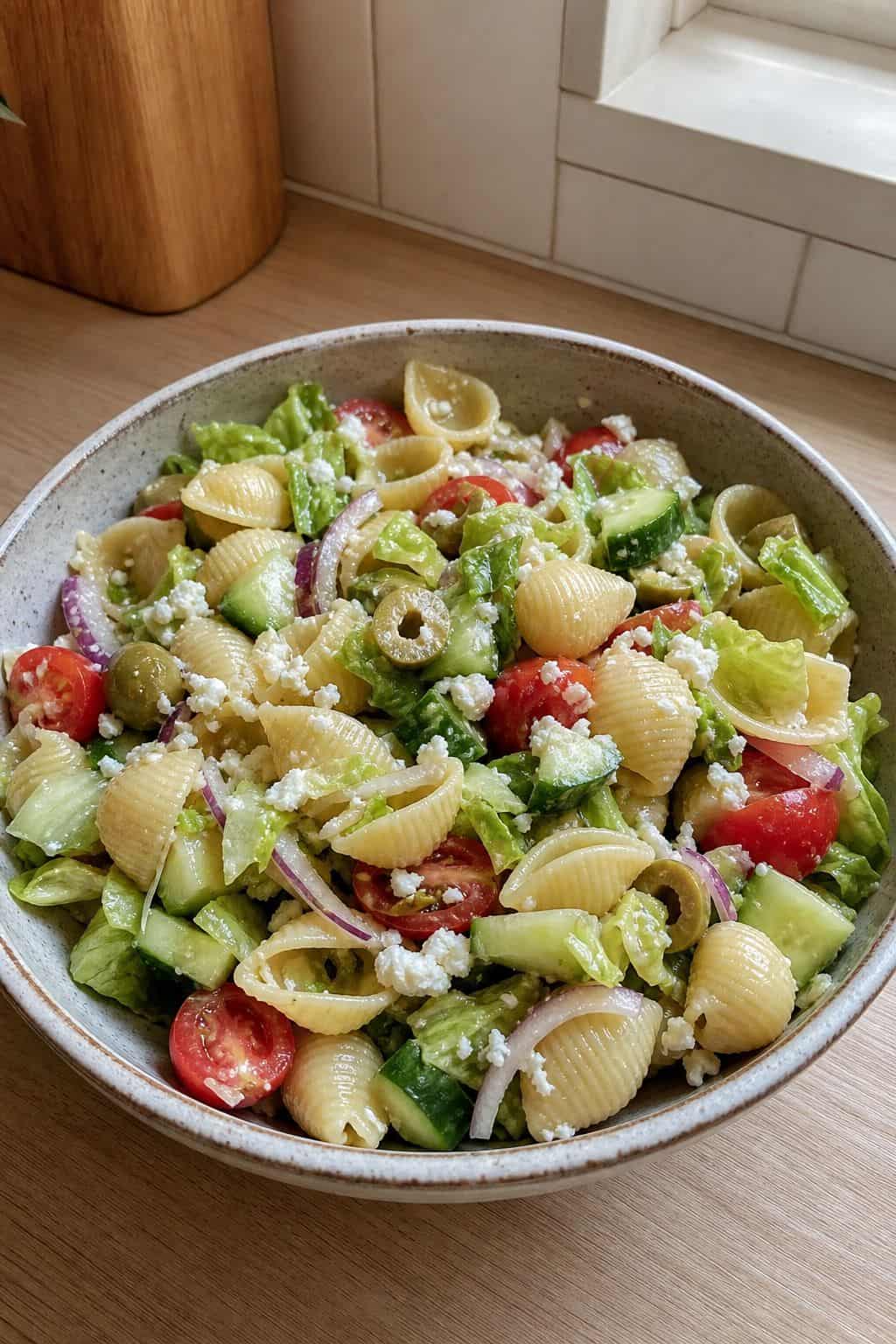
Greek pasta salad with lettuce is a Mediterranean cold pasta dish tossed with warm rotini, marinated cherry tomatoes, cucumber, red onion, kalamata olives, brined feta, and crisp romaine, all coated in a red wine and oregano vinaigrette. Lettuce goes in at serving so it stays crunchy. Ready in 30 minutes, serves 8.
Every pasta salad I have ever taken to a potluck used to be a sad bowl of soggy noodles by the time it got there. Lettuce gone limp. Tomatoes weeping pink juice. Feta turned to chalky paste. I would pull off the foil and pretend to be surprised every single time, like it was somehow a different recipe’s fault. Eventually I figured out that the fix is not the recipe, it is the timing.
Three timing tricks turn this from sad-potluck salad into the bowl people circle back for. Dress the vegetables before the pasta, not after. Toss them with the vinaigrette and let them sit for 30 minutes so the tomatoes and cucumbers release a little water into the dressing and absorb it back as flavor. Then toss in the warm-not-hot pasta, which drinks dressing the way a sponge drinks water. And finally, keep the lettuce out of the bowl until the moment of serving. Lettuce dressed in advance is wilted lettuce.
The version below uses brined block feta (not the dry pre-crumbled stuff), kalamata olives still in their brine, and an oregano-steeped olive oil dressing that takes ten minutes longer to make but pays back a hundredfold in flavor. Metric and imperial measurements throughout.
What You’ll Need to Make This Recipe
A wide mixing bowl with room to toss without crushing is the most important piece of equipment. A good olive oil dispenser is genuinely useful because this recipe leans on the quality of the oil. A small tool to halve cherry tomatoes in one motion saves 10 minutes of knife work. The right feta and the right olives matter more than the gear, both can be ordered or found at any decent grocery store.


Recommended Reads
- Watermelon Feta Salad Recipe with Mint and Lime
- Spaghetti Aglio e Olio Recipe (Italian Garlic Pasta)
- Cucumber Kimchi Recipe (Oi Kimchi) with Gochugaru
- Nakkikastike Recipe: Finnish Hot Dog Sauce in Creamy Mustard Gravy
- Gochujang Pasta Recipe (Creamy, Spicy, 20 Minutes)
Why This Greek Pasta Salad Works
The marinated-vegetables-first move is the structural backbone of this recipe. Most pasta salad recipes have you cook the pasta, dump everything into a bowl, pour the dressing on top, and stir. That sequence guarantees a bowl of mediocre. The vegetables sit dressed for thirty seconds, the pasta sits dressed for ten minutes while you bring it to the table, and the dressing flavors are scattered randomly across the salad. The 30-minute marinade gives the dressing time to penetrate the tomatoes, cucumbers, onions, and olives, then the warm pasta absorbs that flavored dressing as it cools.
The warm-pasta absorption is the second variable. Pasta cooked, drained, and immediately tossed in dressing absorbs maybe 30 percent of the vinaigrette it would otherwise hold. Pasta cooled to room temperature and tossed in dressing absorbs almost nothing. The sweet spot is warm but not steaming: drained pasta that sat on the counter for 4 to 5 minutes is hot enough to take up the dressing and cool enough to stop cooking the next batch of ingredients it touches.
The third move is the oregano steep. Dried oregano added straight to the vinaigrette tastes flat. Crumbled into warm olive oil and left to steep for 10 minutes, dried oregano becomes a different ingredient, perfumed, slightly toasty, intensely flavored. This is the technique any Greek grandmother would tell you about if you asked her why her dressing tastes better than yours. The answer is the steep.
Greek Pasta Salad Ingredients, Briefly
Pasta. Rotini, farfalle, fusilli, or penne. The short, ridged shapes hold dressing in their grooves. Spaghetti and linguine are the wrong shapes for this dish, they slide instead of grip. Cook to al dente, not soft.
Cherry tomatoes. Halved. Heirloom or sungold cherry tomatoes if you can find them in season. Roma tomatoes diced work too but cherry tomatoes are juicier and sweeter. Avoid pale watery tomatoes from January, the salad is built on tomato flavor.
Persian or English cucumber. Diced into half-moons. Persian cucumbers have less water and firmer flesh. If using English/hothouse, scoop out the seeds with a spoon before dicing to keep the salad from going soupy.
Red onion. Thinly sliced into half-rings, then soaked in cold water with a pinch of salt for 10 minutes to mellow the bite. The water-soak step turns raw onion from aggressive to gentle and is one of the unsung Mediterranean kitchen moves.
Kalamata olives. Whole or halved, with their pits removed. Buy them from a deli counter or in a jar with brine, not the bagged “snack” kind. Save 2 tablespoons of the brine for the dressing, it adds salty depth that no other ingredient delivers.
Brined block feta. Greek or Bulgarian sheep’s milk feta, drained and crumbled by hand into rough chunks. Skip the pre-crumbled tub feta. Block feta from a deli or international grocery has 90 percent more flavor and significantly better texture.
Romaine or butter lettuce. Chopped into bite-sized pieces. Romaine holds up best in this salad. Iceberg works for crunch but lacks flavor. Spring mix wilts too quickly. Lettuce is added at serving, never mixed in advance.
Bell pepper. Red or yellow, small-diced. Optional, but the sweetness and crunch are worth the extra two minutes of prep.
Olive oil and red wine vinegar. Good extra-virgin olive oil and a quality red wine vinegar. The dressing is essentially just oil, vinegar, oregano, garlic, and a pinch of sugar, so each component shows up. Cheap olive oil and supermarket red wine vinegar will give you a flat dressing.
Dried oregano, garlic, and a pinch of sugar. The three flavor anchors of the dressing. Dried oregano works better than fresh here, fresh oregano is harder and less perfumed once it sits in oil. The pinch of sugar is non-negotiable in Greek dressings, it balances the vinegar without making the dressing sweet.
Tips and Variations
The oregano-steep technique. Warm the olive oil gently for 2 minutes (not hot, just warm to the touch). Stir in the dried oregano and let it steep off-heat for 10 minutes. The aromatic oils in the oregano release into the oil. This is the single biggest dressing upgrade.
Add fresh herbs for brightness. A handful of chopped fresh parsley and a few mint leaves torn over the top before serving turn this from good to noticeable. Dill works too.
Protein additions. Grilled chicken cubes, seared shrimp, or canned chickpeas turn this into a full meal. Add at serving so the protein stays warm or cool depending on which you choose.
Make-ahead potluck plan. The vegetables and dressing can marinate up to 4 hours ahead in the fridge. Cook the pasta no more than 2 hours before serving. Crumble the feta on top and add the lettuce only at the actual serving moment. Bring components in separate containers for picnics.
Dairy-free version. Skip the feta. Add a tablespoon of capers and an extra tablespoon of olive brine to compensate for the salt. The salad keeps its Mediterranean character.
Gluten-free version. Use a gluten-free pasta. Brown rice rotini holds up best. Quinoa is excellent too. Lentil pasta tends to get gummy in this dish, so skip that.
Recipe: Greek Pasta Salad with Lettuce, Feta, and Olives
Prep Time: 15 minutes | Cook Time: 10 minutes | Marinade Time: 30 minutes | Total Time: 55 minutes | Servings: 8
Ingredients
For the dressing:
- 120 ml (½ cup) extra-virgin olive oil
- 2 tsp dried oregano
- 60 ml (¼ cup) red wine vinegar
- 2 tbsp brine from the kalamata olive jar
- 2 cloves garlic, minced
- ½ tsp granulated sugar
- ½ tsp fine sea salt
- ¼ tsp coarse cracked black pepper
For the salad:
- 340 g (12 oz) rotini pasta (or farfalle, fusilli, penne)
- 400 g (about 2½ cups) cherry tomatoes, halved
- 200 g (1 large) Persian or seedless cucumber, diced into half-moons
- 1 small red onion, thinly sliced into half-rings, soaked in cold salted water 10 min, drained
- 1 red bell pepper (about 150 g), small-diced
- 150 g (about 1 cup) pitted kalamata olives, halved
- 200 g (7 oz) brined block feta, drained and crumbled by hand
- 1 small head romaine lettuce (about 300 g), chopped into bite-sized pieces
- 2 tbsp fresh parsley, chopped, for finishing
Instructions
- Make the dressing first. Warm the olive oil in a small saucepan over low heat for 2 minutes, just until warm to the touch (do not heat to smoking). Off heat, stir in the dried oregano and let it steep for 10 minutes.
- After steeping, whisk in the red wine vinegar, olive brine, minced garlic, sugar, salt, and pepper. The dressing should taste bright and slightly tangy. Set aside.
- In a large mixing bowl, combine the halved cherry tomatoes, cucumber, drained red onion, bell pepper, and kalamata olives. Pour half the dressing over the vegetables and toss well. Let marinate at room temperature for 30 minutes (or up to 4 hours in the fridge).
- While the vegetables marinate, bring a large pot of generously salted water to a boil. Cook the pasta to al dente per package instructions (usually 8 to 10 minutes for rotini). Drain and let sit in the colander for 4 minutes to cool to warm.
- Add the warm pasta to the bowl of marinated vegetables. Pour the remaining dressing over the pasta. Toss thoroughly so every piece of pasta is coated. Let sit for 10 minutes for the pasta to absorb the dressing.
- Just before serving, add the chopped romaine lettuce and the crumbled feta. Toss gently to combine. Sprinkle the chopped parsley over the top.
- Serve immediately. Greek pasta salad is at its best the moment lettuce and feta meet the dressing.
Notes
Marinating the vegetables is the key step. Thirty minutes is the minimum. Two to four hours in the fridge is even better. The dressing penetrates the vegetables and gives the finished salad more depth than any last-minute toss can match.
The warm-pasta rule. Drained pasta sat for 4 to 5 minutes is the sweet spot. Cold pasta does not absorb dressing. Hot pasta cooks the vegetables. Warm is the goldilocks zone.
Storage. Greek pasta salad without lettuce holds in the fridge for 2 days. Add the lettuce and feta only to the portion you are about to eat. Dressed lettuce after 6 hours is wilted lettuce, no recipe fixes that.
Salt the pasta water. One tablespoon of fine salt per liter of water. Bland pasta is the foundation of bland pasta salad. The water should taste like seawater.
Frequently Asked Questions
What pasta shape is best for Greek pasta salad?
Short, ridged pasta shapes work best: rotini (spirals), farfalle (bow ties), fusilli, penne, or rigatoni. The ridges and twists hold dressing in their grooves and trap small bits of vegetables. Long pasta shapes like spaghetti or linguine are the wrong choice, they slide past the other ingredients instead of integrating with them.
How long does Greek pasta salad last in the fridge?
The base of pasta, marinated vegetables, and dressing keeps for 2 days refrigerated, with the lettuce and feta added only to the portion being eaten. Once lettuce is mixed in, the salad is best within a few hours. The combination of dressed lettuce sitting in a closed container always turns to limp green sludge by the next day.
Can I make Greek pasta salad ahead of time?
Yes, with the right components-separately strategy. Cook the pasta and dress the vegetables up to 4 hours ahead. Crumble the feta and chop the lettuce. Combine everything at the very last moment before serving. This is the only way to bring this salad to a picnic without it turning into a sad bowl by the time you arrive.
What kind of feta should I use?
Brined block feta is the only feta worth using here. Greek or Bulgarian sheep’s milk feta from a deli counter or specialty grocery is ideal. The pre-crumbled feta in plastic tubs is too dry and the flavor is significantly weaker. Crumble the block by hand into rough chunks, do not over-process it.
Can I add protein to Greek pasta salad?
Yes. Grilled chicken, seared shrimp, and chickpeas all work beautifully. Add the protein at serving so it stays at the right temperature, warm grilled meat against the cool salad components is the textural contrast you want. For a vegetarian option, chickpeas tossed in the dressing for 15 minutes before adding to the salad work as well as any meat.
Why is my pasta salad bland?
Most likely the pasta water was undersalted or the dressing skipped the oregano steep. Salted pasta water seasons the noodles from the inside out, the steeped oregano adds layered flavor to the oil. Both are non-negotiable for a properly seasoned Greek pasta salad. Also check that the feta is brined block (not the dry pre-crumbled tub kind), which contributes most of the salt and umami to the finished salad.
Key Takeaways
- Marinate the vegetables in half the dressing for 30 minutes before adding the pasta. The single biggest flavor upgrade in this salad.
- Toss the warm-not-hot pasta with the remaining dressing. Drained pasta sat for 4 to 5 minutes is the sweet spot for absorption.
- Steep dried oregano in warm olive oil for 10 minutes before whisking in the vinegar. The aromatic difference is significant.
- Add the chopped lettuce and crumbled feta only at the moment of serving. Lettuce dressed in advance is wilted lettuce.
- Use brined block feta and kalamata olives in brine. Save 2 tablespoons of olive brine for the dressing, it adds depth nothing else delivers.
Final Thoughts
Greek pasta salad has been on every picnic table I have ever known. The bad versions are forgettable, the good ones get fought over until the bowl is empty. The difference is almost entirely in the timing and in the quality of two or three ingredients. Get the feta right, the olives right, and the oregano steeped, and the salad takes care of itself.
Make it the night before a picnic and pack the components separately. Combine on site. Watch what happens at the table.
Greek Pasta Salad Recipe with Lettuce, Feta, and Olives
Greek pasta salad with lettuce is a Mediterranean cold pasta dish tossed with warm rotini, marinated cherry tomatoes, cucumber, red onion, kalamata olives, brined feta, and crisp romaine, all coated in a red wine and oregano vinaigrette.
Ingredients
- 120 ml (½ cup) extra-virgin olive oil
- 2 tsp dried oregano
- 60 ml (¼ cup) red wine vinegar
- 2 tbsp brine from the kalamata olive jar
- 2 cloves garlic, minced
- ½ tsp granulated sugar
- ½ tsp fine sea salt
- ¼ tsp coarse cracked black pepper
- 340 g (12 oz) rotini pasta (or farfalle, fusilli, penne)
- 400 g (about 2½ cups) cherry tomatoes, halved
- 200 g (1 large) Persian or seedless cucumber, diced into half-moons
- 1 small red onion, thinly sliced into half-rings, soaked in cold salted water 10 min, drained
- 1 red bell pepper (about 150 g), small-diced
- 150 g (about 1 cup) pitted kalamata olives, halved
- 200 g (7 oz) brined block feta, drained and crumbled by hand
- 1 small head romaine lettuce (about 300 g), chopped into bite-sized pieces
- 2 tbsp fresh parsley, chopped, for finishing
Instructions
- Make the dressing first. Warm the olive oil in a small saucepan over low heat for 2 minutes, just until warm to the touch (do not heat to smoking). Off heat, stir in the dried oregano and let it steep for 10 minutes.
- After steeping, whisk in the red wine vinegar, olive brine, minced garlic, sugar, salt, and pepper. The dressing should taste bright and slightly tangy. Set aside.
- In a large mixing bowl, combine the halved cherry tomatoes, cucumber, drained red onion, bell pepper, and kalamata olives. Pour half the dressing over the vegetables and toss well.
- While the vegetables marinate, bring a large pot of generously salted water to a boil. Cook the pasta to al dente per package instructions (usually 8 to 10 minutes for rotini). Drain and let sit in the colander for 4 minutes to cool to warm.
- Add the warm pasta to the bowl of marinated vegetables. Pour the remaining dressing over the pasta. Toss thoroughly so every piece of pasta is coated. Let sit for 10 minutes for the pasta to absorb the dressing.
- Just before serving, add the chopped romaine lettuce and the crumbled feta. Toss gently to combine. Sprinkle the chopped parsley over the top.
- Serve immediately. Greek pasta salad is at its best the moment lettuce and feta meet the dressing.
Notes
Marinating the vegetables is the key step. Thirty minutes is the minimum. Two to four hours in the fridge is even better. The dressing penetrates the vegetables and gives the finished salad more depth than any last-minute toss can match.
The warm-pasta rule. Drained pasta sat for 4 to 5 minutes is the sweet spot. Cold pasta does not absorb dressing. Hot pasta cooks the vegetables. Warm is the goldilocks zone.
Last update on 2026-10-03 / Affiliate links / Images from Amazon Product Advertising API
Really, really, really good. I couldn’t find conchiglie pasta, but could find orecchiette a similarly shaped pasta. I had a bunch of lettuce from my garden and was looking for unique ways to use it so that we wouldn’t get tired of eating lettuce day after day. I never in my wildest dreams would have thought of chopping up lettuce to put in a pasta salad. It worked so well. My lettuce, Sierra, was a crispy, flavorful lettuce just perfect for your recipe creation. I served it with another dish, flap steak grilled over charcoal. When I told my husband where I had found the recipe, he asked me if I was going to send you a comment. And when I said I wanted to send you a comment to let you know how much I liked it, he said I should tell you that he liked it too. So, thank you for posting your Greek Pasta Salad. So good. Gotta have it again. Soon.
Thank you so much!