
The best renter-friendly kitchen decor finds make a rental kitchen look better while staying reversible at move-out. Choose removable, freestanding, no-drill, washable, or easy-to-test products that solve a visible rental problem, such as dated backsplash, poor lighting, bland cabinets, awkward floors, or cluttered counters. Always test adhesive pieces first, measure carefully, and check heat, moisture, and weight limits before committing.
Rental kitchens ask for a different kind of decorating discipline. You can add pattern, softness, light, and personality, but every product has to respect the lease, the surfaces, and the day you eventually need to remove it.
This guide is focused on shoppable finds, not permanent renovation advice. The strongest pieces either peel away carefully, stand on their own, clip on, hang without holes, or clean up easily after daily cooking. That is what separates useful rental decor from a pretty idea that creates move-out stress later.
Recommended Products


You Might Also Like These Blog Posts
- Renter-Friendly Kitchen Ideas
- Renter-Friendly Kitchen Upgrades
- Peel-and-Stick Kitchen Upgrades
- Renter-Friendly Kitchen Organization
- Budget Kitchen Decor Finds
1. Peel and Stick Backsplash Tile for Builder-Grade Walls
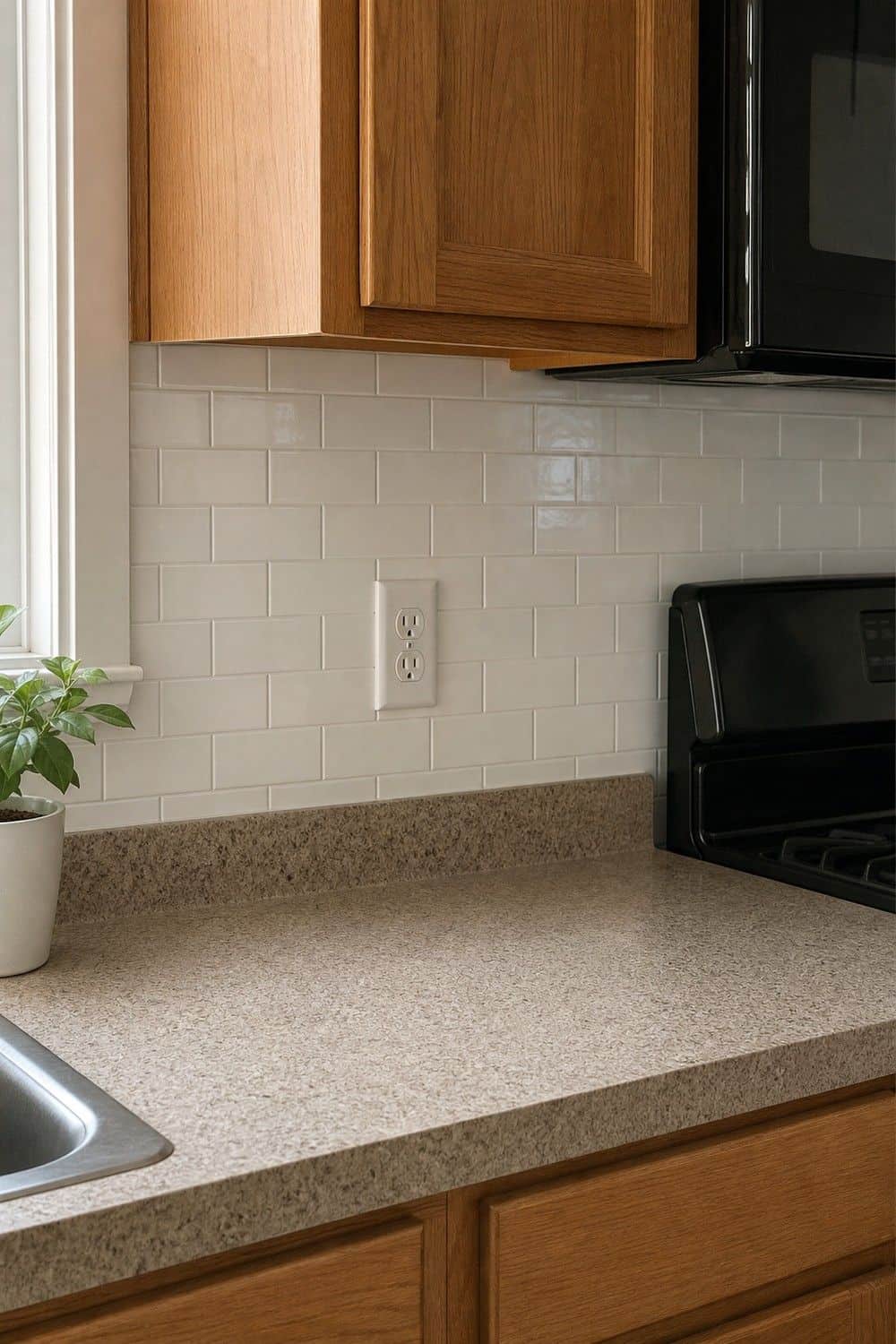
Plain backsplash walls can make a rental kitchen feel unfinished, especially when the cabinets and counters are builder-grade. Peel and stick backsplash tile gives that wall a cleaner focal point without grout, mortar, or permanent tile work. Surface prep matters more than the pattern. Clean grease thoroughly, let the wall dry, and test one tile in a discreet spot before covering the whole run. If your stove sits close to the wall, check the heat rating and clearance guidance.
Order extra for cuts around outlets and corners. The mistake is choosing the boldest tile first and thinking about removal later. A rental backsplash should look good, but it also needs a realistic exit plan. Choose a finish that relates to the counter and cabinet color rather than adding a totally new palette. In a small rental, a quieter tile often looks more expensive and is easier to live with.
2. Removable Wallpaper for a Breakfast Nook Wall
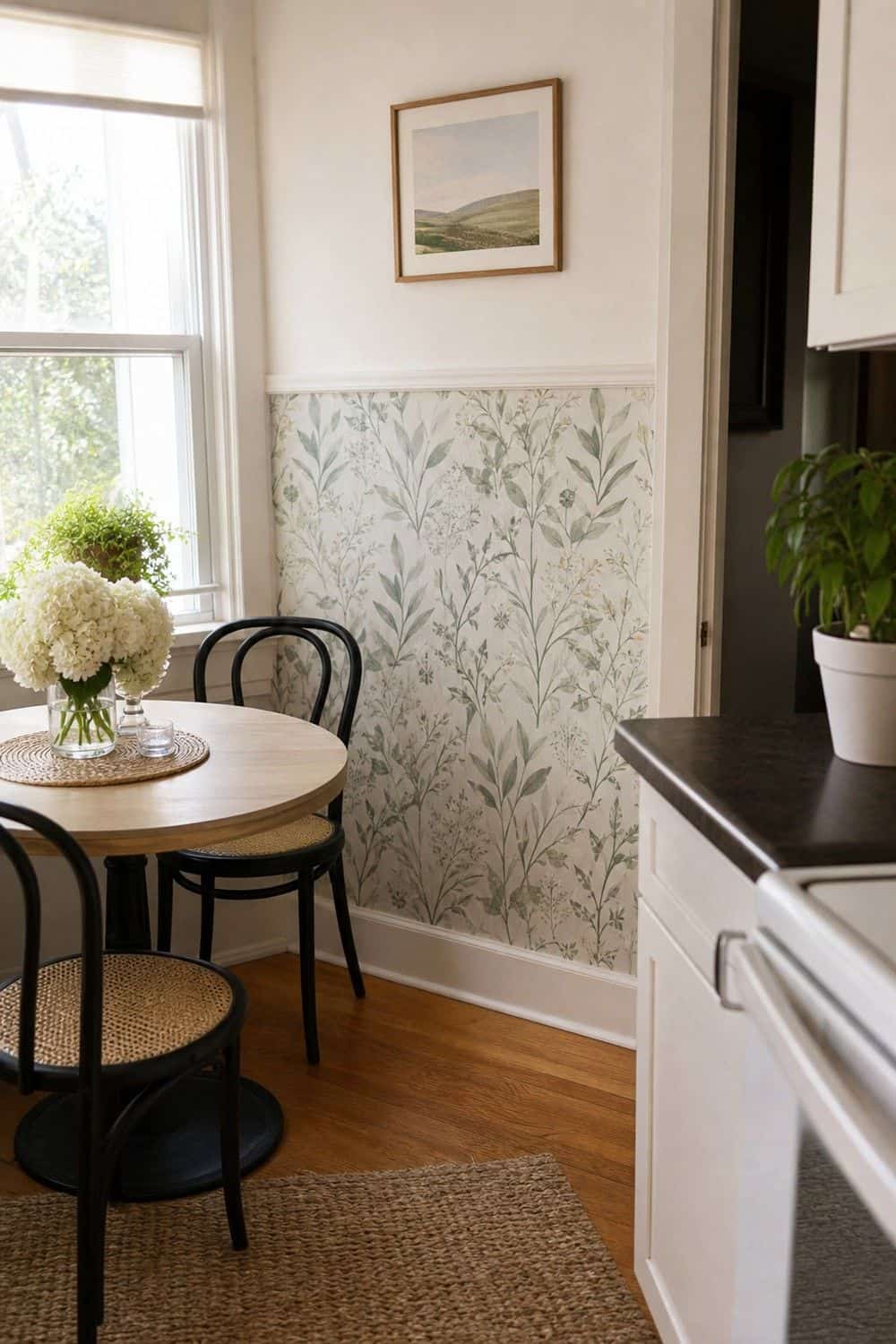
Pattern is safer on a low-splash wall than behind the stove. Removable kitchen wallpaper works well in a breakfast nook, coffee corner, pantry wall, or small dining area where it can add color without fighting steam, oil, and daily wiping. Order samples before buying rolls, because wall texture and paint finish can change how removable adhesive behaves. Measure the wall twice and pay attention to pattern repeat, especially if the nook has switches, trim, or uneven corners.
Use wallpaper to create one contained moment rather than wrapping every kitchen wall. Too much pattern can make a rental feel smaller, and it also gives you more adhesive surface to remove at move-out. A wipeable finish is helpful even away from the stove, especially near coffee, breakfast, or snack areas. Avoid paper that feels delicate if chairs, bags, or elbows will brush the wall every day.
3. Peel and Stick Contact Paper for Countertop Camouflage
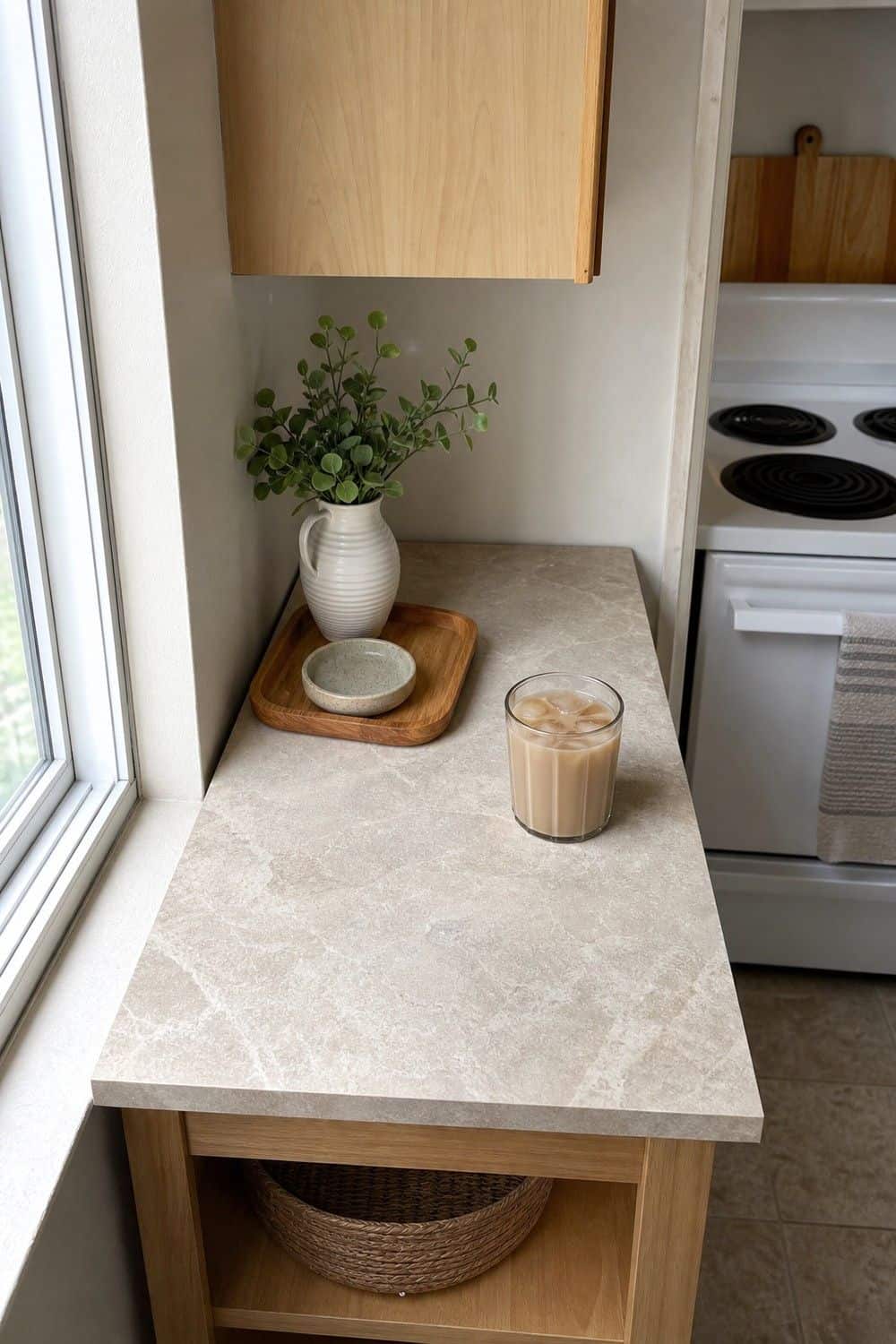
Worn laminate or stained side counters can drag down an otherwise clean rental kitchen. Peel and stick countertop paper can help on a low-abuse zone, such as a coffee counter, side cart, or decorative landing area. Be honest about the surface. Counters get heat, water, knives, crumbs, and cleaning spray, so this is not the same as covering a quiet wall. Test adhesion, check heat resistance, and avoid placing hot pans or wet dish racks directly on top.
A limited application usually looks more believable than wrapping every inch. If the counter is heavily used for chopping or cooking, a tray, cutting board, or washable mat may be a better rental-safe disguise. Use a smoothing tool and work slowly around corners, because bubbles and crooked seams make temporary paper look temporary fast. Keep a trivet nearby so guests do not set hot mugs directly on the finish.
4. Adhesive Cabinet Handles for a No-Drill Detail
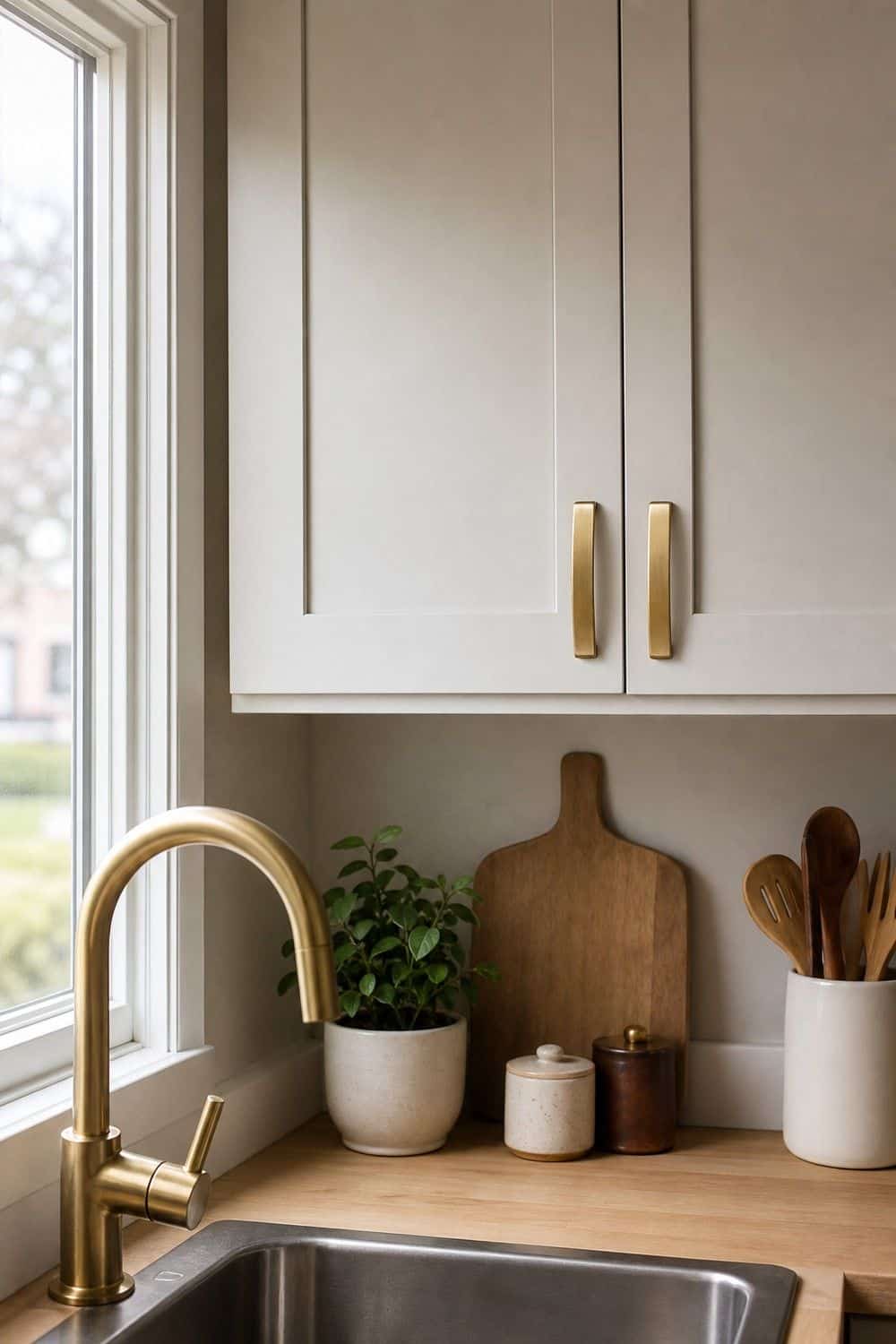
Flat cabinet fronts can feel bare when you are not allowed to drill for new hardware. Adhesive cabinet handles give the look of pulls without adding holes, which makes them useful for a temporary visual upgrade.
They are best on light-use doors, not heavy drawers that get tugged all day. Clean the cabinet fronts first, test one handle, and avoid fragile finishes, peeling paint, or surfaces that already show damage. Choose a finish that repeats the faucet or appliance metal so the handles feel deliberate.
The mistake is expecting adhesive pulls to perform like permanent hardware on every cabinet in the kitchen. Try them on upper doors first, where the pull is lighter and less frequent. If one loosens after a week, that is useful information before you commit to the whole kitchen.
5. Magnetic Spice Rack for Fridge-Side Storage

The side of the refrigerator is often wasted vertical space in a rental. A magnetic spice rack can hold spices, tea tins, oil spray, or small seasoning jars without drilling into walls or adding another counter organizer.
Check magnet strength and shelf depth before buying. Heavy glass jars need a stronger hold than lightweight tins, and the rack should not slide when the fridge door closes. Keep it away from stove heat if the fridge sits near the range.
Edit the display so it looks like decor, not overflow. Matching labels help, but only if the spices are used often enough to deserve such visible placement. Leave breathing room above each jar so you can lift spices out without bumping the next shelf. If the fridge side faces the living area, keep the rack especially edited.
6. Tension Rod Cafe Curtains for Sink Windows
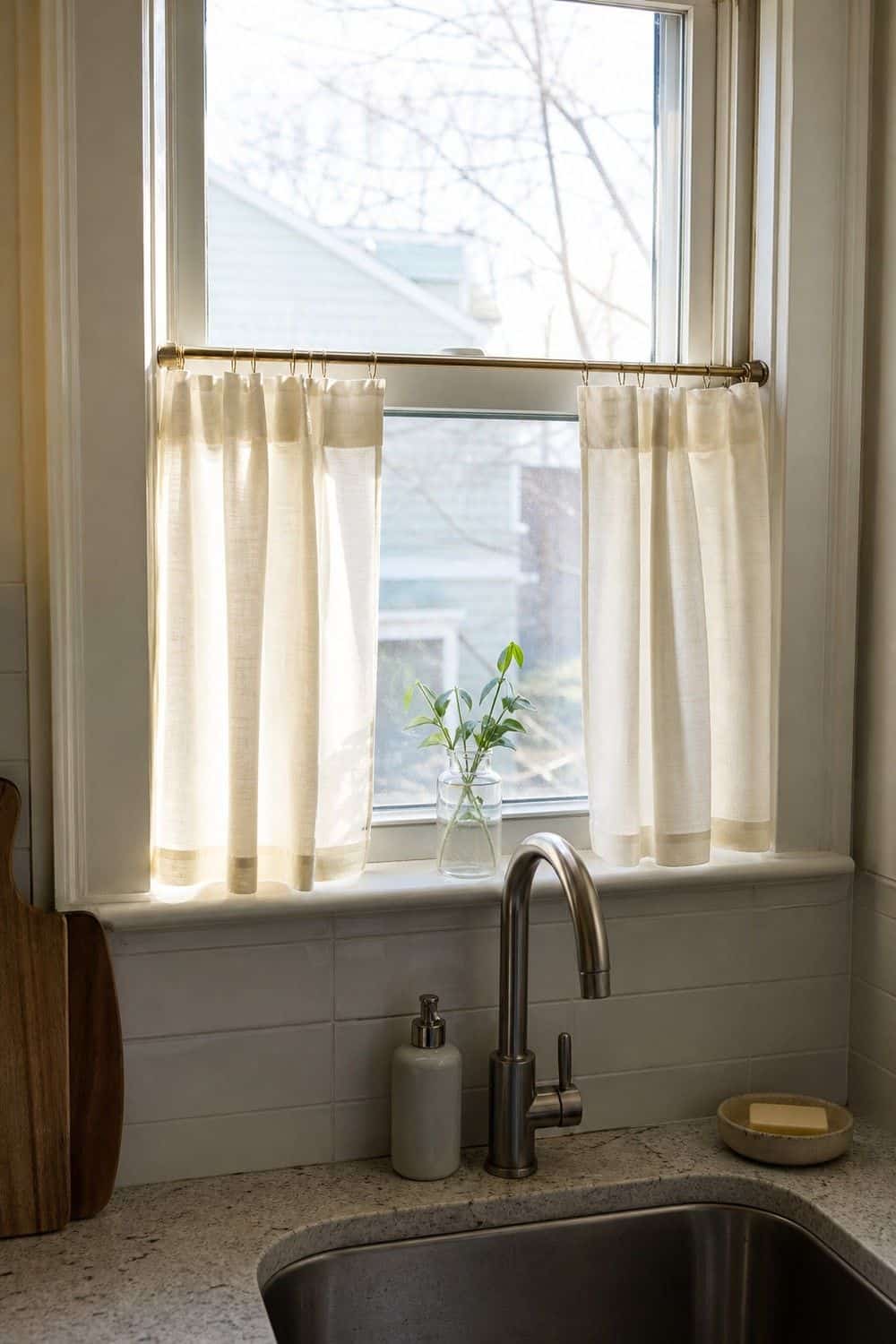
Sink windows often need privacy, softness, or a little pattern, but renters may not be able to drill into trim or tile. Tension rod cafe curtains solve that problem with pressure-mounted hardware and short washable panels.
Measure inside the frame carefully, including depth, because some trim is too shallow for a stable rod. Choose fabric that stays clear of faucet splashes, dish soap, and any nearby stove heat. Light cotton, linen-look panels, or subtle stripes usually work better than heavy fabric.
The goal is filtered light and privacy, not a window treatment that makes the kitchen feel dim. Choose a rod finish that disappears into the trim or repeats the faucet. If the window is tiny, a half curtain is usually better than a full panel that blocks the brightest part.
7. Washable Kitchen Runner for Ugly Rental Floors
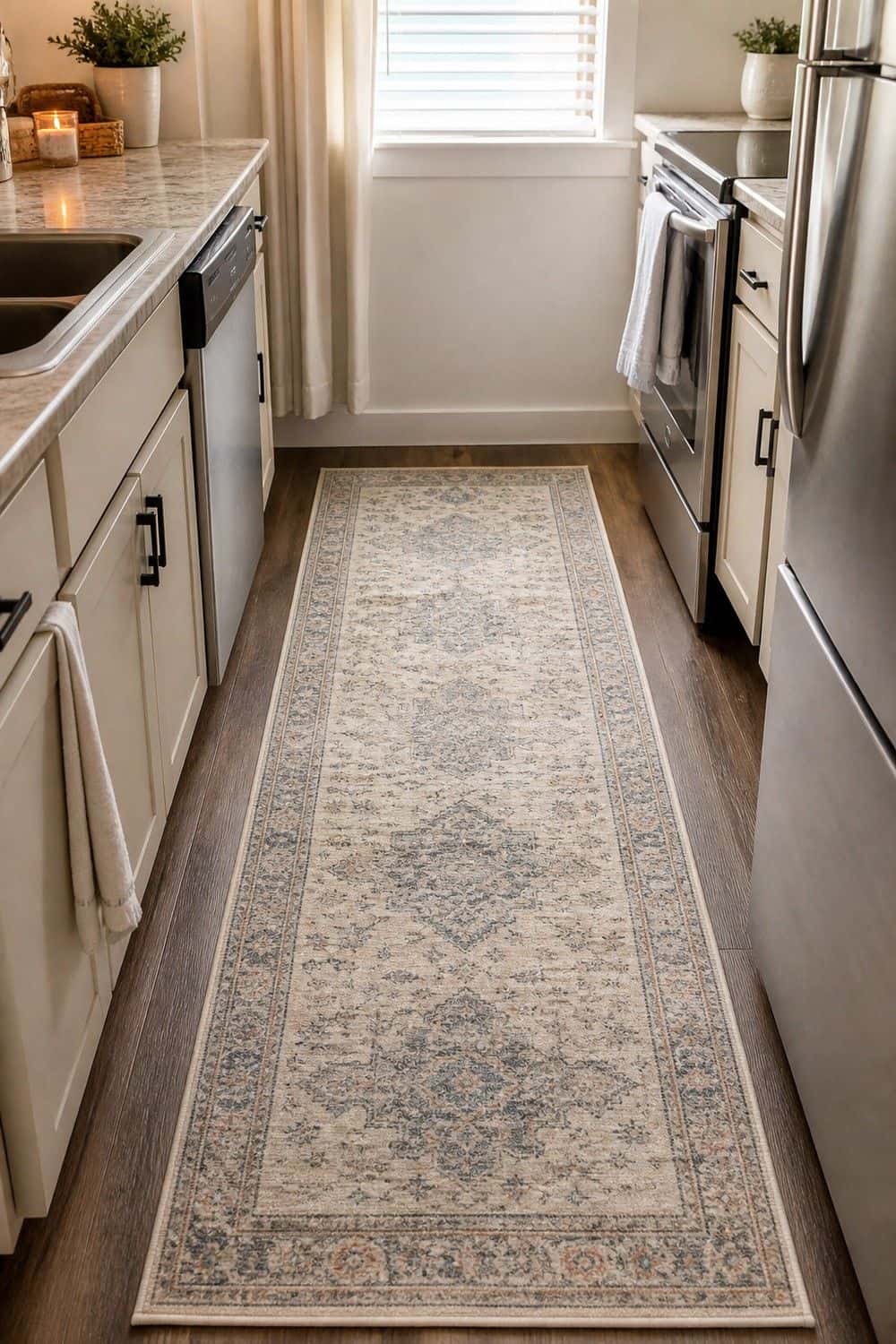
Rental floors are not always worth fighting. A washable kitchen runner can soften dated vinyl, cold tile, or scratched laminate while bringing color and texture into a narrow aisle. Low pile matters because cabinet doors, dishwasher doors, and drawers still need to open.
Look for nonslip backing or a rug pad that is safe for the floor finish, then measure the aisle so the rug does not bunch at appliance edges. In a galley kitchen, leave a little floor showing at both ends so the runner does not curl into a trip point. Choose a pattern that hides crumbs but does not overwhelm the small room. This is one of the easiest reversible visual upgrades because it can move with you, wash often, and disappear before inspection day.
8. Plug In Wall Sconce for Soft Kitchen Lighting
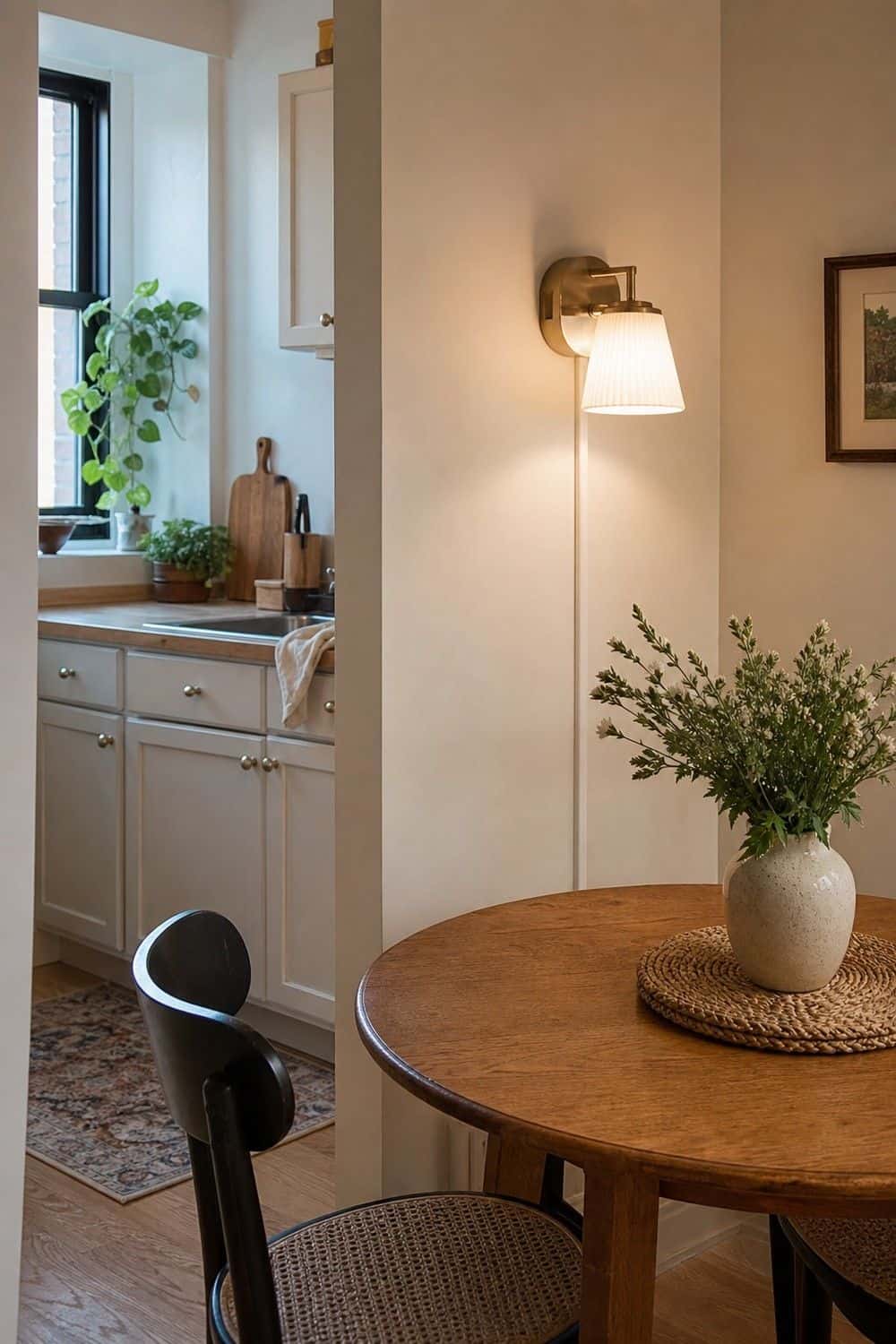
Rental lighting can be harsh, underpowered, or oddly placed. A plug in wall sconce adds a softer layer near a dining nook, coffee bar, open shelf, or blank wall without hardwiring a new fixture. Look at the cord path before buying.
Cord covers, adhesive clips, or a nearby furniture edge can make the line feel cleaner, but the sconce should stay away from sink splashes, stove heat, and busy walkways. Warm bulbs usually give the best evening atmosphere. Avoid oversized shades in tight kitchens, because a pretty fixture that bumps shoulders is not renter-friendly in daily life. If the cord will show, make that part neat from the beginning. A straight cord cover looks calmer than a dangling loop behind a table or coffee cart.
9. Rechargeable Under Cabinet Lights for Better Prep Glow
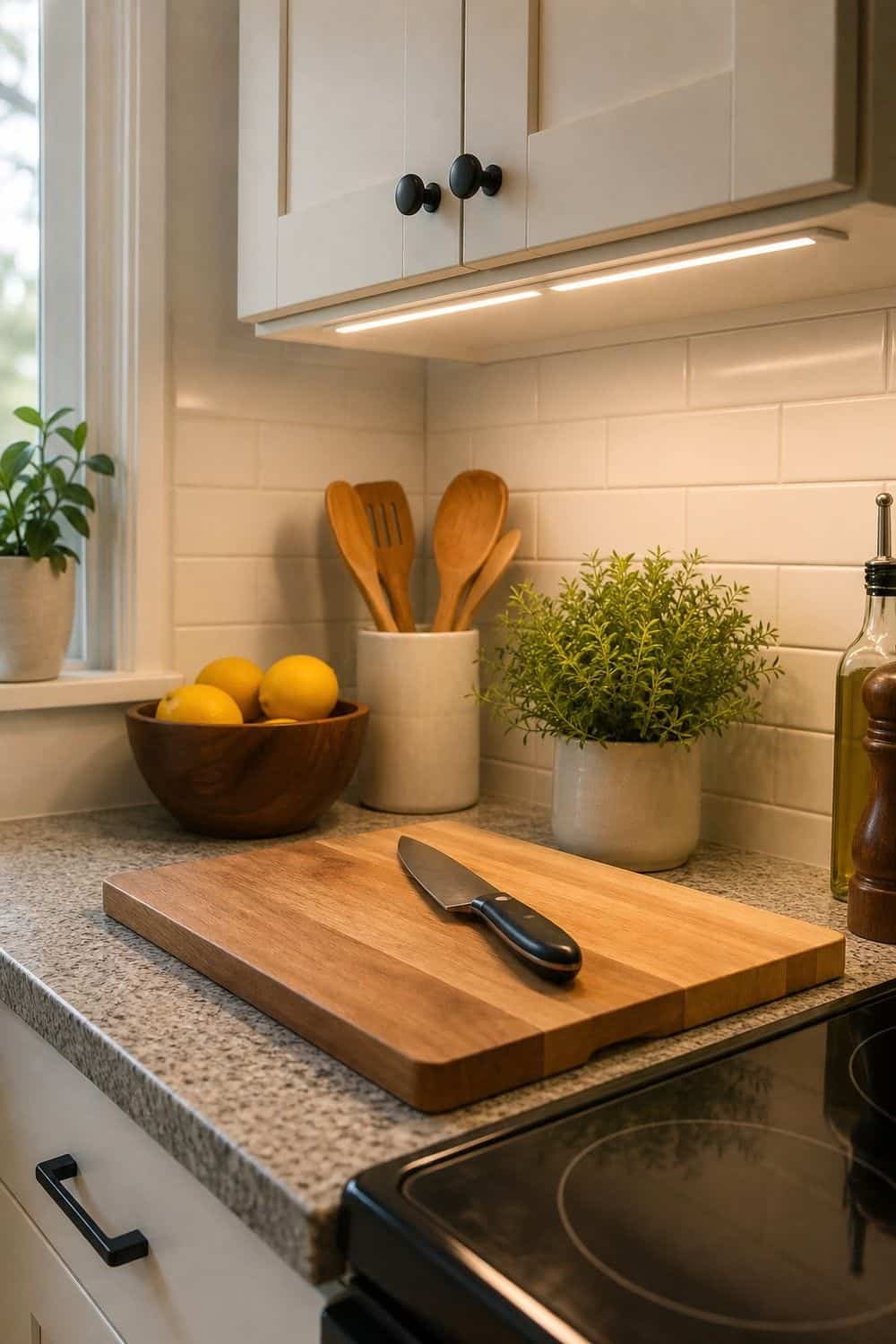
Dark counters make cooking feel harder and make a rental kitchen look older than it is. Rechargeable under cabinet lights brighten prep zones without electrical work, hardwired fixtures, or a counter lamp.
Check whether the lights mount with adhesive plates, magnets, or clips, and make sure you can remove them carefully later. Place them near the front edge of the cabinet so your hands do not cast shadows while chopping.
Light temperature matters. Warm or neutral light usually looks better on counters and tile than icy blue light. If charging is awkward, the lights will stop being useful, so choose a style you can remove and recharge easily. Use fewer lights in the right places instead of dotting every cabinet underside. A sink, prep board, and coffee corner may need different brightness levels, so dimming can be worth it.
10. Battery Operated Table Lamp for Counter Ambience

Evening light can make a rental kitchen feel more finished, especially on a coffee counter, breakfast shelf, or sideboard-style cart. A small cordless lamp adds glow without needing an outlet or a permanent fixture. Scale and placement decide whether this works.
Choose a compact base, wipeable shade, and stable footprint. Keep the lamp away from water, frying splatter, and any zone where cords, knives, or hot pans move quickly. This is atmosphere, not prep light. If you need to see while chopping, use under-cabinet lighting.
If you want a softer evening kitchen after dishes are done, a battery lamp can be a small luxury that does not alter the room. Check the charging method and battery life before buying. A lamp that dies every night or needs a bulky cord on the counter will not feel as clean as the product photo.
11. Rolling Kitchen Cart for Freestanding Storage
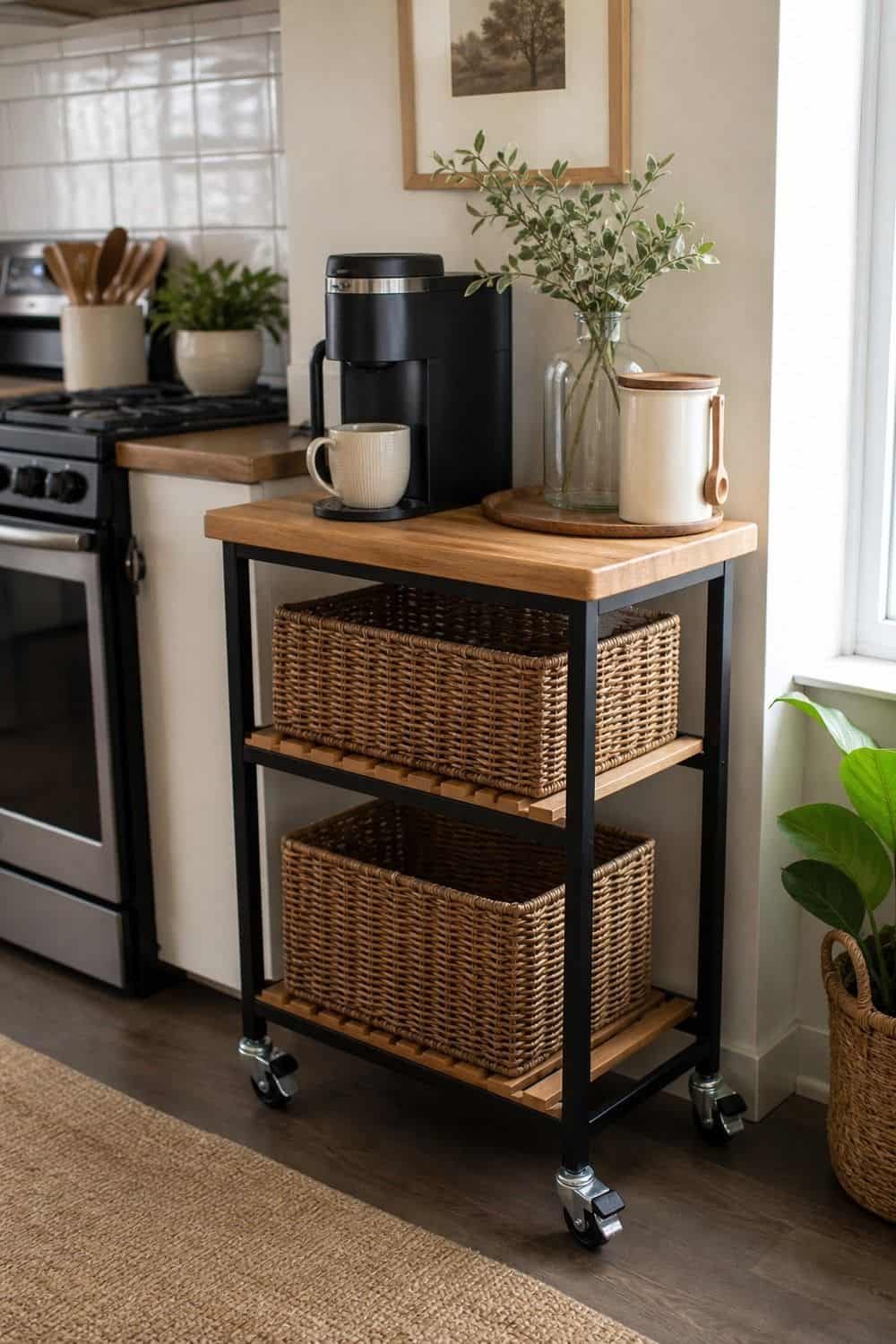
Freestanding pieces are often the safest rental upgrade because they do not touch the walls. A rolling kitchen cart can become a coffee station, pantry overflow spot, microwave support, or extra landing surface if the model is rated for that use.
Measure width, depth, shelf height, and wheel clearance before buying. Locking wheels are useful in narrow kitchens, and closed baskets or matching bins can make visible storage look more like decor.
Give the cart one clear job. If it becomes a rolling junk zone, it will make the rental feel smaller instead of more flexible. Use the top shelf as the styled surface and hide less attractive supplies below in baskets. If the cart lives in a walkway, rounded corners and locking casters matter.
12. Freestanding Bakers Rack for Vertical Kitchen Display
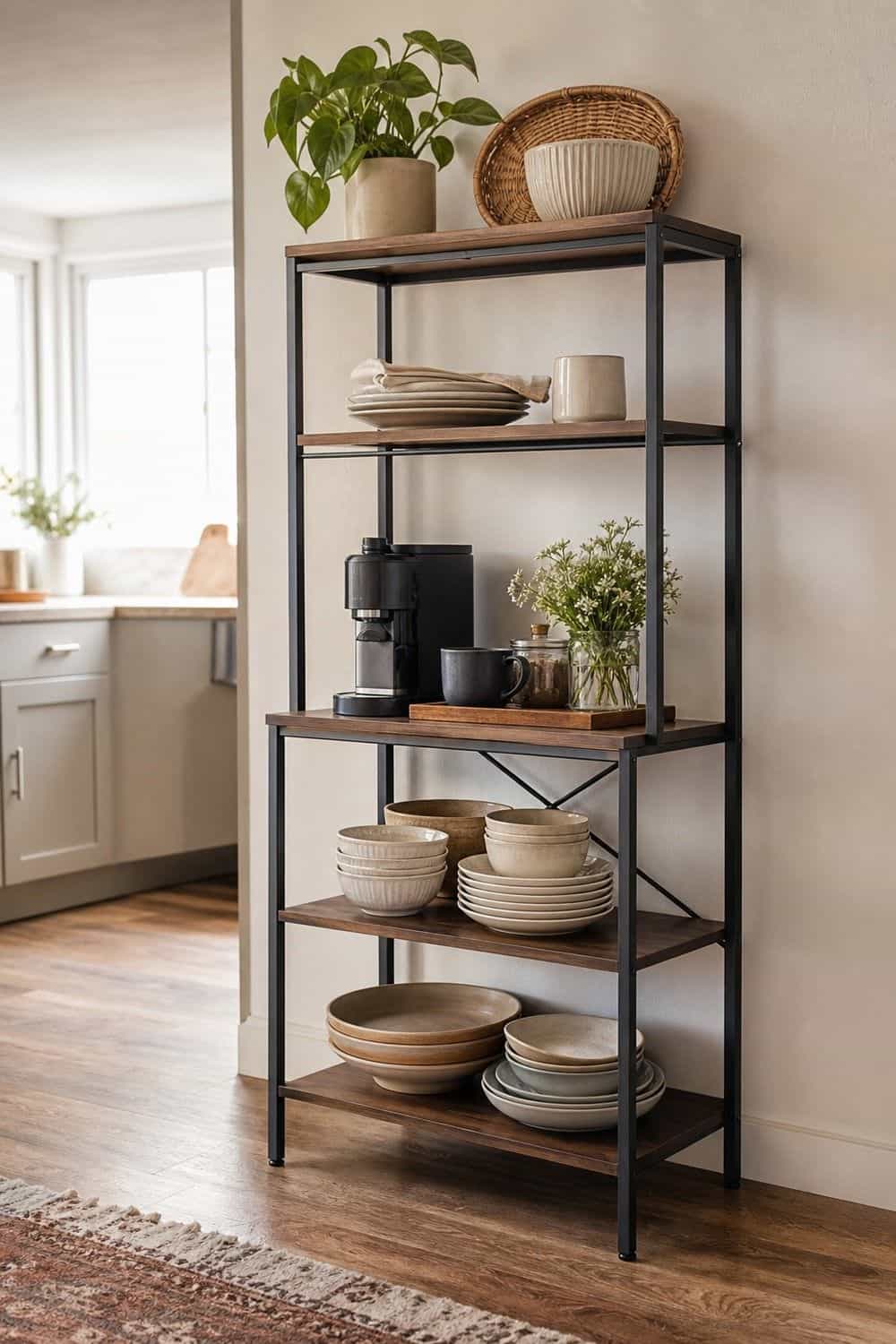
Blank rental walls can become useful without a single shelf bracket. A freestanding bakers rack adds vertical display for dishes, baskets, cookbooks, small appliances, plants, or a coffee setup when cabinets are limited. Check shelf weight, wall clearance, and overall depth.
Some racks look slim online but project too far into a walkway. If children, pets, or heavy appliances are involved, look for anti-tip options that fit your lease and wall rules. Style the open shelves in zones: heavier pieces low, daily items in the middle, and lighter decor higher. Too many tiny objects can make the rack feel cluttered fast. Leave a few inches between the rack and any radiator, outlet, or cabinet door. A rack that blocks access may technically fit, but it will not feel like an upgrade.
13. Over the Sink Shelf for a Tiny Counter Boost
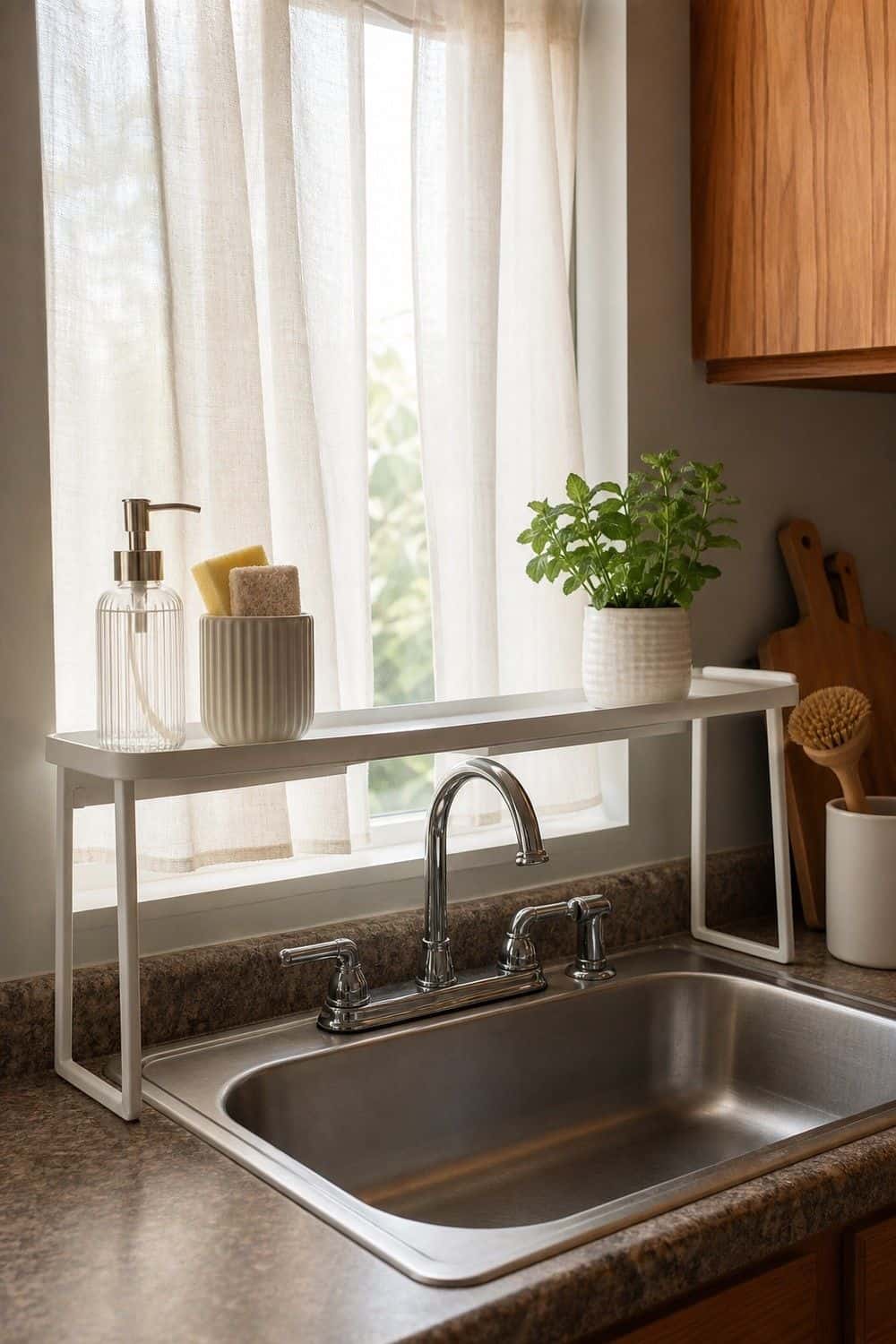
Sink zones in rentals often have no ledge, no shelf, and nowhere graceful for soap. An over the sink shelf adds a raised spot for a sponge, hand soap, herbs, or a tiny dish without permanent changes.
Measure faucet height, sink width, window-sill depth, and backsplash clearance before buying. The shelf should clear the faucet and stay stable when the counter is wet. Use it for light daily items, not a dish-drying zone. If it blocks pans or crowds the faucet, skip it.
14. Adhesive Towel Hooks for Cabinet or Wall Storage

Towels and aprons need a home, but renters may not want holes in cabinet sides or tile. Adhesive towel hooks create a hanging spot on smooth walls, cabinet ends, or tile without screws. Read the weight rating and removal instructions, then test the surface.
Some adhesives work well on tile but poorly on textured paint or delicate cabinet finishes. Let the adhesive cure fully before hanging damp towels. Place hooks where towels can dry without brushing against food prep areas. A hook behind a cabinet door may hide the towel, but it also needs enough airflow to avoid a stale smell. Use one or two hooks first instead of covering every cabinet end. A tidy towel spot can look designed, while too many adhesive hooks can make the kitchen feel improvised.
15. Removable Tile Stickers for Dated Floor or Backsplash Details
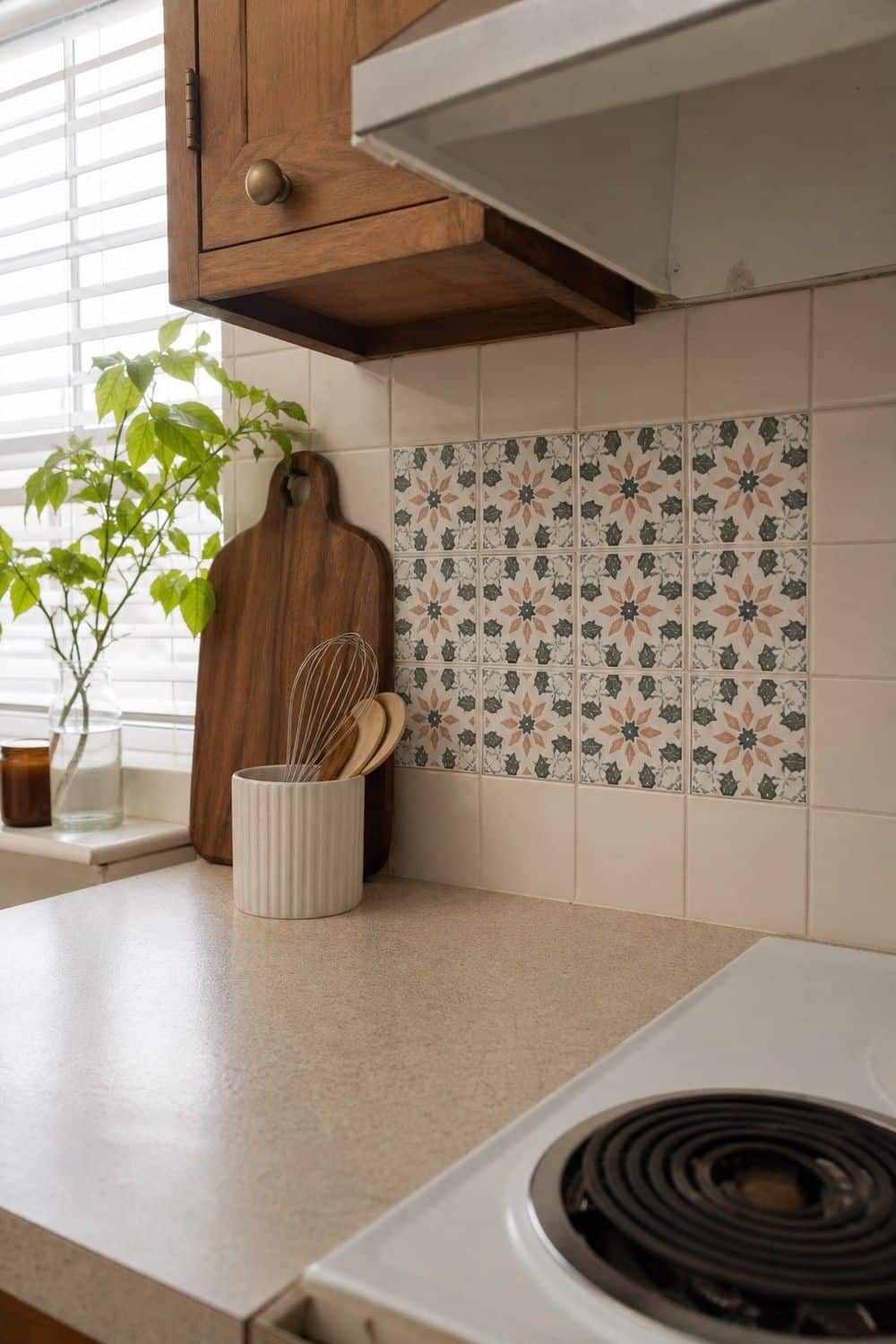
Existing square tiles can look dated even when they are still in good condition. Removable tile stickers let you update a small backsplash section, floor accent, or tile border without replacing the original surface. This is different from full backsplash sheets.
Stickers work best when the existing tile size is consistent and the grout lines are not too deep. Test one sticker first and watch how it handles steam, cleaning, and foot traffic. Keep the pattern contained. A small accent area can look intentional, while covering every tile in a busy rental kitchen may feel chaotic and harder to remove cleanly. Choose sticker sizes that match the existing tile exactly, or the edges will reveal the shortcut. In a floor zone, avoid raised corners where shoes can catch.
16. Window Privacy Film for Kitchen Glass Doors
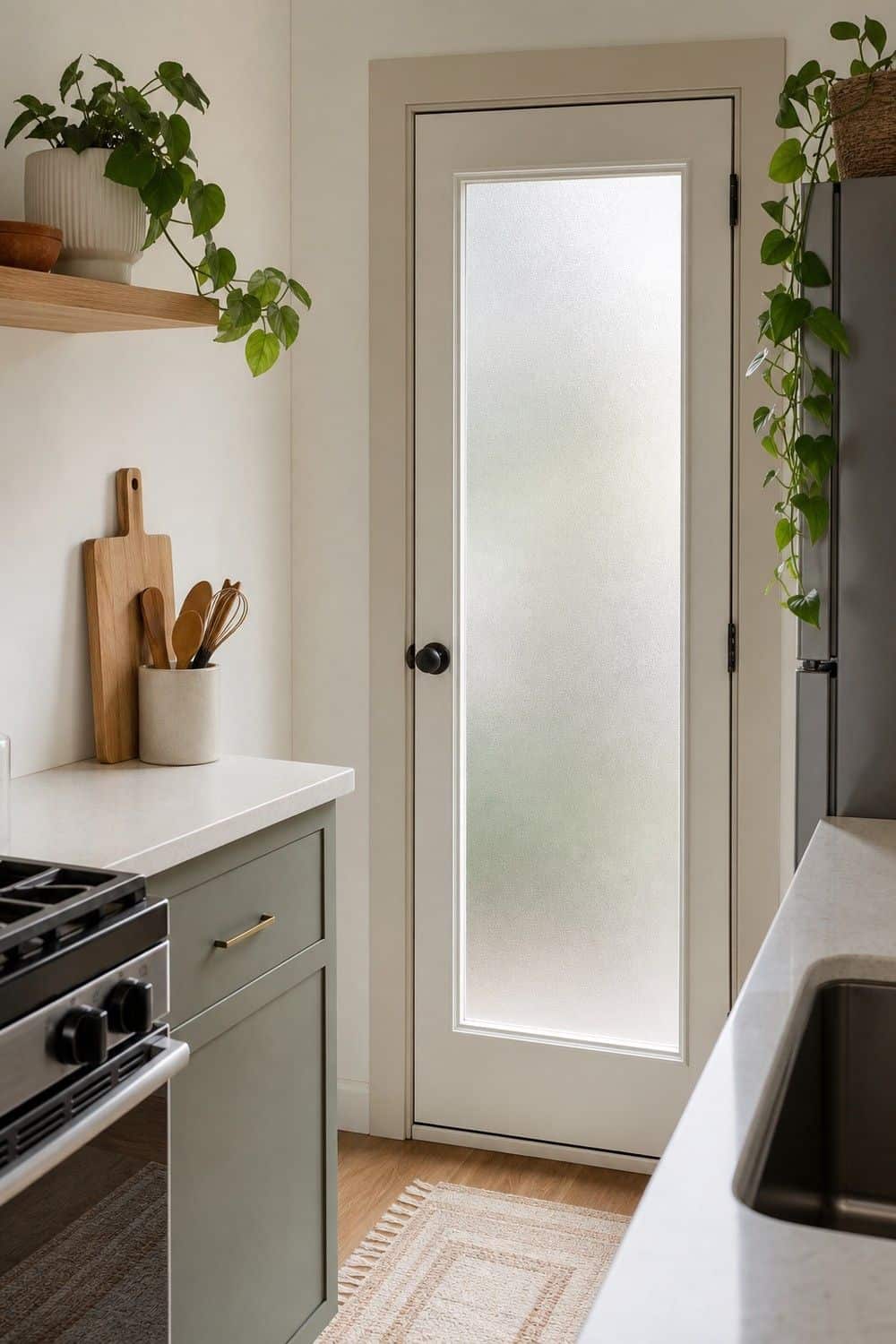
Awkward glass doors, street-facing kitchen windows, or pantry glass can make a rental feel exposed. Removable window privacy film filters the view while keeping light, which is especially helpful in small kitchens.
Measure the glass carefully and follow the water-application directions. Static-cling styles are often easier to remove than heavy adhesive films, but the surface still needs to be clean and smooth. A squeegee or flat card helps remove bubbles during installation. For doors, check both sides of the glass so the film looks clean from the kitchen and the adjoining room.
Choose frosted, reeded, or subtle patterned film if the kitchen already has a lot going on. The mistake is using a busy film that blocks light and competes with backsplash, curtains, or cabinet color.
17. Peel and Stick Floor Tiles for a Small Kitchen Zone
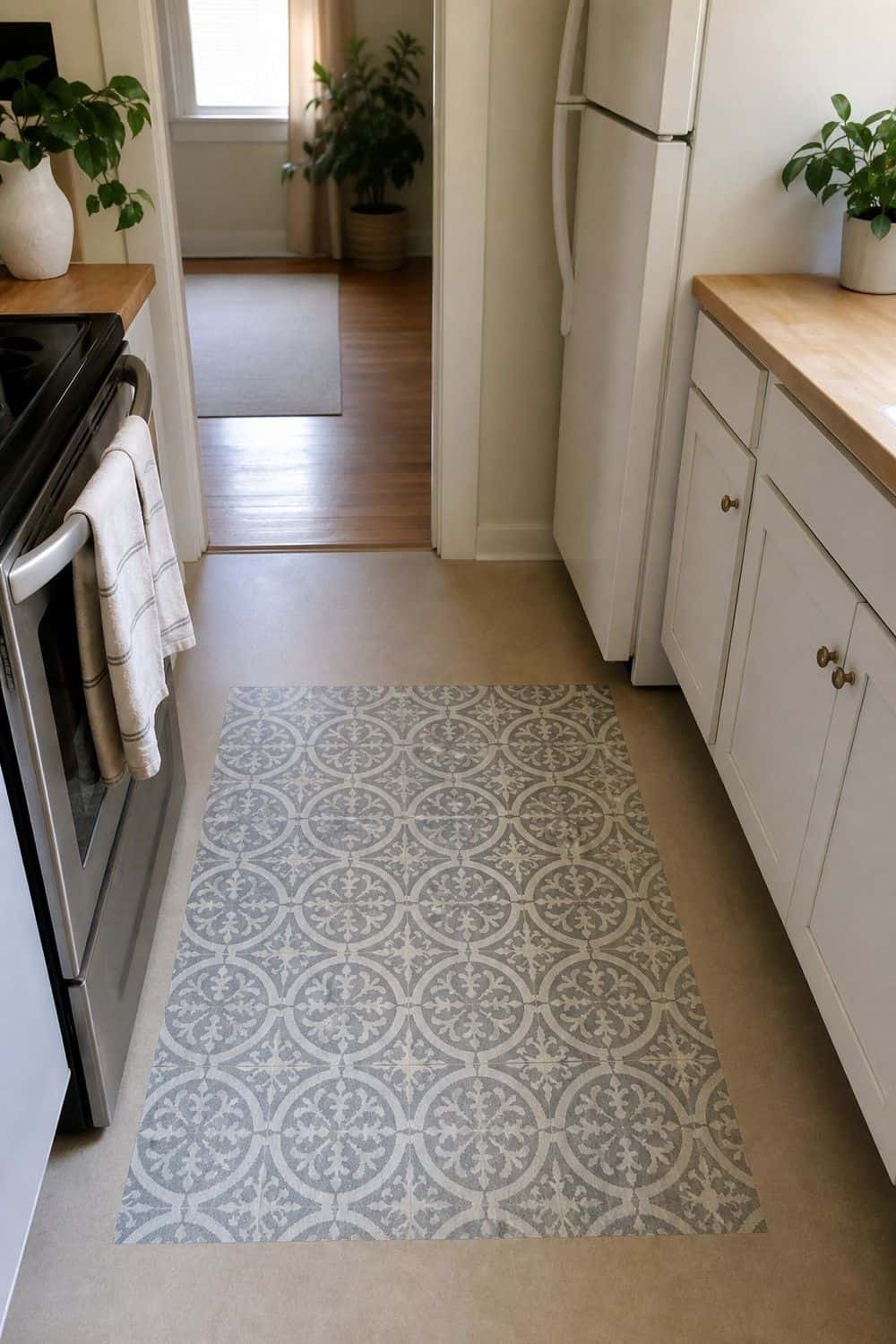
Dated flooring can dominate a rental kitchen, but peel and stick floor tiles need more caution than a rug. They work best in a small zone where the original floor is smooth, stable, clean, and approved for removable adhesive.
Check the lease, test one tile in a hidden area, and order extras for cuts or mistakes. Watch thickness near thresholds and appliances so doors still open. If removal could damage the floor, choose a washable runner instead. Save a photo of the original floor and keep spare tiles only for the temporary area you actually covered.
18. Temporary Cabinet Covering for Flat Rental Doors

Flat slab doors are the easiest cabinet style to cover temporarily because there are fewer grooves and edges to fight. Peel and stick cabinet vinyl can change color or texture without paint when the surface is smooth and stable.
Test inside one door first, especially if the cabinets are painted, heat-damaged, or already peeling. Measure each door separately and use a sharp blade for clean edges around hinges and pulls. Do not cover cabinets that sit too close to steam or heat unless the product is rated for it.
A few upper doors or a coffee bar section may look better than wrapping the whole kitchen. Hardware removal also matters. If you cannot remove knobs or pulls cleanly, cutouts can look rough, so choose a test door with the most forgiving shape first.
19. Countertop Contact Paper Kit for a Coffee Bar

Small coffee bars are safer places for temporary counter covering than the main prep zone. A countertop contact paper kit can define a side counter, cart top, or tray-backed station where mugs, syrups, and a machine already live.
Use it in a contained rectangle instead of covering every counter. Check whether the kit includes a smoothing tool and trimming blade, and keep hot mugs, wet rags, and appliances from testing the seams too aggressively.
This find is about a styled station, not pretending the rental has new stone counters. Pair it with a tray so the surface gets less direct wear. Choose a pattern that looks plausible at a small scale, such as soft stone, butcher-block style, or a quiet solid. High-gloss marble prints can show seams and crumbs quickly.
20. Command Strip Picture Ledges for Kitchen Art
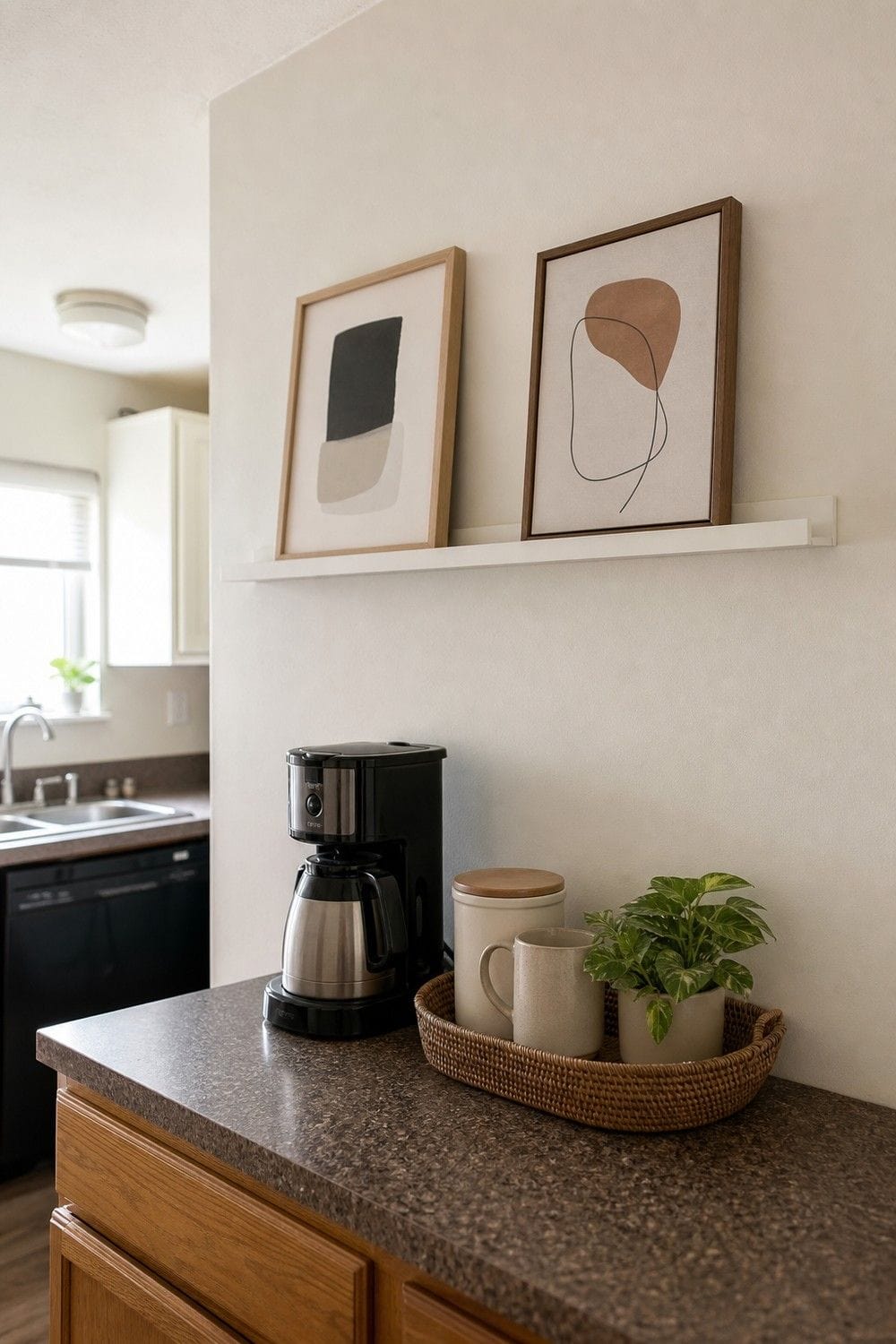
Lightweight art can make a rental kitchen feel personal without adding holes. Adhesive picture ledges are useful for small frames, recipe cards, postcards, or a narrow rotating display above a coffee area or dining nook.
Weight limits are non-negotiable. Use lightweight frames, follow the strip directions, and avoid steam, stove grease, or sink walls where moisture can weaken the hold. If the wall has old paint or texture, test one strip before building the whole display. Keep the art narrow enough that it will not get bumped by cabinet doors or busy shoulders.
21. Slim Pantry Cabinet for No-Pantry Rentals
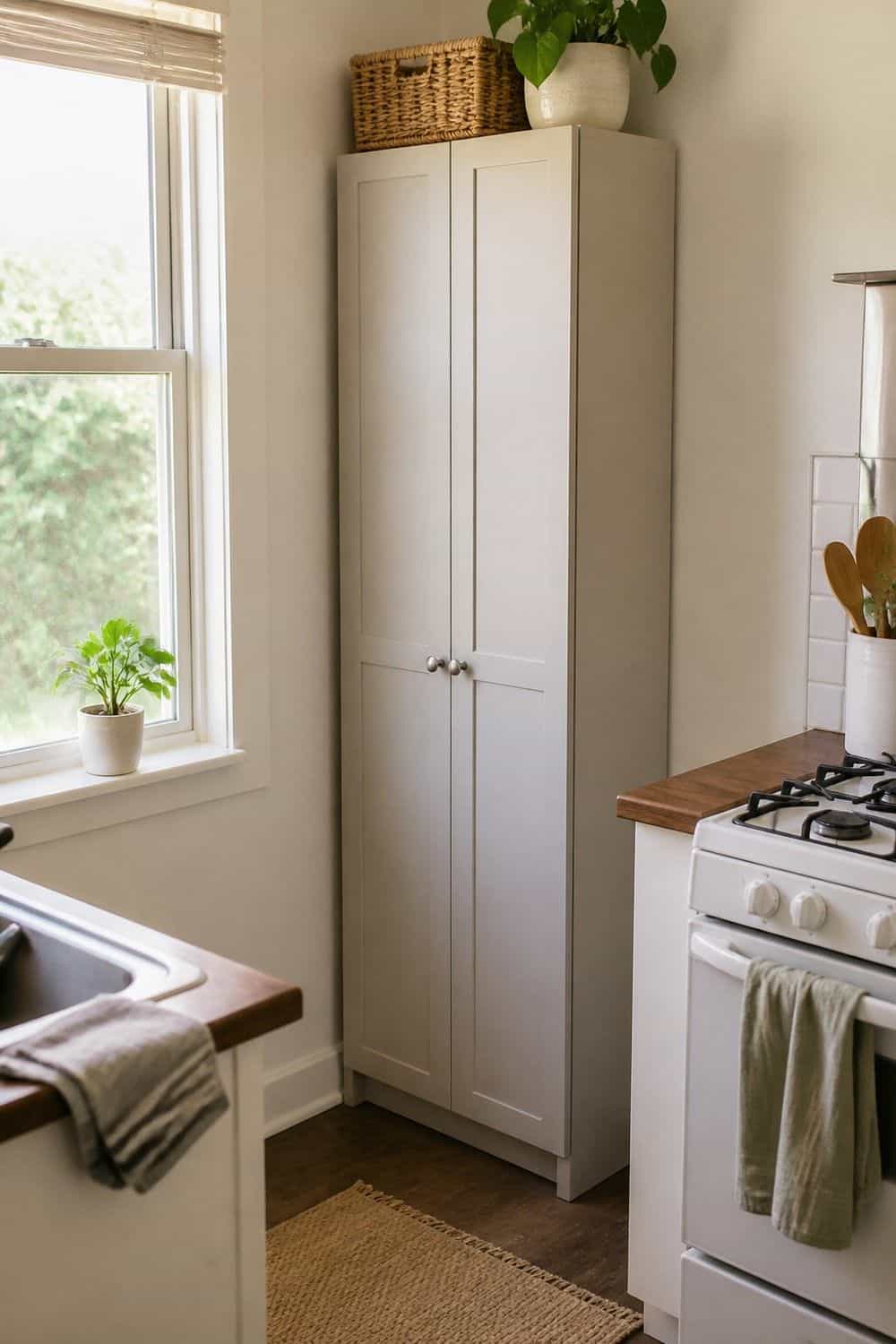
No-pantry rentals often look messy because food has nowhere hidden to go. A slim pantry cabinet adds closed storage, which can be one of the most effective decor upgrades because it removes visual clutter from open counters and shelves.
Measure width, depth, height, and door swing before buying. Adjustable shelves help with cereal boxes, cans, baskets, and small appliances, while a finish close to the cabinets or wall color keeps the piece from feeling bulky.
Consider anti-tip safety where appropriate and avoid overloading upper shelves. Freestanding still needs to feel stable, especially in a narrow rental kitchen where people brush past furniture often. Closed doors make this piece read more like furniture than storage overflow. If the cabinet has glass, use matching bins inside so pantry labels do not become the main view.
22. Countertop Appliance Garage for Visual Calm
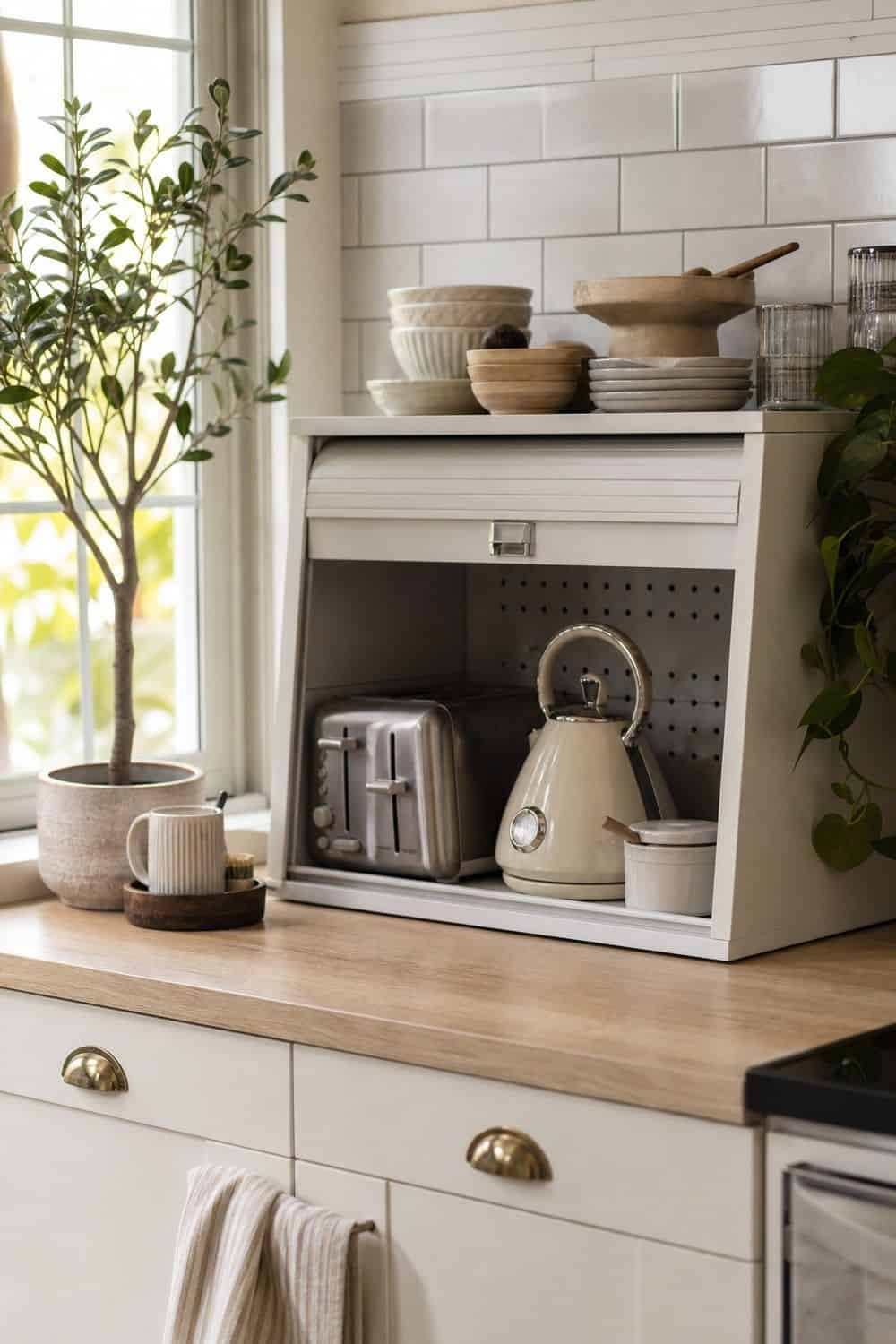
Small appliances can make a rental kitchen look crowded even when the room is clean. A countertop appliance garage hides a toaster, coffee supplies, blender cups, or tea gear without altering cabinets.
Measure the appliance and the door clearance before buying. Tambour doors, lift-up fronts, and hinged styles all need different space. Ventilation matters, and appliances should be unplugged and cooled before being closed inside.
Choose this only if the counter has enough depth. A garage that eats the whole prep zone may look tidy while making the kitchen harder to use. Think about daily motion before buying. If you make toast every morning, the door needs to open easily without moving the coffee maker, cutting board, or dish rack.
23. Removable Backsplash Panels for a Larger Wall Span
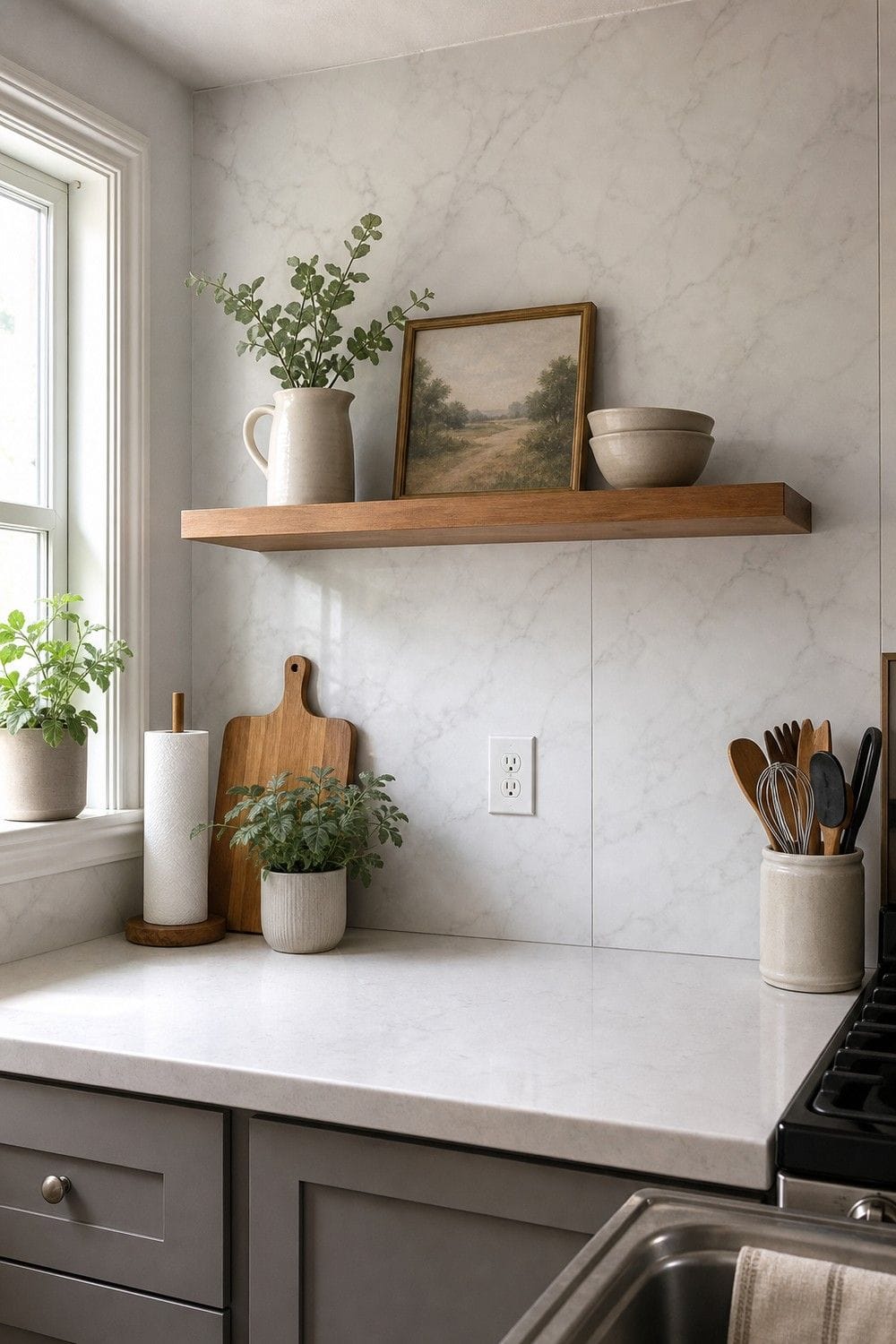
Larger panels can look calmer than many small stickers when the backsplash wall is wide or visually broken up. Removable backsplash panels can mimic stone, acrylic, metal, or tile with fewer seams across a longer span.
Plan cuts before ordering, especially around outlets, corners, window trim, and uneven walls. Heat and moisture ratings matter near the stove and sink, and larger panels can be less forgiving if the first placement is crooked.
Use panels when you want a cleaner continuous look. Use small peel-and-stick tiles when the wall has many interruptions or when you want more control over a small area. Dry-fit the panels before peeling any backing so outlet cuts and end points make sense. Larger pieces can look seamless, but they are harder to reposition once adhesive touches the wall.
24. Clamp On Shelf for Extra Counter Display
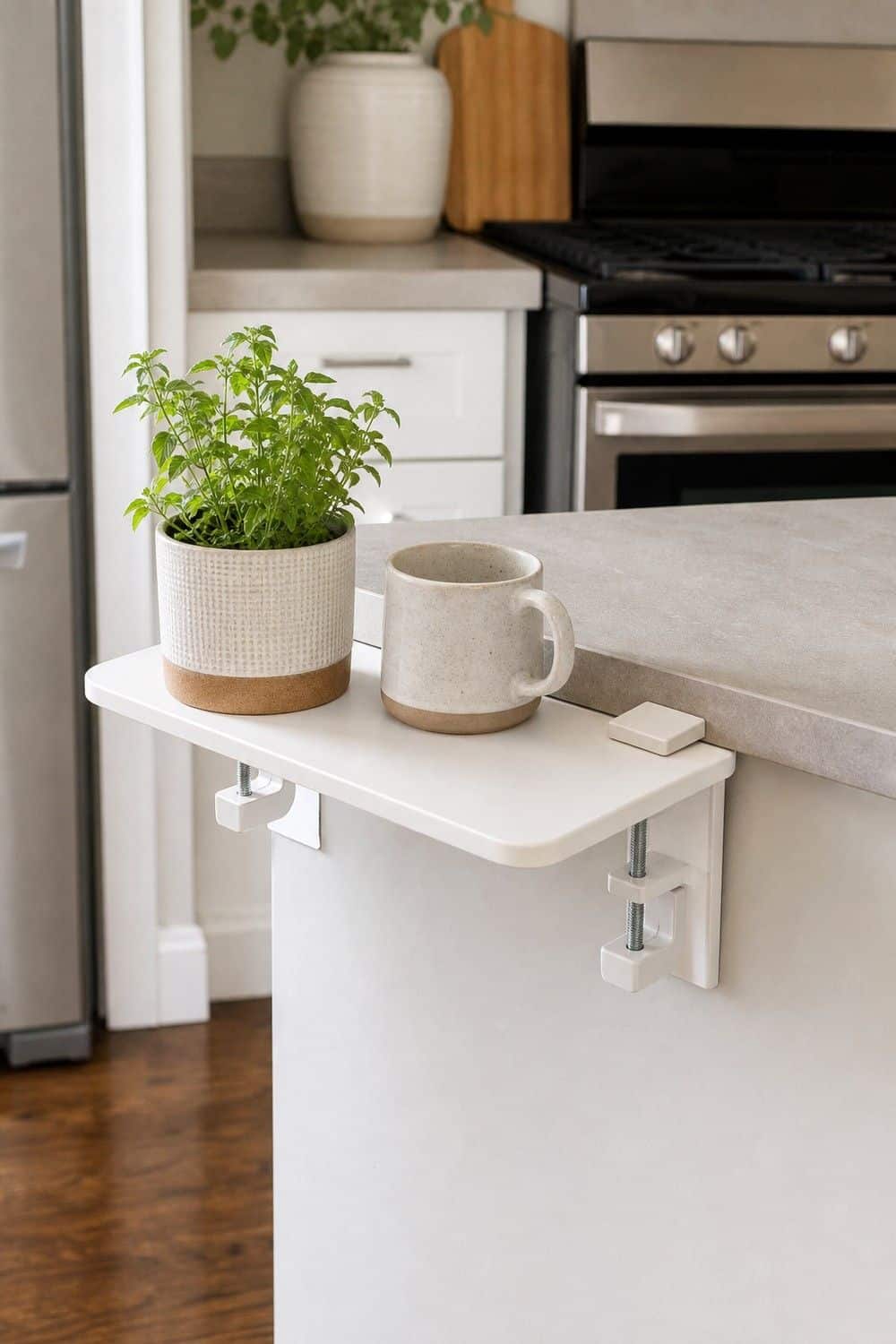
A clamp on shelf can add a small raised surface to a counter edge, table, or cart without drilling. It is useful for herbs, mugs, a salt cellar, or one decorative object that would otherwise take prep space.
Check counter thickness, table-edge shape, clamp depth, and protection pads before buying. Keep the shelf light, balanced, and away from elbows, cabinet doors, burners, and wet sink edges. If the pads slide, dent, or leave marks, remove it. This works best as a tiny display lift, not as storage for anything breakable or heavy.
25. Removable Cabinet Lighting for Glassware Display

Glassware, open shelves, and coffee corners can look more finished with a small glow. Battery operated cabinet lights add that layer without wiring, which makes them useful for renters who cannot add permanent under-shelf lighting.
Warm light usually looks softer on dishes and glass than cool blue light. Motion sensors are helpful inside cabinets, while tap lights may be better for open shelves where you want control. Plan adhesive removal before sticking anything to painted wood.
Use lighting to highlight an edited area, not clutter. If the shelf is packed with mismatched mugs and plastic containers, the light will make the mess more visible. Before installing, decide where batteries will be changed or lights will be charged. A pretty glow is less useful if maintaining it requires emptying the whole cabinet.
How to Keep Rental Kitchen Decor Safe to Remove
Before using removable decor, check the lease and test the surface. Adhesive products behave differently on glossy tile, matte paint, old laminate, textured walls, and heat-damaged cabinets. A small test patch can save a much bigger repair later.
For the biggest impact, focus on backsplash, floor, lighting, windows, counters, and freestanding storage. Stop before every surface has a temporary upgrade. A rental kitchen still needs to feel clean, easy to cook in, and easy to restore when it is time to leave.
FAQ
What kitchen decor is safest for renters?
The safest renter-friendly kitchen decor is freestanding, washable, low-commitment, or easy to test before full installation. Runner rugs, carts, plug-in lighting, tension rod curtains, removable privacy film, adhesive hooks, and small art ledges are often safer than large adhesive surface changes.
Can peel-and-stick backsplash damage rental walls?
It can, depending on the wall surface, paint condition, adhesive strength, heat exposure, and removal method. Always test one piece first and check the product directions. If the lease is strict or the wall is fragile, choose a freestanding or low-contact upgrade instead.
What renter-friendly kitchen upgrades should I avoid?
Avoid anything that damages surfaces, blocks ventilation, creates fire risk, or cannot be reversed cleanly. Be cautious with high-heat peel-and-stick areas, heavy adhesive shelves, drilling into tile, covering damaged cabinets, or using floor products without testing removal first.
How do I make a rental kitchen look better without painting?
Use lighting, textiles, removable backsplash products, privacy film, art, rugs, carts, cafe curtains, and small countertop zones. Better light and cleaner visual lines often make the fastest difference, especially when counters are edited and one surface becomes the focal point.
Are adhesive lights safe for rental kitchens?
Adhesive lights can work well if they are placed away from heat, water, and fragile finishes. Check how the adhesive removes, whether the light is rechargeable, and whether the surface can handle the mounting strip. Remove slowly according to product directions.
How do I decorate a rental kitchen with no storage?
Use freestanding pieces that also look good: a rolling cart, slim pantry cabinet, bakers rack, magnetic spice rack, over-sink shelf, or countertop appliance garage. Closed storage often improves the decor because it hides visual clutter without changing cabinets.
Can I change cabinet hardware in a rental?
Sometimes, but you should check the lease or ask first. If you are allowed, keep the original hardware and reinstall it before moving out. If drilling new holes is not allowed, adhesive cabinet handles may give a temporary look on light-use doors.
How do I remove peel-and-stick decor before moving out?
Follow the product directions and work slowly. Many peel-and-stick products remove better with gentle heat, patience, and a low pulling angle. Test removal early in a hidden spot if you are worried about paint, laminate, or old surfaces.
Final Thoughts
The best renter-friendly kitchen decor finds make the room feel more personal without pretending you own the walls, cabinets, or floors. Choose products that solve a visible problem, fit the surface, and can be removed with care. A rental kitchen can feel layered and finished, but the smartest pieces always leave you a clean way back.
Last update on 2026-09-17 / Affiliate links / Images from Amazon Product Advertising API