
The best summer picnic party hosting ideas start with a real cooler for cold foods, a dry tote for snacks, a waterproof blanket zone, a drink crate, a tableware bin, a cleanup kit, and a small activity bag. Pack foods that travel well, keep perishables cold, bring shade when you can, and make trash and leftovers easy to handle. A good picnic setup keeps everything portable, covered, and simple to reset before you leave.
A summer picnic party should feel relaxed, but hot weather can make the details matter fast. Food has to travel, drinks need to stay cold, blankets need a dry landing spot, and guests still need shade, wipes, trash bags, and something to do after eating.
The trick is to think in portable zones instead of trying to recreate a patio dinner in the grass. A cooler, dry tote, blanket bag, cleanup kit, and activity bag will do more for the party than fragile platters or a menu that only works beside a kitchen.

Top Recommended Products


You Might Also Like These Blog Posts
- Picnic Party Ideas
- Garden Party Food Ideas
- Summer Patio Dinner Hosting Ideas
- Backyard BBQ Food Ideas
- Zero-Proof Bar Ideas
1. Dedicated Cooler for Perishables
A real cooler is the first thing to plan for a hot-weather picnic, especially if you are bringing cold salads, meats, cheese, dips, cut fruit, or dairy-based sauces. A decorative basket can carry napkins and bread, but it cannot protect perishable picnic food.
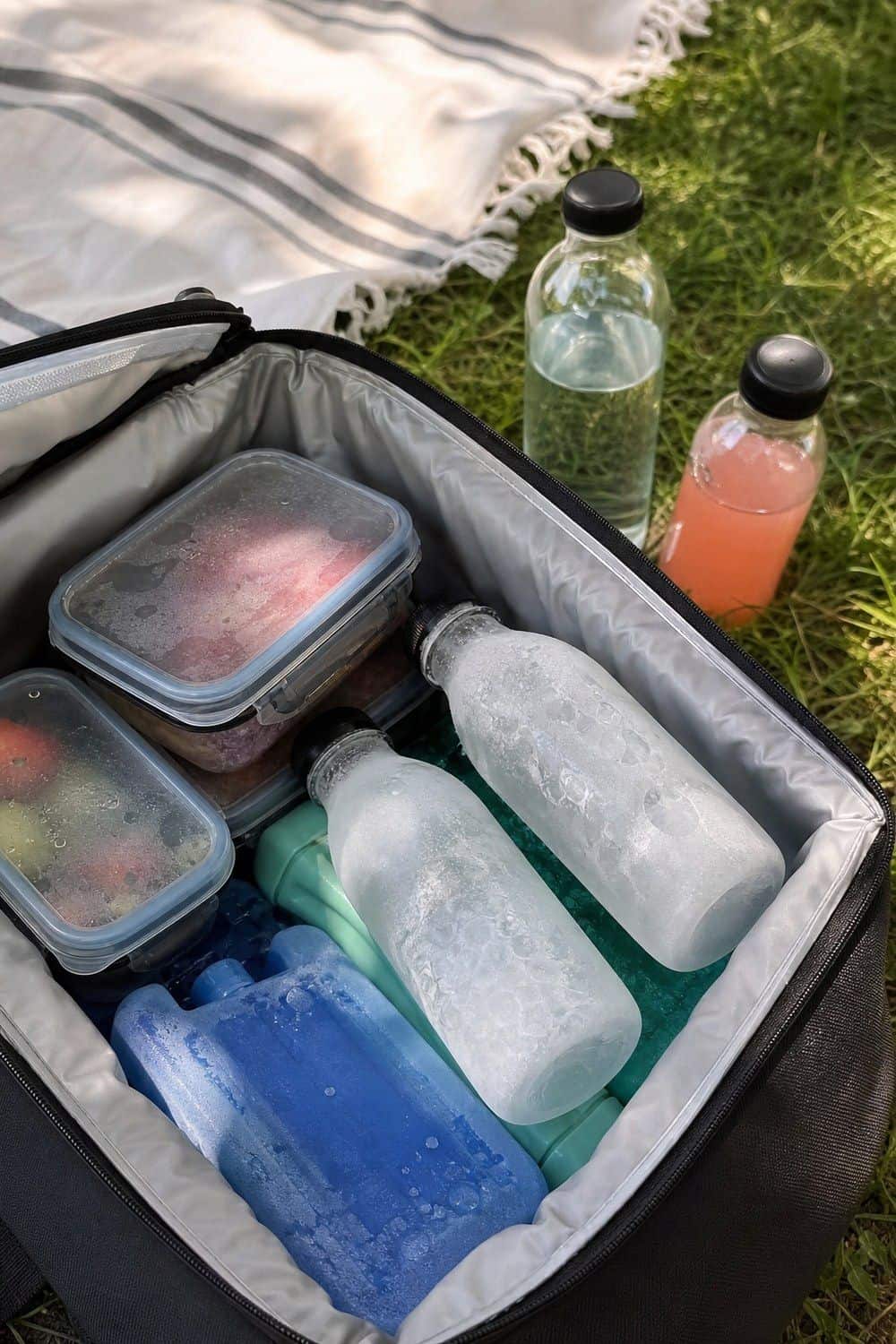
Pack cold items in sealed containers with ice packs, keep the cooler in shade, and open it only when you need something. That one habit keeps the food safer and the picnic calmer.
Drinks are easier in a separate crate or second cooler so guests are not warming the food every time they want water. Keep that food cooler simple, cold, and closed as much as possible.

2. Frozen Water Bottles as Backup Ice
Frozen water bottles are one of the easiest picnic cooler tricks because they help chill food on the way there and become cold drinks later. They are especially useful for parks, beaches, and lake spots where ice melts quickly or water fountains are not nearby.
Leave expansion room before freezing reusable bottles, then tuck them around foods that need extra cold support. They are a helpful backup, not the only cold source for dairy, meat, seafood, or cut fruit.
Pack a few unfrozen drinks too, so guests have something ready right away. Nobody wants the first picnic drink to be a block of ice in the hottest part of the afternoon.
3. Dry Tote for Nonperishable Picnic Food
A dry tote keeps crackers, chips, bread, cookies, nuts, whole fruit, paper goods, and shelf-stable snacks away from melting ice packs. That separation prevents soggy bread and crushed chips from making the picnic feel messy before the blanket is even unfolded. Pack the tote by use: snacks on top, bread protected from heavy items, and paper goods in a side pocket if you have one. Keeping dry food out of the cooler also makes the cold-food cooler easier to manage.

4. Sandwich and Wrap Box
Sandwiches, wraps, stuffed pitas, and baguette sandwiches are picnic classics because they travel well and do not need a full table. Box or wrap them individually so guests can grab one without opening every container on the blanket. For fillings with juicy tomatoes, pickles, dressed greens, or sauces, pack the wet parts separately or use sturdier bread.
The mistake to avoid is building delicate sandwiches too early, then expecting them to survive heat, travel, and ground-level serving. Label vegetarian or kid-friendly wraps before they disappear into the same box.

5. Individual Picnic Meal Containers
Individual meal containers make picnic hosting easier when guests are eating from blankets or low chairs. Each box can hold sandwich pieces, fruit, vegetables, crackers, cheese, and a small dessert without needing shared serving tools for every bite. This works especially well for kids, small groups, or public parks where buffet-style serving feels awkward.
Keep perishable boxes cold until serving, and avoid packing anything saucy enough to leak into the crackers. A tiny napkin tucked inside each box makes the meal feel considered.

6. Texture-Holding Grain Salads
Grain salads are better picnic food than delicate green salads because quinoa, farro, couscous, and rice hold their texture longer. Add herbs, vegetables, beans, chickpeas, feta, or vinaigrette for a sturdy make-ahead dish that still feels fresh. Use leakproof salad containers and keep the salad chilled if it includes cheese, meat, or anything perishable.
The picnic-specific win is that grain salads can be served from a container without wilting into a sad pile before everyone eats. Pack a wide spoon so guests are not chasing grains with a fork.

7. Crunchy Vegetables With Dip Cups
Vegetable cups are more picnic-friendly than a loose crudite platter. Cucumbers, carrots, snap peas, peppers, celery, radishes, and cherry tomatoes can be packed with small lidded dip cups so guests can snack without balancing a large tray. Keep dairy dips cold and consider hummus or bean dip when you want something sturdier.
Individual cups also reduce double-dipping and make it easier to hand snacks to kids without opening the whole cooler repeatedly. Dry the vegetables well so water does not pool under the dip.

8. Watermelon Spears in a Covered Container
Watermelon spears are easier at a picnic than big wedges or cubes that need forks. Cut the melon into sticks before leaving, chill it well, and pack it in a covered container that catches juice and keeps bugs away. Set out one layer at a time, then keep the rest cold until people want more. A few napkins or compostable wipes nearby are worth it because watermelon always finds a wrist, a blanket, or someone’s sandal. Add lime wedges only when serving so the fruit stays bright.

9. Cheese and Cracker Box
A compact grazing box gives guests a cheese-and-cracker option without building a fragile board in the grass. Pack firm cheeses, crackers, grapes, nuts, olives, and dried fruit in separate compartments so the crackers stay crisp. Choose cheeses that hold up better than soft, runny ones in heat, then keep the box in the cooler until serving. If you bring a soft cheese, make it a small portion and give it its own knife. A small toothpick cup helps keep fingers out of shared bites.

10. Small Tray for Low Picnic Serving
A low picnic table tray or folding tray makes the whole setup feel steadier. It keeps drinks, dips, salad containers, and serving tools off uneven grass or sand, which matters once people start reaching across the blanket. Use it for the foods most likely to spill, not every snack you packed.
A small tray also gives guests a clear place to return lids, spoons, and cups instead of scattering them around the blanket. Choose one with legs or a firm base if the ground is lumpy.

11. Main-Zone Waterproof Picnic Blanket
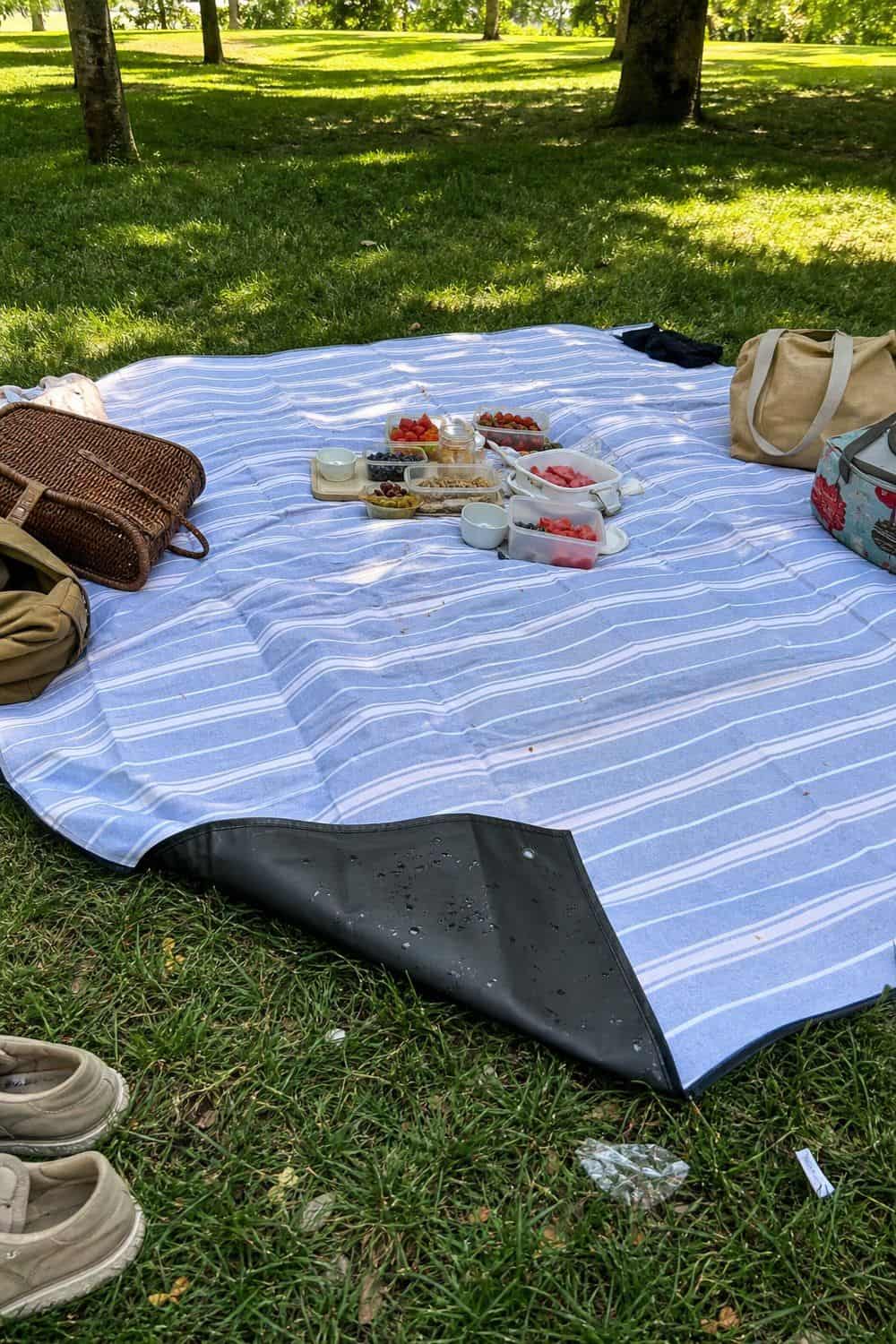
A waterproof picnic blanket defines the party space and protects everyone from damp grass. Use one large blanket or a few smaller ones, then keep food near the center and bags or shoes near the edges. The waterproof backing matters more than the pattern because it keeps the blanket usable even when the ground looks dry but is not. Shake it out before packing up so crumbs, grass, and tiny wrappers do not travel home with you. If kids are coming, bring one extra small blanket for games.
12. Portable Chairs for Guests Who Need Support
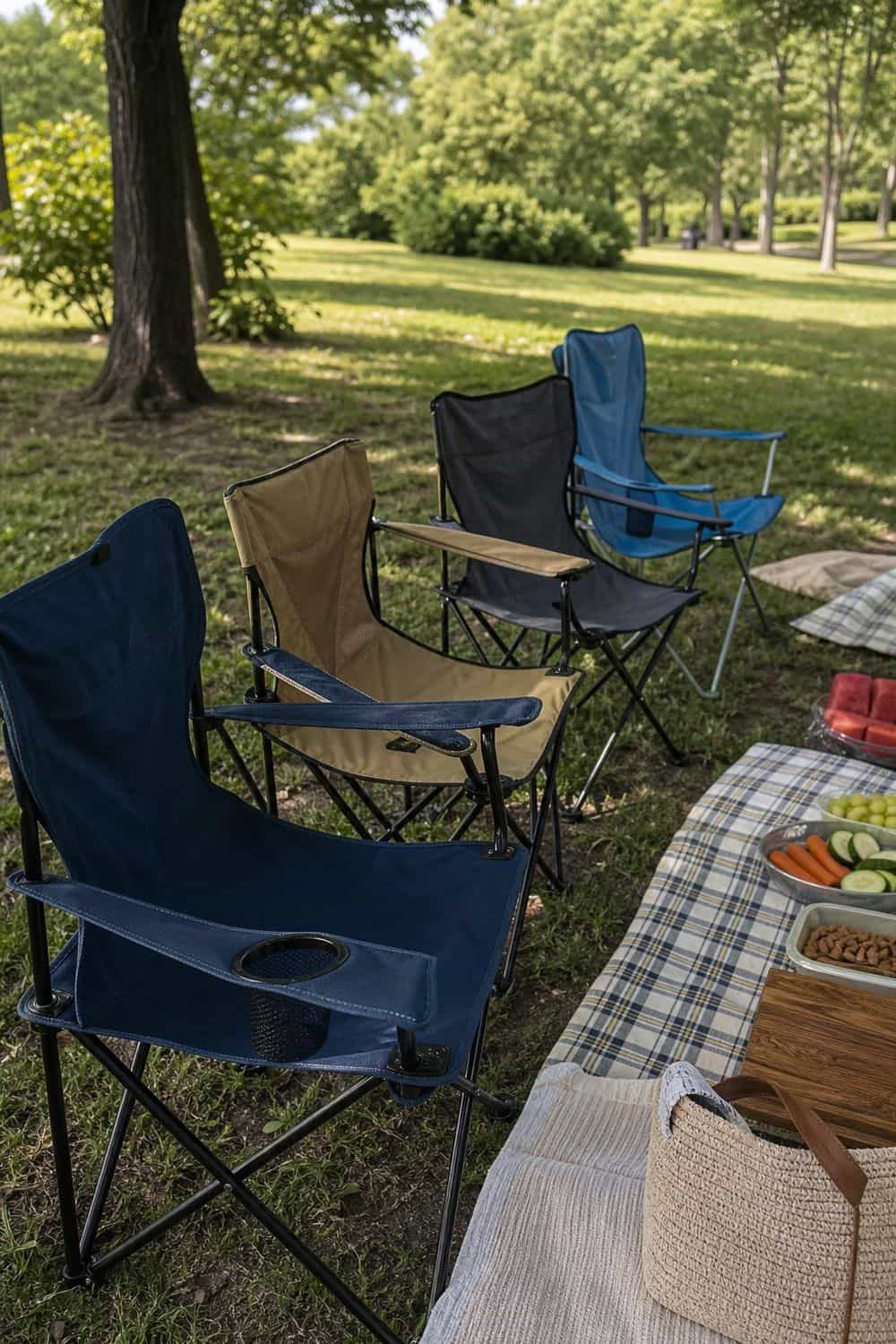
Blankets are charming, but not every guest wants to sit on the ground. Bring a few folding picnic chairs for older guests, pregnant guests, anyone with knee or back issues, or people who simply want a proper seat while eating. Mixing blankets and chairs makes the gathering feel more thoughtful without turning it into a full patio setup.
Place chairs along the edge so they do not block the food or make people step over plates. A chair with a cup holder is quietly helpful at a picnic.
13. Shade Spot Before Food Comes Out
Choose the shade before you unpack the food. A tree, umbrella, pop-up canopy, or shade sail makes guests more comfortable and keeps the picnic from feeling punishing in the middle of the afternoon.
It also helps you avoid placing the entire food setup in direct sun. Put the cooler and perishable dishes in the shadiest practical spot, then let blankets and game areas spread outward from there.
Shade planning feels boring until everyone is grateful for it. Check where the shade will move as the afternoon goes on before you settle every blanket and chair.

14. Drink Crate for Self-Serve Refills
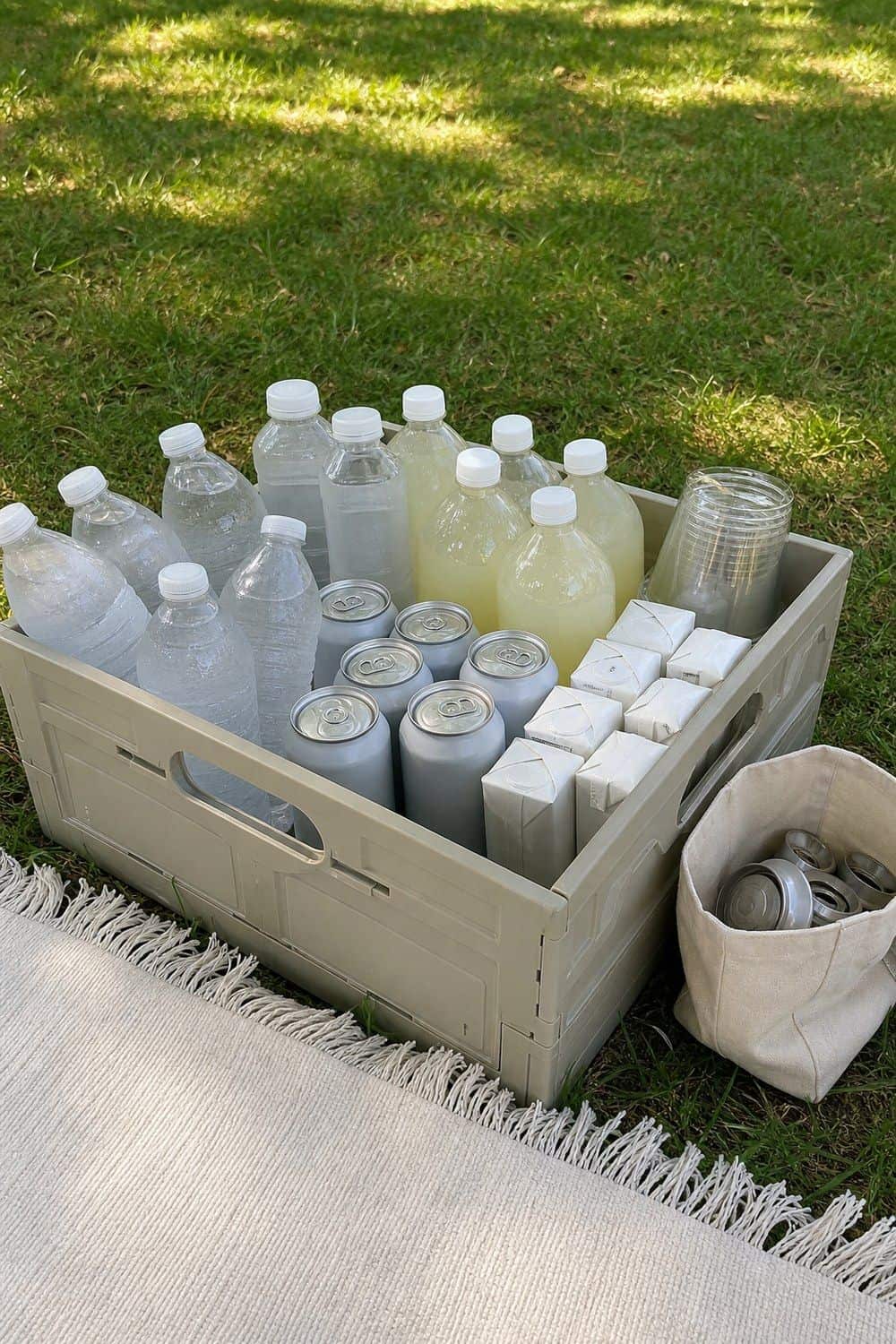
A self-serve drink crate keeps people out of the food cooler. Pack bottled water, canned sparkling water, juice boxes, lemonade bottles, or reusable cups in a handled bin so drinks stay visible and easy to grab. If you are using frozen water bottles, mix them with ready-to-drink bottles so guests are not waiting on everything to thaw.
Keep the crate near the blanket edge, where people can reach it without stepping over food. Add a small bag for empty cans or caps right beside it.
15. Reusable Cups and Napkins in One Bin
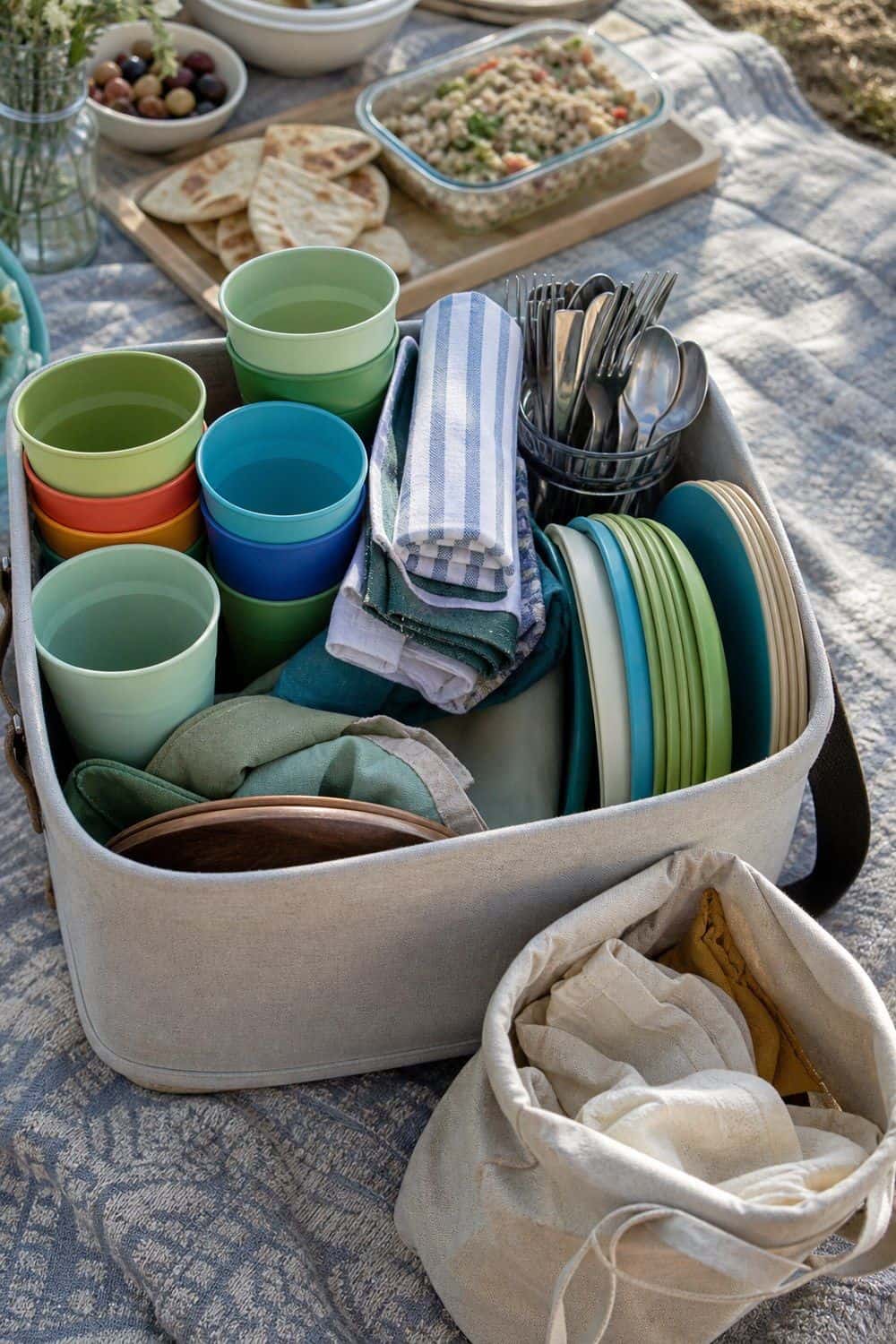
A tableware bin saves the host from answering the same tiny question all afternoon. Pack cups, napkins, plates, flatware, and extra napkins together, then place the bin near the food once the blanket is set. This makes the picnic feel organized even without a table. Add one small bag for used napkins or compostable items so clean supplies and messy leftovers do not end up in the same corner. Put heavier plates at the bottom so the bin does not tip.
16. Cutting Board and Covered Knife
A small board and safely covered knife are useful for bread, cheese, fruit, sandwiches, or cake at the picnic site. The key is packing the knife securely, either with a cover or a firm wrap, so it is not loose in the tote. Add a dish towel or wipes for cleanup, because outdoor cutting always leaves crumbs or juice somewhere. This little kit lets you finish simple foods on site without bringing half the kitchen. Choose a board that can double as a serving surface.

17. Serving Spoons and Mini Tongs
Every salad, fruit container, snack box, and dessert tray needs its own serving tool. Mini tongs and serving spoons keep guests from using fingers or borrowing the same utensil for dip, fruit, and grain salad. Pack a few extras because one always disappears into a container or lands on the blanket. I like wrapping clean tools in a towel, then using the same towel later for the dirty ones. Add one tiny spoon for condiments, jam, or pickles, and keep spares near the food bin.

18. Food Covers for Open Snacks
Mesh food covers are a picnic workhorse once containers are opened. Use them over chips, fruit, sandwiches, desserts, and snack trays, especially when food is sitting low to the ground. They keep bugs away while still letting guests see what is available. Choose covers that lift easily with one hand, or people will leave them crooked and half-open. A couple of sizes usually work better than one huge cover over everything. Clip lightweight covers down if the day is breezy.

19. Kids’ Snack Basket for Picnic Grazing
A kids picnic snack basket keeps little grazers from unpacking the main cooler every ten minutes. Fill it with crackers, fruit pouches, mini sandwiches, pretzels, water bottles, wipes, and a simple treat or two. Keep anything perishable in the cooler and use the basket for shelf-stable or short-window snacks.
It gives kids a clear place to look, and it keeps the grown-up food from turning into a treasure hunt. Put it where adults can still see what is being opened.

20. Game Bag Away From Food
A picnic game bag keeps activities from mixing with food containers. Pack cards, bubbles, ring toss, a small ball, frisbee, or travel games in one tote that can sit away from the blanket. This gives guests something to do after eating without sending dusty toys through the dish kit. If the picnic is in a public park, choose games that fit the space and will not crash into another group’s blanket. A small towel in the bag helps clean grassy hands.

21. Low-Key Playlist and Portable Speaker
A portable speaker can make a picnic feel more relaxed, as long as the music stays low enough for conversation. Check the battery before leaving and respect park or beach rules if you are in a shared space. The playlist should feel like background, not an event competing with the food and games. Keep the speaker out of direct sun and away from drink spills, ideally near the activity bag instead of the cooler. Download the playlist if reception is spotty.

22. Hand-Cleaning Kit With Wipes
A wipes and hand-cleaning kit helps when picnic sites do not have running water nearby. Pack hand wipes, sanitizer, paper towels, a dish towel, and a small trash bag in an outer pocket where everyone can find them. Put the kit out before food starts, not after someone has berry juice on both hands.
It is not glamorous, but it keeps the whole picnic more comfortable. A small zip bag for used wipes helps if there is no trash can nearby.

23. Trash and Recycling Carry-Out Setup
Guests are more likely to help when they can see where things go. Pack trash bags, recycling bags, and a small bag for dirty utensils, then set them near the edge of the picnic zone. A portable trash bag holder is helpful if the spot is breezy or crowded. Keep the system simple: one bag for trash, one for recycling if available, and one washable bag or container for anything sticky that needs to go home. Tie bags before the final blanket shake so crumbs do not scatter.

24. Containers for Leftovers Before Dessert Melts
Leftover containers should come out before the desserts melt and the salads warm up. Pack chilled leftovers that are still safe, cover dry snacks, and use shallow stackable containers for anything going back into the cooler. Do not save food that has been sitting out too long in heat, especially dairy, meat, seafood, eggs, and cut fruit.
A quick mid-party reset often saves more food than waiting until everyone is tired. Label one container for cookies or bars so they do not get crushed under ice packs.

25. Final Blanket-to-Cooler Reset
End with a simple blanket-to-cooler reset: collect trash, return cold foods to the cooler, check for utensils in the grass, fold blankets, gather games, and empty melted ice if needed. A picnic packing checklist pad can help when everyone is talking and half the group is already drifting toward the car.
Before leaving, scan the spot from where guests were sitting, not only from the cooler. That last look catches bottle caps, napkins, toy pieces, and forgotten containers, and it makes the picnic feel easy enough to host again.

Other Summer Picnic Party Tips to Remember
Split packing into zones: cooler, dry tote, blanket bag, tableware bin, cleanup kit, and activity bag. That structure keeps cold food cold, dry food dry, and non-food supplies easy to find. It also prevents the host from unpacking everything just to find napkins or a serving spoon.
Hot weather picnic food should be sturdy and easy to serve. Sandwiches, wraps, grain salads, bean salads, whole fruit, packaged snacks, cookies, brownies, and chilled drinks all travel well. Dairy dips, cold salads, meat, seafood, eggs, cut fruit, and anything that must stay cold need extra attention, sealed containers, and time awareness.
A picnic party can work at a park, beach, backyard, or lakeside spot without becoming a patio dinner. Focus on portable shade, waterproof blankets, folding chairs, low trays, covered containers, visible drinks, games, and a cleanup plan. Skip fragile dishes, heavy decor, and anything that only works beside a full kitchen.
Frequently Asked Questions
How do you host a summer picnic party?
Plan the picnic around portable zones: a cooler for cold food, a dry food tote, a waterproof blanket area, a drink crate, a tableware bin, a cleanup kit, and an activity bag. Choose food that travels well, set up shade before unpacking, and keep trash and leftovers easy to manage.
What food should I serve at a picnic party?
Serve sandwiches, wraps, grain salads, vegetable cups, fruit, cheese and crackers, cookies, brownies, bottled drinks, and sturdy snacks. Perishable foods can still work, but they need proper cold storage and should not sit open in the heat for long stretches.
What should you pack for a picnic party?
Pack a cooler, ice packs, frozen water bottles, a waterproof blanket, tableware, serving utensils, trash bags, wipes, a cutting board, drinks, food covers, sunscreen, shade, and games. A picnic packing checklist helps keep food items and comfort items from getting mixed together.
How do you keep picnic food cold in summer?
Use a real cooler with ice packs or frozen water bottles, pack food in sealed containers, keep the cooler closed, and place it in shade. Bring out perishable foods in smaller batches when possible, and be careful with cold salads, dairy, meat, seafood, eggs, and cut fruit.
What picnic foods are best for hot weather?
Lower-risk foods like bread, crackers, whole fruit, nuts, packaged snacks, cookies, and baked bars are easier in heat. Chilled sandwiches, grain salads, dips, and cut fruit can work too, but they need cold storage and should be served with more time awareness.
How do you set up food at a picnic?
Use a waterproof blanket as the main zone, then add a low tray or small folding table for drinks, dips, and shared containers. Keep food covered, separate drinks from the food cooler, and create a visible trash area so guests know how to help.
How do you make a picnic comfortable for guests?
Choose shade, bring cold drinks, use waterproof blankets, add folding chairs for anyone who needs support, and keep wipes, bug protection, and trash bags easy to find. Simple games and low music can help the picnic feel like a gathering instead of just food outside.
How do you clean up after a picnic party?
Use trash and recycling bags, leftover containers, and a separate bag for dirty utensils. Return cold foods to the cooler, fold blankets after checking the grass, gather games, and look over the site before leaving. A final reset keeps the next picnic easier too.
Final Thoughts
The best summer picnic party hosting ideas make outdoor food feel relaxed without ignoring heat, transport, comfort, or cleanup. Pack the cooler with care, keep dry food separate, build a comfortable blanket zone, bring shade and drinks, and make trash and leftovers easy to handle. With a few portable systems, a picnic party can feel generous, unfussy, and genuinely doable in hot weather.
Last update on 2026-09-18 / Affiliate links / Images from Amazon Product Advertising API