
A proper coffee martini is 45 ml vodka, 30 ml Kahlúa, and 30 ml hot fresh espresso shaken hard with ice for fifteen to twenty seconds, then double-strained into a chilled coupe. The heat of the espresso plus the hard shake is what builds the signature crema on top. Sweeten with a quarter ounce of simple syrup if the espresso is sharp; skip it if the Kahlúa carries the sugar. Garnish with three coffee beans.
The coffee martini was born in Soho in the mid-1980s, when a young model walked up to bartender Dick Bradsell at Fred’s Club and asked for something that would wake her up, then knock her sideways. He reached for a bottle of vodka, a bottle of Kahlúa, and the bar’s house espresso machine, and built the drink on the fly. The version below is the spec that became the cocktail-bar standard, with hot espresso for proper foam and three coffee beans on top.
Gear That Helps Here
A real espresso machine matters more than anything else for this drink. Cold brew or moka pot coffee works in a pinch but the foam suffers; the pressurized shot is what builds the crema you’ll later shake into the cocktail.
A Boston shaker for the hard shake, a fine-mesh strainer for the double-strain, and a set of chilled coupe or small martini glasses. Stash the glasses in the freezer for ten minutes before you shake.


Recommended Reads
- Salted Caramel Bourbon Milkshake
- Iced Caramel Latte
- Perfect Cold Brew Coffee
- best fall cocktails
- Tahini Hot Chocolate
Where the Coffee Martini Came From
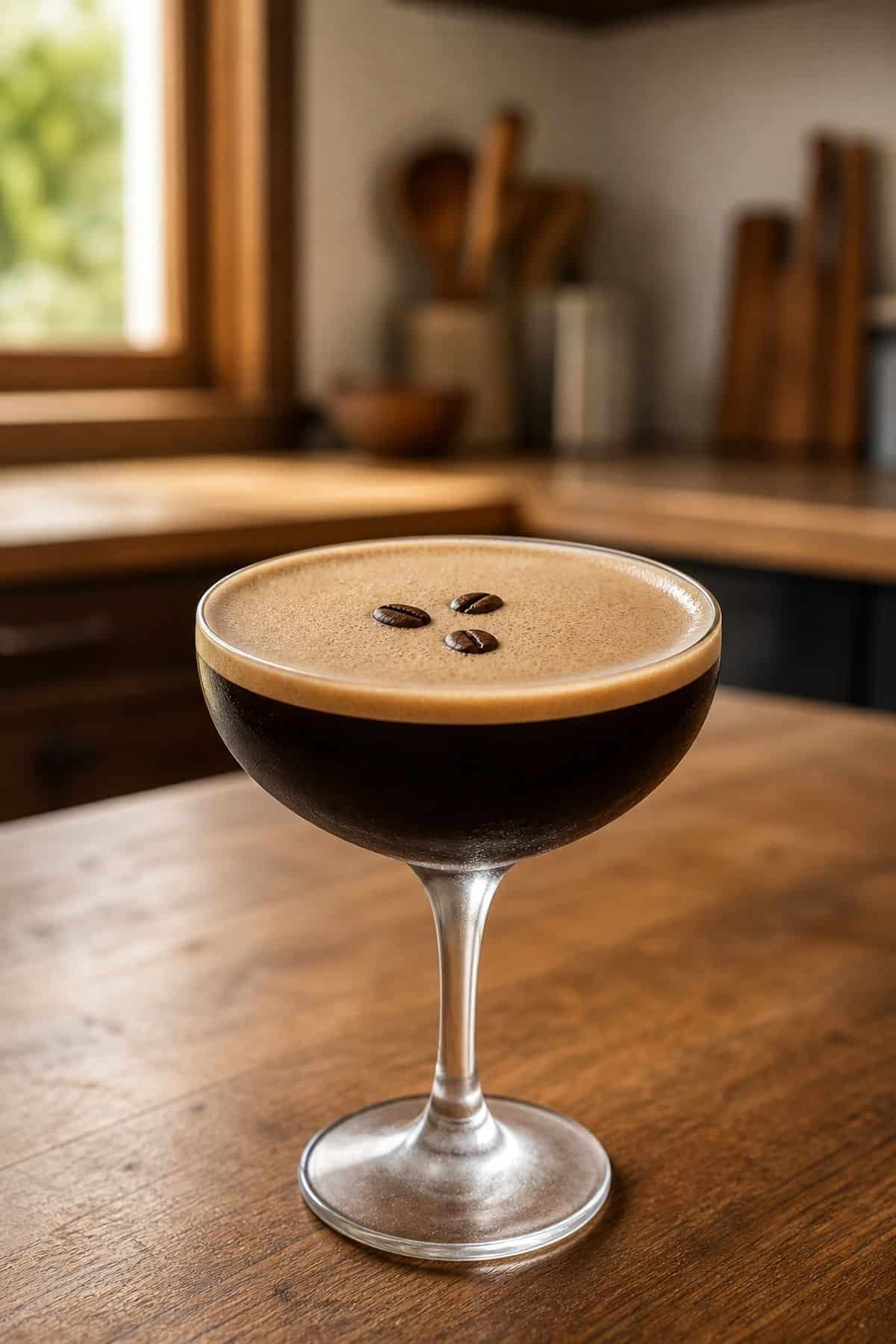
Dick Bradsell was working the bar at Fred’s Club in Soho in the mid-1980s when a young model placed the order that became cocktail folklore. The exact wording has been reported a few different ways over the years, but the request was roughly: something that would wake her up and then mess her up. Bradsell had a house espresso machine within arm’s reach. He shook a measure of vodka with Kahlúa and a fresh shot of espresso, strained it into a chilled glass, and the drink existed.
He called the original version the Vodka Espresso. It lived on the rocks at first; a few years later, at a bar called Match, he started serving it straight up in a coupe and renamed it the Espresso Martini. Some menus and home cooks still call it the Coffee Martini, which is the same drink under a friendlier name. Bradsell died in 2016, and the drink he built on the fly for one customer is now one of the most-ordered cocktails in the world.
The spec has stayed remarkably stable over forty years. Vodka, coffee liqueur, fresh hot espresso, a touch of sugar if needed, shaken hard, served up with three coffee beans on top. The three beans are sometimes said to stand for health, wealth, and happiness, though that tradition predates the drink itself.
A Few Notes on the Ingredients
Vodka: 45 ml (1.5 oz) of a clean, mid-shelf bottle. Tito’s, Grey Goose, and Belvedere are the three most reached-for options in bar settings. The vodka is the largest pour by volume in the glass, so a harsh well bottle will read through the coffee. You don’t need top-shelf; you need clean.
Coffee liqueur: 30 ml (1 oz). Kahlúa is the original and still the easy default. Mr Black Cold Brew Coffee Liqueur is the bartender’s pick if you want a drier, less candied version; it leans into roasted coffee rather than vanilla and sugar. Tia Maria sits between the two and was actually in Bradsell’s first version of the drink.
Espresso: 30 ml (1 oz) of a fresh, hot shot pulled within the last two minutes. The heat is doing the work. When hot espresso hits cold ice and gets shaken hard, the oils in the coffee emulsify with the dissolved CO2 and build the crema layer that sits on top of the finished drink. Cooled or cold-brew espresso skips that reaction; the drink still tastes fine, but the foam is weak and patchy.
Simple syrup: 7 to 15 ml (1/4 to 1/2 oz). Optional. Bradsell’s original spec did not include it. Modern recipes add it to balance bitter espresso and unsweetened liqueurs. Start with a quarter ounce; taste; add more if your espresso ran sharp. If you are using Kahlúa, you usually need less.
Coffee beans for garnish: Three whole beans, floated on the foam right before serving. They are decorative more than functional, though they release a small amount of aroma as the drink sits.
Recipe: Coffee Martini
Prep time: 5 minutes | Total time: 5 minutes | Serves: 1
Ingredients
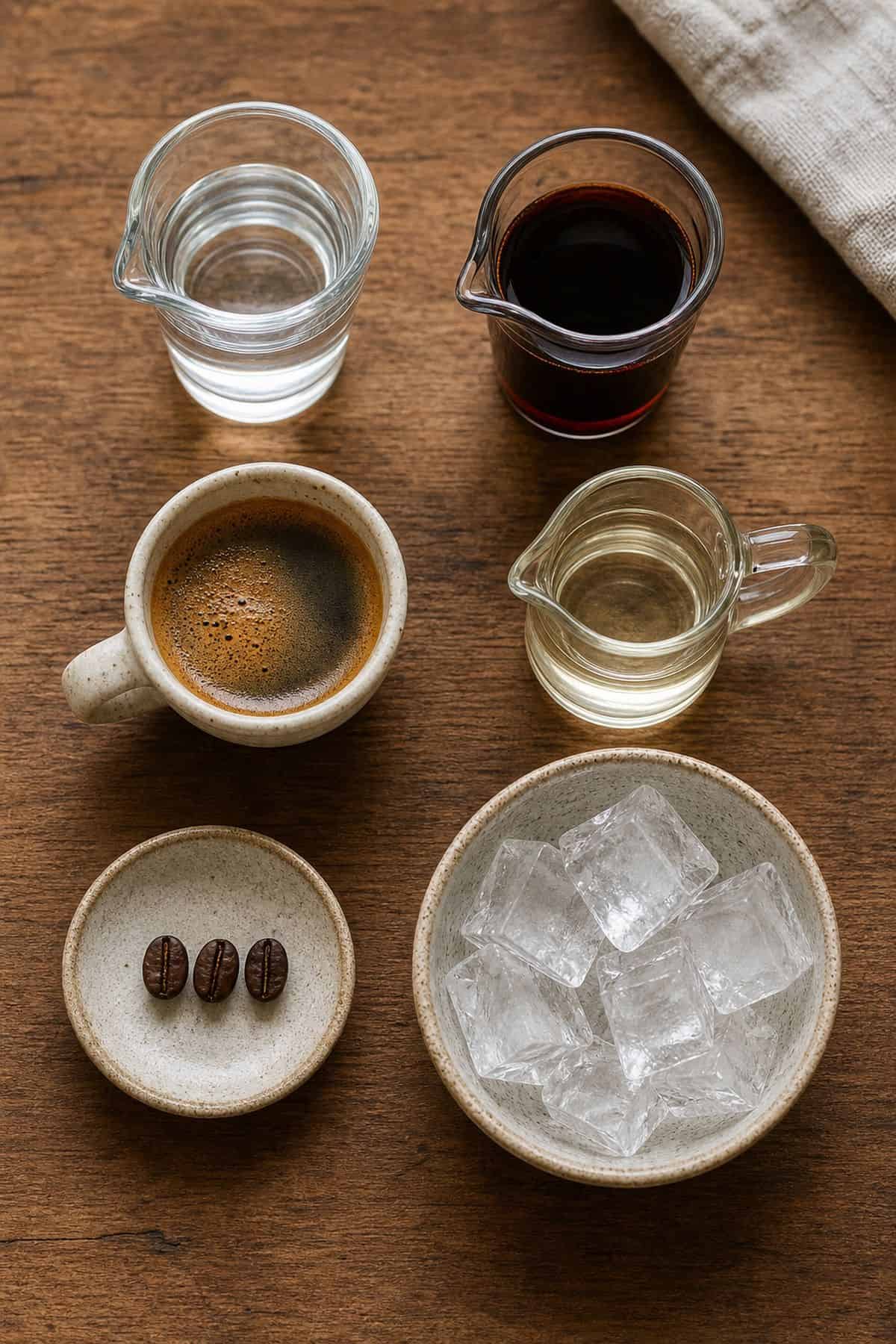
- 45 ml (1.5 oz) vodka, mid-shelf or above
- 30 ml (1 oz) Kahlúa or coffee liqueur of choice
- 30 ml (1 oz) fresh hot espresso, pulled within the last 2 minutes
- 7 to 15 ml (1/4 to 1/2 oz) simple syrup, to taste (optional)
- 3 whole coffee beans, for garnish
- Ice, a full scoop for the shaker
Instructions
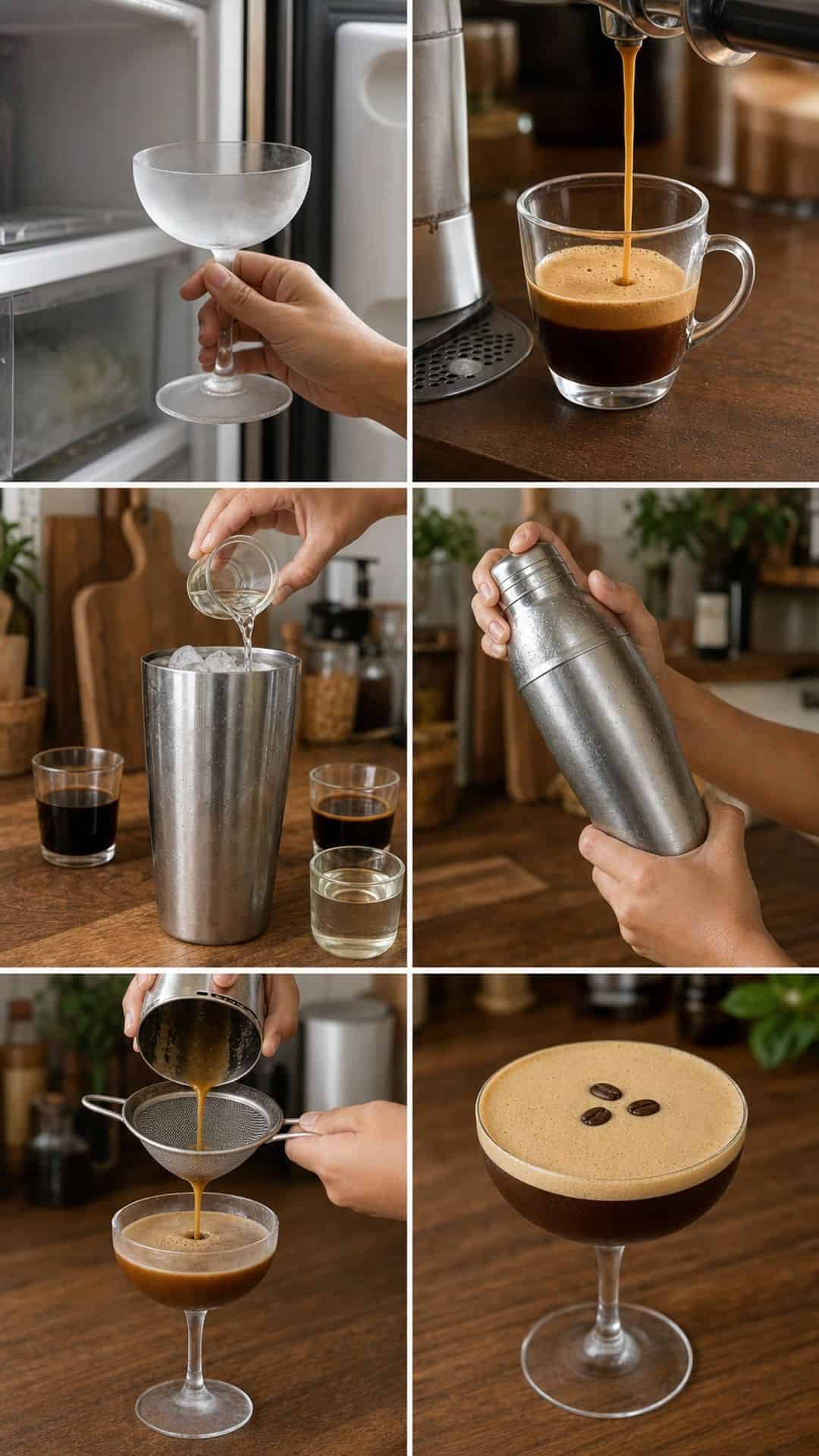
- Chill a coupe or small martini glass in the freezer for at least 10 minutes before you start. A warm glass kills the foam within seconds of pouring.
- Pull a fresh shot of espresso. The shot needs to be hot when it hits the shaker; this is the single most important step for proper foam. Do not let it sit on the counter.
- Fill a Boston shaker about two-thirds full with ice. Pour in 45 ml (1.5 oz) vodka, 30 ml (1 oz) Kahlúa, the 30 ml (1 oz) hot espresso, and 7 to 15 ml (1/4 to 1/2 oz) simple syrup if using.
- Seal the shaker and shake hard for 15 to 20 seconds. Hard means hard; the ice should be loud against the metal. This is where the foam is built. A weak shake gives a weak drink.
- Set up a fine-mesh strainer over the rim of the chilled glass. Double-strain the cocktail through both the shaker’s built-in strainer and the fine mesh. The fine mesh catches the ice shards and gives you a smoother top layer.
- Float 3 coffee beans on the foam. Serve immediately, while the crema is still tight on top.
Notes
Chill the glass first, every time. Foam collapses on warm glassware in under a minute. Ten minutes in the freezer is the minimum; if you have the room, leave the glass in there permanently and pour straight from frozen.
The espresso timing is what trips most people up. Pull the shot last, after the vodka and liqueur are already measured into the shaker. The whole sequence from shot pull to seal-and-shake should take under thirty seconds.
On the foam science: shaking hot coffee with cold ice and alcohol forces the dissolved CO2 and the coffee oils to emulsify into a stable microfoam, the same way a barista’s steam wand builds milk foam. Cold espresso has lost most of its dissolved CO2 already; the reaction is much weaker. This is why the original is built around hot espresso and why cold brew swaps come with a foam penalty.
This is the drink Dick Bradsell built for the model who wanted to be woken up and undone in the same glass. The spec has barely moved since 1985.
Tips and Variations
Mr Black for a Less-Sweet Version
Swap the Kahlúa for Mr Black Cold Brew Coffee Liqueur and the drink moves from dessert-ish to bar-room. Mr Black is built around actual cold-brew concentrate; the result is darker, drier, and more coffee-forward. If you make this swap, add the full 15 ml (1/2 oz) simple syrup back in to balance, since you’ve stripped most of the cocktail’s sugar.
Cold Brew When You Don’t Have a Machine
If you don’t own an espresso machine, you can build this with cold brew concentrate at the same volume. The drink will taste right; the foam will be thinner and shorter-lived. Shake an extra five seconds and serve immediately. Cold brew also tends to be less bitter than espresso, so cut the simple syrup back to a quarter ounce or skip it entirely.
Salted Caramel Coffee Martini
Rim the chilled glass with crushed Maldon salt and a thin ring of caramel sauce before pouring. Swap the simple syrup for caramel syrup. This is closer to a dessert cocktail than a classic, and it pairs well with anything chocolate at the end of a meal. See the Salted Caramel Bourbon Milkshake for the rim technique.
Vanilla Bean Syrup Variation
Replace the simple syrup with vanilla bean syrup at the same volume. The vanilla rounds the espresso bitterness without adding the candied sweetness Kahlúa brings on its own. This works especially well if you are using Mr Black or another drier liqueur.
Batch Pitcher for Six
Scaling for a small dinner party works, but the espresso timing becomes the limiting factor. Pull six shots back to back into a small thermos to keep them hot, then build six drinks one at a time in the shaker. Do not batch ahead of time; the espresso loses its CO2 within minutes and you lose the foam on every glass. Six rounds of shake-and-strain takes about ten minutes.
What to Serve It With
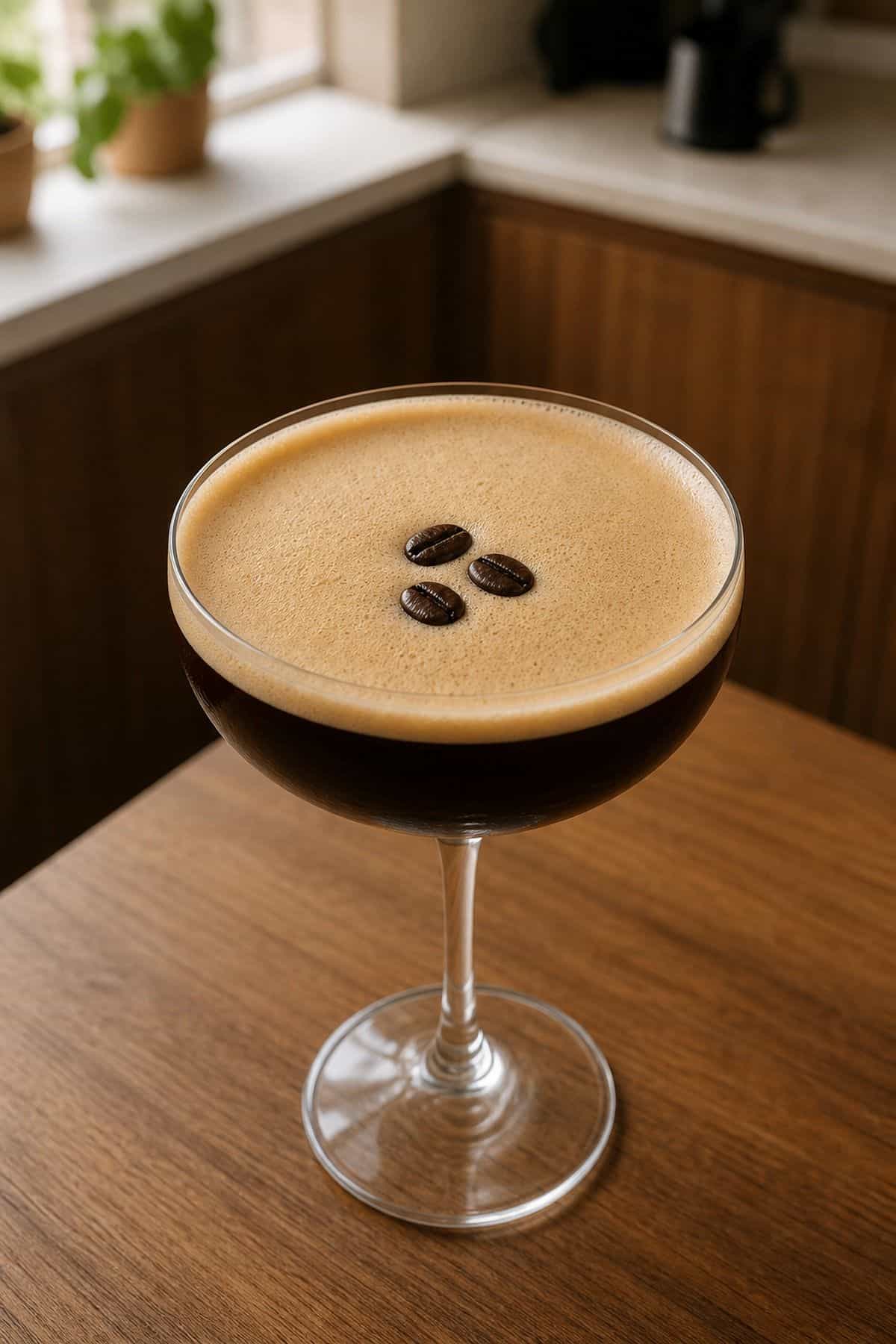
The coffee martini lands best at the end of a meal, in the slot a regular espresso would otherwise take. It pairs naturally with anything chocolate. A slice of flourless chocolate cake, a small bowl of chocolate ganache and biscotti, or a wedge of tiramisu all sit well next to it.
For a dinner-party setup, serve it after the plates have been cleared and the table has been wiped down. One per person is usually right; the caffeine and the alcohol both build slowly. If you want a longer evening, drop a square of dark chocolate next to each glass and let people graze. Pair it with the Tahini Hot Chocolate for guests who don’t drink alcohol.
Frequently Asked Questions
Why is my foam weak or non-existent?
Almost always one of three things: cooled espresso, a weak shake, or a warm glass. The espresso has to be freshly pulled and still hot when it hits the shaker. Shake for the full 15 to 20 seconds, hard. Chill the glass for at least 10 minutes beforehand. Fix any of those and the foam comes back.
Cold espresso vs hot espresso, does it really matter?
Yes, more than any other variable. Hot espresso carries dissolved CO2 and warm coffee oils that emulsify into stable foam during the shake. Cooled espresso has lost most of that already; the drink tastes fine but the crema layer that defines this cocktail will be thin or absent.
What’s the difference between a Vodka Espresso and an Espresso Martini?
Same drink, different glass. The original Vodka Espresso was served on the rocks in a rocks glass. A few years later Bradsell started serving the same build straight up in a coupe and called it the Espresso Martini. The Coffee Martini name showed up on later menus and home recipes; it’s all one cocktail.
Can I substitute the Kahlúa?
Tia Maria was actually in Bradsell’s original recipe and works as a one-for-one swap. Mr Black Cold Brew is the drier, more coffee-forward option and is what most modern bartenders reach for. Any decent coffee liqueur works; just adjust the simple syrup based on how sweet your liqueur runs.
Can I batch this ahead of time for a party?
Not really, no. You can pre-measure vodka, liqueur, and syrup into a small jar and keep it ready, but the espresso has to be pulled fresh and shaken hot for each round. A pre-batched cocktail will taste right but will pour flat. Build them one at a time and keep guests close to the bar.
Key Takeaways
- The canonical build is 45 ml vodka, 30 ml Kahlúa, 30 ml hot fresh espresso, and a quarter ounce of simple syrup if needed.
- Hot espresso is non-negotiable for proper foam; cold or cooled espresso gives you a flat drink.
- Shake hard for 15 to 20 seconds and double-strain into a chilled coupe or small martini glass.
- Three coffee beans on top is the traditional garnish; chill the glassware first or the foam dies in seconds.
- Mr Black is the modern bartender’s coffee liqueur of choice for a drier version; Tia Maria was in Bradsell’s original.
- Built by Dick Bradsell in mid-1980s Soho for a model who asked to be woken up and undone in the same glass.
Final Thoughts
The coffee martini is one of the small cocktails that earns its place by being exactly what it says it is. Coffee, alcohol, sugar, foam, three beans on top. The drink doesn’t ask the bartender to invent anything; it asks the bartender to execute four standard moves cleanly, in order, with the espresso still hot.
It belongs at the end of dinner, with chocolate within reach, after the table has been cleared. The flavors run rich on their own; you don’t need a big plate next to it. If the night is moving slowly and someone wants one more, this is the order that gets the room talking again.
For weekend brunch or a slower morning, see the Iced Caramel Latte or the Perfect Cold Brew Coffee. For a fall cocktail rotation, the best fall cocktails roundup has the rest of the lineup.
Coffee Martini
A proper coffee martini is 45 ml vodka, 30 ml Kahlúa, and 30 ml hot fresh espresso shaken hard with ice for fifteen to twenty seconds, then double-strained into a chilled coupe.
Ingredients
- 45 ml (1.5 oz) vodka, mid-shelf or above
- 30 ml (1 oz) Kahlúa or coffee liqueur of choice
- 30 ml (1 oz) fresh hot espresso, pulled within the last 2 minutes
- 7 to 15 ml (1/4 to 1/2 oz) simple syrup, to taste (optional)
- 3 whole coffee beans, for garnish
- Ice, a full scoop for the shaker
Instructions
- Chill a coupe or small martini glass in the freezer for at least 10 minutes before you start. A warm glass kills the foam within seconds of pouring.
- Pull a fresh shot of espresso. The shot needs to be hot when it hits the shaker; this is the single most important step for proper foam. Do not let it sit on the counter.
- Fill a Boston shaker about two-thirds full with ice. Pour in 45 ml (1.5 oz) vodka, 30 ml (1 oz) Kahlúa, the 30 ml (1 oz) hot espresso, and 7 to 15 ml (1/4 to 1/2 oz) simple syrup if using.
- Seal the shaker and shake hard for 15 to 20 seconds. Hard means hard; the ice should be loud against the metal. This is where the foam is built. A weak shake gives a weak drink.
- Set up a fine-mesh strainer over the rim of the chilled glass. Double-strain the cocktail through both the shaker's built-in strainer and the fine mesh. The fine mesh catches the ice shards and gives you a smoother top layer.
- Float 3 coffee beans on the foam. Serve immediately, while the crema is still tight on top.
Notes
Chill the glass first, every time. Foam collapses on warm glassware in under a minute. Ten minutes in the freezer is the minimum; if you have the room, leave the glass in there permanently and pour straight from frozen.
The espresso timing is what trips most people up. Pull the shot last, after the vodka and liqueur are already measured into the shaker. The whole sequence from shot pull to seal-and-shake should take under thirty seconds.
Last update on 2026-10-03 / Affiliate links / Images from Amazon Product Advertising API