
Winter brunch hosting ideas work best when the menu is make-ahead, oven-based, and self-serve. Set the table the night before, bake one egg dish, bake one sweet dish, set up coffee and warm drinks, add fruit and quick breads, offer a mimosa or zero-proof station, and create a dish return spot. The host should be warming and refilling, not frying eggs or mixing drinks one at a time.
Cold-weather brunch has its own rhythm: mugs matter, warm holding matters, and the oven becomes the busiest appliance in the room. A good plan avoids stovetop bottlenecks and gives guests plenty to serve themselves while dishes finish warming.
The winter brunch hosting ideas below focus on food, drink stations, buffet flow, and cleanup in equal measure. This is not a recipe dump; it is a hosting plan for a morning that feels generous without trapping anyone in the kitchen.

AAWP Recommended Products


You Might Also Like These Blog Posts
- 25 Cozy Pajama Party Food Ideas for Easy Hosting
- 25 Holiday Brunch Ideas for Easy Hosting
- 25 Cozy Coffee and Breakfast Ideas for Easy Hosting
- 25 Spring Breakfast Ideas for Easy Hosting
- 25 Mothers Day Breakfast Ideas for Easy Hosting
1. Set the Brunch Table the Night Before
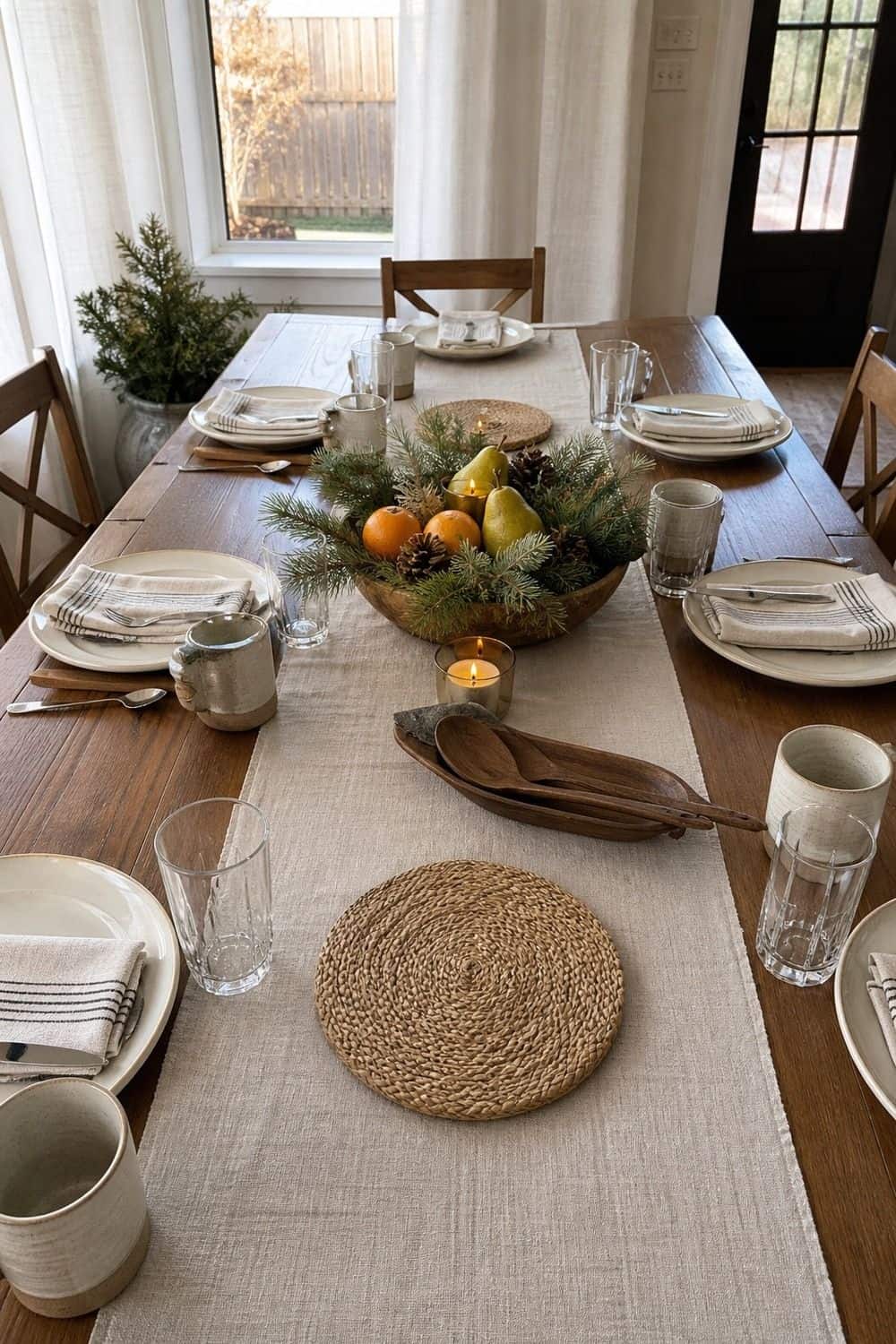
Winter brunch feels calmer when the table is already waiting. Set plates, napkins, glasses, serving utensils, trivets, and a low centerpiece before bed so the morning is about warming food, not searching drawers. A linen table runner gives the table a soft base without turning brunch formal. It also creates a clear line for platters while leaving room for coffee cups, water glasses, and serving dishes. Keep the centerpiece low and winter-specific: citrus, pears, greenery, pine, small candles, or a simple bowl of fruit. Tall flowers get in the way once mugs and casseroles arrive. Leave more open space than you think you need.
2. Make One Egg Bake or Strata
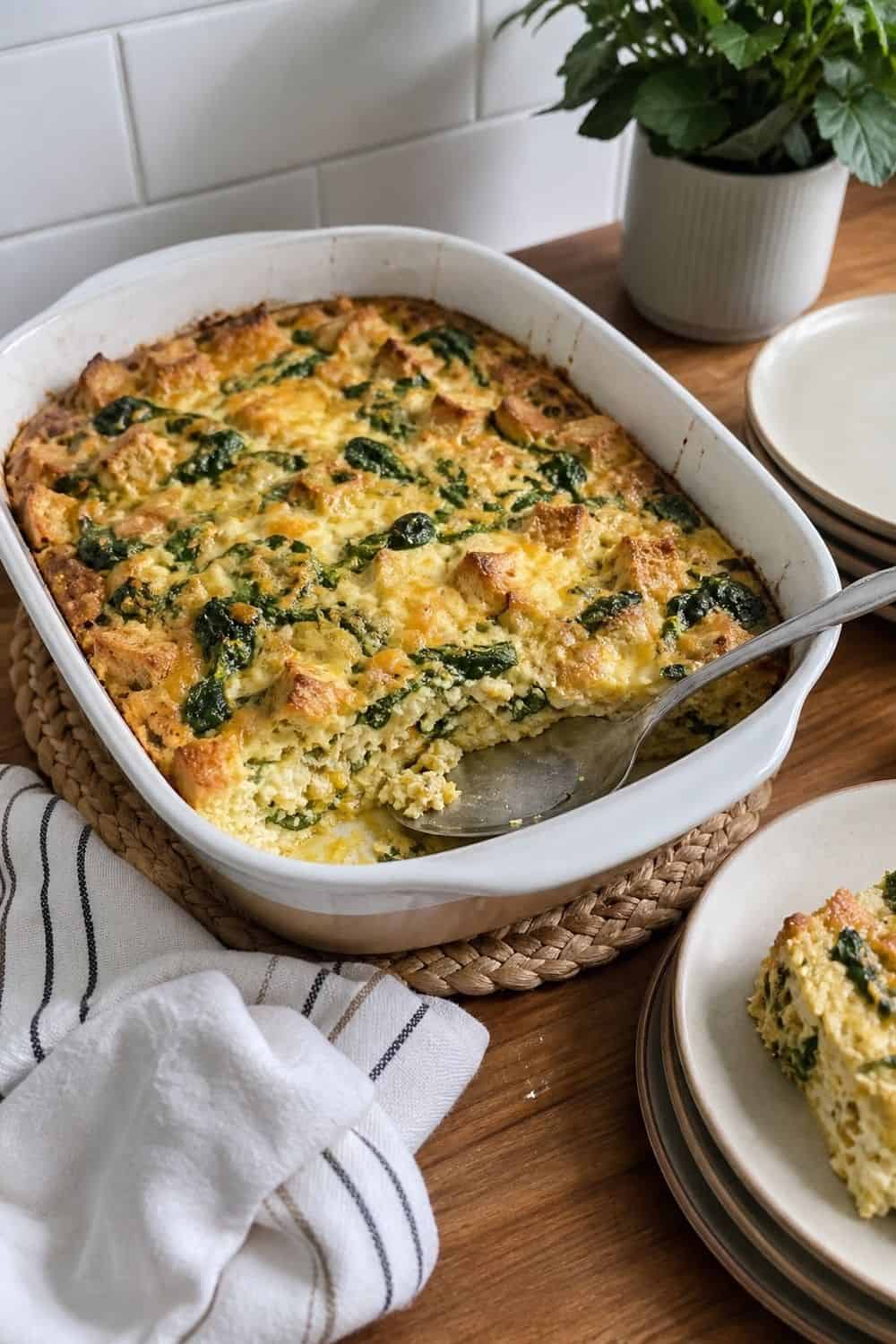
One baked egg dish is the savory anchor that keeps the host from making omelets one at a time. Eggs, bread, cheese, greens, sausage, mushrooms, peppers, or potatoes can all work in a strata or breakfast casserole.
A ceramic casserole dish is useful because it bakes evenly, looks presentable on the buffet, and holds warmth better than a thin pan. It also keeps the serving area tidy because the dish goes straight from oven to table. Let the casserole cool slightly before slicing. Guests get cleaner squares, and the host is not dealing with collapsing eggs while the coffee line starts. Balance the dish with something fresh and something sweet. A winter brunch menu feels complete when the egg bake is not asked to carry the whole table.
3. Add Overnight Baked French Toast
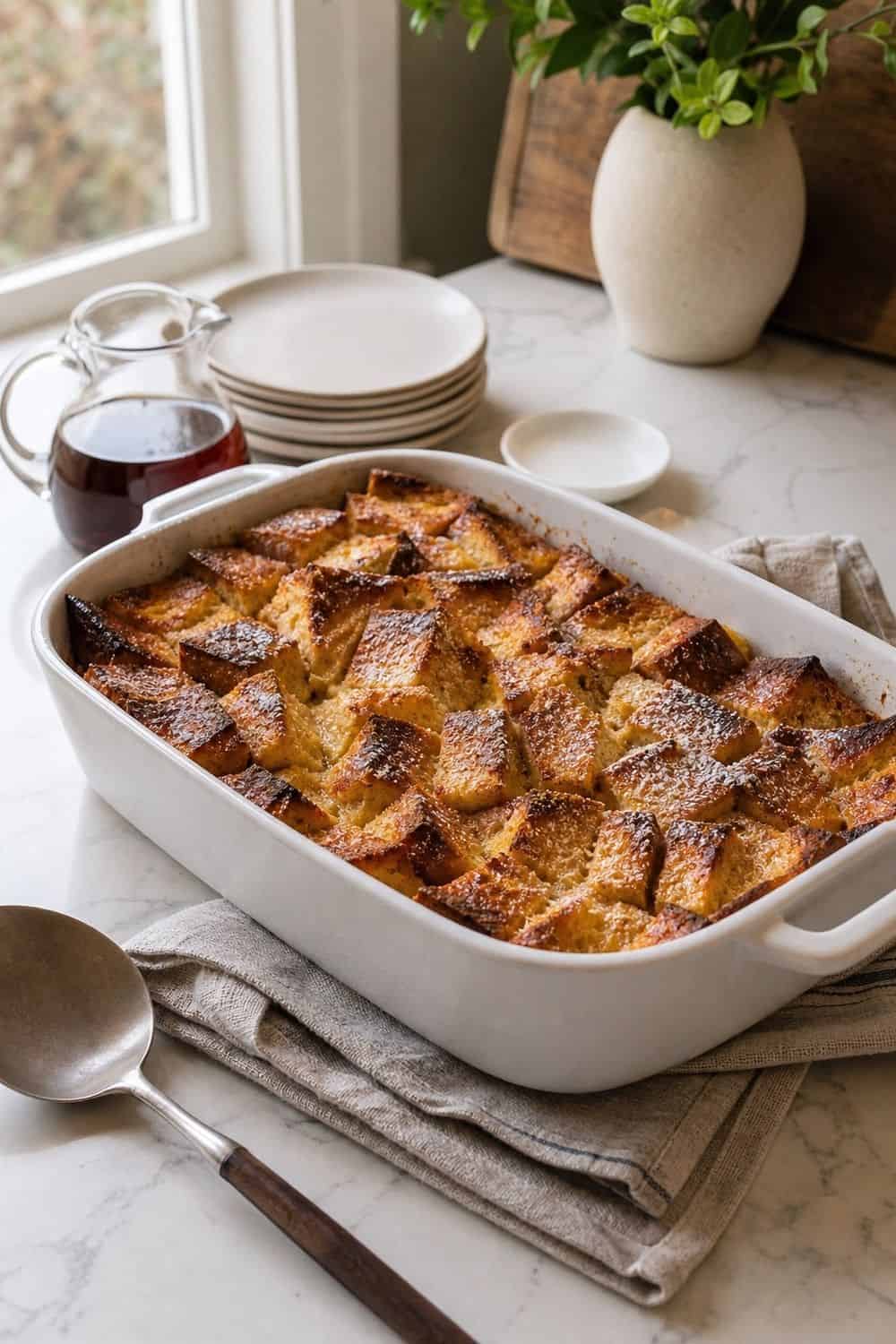
Baked French toast gives the table a sweet main without flipping anything in real time. Challah, brioche, baguette, custard, cinnamon, cardamom, berries, pecans, and maple syrup all suit winter brunch. A 9×13 baking dish is the right shape for an overnight bake because the bread can soak evenly and serve a group. Let the dish stand at room temperature briefly before baking so the center cooks more predictably. Do not stack wet slices too thickly. A crowded center can stay soggy while the edges brown, which makes serving awkward on a buffet. Put syrup, powdered sugar, whipped cream, or fruit sauce in a topping zone.
4. Serve a Frittata at Room Temperature

Frittatas are forgiving in a way individual eggs are not. Onion, greens, goat cheese, potatoes, smoked salmon, mushrooms, or roasted peppers can be cooked ahead and served warm or room temperature. An oven safe skillet lets you start on the stovetop and finish in the oven without changing pans. It also looks casual and generous on a winter brunch buffet. Slice the frittata into wedges before guests arrive so the first person does not have to figure out the cut. A small server or spatula should sit beside it. This dish is useful when guests arrive in waves.
5. Try Shakshuka for a Warm Centerpiece
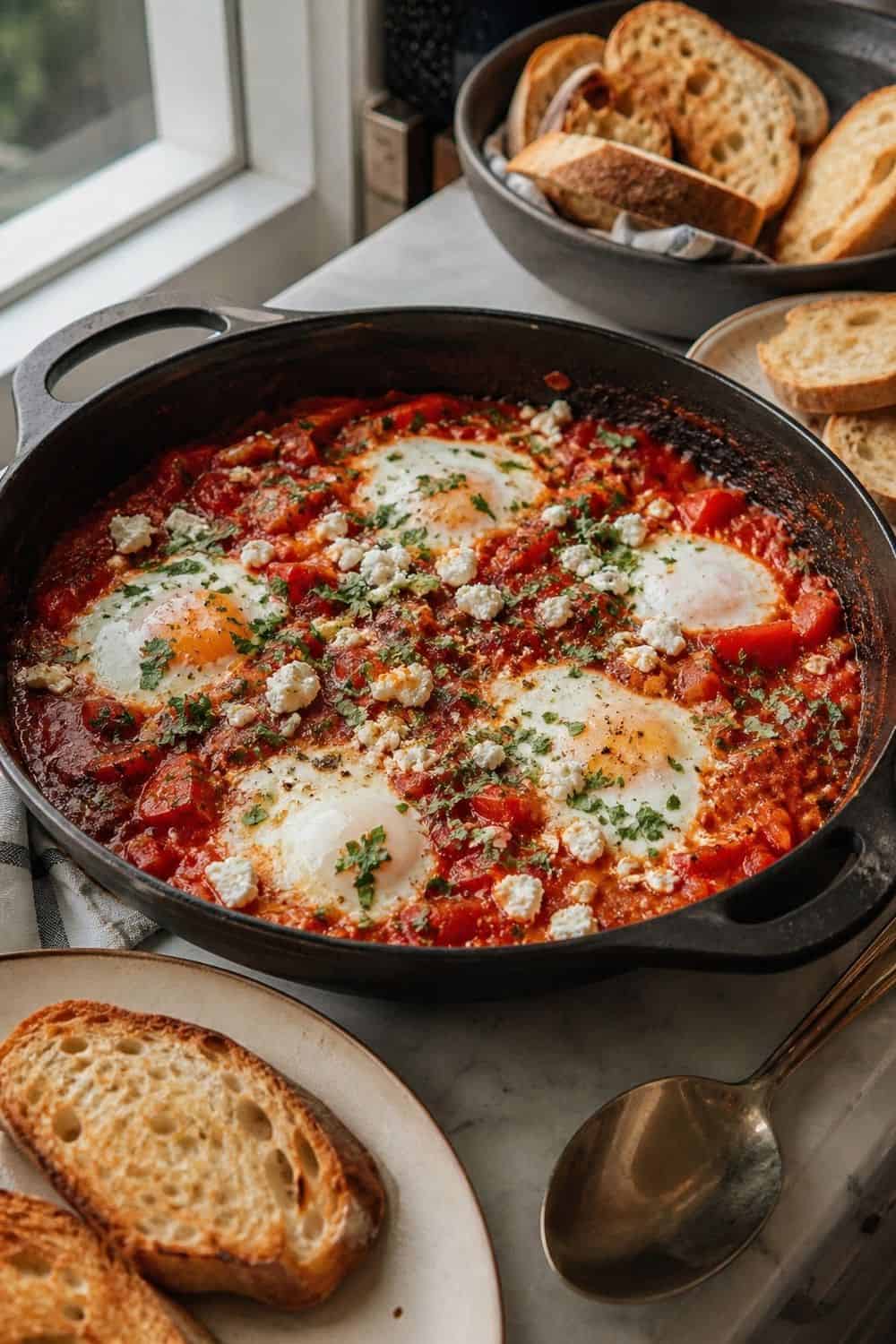
Shakshuka brings heat, color, and sauce to a winter brunch table. Tomato sauce, chickpeas, feta, herbs, and eggs create a dish that feels more warming than another bread-heavy casserole. A cast iron skillet keeps the sauce warm and gives the dish enough presence to sit at the center of the buffet. Serve it with toasted bread, pita, or slices of baguette for scooping. Add the eggs close to serving so they do not overcook. If guests are arriving over a long window, keep the sauce warm and finish the eggs when the group is nearly ready. Place a spoon, bread basket, and small plates nearby.
6. Make Baked Oatmeal for a Cozy Option
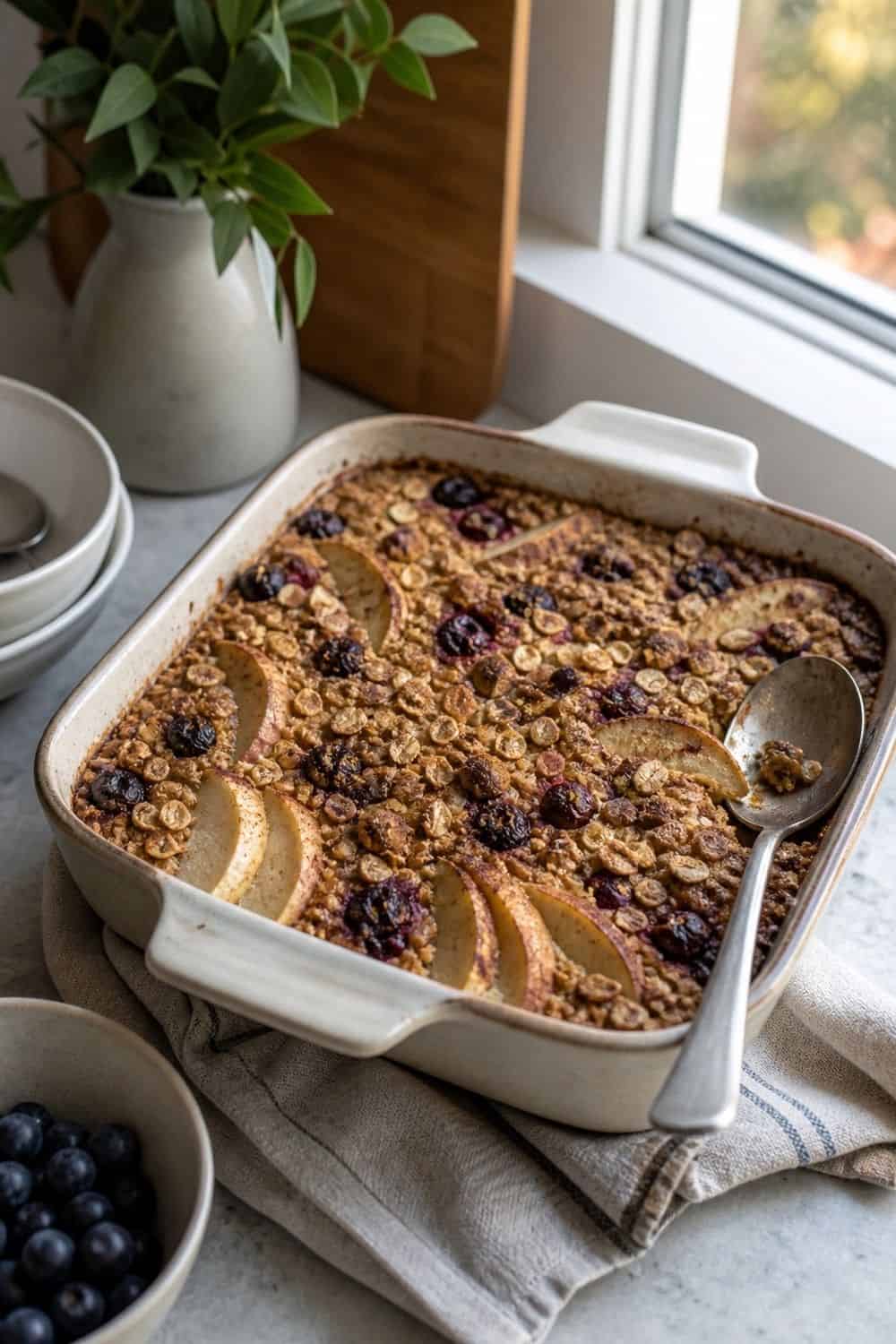
Baked oatmeal is low-cost, make-ahead, and naturally suited to cold mornings. Apples, pears, cranberries, cinnamon, nuts, maple, banana, and citrus zest can all make it feel seasonal. A square baking dish gives baked oatmeal enough depth without making a huge pan. It can be cut into tidy squares or scooped softer, depending on the recipe. Serve yogurt, cream, milk, or a dairy-free option on the side instead of pouring it over the whole dish. Guests can adjust richness, and leftovers hold better. This is a useful option for kids, early guests, or anyone who wants something warm but not heavy.
7. Build a Winter Waffle Board
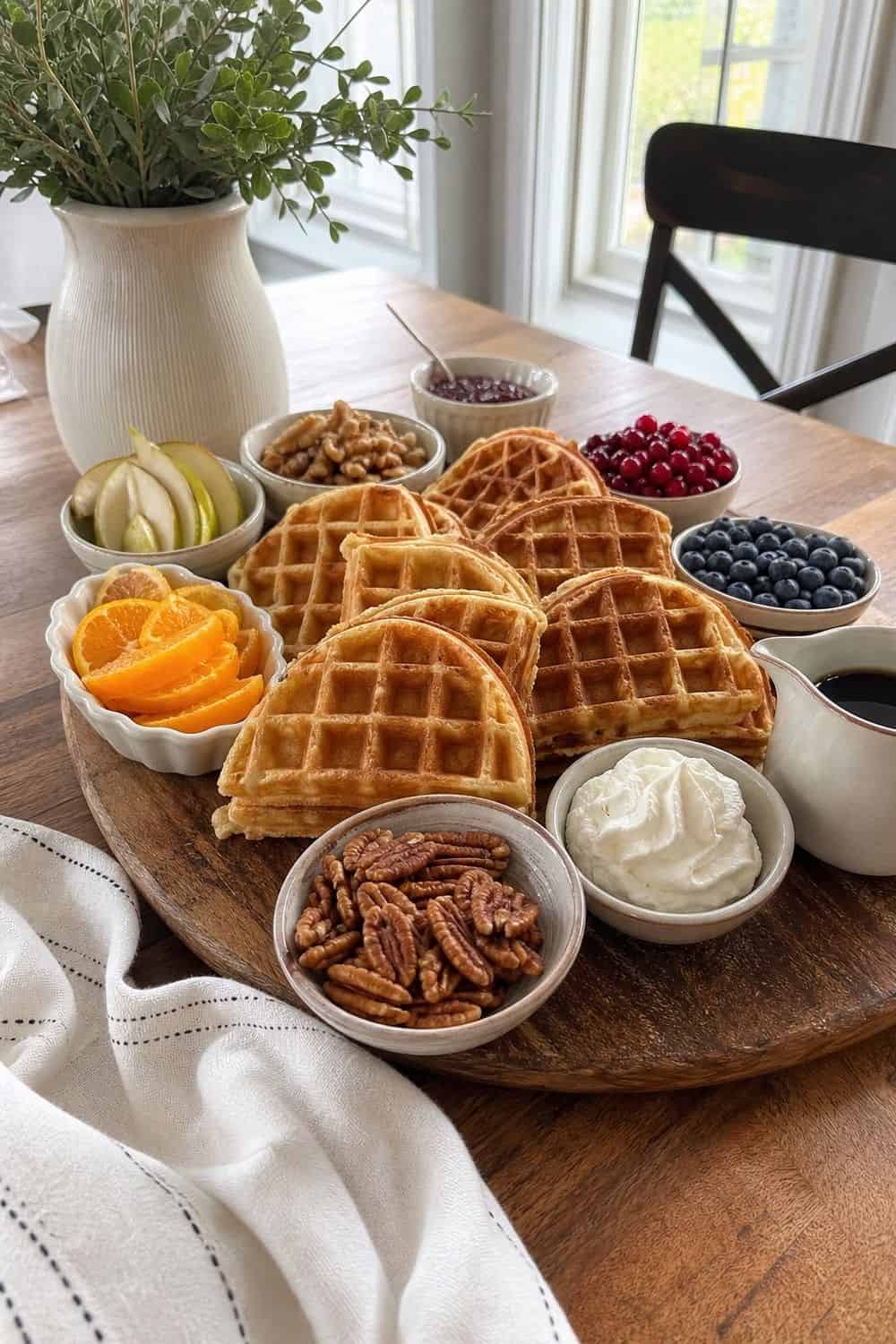
A waffle board makes brunch feel abundant, but it needs structure. Use waffles, berries, citrus, bacon, eggs, syrup, whipped cream, butter, nut butter, and a few small bowls for toppings. A large breakfast board gives everything a landing place so the waffles do not get buried under sticky bottles.
Put waffles in one zone, toppings in bowls, and fresh fruit where color is visible. Keep the waffles warm separately until serving. A board looks good, but waffles soften if they sit too long under fruit, syrup, or steam. Make enough for each guest to have at least one waffle or several sections. Interactive boards feel awkward when the first few people take all the crisp pieces. Tuck a small stack of extra waffles near the oven so the board can be refreshed without rebuilding it.
8. Keep Waffles Warm on a Rack
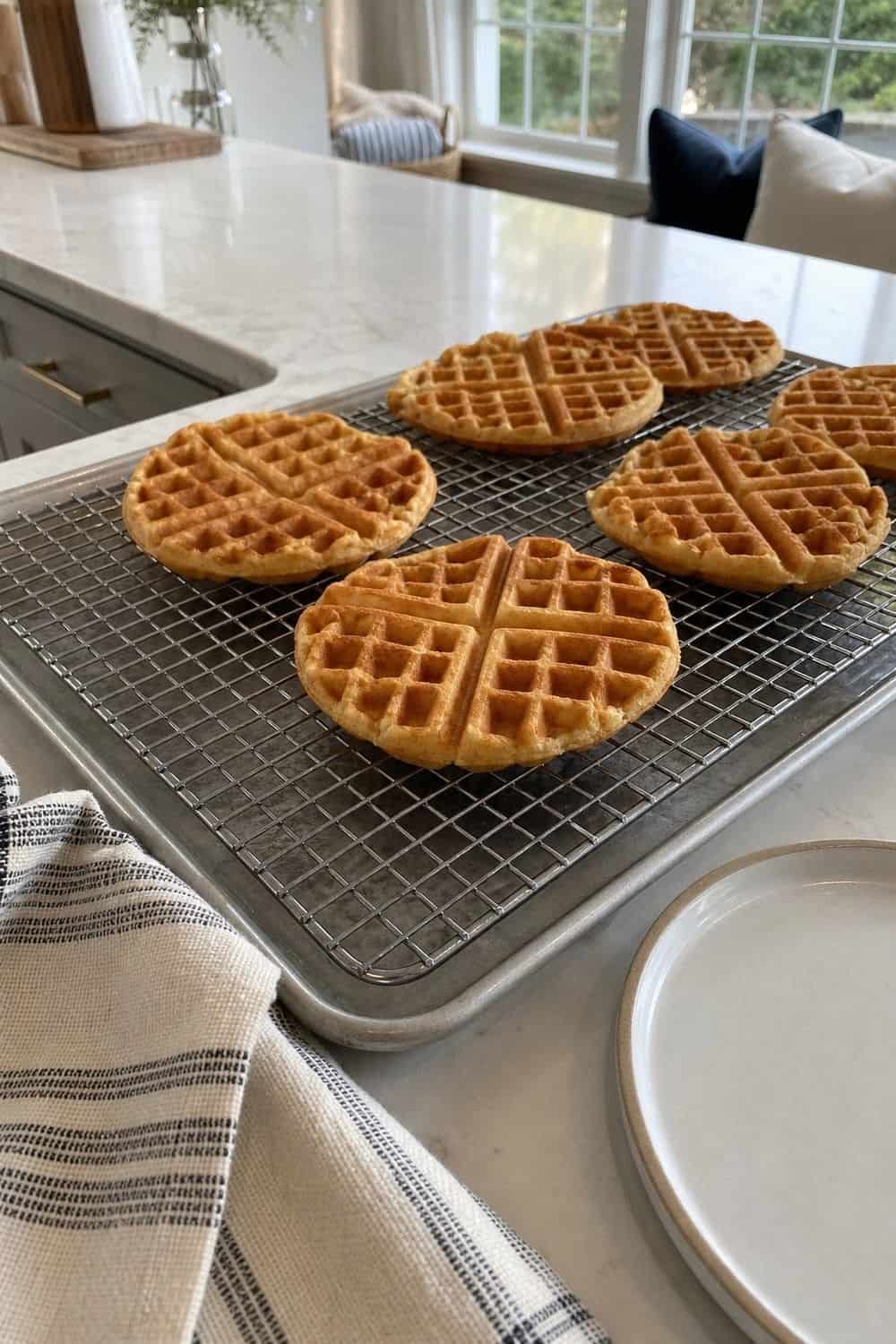
Waffles lose their appeal when they are stacked in a steamy pile. The crisp edges are the point, especially when guests are adding syrup, fruit, or whipped cream. A wire cooling rack set over a sheet pan in a low oven lets air move around the waffles.
They stay warmer and drier than they would on a plate. Hold them in a single layer when possible. If you need a second layer, stagger pieces loosely and avoid covering the pan with foil. This small texture step keeps the waffle board from feeling like a sad stack of soft bread. It is the difference between make-ahead convenience and brunch that still tastes fresh.
9. Bake Bacon in the Oven
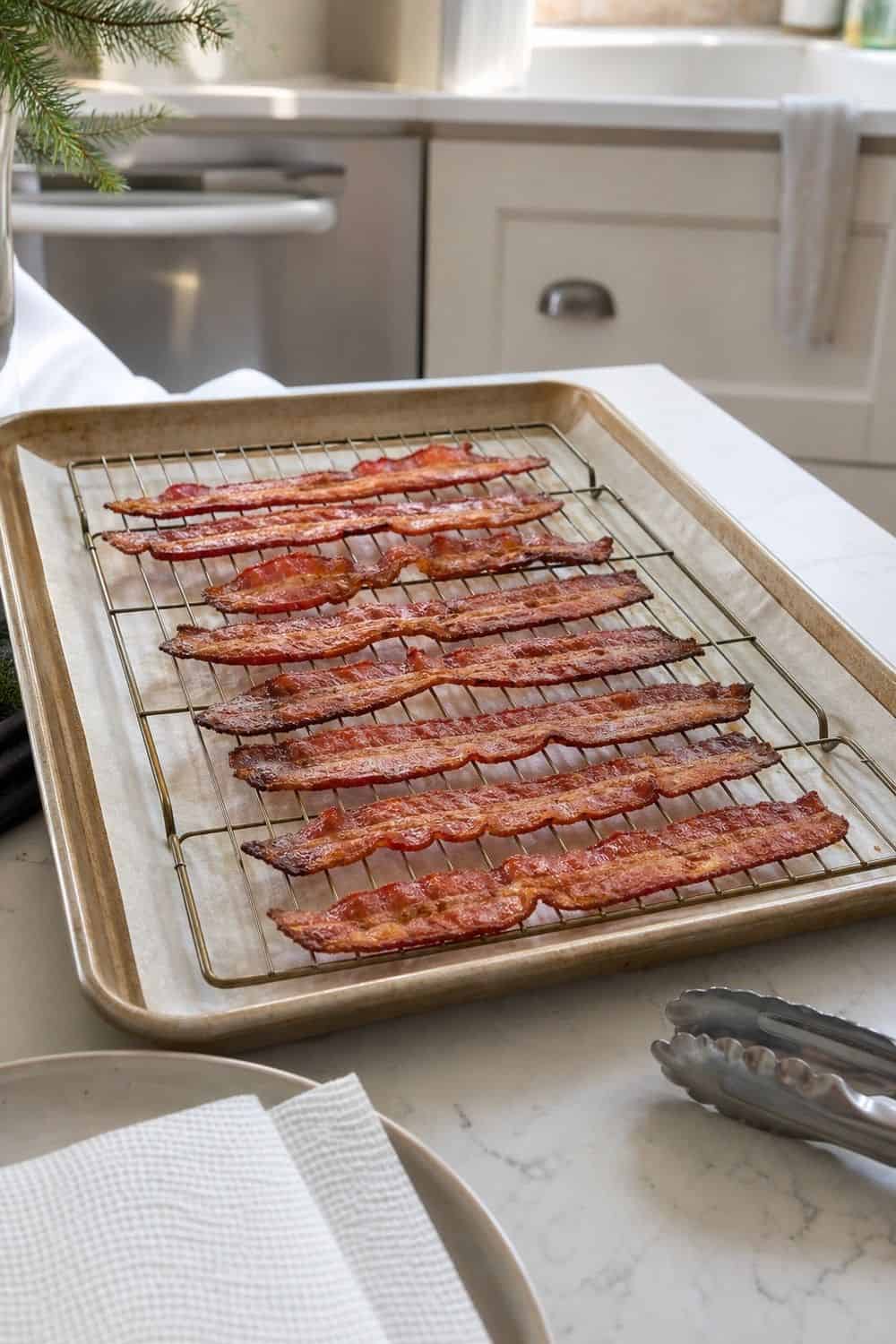
Baking bacon frees the stovetop for coffee water, shakshuka sauce, or last-minute warming. It also cooks more evenly for a group than a skillet worked in batches. A rimmed sheet pan catches fat and gives the bacon enough space. Line it with parchment or foil if you want easier cleanup, then drain cooked pieces on paper towels before serving. Keep the bacon warm on a platter or warming surface, but do not seal it under a lid where it steams. Crisp texture matters at brunch. Turkey bacon or vegetarian sausage can follow the same serving logic. The point is a protein side that does not create a stovetop bottleneck.
10. Add Breakfast Sausage or Savory Patties

Sausage, veggie patties, chicken sausage, pork sausage, or breakfast meatballs give the buffet a savory side that feels filling in cold weather. They also balance sweet French toast and muffins. A warming tray helps keep protein ready without leaving the oven tied up. Use gentle heat and avoid letting pieces sit uncovered until they dry out. Place tongs beside the tray and keep sauces or mustard in small bowls nearby. Guests should be able to serve themselves without moving hot pieces around. If you are serving both meat and vegetarian patties, label and separate them clearly. Similar-looking pieces can confuse guests in a busy buffet line.
11. Serve Quick Breads and Muffins

Quick breads and muffins are winter brunch insurance because they can be baked ahead or bought without apology. Banana bread, cranberry orange muffins, gingerbread loaf, pumpkin bread, scones, and coffee cake all fit. A muffin basket keeps baked goods together and easy to pass if guests are seated.
For a buffet, line the basket with a napkin and avoid overfilling so pieces do not crush each other. Slice loaves before guests arrive and set out butter, jam, or cream cheese nearby. A whole loaf with no knife slows the line and leaves crumbs everywhere. Use baked goods as the room-temperature backup. If a hot dish runs late, guests still have something seasonal to take with coffee. Keep one extra napkin under the basket so crumbs do not spread across the buffet.
12. Create Yogurt Parfait Cups

Parfait cups give winter brunch a fresh individual option that is not another casserole. Yogurt, granola, citrus, berries, compote, honey, nuts, and seeds can all work. Parfait cups reduce buffet mess because guests do not scoop from a large bowl.
They also make layers visible, which helps the table look lighter beside eggs and waffles. Keep granola separate until serving if crunch matters. For a fully assembled tray, use fruit that does not release too much juice and chill the cups until close to brunch. Label nuts and dairy if needed. Parfaits often look simple, but granola blends and yogurt choices can hide ingredients guests care about. Set spoons beside the tray instead of in the cups so guests can grab one cleanly.
13. Add a Citrus and Winter Fruit Platter
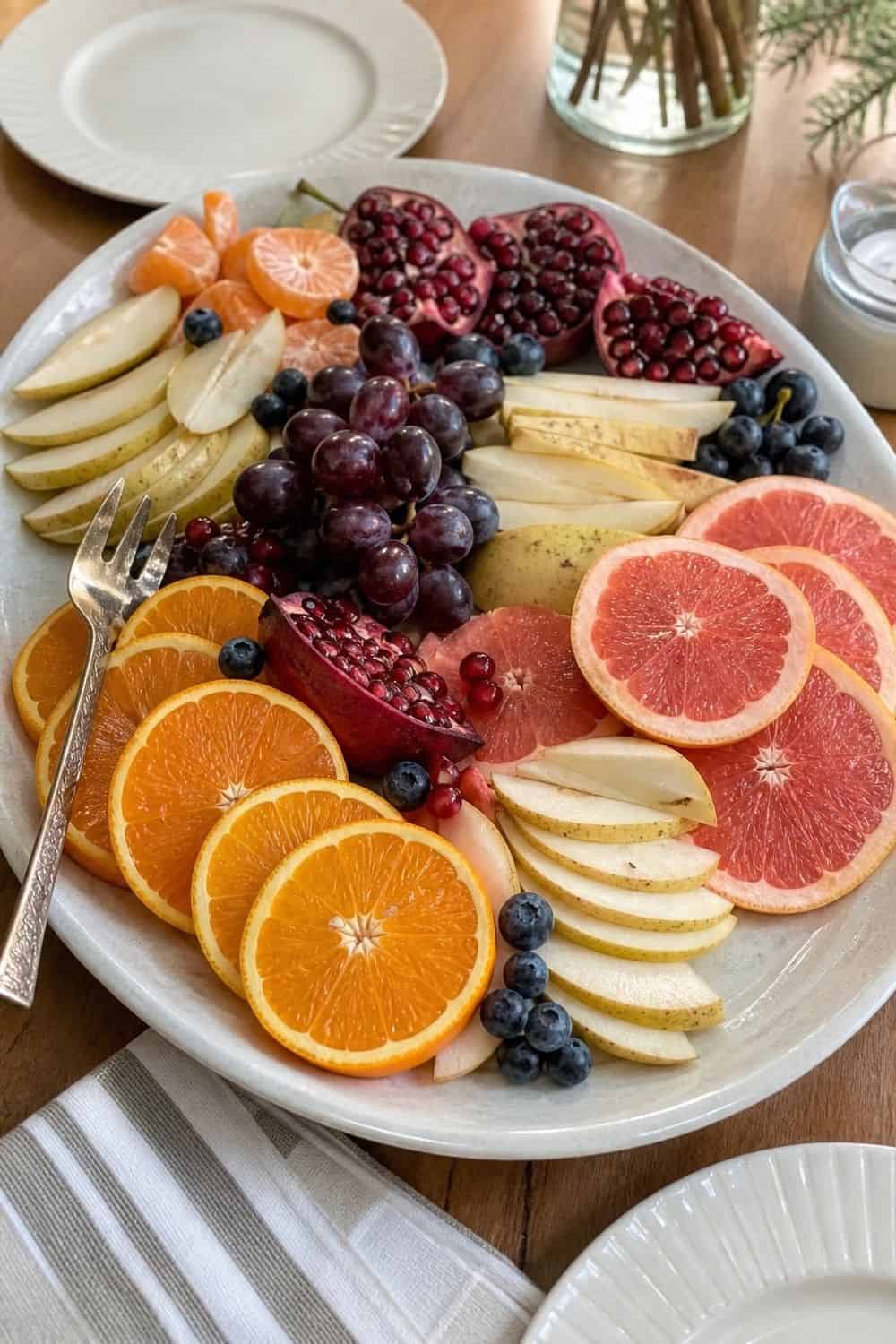
Citrus and orchard fruit brighten a table full of browned, baked, and creamy dishes. Clementines, grapefruit, oranges, pears, apples, pomegranate, grapes, and berries bring color without extra cooking. A divided fruit platter keeps juicy citrus away from drier pieces like apple slices or grapes. It also makes the fruit easier to refill in sections as guests come back. Cut fruit before guests arrive, but keep very juicy pieces chilled and covered until the buffet opens. Pat citrus lightly so it does not flood the platter. Fruit doubles as decor in winter.
14. Set Up a Coffee Station
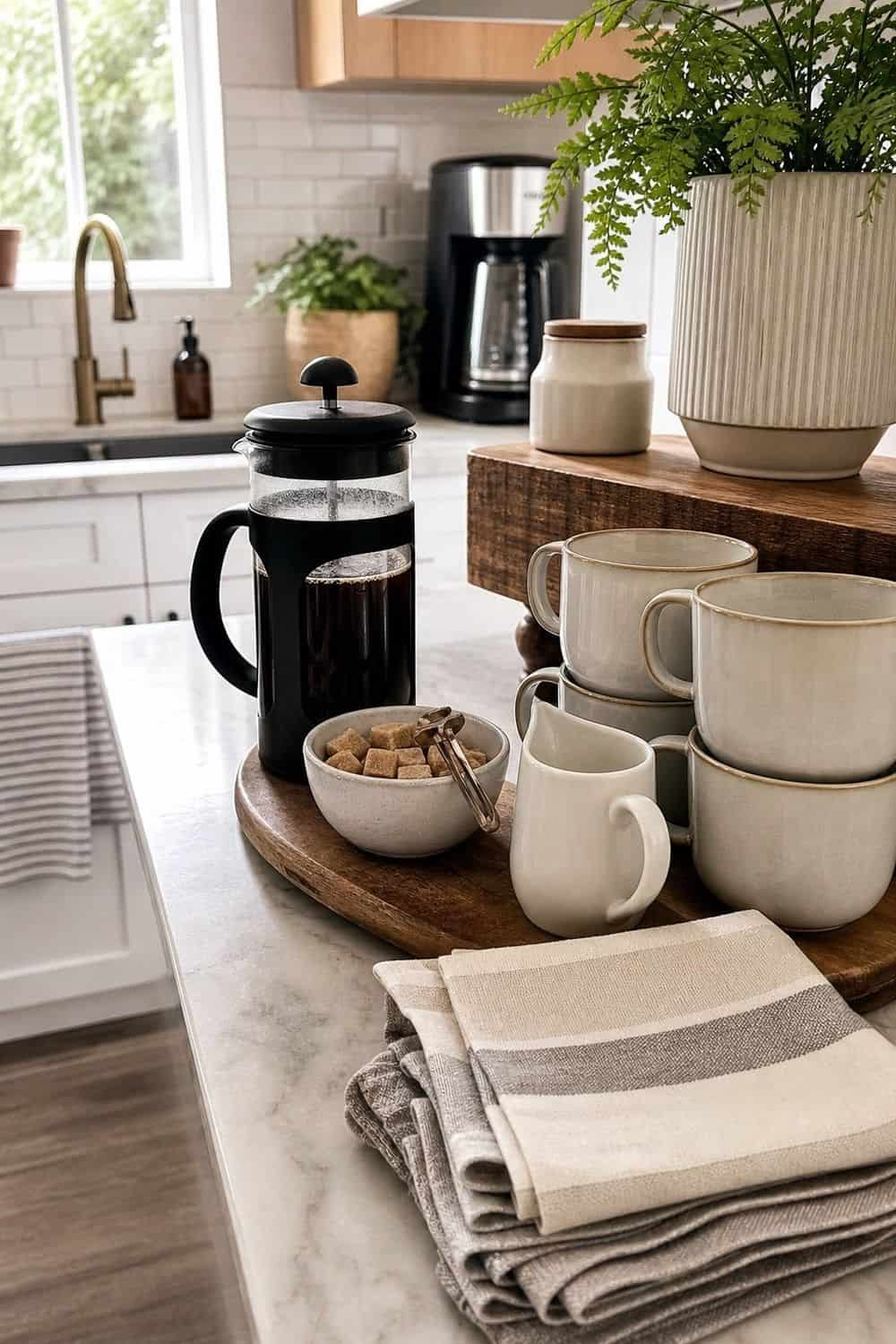
Coffee should not live in the middle of the food line. Winter brunch guests refill often, and every refill can block the casserole, fruit, or waffle board if the station is placed badly. A thermal coffee carafe keeps coffee hot and self-serve while the host handles food.
Add regular coffee, decaf if needed, cream, milk, sugar, cinnamon, spoons, mugs, and a small towel. Plan backup coffee if the group lingers. A second pot or extra grounds can save the slow second-cup moment from turning into a kitchen scramble. Put the station near seating but away from oven traffic. Coffee should invite lingering, not create a line in the busiest part of the kitchen. Leave room for guests to set down a plate while they add cream or sugar.
15. Add Tea, Cocoa, or Chai for Winter Warmth

Not everyone wants coffee or mimosas at brunch. Tea, cocoa, chai, honey, lemon, cinnamon sticks, and marshmallows give the table a warmer winter range. An electric hot water kettle keeps hot water available without tying up the stove.
Place it near mugs, tea bags, cocoa packets, spoons, and a small dish for wrappers. Keep this station separate from the main buffet if space allows. Hot water and crowded plates are not a graceful combination. For kids, cocoa can be the special drink while adults choose coffee, chai, or sparkling options. The station feels generous without making the host prepare individual mugs. Keep extra napkins close because cocoa toppings and honey spoons get sticky quickly. If the outlet is far from the buffet, boil water in the kitchen and carry it over in batches. The drink station should feel warm, not like a cord problem.
16. Make a Self-Serve Mimosa Bar

A mimosa bar works best when guests can pour without instructions. Orange, grapefruit, cranberry, guava, mango, or pomegranate juice can sit beside prosecco, cava, sparkling cider, or sparkling water. Mimosa bar carafes keep juices labeled and easier to pour than cartons.
Use tongs for citrus slices, berries, or herbs so guests are not reaching into garnish bowls. Place the bar away from the food traffic and keep bottles cold. Sparkling drinks slow down a buffet line when they sit between the hot dishes and condiments. Include a clear zero-proof path at the same station. A brunch drink setup feels more welcoming when sparkling water or cider is not treated like an afterthought.
17. Offer a Zero-Proof Sparkling Option

Zero-proof drinks should look as considered as the mimosas. Sparkling cider, sparkling water, citrus juice, cranberry, herbs, and fruit can make a glass feel festive without alcohol. Sparkling water bottles are easy to chill and place beside the juices. Label the zero-proof combination clearly so guests can build it without asking. Use the same garnishes for both drink paths: orange slices, rosemary, cranberries, grapefruit wedges, or pomegranate. Keep a few bottles in reserve. Sparkling drinks go flat once opened, so it is better to open fresh bottles as the brunch moves along.
18. Add a Crisp Brunch Salad
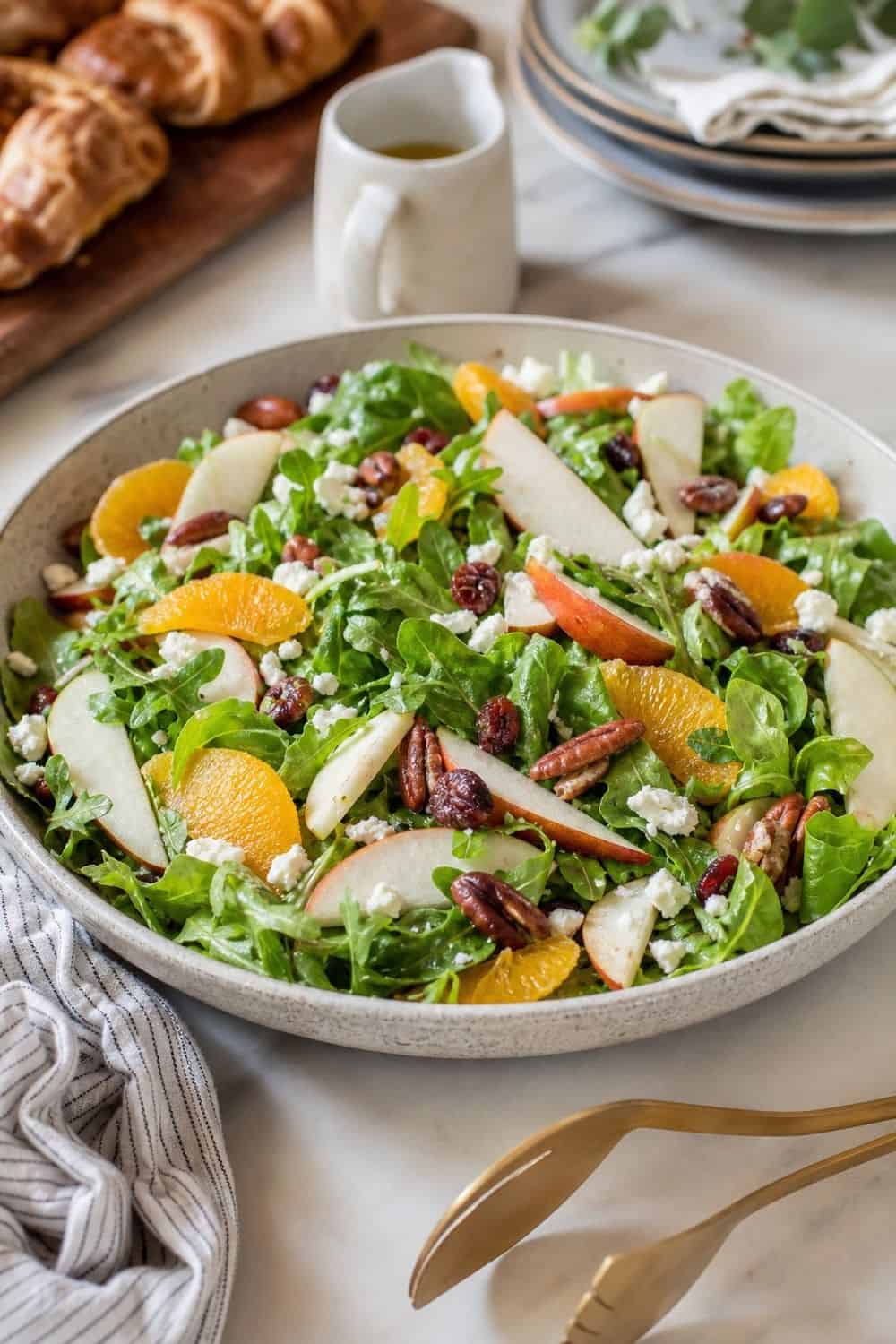
Winter brunch needs something crisp to balance eggs, bread, bacon, and sweet bakes. Greens, citrus, fennel, apple, walnuts, goat cheese, and vinaigrette can make the table feel fresher. A large salad bowl gives the salad enough room to toss without spilling.
It also gives the fresh side real presence instead of making it look like a garnish. Dress the salad just before serving or keep the vinaigrette on the side. Winter greens like kale, shaved Brussels sprouts, cabbage, and sturdy arugula hold better than delicate lettuce. Place salad near the mains, not at the forgotten end of the buffet. Guests take it more naturally when it feels part of the meal. Use serving utensils that can handle shredded greens and fruit without flinging vinaigrette onto the runner.
19. Put Condiments in Small Bowls
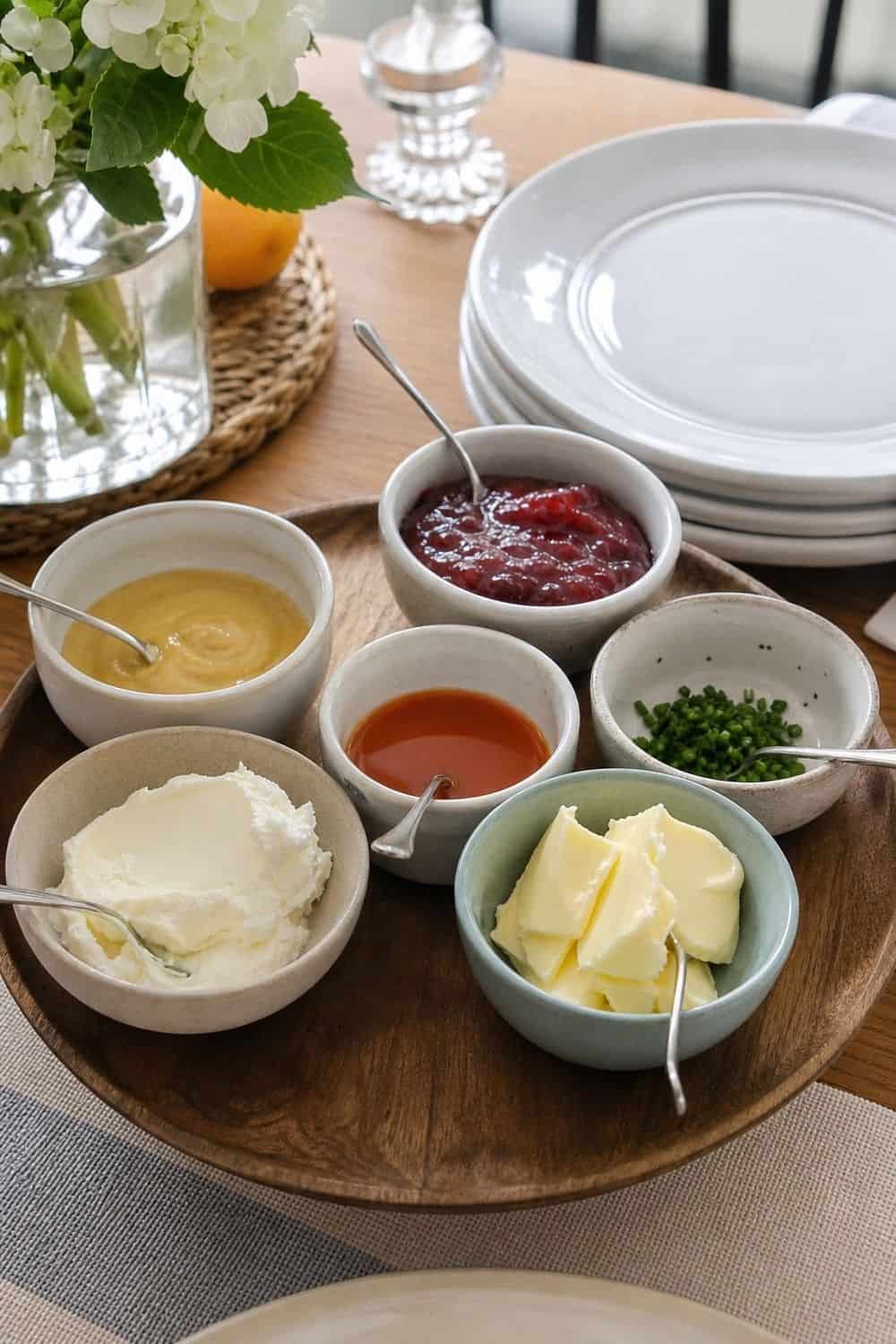
Condiments can make a winter brunch buffet messy if jars and bottles scatter everywhere. Jam, butter, syrup, hot sauce, cream cheese, honey, chili crisp, and mustard all need a small home. Small condiment bowls keep sticky and savory extras contained. Add a spoon, knife, or spreader to each bowl so guests do not use the wrong utensil. Group condiments by food: syrup near French toast and waffles, cream cheese near muffins, hot sauce near eggs, and mustard near savory patties or sliders if you serve them. Put the bowls on a tray if anything drips. One tray is easier to wipe than a runner dotted with syrup and jam.
20. Label Dairy-Free and Gluten-Free Options
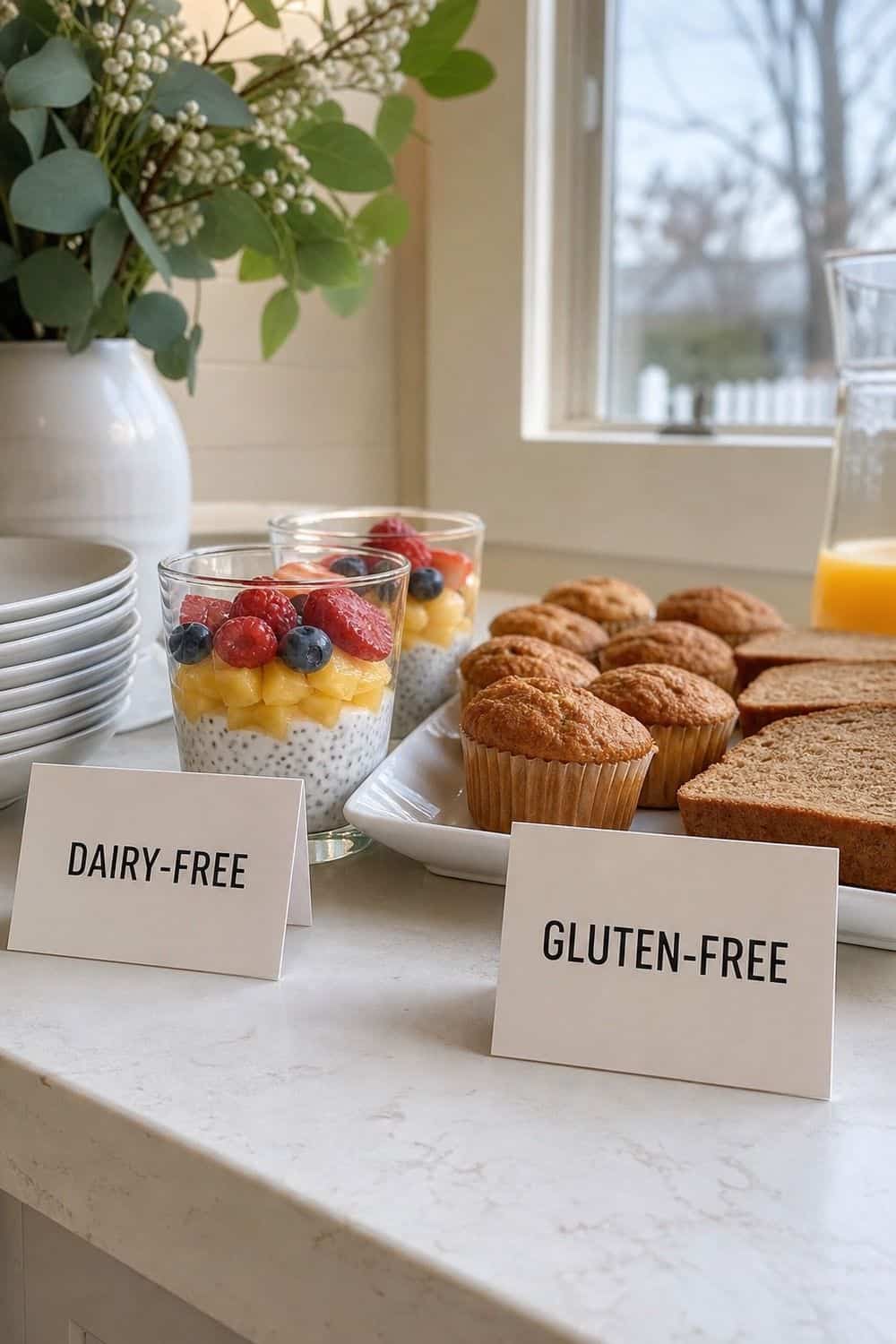
Brunch foods hide ingredients in ways guests cannot see. Casseroles may contain dairy, muffins may contain nuts, sausage may include pork, and pastries may look similar even when one is gluten-free. Buffet label cards should name the dish and note dairy-free, gluten-free, vegetarian, nuts, pork, or alcohol when relevant. Keep the wording short enough to read while moving through the line. Place labels directly in front of dishes and keep separate utensils with special-diet options. Labels lose value if the same spoon moves between casseroles. This is guest care, not fussiness. Clear labels let people serve themselves without turning every plate into an ingredient interview.
21. Make a Kid-Friendly Sweet Bite

Kids do better with small pieces they can manage without flooding a plate. Mini pancakes, cinnamon rolls, fruit skewers, waffle sticks, and muffin halves all work for a winter brunch corner. A mini pancake pan makes uniform pieces that feel special but stay easy to serve.
Keep toppings simple: a small syrup cup, fruit, powdered sugar, or yogurt dip. Place the kids’ option away from hot coffee, tea, and chafing dishes. Low access is helpful only if it is also safe. Keep portions small and refill if needed. A tray of tiny bites creates less waste than oversized pancakes that come back half-eaten. If the brunch includes toddlers, skip loose toothpicks and use small plates instead. Place this tray lower than the coffee station, but not so low that it becomes a floor-level snack stop. Kid-friendly should still be tidy.
22. Use Cake Stands for Buffet Height
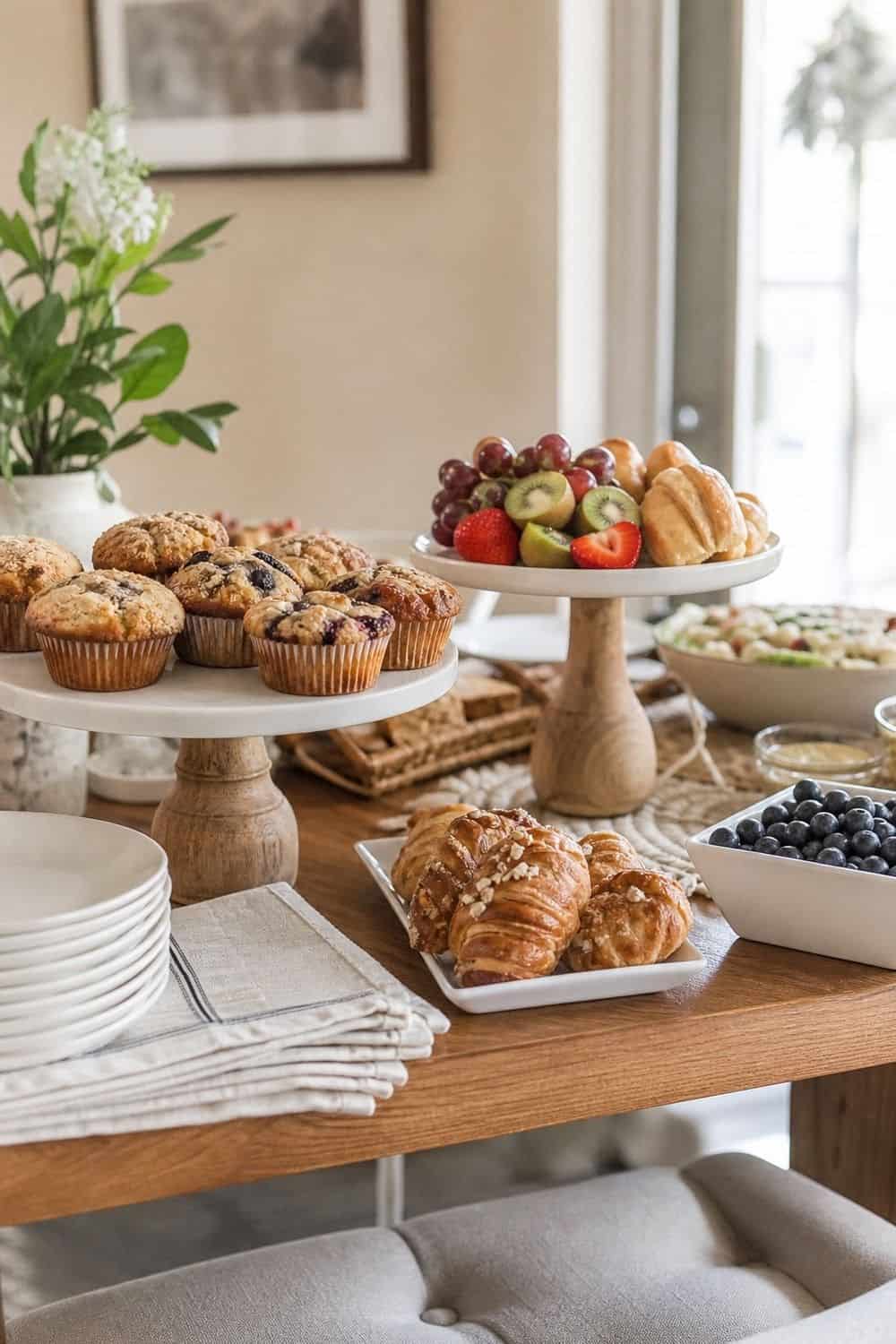
Height helps a winter brunch buffet when counter space is tight. A stand can lift muffins, quick bread, pastries, or fruit so the table looks full without spreading sideways. A white cake stand is useful because it works with most food colors and keeps the display bright on gray winter mornings. It should hold stable items, not slippery casseroles or hot dishes. Use one or two stands, not a skyline of pedestals. Guests still need to reach the food without knocking into mugs or carafes. If something needs a knife, keep it on a lower, steadier surface. Height is useful only when it makes serving easier.
23. Create a Small-Space Counter Buffet
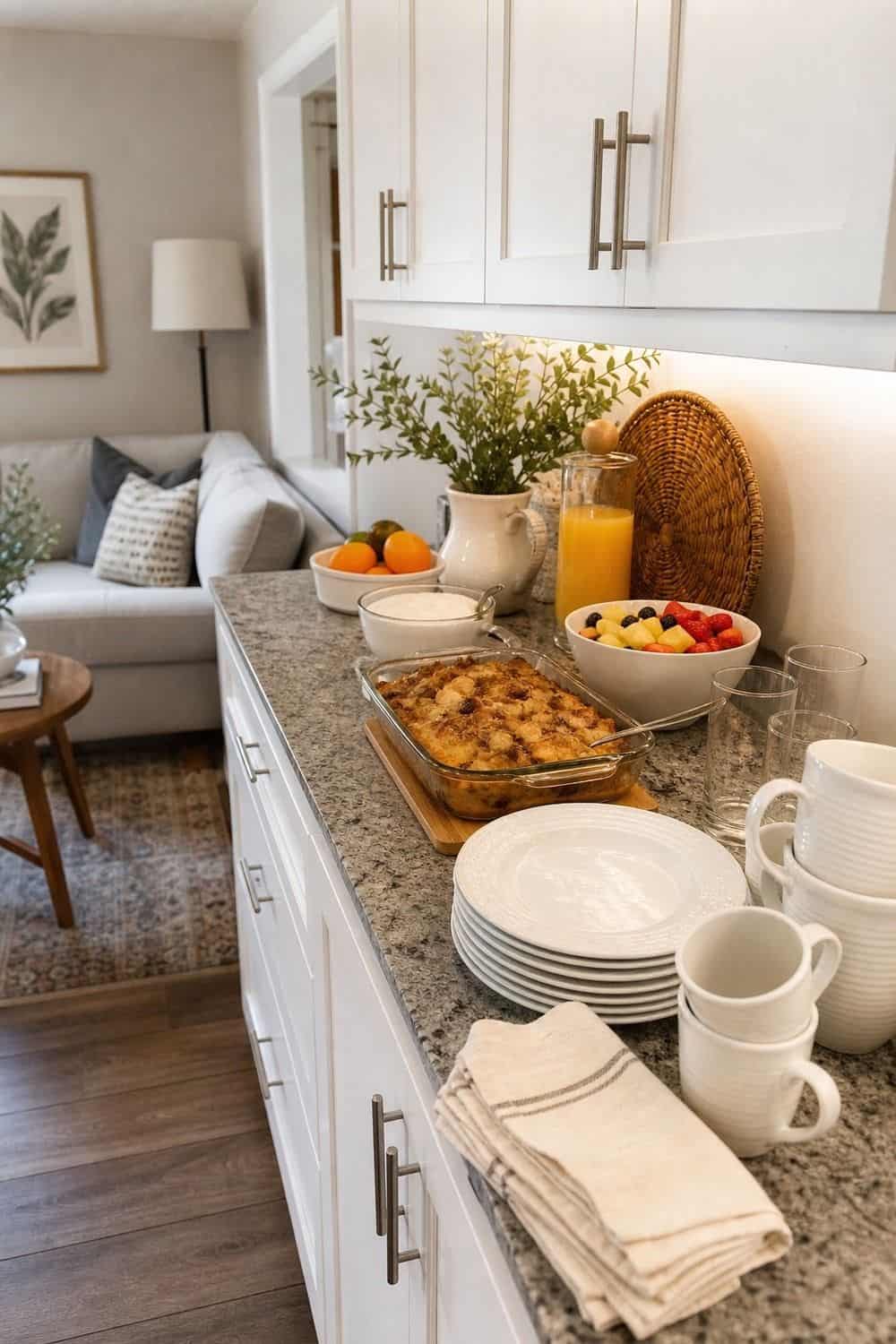
Small-space winter brunch depends on flow. Use the counter for plates, mains, sides, fruit, and condiments, then move drinks to another surface so guests do not block the oven or coffee maker. Nesting serving trays help move food between counter, table, and kitchen as the brunch changes.
They are useful for refills, clearing empty dishes, and separating sweet from savory items. Put plates at the start and condiments near the foods they belong with. Coffee should be close enough to find but not in the way of hot dishes. Avoid setting everything out at once. In a small kitchen, refilling from the refrigerator or oven is better than crowding every tray onto the counter.
24. Set Up a Dish Return Spot
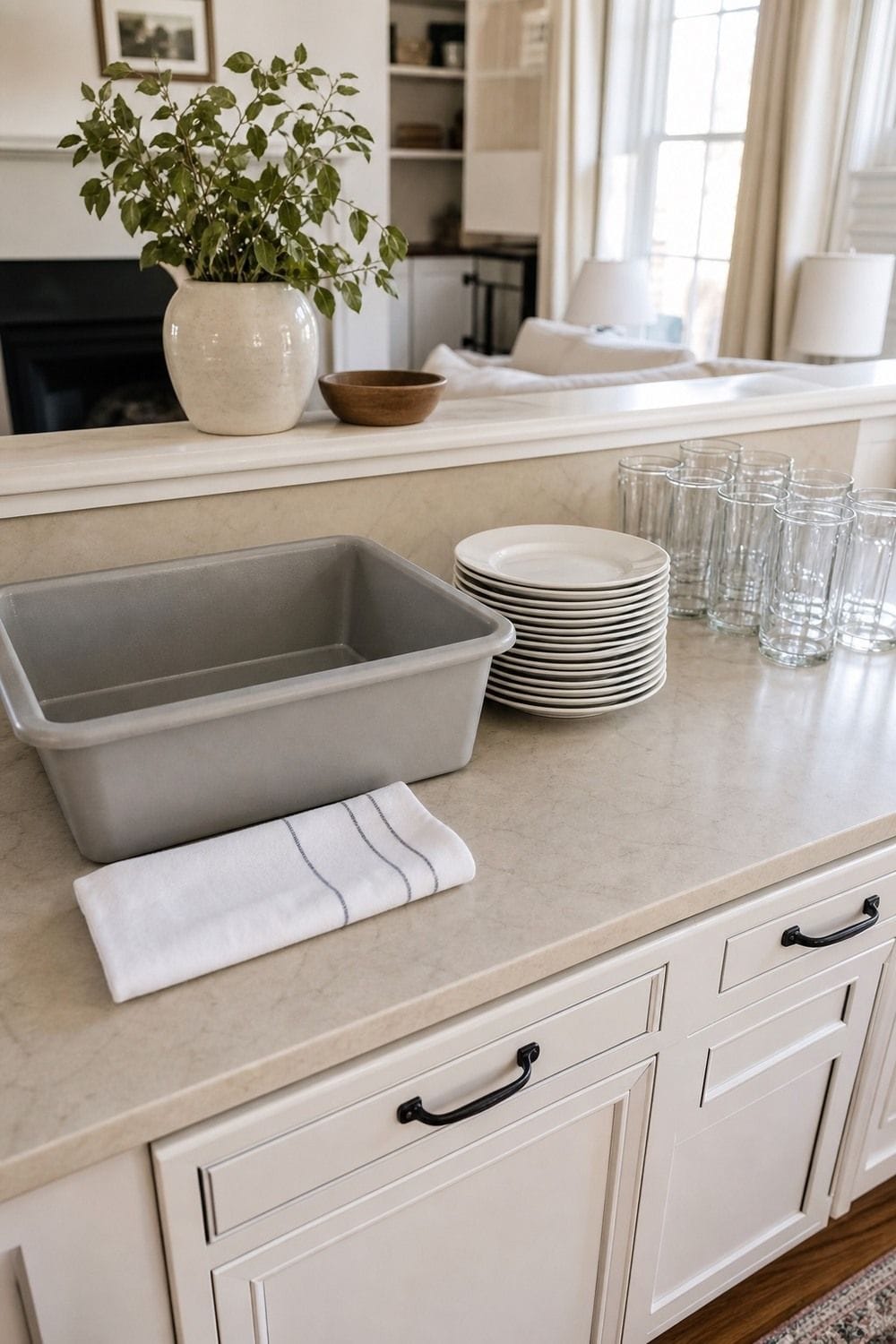
Brunch creates a lot of small pieces: mugs, forks, plates, parfait cups, spoons, napkins, and glasses. A dish return spot keeps those items from piling up on the eating table. A bus tub or sturdy tray near the kitchen gives guests one obvious place to put used dishes.
Keep it away from the buffet start so returning plates do not cross paths with clean ones. If needed, ask guests to scrape food first. That small instruction keeps the tub lighter and makes cleanup faster after the second cup of coffee. This also keeps the table usable for lingering. People can clear a first plate and come back for tea or cocoa without sitting beside a stack of dirty mugs. Empty the tub once if it gets heavy rather than balancing dishes above the rim.
25. End With a Slow Second-Cup Moment
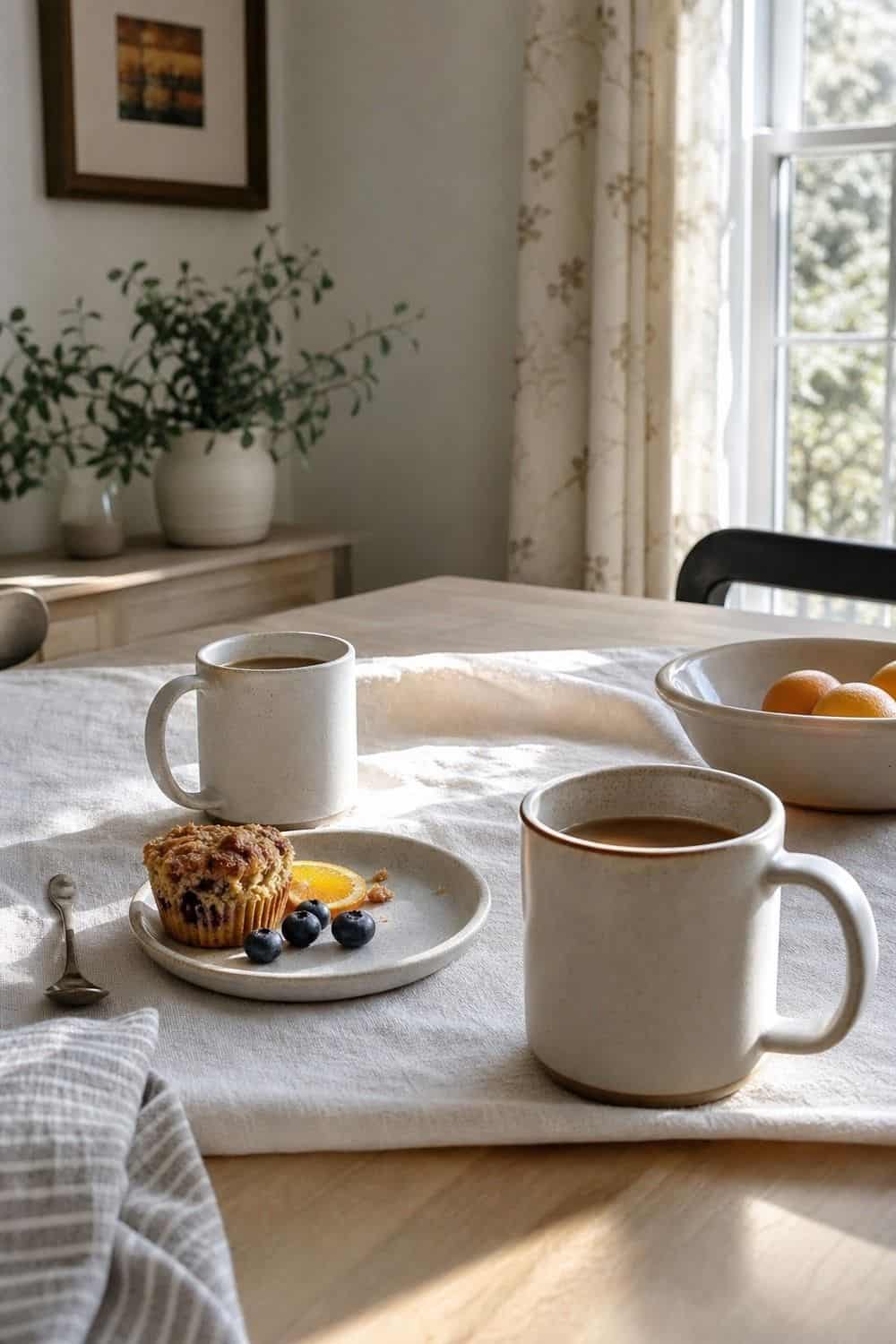
The best winter brunch ending is usually the quiet part after the buffet rush. Refresh coffee, tea, cocoa, or sparkling water, set out the last muffins or fruit, and clear only the dishes that are blocking the table. Guests should feel welcome to linger, not hurried toward cleanup.
Pack egg dishes and other leftovers before they dry out, but keep the reset gentle. A warm second cup lets the host calmly enjoy the room instead of disappearing into the sink.
Other Topics to Cover
Prep winter brunch the night before by setting the table, arranging serving pieces, making baked goods, prepping fruit, and staging coffee supplies. Morning should be mostly baking, warming, and setting out chilled items.
Balance sweet, savory, fresh, hot, and room-temperature dishes. A table of only casseroles feels heavy, while a table of only pastries does not carry guests through a cold morning.
Avoid stovetop bottlenecks from omelets, pancakes, and individual eggs. Oven-based dishes, room-temperature frittatas, waffle holding methods, and self-serve stations are easier for groups.
Coffee, tea, cocoa, chai, mimosas, and zero-proof sparkling drinks need clear stations. Drinks slow the buffet if they sit in the middle of the hot food line.
In a small space, use a counter buffet with trays, a separate drink area, and a dish return spot. Label dishes, pack leftovers before eggs dry out, and keep cleanup visible.
FAQs
What are good winter brunch hosting ideas?
Good winter brunch hosting ideas include a make-ahead egg bake, baked French toast, waffle board, fruit platter, coffee station, warm drinks, mimosa bar, and a simple cleanup plan.
What can I make ahead for winter brunch?
You can make strata, baked French toast, muffins, quick breads, baked oatmeal, fruit prep, parfait cups, and drink station supplies ahead. Set the table the night before too.
How do I host brunch without cooking all morning?
Choose oven-based dishes, bake bacon, batch drinks, set the table early, and use self-serve stations. Avoid made-to-order omelets, pancakes, or eggs for a crowd.
What drinks should I serve at winter brunch?
Serve coffee, decaf, tea, cocoa, chai, mimosas, sparkling cider, sparkling water, and a zero-proof juice spritz. Put drinks away from the main food traffic when possible.
What is a good brunch buffet setup?
Start with plates, then mains, sides, fruit, condiments, drinks, and a dish return spot. If space is tight, move coffee and mimosas to a separate surface.
How do I keep waffles warm for brunch?
Hold waffles on a wire rack set over a sheet pan in a low oven. Do not stack them tightly, because trapped steam softens the crisp edges.
What savory foods work for winter brunch?
Egg bake, frittata, shakshuka, sausage, bacon, savory patties, brunch salad, savory waffles, and toast all work well for winter brunch.
How do I make winter brunch cozy?
Use warm drinks, low lighting, baked dishes, winter fruit, cloth napkins, self-serve coffee, and a relaxed second-cup finish after the buffet rush.
Final Thoughts
The strongest winter brunch hosting ideas keep the morning warm, self-serve, and manageable. Set the table early, lean on oven-based mains, protect waffle texture, offer coffee plus cold-weather drinks, use winter fruit for freshness, and make cleanup obvious. When the second cup of coffee feels unhurried, you know the brunch worked.
Last update on 2026-09-18 / Affiliate links / Images from Amazon Product Advertising API