

Alcohol free sangria macerates sliced orange, apple, and lemon in 750 ml of non-alcoholic red wine with simple syrup for four to twenty-four hours, then finishes with chilled club soda at the table. The steep builds flavor; the soda adds lift. Serves six to eight.
In the summer of 1964, sangria crossed the Atlantic for good. The Spanish Pavilion at the New York World’s Fair in Flushing Meadows poured it for fairgoers by the pitcher, and it never left American kitchens after that. The non-alcoholic version below keeps the Spanish heritage and loses the hangover, with a structure that holds up next to tapas, brunch, or a quiet Tuesday night pour. The technique is the same one Spanish home cooks have used for two hundred years: macerate fruit in wine, finish with bubbles, serve cold.

What You’ll Want on Hand
A wide-mouthed glass pitcher is the one piece of equipment that does real work here. It holds enough for six to eight pours, the sides show off the fruit suspended in the wine, and the wide mouth makes adding ice and topping with soda easy at the table.
A wooden cocktail muddler presses the citrus once or twice to release its oils without grinding the pith into bitterness. A handheld juicer pulls clean juice from oranges or lemons if you want a brighter base. For a party of twelve or more, a mason jar drink dispenser with a spigot lets guests pour their own.


Recommended Reads
- Autumn Sangria Recipe
- Cortisol Cocktail
- Pumpkin Spice Latte Mocktail
- Friendsgiving Drink Ideas
- Best Fall Mocktails
Where Sangria Came From
The word sangria comes from the Spanish sangre, meaning blood, a reference to the deep red color of the drink in a clear glass. The lineage stretches back further than Spain, though. Sangria descends from the Greco-Roman drink hippocras, a spiced wine sweetened with honey and filtered through a cloth bag called the Hippocratic sleeve, named for the physician. Romans drank it for warmth, for digestion, and because the spices and alcohol made questionable water safer to consume on long campaigns.
By the eighteenth and nineteenth centuries, the word sangría had settled into Spanish and Portuguese kitchens as a household summer drink. It traveled outside Iberia slowly until the 1964 New York World’s Fair, where the Spanish Pavilion served it to American fairgoers by the pitcher. From that summer onward, sangria became a fixture of American suburban dinner parties through the 1970s, then a brunch and tapas staple, and now, in its non-alcoholic form, a sober-curious pour that still reads as a real drink.
A Few Notes on the Ingredients
- Non-alcoholic red wine: The closest match to traditional sangria. Bottles labeled non-alcoholic red blend or alcohol-removed cabernet bring real tannin, real grape character, and the body that makes sangria taste like sangria rather than juice. Surely and Ariel are the most widely reviewed picks; Fre has caught up in grocery availability.
- Grape juice plus black tea: The second-tier base, mixed roughly three parts concord or red grape juice to one part strong-brewed black tea. The tea supplies the tannin and slight bitterness that grape juice on its own lacks. Hibiscus tea works in the same role for a brighter, more floral lift.
- Pure grape juice: The lightest tier, ideally cut with a splash of pomegranate or unsweetened cranberry for dryness. Pour this version for a young kids’ table or a sweet brunch.
- Citrus and apple: One orange sliced into wheels with the peel on (the oils in the peel carry the drink), one apple cut into chunks for crispness, one lemon in thin wheels for acid. Pomegranate seeds are optional but pretty in a clear pitcher.
- Simple syrup or honey: Two tablespoons per quart is the starting point, adjusted to taste after the steep. Non-alcoholic wines tend to read sweeter than dry red, so start light.
- The steep: Four to twenty-four hours covered in the fridge. Anything less reads as juice with floating fruit.
- Club soda or sparkling cider: Added only when you pour, never in the pitcher. Carbonation collapses within an hour in the fridge.
Recipe: Alcohol-Free Sangria
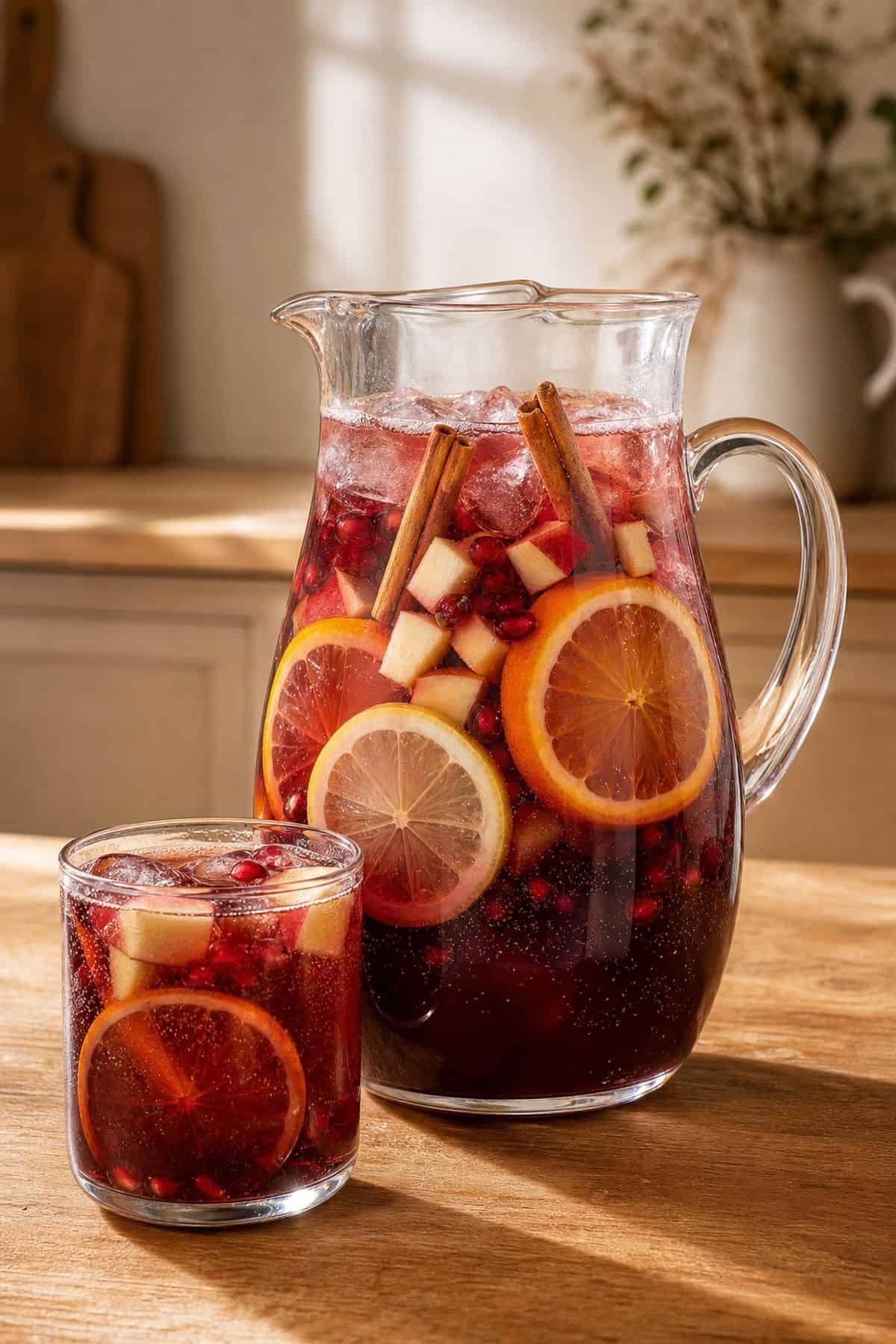
Prep time: 15 minutes | Steep time: 4 hours | Total time: 4 hours 15 minutes | Serves: 6 to 8 (one pitcher)
Ingredients
- 1 bottle (750 ml) non-alcoholic red wine, OR 2 cups (480 ml) red grape juice + 1 cup (240 ml) brewed black tea
- 1 orange, sliced into wheels with the peel on
- 1 apple, cored and cut into 1 cm chunks
- 1 lemon, sliced into thin wheels
- 1/2 cup (60 g) pomegranate seeds, optional
- 2 tbsp (30 ml) simple syrup or honey, plus more to taste
- 2 cinnamon sticks, optional
- 1 cup (240 ml) club soda or sparkling cider, chilled, added at serve
- Ice, to fill the glasses
Instructions
- Pour the 750 ml non-alcoholic red wine (or the grape juice and black tea combination) into a wide glass pitcher. If using the grape juice base, brew the tea first with one strong tea bag in one cup of hot water for five minutes, then cool to room temperature before adding.
- Add the sliced orange, cubed apple, lemon wheels, and pomegranate seeds if using. Press the citrus once or twice against the side of the pitcher with a wooden muddler to release the oils. Do not grind. One or two firm presses is the whole move.
- Stir in 2 tbsp simple syrup or honey. Drop in the cinnamon sticks if using.
- Cover the pitcher with plastic wrap or a lid and refrigerate for 4 to 24 hours. Overnight is the upgrade. The longer steep pulls the fruit flavor into the wine and softens the citrus oils.
- When ready to serve, taste the base and adjust the sweetness if needed. Pour the chilled club soda or sparkling cider into the pitcher and stir once, gently.
- Fill wine glasses or rocks glasses halfway with ice. Pour the sangria over the ice, making sure each glass gets a spoonful of soaked fruit. Serve immediately.
Notes
The four-hour minimum steep is not optional. An hour gets you fruit floating in wine; four hours pulls the citrus oils into the liquid and softens the apple’s bite. Twenty-four hours is the ceiling. Past that the fruit turns mushy and the wine takes on a slightly bitter edge from the over-steeped peel.
Do not add the club soda to the pitcher until you are ready to pour. Carbonated liquid loses its bubbles within an hour in the fridge, and a sangria pre-mixed with soda goes flat before the first guest arrives.
The base holds for two days covered in the fridge. The soaked fruit is best within the first day; after twenty-four hours it gets soft and pulpy. If you want to stretch the base to a second day, strain the fruit out after the first round of pours and add fresh slices for the second serving.
Tips and Variations
White Sangria with Non-Alcoholic White Wine
Swap the non-alcoholic red wine for a non-alcoholic white blend or sauvignon blanc. White grape juice and a chamomile or green tea base work as the second-tier substitute. Trade the orange and apple for peach slices, green grapes, and cucumber ribbons. The drink reads lighter and brighter, and pairs better with summer salads and seafood than the red version does. Finish with sparkling white grape juice or prosecco-style non-alcoholic bubbles.
Fruit Choice by Season
Summer is stone fruit territory: sliced peaches, nectarines, plums, and fresh strawberries all work and add a softer, jammier note than the year-round citrus and apple build. Fall leans toward apple, pear, and a couple of cinnamon sticks. Winter is when citrus carries the drink, so lean into blood oranges, ruby grapefruit segments, and a few pomegranate seeds. Spring sits in between, with strawberries, kiwi, and a handful of fresh mint leaves added at the end.
How Long This Actually Keeps
The fully built sangria (base plus soda) is a same-day drink. Once the carbonation hits, the clock starts. The base on its own, before soda is added, holds for two days refrigerated and covered. Past day two, the fruit gets soft and the wine picks up a slight bitterness. Strain the fruit out before storing if you want to push the base toward day three.
Making It Without Non-Alcoholic Wine
The grape juice plus black tea base is the workaround when non-alcoholic wine is out of reach. Brew one cup of strong black tea (two tea bags or one tablespoon of loose leaf in one cup of hot water, steeped five minutes) and combine with two cups of red grape juice. The tea supplies the tannin and the slight astringency that grape juice on its own lacks. Add a splash of pomegranate juice for extra dryness, and the result tastes notably closer to wine than a pure juice base.
Pitcher Batch for Twelve
Double the base: two bottles (1.5 liters total) of non-alcoholic red wine, or four cups grape juice plus two cups black tea. Double the fruit: two oranges, two apples, two lemons, one cup of pomegranate seeds. Increase the simple syrup to four tablespoons, then taste after the steep. Use a mason jar drink dispenser with a spigot so guests can pour their own; keep the soda on the side in a separate bottle and let people top their own glasses to keep the bubbles intact.
What to Serve It With
Spanish tapas are the obvious pairing: manchego with quince paste, marcona almonds, olives, patatas bravas, pan con tomate. The fruit and acid in the sangria cut through salt and fat the same way wine does. Paella works too, especially the seafood version, where the citrus in the drink picks up the saffron in the rice. For brunch, pour it next to a frittata, a fruit-and-yogurt board, or buttermilk pancakes. At a Friendsgiving table, the winter citrus version sits comfortably between the turkey and the dessert spread. For a summer porch pour, serve alongside grilled vegetables, jamón substitute, or a simple tomato-mozzarella plate.
Frequently Asked Questions
Can you make sangria without alcohol?
Yes, and the technique is the same as the boozy version. The only swap is the base: non-alcoholic red wine, or a mix of red grape juice and strong-brewed black tea. Everything else (the fruit, the steep, the soda finish) stays identical. The drink holds its sangria character because the steep is doing most of the work, not the alcohol.
Which non-alcoholic red wine works best for sangria?
The most widely reviewed picks are Surely Non-Alcoholic Red Blend for the closest match to a full-bodied dry red, Ariel Cabernet Sauvignon for a budget-friendly option with real tannin, and Fre Premium Red as the most widely available grocery store choice. Any bottle labeled non-alcoholic red blend or alcohol-removed red will do the job. Avoid sweet or dessert-style non-alcoholic wines, which throw the balance of the drink off.
How long should sangria sit before serving?
Minimum one hour for the fruit to start releasing flavor, four hours for a proper base, and twenty-four hours for the full effect. Overnight in the fridge is the sweet spot. Past twenty-four hours the citrus peel turns the drink slightly bitter, so plan to serve within a day of starting the steep.
Can you use grape juice instead of wine for sangria?
You can, with one adjustment. Pure grape juice on its own reads sweet and lacks the tannin that gives sangria its grown-up character. Cut three parts grape juice with one part strong-brewed black tea (or add a splash of pomegranate juice) to bring in the dryness. The result tastes much closer to a wine-based sangria than juice alone does.
What fruit goes in non-alcoholic sangria?
The year-round base is orange (sliced with the peel on), apple (cubed), and lemon (thin wheels). Pomegranate seeds are an easy upgrade. By season: stone fruit and berries in summer, apple and pear in fall, blood orange and grapefruit in winter, kiwi and strawberries in spring. Avoid soft fruits like banana or watermelon, which turn to pulp in the steep.
Is alcohol-free sangria kid-safe?
The grape juice and black tea version is safe for older kids; the tea has caffeine, so skip it or use a caffeine-free herbal blend for young children. The non-alcoholic wine version is technically alcohol-free (under 0.5 percent ABV by US standards) but most parents prefer to pour the juice-based version for kids under twelve. For a fully kid-safe pitcher, use one hundred percent grape juice with a splash of pomegranate or cranberry, skip the tea, and finish with sparkling cider.
Key Takeaways
- Non-alcoholic red wine is the closest match to traditional sangria; grape juice plus strong black tea is the fallback.
- Steep four to twenty-four hours covered in the fridge. Anything less reads as juice with floating fruit.
- Add the club soda or sparkling cider when you pour, never in the pitcher.
- Slice the orange with the peel on. The oils in the peel carry the drink.
- The base holds two days refrigerated; the soaked fruit is best within the first twenty-four hours.
Final Thoughts
The non-alcoholic wine category has caught up to the point that an alcohol-free sangria no longer reads as a compromise. A bottle of Surely or Ariel gives the drink real tannin, the four-hour steep does the same work it does in the boozy version, and the soda finish keeps it bright in the glass. The result holds its own at a tapas spread or a brunch table the same way wine sangria does.
The single rule worth remembering is the steep. Skip it and the drink is fruit floating in juice; honor it and you get sangria. Four hours is the minimum; overnight is the upgrade. Everything else (the fruit, the sweetener, the soda) is dial-in.
For the fall, boozy counterpart, see our Autumn Sangria Recipe, the seasonal red wine and brandy version built for cool weather. The alcohol-free pitcher here is the year-round sober-curious sibling: lighter on the palate, gentler on the morning after, and just as much a part of the Spanish summer table as the original.
Last update on 2026-10-05 / Affiliate links / Images from Amazon Product Advertising API