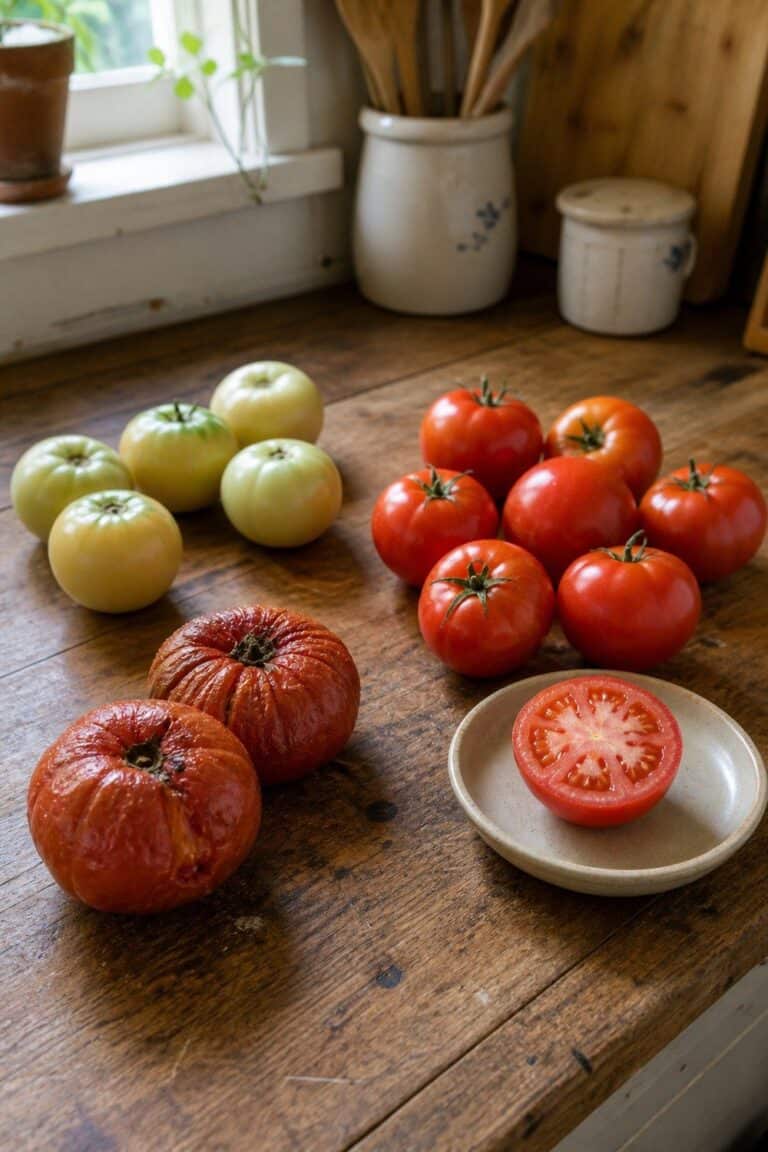
Budget pantry meal prep ideas work best when cheap staples like rice, beans, lentils, oats, pasta, canned fish, tomato sauce, peanut butter, popcorn, bouillon, spices, and frozen vegetables become real meals. Add one fresh, frozen, refrigerated, or leftover ingredient when possible so pantry food does not feel flat. The goal is flexible breakfasts, lunches, dinners, snacks, and backup meals without buying specialty groceries for every recipe.
A budget pantry is most useful when it feeds you before the next shopping trip, not when it sits behind cabinet doors as a collection of good intentions. Rice needs a sauce direction. Beans need a meal format. Oats, pasta, tuna, lentils, and peanut butter need a small plan so they become breakfast, lunch, dinner, or snacks instead of another duplicate purchase.
The best budget pantry meal prep ideas use what keeps well, then add one bright thing when the kitchen has it: cabbage, egg, yogurt, frozen vegetables, lime, herbs, leftover chicken, or a little cheese. That pantry plus one rhythm keeps food affordable without making the week taste like the same bowl on repeat.

You Might Also Like These Blog Posts
1. Rice and Bean Bowl Bases
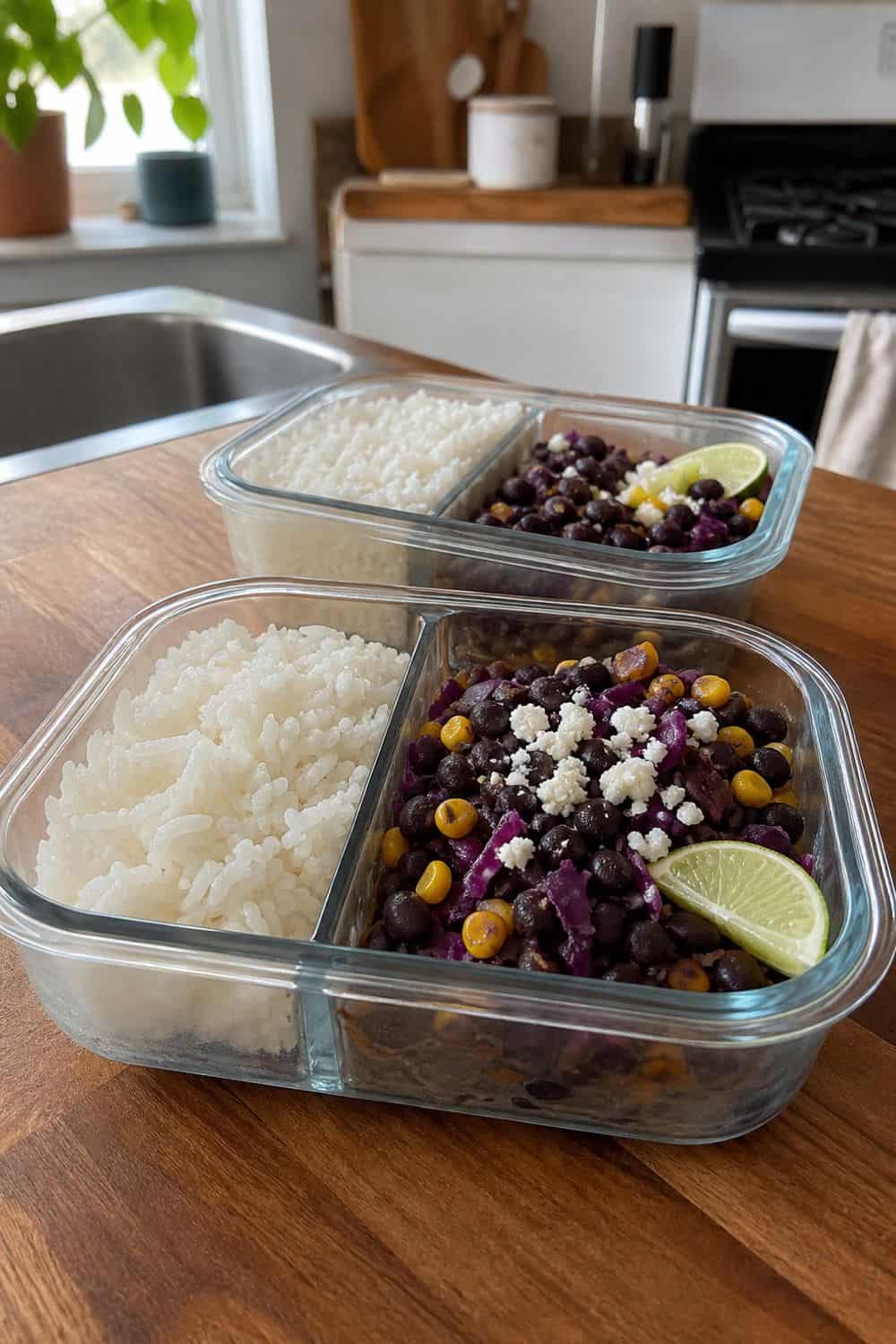
Rice and beans are the budget base that can turn into several meals without tasting identical all week. Cook plain rice, then prep a bean topping with canned or cooked beans, frozen corn, salsa, hot sauce, lime if you have it, cabbage, and a small amount of cheese or egg when the fridge allows.
A rice cooker with steamer basket helps because the rice can cook while the steamer warms corn, frozen vegetables, or cabbage for a quick bowl topping. Keep the rice plain so it can shift from taco bowls to fried rice or soup later.
Cool cooked rice before sealing and refrigerate it promptly. The budget mistake is seasoning the entire batch one way, then getting tired of it by day two.
2. Big-Batch Lentil Soup Portions

Lentils are one of the most useful pantry proteins because they cook faster than many dried beans and do not need expensive add-ins to feel like dinner. Build soup with lentils, canned tomatoes, bouillon, onion powder, garlic, curry powder, Italian seasoning, rice, or frozen spinach. An electric pressure cooker is useful for a budget batch because it handles dried lentils, broth, and aromatics without constant stirring. Portion the soup for freezer lunches or quick dinners, leaving room in containers for expansion if freezing.
Let the soup cool before sealing. A thick lentil soup holds heat longer than it looks, and trapping steam can make storage messy. Add frozen spinach, rice, or a spoonful of yogurt after reheating if you want each portion to feel different.
3. Canned Bean Taco Filling
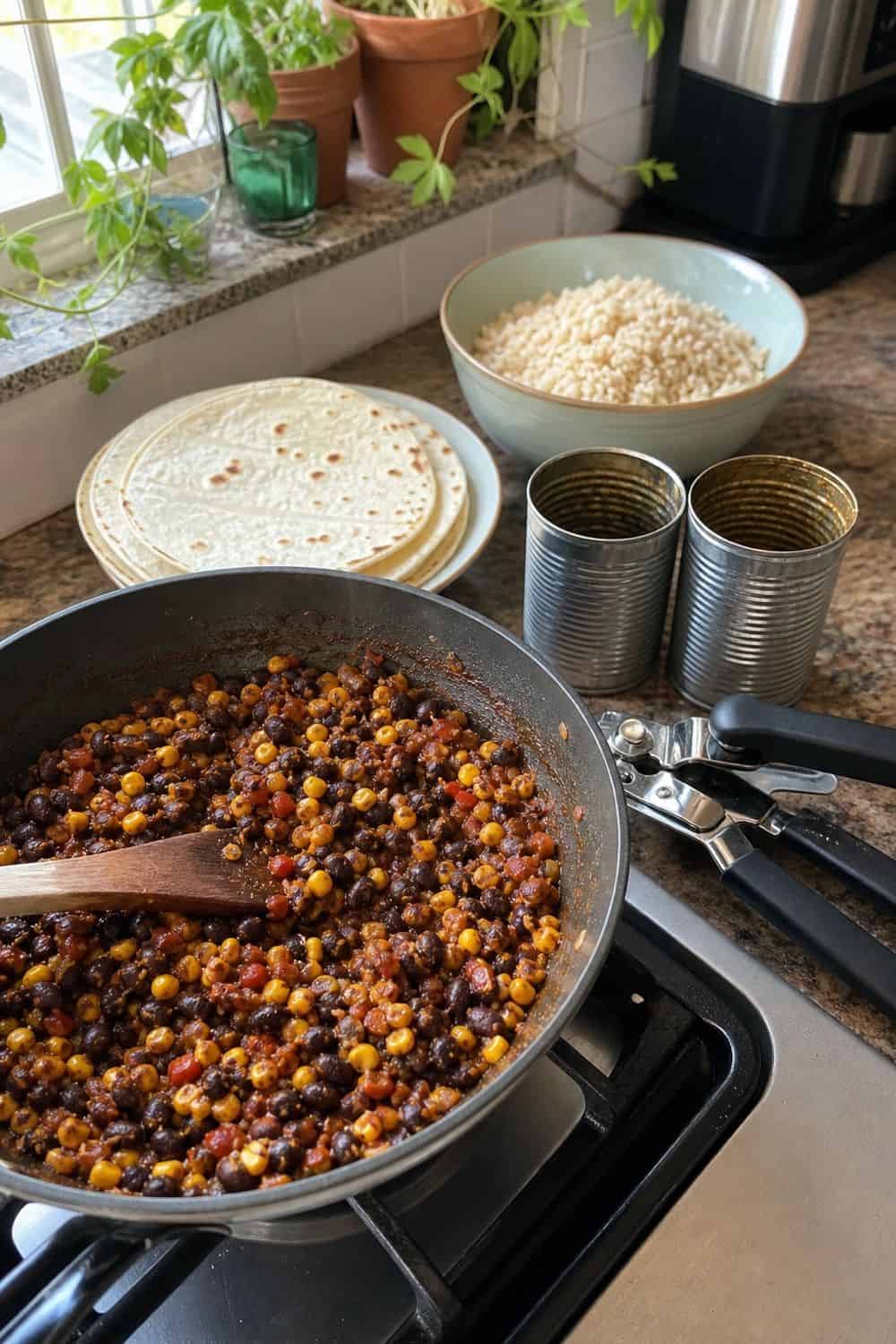
Canned beans turn into taco filling faster than almost any other pantry staple. Rinse black beans, pinto beans, or kidney beans, then simmer with canned corn, salsa, taco seasoning, a splash of water, and rice if you want a thicker filling. A manual can opener serves the actual prep job here: opening several inexpensive cans without turning dinner into a tool hunt. Keep one dependable opener near the pantry so bean meals stay easy on nights when groceries are thin.
Use the filling for tacos, bowls, nachos, freezer burritos, or tortilla chips with a fried egg on top. Opened canned food should move to a covered container in the fridge, not sit in the can. The texture mistake is leaving beans watery, so drain well and season them strongly.
4. Chickpea Salad Sandwich Prep
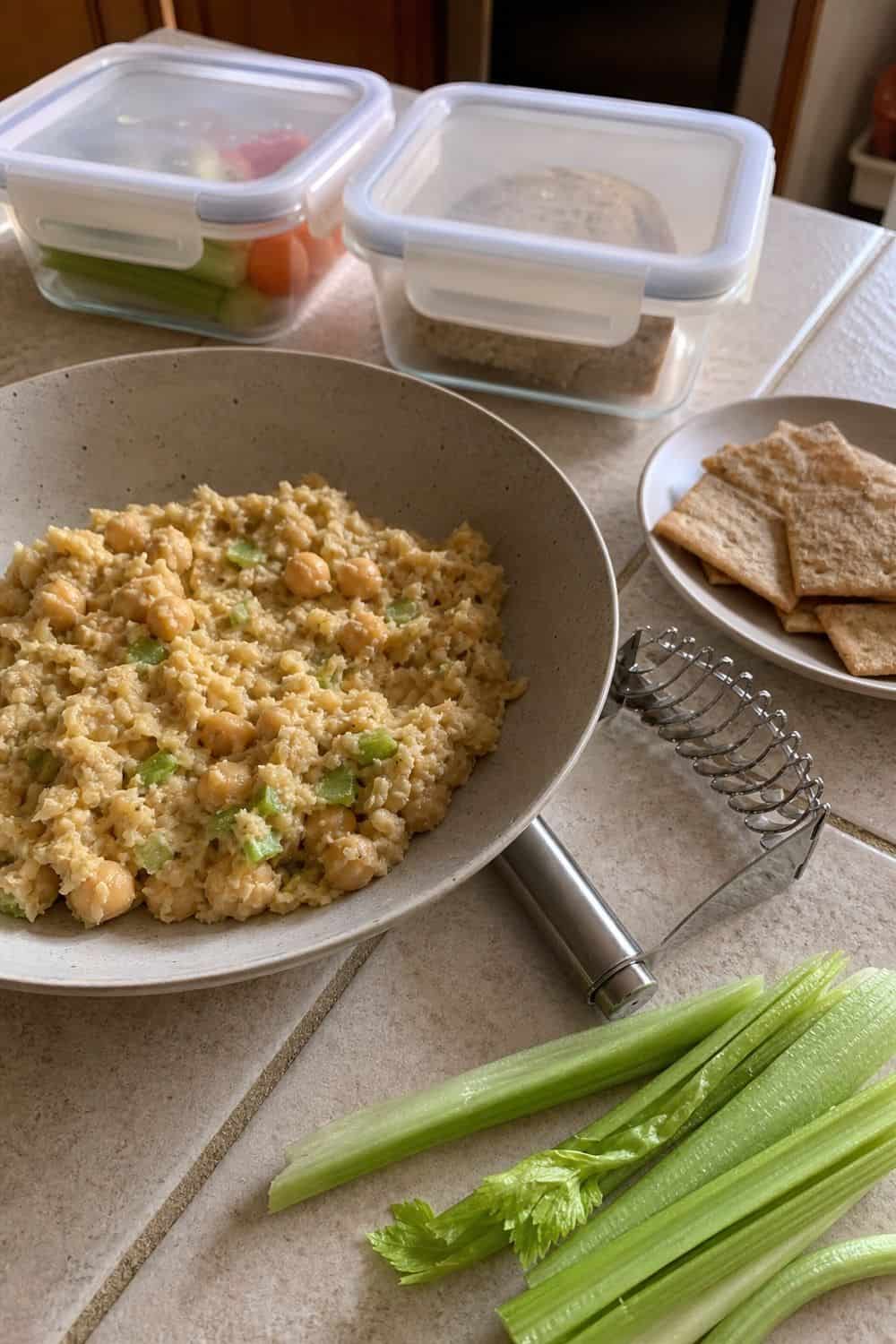
Chickpea salad is a no-cook lunch that starts with a cheap can and ends as sandwiches, cracker plates, lettuce cups, or toast. Mash chickpeas with mayo or yogurt, mustard, pickle relish, celery if available, onion powder, pepper, and a little vinegar or lemon if you have it. A stainless steel pastry blender works well because it crushes chickpeas quickly without turning them into paste. The best texture still has some pieces, so the salad holds together but does not feel like hummus.
Keep bread or crackers separate until eating. If you add watery vegetables, drain them first so the mixture does not loosen overnight. Refrigerate the finished salad in a covered container and use it beyond sandwiches: toast, cucumber boats, cracker plates, or a scoop over greens.
5. Tuna and White Bean Lunch Jars
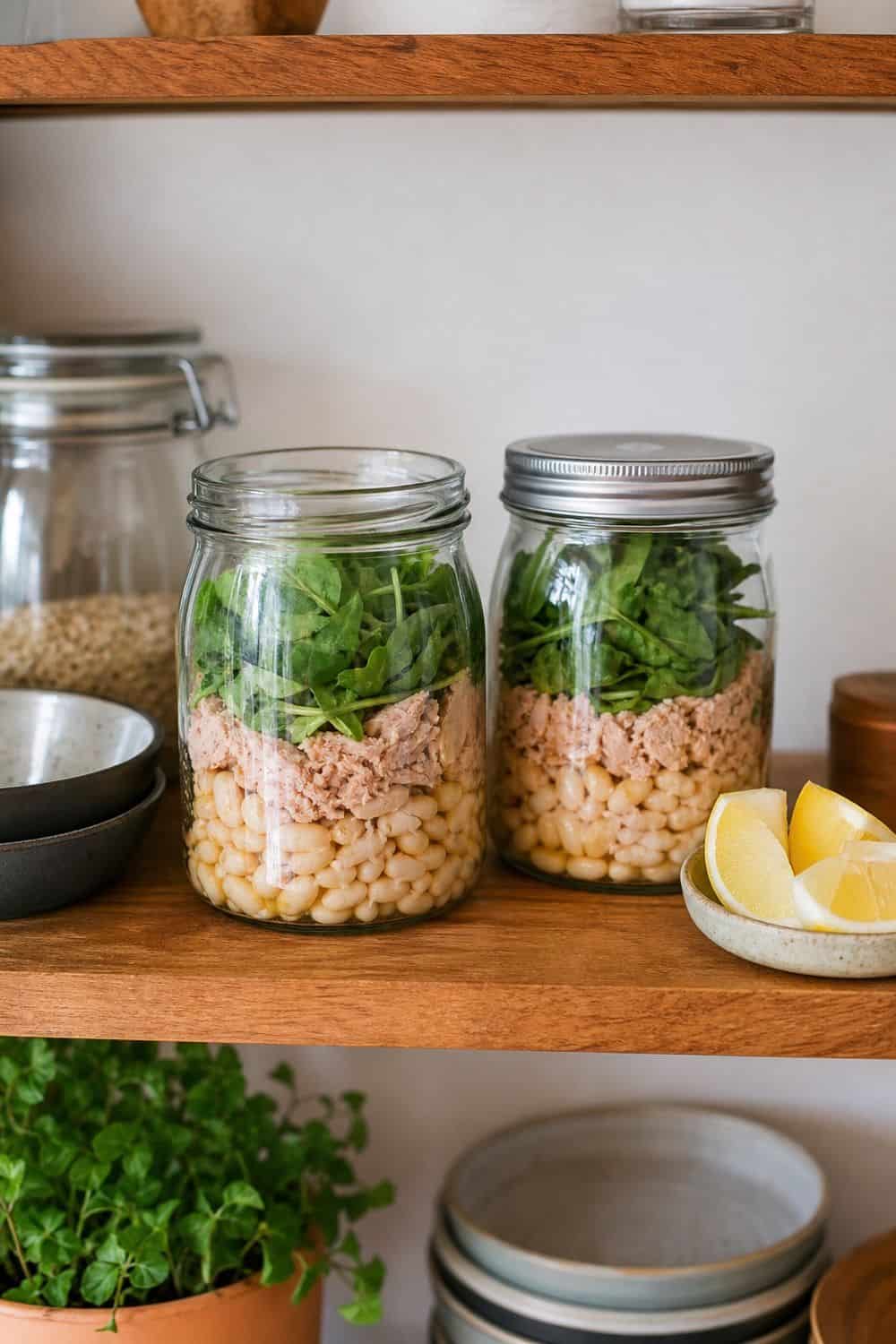
Tuna feels less skimpy when white beans stretch it into a full lunch. Mix canned tuna with white beans, olive oil, lemon or vinegar, pepper, capers or pickles, herbs, pasta, rice, or greens added fresh when possible.
Wide mouth pint mason jars are useful because they give enough room for layering and eating without digging from a narrow jar. Put beans or pasta lower, tuna in the middle, and greens or herbs on top if you are adding them later.
Beans make one can of tuna cover more portions without relying on extra fish. Refrigerate the jars and keep the dressing balanced, because too much oil can make the lunch heavy rather than filling. Celery, pasta, rice, or crisp greens can stretch the jar further when you have them.
6. Peanut Noodle Lunch Boxes

Peanut noodles are pantry meal prep built from spaghetti, ramen noodles, rice noodles, peanut butter, soy sauce, vinegar, chili crisp, garlic powder, frozen vegetables, and sesame seeds if you have them. The meal feels flexible because the sauce changes inexpensive noodles into lunch.
2 oz condiment containers with lids keep peanut sauce separate so the noodles do not become heavy or dry. Pack the sauce thick, then loosen it with hot water, noodle water, or a splash of vinegar before eating.
A useful box has noodles, one vegetable, one protein if available, and sauce. Frozen peas, carrots, cabbage, or edamame keep the cost down, while peanuts, sesame seeds, or scallions can stay separate until eating. The budget trap is buying many bottled sauces when one jar of peanut butter and a few pantry seasonings can do the work.
7. Tomato Pasta Bake Starter
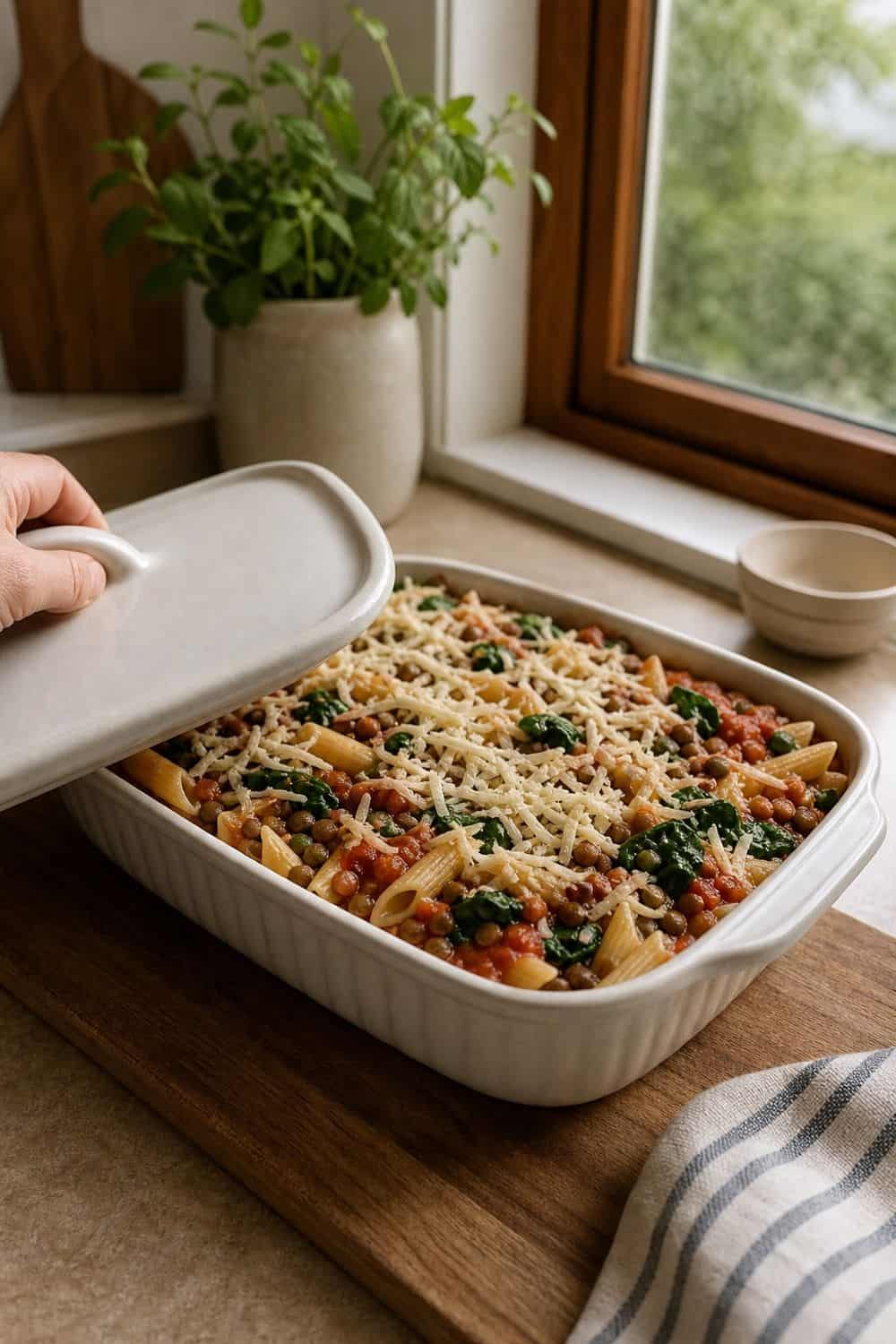
Jarred sauce and dried pasta can become a bake-later dinner instead of another plain bowl of noodles. Combine pasta, jarred sauce, canned tomatoes, lentils or beans, frozen spinach, garlic, and a little cheese if the budget allows. A ceramic baking dish with lid helps because the same dish can hold the assembled base in the fridge and then move into baking mode when dinner starts. Check the product instructions for lid and temperature limits before heating.
Keep the pasta slightly undercooked if it will bake later, and add a splash of sauce before baking if it looks dry. Freeze half only after cooling. The mistake is treating the dish like a fresh pasta salad and overloading it with wet sauce that turns soft before baking.
8. Freezer Burrito Pantry Stack

Freezer burritos are pantry-first backups when the filling leans on tortillas, rice, beans, salsa, corn, cooked lentils, canned chicken, or scrambled eggs if available. Make the filling sturdy, not soupy, so the burritos reheat without leaking. Pre cut aluminum foil sheets make wrapping faster and more consistent. Cool fillings first, use salsa lightly, roll tightly, and write the flavor or date before freezing if you are making more than one batch.
Foil helps with freezer storage, but remove it before microwaving. The budget win is having a meal ready before takeout starts sounding like the only option. Label the stack by filling so the freezer does not become a mystery tortilla pile.
9. Oatmeal Breakfast Jar Lineup

Oatmeal jars are the breakfast side of budget pantry meal prep. Use oats, shelf-stable milk or regular milk, peanut butter, cinnamon, raisins, canned fruit, chia if available, or yogurt added fresh. 12 oz glass jars with lids are small enough to prevent oversized portions and clear enough to show what is already made. Prep two or three jars at a time instead of five identical breakfasts that you may not want by Friday.
Keep crunchy toppings separate, and add fresh banana or yogurt only when you will eat the jar soon. The pantry plus one rule works well here: oats plus peanut butter plus one fresh, frozen, canned, or refrigerated topping.
10. Homemade Granola Crumble Bags

Granola crumble stretches oats into breakfast topping, snack cups, yogurt bowls, or fruit bowls. Mix oats with oil, honey or brown sugar, peanut butter, cinnamon, seeds, coconut, or chopped nuts when they fit the budget.
A rimmed quarter sheet pan is the right size for a small batch that cools quickly and does not take over the oven. Spread the mixture thinly so it bakes evenly, then break it into loose clusters after cooling.
Bag or jar the crumble only after it is fully cool. Steam trapped in a bag will soften the texture, which makes the budget snack feel stale before it is even packed. Use it on yogurt, canned fruit, oatmeal, applesauce, or snack cups, and keep nuts modest if they make the batch too expensive.
11. DIY Trail Mix Snack Cups
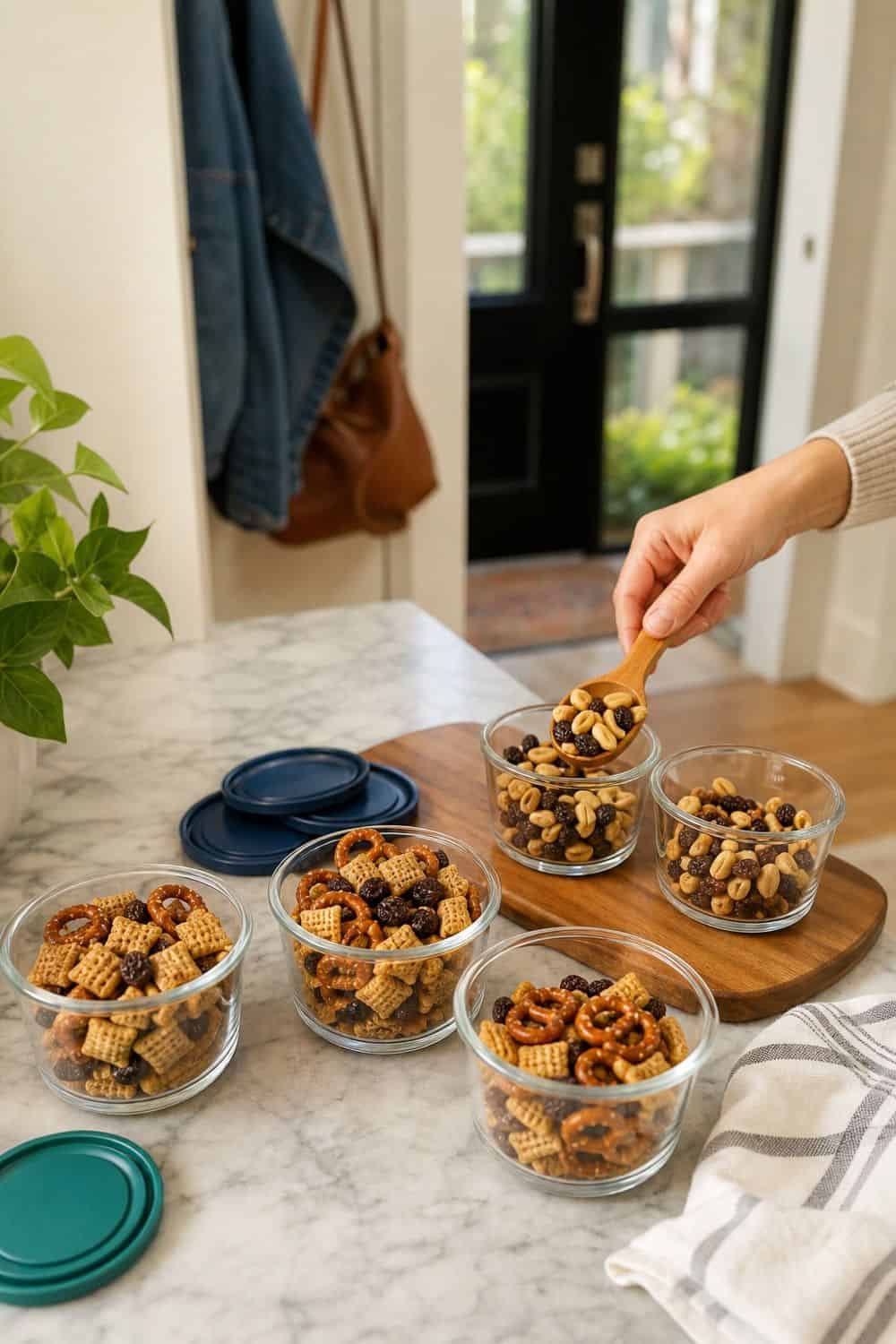
Trail mix is where pantry odds and ends can become controlled snacks instead of open bags disappearing randomly. Use cereal, popcorn, pretzels, raisins, peanuts, sunflower seeds, chocolate chips, roasted chickpeas, or store-brand crackers. Snack portion containers help because they turn bulk pantry food into grab-and-go servings for work, school, errands, or the car. They also make expensive ingredients stretch farther when chocolate chips or nuts are used as accents rather than the whole snack.
Build one sweet version and one salty version if your household gets bored quickly. What to avoid: mixing very moist dried fruit with crisp cereal for long storage. The crunch will not last.
12. Popcorn Seasoning Snack Prep
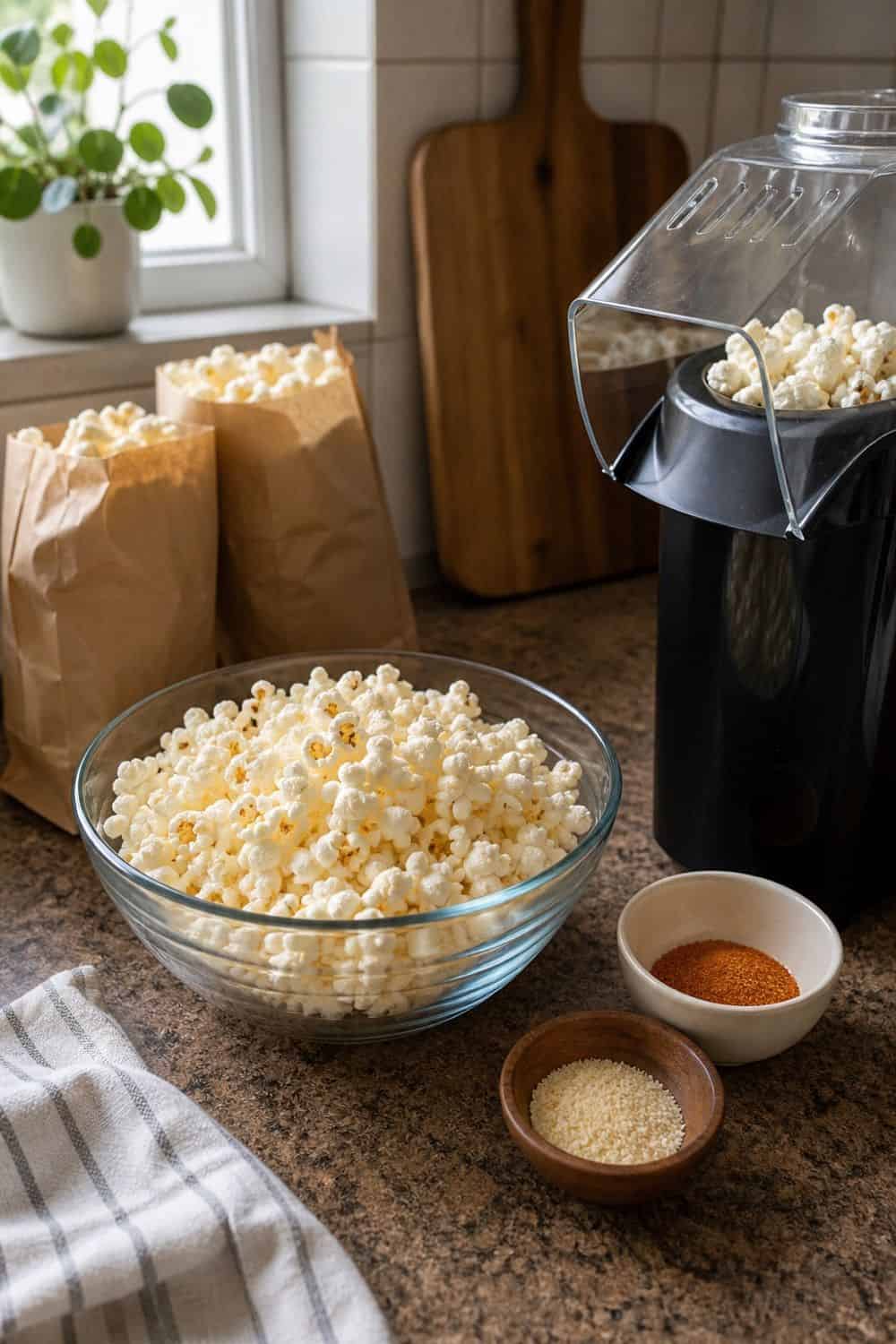
Popcorn kernels are one of the cheapest high-volume snacks in the pantry. Season batches with nutritional yeast, cinnamon sugar, ranch seasoning, chili lime, Parmesan, garlic powder, or a little oil and salt. A hot air popcorn popper helps when you want a fast batch without using a pot or buying microwave bags. Portion cooled popcorn for work, school, movie nights, or after-dinner snacks.
Let popcorn cool before bagging so steam does not soften it. Keep seasoning dry if the popcorn needs to last more than a day. The budget mistake is buying flavored bags when the same pantry spices can make several versions.
13. Coconut Chickpea Curry Packs
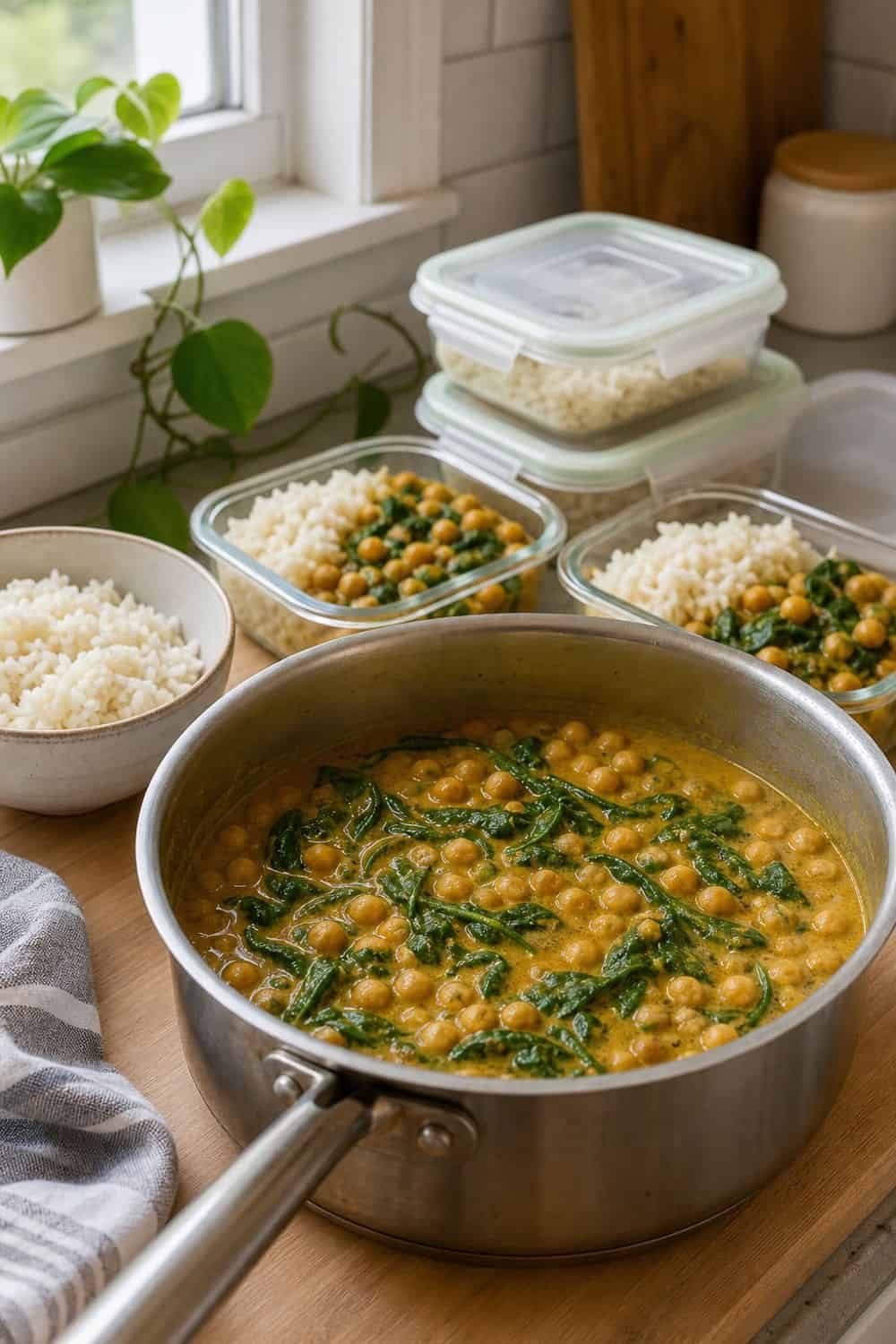
A few cans can carry a curry night when they are grouped before the week gets busy. Keep chickpeas, coconut milk, curry powder, canned tomatoes, rice, frozen spinach, onion powder, and garlic powder together so the meal can happen without a full grocery run. A stainless steel saucepan with lid is useful because it can simmer a small curry cleanly without requiring a large pot. Start with the sauce, add chickpeas, then fold in frozen spinach near the end.
Keep the base mild if several people will eat it. Fresh lime, herbs, yogurt, chili oil, or a leftover vegetable can be added to individual bowls. Do not boil coconut milk hard for too long or the sauce can turn oily.
Freeze extra curry without rice if you want the best texture later. Cook fresh rice or reheat a frozen grain portion when serving on a busier night.
14. Ramen Upgrade Meal Packs
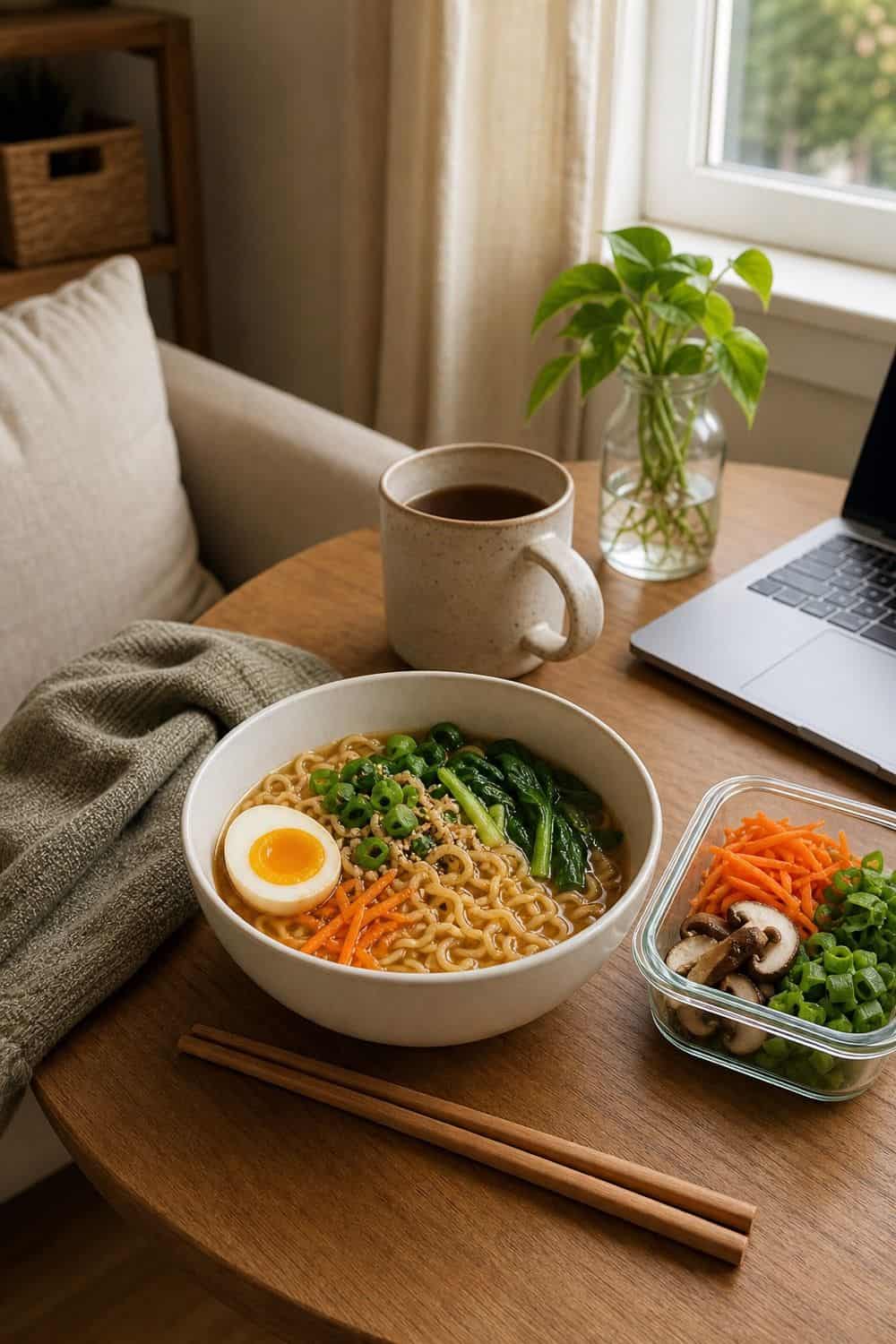
Ramen upgrade packs are not a joke when they are built like an emergency meal instead of plain noodles. Pair ramen with frozen vegetables, egg, canned corn, peanut sauce, tuna, tofu, leftover chicken, or a spoonful of chili crisp. A microwave ramen bowl helps when the meal needs to happen at work, in a dorm-style setup, or on a low-energy night. Use it for the noodles and water, then add vegetables or protein according to what needs heating.
Keep add-ins small and realistic. A pack that requires ten ingredients will not help when the pantry is the plan. If using egg or meat, make sure it is cooked safely before eating.
Use only part of the seasoning packet if salty pantry extras like tuna, soy sauce, or chili crisp are joining the bowl for extra flavor.
15. Couscous and Canned Vegetable Bowls

Couscous is useful because it only needs hot water, which makes it a budget lunch base when the stove is busy or motivation is low. Pair it with canned chickpeas, canned artichokes, roasted peppers, olives, canned vegetables, tuna, or vinegar dressing.
A stainless steel electric kettle serves the no-stove job: boil water, pour over couscous, cover, and let it hydrate while you drain cans or mix dressing. This keeps the meal fast without another pan.
Fluff the couscous before packing so it does not set into a block. Drain canned vegetables well, then add chickpeas, cucumber, herbs, leftover chicken, tuna, olives, roasted peppers, oil, or vinegar depending on what the pantry can cover that week.
16. Dry Soup Mix Jars
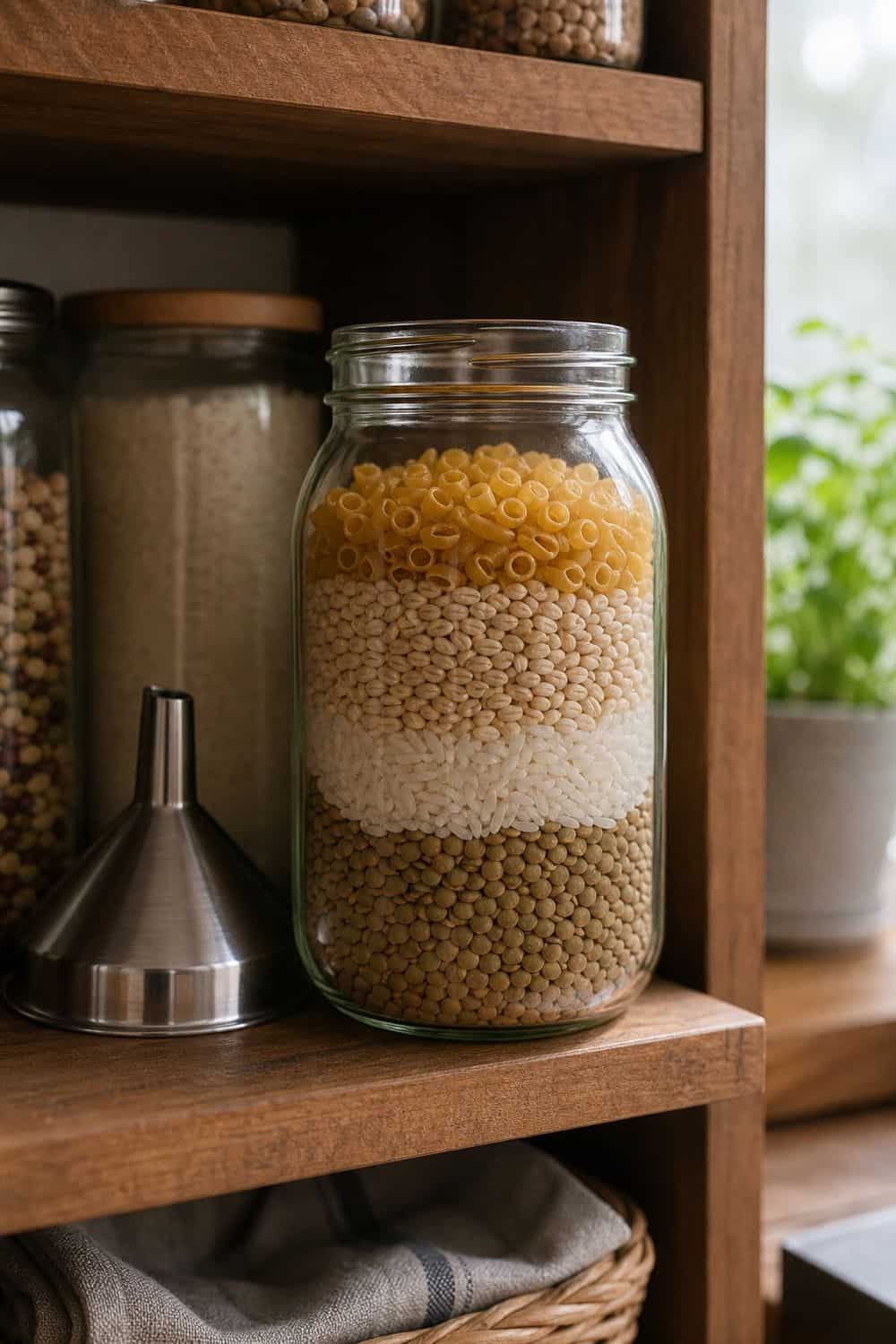
Shelf-stable soup backups work best when the cooking plan is already attached. Layer lentils, split peas, rice, barley, bouillon, dried onion, garlic, spices, and small pasta in a jar, then add a short cooking note so the meal is clear later. A mason jar funnel keeps the assembly clean and makes it easier to layer small ingredients without spilling rice across the counter. The jar is not pantry styling; it is a future dinner that already has a plan.
Write the liquid amount and cooking time on a label. If the jar needs canned tomatoes or frozen vegetables, note that too. Rotate older dry goods first and store jars cool and dry.
17. Pasta Salad from Cans

Cold lunches can still come from the shelf when the cans are drained well and the dressing has enough acidity. Use pasta, canned beans, canned corn, tuna, olives, roasted peppers, vinegar, oil, dried herbs, and maybe one fresh or leftover vegetable. An over sink colander serves two jobs in a limited-space kitchen: draining cooked pasta and rinsing canned ingredients without taking over the counter. Drain well so watery beans or corn do not make the salad taste flat.
Cool pasta before mixing with tuna or beans if the salad will be packed for later. Keep it refrigerated, and add crunchy toppings right before eating if texture matters. A sharper vinegar dressing helps canned vegetables taste brighter without extra groceries.
18. Budget Muffin Mix Prep
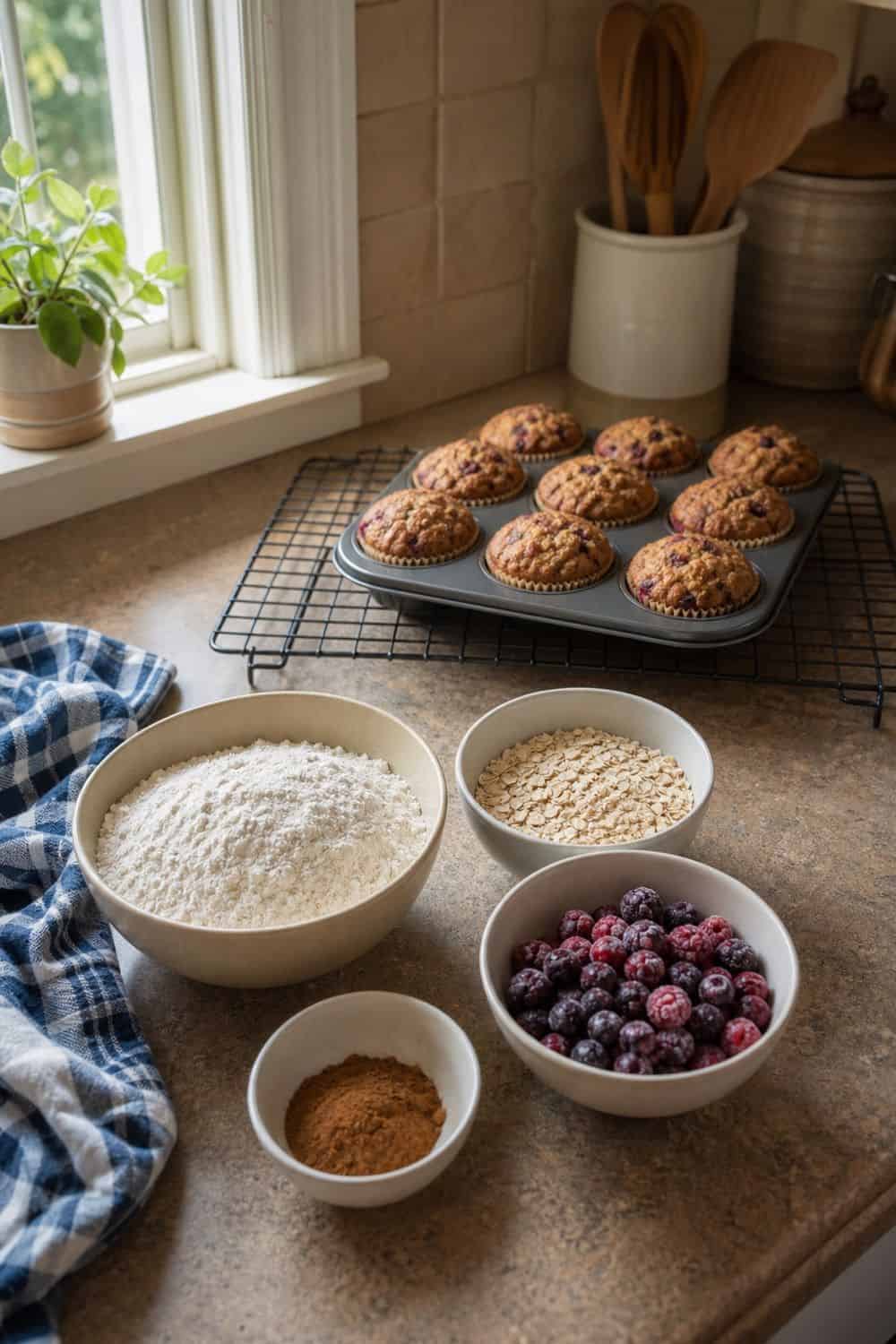
Budget muffin prep works best when the mix is planned before the oven is on. Keep flour, oats, baking powder, sugar, powdered milk, cinnamon, peanut butter, canned pumpkin, applesauce, or frozen berries grouped so breakfast or snack muffins can happen without a special grocery run.
Choose one main flavor per batch and let the muffins cool fully before storing. Freeze extras in a labeled bag if they will not be eaten quickly, because warm muffins sealed too soon turn sticky and sad in the container.
19. No-Buy Pantry Meal Box

A use-first box is for food that should become meals before another grocery run. Add the open pasta, half bag of rice, almost-empty oats, canned beans, tuna, tomato paste, sauces, tortillas, and anything already paid for but easy to ignore. A clear pantry storage bin works because it makes the use-first food visible without turning the whole pantry into an inventory project. This is about meal prep, not tracking every quantity.
Example combinations: pasta plus tomato paste plus lentils, rice plus tuna plus hot sauce, oats plus peanut butter, or tortillas plus beans plus salsa. Do not include expired, stale, rancid, swollen, rusted, or deeply dented items. Budget cooking still starts with safe food.
Keep the box near the front for one week, then either cook from it or sort it. A use-first bin should not become long-term storage.
20. Price-Per-Serving Meal Prep Map
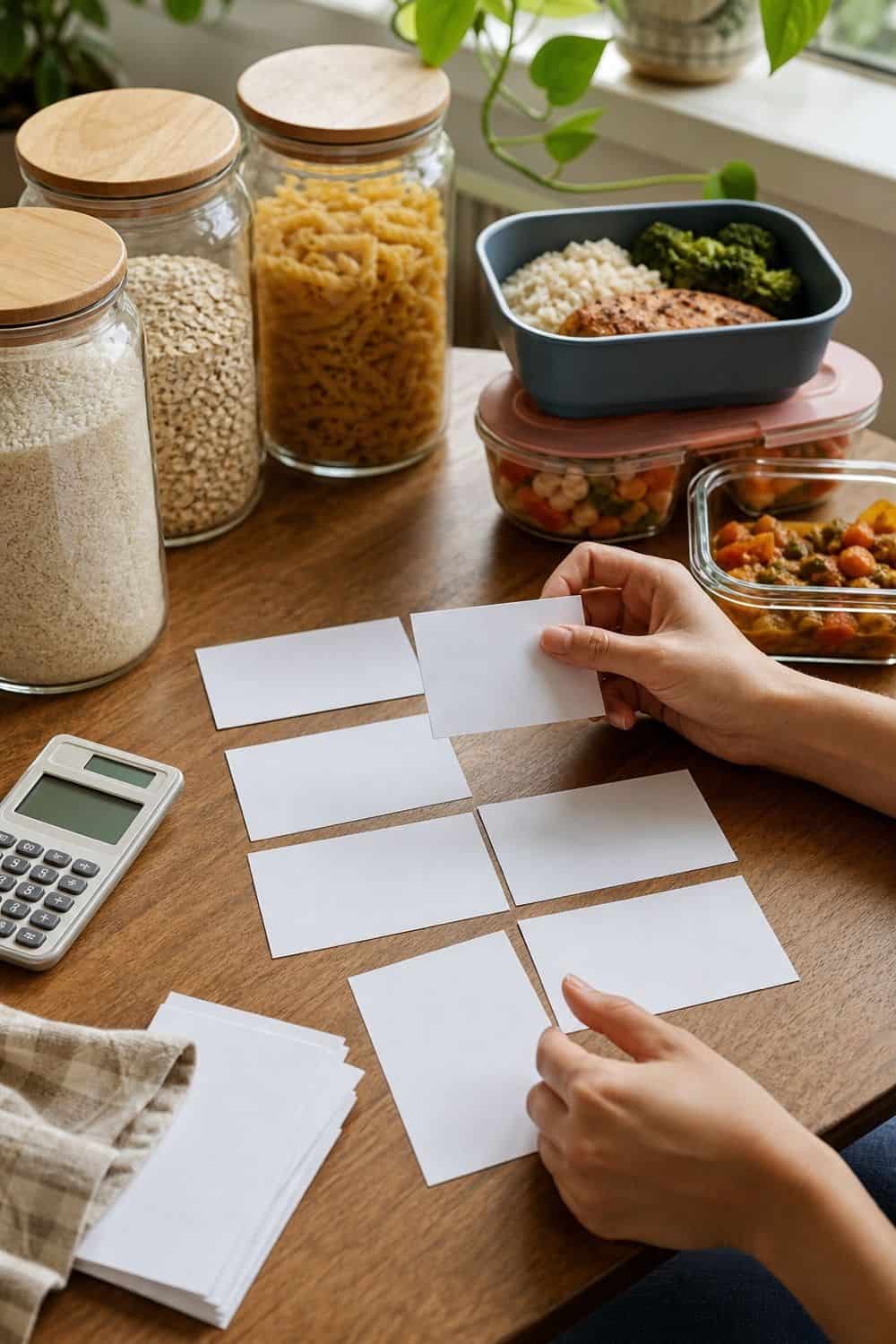
A price-per-serving map keeps budget pantry meal prep from becoming random stockpiling. Write down the staple, rough servings, likely meals, and one fresh, frozen, refrigerated, or leftover add-in that would make it feel complete.
Keep the math friendly, not fussy. Rice can become bowls, burritos, or soup; oats can become jars, muffins, or snack bites; pasta can stretch into dinner with sauce, lentils, or frozen spinach. If a pantry item has no real meal attached, pause before buying another backup.
How to Keep Pantry Meal Prep Flexible
Budget pantry meal prep works best when every shelf-stable staple has at least two possible meals attached to it. Keep the flexible bases easy to see, pair them with one fresh, frozen, refrigerated, or leftover ingredient when possible, and use the older pantry items before buying another backup.
Frequently Asked Questions
What are the best budget pantry meal prep ideas?
The best budget pantry meal prep ideas use low-cost staples in flexible formats: rice and bean bowls, lentil soup, canned bean taco filling, chickpea salad, tuna and white bean jars, peanut noodles, oatmeal jars, freezer burritos, popcorn snacks, and pantry curry. The strongest approach is pantry plus one: start with a shelf-stable base, then add one fresh, frozen, refrigerated, or leftover ingredient when possible.
What pantry staples are best for meal prep?
Useful pantry meal prep staples include rice, oats, pasta, beans, lentils, canned tuna, canned tomatoes, tomato sauce, peanut butter, bouillon or stock, tortillas, spices, popcorn kernels, flour, and canned vegetables. Frozen vegetables also help because they add color and volume without spoiling quickly. Choose staples that can become more than one meal format.
How do I meal prep cheaply with rice and beans?
Cook one plain rice base and one seasoned bean topping, then change the meal with salsa, hot sauce, cabbage, frozen corn, egg, cheese, lime, or leftover vegetables. Rice and beans can become bowls, burritos, soup, fried rice, or taco filling. Cool cooked rice before sealing and keep portions refrigerated or frozen depending on when you will eat them.
What can I meal prep with canned foods?
Canned foods can become tuna and bean jars, chickpea salad, bean taco filling, tomato pasta bake, pantry curry, pasta salad, ramen upgrades, and quick soups. Drain and rinse beans or vegetables when needed, and refrigerate opened canned food in a clean covered container rather than storing it in the can.
How do I make pantry meals less boring?
Change flavor and texture instead of cooking an entirely new set of foods. Use different sauces, spice blends, acids, crunchy toppings, herbs, pickles, salsa, chili crisp, yogurt, or frozen vegetables. Rice, beans, lentils, pasta, and oats feel more varied when one fresh or leftover ingredient changes the direction of the meal.
How long do pantry meal prep meals last in the fridge?
It depends on the food, but cooked pantry meals still need normal refrigerator care. Cool cooked food before sealing, refrigerate promptly, label dates when needed, and freeze portions that will not be eaten soon. Opened canned foods should be transferred to covered containers. Discard food that smells off, looks moldy, or has an unknown age.
Is it cheaper to meal prep with dried beans or canned beans?
Dried beans are often cheaper per serving, especially for larger batches, but canned beans save time and fuel. Use dried beans for big soups, freezer portions, and planned batch cooking. Use canned beans for fast taco filling, chickpea salad, pasta salad, or lunch jars. The cheapest option is the one you will actually cook and eat.
What should I keep in a budget meal prep pantry?
Keep a short list of flexible staples: rice, oats, pasta, beans, lentils, canned tuna, tomato sauce, canned tomatoes, peanut butter, bouillon, tortillas, popcorn kernels, flour, spices, and a few canned vegetables. Store dry goods cool and dry, rotate older staples first, and check cans for swelling, rust, leaks, or deep dents before using them.
Final Thoughts
The best budget pantry meal prep ideas make inexpensive staples feel useful before the next grocery run. Cook a base, stretch it with beans, lentils, oats, pasta, canned fish, tomato sauce, peanut butter, spices, and frozen vegetables, then add one fresh or leftover ingredient when you can. A pantry-first kitchen is not about restriction. It is about turning food you already own into meals you will actually eat.