

The best coastal kitchen ideas make the room feel light, natural, and easy to gather in without leaning on obvious beach props. Warm white cabinets, soft blue accents, light oak, woven texture, glass lighting, practical seating, and restrained counters create a coastal kitchen that feels polished instead of themed.
A coastal kitchen should feel relaxed, bright, and useful for real cooking. The style feels strongest when the design choices are built into the room through color, material, light, and layout instead of being added later as signs, shells, and extra objects.
Think in layers: warm white, sand, light oak, soft blue, sea-glass tones, brass or black accents, woven texture, and a little reflection. That mix keeps the kitchen airy while still giving it enough warmth to feel lived in.

Top Recommended Products


You Might Also Like These Blog Posts
- Coastal Grandma Kitchen Ideas
- Blue And White Kitchen Ideas
- Navy Kitchen Ideas
- Warm White Kitchen Ideas
- Modern Organic Kitchen Ideas
Coastal Kitchen Ideas for a Beautiful Kitchen
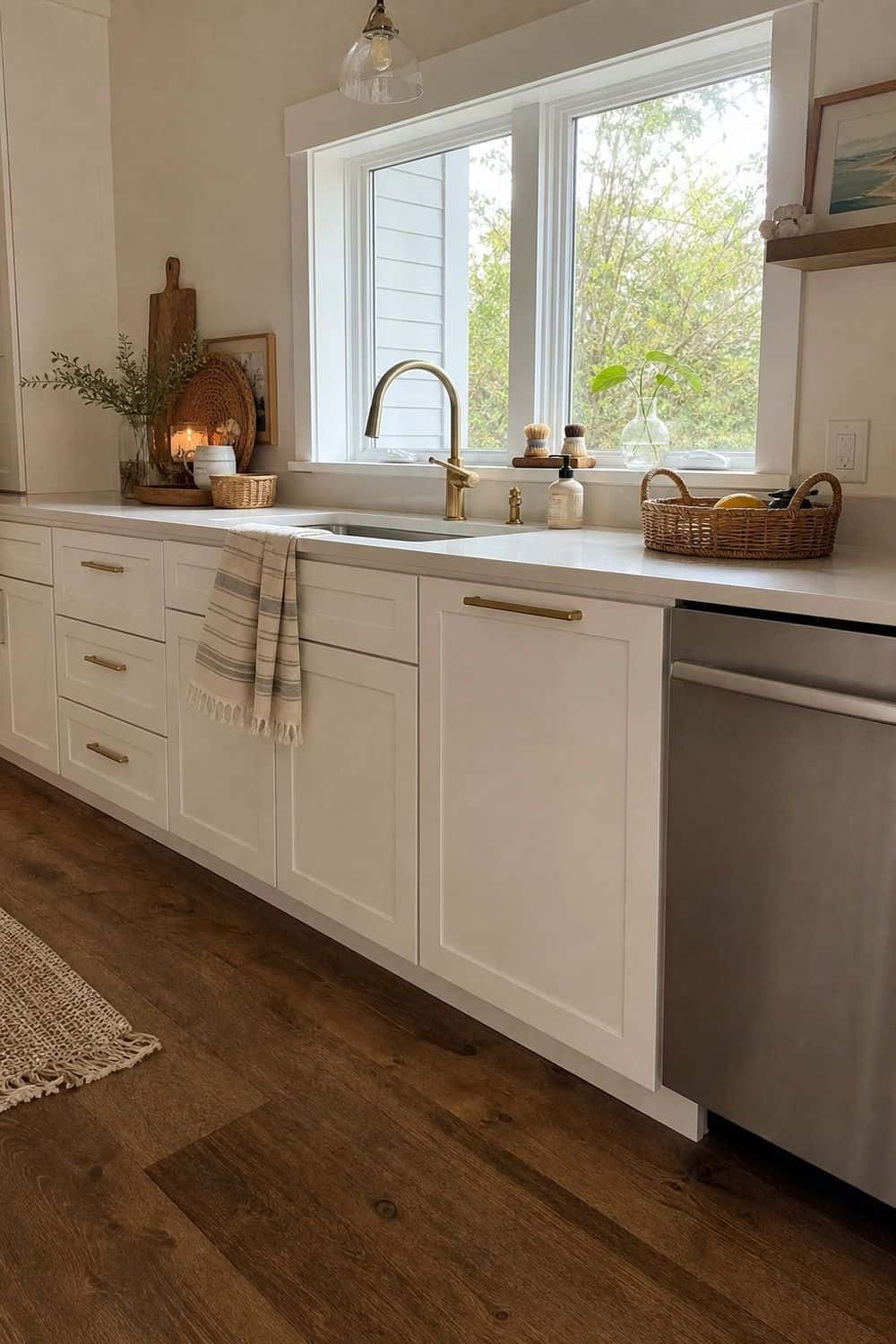
1. Warm White Shaker Cabinets
Warm white cabinet paint creates a bright coastal base without the chill of a stark gallery white. It works with sand tones, light oak, woven texture, soft blue, and brass or black hardware, which makes it flexible for both smaller kitchens and larger open layouts.
It is strongest as the foundation when you want the room to feel airy but still comfortable. A creamy undertone can soften tile and counters, especially in kitchens that do not get strong natural light or have cooler flooring.
2. Pale Blue Kitchen Island
Pale blue cabinet paint is an easy way to bring coastal color into one controlled focal point. Use it on the island instead of every cabinet, then keep the perimeter, counters, and walls calmer so the blue feels fresh. This works especially well with white stone, rattan stools, and simple pendant lights. Test the paint beside daylight and evening lighting so it does not turn icy. A muted blue usually ages better than a bright aqua in a working kitchen.

3. Light Oak Cabinets for a Sand-Inspired Look
Light oak cabinet doors bring in a sand-toned warmth that feels coastal without relying on blue. They are a good alternative to painted cabinets when you want the kitchen to feel natural, calm, and slightly modern. Balance the oak with white tile, quiet hardware, and counters that do not compete with the wood grain. A matte or satin finish usually feels more relaxed than a glossy finish. Keep the surrounding decor restrained so the wood can set the tone quietly.

4. Blue Zellige Tile Backsplash
Blue zellige tile adds ocean color through texture and reflection rather than a flat painted surface. The handmade look catches light, which helps the backsplash feel lively even when the rest of the room stays simple.
Use it behind the range, along one wall, or as a smaller accent if a full blue backsplash feels too strong. Keep nearby counters and shelves pared back so the tile remains the main color moment. The uneven surface looks best when the grout and counter are kept quiet.

5. White Subway Tile With Soft Gray Grout
White subway tile is a useful coastal choice when the kitchen already has blue cabinets, wood tones, or patterned accents. Soft gray grout defines the tile without feeling harsh, and it is easier to live with than bright white grout in a busy cooking space.
This is the quiet backsplash option for readers who want longevity. It lets the stools, runner, island color, or window treatments carry the coastal personality. Choose a soft grout tone that hides daily cooking marks without turning the wall too busy.

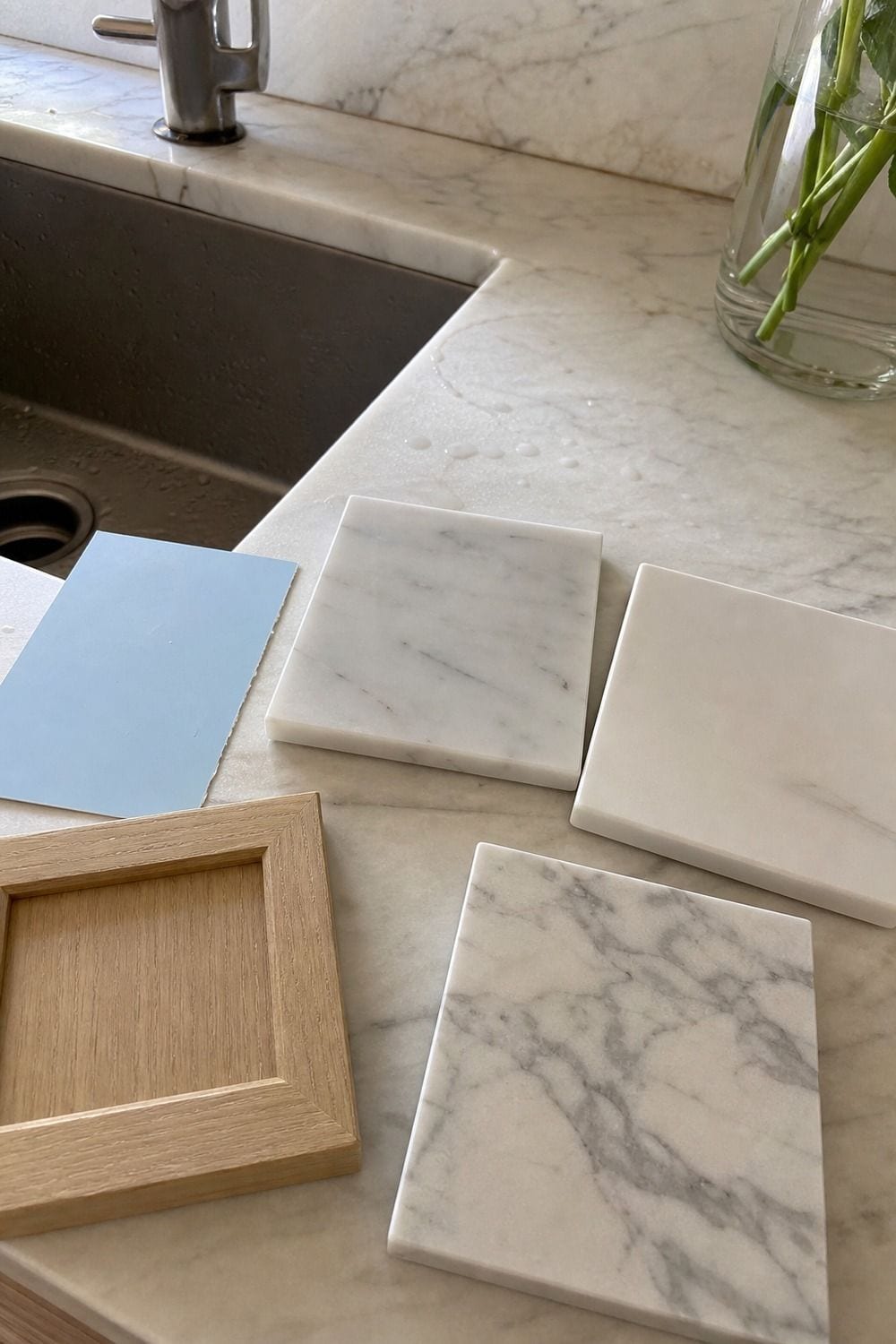
6. Marble Countertops for a Breezy Polished Finish
A marble countertop sample helps you test whether the stone’s undertone works with cabinet paint, tile, and wood. Marble or marble-look surfaces bring a light-reflecting polish to coastal kitchen design, but the veining should feel soft enough for daily life. If real marble is too much upkeep, look for a quiet quartz or porcelain alternative. Bring samples home before matching them to blue paint, oak doors, or white tile, and compare them near the sink where water marks and daily cleanup will be most visible.
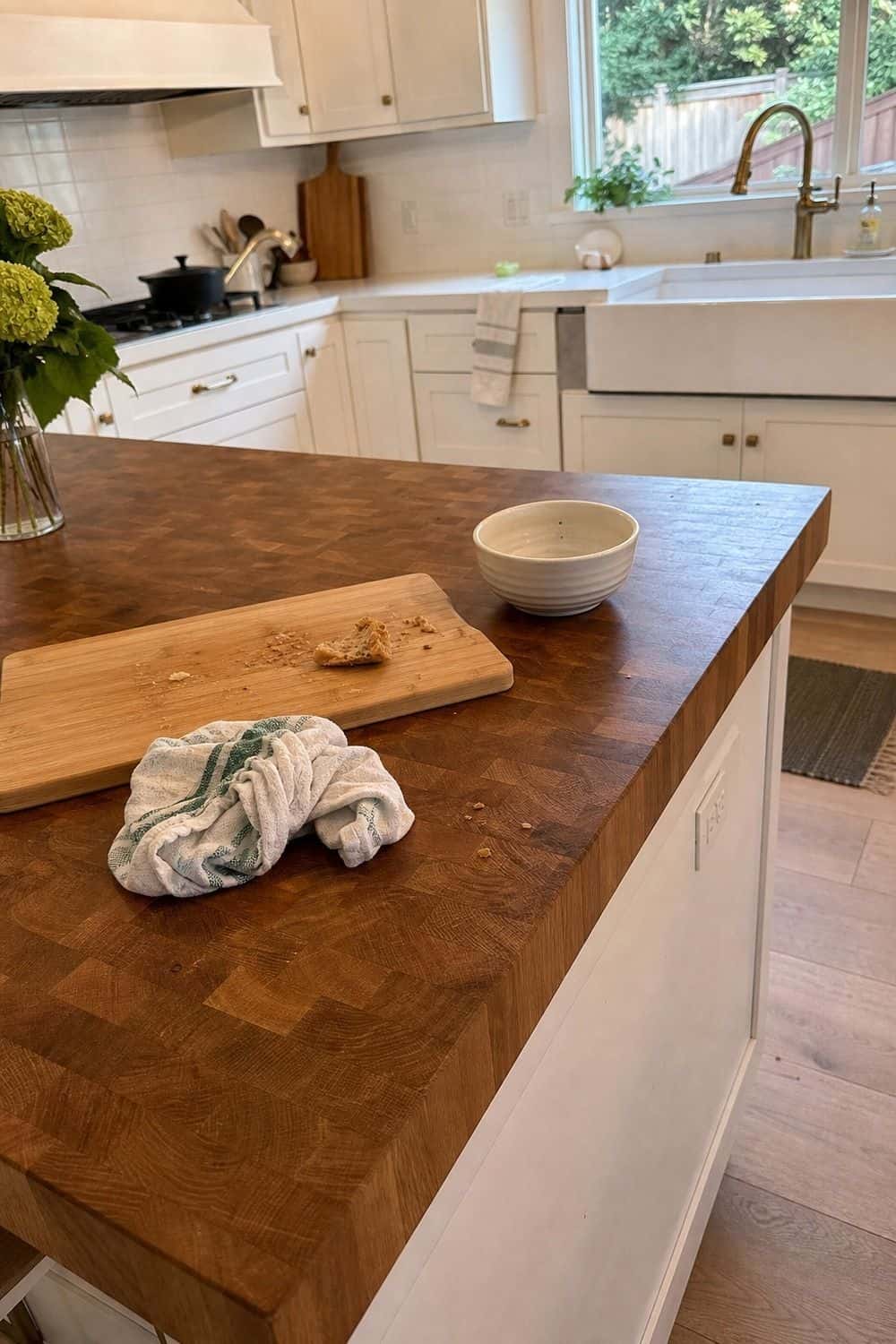
7. Butcher Block Island Counter
A butcher block countertop warms up a mostly white coastal kitchen and makes the island feel more relaxed. Use it on the island, a baking zone, or a prep section rather than across every surface. The wood is useful for breakfast, serving, and daily prep, and it keeps the room from feeling too polished. Keep oiling and cleaning needs in mind before choosing it for a busy sink area. It belongs where wood can be used and maintained comfortably between meals.
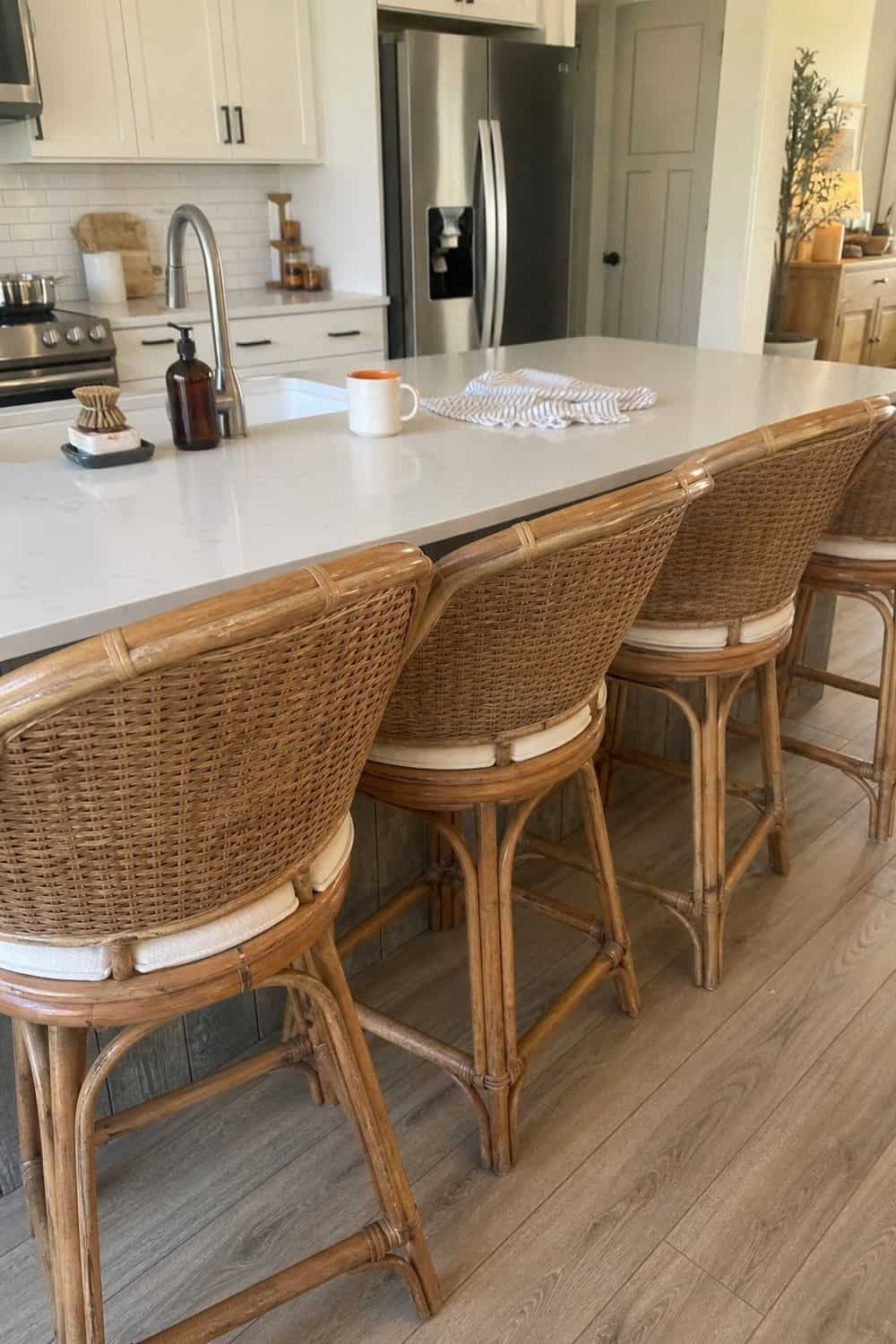
8. Rattan Counter Stools
Rattan counter stools add woven texture exactly where people gather. They soften stone, white cabinets, and tile while staying useful for everyday seating. Check counter height, seat depth, foot rails, and cushion fabric before choosing a set.
If the kitchen gets heavy use, pick easy-clean cushions or woven seats that can handle crumbs and sliding in and out. The texture should feel relaxed, not fragile, especially around an island where people gather every day. Matching the stool tone to nearby oak or baskets keeps the texture from feeling random.
9. Slipcovered Breakfast Nook Chairs
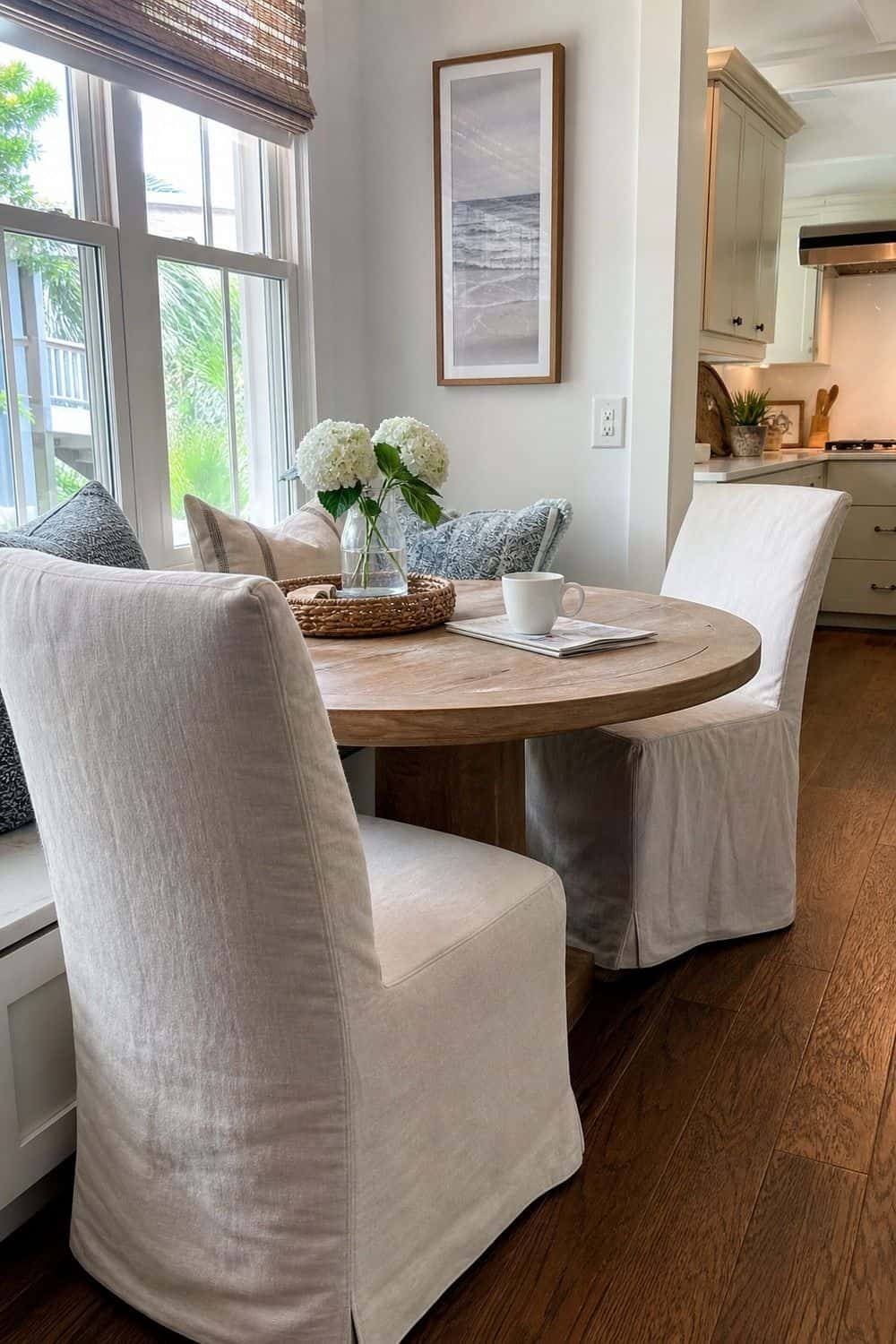
Slipcovered dining chairs make a breakfast nook feel relaxed and beach-house casual without needing themed decor. Choose washable covers in white, oatmeal, pale blue, or a quiet stripe so the seating stays practical. This is especially helpful near kids, coffee, fruit, and weekend breakfasts where fabric needs to be forgiving. Pair them with a simple wood table so the nook still feels grounded. Keep chair arms low if the corner is tight, and check that covers can be removed without wrestling the whole chair away from the wall.
10. Linen Cafe Curtains at the Sink Window
Linen cafe curtains soften natural light without blocking the whole window. They work well at a sink, pantry window, or breakfast nook where privacy matters but daylight is still important. Choose white, oatmeal, pale blue, or a narrow stripe, and keep the length simple so the fabric feels breezy rather than fussy. Hang the rod cleanly so the window still feels open. Washable fabric is helpful near sinks and cooking zones, especially if the window sits close to splashes, steam, or herbs on the sill.

11. Woven Pendant Lights Over the Island
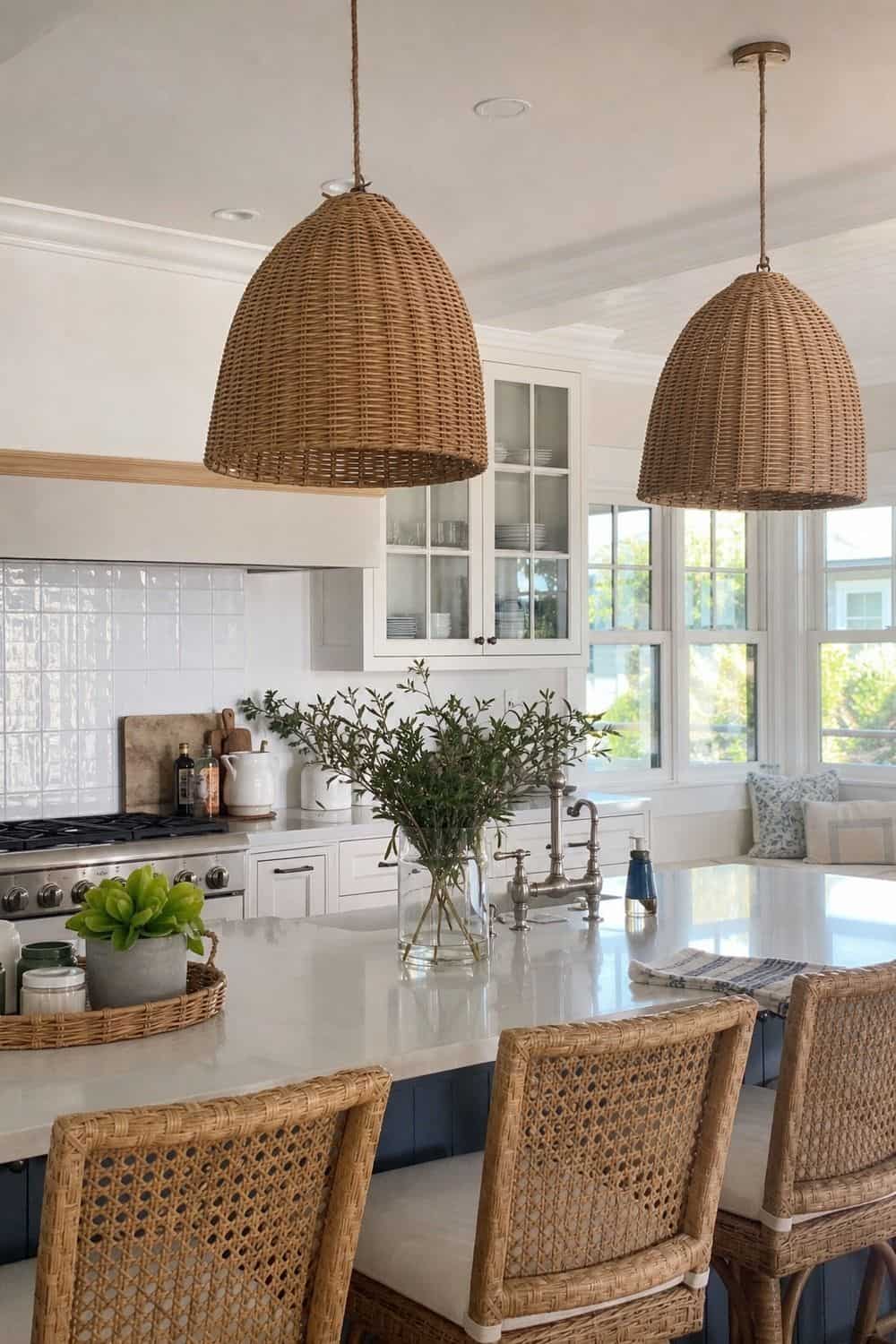
Woven pendant lights add a high-impact coastal layer overhead. They bring natural texture without taking up counter space, which makes them useful in small and large kitchens. Pay attention to shade openness, scale, and height so the fixtures light the island without blocking views across the room. A dimmer helps the texture feel softer at night. Choose lined or open shades based on how much task light the island needs, and leave enough clearance for serving platters or tall vases below.
12. Glass Globe Pendant Lights for an Airy Feel
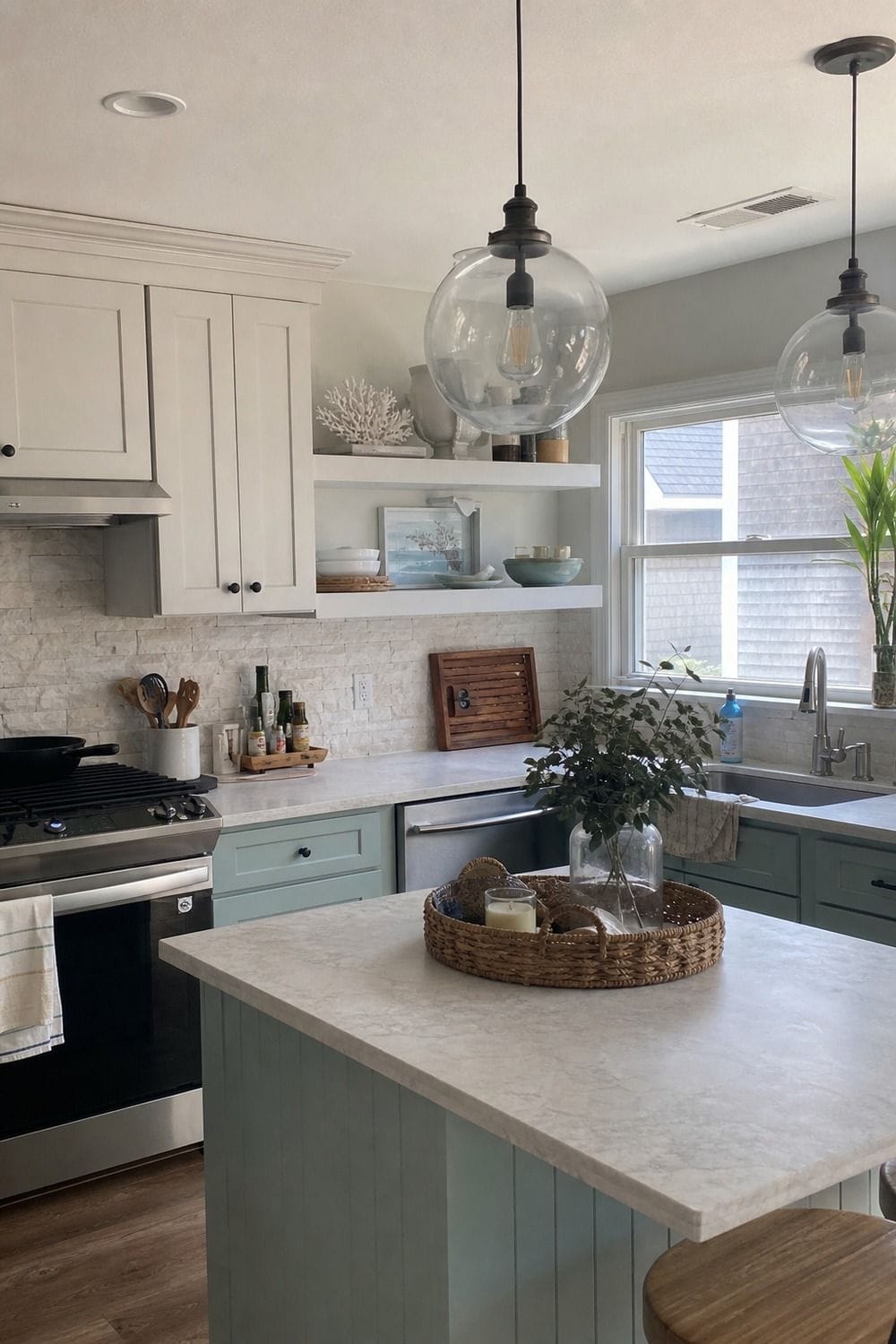
Glass globe pendant lights are better than woven shades when the kitchen is small or already texture-heavy. Clear glass keeps the sightline open, reflects light, and makes the room feel less visually crowded.
Use them over an island, peninsula, or small table where you want coastal brightness without adding another strong material. Keep bulbs warm so the clear glass does not feel cold at night, and clean the globes often enough to keep them reflective. This is a smart choice when the backsplash or stools already carry plenty of texture.
13. Brass Cabinet Pulls With a Soft Finish
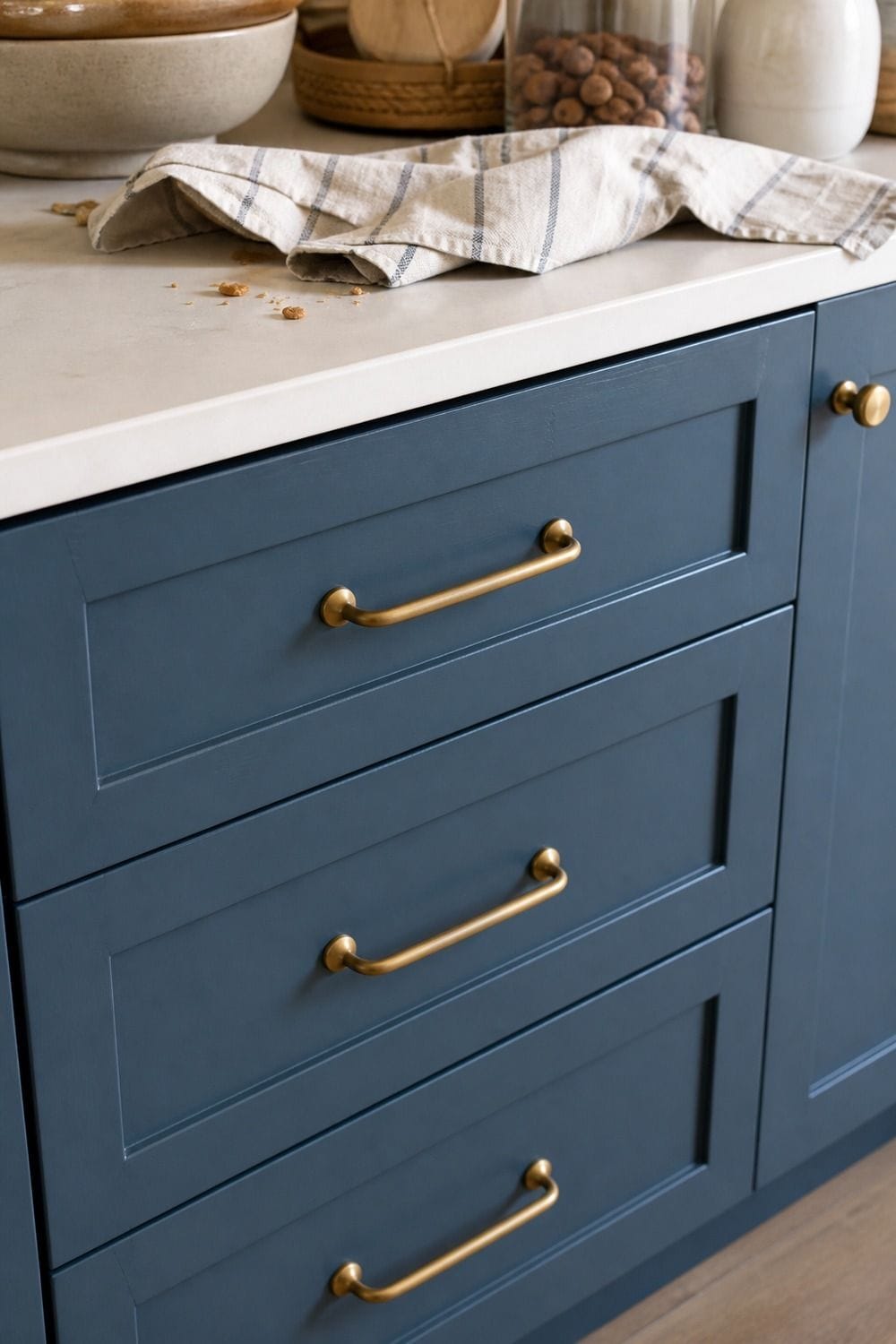
Brass cabinet pulls bring warmth to blue, white, and wood finishes. Brushed, aged, or unlacquered brass usually feels softer than a very shiny finish, which helps coastal kitchens stay relaxed. Use brass when the room needs a little glow, then repeat it in lighting or faucet details so the finish feels connected. Avoid mixing too many metal tones in a small room. Simple shapes keep the finish from feeling ornate, and longer pulls can make wide drawers easier to use near the range or island.
14. Black Cabinet Hardware for Modern Coastal Contrast
Matte black cabinet pulls can make a coastal kitchen feel more modern without using nautical gimmicks. They work especially well with warm white cabinets, oak cabinets, or a pale blue island. Keep other accents simple so the black reads as crisp contrast rather than a heavy industrial layer. This is a good choice when the room already has black window frames or lighting. Use it sparingly if the palette is otherwise very soft, and choose slim pulls instead of chunky bars when the cabinets are small or the room gets little daylight.
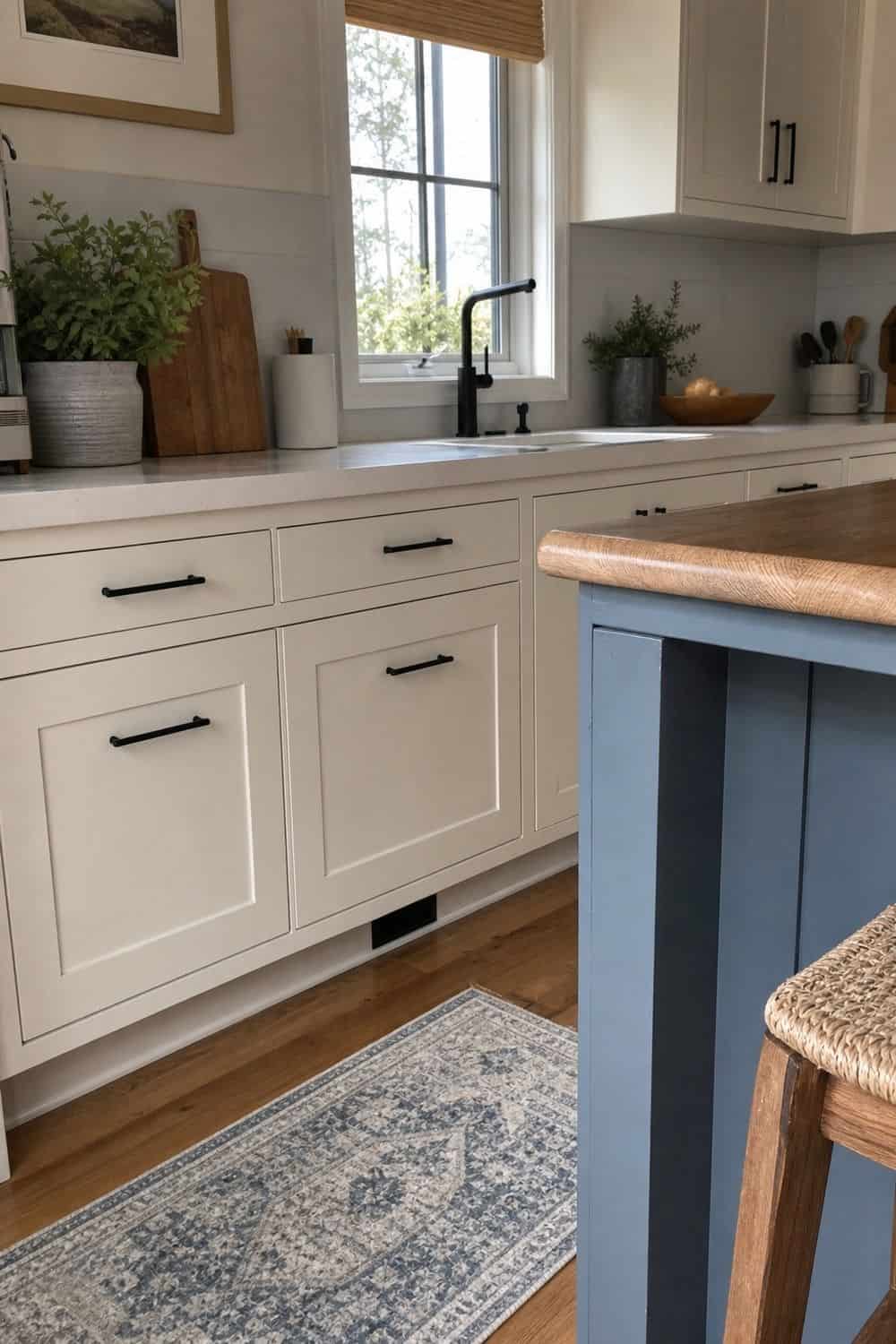
15. Open Wood Shelves for Everyday Dishes
Floating wood shelves create an airy display area for everyday bowls, mugs, glasses, and small serving pieces. The key is restraint: use shelves for things you actually reach for, not a crowded collection of decorative extras.
Leave breathing room between stacks and keep the color palette tight. Wood shelves are best when they add warmth and access, not when they become open clutter. A small run near the coffee area or sink is usually enough. If the shelves hold daily dishes, make sure they are mounted securely and easy to wipe.
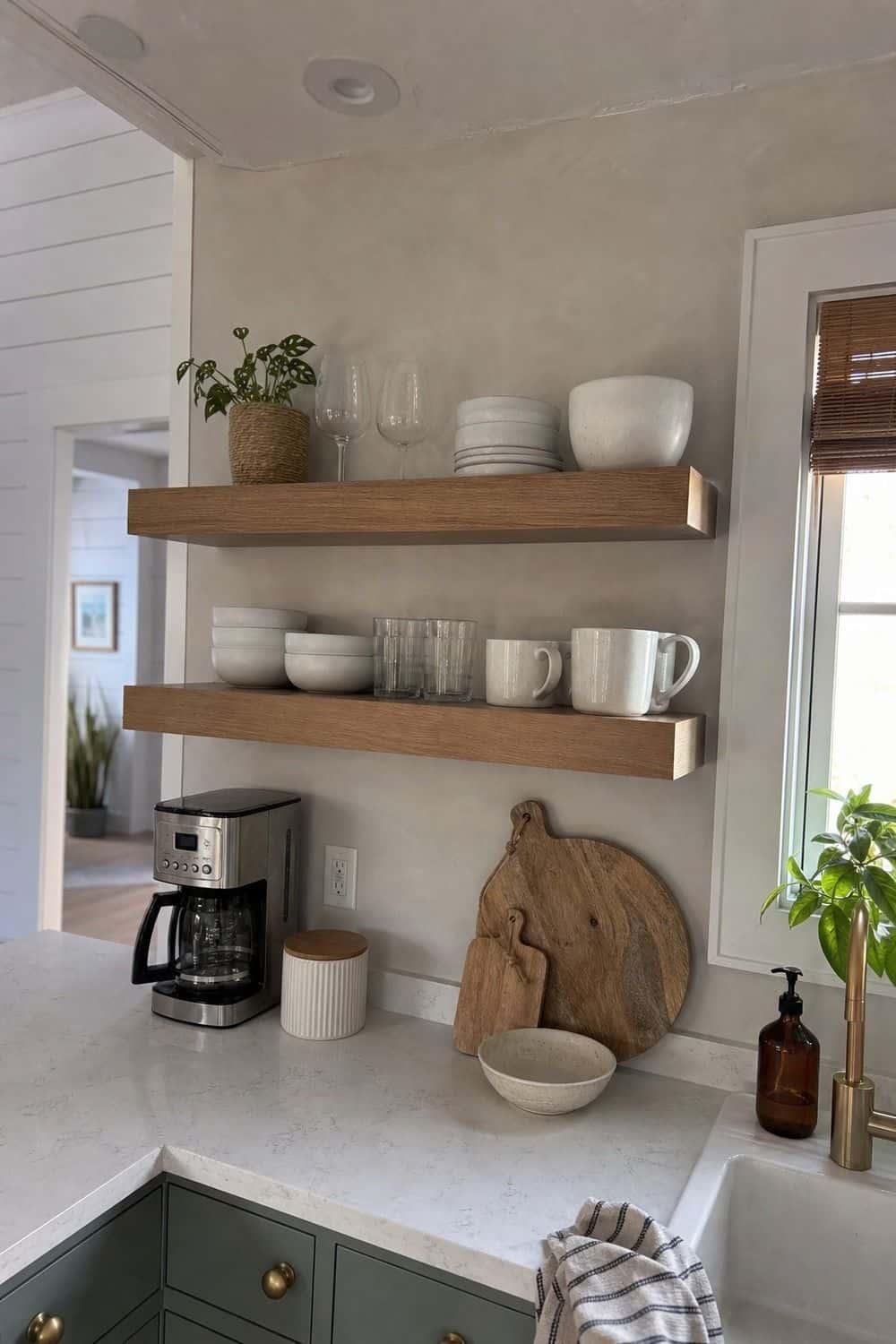
16. Blue and White Dinner Plates on Display
Blue and white dinner plates bring coastal color through tableware you can actually use. Display them on open shelves, a hutch, or behind glass cabinet doors so the pattern feels collected rather than purely decorative. Mix them with plain white pieces to keep the look calm and useful for everyday meals. Keep the pattern scale consistent so shelves do not feel chaotic. A few plates can carry the palette better than many small trinkets, especially when they sit beside clear glasses, white bowls, or natural wood pieces.
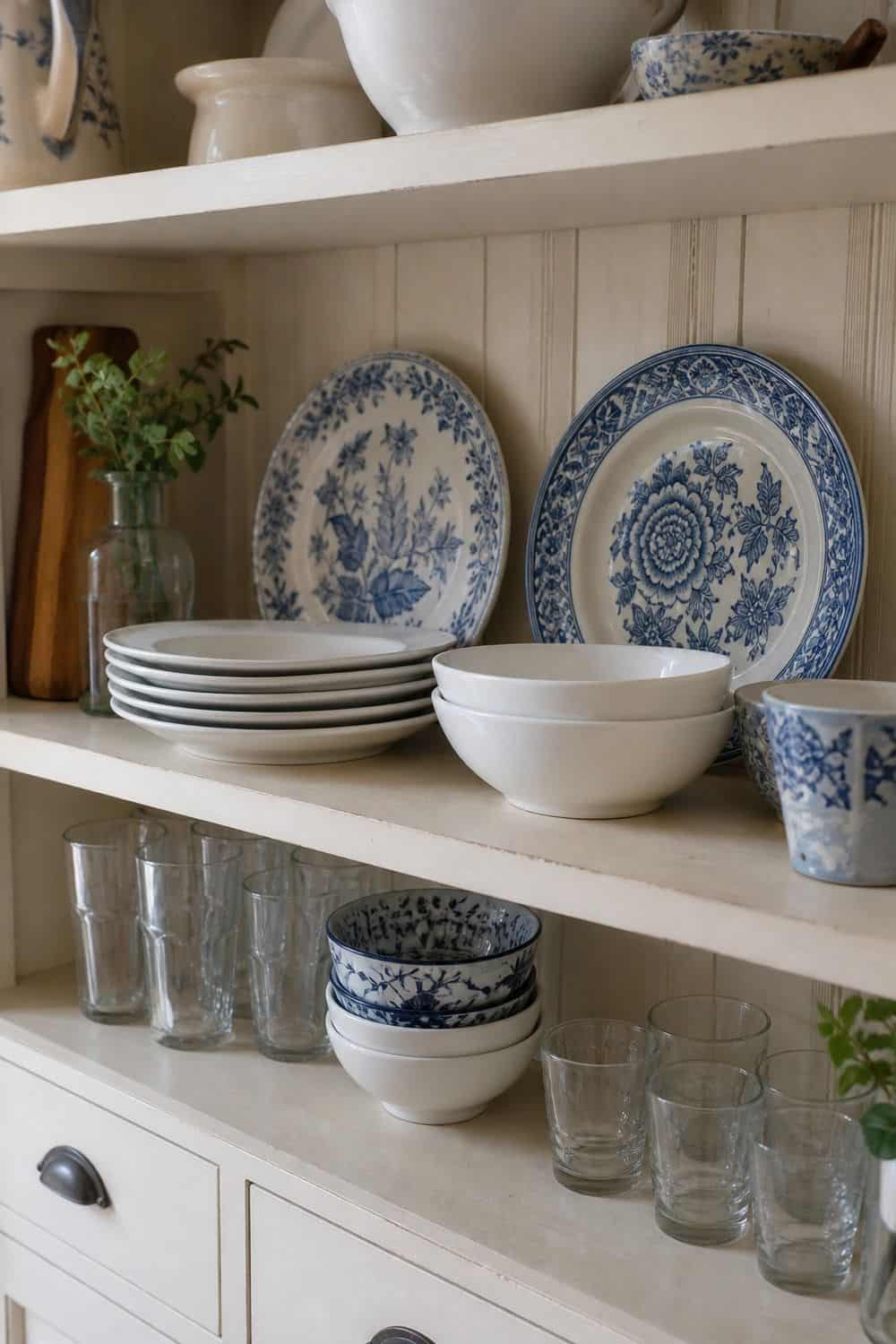
17. Clear Glass Canisters for an Airy Pantry Corner
Clear glass canisters help a pantry corner feel lighter than solid bins or heavy containers. Use them for flour, oats, pasta, coffee, or snacks, but limit the set so the counter does not become a storage display. This is especially useful in a tight coastal kitchen where visibility and airiness matter. Add labels only if they stay clean and subtle. Keep less attractive packaging inside closed storage, and leave enough counter space nearby for scooping, measuring, or making coffee without shifting everything first.
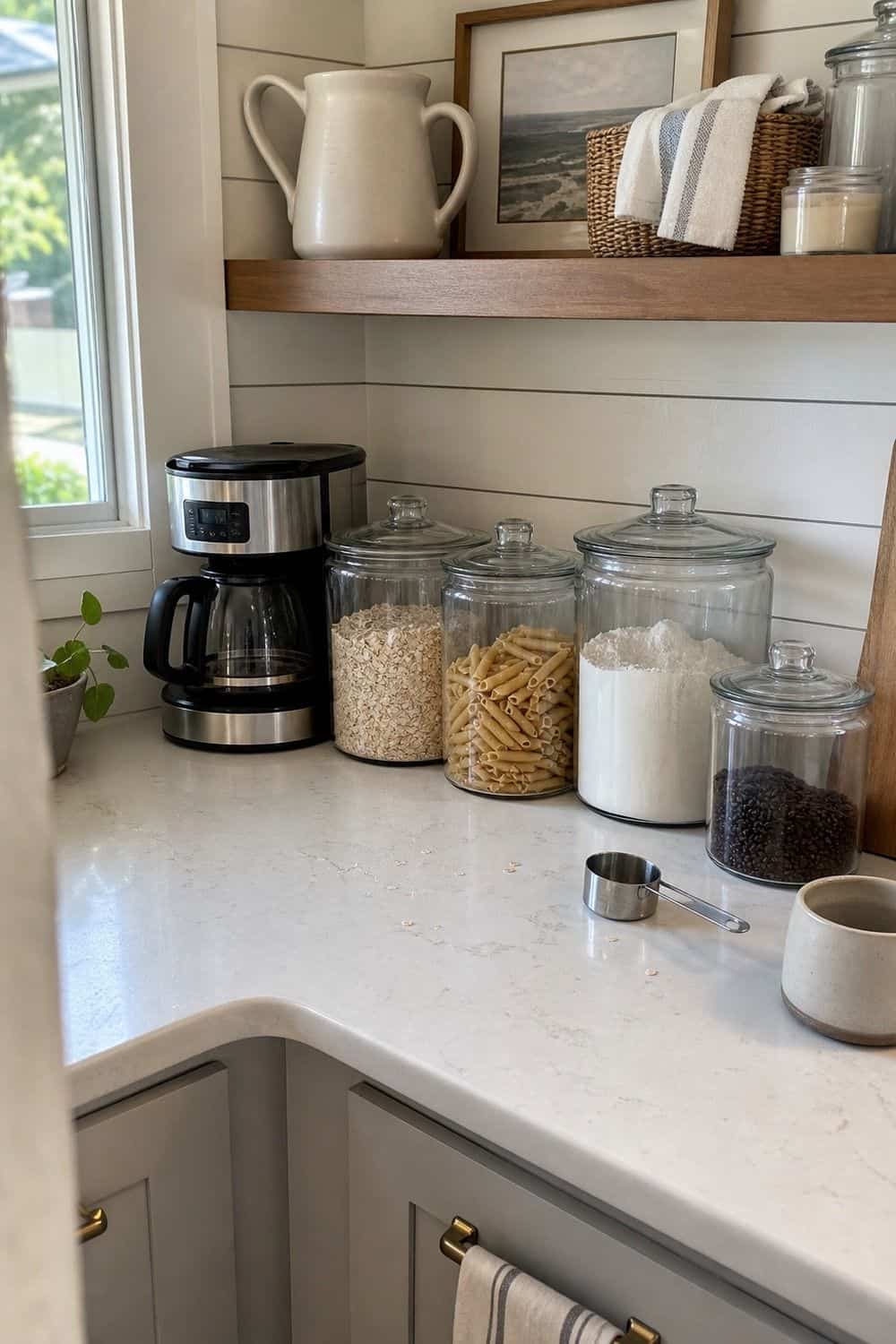
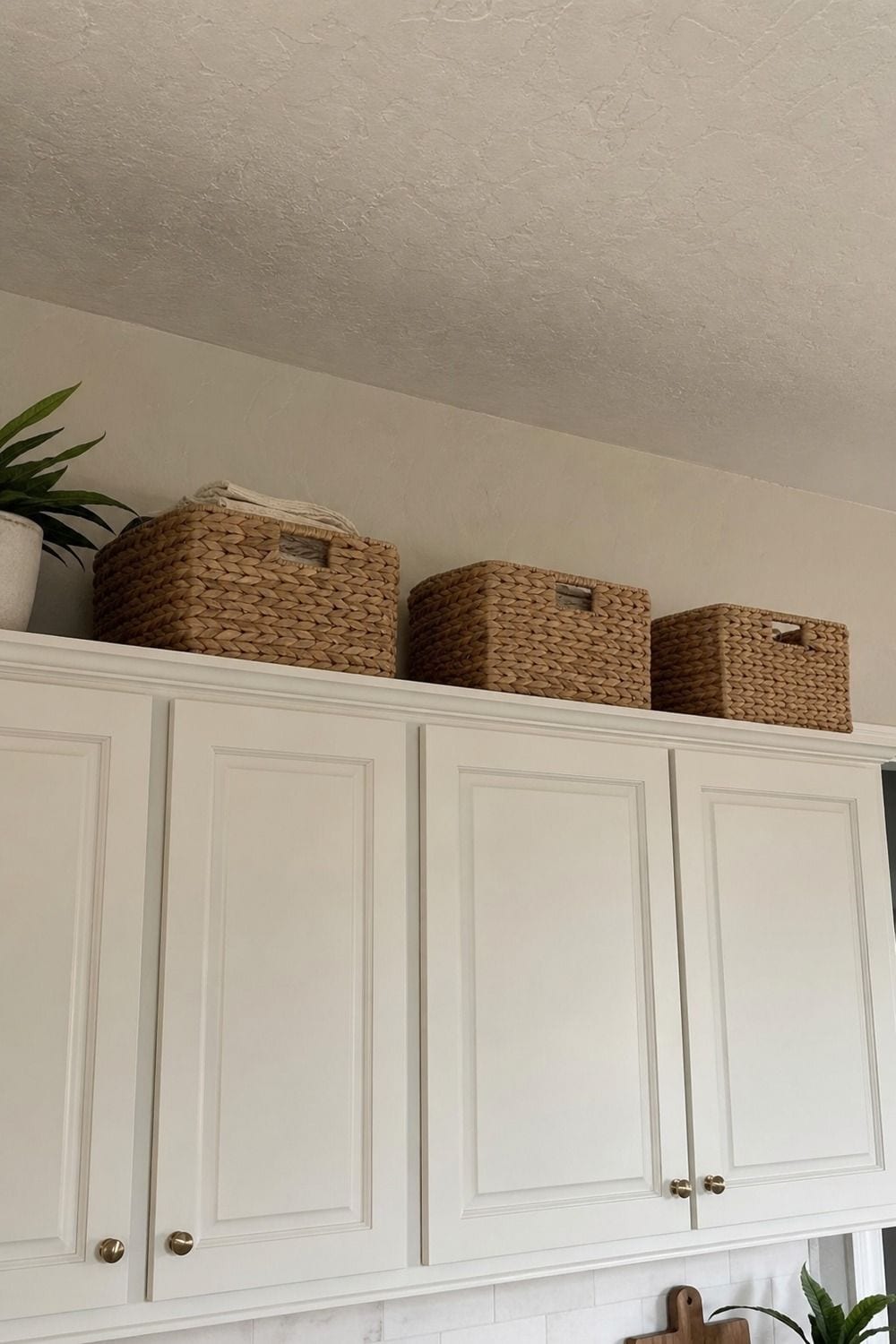
18. Seagrass Storage Baskets Above Cabinets
Seagrass storage baskets add texture while hiding light overflow, such as linens, paper goods, or party supplies. Choose matching sizes so the row looks orderly, and avoid overstuffing them. Baskets above cabinets should soften the kitchen, not turn the upper wall into a cluttered storage zone. Leave space around them so they can be removed easily. Use them only where dusting is realistic, and reserve them for items you need occasionally rather than anything used during daily cooking or prep.
19. Coastal Kitchen Runner in a Soft Stripe
A striped kitchen runner adds comfort and a little color underfoot. Blue, oatmeal, faded gray, or sandy stripes can work in a galley, sink run, or island aisle. Choose washable or low-profile options so cabinet doors clear the rug and the walkway stays safe during cooking. A rug pad is worth using near the sink. The stripe should feel faded and relaxed rather than bold and nautical, and the width should leave enough bare floor at the edges so the room still feels open.

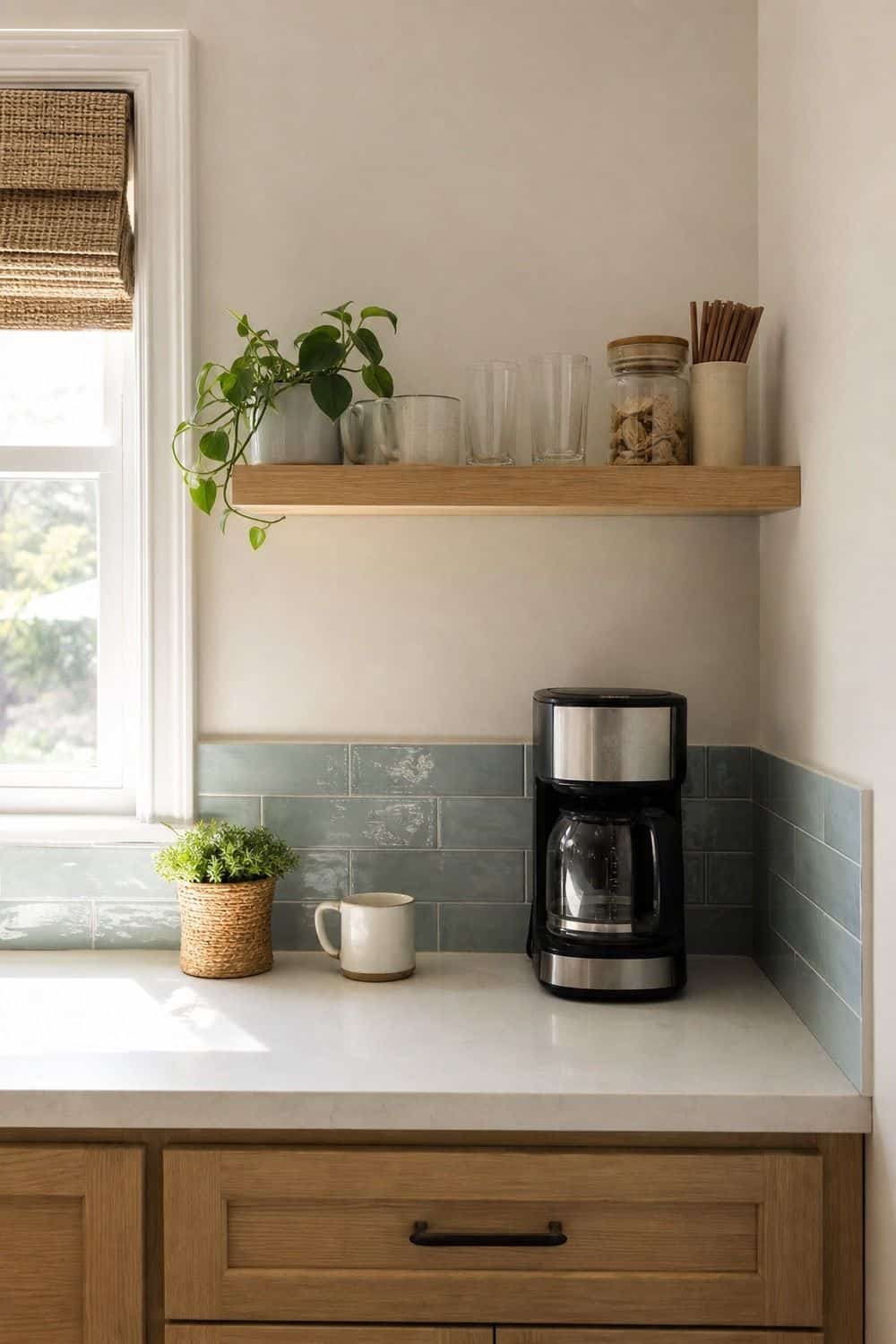
20. White Oak Floating Shelf for a Coffee or Smoothie Corner
A white oak floating shelf can make a small coffee, smoothie, or morning-drinks corner feel finished. Use it for glasses, mugs, jars, or a small plant, then keep the counter below clear for the appliance or blender. This is different from general open shelving because it gives one daily routine a defined spot. Add only what supports the morning rhythm, such as mugs, straws, napkins, or jars, and keep cords, coffee pods, and powders in closed storage nearby after breakfast.
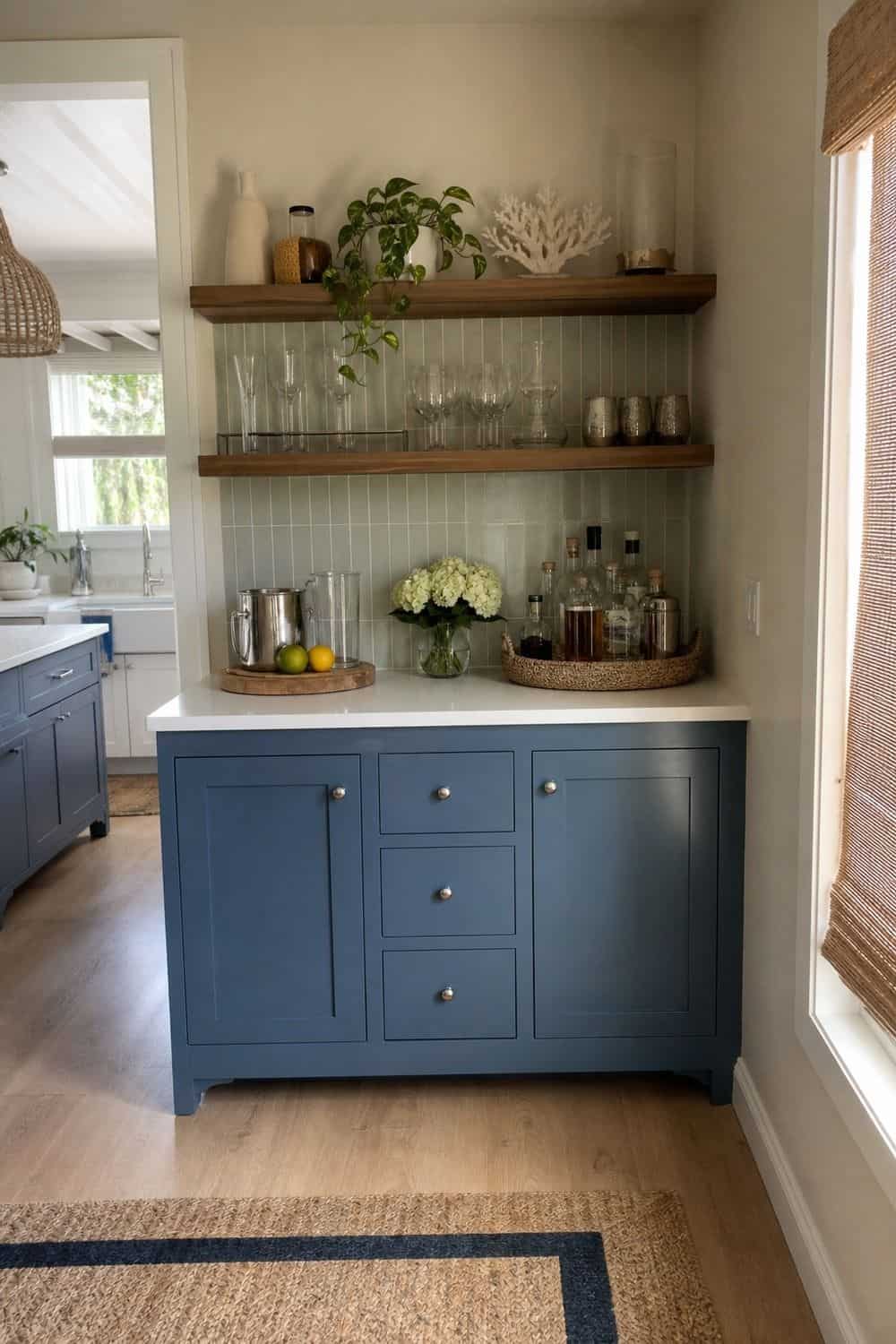
21. Coastal Wet Bar With Blue Lower Cabinets
A blue bar cabinet or wet bar is a smart place to use bolder coastal color. Since it is a secondary zone, the blue can feel playful without overwhelming the main kitchen. Add glassware, drink storage, and a small counter area so the station works for hosting instead of becoming only a pretty cabinet. Keep bottles and tools contained behind doors. Glass shelves or simple pulls can make the zone feel finished, and a wipeable backsplash helps if the area handles citrus, ice, or coffee syrup.
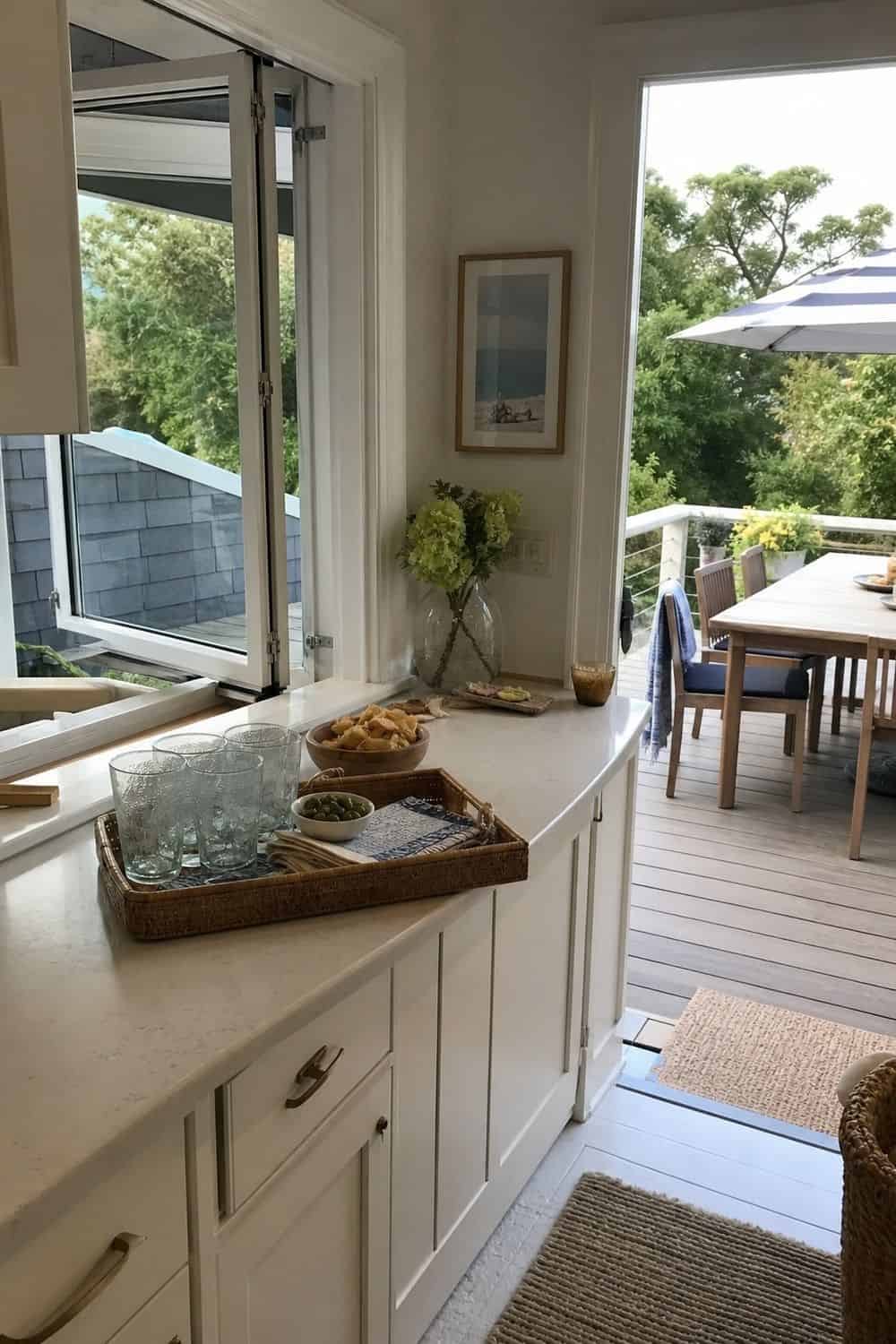
22. Indoor-Outdoor Serving Window
A pass-through window shelf supports the social flow that coastal kitchens are known for. It can connect the kitchen to a patio, deck, or outdoor dining spot, making drinks and snacks easier to move outside.
If renovation is not realistic, use the same logic near patio doors with a clear counter landing zone. Easier gathering matters more than a dramatic window feature, so keep trays, glasses, and napkins close to the route outside. A narrow console or rolling cart can support the same flow when the kitchen wall cannot be changed.
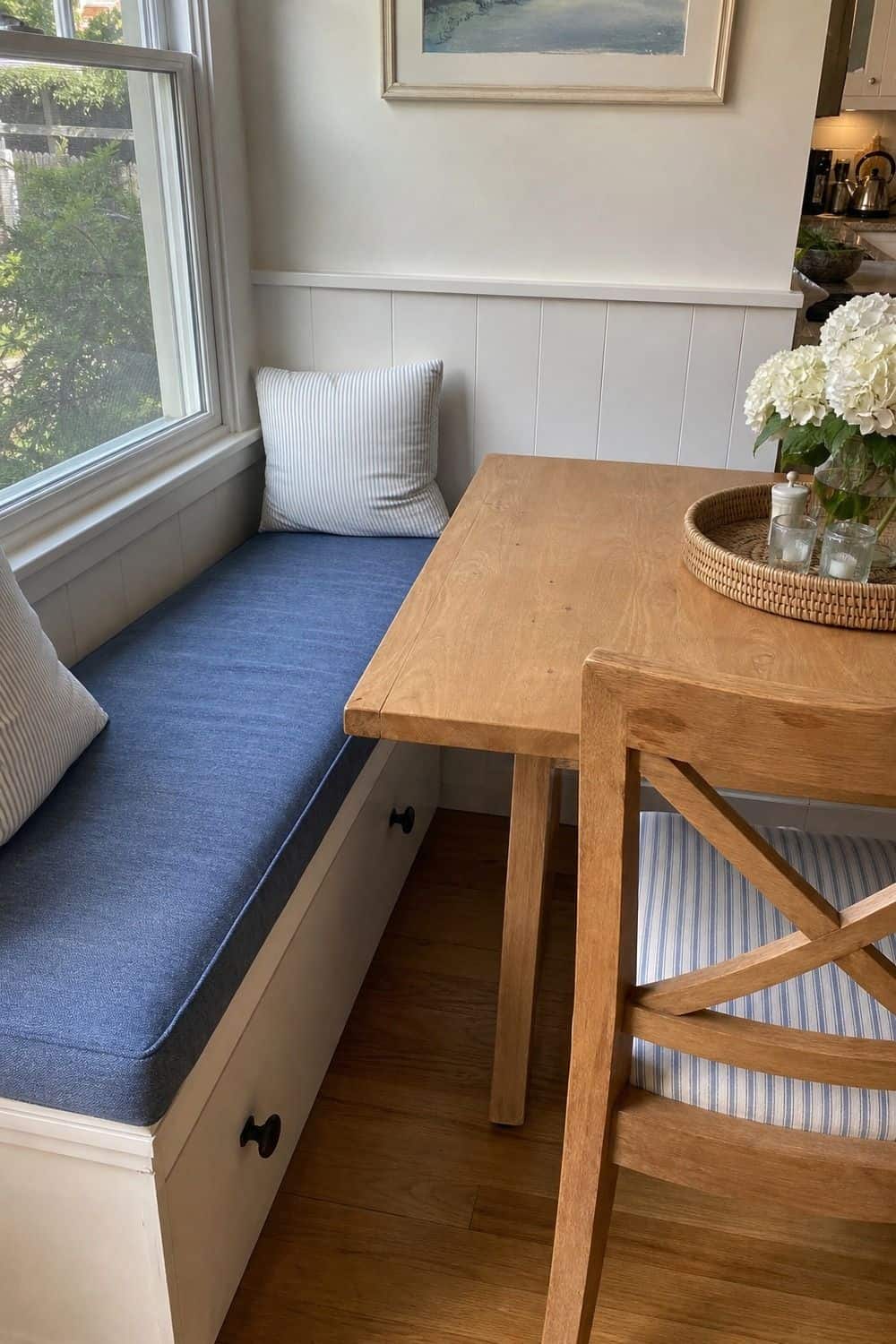
23. Breakfast Banquette With Blue Cushions
A breakfast banquette with a blue bench cushion creates relaxed kitchen seating in a corner, bay window, or small dining area. Choose washable fabric, a natural wood table, and enough clearance for people to slide in comfortably. The blue cushion brings color in a softer way than painting cabinets. Add pillows sparingly so the seat stays usable. Built-in storage below the bench can help smaller kitchens, especially for table linens, outdoor plates, or extra serving pieces used near the dining area.
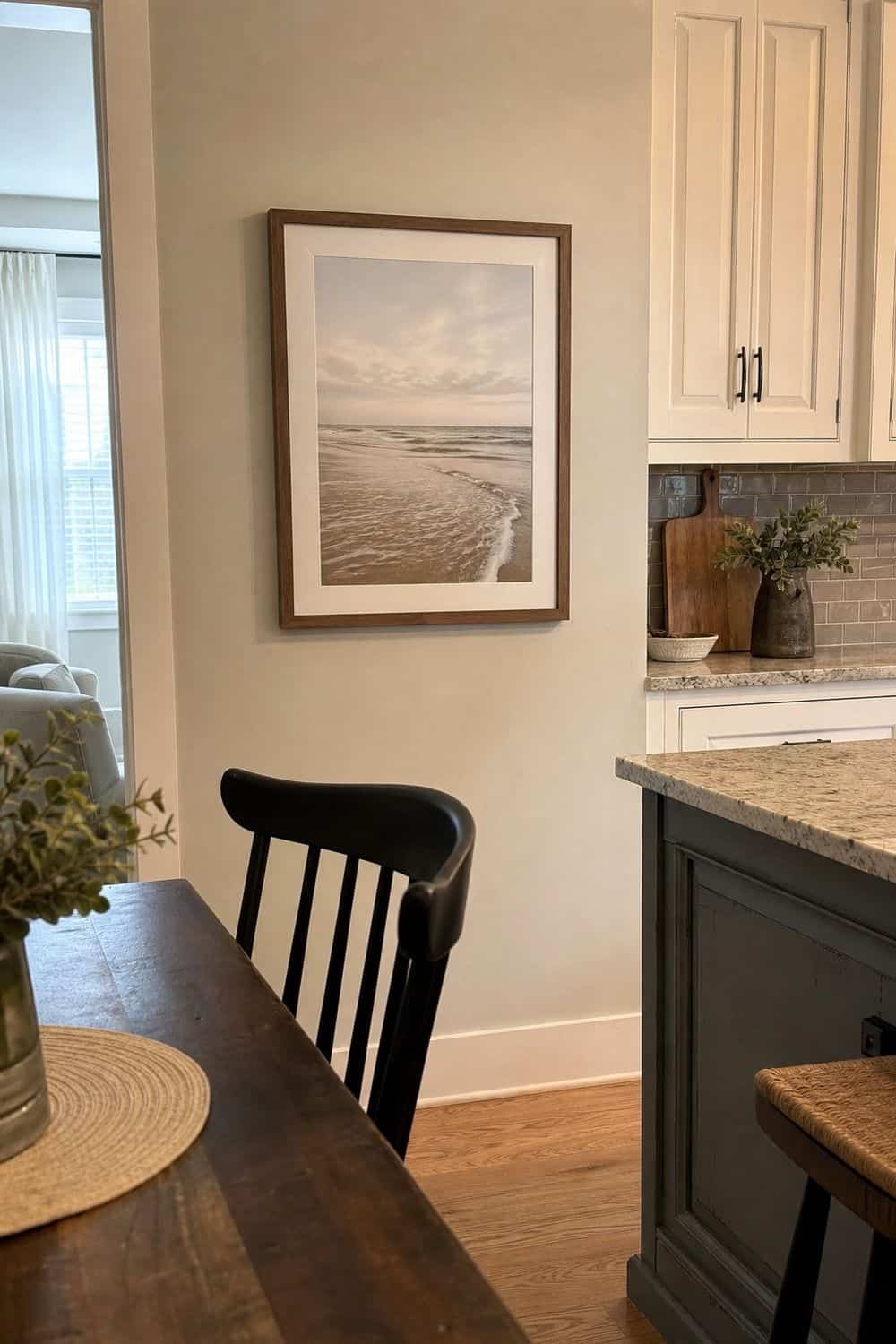
24. Coastal Art in One Simple Frame
Coastal wall art feels calmer when it is limited to one simple frame. A beach landscape, abstract water print, or muted shoreline photograph can add atmosphere without cluttering the kitchen.
Avoid filling the room with shell signs, coral pieces, or word art. One restrained piece feels more timeless and lets the materials in the kitchen do most of the work. Hang it where it will not compete with tile or open shelving. A quiet print near a breakfast nook is often enough.
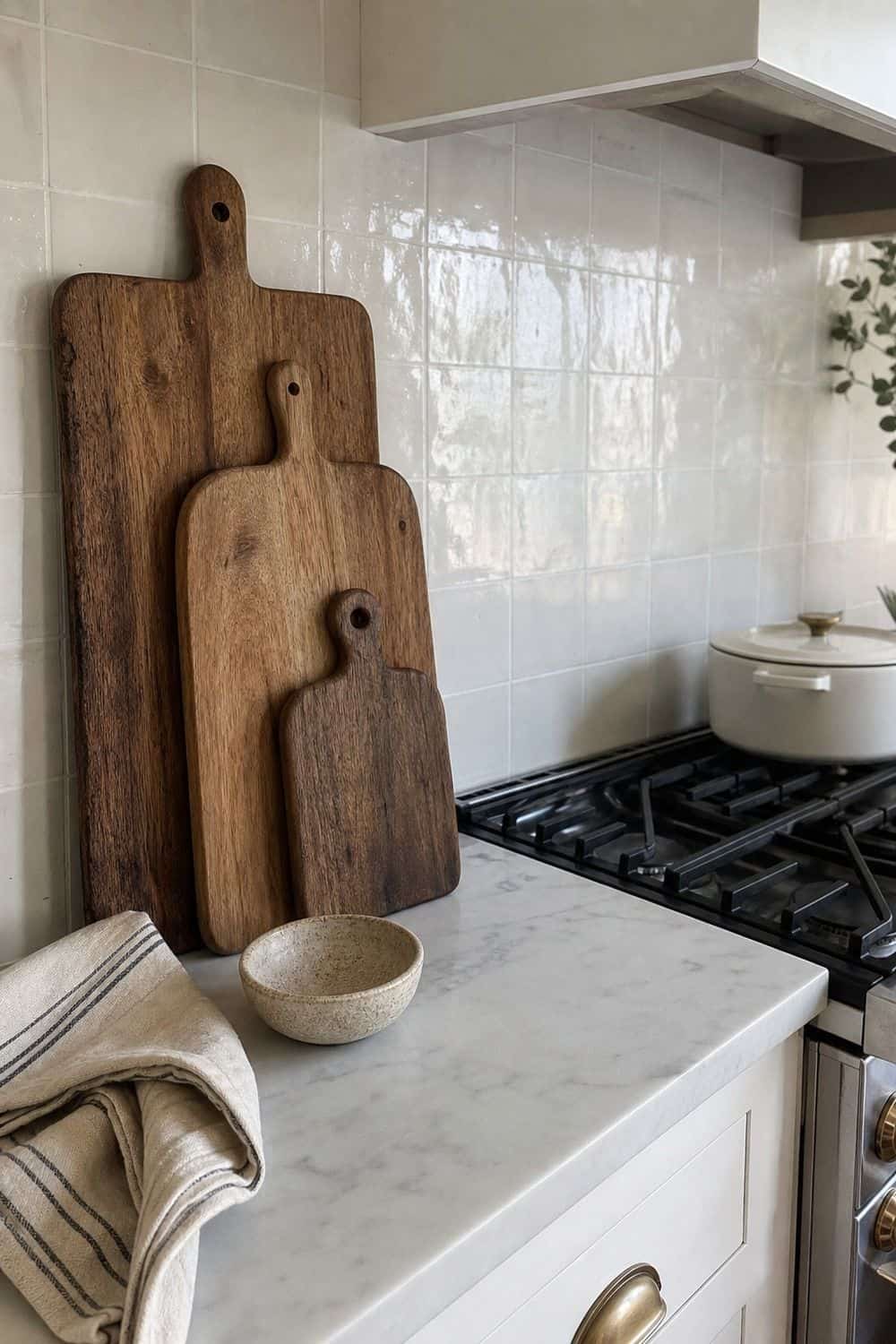
25. Wooden Serving Board Stack by the Range
A wooden serving board stack adds warm natural texture through pieces you can actually use. Lean two or three boards near the range, on an open shelf, or beside a prep area where they are easy to grab.
Keep the stack restrained so it looks useful rather than staged. The boards can handle bread, fruit, cheese, and quick serving moments while warming up tile and stone. Two or three boards are usually plenty for a clean coastal counter. Mix sizes so the stack has shape without becoming bulky.
How to Keep Coastal Style Timeless
Timeless coastal kitchens rely on materials and light more than themed accessories. Warm white paint, oak, linen, rattan, glass, brass, soft blue, and practical storage give the room its direction without making it feel like a beach display.
For smaller kitchens, choose lighter cabinets, glass lighting, cafe curtains, one shelf, or a soft runner instead of filling the room with decor. For larger kitchens, focus on gathering flow through the island, breakfast nook, wet bar, or patio connection.
Avoid too many shells, coral pieces, beach signs, overpowering blue, and crowded open shelves. Coastal kitchen decor feels better when it supports cooking, storage, and conversation first.
Frequently Asked Questions
What makes a kitchen coastal?
A coastal kitchen feels light, natural, and relaxed. Common elements include warm white cabinets, soft blue accents, light wood, woven texture, glass lighting, practical seating, airy shelves, and easy gathering flow.
What colors suit a coastal kitchen?
Warm white, sand, light oak, soft blue, sea-glass green, oatmeal, brass, and small black accents work well. The palette should feel bright and calm, with enough warmth to avoid a cold all-white look.
How do I make a coastal kitchen look timeless?
Use natural materials, simple cabinetry, quiet hardware, useful texture, and subtle color. Avoid too many literal beach decorations. A timeless coastal kitchen should feel easy to cook in, not like a themed room.
Can coastal kitchen ideas work in a smaller kitchen?
Yes, coastal ideas work well in smaller kitchens when you keep the palette light and choose fewer details. Try warm white cabinets, glass pendants, linen curtains, a striped runner, one open shelf, or blue tableware.
What materials fit a coastal kitchen?
Good coastal kitchen materials include oak, linen, rattan, seagrass, marble or marble-look stone, glass, ceramic tile, brass, matte black metal, and washable woven rugs. The mix should feel natural and practical.
How do I add coastal style without using shells?
Add coastal style with color, texture, and light instead of shells. Use soft blue, warm white, woven stools, linen curtains, glass pendants, wood shelves, simple art, and a runner with a faded stripe.
Are blue cabinets good for a coastal kitchen?
Blue cabinets can be great in a coastal kitchen when the color is controlled. A pale blue island, blue lower cabinets at a wet bar, or one blue pantry zone often feels fresher than painting every cabinet blue.
What is the difference between coastal and coastal grandma kitchen style?
Coastal kitchen style is broader and more design-focused, with light, wood, blue, texture, and gathering flow. Coastal grandma style is softer and more collected, often leaning into linens, vintage pieces, relaxed hosting, and nostalgic details.
Final Thoughts on Coastal Kitchen Ideas
The best coastal kitchen ideas make the room feel bright, relaxed, and useful without turning it into a theme. Start with warm whites, light wood, soft blue, woven texture, practical lighting, and easy seating, then keep the decorative pieces carefully chosen so the kitchen still works beautifully every day.
Last update on 2026-10-04 / Affiliate links / Images from Amazon Product Advertising API
