

Warm white kitchen ideas work by layering soft white paint with wood, stone, handmade tile, warm metals, linen, woven texture, and a few useful counter details. A white kitchen feels cozier when cream, ivory, almond, and soft white tones are balanced by natural materials instead of stark glossy surfaces.
A white kitchen can feel calm and welcoming when the white is treated as a material palette, not just a paint choice. Undertone, texture, lighting, metal finish, and wood tone all decide whether the room feels soft or cold.
The best warm white kitchen ideas use restraint, but they do not have to feel plain. Creamy paint, white oak shelves, honed stone, handmade tile, brass, linen curtains, and everyday stoneware can make a white kitchen feel layered, lived-in, and still easy to keep timeless.

Top Recommended Products


You Might Also Like These Blog Posts
- Cream Kitchen Ideas
- Warm Neutral Kitchen Ideas
- Natural Wood Kitchen Ideas
- Modern Organic Kitchen Ideas
- Cozy Kitchen Ideas
25 Warm White Kitchen Ideas for a Cozy Home
1. Creamy Cabinet Paint Instead of Stark White

Cabinet paint sets the temperature of the whole kitchen, so choose a white with cream, beige, ivory, or the softest yellow undertone instead of a bright gallery white. A warmer cabinet color keeps the room from feeling sharp under evening bulbs and makes wood, brass, stone, and linen easier to layer in. Paint sample boards and move them near counters, floors, backsplash tile, and windows before deciding. Warm white cabinet paint can change a lot between morning light and night lighting. A satin finish usually gives cabinets enough wipeability without the glare of a high-gloss surface.
2. Creamy White Walls With White Cabinets
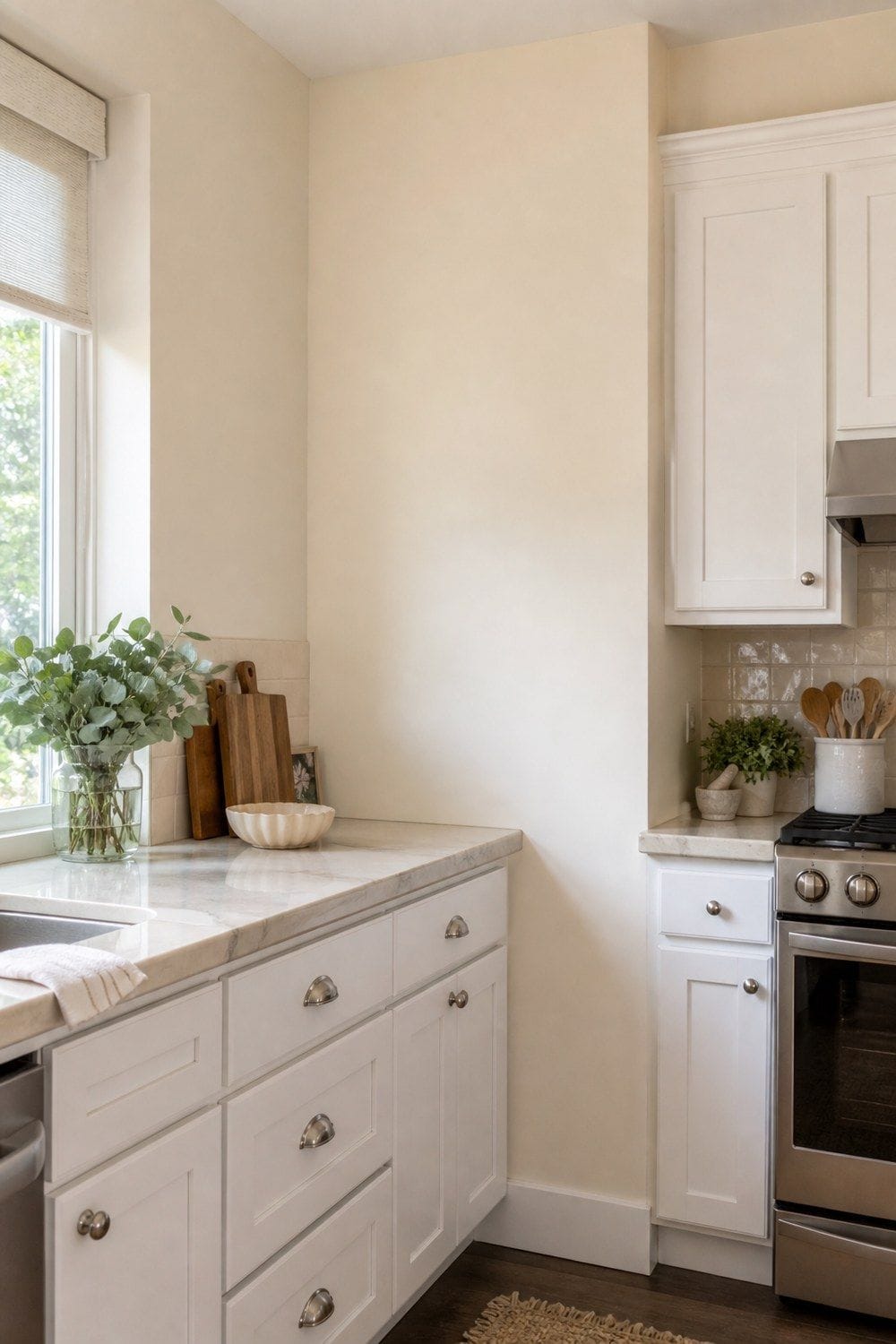
Creamy white walls can soften existing white cabinets without forcing a full cabinet repaint. This works especially well when the cabinets are a little cooler than you want, because the wall color can bring warmth around them. Look for wall paint that feels soft beside the cabinet finish, not yellow or beige on its own. Avoid cool gray-white walls when you want a cozier white kitchen. They can make cabinetry, tile, and counters feel colder by comparison. Bring home samples and check them beside trim, ceiling paint, and backsplash material so the whites layer instead of clashing.
3. White Oak Cabinets With Warm White Surrounds
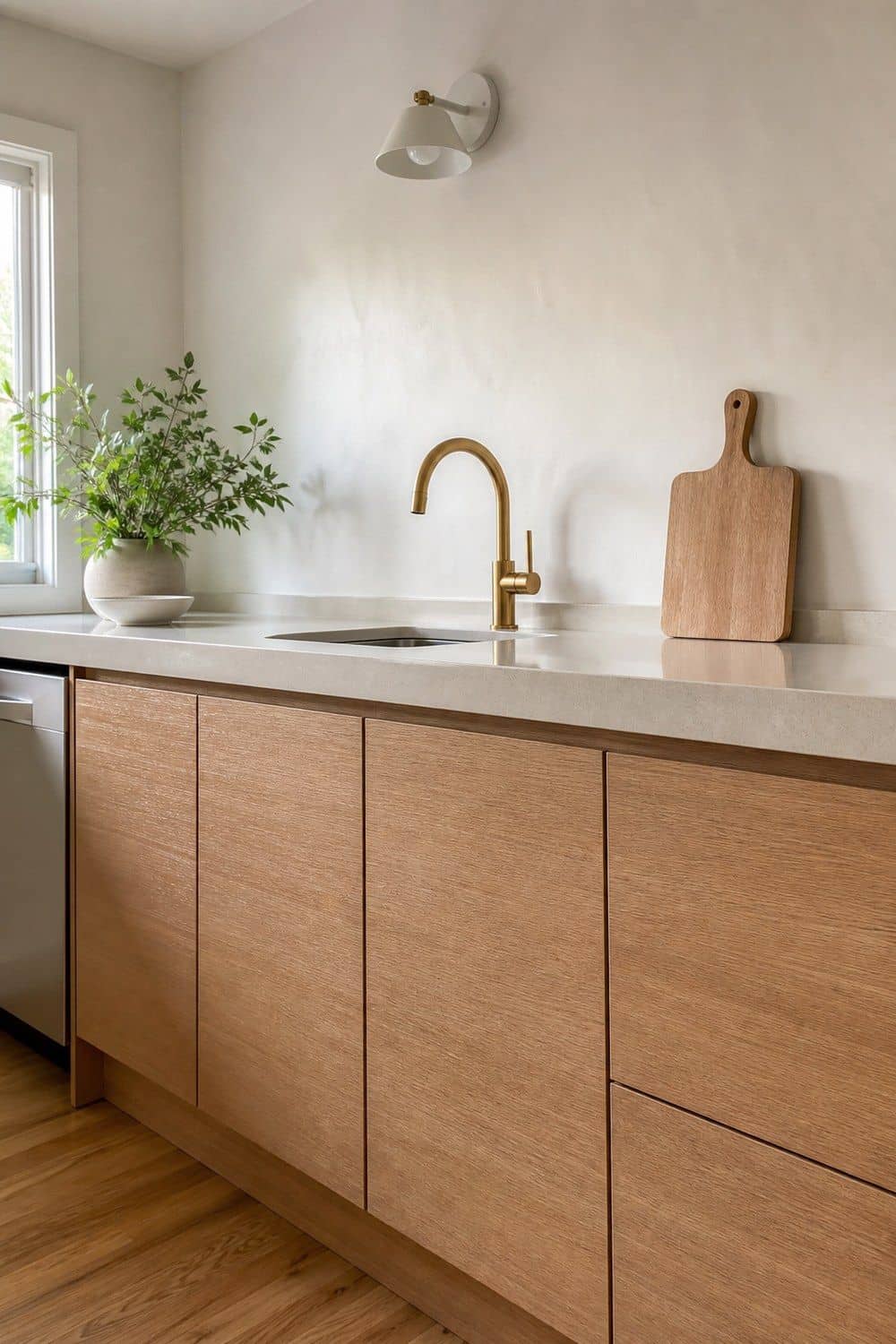
White oak cabinets bring grain, depth, and organic warmth to a kitchen that still reads mostly white. Use warm white walls, creamy counters, or soft backsplash tile around the wood so the room feels light without becoming flat. The grain adds enough movement that you do not need heavy contrast everywhere else.
This is a strong option for mixed white-and-wood kitchens because the wood becomes the main warmth source. Keep the oak finish natural or lightly toned, then repeat it once through stools, shelves, or cutting boards. That repeat makes the palette feel connected.
4. White Oak Floating Shelves for Texture

White oak floating shelves break up white walls with useful wood texture while keeping the kitchen open. They are a good middle ground when full upper cabinets would feel heavy but a blank wall would feel too plain.
Place them near a range, coffee corner, sink wall, or breakfast nook where they can hold dishes you actually use. A few stoneware plates, glasses, mugs, oil bottles, or a small bowl will warm the wall without turning the shelf into decoration storage.
Keep the shelf thickness, bracket style, and wood tone in line with the cabinetry so the shelves look built into the kitchen. Leave enough space between objects so the warm white wall still shows behind them.
5. Butcher Block Countertops With White Cabinets
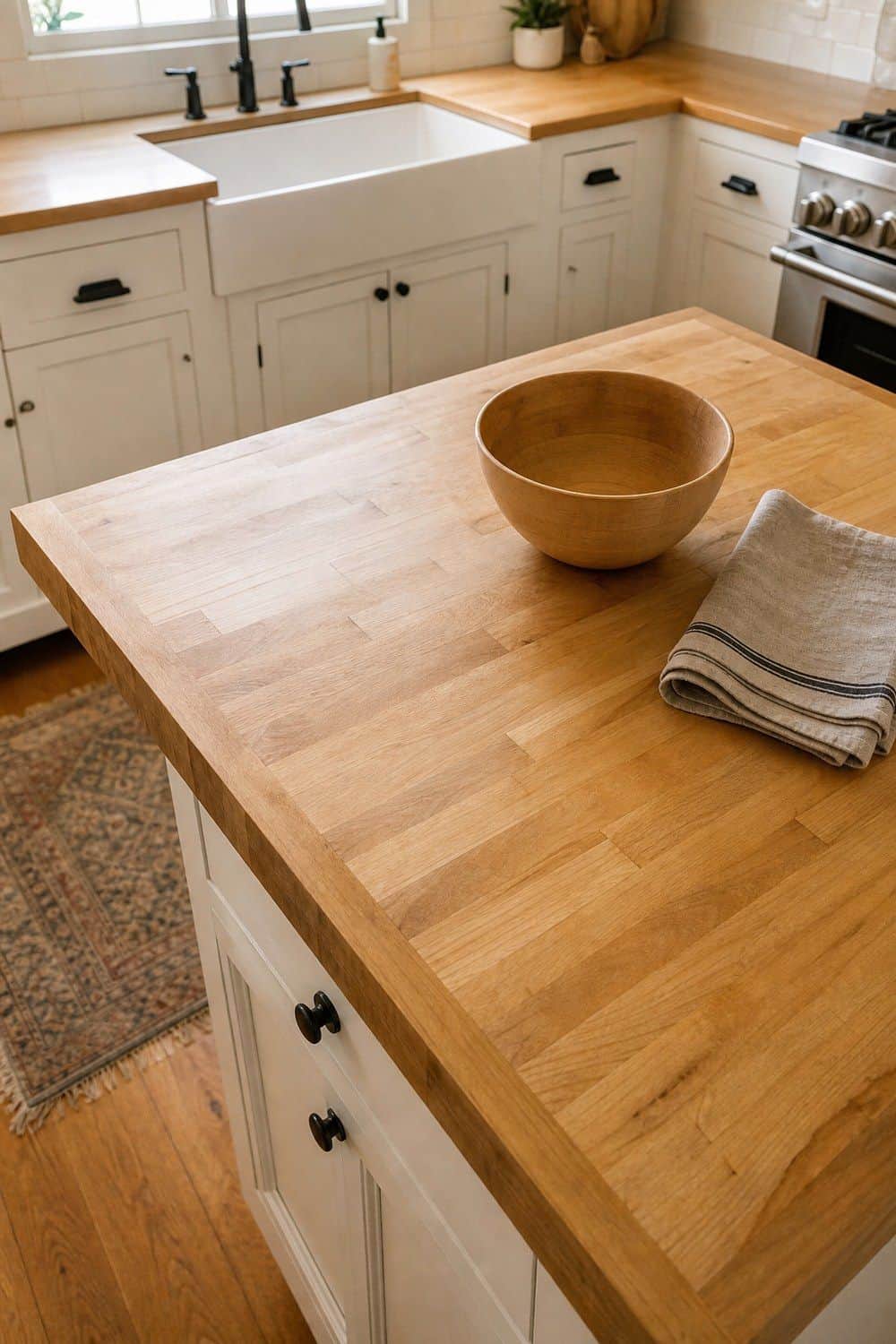
Butcher block gives white cabinets a warmer work surface and a more casual, lived-in mood. It can fit cottage kitchens, breakfast bars, pantry counters, islands, and prep zones where natural wood makes the room feel softer. The color of the wood matters, so compare maple, oak, and walnut tones beside the cabinet paint before choosing.
Be realistic about maintenance. Butcher block needs care around water, heat, and heavy staining, so it is not the right surface for every household. If you love the look but want less upkeep, use wood on an island or baking counter and choose stone around the sink.
6. Cream Quartz Countertops for a Soft White Surface

Cream quartz keeps counters light without the icy look that can happen with bright white slabs. It is useful when you want a soft white surface that still feels clean, durable, and easy to pair with warm cabinetry.
Samples are important because one warm white can look yellow beside another, while a cooler counter can make cabinet paint look dingy. Hold cream quartz countertop samples beside the cabinet door, backsplash, floor, and hardware before you commit to a full surface.
Soft veining or a gentle fleck can also help the counter feel less flat while keeping the palette quiet. Avoid a counter that looks stark blue-white beside cream cabinets.
7. Honed Marble Countertop Sample for Gentle Movement
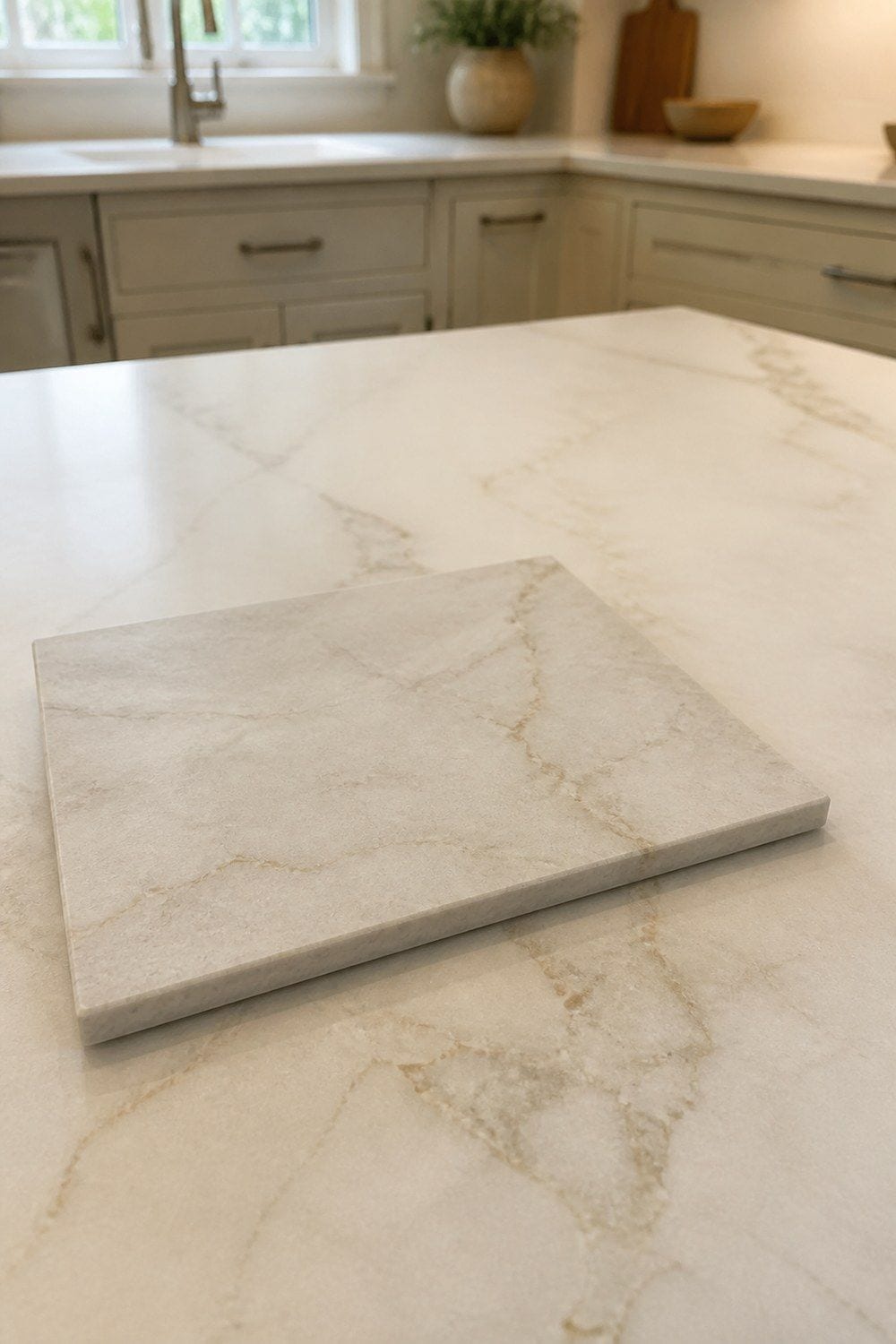
Honed marble adds movement to a warm white kitchen without the shine of a polished, high-contrast stone. The softer finish can feel calmer beside cream cabinets, plaster walls, and handmade tile. Look for veining that supports the palette, such as warm gray, taupe, beige, or faint gold rather than dramatic black lines.
A countertop sample helps you judge both color and finish in the actual kitchen light. Place it near the sink, range, and island area if those zones have different lighting. Honed stone can be beautiful, but it needs a realistic conversation about care, sealing, and daily patina.
8. Handmade Zellige Tile for a Warm Backsplash

Zellige-style tile is a good way to keep the backsplash white while adding surface movement. Each tile catches light a little differently, so the wall feels warmer and more tactile than a flat, glossy backsplash. Warm white, ivory, or milky zellige can work behind the range, along the sink wall, or across a full-height backsplash.
Let the tile be the texture. Pair it with quieter counters, simple hardware, and shelves that do not crowd the wall. If the tile has strong variation, use a grout color close to the tile so the surface reads soft rather than busy.
9. Cream Subway Tile for a Classic Softer Backsplash

Cream subway tile gives a familiar backsplash shape a warmer mood. It suits classic, cottage, transitional, and collected kitchens where bright white tile would feel too sharp. Choose a tile with a slightly creamy body and a glaze that has a little depth, especially if the cabinets are warm white or ivory. Grout matters here: a cool bright-white grout can make cream tile look off, while a softer matching grout keeps the backsplash calm. A handmade edge or slight glaze variation can make the wall feel less flat.
10. Full Height Backsplash for a Finished Warm White Wall

A full-height backsplash can make a warm white kitchen feel more finished than a short strip of tile. Run stone, zellige, cream subway tile, or another warm white material up to the hood, shelves, or ceiling so the wall feels integrated. This works especially well behind ranges, sink walls, and open shelves where the material becomes part of the architecture.
Keep the surface subtle if it covers a large area. Gentle texture, quiet veining, or tonal variation will read warmer than a busy pattern. Full height does not need to mean loud; it simply gives the wall a more custom, complete feeling.
11. Plaster Range Hood for Soft Architecture
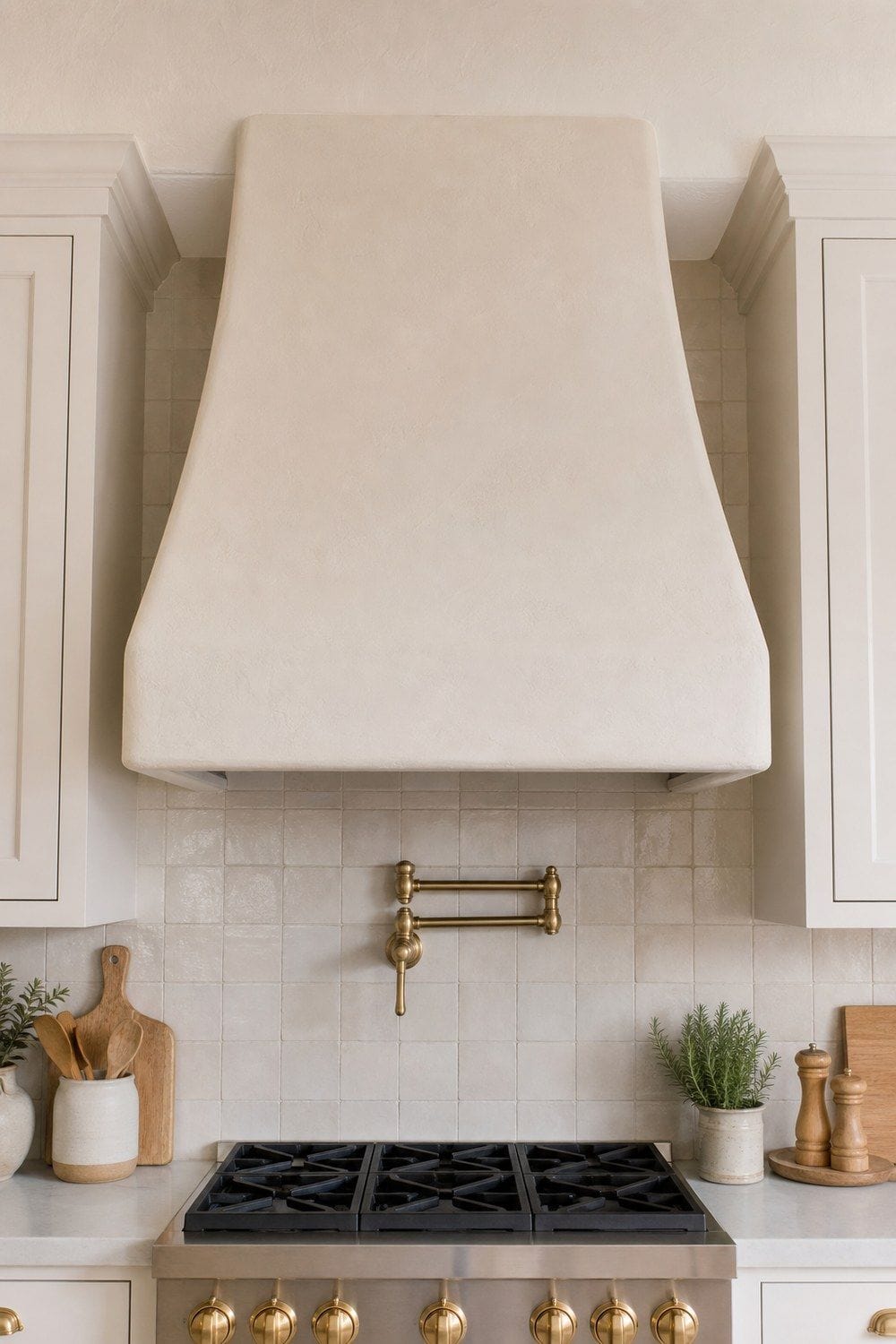
A plaster range hood adds a soft sculptural shape above the range, which helps a white kitchen feel less boxy. The matte texture works with warm white walls, cream tile, white oak, and honed stone.
Rounded edges or a simple tapered shape can make the hood feel architectural without adding another color. This is especially useful when the backsplash and cabinets are also pale.
Keep nearby hardware and lighting restrained so the hood remains the quiet focal point. A soft plaster finish can give the range wall depth while staying inside the warm white palette.
12. Wood Range Hood for Natural Contrast

A wood range hood can be the main contrast in a light warm white kitchen. Use it with white cabinets, warm stone, cream tile, or plaster walls when you want a focal point that feels natural rather than dark. The wood tone should relate to shelves, flooring, stools, or cutting boards so it does not look like a random insert. Keep the hood shape simple if the wood grain is visible. A clean box, curved cover, or softly paneled hood lets the material do the work. If the kitchen already has white oak cabinets, the hood can match or go slightly deeper for gentle depth.
13. Brass Cabinet Pulls for Warm Metal Detail

Brass cabinet pulls add golden warmth to white cabinetry without changing the main surfaces. Aged, unlacquered, brushed, or satin brass usually feels softer than a very shiny yellow finish. Use brass with warm white cabinets, cream tile, white oak, or honed stone for a classic layered look. Keep the pull shape consistent across drawers and doors so the metal reads as a steady detail, not visual clutter. Simple bars, latches, or round knobs can all work if the finish is soft.
14. Polished Nickel Cabinet Pulls for Subtle Shine
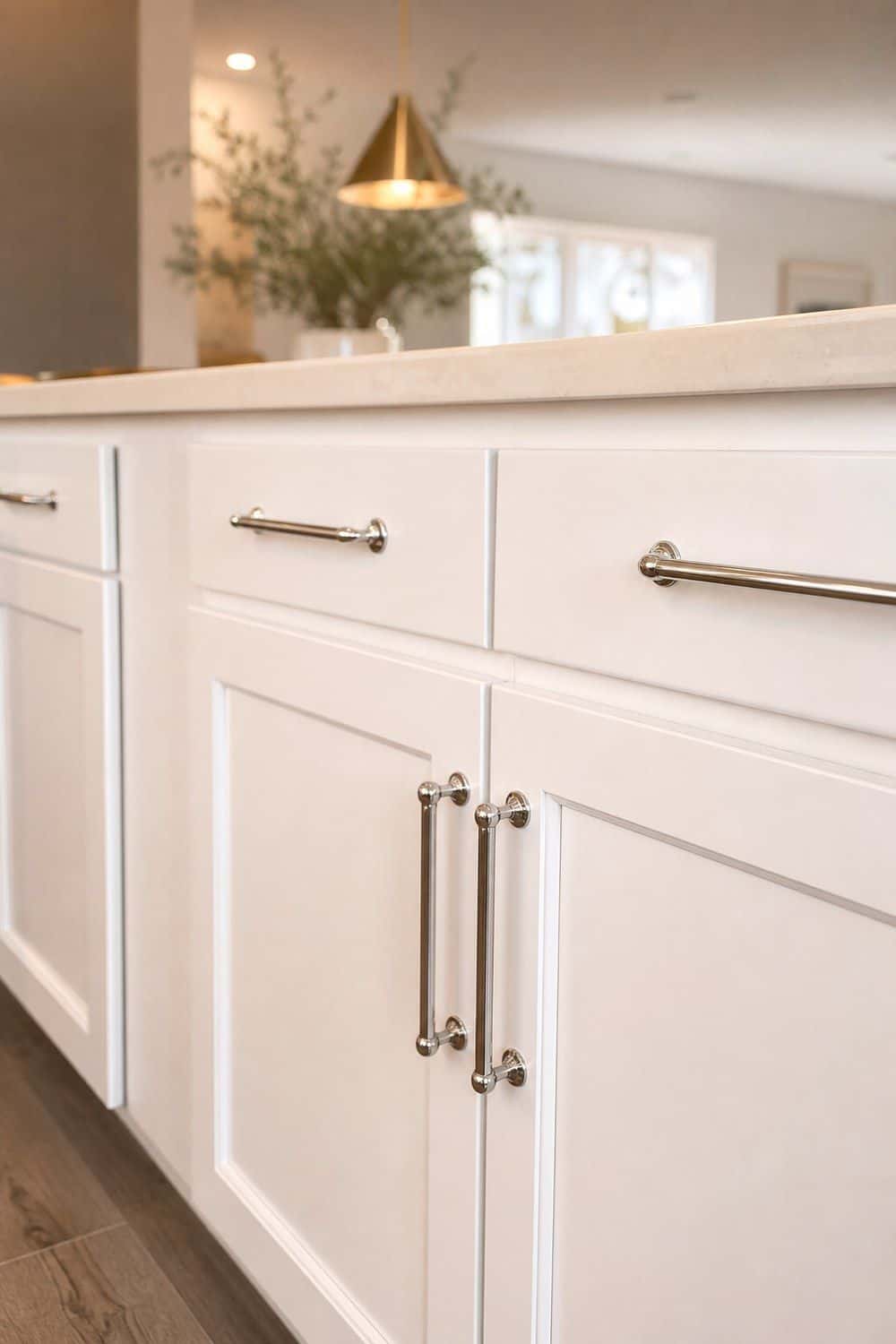
Polished nickel is a good option when brass feels too golden but you still want a refined finish. It has more warmth than chrome and can sit nicely beside cream counters, warm white cabinets, and wood details. The shine adds a little contrast without pulling the kitchen into a cold palette. You can also mix polished nickel pulls with brass lighting if the rest of the room is simple. Repeat each metal at least once so the mix feels deliberate. For example, nickel on cabinets and brass over the island can work when both finishes are supported by warm wood or stone.
15. Soft White Pendant Lights Over the Island

Pendant lights can keep a white kitchen soft when the shade material is warm and diffused. Look for ceramic, plaster, opal glass, fabric, or warm white metal instead of harsh chrome or clear glass. Over an island or peninsula, the pendants should add glow and shape without creating glare. Use bulbs that make cabinet paint and counters look creamy rather than blue, and keep the scale generous enough that the fixtures do not disappear into the ceiling. A dimmer can help the room feel softer at night.
16. Linen Pendant Lights for Soft Texture

Linen pendant lights bring fabric texture into an all-white kitchen, which can make the room feel less blank. They are especially nice over a breakfast nook, island, or small dining table where the shade can soften the light. Choose warm white, oat, flax, or natural linen tones rather than stark bright white. Because linen is a softer material, balance it with clean hardware and simple counters nearby. If the kitchen already has a busy backsplash, keep the shade plain. If the walls are quiet, a woven or slightly textured shade can add just enough depth.
17. Low-Pile Kitchen Runner for Floor Softness

A warm white runner softens the work path in a galley kitchen, sink run, or island walkway. Look for low-pile, washable styles with cream, ivory, oatmeal, taupe, or muted pattern so crumbs and daily marks are less obvious. The runner should feel like a useful textile, not a precious rug that makes cooking stressful. Use a non-slip pad and choose a length that covers the main standing zone without catching under cabinet doors. A faint stripe or worn pattern can add depth without strong color.
18. Natural Fiber Kitchen Runner for Organic Texture

A natural fiber runner grounds a white kitchen with woven texture and warmer tan tones. Jute-like, sisal-look, seagrass-inspired, or washable woven rugs can break up white floors and cabinets without adding a bold color. This is helpful when the kitchen already has warm white paint but still needs something earthy underfoot. Kitchen practicality matters, so choose a low profile so doors clear it, and consider washable alternatives if the runner sits near a sink, stove, or busy prep lane. A subtle woven pattern usually feels calmer than a high-contrast print.
19. Linen Cafe Curtains for Soft Window Light

Linen cafe curtains warm up a white kitchen window without blocking all the light. Use them above a sink, in a breakfast nook, at a pantry window, or near a side door where fabric can soften hard surfaces. Warm white, oat, flax, and natural linen tones pair well with cream cabinets and wood details.
Keep the curtain length tailored so it does not crowd the counter or sink. A brass, black, or nickel rod can connect the window to the cabinet hardware. If the backsplash is textured, choose plain linen; if the backsplash is simple, a subtle stripe can work.
20. Woven Counter Stools for a White Island

Woven counter stools add warmth at seating height, right where a white island can otherwise feel smooth and flat. Cane, rush, rattan-style, or woven leather seats bring texture without overwhelming the palette. Choose a frame color that relates to wood floors, shelves, or hardware so the stools connect to the rest of the room. Leave enough clearance behind the stools and avoid bulky shapes if the island walkway is narrow. Seat height should also fit the counter so the stools look tailored, not temporary.
21. Wooden Cutting Board Set for Counter Warmth

Wooden cutting boards are one of the easiest useful ways to warm a white counter. Lean one or two boards against the backsplash near the prep zone, or keep a small board beside the toaster or coffee area. The key is to show boards you actually use, not a stack of props that steals counter space.
Mixing sizes can look natural, but keep the wood tone related to shelves, stools, or flooring. Wash and dry boards properly before returning them to the counter. A simple board set can add enough wood to soften stone, tile, and painted cabinets.
22. White Stoneware Dinner Plates for Open Shelves

White stoneware plates add tone-on-tone depth on open shelves, plate racks, or glass-front cabinets. Stoneware usually has a softer, more tactile surface than glossy plain white dishes, which helps a warm white kitchen feel more collected. Stack plates neatly and repeat the same dish style so the shelves look useful rather than crowded. Add one wood bowl, clear glass, or linen napkin stack if the display needs more warmth. The display should still be easy to unload for everyday meals.
23. Cream Ceramic Canister Set for Counter Storage
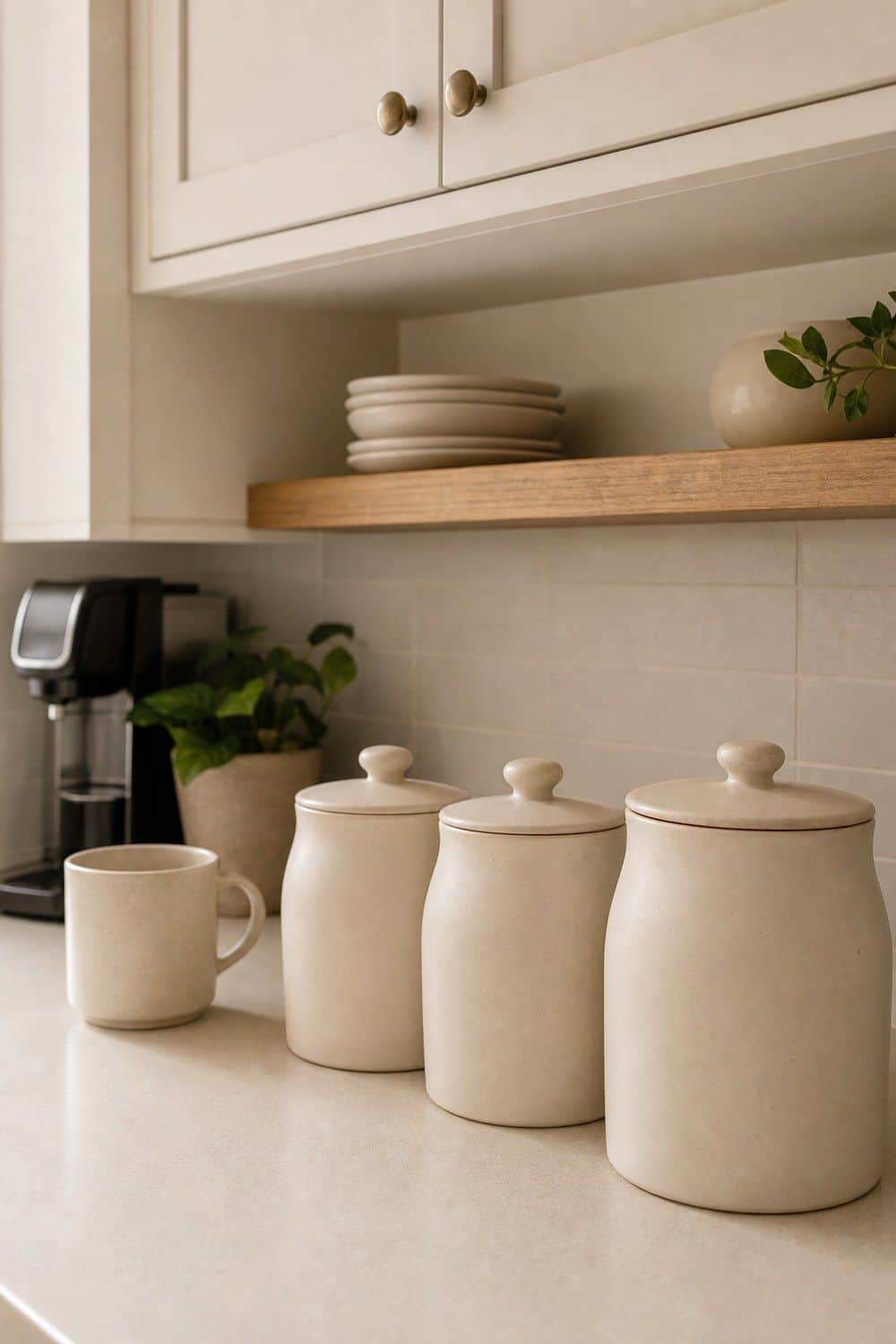
Cream ceramic canisters can make a coffee, baking, or tea zone feel softer while adding real storage. Use them for coffee, tea, sugar, flour, oats, or small baking supplies that you reach for often. The cream tone should sit comfortably beside the counter and cabinet color, not look yellow by comparison.
Limit canisters to one area so the counters still feel calm. A set of two or three is usually enough. If you have open shelves nearby, repeat the same ceramic tone there through mugs or small bowls.
24. Cream Small Appliances for a Seamless Counter
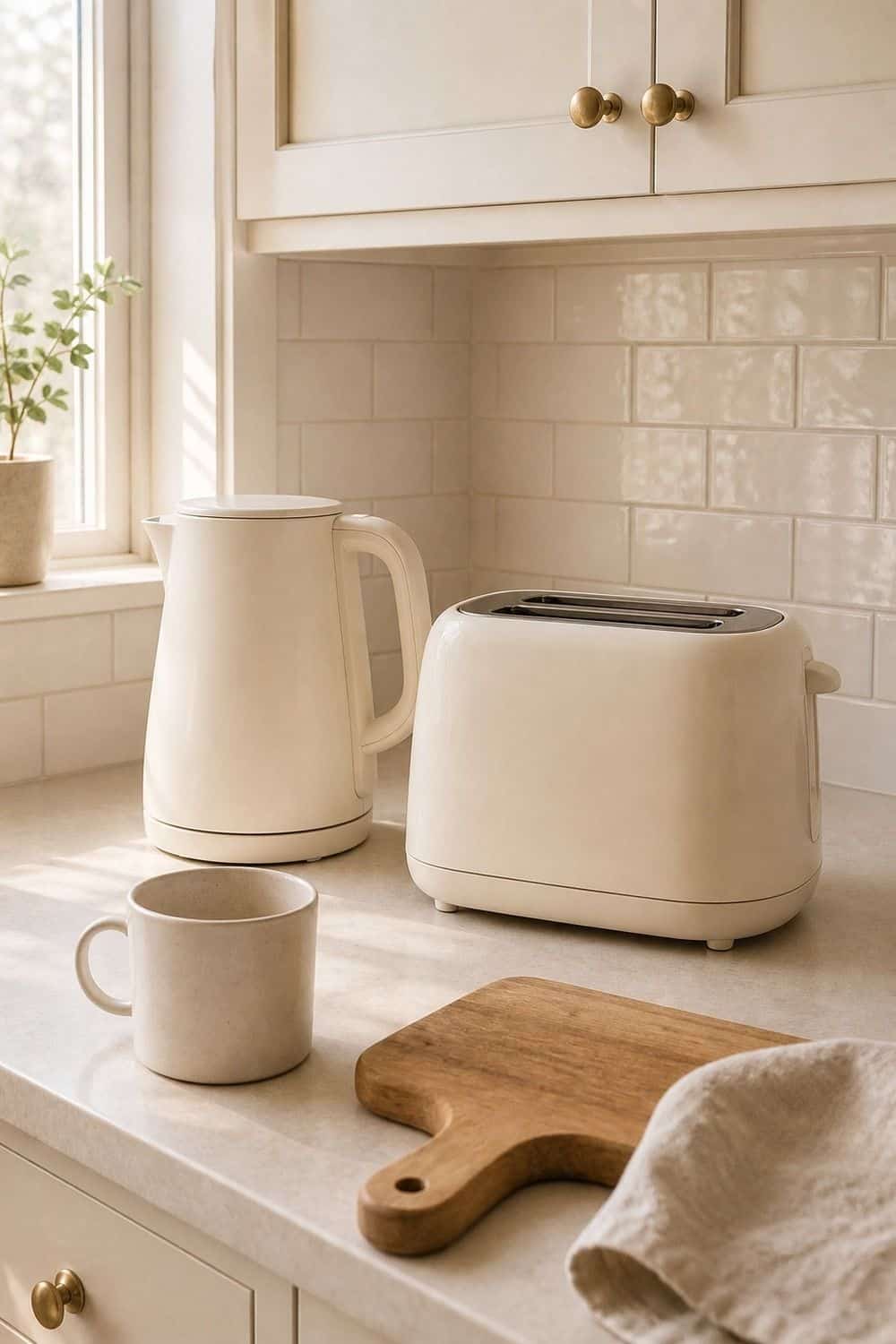
Warm white or cream small appliances can keep a white kitchen from being broken up by harsh black or shiny chrome blocks. A toaster, kettle, or coffee maker in a softer white works especially well when it sits near cream counters, warm white cabinets, or a light backsplash. Match the appliance tone to nearby surfaces as closely as possible, and avoid crowding the counter with too many visible machines. One useful appliance in the right shade can feel cleaner than several mismatched pieces.
25. Warm Neutral Wall Art for a Finished White Kitchen

Wall art can finish a warm white kitchen without disrupting the calm palette. Use it near breakfast nooks, pantry doors, coffee bars, or blank side walls that need a human layer. Look for art with cream, beige, soft black, muted green, wood tones, food illustrations, or natural textures.
One larger piece often feels calmer than many tiny frames in a working kitchen. Choose frames that relate to hardware or wood details, and avoid placing delicate paper too close to steam or grease. Art should add personality while still supporting the quiet white palette.
How to Layer Warm White Kitchen Materials
Warm white is different from stark white because it carries cream, beige, ivory, almond, or soft yellow undertones. Test every paint, tile, and counter sample in the room’s natural and evening light before choosing, since warm whites can shift quickly beside floors, appliances, and stone.
The material balance matters as much as the paint. White oak, butcher block, honed marble, cream quartz, zellige, plaster, brass, polished nickel, linen, stoneware, and natural fiber rugs all add warmth in different ways.
Low-commitment routes include runners, cafe curtains, canisters, wall art, cutting boards, warm white small appliances, and hardware swaps. Larger updates include cabinet paint, counters, backsplash tile, range hoods, shelves, and island lighting.
Frequently Asked Questions
What makes a white kitchen feel warm?
A white kitchen feels warm when the whites have cream, ivory, beige, or soft yellow undertones and the room includes natural texture. Wood, honed stone, handmade tile, brass, linen, woven stools, stoneware, and warm bulbs all help soften white cabinetry. Avoid relying on paint alone, because warmth usually comes from layered materials.
What is the best warm white for kitchen cabinets?
The best warm white cabinet color depends on your counters, backsplash, floors, and light. Look for whites with a gentle cream, beige, ivory, or soft yellow undertone, then test large samples in the kitchen. A color that looks perfect online can look too yellow, too gray, or too bright beside your actual finishes.
How do I keep a white kitchen from feeling sterile?
Use texture and warmth on the surfaces people notice most. Add wood shelves, a warm runner, linen curtains, cream tile, softer lighting, brass or polished nickel hardware, stoneware dishes, and useful counter pieces like cutting boards. Keep the palette mostly white, but avoid making every surface glossy, flat, and bright.
What countertops look best with warm white cabinets?
Cream quartz, honed marble, quartzite with soft movement, warm stone, and butcher block can all look good with warm white cabinets. The best choice depends on how much contrast and maintenance you want. Always compare counter samples beside the cabinet paint and backsplash because mismatched whites are very noticeable.
What backsplash works with a warm white kitchen?
Warm white zellige, cream subway tile, full-height stone, plaster-look surfaces, and handmade tile all work well. Choose a backsplash with texture, tonal variation, or soft movement so the wall does not feel flat. If the cabinets and counters are already creamy, avoid a cool bright-white tile that makes the other finishes look yellow.
What hardware warms up a white kitchen?
Brass is the most direct way to add warmth, especially in aged, brushed, satin, or unlacquered finishes. Polished nickel can also work when you want subtle shine without a cool chrome effect. Match the hardware style to the cabinet door and repeat the metal through lighting, faucets, or small details.
Can a warm white kitchen work in a compact layout?
Yes, a warm white kitchen can work beautifully in a compact layout because the palette keeps the room light while softer undertones prevent it from feeling stark. Use warm white paint, one wood element, a low-profile runner, and simple hardware. Keep counters useful and avoid too many decorative pieces in the prep area.
How do I add warmth to a white kitchen without remodeling?
Start with movable pieces: a warm runner, linen cafe curtains, wooden cutting boards, cream canisters, stoneware dishes, wall art, woven stools, warmer bulbs, or new cabinet pulls. These changes add texture and softness without replacing cabinets or tile. Keep the colors related so the kitchen still feels calm.
Final Thoughts
The strongest warm white kitchen ideas make white feel layered instead of blank. Start with softer undertones, then add wood, stone, handmade tile, warm metal, linen, and useful counter pieces that support the palette. A warm white kitchen can still feel bright and timeless, but the details should give it texture, comfort, and a sense of everyday life.
Last update on 2026-10-04 / Affiliate links / Images from Amazon Product Advertising API