
A creme bavarois recipe built around a temperature window: a crème anglaise base cooked to exactly 175°F (79°C) with egg yolks, milk, sugar, and vanilla; gelatin bloomed in cold water then dissolved into the warm custard; the whole thing cooled to a 70°F “trembling point” where it has thickened to the consistency of unwhipped cream but has not yet set; then whipped cream folded in at that exact moment, poured into a 5-cup mold, and chilled 4 to 6 hours. Unmolded by dipping the mold in warm water for 10 seconds and inverting onto a plate. Serves 6 to 8. The technique is the entire game: fold too early and the cream weeps; fold too late and the custard sets in streaks. Get the temperature right and the result is smooth, set, and faintly wobbly under a spoon, the classic French dessert that Antonin Carême codified in 1815.
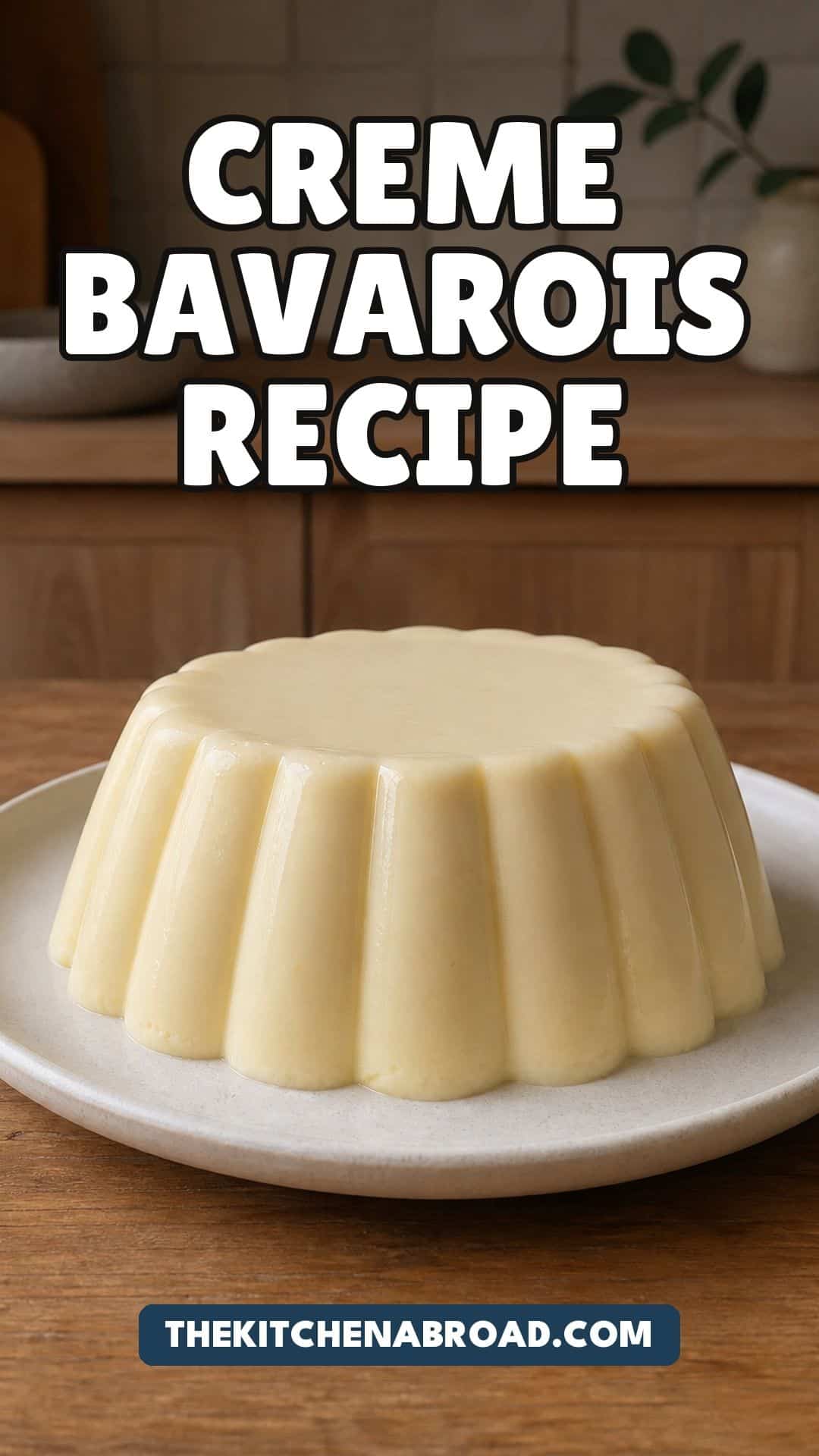
Crème bavaroise (or Bavarian cream, or just bavarois) is one of those French desserts that looks much harder than it is and is much harder than it looks for one specific reason: timing. The components are familiar (a stirred custard, a bloom of gelatin, a half-pint of whipped cream), and the assembly is three steps. The hinge is hitting the temperature window where the custard has cooled enough to stop deflating whipped cream on contact but has not yet set in the bowl. That window is around 68 to 72°F (20 to 22°C), and an instant-read thermometer is the only honest way to find it. Hit the window, fold the cream in with confidence, pour into a mold, and chill. The result is the smooth, faintly-wobbly set that defines the dish, somewhere between a panna cotta and a pot de crème but lighter than either. The recipe below is the Larousse Gastronomique baseline, adapted for a five-cup home mold and timed for the average kitchen counter. The components do most of the work; you supply the thermometer.
What You’ll Need
A 5-cup ceramic or copper gelatin mold (the classic shape is fluted, but any 5-cup form works as long as the interior is smooth so the unmold releases cleanly), an instant-read thermometer that reads in under three seconds (this is non-negotiable for the trembling-point fold), a fine-mesh strainer to catch any cooked egg bits when you pour the crème anglaise out of the saucepan, a stand mixer (or hand mixer) with a whisk attachment to whip the cream to medium peaks, and a large glass mixing bowl for the final fold so you can see when the custard and the whipped cream are fully integrated. Pyrex over metal here, the visual matters. Everything else is a saucepan, a whisk, and a rubber spatula.


Recommended Reads
Where Crème Bavarois Came From
The dish enters the French canon through Antonin Carême’s 1815 Le Pâtissier royal parisien, the foundational text of French haute cuisine. Carême wrote the recipe under the name fromage bavarois (“Bavarian cheese,” a translation of an older German Bayerische Creme that referenced the dish’s Bavarian-court origins), and he positioned it as a centerpiece dessert: chilled, set, unmolded at the table, served to whole rooms of guests at a single course. The early-19th-century version used a fish-bone or isinglass gelatin (calf’s-foot was the alternative); modern recipes use leaf or powdered gelatin, which sets faster and tastes of nothing. The structural logic Carême laid out is unchanged: a stirred custard plus a setting agent plus folded whipped cream, chilled in a mold and turned out.
The dish then runs through every major French cookbook of the next two hundred years. Larousse Gastronomique (first edition 1938, Prosper Montagné as lead author) codifies the recipe under bavarois and lists a dozen flavour variations (vanilla, coffee, chocolate, fruit purée, praline). Julia Child carries it into American kitchens through Mastering the Art of French Cooking in 1961. Jacques Pépin’s La Technique in 1976 walks through the trembling-point fold with the same temperature math used in pastry kitchens today. The recipe below is the Larousse vanilla version with the temperatures stated explicitly and the cooling step paced for a home kitchen counter instead of a hotel pastry station. The bones are Carême’s; the timing is contemporary.
A Few Notes on the Ingredients
- Whole milk for the custard base: Not low-fat, not skim. The fat content of whole milk (around 3.5 percent) is what gives the crème anglaise its body. Half-and-half is too rich and the bavarois turns dense; skim makes a thin custard that sets cleanly but lacks flavour.
- Heavy cream for the whip: 36 percent fat or higher, and cold from the fridge. Whip to medium peaks (the cream holds a shape but the tip still flops slightly), not stiff peaks. Stiff cream is harder to fold in cleanly and produces a denser bavarois.
- Egg yolks only: Six large yolks for a 5-cup mold. The yolks are the thickener and the flavour carrier for the crème anglaise base. Save the whites for meringue or freeze them for a later use; they have no role in this dish.
- Granulated sugar: Standard white sugar dissolves cleanly into the warm milk and provides the sweetness baseline. Caster sugar (superfine) works identically and dissolves slightly faster.
- Powdered or leaf gelatin: 2 1/4 teaspoons of powdered gelatin (one standard envelope) or 4 sheets of silver-strength leaf gelatin sets a 5-cup mold to the right wobble. Bloom powdered gelatin in 3 tablespoons of cold water for 5 minutes before dissolving; leaf gelatin blooms in a bowl of cold water for the same time, then squeezed out.
- Pure vanilla extract or a vanilla bean: A whole bean split and scraped into the milk gives you the speckled-flecks look that signals a serious bavarois. Pure vanilla extract added off the heat at the end of cooking is the home-kitchen substitute and works fine. Avoid imitation vanilla.
- Neutral oil for the mold: A light brush of flavourless oil (canola, grapeseed) on the interior of the mold before pouring helps the bavarois release cleanly on unmold. Avoid butter or olive oil; both leave a flavour and a residue on the surface of the set custard.
Recipe: Crème Bavarois
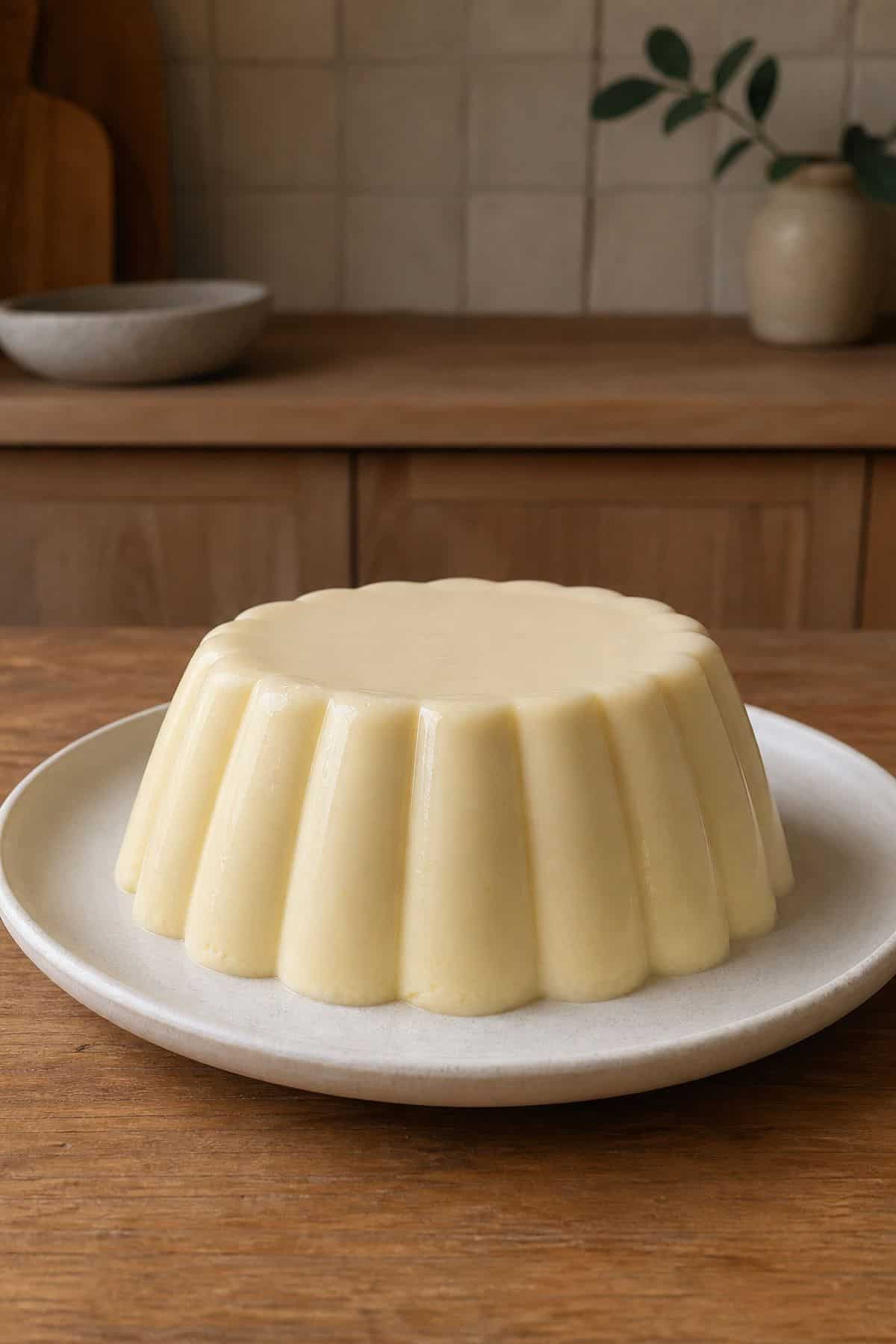
Prep time: 25 minutes | Cook time: 15 minutes | Total time: 40 minutes + 4 to 6 hours chill | Serves: 6 to 8
Ingredients
- 2 cups (480 ml) whole milk
- 1 vanilla bean, split and scraped (or 2 tsp pure vanilla extract added at the end)
- 6 large egg yolks, room temperature
- 2/3 cup (135 g) granulated sugar
- 1 envelope (2 1/4 tsp / 7 g) powdered gelatin, or 4 sheets silver-strength leaf gelatin
- 3 tbsp cold water (for blooming powdered gelatin)
- 1 1/4 cups (300 ml) cold heavy cream, 36% fat or higher
- 1 tsp neutral oil (canola or grapeseed), for the mold
Instructions
- Lightly brush the interior of a 5-cup mold with neutral oil, set it on a small plate or sheet pan, and put it in the fridge to chill while you work. A chilled mold sets the first layer of custard faster on contact.
- Bloom the gelatin. Sprinkle the powdered gelatin evenly over 3 tablespoons of cold water in a small bowl and set aside for 5 minutes. The gelatin will absorb the water and swell into a soft, translucent mass. If using leaf gelatin, submerge the sheets in a bowl of cold water for 5 minutes, then lift them out and gently squeeze.
- Make the crème anglaise base. In a medium saucepan, combine the milk and the split vanilla bean (scrape the seeds into the milk and add the empty pod too). Heat over medium until the milk is steaming and just at the edge of a simmer, then pull off the heat and let it sit 10 minutes to infuse. Fish out the pod.
- In a medium bowl, whisk the egg yolks and granulated sugar together until the mixture is pale yellow and ribbons off the whisk when you lift it (about 60 seconds of brisk whisking). Slowly pour the warm milk into the yolks in a thin stream, whisking constantly to temper the eggs without scrambling them.
- Pour the tempered mixture back into the saucepan and cook over low heat, stirring constantly with a wooden spoon or a heatproof spatula in a figure-eight pattern across the bottom of the pan, until the custard reaches 175°F (79°C) on an instant-read thermometer. This takes 4 to 6 minutes. The custard should coat the back of the spoon and leave a clean line when you draw a finger through it. Do not let it exceed 180°F, or the yolks scramble.
- Pull the pan off the heat. Add the bloomed gelatin (the soft mass from step 2) directly to the warm custard and whisk until fully dissolved (about 30 seconds; you should not see any granules). If using vanilla extract instead of bean, stir it in now.
- Pour the custard through a fine-mesh strainer into a large glass mixing bowl, set the bowl over a larger bowl filled with ice and a little cold water, and stir occasionally with a rubber spatula while the custard cools. The goal is 68 to 72°F (20 to 22°C), the “trembling point” where the custard has thickened to about the consistency of unwhipped heavy cream but has not begun to set. This takes 12 to 18 minutes depending on your ice bath. Check the temperature with the thermometer every few minutes once it has been cooling for 10 minutes.
- While the custard cools, whip the cold heavy cream in a stand mixer with the whisk attachment (or with a hand mixer in a chilled bowl) to medium peaks, the cream holds a soft shape when you lift the whisk but the tip flops over slightly. Do not overwhip to stiff peaks; medium is the texture that folds in cleanly.
- When the custard hits 68 to 72°F, work quickly. Add about a third of the whipped cream to the cooled custard and whisk briskly to lighten the base. Add the remaining cream in two more additions, folding gently with a rubber spatula until the mixture is uniform and no white streaks remain. The fold should take about 60 seconds total; do not over-fold or you deflate the cream.
- Pour the bavarois into the chilled mold, smooth the top with a spatula, and cover loosely with plastic wrap. Chill in the fridge for 4 to 6 hours, or until fully set. Overnight is fine.
- To unmold, dip the bottom of the mold into a bowl of warm (not hot) tap water for 10 seconds, run a thin knife around the top edge of the bavarois, set a serving plate over the mold, and invert. The bavarois should release cleanly with a soft thunk. If it does not, dip the mold for another 5 seconds and try again. Serve cold, plain or with brandied cherries, fresh berries, or a thin pool of crème anglaise on the plate.
Notes
The 175°F cook on the crème anglaise is the single most-cited number in French custard work, and it is worth respecting. Below 170°F, the yolks have not thickened the milk and the custard runs thin. Above 180°F, the yolks scramble and you get tiny curdled bits suspended in the liquid (the strainer in step 7 saves a marginal case, but a fully-scrambled custard is a rebake). Stir constantly, stir on low heat, and pull the pan the moment the thermometer reads 175°F. The custard finishes thickening in the residual heat.
The trembling-point fold is the second non-negotiable. If you fold the whipped cream into a custard that is still warm (above 80°F), the cream deflates on contact and the bavarois sets dense. If you fold into a custard that has already begun to set (below 65°F), the gelatin is partially gelled and the fold streaks. The window is 68 to 72°F, and an ice-water bath plus a thermometer is the only honest way to land in it. Set a timer at 8 minutes and start checking from there.
The bavarois keeps two days in the fridge in the mold, covered with plastic wrap. It does not freeze well; the texture goes grainy on thaw. Unmold within ten minutes of serving so the surface stays smooth; if you unmold too early and leave it on the plate for an hour, the surface can sweat and lose its sheen.
Tips and Variations
Why the Trembling-Point Temperature Window Matters
A bavarois is structurally a mousse held together by gelatin: a custard base, a setting agent, and folded whipped cream that gives the dish its airy texture. The fold has to happen in a specific physical window because both components are temperature-sensitive in opposite directions. Whipped cream deflates above about 80°F (the fat in the cream softens and the air bubbles collapse), and gelatin starts to set below about 65°F (the protein network forms and the custard becomes stiff in the bowl, impossible to fold cleanly). The trembling point at 68 to 72°F is the narrow band where the custard has cooled enough to support the cream but has not yet set. An ice bath plus a thermometer gets you there in 12 to 18 minutes from a 175°F custard. Without the thermometer, you are guessing. Pastry chefs who do this on a hotel line know the texture by sight after a few hundred reps; for a home kitchen, the thermometer is the move.
Coffee and Chocolate Variations
Both flavour variations are listed in Larousse and both work without re-balancing the rest of the recipe. For coffee bavarois, steep 2 tablespoons of coarsely-ground dark-roast coffee in the warm milk for 10 minutes during the infusion step (in place of the vanilla bean), then strain. The coffee character is faintly bitter and reads as Italian-style affogato in dessert form. For chocolate bavarois, chop 3 ounces (85 g) of dark chocolate (70 percent cacao) and add it to the warm crème anglaise just after you pull it off the heat in step 5, whisking until fully melted before adding the gelatin. The chocolate version sets slightly denser and benefits from a 6-hour chill rather than 4. Both variations unmold the same way and serve with the same accompaniments.
Using a Fruit Purée Base
The fruit-purée bavarois (raspberry, strawberry, mango) is the second canonical variation and the one that tends to land on summer tables. Replace the crème anglaise base with 1 1/4 cups (300 ml) of strained fruit purée plus 1/2 cup (100 g) sugar, warmed gently in a saucepan until the sugar dissolves, then bloomed gelatin whisked in off the heat. Cool to the same 68 to 72°F trembling point, fold in 1 1/4 cups of whipped cream, mold and chill. The result is a fruit mousse that is technically still a bavarois (custard-and-cream structure, gelatin set, mold-and-unmold) but reads as a lighter, summer-leaning version. Raspberry is the classic.
Unmolding Cleanly Every Time
The unmold is where the bavarois project either lands or fails. Three rules. First, brush the mold with a light coat of neutral oil before pouring the custard in; this gives the set bavarois a release surface that does not stick. Second, when you are ready to serve, dip the bottom of the mold in warm (not hot) water for exactly 10 seconds; longer and the outer edge of the bavarois starts to melt and the surface loses definition. Third, run a thin knife around the top edge to break the suction seal before inverting onto the plate. If the bavarois does not drop on the first try, dip for another 5 seconds and tap the plate firmly against the counter. Forcing it with a knife or shaking the mold vigorously will tear the surface; warm water and patience are the answer. A fluted copper mold gives you the most cinematic unmold; a smooth ceramic ramekin gives you a domed bavarois that works for a smaller serve.
Scaling Down to Individual Ramekins
For a plated dessert course rather than a centerpiece mold, divide the bavarois into 6 to 8 individual 6-ounce ramekins, oiled lightly, after the fold. The smaller volume sets faster (3 to 4 hours in the fridge rather than 4 to 6) and unmolds with the same warm-water dip for 8 seconds instead of 10. The advantage is portion control and a cleaner plate presentation; the disadvantage is that you lose the centerpiece moment when a single large bavarois lands on the table for the room to admire. For a dinner party where each guest gets their own plate, ramekins are the move. For a holiday meal where the dessert is part of the spectacle, the single 5-cup mold is the answer.
What to Serve It With
The classic French accompaniment is a thin pool of unmoulded crème anglaise on the plate around the bavarois, plus a small spoonful of fresh berries or a few brandied cherries for colour and acid. The bavarois is rich, so the accompaniment needs to be sharp; raspberry coulis is the standard pairing, made by simmering frozen raspberries with a tablespoon of sugar for 5 minutes and pressing through a fine strainer. A glass of Sauternes or a chilled Moscato d’Asti is the wine call. For a winter holiday table, pair with our Christmas dessert ideas roundup for the full supporting cast; for spring, our Easter cake ideas covers the rest of the menu. The bavarois is a single-serve dessert that ends a course cleanly.
Frequently Asked Questions
What is the difference between bavarois and panna cotta?
Both are gelatin-set chilled desserts, but the structures are different. Panna cotta is cream and milk heated with sugar, gelatin dissolved in, and poured into a mold to set, no eggs, no fold, no whip. Bavarois is an egg-yolk-based crème anglaise (cooked custard), gelatin dissolved into it, cooled to a trembling point, and whipped cream folded in. The bavarois is lighter and airier from the cream fold; the panna cotta is denser and more uniform. A good rule: panna cotta is the simpler, two-step technique; bavarois is the four-step technique with the temperature-window fold.
Can I use leaf gelatin instead of powdered?
Yes. Four sheets of silver-strength leaf gelatin equal one 7-gram envelope of powdered gelatin for a 5-cup mold. Bloom the leaves in a bowl of cold water for 5 minutes, lift them out, gently squeeze off the excess water, and whisk them directly into the warm custard in step 6. Leaf gelatin produces a slightly cleaner mouthfeel because it has no off-flavour, and it is the standard in professional French pastry kitchens. Powdered gelatin works identically and is more widely available in US supermarkets.
Why won’t my bavarois unmold cleanly?
Three possible causes. First, you skipped the light oil brush on the mold before pouring; the bavarois clings to a dry mold surface. Second, you dipped the mold in water that was too hot or for too long; the edge of the bavarois melted and lost shape. Third, the bavarois did not set fully because the gelatin was under-bloomed or the cool-down was rushed and the custard never made it to the trembling point. Oil the mold, use warm tap water (not hot) for exactly 10 seconds, and verify the bavarois has chilled at least 4 hours before attempting to unmold.
Can I make bavarois the day before?
Yes, and the texture is at its best after an overnight set. Bake (or rather, build) the bavarois the night before, pour into the mold, cover with plastic wrap, and refrigerate. The next day, unmold within 10 minutes of serving so the surface stays smooth. The dish holds two days in the fridge; beyond that, the surface dries out and the texture coarsens. Do not freeze.
What if I don’t have an instant-read thermometer?
Buy one. A 20-dollar instant-read pays for itself the first time it saves a custard, and bavarois is the dish that demands one. The crème anglaise has to land at exactly 175°F, and the trembling-point fold has to happen at 68 to 72°F. Both numbers are inside the margin where guessing by eye is a coin flip. If you genuinely cannot get a thermometer, the visual cues are: custard that coats the back of a spoon and leaves a clean track when you draw a finger across (175°F), and a base that ribbons slowly off a whisk and feels just slightly cool to the touch (around 70°F). A thermometer is the move.
Why does my bavarois have a layer of liquid at the bottom?
The whipped cream was folded into a custard that was still too warm, and the cream partially deflated and separated. The melted cream drained to the bottom of the mold and set as a thin liquid layer. Verify the trembling point with a thermometer next time (68 to 72°F is the target), and fold the cream in only when the custard has reached that window. A second possibility: the gelatin was under-bloomed or under-dissolved and the bavarois did not set evenly. Check the gelatin is fully translucent and whisked into a smooth custard in step 6.
Key Takeaways
- Cook the crème anglaise base to exactly 175°F (79°C). Below it runs thin; above it scrambles.
- Bloom the gelatin in cold water for 5 minutes before whisking it into the warm custard off the heat.
- Cool the custard to the trembling point of 68 to 72°F (20 to 22°C) before folding in the whipped cream. An ice bath plus a thermometer is the only reliable method.
- Whip the heavy cream to medium peaks, not stiff. Medium folds in cleanly; stiff streaks.
- Chill the bavarois 4 to 6 hours in an oiled 5-cup mold. Overnight is fine.
- Unmold by dipping in warm tap water for 10 seconds, running a knife around the top edge, and inverting onto a plate.
Final Thoughts
This is the dish that earns the thermometer. The components are pantry French (whole milk, egg yolks, sugar, gelatin, heavy cream), the technique is two centuries old, and the result is the chilled set custard dessert that ends a French course the way a roast chicken anchors a Sunday dinner. The whole project takes 40 minutes of active work plus a 4-to-6-hour chill, and most of that work is stirring and waiting for an ice bath to do its job.
The two non-negotiables are the 175°F cook on the custard base and the 68-to-72°F trembling-point fold. Both numbers come from an instant-read thermometer; both numbers reward respect. The first time you nail the temperature window, the bavarois sets smooth and unmolds with a clean wobble. The first time you fold too early or too late, the bavarois sets dense or sets in streaks, and you know exactly why. The thermometer is the difference between a dessert that lands and one that does not.
If you make this once for a dinner party and the unmold lands cleanly on the plate, it tends to become the dessert you reach for whenever the meal needs a centerpiece. It travels through holidays, it dresses up in fruit purée for summer or chocolate for winter, and it scales down into ramekins for a plated course. Carême wrote it in 1815; Larousse codified it in 1938; you are just keeping the work going.
Crème Bavarois
A creme bavarois recipe built around a temperature window: a crème anglaise base cooked to exactly 175°F (79°C) with egg yolks, milk, sugar, and vanilla; gelatin bloomed in cold water then dissolved into the warm custard; the whole thing cooled to a 70°F.
Ingredients
- 2 cups (480 ml) whole milk
- 1 vanilla bean, split and scraped (or 2 tsp pure vanilla extract added at the end)
- 6 large egg yolks, room temperature
- 2/3 cup (135 g) granulated sugar
- 1 envelope (2 1/4 tsp / 7 g) powdered gelatin, or 4 sheets silver-strength leaf gelatin
- 3 tbsp cold water (for blooming powdered gelatin)
- 1 1/4 cups (300 ml) cold heavy cream, 36% fat or higher
- 1 tsp neutral oil (canola or grapeseed), for the mold
Instructions
- Lightly brush the interior of a 5-cup mold with neutral oil, set it on a small plate or sheet pan, and put it in the fridge to chill while you work. A chilled mold sets the first layer of custard faster on contact.
- Bloom the gelatin. Sprinkle the powdered gelatin evenly over 3 tablespoons of cold water in a small bowl and set aside for 5 minutes. The gelatin will absorb the water and swell into a soft, translucent mass.
- Make the crème anglaise base. In a medium saucepan, combine the milk and the split vanilla bean (scrape the seeds into the milk and add the empty pod too).
- In a medium bowl, whisk the egg yolks and granulated sugar together until the mixture is pale yellow and ribbons off the whisk when you lift it (about 60 seconds of brisk whisking).
- Pour the tempered mixture back into the saucepan and cook over low heat, stirring constantly with a wooden spoon or a heatproof spatula in a figure-eight pattern across the bottom of the pan, until the custard reaches 175°F (79°C) on an instant-read.
- Pull the pan off the heat. Add the bloomed gelatin (the soft mass from step 2) directly to the warm custard and whisk until fully dissolved (about 30 seconds; you should not see any granules). If using vanilla extract instead of bean, stir it in now.
- Pour the custard through a fine-mesh strainer into a large glass mixing bowl, set the bowl over a larger bowl filled with ice and a little cold water, and stir occasionally with a rubber spatula while the custard cools.
- While the custard cools, whip the cold heavy cream in a stand mixer with the whisk attachment (or with a hand mixer in a chilled bowl) to medium peaks, the cream holds a soft shape when you lift the whisk but the tip flops over slightly.
- When the custard hits 68 to 72°F, work quickly. Add about a third of the whipped cream to the cooled custard and whisk briskly to lighten the base.
- Pour the bavarois into the chilled mold, smooth the top with a spatula, and cover loosely with plastic wrap. Chill in the fridge for 4 to 6 hours, or until fully set. Overnight is fine.
- To unmold, dip the bottom of the mold into a bowl of warm (not hot) tap water for 10 seconds, run a thin knife around the top edge of the bavarois, set a serving plate over the mold, and invert. The bavarois should release cleanly with a soft thunk.
Notes
The 175°F cook on the crème anglaise is the single most-cited number in French custard work, and it is worth respecting. Below 170°F, the yolks have not thickened the milk and the custard runs thin. Above 180°F, the yolks scramble and you get tiny curdled bits suspended in the liquid (the strainer in step 7 saves a marginal case, but a fully-scrambled custard is a rebake). Stir constantly, stir on low heat, and pull the pan the moment the thermometer reads 175°F. The custard finishes thickening in the residual heat.
The trembling-point fold is the second non-negotiable. If you fold the whipped cream into a custard that is still warm (above 80°F), the cream deflates on contact and the bavarois sets dense. If you fold into a custard that has already begun to set (below 65°F), the gelatin is partially gelled and the fold streaks. The window is 68 to 72°F, and an ice-water bath plus a thermometer is the only honest way to land in it. Set a timer at 8 minutes and start checking from there.
Last update on 2026-08-08 / Affiliate links / Images from Amazon Product Advertising API