
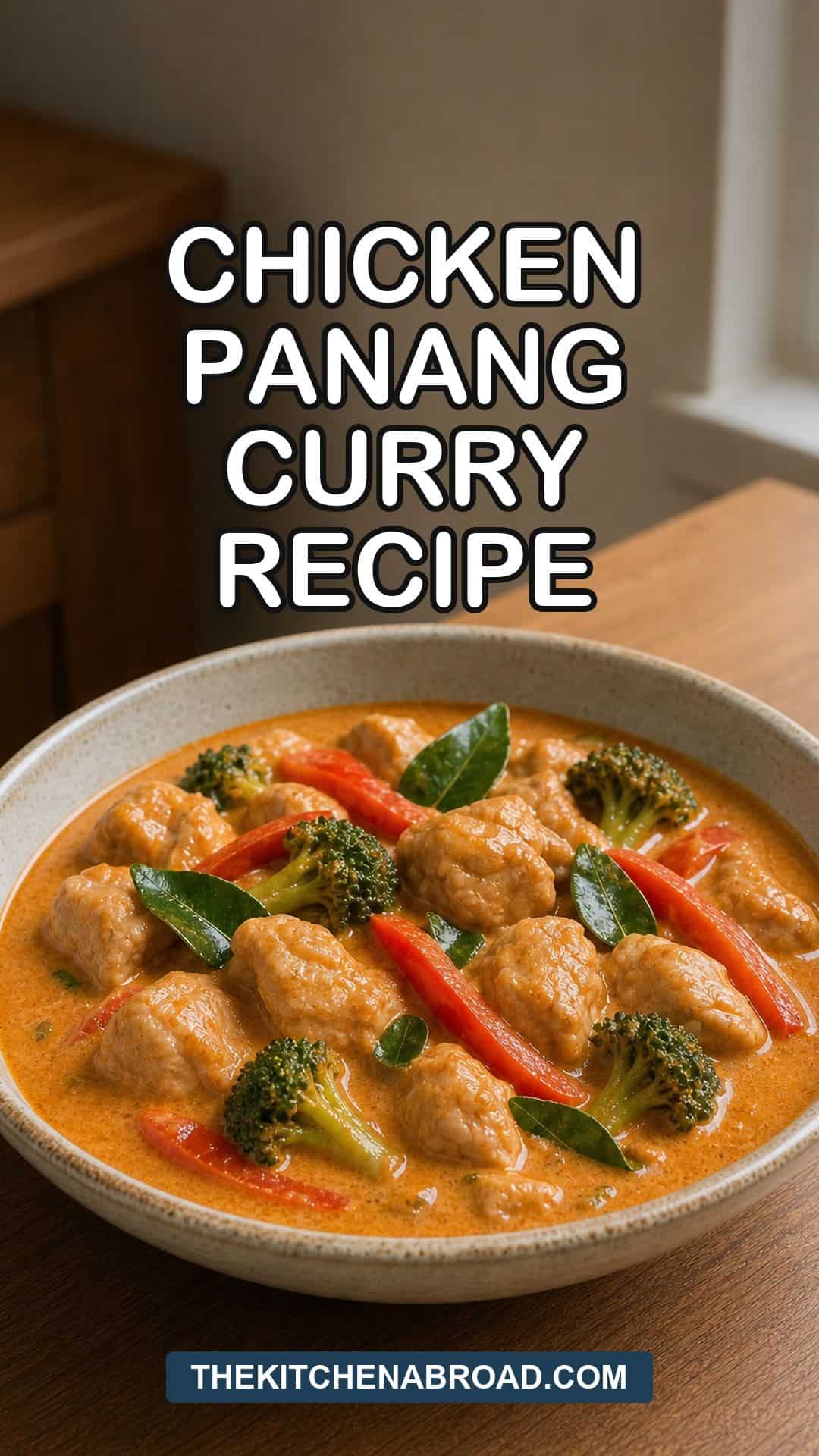
This easy chicken Panang Thai curry is made by sauteing chicken thighs with onion, garlic, and Panang curry paste, then simmering in coconut cream with peanut butter, fish sauce, lime juice, and vegetables until rich and thick. Ready in 30 minutes. The peanut butter is the secret ingredient that makes the sauce unusually creamy. Highly recommended.
This chicken Panang Thai curry recipe is the weeknight curry you will come back to again and again. Panang is milder and creamier than other Thai curries, with a rich coconut base and a deeply savory, slightly sweet character that comes from the curry paste and a spoonful of peanut butter. It takes 30 minutes start to finish and uses ingredients that are easy to keep stocked.
The defining ingredient is Panang curry paste, which you can find in most Asian grocery stores or online. Unlike green or red Thai curry paste, Panang paste is gentler, slightly sweeter, and more aromatic. Paired with coconut cream and peanut butter, it produces a sauce that coats every piece of chicken and soaks beautifully into steamed jasmine rice. Serve alongside my Asian cucumber salad for a fresh contrast.

Cooking more Thai food at home to save on takeout costs?
Homemade Thai curry is a fraction of the cost of delivery. Track your monthly savings with a budget planner. Get it here


Recommended Tools and Ingredients for Panang Curry
Why This Chicken Panang Curry Works
Panang curry gets its name from Penang, a Malaysian island, and has been absorbed into Thai cuisine to become one of its most popular dishes. The curry paste itself contains dried chilies, lemongrass, galangal, shallots, garlic, and kaffir lime zest, which gives it a more complex fragrance than standard red curry paste. The addition of roasted peanuts in some commercial pastes is what gives Panang its slightly nutty undertone.
The peanut butter in this recipe amplifies that nuttiness and also acts as a natural thickener. It dissolves into the coconut cream and creates a sauce with body and richness that you can’t quite achieve with coconut cream alone. Two tablespoons is the starting point; add more if you want a more peanut-forward result. Natural peanut butter (just peanuts and salt) works better here than sweetened versions.
Boneless chicken thighs are the ideal cut for curry because the fat content keeps them moist through the simmering process. Chicken breast works but can become dry if overcooked. If you prefer a leaner option, use breast but reduce the simmer time slightly and don’t let the sauce boil aggressively. For a plant-based version, firm tofu works surprisingly well and picks up the sauce flavors quickly.
Fish sauce is one of those ingredients that transforms the dish in ways that are hard to describe. It adds a fermented depth and umami that salt alone can’t replicate. If you’re new to Thai cooking, it smells strong from the bottle but mellows completely when cooked into the sauce. Try my Asian pork belly marinade for another recipe that uses these layered Asian sauce techniques.
Tips and Variations
Adjust heat with curry paste amount. Two tablespoons produces a mild, family-friendly curry. Three tablespoons gives noticeable heat. If your paste is very spicy, start with one tablespoon and taste before adding more.
Use coconut cream, not light coconut milk. The fat in full-fat coconut cream is what gives the sauce its rich, coating consistency. Light coconut milk produces a thin sauce. If using coconut milk, don’t shake the can before opening and spoon off the thick cream from the top for frying the paste.
Bloom the curry paste in fat first. Frying the curry paste in the rendered coconut fat or a little oil for one minute before adding liquids releases the fat-soluble aromatic compounds in the spices. This step makes a significant difference to the depth of flavor in the finished dish.
Thicken if needed. If your sauce is too thin, simmer uncovered for 5 more minutes. Alternatively, mix 2 tbsp cornstarch with 3 tbsp cold water and stir into the simmering sauce. It thickens within 2 minutes without affecting flavor.
Serve with the right accompaniments. Steamed jasmine rice is the classic pairing. The rice absorbs the curry sauce and rounds out the meal. For a lower-carb option, cauliflower rice works well. Thai cucumber relish (quick-pickled cucumber slices in rice vinegar and sugar) makes an excellent fresh side that balances the richness of the curry without requiring much effort to prepare.
Add vegetables strategically. Hard vegetables like carrots and broccoli stems should go in early. Softer ones like bell pepper, zucchini, and leafy greens can go in for the last 2-3 minutes. Overcooked vegetables turn mushy and lose their color and texture in a curry. If using frozen vegetables, add them directly from frozen and add 2-3 minutes to the simmer time.
Recipe: Easy Chicken Panang Thai Curry
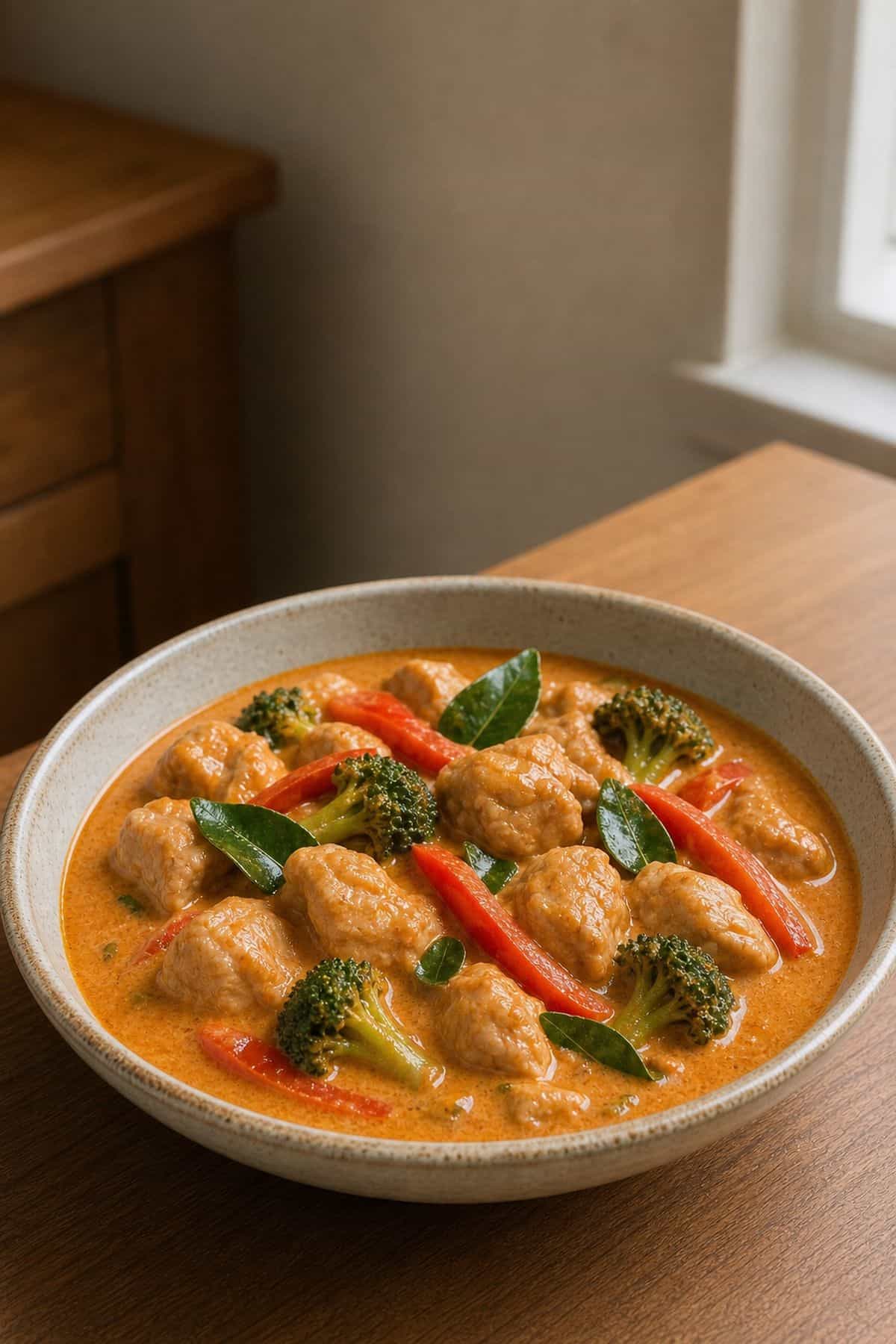
Prep Time: 10 minutes | Cook Time: 20 minutes | Servings: 3-4
Ingredients
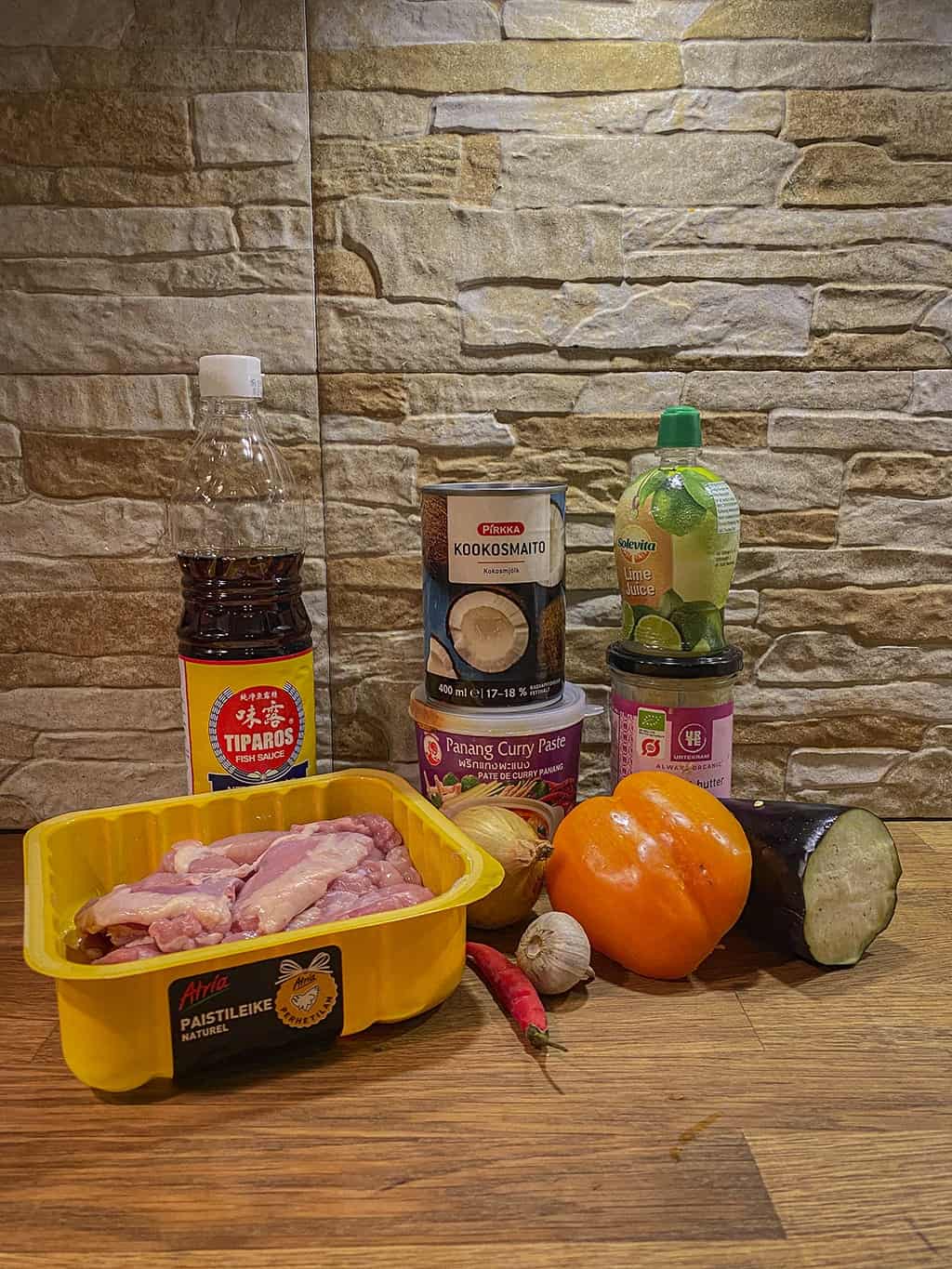
- 500g boneless chicken thighs, cut into bite-size pieces
- 1 medium onion, diced
- 4 cloves garlic, minced
- 2-3 tbsp Panang curry paste
- 1 can (400ml) full-fat coconut cream
- 1 bell pepper, sliced
- 1 cup broccoli florets
- 2 tbsp natural peanut butter
- 1 tbsp fish sauce (or soy sauce for vegetarian)
- 1 tsp sugar
- Juice of 1 lime
- Kaffir lime leaves, to garnish (optional)
- 1 tbsp neutral oil (for frying)
Instructions

- Heat oil in a wok or large pan over medium-high heat. Sauté onion for 2 minutes until softened.
- Add garlic and Panang curry paste. Stir-fry for 1 minute until fragrant and the paste darkens slightly.
- Add chicken pieces and cook for 3-4 minutes, stirring, until no longer pink on the outside.
- Pour in coconut cream and stir to combine. Add peanut butter and stir until it dissolves into the sauce.
- Add bell pepper and broccoli. Simmer over medium heat for 7-8 minutes until vegetables are just tender and chicken is cooked through.
- Season with fish sauce, sugar, and lime juice. Taste and adjust, adding more fish sauce for salt, more lime for acidity, or more curry paste for heat.
- Garnish with kaffir lime leaves if using. Serve with steamed jasmine rice.
Notes
Panang curry paste brands vary in heat and flavor intensity. Maesri is a reliable, widely available brand. Mae Ploy is richer and spicier. Taste after adding two tablespoons and adjust before adding more. The curry keeps well in the fridge for up to 3 days and actually improves as the flavors meld overnight. Reheat gently over low heat with a splash of water or coconut milk to loosen the sauce.
Tracking how much you save cooking at home vs ordering takeout?
This curry costs a fraction of delivery prices. Use a savings tracker to see it add up. Get it here
Frequently Asked Questions
What is Panang curry?
Panang curry is a Thai curry with roots in Penang, Malaysia. It is milder, creamier, and sweeter than red or green Thai curry, with a thicker sauce and prominent kaffir lime leaf flavoring. It typically contains coconut cream, curry paste, and often peanuts.
What is the difference between Panang and red Thai curry?
Panang is milder and thicker than red curry, with a sweeter, more peanutty character. Red curry is more broth-like and spicier. Panang curry paste typically contains additional ingredients like dried peanuts and is less spicy than standard red curry paste.
Can I make Panang curry without fish sauce?
Yes. Soy sauce is a straightforward substitute that keeps the dish savory and suitable for vegetarians. Use the same quantity as a starting point and taste as you add it. Tamari works well for a gluten-free version.
Can I use chicken breast instead of thighs?
Yes, but reduce the cooking time slightly. Chicken breast cooks faster and can become dry if simmered too long. Add it after the sauce is ready, simmer just until cooked through (about 5-6 minutes), and serve promptly.
How spicy is Panang curry?
Panang is one of the milder Thai curries. Two tablespoons of paste in this recipe produces a gentle warmth that most people find very approachable. Reduce to one tablespoon for children or those who prefer no heat at all.
Key Takeaways
- Panang is milder, creamier, and sweeter than red or green Thai curry
- Peanut butter is the secret ingredient for richness and body
- Fry the curry paste in fat for 1 minute before adding liquid
- Use full-fat coconut cream, not light coconut milk
- Tastes better the next day; make ahead for an easy weeknight dinner
Wrapping Up
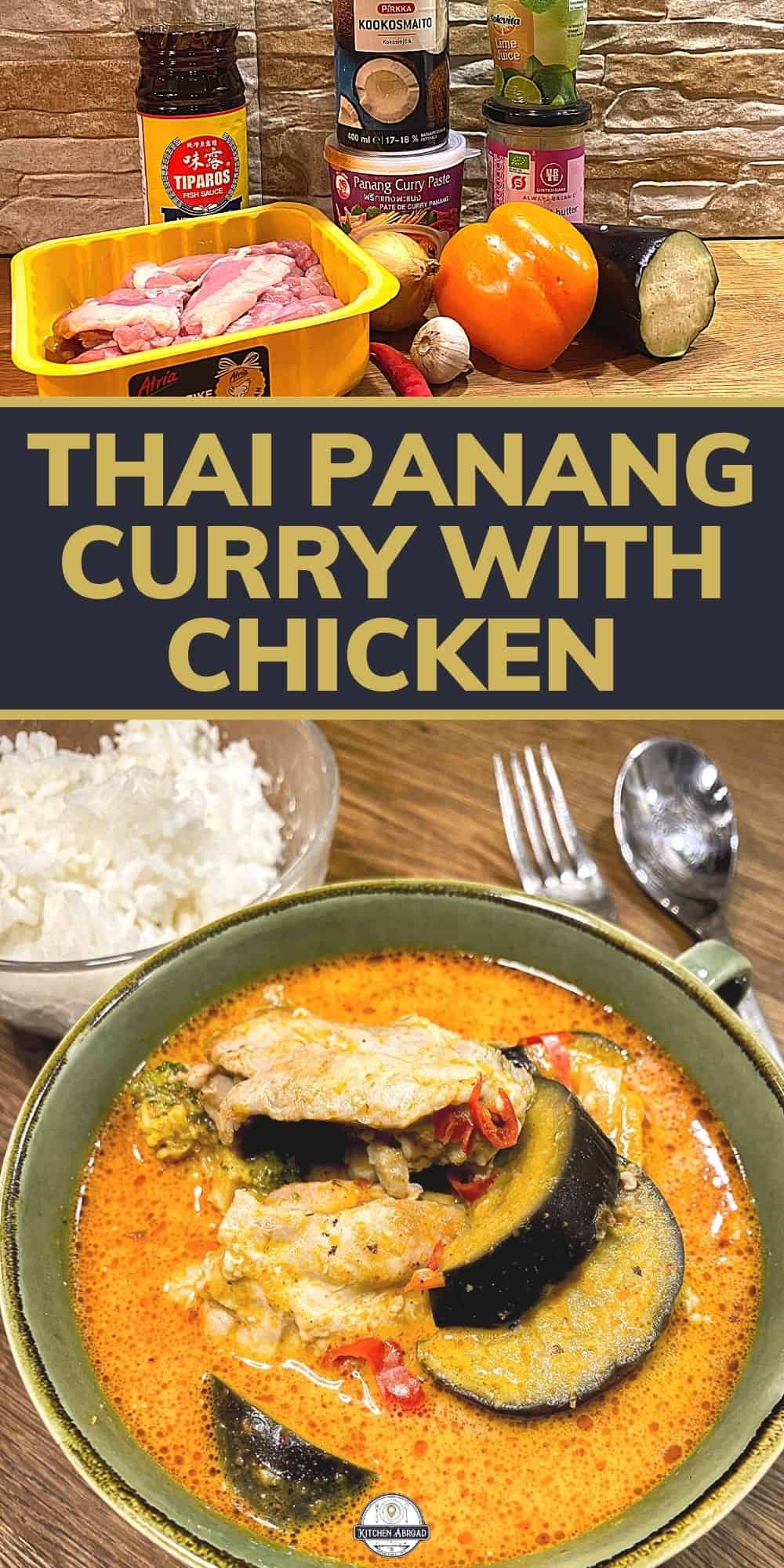
This easy chicken Panang Thai curry recipe is exactly what weeknight cooking should be: fast, packed with flavor, and satisfying enough that you’ll make it on repeat. The peanut butter and coconut cream combination produces a sauce that feels far more complex than 30 minutes of effort warrants. It reheats perfectly and tastes even better the next day.
For more Asian-inspired recipes worth adding to your weeknight rotation, try my Asian pan fried pork belly or the Asian pork belly marinade that works with any cut.
Easy Chicken Panang Thai Curry
This easy chicken Panang Thai curry is made by sauteing chicken thighs with onion, garlic, and Panang curry paste, then simmering in coconut cream with peanut butter, fish sauce, lime juice, and vegetables until rich and thick. Ready in 30 minutes.
Ingredients
- 500g boneless chicken thighs, cut into bite-size pieces
- 1 medium onion, diced
- 4 cloves garlic, minced
- 2-3 tbsp Panang curry paste
- 1 can (400ml) full-fat coconut cream
- 1 bell pepper, sliced
- 1 cup broccoli florets
- 2 tbsp natural peanut butter
- 1 tbsp fish sauce (or soy sauce for vegetarian)
- 1 tsp sugar
- Juice of 1 lime
- Kaffir lime leaves, to garnish (optional)
- 1 tbsp neutral oil (for frying)
Instructions
- Heat oil in a wok or large pan over medium-high heat. Sauté onion for 2 minutes until softened.
- Add garlic and Panang curry paste. Stir-fry for 1 minute until fragrant and the paste darkens slightly.
- Add chicken pieces and cook for 3-4 minutes, stirring, until no longer pink on the outside.
- Pour in coconut cream and stir to combine. Add peanut butter and stir until it dissolves into the sauce.
- Add bell pepper and broccoli. Simmer over medium heat for 7-8 minutes until vegetables are just tender and chicken is cooked through.
- Season with fish sauce, sugar, and lime juice. Taste and adjust, adding more fish sauce for salt, more lime for acidity, or more curry paste for heat.
- Garnish with kaffir lime leaves if using. Serve with steamed jasmine rice.
Notes
Panang curry paste brands vary in heat and flavor intensity. Maesri is a reliable, widely available brand. Mae Ploy is richer and spicier. Taste after adding two tablespoons and adjust before adding more. The curry keeps well in the fridge for up to 3 days and actually improves as the flavors meld overnight. Reheat gently over low heat with a splash of water or coconut milk to loosen the sauce.
Tracking how much you save cooking at home vs ordering takeout?
Last update on 2026-08-08 / Affiliate links / Images from Amazon Product Advertising API