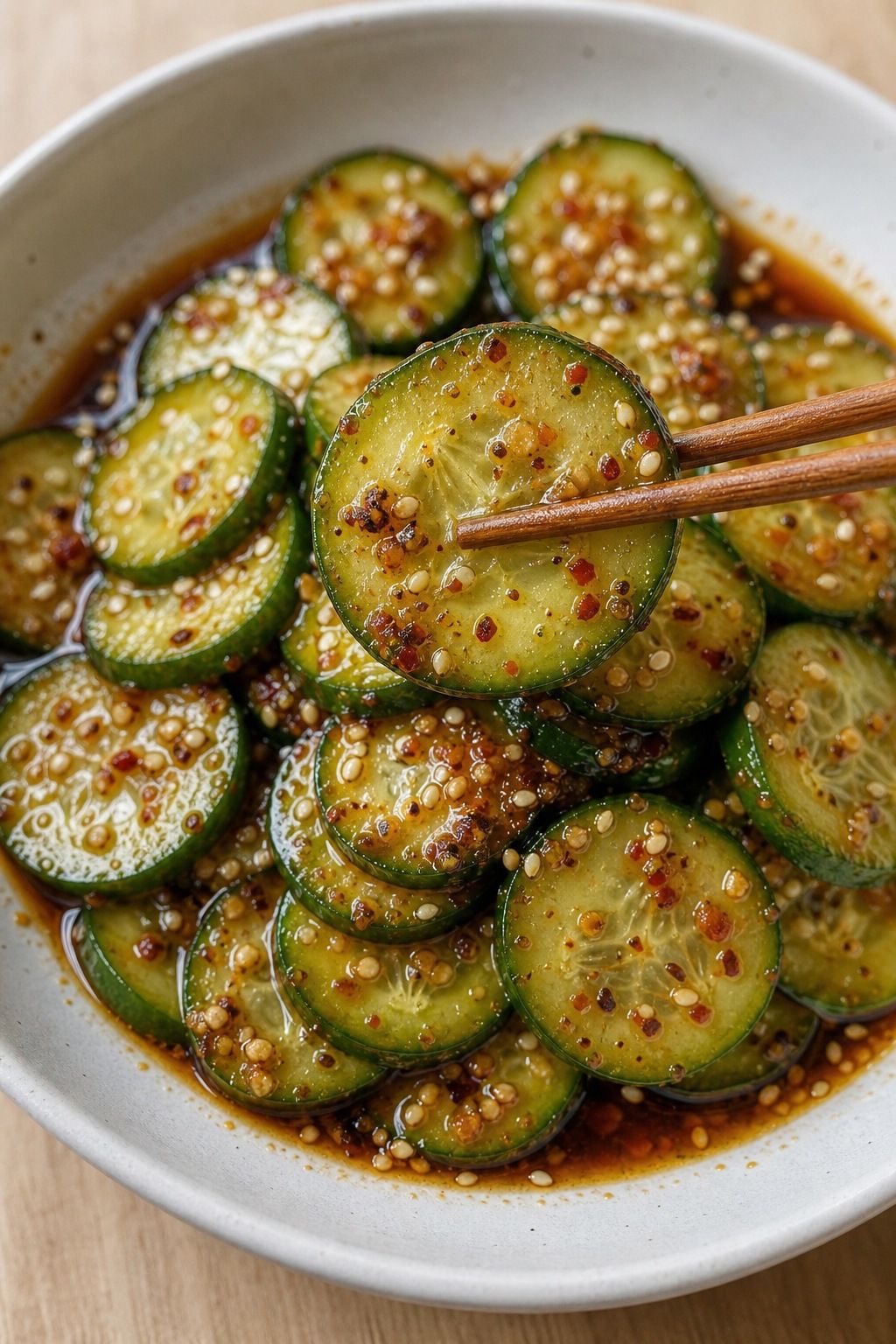
Slice one large cucumber thin, then toss it with 2 minced garlic cloves, 1 tablespoon each of soy sauce and Chinese black vinegar, 1 teaspoon of sesame oil and 1 teaspoon of gochugaru. Finish with toasted sesame seeds. It takes about 10 minutes, serves two as a side, and salting the slices first keeps the bowl from going watery.
Most cucumber salads die in the bowl. You dress them, you set the table, and by the time anyone sits down there is a puddle of thin, salty water at the bottom and the slices have gone limp. This Asian cucumber salad recipe fixes that with one small step borrowed from Korean side dishes, and then piles on garlic, sesame and gochugaru so the cucumber actually tastes of something.
It is Korean in spirit with one Chinese ingredient doing the heavy lifting: black vinegar. Ten minutes, no stove, two servings. I make it as a side for anything fatty or fried, because a cold, sharp bite of cucumber resets your mouth better than any sauce.
A mandoline is the one tool that changes the result here, since even slices dress evenly. The rest makes prep tidier.



Is this the same as Korean oi muchim?
Close cousin, not a twin. Oi muchim is the seasoned cucumber banchan you’ll find on Korean tables, usually dressed with gochugaru, garlic, sesame, a little sugar and rice or apple vinegar. Banchan are the small sides that come with a Korean meal, and their job is contrast: something crunchy and sour next to rice and grilled meat.
This version keeps the gochugaru, garlic and sesame, then swaps the vinegar for Chinese black vinegar. Black vinegar is less sharp than rice vinegar but darker and rounder, with a malty, almost smoky depth. Paired with soy sauce it makes a dressing that tastes like it took more than four spoonfuls.
So call it Korean-style. If you want to go fully traditional, use rice vinegar and add a pinch of sugar. Our explainer on what rice vinegar is and how it differs from other vinegars helps you pick a bottle.
How do you keep cucumber salad from getting watery?
Salt first, dress second. Cucumbers are mostly water, and salt pulls it out of the cells. If that happens in the dressing bowl, the water dilutes everything. If it happens on the cutting board, you get to pour it away.
Toss the slices with a pinch of salt and leave them 10 minutes. Then squeeze them gently in your hands, or press them in a clean towel, and pat dry. They’ll bend instead of snap, and that is fine. They now soak up dressing like a sponge and stay crunchy for days.
In restaurant kitchens we did this with every cucumber garnish for a reason. Skip it when you’re serving immediately; do it whenever the salad will wait.
Storage before you cut matters too. Whole cucumbers are chill-sensitive, and the UC Davis postharvest fact sheet on cucumbers puts their ideal storage at 10 to 12.5°C, with damage starting after a few days below 10°C. Buy them close to when you’ll use them, or keep them in the warmest part of the fridge.
Which cucumbers should you use?
English, Persian and Japanese cucumbers all work, and all three have thin skins you can leave on. The skin adds color and a little bitterness that the dressing likes.
Thick-skinned garden cucumbers are different. Peel them, and if the seeds are large and wet, halve the cucumber lengthwise and scrape them out with a teaspoon before slicing.
Aim for slices about 3 mm thick. Thinner and they collapse; thicker and the dressing only coats the outside. On a mandoline, 2 to 3 mm is the sweet spot. Halve big cucumbers lengthwise first so you get half-moons that sit flat in the bowl.
Swapping the vinegar and turning the heat up or down
No black vinegar? Use rice vinegar. It’s sharper and thinner in flavor, so use slightly less, or add a small pinch of sugar to round it.
Gochugaru brings a mild, slightly sweet heat that builds slowly. For more fire, add a drizzle of homemade chili oil to the dressing. For less, use a pinch of gochugaru, or swap in mild paprika for the red color with almost no heat. Plain red pepper flakes also work, though they taste hotter and less fruity.
Soy sauce brings the salt and the savory backbone, and tamari makes the whole thing gluten-free.
Turning a side dish into lunch
Pile it on cold noodles. Spoon it over a rice bowl. Toss it with shredded rotisserie chicken and you have lunch in the time it takes to boil the kettle.
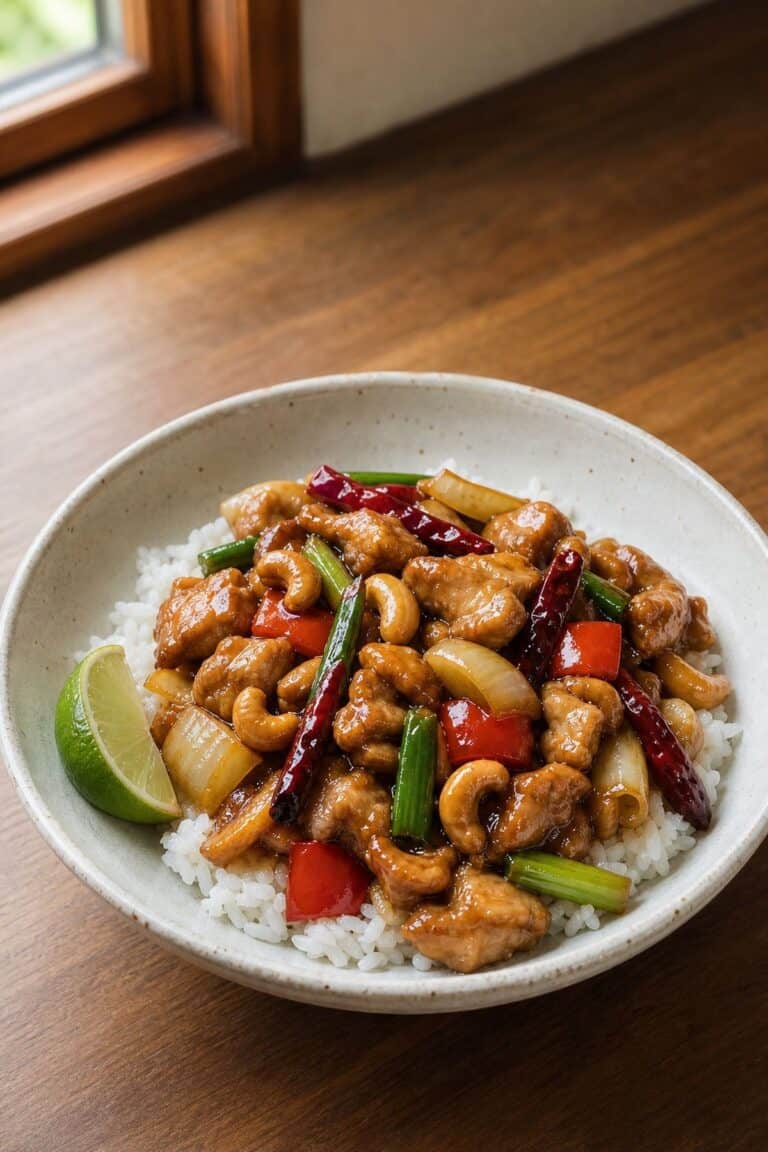
As a side, it belongs next to rich, salty or fried food. I make it while a pad kra pao chicken stir fry finishes in the wok, and it works with grilled meat, fried rice or anything off a Korean barbecue table.
Recipe: Asian cucumber salad with Korean flavors
Prep time: 10 minutes. Cook time: 0 minutes. Total time: 10 minutes. Servings: 2.
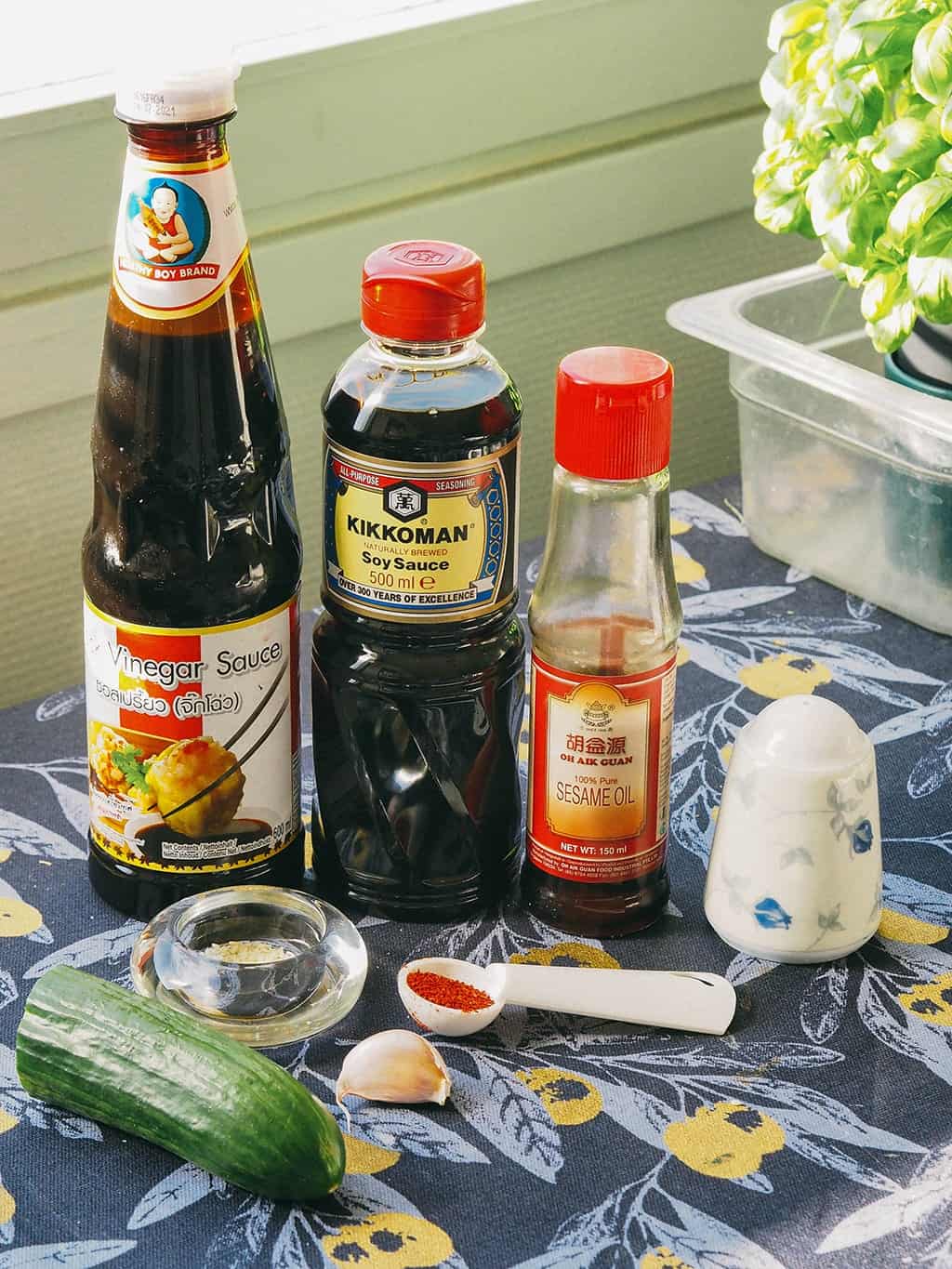
Ingredients
- 1 large cucumber or 2 Persian cucumbers, thinly sliced
- 2 cloves garlic, minced
- 1 tablespoon soy sauce (or tamari for gluten-free)
- 1 tablespoon Chinese black vinegar
- 1 teaspoon sesame oil
- 1 teaspoon gochugaru (Korean chili flakes)
- 1 tablespoon roasted sesame seeds
- Salt and black pepper to taste
Instructions
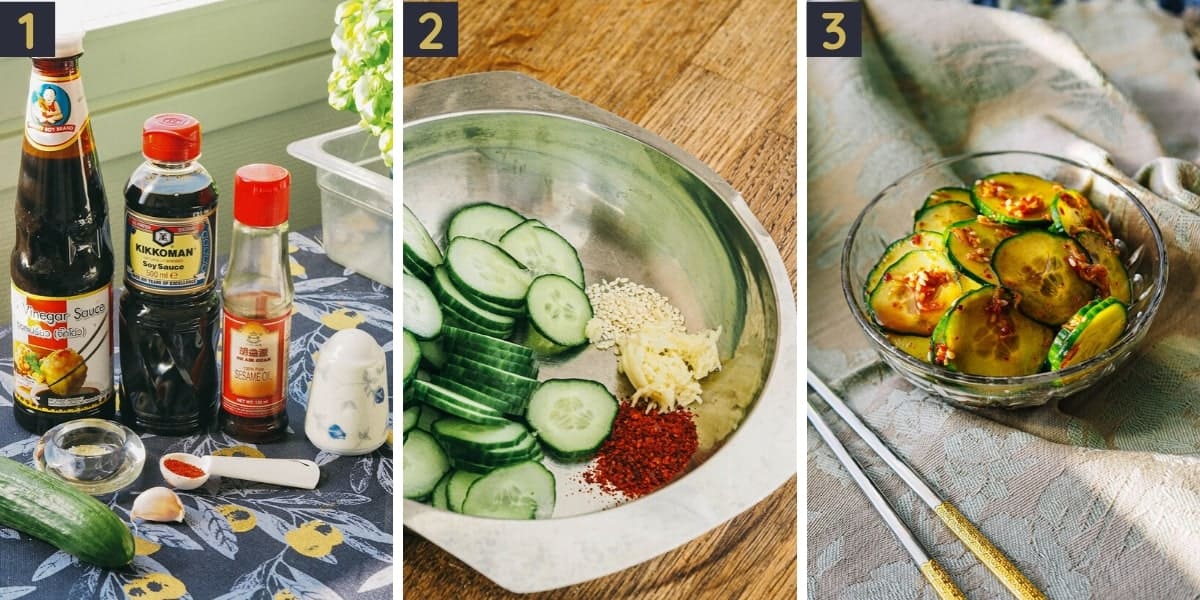
- Slice the cucumber into thin rounds, about 3 mm thick. For large cucumbers, halve lengthwise first, then slice.
- Optional: toss the slices with a pinch of salt and leave for 10 minutes. Squeeze gently and pat dry.
- In a mixing bowl, stir together the garlic, soy sauce, black vinegar, sesame oil and gochugaru until the chili flakes are evenly red through the dressing.
- Add the cucumber and toss until every slice is coated and glossy.
- Top with the sesame seeds and a grind of black pepper. Taste a slice and adjust the salt or heat.
- Serve right away, or refrigerate. The flavor deepens after a few hours.
Notes
Keeps in an airtight container in the fridge for up to 3 days. Fully submerged in dressing, it lasts up to a week and turns pickle-like. Add fresh sesame seeds before serving to bring back the crunch. It does not freeze. For the crispest result, slice the day you serve and keep the dressing separate until just before eating. A bigger batch of dressing keeps in a jar in the fridge for up to two weeks and works on shredded cabbage or snap peas too.
For a warm Korean dish to serve with it, try kimchi jjigae with chicken.
Cucumber salad FAQ
How long does Asian cucumber salad last in the fridge?
It lasts about 3 days in a sealed container. If the slices sit fully under the dressing they keep up to a week, softening into something closer to a quick pickle. Many people like it best on day two.
Do you need to peel the cucumber?
No, not for English, Persian or Japanese cucumbers, whose skin is thin and tender. Peel thick-skinned garden cucumbers for a smoother bite.
What can I use instead of gochugaru?
Red pepper flakes are the closest swap, with more sharp heat and less sweetness. Mild paprika gives the color without much burn. Gochugaru is still the best choice for its fruity, earthy warmth.
Is this cucumber salad spicy?
It has gentle warmth from 1 teaspoon of gochugaru, mild enough for most tables. Start there and add more to taste, or add chili oil if you want it properly hot.
Can I make it ahead of time?
Yes. Salt and dry the cucumber first, then dress it up to 24 hours ahead. Scatter the sesame seeds on just before serving so they stay crunchy.
Key takeaways
- Salt the sliced cucumber for 10 minutes and squeeze it dry to stop a watery bowl.
- Chinese black vinegar gives depth; rice vinegar with a pinch of sugar is the traditional swap.
- Slice about 3 mm thick so the dressing clings without the slices collapsing.
- Keeps 3 days in the fridge, up to a week fully submerged in dressing.
- Serve it next to anything rich, fried or grilled.
Pair it with a sticky gochujang main
A cold, sour side needs something hot and sticky across the table. This gochujang beef with a sticky spicy glaze takes 30 minutes, and the cucumber salad is ready long before the beef is.
If you find yourself making the dressing every week, these everyday uses of soy sauce will give the bottle more jobs.
Last update on 2026-10-15 / Affiliate links / Images from Amazon Product Advertising API