
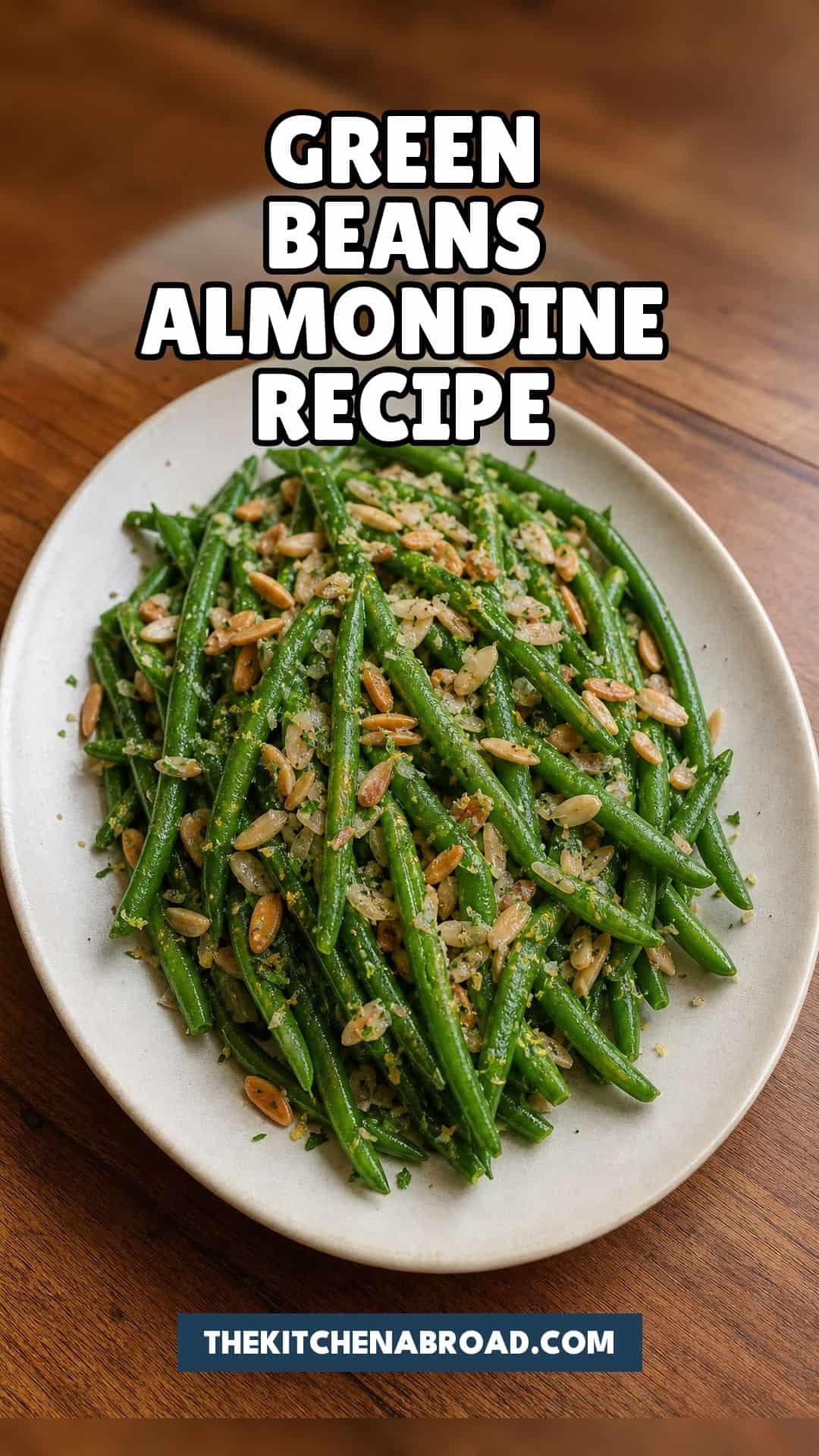
Quick answer: A proper green beans almondine is two techniques wearing a coat of butter. Blanch the beans 90 seconds in heavily salted water and shock them in ice, then brown the butter past foaming until the milk solids smell like hazelnuts. Toast the almonds in a separate dry pan so they stay golden, not scorched. Finish off heat with shallot, lemon zest, and a squeeze of juice. Twenty minutes, one platter, the elegant cousin to green bean casserole.
The platter goes down at the center of the table and the room slows. Brown butter and lemon zest reach the seated guests before the beans do, which is exactly what this dish has been doing since Julia Child put it on the American Thanksgiving table in the early 1960s. The reason it has lasted is that every component is doing real work: the blanch-and-shock locks the chlorophyll so the beans stay bright green and snappy, the brown butter adds the nutty depth that separates a French side from a school-cafeteria one, and the lemon zest off heat lifts the whole plate so it does not read as heavy. None of it is hard. It is just specific.
Recommended Products
A 12-inch carbon steel or stainless skillet for the brown butter (you need to see the color), a fine-mesh strainer for the shock, a sharp 8-inch chef’s knife for the bean tops, a microplane for the lemon zest, and an oval platter for the table.


Recommended Reads
- Roasted Spring Vegetables with Lemon-Herb Drizzle
- Honey and Balsamic Roasted Beets
- Sauteed Garlic Mushrooms
- Best Thanksgiving Side Dishes
- Best Easter Dinner Ideas
Where Green Beans Almondine Came From
The dish is French, and its original name is haricots verts amandine: thin green beans tossed in butter with toasted almonds, Provencal in spirit and classical in execution. The base recipe is haricots verts a la maitre d’hotel, beans finished in seasoned butter with parsley and a squeeze of lemon. Sometime in 1930s Paris, almonds got added to the bowl and the dish became ultra-chic shorthand for a kitchen that knew what it was doing. The technique was simple. The plating read as restaurant.
Julia Child carried the recipe across the Atlantic with the 1961 publication of Mastering the Art of French Cooking, and by the mid-1960s American suburb dinner-party circuit, almondine had become the elegant alternative to the canned-cream-of-mushroom-soup green bean casserole that had taken over the holiday table. The Americanized spelling (almondine, not amandine) stuck because cookbook editors thought it would read more clearly to home cooks, and that is the spelling that lives on Thanksgiving menus today. The dish itself never changed. Butter, beans, almonds, lemon. Same as Paris in 1935.
A Few Notes on the Ingredients
- Haricots verts: The thin French green beans, about the diameter of a pencil lead, that blanch in 90 seconds. They stay snappier in the pan, look elegant on a platter, and are what the dish was originally written for.
- Standard American green beans: Thicker, take about 3 minutes in the blanch, and produce a slightly more rustic plate. Whichever you use, the bean has to come out of the blanch bright green and just snappy, never limp.
- Heavily salted blanch water: Two tablespoons of kosher salt per 4 quarts, tasting like the sea. Straight into an ice bath afterward, then drain hard and pat dry on towels. Wet beans steam in the pan instead of sauteeing.
- Unsalted butter: Four tablespoons, browned in stainless or carbon steel, never non-stick. You need to see the color shift from pale yellow to amber, and a dark non-stick surface hides that cue completely.
- Beurre noisette technique: The butter foams, the foam subsides, the milk solids turn from white to tan to golden, and the smell turns from dairy to toasted hazelnut. Three to four minutes over medium heat. This is the move that separates the dish from melted-butter-and-beans.
- Slivered almonds in a separate pan: Toasted dry for 2 to 3 minutes over medium-low, shaken constantly. Pull at pale gold; they keep cooking off heat. Toasting alongside the brown butter risks scorching one or the other.
- Shallot and garlic: One minced shallot and two minced garlic cloves go into the brown butter for about 30 seconds, just until fragrant and softened. Do not let them brown or they turn bitter.
- Lemon zest and juice off heat: Zest of one lemon and a tablespoon of juice added after the pan comes off the burner. The zest is the make-or-break detail. It is what tells the seated guests the dish is finished.
Recipe: Green Beans Almondine
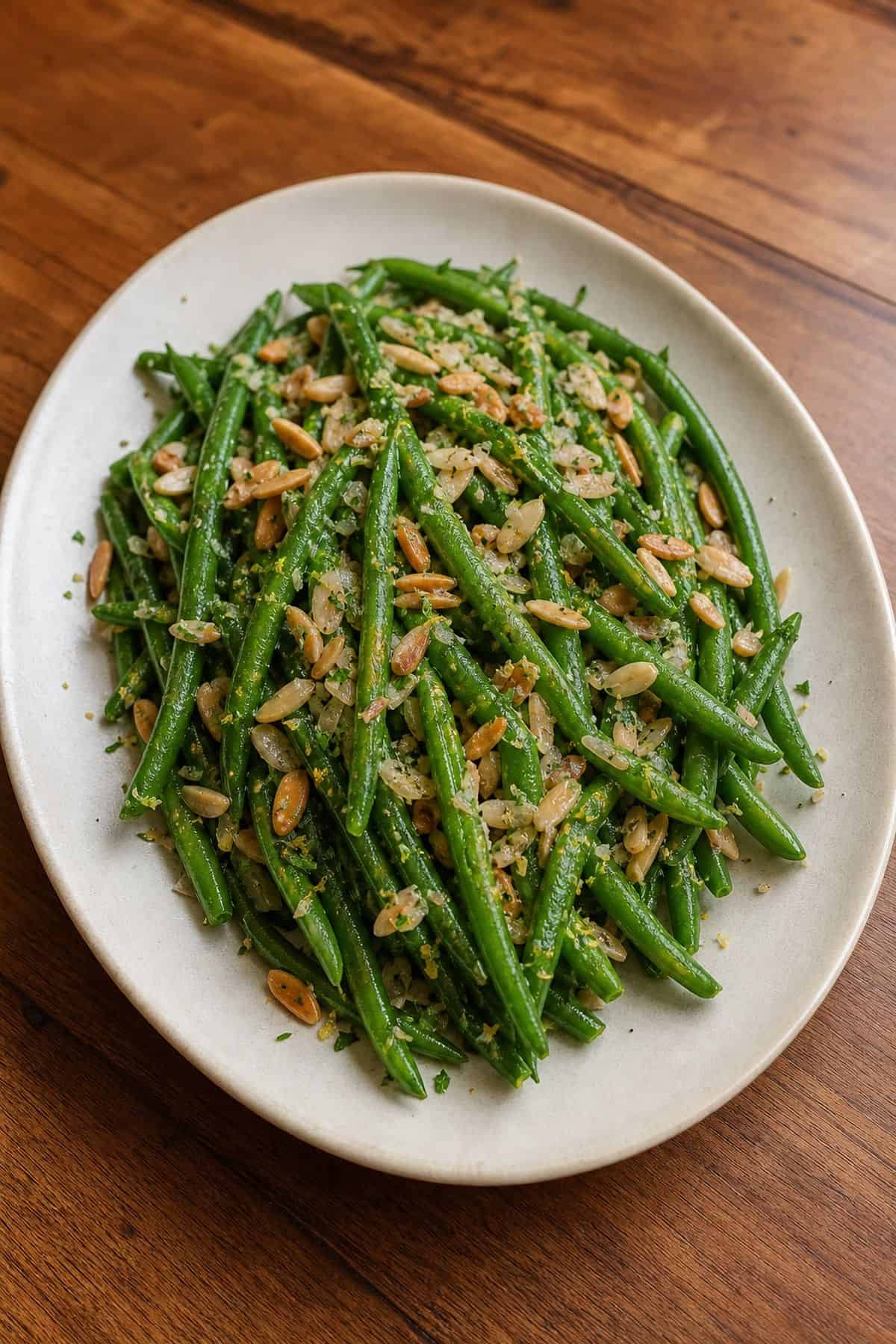
Prep time: 10 minutes | Cook time: 10 minutes | Total time: 20 minutes | Serves: 6
Ingredients
- 1.5 lb (680 g) haricots verts (or thin green beans), trimmed
- 4 tbsp (56 g) unsalted butter
- 1/2 cup (60 g) slivered almonds
- 2 cloves garlic, minced
- 1 small shallot, minced
- Zest of 1 lemon
- 1 tbsp (15 ml) fresh lemon juice
- Kosher salt and freshly ground black pepper, to taste
- 2 tbsp (8 g) fresh parsley, chopped (optional)
Instructions
- Toast the almonds first. In a dry small skillet over medium-low heat, add the slivered almonds and toast for 3 to 4 minutes, shaking the pan constantly. Pull them at pale gold (they keep cooking off heat). Tip into a small bowl and set aside.
- Bring a large pot of water to a rolling boil and salt it heavily, about 2 tablespoons kosher salt per 4 quarts. It should taste like the sea. Set a large bowl of ice water next to the stove.
- Blanch the haricots verts for 90 seconds (or 3 minutes for thicker standard green beans), until bright green and just snappy. Lift them out with a spider or strainer and plunge them into the ice water for 1 minute to stop the cooking and lock in the color.
- Drain the beans hard, then spread them on a clean kitchen towel and pat dry. Dry beans are non-negotiable. Wet beans will steam in the pan and refuse to brown.
- Heat a 12-inch carbon steel or stainless skillet over medium heat. Add the butter. It will melt, foam, and quiet down. Keep cooking, swirling the pan occasionally, for 3 to 4 minutes until the milk solids on the bottom of the pan turn amber and the butter smells nutty. This is the brown butter. Do not walk away in the last minute.
- Add the minced shallot and garlic and stir for about 30 seconds, just until fragrant and softened. Do not let them brown.
- Add the dried beans to the skillet and toss in the brown butter for 1 to 2 minutes, just to warm them through and coat. They should glaze, not steam.
- Pull the pan off the heat. Add the lemon zest, lemon juice, toasted almonds, and parsley if using. Toss to combine. Season to taste with salt and freshly ground black pepper.
- Tip onto a warm serving platter and bring to the table immediately.
Notes
The brown-butter color cue is everything in this recipe. The window between “cleanly nutty amber” and “burnt black” is about 45 seconds, so stay at the stove for the last minute. If the milk solids look like dark chocolate, the butter is gone and you need to start over. Aim for the color of light caramel and the smell of toasted hazelnut.
Make-ahead window: blanched and shocked beans hold beautifully in the fridge for up to 1 day (some sources say 3, but 1 keeps the snap honest). Dry them hard, store in a zip-top bag with a paper towel inside to absorb stray moisture, and finish in the brown butter 5 minutes before serving. This is the move that makes the dish work for Thanksgiving.
To scale for 12, double everything but cook the beans in two batches in the skillet. One pound of beans in a 12-inch pan glazes; three pounds steams. The brown butter and almonds can be made at full volume; just add half the beans, toss, plate, then repeat.
Tips and Variations
The Brown-Butter Color Cue That Makes This Work
Brown butter is the difference between a French side and a flat one, and the only way to nail it is to watch the milk solids. They sit on the bottom of the pan and cycle through white, pale tan, golden, amber, then dark brown in under five minutes. You want amber. The smell shifts at the same time, from dairy to popcorn to toasted hazelnut. Once the smell hits hazelnut, pull the pan off the heat for a second to assess; the residual heat keeps cooking the solids. If you cannot see the bottom of the pan because of foam, swirl gently and the foam parts. A light-colored pan (stainless, carbon steel after seasoning, light enamel) makes this easier than a dark non-stick where the solids blend in.
How to Blanch Beans Without a Big Pot
If you do not own a large stockpot, use a wide saute pan filled three-quarters with water. Bring to a rolling boil, salt it like the sea, and blanch the beans in two batches of about three-quarters of a pound each. The water needs to stay at a boil when the beans go in, which is why batching matters; dropping too many cold beans into a small pot kills the boil and turns the blanch into a slow simmer. Same ice bath, same dry-hard step at the end.
Make-Ahead Blanching for Holiday Service
For Thanksgiving or any plated holiday meal where the kitchen is full of competing burners, blanch and shock the beans the day before. Dry them as thoroughly as you would for the final pan, then store in a zip-top bag with a paper towel inside to wick stray moisture. The towel matters; condensation in a sealed bag rehydrates the beans and brings the soggy problem back. The next day, the brown butter and final toss take 5 minutes from cold beans to the platter, which means you can pull the dish together while the turkey rests.
Swapping Slivered Almonds for Hazelnuts
Hazelnuts are a natural swap because the brown butter is already pulling in that direction; the two ingredients echo each other. Use 1/2 cup of skinned hazelnuts, toasted in a dry pan for 4 to 5 minutes until the skins blister, then rubbed in a towel to remove the loose skins and roughly chopped. The result reads slightly richer and more wintery than the almond version. Pistachios also work and skew Mediterranean; toast them lightly so they keep their green.
The Brown-Butter-and-Bacon Variation
For a heartier holiday plate, render 4 ounces of diced thick-cut bacon in the skillet first over medium heat until crisp, then lift the bacon out with a slotted spoon and set aside. Pour off all but 1 tablespoon of the bacon fat, add the butter, and brown it as written. Finish the dish per the recipe and scatter the bacon over the top with the almonds at the end. The bacon-fat brown butter is heavier and reads as Southern Thanksgiving rather than French dinner party. Both are correct.
What to Serve It With
Green beans almondine is the elegant alternative to green bean casserole on the Thanksgiving table, the side that goes next to roast turkey when the rest of the spread is rich. Easter ham and leg of lamb both want this dish because the lemon zest cuts through the fat. Christmas roast beef or prime rib pairs the brown butter against the meat’s drippings without competing. For a smaller dinner party, plate it next to seared salmon, halibut, or duck breast and the whole table reads restaurant. On a buffet, the dish holds at room temperature for 20 minutes without sulking, which makes it one of the more forgiving holiday sides.
FAQ
What’s the difference between almondine and amandine?
Same dish, different spelling. Amandine is the original French (from amande, almond), and it appears on French menus and in classic French cookbooks. Almondine is the Americanized spelling that took hold when 1960s American cookbook editors decided it would read more clearly to home cooks. By volume, “green beans almondine” now outranks “haricots verts amandine” in U.S. searches by roughly 10 to 1.
Should you blanch green beans before sauteeing?
For this dish, yes. Blanching locks the chlorophyll so the beans stay bright green, par-cooks them so the saute pan only has to warm them through, and gives you a make-ahead window. Skipping the blanch and going straight into the pan produces beans that are either undercooked and squeaky or overcooked and dull-green. Ninety seconds in heavily salted boiling water plus a shock in ice water is non-negotiable.
Why are my green beans almondine soggy?
Two culprits. Either the blanch water was under-salted (no seasoning, no structure, beans go limp), or the beans went into the brown butter still wet. Wet beans steam instead of glaze, and the water dilutes the brown butter into a thin slick. Dry the beans hard on a kitchen towel before they hit the pan; if you have to wait 10 minutes, that is fine. Dry beans, glazing pan, problem solved.
Can I make green beans almondine ahead of time?
Yes. Blanch and shock the beans up to 1 day ahead, dry them thoroughly, and store in a zip-top bag with a paper towel inside to absorb stray moisture. The next day, brown the butter, toast the almonds, and toss it all together. The final pan-finish takes 5 minutes. Do not assemble the whole dish ahead; the lemon dulls and the almonds soften.
What’s the difference between haricots verts and standard green beans?
Haricots verts are the thin French variety, about pencil-lead diameter, picked young. They blanch in 90 seconds and stay snappier in the pan. Standard American green beans are thicker, take about 3 minutes in the blanch, and produce a slightly more rustic plate. Both work in this recipe; just adjust the blanch time. For a Thanksgiving platter where the visual matters, haricots verts give the more elegant presentation.
Sliced or slivered almonds for almondine?
Both are classical. Sliced almonds give a delicate, lacy coverage that hugs the beans. Slivered almonds give a sturdier crunch and more visible presence on the plate. This recipe calls for slivered because the texture holds up better through the final toss, but sliced is the more traditional French choice. Avoid whole almonds; the chew is too aggressive against the soft beans.
Key Takeaways
- Blanch the beans 90 seconds in heavily salted water (haricots verts) or 3 minutes (standard), then shock in ice water and dry hard. Wet beans steam.
- Brown the butter in stainless or carbon steel, never non-stick. Pull at amber and toasted-hazelnut smell, around 3 to 4 minutes.
- Toast the almonds in a separate dry pan to pale gold so they stay crisp.
- Finish off heat with shallot, lemon zest, and a squeeze of juice. The zest is the make-or-break detail.
- Make-ahead: blanched and shocked beans hold 1 day; final pan-finish takes 5 minutes.
- The elegant alternative to green bean casserole on the Thanksgiving table.
Final Thoughts
Green beans almondine is one of those dishes that looks too simple to bother with until you make it the way it was written. Four ingredients, twenty minutes, and the entire holiday table changes shape because there is finally a side that does not arrive heavy.
The two moves are blanch-and-shock and brown butter. That is the whole pitch. The first move locks the color and the snap; the second move builds the depth that separates this from a casserole. Everything else (the shallot, the garlic, the zest, the parsley) is finish work, and finish work is what tells the table the cook knew what they were doing.
Save this for Thanksgiving, for Easter ham, for the Christmas roast, for the dinner party where you want the plate to read restaurant without spending all afternoon in the kitchen. The dish has been earning its seat at the holiday table since 1961, and the reason is that the technique is honest. Blanch the beans. Brown the butter. Finish with lemon. Bring it out hot.
Green Beans Almondine
Green beans almondine is a French-style side dish made with crisp-tender green beans, toasted almonds, browned butter, lemon, and parsley. Blanch the beans first, toast the almonds gently, then toss everything quickly so the beans stay bright and the butter tastes nutty instead of burnt.
Ingredients
- 1.5 lb (680 g) haricots verts (or thin green beans), trimmed
- 4 tbsp (56 g) unsalted butter
- 1/2 cup (60 g) slivered almonds
- 2 cloves garlic, minced
- 1 small shallot, minced
- Zest of 1 lemon
- 1 tbsp (15 ml) fresh lemon juice
- Kosher salt and freshly ground black pepper, to taste
- 2 tbsp (8 g) fresh parsley, chopped (optional)
Instructions
- Bring a large pot of salted water to a boil. Add the green beans and cook for 3 to 4 minutes, until bright green and crisp-tender.
- Transfer beans to ice water for 2 minutes, then drain and dry well.
- Toast almonds in a dry skillet over medium heat for 2 to 3 minutes, stirring often, until lightly golden. Transfer to a plate.
- Add butter to the skillet. Cook until foaming slows and the butter smells nutty.
- Add shallot and garlic. Cook for 30 to 45 seconds.
- Add the green beans and toss until hot and glossy.
- Add almonds, lemon zest, lemon juice, parsley, salt, and pepper. Toss once more and serve immediately.
Notes
For holiday service, blanch the beans up to 1 day ahead, dry them well, and refrigerate. Finish in the skillet right before serving.
Last update on 2026-08-08 / Affiliate links / Images from Amazon Product Advertising API