
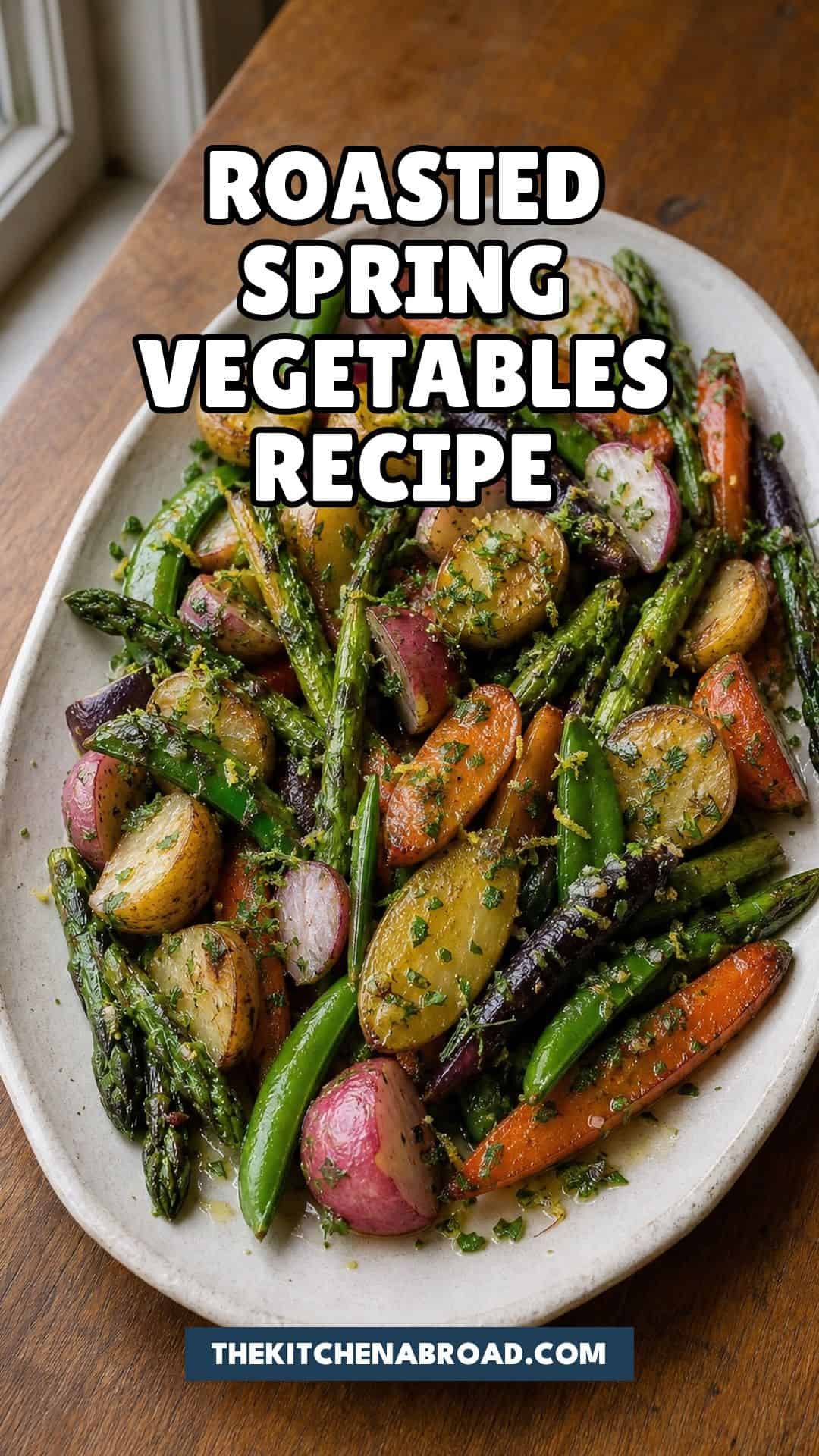
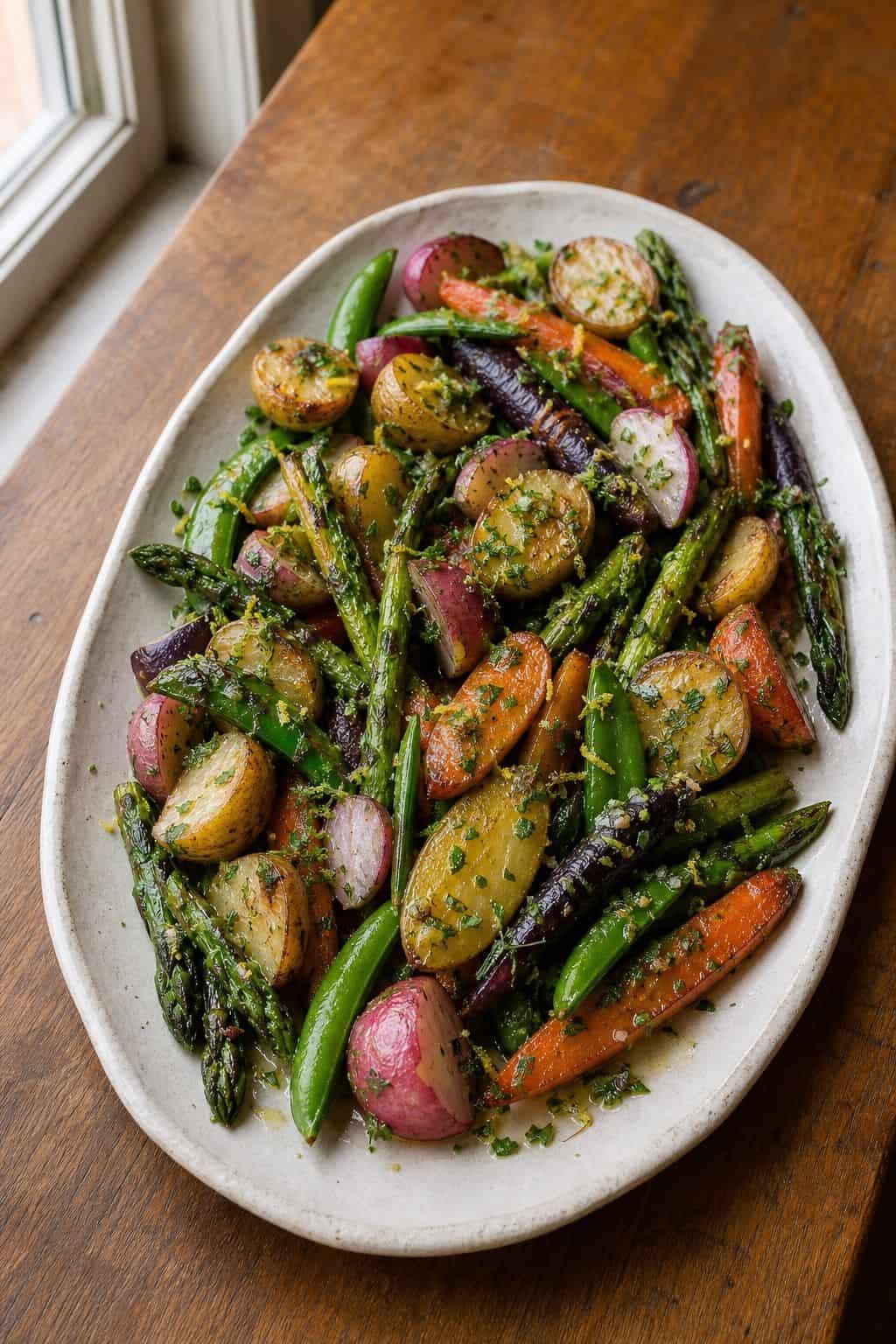
Quick answer: roasted spring vegetables on one sheet pan, finished off the heat with a lemon-herb drizzle and a final hit of fresh zest at the table. The lineup is the spring five: rainbow carrots, asparagus, radishes, baby potatoes, and sugar snap peas. Roast at 425°F (220°C), stagger the additions so the roots and the tender greens finish at the same minute, and keep all the herbs out of the oven. The drizzle is parsley, dill, and chives whisked into olive oil and fresh lemon juice, spooned over the platter while the pan is still warm.
The sheet pan comes out of the oven and the kitchen smells like a Sunday afternoon in April: roasted carrot, charred asparagus tip, the green grassiness of snapped pea pods. Rainbow carrots have gone burnished at the edges. Radishes have lost their bite and turned sweet. Baby potatoes are blistered on one side, cream-soft on the other. Asparagus is crisp-tender, sugar snaps still snap, and the whole tray is waiting for a spoonful of bright lemon-herb drizzle to land on top. This is the spring table on a single sheet pan, and the trick is to keep the dried thyme in the cabinet and the fresh parsley, dill, and chives off the heat until the very last minute.
Recommended Products
A heavy-gauge half-sheet pan that conducts heat evenly, an herb keeper to hold the parsley, dill, and chives crisp until drizzle time, a microplane for the final zest at the table, a large oval platter for serving, and parchment for an easy cleanup.


Recommended Reads
- Asparagus Tart Recipe
- Lemon Parmesan Asparagus Recipe
- Honey and Balsamic Roasted Beets
- Best Easter Dinner Ideas
- Best Easter Side Dishes
Where Spring Vegetables Come Into Their Own
Across Europe, the arrival of the first spring vegetables was historically treated as a calendar event. Germany still observes Spargelzeit, the asparagus season that runs roughly from late April to the feast of St. John on June 24. Restaurants print Spargel menus. Roadside stands sell white and green spears by the bundle. Households mark the start of spring by the first plate of asparagus arriving on the table, often with nothing more than butter, lemon, and boiled potatoes alongside it. British gardeners measured the same turn of the year by the first peas pushing through their pods, and Italian farmers marked it by the first wild greens gathered from the hedgerows.
The Mediterranean Easter table works on the same logic. Lamb is the protein at the center of the meal across Greece, Italy, France, and Spain, but the vegetables around it are what carry the season. Spring potatoes, fresh peas, young carrots, asparagus, artichokes, and the first tender herbs sit alongside the roast and tell you which week of the year you are in. This sheet-pan version is a compressed version of that same idea: a single platter of spring produce that says, more clearly than any flower or weather forecast, that winter is over.
A Few Notes on the Ingredients
- Rainbow carrots: Bring color and a sweetness that deepens as the edges caramelize. Halve lengthwise, leave the skins on, and add to the pan in the opening 15 minutes.
- Asparagus: Contributes the season’s signature grass-and-green-pepper note. Trim the tough ends and add for the middle 10 minutes so the spears char on the tips without going limp.
- Radishes: Lose their raw heat in the oven and turn nearly sweet, a transformation worth experiencing once. Halve and roast with the roots from the start.
- Baby potatoes: Give the platter its starch and structure. Halve, pat dry, and roast with the carrots and radishes for the full 25 minutes.
- Sugar snap peas: Come in for the last 3 to 5 minutes, just long enough to blister the skins and warm them through. They hold a sweet crunch even after the brief hit of heat.
- Fresh parsley, dill, and chives: Chopped at the last minute and whisked into the drizzle off the heat. Oven heat destroys the volatile oils that make spring herbs taste like spring, so dried thyme stays in the cabinet.
- Lemon (zest and juice): Both go on after the pan comes out of the oven. Juice in the drizzle, zest grated directly over the platter at the table. The double hit is what makes the dish read like it came from a restaurant kitchen.
Recipe: Roasted Spring Vegetables with Lemon-Herb Drizzle
Prep time: 15 minutes | Cook time: 25 minutes | Total time: 40 minutes | Serves: 6
Ingredients
- 1 lb (450 g) baby potatoes, halved
- 1 bunch (450 g) rainbow carrots, halved lengthwise
- 1 lb (450 g) asparagus, tough ends trimmed
- 1 bunch (200 g) radishes, halved
- 8 oz (225 g) sugar snap peas, strings removed
- 3 tbsp (45 ml) olive oil
- Salt and freshly ground black pepper, to taste
- 2 tbsp (8 g) fresh parsley, finely chopped
- 1 tbsp (3 g) fresh dill, finely chopped
- 1 tbsp (3 g) fresh chives, finely chopped
- Zest of 1 lemon
- 2 tbsp (30 ml) fresh lemon juice
- Optional: 1 tbsp (15 ml) extra olive oil for the finishing drizzle
Instructions
- Heat the oven to 425°F (220°C). Slide an empty half-sheet pan onto the middle rack and preheat it dry for 5 minutes. A hot pan is what gives the vegetables a proper sear instead of steaming them in the first minute.
- Pat the baby potatoes, rainbow carrots, and radishes dry with a clean kitchen towel. Toss them in a large bowl with 2 tbsp (30 ml) of the olive oil and a generous pinch of salt and pepper.
- Carefully pull the hot pan from the oven, line it with parchment if you like easier cleanup, and spread the dressed potatoes, carrots, and radishes in a single layer with space between pieces. Return to the oven and roast for 15 minutes.
- While the roots roast, trim the asparagus and toss it with the remaining 1 tbsp (15 ml) olive oil, salt, and pepper. Pull the pan, scatter the asparagus across the open spaces between the roots, and return to the oven for 10 minutes.
- In the last 3 to 5 minutes, scatter the sugar snap peas across the pan. They need just enough time to blister the skins and warm through, not to soften completely. Pull the pan once the asparagus tips are browned and the snap peas are bright green.
- While the pan rests, make the drizzle. Whisk the lemon juice with the chopped parsley, dill, and chives, a pinch of salt and pepper, and the optional extra tbsp of olive oil. Do not heat the drizzle. The whole point is to keep the herb flavor alive.
- Slide the roasted vegetables onto a large serving platter. Spoon the lemon-herb drizzle over the top while the pan is still warm. Grate the fresh lemon zest directly over the platter at the table, just before serving.
Notes
Preheating the empty sheet pan is the Kenji-school move that separates a properly seared roast from a steamed one. Cold metal pulls heat away from the vegetables in the first 60 seconds and water condenses on the underside; hot metal gives you an immediate sear and a head start on the Maillard browning that pulls sugar to the surface of the carrots and potatoes.
The herb-after rule is non-negotiable. Fresh parsley, dill, and chives lose their bright top notes within about 90 seconds of direct oven heat, which is why every recipe that throws them in pre-roast ends up tasting flat. Chop the herbs right before whisking, never more than 10 minutes ahead, and finish the platter only once it has cleared the oven.
To scale for a crowd, double the recipe across two half-sheet pans rotated halfway through. Do not crowd a single pan; vegetables packed too closely steam each other and the radishes never caramelize. Two pans on different racks, swapped at the 15-minute mark, holds the staggered timing without losing crisp edges.
Tips and Variations
How to Time the Staggered Roast Without a Timer
If a kitchen timer is not nearby, use the sound of the oven. Roots need roughly 15 minutes at 425°F (220°C) before the carrot edges go visibly burnished and the potatoes start to release a deeper sizzle through the door. That sizzle changes pitch when the surface sugars start to caramelize, and that is the signal to add the asparagus. Ten minutes after that, the asparagus tips will smell faintly nutty; that is the signal to add the snap peas. Three to five minutes later, the whole pan is done. Once you have run the recipe twice, you can almost set the timing by smell alone.
Swapping Spring Vegetables by Local Market
The spring five hold up almost anywhere in North America and Europe from late March through June, but markets vary by region. Young leeks, halved and rinsed, swap one-for-one for the asparagus and bring an oniony depth. Fava beans (shelled, blanched, popped) join in the last 3 minutes alongside the snap peas. Spring onions sub for half the carrots if the carrots at the market look tired. Baby fennel, quartered, joins the roots in the opening 15-minute roast. The principle is to keep the ratio of denser vegetables to tender ones roughly even, and to keep the staggered timing intact.
Make-Ahead for Easter Dinner
The roast itself can be done up to 4 hours ahead. Slide the finished vegetables onto the serving platter, cover loosely with foil, and leave at room temperature; do not refrigerate, which dulls the surface caramelization and turns the asparagus woody. The lemon-herb drizzle can be whisked up to 1 hour ahead and kept covered at room temperature. Combine the two only 10 minutes before serving so the herbs stay vivid and the platter still tastes like spring instead of yesterday’s leftovers. The final lemon zest goes on at the table, not before.
Doubling for a Crowd of 12
Double the vegetables and the drizzle, but split the roast across two half-sheet pans on different oven racks. Swap the pans (top to bottom, bottom to top) at the 15-minute mark so both get equal heat exposure. Add the asparagus to both pans at minute 15, then the snap peas at minute 22. Pull both at minute 25, drizzle each separately, and combine on a long platter at the table. Do not stack vegetables to fit them on one pan; the steam from a crowded surface ruins the caramelization that the staggered method is designed to produce.
The Brown-Butter Variation
For a richer dinner-party version, swap the finishing olive oil drizzle for brown butter. Melt 4 tbsp (60 g) unsalted butter in a small saucepan over medium heat, swirling until the milk solids turn deep amber and smell like toasted hazelnut, about 4 minutes. Pull off the heat immediately and whisk in the lemon juice (it will hiss and foam) along with the chopped herbs and a pinch of flaky salt. Spoon over the vegetables in place of the olive oil drizzle. The nutty butter reads especially well alongside Easter lamb.
What to Serve It With
This platter sits at the center of an Easter table next to a glazed ham or a roast leg of lamb, where the lemon-herb acid cuts the sweetness of the ham and echoes the rosemary or mint already on the lamb. It belongs on a spring brunch board alongside a frittata, smoked salmon, and soft-scrambled eggs. On a weeknight, the same sheet pan rounds out a simple roast chicken, a seared salmon fillet, or pork chops in 40 minutes flat. For a vegetarian main, pile the vegetables over warm farro, lemon orzo, or a smear of herbed labneh, and the dish becomes a complete plate with the drizzle doing double duty as a sauce.
FAQ
What temperature should I roast spring vegetables at?
425°F (220°C) is the working number. It is high enough to caramelize the surface sugars on rainbow carrots, radishes, and baby potatoes through the Maillard reaction, and gentle enough not to scorch the tender produce that joins the pan later. Anything below 400°F (200°C) steams more than it sears; anything above 450°F (230°C) burns the asparagus tips before the roots are done.
Do I add asparagus and carrots at the same time?
No. Carrots, radishes, and baby potatoes need a 15-minute head start at 425°F (220°C) to caramelize before the asparagus joins. Adding asparagus alongside the roots from minute zero is the most common error in published versions of this dish; the spears go limp and lose their grassy snap by the time the roots are done.
Can I use dried herbs instead of fresh?
Not for this drizzle. The point of the recipe is the perfume of fresh parsley, dill, and chives whisked into lemon juice off the heat. Dried herbs lose their volatile oils within a year of harvest and read autumnal against spring produce. If fresh herbs are not available, skip the drizzle and finish with lemon zest and good olive oil only; that is a better outcome than dried thyme.
Why are my roasted vegetables soggy and not crispy?
Two causes account for almost every soggy roast. The first is wet vegetables: water on the surface turns to steam in the oven and blocks the Maillard browning that creates a crisp edge. Pat everything bone-dry with a clean towel before oiling. The second is a crowded pan: vegetables packed too tightly steam each other rather than searing. Leave space between pieces, and preheat the empty pan for 5 minutes so the underside sears the moment the vegetables hit the metal.
Can I make this ahead?
Yes, with one rule. Roast the vegetables up to 4 hours ahead and leave them on the serving platter at room temperature, covered loosely with foil. Whisk the lemon-herb drizzle separately up to 1 hour ahead. Combine the two only 10 minutes before serving so the herbs stay bright green and the lemon stays sharp. Refrigerating roasted vegetables dulls the caramelization and the herbs go grey; room temperature is the right hold.
Do I have to peel the carrots?
No. Scrub the rainbow carrots well under cold water, trim the tops to about an inch, and leave the skins on. The skin holds most of the color contrast that makes rainbow carrots worth buying in the first place, and it crisps in a way the peeled flesh never will. Skip the peeler.
Key Takeaways
- The spring five are rainbow carrots, asparagus, radishes, baby potatoes, and sugar snap peas. Cherry tomatoes are a summer fruit and do not belong here.
- Stagger the roast: roots for 15 minutes at 425°F (220°C), asparagus for 10 more, sugar snap peas for the last 3 to 5.
- Preheat the empty sheet pan for 5 minutes. Cold metal steams; hot metal sears.
- Fresh parsley, dill, and chives go on after the pan comes out. Oven heat kills the herb flavor that makes spring taste like spring.
- Lemon shows up three times: juice in the drizzle, zest at the table, and good olive oil as the carrier. Skip dried thyme entirely.
- Make ahead up to 4 hours, but hold the drizzle separately and combine 10 minutes before serving.
Final Thoughts
Most roasted vegetable recipes treat the sheet pan as a place to dump produce and walk away. The version above treats it as a sequence: roots first, asparagus next, snap peas last, drizzle at the end. Three sets of vegetables, three additions, one pan, one oven temperature. The staggered roast is what separates a competent spring side from one that actually tastes like the season.
The herb-after rule does the rest. Parsley, dill, and chives whisked into lemon juice and olive oil off the heat is a 90-second move that competitor recipes routinely skip in favor of pre-roasted dried herbs. The flavor difference is not subtle. Fresh herbs read like spring; dried herbs read like November.
Make this for Easter dinner alongside a glazed ham or a roast leg of lamb, and the platter will read as the brightest dish on the table. Make it on a Tuesday in May next to a simple roast chicken, and the same drizzle stretches across the protein, the vegetables, and any grain on the plate. Either way, the sheet pan goes in cold, comes out caramelized, gets dressed off the heat, and lands on the table looking like the season finally arrived.
Roasted Spring Vegetables with Lemon-Herb Drizzle
Roasted spring vegetables work best when the vegetables are cut by cooking time, not by looks. Start firmer vegetables first, add quick-cooking asparagus and peas later, then finish with a lemon-herb drizzle after roasting so the herbs stay fresh instead of scorched.
Ingredients
- 1 lb (450 g) baby potatoes, halved
- 1 bunch (450 g) rainbow carrots, halved lengthwise
- 1 lb (450 g) asparagus, tough ends trimmed
- 1 bunch (200 g) radishes, halved
- 8 oz (225 g) sugar snap peas, strings removed
- 3 tbsp (45 ml) olive oil
- Salt and freshly ground black pepper, to taste
- 2 tbsp (8 g) fresh parsley, finely chopped
- 1 tbsp (3 g) fresh dill, finely chopped
- 1 tbsp (3 g) fresh chives, finely chopped
- Zest of 1 lemon
- 2 tbsp (30 ml) fresh lemon juice
- Optional: 1 tbsp (15 ml) extra olive oil for the finishing drizzle
Instructions
- Heat the oven to 425°F / 220°C. Line a large sheet pan with parchment if you like easier cleanup.
- Toss the potatoes or carrots and radishes with 2 tablespoons olive oil, 3/4 teaspoon salt, and black pepper. Spread them out with space between pieces.
- Roast for 18 minutes, then add the asparagus and spring onions. Toss gently and roast 10 to 12 minutes more, until the firm vegetables are tender and the asparagus is just browned at the tips.
- Add the peas to the hot pan and let them warm for 2 minutes.
- Whisk lemon zest, 1 tablespoon lemon juice, grated garlic, herbs, remaining 1 tablespoon olive oil, and remaining salt.
- Transfer vegetables to a platter and spoon the drizzle over the top. Taste and add more lemon juice if needed.
Notes
If the pan looks crowded, use two sheet pans. Crowded vegetables steam and soften instead of browning.
Last update on 2026-08-08 / Affiliate links / Images from Amazon Product Advertising API