
The best healthy fridge prep ideas make fresh food easy to see, pair, and eat before it fades. Wash and dry greens, cut a few vegetables, portion protein-rich staples, store fruit carefully, keep sauces and crunch separate, label cooked items, and create a first-to-eat shelf. Keep cold foods cold, store raw ingredients safely, and toss anything that looks unsafe, smells off, or has an unknown age.
A healthy fridge does not have to look styled to work well. The real test is whether a tired person can open the door and find something ready for a bowl, snack plate, smoothie, lunch, or quick side without beginning a full prep session. Healthy fridge prep ideas are useful because they reduce the tiny barriers that usually win: washing lettuce, chopping peppers, finding protein, drying berries, or remembering which cooked food should be eaten first.
This is fresh building-block prep, not a week of identical meal boxes. A few dry greens, crisp vegetables, protein options, fruit cups, dressings, herbs, and first-to-eat foods can make normal meals easier without turning the fridge into a project.

Top Recommended Products


You Might Also Like These Blog Posts
- Aesthetic Meal Prep Ideas
- Breakfast Meal Prep
- Busy Family Meal Prep Ideas
- How To Store Leftovers
- Weekly Fridge Cleanout Routine
Healthy Fridge Prep Ideas for Easier Meals
1. Washed Greens Ready for Fast Bowls
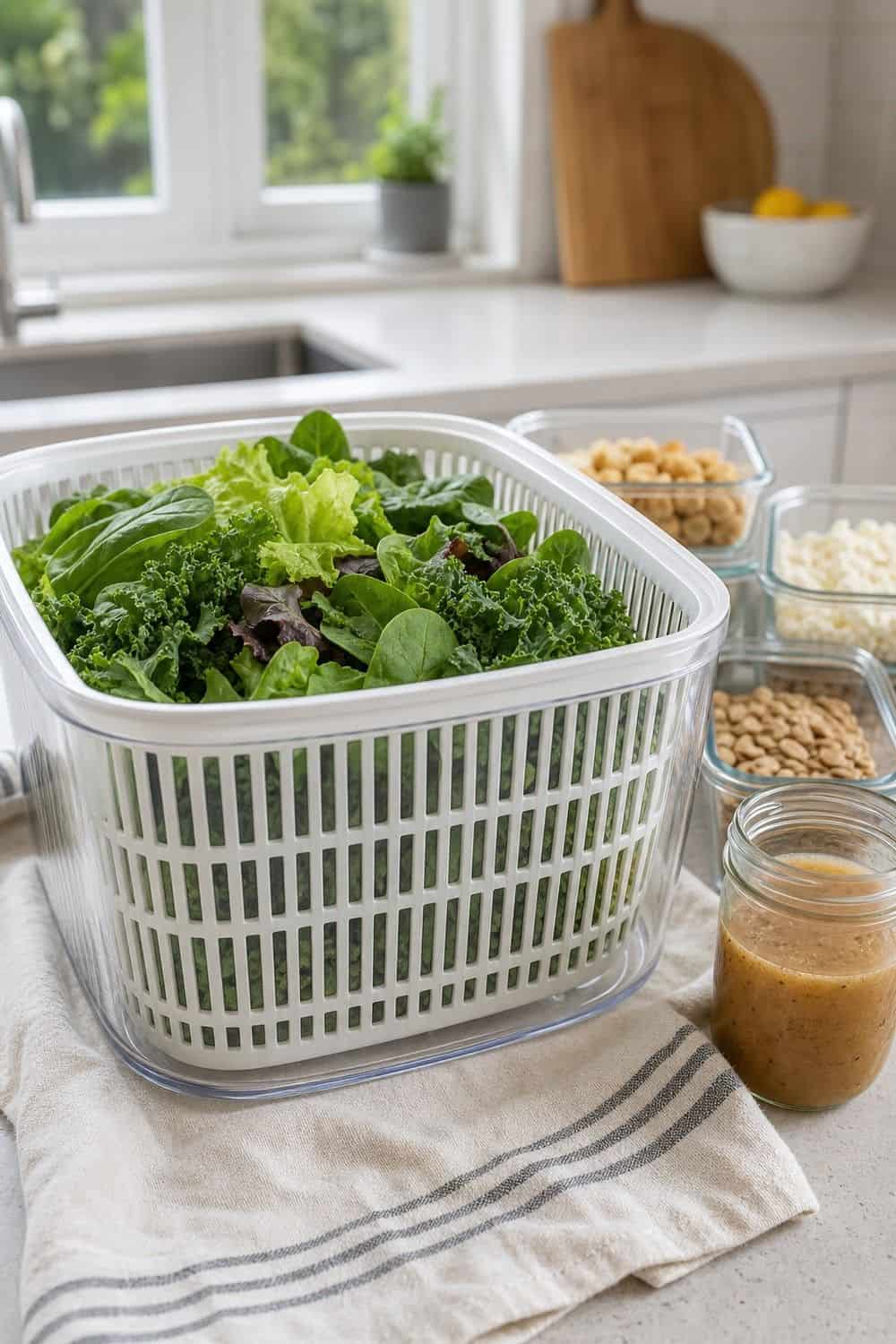
Greens are much easier to use when they are already washed, dry, and waiting near eye level. Prep romaine, spinach, arugula, kale, cabbage, or mixed greens for lunches, wraps, grain bowls, omelets, and quick side salads.
A large salad spinner helps with the most important detail: drying. Wet leaves collapse faster and turn a healthy fridge habit into a slimy bag. Spin greens well, then store them with a towel or in the container method that works for the type of leaf.
Avoid dressing the greens in advance. Keep dressing, herbs, crunchy toppings, avocado, and hot leftovers separate until serving so a bowl can still feel fresh. If you prep sturdier greens like kale or cabbage, keep them in a separate section from tender spinach or arugula. They age differently and serve different meals.
2. Crunchy Vegetable Stick Box
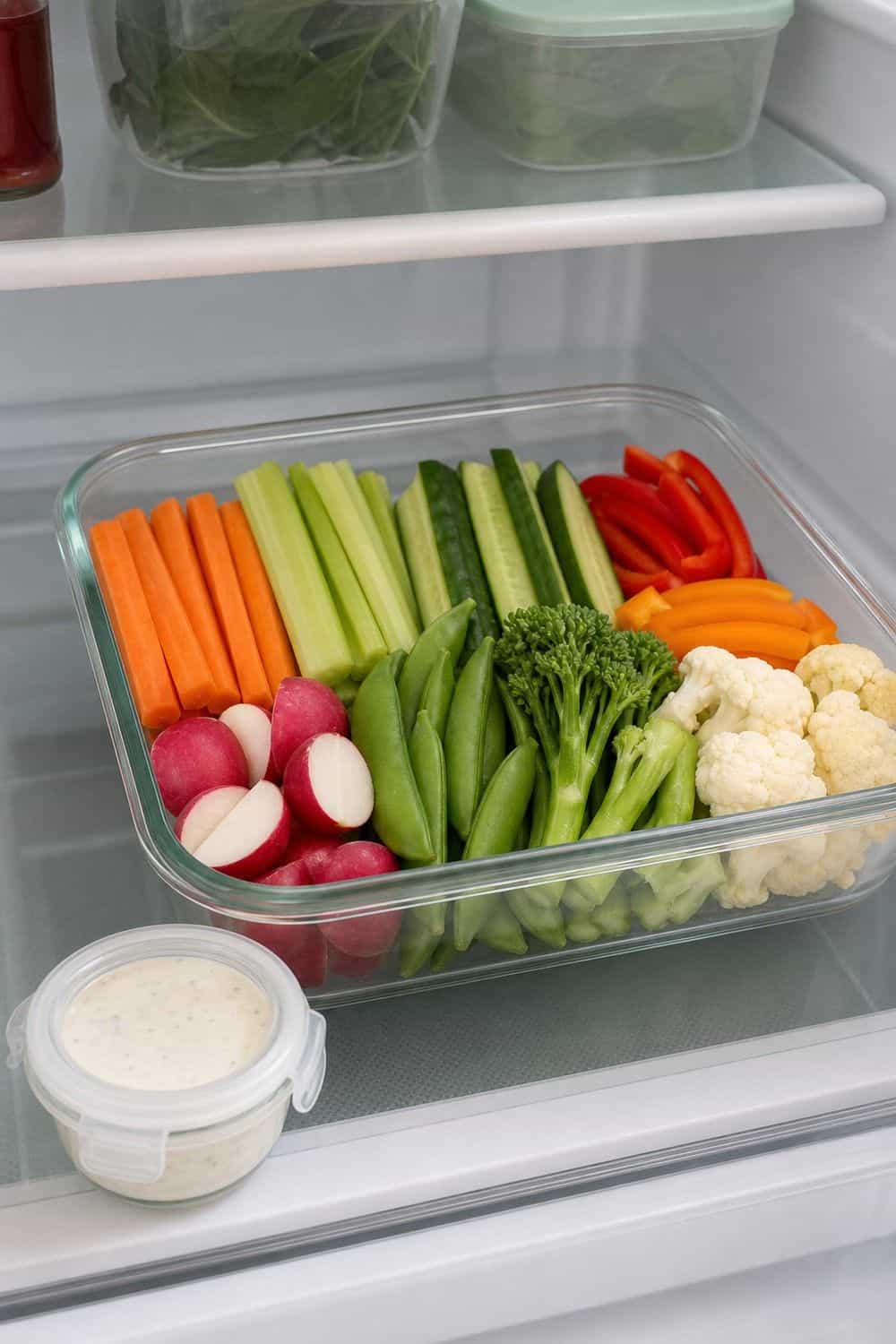
Vegetable sticks remove the chopping barrier from healthy snacks and quick sides. Cut carrots, celery, cucumbers, bell peppers, radishes, snap peas, broccoli stems, or cauliflower into shapes that are easy to grab with hummus, yogurt dip, cottage cheese, or a lunch plate. Vegetable storage containers are useful because different vegetables hold moisture differently: some stay crisp with a dry towel, while others do better in a vented container or with a small amount of moisture. Smaller batches twice a week often beat one ambitious box that gets watery by Thursday.
3. Hummus and Dip Pairing Cups
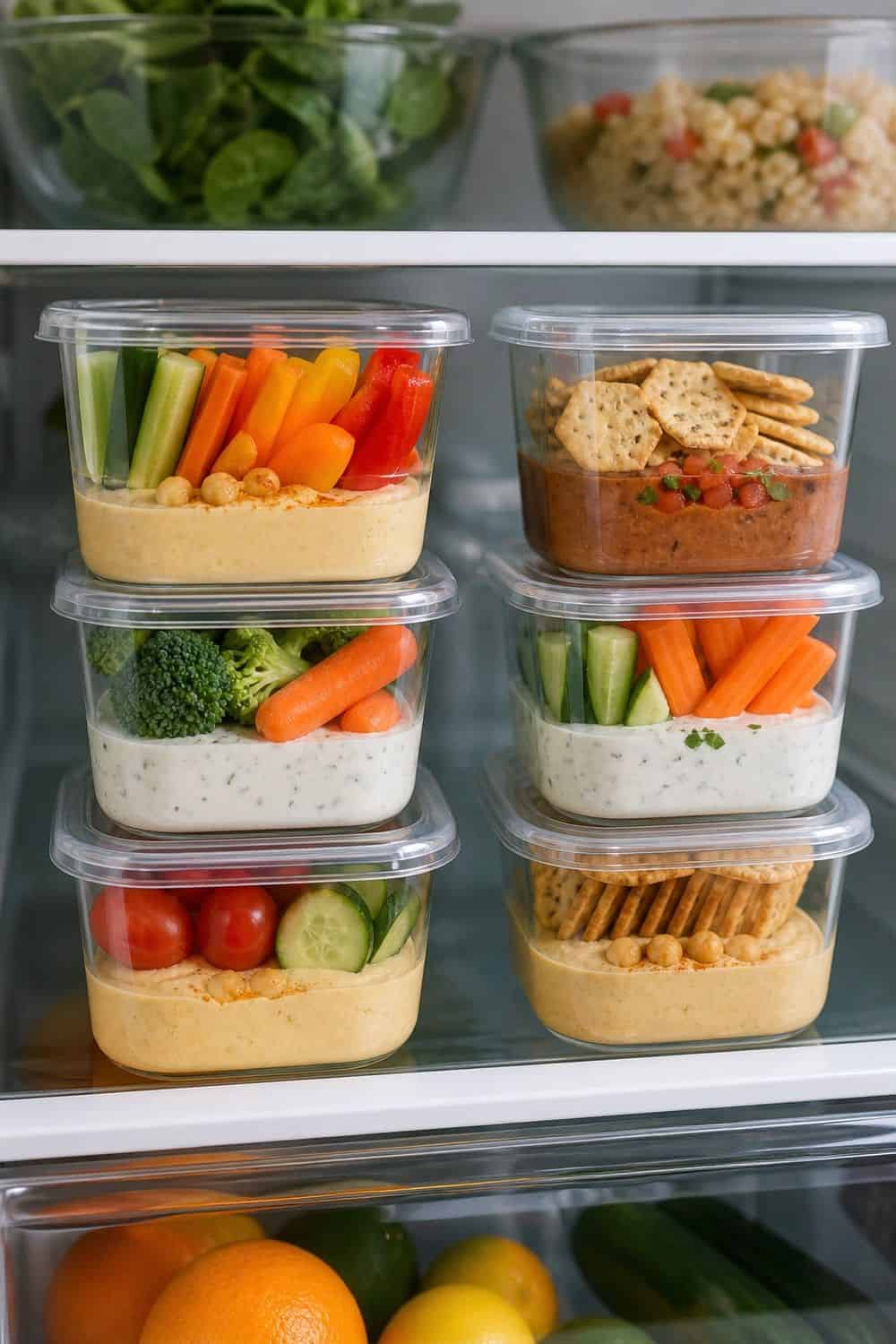
Pre-portioned dips make raw vegetables, crackers, eggs, and snack plates more likely to become a real snack. Fill small cups with hummus, yogurt herb dip, cottage-cheese ranch, salsa, bean dip, or guacamole for a short use window. Dip containers with lids solve the cold-dip job better than a half-open tub because they keep portions clear, reduce repeated opening, and make it easier to pair vegetables with something satisfying.
The mistake is packing dip against crackers, bread, or delicate greens. Keep wet foods separate until eating so the rest of the plate keeps its texture. Make two or three flavors at most; a fridge full of dip cups is less useful than one hummus option and one brighter yogurt or salsa option you will actually finish.
4. Greek Yogurt Savory and Sweet Station
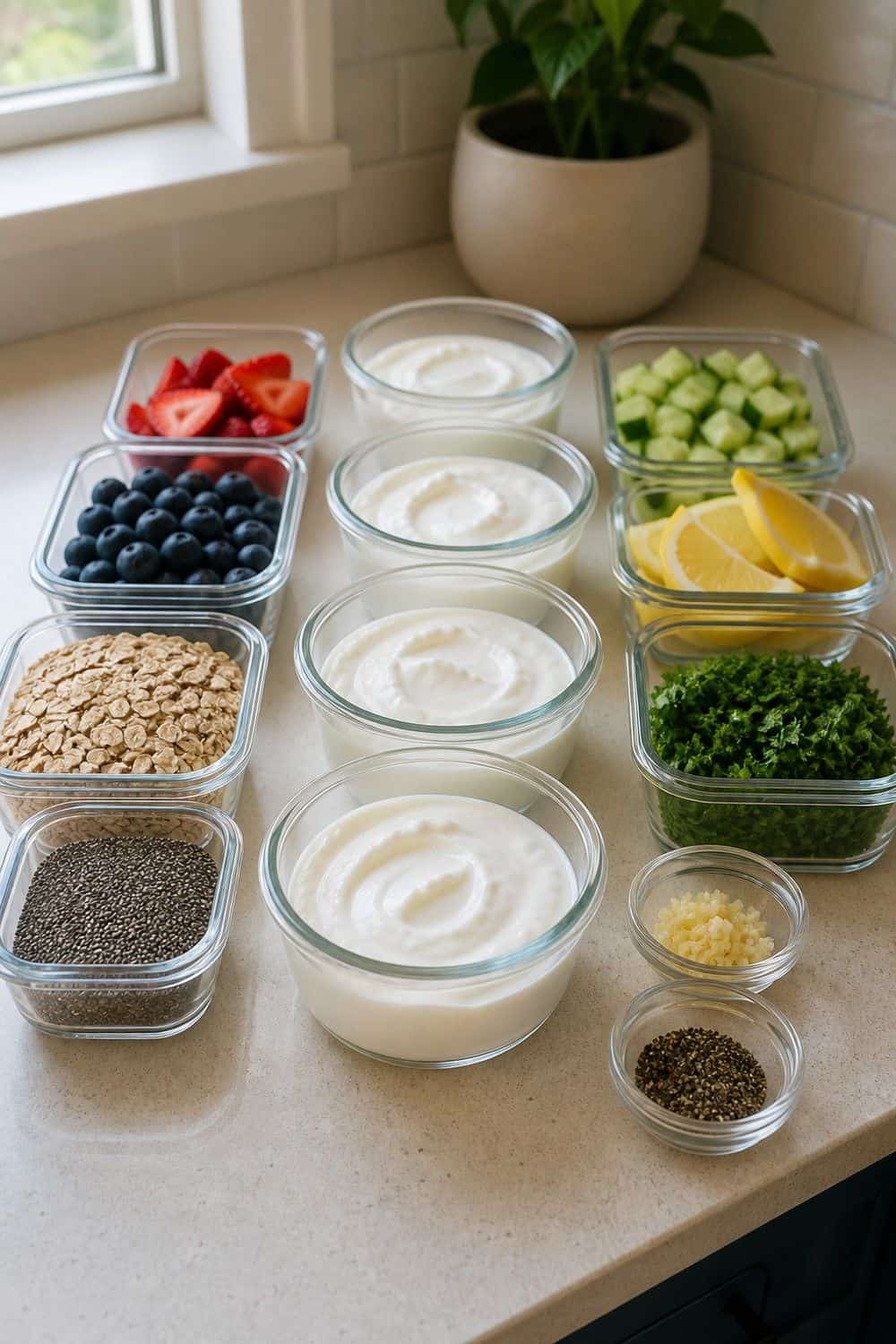
Greek-style yogurt is one of the most flexible healthy fridge staples because it can go sweet or savory. Use it with berries, cinnamon, oats, and chia for breakfast, or with lemon, cucumber, herbs, garlic, and pepper as a sauce for bowls and vegetables.
Yogurt storage containers help when you want a few portions ready without committing to one flavor all week. Keep the plain base separate, then add fruit, herbs, seeds, or sauce ingredients when serving. The same container can support snacks, smoothies, dressings, and quick breakfasts without locking you into one flavor.
Do not turn this into breakfast-only prep. The value is having one protein-rich fridge staple that can support several meals, not five identical parfaits. Store strong savory mix-ins separately from sweet toppings. Garlic yogurt and berries do not need to share a container before you know which direction the meal is going.
5. Cottage Cheese Snack Cups

Cottage cheese cups are useful when you want protein without cooking or building a full meal. Portion cottage cheese with berries, tomatoes, cucumbers, black pepper, hot honey, jam, or a small side of whole-grain crackers. Snack cups with lids keep the portion ready and visible when hunger is immediate. If toppings are watery, store them separately or add them the day you plan to eat, and keep crackers dry until serving. For a faster snack plate, keep one dry side nearby, such as seeded crackers, whole-grain toast, or roasted chickpeas.
6. Shredded Chicken Fridge Box
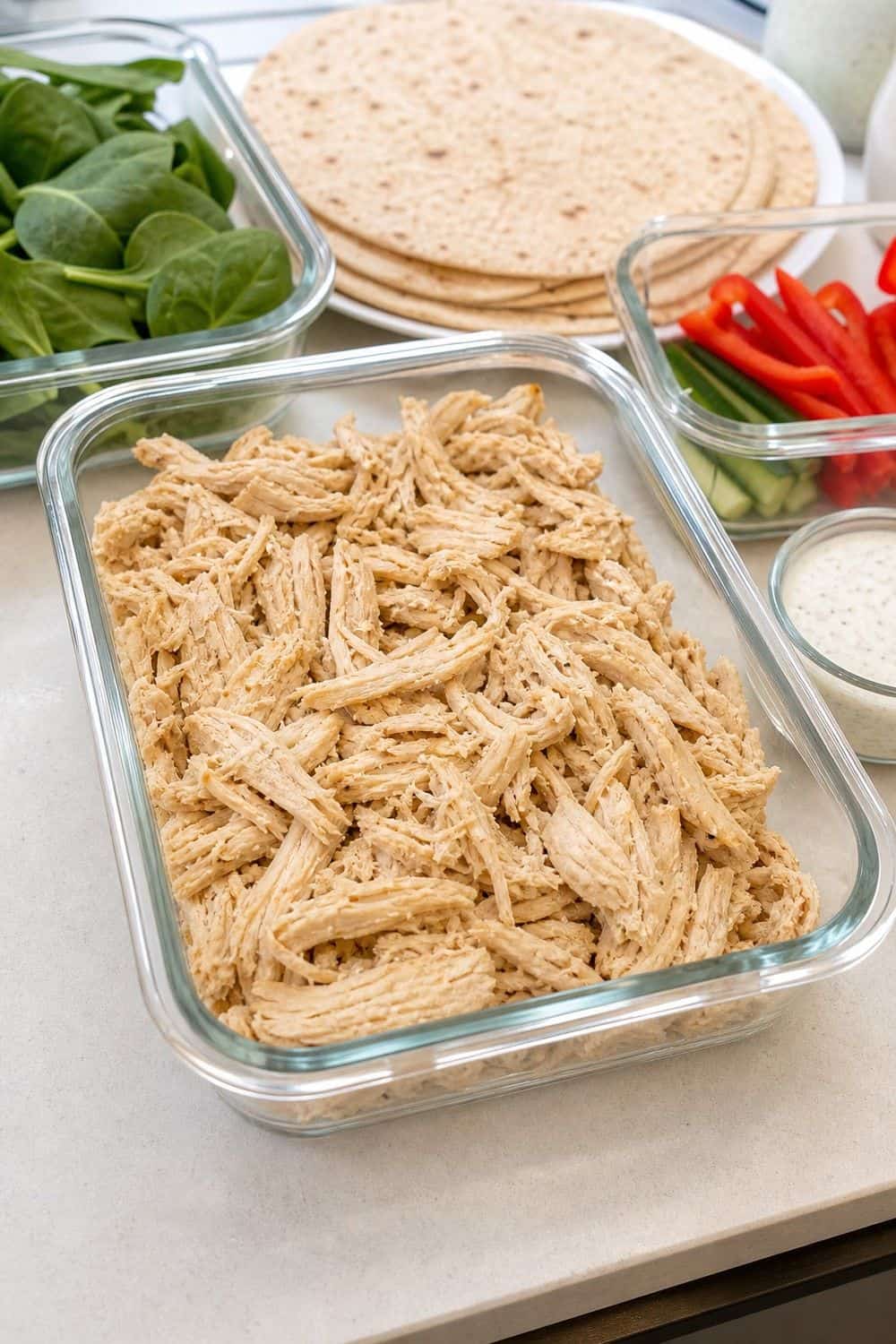
Cooked chicken gives healthy fridge prep a real meal anchor. Use rotisserie chicken or home-cooked chicken for salads, wraps, grain bowls, soup add-ins, tacos, snack plates, or a quick plate with vegetables and dip. Rectangular glass meal prep containers help because cooked protein should be easy to see and portion; a shallow rectangle keeps the chicken from turning into a deep mystery tub.
Label cooked protein with the date, keep it cold, and use it within a safe window for your household. Store uncooked meat separately from the finished food, and do not let cooked chicken sit unlabeled until no one trusts it. Keep the seasoning fairly neutral if you want flexibility; lemon, salsa, yogurt sauce, pesto, or vinaigrette can change the same chicken later.
7. Hard-Boiled Egg Protein Bin
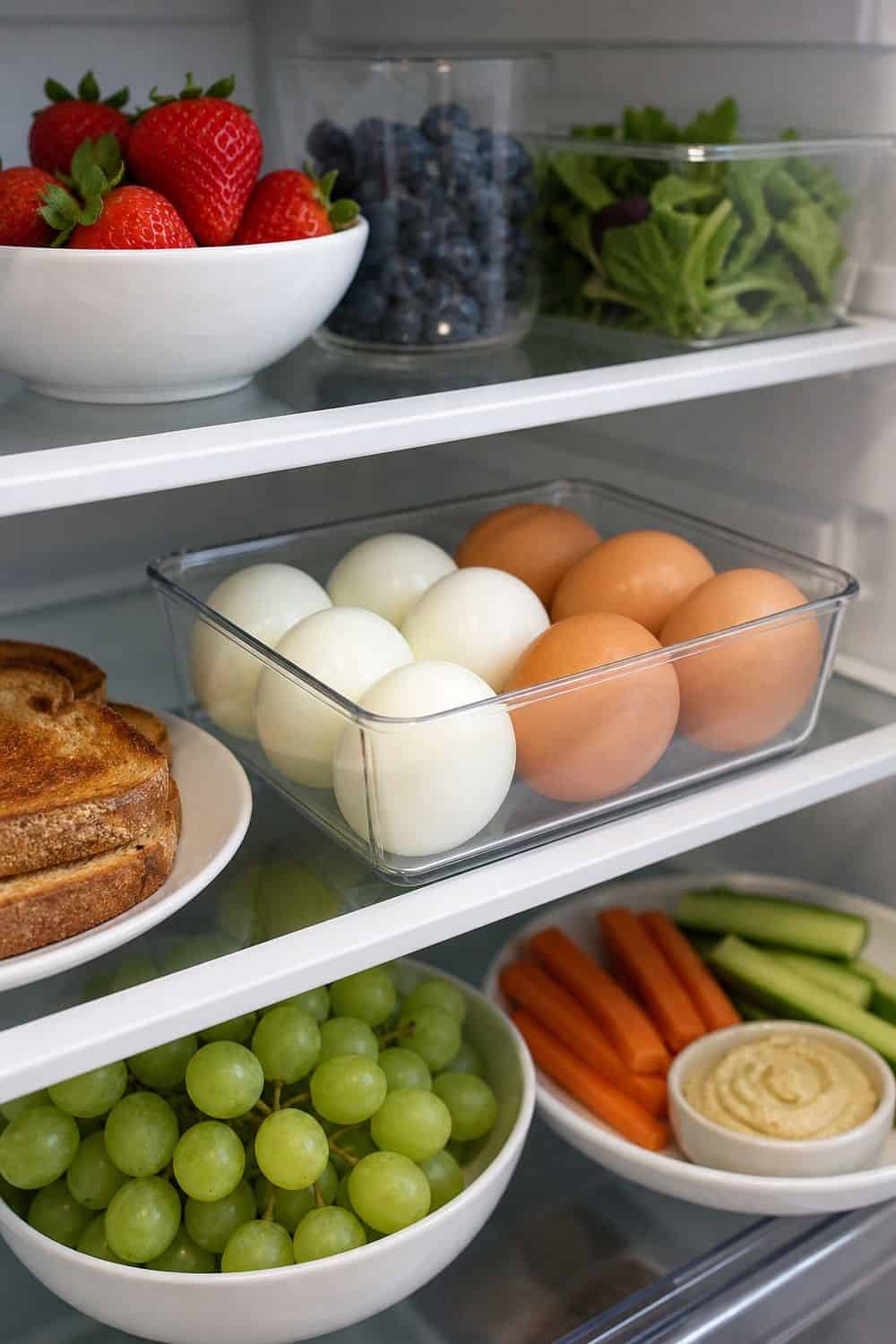
Hard-boiled eggs work beyond breakfast. Add them to toast, salads, snack plates, lunch boxes, grain bowls, or a quick plate with vegetables and fruit. They make the fridge feel more useful because protein is already handled.
An egg storage container gives the eggs a visible home and helps with rotation. Decide whether your household prefers peeled or unpeeled eggs, then keep the choice consistent so no one has to guess what is ready to eat.
The mistake is hiding eggs in the back or mixing peeled eggs with raw eggs. Keep the bin clearly separate, label when needed, and toss anything that seems off rather than trying to make it work. If peeled eggs dry out quickly in your fridge, prep fewer at a time. The better system is the one that gets eaten, not the one that looks fully stocked on Sunday.
8. Bean and Grain Bowl Base Containers
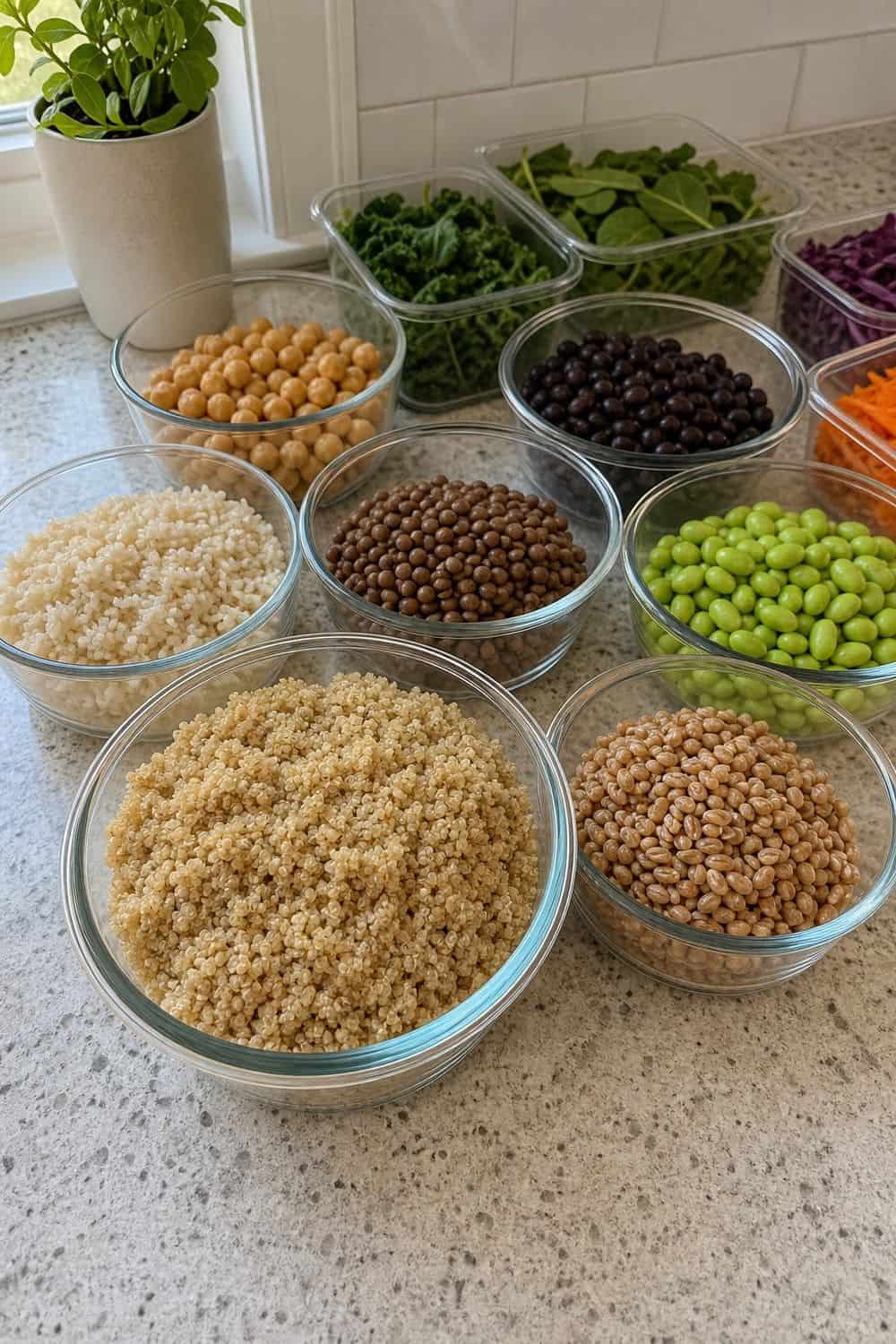
Beans and grains make greens and vegetables feel more like a meal. Prep quinoa, rice, farro, lentils, chickpeas, black beans, edamame, or rinsed canned beans for bowls, salads, wraps, and quick lunches. Microwave safe meal prep bowls fit this job because the base may need reheating before it joins cold greens or vegetables.
Store grains and beans separately from wet greens, dressing, crunchy toppings, and herbs so each piece holds its texture. Do not build the whole bowl too early if the ingredients behave differently. Rinse and drain canned beans well before storing them, since extra liquid can make bowls taste flat and soften greens before the meal is assembled.
9. Washed Berry Keeper
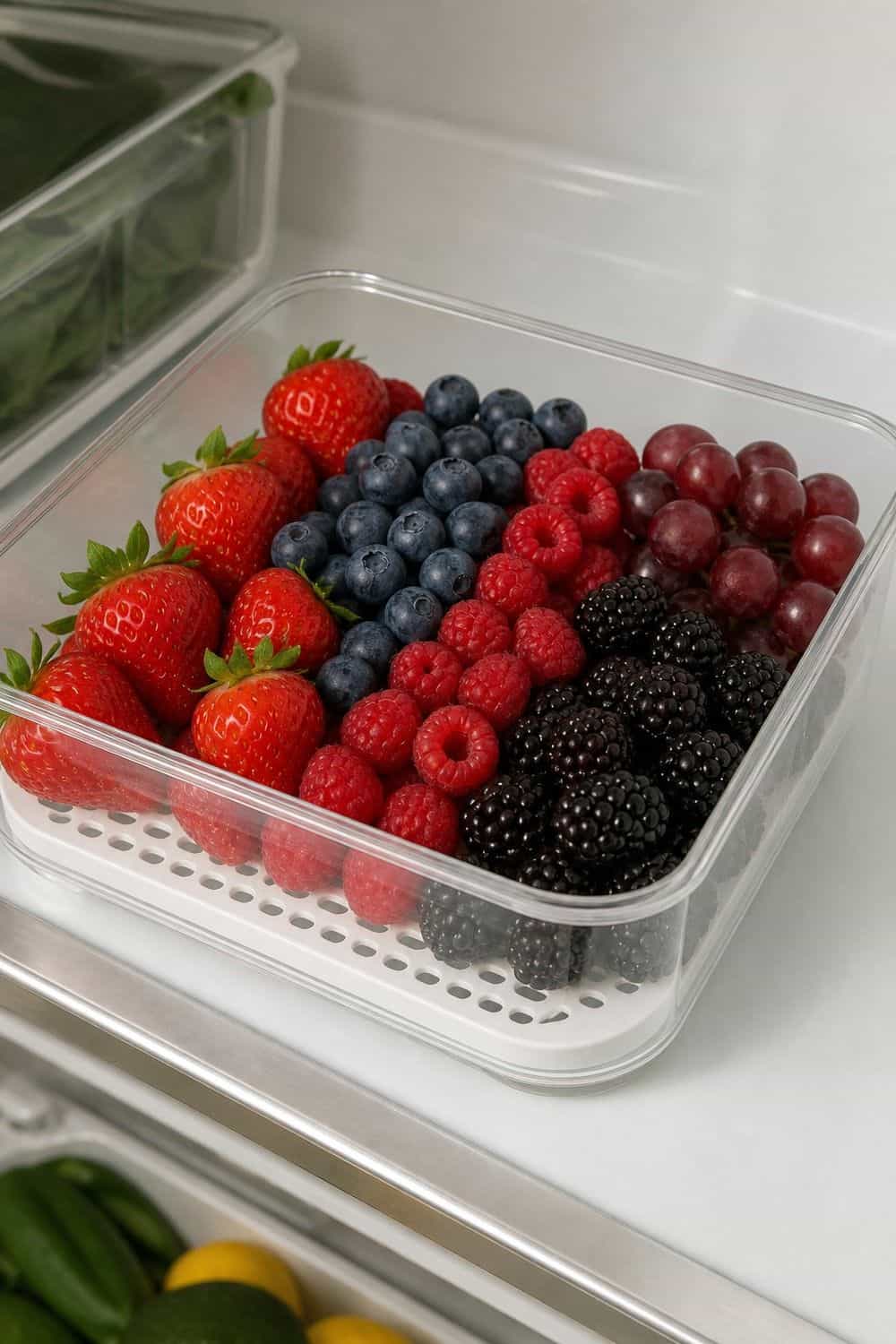
Berries become much easier to eat when they are checked, rinsed, dried, and visible. Use strawberries, blueberries, raspberries, blackberries, grapes, or cherries for yogurt, cottage cheese, oats, smoothies, or snack plates. A berry keeper container helps with the fragile fruit problem: moisture control and gentle storage. Remove bruised fruit before storing, dry the berries well, and keep them where they will be seen. The common mistake is putting berries away wet, because moisture shortens the window and one damaged berry can make the whole container less appealing.
10. Cut Fruit Grab Cups

Cut fruit is healthy convenience when it is prepped in a realistic amount. Use melon, pineapple, oranges, kiwi, mango, grapes, or apples with lemon if that suits your plan. Keep fruit cups simple enough to grab for snacks, yogurt, lunch, or after-dinner sweet cravings.
Fruit storage containers help because cut fruit needs visibility and moisture control. Some fruit releases juice quickly, so smaller batches are often better than a huge mixed container. Store watery fruit apart from crisp fruit when you want the firmer pieces to stay bright.
Avoid forcing every fruit into a weeklong prep plan. If mango or berries are better eaten soon, prep two days’ worth and leave the rest whole. For apples or pears, use lemon only when the flavor fits what you plan to eat. Sometimes leaving fruit whole until the day of use is the fresher choice.
11. Lemon-Herb Dressing Bottle
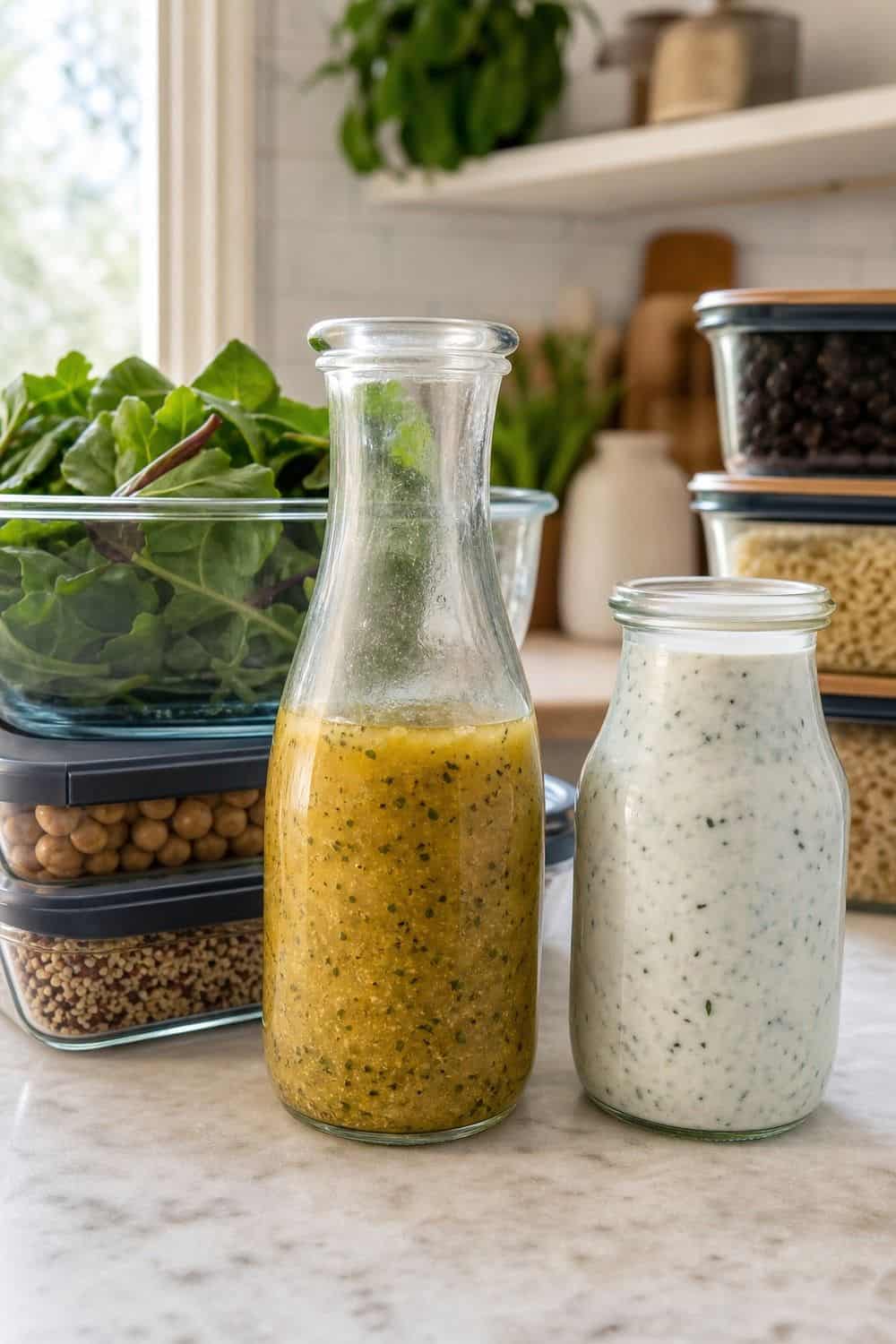
Prepped vegetables, beans, grains, and greens need flavor if they are going to be eaten repeatedly. Make one or two dressings, such as vinaigrette, lemon-tahini, yogurt herb dressing, salsa verde, peanut-lime sauce, or balsamic dressing. Salad dressing bottles support the exact job: storing flavor in a pourable, controlled way.
A bottle is easier to shake, label, and use than an open bowl of sauce. Keep dressing away from greens until serving so the leaves stay crisp. Do not fill the fridge with ten sauces; one bright dressing and one creamy option usually do more than a crowded shelf of half-used jars.
12. Chopped Salad Kit Box
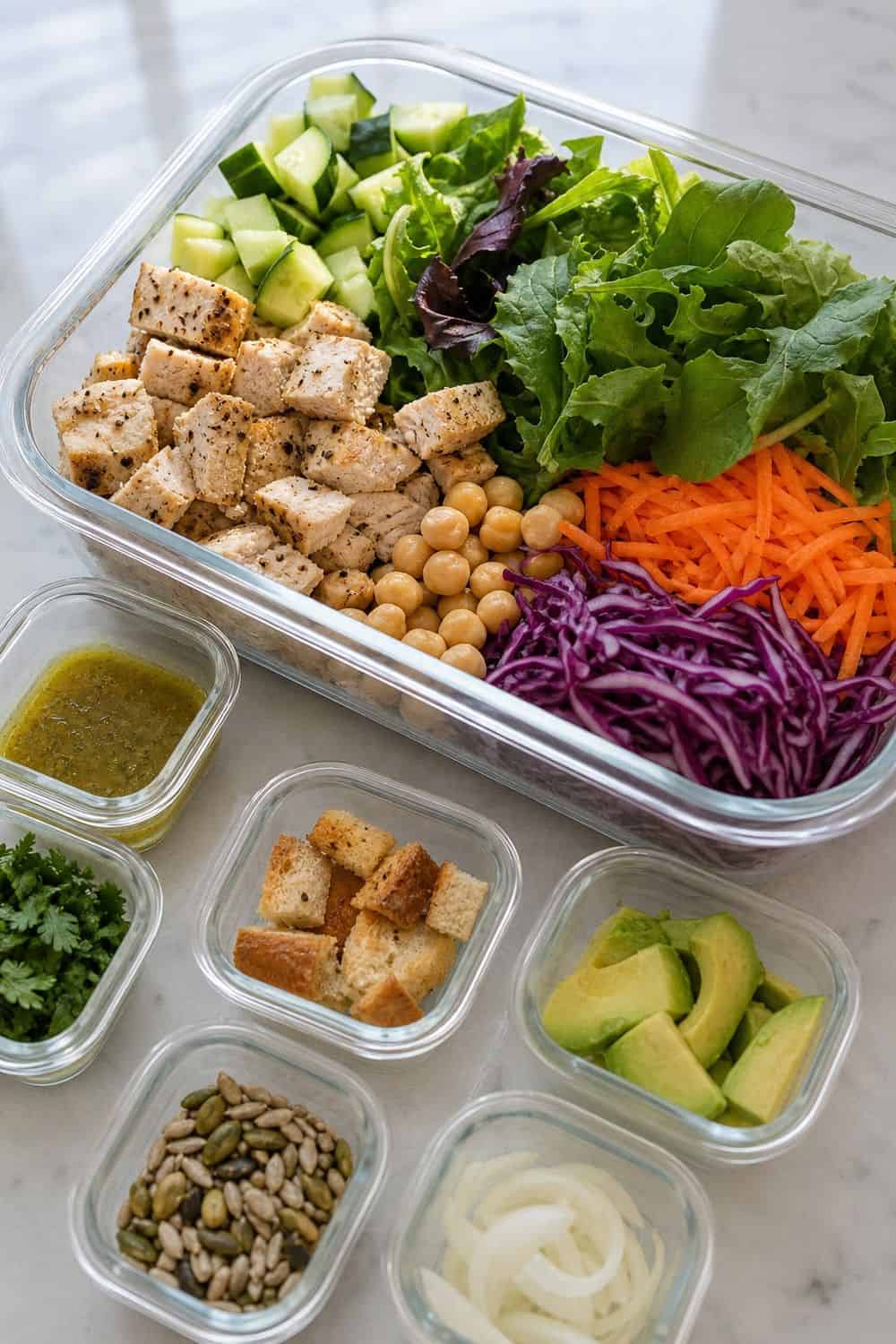
For a salad that still tastes fresh, think in components rather than a finished stack. Keep sturdy pieces like cabbage, carrots, chickpeas, chicken, and washed greens ready together so the salad can be tossed in a few minutes.
A large salad storage container gives the components enough room instead of compressing everything into a soggy corner. Keep dressing, herbs, seeds, croutons, avocado, and watery toppings separate until serving so the kit still tastes crisp.
The mistake is storing delicate greens against wet cucumbers or dressing. Keep watery items in their own corner or container until serving. If you add cooked protein, label it and keep it cold.
13. Snack Plate Protein Drawer

Snack plates become more balanced when the fridge already holds a few ready parts. Keep cheese, boiled eggs, turkey slices, hummus, vegetables, berries, grapes, crackers, nuts, olives, or roasted chickpeas ready for quick assembly. Divided snack containers help keep protein, fiber, healthy fats, and color separate until eating.
A snack with cheese, vegetables, fruit, and crackers is more satisfying than opening three random packages while standing at the fridge. The mistake is making this into a party board that takes effort to maintain. Keep it plain, repeatable, and easy to refill with foods your household already eats.
14. Smoothie Add-In Fridge Bin
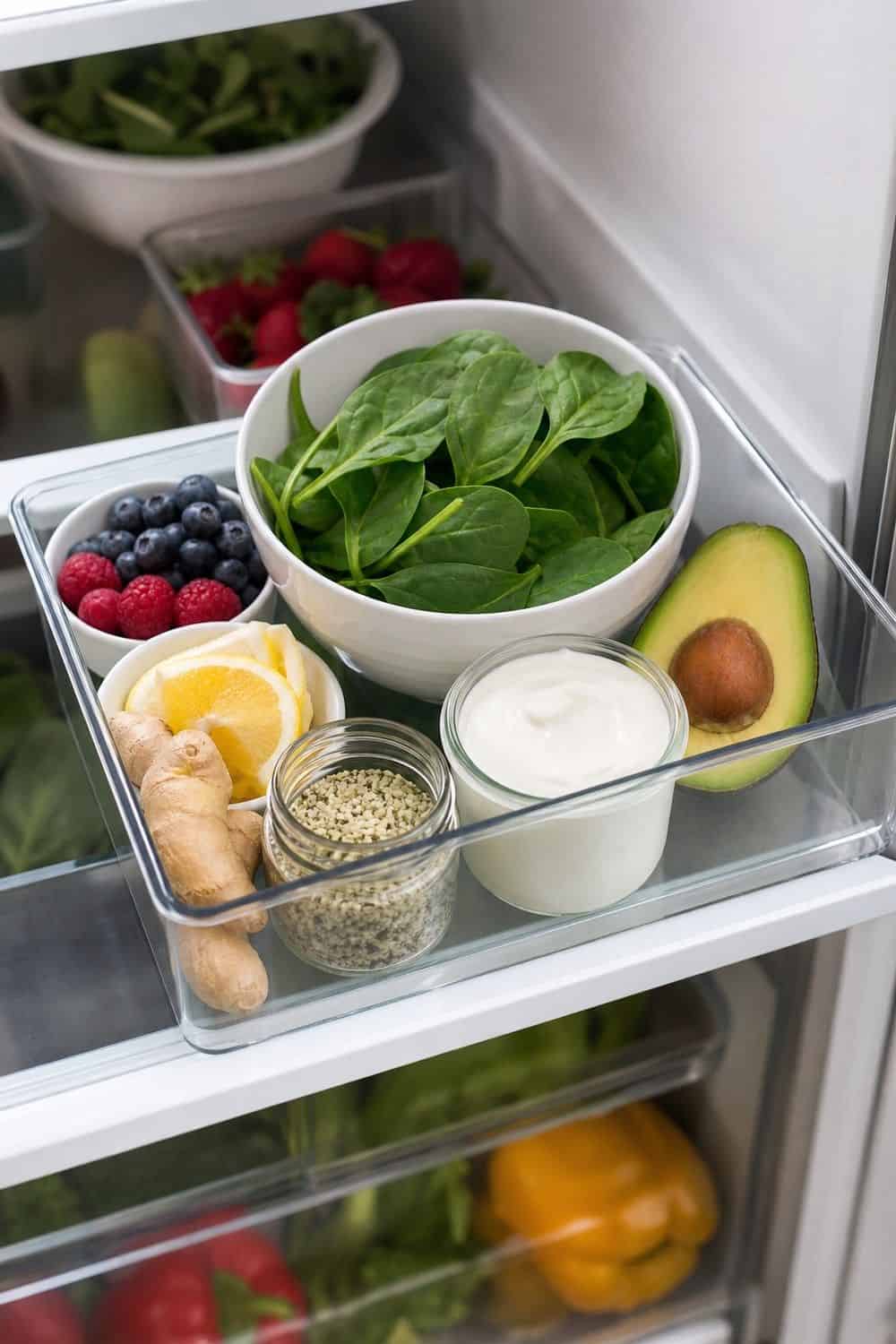
A smoothie bin collects fresh add-ins so blending does not require a fridge search. Use washed spinach, peeled ginger, cut citrus, Greek yogurt, kefir, short-window berries, avocado halves for immediate blending, and small jars of chia or hemp seeds.
Refrigerator organizer bins help by gathering ingredients that are easy to overlook individually. This is different from freezer smoothie packs; the fridge bin is for fresh items you plan to use soon. Anything that will not be used quickly should stay whole or move to the freezer if appropriate.
Do not mix everything into cups too early. Wet fruit, greens, avocado, and yogurt age at different speeds, so keep the bin as a collection point instead of a finished smoothie kit.
15. Lentil and Bean Lunch Starter
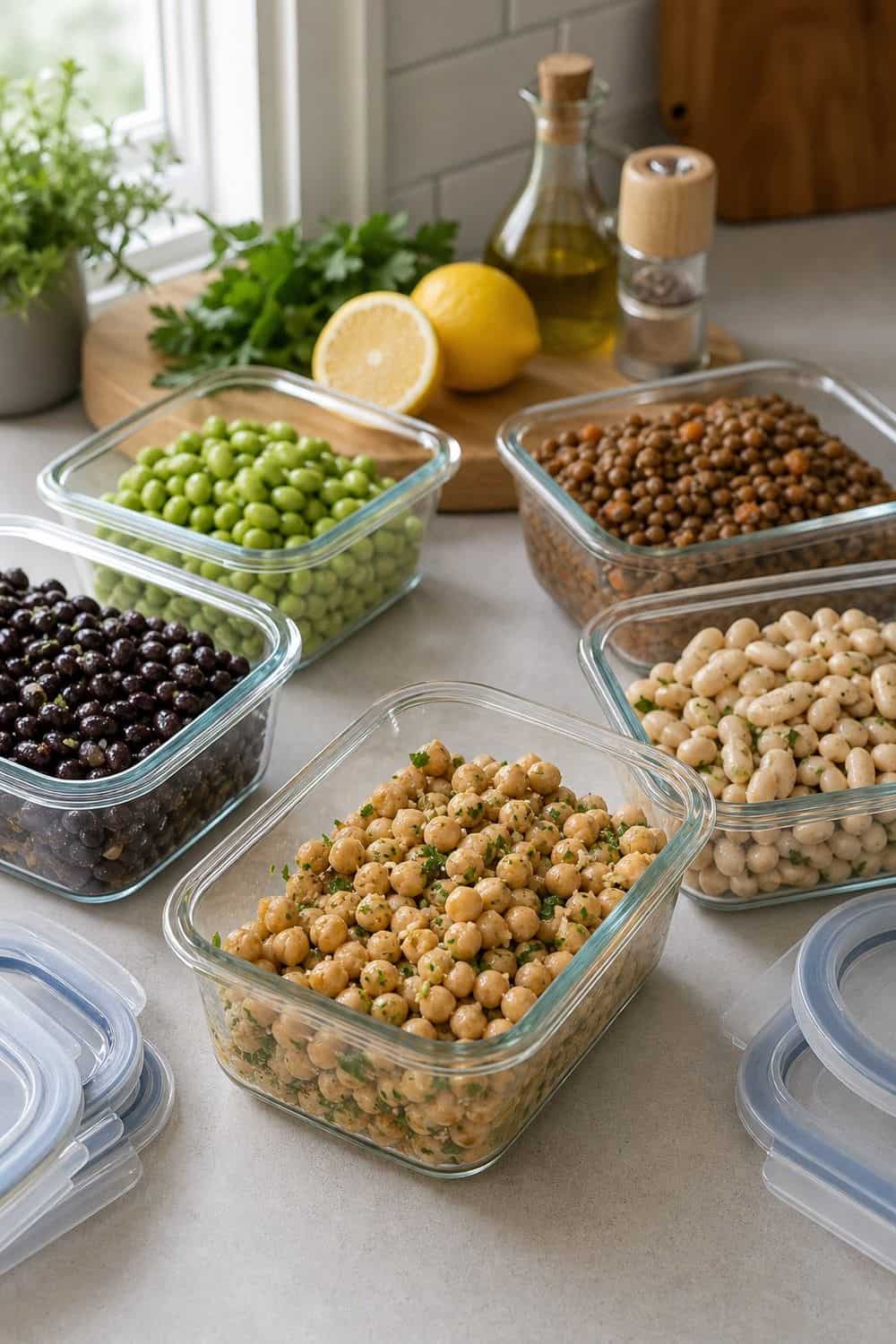
Lentils and beans make healthy fridge prep cheaper, filling, and easier to turn into lunch. Prep chickpeas, white beans, black beans, edamame, marinated beans, or cooked lentils for salads, toast, wraps, grain bowls, and quick plates.
Airtight glass containers are useful because beans can carry moisture and aroma. A tight seal keeps them fresher, while clear glass makes it obvious what needs to be used. Season one batch simply, then add lemon, herbs, olive oil, chili, or vinaigrette when serving.
Keep this separate from grain prep in your mind. The job here is plant protein, not just a bowl base. Avoid burying beans under wet greens or crunchy toppings too early. Marinated beans are useful, but keep the seasoning balanced. Too much vinegar or garlic can limit where the beans fit later in the week.
16. Washed Herb Keeper

Fresh herbs make prepped food taste less flat. Parsley, cilantro, dill, basil, mint, chives, and green onions can finish bowls, eggs, yogurt sauces, beans, salads, and snack plates with very little effort. An herb keeper fits because herbs are a specific freshness problem. Trim stems, remove slimy leaves, and store herbs in the way that suits the variety. The mistake is chopping all herbs in advance and letting them darken or wilt. Prep them enough to use quickly, but keep delicate leaves whole until the meal needs them.
17. Healthy First-To-Eat Shelf
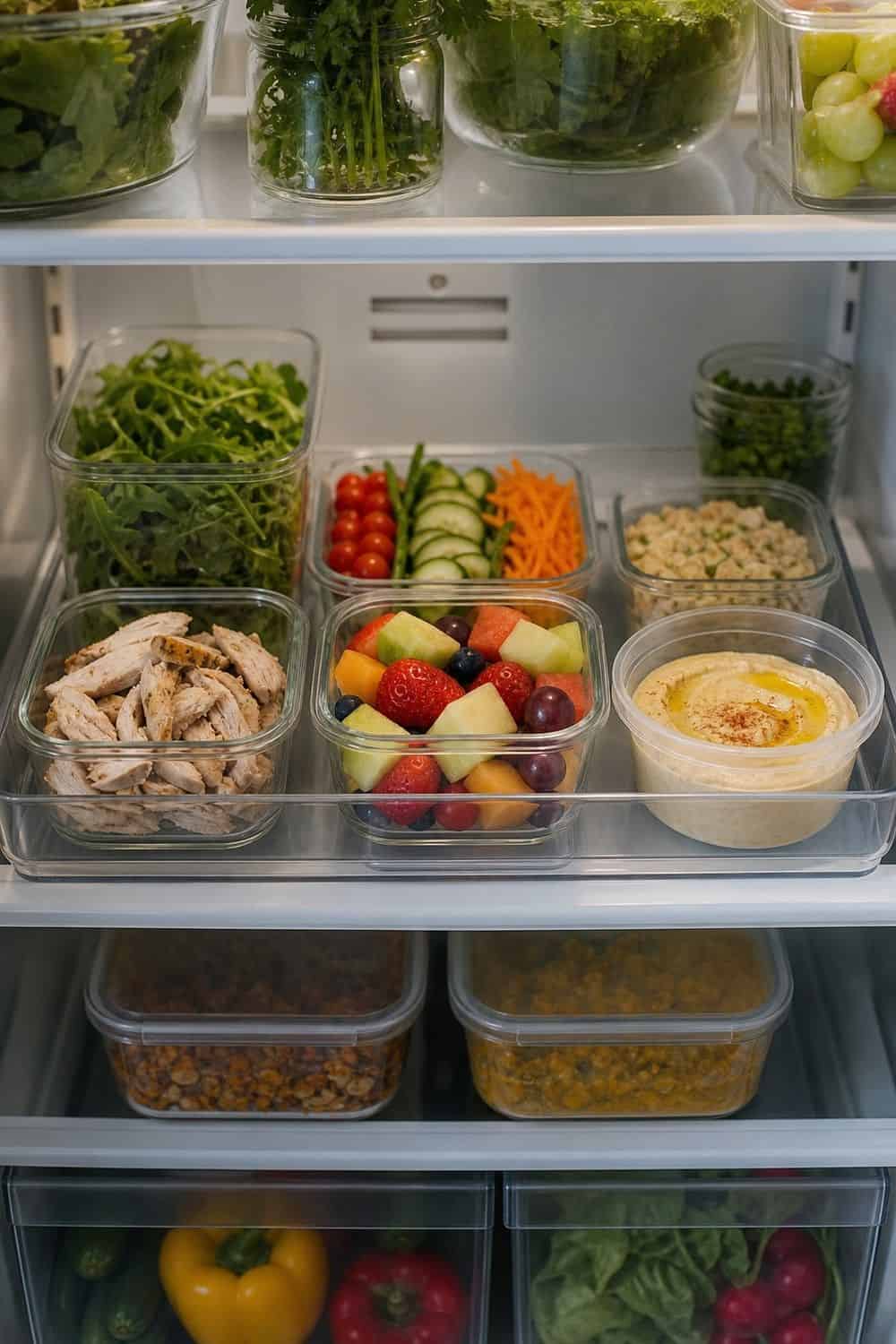
Food rotation is where healthy prep either works or fades. Use one shelf for cooked protein, cut fruit, opened hummus, prepped greens, herbs, dressed-free salad parts, and any leftovers that should become lunch or dinner soon. A fridge shelf organizer gives those foods a visible place.
This is not the same as a leftover-storage system; it is a healthy-choice rotation area for ready-to-eat fridge prep. Older food goes toward the front, newer prep goes behind it. Keep this shelf separate from raw ingredients, and check it before making something new. If chicken, greens, and dressing are already waiting, the next meal may only need assembly.
18. Chia and Oat Mini Jars

Mini jars are a small no-cook breakfast or snack lane, not an entire breakfast meal prep plan. Make chia pudding, yogurt oats, seed pudding, or small oat jars when you want something ready but not oversized. Small mason jars with lids help because the portion stays modest and portable.
Add berries, cinnamon, yogurt, milk, chia, oats, or seeds, but keep crunchy toppings separate until eating. Do not make every jar the same if boredom is the issue. Two flavors in smaller amounts will usually serve the fridge better than a tray of identical jars, and the lane should stay small on purpose.
19. Sauce and Crunch Topper Kit

Texture is often what makes healthy fridge food feel finished. Keep seeds, toasted nuts, roasted chickpeas, croutons, tortilla strips, pickled onions, hot sauce, salsa, or dressing in small portions so bowls and salads do not taste flat. Condiment cups with lids fit tiny add-ons that need separation.
Crunch should not sit on wet greens, and sauce should not soak crackers, herbs, or roasted chickpeas. Keep only the toppers you actually use, label any homemade sauce, and refresh crunchy items before they taste stale. Store crunch outside the fridge if it stays crisper there, because crisp texture is more useful than forcing every part cold.
20. Friday Fridge Sweep Tray
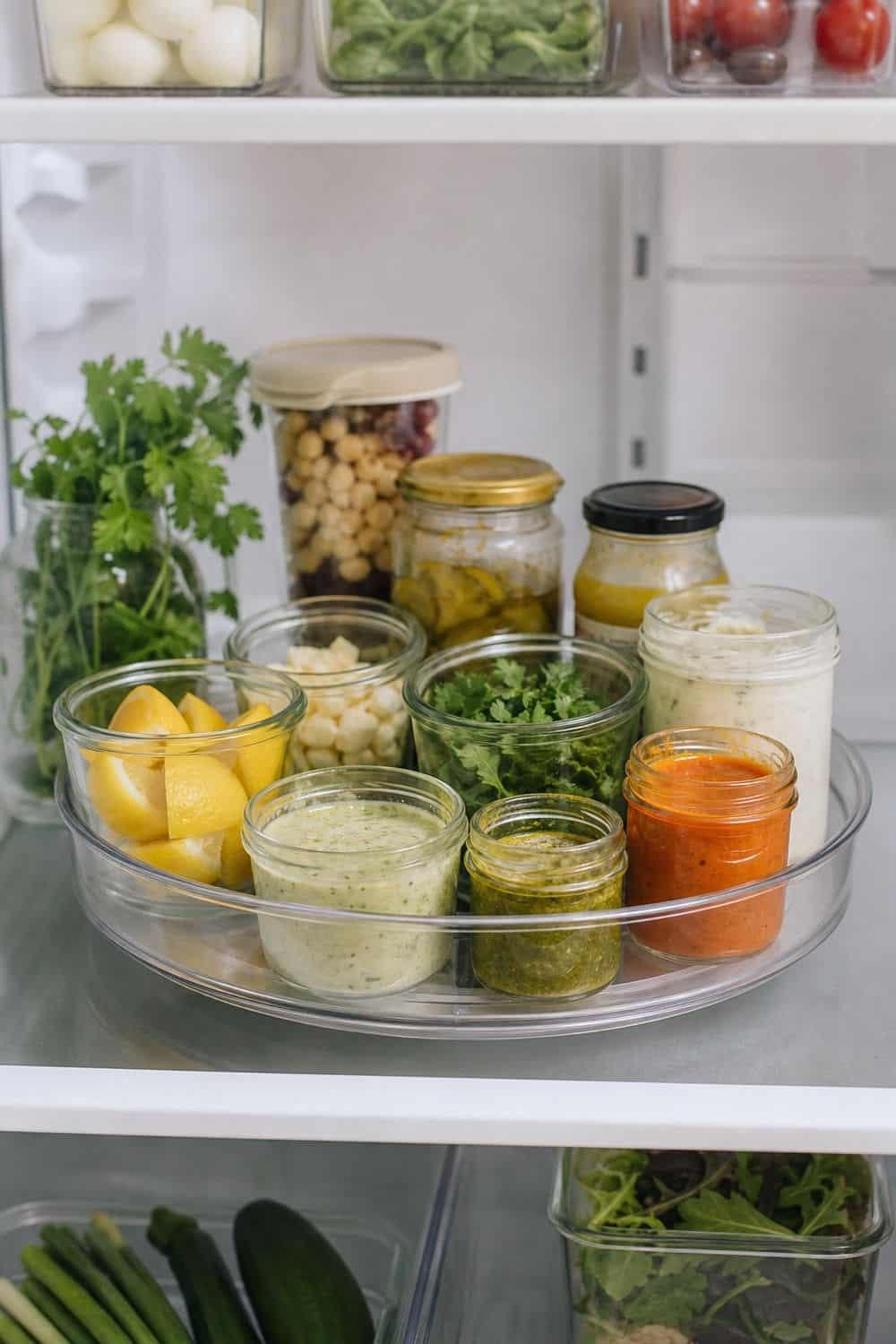
The Friday sweep is where healthy fridge prep turns into waste prevention. Gather opened jars, half-used dips, cut lemons, sauces, small containers, herbs, and foods that need to be used before shopping again. A fridge lazy susan helps because small items stop hiding in the back.
Use the tray to plan a snack plate, soup add-in, grain bowl, salad topping set, or sauce for roasted vegetables. Discard anything unsafe-looking, off-smelling, or unknown. A spoonful of dressing, half a lemon, and a few herbs can turn prepped beans or greens into a meal instead of another forgotten purchase.
Healthy Fridge Prep Rules That Keep Food Useful
Healthy fridge prep means preparing fresh building blocks that make balanced meals easier: vegetables, fruit, proteins, dips, grains, beans, sauces, herbs, and first-to-eat foods. A simple pairing formula helps: protein plus fiber plus color plus flavor, with healthy fats when they make sense. That might be yogurt with berries and seeds, vegetables with hummus, chicken with greens and dressing, or beans with grains and herbs.
Keep the safety baseline steady. Cold foods stay cold, cooked items should be labeled, raw ingredients should be stored below finished prep, and anything questionable should be tossed. Dressing, crunchy toppings, herbs, wet fruit, avocado, crackers, delicate greens, and hot leftovers usually belong separate until serving. If produce wilts quickly or your household gets bored, prep smaller amounts twice a week and use shortcuts without guilt: bagged greens, rotisserie chicken, canned beans, store-bought hummus, cottage cheese, Greek yogurt, prewashed vegetables, frozen grains, and ready sauces.
Frequently Asked Questions
What are healthy fridge prep ideas?
Healthy fridge prep ideas are ready-to-eat or ready-to-assemble foods that make balanced meals easier. Think washed greens, cut vegetables, fruit cups, Greek yogurt, cottage cheese, cooked chicken, eggs, beans, grains, dressings, herbs, and first-to-eat foods. The goal is to reduce decision fatigue without making full meal boxes.
How do I stock my fridge for healthy eating?
Stock the fridge with foods that pair quickly: greens, vegetables, fruit, protein-rich staples, dips, sauces, cooked grains, beans, and herbs. Put ready-to-eat healthy food at eye level, label cooked items, store uncooked proteins safely below finished prep, and leave space for a first-to-eat shelf.
What foods should I prep in the fridge each week?
Prep foods you will actually use: greens, vegetable sticks, berries, cut fruit, yogurt, cottage cheese, boiled eggs, cooked chicken, beans, grains, dressing, herbs, and one snack pairing. Smaller twice-weekly prep often works better than filling the fridge with foods that wilt before they are eaten.
How do I keep prepped vegetables fresh?
Keep vegetables dry or lightly hydrated depending on the type. Use containers that control moisture, add a towel when helpful, and avoid mixing watery vegetables with delicate greens. Prep a realistic amount so the vegetables stay crisp enough to eat with dips, lunches, snack plates, and dinners.
What healthy snacks should I keep in the fridge?
Keep snacks that pair protein, fiber, color, and flavor. Good options include vegetables with hummus, cottage cheese with berries, yogurt with seeds, eggs with fruit, cheese with vegetables, bean dip with peppers, and snack plates with nuts or roasted chickpeas. Keep crackers and crunchy toppings separate.
How long does healthy fridge prep last?
It depends on the food, how it was prepped, and how cold it stays. Washed greens, cut fruit, cooked protein, eggs, beans, sauces, and herbs all behave differently. Label cooked items, keep cold foods cold, and toss anything that looks unsafe, smells off, has an unusual texture, or has an unknown age.
What should I keep separate until serving?
Keep dressing, sauces, crunchy toppings, herbs, wet fruit, avocado, crackers, delicate greens, and hot leftovers separate until serving. Separation protects texture and keeps one prepped ingredient useful in several meals. It also helps vegetables, grains, proteins, and snack foods stay appealing longer.
How do I organize my fridge so healthy food gets eaten first?
Create one first-to-eat shelf or tray for cooked protein, cut fruit, opened dips, prepped greens, herbs, and foods that need attention soon. Put older items in front and newer prep behind. Keep ready-to-eat foods visible, labeled, and separate from uncooked meat or seafood.
Final Thoughts
The strongest healthy fridge prep ideas make good choices visible before the day gets busy. Dry greens, crisp vegetables, protein staples, careful fruit storage, separated dressings, fresh herbs, and a first-to-eat shelf can do more than a fridge full of finished meals. Prep the foods your household actually uses, keep fragile pieces separate, and let the fridge guide you toward the next easy bowl, snack, smoothie, or side.
Last update on 2026-09-18 / Affiliate links / Images from Amazon Product Advertising API