
A weekly fridge cleanout works best before grocery shopping because it shows what is already there, what needs using, and what should be discarded before new food arrives. In 15 to 30 minutes, check the temperature, scan one zone at a time, toss questionable food, label leftovers, wipe spills, refresh produce drawers, contain raw meat, choose one use-it-up meal, and restock without overcrowding.
The fridge usually gets messy in small, ordinary ways: a sticky jam ring on the shelf, herbs forgotten behind yogurt, a container with no date, an extra bottle of dressing, raw chicken sitting too close to ready-to-eat food. A weekly fridge cleanout keeps those small problems from turning into a crowded, sour-smelling refrigerator that works against dinner.
This is not a full appliance deep clean or a glossy restock ritual. It is a short pre-grocery routine that protects food safety, reduces waste, and makes the next shopping list more honest. The point is to see the food clearly, move urgent items forward, clean the sticky spots that matter, and leave enough room for the week ahead.
Top Recommended Products


You Might Also Like These Blog Posts
- How To Store Leftovers
- Healthy Fridge Prep
- Use-It-Up Fridge Meal Ideas
- Fridge Organization Bins
- Pantry Inventory Ideas
Weekly Fridge Cleanout Routine
1. Cleanout Day Before Groceries
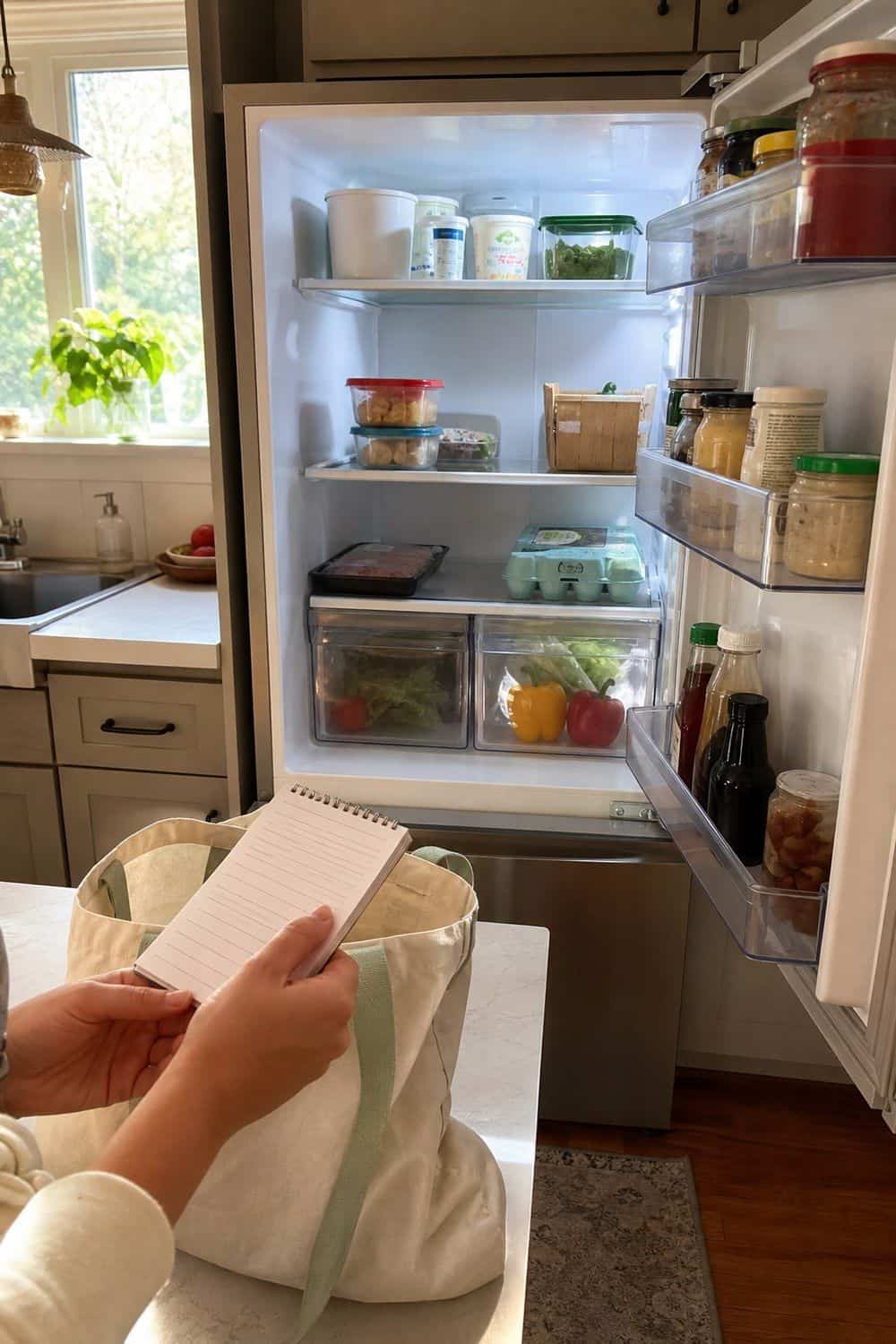
The cleanout is most useful before groceries, not after. That timing lets you see the yogurt, vegetables, leftovers, condiments, and proteins already waiting before the fridge gets filled again. It also keeps the grocery list from becoming a memory test. A fridge cleaning checklist helps turn the routine into a repeatable sweep instead of a vague plan to tidy up later.
Avoid doing the cleanout only when the fridge already smells bad. By then, food has usually been buried too long. Choose a consistent day, such as the evening before pickup, delivery, or a weekend grocery trip, so the habit stays small. If grocery day moves, move the cleanout with it; the routine works because the food decisions happen before the shopping decisions.
2. Temperature Check Before Starting

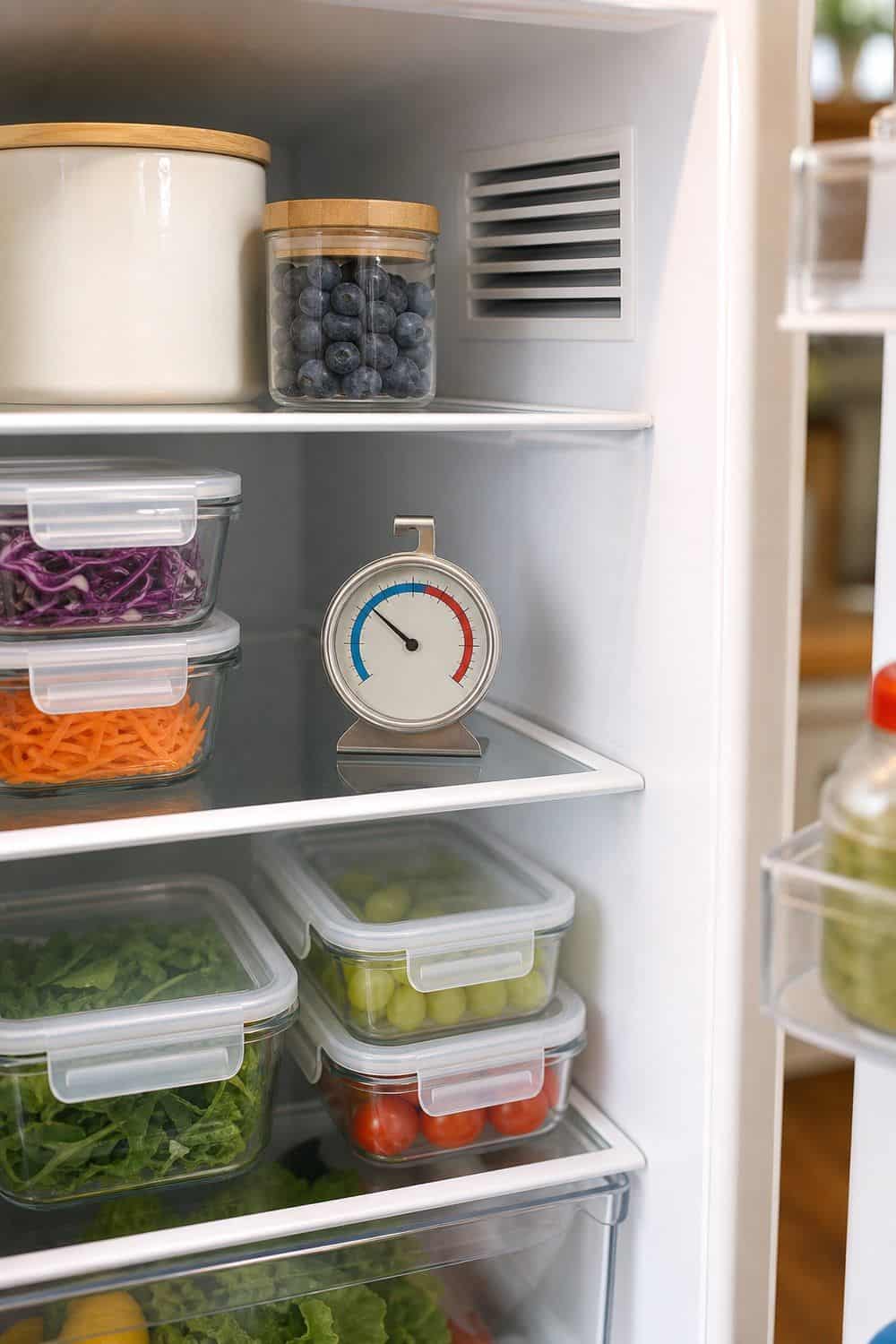
Before moving food around, check that the refrigerator is holding at 40 F or below. A weekly fridge reset is a natural time to notice if the fridge feels too warm, if the door has been left ajar, or if cold air is blocked by crowded containers.
A fridge thermometer helps because it gives you a plain reading instead of relying on how cold a shelf feels by hand. Place it where you can see it during the cleanout, then look again after restocking if the fridge has been open for a while.
- Check for: blocked vents, warm door storage, and overfilled shelves.
- Avoid: treating a temperature problem as an organization problem.
If the temperature seems off, keep the cleanout focused and return food promptly. This step is a safety baseline, not a technical repair manual.
3. One-Zone-at-a-Time Fridge Pull
Emptying the whole fridge can make a quick refrigerator cleanout feel bigger than it needs to be. Work one shelf, drawer, or door section at a time so perishable food is not sitting on the counter while you decide what to do with everything else.
A collapsible dish tub gives jars, dairy, produce, leftovers, or condiments a temporary landing place while you wipe that zone. It also catches sticky bottle bottoms and small leaks that would otherwise move from shelf to counter.
Move quickly and return cold food promptly. If one section needs more attention, finish that section before starting the next. The mistake is turning a 20-minute routine into a full-fridge evacuation with milk, leftovers, and meat waiting too long.
4. Unsafe or Questionable Food First
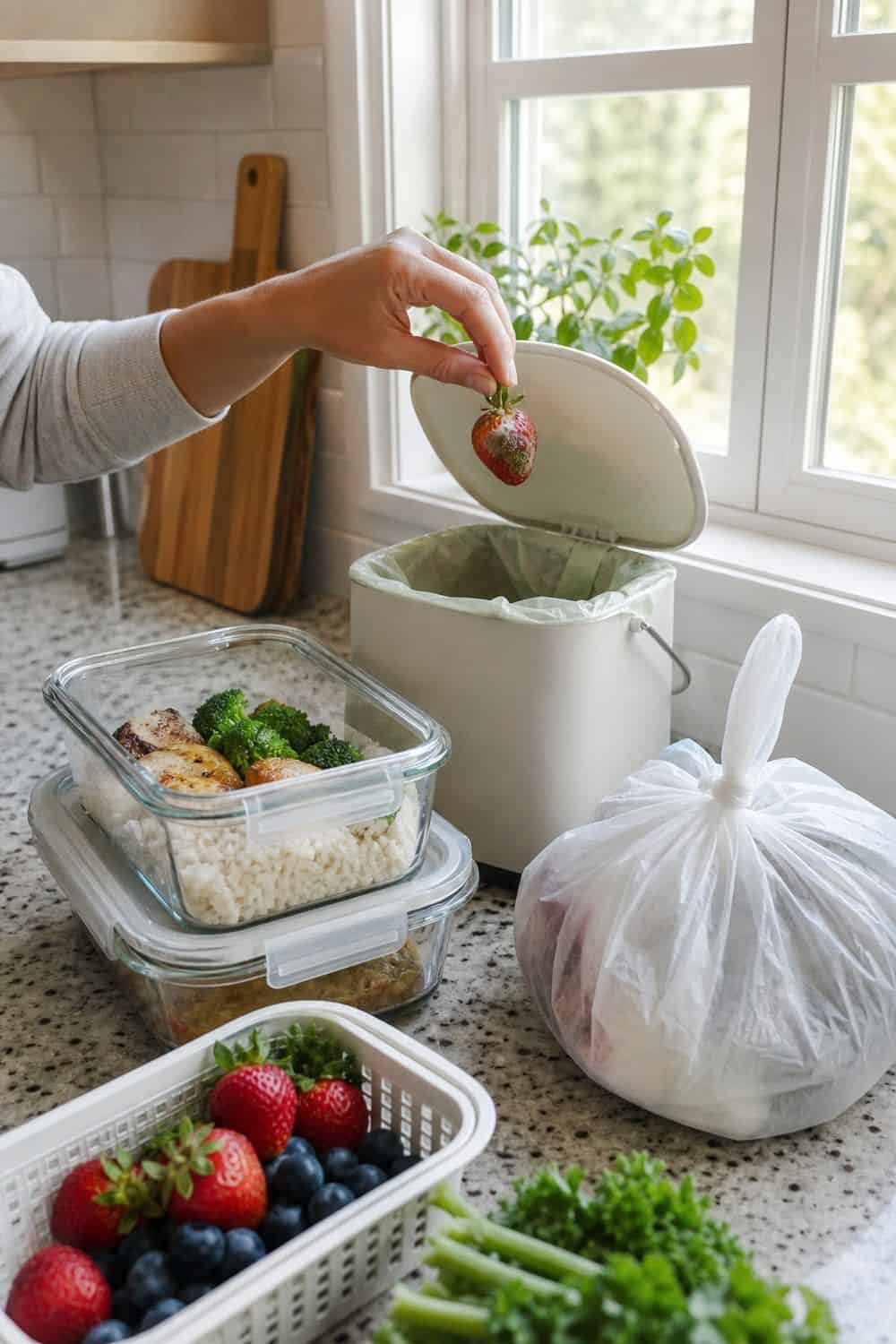
Discard decisions should happen early, before you start wiping shelves or rearranging bins. Look for moldy produce, slimy greens, off-smelling leftovers, leaking containers, food with an unknown date, expired dairy, or anything that sat out too long.
A countertop compost bin can help with appropriate fruit and vegetable scraps, but it is not for every fridge problem. Unsafe cooked food, meat, dairy, greasy leftovers, and packaging need proper trash handling according to how your household disposes of waste.
Keep the tone with yourself calm and decisive. A clean fridge is not about saving every item at all costs. If food looks wrong, smells wrong, feels wrong, or has no reliable date, do not make it someone else’s lunch. Handle discard first so the rest of the routine is clearer; once unsafe food is gone, the remaining choices are use soon, freeze, label, wipe, or return.
5. Leftovers Sorted by Date and Next Job
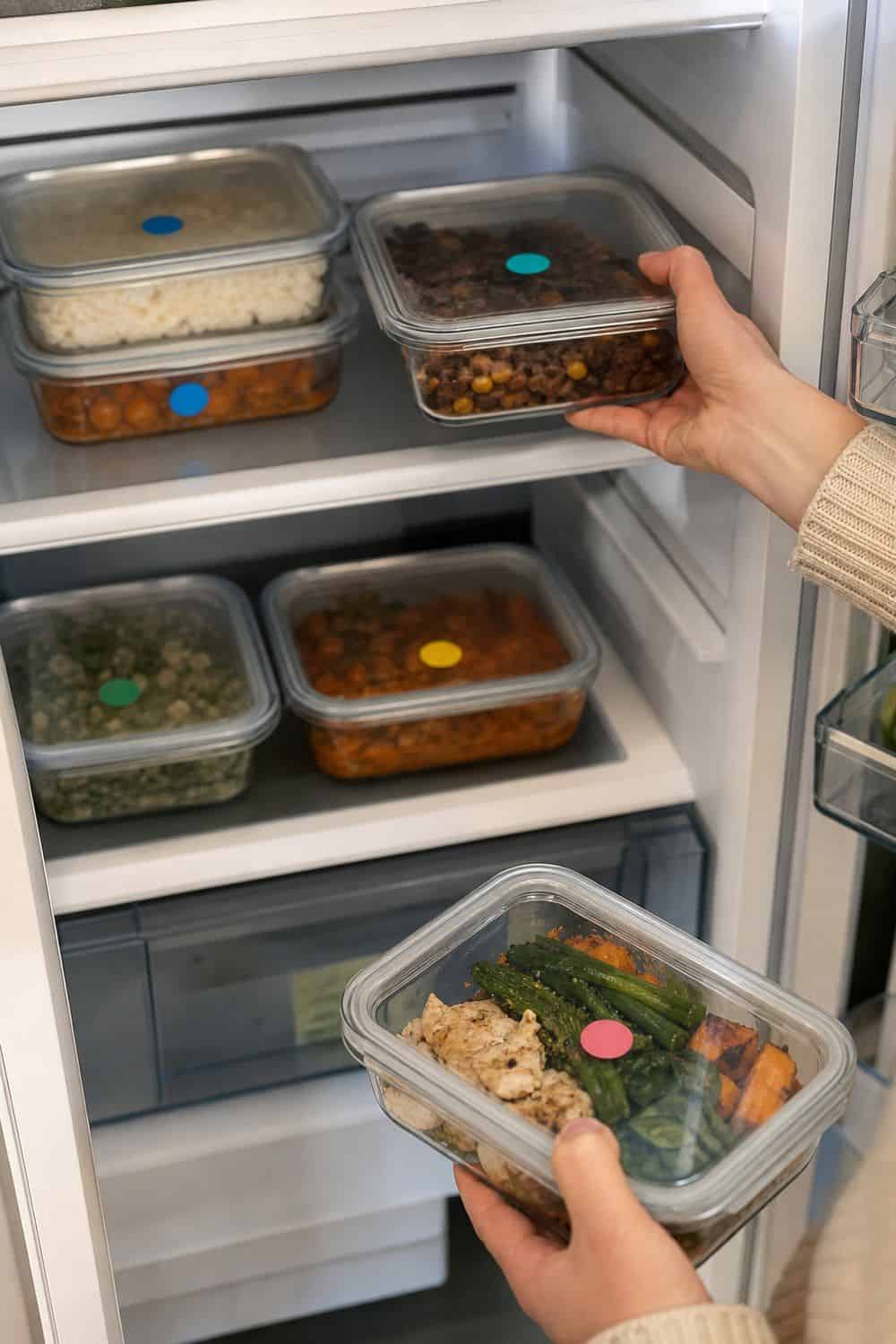
Leftovers need more than a lid. During the cleanout, sort containers by what they are, when they were cooked, and what should happen next. A container might become lunch, soup, fried rice, tacos, a freezer portion, or trash. Leftover labels make the decision visible, especially when they include the food name, date, and next job.
Labels do not make old food safe. Use sealed shallow containers for leftovers, keep dates honest, and reheat leftovers to 165 F when they are served. If the date is missing and no one remembers the meal, the weekly cleanout should remove the guesswork.
6. Eat-This-First Spot
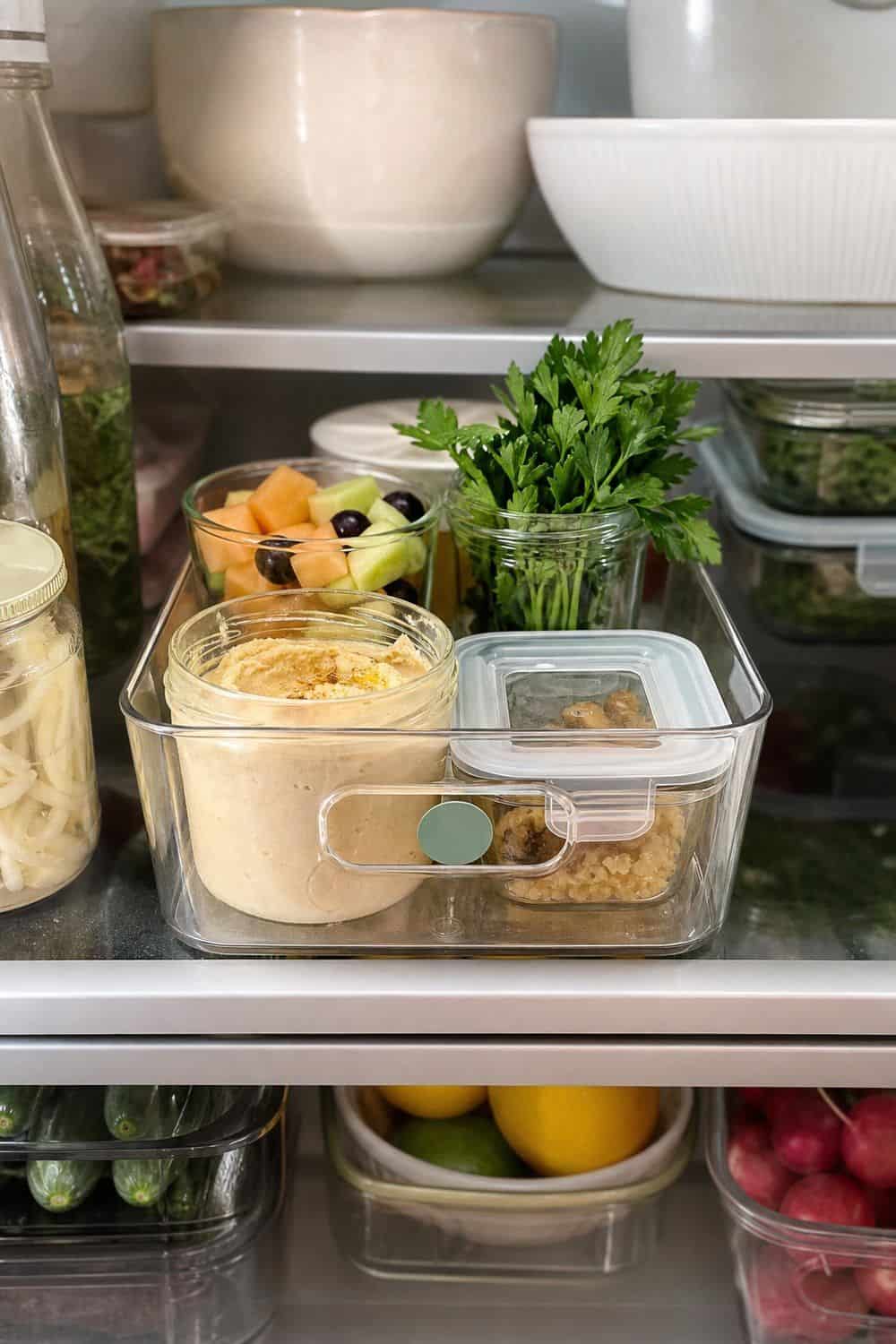
A use-first spot gives urgent food one clear address. Put opened hummus, cut fruit, cooked grains, leftovers, herbs, vegetables nearing the end, and small containers that need attention where they can be seen at eye level.
A first in first out fridge bin helps because it keeps the section contained and easy to empty during the week. The bin should be small enough to create action, not so large that it becomes a second junk drawer for everything uncertain.
Use it as a weekly food-waste tool, not a full fridge-organization makeover. If the bin is still full before the next grocery trip, choose a meal from it before buying more produce, dips, or cooked proteins. One small bin also keeps the fridge inventory routine honest: if it overflows every week, the household is buying or cooking more perishable food than it can use.
7. Sticky Shelves and Jar Bottoms

Weekly cleaning is mostly about the sticky places that make the fridge feel grimy: sauce rings, jam on the shelf, crumbs near cheese, fruit juice under a container, and drips along shelf edges. You do not need to dismantle the whole appliance every week.
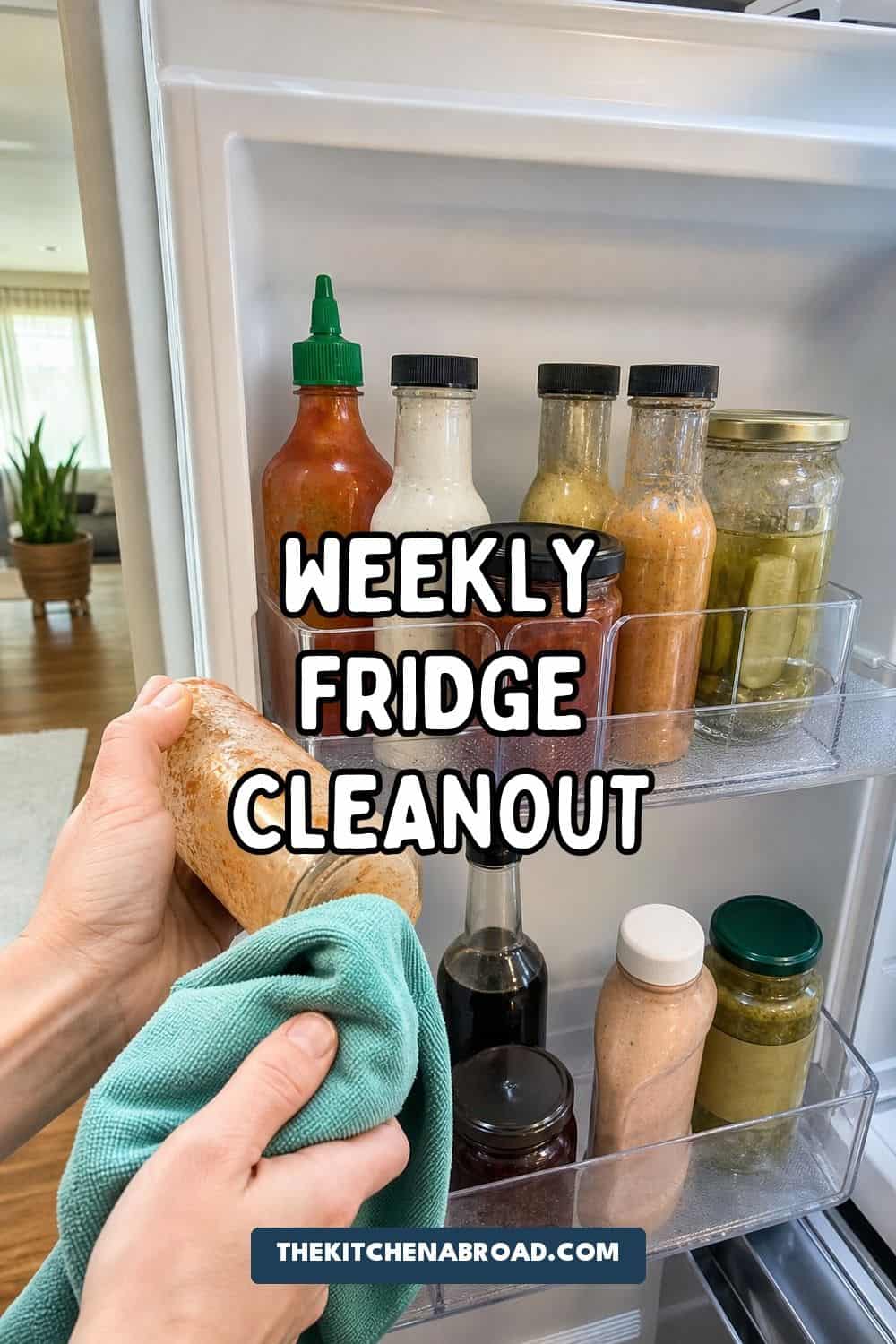
Microfiber cleaning cloths work well for this kind of quick pass because they can wipe shelves, jar bottoms, drawer lips, and door ledges without turning the routine into a soaking project. Use mild dish soap, a baking soda solution, or another fridge-safe cleaner according to product directions, then dry surfaces before returning food. The mistake is wiping only the shelf while putting the same sticky jar right back down.
8. Produce Drawer Refresh
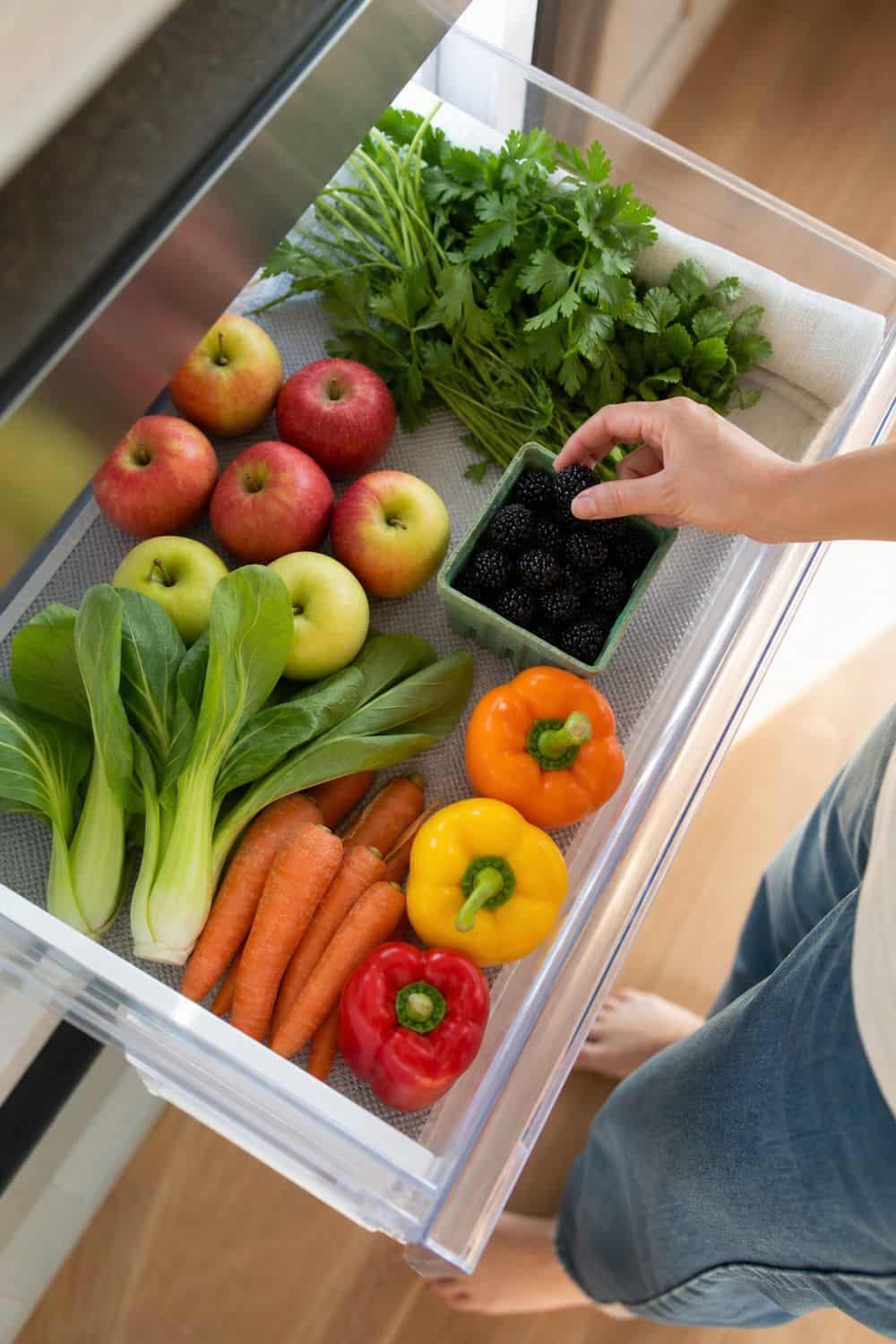
Produce drawers can hide waste because the food is tucked away and often damp. Check greens, herbs, berries, apples, carrots, peppers, mushrooms, and loose vegetables. Remove spoiled pieces before they affect the rest of the drawer.
Fridge drawer liners help make the weekly scan easier because moisture, crumbs, and berry stains are easier to spot and handle. Replace, rinse, or wipe the liner as needed, then dry the drawer before putting produce back.
This is different from a full crisper reorganization. You are checking condition, removing waste, drying excess moisture, and moving urgent produce forward. Do not bury tender herbs or berries under heavier vegetables after you have just found them.
- Use soon: soft herbs, opened berries, cut vegetables, and greens nearing the end.
- Store longer: firm apples, carrots, peppers, and vegetables that still look dry and sound.
9. Raw Meat in a Leak-Safe Low Spot
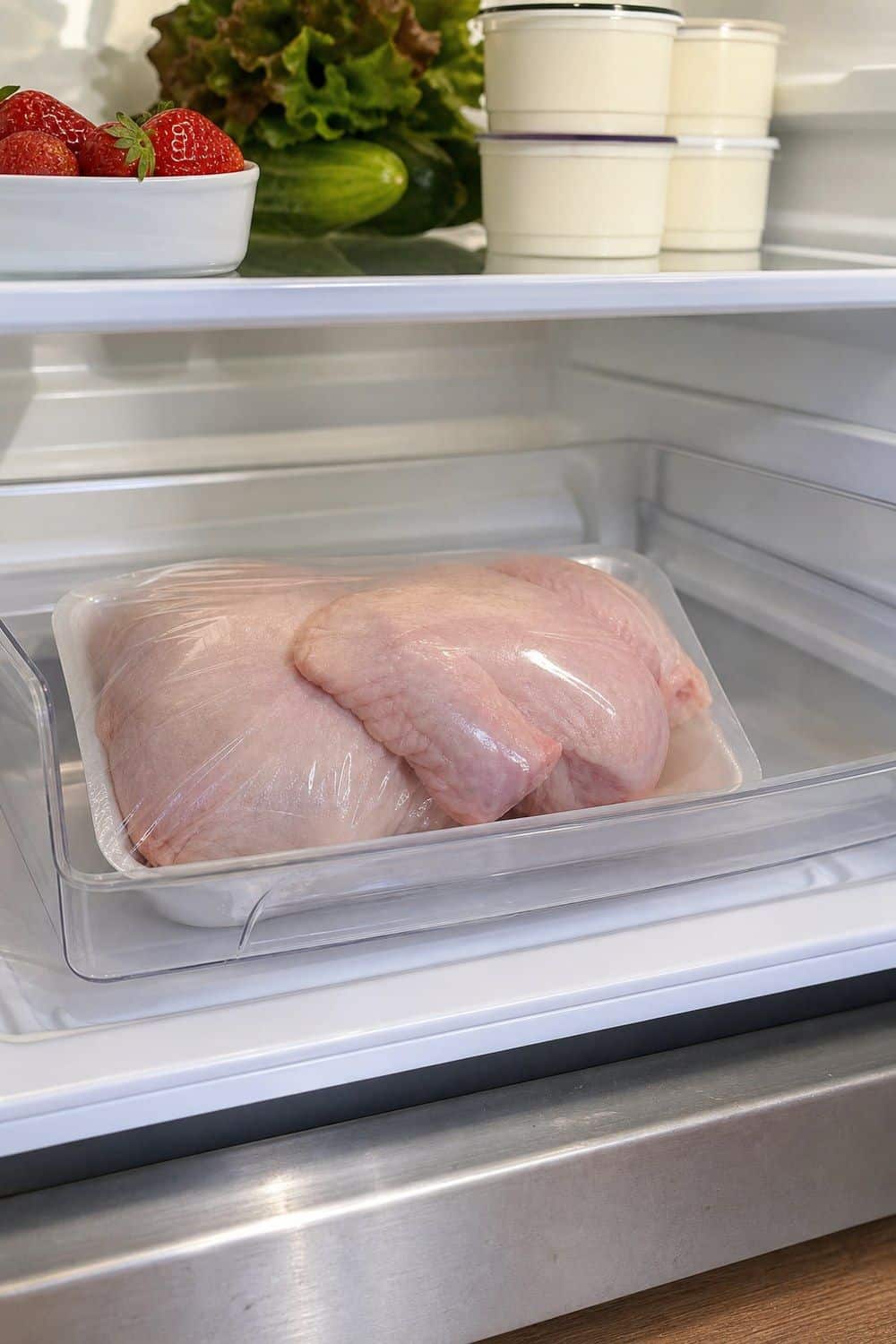
Raw meat, poultry, and seafood need a low, contained place so leaks cannot drip onto ready-to-eat foods. During the weekly cleanout, check packaging, dates, and whether the item should be cooked soon or moved to the freezer.
A refrigerator meat tray gives raw packages a defined landing spot instead of letting them slide beside fruit, yogurt, or leftovers. Keep the tray low, wipe it if anything leaks, and separate raw food from foods that will be eaten without further cooking.
This step is safety-first, not visual styling. Do not place raw meat high in the fridge because it fits better there, and do not ignore a leaky package until the next deep clean. Containment is part of the weekly routine.
10. Door and Condiment Clearout
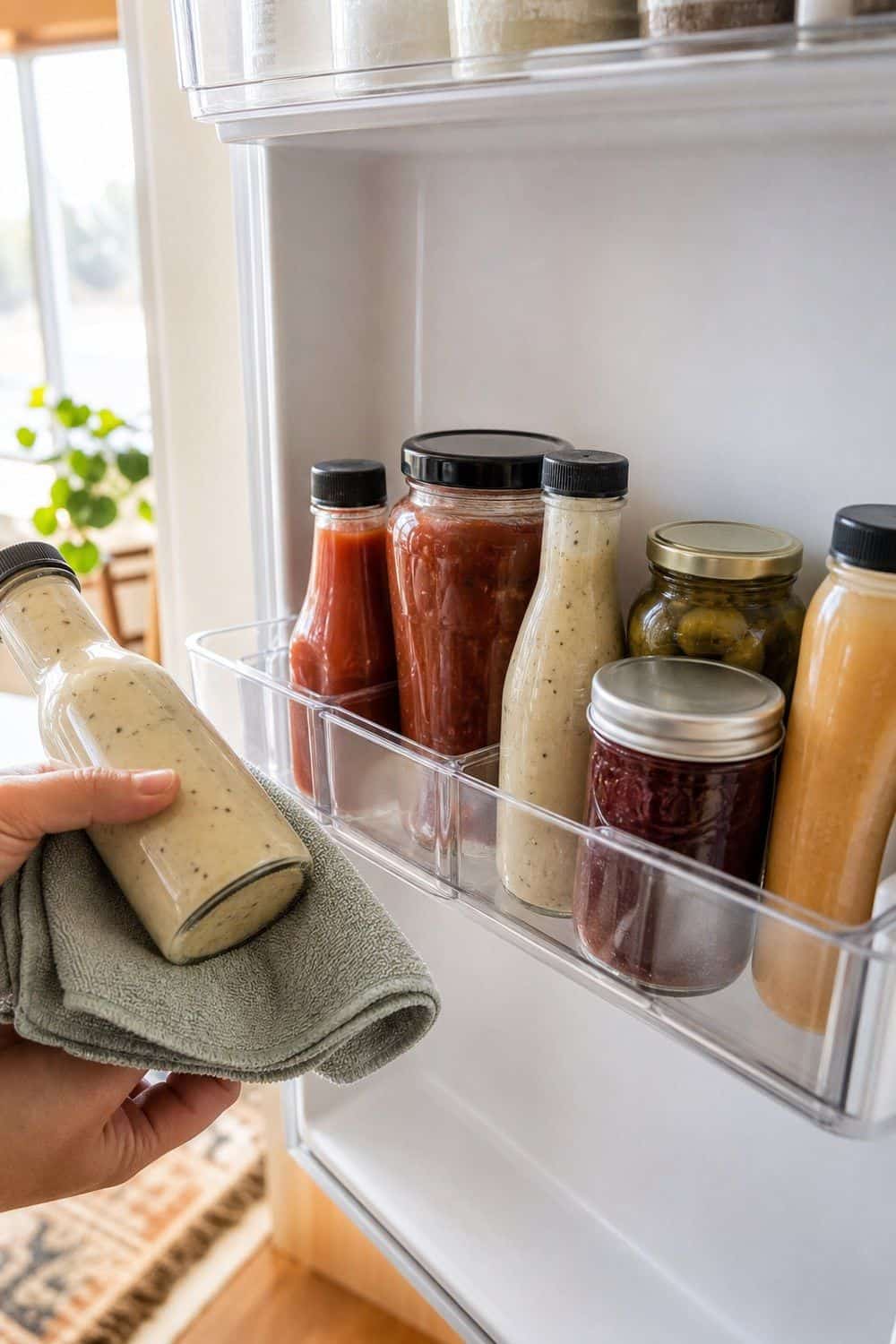
The door collects duplicates because bottles are easy to tuck away. Check sauces, jams, pickles, dressings, salsa, pesto, hot sauce, syrups, and backup jars. Wipe sticky lids and bottle bottoms while each item is out.
A condiment bottle organizer supports the audit after the decision-making is done. Group similar bottles so you can see what is open before buying another dressing or sauce. Combine jars only when it is safe, appropriate, and clearly the same food.
Do not let the door become a museum of almost-empty jars. If a condiment is moldy, smells off, has a questionable lid, or has no reliable age, discard it. If it is safe but nearly empty, write it into one meal this week. This is also where duplicate buying becomes obvious: one open mustard and one backup is useful; four half-used dressings usually means the door needs a decision.
11. One Use-It-Up Meal Plan
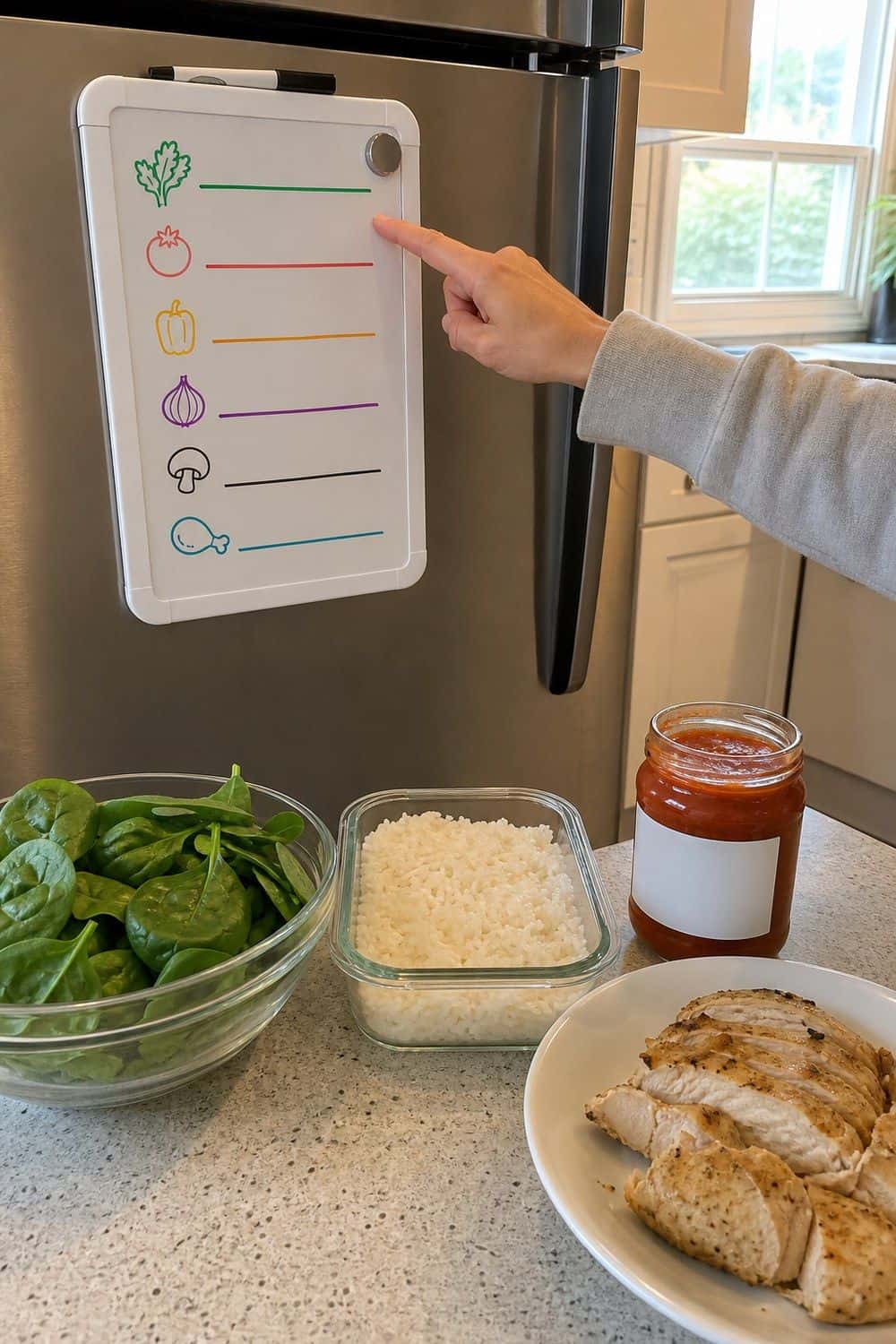
The cleanout should lead to one food decision, not a huge cooking plan. Pick the meal that uses the most urgent safe food: frittata for vegetables and eggs, fried rice for rice and bits, soup for soft produce, quesadillas for cheese and tortillas, or tacos for cooked protein.
A fridge dry erase board keeps that decision visible after the door closes. Write one use-it-up meal and the ingredients it should use first. This turns the cleanout into dinner guidance instead of another list no one opens.
- Useful prompt: “Use before shopping: spinach, rice, salsa, cooked chicken.”
- Possible meal: quesadillas, grain bowls, soup, pasta, tacos, or snack plate dinner.
Keep it to one meal. This article is a fridge cleanout routine, not a full use-it-up recipe plan.
12. Airflow and Leftover Space After Restocking
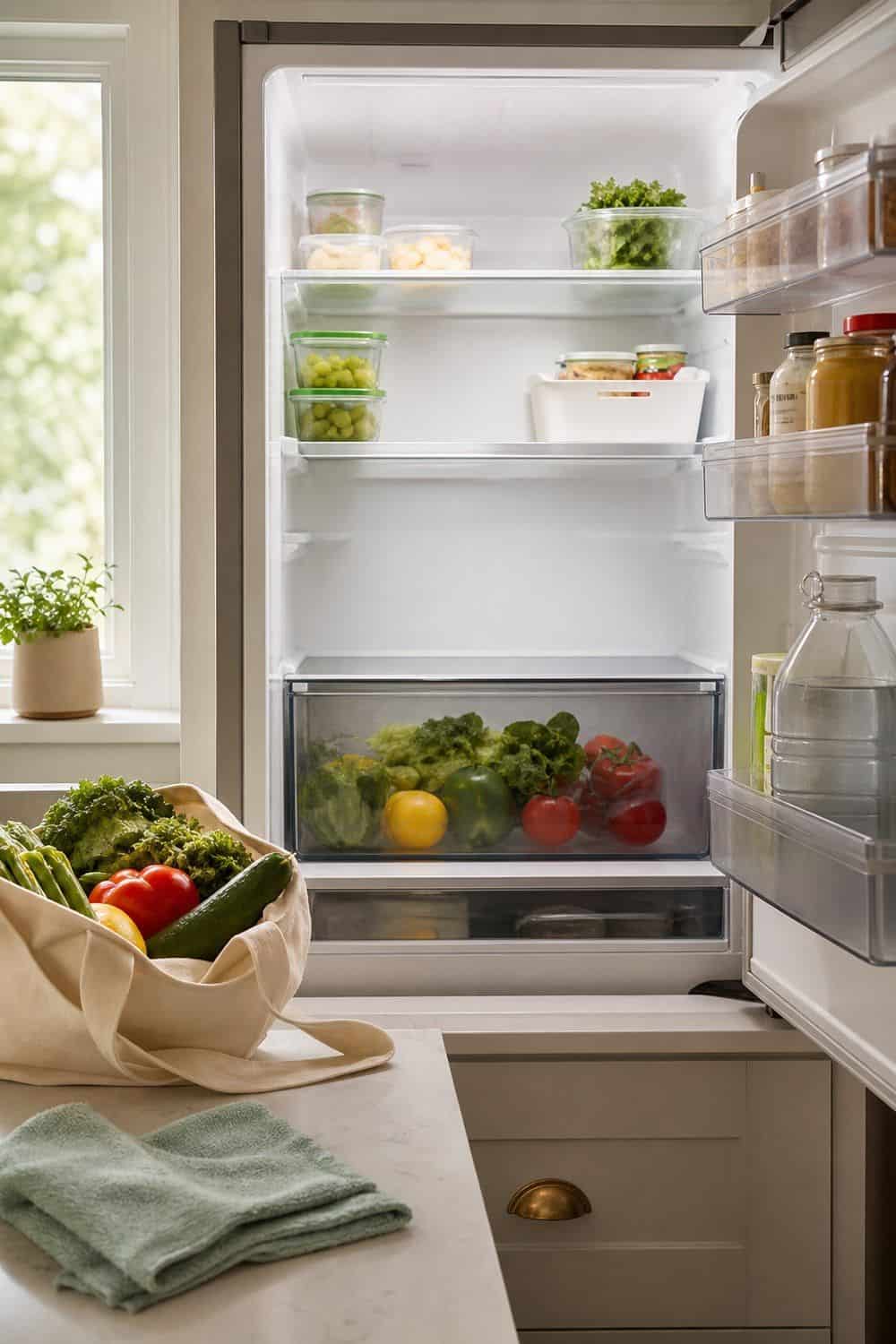
Restocking is where the routine either holds or collapses. Return older items forward, ready-to-eat foods above raw food, door items to the door, and urgent food where it can be seen. Leave space around vents where possible. Stackable food storage containers help when they prevent leaning piles and make leftovers easier to see, but they should not become an excuse to overfill every shelf.
Leave a little room for new leftovers from the coming week. A fridge packed tightly right after cleaning is harder to cool evenly, harder to scan, and easier to ignore. The goal is food that is safe, visible, and likely to be used.
Frequently Asked Questions
How often should I clean out my fridge?
A quick weekly cleanout is enough for most households if it is done consistently before groceries. Use that pass to check temperature, remove questionable food, label leftovers, wipe spills, and move use-first items forward. Deeper cleaning, such as removing shelves or washing drawers fully, can happen less often unless there is a spill or odor.
What should I throw away during a weekly fridge cleanout?
Throw away food that is moldy, slimy, off-smelling, leaking, unknown-age, left out too long, or clearly past safe use. Be especially cautious with meat, seafood, dairy-heavy leftovers, cooked rice, cooked pasta, and dressed greens. Compost only appropriate produce scraps, and handle cooked food, meat, dairy, and packaging through proper trash disposal.
Should I clean my fridge before or after grocery shopping?
Clean the fridge before grocery shopping when possible. A pre-grocery cleanout lets you see what is already there, avoid duplicate buying, make space for fresh food, and choose one meal from urgent leftovers or produce. Cleaning after shopping often means new groceries get stacked on top of older food.
How long should leftovers stay in the fridge?
Many cooked leftovers are short-term fridge foods, so label them with the food name and date, store them in sealed shallow containers, and use or freeze them while they are still clearly safe. Reheat leftovers to 165 F when served. If a container has no date and no one remembers it, do not guess during the cleanout.
How do I keep my fridge from smelling bad?
Remove spoiled food promptly, wipe sticky shelves and jar bottoms, keep leftovers sealed, and check produce drawers for hidden soft spots. Strong odors often come from forgotten containers, leaking packages, old condiments, or produce that has broken down. A weekly scan catches those problems before they spread.
What is the safest way to organize raw meat in the fridge?
Keep raw meat, poultry, and seafood low in the fridge and contained on a tray or in a bin so leaks cannot drip onto ready-to-eat foods. Check packages during the weekly cleanout for leaks, dates, and cooking plans. Store ready-to-eat foods above raw foods whenever possible.
What should I do with food that needs to be used soon?
Move safe use-soon food to an eye-level eat-this-first spot and choose one meal around it before shopping. Cooked grains, herbs, vegetables, dips, cheese, tortillas, or leftovers can become frittata, fried rice, soup, quesadillas, grain bowls, tacos, pasta, or snack plate dinner. If you will not use it soon and it is still safe, freeze what freezes well.
How do I keep a fridge clean between deep cleans?
Keep the weekly routine small: check one zone at a time, wipe fresh spills, dry surfaces, label leftovers, contain raw meat, and put urgent food where people can see it. Save shelf removal, drawer washing, gasket cleaning, and appliance-specific maintenance for a deeper clean when needed.
Final Thoughts
A weekly fridge cleanout works because it turns the refrigerator into a short decision list before the grocery list grows. Check the cold baseline, move through one zone at a time, discard what should not stay, label what can be used, clean the sticky spots, and restock with enough room for real life.
Last update on 2026-09-18 / Affiliate links / Images from Amazon Product Advertising API