

A great cup of hot coffee at home comes down to three numbers: water at 93°C (200°F), a 1:16 ratio of coffee to water by weight (about 22 g grounds for 350 ml water), and a 30-second bloom before the rest of the pour. Pour-over with a Hario V60 is the default method in this guide, with a French press alternative for set-and-forget mornings. Four minutes from kettle to mug.
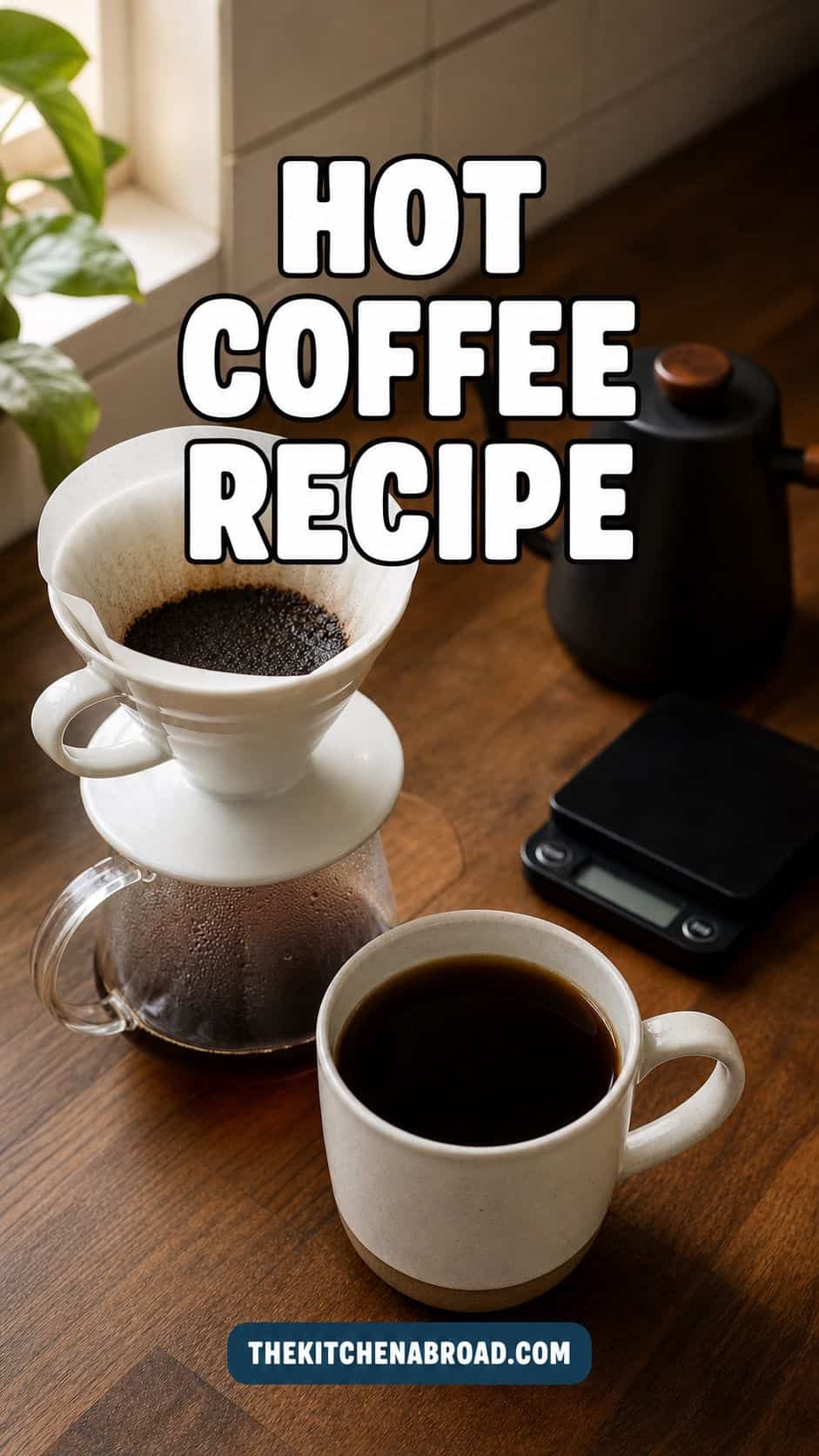
There are three numbers that turn a bag of beans into a great mug of coffee: water temperature, coffee-to-water ratio, and bloom time. Get those right and the cup tastes like a quiet café on a side street, not a gas station. The version below uses a $5 pour-over dripper and a kitchen scale, with a French press path for mornings when standing over a kettle sounds like work.
Gear That Helps Here
A pour-over dripper, a gooseneck kettle, a digital scale that reads to the gram, and a burr grinder are the four pieces of equipment that change the cup the most. The dripper and scale matter the most; the kettle is the upgrade that lets you control the pour; the grinder is what separates pre-ground beans from beans you ground forty seconds ago.
A French press is the simpler alternative if pour-over feels like a project. Five-dollar drippers from a hardware store work; ceramic Hario V60s are the standard for a reason.


Recommended Reads
- Perfect Cold Brew Coffee
- Iced Caramel Latte
- Coffee Martini
- Tahini Hot Chocolate
- Vanilla Sweet Cream Cold Brew
Why Pour-Over Is the Default Method at Home
Pour-over isn’t precious. It’s a paper filter in a plastic or ceramic cone over a mug, with hot water poured slowly through coffee grounds. The method strips out the heaviest oils and leaves a clean, bright cup that lets you taste what the beans actually are. A Kenyan washed coffee tastes like blackcurrant in a pour-over; the same beans in a French press taste like coffee. Neither is wrong. Pour-over is the one most home cooks reach for once they try it.
The bloom is what separates an okay pour-over from a great one. Coffee grounds are full of CO2 from roasting, and that gas blocks water from extracting flavor properly. Pouring a small amount of water (about twice the weight of the grounds) and waiting 30 seconds lets that gas escape. The grounds visibly puff up and release a head of foam. Without the bloom, the cup tastes thin and sour. With it, the cup tastes round and complete.
French press is the worthwhile alternative. Coarse grind, four-minute steep, slow plunge. The cup has more body because the metal mesh lets the oils through. It’s the method for cold mornings when you want a heavier mug and don’t feel like standing over a kettle. Drip machines do the same job mechanically with less control; if you have one, use a 1:16 ratio (one part coffee to sixteen parts water by weight) and a medium grind and you’re most of the way there.
A Few Notes on the Ingredients
The beans: Whole bean, roasted within the last three weeks, ground right before brewing. Pre-ground coffee from the grocery store loses most of its aromatics within an hour of grinding. A bag of single-origin from a local roaster (or a national brand like Stumptown, Counter Culture, or Blue Bottle) is the upgrade that costs about $18 and lasts two weeks of daily coffee. Medium roast is the safest starting point: it shows the bean’s character without leaning bitter.
The water: Filtered. Tap water has chlorine, minerals, and other elements that interact with coffee in ways you can taste. A Brita pitcher is enough; bottled spring water is the upgrade. Temperature is the bigger variable: 93°C (200°F) is the target. Boiling water (100°C / 212°F) over-extracts and tastes bitter. Off-boil 30 seconds gets you in the right window.
The grind: Medium for pour-over, like coarse sand or kosher salt. Coarser for French press, like sea salt or peppercorn. Drip is somewhere between the two. Pre-ground coffee labeled “all-purpose” is usually too fine for pour-over and too fine for French press; it’s the worst of both worlds.
The ratio: 1:16 by weight is the working baseline. 22 g of coffee to 350 ml of water makes one large mug. 30 g to 500 ml makes two. Stronger drinkers go 1:15; lighter drinkers go 1:17. Measuring by weight (not tablespoons) is the single change that does the most to make coffee consistent. A $20 scale pays for itself in a month.
Recipe: Hot Coffee
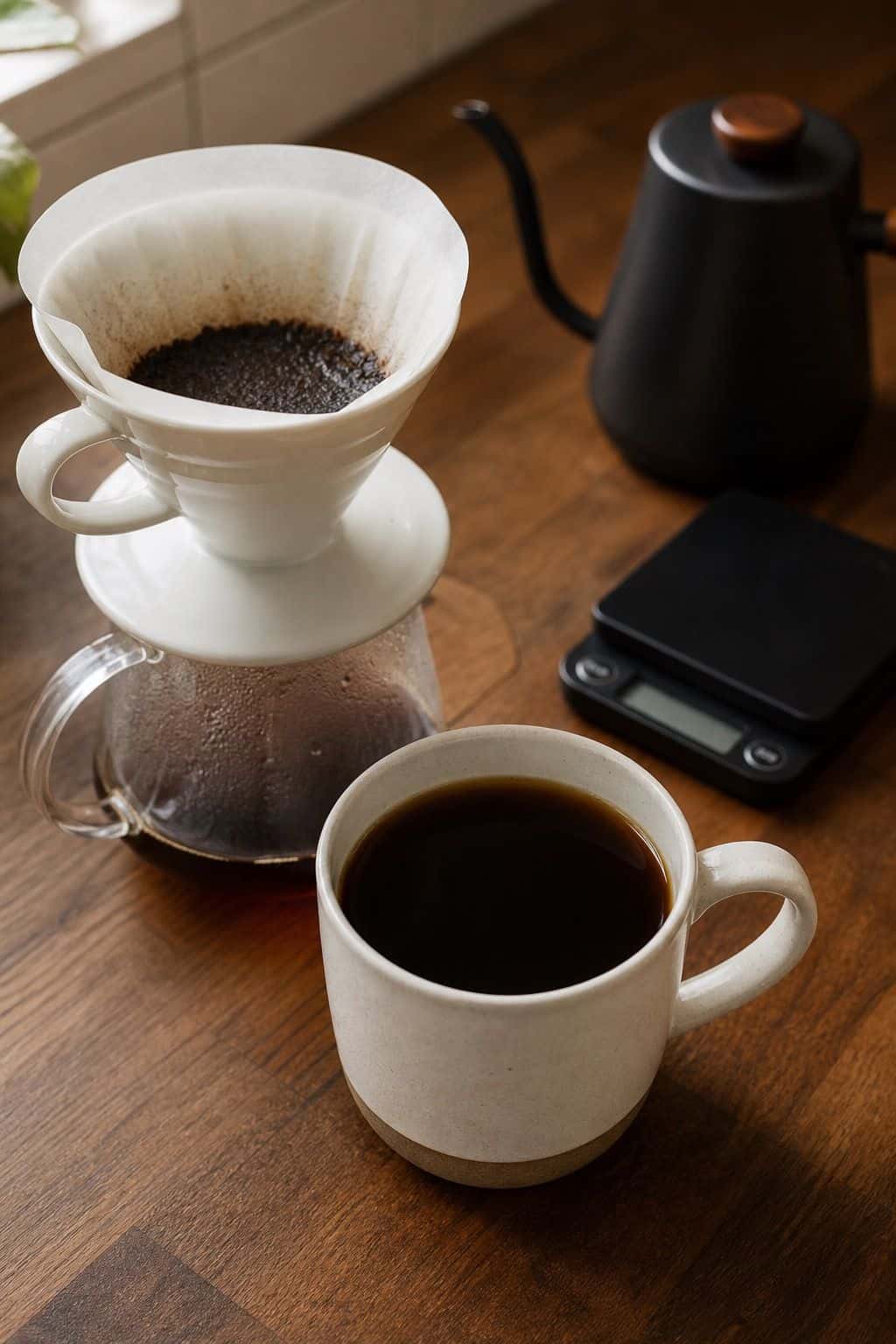
Prep time: 2 minutes | Brew time: 4 minutes | Total time: 6 minutes | Serves: 1 large mug (350 ml / 12 oz)
Ingredients
- 22 g (about 3 Tbsp) whole bean coffee, medium roast, ground medium
- 350 ml (12 oz) filtered water, heated to 93°C (200°F)
- 1 paper filter (Hario V60 size 02, or matching cone size)
Instructions
- Bring 500 ml (about 17 oz) of filtered water to a boil in a gooseneck kettle. The extra water is for rinsing the filter and bringing the brewer to temperature. Once the water boils, let it sit off heat for 30 seconds to settle to about 93°C (200°F).
- While the water heats, weigh 22 g (about 3 Tbsp) of whole beans and grind to medium, roughly the texture of kosher salt or coarse sand. Place a paper filter in the V60 dripper, set the dripper on a mug, and pour 50 ml of the hot water through the filter to rinse out the paper taste and warm the mug. Discard the rinse water.
- Set the dripper back on the mug and place the whole setup on a digital scale. Add the ground coffee to the filter and tap the dripper gently so the bed sits level. Tare the scale to zero.
- Start a timer and pour 45 g of water (about twice the weight of the grounds) in slow spirals over the grounds, soaking every spot. This is the bloom. Let it sit for 30 seconds. The grounds will visibly puff up and release a head of foam.
- At 30 seconds, begin the main pour. Add water in slow, steady spirals from the center outward, keeping the water level just below the top of the dripper. Aim to hit 175 g on the scale by the 1:00 mark.
- Pause briefly, then continue pouring in slow spirals until the scale reads 350 g total. The final pour should finish between 2:30 and 3:00 on the timer.
- Let the water drain through the bed completely. The full brew, including bloom, should land between 3:30 and 4:00. If it drains in under 3 minutes, the grind is too coarse next time; if it takes over 4:30, the grind is too fine.
- Remove the dripper, discard the spent grounds and filter, and drink the coffee black for the first sip to taste what it actually is. Add milk, cream, or sugar after.
Notes
For French press, use a coarser grind (like sea salt) and the same 1:16 ratio. Add the grounds to the press, pour over the just-off-boil water, stir gently after 30 seconds, place the lid on with the plunger up, and let steep 4 minutes total. Push the plunger down slowly over 20 seconds and pour immediately so the grounds don’t keep extracting.
For drip machines, use a 1:16 ratio (about 60 g coffee for 1 liter of water, or a heaping tablespoon per 8 oz mug) and a medium grind. Most home drip machines under-extract because the water doesn’t stay in contact with the grounds long enough; use slightly more coffee than the manufacturer suggests.
If the coffee tastes bitter, the grind is too fine, the water is too hot, or the brew ran too long. If it tastes sour or weak, the grind is too coarse, the water is too cool, or the brew finished too fast. The grind is the variable to adjust first.
Tips and Variations
Why the Bloom Is the Whole Game
Freshly roasted coffee holds CO2 inside the grounds. When you pour hot water over the bed without a bloom, that gas escapes during the brew and physically blocks water from contacting the grounds. The cup ends up under-extracted in some places and over-extracted in others, which is what “uneven” tastes like.
A 30-second bloom with twice the weight of water as coffee solves it. The CO2 escapes upfront, the grounds wet evenly, and the rest of the brew extracts in a single coherent pass. Skipping this step is the single biggest flavor leak in home brewing.
When French Press Is the Better Call
French press wins when you want body, when you’re brewing for more than one person, and when you don’t want to stand at a kettle. The metal mesh keeps the natural coffee oils in the cup, which gives the brew a heavier mouthfeel than pour-over. Hearty, chocolate-leaning beans (Sumatran, Brazilian, French roast) shine in a press.
The trade-off is sediment at the bottom of the cup and a slightly cloudier brew. Plunge slowly, and don’t let the press sit on the table for an extra ten minutes after the steep, or the coffee at the bottom gets unpleasantly strong.
A Grind-Size Cheat Sheet
Espresso = fine flour. Pour-over = kosher salt or coarse sand. Drip = somewhere between. French press = sea salt or peppercorn. Cold brew = the coarsest setting on the grinder, like cracked black pepper. If the cup tastes off, adjust the grind one notch (finer = stronger; coarser = lighter) before changing anything else.
Burr grinders give consistent grind sizes; blade grinders produce a mix of dust and chunks that brew unevenly. Manual burr grinders run about $50 and outperform $200 blade machines. The upgrade is real.
The Off-Boil Water Trick
If you don’t have a variable-temperature kettle, boil the water and then wait. Twenty to thirty seconds off heat drops the water from 100°C (212°F) to about 93°C (200°F), which is the brewing sweet spot. Pouring water straight off a rolling boil over coffee grounds over-extracts and pulls out the bitter compounds; waiting half a minute changes the cup measurably.
If the cup is regularly bitter and the grind seems right, the water is the suspect. Buy a $15 instant-read thermometer and check the temperature at the start of the pour. Most home cooks pour too hot.
Storing Beans So They Don’t Lose Their Flavor
Whole beans in an airtight container, in a cool dark cupboard, away from heat and light. Not the fridge (moisture is the enemy). Not the freezer for short-term storage (condensation when you open the bag). Buy in 12 oz bags you’ll finish in two to three weeks.
Pre-ground coffee starts losing flavor the second the grind happens. Grinding fresh every morning is the easiest single upgrade to a home cup of coffee, before anything else changes.
What to Drink It With
Black, in the first sip, to taste the bean. After that: a splash of whole milk softens the brightness, a teaspoon of brown sugar deepens it, oat milk adds body, and cream turns the cup into something closer to dessert. For food, a piece of buttered toast with jam, a soft-boiled egg, or a slice of banana bread is the morning shape. For an afternoon mug, pair with a square of dark chocolate (70 percent or higher) and let them eat each other.
If the weather is warm and the hot mug feels wrong, the same beans brewed the cold way are worth keeping on hand. Try the cold brew method for a 12-hour steep that holds in the fridge for a week.
Frequently Asked Questions
What is the easiest way to make great hot coffee at home?
Pour-over with a Hario V60 dripper, a kitchen scale, and freshly ground medium-roast beans at a 1:16 ratio. The total brew takes four minutes including a 30-second bloom. A French press is the simpler alternative if pour-over feels fussy; the cup is heavier-bodied and the steep is hands-off for four minutes.
What is the perfect ratio of coffee to water?
1:16 by weight is the working baseline (22 g of coffee to 350 ml of water for a large mug). Go to 1:15 for a stronger cup or 1:17 for a lighter one. Measuring by weight rather than tablespoons makes a bigger difference than people expect.
How hot should the water be for coffee?
93°C (200°F). Boiling water at 100°C (212°F) over-extracts and tastes bitter; water below 88°C (190°F) under-extracts and tastes sour. If you don’t have a variable-temperature kettle, bring water to a boil and let it sit 30 seconds off heat.
Pour-over or French press, which is better?
Neither is better; they make different cups. Pour-over gives a cleaner, brighter brew that lets the bean’s flavor notes come through. French press gives a heavier, oilier cup with more body. Light-roast single origins shine in pour-over; dark roasts and chocolatey beans shine in a press.
Why does my homemade coffee taste bitter?
Usually one of three things: the grind is too fine, the water is too hot, or the brew ran too long. Start by going one notch coarser on the grinder. If that doesn’t fix it, take the water off the boil for 30 seconds before pouring. Stale beans (more than 4 weeks past roast date) also taste bitter and flat.
Key Takeaways
- Three numbers run the cup: 93°C (200°F) water, 1:16 coffee-to-water ratio, 30-second bloom.
- Pour-over is the cleanest method; French press is the heaviest-bodied; pick the one that fits the morning.
- Grind fresh every brew with a burr grinder. Pre-ground coffee loses its aromatics within an hour.
- Filtered water at 93°C (200°F). Off-boil 30 seconds if you don’t have a variable-temperature kettle.
- Bitter cup = adjust grind coarser first. Sour cup = adjust grind finer.
- 22 g coffee + 350 ml water = one large mug. Weigh, don’t scoop.
Final Thoughts
Good hot coffee at home is a $20 scale, a $5 dripper, a paper filter, and beans you bought in the last three weeks. The technique fits in a paragraph: weigh the grounds, weigh the water, bloom for 30 seconds, pour in slow spirals, finish under four minutes. Once it’s a habit, the morning routine takes about as long as waiting in a café line.
Drink the first sip black before adding anything. The cup tells you what to do next: bright and tea-like wants milk and not much else; rich and chocolatey wants brown sugar or cream; clean and round wants nothing at all.
When the weather warms up or the hot mug feels like the wrong move, the same beans go straight into a jar of cold water for cold brew. Different drink, same kitchen, same bag of coffee earning its keep.
Last update on 2026-10-04 / Affiliate links / Images from Amazon Product Advertising API
