
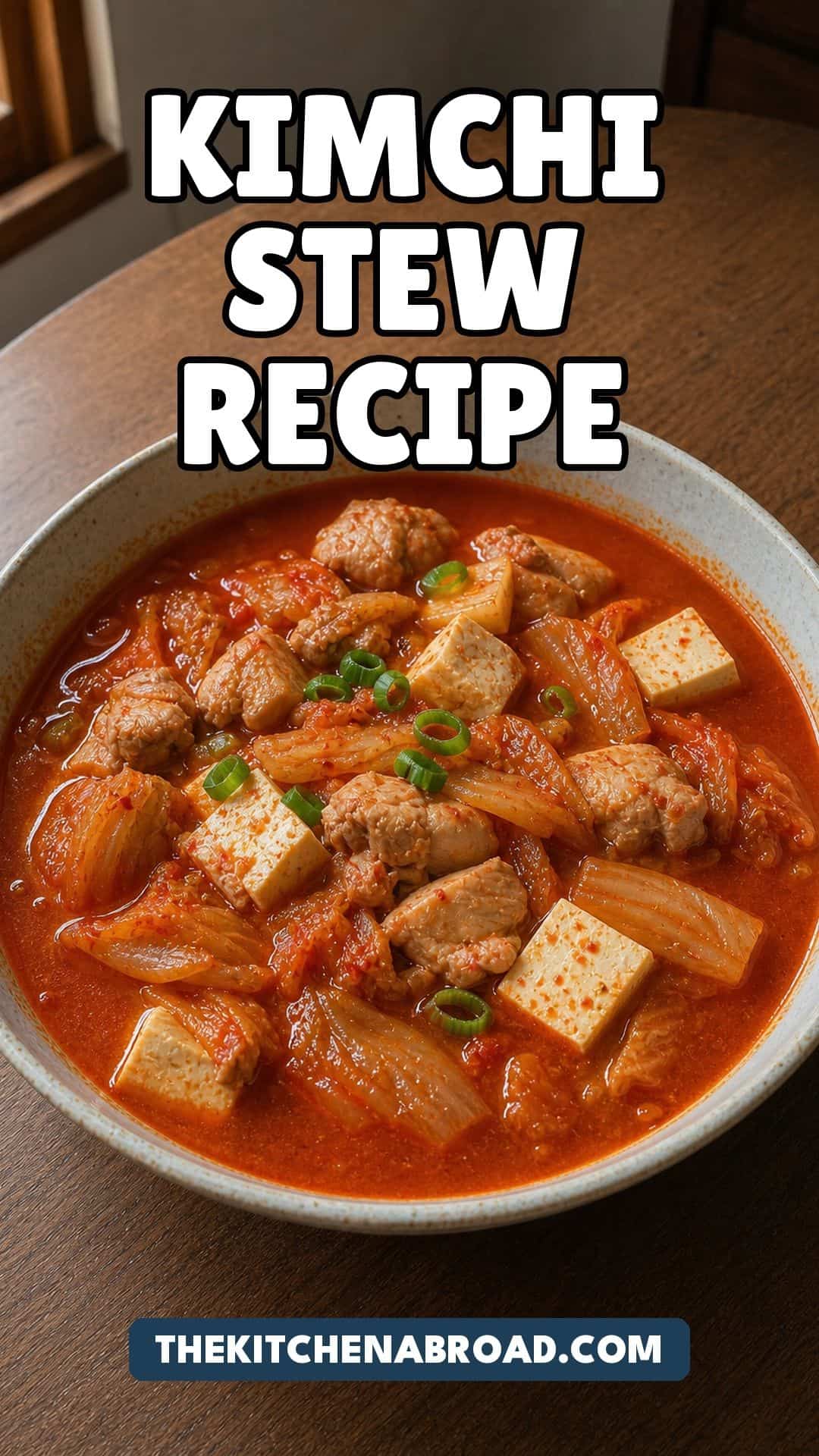
Quick Answer: What is kimchi stew with chicken?
Kimchi jjigae is a Korean stew made with fermented kimchi, chicken, tofu, and gochugaru, simmered in broth until deeply savory and warming. This chicken version is ready in about 35 minutes and works best with well-aged, sour kimchi. Serve hot with steamed white rice.
If you have a jar of kimchi sitting in the back of your fridge, getting more sour by the day and past the point where anyone wants to eat it straight, this is exactly what you make with it. Kimchi stew with chicken, or kimchi jjigae, transforms aggressively funky, overripe kimchi into something deeply savory, spicy, and completely addictive. It is warming, it is bold, and it is ready in under 40 minutes. If cozy, warming soups are your comfort food of choice, our Finnish Nakkikeitto is another one-pot wonder worth bookmarking.
Traditional kimchi jjigae uses pork belly, but chicken is a practical weeknight swap. It is lighter, easier to source, and just as good at soaking up that gochugaru-spiked broth. One bowl of this with steamed rice and you will understand why kimchi jjigae is one of Korea’s most-loved home-cooked flavors.
Trying to eat well without overspending?
Kimchi stew is proof that the best meals do not cost much. The Ultimate Budget Planner helps you manage grocery spending, plan smarter, and make every dollar go further. Get it here

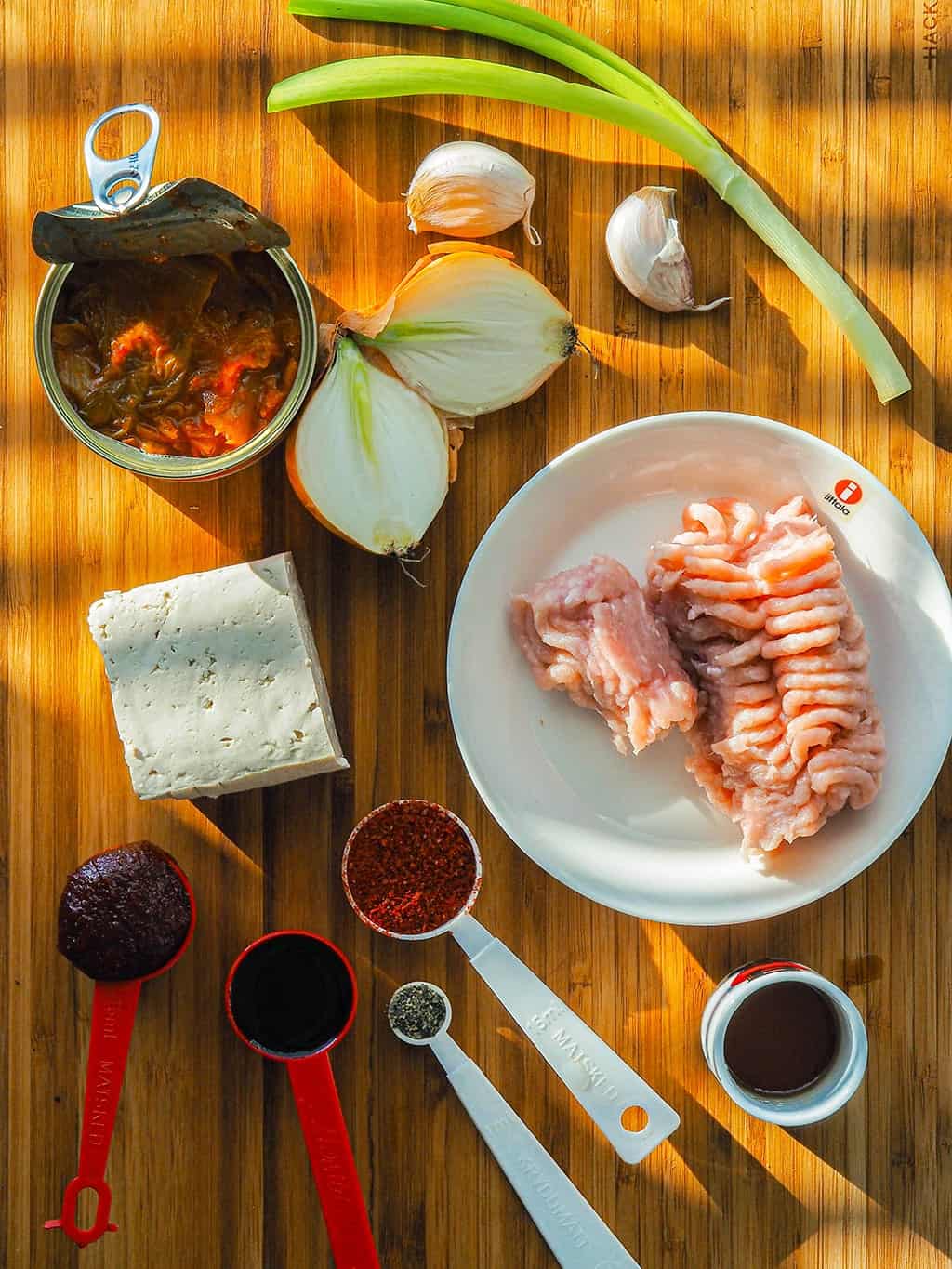
Things you need for this recipe


Why Aged Kimchi Makes All the Difference
There is a reason Korean home cooks specifically use old, sour kimchi for jjigae. Fresh kimchi is crisp and mild, good for eating alongside a meal, not for cooking into a hearty stew. But kimchi that has been fermenting for three weeks or more has fully developed lactic acid, deepened flavor, and a sharpness that, when simmered in broth, releases a complexity no amount of seasoning can replicate.
The kimchi brine is equally important. Do not pour it out. Add it directly into the pot. Two tablespoons of that concentrated, fermented liquid can transform a flat broth into something that tastes like it has been cooking for hours.
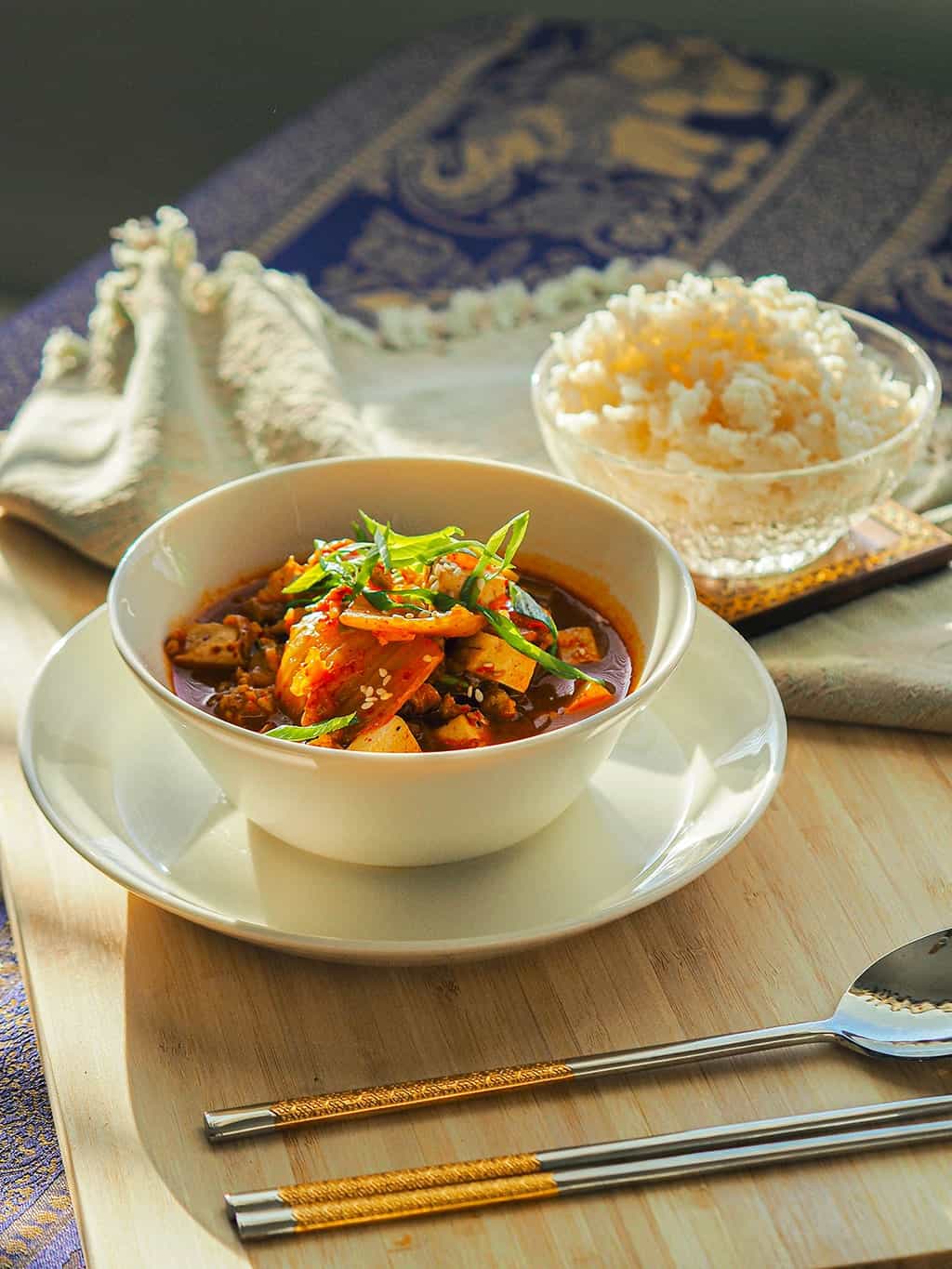
With chicken instead of pork belly, the broth is slightly leaner but still rich from the kimchi brine and gochujang. Boneless thighs stay juicy and tender through simmering. Leftover rotisserie chicken also works well for an even faster version on a busy weeknight, much like in our easy Chicken and Dumpling Soup.
Tips and Variations
A few things that make a real difference:
- Use sour kimchi. Aim for kimchi that has been fermenting for at least three weeks. It should smell tangy and taste noticeably sharp. If yours is fresh, add a small splash of rice vinegar to the broth as a partial workaround.
- Add the brine. Pour in the kimchi juice from the jar. It is full of fermented depth and adds natural tanginess to the broth.
- Control the heat. Gochugaru drives the spice level. Start with one tablespoon for moderate heat and go up to two if you want real fire. Gochujang adds body and a subtle sweetness alongside the heat.
- Time your tofu right. Add tofu cubes in the last five minutes only. Any earlier and they fall apart. Firm tofu holds its shape better than soft.
- Protein swaps. Pork belly is the traditional choice. Canned tuna and shrimp also work well in place of chicken.
- Storage. Keeps in the fridge for up to five days and often tastes even better the next day as the flavors meld. Add a splash of broth or water when reheating since the stew thickens overnight.
Recipe: Kimchi Stew with Chicken (Kimchi Jjigae)
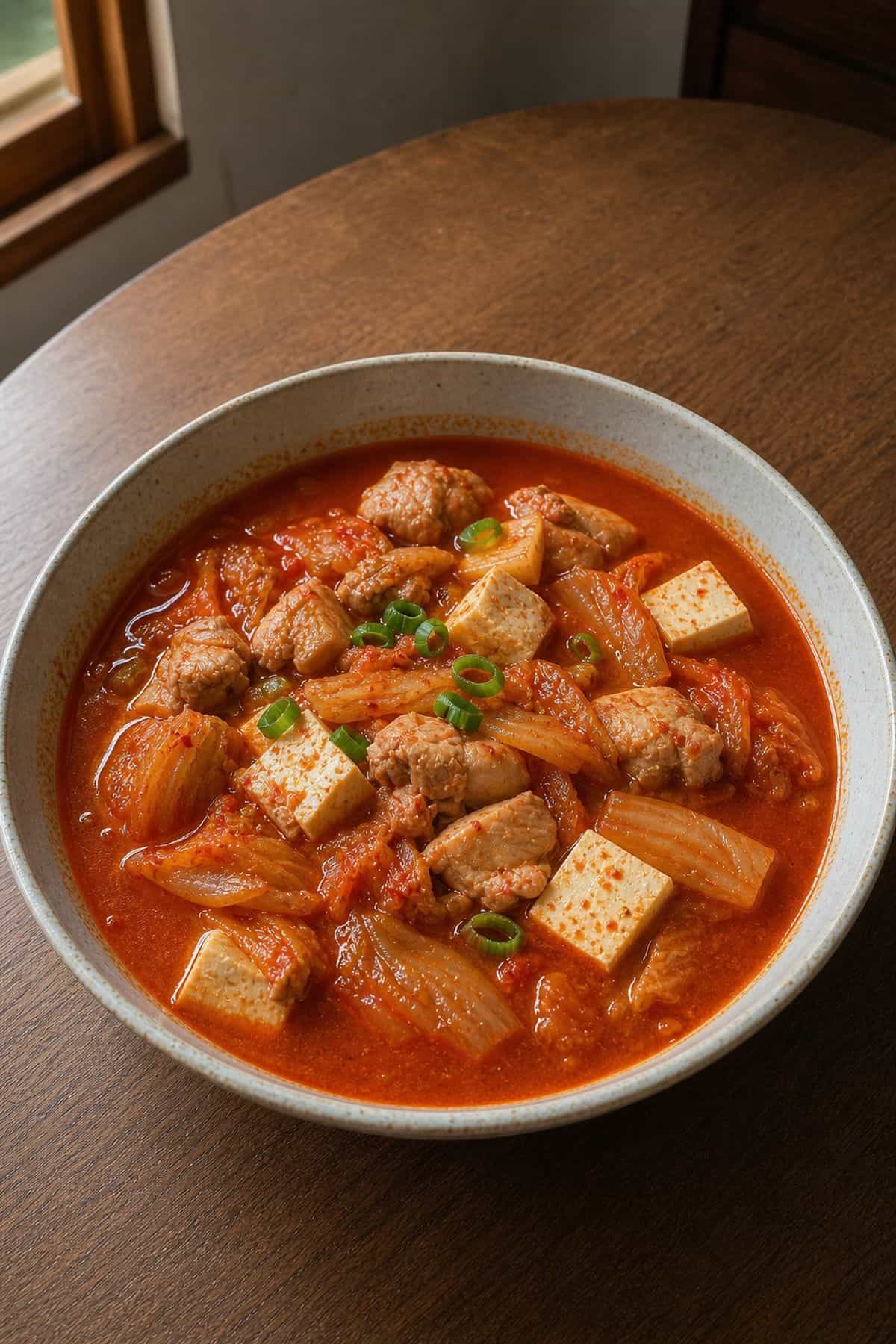
Prep Time: 10 minutes | Cook Time: 25 minutes | Total Time: 35 minutes | Servings: 2 to 3
Ingredients
- 1 cup kimchi (well-fermented, roughly chopped) plus 2 tablespoons kimchi brine
- 300g (10 oz) boneless, skinless chicken thighs, cut into bite-sized pieces
- 150g (5 oz) firm tofu, cut into cubes
- 1 tablespoon gochugaru (Korean red pepper flakes)
- 1 tablespoon gochujang (Korean red pepper paste)
- 1 tablespoon sesame oil
- 1 teaspoon soy sauce
- 1 teaspoon sugar
- 2 cloves garlic, minced
- 1/2 onion, thinly sliced
- 2 cups chicken broth
- 2 green onions, sliced for garnish
Instructions
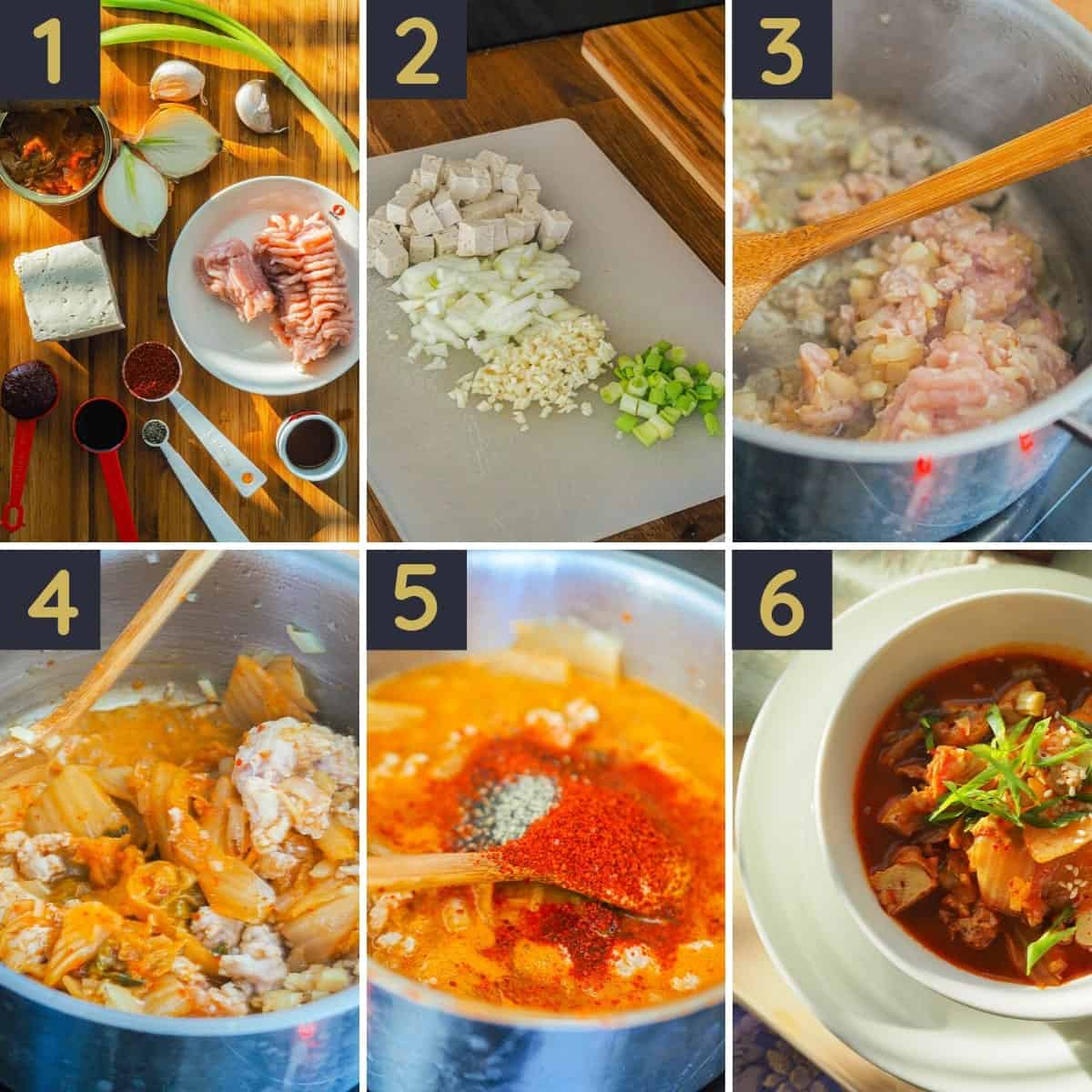
- Heat sesame oil in a medium pot over medium heat. Add the onion and garlic and cook for 2 minutes, until fragrant.
- Add the chicken pieces. Cook for 3 to 4 minutes, stirring occasionally, until just beginning to turn opaque.
- Add the kimchi and kimchi brine. Stir to combine and cook for 2 to 3 minutes, letting the kimchi caramelize slightly against the pan.
- Stir in the gochugaru, gochujang, soy sauce, and sugar. Mix well so everything is evenly coated.
- Pour in the chicken broth. Bring to a boil over medium-high heat.
- Reduce to a gentle simmer. Cook for 15 minutes, until the chicken is cooked through and the broth has deepened in color.
- Add the tofu cubes in the last 5 minutes. Stir gently to avoid breaking them up.
- Taste and adjust. Add more gochujang for body, more soy sauce for salt, or a pinch of sugar if the broth tastes too sharp.
- Ladle into bowls, top with sliced green onions, and serve immediately with steamed white rice.
Notes
For a richer broth, use bone-in chicken thighs and simmer for an extra 10 minutes before removing the bones. If your kimchi is not very sour, add 1 teaspoon of rice vinegar to the broth. Leftover stew thickens overnight. Stir in a splash of broth or water when reheating.
Want to stop guessing where your money goes?
Track your savings, hit your goals, and feel genuinely good about your finances. The Savings Tracker’s Planner makes it simple and satisfying. Get it here
Frequently Asked Questions
Can I use fresh kimchi instead of aged kimchi?
Fresh kimchi works but produces a much milder, less complex stew. Add a splash of rice vinegar and an extra tablespoon of gochujang to help compensate for the missing fermented depth.
What can I substitute for gochugaru?
Gochugaru has a specific mild, fruity heat that regular red pepper flakes cannot fully replicate. In a pinch, use half the amount of standard red pepper flakes, as they are significantly hotter. The flavor profile will be different but functional.
Can I use chicken breast instead of thighs?
You can, but thighs are strongly recommended. They stay juicy through the simmering; breast can dry out quickly if cooked even a few minutes too long. If using breast, reduce total simmering time by 5 minutes and cut the pieces thicker.
Is kimchi jjigae very spicy?
Yes, this is a genuinely spicy dish. For a milder version, reduce gochugaru to 1 teaspoon and choose a mild gochujang. The stew will still have plenty of flavor, just with less heat.
What do you serve with kimchi stew?
Steamed white rice is the essential pairing. It tempers the heat and absorbs the broth. Traditional banchan, like bean sprout salad, spinach namul, or pickled radish, round out the meal if you want to serve it Korean-style.
Key Takeaways
- Use well-fermented, sour kimchi for the deepest flavor
- Add kimchi brine directly into the broth, do not discard it
- Chicken thighs stay tender through simmering; breast can dry out
- Tofu goes in during the last 5 minutes only
- Adjust gochugaru to control the heat level
- Leftovers keep 5 days in the fridge and taste better the next day
Kimchi stew with chicken earns its place as a permanent weeknight staple. Fast, filling, built almost entirely from pantry ingredients, and flexible enough to work with whatever protein you have on hand. The kimchi does most of the heavy lifting. You just have to give it heat and time.
Make it once and you will start looking forward to having aging kimchi in your fridge. That is how it gets you.
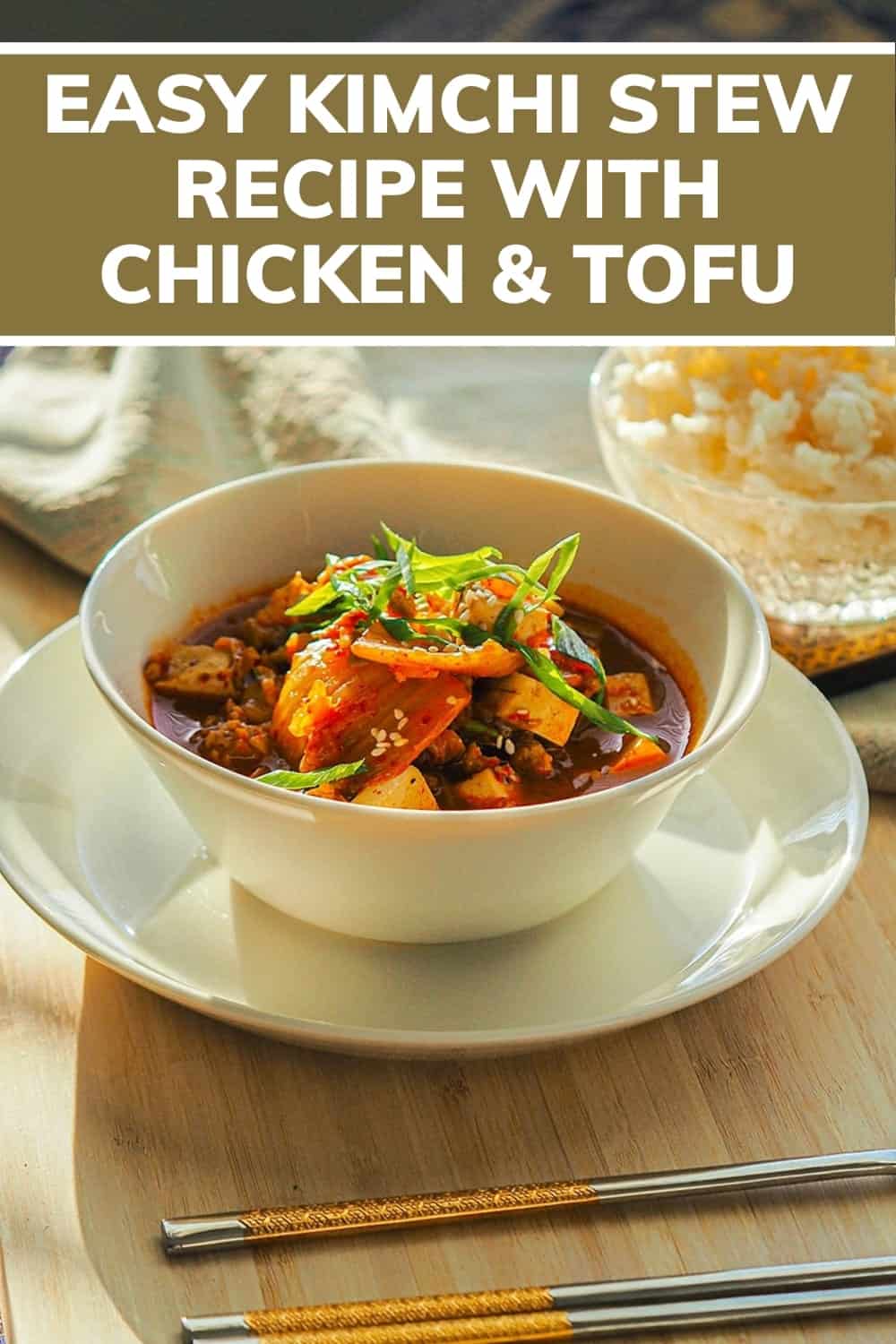
Kimchi Stew with Chicken (Kimchi Jjigae)
What is kimchi stew with chicken?
Ingredients
- 1 cup kimchi (well-fermented, roughly chopped) plus 2 tablespoons kimchi brine
- 300g (10 oz) boneless, skinless chicken thighs, cut into bite-sized pieces
- 150g (5 oz) firm tofu, cut into cubes
- 1 tablespoon gochugaru (Korean red pepper flakes)
- 1 tablespoon gochujang (Korean red pepper paste)
- 1 tablespoon sesame oil
- 1 teaspoon soy sauce
- 1 teaspoon sugar
- 2 cloves garlic, minced
- 1/2 onion, thinly sliced
- 2 cups chicken broth
- 2 green onions, sliced for garnish
Instructions
- Heat sesame oil in a medium pot over medium heat. Add the onion and garlic and cook for 2 minutes, until fragrant.
- Add the chicken pieces. Cook for 3 to 4 minutes, stirring occasionally, until just beginning to turn opaque.
- Add the kimchi and kimchi brine. Stir to combine and cook for 2 to 3 minutes, letting the kimchi caramelize slightly against the pan.
- Stir in the gochugaru, gochujang, soy sauce, and sugar. Mix well so everything is evenly coated.
- Pour in the chicken broth. Bring to a boil over medium-high heat.
- Reduce to a gentle simmer. Cook for 15 minutes, until the chicken is cooked through and the broth has deepened in color.
- Add the tofu cubes in the last 5 minutes. Stir gently to avoid breaking them up.
- Taste and adjust. Add more gochujang for body, more soy sauce for salt, or a pinch of sugar if the broth tastes too sharp.
- Ladle into bowls, top with sliced green onions, and serve immediately with steamed white rice.
Notes
For a richer broth, use bone-in chicken thighs and simmer for an extra 10 minutes before removing the bones. If your kimchi is not very sour, add 1 teaspoon of rice vinegar to the broth. Leftover stew thickens overnight. Stir in a splash of broth or water when reheating.
Want to stop guessing where your money goes?
Last update on 2026-08-08 / Affiliate links / Images from Amazon Product Advertising API
Thank you for this recipe. The instructions were simple and the stew turned out delicious.
I’ll look forward to seeing more of your recipes in the future!
Thank you!