Regular fresh mozzarella is made from cow’s milk and tastes sweet, mild and milky with a springy bite. Buffalo mozzarella comes from water buffalo milk, which carries roughly twice the fat, so the cheese is softer, wetter and slightly tangy. Serve buffalo raw where you can taste it; cook with cow’s milk mozzarella.
Mozzarella vs buffalo mozzarella looks like a price question at the cheese counter. One ball costs a few euros, the other costs double, and they sit side by side in the same little tubs of brine. The real difference shows up the moment you cut into them.
Cow’s milk mozzarella holds its shape. Buffalo mozzarella slumps, weeps milk onto the board and tastes faintly of grass and yogurt. Which one you want depends on whether the cheese is going into an oven or straight onto a plate.


What actually separates the two cheeses?
The milk. Everything else follows from it.
Both are pasta filata cheeses: the curd is heated in hot water, then stretched and folded until it turns glossy and elastic, and finally shaped into balls. Same method, same brine, same look. Cow’s milk mozzarella (Italians call it fior di latte) uses cow’s milk. Buffalo mozzarella uses milk from water buffalo.
Water buffalo milk is far richer, with about twice the butterfat of cow’s milk and more protein. That extra fat is why buffalo mozzarella feels creamy rather than bouncy, and why the center can be almost runny when it’s very fresh. The Dairy Farmers of Wisconsin profile of buffalo mozzarella describes the flavor as grassy and slightly tangy, against the sweet, milky taste of cow’s milk mozzarella. That matches what you notice side by side.
One label matters here. Mozzarella di Bufala Campana carries Protected Designation of Origin status, which means it has to be made from 100% buffalo milk in a defined area of southern Italy, mostly Campania. Cheese labeled just “buffalo mozzarella” can come from anywhere, including Britain and the US. Some of it is excellent. Check the label for 100% buffalo milk, because blends exist.
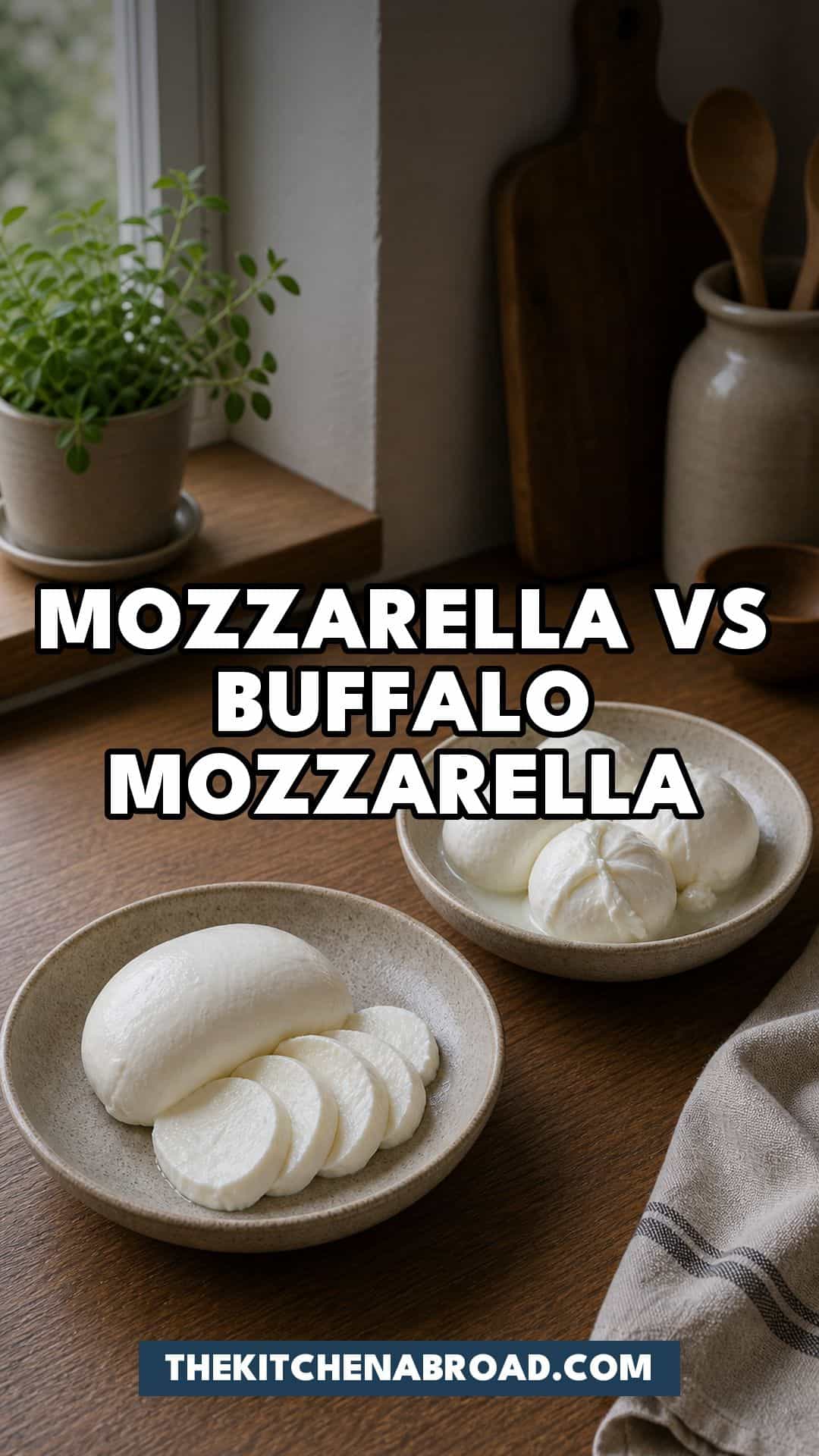
How do they taste and feel side by side?
Put a slice of each on a plate at cool room temperature and the gap is obvious.
Cow’s milk mozzarella is clean and mild, a little sweet, with a squeaky, springy chew. It’s a quiet cheese. That’s useful when it sits next to stronger things like salami, pesto or a garlicky tomato sauce.
Buffalo mozzarella is softer and wetter. Press it and milk runs out. The flavor has more going on: a lactic tang, a bit of barnyard sweetness, a richness that coats your mouth. When it’s good, you want very little with it. Olive oil, salt, maybe a tomato.
Temperature changes both. Straight from the fridge, buffalo mozzarella tastes flat and rubbery, which is the most common reason people say they can’t tell the difference. Give it 20 to 30 minutes out of the fridge before serving.
Which mozzarella should you use for pizza, caprese or baked pasta?
Here’s the short version from years of feeding hotel and banquet crowds: the more heat a dish gets, the less buffalo mozzarella makes sense.
Raw dishes: buffalo wins
Caprese, bruschetta, a plate of ripe peaches with prosciutto, torn mozzarella over peppery greens. In raw dishes the cheese is the point, and buffalo pays for itself. Salt your tomatoes first and let them sit 10 minutes so they taste of something. Our guide on storing tomatoes so they keep their flavor explains why a fridge-cold tomato will undercut even the best cheese.
Pizza: depends on your oven
In a very hot oven, a pizza oven or a pizza stone preheated for an hour, buffalo mozzarella can work. It cooks so fast that the water evaporates before the crust goes soggy. In a home oven at 250°C on a tray, it floods the pizza. Use low-moisture or regular cow’s milk mozzarella there, or add torn buffalo after baking.
Baked pasta, lasagna and sandwiches: cow’s milk
Long baking cooks the fresh flavor out of buffalo mozzarella and turns its extra fat into puddles of oil. You pay twice the price for a greasier result. Cow’s milk mozzarella, or the drier block kind, melts into clean strings and browns better.
Is buffalo mozzarella worth the price?
Yes, when you eat it fresh and soon. No, when it’s going into the oven.
Freshness matters more than with almost any other cheese. Buffalo mozzarella is at its best within a few days of being made. After that the center tightens and the tang turns sour. A cheap ball of fresh cow’s milk mozzarella beats a tired buffalo one every time, so check the date and buy it for the day you plan to serve it.
If you’re building a spread for guests, one good buffalo ball torn over a big platter goes further than you’d think. That’s how it’s usually served on an Italian-style aperitivo table: as one rich bite among olives, bread and cured meat.
Good swaps when you can’t find either
- Burrata: buffalo or cow’s milk mozzarella shell filled with stracciatella and cream. Even richer, only for raw dishes.
- Stracciatella: the shredded, creamy filling of burrata. Spoon it over toast, tomatoes or warm pasta.
- Fior di latte: the everyday cow’s milk mozzarella, fine for salads and pizza.
- Low-moisture mozzarella: the firm block. Best for pizza, lasagna and anything that needs a clean melt.
- Provolone: a stronger stretched-curd cheese for sandwiches and baked dishes.
- Ricotta: soft and mild but not stretchy. Good for pasta fillings and toast, not for slicing.
How should you store fresh mozzarella?
Keep both cheeses in their brine, in the fridge, and eat them within a day or two once opened. Don’t drain buffalo mozzarella hours ahead, as it dries out and the surface turns rubbery. If you’re using it on pizza, drain it 30 minutes before baking and pat it dry with a towel instead.
Freezing ruins fresh mozzarella for raw dishes, since the texture turns grainy. If you have leftovers that are a day from the edge, bake them into something.
Use mozzarella in a tomato and mozzarella salad or air fryer mozzarella sticks.
Mozzarella questions people ask
Is buffalo mozzarella better than regular mozzarella?
Buffalo mozzarella is richer and more flavorful, but it isn’t better for every dish. For caprese and other raw plates it wins clearly. For baked pasta, sandwiches and home-oven pizza, regular mozzarella melts more cleanly and costs less.
Can you use buffalo mozzarella on pizza?
Yes, if your oven runs very hot or you add it after baking. In a standard home oven, drain and pat the cheese dry first, or it will release water and make the center of the pizza soggy.
Why does buffalo mozzarella taste sour?
A gentle tang is normal for buffalo mozzarella, because buffalo milk gives the cheese a lactic, slightly tart flavor. A sharp sour or bitter taste means it’s past its best, so check the date and smell the brine.
Is burrata the same as buffalo mozzarella?
No, burrata is a pouch of mozzarella filled with stracciatella and cream. It can be made from cow’s or buffalo milk, and it’s creamier and messier than a plain mozzarella ball.
Should mozzarella be served cold?
Fresh mozzarella tastes best at cool room temperature, not fridge-cold. Take it out 20 to 30 minutes before serving so the fat softens and the milky flavor comes through.
Key takeaways
- Buffalo mozzarella is made from water buffalo milk, with about twice the fat of cow’s milk.
- Cow’s milk mozzarella is mild and springy; buffalo is softer, wetter and tangy.
- Use buffalo for raw dishes like caprese, and cow’s milk for baking.
- Mozzarella di Bufala Campana is the protected Italian original; check other labels for 100% buffalo milk.
- Serve fresh mozzarella out of the fridge for 20 to 30 minutes, and eat it within days.
Try it on a tomato plate this week
The easiest way to learn the difference is to taste them together. Buy one ball of each, slice them next to ripe tomatoes, salt everything and add olive oil. Then pick a dish from our list of tomato season food ideas and use whichever cheese won.
Last update on 2026-10-15 / Affiliate links / Images from Amazon Product Advertising API