

Sear cremini, fresh shiitake and thick-cut king oyster mushrooms in a very hot wok until the water they release has cooked off and the edges are brown, then add garlic, ginger, Shaoxing wine and an oyster sauce mixture thickened with a little cornstarch. The whole dish takes 25 minutes and serves four as a side. The sauce goes in last, so it stays glossy instead of scorching.
Most mushroom stir-fries fail the same way. The pan is crowded, the mushrooms dump their water, and you end up with gray, rubbery pieces swimming in thin brown liquid. This mushroom with oyster sauce recipe fixes that with two moves: three different mushrooms cooked in stages, and a sauce that only touches the wok in the last two minutes.
It is a Cantonese-style vegetable dish, the kind that sits next to a protein and a plate of noodles on a shared table. Over rice it is a full dinner on its own. If you want the butter-and-thyme cousin, the French-style sauteed garlic mushrooms use the same no-crowding rule in a skillet.


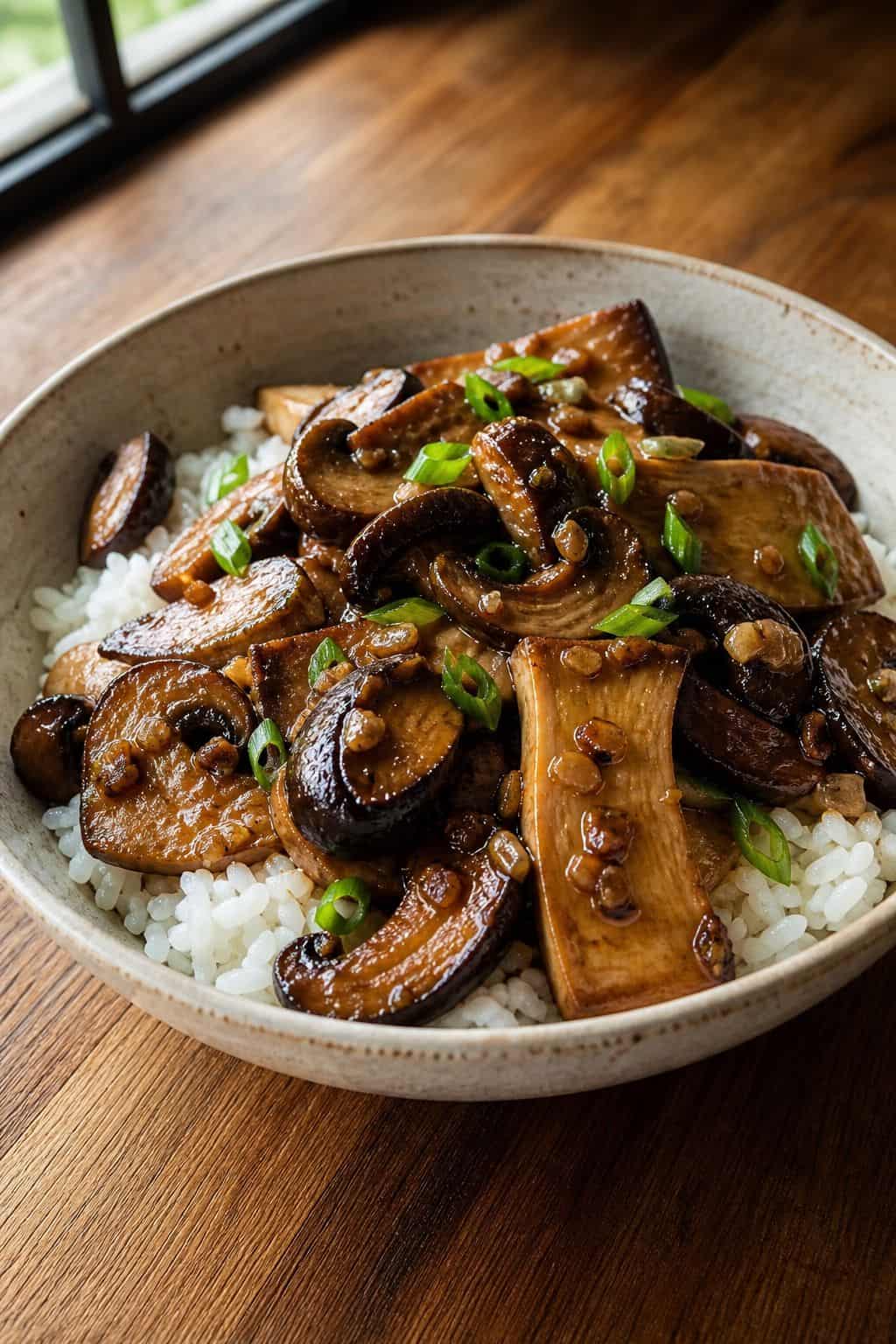
Why use three kinds of mushrooms?
Texture. That’s the whole argument. Cremini (sold as baby bella) are springy and soak up sauce once seared. Fresh shiitake are chewier and more savory, with a slightly smoky edge. King oyster mushrooms are almost all stem, and when you cut that stem into half-inch steaks and sear them hard, they eat like scallops.
Put the three together and every forkful has a different bite. One variety on its own is fine. It just tastes like a side dish someone made in a hurry.
Can’t find all three? Cremini plus shiitake is the strongest pair. King oyster is the upgrade, and the one I’d drop first.
Some mushrooms don’t belong here. Portobellos leak dark liquid and turn the sauce muddy. Enoki are too thin for a dry sear and collapse into strings, so save them for soups and hot pot (this guide to enoki mushrooms covers where they shine).
How do you keep mushrooms from going soggy in a wok?
Mushrooms are mostly water. Crowd them into a pan and the steam they release keeps the surface at boiling point, around 100°C (212°F), which is far too cool for browning. Restaurant line cooks solve this with huge burners. At home you solve it with patience.
Heat the wok until it smokes faintly. Add the cremini and shiitake in as close to a single layer as you can get, then leave them alone for 90 seconds. They will hiss, then squeak, then go quiet as their water starts to run out. Keep tossing until that liquid is gone and the edges are brown.
The king oyster steaks go in separately, on their own patch of oil, because they need longer contact with the metal than the others. Two minutes a side, undisturbed.
Cleaning matters too. A quick rinse is fine, and Penn State Extension’s mushroom guide recommends gently rubbing them under cold running water. The part that ruins a stir-fry is putting wet mushrooms into the wok. Brush off dirt, or rinse and pat them properly dry on a towel before you slice.
Then the order: aromatics for 30 seconds, Shaoxing wine around the rim, sauce, slurry, heat off. Oyster sauce contains sugar. Add it early and it burns onto the wok walls before the mushrooms have browned.
Which oyster sauce should you buy?
Read the label. The first ingredients should include oyster extract, and the sauce should taste briny and savory before it tastes sweet. Lee Kum Kee is the default bottle in most Chinese kitchens, and its Premium line is the one to pick if you cook stir-fries often. The cheapest supermarket versions lean on sugar and caramel color, and in a dish with this few ingredients you will taste the difference.
The brand has a good origin story. Lee Kum Kee traces oyster sauce to 1888, when Lee Kum Sheung, who sold cooked oysters in Nanshui, Guangdong, left a pot of oyster broth simmering too long and found a thick, savory brown sauce at the bottom.
Oyster sauce is not hoisin and not fish sauce, even though all three sit together on the shelf. Hoisin is sweet and soybean-based, closer to a barbecue glaze. Fish sauce is thin, salty and pungent. If the difference still feels fuzzy, this comparison of oyster sauce vs fish sauce lays out when each one works.
For a vegetarian version, use a mushroom-based “vegetarian oyster sauce” (Lee Kum Kee and Wan Ja Shan both make one) and swap the chicken stock for vegetable stock or water. It is a 1:1 replacement.
Can you make it a main dish?
Yes, by adding a protein that cooks first and leaves the wok before the mushrooms go in.
For beef, slice 8 oz (225 g) of flank or sirloin thinly against the grain. Toss it with 1 teaspoon each of soy sauce, Shaoxing wine and cornstarch, leave it 15 minutes, then stir-fry it alone over high heat for about 90 seconds. Set it aside, cook the mushrooms as written, and fold the beef back in with the sauce.
For chicken, use 8 oz (225 g) of boneless thigh, sliced. Same marinade plus 1/2 teaspoon baking soda, 15 minutes, seared before the mushrooms. The baking soda is the velveting trick most takeaway kitchens use to keep thigh meat soft. If you’d rather have a chicken dish built from the start, this quick chicken stir-fry is a good weeknight base.
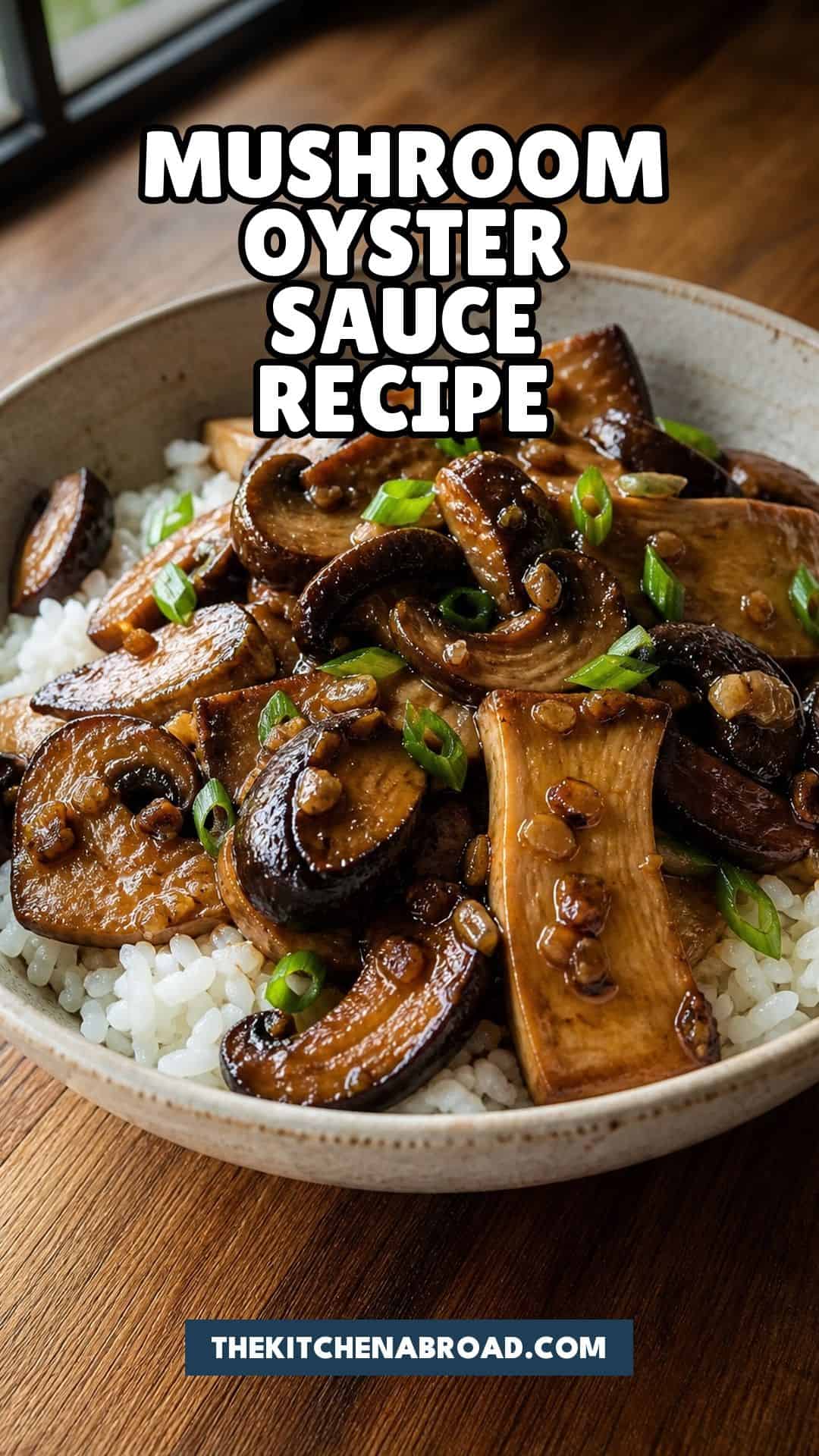
Recipe: mushroom with oyster sauce
Prep time: 15 minutes. Cook time: 10 minutes. Total time: 25 minutes. Serves 4 as a side.
Ingredients
- 8 oz (225 g) cremini mushrooms, sliced 1/4 inch thick
- 8 oz (225 g) fresh shiitake mushrooms, stemmed and quartered
- 4 oz (115 g) king oyster mushrooms, sliced into 1/2-inch steaks across the stem
- 3 tbsp neutral oil (peanut, avocado or grapeseed), divided
- 3 cloves garlic, minced
- 1-inch piece ginger, minced
- 2 scallions, sliced, whites and greens kept separate
- 2 tbsp Shaoxing wine
- 3 tbsp oyster sauce
- 1 tsp dark soy sauce
- 1 tsp sugar
- 1/4 cup (60 ml) chicken stock or water
- 1 tsp cornstarch mixed with 1 tbsp water
- 1 tsp toasted sesame oil, for finishing
Instructions
- Whisk the oyster sauce, dark soy sauce, sugar and chicken stock in a small bowl. Keep it next to the stove.
- Heat the wok over high heat until it smokes faintly, about 2 minutes. Add 2 tbsp of the oil and swirl it up the sides. It should shimmer right away.
- Add the cremini and shiitake in a single layer. Don’t stir for 90 seconds. Then toss for about 2 minutes, until the released water has cooked off and the mushrooms are browned. Push them to one side.
- Add the last 1 tbsp of oil to the empty side. Lay in the king oyster steaks and sear, undisturbed, for 2 minutes per side until both faces are deep golden brown.
- Bring all the mushrooms together. Add the garlic, ginger and scallion whites and stir for 30 seconds, just until fragrant.
- Pour the Shaoxing wine around the rim of the wok. It should sizzle and mostly steam off in about 10 seconds. Add the sauce mixture, toss to coat and simmer for 1 minute.
- Re-whisk the cornstarch slurry and stir it in. Within about 30 seconds the sauce turns glossy and coats the back of a spoon. Turn off the heat.
- Drizzle with the sesame oil, scatter the scallion greens over and toss once. Serve right away over jasmine rice.
Notes
No wok? A 12-inch carbon steel skillet works. Cast iron is slow to recover heat once the mushrooms go in, and nonstick won’t give you the same browning.
Swap the stock for 1/4 cup of shiitake soaking liquid if you use dried shiitake. It makes the sauce noticeably deeper.
This dish is best eaten within 10 minutes. The glaze tightens and the mushrooms start to weep as it sits.
Mushroom and oyster sauce questions
What mushrooms are best for oyster sauce?
Cremini, fresh shiitake and king oyster are the best combination because each brings a different texture: springy, chewy and meaty. If you can only buy two, use cremini and shiitake. Avoid portobello, which turns the sauce muddy, and enoki, which falls apart over high heat.
Can I use oyster mushrooms in this recipe?
Yes, regular oyster mushrooms work well and are a classic pairing with oyster sauce in Thai and Chinese cooking. Tear them into large pieces along the gills rather than slicing, and sear them like the cremini. They cook a little faster, so start checking after a minute.
Do you cook mushrooms before adding the sauce?
Always cook the mushrooms first, until their released water has evaporated and the edges have browned. Sauce added too early gets diluted by that water and the sugar in it can scorch. In this recipe the sauce goes in during the last 90 seconds.
Can I use dried shiitake instead of fresh?
Dried shiitake work once rehydrated in warm water for 20 to 30 minutes. Squeeze them dry, remove the stems and slice the caps. They are chewier than fresh, and the soaking liquid can replace the chicken stock for extra depth.
Is mushroom with oyster sauce vegetarian?
Standard oyster sauce is made with oyster extract, so the classic version is not vegetarian. Use a mushroom-based vegetarian oyster sauce and vegetable stock or water to make it fully plant-based.
What should I serve with mushrooms in oyster sauce?
Steamed rice is the natural partner, since the glossy sauce is meant to be spooned over it. Jasmine is the usual choice, and this look at basmati rice vs jasmine rice explains why its softer, stickier grains suit saucy stir-fries. A fried egg on top turns it into a one-bowl dinner.
Key takeaways
- Use cremini, fresh shiitake and king oyster for three textures in one dish.
- Sear in stages in a smoking-hot wok and let the mushrooms’ water cook off before anything else goes in.
- Mix the sauce before you turn on the heat, because the cooking takes under 10 minutes.
- Add oyster sauce at the end and thicken it with a cornstarch slurry so it stays glossy.
- Finish with sesame oil off the heat and serve immediately.
Building a Cantonese-style table around it
A plate of these mushrooms needs one green vegetable and one protein to feel like a proper spread. Bok choy blanched for a minute and drizzled with a spoon of the same oyster sauce is the easiest match, and this guide to bok choy shows how to pick and trim it. Cook the rice first, prep every mushroom before the wok heats, and dinner is on the table in half an hour.
Mushroom with Oyster Sauce
A Cantonese-style mushroom with oyster sauce built on a three-mushroom textural stack: cremini for the tender base, fresh shiitake for the chewy umami backbone, and king oyster sliced into half-inch steaks for the meaty bite.
Ingredients
- 8 oz (225 g) cremini mushrooms, sliced 1/4-inch thick
- 8 oz (225 g) fresh shiitake mushrooms, stemmed and quartered
- 4 oz (115 g) king oyster mushrooms, sliced into 1/2-inch steaks across the stem
- 3 tbsp neutral oil (peanut, avocado, or grapeseed), divided
- 3 cloves garlic, minced
- 1-inch piece ginger, minced
- 2 scallions, sliced (whites and greens separated)
- 2 tbsp Shaoxing wine
- 3 tbsp oyster sauce (Lee Kum Kee Panda or Premium)
- 1 tsp dark soy sauce
- 1 tsp sugar
- 1/4 cup (60 ml) chicken stock (or water)
- 1 tsp cornstarch mixed with 1 tbsp water (slurry)
- 1 tsp toasted sesame oil, for finishing
Instructions
- In a small bowl, whisk together the oyster sauce, dark soy sauce, sugar, and chicken stock. Set this sauce mixture aside next to the stove , once the wok is hot, the cook moves fast and you want the sauce within reach.
- Heat the wok over high heat until it starts to smoke faintly (about 2 minutes on a strong burner). Add 2 tablespoons of the neutral oil and swirl to coat the curved sides of the wok.
- Add the cremini and shiitake mushrooms in a single layer (or as close to one as the wok allows). Do not stir for the first 90 seconds , let the edges contact the metal and brown. You will see the mushrooms release water; that is normal.
- Add the remaining 1 tablespoon of oil to the cleared side of the wok. Lay the king oyster steaks in a single layer and sear undisturbed for 2 minutes per side until both faces are deeply browned.
- Return all the mushrooms to the center of the wok. Add the minced garlic, minced ginger, and the scallion whites. Stir for 30 seconds until the aromatics are fragrant , no longer, or the garlic will scorch.
- Pour the Shaoxing wine around the rim of the wok to deglaze. The wine should sizzle hard and steam off in about 10 seconds. Pour in the reserved sauce mixture and toss to coat. Let it simmer for 1 minute so the flavors come together.
- Give the cornstarch slurry a quick re-whisk (it settles fast) and stir it into the wok. The sauce will thicken and turn shiny in about 30 seconds. Cut the heat the moment the sauce coats the back of a spoon.
- Off heat, drizzle the toasted sesame oil over the top and sprinkle on the reserved scallion greens. Toss once to distribute. Serve immediately over jasmine rice.
Notes
The three-mushroom stack is the whole point of this recipe. Skip it and what you have is a cleanly fine one-variety stir-fry; commit to it and you have a dish that delivers three eating experiences in a single forkful. If your market only carries two of the three, the strongest two-variety base is cremini plus shiitake , the king oyster is the most "skippable" of the three but the one that adds the meaty anchor.
The dry-sear-before-liquid rule is non-negotiable. Mushrooms are about 90 percent water by weight. If you crowd them in the wok or pour sauce on early, they steam-pile, release all that water, and end up gray and floppy. Cook them in stages, let the released water boil off before adding aromatics, and only deglaze with Shaoxing wine once the mushrooms have browned. The sauce goes on at the very end and finishes off the heat.
Last update on 2026-10-03 / Affiliate links / Images from Amazon Product Advertising API
