
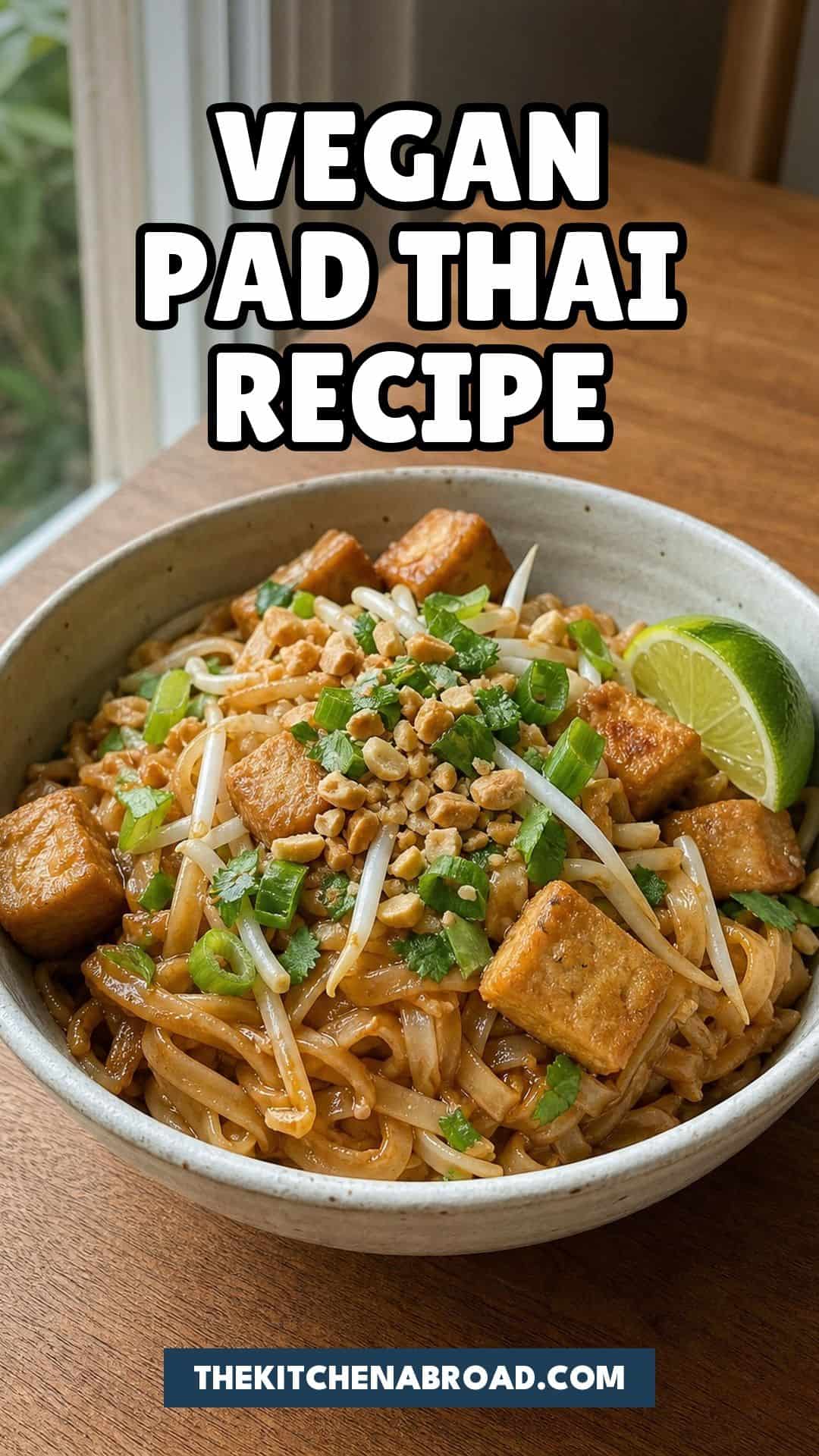
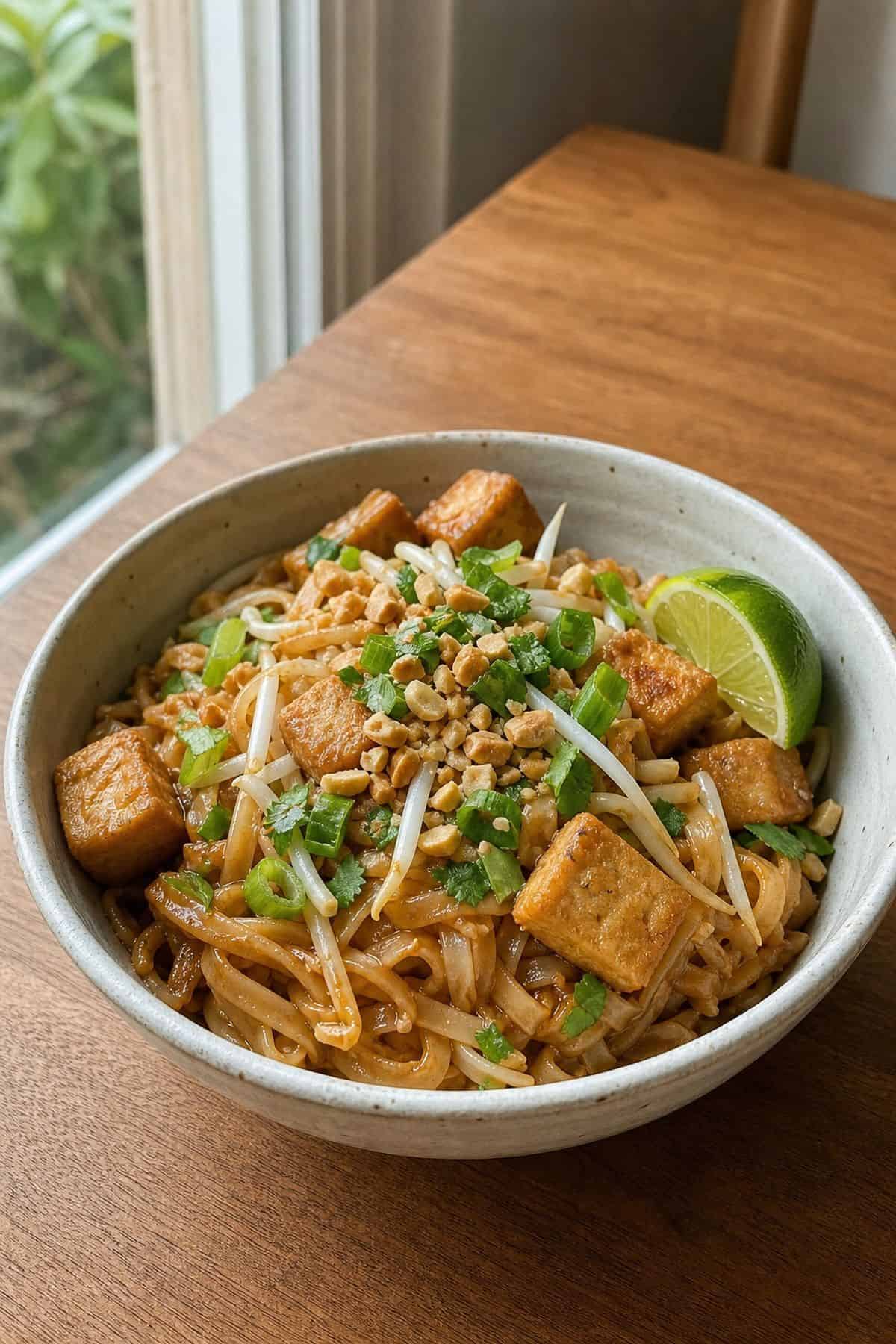
A vegan pad thai with tofu is made by pressing and crisping firm tofu in oil, soaking flat rice noodles until pliable, and cooking both in the same pan with a sauce of soy sauce, peanut butter, lime juice, and a small amount of sweetener. The one-pan method works by adding ingredients in sequence so each element is properly cooked before the next is introduced. The whole dish is ready in about 20 minutes.
This vegan pad thai tofu recipe one pan method removes the biggest barrier to weeknight pad thai: the need for multiple pots, a high-heat wok, and specialty ingredients like tamarind paste or fish sauce. Traditional pad thai uses fermented shrimp paste, fish sauce, and dried shrimp, which makes the dish inaccessible to plant-based cooks without substitutions that genuinely work. This version uses soy sauce for umami depth, peanut butter for richness and body, and lime juice for the acidity that tamarind provides in the original. The tofu is pressed and crisped before anything else touches the pan, which gives it the texture to hold up through the sauce rather than going soft. The noodles finish cooking in the sauce itself so they absorb flavor instead of being coated on the surface. The result is a fast, satisfying bowl of vegan pad thai that tastes complete without requiring anything unusual from the pantry.

Recommended Products


Why the One-Pan Method Works for Pad Thai
Standard pad thai technique spreads the process across several heat sources: protein cooked separately in a wok, noodles boiled in a separate pot, sauce reduced independently, then everything combined at the end over very high heat. This works well in a restaurant where setup is done in advance and heat sources are commercial grade. At home it creates a timed coordination problem, a pile of dishes, and a result that depends on everything finishing at the right moment. The one-pan approach works because the ingredients are added in a sequence that lets each element do its job without interference. Tofu goes in first over medium-high heat and gets a full undisturbed crisping session before any sauce or liquid enters the pan. Once removed, the soaked noodles go into the same pan with the sauce and cook through while absorbing flavor directly into the noodle rather than being dressed afterward. According to Minimalist Baker, the critical rule for one-pan pad thai is ensuring tofu is completely crisp before any moisture is introduced, since steam from sauce prevents browning and produces soft, spongy tofu instead of the chewy golden cubes the dish needs.
For another one-pan Asian dish that uses a similar sequenced approach to building flavor, the brown rice fried rice adds ingredients in a specific order to develop depth without creating a stir-fry that steams itself into a wet mass.
How to Press and Crisp Tofu for Pad Thai
The difference between tofu that adds texture to pad thai and tofu that dissolves into the dish is moisture content. Firm and extra-firm tofu both contain significant water by weight, and that water needs to be removed before the tofu enters a hot pan. Moisture on the surface of tofu keeps the temperature at that surface from exceeding 100C, which is the boiling point of water. Browning requires temperatures above that threshold. As long as the surface is wet, browning cannot happen and the tofu steams rather than crisps. Pressing forces water out of the internal structure and allows the surface to dry, which is what makes proper crisping possible.
The method: wrap the tofu block in three to four layers of paper towel, set it on a plate, and put a heavy pan on top. Leave it for 15 minutes minimum. Longer is better; 30 minutes removes significantly more water. After pressing, cut the tofu into 1 cm cubes and let the cut surfaces air-dry on the paper towel for two minutes before cooking. Heat oil in the pan over medium-high heat until shimmering, then add the tofu in a single layer with space between pieces. Do not stir for three to four minutes. The tofu will initially stick to the pan and release on its own once the underside is fully golden. Flipping too early tears the crust. After flipping, two more minutes on the second side produces cubes that are crisp, chewy, and golden on the outside with a firm interior that holds together in the sauce.
The Pad Thai Sauce and How to Balance It
Traditional pad thai sauce uses tamarind paste, fish sauce, and palm sugar. This vegan version replaces those with ingredients available in any grocery store without producing a result that tastes like a compromise. Soy sauce carries the salty, umami element that fish sauce provides. Peanut butter adds body and richness that prevents the sauce from being thin and watery on the noodles. Lime juice provides the sharp acidity that tamarind brings to the original. Maple syrup or brown sugar provides sweetness to round off the salty and sour notes. The four elements together hit the same flavor balance as the traditional sauce at a different point of arrival.
If the sauce tastes flat, the problem is usually insufficient acidity rather than insufficient salt. More lime juice brightens the flavor without making it saltier. If it tastes one-dimensional, a small amount of sriracha or chili flakes separates the flavors and makes each component more distinct. If the sauce is too thick, add water one tablespoon at a time until it coats a spoon without clumping. If too thin, cook it in the pan for an extra minute before adding the noodles. The sauce comes together in the same bowl you mix it in, so tasting and adjusting before it hits the pan is both easy and important.
How to Make Vegan Pad Thai Tofu Recipe One Pan
Ingredients
- 200g (7 oz) firm or extra-firm tofu
- 150g (5 oz) flat rice noodles (pad noodles or rice vermicelli)
- 2 tablespoons cooking oil, divided
- 2 cloves garlic, minced
- 1 cup bean sprouts
- 3 spring onions, sliced (whites and greens separated)
- 2 tablespoons soy sauce
- 2 tablespoons smooth peanut butter
- 1 tablespoon lime juice, plus wedges for serving
- 1 tablespoon maple syrup or brown sugar
- 2 tablespoons water
- 1 teaspoon sriracha or chili flakes, optional
- Crushed roasted peanuts, fresh coriander, and lime wedges for serving
Instructions
- Press the tofu: wrap it tightly in 3 to 4 layers of paper towel and place a heavy pan on top. Press for at least 15 minutes. Cut into 1 cm cubes and pat dry on a clean paper towel.
- Soak the rice noodles in cold water for 30 minutes until pliable but not fully cooked. Drain thoroughly and set aside. If using boiling water, soak for 5 to 8 minutes only, then drain and rinse immediately under cold water to stop further softening.
- Mix the sauce in a small bowl: whisk together the soy sauce, peanut butter, lime juice, maple syrup, water, and sriracha if using until smooth. Taste and adjust seasoning as needed. Set aside.
- Heat 1.5 tablespoons of oil in a large pan or wok over medium-high heat until shimmering. Add the tofu in a single layer with space between the pieces. Cook undisturbed for 3 to 4 minutes until the underside is golden. Flip and cook 2 to 3 minutes more. Remove from pan and set aside.
- Reduce heat to medium. Add the remaining oil. Add the garlic and the white parts of the spring onions and cook for 30 to 60 seconds until softened and fragrant.
- Add the drained noodles and pour the sauce over them. Toss to coat and cook, stirring frequently, for 2 to 3 minutes until the noodles have absorbed the sauce and are fully tender.
- Add the bean sprouts and the crisped tofu back to the pan. Toss gently to combine and heat through for 60 seconds. Remove from heat.
- Divide between bowls and top with the green parts of the spring onions, crushed peanuts, and fresh coriander. Serve with lime wedges on the side.
Notes
Noodle width affects cooking time in the sauce. Thin rice vermicelli softens quickly and can turn too soft after 2 minutes in the pan; add it for 1 to 1.5 minutes only and watch closely. Standard flat pad noodles (3mm width) take the full 2 to 3 minutes. Wide noodles may need up to 4 minutes and a splash of extra water if they are not fully tender by then. Bean sprouts must go in last; adding them earlier causes them to overcook and go limp, removing the crunch that contrasts with the soft noodles. For a simple side dish that pairs naturally with this pad thai and uses a similarly quick stir-fry approach, the green beans in oyster sauce adds a savory vegetable element that complements the noodle dish without duplicating flavors. According to Wagamama, garnish matters more in noodle dishes than in most other preparations; crushed peanuts, fresh herbs, and lime provide the textural and aromatic finish that makes a bowl feel complete rather than plain.
Variations, Substitutions, and Serving
Protein variations: tempeh pressed and cut thin crisps similarly to tofu with a firmer, slightly chewier result. Edamame stirred in at the final toss adds protein without the pressing and crisping step. A combination of tofu and edamame works well if you want a higher-protein dish without additional prep. Chickpeas roasted until crisp in a separate pan can replace tofu entirely for a different texture; they add a nutty flavor but do not hold together as firmly once the sauce is added.
Noodle substitutions: rice vermicelli, wide flat rice noodles, and glass noodles all work within this recipe structure. Glass noodles cook the fastest and go translucent when ready; they also absorb the sauce more completely and become very soft if overcooked. Zucchini noodles do not need soaking and go in at the same point as bean sprouts for a lower-carb version. If using wheat noodles, cook them separately first and reduce the sauce slightly since wheat noodles do not absorb liquid in the same way as rice noodles.
For the sauce, almond butter substitutes cleanly for peanut butter with a milder flavor and similar texture. Tahini works but adds a more bitter, earthy note that shifts the flavor profile away from traditional pad thai. For a more authentic flavor, tamarind paste replaces the lime juice at a ratio of 1 tablespoon of tamarind paste thinned with 2 tablespoons of water; reduce the sweetener slightly since tamarind is less tart than lime. This pad thai is best eaten immediately after cooking. Rice noodles continue absorbing liquid as they sit and can become sticky or dry when refrigerated. If preparing components ahead, keep the sauce, pressed tofu, and soaked noodles separate and combine in the pan for 5 minutes just before serving. For another vegetarian dish that stores much better and offers a contrasting warm, hearty element alongside this lighter noodle dish, vegetarian monggo guisado is a mung bean stew that reheats well and provides a satisfying complement to a plant-based spread.
FAQ
How do you press and crisp tofu for pad thai?
Wrap firm tofu in paper towels and press under a heavy pan for at least 15 minutes to remove moisture. Cut into cubes, pat dry, then cook in hot oil in a single layer without stirring until the underside is golden, about 3 to 4 minutes. The tofu will stick initially and release naturally when properly browned. Flipping too early tears the crust before it has formed.
What is a good substitute for tamarind paste?
Lime juice is the most accessible substitute and provides the same sharp acidity that tamarind contributes to the sauce. It does not replicate the slight fruity depth of tamarind exactly but performs the same balancing function in the dish. Use 1 tablespoon of lime juice in place of 1 tablespoon of tamarind paste thinned with water.
Can you use regular pasta instead of rice noodles?
You can, but the result will not taste like pad thai. Rice noodles have a smooth texture when cooked that absorbs the sauce differently from wheat pasta and produces the characteristic texture of the dish. They are also gluten-free. Rice noodles are widely available in the Asian foods section of most supermarkets and take less time to prepare than wheat pasta.
How do you prevent noodles from sticking?
Drain soaked noodles thoroughly and add them immediately to the sauce in the pan. Noodles stick when they sit together outside of water without any coating. Toss constantly during the 2 to 3 minutes of cooking and add a tablespoon of water if they begin to clump together. Cooking the noodles directly in the sauce rather than boiling and draining separately makes sticking much less likely.
What vegetables are best in pad thai?
Bean sprouts are traditional and add essential crunch. Shredded cabbage, julienned carrots, and sliced bell peppers all work well added with the garlic in step 5. Avoid watery vegetables like tomato or cucumber that release liquid and dilute the sauce. For another vegetarian recipe that uses a single main vegetable prepared with care for maximum texture and flavor, the tortang talong shows how a simple ingredient handled correctly produces a complete and satisfying dish.
Key Takeaways
- Press tofu for at least 15 minutes and cook it in a single undisturbed layer to develop a crispy, golden crust that holds up to the sauce instead of going soft.
- Soak rice noodles until pliable but not fully cooked, then finish them directly in the sauce so they absorb flavor rather than simply being coated on the surface.
- Balance the sauce before it hits the pan by adjusting lime, soy sauce, and sweetener separately; each controls a different flavor dimension and the right balance is what makes the dish taste complete.
- Add bean sprouts in the last 60 seconds only to preserve their crunch, which provides the textural contrast that keeps the dish from feeling heavy or one-dimensional.
- Garnish generously with crushed peanuts, fresh coriander, and lime; in pad thai these are not optional finishing touches but essential flavor and texture components.
Final Thoughts
This vegan pad thai tofu recipe one pan method works because it respects the sequencing logic that makes pad thai taste the way it should, without requiring the equipment or ingredient access of a restaurant kitchen. Crispy tofu, noodles cooked in the sauce, and a four-component sauce balanced before it hits the pan are the three things that determine whether the dish works. Once those three elements are in order, everything else is a garnish. This is a recipe that rewards repetition; making it a second time with the sauce already dialed in from the first attempt is notably faster and produces a result that is specifically tuned to how you prefer the balance of flavors. Get the technique right once and a fast, satisfying vegan pad thai becomes something you can produce in 20 minutes without thinking about it.
One-Pan Vegan Pad Thai with Tofu
A vegan pad thai with tofu is made by pressing and crisping firm tofu in oil, soaking flat rice noodles until pliable, and cooking both in the same pan with a sauce of soy sauce, peanut butter, lime juice, and a small amount of sweetener.
Ingredients
- 200g (7 oz) firm or extra-firm tofu
- 150g (5 oz) flat rice noodles (pad noodles or rice vermicelli)
- 2 tablespoons cooking oil, divided
- 2 cloves garlic, minced
- 1 cup bean sprouts
- 3 spring onions, sliced (whites and greens separated)
- 2 tablespoons soy sauce
- 2 tablespoons smooth peanut butter
- 1 tablespoon lime juice, plus wedges for serving
- 1 tablespoon maple syrup or brown sugar
- 2 tablespoons water
- 1 teaspoon sriracha or chili flakes, optional
- Crushed roasted peanuts, fresh coriander, and lime wedges for serving
Instructions
- Press the tofu: wrap it tightly in 3 to 4 layers of paper towel and place a heavy pan on top. Press for at least 15 minutes. Cut into 1 cm cubes and pat dry on a clean paper towel.
- Soak the rice noodles in cold water for 30 minutes until pliable but not fully cooked. Drain thoroughly and set aside. If using boiling water, soak for 5 to 8 minutes only, then drain and rinse immediately under cold water to stop further softening.
- Mix the sauce in a small bowl: whisk together the soy sauce, peanut butter, lime juice, maple syrup, water, and sriracha if using until smooth. Taste and adjust seasoning as needed. Set aside.
- Heat 1.5 tablespoons of oil in a large pan or wok over medium-high heat until shimmering. Add the tofu in a single layer with space between the pieces. Cook undisturbed for 3 to 4 minutes until the underside is golden. Flip and cook 2 to 3 minutes more.
- Reduce heat to medium. Add the remaining oil. Add the garlic and the white parts of the spring onions and cook for 30 to 60 seconds until softened and fragrant.
- Add the drained noodles and pour the sauce over them. Toss to coat and cook, stirring frequently, for 2 to 3 minutes until the noodles have absorbed the sauce and are fully tender.
- Add the bean sprouts and the crisped tofu back to the pan. Toss gently to combine and heat through for 60 seconds. Remove from heat.
- Divide between bowls and top with the green parts of the spring onions, crushed peanuts, and fresh coriander. Serve with lime wedges on the side.
Notes
Noodle width affects cooking time in the sauce. Thin rice vermicelli softens quickly and can turn too soft after 2 minutes in the pan; add it for 1 to 1.5 minutes only and watch closely. Standard flat pad noodles (3mm width) take the full 2 to 3 minutes. Wide noodles may need up to 4 minutes and a splash of extra water if they are not fully tender by then. Bean sprouts must go in last; adding them earlier causes them to overcook and go limp, removing the crunch that contrasts with the soft noodles. For a simple side dish that pairs naturally with this pad thai and uses a similarly quick stir-fry approach, the green beans in oyster sauce adds a savory vegetable element that complements the noodle dish without duplicating flavors. According to Wagamama , garnish matters more in noodle dishes than in most other preparations; crushed peanuts, fresh herbs, and lime provide the textural and aromatic finish that makes a bowl feel complete rather than plain.
Last update on 2026-08-08 / Affiliate links / Images from Amazon Product Advertising API