

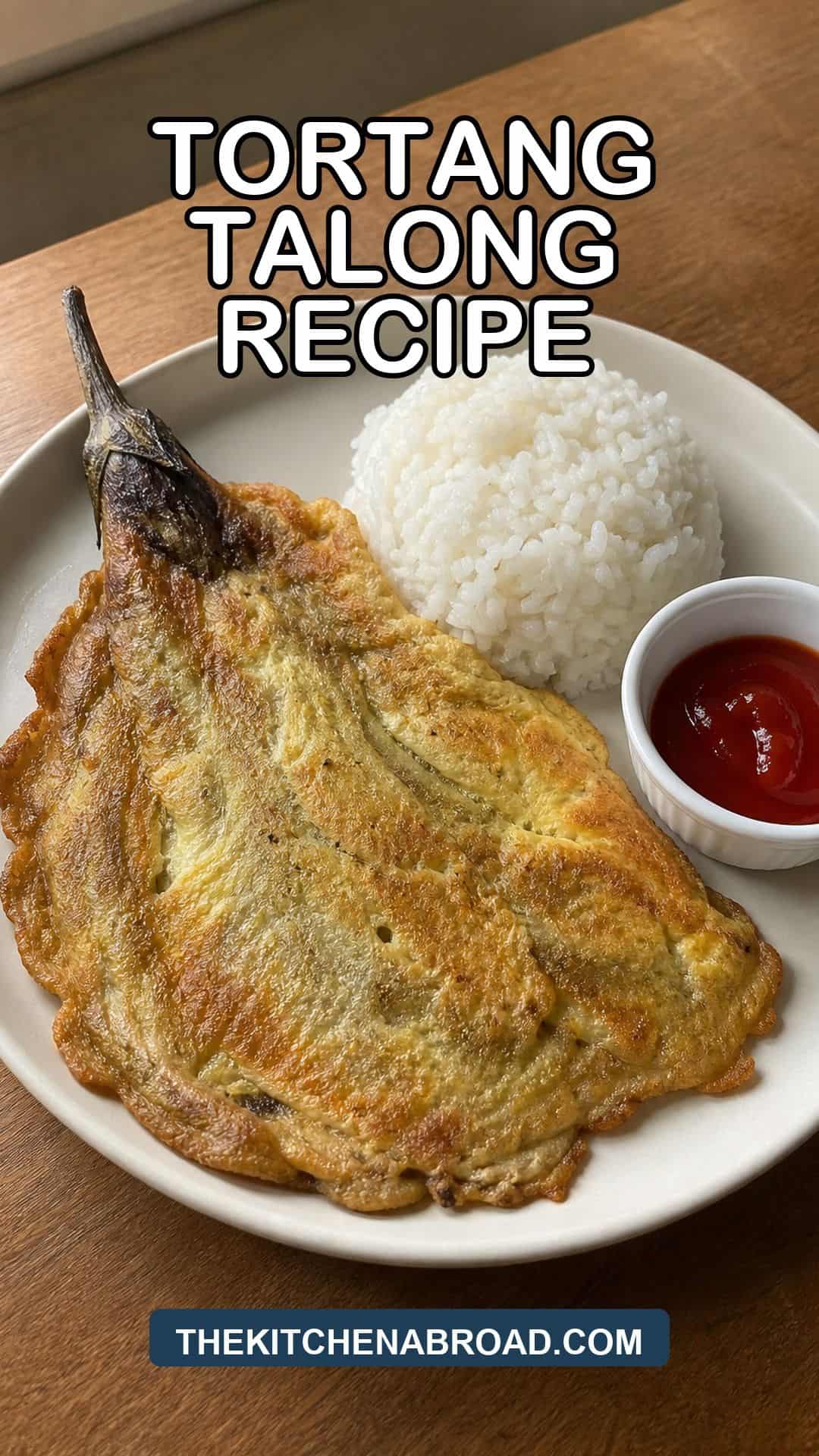
To make tortang talong, char whole long eggplants over a flame until black and collapsing, steam them for 5 minutes, peel, and fan the flesh flat with a fork. Dip each one in beaten egg seasoned with salt and pepper, then pan-fry 3 to 4 minutes on the first side and 2 to 3 on the second. The whole thing takes about 30 minutes and needs two main ingredients.
The burner is on high and there’s an eggplant lying straight on the grate, skin crackling and going black. It looks like you’re ruining it. You aren’t. That smoke is the whole flavor of tortang talong, and it’s the step most recipes rush.
Tortang talong is a Filipino eggplant omelet: smoky, soft eggplant fanned out flat and fried in an egg coat until golden at the edges. It’s a breakfast and lunch staple at home, usually with rice and something sweet or sour for dipping. This tortang talong recipe spends most of its words on the parts that decide whether yours turns out silky or bitter, and whether it survives the flip.
The product picks below are things this dish leans on: a good long eggplant, eggs, oil for the pan, a reliable omelet pan and vinegar for dipping.


Which eggplant should you buy?
Long, slim Asian eggplant. Chinese or Japanese, both work. The skin is thin, so it chars through quickly and pulls away clean, and the flesh has fewer seeds and less bitterness than the big globe type. The shape matters too. A long eggplant presses out into the paddle shape that makes tortang talong look like itself.
Look for firm, glossy, deep purple fruit with no soft spots, roughly 25 to 30 cm long. Smaller ones char more evenly than fat ones.
Globe or Italian eggplant will do if it’s all you can find. The skin is thicker and slower to char, and it won’t fan out neatly when pressed. Halve it lengthwise, char the skin side well, and use the flat cut face as your base. It still tastes good. It just looks different.
How to char eggplant on gas, electric or a grill
Whichever heat you use, the test is the same: the skin is black and blistered all over, and the thickest part collapses when you press it with tongs. If the middle still feels firm, keep going. An undercooked center is dense and tastes bitter, and no amount of egg will hide it.
Gas burner (fastest)
Set the burner to high and lay the whole eggplant directly on the grate. Turn it with tongs every 2 to 3 minutes as each side blackens. Leave the stem on, since it’s the handle you’ll use for turning, peeling and dipping. Expect 8 to 12 minutes depending on size.
Electric stove: use the broiler
Line a baking sheet with foil and set the broiler to high, with the rack about 15 cm (6 inches) from the element. Broil 15 to 20 minutes, turning once halfway, until the skin is charred and wrinkled and a knife slides into the flesh with no resistance. You’ll get a little less smoke than an open flame. Still worth it.
Charcoal or gas grill
The smokiest result of the three, and handy when you’re cooking for more people because several eggplants fit at once. Lay them over direct heat and turn every few minutes for 10 to 15 minutes.
The steam, the peel and the press
As soon as the eggplants come off the heat, put them in a bowl and cover it with a plate, or wrap them loosely in foil. Five minutes. The trapped steam loosens the skin so it lifts away in long strips instead of tiny burnt flecks that stick to your fingers.
Hold the stem, pinch the charred skin near the top and pull downward. Work around the eggplant until the pale flesh is clean. A few black specks left behind are fine and add flavor.
Then lay it on a board and press it flat with the back of a fork, working from the stem toward the tip until it opens into a wide paddle. Keep it in one piece, attached to the stem. That single piece is what lets you dip and flip without it falling apart.
You can do all of this a day ahead. Keep the peeled, flattened eggplants covered in the fridge and fry them fresh.
Getting the egg to hold through the flip
In a restaurant, an omelet that tears on the flip usually means someone moved it too early. Same here. Medium heat, a non-stick pan and patience. The underside egg needs to be fully set, golden and dry at the edges before the spatula goes in, which takes the full 3 to 4 minutes.
Use the widest spatula you own, and slide it under from the stem end. Cast iron and stainless steel make this much harder, so if you only have those, oil them well.
Some Filipino cooks add a small pinch of fish sauce to the beaten egg for extra savoriness. It doesn’t taste fishy in the finished dish. Optional, and not part of the recipe below.
Tortang talong recipe
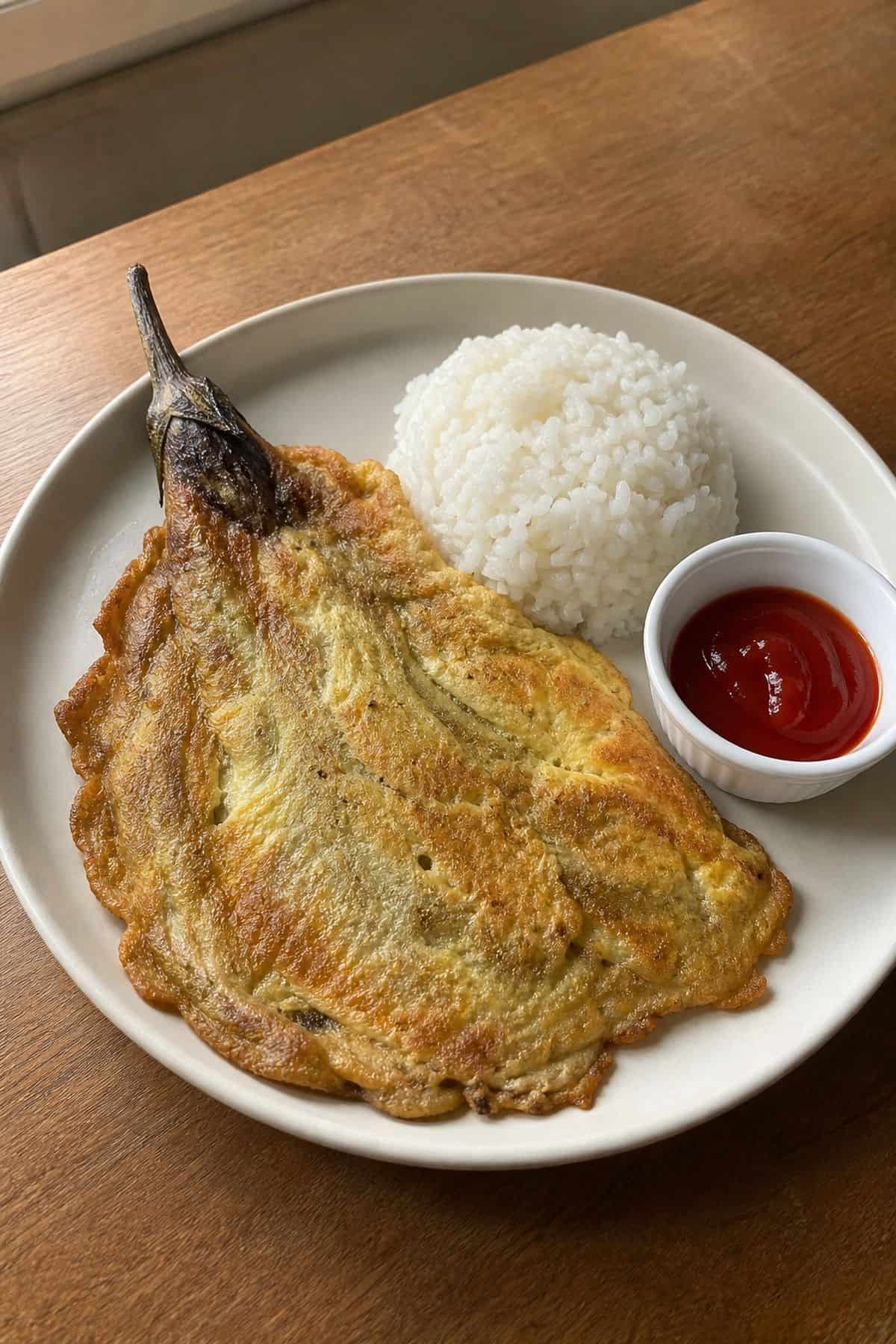
Total time: about 30 minutes, including charring and steaming. Makes 2 eggplant omelets.
Ingredients
- 2 long Asian eggplants (Chinese or Japanese)
- 2 large eggs, beaten
- 1/2 teaspoon salt
- 1/4 teaspoon black pepper
- 2 tablespoons neutral cooking oil
- Steamed rice, banana ketchup or cane vinegar, for serving
Instructions
- Char the eggplants over a gas flame, under the broiler or on a grill, turning every 2 to 3 minutes, until the skin is black all over and the flesh collapses when pressed.
- Move them to a bowl, cover and steam for 5 minutes. Peel off the charred skin from the stem end downward, keeping each eggplant whole with the stem attached.
- Lay each eggplant on a board and press the flesh flat with a fork, spreading it from stem to tip into a wide paddle.
- Beat the eggs with the salt and pepper in a shallow dish wide enough to fit one flattened eggplant.
- Heat the oil in a non-stick pan over medium heat. Dip one eggplant into the egg, coating both sides, let the excess drip off and lay it in the pan.
- Spoon any egg left in the dish over the top. Cook undisturbed for 3 to 4 minutes, until the underside is golden and set.
- Flip carefully with a wide spatula and cook 2 to 3 minutes more, until the egg on the second side is firm. Repeat with the second eggplant.
- Serve hot with steamed rice and banana ketchup or cane vinegar on the side.
Notes
Leftovers keep covered in the fridge for up to 2 days. Reheat in a dry non-stick pan over medium heat for 2 to 3 minutes per side to bring back some crispness; the microwave works but leaves the egg soft. Tortang talong doesn’t freeze well because the eggplant turns watery when thawed.
What do you eat with tortang talong?
Rice, always. Then something to cut the smoke. Banana ketchup is the classic, sweet and tangy, made from mashed banana, vinegar and spices; if you’ve never had it, here’s what banana ketchup is and how it’s used. Cane vinegar with crushed garlic and chili gives a sharper contrast. Soy sauce with a squeeze of calamansi works when you have neither.
For a full Filipino meal, serve it next to a braise like this classic chicken adobo. The adobo sauce over rice and the smoky eggplant on the side is about as good as a weeknight plate gets.
Tortang talong with giniling
The heartier version folds cooked ground pork or beef into the egg. Sauté the meat with garlic and onion until cooked through, let it cool a few minutes, stir it into the beaten egg and dip the eggplant as usual. The meat settles into the egg coating as it fries and turns the dish into a full meal. The plain vegetarian version in this recipe lets the smoke come through more clearly, so it is the one to start with.
Tortang talong questions
What eggplant is best for tortang talong?
Long Asian eggplant, Chinese or Japanese, is best. Its thin skin chars and peels easily, the flesh is less bitter than globe eggplant, and its shape flattens into the classic paddle.
How do you char eggplant without a gas stove?
Use the oven broiler. Broil the whole eggplant on a foil-lined sheet about 15 cm (6 inches) from the element for 15 to 20 minutes, turning once, then steam it covered for 5 minutes before peeling.
Why does my tortang talong fall apart?
Usually it was flipped before the egg underneath had set. Leave it undisturbed for the full 3 to 4 minutes over medium heat, keep the eggplant attached to its stem, and use a wide spatula in a non-stick pan.
Can you make tortang talong ahead of time?
You can char, peel and flatten the eggplants up to a day ahead and keep them covered in the fridge. Dip and fry just before eating, since frying only takes 6 to 8 minutes per eggplant.
Is tortang talong safe if the egg is still soft?
Cook the egg until it’s firm on both sides. The USDA advises cooking eggs until the white and yolk are firm, and the 2 to 3 minutes on the second side gets you there.
Key takeaways
- Use long Asian eggplant; globe eggplant works but won’t fan out the same way.
- Char until the skin is black and the thickest part collapses, or the center tastes bitter.
- Steam covered for 5 minutes before peeling and keep the stem on as a handle.
- Fry 3 to 4 minutes undisturbed before flipping, then 2 to 3 minutes on the second side.
- Serve with rice and banana ketchup or garlic vinegar.
Another egg dish for the same pan
Once you’ve got the flip down, the same non-stick pan and the same patience turn out a tomato, mushroom and spinach omelette. Make that on a morning when there’s no eggplant in the fridge, and save the charring for when you want the smoke.
Tortang Talong Recipe (Filipino Eggplant Omelet)
Tortang talong is a Filipino eggplant omelet made by charring whole eggplant directly over a flame, peeling the charred skin, pressing the flesh flat, dipping it in beaten egg, and pan-frying until golden brown.
Ingredients
- 2 long Asian eggplants (Chinese or Japanese variety)
- 2 large eggs, beaten
- 1/2 teaspoon salt
- 1/4 teaspoon black pepper
- 2 tablespoons neutral cooking oil
- Steamed rice, banana ketchup, or cane vinegar for serving
Instructions
- Char the eggplants using your preferred method (gas burner, broiler, or grill) until the skin is fully blackened all over and the flesh is soft and collapsing when pressed. Turn every 2 to 3 minutes for even charring.
- Transfer charred eggplants to a bowl and cover. Let steam for 5 minutes, then peel away the charred skin starting from the stem end, pulling it down in strips. Keep the stem attached and the eggplant in one piece.
- Place the peeled eggplant on a cutting board and use a fork to gently press and fan the flesh flat, spreading it from stem to tip. It should open into a wide paddle shape.
- Beat the eggs with salt and pepper in a shallow dish large enough to hold one flattened eggplant.
- Heat oil in a non-stick pan over medium heat. Dip one eggplant in the beaten egg, coating both sides. Let the excess drip off and lay it in the pan stem-side up.
- Pour any remaining egg over the top of the eggplant in the pan. Cook undisturbed for 3 to 4 minutes until the underside is golden brown, then flip carefully with a wide spatula and cook for another 2 to 3 minutes on the second side.
- Transfer to a plate and serve immediately with steamed rice and banana ketchup or cane vinegar on the side.
Notes
The key to keeping tortang talong in one piece during frying is a wide spatula and not rushing the flip. If the egg on the bottom is not fully set, the eggplant will tear when you try to turn it. Let it sit undisturbed for the full 3 to 4 minutes. A non-stick pan makes this considerably easier than a stainless or cast iron surface. For a similarly simple egg-based dish with different vegetables, the tomato mushroom spinach omelette uses the same straightforward approach and comes together in about the same amount of time. Both dishes show how eggs can carry bold vegetable flavors without much additional work. According to Panlasang Pinoy , adding a small pinch of fish sauce to the beaten egg deepens the savory character of the dish without making it taste noticeably fishy.
Last update on 2026-10-03 / Affiliate links / Images from Amazon Product Advertising API
