
honey roasted carrots are the side dish people circle back to once you fix the one thing nearly every home cook gets wrong. Whole carrots cut on the diagonal, roasted plain on a preheated sheet pan at 425°F until the edges actually caramelize, then brushed with a honey-thyme-butter glaze in the final five minutes so the honey turns shiny instead of bitter. Six servings, about thirty-five minutes start to finish, and one pan does the work.
Almost every burnt batch of honey roasted carrots comes down to a single timing mistake: the honey went on too early. Honey starts to scorch above roughly 350°F, and most home cooks toss the carrots in honey at the start, slide the pan into a 425°F oven, and twenty minutes later pull out a tray of bitter, blackened glaze welded to half-cooked carrots. The fix is the whole point of this recipe. Roast the carrots plain with olive oil and salt at high heat until the cut faces are deeply caramelized, then brush a honey-butter glaze on in the last five minutes so it bubbles, sets, and stays bright. The payoff is a tray of shiny, sweet-savory carrots fit for a holiday platter.
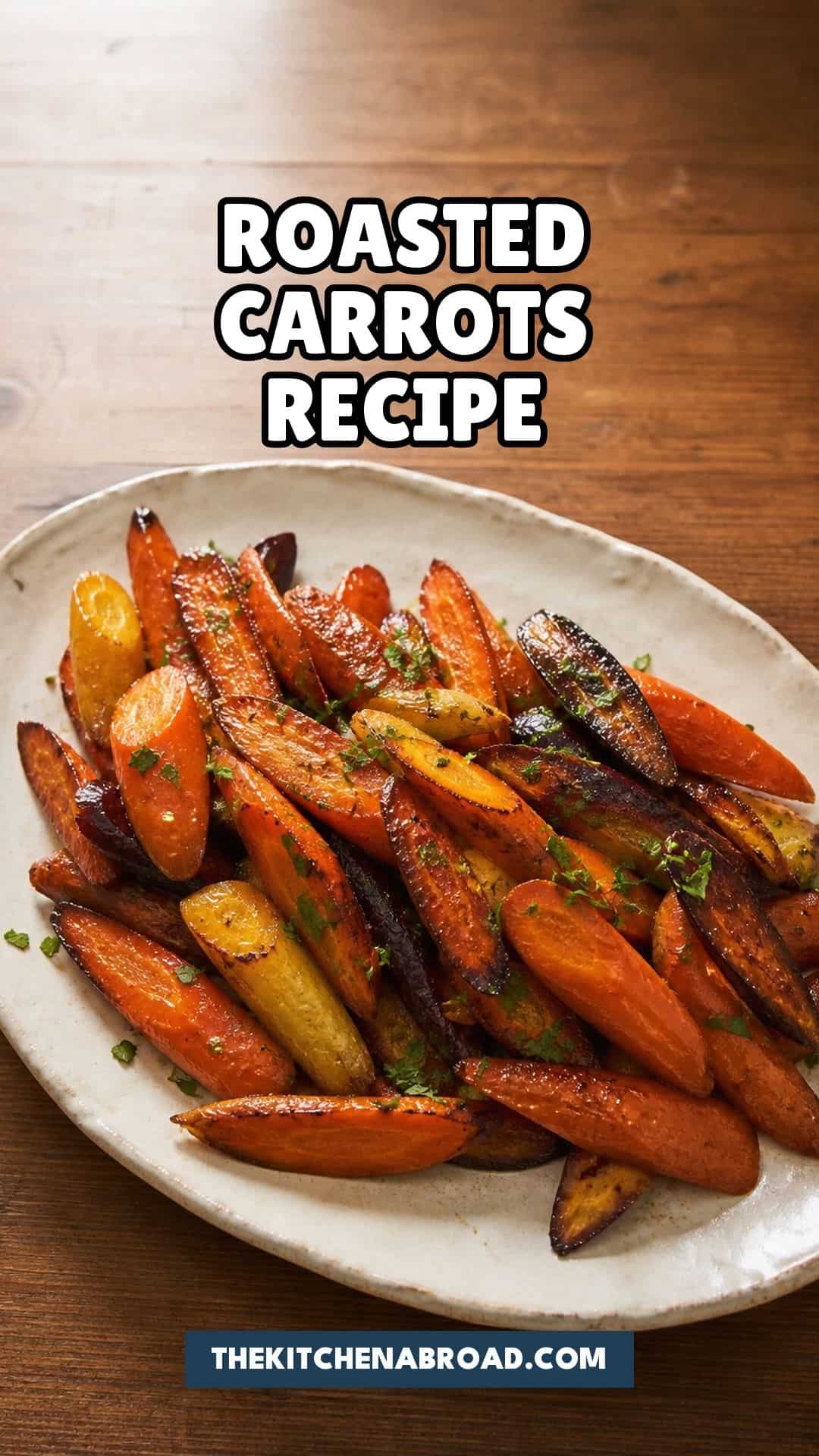
What You’ll Need
A half-sheet pan that can take a hot preheat without warping, a silicone pastry brush for laying the glaze down evenly in the last five minutes, a Y-shape peeler that handles long carrots in two strokes, a real chef’s knife for the diagonal cut that creates the caramel surface area, and a wide ceramic platter to serve them on.


Recommended Reads
- Honey and Balsamic Roasted Beets
- Green Beans Almondine
- Roasted Brussels Sprouts
- Best Easter Dinner Ideas
- Best Thanksgiving Side Dishes
Where Glazed Carrots Came From
Glazed carrots have a longer pedigree than the holiday-table version suggests. The direct ancestor is carottes Vichy, the 18th- and 19th-century French side from the spa town of Vichy, where carrots were sliced into coins, simmered in the local mineral water with butter and a pinch of sugar, and reduced until the liquid lacquered the carrots in a shiny syrup. Escoffier codified the technique in Le Guide Culinaire (1903), and from there it crossed the Atlantic into mid-century American cookbooks. Julia Child included a butter-and-sugar version; church and community cookbooks of the 1960s and 70s spread it onto Sunday and holiday tables across the country, usually with brown sugar standing in for the original pinch.
The modern oven-roasted version is the 2010s update. Farmer’s markets started carrying rainbow carrots, purple, yellow, white, and red alongside the orange standard, and home cooks moved the dish out of the saucepan and onto a sheet pan to take advantage of dry-heat caramelization. Honey replaced refined sugar as the on-trend sweetener, fresh thyme and rosemary replaced the sprig of nothing, and the dish landed on Easter and Thanksgiving spreads as a centerpiece worth photographing. Today’s honey-roasted version is Vichy’s great-granddaughter, same shiny, buttery finish, swapped from stovetop to oven, with the glaze timing redesigned around the temperature change.
A Few Notes on the Ingredients
- Whole carrots: Sweet and dense, cut on a sharp diagonal into 2-inch pieces. The cut faces are where the caramel forms. Rainbow carrots add visual variety on a holiday platter.
- Skip bagged “baby carrots”: Those are shaved-down mature carrots that have lost most of their sweetness and carry surface moisture from the bag, which means they steam on the pan instead of roasting.
- 425°F oven: The high-heat sweet spot, and the difference between carrots that brown and carrots that just soften. Lower temperatures give you steamed carrots with a faint blush of color.
- Preheated sheet pan: Non-negotiable. The carrots make contact with metal already at oven temperature and start browning instantly, which is how you get the candied-edge texture without overcooking the interior.
- Honey-butter-thyme glaze: Honey, melted butter, and fresh thyme leaves whisked together. Honey scorches above roughly 350°F, so it goes on in the last five minutes only, brushed over carrots that are already caramelized.
- Fresh thyme: The only herb that can handle the brief return to the oven. Parsley, dill, or chives are too delicate and should go on off-heat at the end.
- Optional finishers: Toasted pistachios add crunch, and a crumble of feta or goat cheese brings tang against the sweetness. Both go on off-heat at the very end.
Recipe: Honey Roasted Carrots
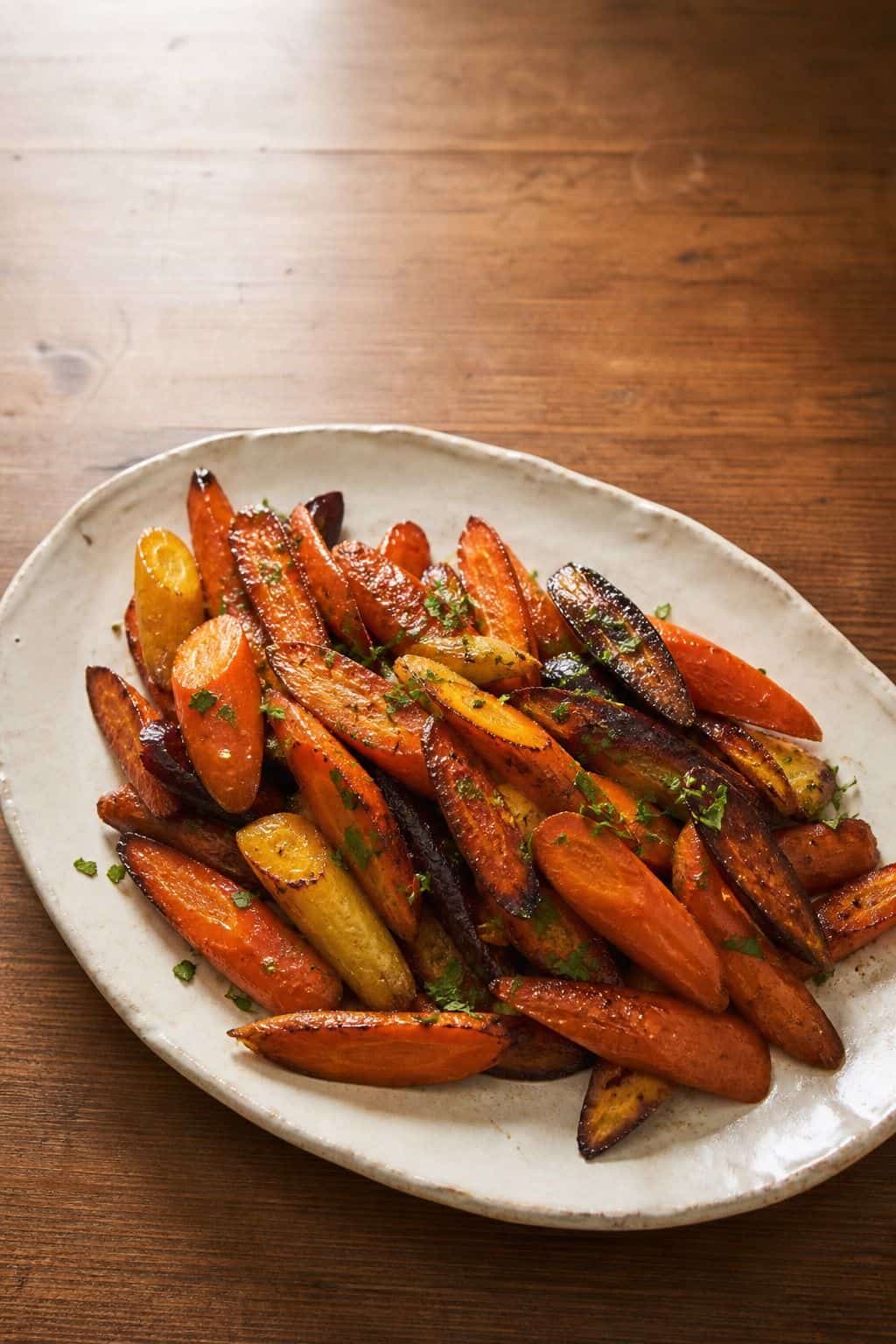
Prep time: 10 minutes | Cook time: 25 minutes | Total time: 35 minutes | Serves: 6
Ingredients
- 2 lb (900 g) whole carrots, peeled and cut on the diagonal into 2-inch pieces (rainbow carrots if available)
- 2 tbsp (30 ml) olive oil
- 1 tsp salt
- 1/2 tsp black pepper
- 2 tbsp (30 ml) honey
- 2 tbsp (28 g) unsalted butter, melted
- 1 tbsp fresh thyme leaves (or 1 tsp dried)
- 1 tbsp (3 g) fresh parsley, chopped
- Optional: 1/4 cup (30 g) toasted pistachios, or 2 oz (55 g) feta crumbled
Instructions
- Heat the oven to 425°F (220°C) with a half-sheet pan inside so it preheats with the oven. The hot metal is what creates the caramelized edges, don’t skip this step.
- While the oven heats, peel the carrots and cut them on a sharp diagonal into 2-inch pieces. Toss in a large bowl with the olive oil, salt, and pepper until evenly coated.
- Pull the hot sheet pan from the oven and tip the carrots out in a single layer with space between each piece, crowding steams instead of roasts. You’ll hear them sizzle on contact. Return to the oven and roast 18 to 20 minutes, until the edges are caramelized and a paring knife slides into the thickest piece with light resistance.
- While the carrots roast, whisk the honey, melted butter, and thyme leaves together in a small bowl until smooth.
- Pull the pan out at the 18- to 20-minute mark. Brush the honey-butter mixture over the carrots with a silicone pastry brush, coating every piece. Return to the oven for exactly 5 more minutes, until the glaze bubbles and sets.
- Transfer the glazed carrots to a wide ceramic serving platter. Scatter the fresh parsley across the top, and finish with toasted pistachios or crumbled feta if using. Serve warm.
Notes
The glaze-timing rule is the whole recipe in one sentence: caramelize the carrots plain first, then glaze in the last five minutes. Brushing honey on at the start, even at 400°F, will burn it. The five-minute return to the oven is long enough for the glaze to bubble and set into a shiny lacquer, short enough that it doesn’t scorch.
To scale for a crowd, double the recipe across two sheet pans rather than crowding one. Carrots packed shoulder-to-shoulder release steam and never caramelize. Rotate the pans top-to-bottom at the halfway mark if your oven cooks unevenly. The honey-butter glaze doubles cleanly, just whisk a second batch.
Preheating the sheet pan is the move most home cooks skip, and it’s the difference between roasted carrots and softened carrots. The hot metal starts the Maillard reaction the moment the carrots touch down, which is how the cut faces brown in twenty minutes instead of forty. If you put cold carrots on a cold pan, you’re effectively steam-baking them for the first ten minutes while the pan catches up to oven temperature.
Tips and Variations
The Glaze-Timing Window That Prevents Burning
This is the rule the whole dish hinges on. Honey contains fructose and glucose, both of which start to scorch and turn bitter above roughly 350°F. A 425°F oven for twenty-five minutes will reliably destroy any honey added at the start, leaving a black, acrid coating welded to half-cooked carrots. The fix is timing: roast plain for 18 to 20 minutes until the cut faces caramelize, then brush the honey-butter glaze on with a silicone pastry brush and return the pan to the oven for exactly 5 minutes. That five-minute window is long enough for the glaze to bubble, set, and turn shiny, short enough that the sugars don’t break down. If you’re nervous, watch through the oven window in the last minute and pull the pan the moment the glaze starts to bubble visibly. Some cooks switch to broil for the last 90 seconds to lacquer the glaze faster, that works, but stand at the oven door and watch it, because broiler heat will take you from shiny to burnt in fifteen seconds.
Why Whole Carrots Beat Bagged “Baby Carrots”
The pre-bagged “baby carrots” in every supermarket aren’t baby carrots at all. They’re full-size mature carrots that have been tumbled through an industrial shaver into uniform two-inch nubs, then rinsed and bagged in chlorinated water to extend shelf life. The shaving process strips away most of the sugar-rich outer flesh, and the wet bag environment leaves them carrying surface moisture that steams off in the oven instead of roasting away. The result is bland, soggy, pale carrots no matter how high your oven runs. Whole carrots, peeled at home and cut on a diagonal into 2-inch pieces, have the full sugar content intact, the cut faces are dry and ready to caramelize, and the irregular shapes give you visual variety on the platter. True baby carrots with the tops still on (sometimes labeled bunched or French carrots) are an upgrade over bagged but cost more and aren’t necessary, a good whole rainbow or orange carrot from the produce section is the move.
Preheating the Sheet Pan for Caramelization
Put the empty sheet pan in the oven before you turn it on, and let it come up to 425°F along with the oven. When you tip the oiled carrots onto the hot pan, you should hear an audible sizzle, that’s the Maillard reaction starting before the oven door even closes. Cold carrots on a cold pan spend the first eight to ten minutes of cook time just bringing the metal up to temperature, which means the carrots release moisture into the pan and effectively steam-bake until the pan catches up. The preheated-pan trick is what lets a 25-minute total cook time produce deeply caramelized edges, without it you’d need closer to 40 minutes and you’d still get less browning. The technique is borrowed from restaurant line cooking, and it’s the single biggest difference between a home-cook roasted carrot and one off a restaurant pass.
Make-Ahead Strategy for Holiday Service
For Easter, Thanksgiving, or any holiday dinner where oven space is at a premium, split the recipe into two stages. The day before, roast the carrots plain at 425°F for 18 minutes until just shy of fully caramelized, pull them off the heat, and let them cool completely on the sheet pan before transferring to an airtight container in the fridge. On the day, slide the pan back into a 425°F oven for 5 minutes to re-crisp, then brush on a freshly whisked honey-butter glaze and finish for the last 5 minutes. The carrots crisp back up beautifully because the surface moisture got driven off during the first roast, and the glaze goes on a fully-cooked, fully-caramelized base instead of competing with the cooking process. Plan twenty minutes of total oven time the day of, and you’ve freed up a rack for the turkey, ham, or lamb.
Adding Pistachios and Feta for Centerpiece Drama
The plain version is great as a weeknight side. The version that turns the dish into a holiday centerpiece adds two finishers off-heat at the end: a generous handful of toasted pistachios for crunch and color, and a couple of ounces of crumbled feta or goat cheese for salty tang against the honey. Both go on after the carrots come off the pan and onto the platter, never in the oven, the pistachios go soft and the cheese melts into a puddle if you bake them in. Hot honey is another easy upgrade for adults, drizzle a teaspoon of Mike’s Hot Honey over the finished platter for a sweet-heat layer that plays beautifully against the thyme. Rainbow carrots plus pistachios plus feta plus hot honey is the four-element move that turns this from a side into the dish guests photograph.
What to Serve It With
Honey roasted carrots earn a spot on an Easter table next to glazed ham or roast lamb, where the sweet-savory glaze plays directly against the salty meats. They’re a Thanksgiving staple, the bright orange bowl among the beige sides, and they hold up beautifully on a buffet at room temperature. For a Sunday dinner, they’re the natural side for a roast chicken, the glaze ends up on the potatoes and nobody complains. On a wider holiday spread they belong next to honey and balsamic roasted beets, green beans almondine, and roasted Brussels sprouts. Build the full table from our Easter dinner ideas or Thanksgiving side dishes collections.
Frequently Asked Questions
Baby carrots vs full-size carrots, which is better?
Full-size whole carrots, peeled and cut on the diagonal into 2-inch pieces, win nearly every time. The bagged “baby carrots” in the supermarket cold case are shaved-down mature carrots that have lost most of their sweetness and carry surface moisture that steams off in the oven instead of roasting away. True whole baby carrots with tops attached (sometimes labeled bunched or French) are excellent if you can find them, but they cost more and aren’t necessary, a good whole rainbow or orange carrot from the produce section, cut on a sharp diagonal, beats both alternatives.
Rainbow vs orange carrots, does it matter?
Visually, yes. The purples and yellows make a holiday platter feel more composed and photograph noticeably better. Flavor-wise the differences are subtle: purple carrots are slightly earthier with a hint of pepper, yellow carrots are milder and sweeter than orange, white carrots are the most delicate. The good news is they all finish at the same time at 425°F, so you can cook them together in one pan. For a weeknight side, plain orange is fine. For Easter or Thanksgiving, the rainbow mix is worth the small premium.
Why did mine burn?
Almost always the honey went on too early. Honey starts to scorch above roughly 350°F, and a 425°F oven for the full 25 minutes will guarantee a bitter, blackened coating if the glaze is on from the start. The fix is to roast the carrots plain with olive oil and salt for 18 to 20 minutes first, then brush the honey-butter glaze on and return the pan for exactly 5 more minutes. Five minutes is the window where the glaze bubbles, sets, and turns shiny, longer than that and it starts to break down.
Can I make these ahead?
Yes, and the make-ahead is genuinely good. Roast the carrots plain at 425°F for 18 minutes the day before, just shy of fully caramelized, then cool completely and refrigerate in an airtight container. On the day, reheat at 425°F for 5 minutes to re-crisp, brush on a freshly-whisked honey-butter glaze, and finish for the last 5 minutes. Total oven time on the day is ten minutes, which is critical when the turkey or ham is hogging rack space.
Can I broil instead of roast?
You can broil for the last 90 seconds to two minutes after the glaze goes on, to lacquer it faster and add a little char to the edges. Don’t broil from start to finish, the carrots won’t cook through before the surface burns. Roast at 425°F for the first 20 minutes, brush on the glaze, then switch to broil on high for 90 seconds to 2 minutes with the rack 6 inches below the element. Stand at the oven door and watch it, broiler heat will take you from shiny to burnt in fifteen seconds.
Do I have to peel the carrots?
For young, slim rainbow carrots or fresh bunched carrots with the tops still on, a good scrub under cold water is enough, the skins are thin and tender and you keep more flavor. For older, thicker grocery-store carrots with dry or rough skin, peel them with a Y-shape peeler before cutting. The rule of thumb: if the skin looks dry, papery, or fibrous, peel it. If it looks smooth and bright, leave it.
Key Takeaways
- Roast at 425°F (220°C), not 400°F. The high heat is what builds real caramelization on the cut faces in 18 to 20 minutes.
- Add the honey-butter glaze in the last 5 minutes only. Honey scorches above ~350°F, so it cannot be on the carrots at the start of a high-heat roast.
- Preheat the sheet pan inside the oven so the carrots hit hot metal and start browning instantly.
- Cut whole carrots on a sharp diagonal into 2-inch pieces, the cut faces are where the caramel forms. Skip the bagged “baby carrots”, they’re shaved-down mature carrots without the flavor.
- Fresh thyme can handle the brief return to the oven; parsley, dill, or chives go on off-heat at the end.
- Make-ahead works: roast plain a day ahead, then reheat and glaze on serving day. Optional pistachios and feta turn it into a centerpiece.
Final Thoughts
Honey roasted carrots are the kind of dish that lives or dies on a single timing decision. Get the glaze on too early at 425°F and you’ll pull out a tray of bitter, burnt carrots that nobody touches. Get the timing right, plain roast for 20 minutes, then glaze for the last 5, and you get shiny, deeply caramelized carrots that look and taste like they came off a restaurant pass. The technique is so simple it feels like nothing, and the difference it makes is enormous.
The holiday-side use case is what earned this dish its modern life. American Thanksgiving and Easter tables are mostly cream, beige, and brown, mashed potatoes, stuffing, rolls, turkey skin, ham. A wide platter of honey-glazed rainbow carrots, scattered with green herbs and maybe pistachios and feta, does what no other side does: it gives the table a center of bright color without changing the menu around it. It also holds beautifully at room temperature, which is the format you actually want on a buffet.
Roast a tray on a Sunday afternoon and you’ll find a half-dozen places they want to go this week, next to a roast chicken, stirred into a grain bowl, on top of a winter salad with goat cheese and walnuts, alongside a Thursday-night pan-seared salmon. They reheat well and they’re better at room temperature than cold. The Vichy carrot has been on a French table since the 1800s for a reason, and this oven version, with the glaze timing redesigned around the higher heat, is the version most worth keeping in the rotation.
Honey Roasted Carrots
honey roasted carrots are the side dish people circle back to once you fix the one thing nearly every home cook gets wrong.
Ingredients
- 2 lb (900 g) whole carrots, peeled and cut on the diagonal into 2-inch pieces (rainbow carrots if available)
- 2 tbsp (30 ml) olive oil
- 1 tsp salt
- 1/2 tsp black pepper
- 2 tbsp (30 ml) honey
- 2 tbsp (28 g) unsalted butter, melted
- 1 tbsp fresh thyme leaves (or 1 tsp dried)
- 1 tbsp (3 g) fresh parsley, chopped
- Optional: 1/4 cup (30 g) toasted pistachios, or 2 oz (55 g) feta crumbled
Instructions
- Heat the oven to 425°F (220°C) with a half-sheet pan inside so it preheats with the oven. The hot metal is what creates the caramelized edges, don't skip this step.
- While the oven heats, peel the carrots and cut them on a sharp diagonal into 2-inch pieces. Toss in a large bowl with the olive oil, salt, and pepper until evenly coated.
- Pull the hot sheet pan from the oven and tip the carrots out in a single layer with space between each piece, crowding steams instead of roasts. You'll hear them sizzle on contact.
- While the carrots roast, whisk the honey, melted butter, and thyme leaves together in a small bowl until smooth.
- Pull the pan out at the 18- to 20-minute mark. Brush the honey-butter mixture over the carrots with a silicone pastry brush, coating every piece. Return to the oven for exactly 5 more minutes, until the glaze bubbles and sets.
- Transfer the glazed carrots to a wide ceramic serving platter. Scatter the fresh parsley across the top, and finish with toasted pistachios or crumbled feta if using. Serve warm.
Notes
The glaze-timing rule is the whole recipe in one sentence: caramelize the carrots plain first, then glaze in the last five minutes. Brushing honey on at the start, even at 400°F, will burn it. The five-minute return to the oven is long enough for the glaze to bubble and set into a shiny lacquer, short enough that it doesn't scorch.
To scale for a crowd, double the recipe across two sheet pans rather than crowding one. Carrots packed shoulder-to-shoulder release steam and never caramelize. Rotate the pans top-to-bottom at the halfway mark if your oven cooks unevenly. The honey-butter glaze doubles cleanly, just whisk a second batch.
Last update on 2026-08-08 / Affiliate links / Images from Amazon Product Advertising API