The best sage green kitchen decor is the stuff you already use every day: towels, mugs, a utensil crock, a serving bowl, a rug. Pick a grayish sage over a minty one, repeat it in three to five spots around the room, and let wood, cream and brass handle everything else.
Sage green kitchen decor goes wrong in one predictable way. Somebody buys eleven matching green things in one weekend, and the kitchen starts to look like a showroom for a single paint chip. The color itself is easy to live with. It sits between gray and green, so it calms a white kitchen and warms up a cold one.
The better route is slower. Bring sage in through things that already have a job (towels by the sink, a crock of wooden spoons, the bowl the fruit lives in) and stop before every surface turns green. The 25 finds below are sorted by where they live in the kitchen, starting with cheap textile swaps and ending with the heavy pot you might leave on the stove.
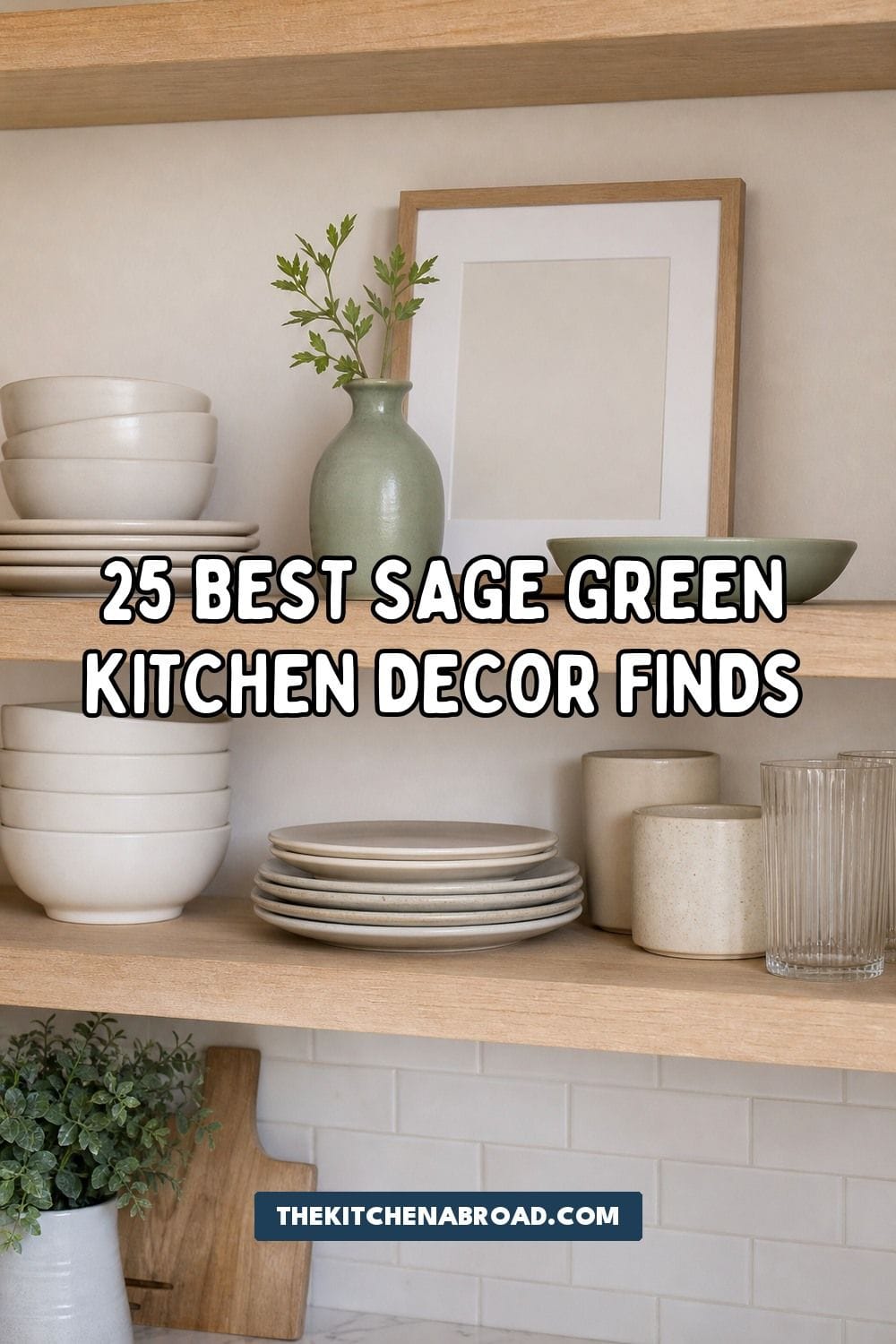



Which shade of sage green should you buy?
Sage is a family of colors. Product photos make it worse, because one brand’s “sage” is a soft gray-green and another’s is basically mint.
Gray-leaning sage is the safest bet. It works with white, cream and stainless steel, and it won’t look sweet next to black hardware. Warmer, slightly yellow sage (closer to olive) suits oak, terracotta and brass. The minty versions are the tricky ones. They read pastel fast and can look dated beside natural wood.
Check before you order. Hold a towel or a paint sample next to your counter in the evening, under the lights you actually cook with. Cool white quartz wants a grayer sage; butcher block or warm stone wants a warmer one.
Start with textiles: towels, linens and a rug
Fabric is the cheapest way to test the color. If the shade is wrong, it goes in a drawer and you’ve lost the price of a tea towel.
1. Sage green kitchen towels by the sink

Towels are where I’d start. They hang by the sink or on the oven door, they get used constantly, and within a week you’ll know whether you like the shade. Go for cotton or a linen blend that actually absorbs; waffle weave dries glasses better than flat terry. Buy at least four so one is always clean.
2. A table runner for the breakfast nook
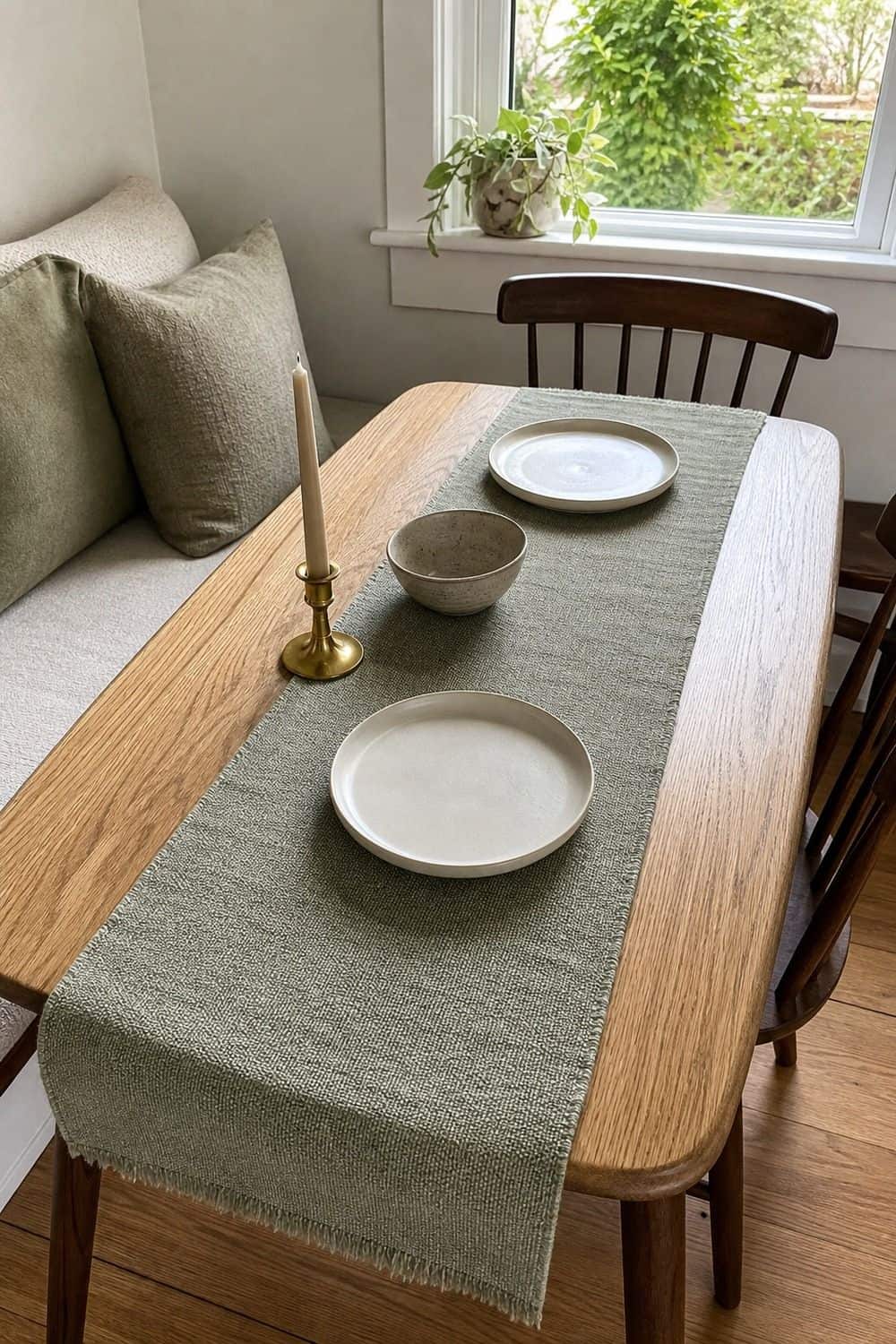
A runner puts color on the table without replacing a single plate. Cream dishes, a wood board and a pair of brass candlesticks look right on it straight away. Choose washable woven cotton over anything shiny, and measure first. On a small table, a narrow runner looks lighter and leaves room for actual breakfast.
3. Cloth napkins for everyday dinners

Napkins are low commitment, and they make a Tuesday dinner look finished. Keep the plates neutral and let the napkins carry the green. Look for cotton or linen that survives a hot wash, at least 40 cm square so it covers a lap.
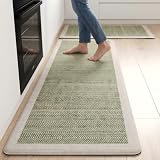
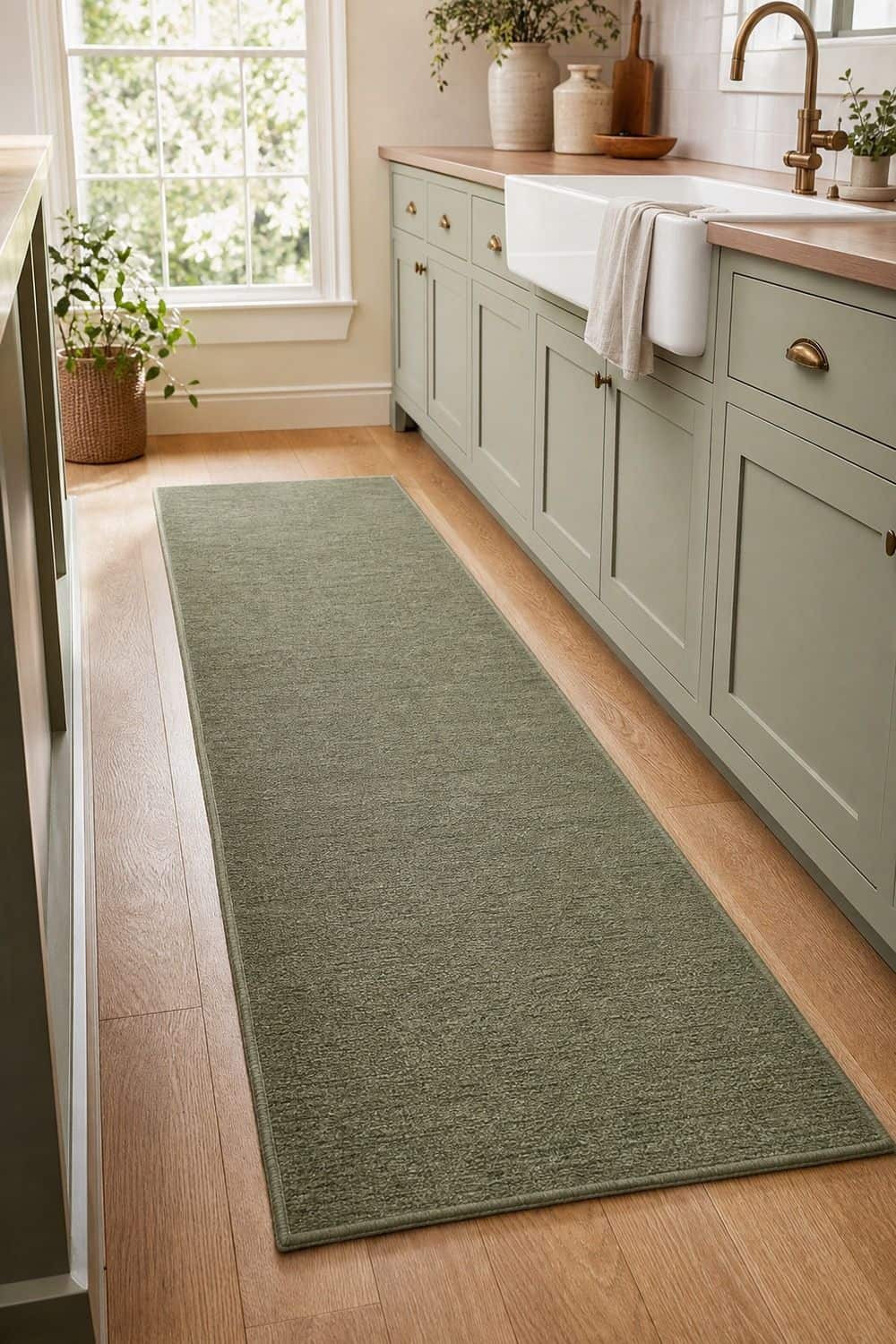
4. A washable sage green kitchen rug
A rug moves the color off the counters entirely, which matters in a small kitchen where prep space is precious. Choose low pile, machine washable, with a non-slip back or a pad underneath. Heathered or faded green hides crumbs and drips better than a flat solid. Check that the dishwasher door and cabinet doors clear it before ordering.
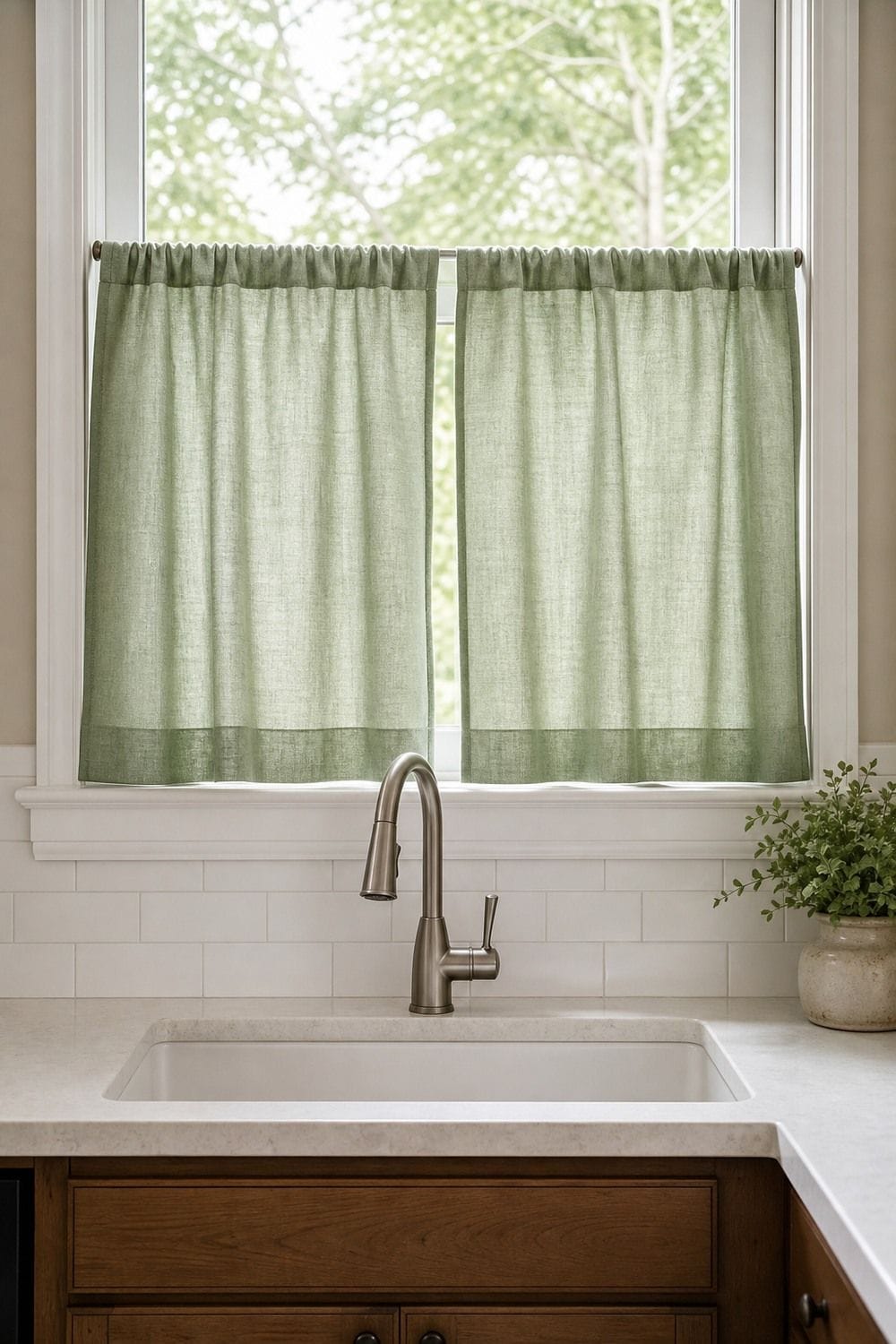
5. Cafe curtains for the sink window
Half-height cafe curtains soften a window and still let daylight reach the sink. They’re a smart pick when the counters are already full, since they add color without adding objects. Keep the hem well clear of the faucet. A tension rod means no drilling, which renters will appreciate, and a linen texture or thin stripe ages better than a busy print.
On the counter: pieces that earn the space
Restaurant kitchens run on a blunt rule: if something isn’t used every service, it gets put away. A softer version works at home. Every green thing on the counter should get touched most days. If your counters are crowded because the cupboards are full, sort that first with these hidden kitchen storage ideas, then add color.
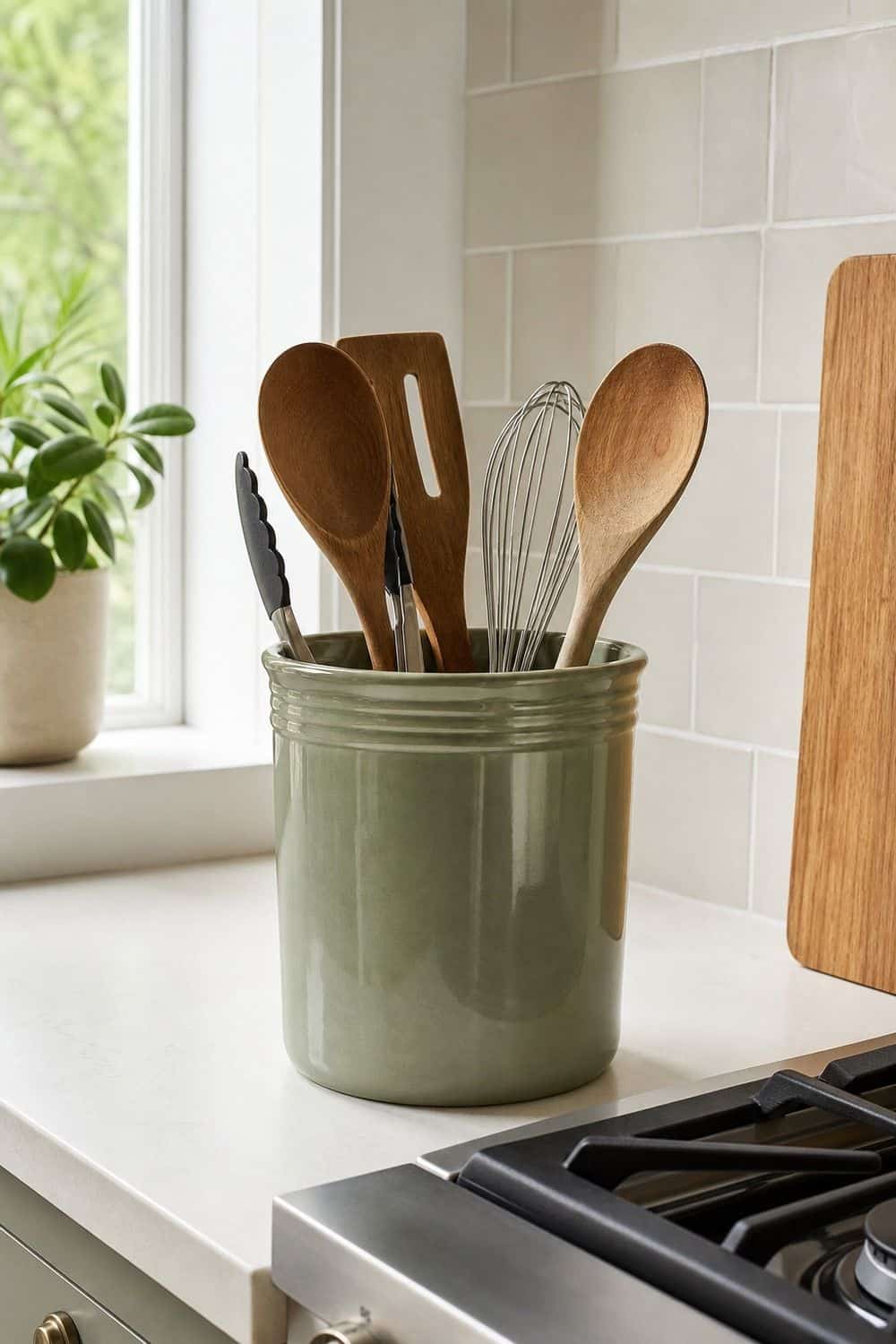
6. A heavy utensil holder by the stove

A crock for wooden spoons, tongs and a whisk. Weight matters more than looks: a light crock tips every time you yank a spatula out. Glazed ceramic wipes clean, while unglazed pottery soaks up grease. Keep only the tools you reach for daily and it stays a quiet accent instead of a bouquet of clutter.
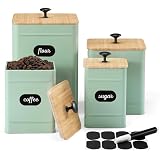
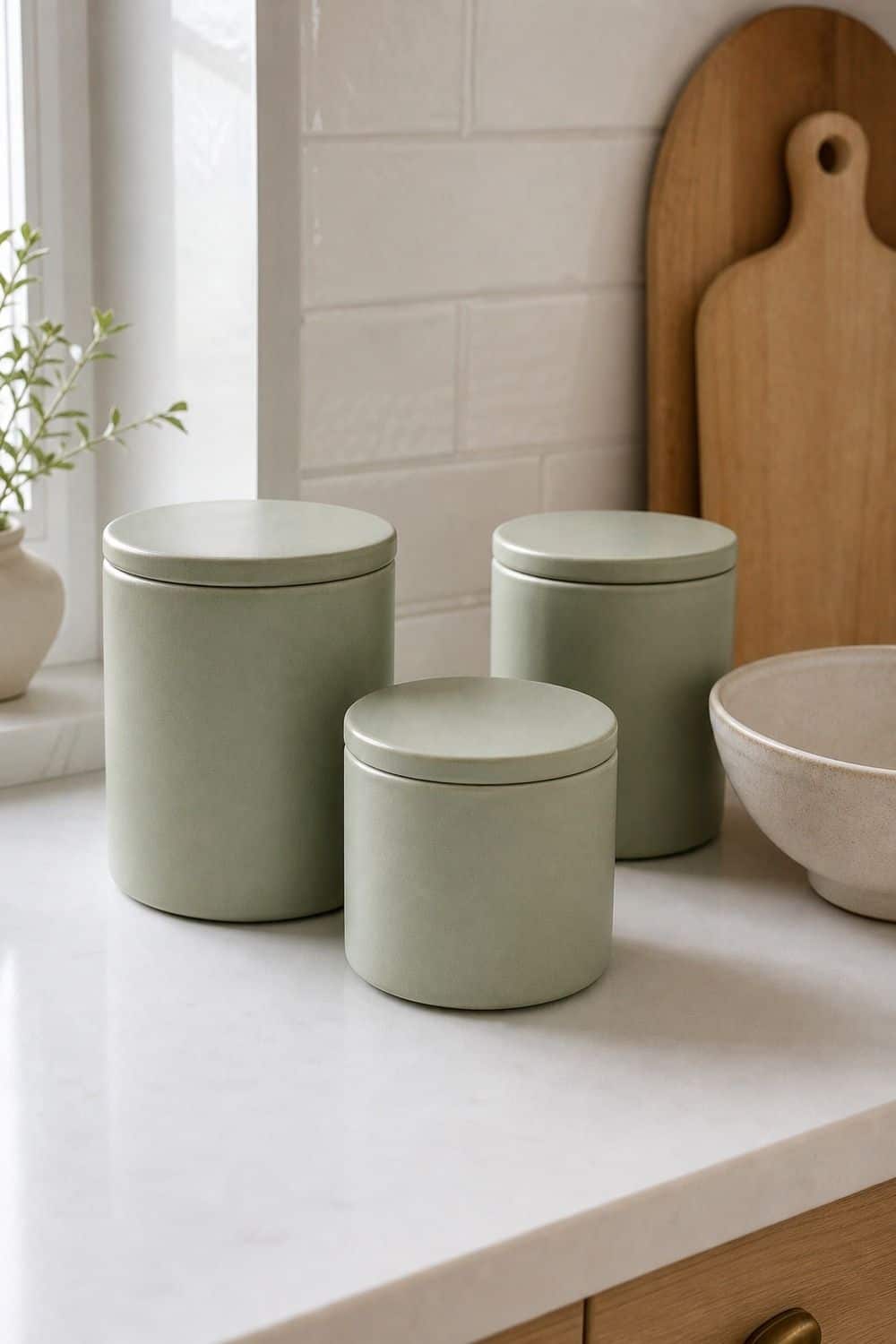
7. A canister set for coffee, sugar and flour
Canisters hold the staples you open every day, which makes them a good home for color. Look for proper airtight seals, because a pretty lid that lets coffee go stale is no use to anyone. Two or three pieces look calmer than a row of six, especially in a compact kitchen.
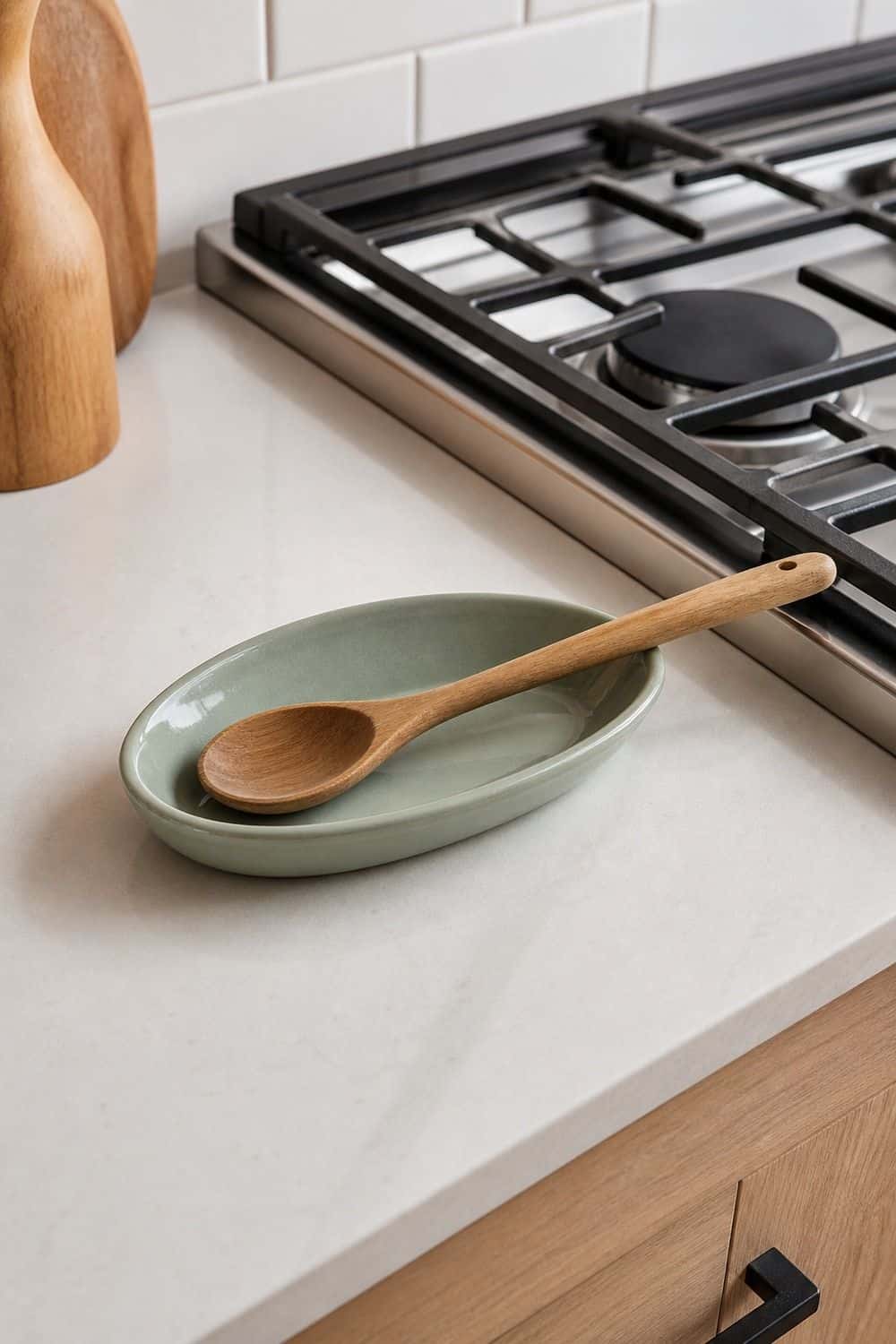
8. A spoon rest beside the hob
Tiny, cheap, and it sits exactly where you cook. A sage spoon rest catches sauce drips and repeats the towel color in a second spot, so the green looks planned rather than random. An oval shape fits a crowded stovetop better than a round one.
9. A stovetop tea kettle
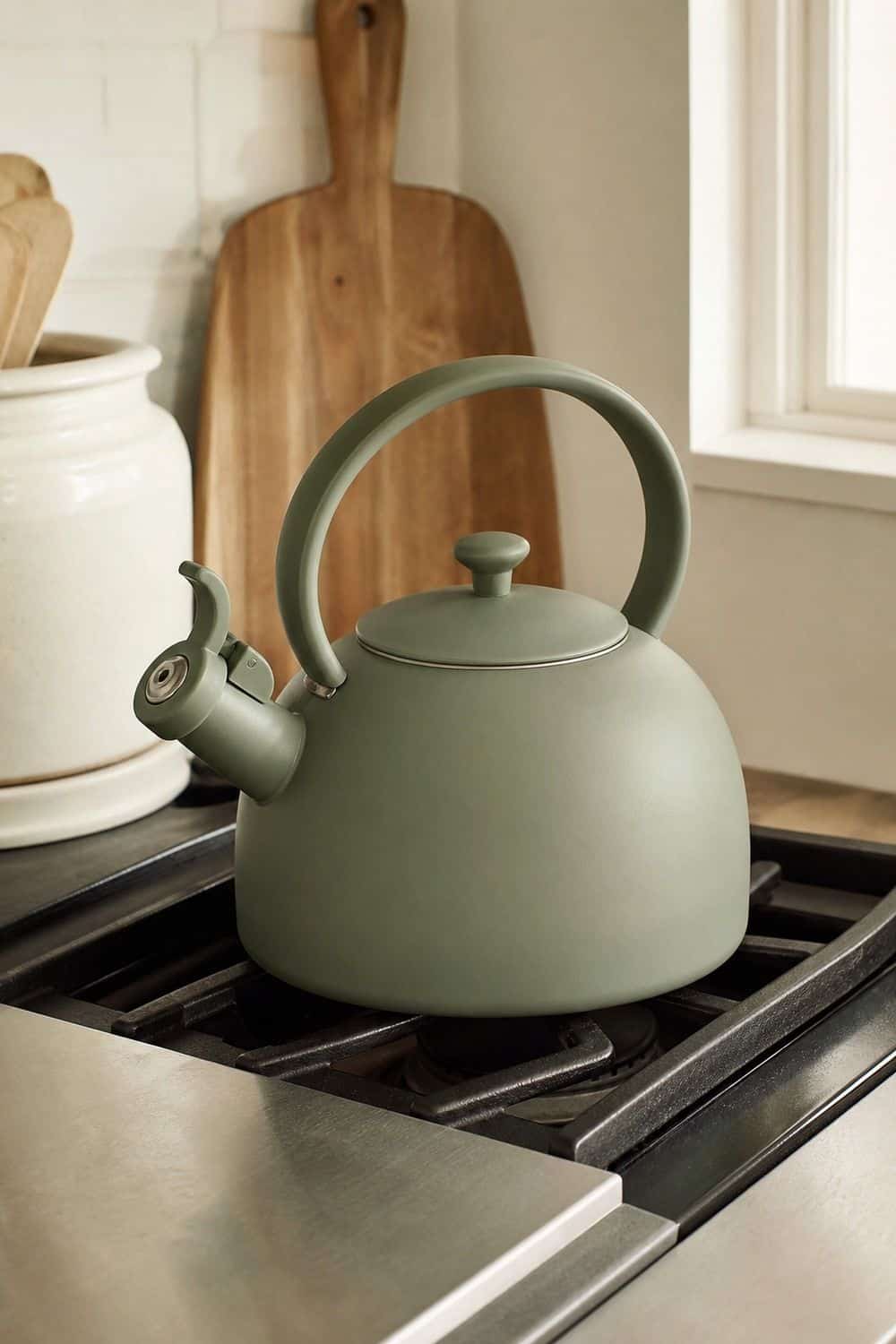
Only buy this if you’ll use a stovetop kettle. It’s big and always on view, so it sets the tone for the whole stove area. Check that it works on your hob (induction needs a magnetic base), that the handle stays cool, and that the lid comes off easily for filling.
10. A sage green toaster
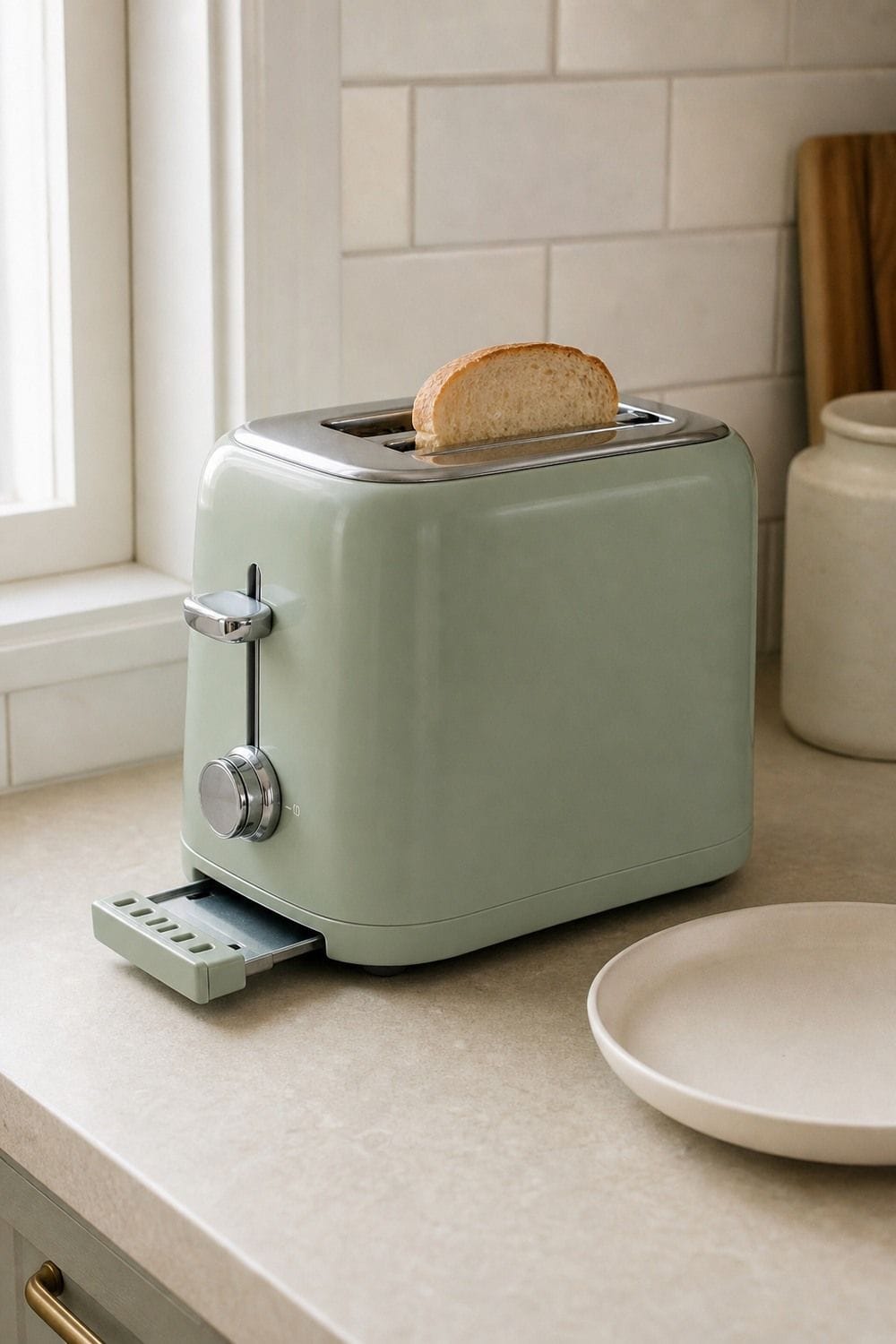
Appliance color is a bigger decision than a towel. A green toaster looks great on a clear counter and odd next to a black coffee machine and a chrome kettle, so look at its neighbors first. Then check the practical stuff: slot width for thick bread or bagels, a crumb tray that pulls out, and how much counter it eats.
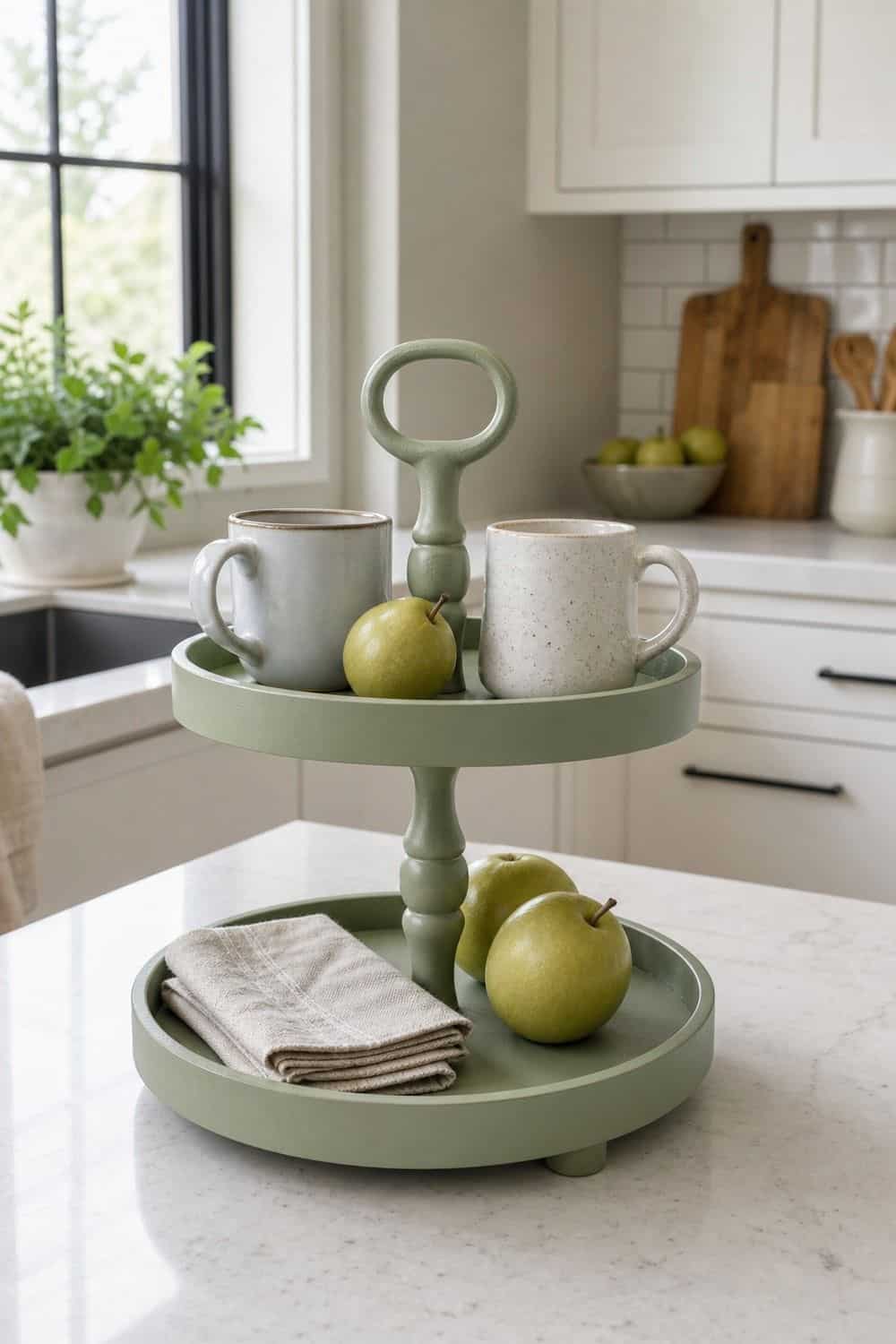
11. A tiered tray to corral small things

A two-tier tray holds mugs, tea, a few jars and napkins in one contained spot. Containment is the whole point. Give it one job, coffee or breakfast or tea, and clear it back to that job whenever keys and receipts start landing on it.
Dishes and glassware that double as shelf decor
Plates and bowls make the best open-shelf decor because they get used and put back every day. For dressing a whole table around these pieces, the warm neutral tablescape ideas pair nicely with sage.
12. Mugs for the coffee corner

Matte or speckled stoneware mugs look calmer than glossy bright green. Keep the set to four or six, either matched or mixed across two shades. On a mug tree or open shelf they become part of the room. Building a whole drinks corner? These tea station ideas show how to lay one out around a kettle and a few jars.
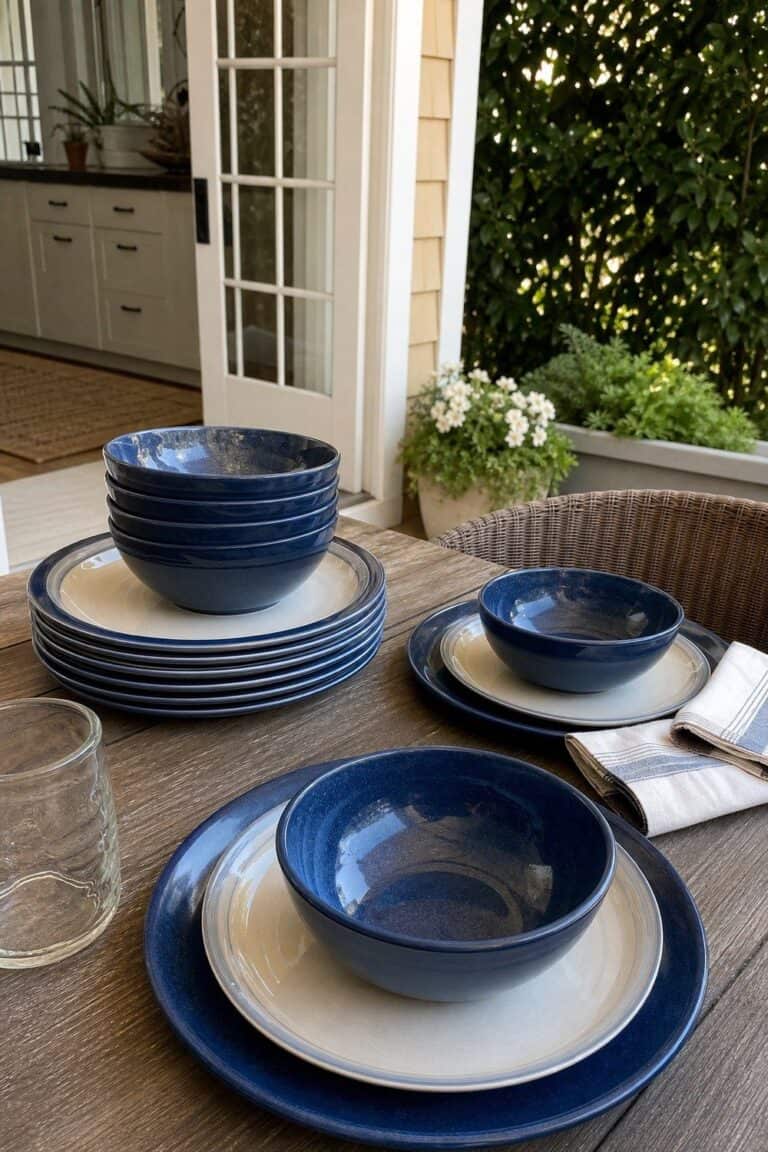
13. Dinner plates for open shelves

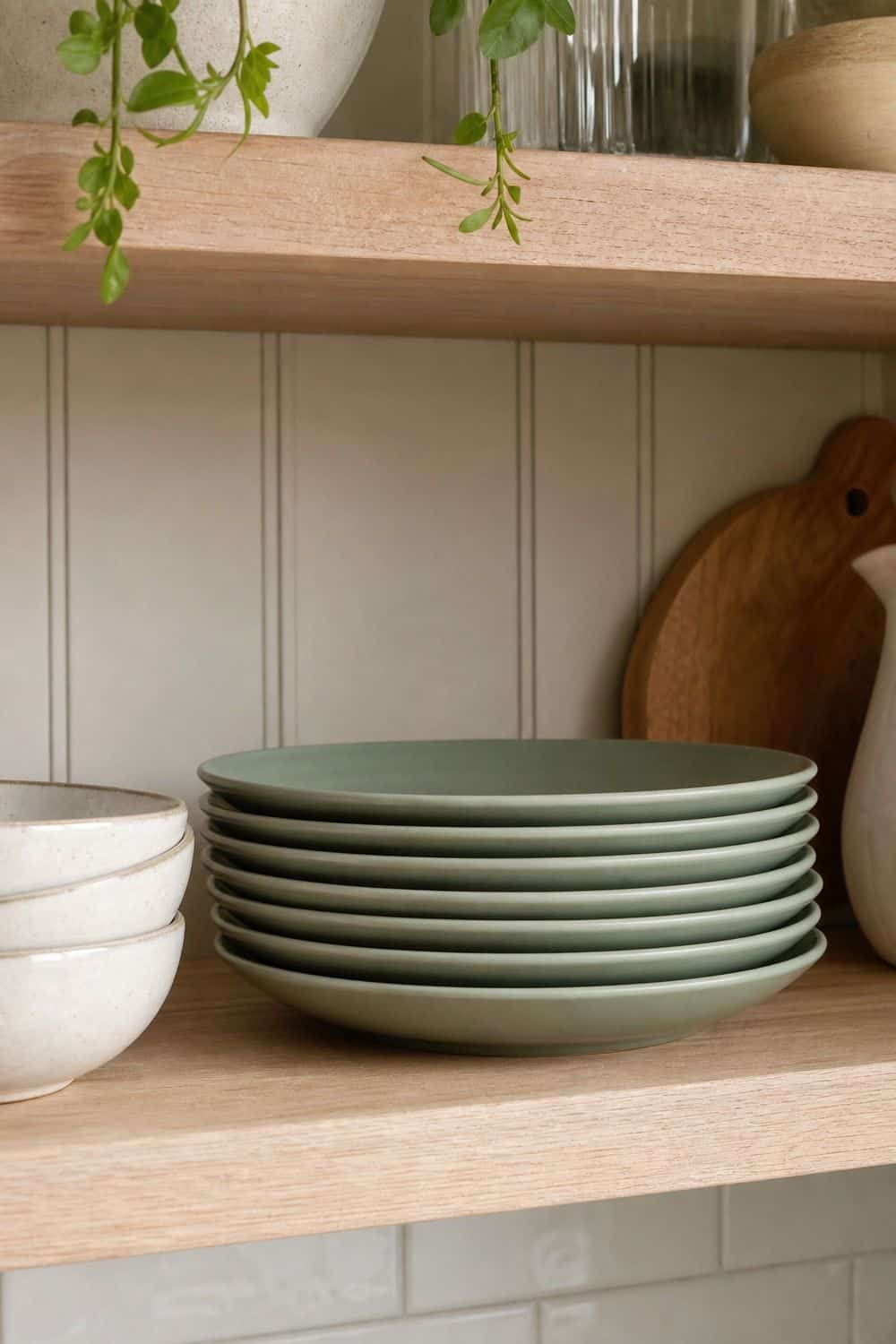
Sage dinner plates turn a plain stack into decor. A matte glaze looks more grown-up than shiny green. Not ready for a full set? Mix sage dinner plates with cream side plates and white bowls. Before buying, check that the diameter fits your cabinets and dishwasher rack, because oversized plates are a daily annoyance.
14. Wide pasta bowls
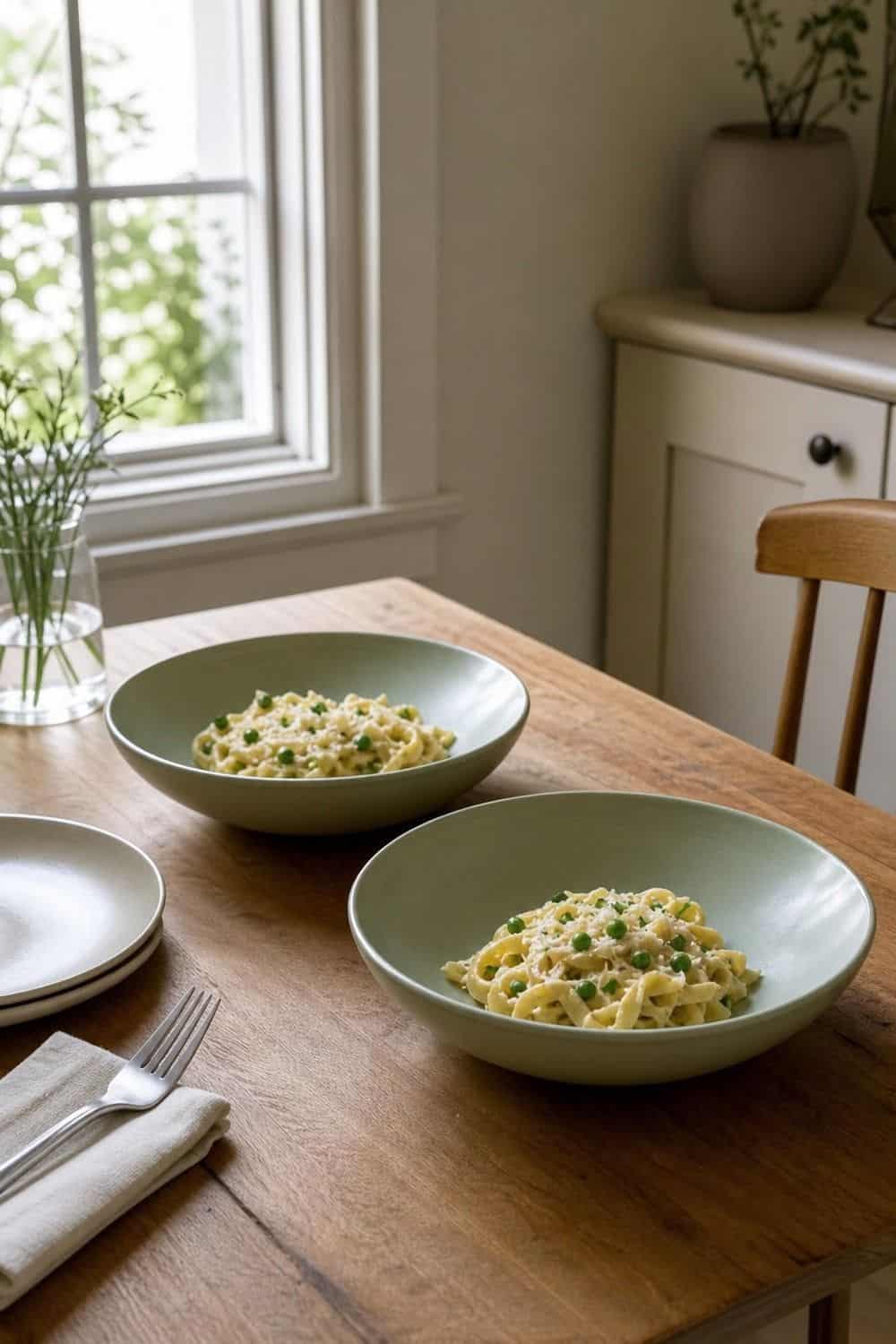
A shallow, wide bowl handles pasta, noodles, salad, soup and rice bowls, so it gets used more than most plates. That makes it a smart first green dish.
15. One large serving bowl

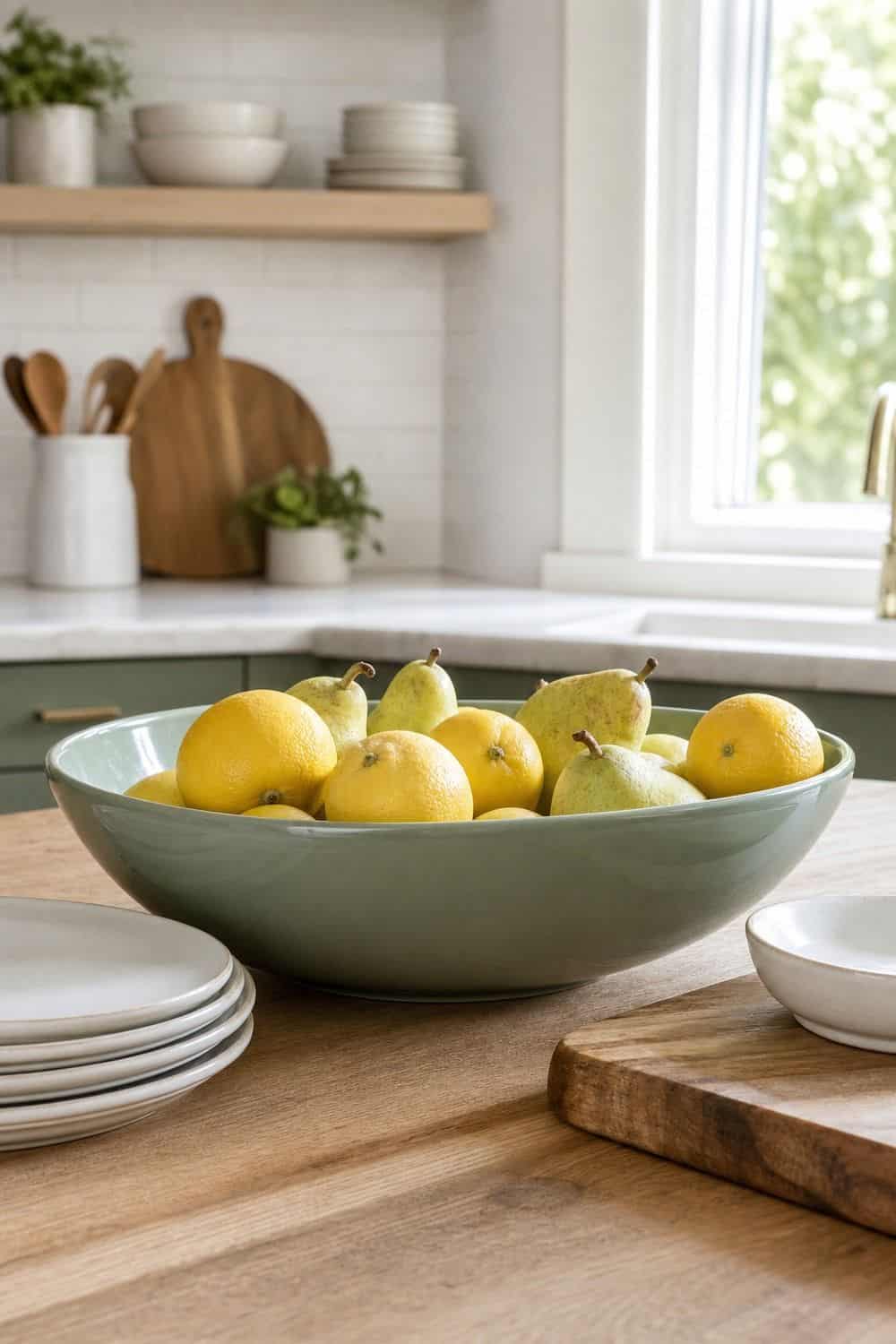
One big sage bowl gives you a single larger block of color while the rest of the table stays neutral. Use it for salad or bread at dinner, then leave it on the counter piled with lemons or apples. Measure your shelf depth if you plan to store it on display.
16. Salt and pepper shakers
Plain shapes keep the color calm. Novelty shapes make sage look cute and seasonal. Make sure they’re easy to refill, which is the part people forget when they buy on looks.
17. A covered butter dish
Soft butter for toast is a daily habit, so a butter dish earns its spot more than a purely decorative object. Check that the lid sits snugly and that the dish fits the butter sold where you live. A European 250 g block is wider than an American stick, and plenty of dishes only fit one.
18. Tinted green glassware
Green glass reads lighter than ceramic because light passes through it. With water or iced tea on a sunny table it looks fresh. Check rim thickness and dishwasher safety, and if your shelves are shallow, choose tumblers that stack securely.
Cookware you can leave out on the stove
Two pieces of sage cookware justify the price because they do real cooking and look good doing it.
19. An enameled Dutch oven
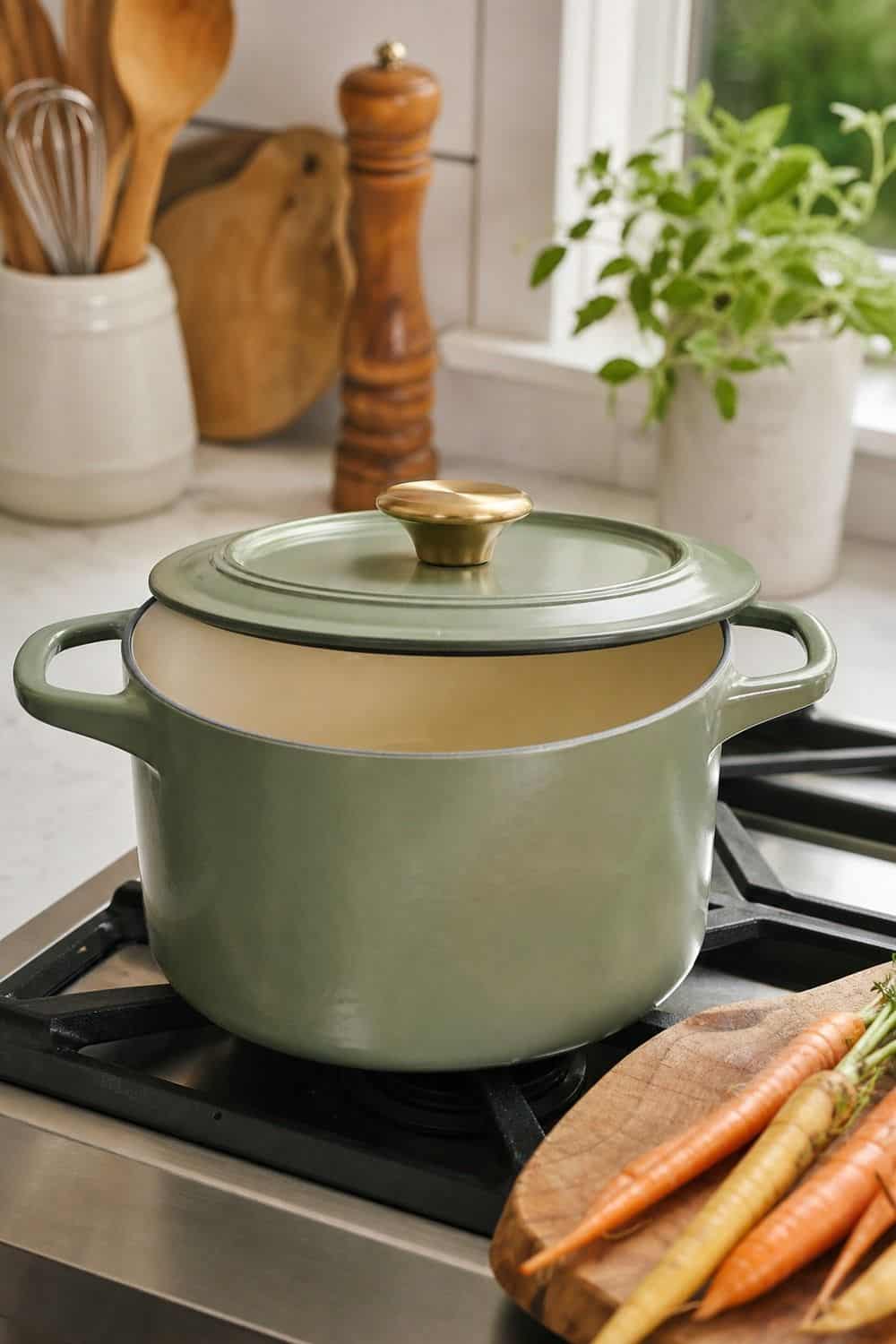
This is the splurge. Enameled cast iron handles braises, soups, beans and no-knead bread, and a sage pot can stay on the hob between uses. Size it for your household: roughly 4 to 5 liters feeds four, while 6 liters and up suits big batches and whole chickens.
20. A stoneware baking dish
Oven-to-table dishes put color on the table while the food is still bubbling. A rectangle of around 23 x 33 cm handles lasagna, gratins and crumbles for a family. A smaller square dish suits one or two people and a tight cupboard.
Greenery, walls and the finishing layer
Finish here. These pieces only work once the useful things above already carry the color.
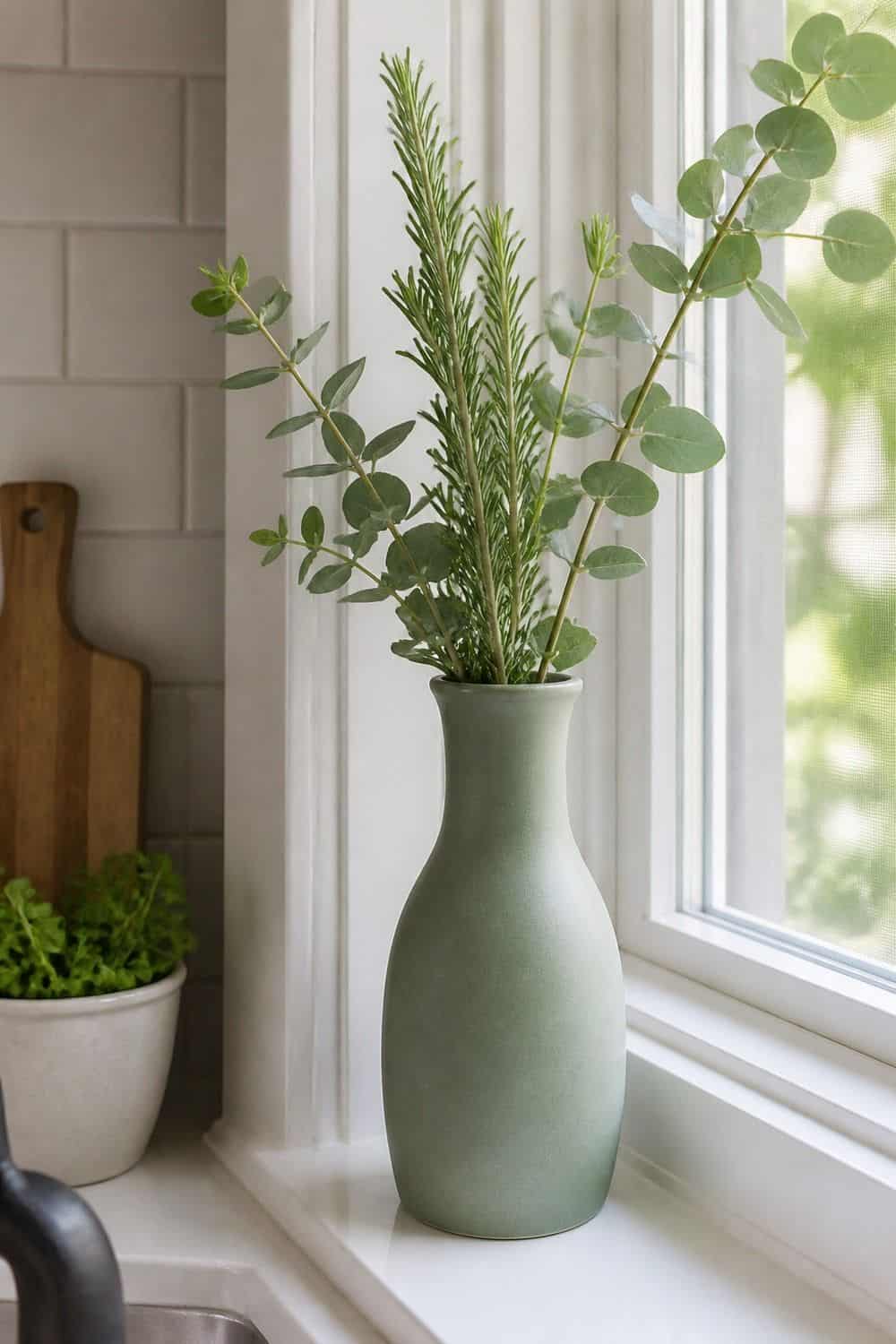
21. A vase for herbs or branches
A sage vase adds height without stealing prep space. Fill it with eucalyptus, a few branches or a bunch of supermarket tulips. One is enough. A narrow neck keeps stems upright, and a heavy base stops branches from tipping it over.
22. A planter for kitchen herbs

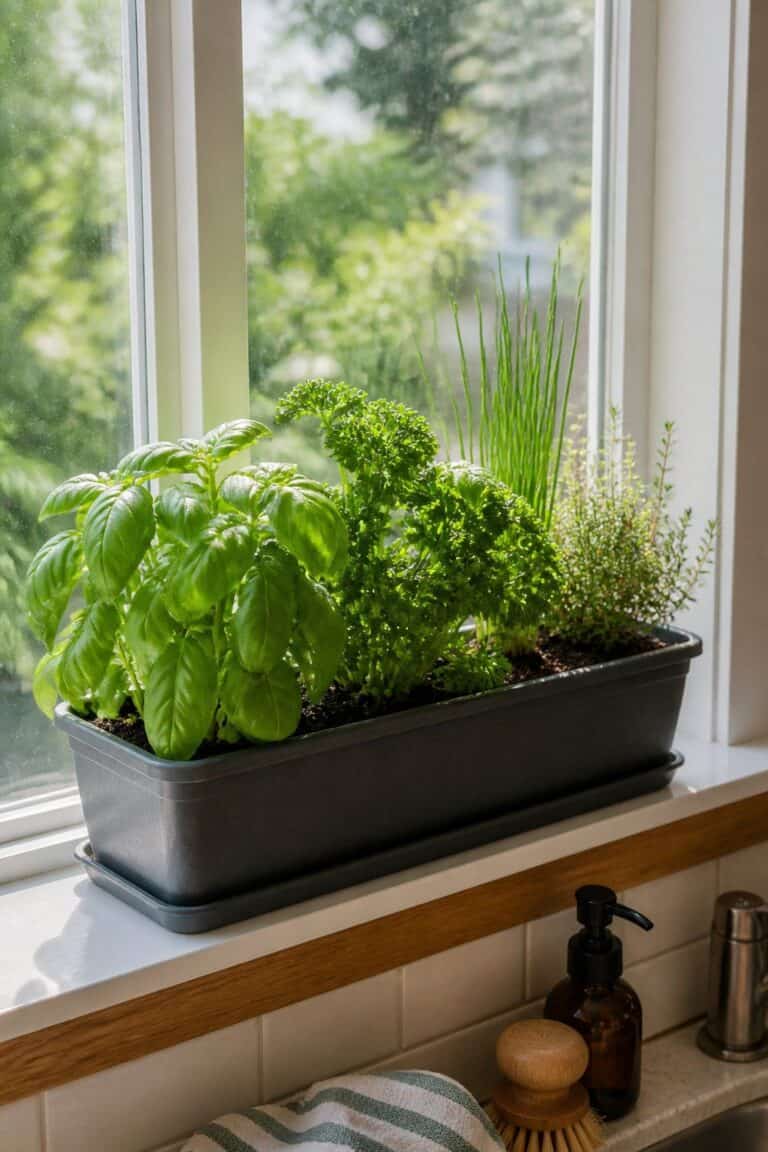
A sage pot with live basil or thyme is decor you can cook with. Drainage matters far more than color, so get a pot with a hole and a saucer and put it where the herb gets enough light. These herb garden planters include options that hold several herbs at once. If plant care is a stretch, start with hardy rosemary.
23. Botanical wall art
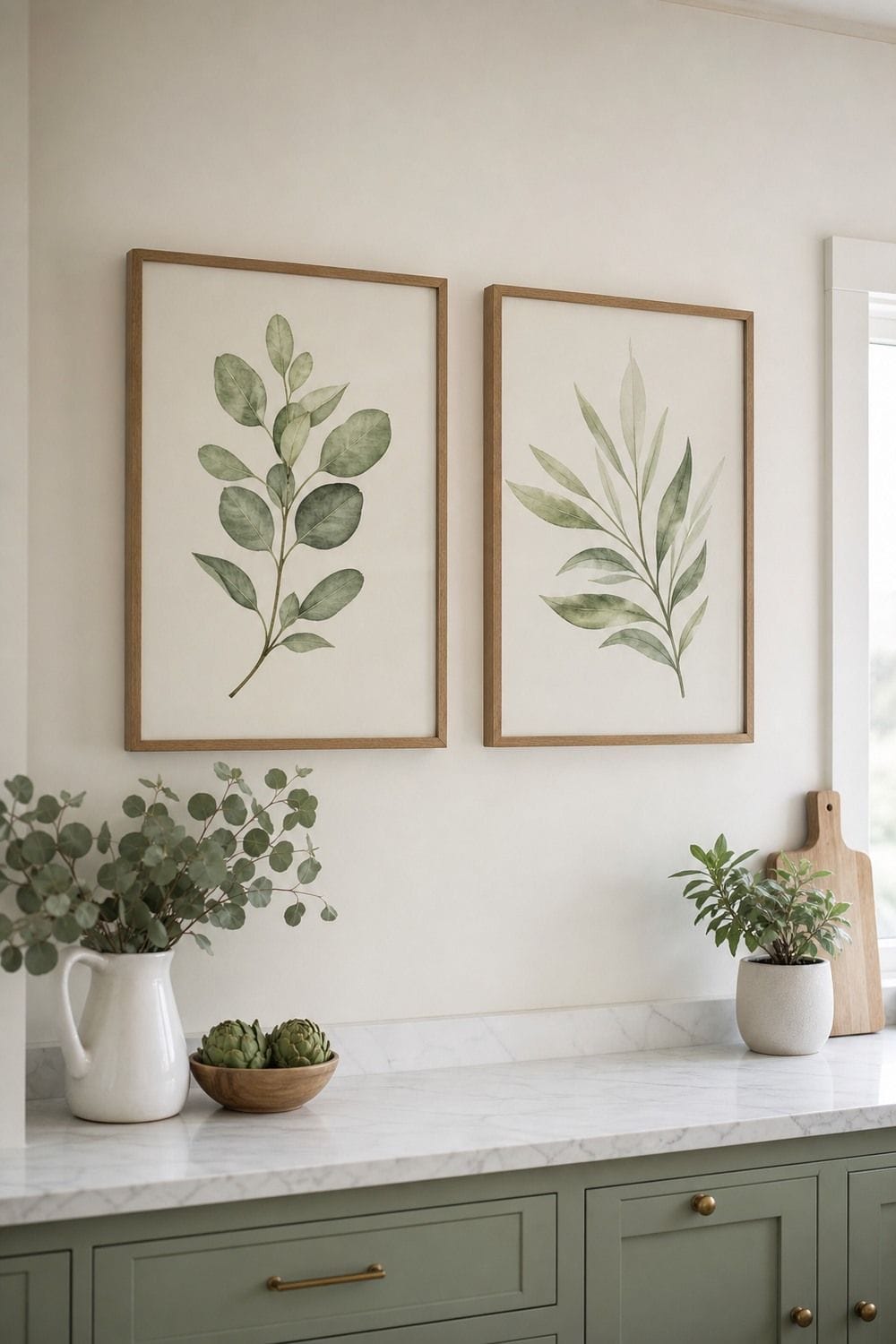
Art puts color on the wall, which in many small kitchens is the only free space left. Botanical prints and simple herb sketches suit sage well. Hang them away from the hob and kettle, where steam and grease will warp paper over time.
24. Candlestick holders

Sage candlesticks with cream tapers make a weeknight dinner feel like an occasion. Choose a wide, stable base. If you rarely light candles, skip these and buy the runner or the serving bowl instead. You’ll use them far more for the money.
25. A small shelf decor set

Small vases and ceramic objects can finish an open shelf, sparingly. Put them at the ends and keep the middle for dishes you use. One small set is plenty when towels, mugs and a rug already carry the green around the room.
How much sage green is too much?
Three to five spots is the range that works in most kitchens. One piece per zone: towels at the sink, a crock at the stove, mugs on the shelf, a bowl on the table, maybe a rug. Past that, the color stops looking like a choice and starts looking like a theme.
Balance it with materials instead of more colors. White oak and walnut warm sage up. Black handles and brass give it some edge. Terracotta helps in a north-facing kitchen that feels cold in winter.
For a lighter look, see Scandinavian kitchen decor finds.
Moss green is the deeper, earthier cousin of sage, and these moss green kitchen ideas show it on cabinets, islands and tile.
Sage green kitchen decor questions
Is sage green a good color for kitchen decor?
Yes, sage green works well in kitchens because it is muted enough to live with every day and pairs easily with wood, cream, brass and stone. It sits between gray and green, so it suits both warm and cool counters.
What colors go with sage green in a kitchen?
Cream, warm white, white oak, walnut, brass, black, terracotta and marble all go with sage green. Avoid pairing it with a second bright green, which makes both look slightly off.
What sage green decor should I buy first?
Start with kitchen towels and a utensil holder. Both are cheap, used every day and easy to replace if the shade looks wrong under your kitchen lights.
How can I add sage green to a kitchen without painting?
Use textiles, dishes and one or two larger pieces such as a rug or a Dutch oven. Repeating the color in a few working zones changes the feel of the room without touching cabinets or tile.
How do I keep sage green from looking too pastel?
Choose a grayer or warmer sage instead of a minty one, and ground it with darker materials like walnut, black metal or terracotta. Limiting it to a handful of pieces also stops it turning sweet.
Key takeaways
- Gray-leaning sage is the safest shade; minty sage reads pastel fast.
- Start with towels and a utensil crock before buying appliances or cookware.
- Keep sage to three to five zones and let wood, cream and brass do the rest.
- Every green piece on a counter should get used most days.
- Check seals, hob type and dishwasher fit before you fall for a color.
Buy three pieces and cook with them for a month
Start with towels, one counter piece and one dish, then wait. A month of real cooking tells you more about how the shade looks in your light than any product photo. If you still like it, add the rug or the Dutch oven next. And if you want sage on a full dinner table, these French country tablescape ideas lean on the same soft greens, linen and wood.
Last update on 2026-11-26 / Affiliate links / Images from Amazon Product Advertising API