
The easiest soup night hosting ideas start with a clear formula: two or three soups, sturdy bowls, separate ladles, a topping station, bread, drinks, labels, and containers for leftovers. Keep soup warm in slow cookers or heavy pots, group toppings by texture and flavor, and give guests enough stable seating to eat comfortably. A soup night should feel generous without turning into a full recipe marathon.
A soup night works because the main dish can be made ahead, held warm, and served in waves. The hosting challenge is not finding ten different recipes. It is building a setup where guests can choose a bowl, add toppings, grab bread, sit down, and come back for seconds without the host answering the same questions all evening.
For a crowd, think in stations: warm soup, bowls and spoons, toppings, bread, drinks, seating, leftovers, and cleanup. When those pieces are planned before guests arrive, soup party ideas feel calm instead of chaotic.
Top Recommended Products


![Freshware Food Storage Containers [24 Set] 32 oz Plastic Deli Containers with...](https://www.thekitchenabroad.com/wp-content/plugins/aawp/public/image.php?url=YUhSMGNITTZMeTl0TG0xbFpHbGhMV0Z0WVhwdmJpNWpiMjB2YVcxaFoyVnpMMGt2TlRGTWEzQjBUV1ptUVV3dVgxTk1NVFl3WHk1cWNHYz18MTc4OTk1NTc4NQ= "25 Soup Night Hosting Ideas for a Cozy Crowd")
You Might Also Like These Blog Posts
- 25 Winter Dinner Party Ideas for Cozy Nights In
- 25 Zero-Proof Bar Ideas for More Inclusive Hosting
- 20 Holiday Fridge Ideas for Party Prep and Leftovers
- 20 Best Drink Dispensers and Pitchers Worth Buying
- 25 Cocktail Buffet Ideas for Easy Hosting
Soup Night Hosting Ideas for a Cozy Crowd
1. Relaxed Format Before the Menu
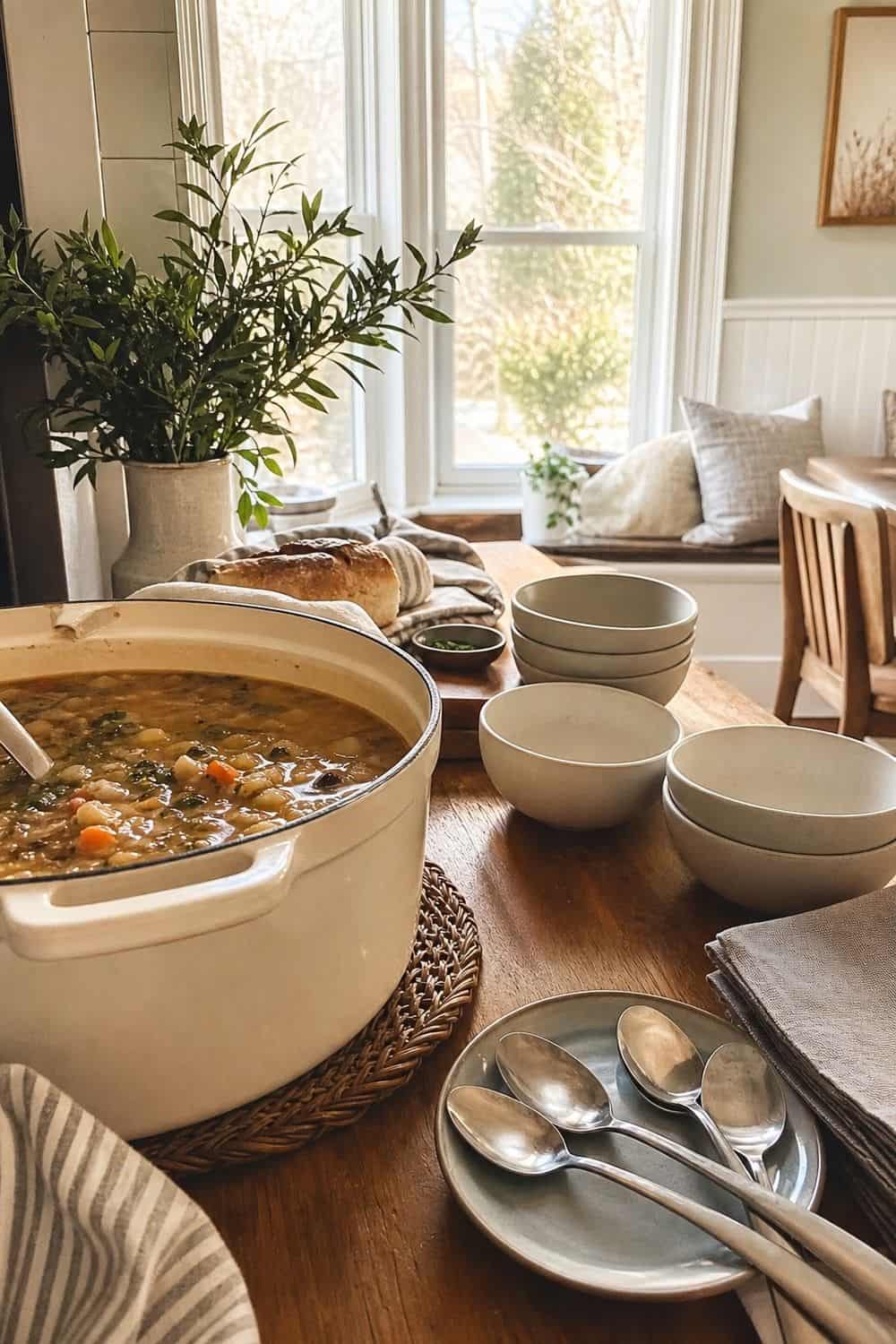
The best soup nights usually start with a hosting shape, not a recipe list. A buffet, a soup swap, a sit-down dinner, and a help-yourself kitchen gathering all need different bowl counts, serving surfaces, and seating. Once the format is clear, the rest of the room can fall into place: bowls first, warm pots next, toppings after that, and bread within easy reach. Drinks belong on a separate counter or side table so nobody has to weave through the soup line holding a hot bowl and a glass.
2. Two or Three Soups With Real Contrast
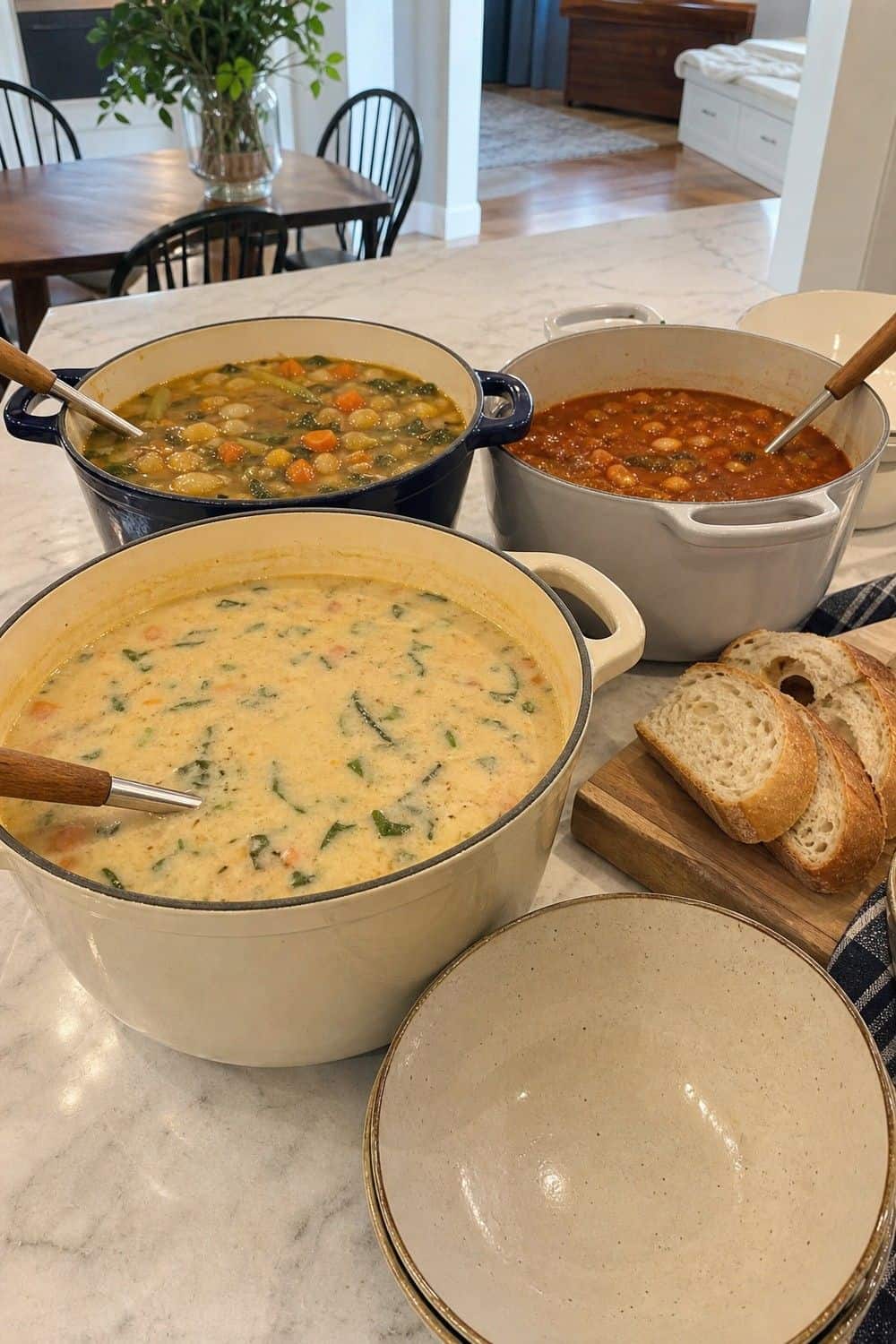
Two or three soups are enough for most gatherings, especially when the toppings and bread are good. Aim for contrast in texture, color, and richness: maybe tomato soup, white bean soup, and chili, or a creamy squash soup beside a brothy chicken noodle.
Skip a lineup where every soup is beige, creamy, and heavy. A mix of brothy, hearty, vegetarian, spicy, or bean-based options makes the table feel more generous while still letting the host keep track of heat, labels, and serving utensils.
3. Slow Cookers for a Long Serving Window
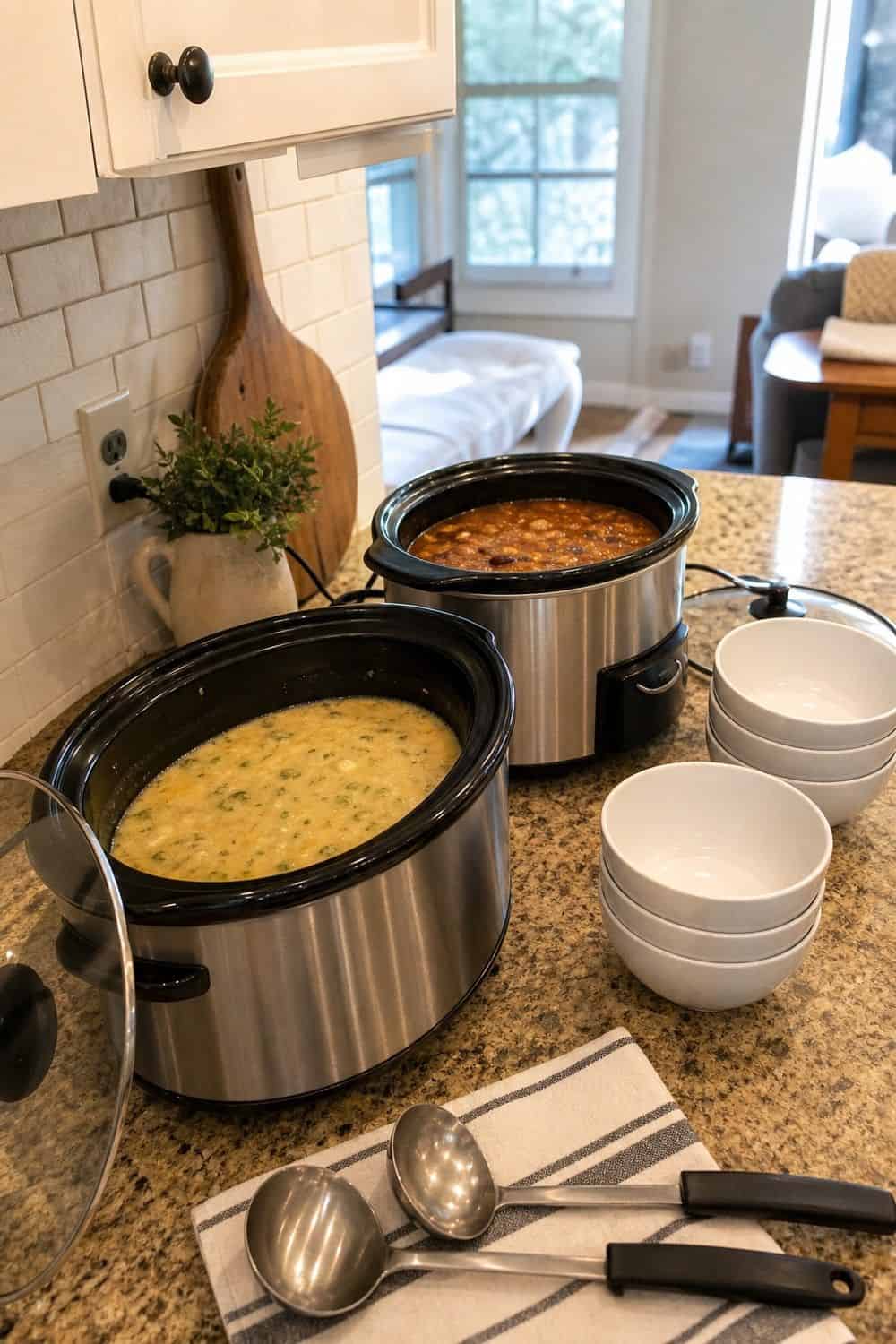
Slow cookers make soup night forgiving because people rarely eat at the same pace. They work especially well for chili, lentils, beans, tomato soup, stew, and brothy soups that can sit gently without turning fussy. Give each cooker enough space for the lid, cord, and a small ladle rest, then keep the controls facing the host rather than the wall. Thick soups may need a splash of broth after an hour, so tuck a small measuring cup and extra liquid nearby instead of trying to rescue the texture later.
4. Clear Labels Beside Every Pot
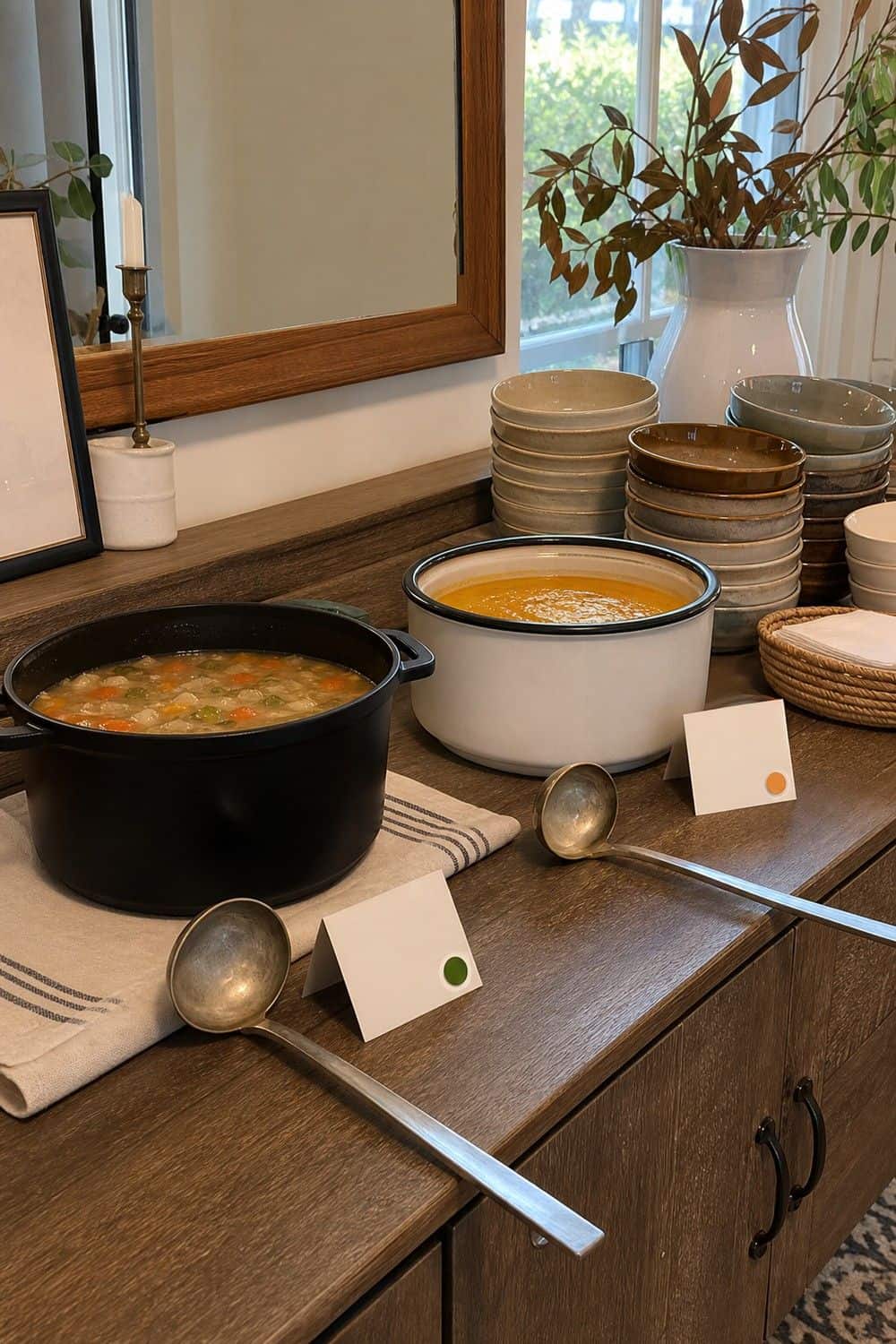
Labels do the quiet hosting work while everyone is hovering over the pots. Write the soup name, heat level, and major notes such as vegetarian, dairy-free, pork, nuts, or gluten-free if those details apply. Keep the card close enough to the pot that it cannot be mistaken for another soup.
Steam and splashes are part of the night, so use tent cards, painter’s tape, or small signs that can take a little moisture. Big, readable labels also help people match toppings to the right bowl without asking the host every round.
5. Bowls That Handle Toppings and Sofa Seating
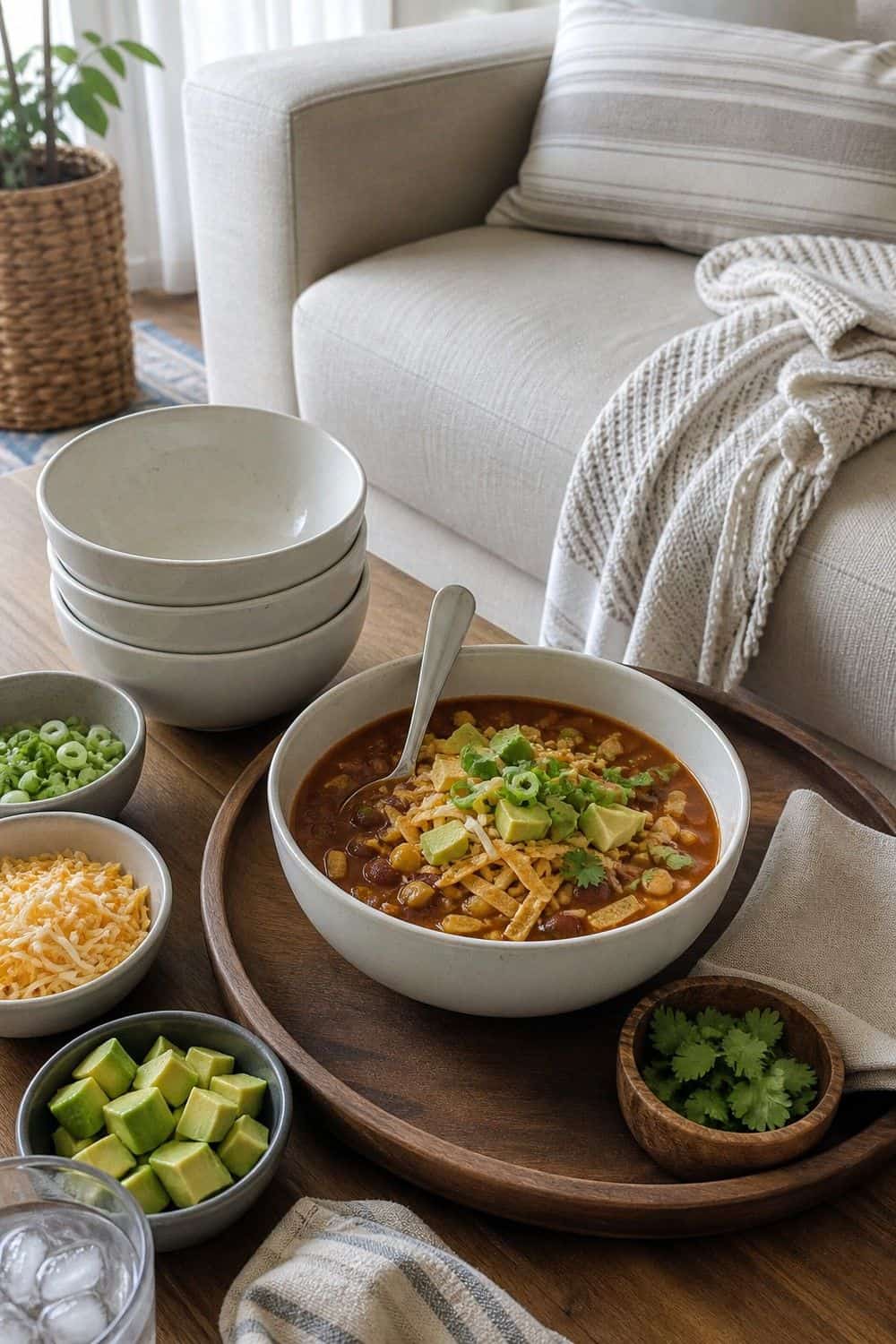
The right bowl changes how relaxed the night feels when guests are moving from counter to couch. Wide bowls leave room for crackers, herbs, cheese, and a swirl of cream, while very shallow bowls can slosh on the walk to a seat. A comfortable rim helps if the seating is casual.
Stack spoons beside the bowls so the first guest does not reach the soup and realize something is missing. A few smaller bowls are helpful for kids, tasting portions, or anyone who wants hot soup to cool a little faster.
6. Ladles, Rests, and the Drip Problem
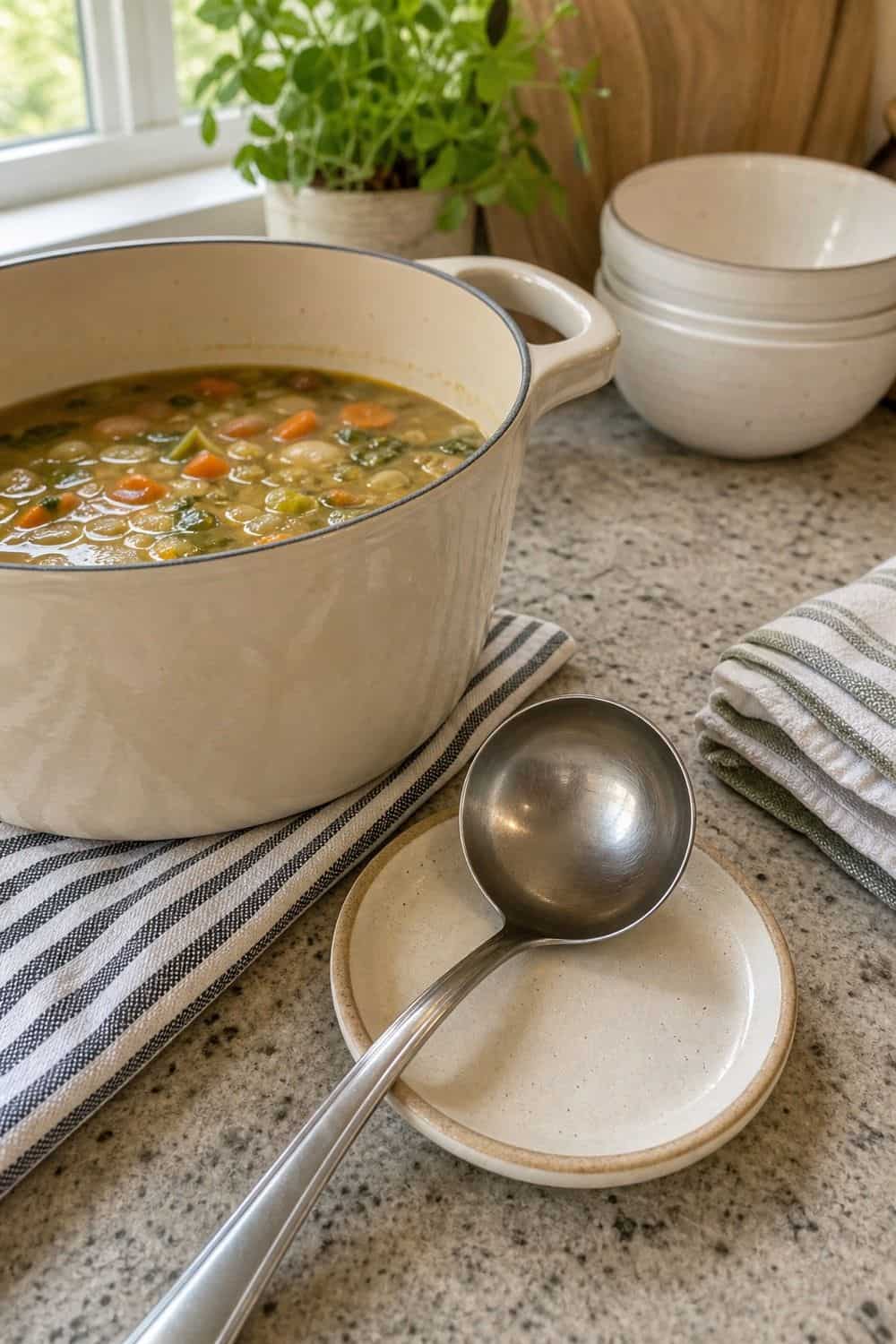
Every soup needs its own ladle, and every ladle needs somewhere to land. A spoon rest, small saucer, folded towel, or narrow tray keeps tomato drips and chili streaks from traveling down the counter.
The size should match the pot. A giant ladle in a small slow cooker feels clumsy, while a tiny one slows the line and makes people hover too long. Keep one host towel near the pots for rims, handles, cords, and the inevitable splash around the most popular soup.
7. Crunchy Toppings Away From Steam
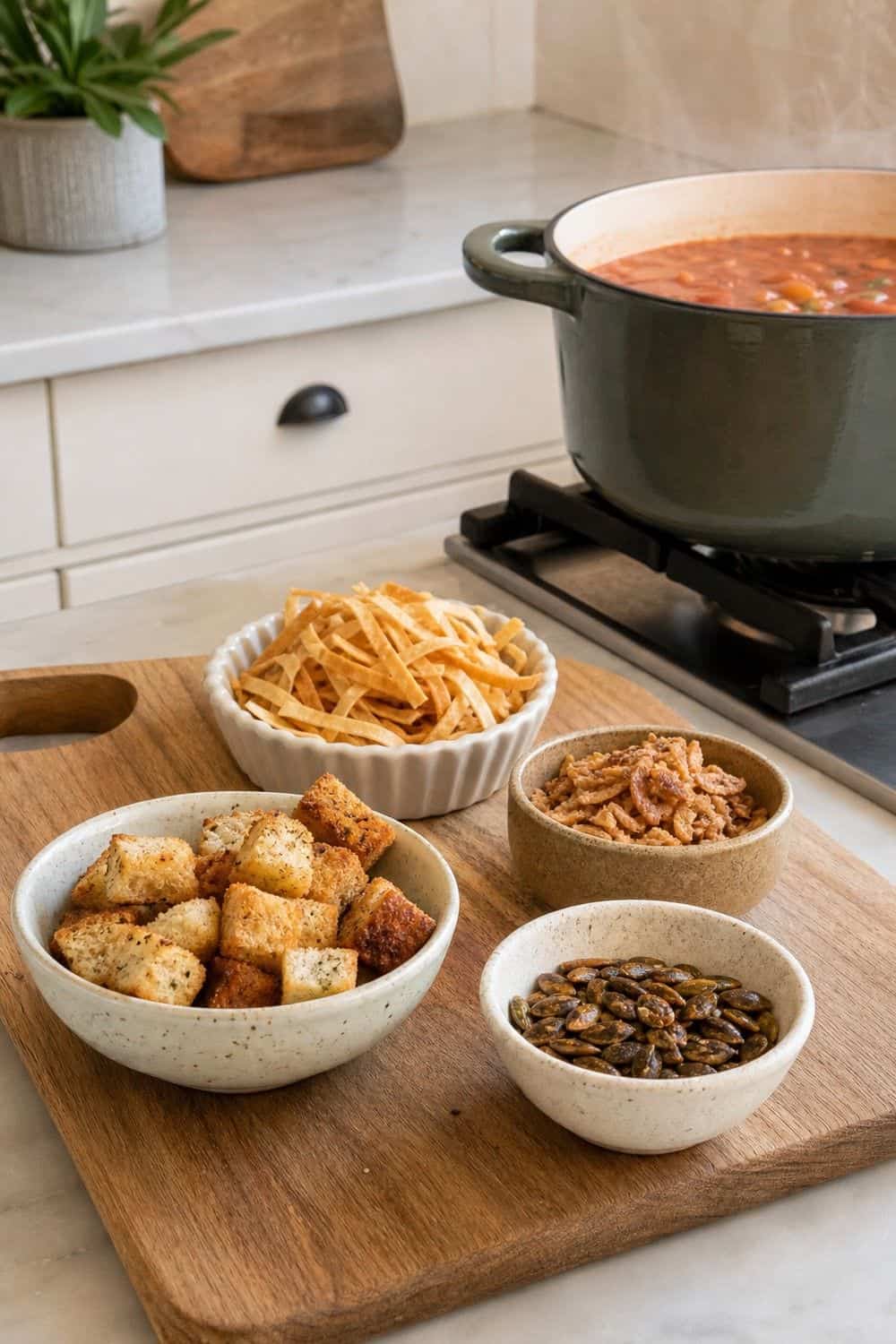
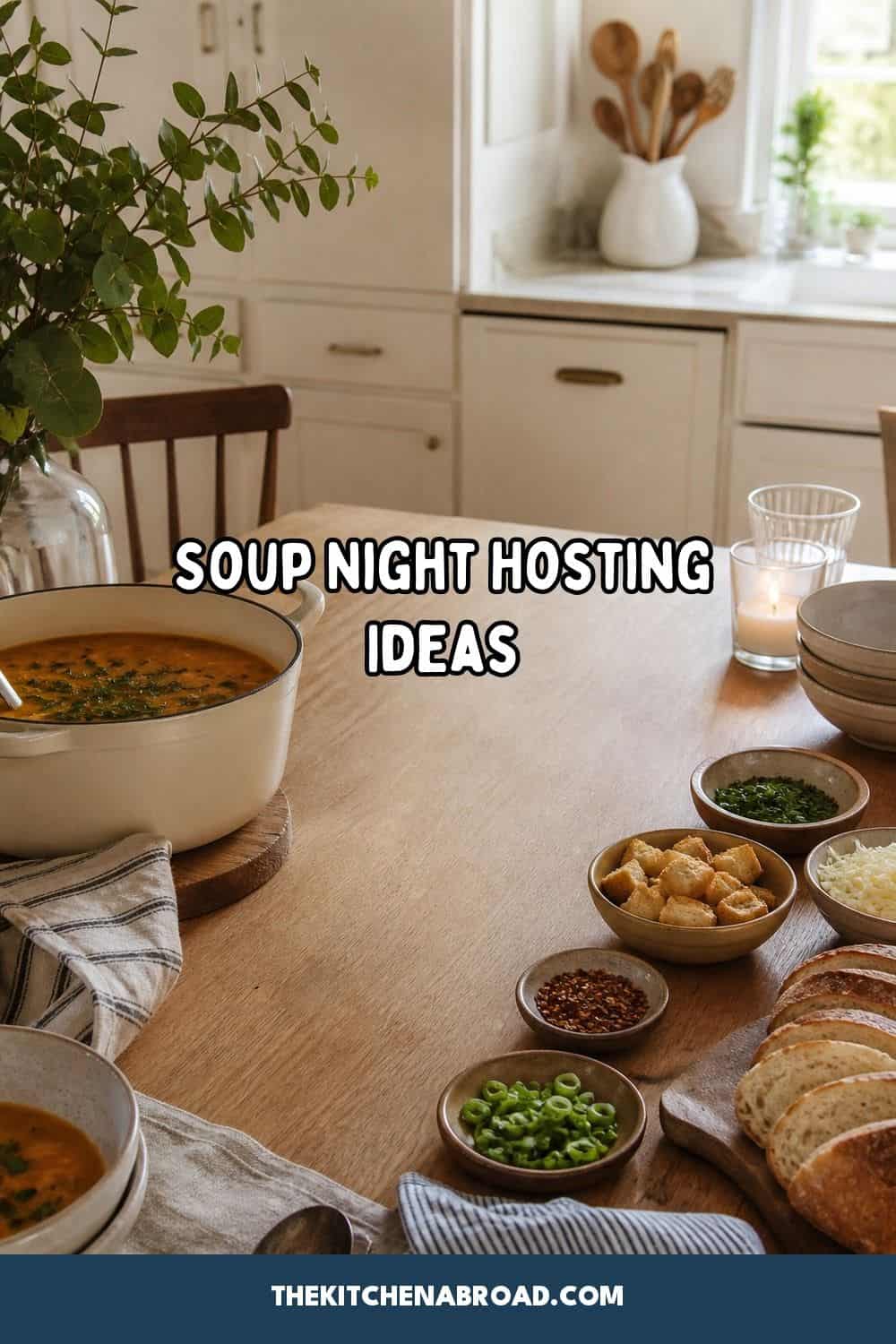
Crunchy toppings make soup night feel abundant without adding another cooked side. Croutons, oyster crackers, tortilla strips, crispy onions, toasted seeds, crushed chips, fried shallots, roasted chickpeas, seasoned breadcrumbs, and pepitas all give guests a reason to build a bowl their own way.
Dry toppings should sit away from steam, or the best ones go soft before the second round. Small bowls with spoons look calmer than open bags, and any topping that belongs with one soup can sit near that pot instead of joining a confusing central pile.
8. Creamy Finishes in Small Chilled Bowls
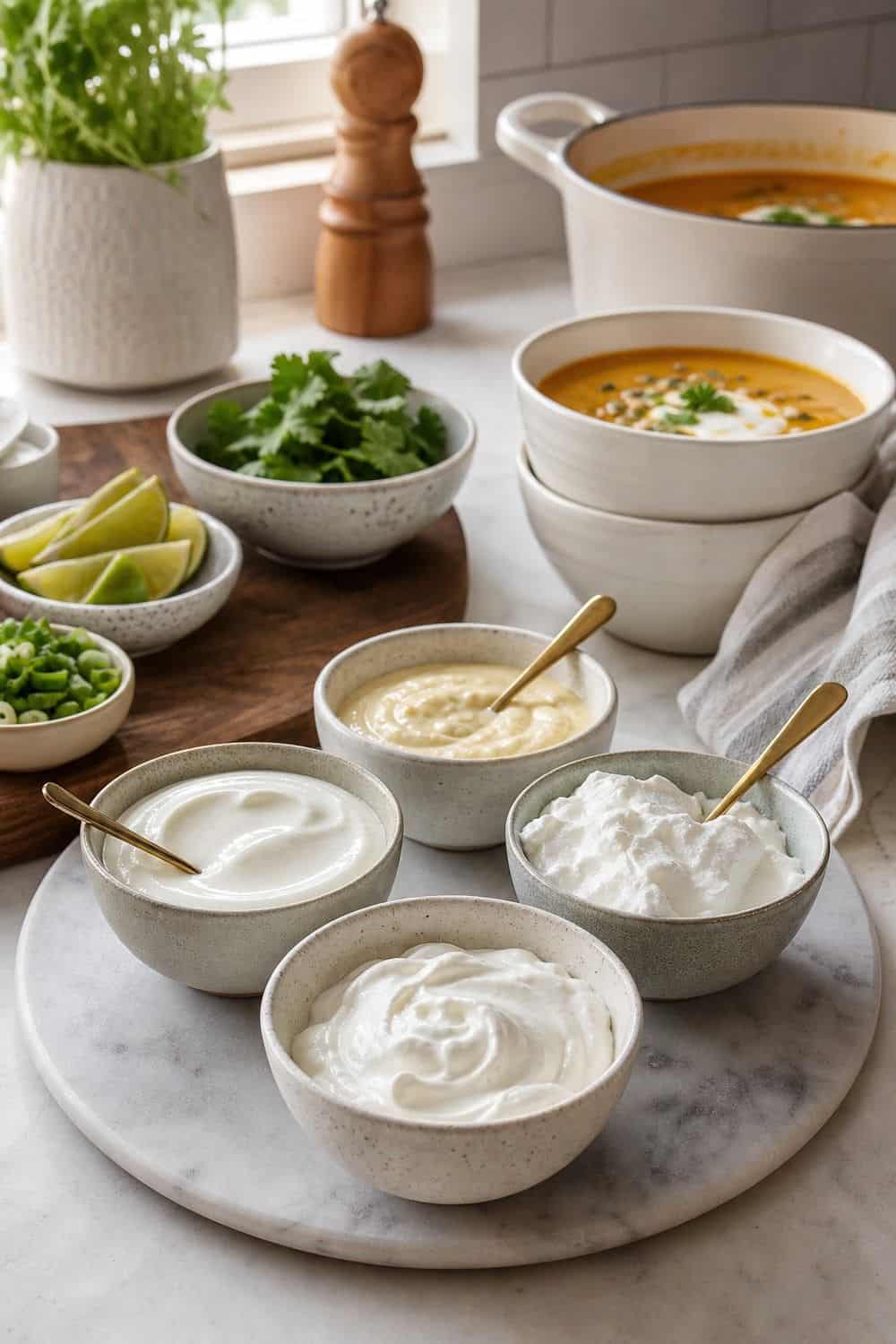
Creamy toppings soften spicy soups, enrich brothy ones, and make a plain bowl feel more finished. Sour cream, Greek yogurt, creme fraiche, shredded cheese, coconut cream, pesto, or olive oil can all work, depending on the menu.
Use small chilled bowls and refill from the fridge rather than setting out one large tub for the whole night. Add dairy notes where needed, and give each topping its own spoon so pesto, yogurt, and cheese do not become one messy mixture.
9. Fresh Herbs, Citrus, and Brightness
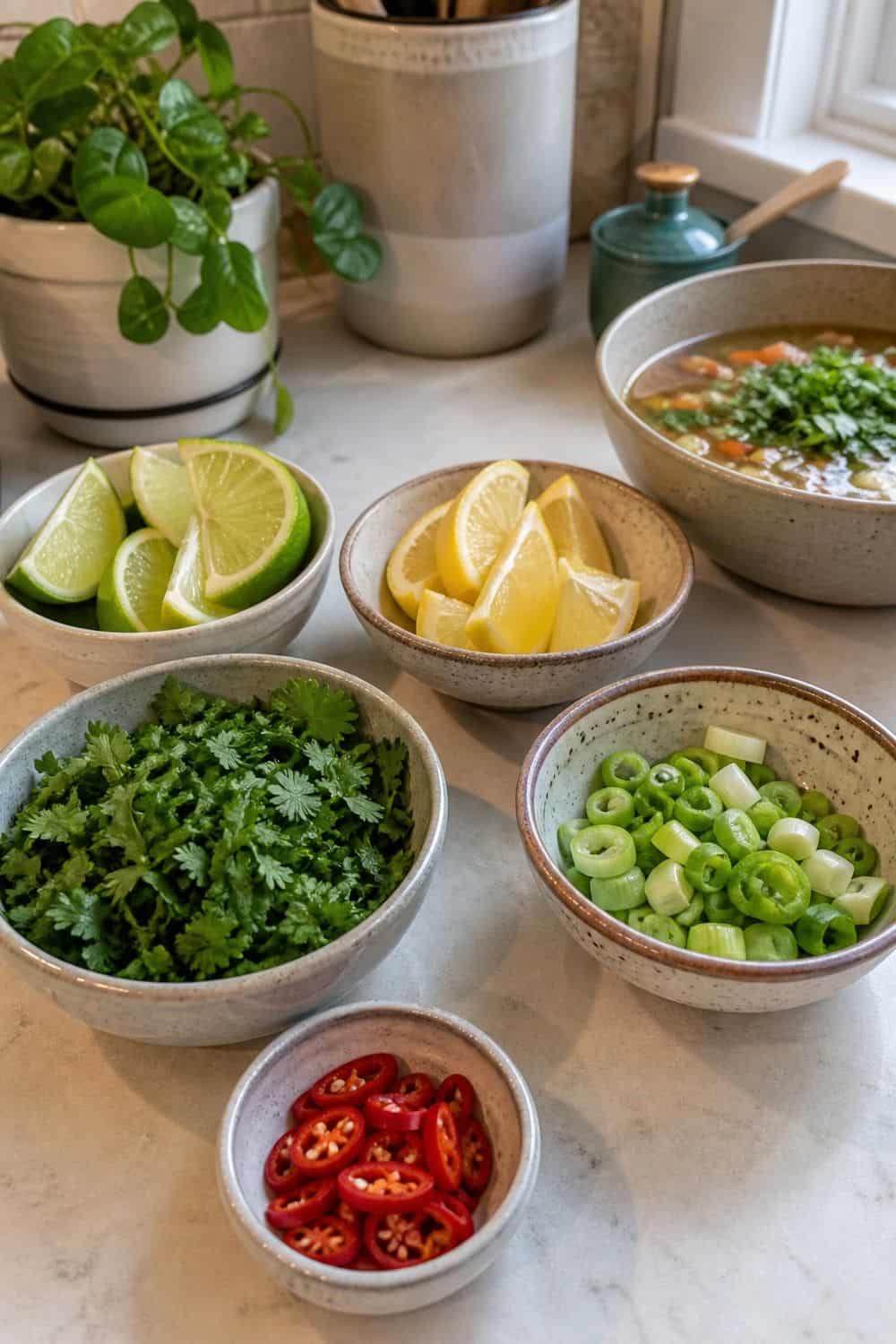
Fresh herbs and acidic finishes help soup taste awake after it has been held warm. Parsley, cilantro, dill, scallions, chives, basil, lemon wedges, lime wedges, vinegar, chili crisp, olive oil, and pickled onions can all change the feel of a bowl.
These are flavor tools, not garnish for the sake of garnish. A heavy stew may want lemon, a creamy soup may want herbs, and a bean soup may want vinegar or chili oil. Seed citrus wedges ahead of time and add tiny spoons for anything oily or sharp.
10. Bread Board That Carries the Meal
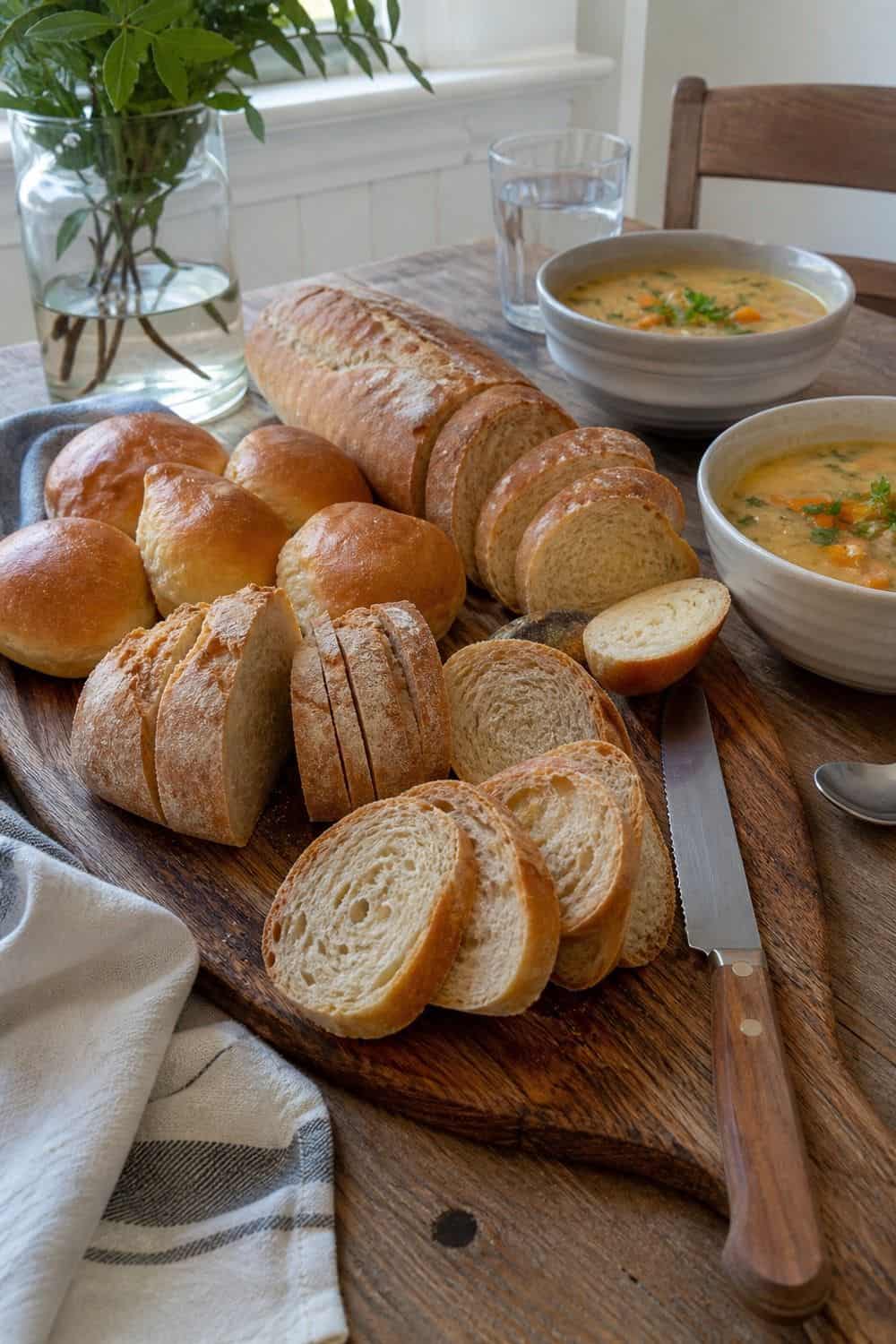
Bread turns soup night into dinner because it gives people something to dip, hold, and nibble between spoonfuls. A board can mix sliced baguette, sourdough, rolls, cornbread, crackers, focaccia, or grilled cheese triangles. Cut what you can before guests arrive, then leave a little open space so people can grab pieces without dragging sleeves through the butter. If one loaf needs slicing, keep the knife on the board instead of sending guests to search through drawers, and add a clean towel for crumbs.
11. Butter and Spreads Near the Bread
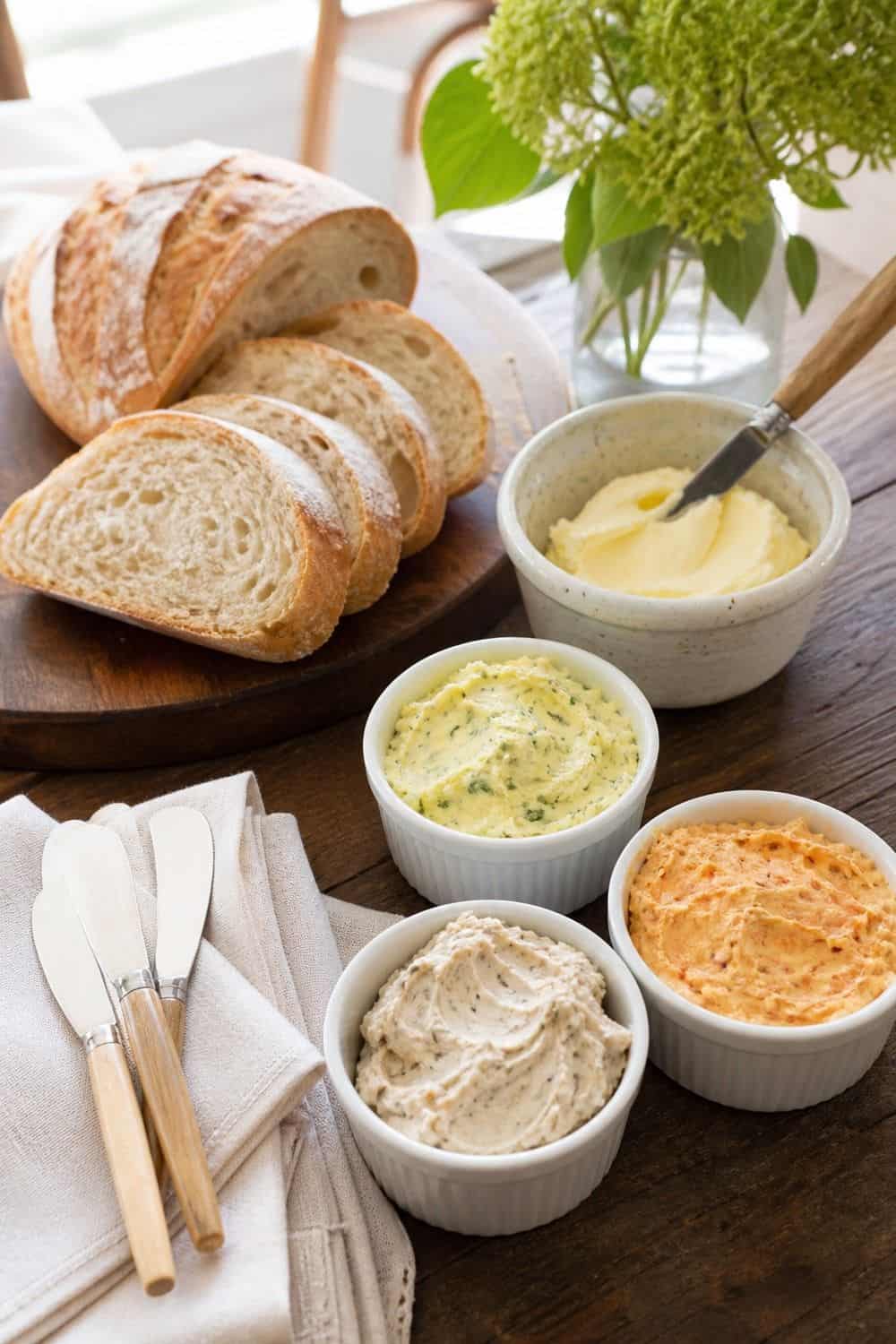
Butter and spreads belong with the bread, not tucked behind the soup pots. Softened butter, herb butter, whipped ricotta, olive oil, honey butter, or a small cheese spread can make a very simple bread board feel cared for.
Small dishes are easier to keep neat than open jars. Set out one knife per spread so crumbs stay mostly contained and chili oil does not travel through the honey butter. If the bread is warm, bring the butter to room temperature early so nobody has to scrape at a hard block.
12. Crisp Salad for Balance
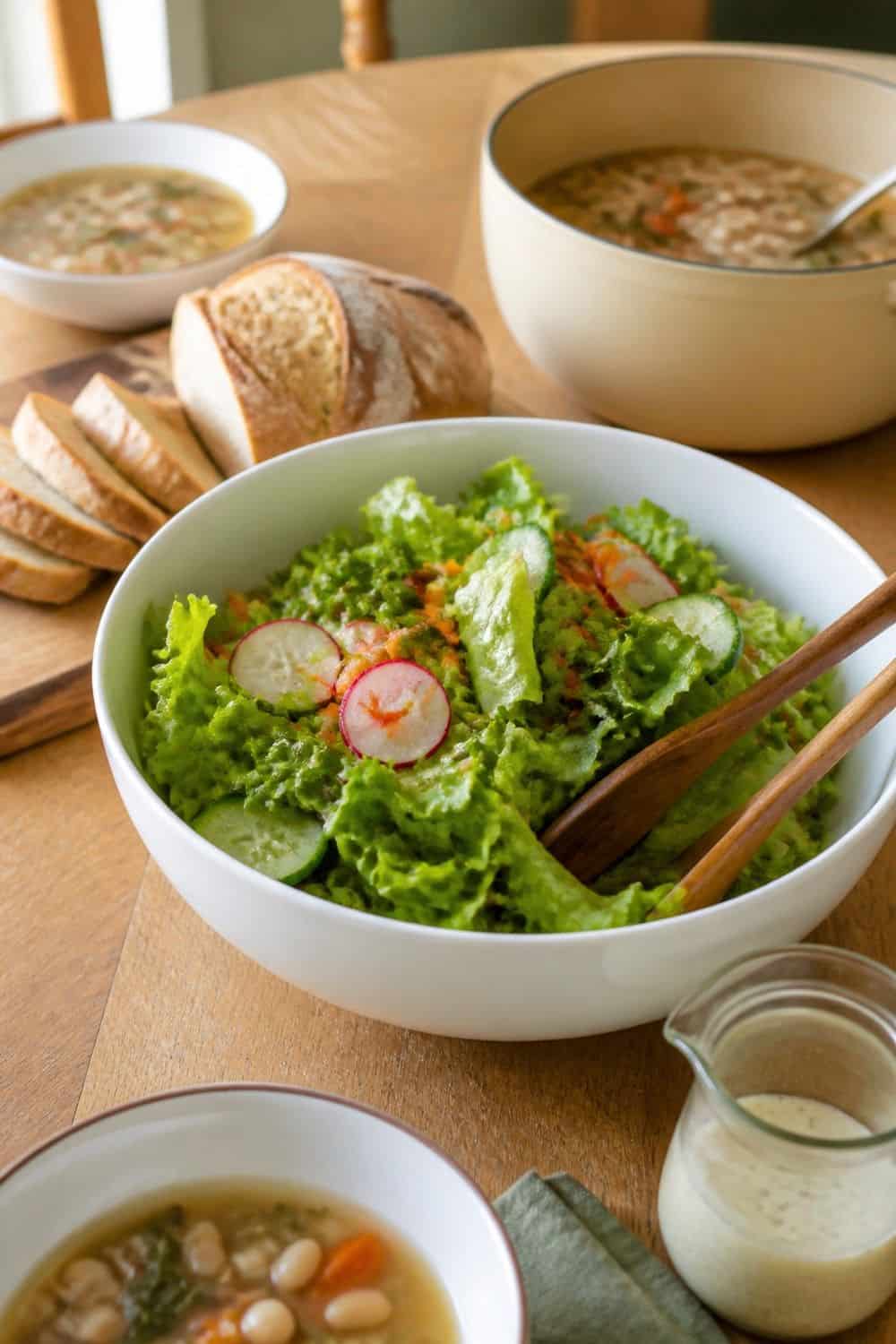
A crisp salad keeps the meal from feeling like only bowls and bread. Greens with vinaigrette, cabbage slaw, citrus salad, cucumber salad, or radicchio with apples can brighten the table without asking the host to manage another hot dish. Sturdy salads can be dressed lightly before guests arrive; delicate greens do better with dressing on the side. Keep the bowl simple, cold, and lightly seasoned so it cuts through creamy soup and rich toppings instead of competing with the whole setup.
13. Mini Cups for a First Taste

Mini cups make sense when the night includes several soups or a soup swap. They let people taste before choosing a full bowl, which feels generous without creating half-eaten servings all over the room.
Choose cups that are safe for hot liquid and comfortable to hold. Place them near the soup pots with small spoons if the cups are too narrow for regular ones. After the tasting round, the real bowls can come out and everyone knows what they want more of.
14. Plant-Based Soup That Feels Like a Main
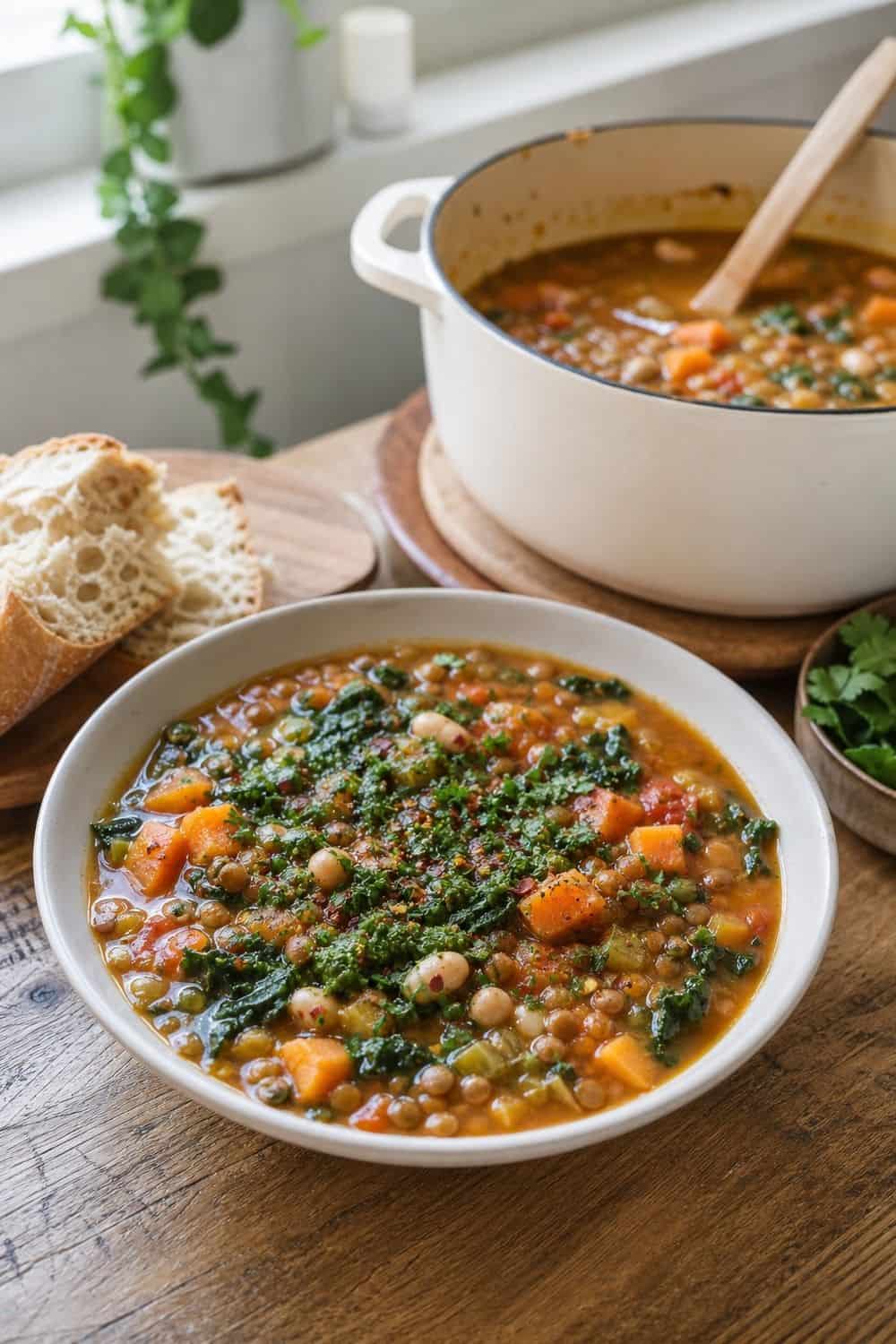
A vegetarian or vegan soup should feel like a full choice, not a plain safety option. Lentil soup, white bean soup, mushroom barley, minestrone, squash soup with coconut milk, or chickpea stew can stand beside meat-based soups without apology.
Broth and toppings need clear labels because parmesan, bacon, chicken stock, fish sauce, and cream can slip into otherwise vegetable-heavy dishes. A hearty plant-based soup also helps the whole table feel more inclusive, especially when the bread and crunchy toppings work with it too.
15. Spice as a Choose-Your-Own Finish
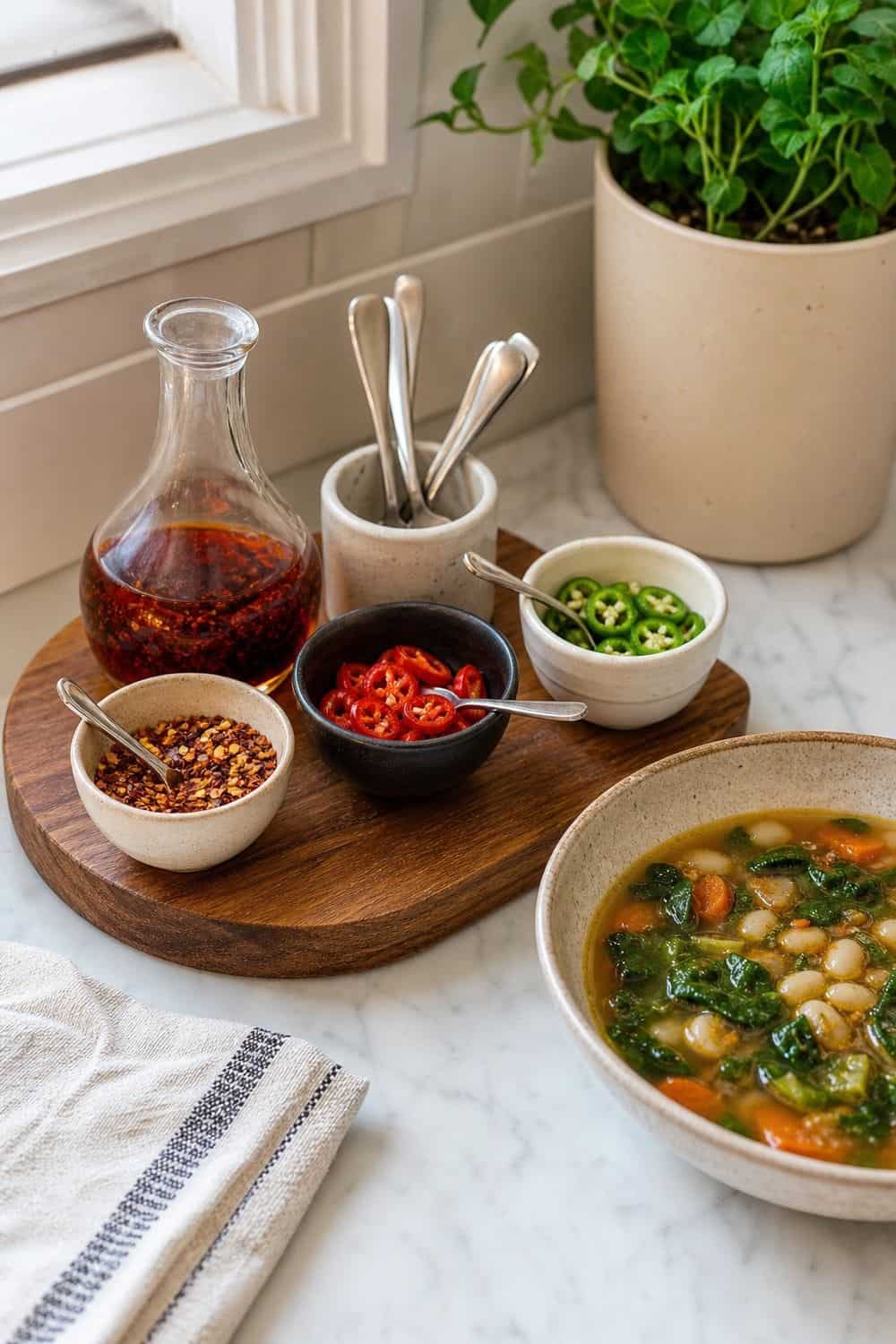
Heat is easier to add than remove, so the base soups can stay friendly unless the whole guest list loves spice. Chili crisp, hot sauce, crushed red pepper, jalapenos, curry oil, harissa, and pickled chiles give bolder eaters plenty to play with.
Group spicy toppings together and label them clearly. They are best placed near the end of the topping area, after herbs, dairy, and crunch, so guests can decide on heat last. Mild soup still has somewhere to go, while sensitive eaters are not surprised by a bowl that suddenly became too bold.
16. Drinks on a Separate Cozy Station
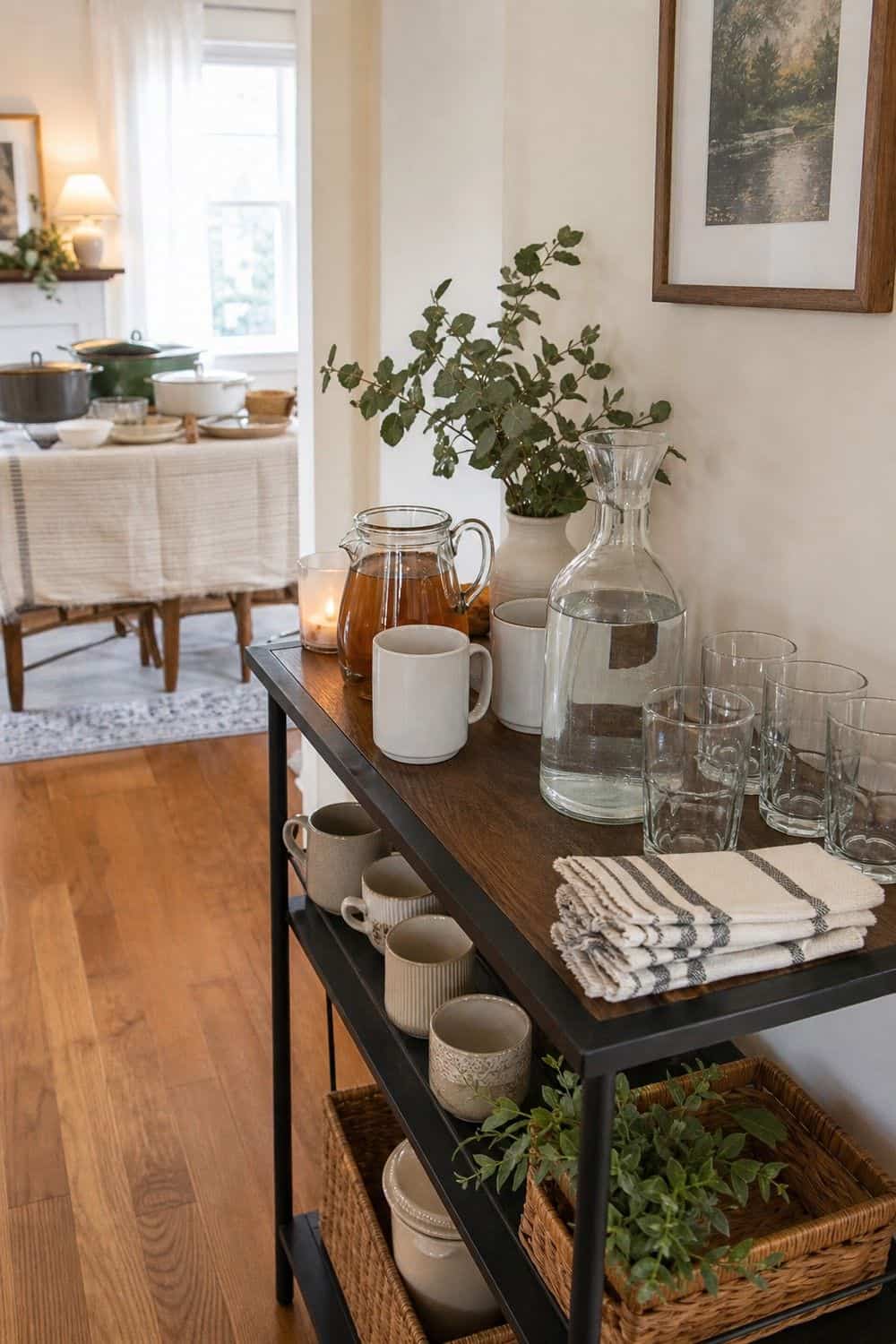
Drinks should be easy to reach without crossing the hot soup area. Water, wine, cider, tea, sparkling water, or a zero-proof option can sit on a sideboard, counter end, or small table away from the slow cookers and ladles. Include cups, napkins, an opener, citrus, tea bags, or a kettle if the menu calls for it. Warm drinks are lovely with soup, but they should be set up before the first guest arrives so the host is not managing two steamy stations at once.
17. Seating Planned Around Hot Bowls
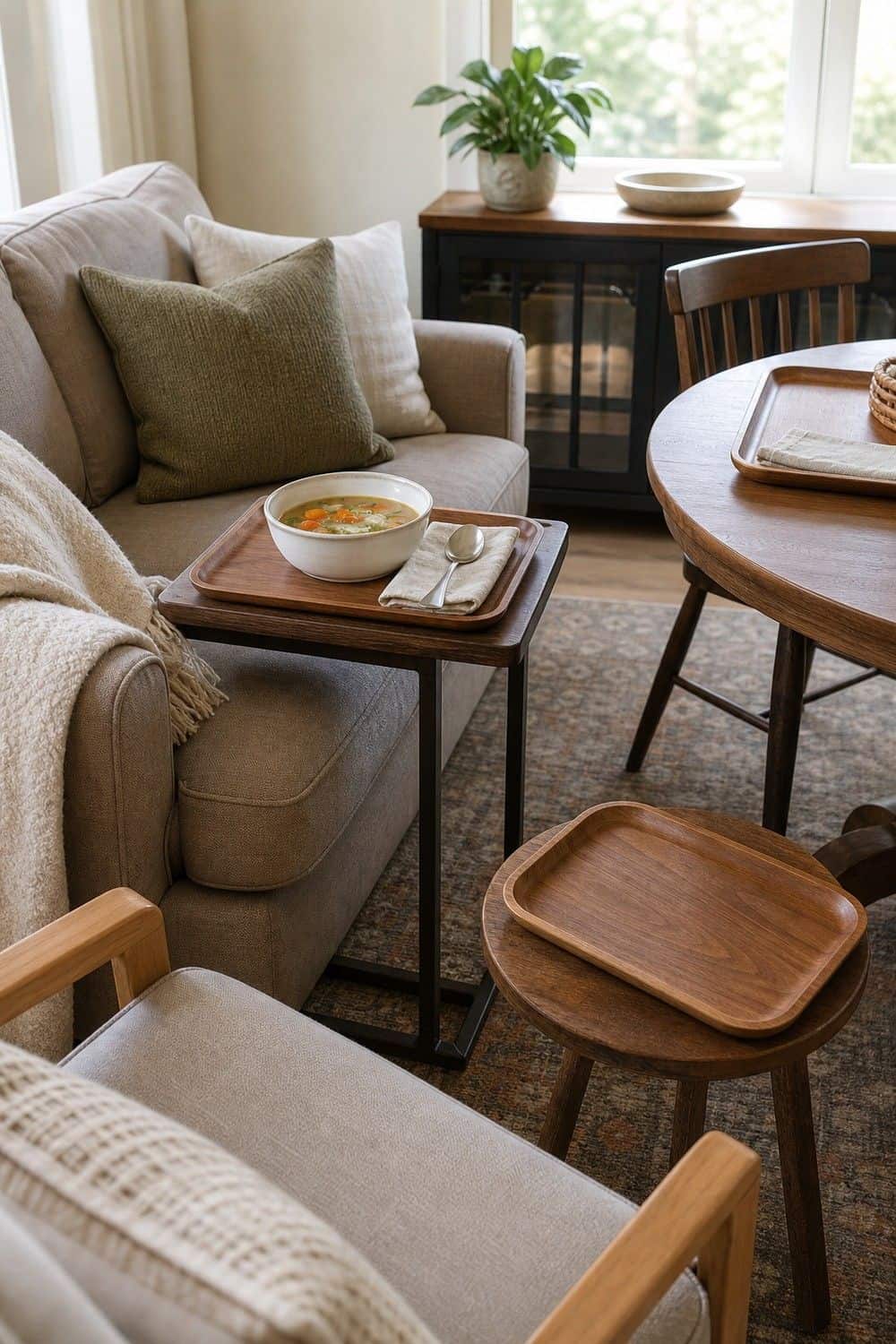
Soup asks more from seating than finger food does. People need somewhere to set a hot bowl, spoon, bread, napkin, and drink without balancing the whole meal on their knees. Clear coffee tables, side tables, benches, or the dining table before serving starts. If the room is casual, trays and wide bowls help. A compact serving area can be better than a long line through the kitchen if it means guests do not have to walk far with full bowls.
18. Trays Under the Warm Pots

A tray or sheet pan under each warm pot catches drips, protects counters, and gives each soup a clear little home. It is especially useful with slow cookers, ladles, labels, and toppings that start drifting as people serve themselves.
Use trivets where heat is a concern, and keep the label, ladle rest, and towel inside that same zone. Later, the tray can carry the sticky spoons and splashed saucers straight to the sink instead of spreading the mess across the kitchen.
19. Napkins and Towels Where Spills Happen

Soup night uses more napkins than a normal dinner because bowls drip, ladles splash, bread leaves crumbs, and toppings scatter. Put cloth napkins, paper napkins, or small towels near both the soup station and the seating area.
The host needs one towel near the pots, and guests need a visible backup for little spills. A stack hidden in a drawer is almost the same as having none, because people will ask while you are stirring, refilling, or trying to sit down.
20. Take-Home Containers Ready Early

Leftovers are easier to share when the containers are ready before anyone starts putting on a coat. Quart containers, jars, deli cups, or freezer-safe boxes can sit near the kitchen, along with tape and a marker for names and dates.
Let hot soup cool safely before lids go on tightly, especially if guests are taking it home in the car. Dairy toppings, crunchy toppings, and herbs usually travel better separately unless they are meant to be reheated with the soup later.
21. Freezer Labels for Better Leftovers
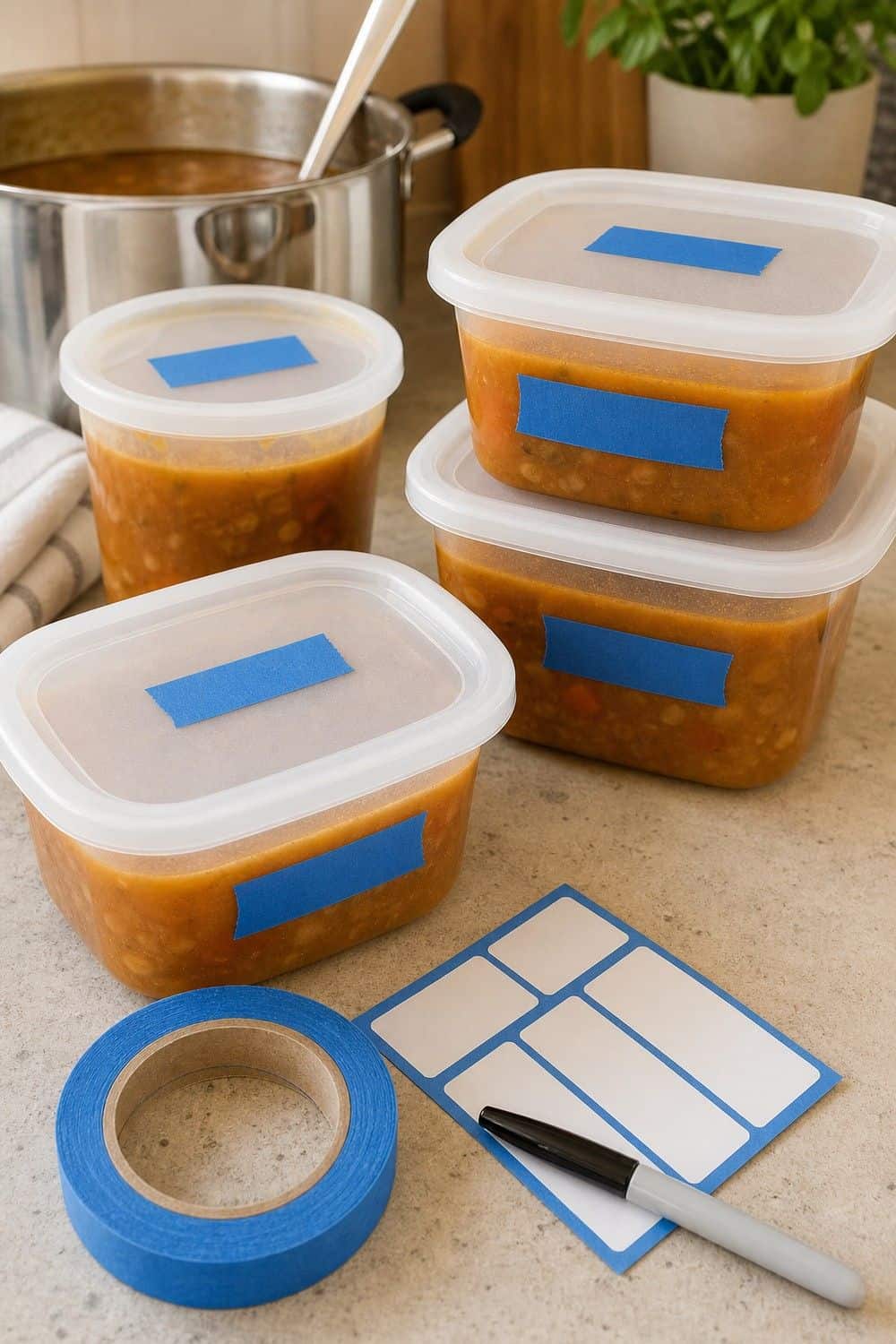
Freezer labels keep good soup from becoming a mystery block in three weeks. Write the soup name, date, portion size, spice level, and any reheating note before the containers disappear into the cold. Brothy soups, beans, lentils, chili, and tomato soups usually freeze better than soups heavy with cream, pasta, or potatoes. When the texture may change, call it a fridge leftover instead. A few single-serving containers are worth having for quick lunches, not only family-size portions for later.
22. Soup Swap Corner
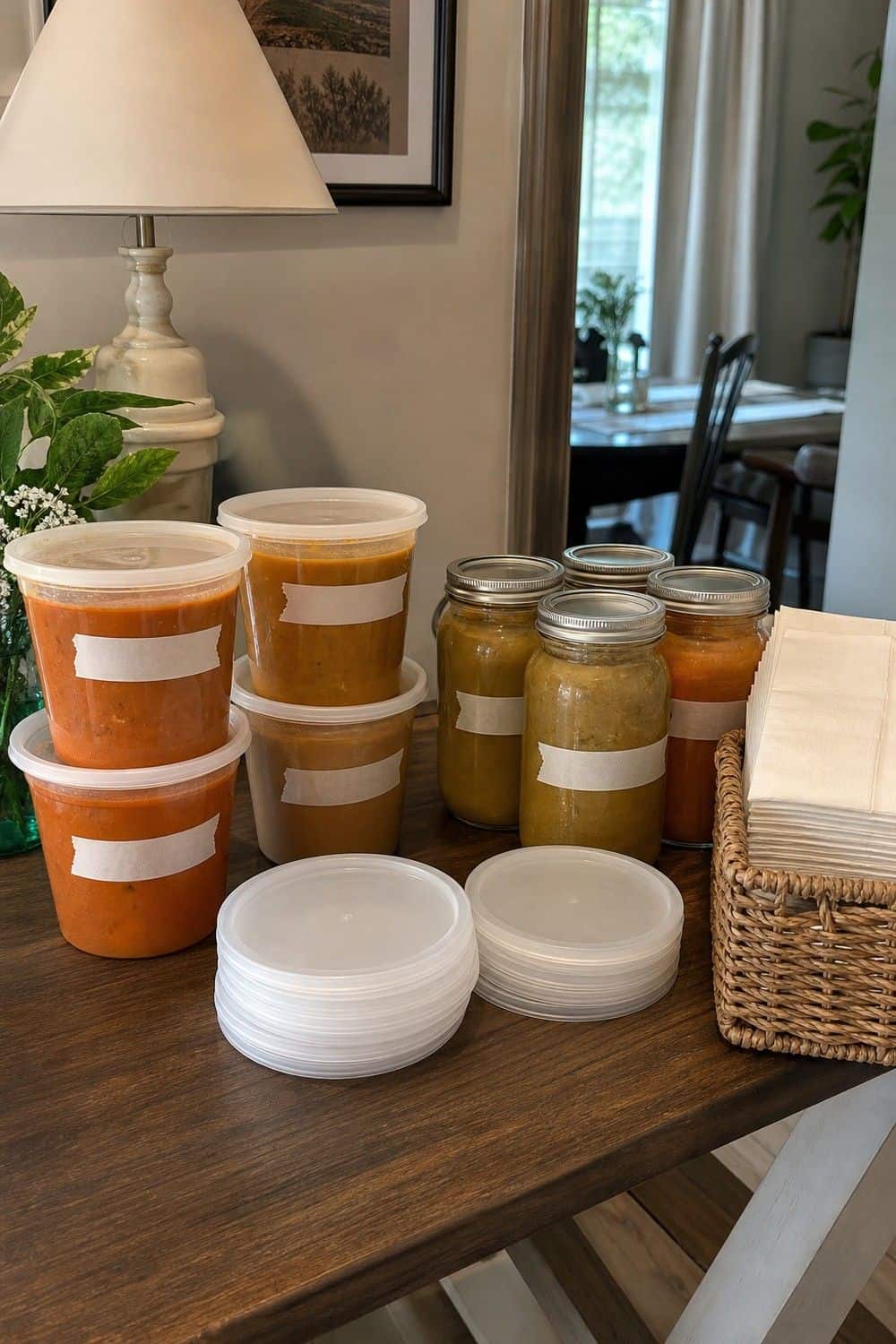
A soup swap turns dinner into a gentle meal-prep exchange. Ask guests to bring one soup in shareable containers, then give the swap its own corner with labels, ingredient notes, freezer notes, serving instructions, and empty bags.
The rules should be simple: bring soup that travels well, label common allergens, and portion before trading if possible. The host can still provide bread, salad, drinks, and one tasting pot so the evening feels like a party, not a logistics meeting with ladles.
23. Fork-Free Dessert After the Bowls

After soup, bread, and toppings, dessert can be very easy. Cookies, brownies, blondies, bars, biscotti, fruit, marshmallow treats, or small hand pies are friendlier than cake slices that need plates and forks after a bowl-heavy meal. Place dessert away from the soup station so the savory area can be reset first. Handheld sweets let people keep talking, refill drinks, or pack leftovers without starting another formal course. A small napkin stack beside dessert saves the counters from stray crumbs.
24. Dish Drop Spot That Actually Gets Used
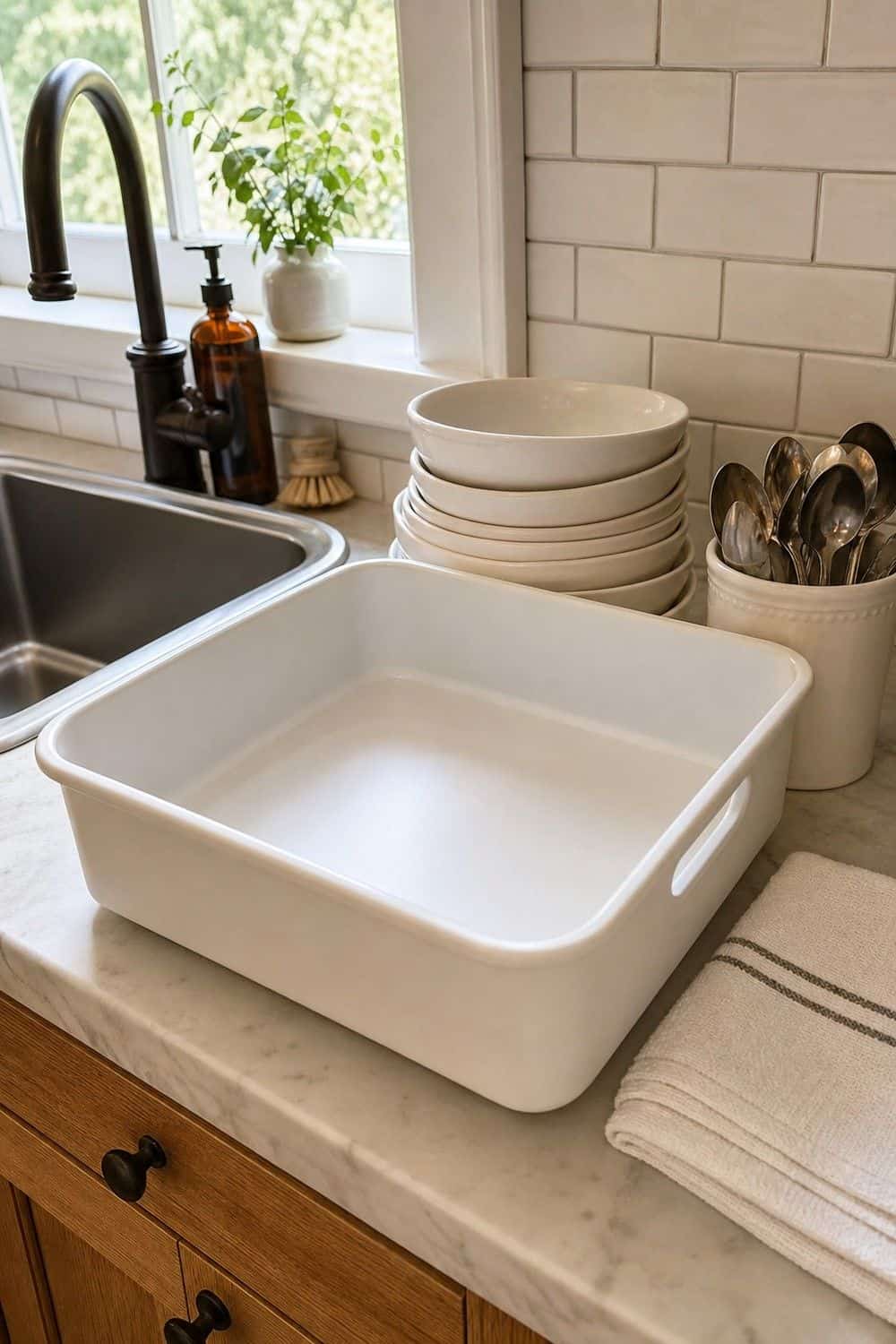
A dish drop spot keeps used bowls from landing on every open surface. Choose one counter, cart, tray, or side table for empty bowls, spoons, napkins, cups, and tasting cups, then make it obvious enough that guests can find it without asking.
If there is room, add a small bin for spoons and a stack area for bowls. Clear it once midway through the evening so the room still feels inviting for seconds, leftovers, dessert, and late cups of tea.
25. Gentle End-of-Night Reset
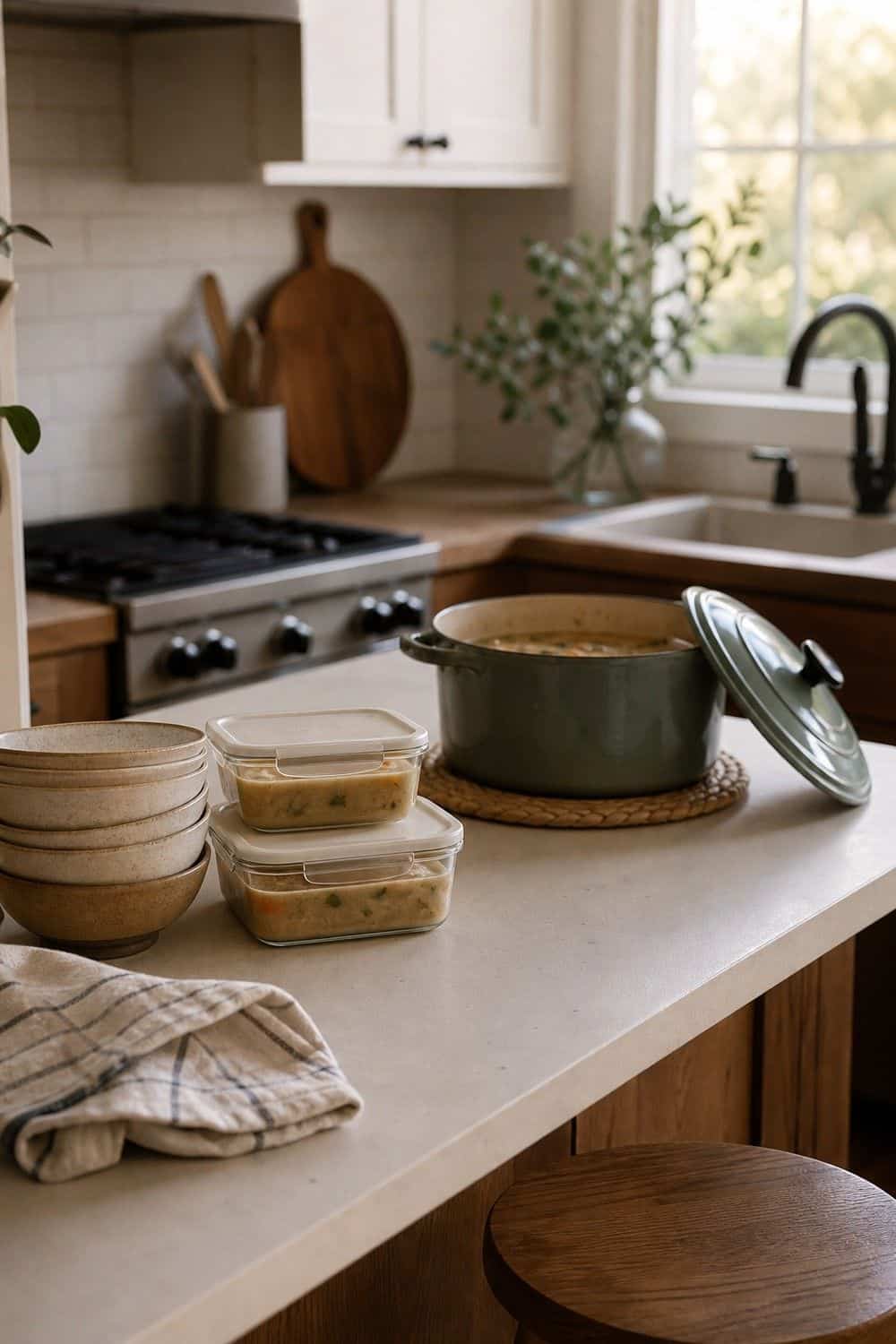
The end-of-night reset should protect the food without pulling the host out of the conversation too abruptly. Pack chilled toppings first, move leftovers into safe containers, soak sticky ladles, and wipe the spill zones around the warm pots.
Deep cleaning can wait if the kitchen is basically under control. The useful finish is simple: cool soup safely, label what needs labeling, clear the bread crumbs, and make breakfast possible in the morning. The cozy part of the night should not end with a sink-side marathon.
Frequently Asked Questions
How do you host a soup night?
Host a soup night by choosing one clear format, serving two or three soups, setting out bowls and separate ladles, adding toppings and bread, labeling dietary notes, and planning leftovers. Keep drinks away from the soup line and make sure guests have stable places to sit with hot bowls.
What do you serve with soup for guests?
Serve bread, a simple salad, toppings, drinks, and an easy dessert. Good sides include sourdough, baguette, cornbread, rolls, grilled cheese triangles, green salad, slaw, cookies, brownies, or fruit. The sides should support the soup rather than turning the night into a complicated dinner menu.
How many soups should you serve at a soup party?
Two or three soups are enough for most soup party ideas. A balanced mix might include one creamy soup, one brothy or chunky soup, and one vegetarian or bean-based soup. More options can be fun for a soup swap, but they also require more labels, ladles, warmers, and counter space.
How do you keep soup warm for a party?
Use slow cookers, heavy pots on low heat, or insulated containers, depending on your setup. Stir soups periodically, follow the appliance directions, and do not leave soup sitting unattended for hours. Once serving is over, cool and store leftovers promptly.
What toppings go on a soup bar?
A good soup toppings bar includes crunchy, creamy, fresh, spicy, rich, and bright options. Try croutons, crackers, crispy onions, herbs, scallions, sour cream, yogurt, grated cheese, chili oil, lemon wedges, lime wedges, olive oil, toasted seeds, or crushed chips.
What is a soup swap party?
A soup swap party is a gathering where each guest brings soup and everyone trades portions to take home. It works best when guests bring labeled containers, include dietary notes, and choose soups that travel and freeze well. It can be dinner and meal prep in one night.
How do you make soup night easy to clean up?
Use spoon rests, towels, a clear dish drop zone, take-home containers, and a short reset routine. Keep one ladle per soup, catch drips under the pots, pack toppings before they sit out too long, and label leftovers before they go into the fridge or freezer.
How do you host soup night in a small space?
In a small space, serve one or two soups, use one compact topping tray, keep drinks on a separate surface, and clear stable seating before guests arrive. Use take-home containers to handle leftovers and avoid crowding the counter with too many sides.
Final Thoughts
The best soup night hosting ideas make the meal feel generous without asking the host to cook all day. Choose the format, keep the soup warm, build a topping bar with purpose, add bread and simple drinks, and plan where bowls and leftovers will go. When the stations are clear, guests can settle in with a hot bowl and the whole night stays relaxed.
Last update on 2026-09-18 / Affiliate links / Images from Amazon Product Advertising API