
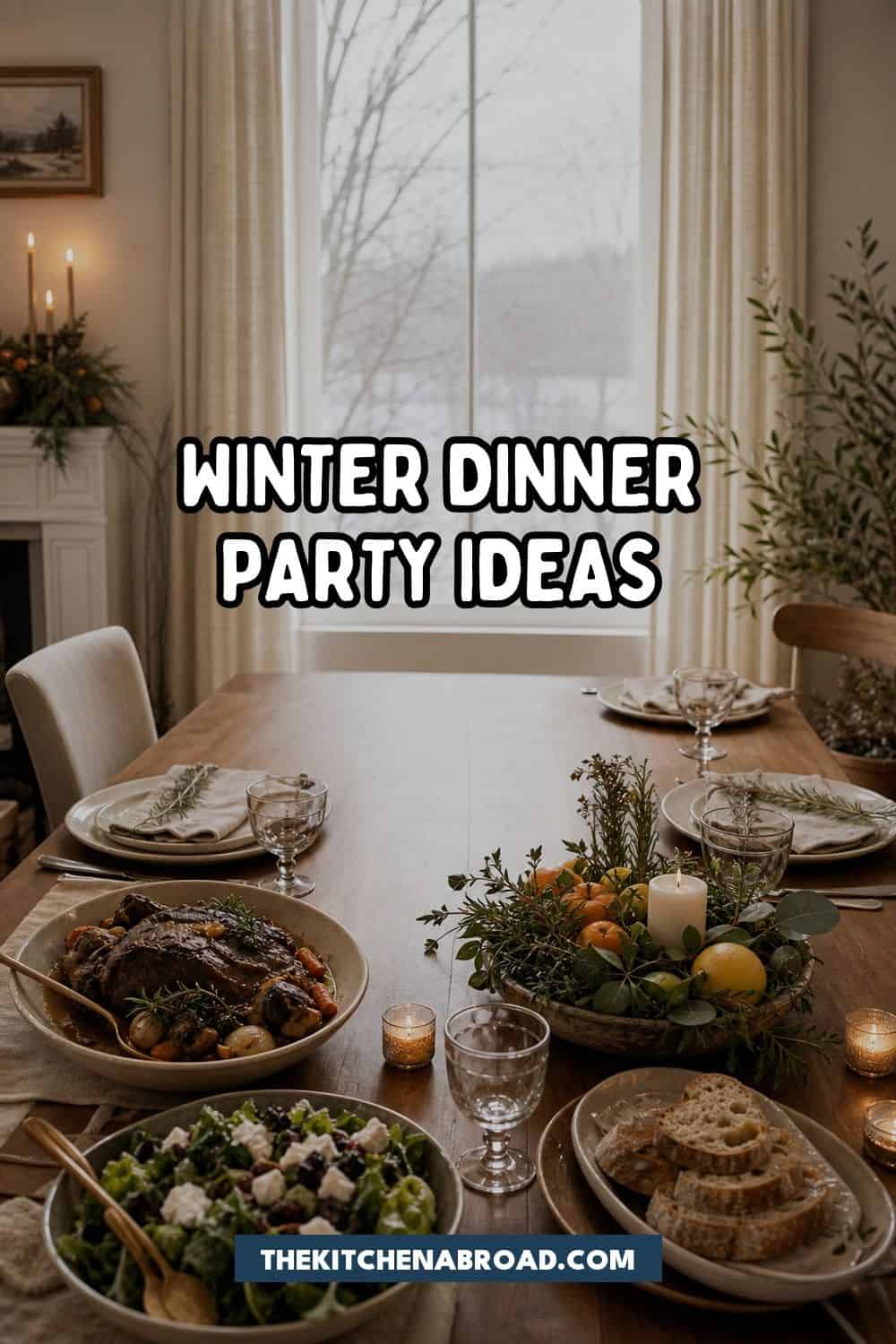
Winter dinner party ideas work best when the menu, table, drinks, and cleanup plan all support a slow, cozy night in. Build the evening around one make-ahead comfort main, a fresh side, bread, warm lighting, unscented candles, self-serve drinks, and a dessert that is ready before the first knock. The goal is a generous winter table where the host can actually sit down.
A good winter dinner party should feel warm before the first course lands on the table. Guests are coming in from cold air, heavy coats, early darkness, and busy schedules, so the evening needs a clear rhythm: something warm to drink, food that smells good, a table that leaves room for serving, and lighting that makes the room feel settled.
The strongest winter dinner party ideas are not about doing more. They are about choosing the parts of the night that carry the most comfort: a make-ahead winter dinner party menu, low candles that do not fight the food, practical seating, a drink station away from the stove, and a reset plan that keeps the host from ending the night buried in dishes.
Top Recommended Products


![Utopia Home [24 Pack, White] Cloth Napkins 17x17 Inches, 100% Polyester](https://www.thekitchenabroad.com/wp-content/plugins/aawp/public/image.php?url=YUhSMGNITTZMeTl0TG0xbFpHbGhMV0Z0WVhwdmJpNWpiMjB2YVcxaFoyVnpMMGt2TXpGWmNXczNhMnRGUVV3dVgxTk1NVFl3WHk1cWNHYz18MTc4OTk1MzU0Ng= "25 Winter Dinner Party Ideas for Cozy Nights In")
You Might Also Like These Blog Posts
- 25 Soup Night Hosting Ideas for a Cozy Crowd
- 25 Zero-Proof Bar Ideas for More Inclusive Hosting
- 25 Winter Kitchen Decor Ideas for a Warm Seasonal Reset
- 20 Hot Chocolate Station Ideas for Cozy Winter Nights
- 25 Cocktail Buffet Ideas for Easy Hosting
Cozy Winter Dinner Party Ideas That Keep Hosting Calm
1. Make-Ahead Main as the Menu Anchor
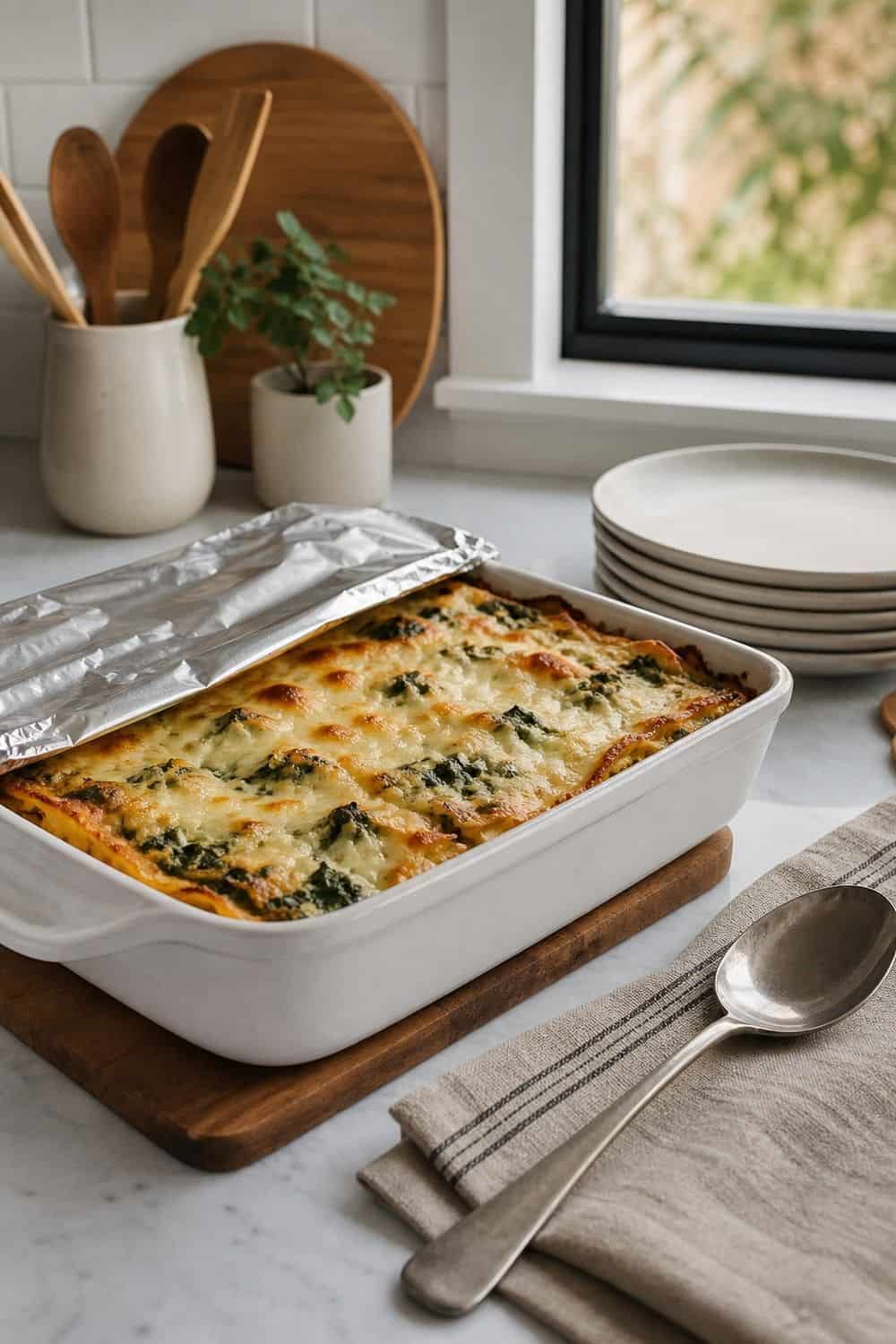
The easiest winter dinner party starts with a main dish that is already mostly handled before coats start coming off. Choose a braise, baked pasta, stew, roast chicken, vegetarian gratin, or big pot of beans that can hold gently while people settle in. Let the rest of the menu support that dish instead of competing with it. Add one fresh salad, one bread or starch, and one dessert that can wait. The host should not be finishing four delicate things at once while coats are coming off. Write the oven time, resting time, and garnish on a small note so the final hour stays calm instead of becoming memory work.
2. Braise That Welcomes Guests at the Door
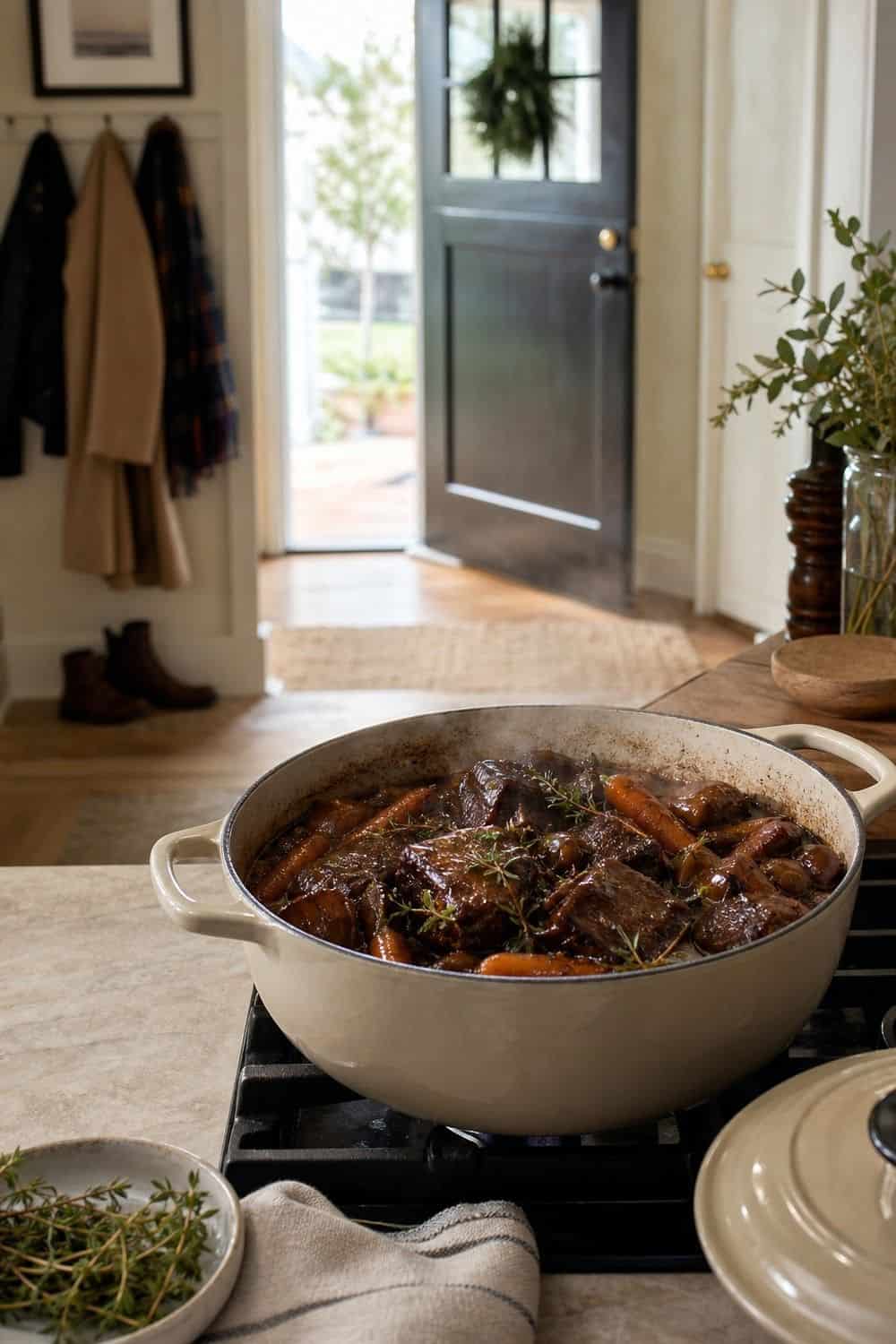
A braise is winter hosting magic because it makes the room smell like dinner before anyone sits down. Short ribs, chicken thighs, pork shoulder, lamb, mushrooms, lentils, or beans can all become a low, slow centerpiece.
Serve it from a Dutch oven or deep platter with something that catches the sauce, such as mashed potatoes, polenta, rice, noodles, or crusty bread.
Keep herbs or citrus for the end so the dish tastes fresh, not heavy. It also gives guests something cozy to smell in the entry, which does more for the mood than another centerpiece.
3. Soup as a Calm First Course

Soup gives a winter dinner party a warm beginning without needing fussy plating. Choose something smooth and make-ahead, such as butternut squash, potato leek, tomato, mushroom, or white bean soup.
Serve small portions so the first course comforts guests instead of filling them up before the main. Warm bowls if you can, and finish with cream, herbs, chili oil, croutons, or toasted nuts right before serving.
A pitcher or ladle setup is easier than carrying brimming bowls across the room. Keep toppings in tiny bowls so each guest can make the bowl richer, brighter, or spicier without slowing service.
4. Big Winter Salad for Freshness
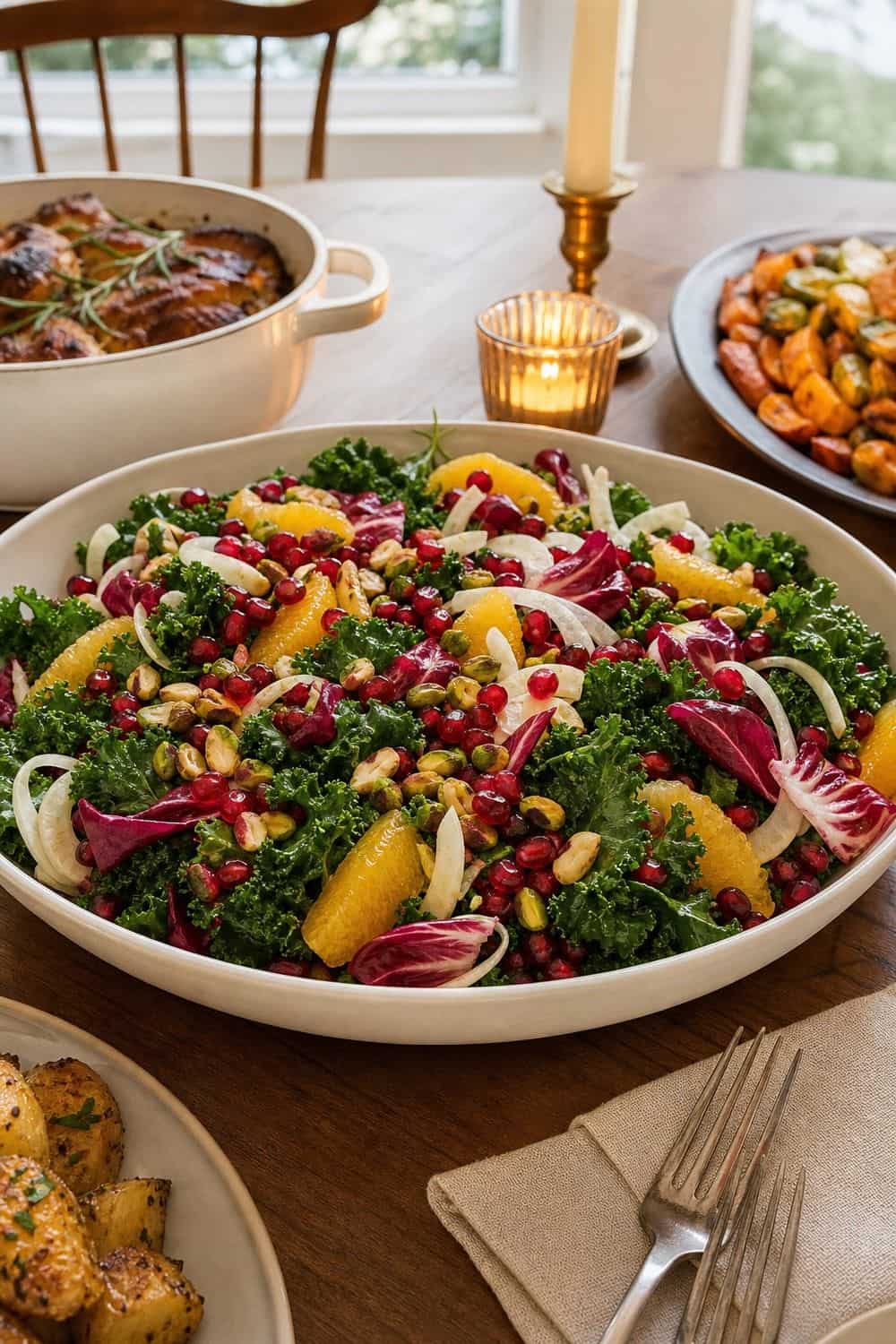
Winter menus can get rich quickly, so the salad needs real brightness. Use sturdy greens, shaved fennel, citrus, apples, pears, pomegranate, toasted nuts, radicchio, endive, or roasted squash. Dress it lightly just before dinner, or keep the dressing on the side if guests will graze. A sharp vinaigrette, bitter green, or juicy fruit keeps braises, pasta, potatoes, and cheese from feeling too heavy. The salad can sit dressed for a short time if the greens are sturdy, but delicate herbs should wait until the last minute.
5. Crusty Bread on the Table Early
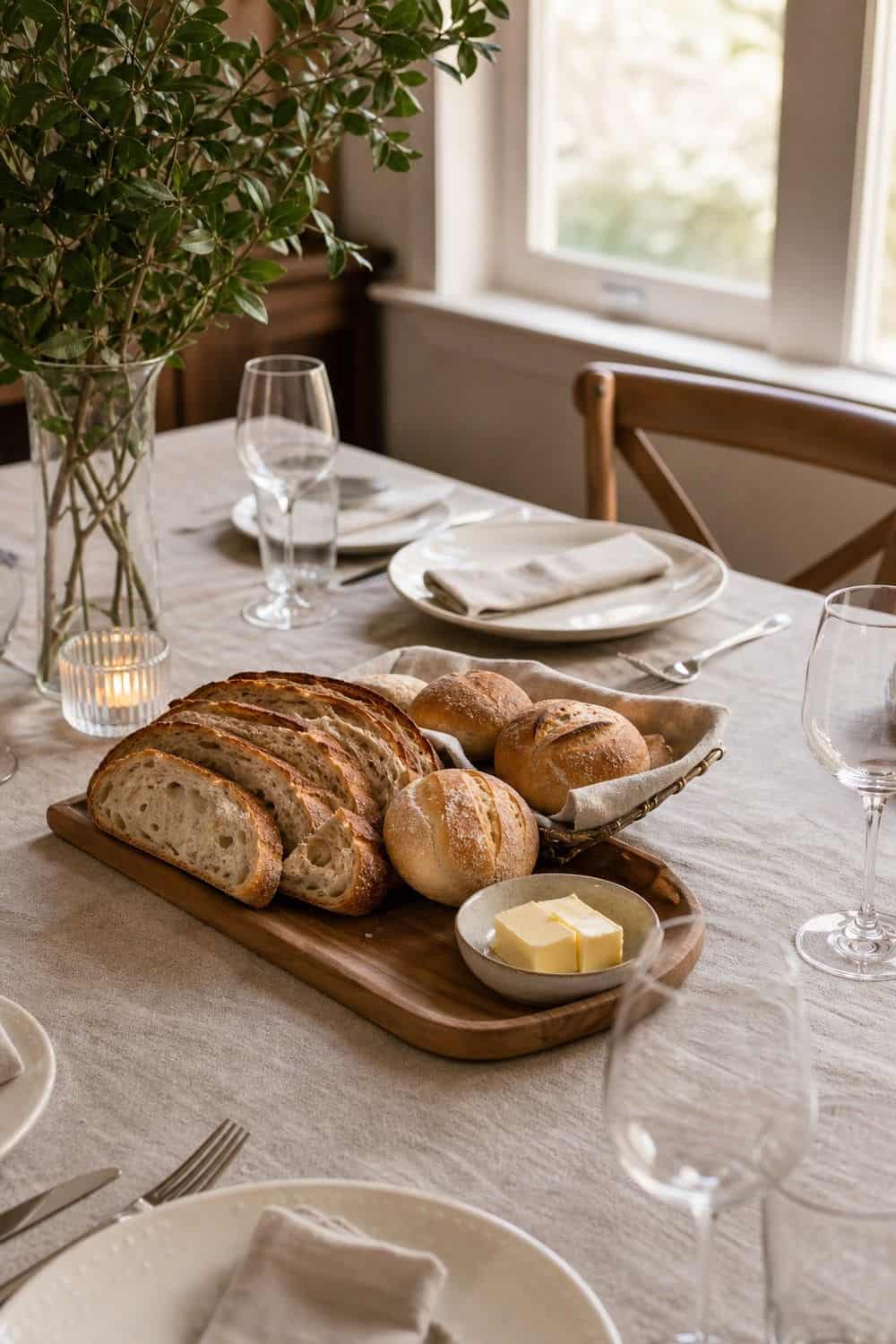
Bread buys the host a little grace. Put sliced baguette, sourdough, focaccia, rolls, or seeded bread on the table before the first course so guests have something easy to reach while drinks are poured.
Pair it with salted butter, olive oil, whipped ricotta, or a small dish of flaky salt. Bread also helps with saucy mains, which means fewer awkward moments where everyone wants to mop up the plate but has nothing to use. Put a bread knife and napkin beside it so guests can help themselves without scattering crumbs across the kitchen counter.
6. Family-Style Platters With a Clear Path
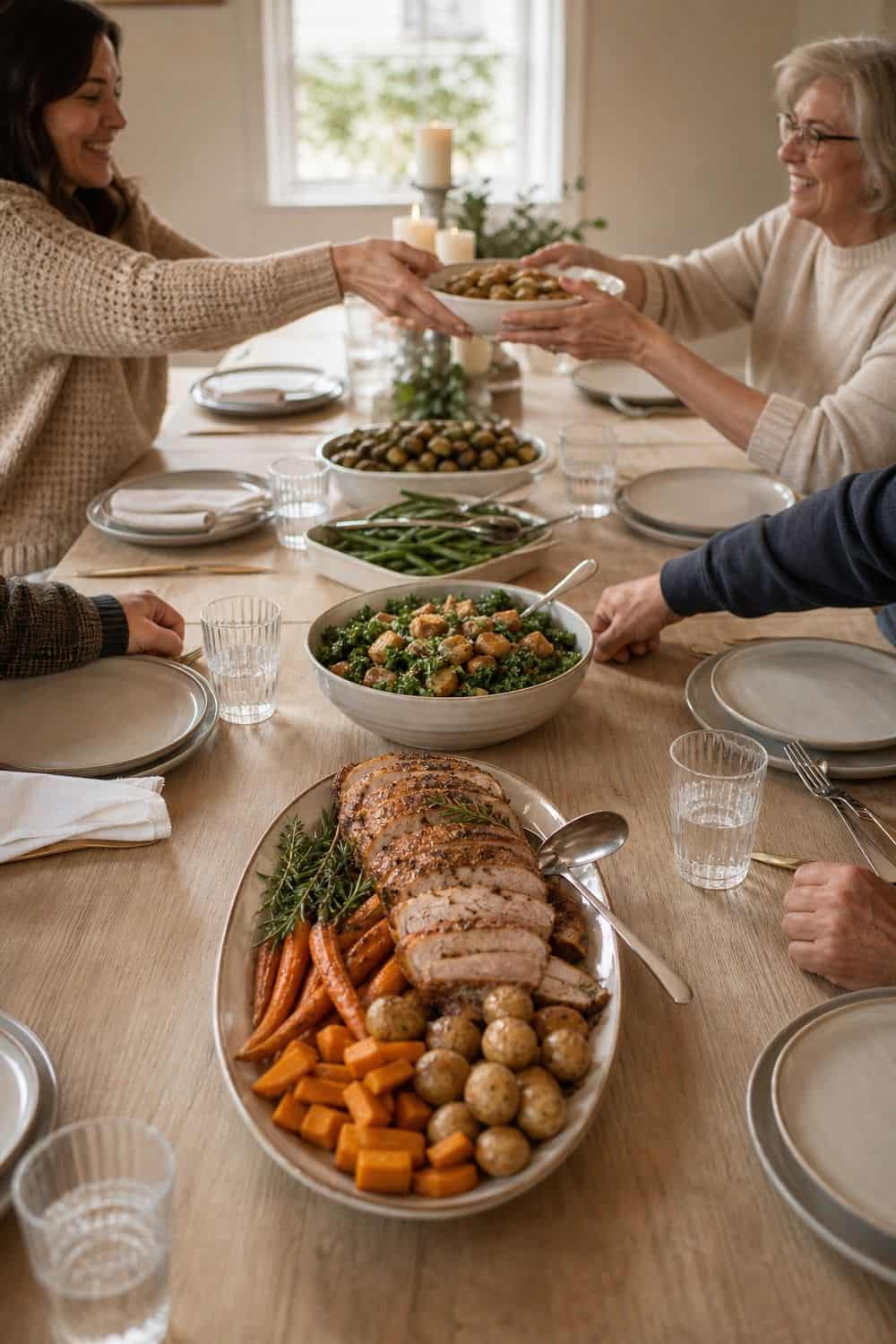
Family-style service usually fits winter dinner better than plated service. Warm platters, shared bowls, and a main dish passed around the table make the meal feel relaxed and generous.
Think through weight and reach before guests sit down. Heavy pots should stay on a sideboard or trivet where the host can help, while lighter salads, bread, and vegetables can move around the table.
Put serving spoons with each dish so no one is hunting through drawers mid-meal. If the table is narrow, serve the main from a nearby counter and pass only smaller bowls at the table.
7. Low Edible Centerpiece
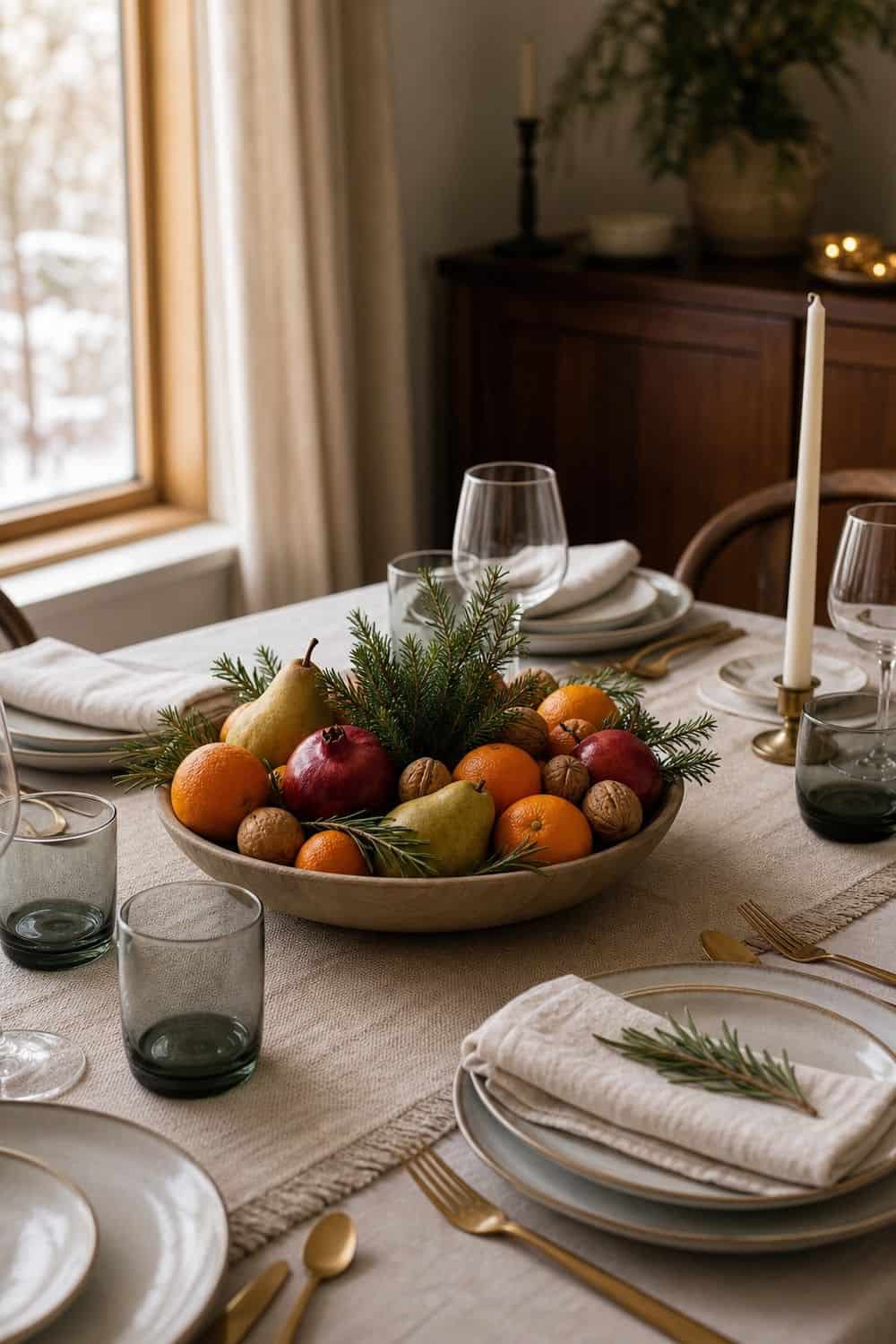
A winter table does not need a tall floral arrangement blocking conversation. Low bowls of citrus, pears, walnuts, rosemary, pomegranates, candles, or a small evergreen clipping can add warmth without taking over. Keep anything scented away from food, and leave room for serving dishes. If the meal is family-style, the centerpiece should be narrow enough that platters can land on the table without guests rearranging the whole scene. Edible pieces also make cleanup easier because fruit, herbs, and nuts can move back to the kitchen after dinner.
8. Unscented Candles Near the Food
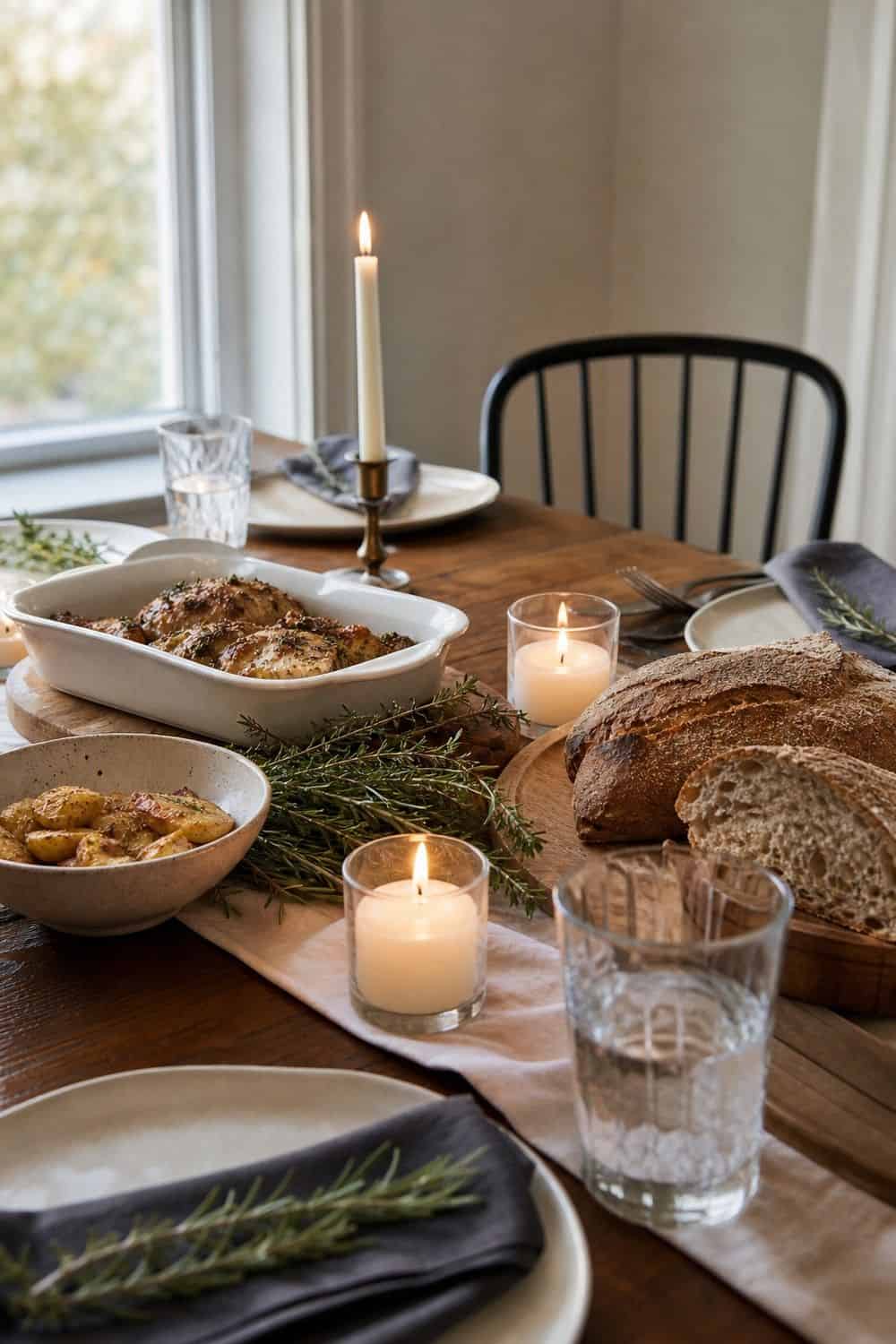
Candlelight makes a winter dinner table feel softer almost instantly, but the candles near food should be unscented. Fragrance competes with soup, wine, bread, herbs, and whatever has been simmering all afternoon.
Use tapers, votives, or small hurricanes with stable bases. Keep flames away from sleeves, napkins, greenery, and passing platters. A few steady points of light look better than a crowded table of candles everyone has to dodge. Trim wicks earlier in the day so the candles glow cleanly instead of smoking over the first course.
9. Scented Candles Away From the Table
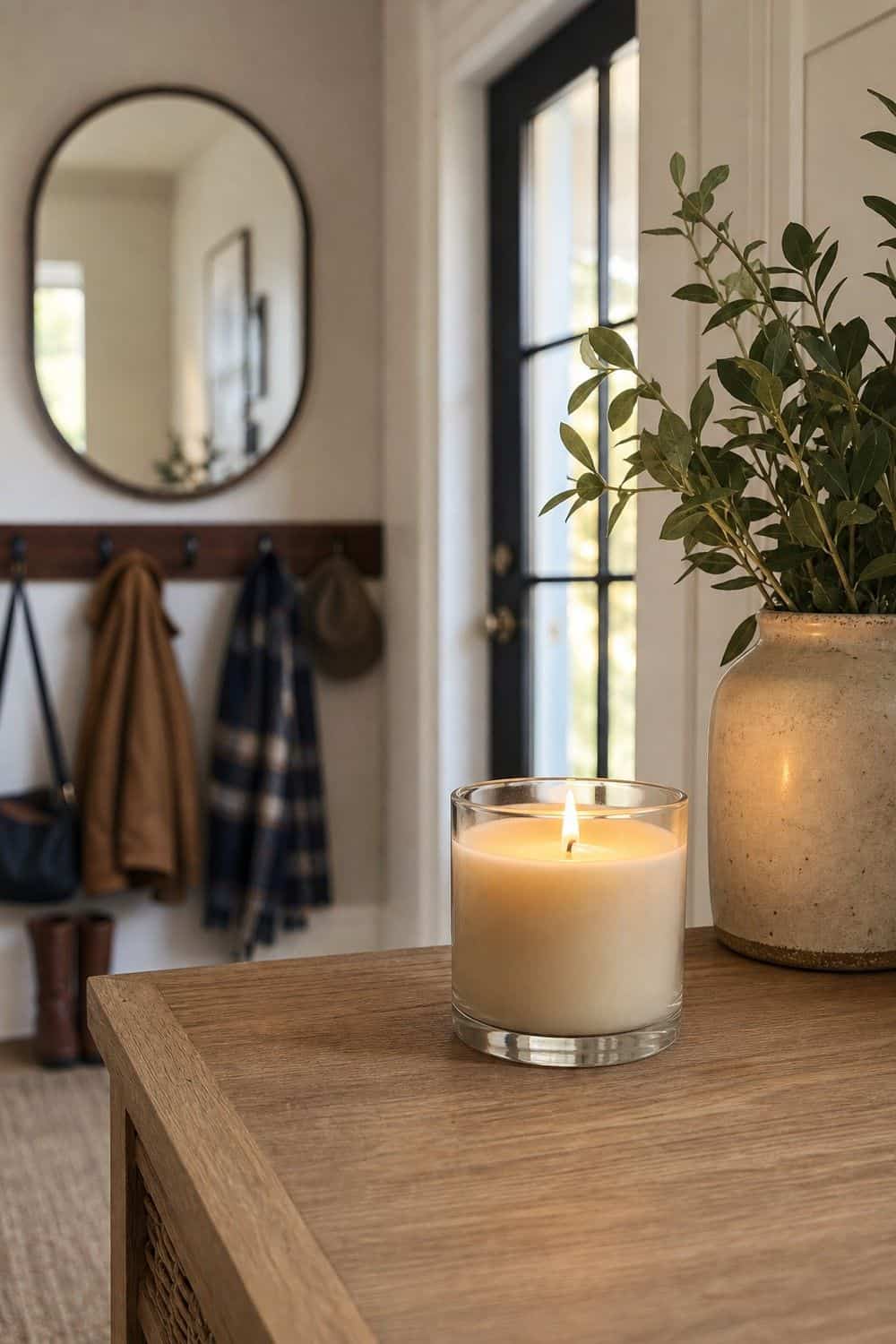
Scented candles can still have a place at a winter party, just not on the dining table. Put them in the entry, bathroom, or living room before dinner, where they create atmosphere without flavoring the meal.
Choose something quiet and seasonal rather than sugary or overpowering. Once food is out, the best scent in the house should be dinner itself: browned butter, roasted vegetables, warm bread, citrus peel, herbs, and coffee. If you love fragrance, light it early and blow it out before dinner so the room keeps the hint without fighting the food.
10. Linen and Cotton Layers for Warmth
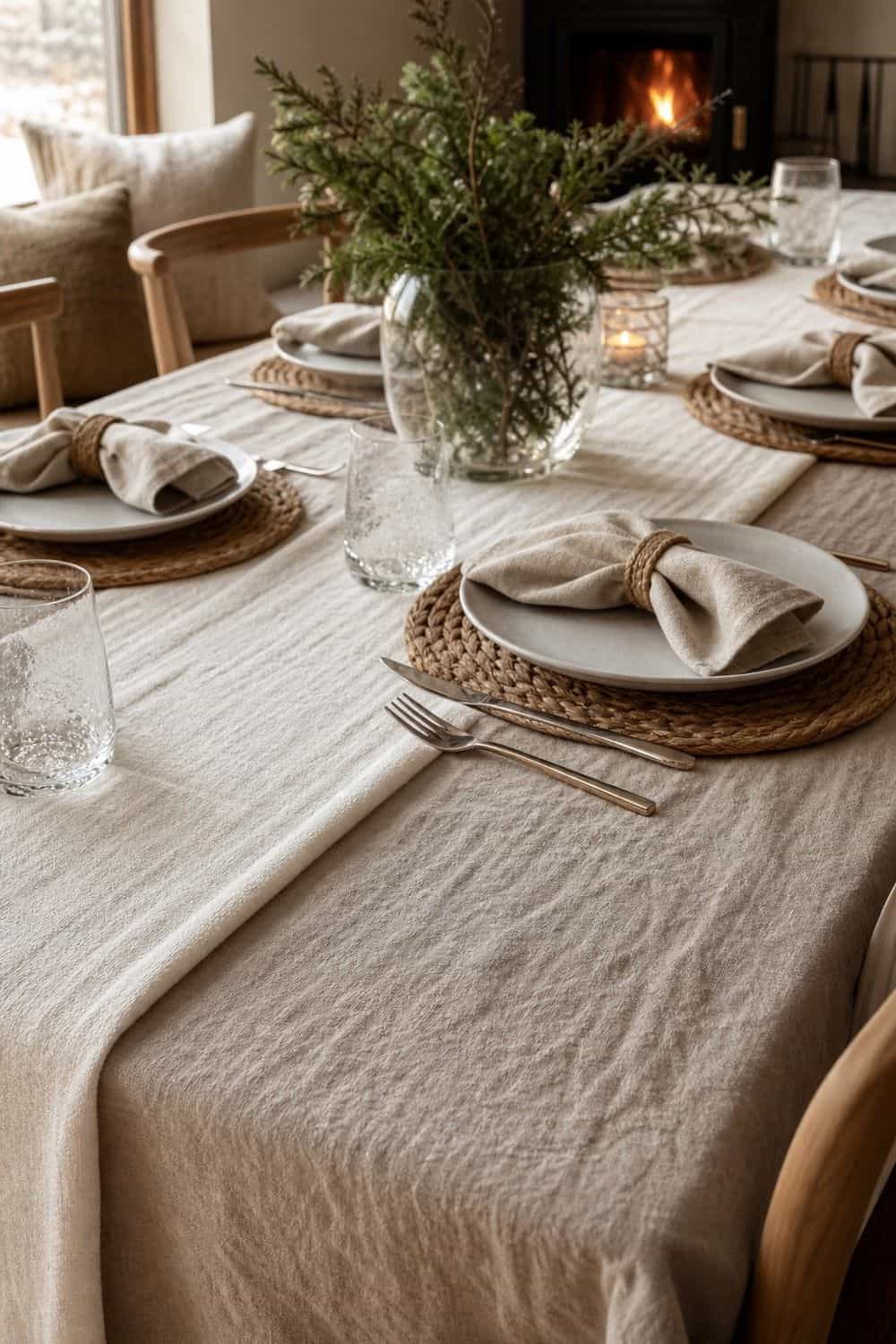
Textiles make a winter table feel warmer before you add a single centerpiece. Use a linen tablecloth, cotton runner, cloth napkins, or textured placemats to soften hard surfaces and quiet the room. Choose fabrics that can handle real sauce and candle wax anxiety. Cream, rust, moss, charcoal, wine, oatmeal, or deep blue all work with winter food. If the menu is messy, patterned napkins are kinder than perfectly pale ones. Layering one runner over a bare table can be enough if the food will already bring color and texture.
11. Lamp Light Before the Doorbell
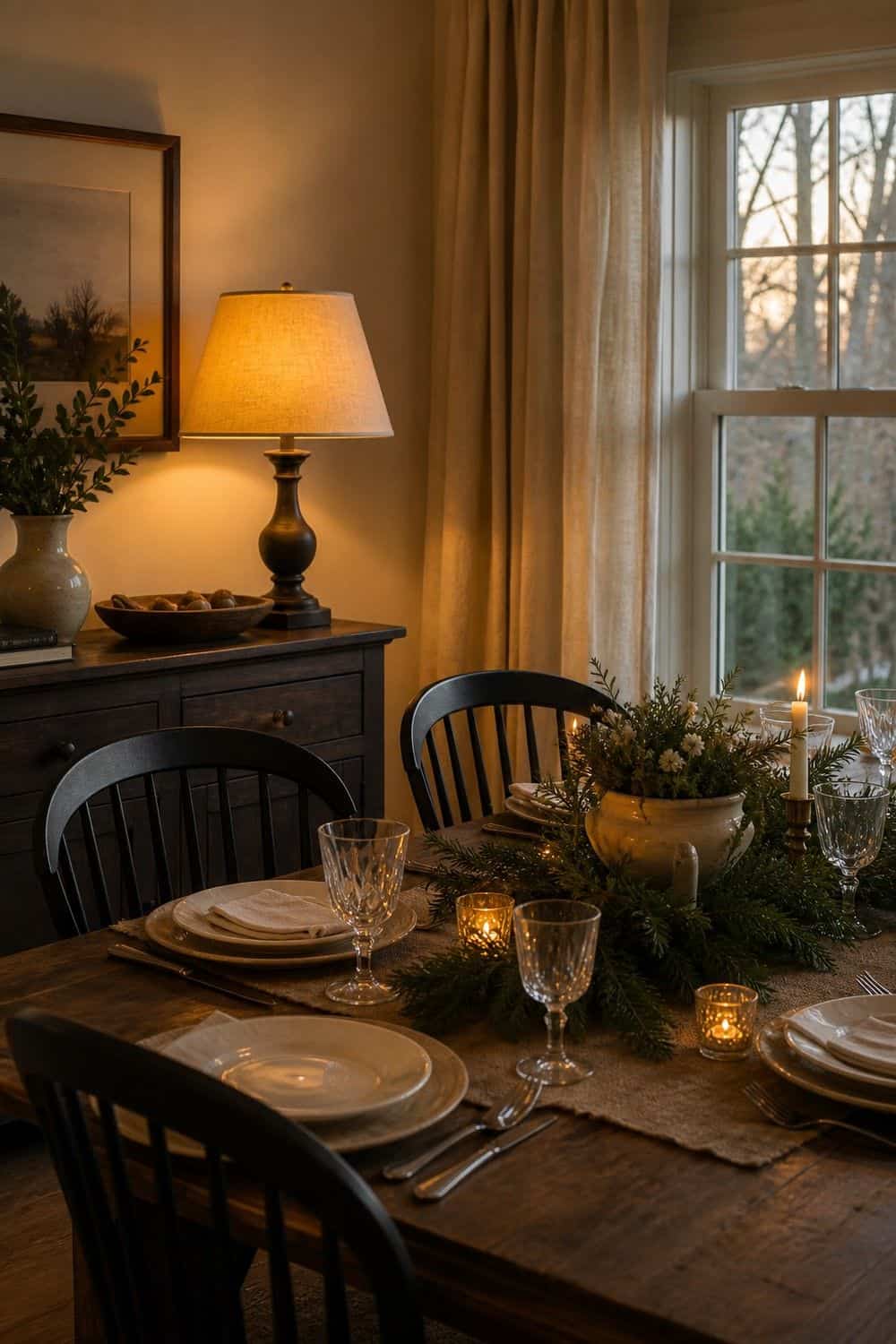
Overhead lighting can make even a beautiful winter table feel stark. Turn on lamps, sconces, under-cabinet lights, or dimmed pendants before the doorbell rings so the room already feels settled.
Check the table from the seat, not just the doorway. Guests need enough light to see the food, but not so much brightness that dinner feels like cleanup time. If the kitchen is visible, warm task lighting there helps too. A small lamp on a sideboard can make the whole table feel warmer than one bright ceiling fixture.
12. Mulled Cider or Tea at Arrival

A warm arrival drink makes winter hosting feel generous without adding another course. Mulled cider, hot tea, spiced cranberry punch, hot chocolate, warm citrus water, or a low-alcohol toddy can greet guests as they thaw out.
Keep mugs, spoons, garnish, and a nonalcoholic version together. The drink should be ready before the doorbell rings, because it is meant to settle the room, not send the host back to the stove. Keep the pot or pitcher off the main prep path so refills do not collide with last-minute food work.
13. Self-Serve Drink Station

A self-serve drink area keeps the dinner table from filling with bottles and lets guests refill without interrupting the kitchen. Use a sideboard, bar cart, counter corner, or tray with glasses, water, wine, zero-proof drinks, and napkins. Place it away from the oven path and coat pile. If drinks need ice, citrus, tea bags, or a kettle, keep those pieces together so the station explains itself without a speech from the host. Add a small tray for used stirrers, corks, citrus peels, or tea bags so the station does not slowly spread.
14. Zero-Proof Option That Fits the Menu
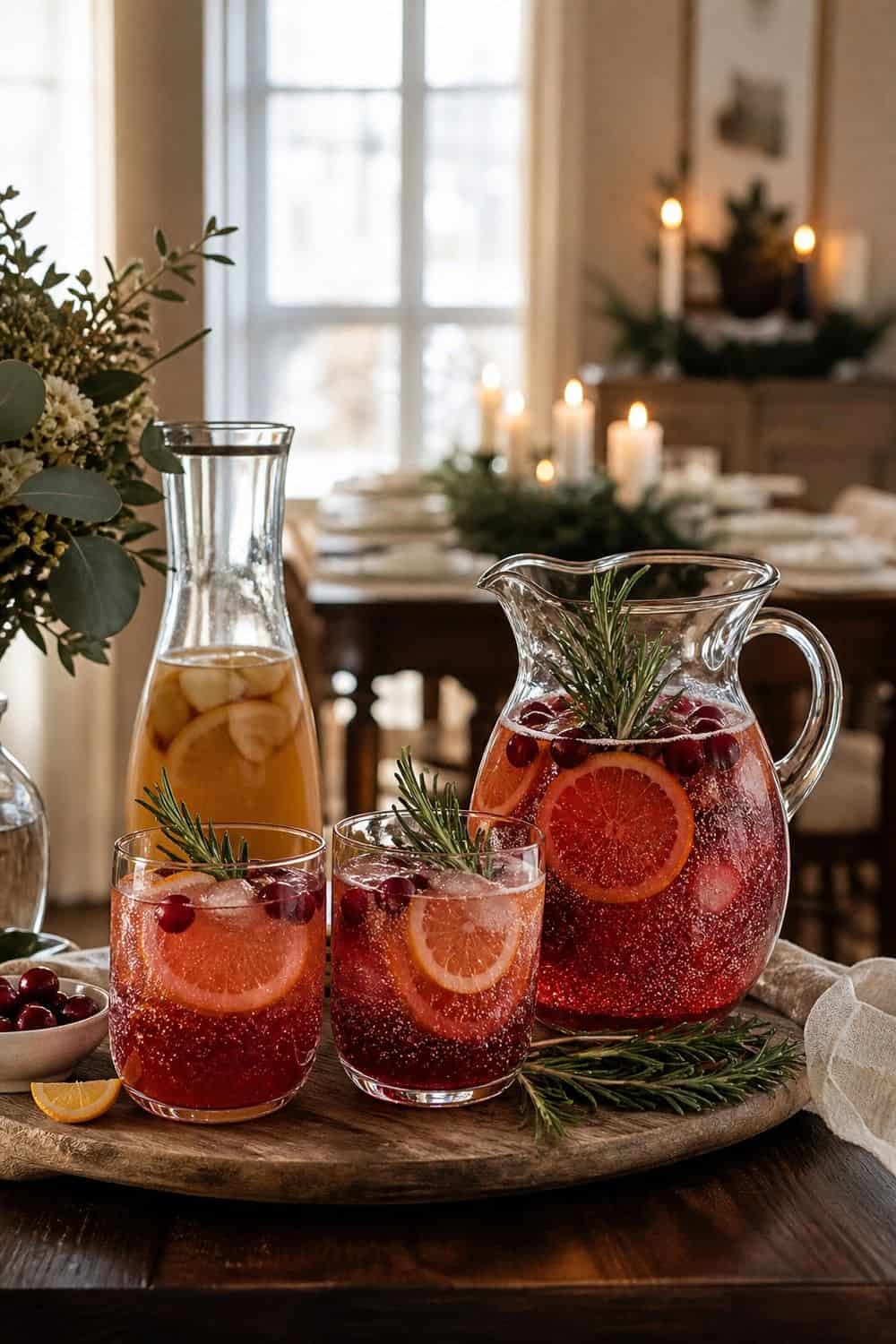
The nonalcoholic drink should look like part of the party, not the consolation prize. Sparkling cranberry, rosemary citrus spritz, spiced apple cider, ginger beer with lime, or a bitter aperitif-style soda can feel festive.
Serve it in the same glassware as the other drinks and garnish it with the same care. If guests are pacing themselves, driving, pregnant, sober, or simply not drinking that night, they should still have something that looks like part of the party. This is one of those hosting details guests notice quietly because it lets everyone participate without explanation.
15. Hearty Vegetarian Main or Side

A vegetarian option should feel like dinner, not a pile of side dishes. Mushroom pot pie, lentil shepherd’s pie, stuffed squash, baked pasta, bean stew, gratin, or a roasted cauliflower platter can hold its own beside meat.
Even if only one guest needs it, make enough for others to taste. Winter vegetables, beans, cheese, herbs, and grains can make the table feel abundant without requiring a completely separate menu. Label anything with meat stock clearly so the option feels easy to choose, not awkward to ask about.
16. Oven-and-Stove Timing Without the Scramble
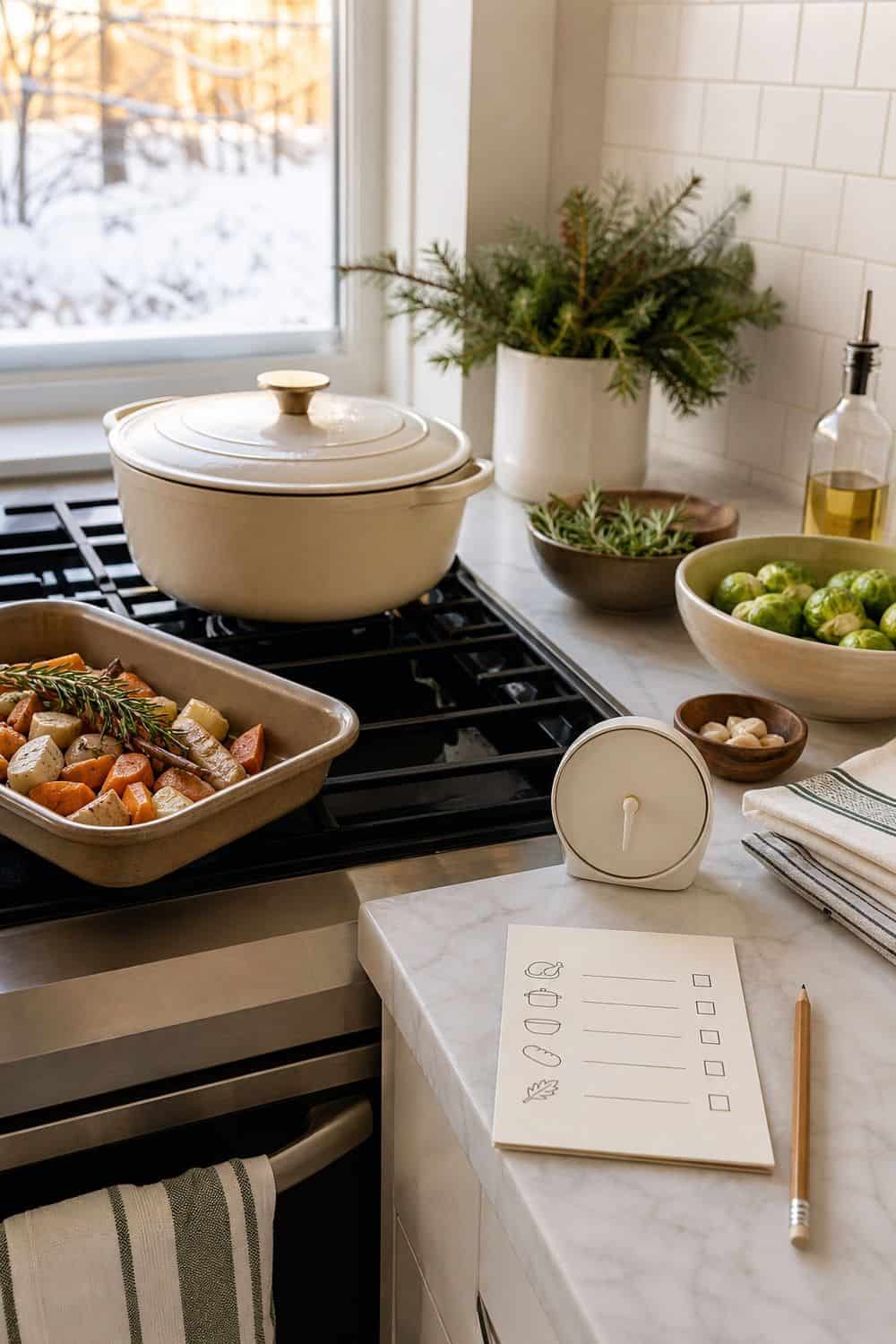
Timing gets easier when every dish does not need the same heat source at the same moment. Let one item hold in the oven, one stay warm on the stove, and one arrive at room temperature. This helps when counter space and oven space are both limited. If the main is in the oven, choose a salad or bread that does not need last-minute baking. If soup is on the stove, let dessert be chilled or fully finished. Write the order on a scrap of paper if you are nervous; winter food is forgiving, but timing still helps.
17. Heated Plates or Bowls for Comfort Food

Heated plates and bowls make saucy winter food feel better at the table. Pasta, stew, soup, polenta, risotto, and braises lose their charm quickly on cold dishes.
You do not need a restaurant setup. Stack bowls near the oven for a minute, rinse them with hot water and dry them, or warm only the serving platter.
Keep the process simple so it supports dinner instead of slowing it down. Warm dishes are especially helpful if guests are serving themselves and taking a minute to sit down.
18. Dessert Made Ahead of Time
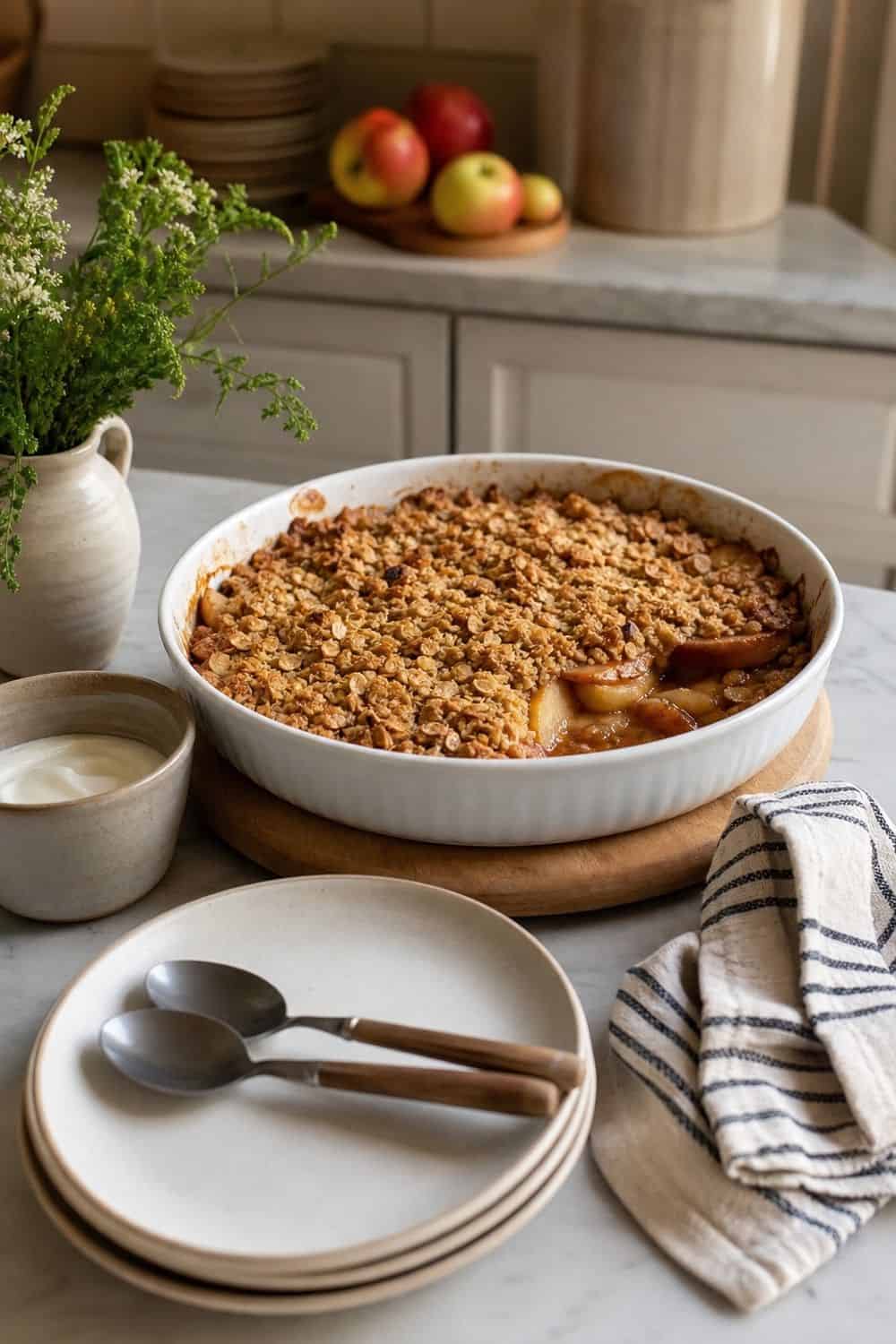
Dessert should not be the moment the host disappears. Choose something finished before dinner: sticky toffee pudding, chocolate cake, apple crisp, panna cotta, poached pears, bread pudding, cookies, or a citrus tart.
If dessert needs warming, keep the step short and predictable. Add whipped cream, ice cream, powdered sugar, or citrus zest at the end. A make-ahead dessert lets the table linger without turning the kitchen into round two. Put dessert plates or forks out before dinner if the kitchen is small, so the second round is not a cabinet search.
19. Coffee or Tea After Dinner

Coffee and tea give a winter dinner party a natural second act. They help guests move from the main meal into dessert, conversation, or the living room without the evening feeling abruptly finished. Set mugs, spoons, milk, sugar, decaf, and herbal tea where they are easy to reach. If dessert is rich, a warm drink makes it feel balanced. If the night is long, decaf matters more than people admit. If people move to the sofa, carry the warm drinks there on a tray instead of making everyone line up in the kitchen.
20. Close Seating Without the Crowd

Winter dinner should feel intimate, but guests still need elbow room. Pull chairs close enough for conversation while leaving space for serving dishes, coats, boots, and the person who always gets up to help.
If the table is small, serve from a sideboard instead of forcing every platter into the center. A bench, folding chair, or living-room spillover can work if guests know where plates and drinks can safely land. The goal is a room that feels full of people, not a table where everyone is trapped by chair legs and serving bowls.
21. Blankets for the After-Dinner Move
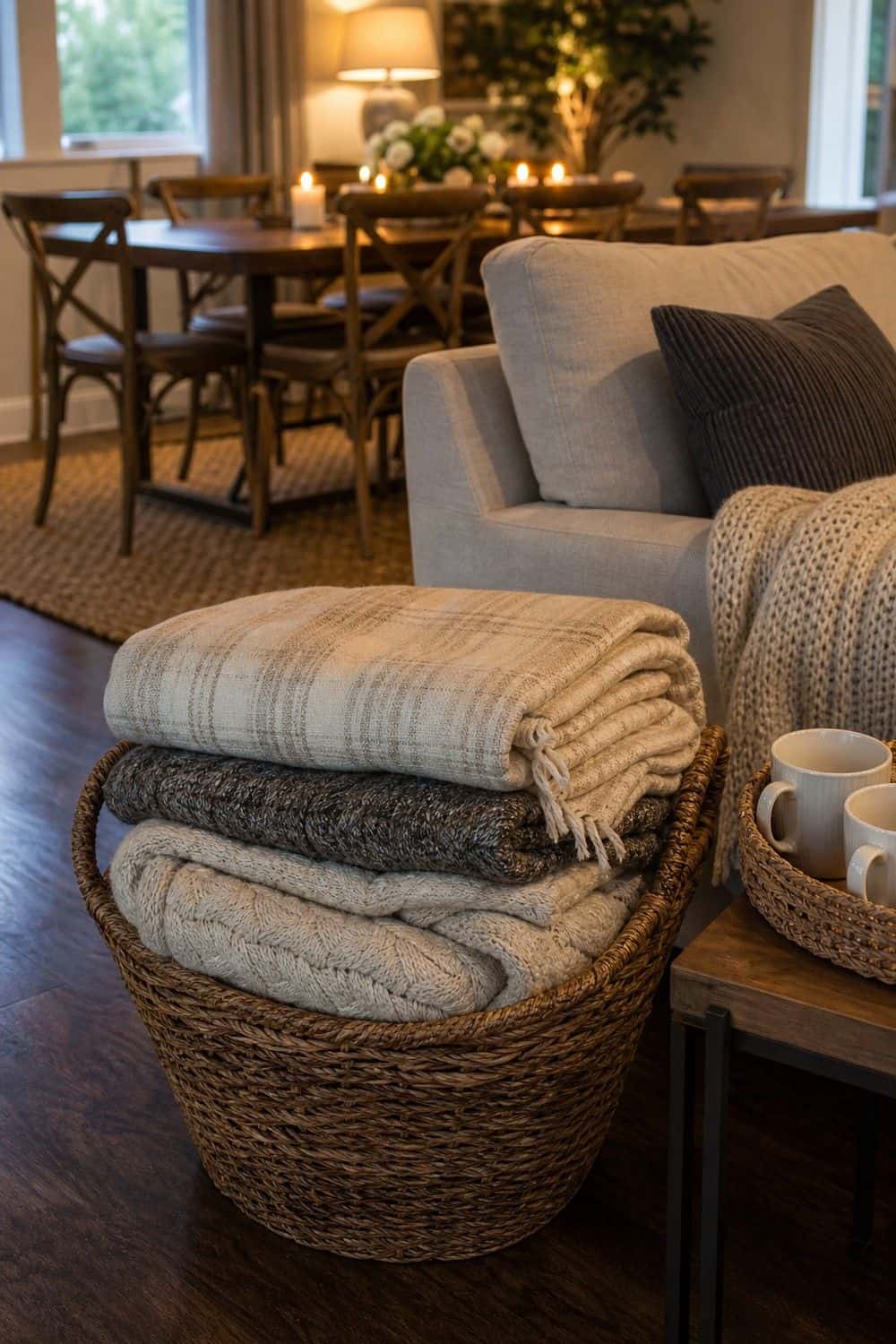
If the night may drift away from the table, make the next spot ready before dinner starts. Fold a few blankets over a chair or basket near the sofa so guests can settle in after dessert.
This works especially well for game night, movie night, or a slow second drink. Keep the blankets clean and easy to grab, not styled so perfectly that everyone assumes they are decoration. This small comfort cue makes the evening feel cared for, especially if guests came in from snow, rain, or cold wind.
22. Music That Shifts the Mood
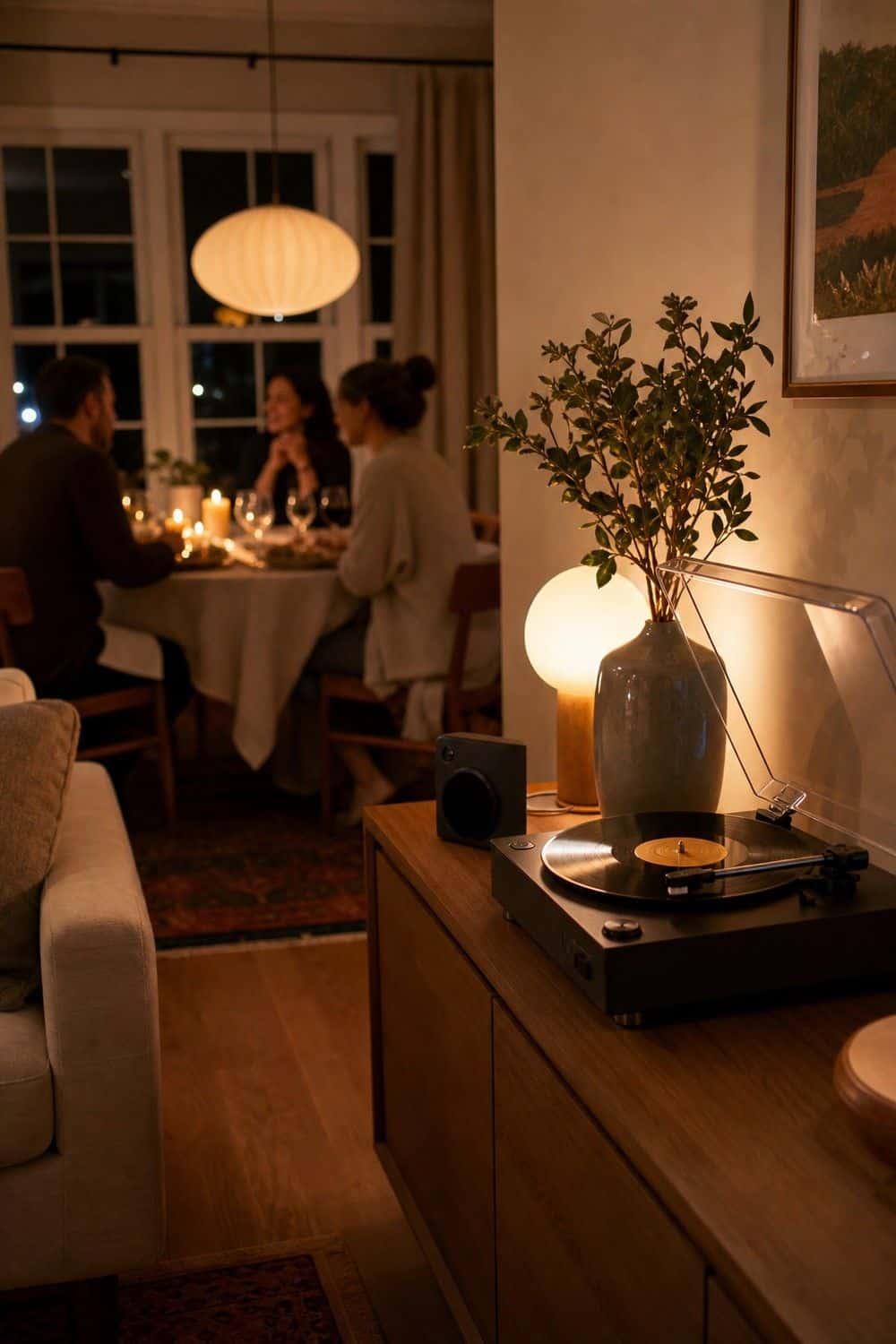
Music can help a winter dinner party move through the night. Start with something calm while guests arrive, choose a warmer dinner playlist for the table, then shift softer after dessert if people linger. Set the volume before food is served. Guests should not have to talk over the playlist, and the host should not be adjusting speakers with sauce on their hands. A little background warmth is enough. Save one slightly livelier playlist for cleanup if you know a few friends will hover in the kitchen after dinner.
23. Coat and Boot Landing Spot
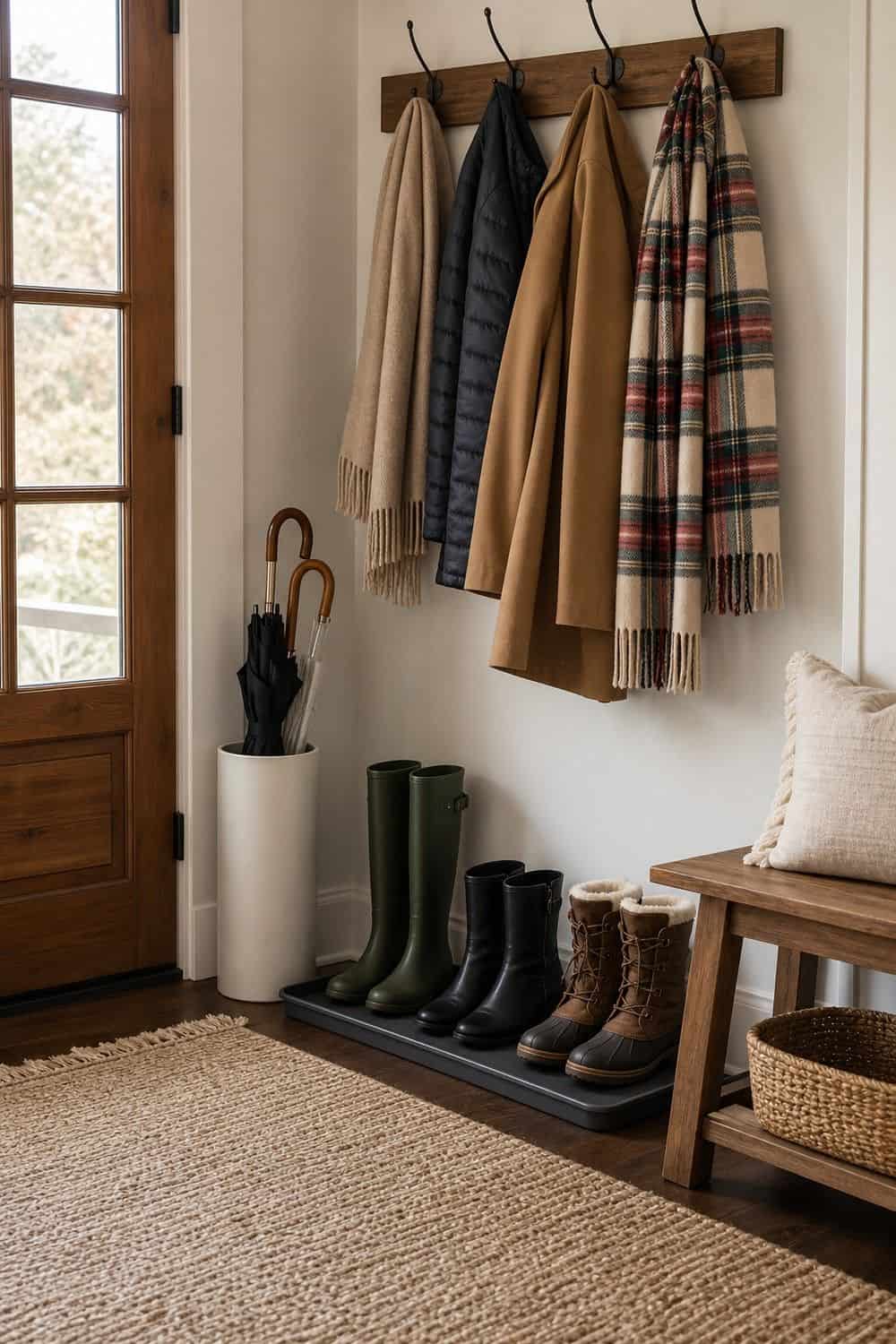
Winter guests arrive with more stuff: coats, scarves, boots, bags, umbrellas, and sometimes wet hems. Decide where everything goes before the first person stands in the entry holding a casserole.
Use a bedroom, bench, hooks, boot tray, basket, or clear corner. If shoes come off, make that obvious without making guests feel scolded. A good landing spot keeps the dining area from becoming a coat rack. Add a towel or mat for wet boots if the weather is messy, and keep the path to the table clear.
24. Leftovers Without the Last-Minute Scramble

Leftovers are easier to share when containers are ready before midnight. Set aside a few jars, boxes, foil sheets, labels, or bags so guests can take soup, cake, bread, or braised meat without raiding your cabinets.
Pack only food that has been held safely and still looks good. Keep sauces separate when possible, and label anything with nuts, meat, or dairy. Sending food home should feel generous, not frantic. Ask before packing spicy, saucy, or strongly flavored food with dessert so the containers do not ruin each other.
25. Simple Kitchen Reset

By the end of the night, the kitchen may have glasses, wax, bread crumbs, serving spoons, sauce pots, and wet entryway towels everywhere. End with a small reset, not a full deep clean while guests are still there.
Clear perishables, soak the worst pan, gather napkins, and make sure leftovers are chilled. Leave the rest for morning if you can. The best reset protects the kitchen without stealing the last cozy part of the night. Put tomorrow morning in mind: the reset should make breakfast possible, not erase all evidence of a good night.
Frequently Asked Questions
How do you host a winter dinner party?
Host a winter dinner party by choosing a make-ahead main, setting warm lighting early, keeping sides simple, and using self-serve drinks. Add unscented candles to the table, keep the centerpiece low, and follow a clear timeline so the host is not cooking every course at the last minute.
What should I serve at a winter dinner party?
Serve cold-weather dishes that hold well: braises, stews, baked pasta, roast chicken, vegetarian casseroles, winter salads, crusty bread, and make-ahead desserts. A balanced winter dinner party menu usually has one rich main, one fresh side, bread, something warm to drink, and a dessert that does not need last-minute attention.
How do you make a dinner party cozy?
Use warm lighting, low unscented candles, close but comfortable seating, textiles, seasonal food, low music, and a relaxed serving style. Cozy dinner party ideas work best when they also support function: guests can reach drinks, pass food, talk across the table, and move easily after dinner.
What is an easy make-ahead winter dinner party menu?
An easy menu could be braised short ribs, creamy polenta, citrus salad, bread, and a make-ahead chocolate dessert. For a vegetarian version, serve lentil stew or mushroom pot pie with salad, bread, and fruit crumble. The key is choosing dishes that can be cooked or mostly prepared ahead.
Should you use scented candles at a dinner party?
Use unscented candles on the dinner table. Strong scents can compete with the food, wine, and coffee. If you want fragrance, place it away from the table, such as near the entry, and keep it light. Citrus, herbal, or woody notes are safer than heavy florals or sugary scents.
How do you decorate a winter dinner table?
Decorate a winter dinner table with low natural elements, washable linens, unscented tapers, seasonal fruit, herbs, and enough open space for serving dishes. Avoid tall centerpieces, glitter, unstable objects, and anything that has to be moved every time food is passed.
How do you host a dinner party in a small space?
Use kitchen-buffet or family-style serving, keep the centerpiece low, create one drink station, and move dessert or tea to the living room if the table is tight. Clear coats, bags, and extra objects early so the small space feels planned rather than crowded.
How do you keep dinner party hosting low stress?
Choose make-ahead dishes, set the table early, prep drinks before arrival, simplify dessert, and plan the first ten minutes of cleanup. Low-stress hosting comes from fewer last-minute decisions, not from a perfect table. Give yourself one main dish, one timeline, and permission to leave some cleanup for morning.
Final Thoughts
The best winter dinner party ideas make the house feel warm, the food feel generous, and the host feel present. Build the night around one make-ahead main, simple sides, bread, unscented candlelight, self-serve drinks, and a manageable reset. That is enough to turn a cold night into a dinner people want to linger over.
Last update on 2026-09-18 / Affiliate links / Images from Amazon Product Advertising API