
The best spice jars and labels are airtight, easy to refill, readable in the exact spot where the jars live, and marked with the spice name plus a purchase, open, or refill date. Choose square jars for drawers, round jars for racks and turntables, front labels for cabinets, top labels for drawers, and waterproof labels for jars handled often during cooking.
Spice jars and labels are worth buying when they make spices easier to see, seal, refill, date, and use before the flavor fades. A good spice setup is not only about matching jars; it should protect aroma, prevent clumps, and help you avoid buying the same spice twice.
The smartest choice depends on where the jars will live. Drawers need top labels and low-profile rows, cabinets need front labels and back-row visibility, open shelves need a real seal, and every spice storage spot should stay cool, dark, dry, and away from stove heat, steam, sunlight, and moisture.
\n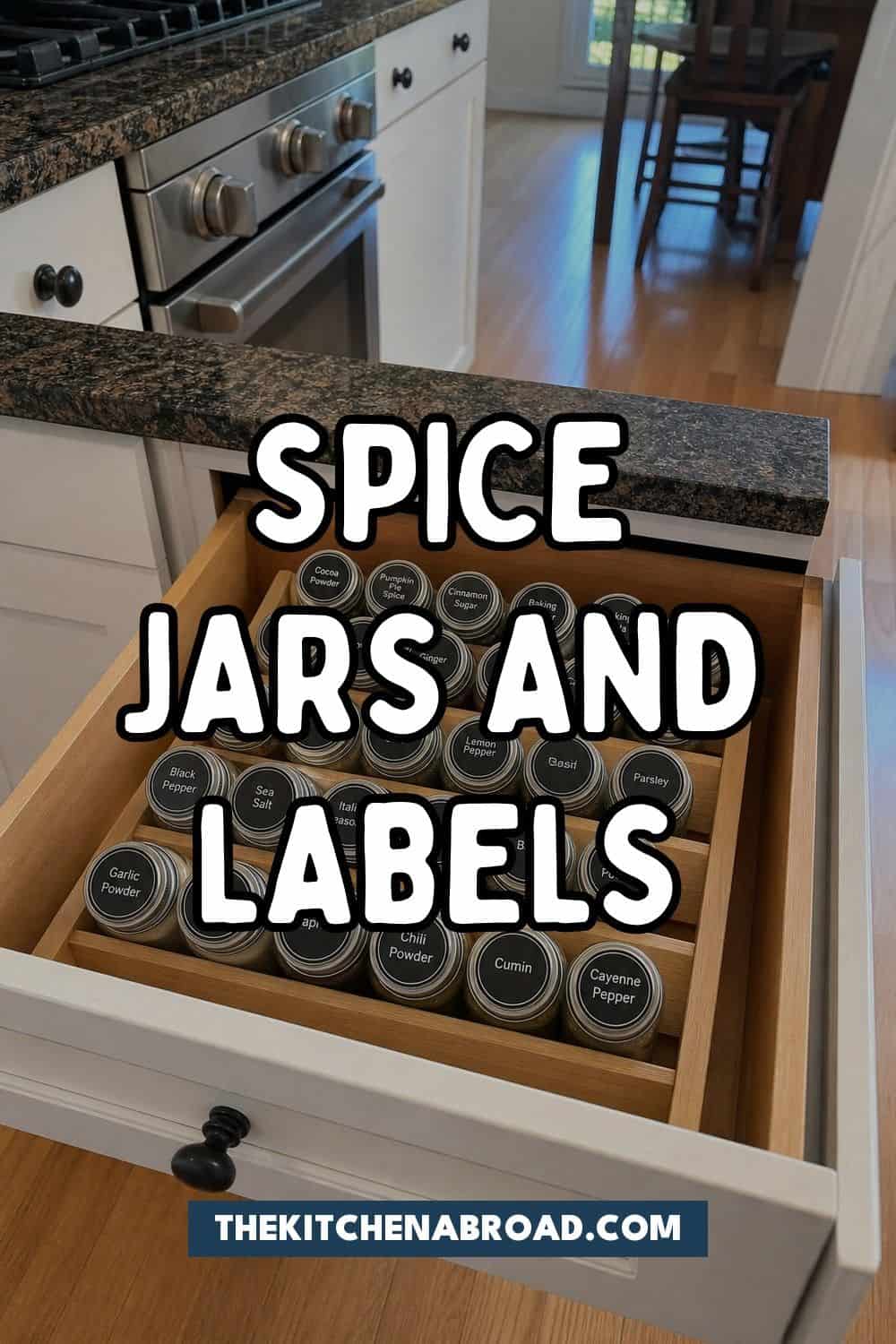
Top Recommended Products


You Might Also Like These Blog Posts
- Food Storage Labels
- Pantry Reset Ideas
- Pantry Inventory Ideas
- Kitchen Organization Products
- Pantry Staple Meal Prep
Best Spice Jars and Labels for a Cleaner Spice Setup
1. Glass Spice Jars With Labels for a Full Reset
A glass jar set makes sense when the current spice cabinet is a mix of store bottles, bulk bags, and half-empty containers that no longer fit together. Check the jar count before buying, then compare it with the spices you actually use.
The best sets include common spice names, a few blank labels, shaker inserts, and lids that seal well. Uniform jars are most useful when they match a drawer, rack, or cabinet shelf size, not just when they look tidy in a product photo.
\n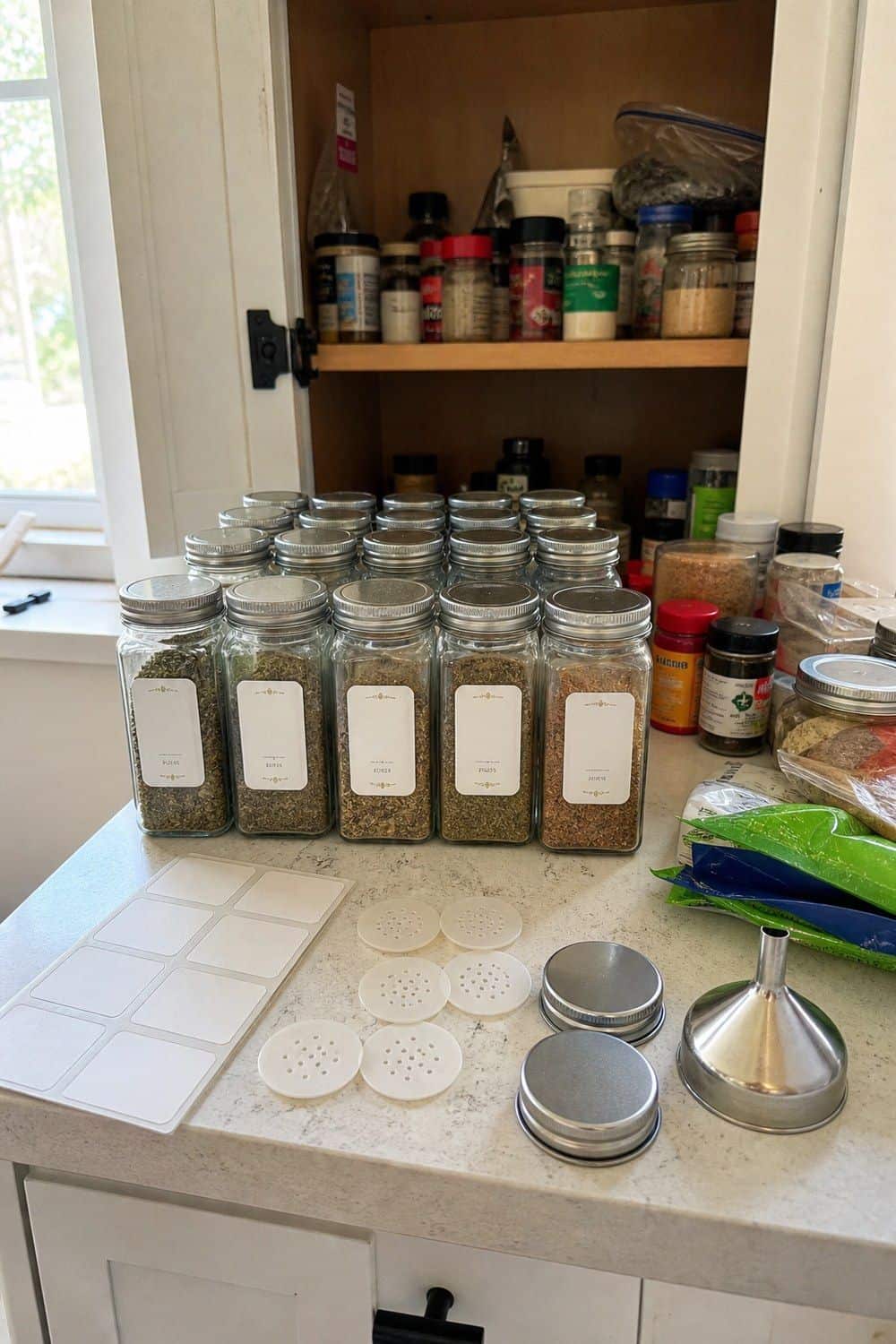
2. Square Spice Jars for Drawer Rows
Square jars are useful for spice drawers because they sit close together and waste less space between containers. The shape helps the drawer hold everyday spices in clear rows instead of loose round bottles rolling around. Flat sides also make label placement feel more consistent.
Measure drawer height before choosing jars, especially if the lids are thick or the organizer tilts the jars upward. Add top labels so cinnamon, cumin, paprika, and oregano can be read without lifting every jar.
\n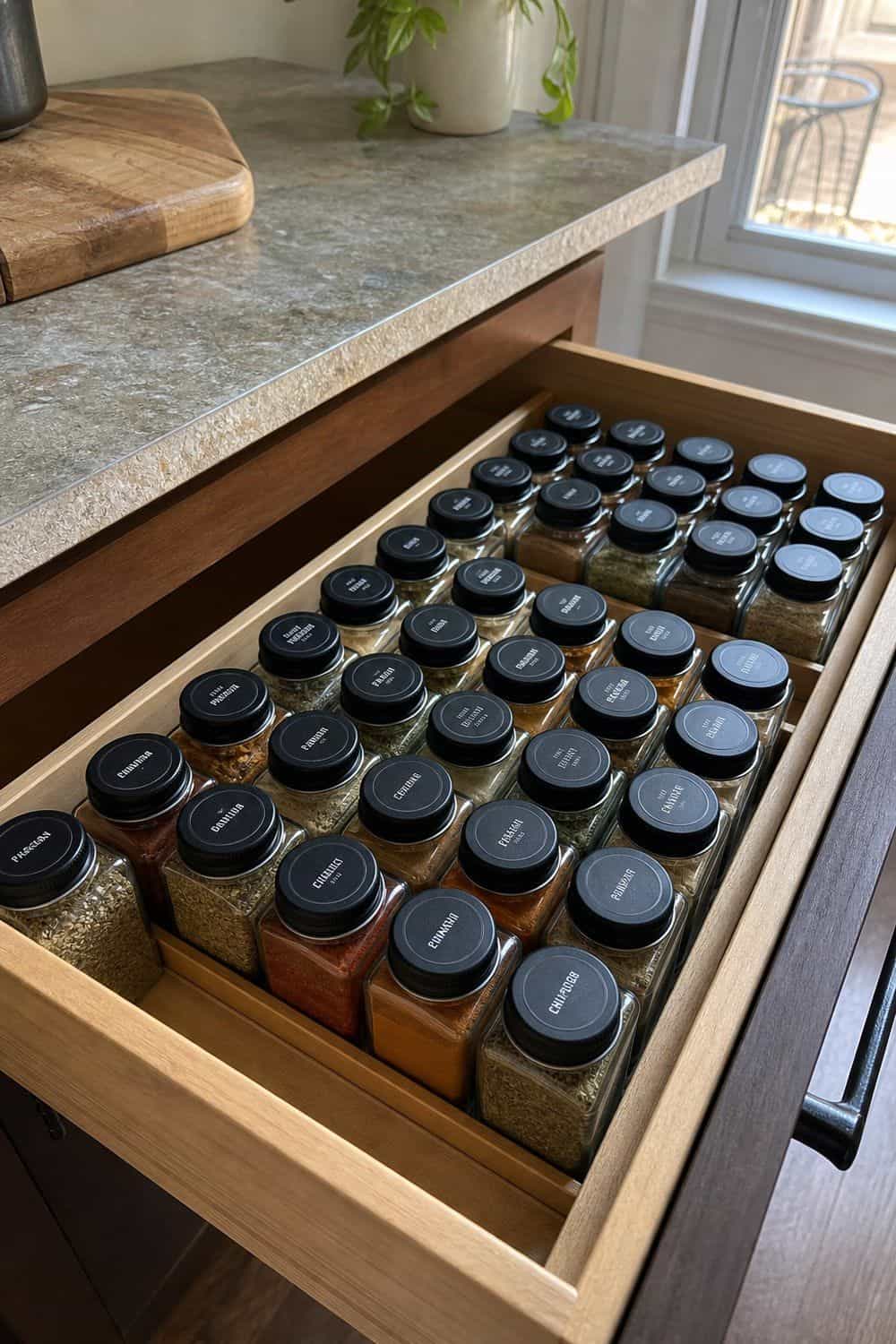
3. Round Spice Jars for Turntables and Racks
Round jars fit naturally on lazy Susans, tiered racks, small spice stands, and narrow cabinet shelves. They are common, easy to refill, and usually compatible with shaker inserts, which helps if you cook directly from the jar.
The tradeoff is visibility: round jars can hide labels when they rotate or sit in a row. Use front-facing labels for shelves and racks, then keep the most-used spices in the easiest-to-reach positions so the setup helps cooking instead of becoming a display of identical lids.
\n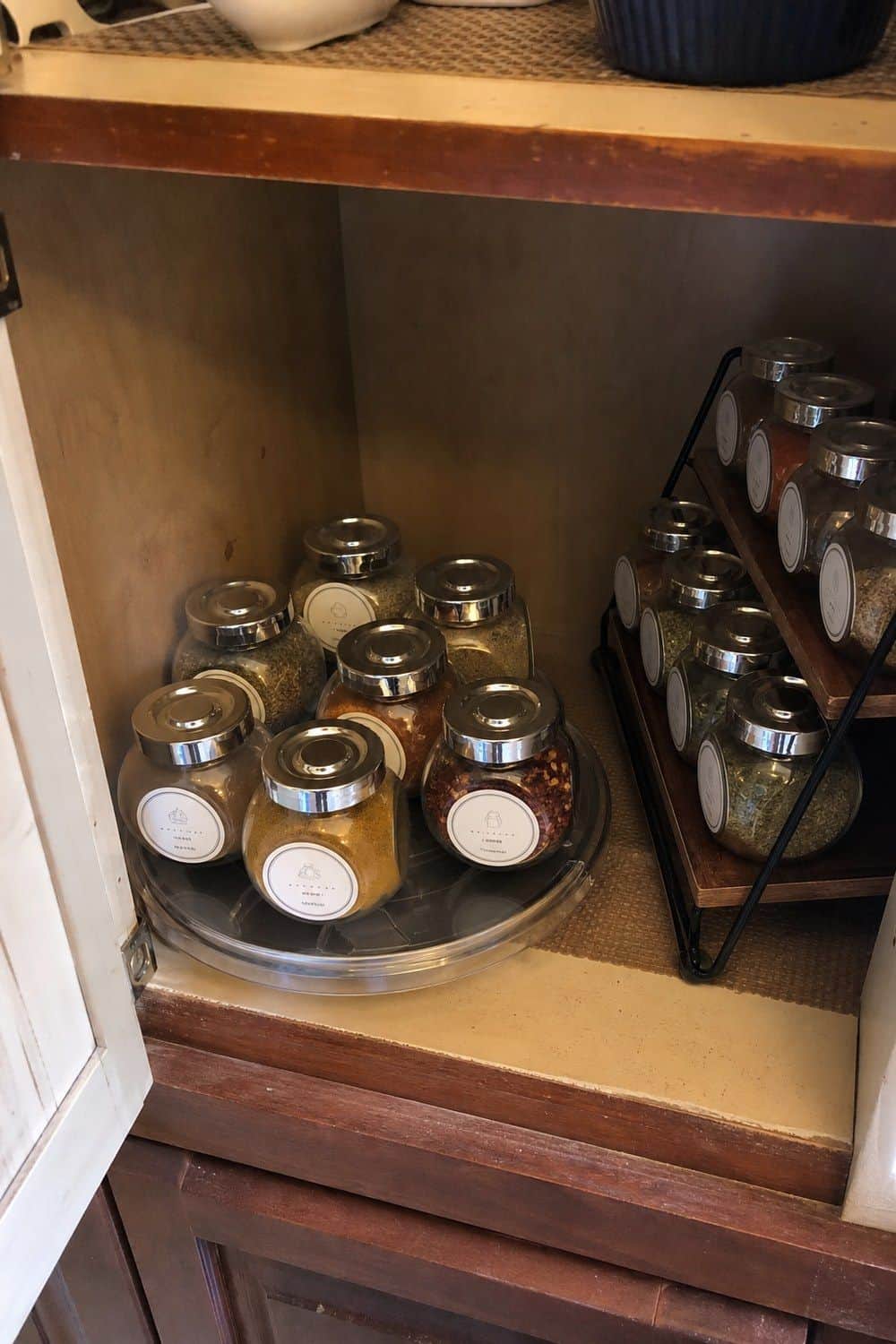
4. Spice Jars With Bamboo Lids for Open Shelves
Bamboo-lid jars can look calmer on an open shelf than assorted plastic caps, especially in a kitchen with wood cutting boards, light shelving, or natural materials. The lid still needs a real seal, because a decorative cap that leaks air will not help dried herbs or ground spices keep their aroma. Use this style in a low-light area away from the stove, oven, dishwasher steam, and sunny windows. If the shelf is bright, consider moving delicate spices into a cabinet instead.
\n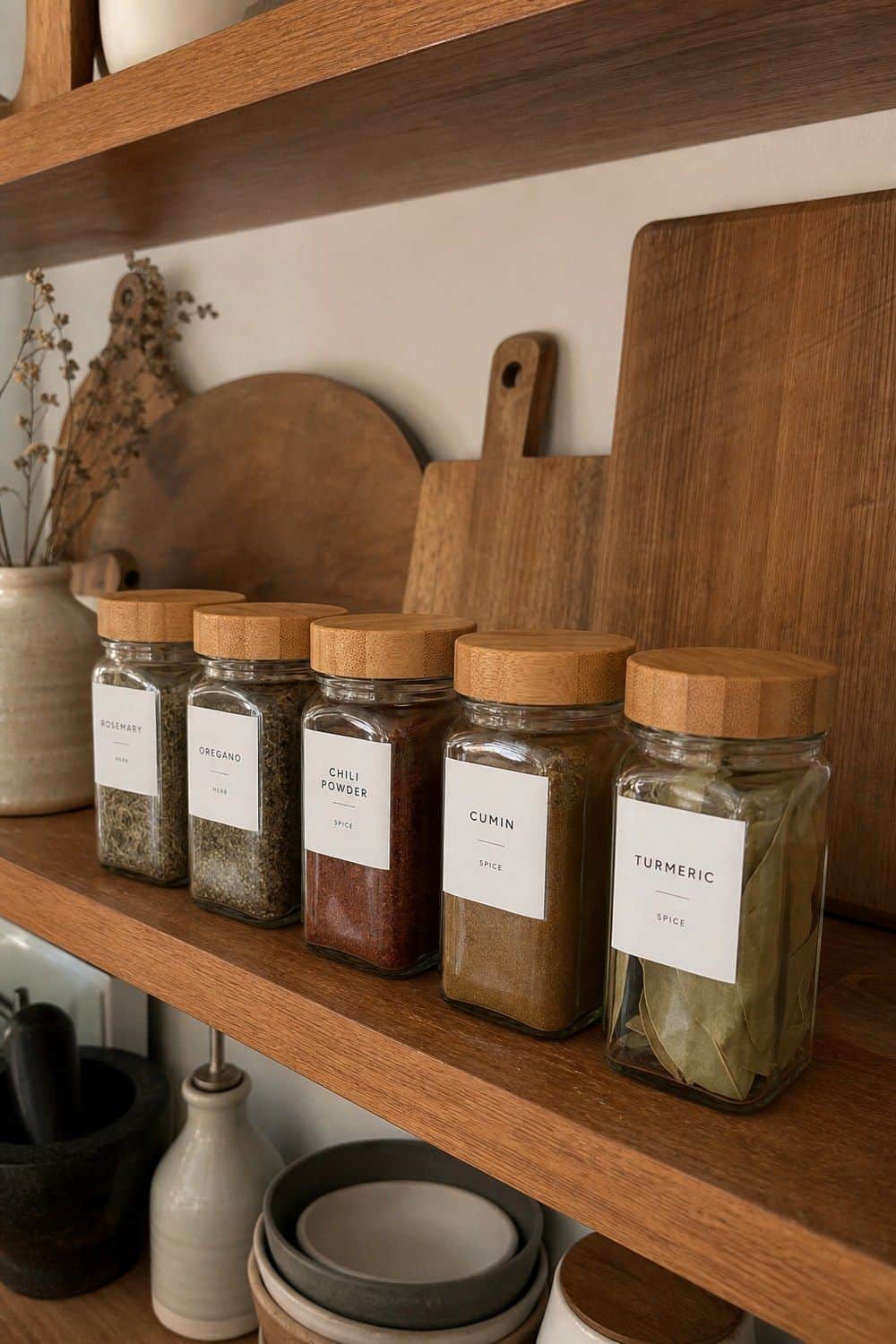
5. Airtight Spice Jars for Freshness
Airtight jars are the most important upgrade for spices used often, including chili powder, cumin, paprika, cinnamon, curry powder, garlic powder, dried herbs, and custom blends. Air and moisture can dull aroma, encourage clumping, and make powders harder to sprinkle.
Look for lids that close firmly and do not wobble after repeated use. Airtight storage still needs the right location, so keep jars away from heat, steam, and direct sunlight. A sealed jar above the stove is still in a rough spot.
\n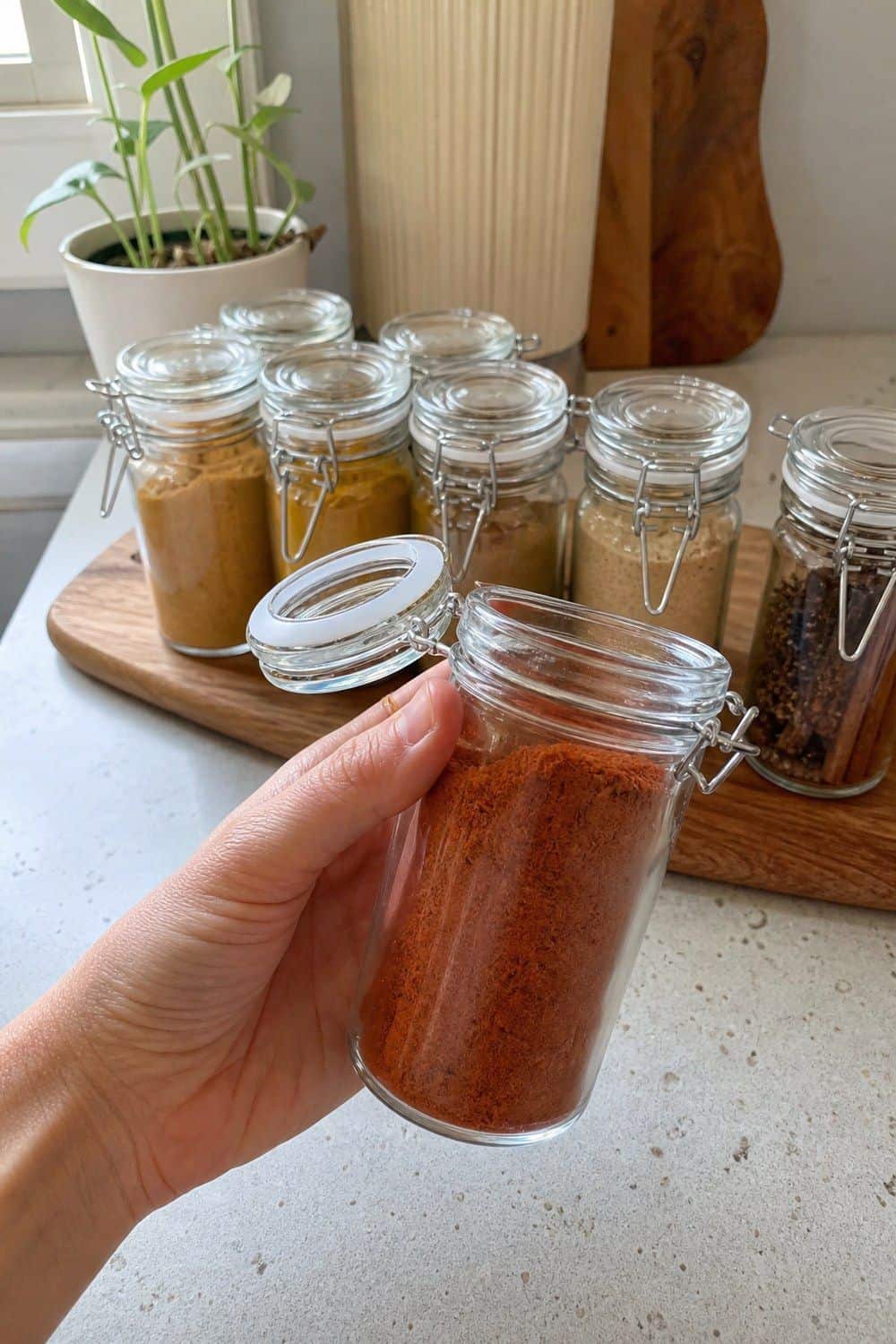
6. Amber Glass Spice Jars for Light Protection
Amber glass jars help reduce light exposure when spices are stored somewhere more visible, such as an open shelf, narrow rack, or cabinet with glass doors. They are not a reason to keep spices in direct sunlight, but they can be a better choice than clear jars in a bright kitchen.
Use clear labels with enough contrast so the darker glass stays readable. For delicate dried herbs or spices you use slowly, a cool cabinet or drawer is still the better long-term location.
\n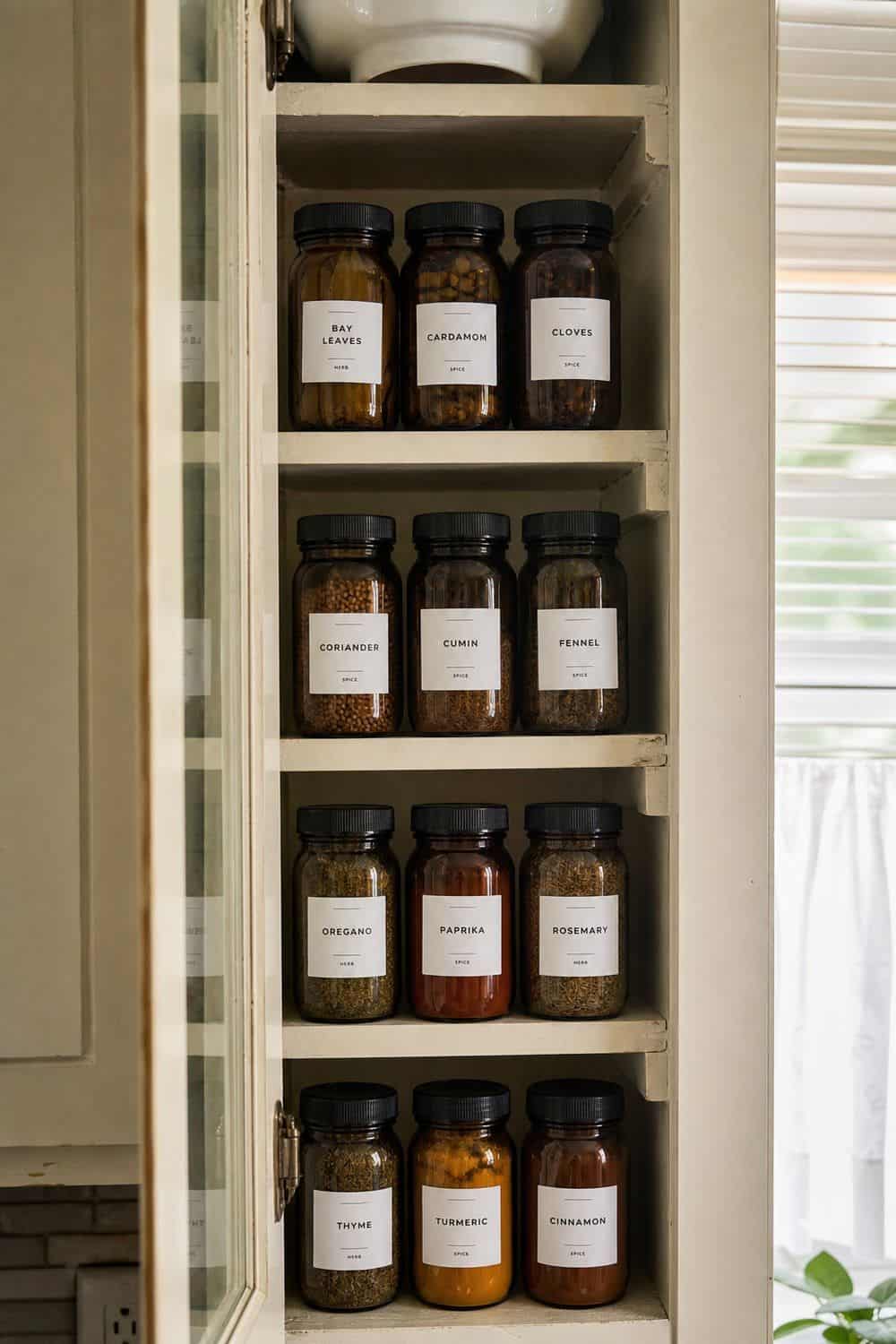
7. Magnetic Spice Jars for Tight Storage
Magnetic jars can free up drawer and cabinet space by using the side of a refrigerator, a magnetic board, or a metal pantry door. They suit a smaller everyday set, not every rare spice in the kitchen. Check magnet strength, lid tightness, and whether the jar stays secure when the door moves.
Keep the surface away from hot appliance sides, direct sun, and steamy prep areas. Add clear labels on the outward-facing side so the jars do not become a guessing game.
\n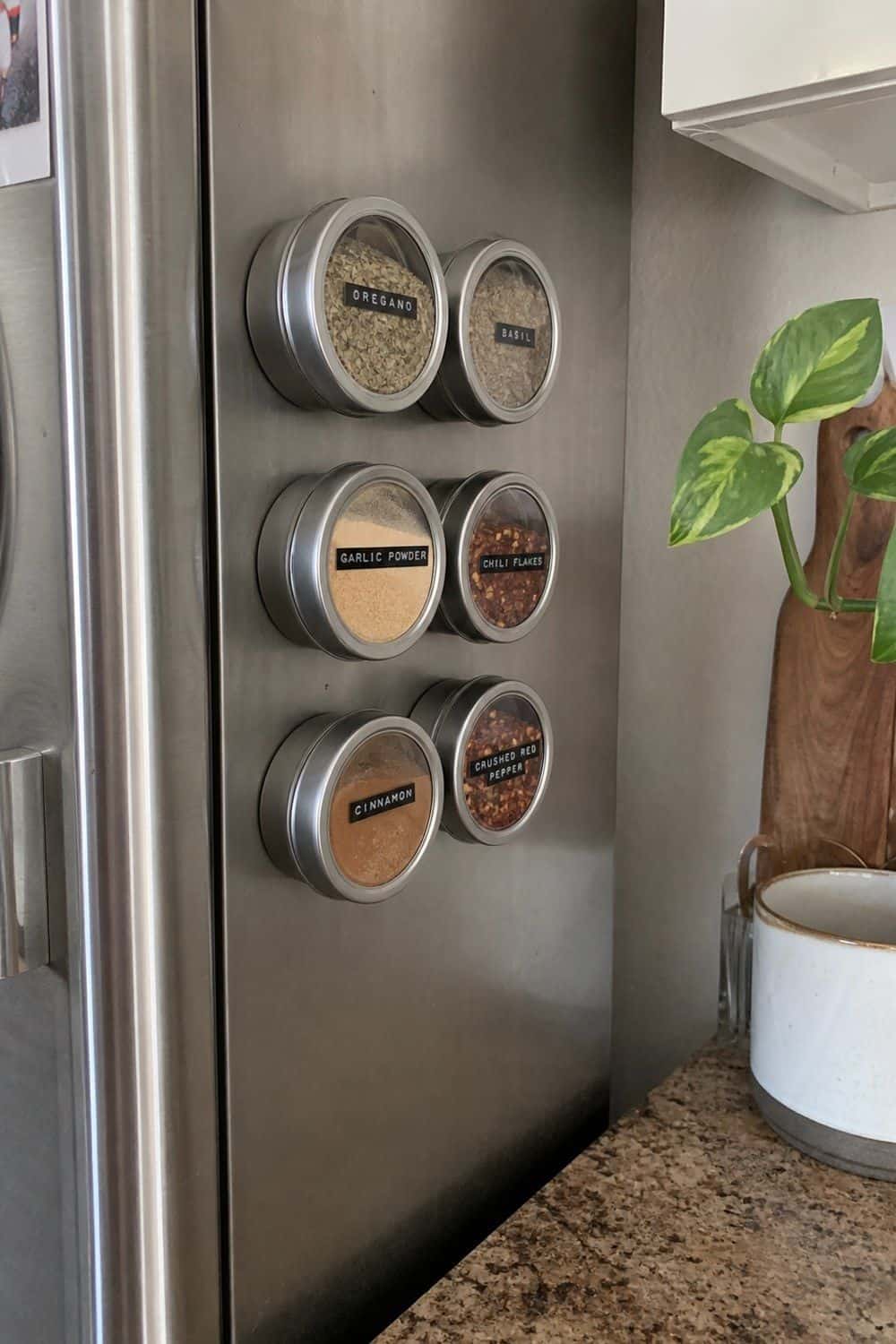
8. Spice Jar Labels for Clean Front-Facing Storage
Front labels are the easiest option for spice jars stored on cabinet shelves, tiered racks, open shelves, or wall racks. They should be readable from standing height, with plain spice names rather than tiny script that looks nice but slows cooking.
Check whether the set includes the spices you actually own, including blends and less common seasonings. Extra blank labels are helpful because spice collections change, and one missing label can make the whole matching system less useful during a busy meal.
\n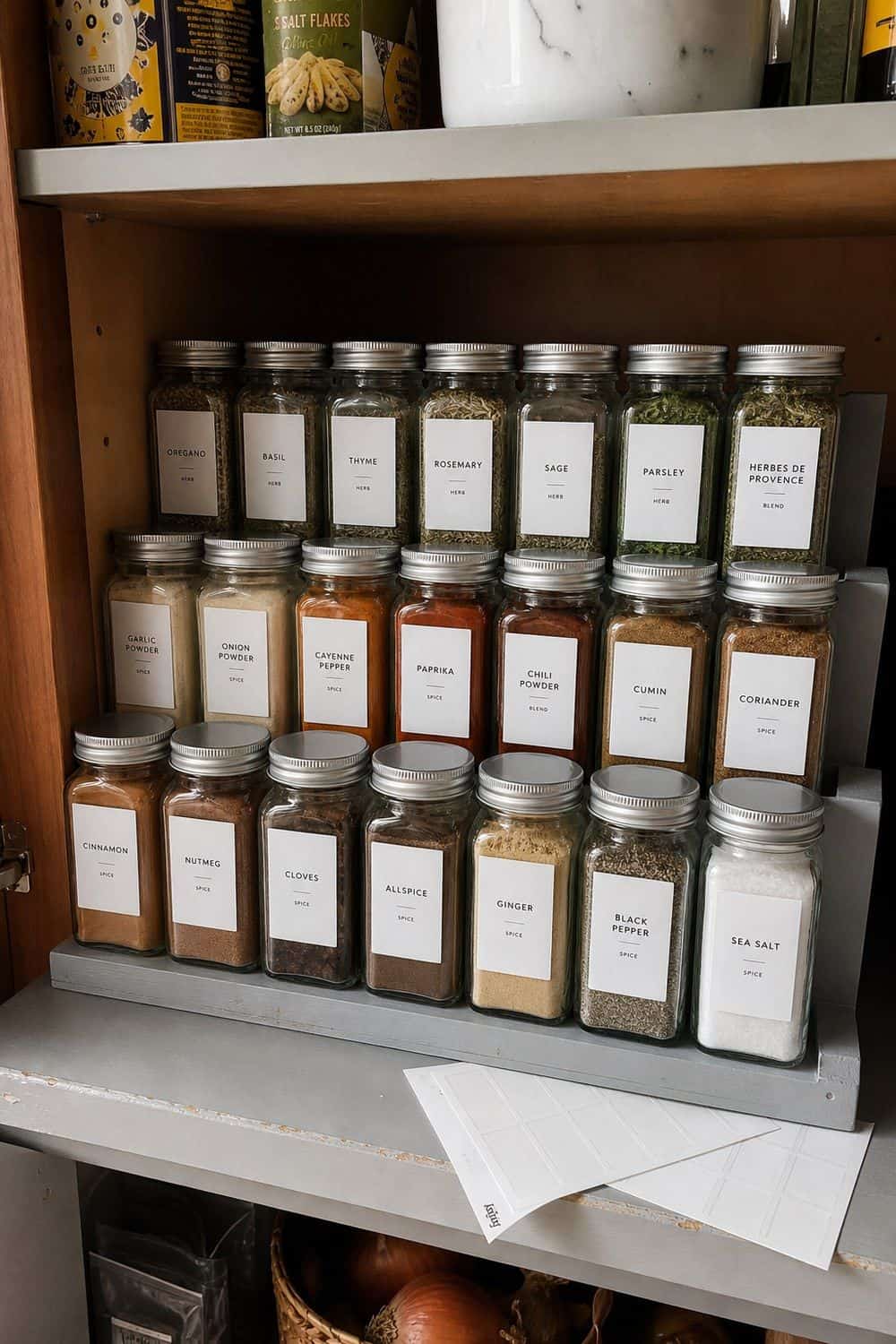
9. Waterproof Spice Labels for Kitchen Handling
Waterproof labels are useful when jars are handled with damp hands, wiped after cooking, or stored near a prep area where oil, flour, and sauce splatters happen. Paper labels can curl, stain, or smear quickly in a working kitchen.
Choose labels that stay readable after light wiping, especially for jars used several times a week. This is less about a perfect matching look and more about keeping oregano from becoming unreadable after one messy dinner. Waterproof labels are especially useful on jars with smooth glass sides.
\n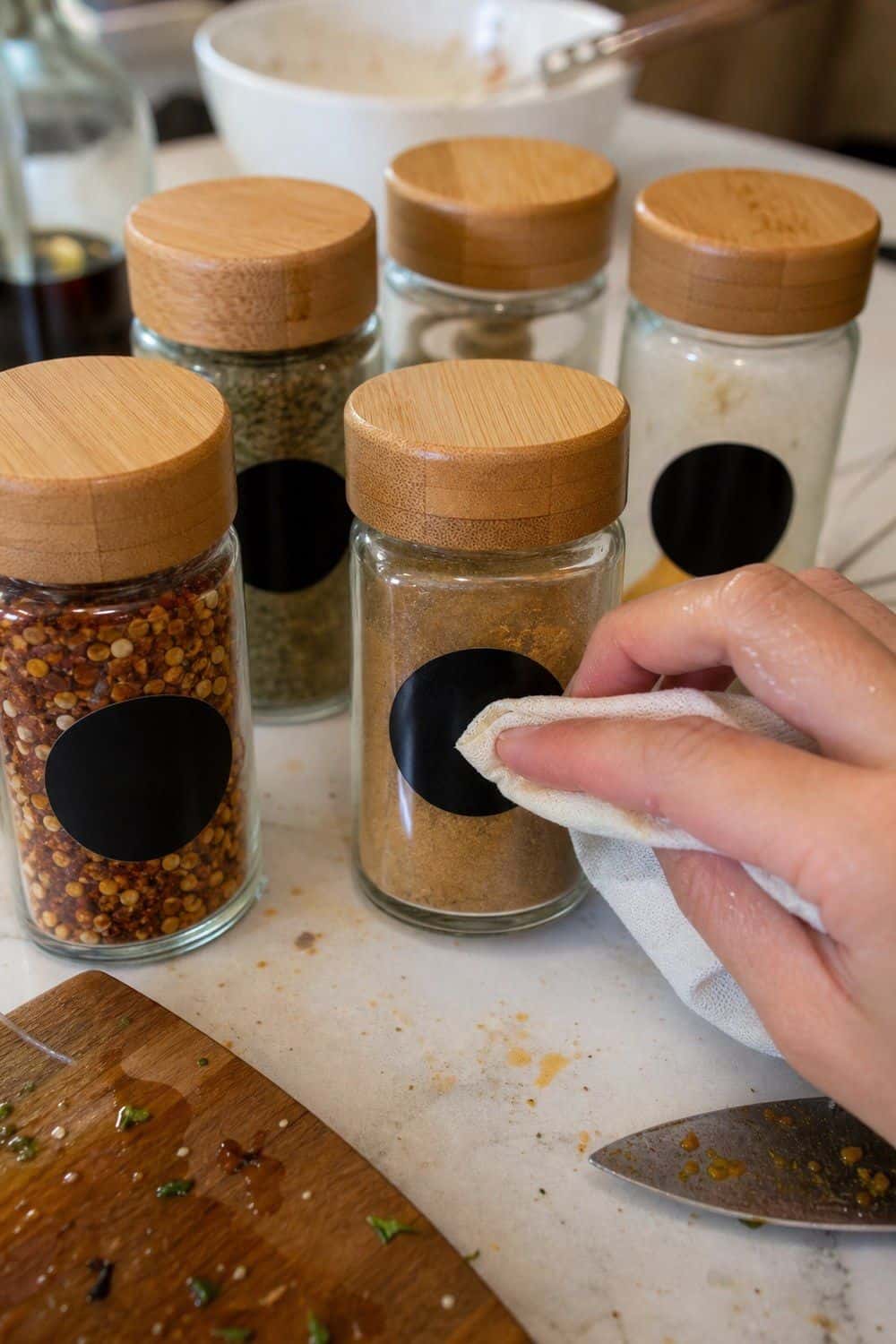
10. Preprinted Spice Labels for a Fast Matching Look
Preprinted labels are convenient when the spice collection is mostly common seasonings like cinnamon, cumin, paprika, oregano, garlic powder, onion powder, chili powder, basil, thyme, and parsley. They save time because the lettering is already consistent and the jars can be labeled in one sitting without designing every name from scratch.
Before buying, scan the label list rather than assuming every spice is included. Some sets skip regional spices, baking extras, or blends the household uses often, which can leave the most interesting jars looking like afterthoughts.
A good set includes blanks for those gaps and avoids duplicate labels you will never use. Keep the spare labels with the funnel or refill supplies so new jars can be added without breaking the system later.
\n
11. Blank Spice Labels for Custom Blends
Blank labels keep a spice system flexible when the kitchen includes homemade taco seasoning, curry blends, dry rubs, za’atar, berbere, everything bagel seasoning, bulk-bin spices, or store blends with long names. They also help when a jar changes jobs after a refill. Use a durable marker, paint pen, or label maker text that stays readable on the label material. If the label is too small, shorten the name without losing meaning. Custom blends are where a rigid preprinted system can start to feel limiting.
\n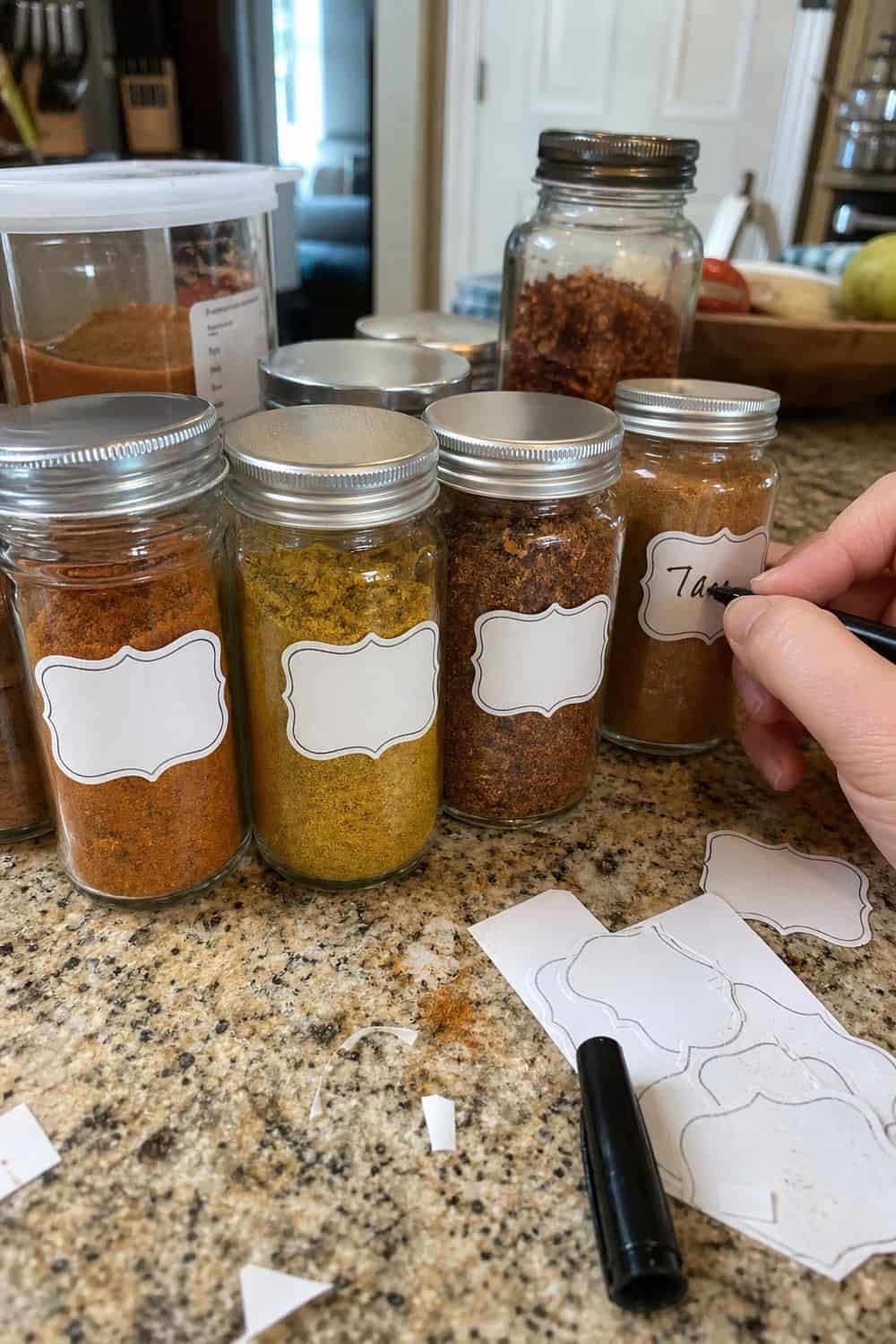
12. Chalkboard Spice Labels for Refillable Jars
Chalkboard labels can work when jars rotate between spices or when you buy small amounts from bulk bins. They are most useful for flexible storage, not for spices you always keep in the same jar. Choose a marker that dries clearly and does not smear every time the jar is handled. Test one label before covering every jar. If the kitchen is humid or the jars get wiped often, waterproof or printed labels may stay cleaner than a chalkboard surface.
\n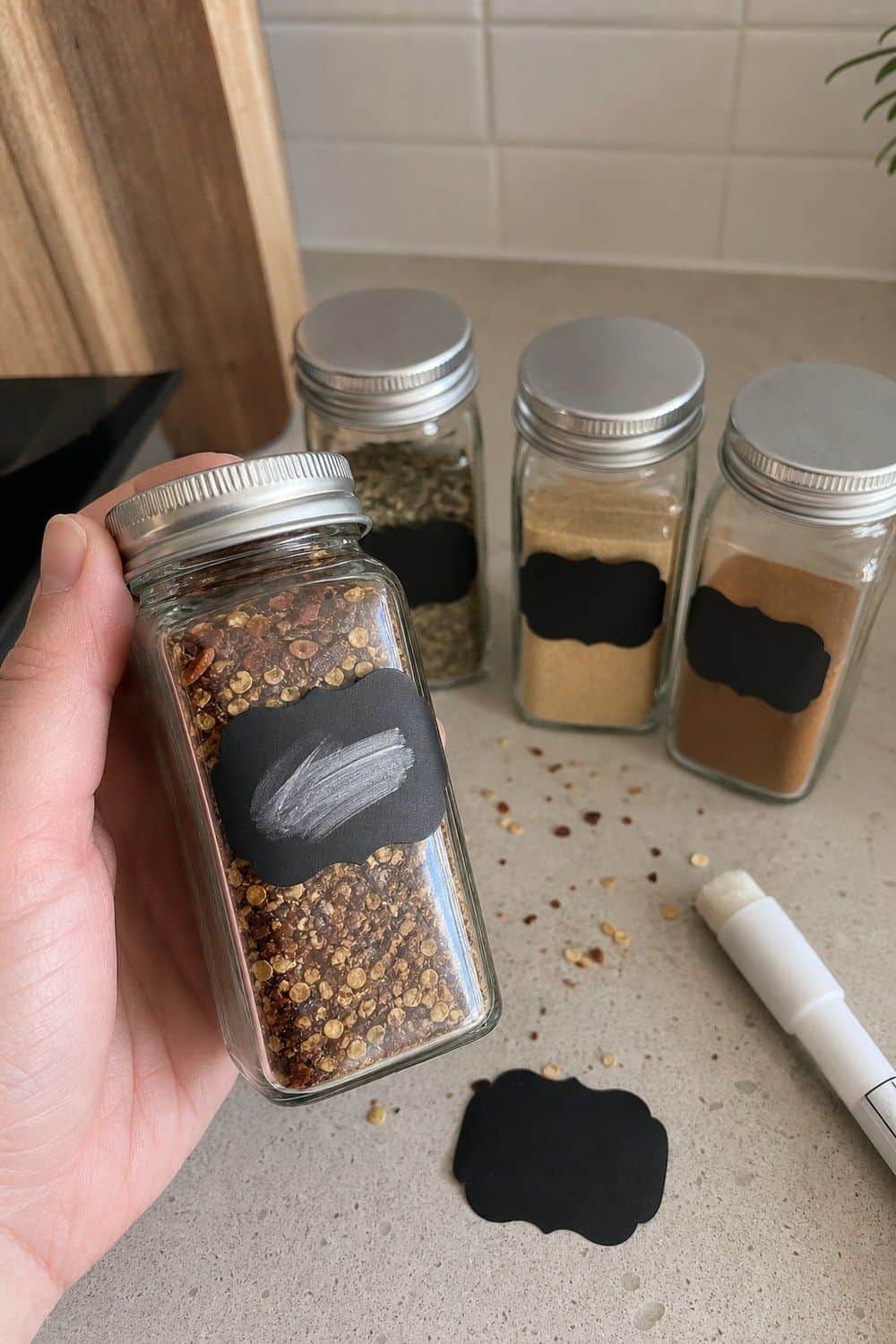
13. Spice Jar Date Labels for Freshness Tracking
Date labels help track when spices were purchased, opened, or refilled without treating every jar like it has a hard safety deadline. Ground spices and dried herbs usually fade in flavor before they become a dramatic problem, so a small date note helps you notice what has been sitting too long. Put the date label on the back, bottom, or lid, depending on how the jar is stored. This is especially helpful for bulk refills because the original package date disappears once the spice is decanted.
\n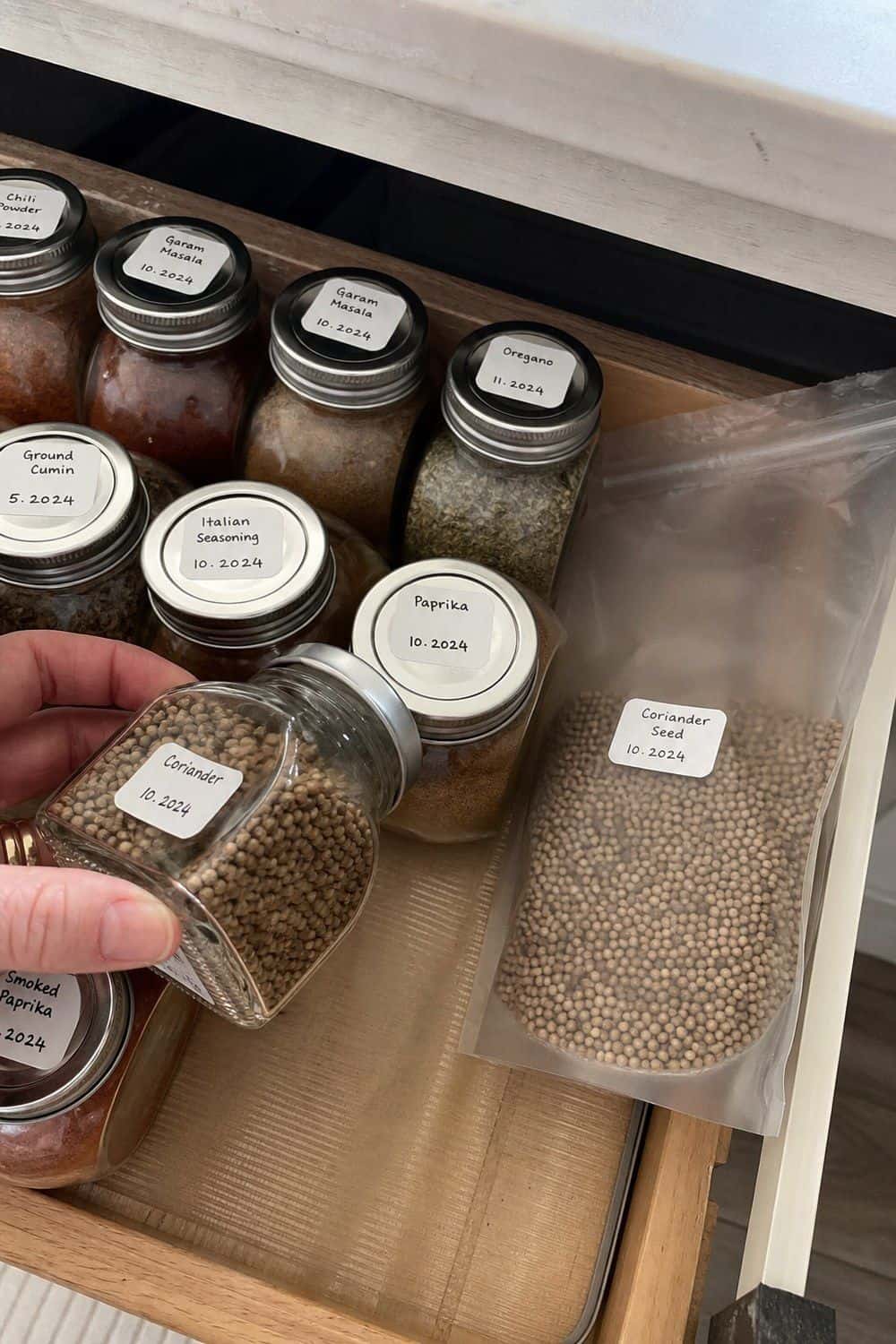
14. Spice Jar Funnel for Clean Refills
A small funnel makes decanting spices much less wasteful, especially with fine powders, dried herbs, pepper flakes, sesame seeds, and bulk-bin blends. Wide-mouth jars are easier to fill, but a funnel still keeps paprika, turmeric, and cinnamon from dusting the counter. Look for a funnel narrow enough to fit the jar opening and easy to wash between strong spices. If you refill jars often, this small accessory may matter as much as the jars themselves, especially when jars have small mouths or shaker inserts.
\n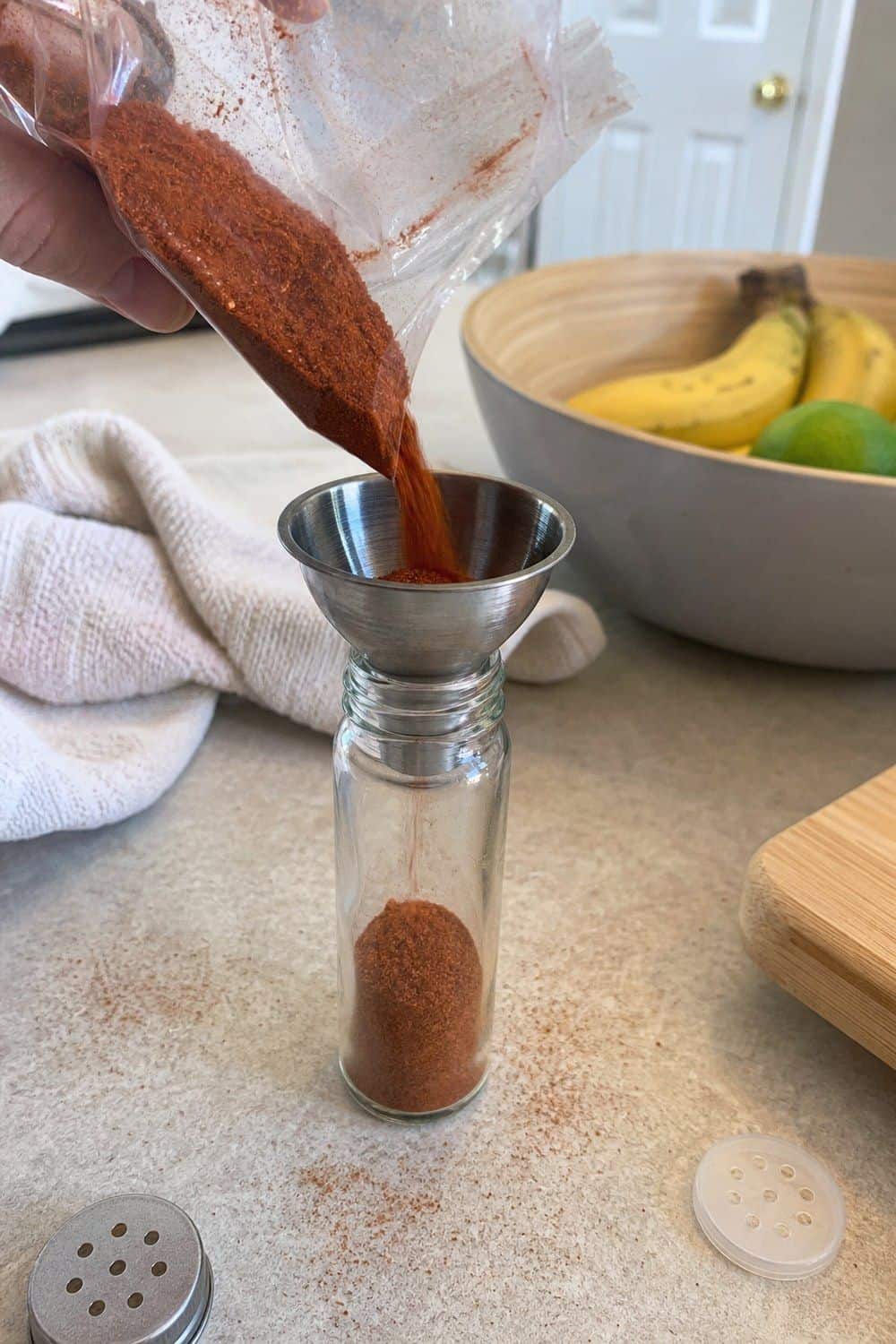
15. Spice Jar Shaker Lids for Cooking Control
Shaker lids give jars more cooking control because you can sprinkle, pour, or remove the insert depending on the spice. Fine powders need different holes than dried oregano, bay leaves, cinnamon sticks, or whole cloves. Check whether the set includes dual-sided shaker lids, removable inserts, or plain lids for spices that do not shake well. This detail matters if you cook directly from the jar instead of measuring every spice with a spoon. For larger herbs and whole spices, a wide opening may be more useful.
\n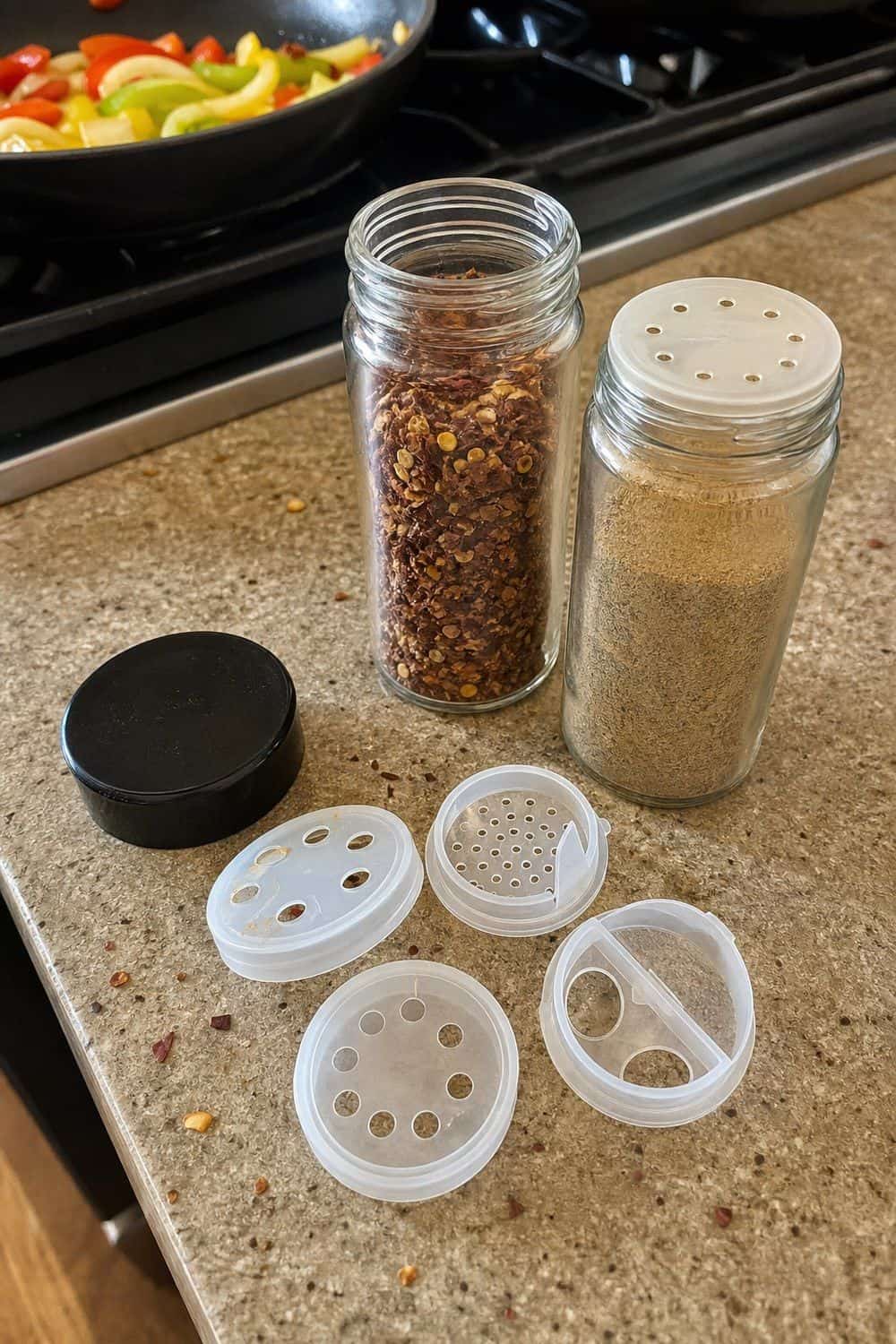
16. Spice Drawer Organizer for Top-Label Storage
A drawer organizer angles spice jars so top labels can be read quickly from above. It is a strong choice for drawers near the prep area, as long as the drawer is not exposed to heat from the stove or oven. Measure drawer height with the organizer angle included, because jars that technically fit may scrape when the drawer closes. Keep the most-used spices in the front rows and less-used baking spices farther back. This setup is especially helpful when front labels would be hidden inside a drawer.
\n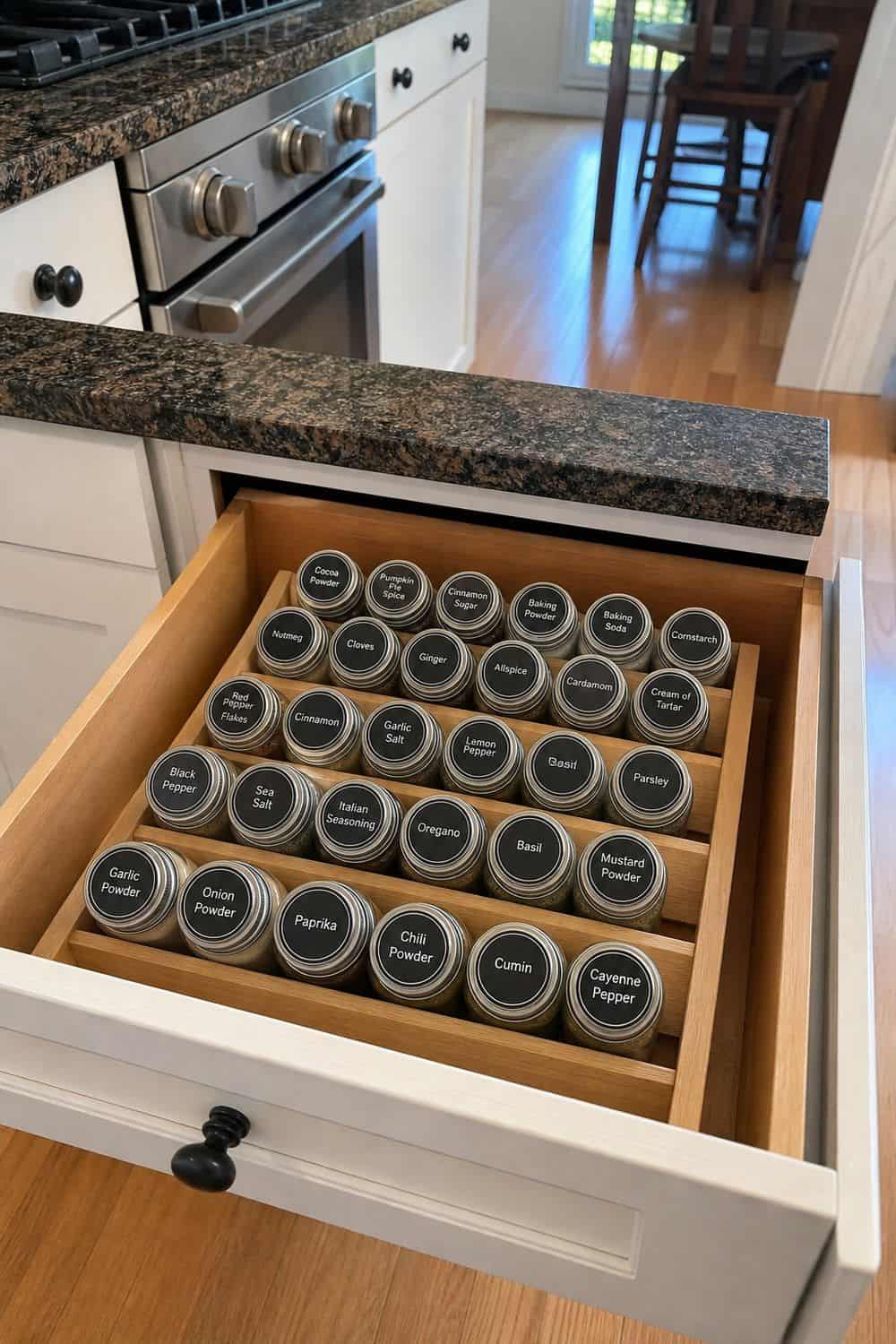
17. Tiered Spice Rack Organizer for Cabinets
A tiered rack makes back-row spices visible inside a cabinet, which helps prevent duplicate cinnamon, forgotten cumin, and tiny jars hiding behind taller bottles. It is strongest with jars of similar height and front labels that can be read from the cabinet opening.
Measure shelf clearance before buying, including the height of the top tier with jars on it. If the cabinet shelf is shallow, choose a rack that does not push jars too close to the edge or block the cabinet door.
\n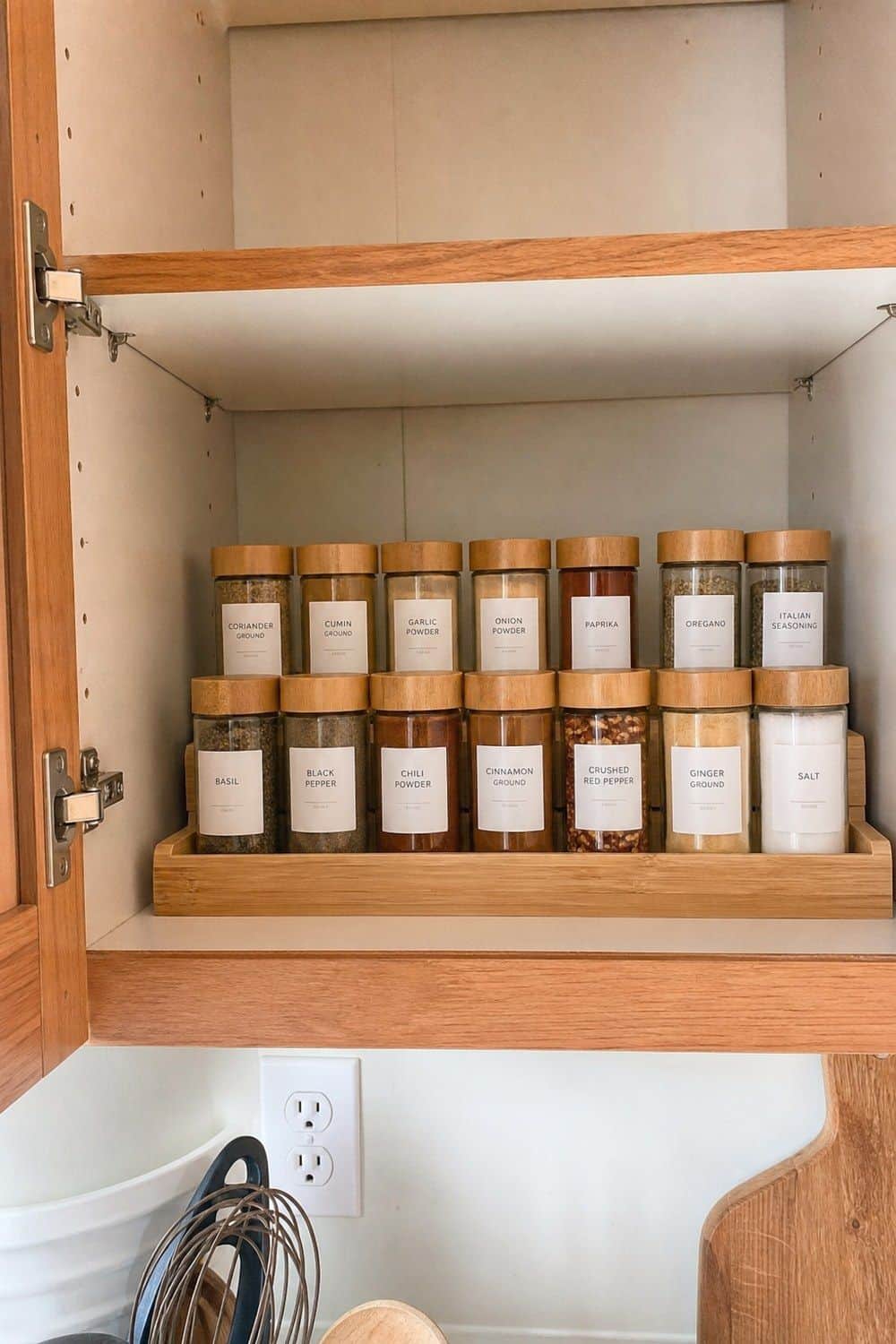
18. Wall Mounted Spice Rack for Everyday Spices
A wall rack is best for the spices used every week, not every jar in the kitchen. Keep the set tight: salt blends, pepper, garlic powder, paprika, cumin, oregano, chili flakes, or whatever sits closest to the cooking routine. Mount the rack away from stove heat, steam, and direct sun, even if the empty wall near the range looks convenient. Front labels are easier to read because wall racks usually show the jar sides. A smaller, well-chosen rack is easier to maintain than an overloaded display.
\n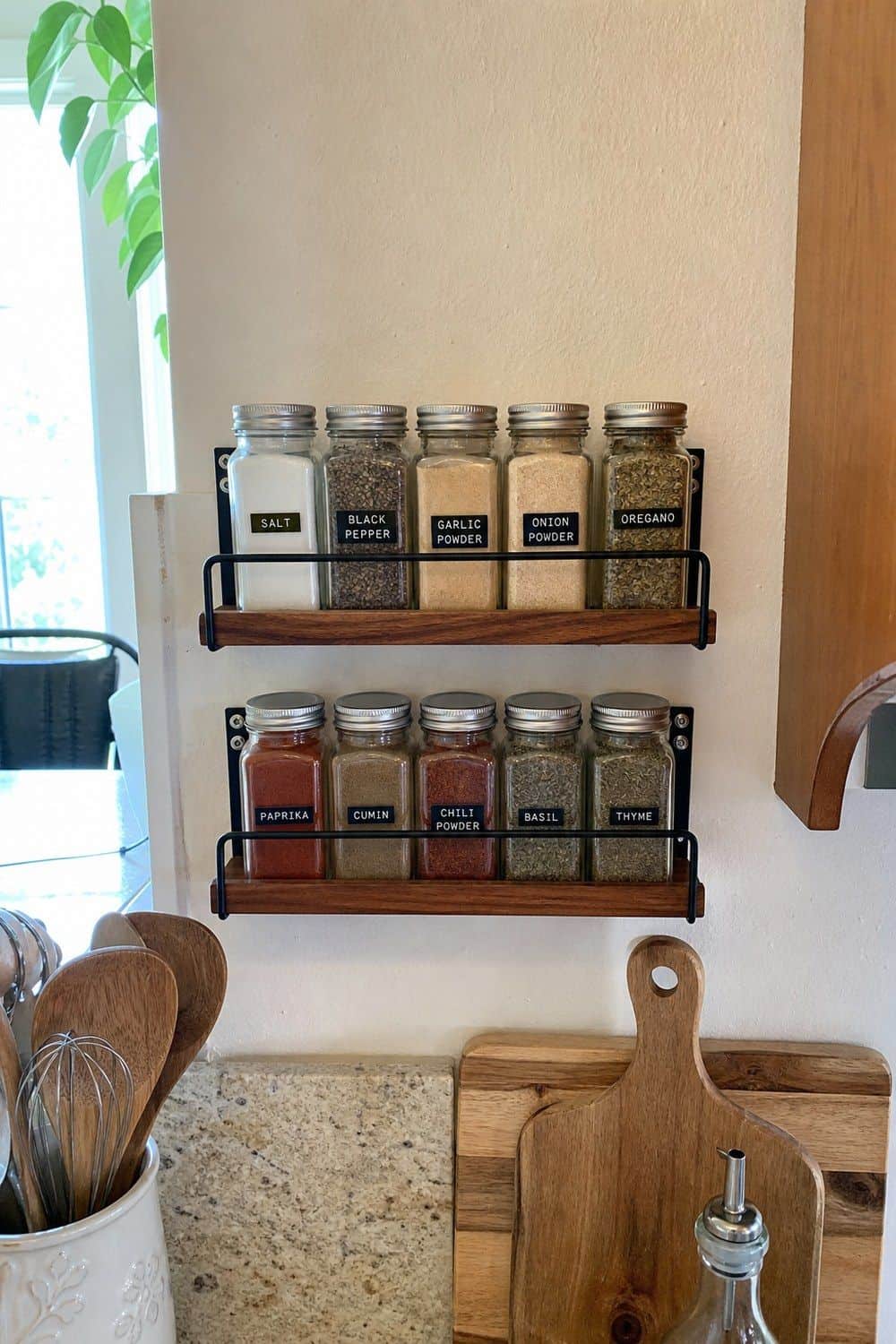
19. Cabinet Door Spice Rack for Hidden Storage
A cabinet door rack uses space that often goes untouched, making it helpful in tight pantries or cabinets with crowded shelves. It suits standard-size jars, light bottles, and spices that do not need deep shelf space, especially backups or seasonings used near the prep counter.
Check door clearance carefully before installing. Jars should not hit shelves, cabinet frames, or stored food when the door closes, and the rack should not make the door feel heavy or awkward.
Use front labels or lid labels depending on how the jars face once the rack is mounted, and keep heavy glass jars low if the rack has multiple tiers. A few everyday jars are safer here than an overloaded door.
\n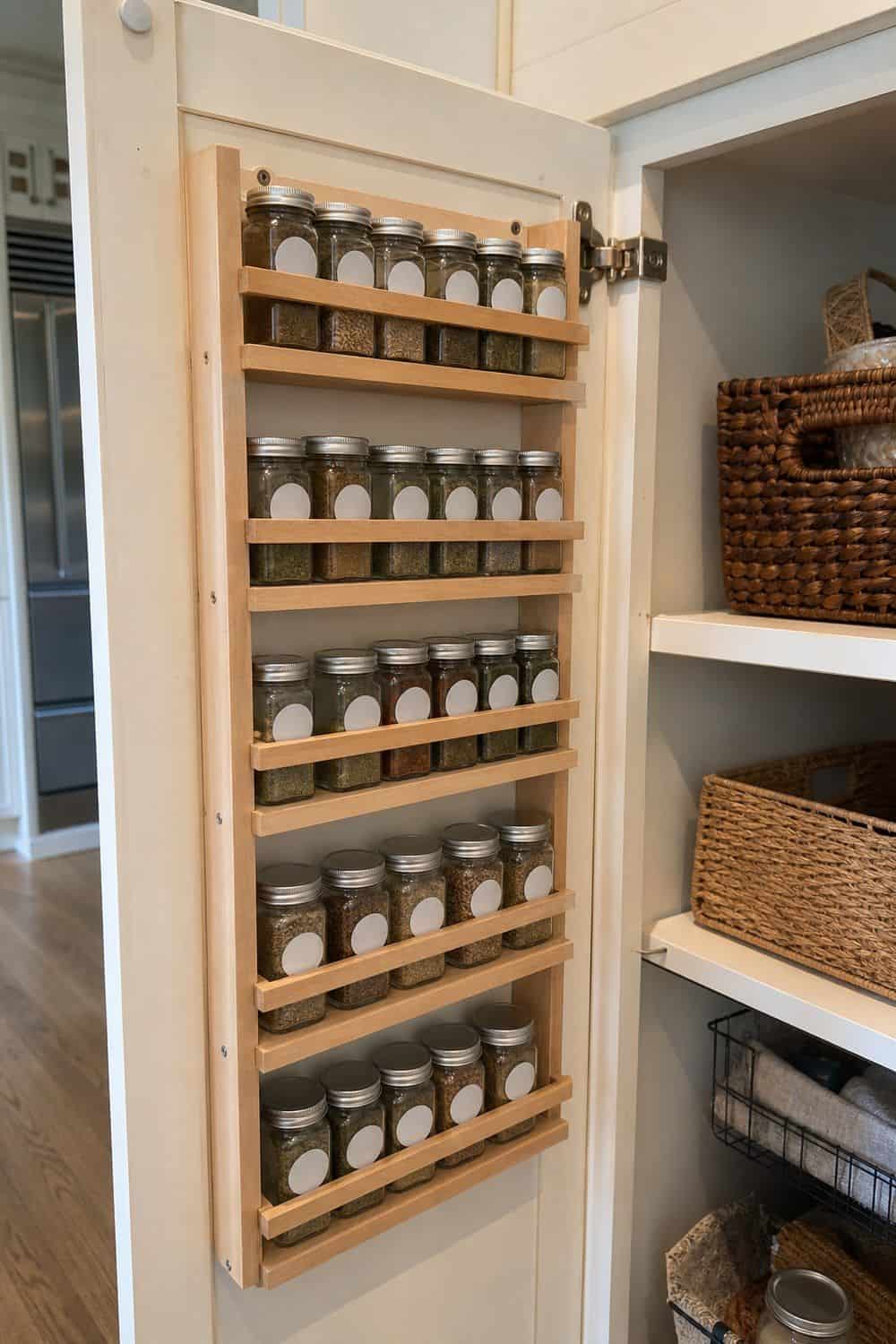
20. Label Maker for Spice Jar Dates and Names
A label maker is useful for spice jars when the collection changes often or includes unusual spices, refill dates, homemade blends, and replacement labels. It gives you custom labels on demand instead of locking the whole system into one preprinted set. Use it for jar fronts, drawer tops, date stickers, and back labels with short notes like opened, refilled, or bulk. Choose a tape style that sticks to glass and stays readable after light wiping. This is the flexible option for cooks who keep rotating spices.
\n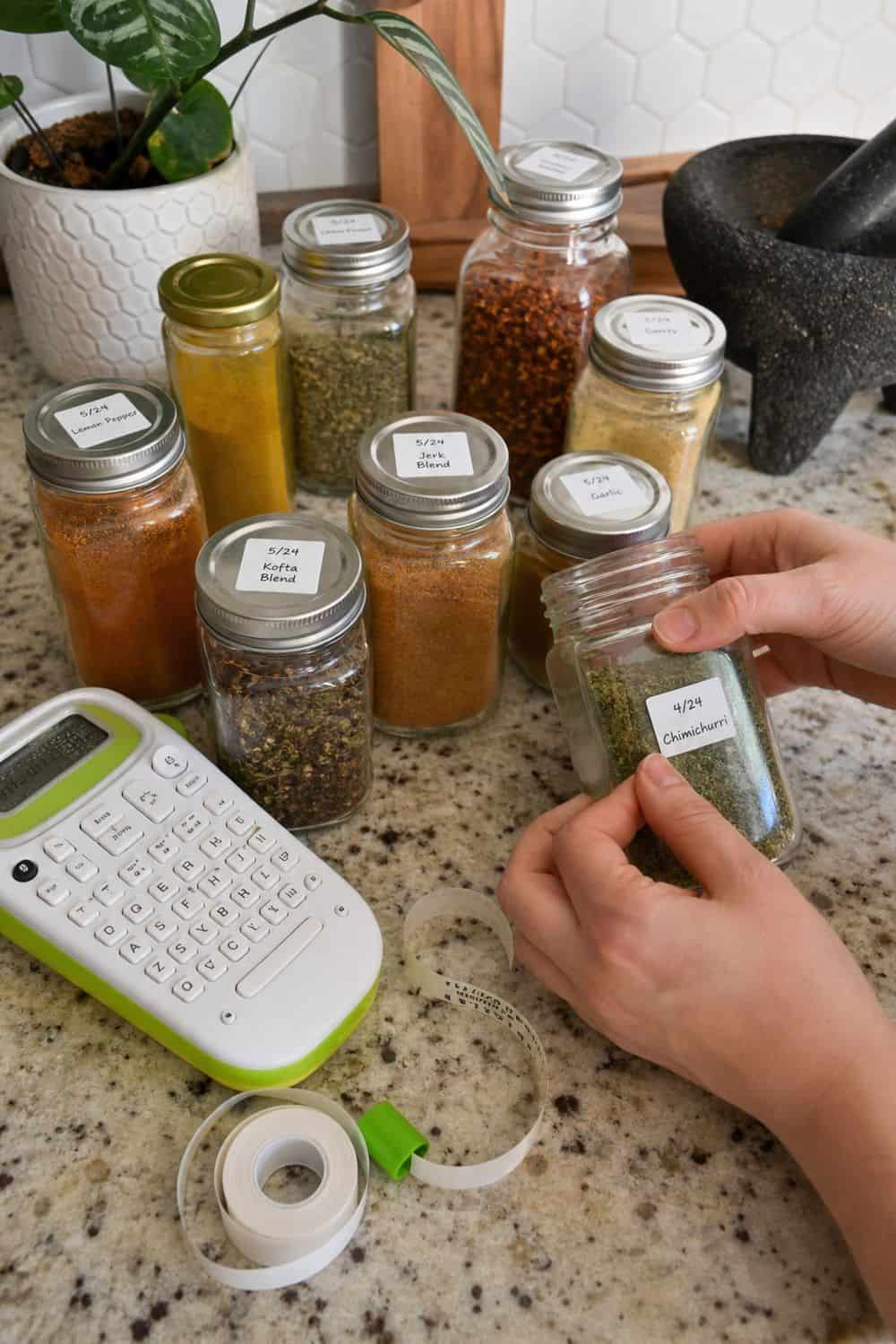
How to Choose Spice Jars and Labels by Storage Location
Storage location should decide the jar and label style first. Drawers usually need square or low-profile jars, a drawer organizer, and top labels. Cabinets usually need front labels, tiered racks, and similar-height jars so the back row does not disappear.
Open shelves need jars that seal well and stay away from bright windows, oven heat, and sink or dishwasher steam. Magnetic jars need strong magnets and a cool metal surface. Door racks need clearance so jars do not knock into shelves.
No matter which setup you choose, store spices in a cool, dark, dry place when possible. Add dates somewhere discreet so you can track freshness without turning the spice cabinet into a complicated inventory project.
Frequently Asked Questions
Are spice jars and labels worth buying?
Spice jars and labels are worth buying if they make spices easier to see, seal, refill, date, and use. They are less useful if the jars do not fit your drawer, rack, or cabinet.
What kind of spice jars keep spices fresh?
Airtight glass jars with secure lids are a strong choice for freshness. They still need to be stored away from heat, steam, sunlight, and moisture.
Are glass spice jars better than plastic?
Glass spice jars are sturdy, easy to label, and less likely to hold odors than plastic. Plastic can work for short-term storage, but glass usually feels better for a long-term spice system.
Should spice labels go on the top or front?
Use top labels for spice drawers and front labels for cabinets, racks, turntables, and open shelves. Date labels can go on the back, bottom, or lid.
What should I write on spice jar labels?
Write the spice name clearly, then add a purchase, open, or refill date if you want to track freshness. For blends, include enough detail that you know what is inside later.
Are waterproof spice labels worth it?
Waterproof labels are worth it for jars handled often, wiped regularly, or stored near prep areas. They stay readable better than paper labels when kitchens get messy.
How do I refill spice jars without making a mess?
Use a small funnel, refill over a tray or sheet of paper, and wipe the jar rim before closing the lid. Add or update the date label after refilling.
Where should spice jars be stored in the kitchen?
Store spice jars in a cool, dark, dry place, such as a drawer, cabinet, or pantry shelf. Avoid stove heat, oven heat, steam, direct sunlight, and damp areas.
Final Thoughts
The best spice jars and labels should fit the way you cook, refill, and store seasonings. Start with airtight jars, choose labels for the viewing angle, add dates where they make sense, and place the whole setup somewhere cool, dark, dry, and easy to reach.
Last update on 2026-10-03 / Affiliate links / Images from Amazon Product Advertising API