
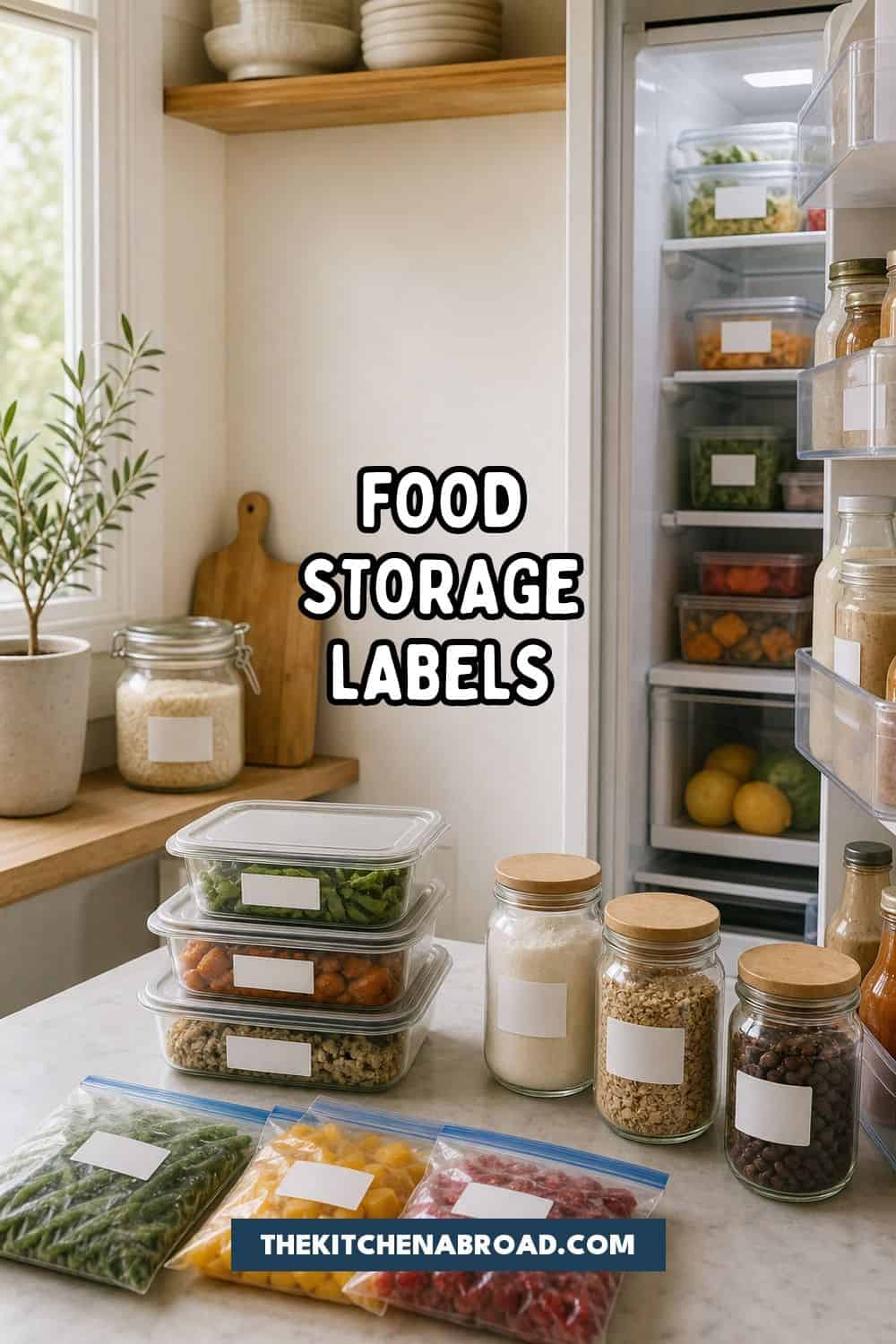
Food storage labels ideas are most useful when they show what the food is, when it was cooked, opened, frozen, or prepped, what should be eaten first, and how it should be thawed or reheated. Labels help keep food fresher by making timing visible, but they do not make old or mishandled food safe.
Food storage labels are not just for matching pantry jars. In a busy kitchen, the right label can tell you which leftovers need dinner tonight, which sauce was opened last week, and which freezer bag is soup instead of chili.
This guide focuses on labels that protect freshness and reduce food waste: cooked dates, open dates, freezer dates, eat-first cues, lunch names, allergen notes, and toss dates. A good kitchen label system helps food get used while it is still safe and appealing.
Top Recommended Products


You Might Also Like These Blog Posts
- How To Store Leftovers
- Freezer Meal Prep
- Pantry Inventory Ideas
- Weekly Fridge Cleanout Routine
- Meal Prep
15 Food Storage Labels Ideas That Keep Food Fresh
1. Leftover Labels With the Cooked Date
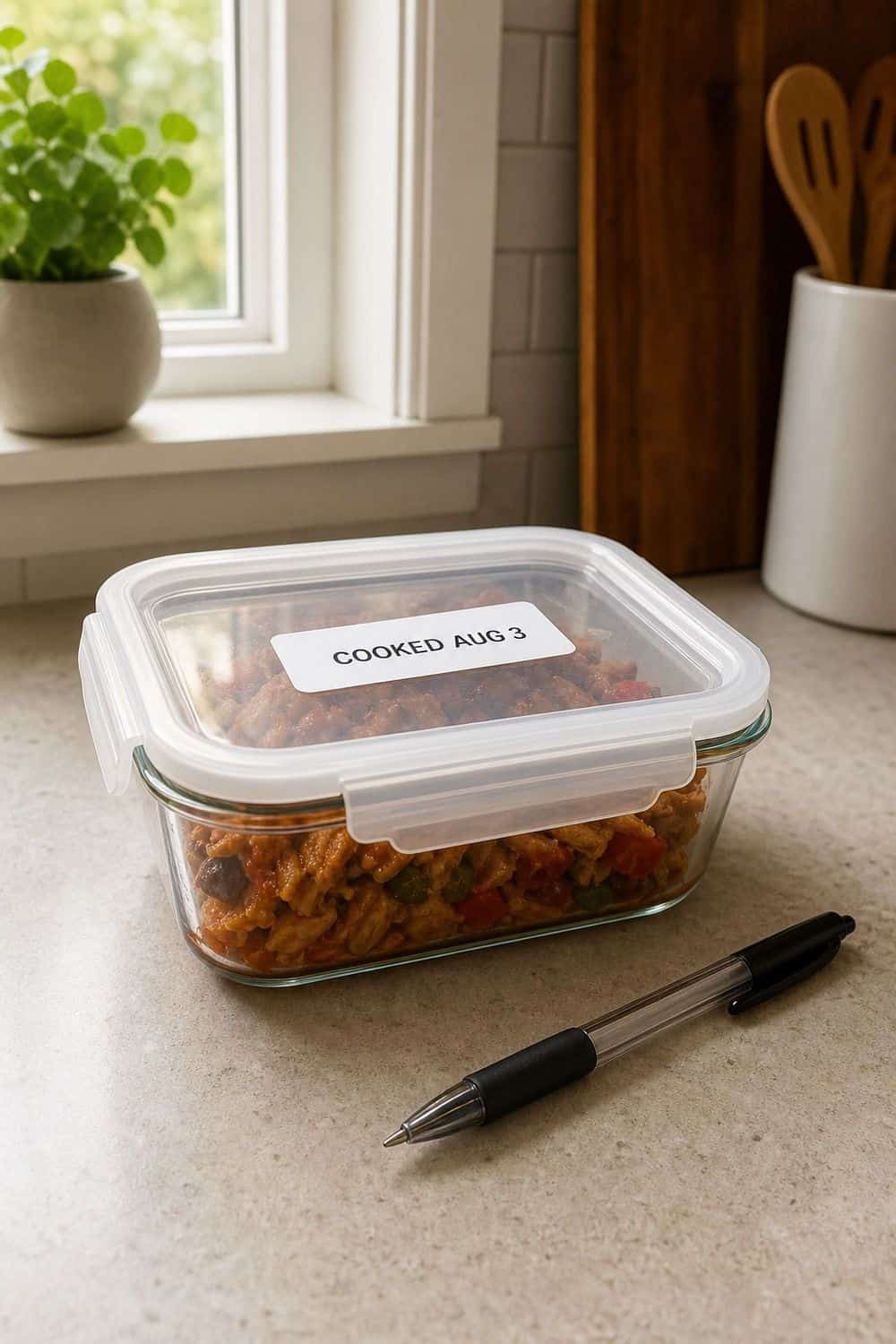
Leftovers need a label before they disappear behind drinks or produce drawers. Write the dish name and cooked date on removable food labels as soon as the food is cool enough to store. This is especially helpful for soups, casseroles, rice bowls, roasted vegetables, cooked proteins, and pasta. Many cooked leftovers have a short refrigerated window, often around 3 to 4 days, so the label should make timing clear before memory turns fuzzy and dinner decisions become guesswork at the fridge.
2. Dissolvable Labels for Everyday Containers
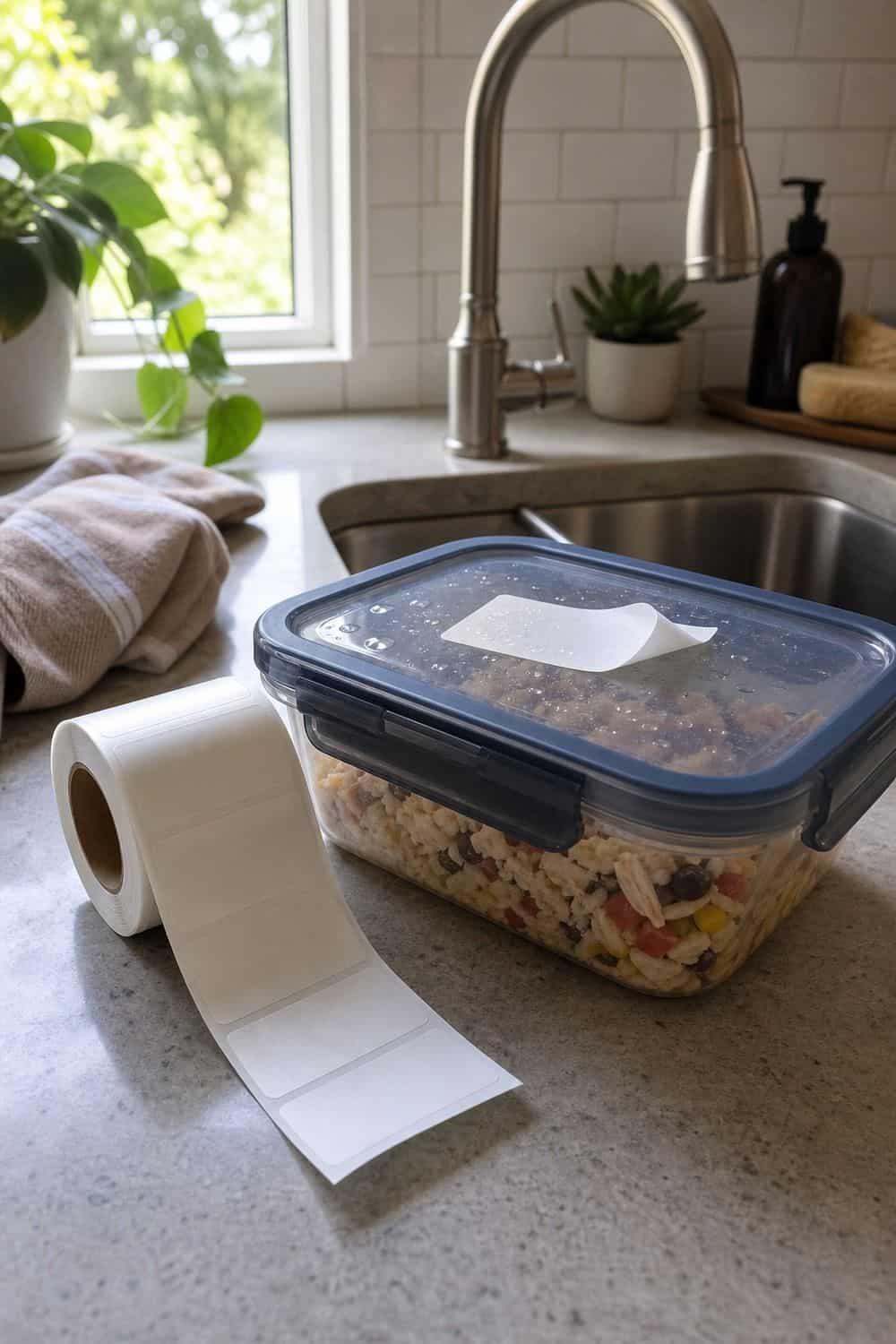
Dissolvable labels are useful when containers move through the sink or dishwasher constantly. They work for meal prep, cut fruit, lunch containers, sauces, leftovers, and snack boxes that need new information every few days. The best version comes off cleanly from glass or plastic so yesterday’s label does not cling to tomorrow’s food.
Use this style for short-term fridge food, not long-term pantry categories. It keeps relabeling easy enough that the system survives an ordinary week of lunches, leftovers, snacks, and repeated washing.
3. Freezer Labels on Flat Meal Bags
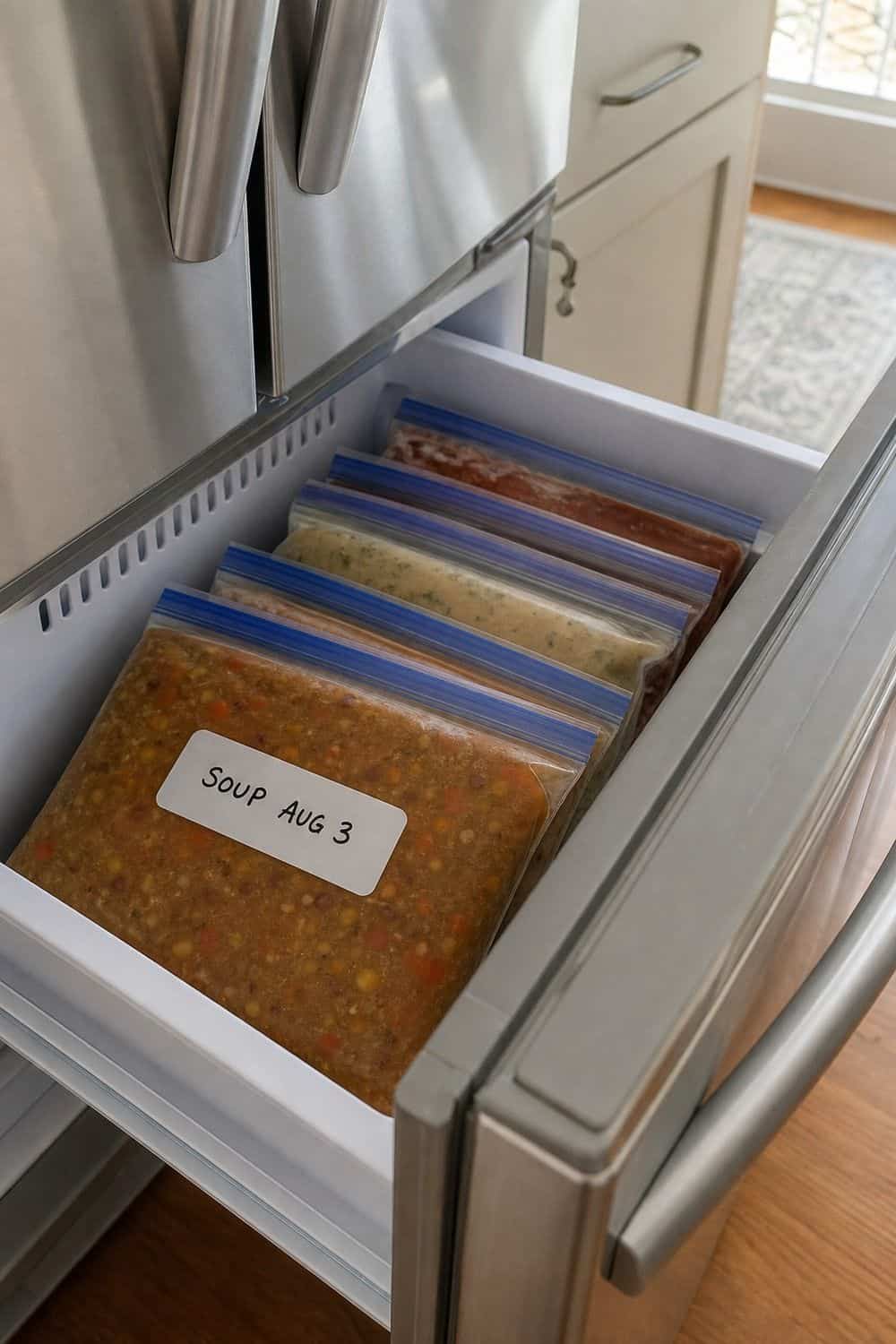
Flat freezer bags can look identical once soup, chili, cooked grains, shredded meat, sauce, smoothie packs, or marinated proteins freeze into solid blocks. A freezer label should include the contents, date frozen, portion size, and any liquid or fresh ingredient needed later. Put the label where it can be read while the bag is stacked, not folded under the food. This prevents a quick dinner from turning into a freezer search through frosty bags, unlabeled portions, and mystery flat packs.
4. Reheat Notes for Freezer Meals
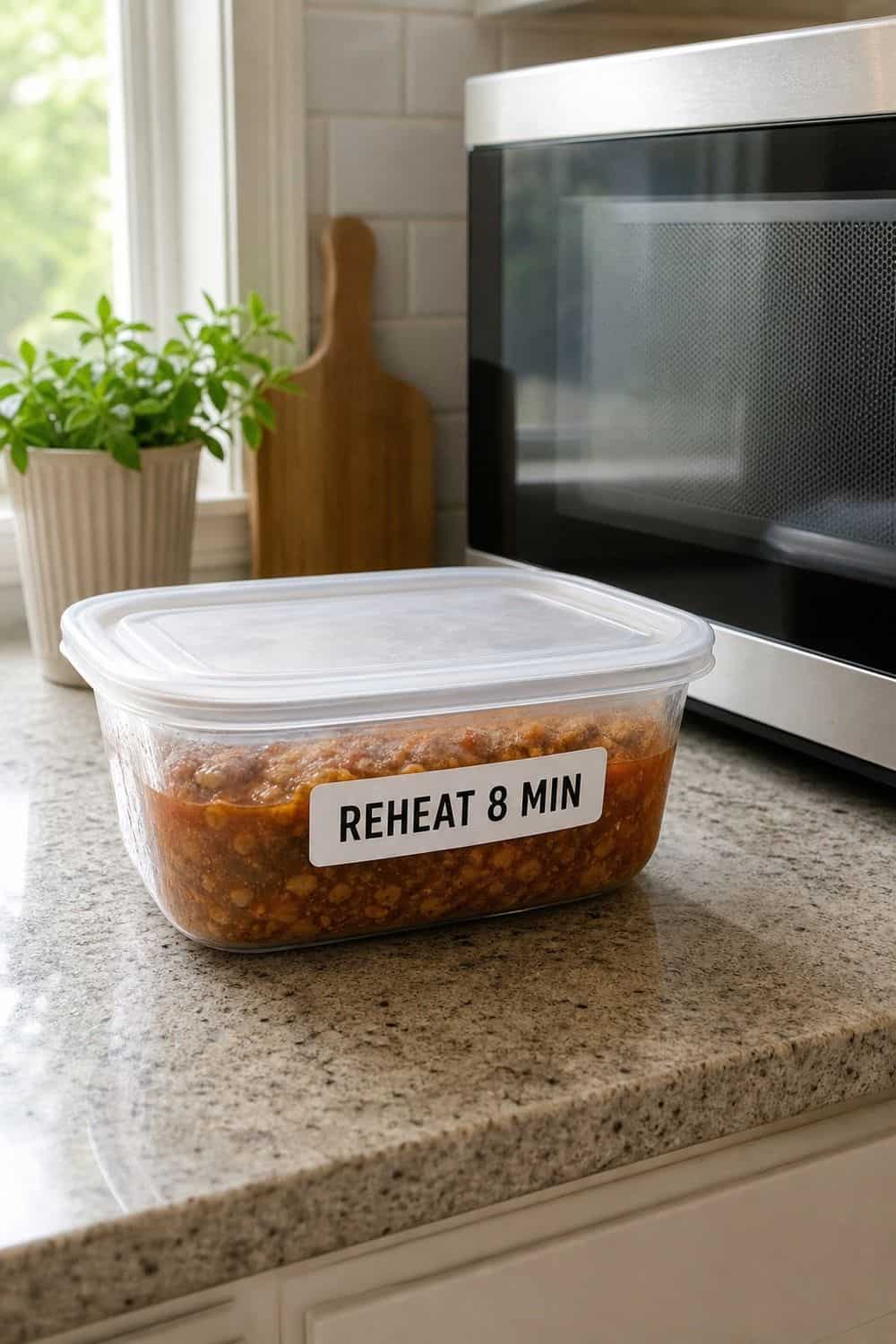
Freezer meal labels are more useful when they explain what future-you should do next. A label that says “baked ziti, thaw overnight, bake covered at 375 F” is much better than a date alone. Add oven, microwave, slow cooker, thawing, or add-liquid notes where they apply, especially for meals that look similar once frozen.
This keeps freezer meals from becoming mystery projects. The label should turn frozen food into an easy dinner, not another decision to decode when the evening is already busy.
5. Open-Date Labels for Jars and Sauces
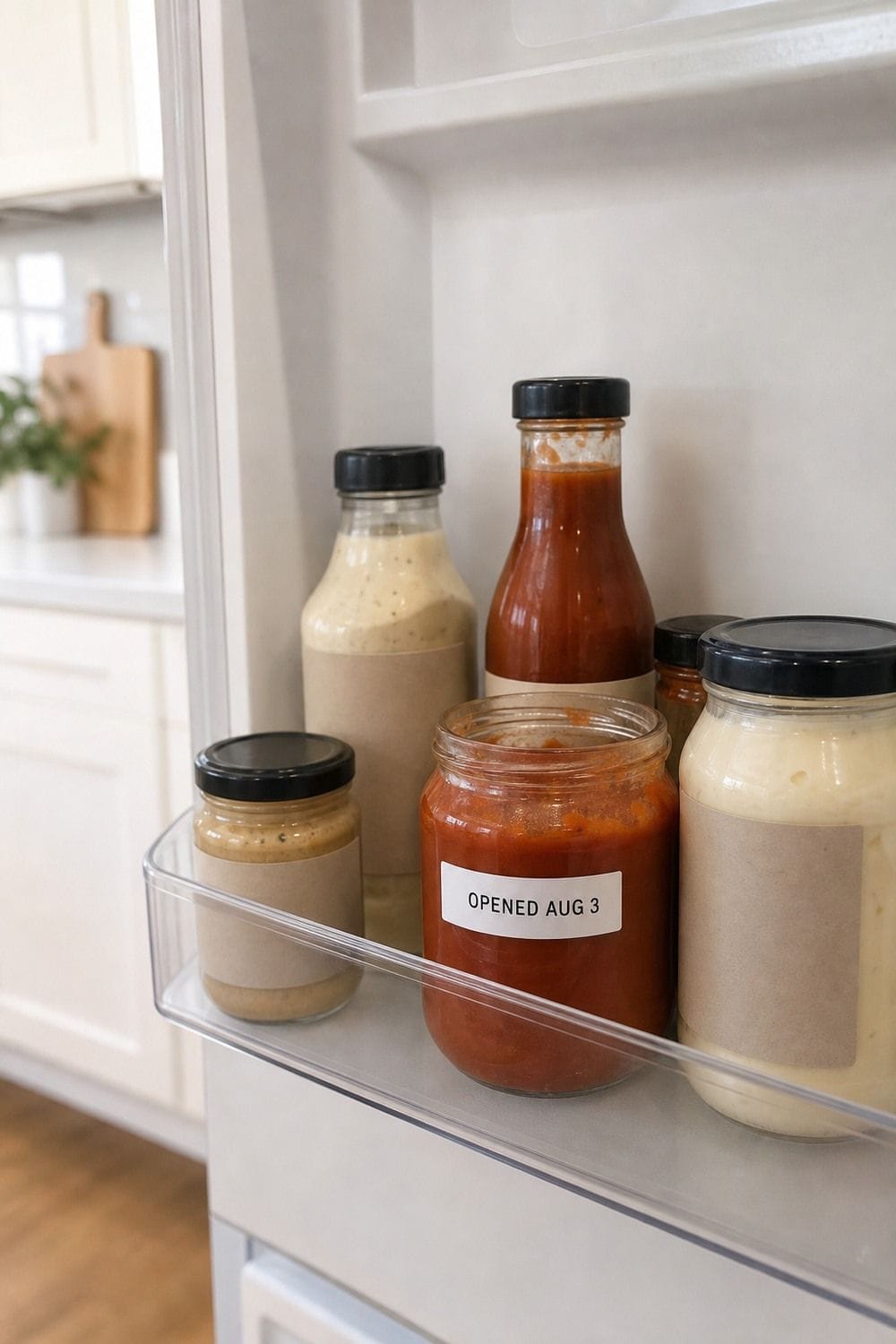
Once a jar is opened, the printed best-by date stops telling the whole story. Use waterproof food labels on salsa, pesto, pasta sauce, curry paste, broth cartons, coconut milk, salad dressing, jam, pickles, and dips. The label can be as simple as “opened Jan 8,” but it gives you a real starting point for deciding what should be used soon, moved into a meal, or discarded during a fridge check before grocery day, especially when several similar jars share one door shelf.
6. Prep-Date Labels for Cut Produce
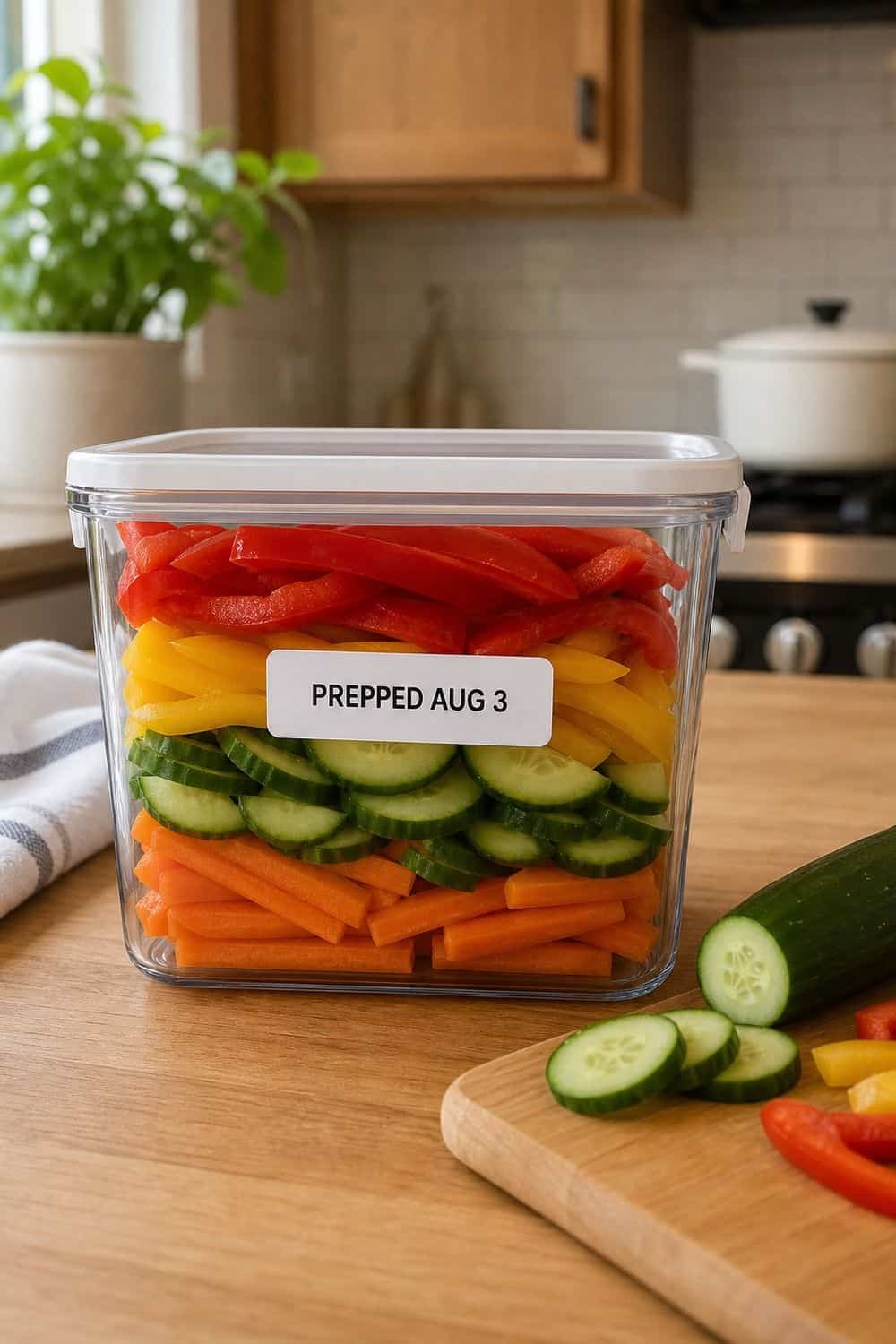
Meal prep labels help delicate produce get eaten while it still looks good. Use them on chopped vegetables, washed greens, cut melon, sliced berries, peeled citrus, herbs, and snack vegetables. A prep date makes it clear which container is fresh and which one should move into breakfast, lunch, soup, or a quick side dish first.
Dry produce well before storing, especially greens and berries. A label helps rotation, but damp food can still spoil faster than expected if moisture collects under the lid.
7. Eat-First Labels for the Fridge
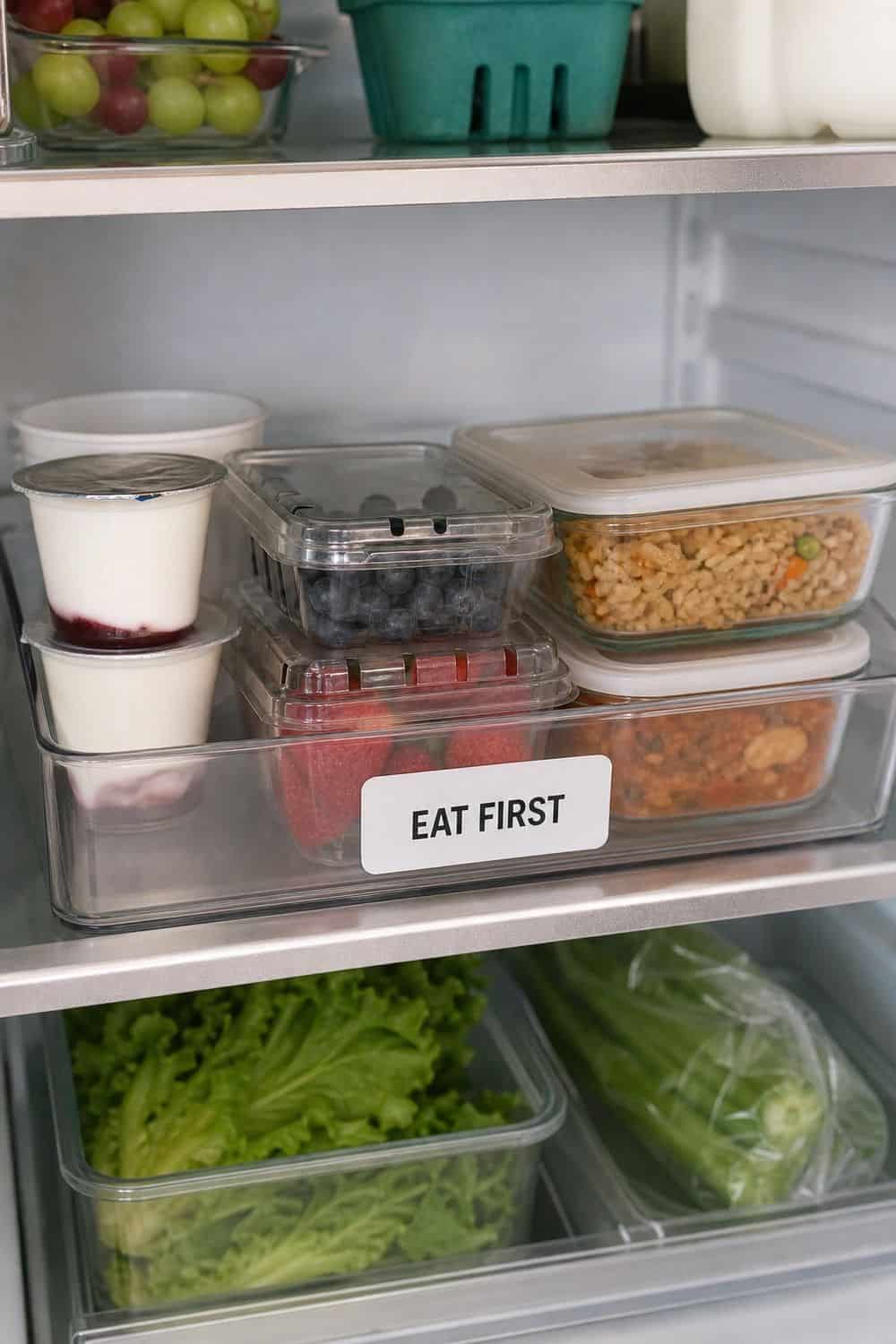
An eat-first label turns a bin, shelf, or container into a priority zone. Use it for leftovers, ripe fruit, opened dips, half-used herbs, cooked grains, near-date dairy, or anything that needs attention before new groceries arrive. A bright eat-first label should be visible enough to guide dinner decisions, snack plates, and lunch packing.
Keep the zone small enough to force a choice. If everything becomes eat-first, nothing really is, and the fridge returns to guesswork by the next grocery trip.
8. Pantry Labels for Decanted Dry Goods
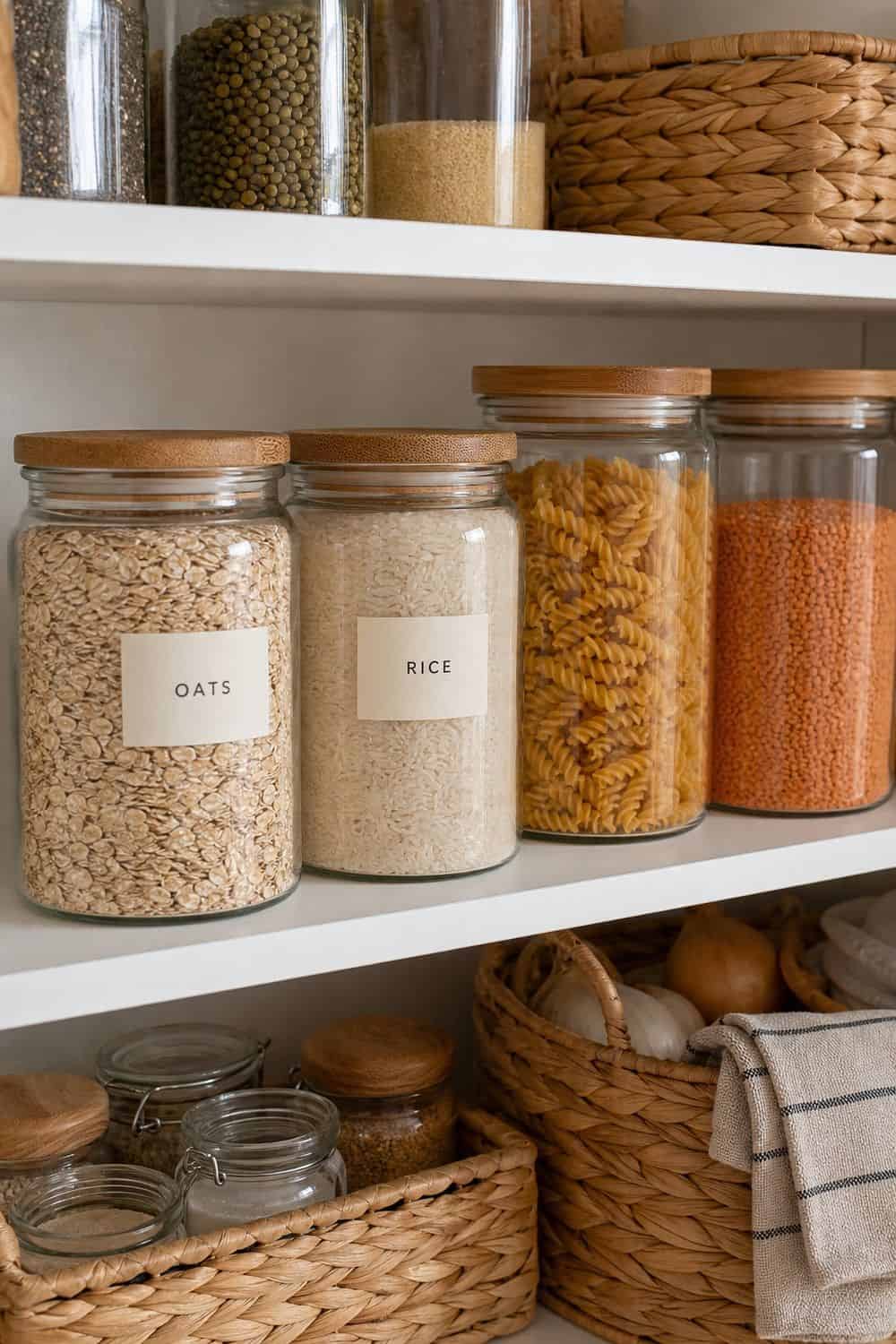
Pantry labels matter when dry goods leave their original packaging. Flour, sugar, rice, oats, pasta, lentils, beans, nuts, seeds, and baking mixes can become hard to identify once they are in clear bins or jars. At minimum, add the food name. For ingredients you buy in bulk, include the purchase date or decant date so older staples get used before newer refills and duplicate bags do not pile up behind the containers or inside the backstock shelf after shopping trips.
9. Cooking Notes on Bulk Staples
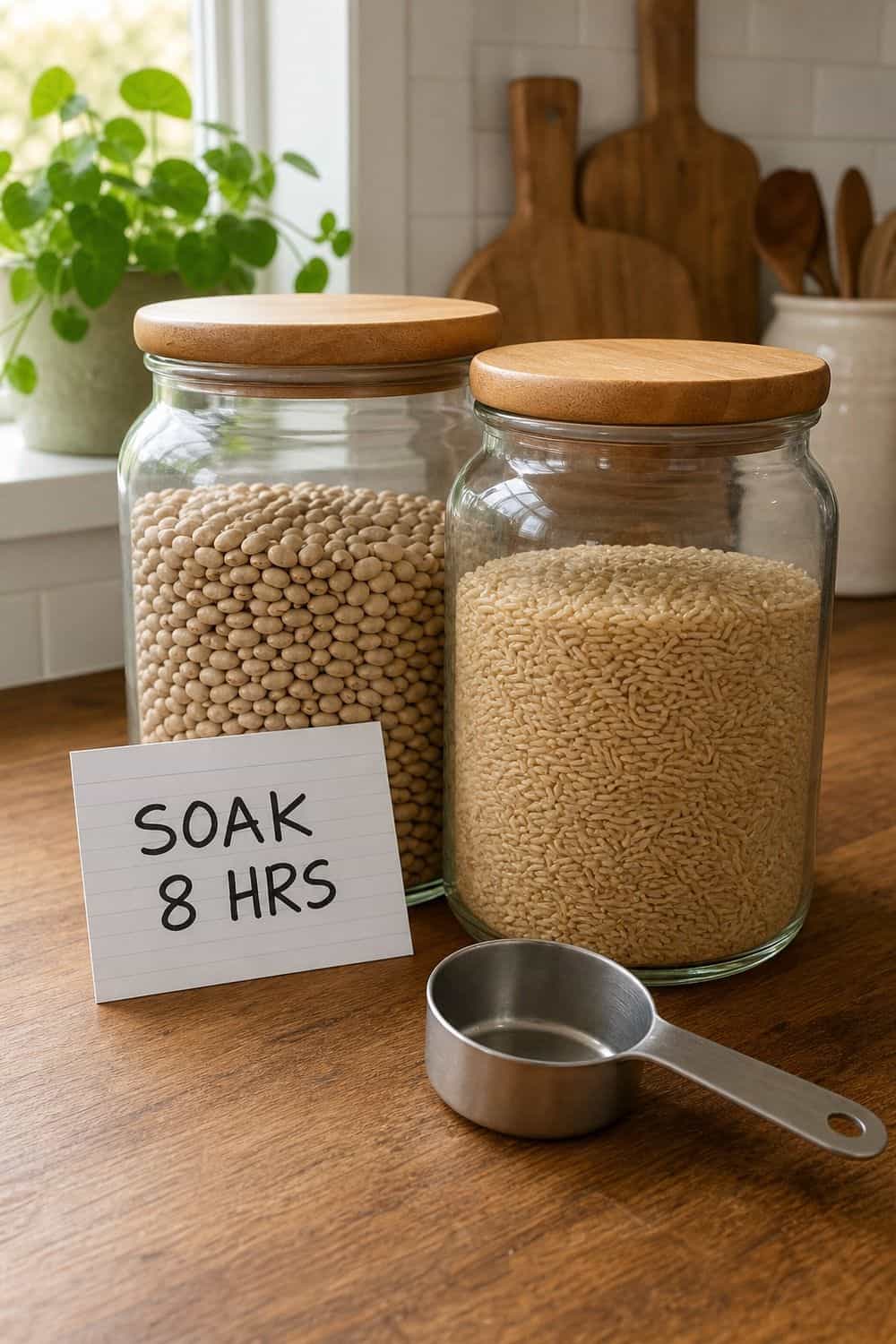
Chalkboard jar labels can carry the practical details that usually live on the package. Add rice ratios, lentil cook times, pasta minutes, oat notes, grain soaking reminders, or allergen notes directly to the container. This is especially useful when the original bag is gone and several grains or flours look similar.
Keep the notes short enough to read while cooking. A useful pantry label should save time at the stove, not become a tiny instruction manual that no one reads.
10. Label Maker Tags for Stable Pantry Staples
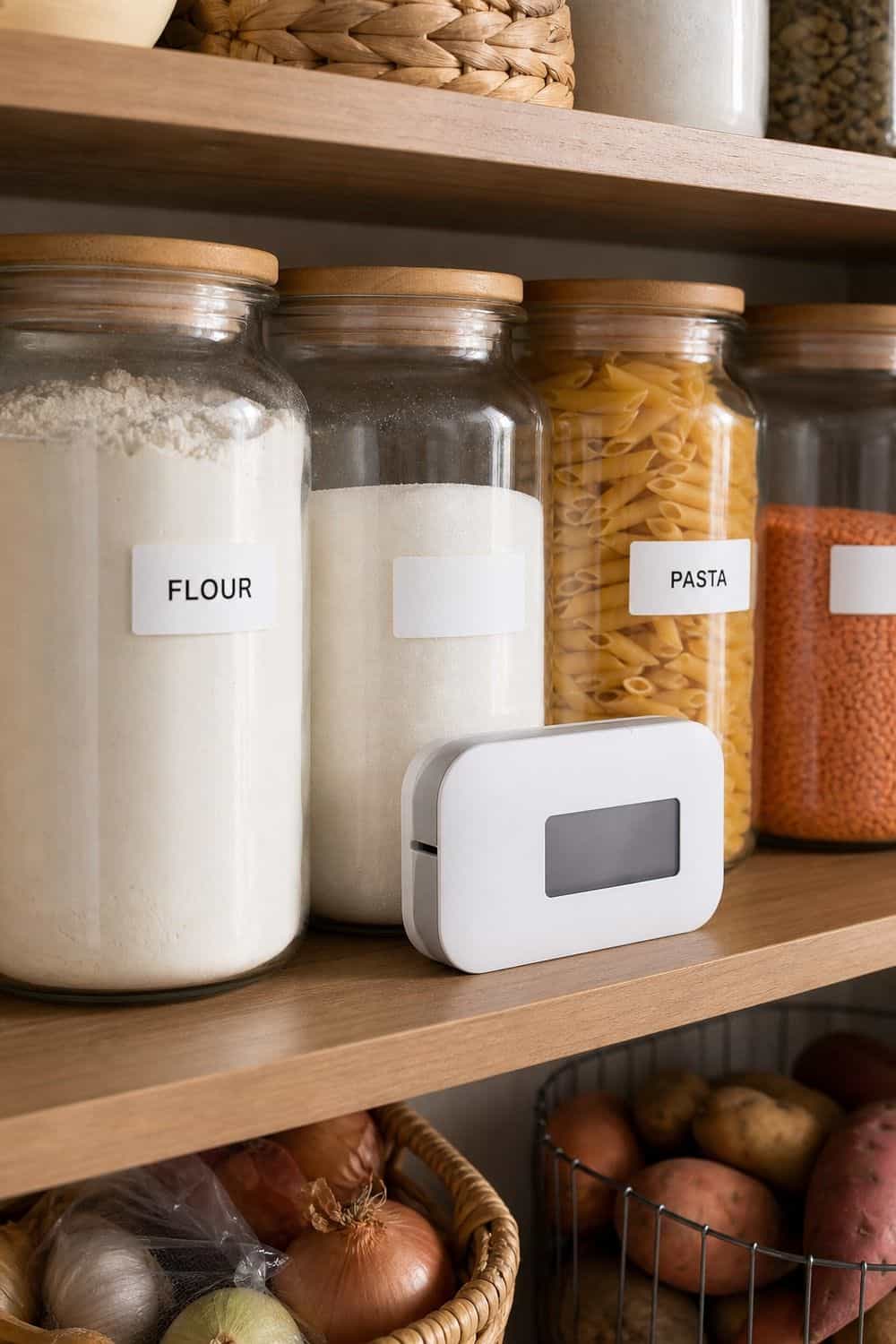
A label maker is best for containers whose job stays the same for a long time: flour, rice, sugar, spice jars, baking bins, snack bins, tea boxes, and dry-goods canisters. It gives a clean, readable label that does not need to change every week. Use temporary food labels for leftovers and date-sensitive fridge foods instead, because those need fresh timing information. Durable pantry tags should support stable categories, not replace date labels for cooked, opened, or frozen food that rotates often.
11. Dry-Erase Labels on Fridge Bins
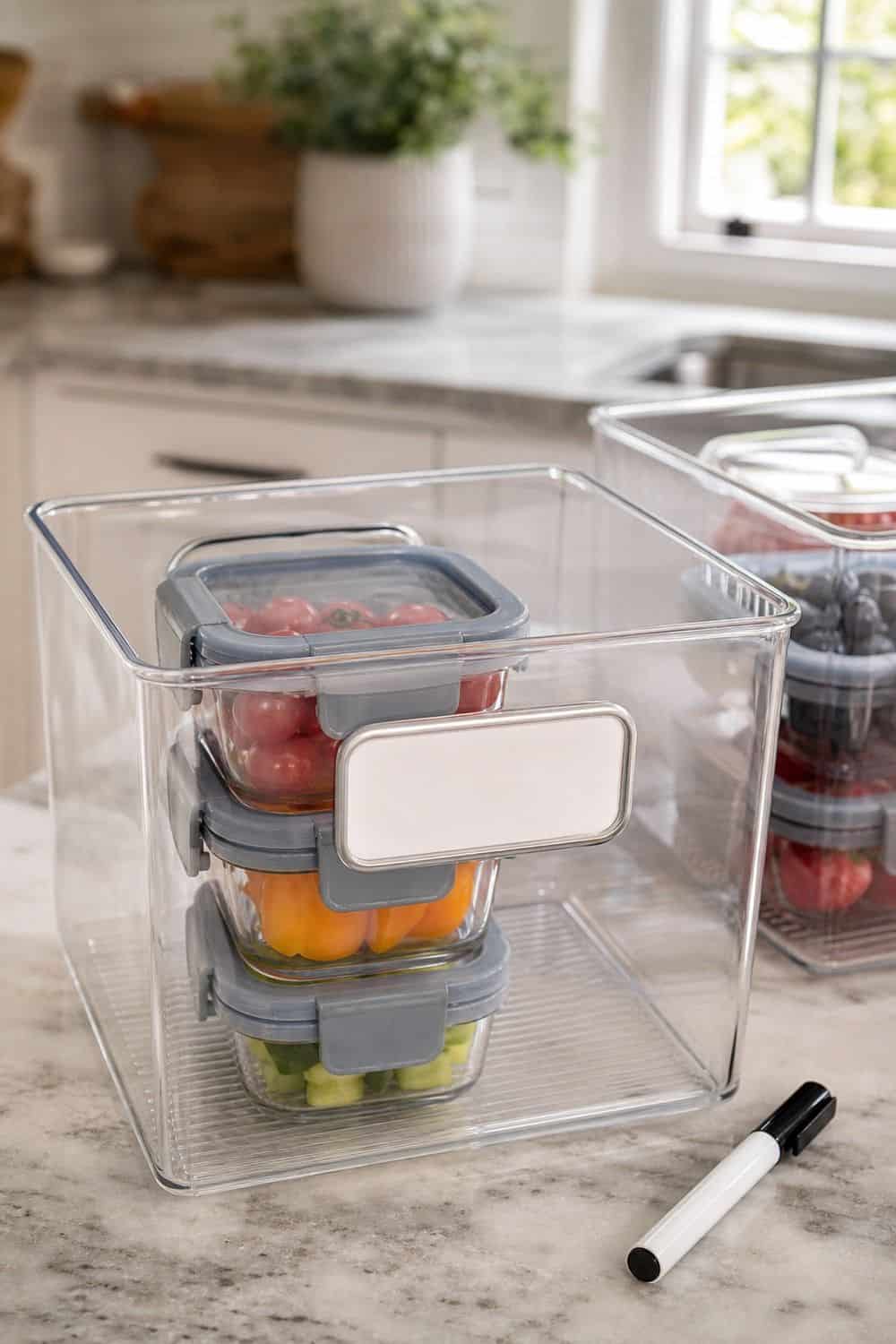
Dry-erase food labels work well when fridge categories change with the week. One bin might hold breakfast foods on Monday, lunch prep by Wednesday, and eat-first leftovers by the weekend. Use them on bins for snacks, drinks, kids’ food, dinner starters, or produce that needs attention soon.
Write large enough to read quickly when the fridge door is open. If the label gets smudged often, move it to a flatter side or use a different marker for weekly bin changes.
12. Allergen Labels for Shared Food
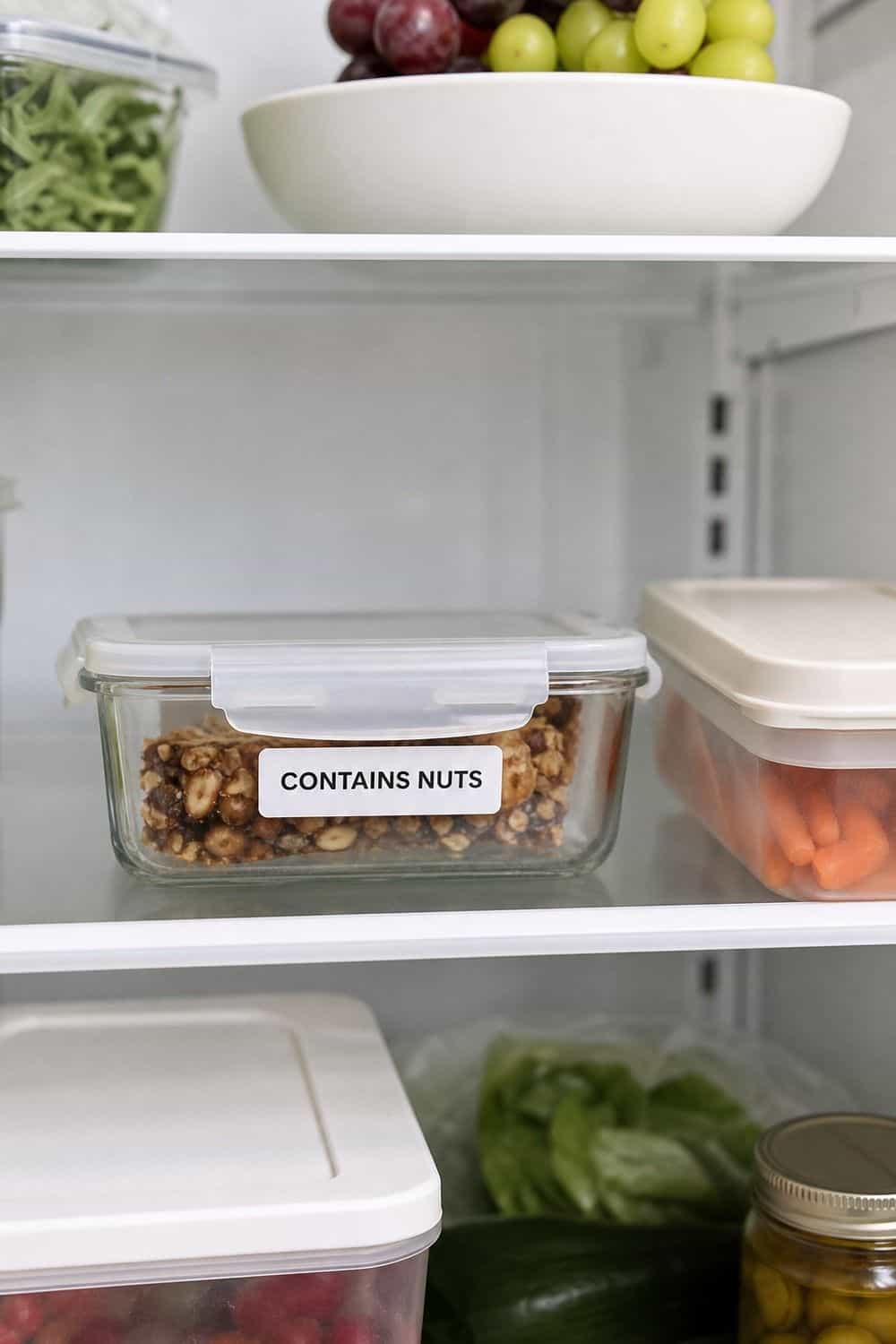
Allergen warning labels make shared food clearer for families, guests, roommates, office fridges, school lunches, and holiday hosting. Use labels such as nut-free, contains dairy, gluten-free, vegetarian, spicy, kids only, guest food, or do not eat when the note genuinely helps someone choose safely. The label should be easy to see before the container is opened.
For serious allergies, labels are only one layer of care. Keep risky foods separated, avoid cross-contact, and follow the household’s safety rules every time food is packed or served.
13. Numbered Freezer Labels With an Inventory List
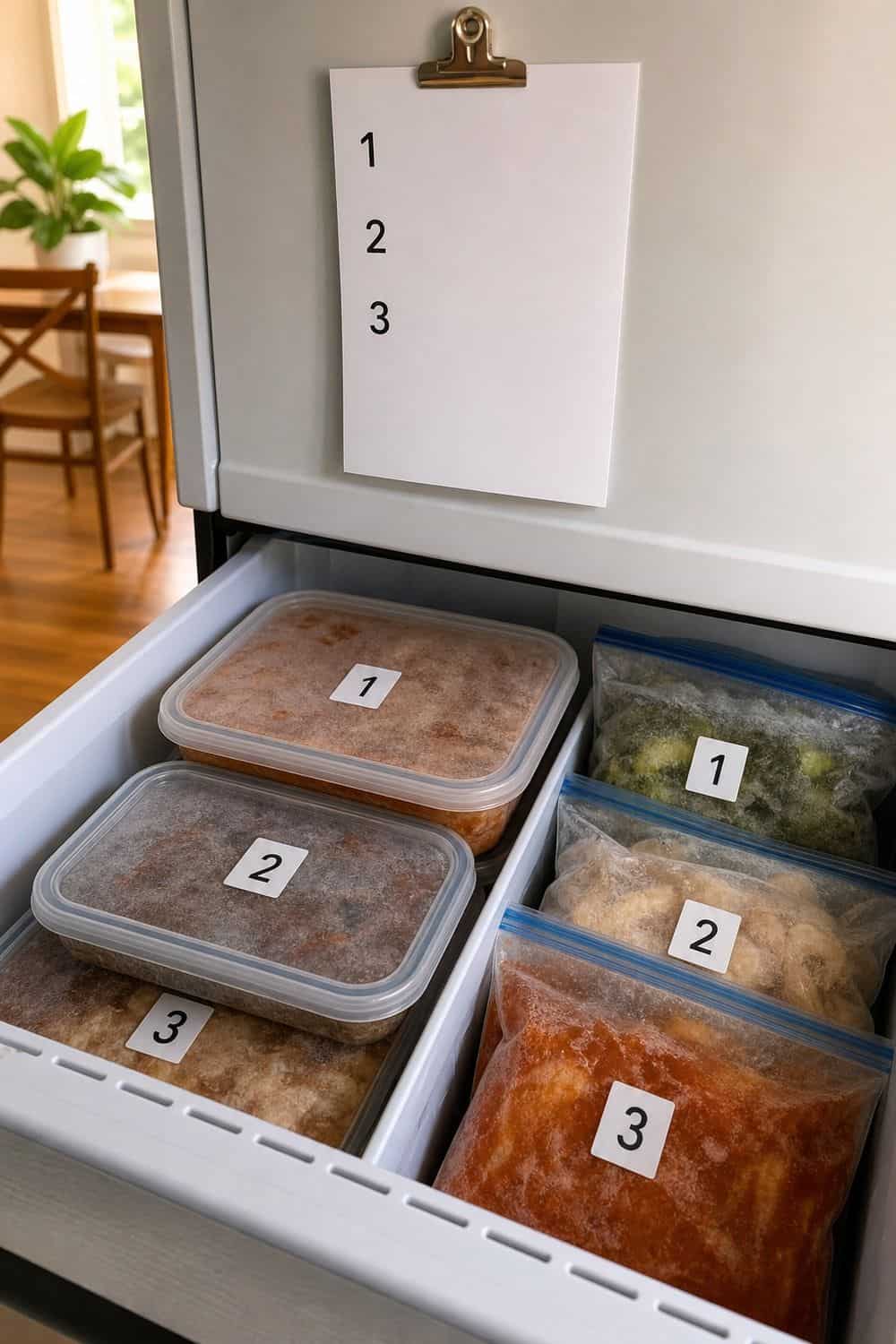
Numbered freezer labels connect each package to a simple freezer inventory whiteboard. Write a number on the bag or container, then list the item, date, and quantity on the board. This works for soups, sauces, cooked grains, meat portions, casseroles, smoothie packs, and freezer meals that otherwise get buried.
The number keeps the label short while the whiteboard carries the details. It also supports first-in, first-out rotation without digging through every shelf or thawing the wrong package for dinner by mistake.
14. Name Labels for Packed Lunches
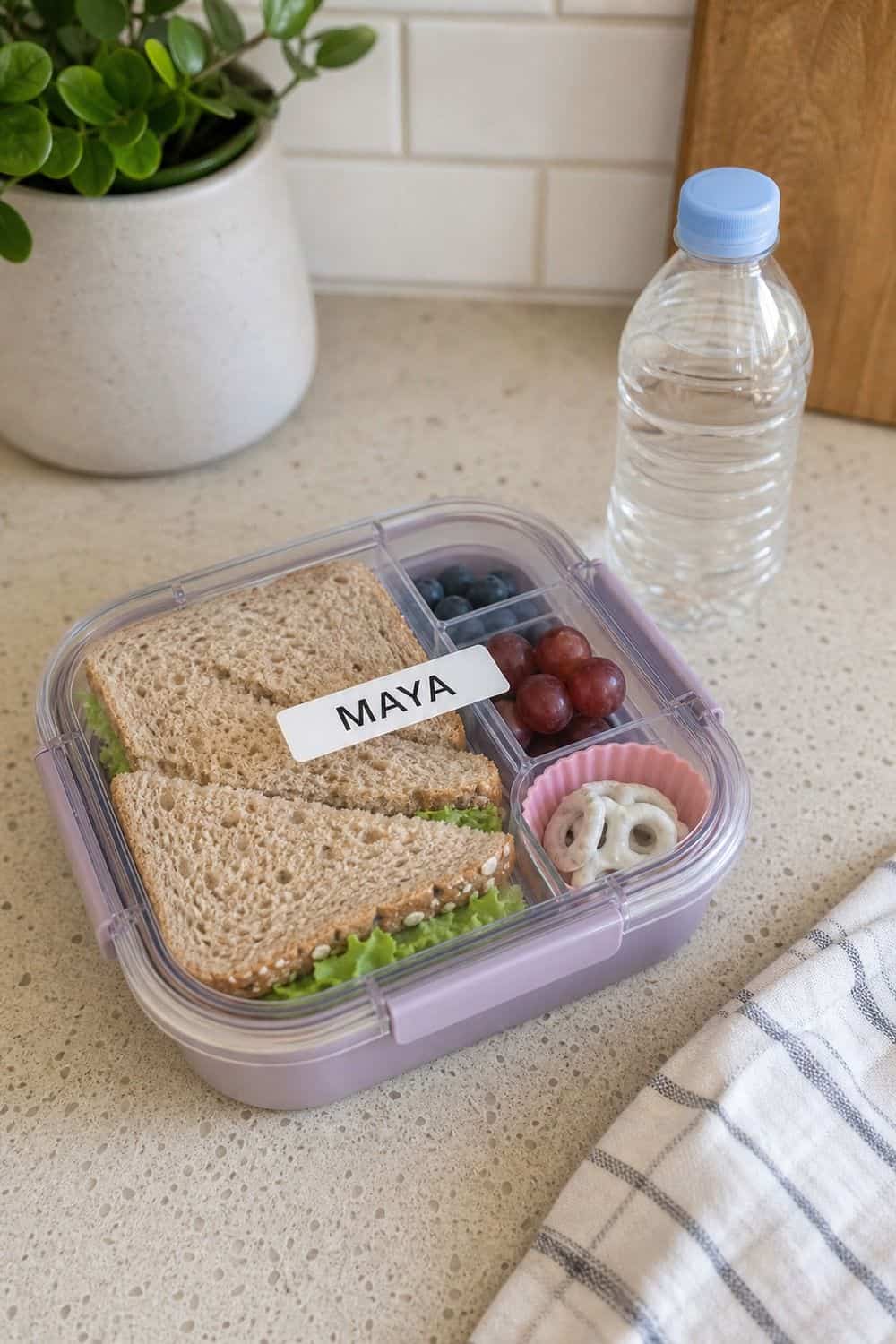
Lunch box name labels are useful when several similar containers sit in the fridge at once. Add a name and date to school lunches, work lunches, sports-night food, guest containers, family meal prep, or shared-fridge meals. This prevents mix-ups and makes it clear which lunch should leave the fridge first.
Name labels also help when containers need to come home. Pair the name with a food date when the lunch includes leftovers or prepped ingredients from the fridge, especially in shared fridges.
15. Toss-Date Labels for Higher-Risk Foods
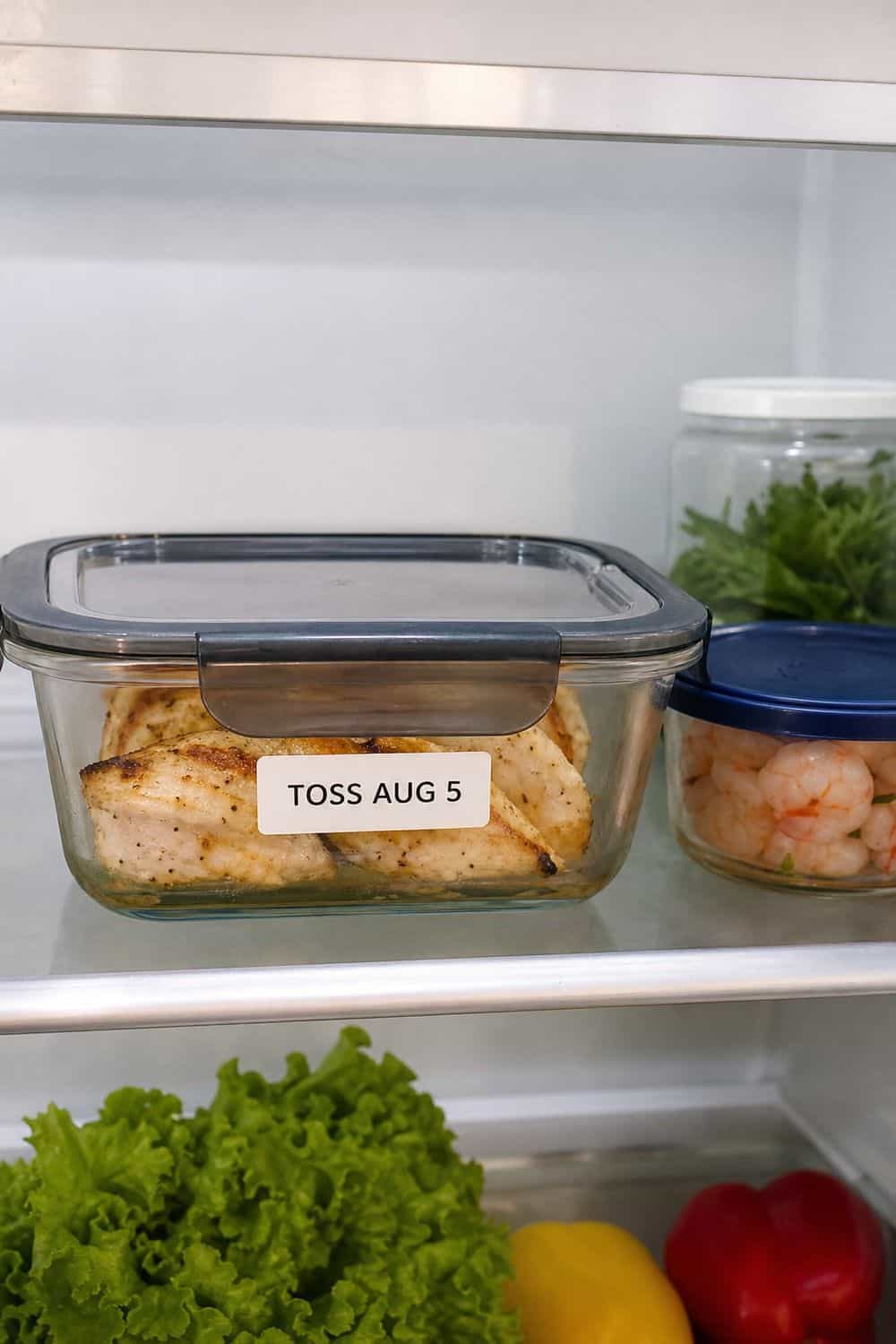
Some foods should not depend on smell, memory, or wishful thinking. Food rotation labels can set a clear toss date for cooked rice, seafood, cut melon, deli meat, gravy, creamy salads, cooked poultry, and leftovers that need a firm endpoint. The label should be visible before the container gets pushed to the back of the fridge.
This is a safety habit, not a wasteful one. If the date has passed or the food seems questionable, discard it and make the next label clearer.
Food Storage Label Basics
The most useful food labels answer four questions: what is it, when was it cooked or opened, what should happen next, and when should it be used or discarded. This matters most for leftovers, freezer meals, opened jars, cut produce, dry goods removed from packaging, shared food, lunch containers, and eat-first bins.
Keep the safety baseline in mind. Refrigerators should stay at 40 F or below, freezers at 0 F or below, and perishable food should be refrigerated promptly. Labels help you notice timing, but they cannot rescue food that was stored poorly or kept too long.
Frequently Asked Questions
What should I write on food storage labels?
Write the food name, cooked date, opened date, freeze date, or prep date. For freezer meals, add thawing or reheating notes. For shared food, add names, allergen notes, or eat-first cues when they help people use the food safely.
What labels work best in the freezer?
Freezer labels should stay readable in cold, damp conditions and stick to bags or containers. Include contents, date frozen, portion size, and any cooking or thawing note you will need later.
Should I label leftovers with the cooked date or the use-by date?
The cooked date is the clearest starting point, and a use-by cue can help if your household responds better to deadlines. The key is making the timing visible before leftovers become guesswork.
How long are leftovers good in the fridge?
Many cooked leftovers are best used within a short refrigerated window, often around 3 to 4 days. Food type, handling, and storage temperature matter, so discard anything with unknown timing or questionable signs.
How do I label opened jars and sauces?
Add the open date directly to the jar, lid, or a nearby bin label. This is useful for salsa, pesto, broth cartons, curry paste, salad dressing, jam, pickles, and sauces that linger after the factory seal is broken.
What food labels are best for reusable containers?
Dissolvable or removable labels are usually easiest for reusable containers because they wash off cleanly. Use them for meal prep, leftovers, cut produce, sauces, and lunch containers that change contents often.
How do I label pantry containers after removing the original package?
Write the food name first, then add a purchase date, decant date, cook time, ratio, or allergen note if that information was on the package. Keep package directions somewhere accessible if you still need them.
Do food labels help reduce food waste?
Yes, because they make timing and priority visible. Labels help you use leftovers, opened jars, cut produce, and freezer food before they become mystery containers or get pushed behind newer groceries.
Final Thoughts
Food storage labels ideas are most useful when they make the next decision easier. A label should tell you what the food is, how old it is, where it belongs in the rotation, and whether it needs a thawing, reheating, allergen, or toss-date note.
Start with the foods that cause the most confusion: leftovers, freezer bags, opened sauces, cut produce, shared lunches, and decanted dry goods. A clear label turns those containers from guesswork into food you can actually use.
Last update on 2026-09-18 / Affiliate links / Images from Amazon Product Advertising API