
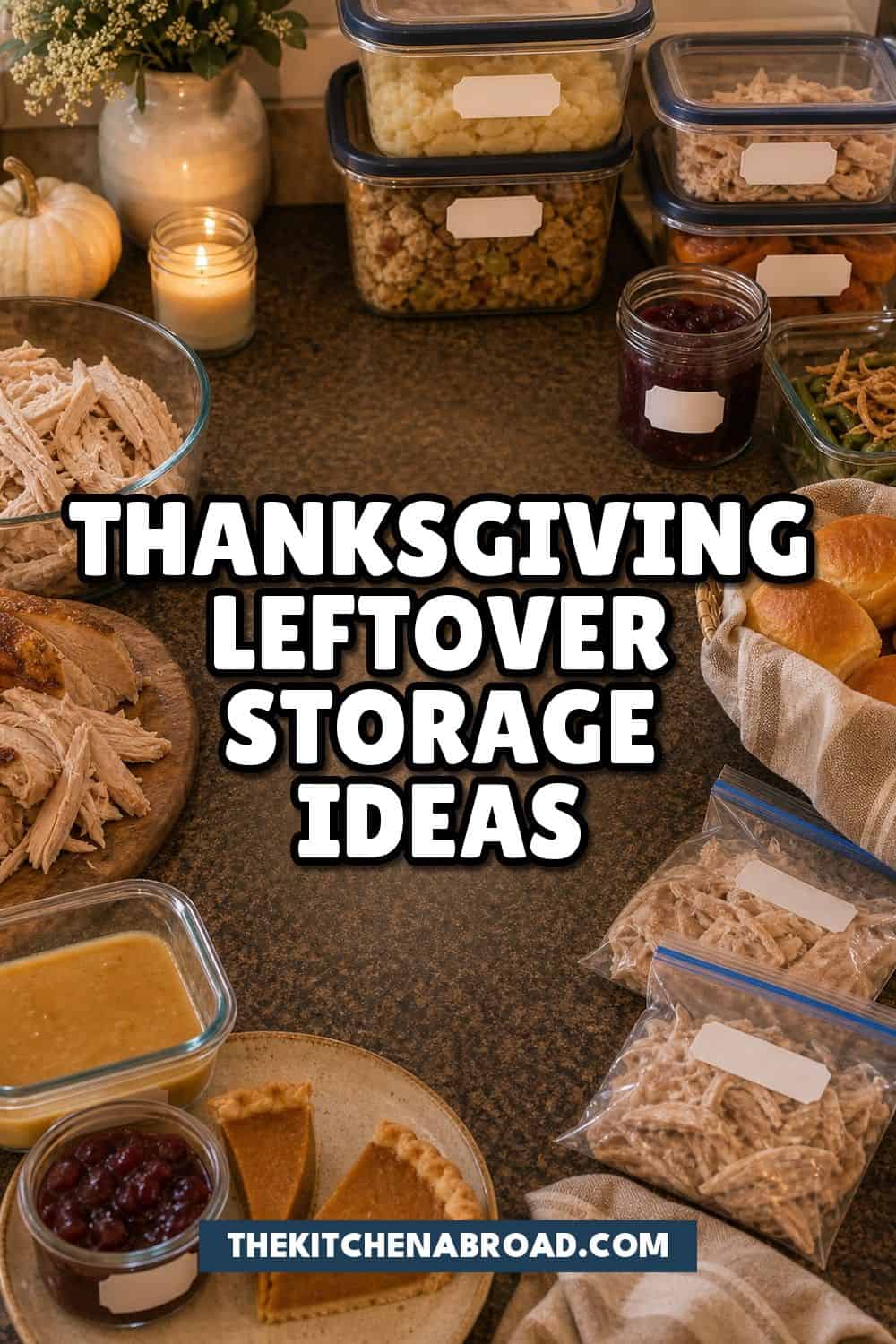
Thanksgiving leftover storage ideas work best when food is cooled, divided, labeled, and given a clear eat-first plan before the kitchen gets too crowded. Refrigerate perishable leftovers within two hours, use shallow containers for dense foods, freeze extra turkey before the fridge window closes, and reheat leftovers thoroughly before serving them again.
The end of Thanksgiving dinner has its own kind of rush. People are still talking, dessert is coming out, serving dishes are half full, and the refrigerator suddenly needs to hold turkey, stuffing, gravy, casseroles, cranberry sauce, pies, and maybe a few take-home portions.
A good leftover plan keeps the holiday meal from turning into mystery containers by Saturday. The ideas below focus on what happens after dinner: cooling food safely, separating foods by texture and risk, labeling what should be eaten first, and turning the best leftovers into meals people will actually grab.
Top Recommended Products


You Might Also Like These Blog Posts
- How to Store Thanksgiving Sides
- How to Store Leftovers
- Holiday Freezer Prep
- Thanksgiving Make-Ahead Prep Timeline
- Freezer Meal Prep
15 Thanksgiving Leftover Storage Ideas That Keep Food Fresh
1. Leftover Containers Ready Before Dessert
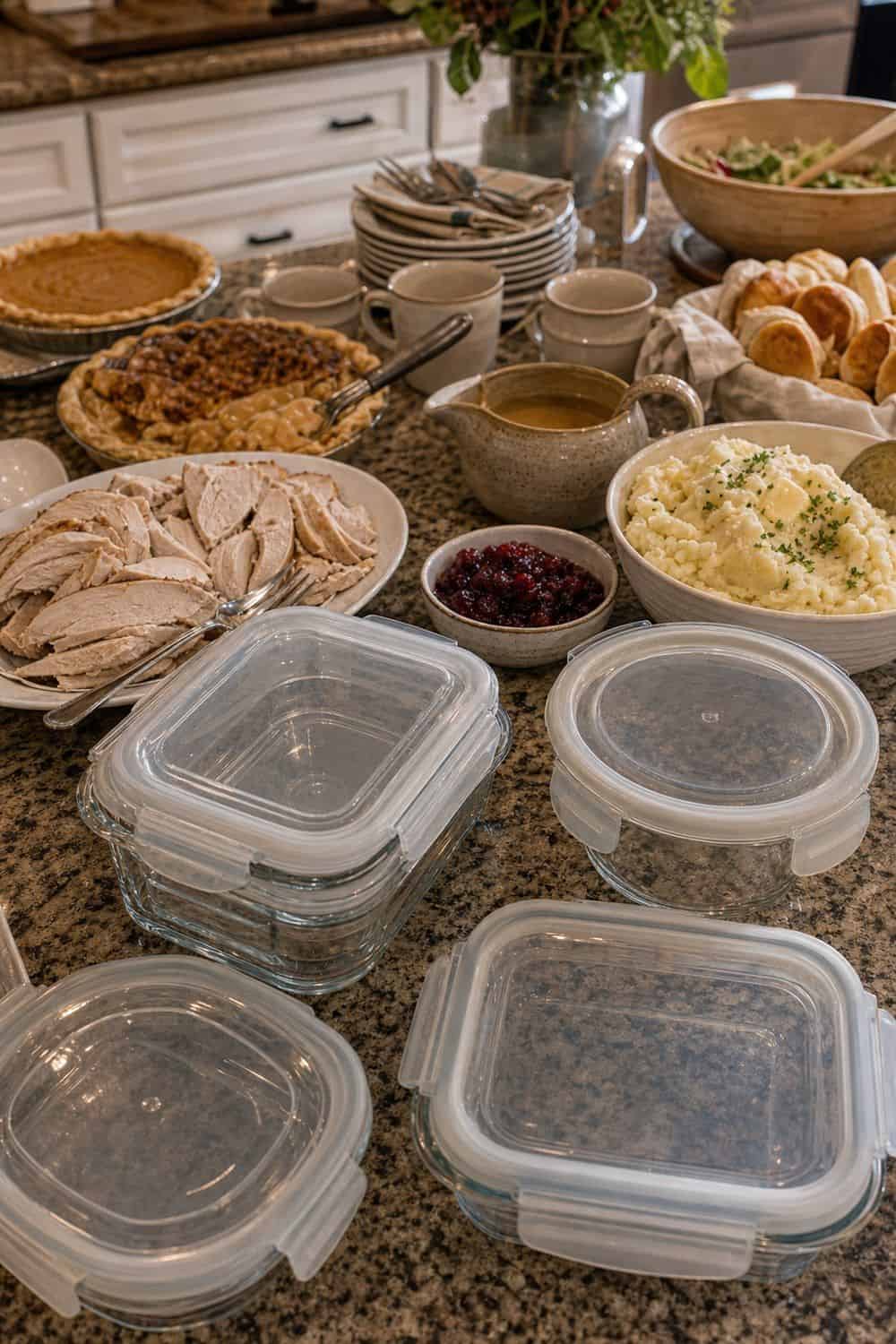
Put containers on the counter before the pie plates and coffee cups take over. Thanksgiving cleanup moves faster when there is already a landing zone for sliced turkey, stuffing, gravy, mashed potatoes, casseroles, cranberry sauce, rolls, pies, and small guest portions. Match container sizes to the food instead of grabbing the nearest deep bowl: a wide container works better for stuffing or potatoes, a small one keeps cranberry sauce visible, and a sealed box for turkey makes Friday sandwiches easier.
2. Two-Hour Leftover Timer
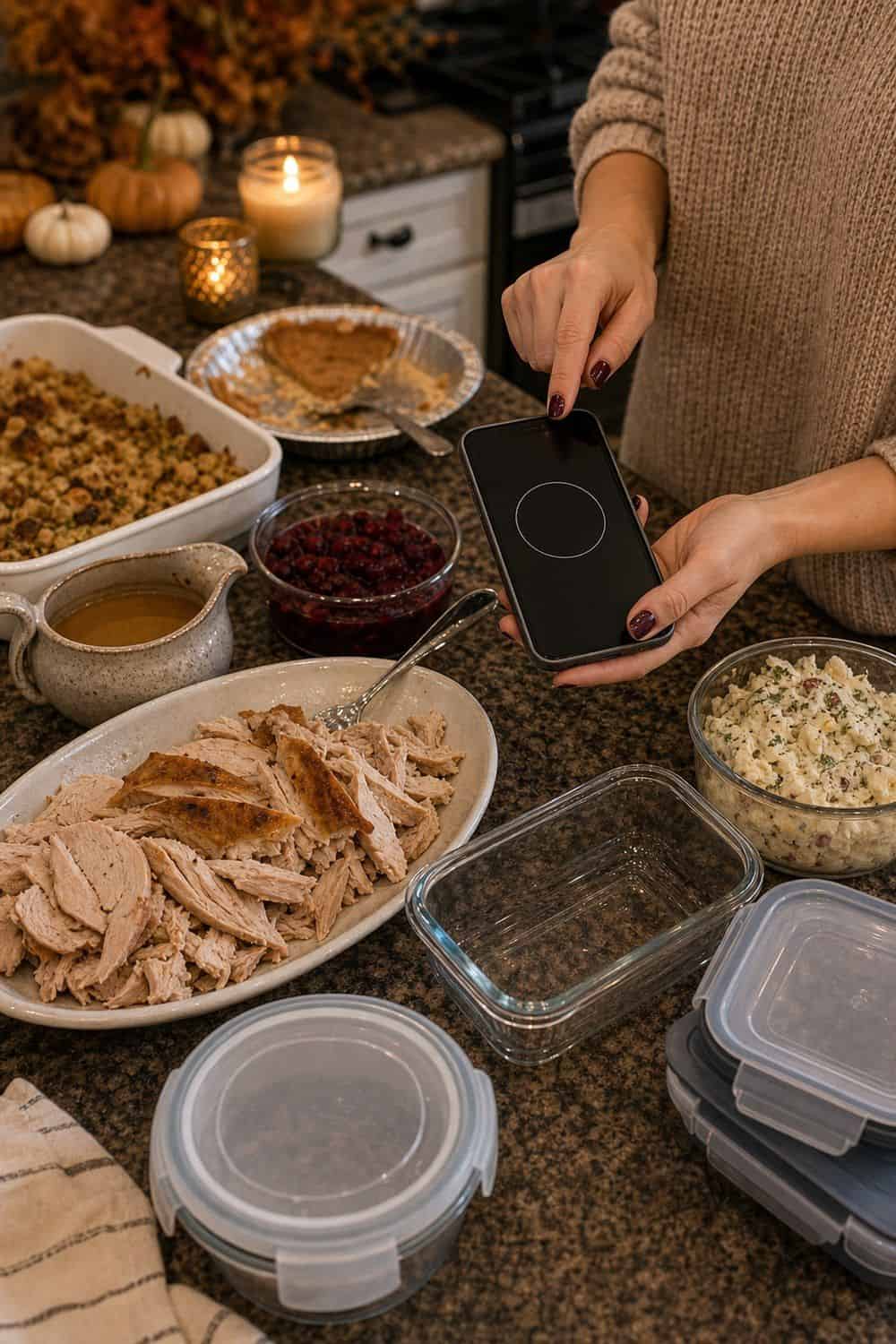
Thanksgiving tables tend to linger, so use a timer once the main meal is served. Perishable foods should be refrigerated within two hours unless they are being held safely hot or cold, and that includes turkey, gravy, stuffing, casseroles, dressed salads, and most creamy or egg-rich dishes.
The timer is not about rushing guests through dinner. It simply gives the kitchen a clear point when leftovers need attention, especially if food is going home with people.
If a guest has more than a two-hour trip and cannot keep food cold, skip the perishable take-home box. Send rolls, unopened pantry items, or nonperishable treats instead of turkey, gravy, stuffing, or creamy sides.
3. Turkey Carved Off the Bone Before Refrigerating
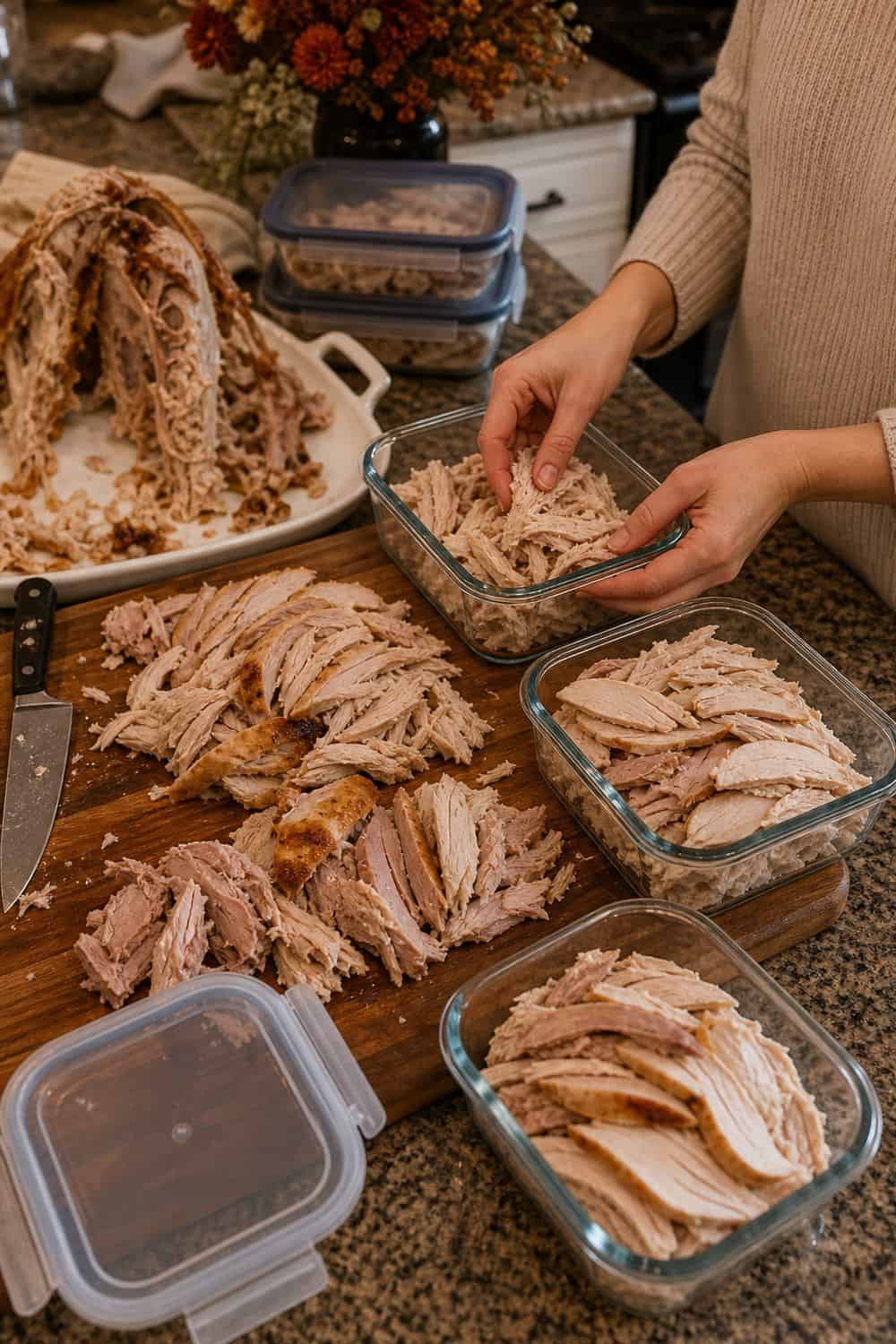
A whole turkey carcass takes up too much refrigerator space and cools slowly. After the meal, carve usable meat from the bone and pack it in smaller portions so it chills faster and is easier to use for sandwiches, soup, casseroles, and next-day plates.
Separate white and dark meat if your household uses them differently. Keep picked-over bones away from ready-to-eat slices, and save the carcass for stock only if it was handled promptly.
If the turkey sat out too long, it is better to let it go than build several meals around questionable leftovers. A clean carving board also keeps the slicing job contained instead of spreading turkey juices across the dessert counter.
4. Turkey Packed With a Little Moisture
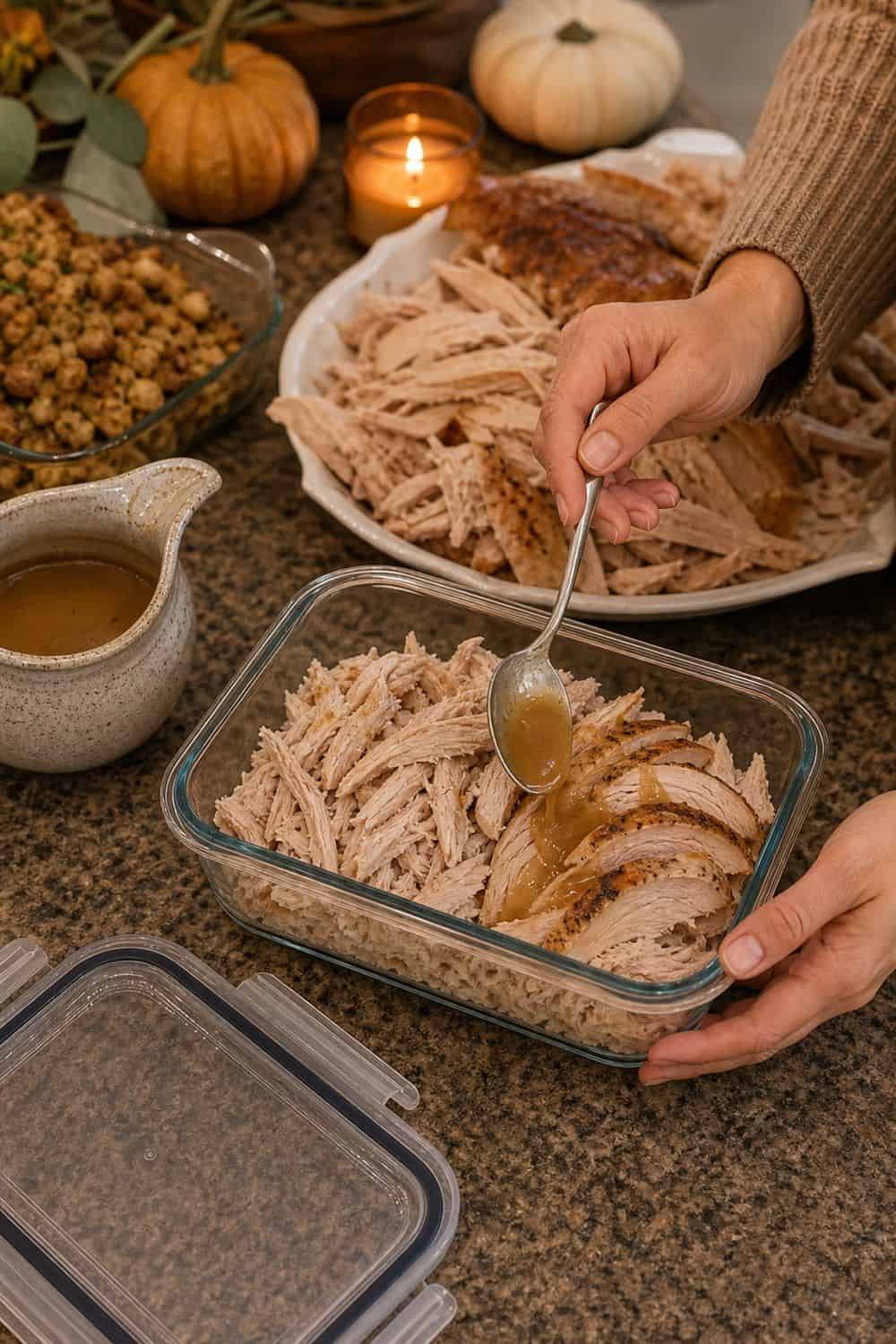
Leftover turkey dries out quickly once it is sliced, especially breast meat. Add a spoonful of broth, pan juices, or gravy to the storage container when it fits how you plan to use the meat, then seal it tightly so the slices stay tender through the weekend. Keep gravy separate if you want flexible leftovers for sandwiches, salads, or soup, and use clear containers so you can spot carved turkey, soup meat, and freezer portions before the refrigerator window runs out.
5. Stuffing Stored Away From the Turkey
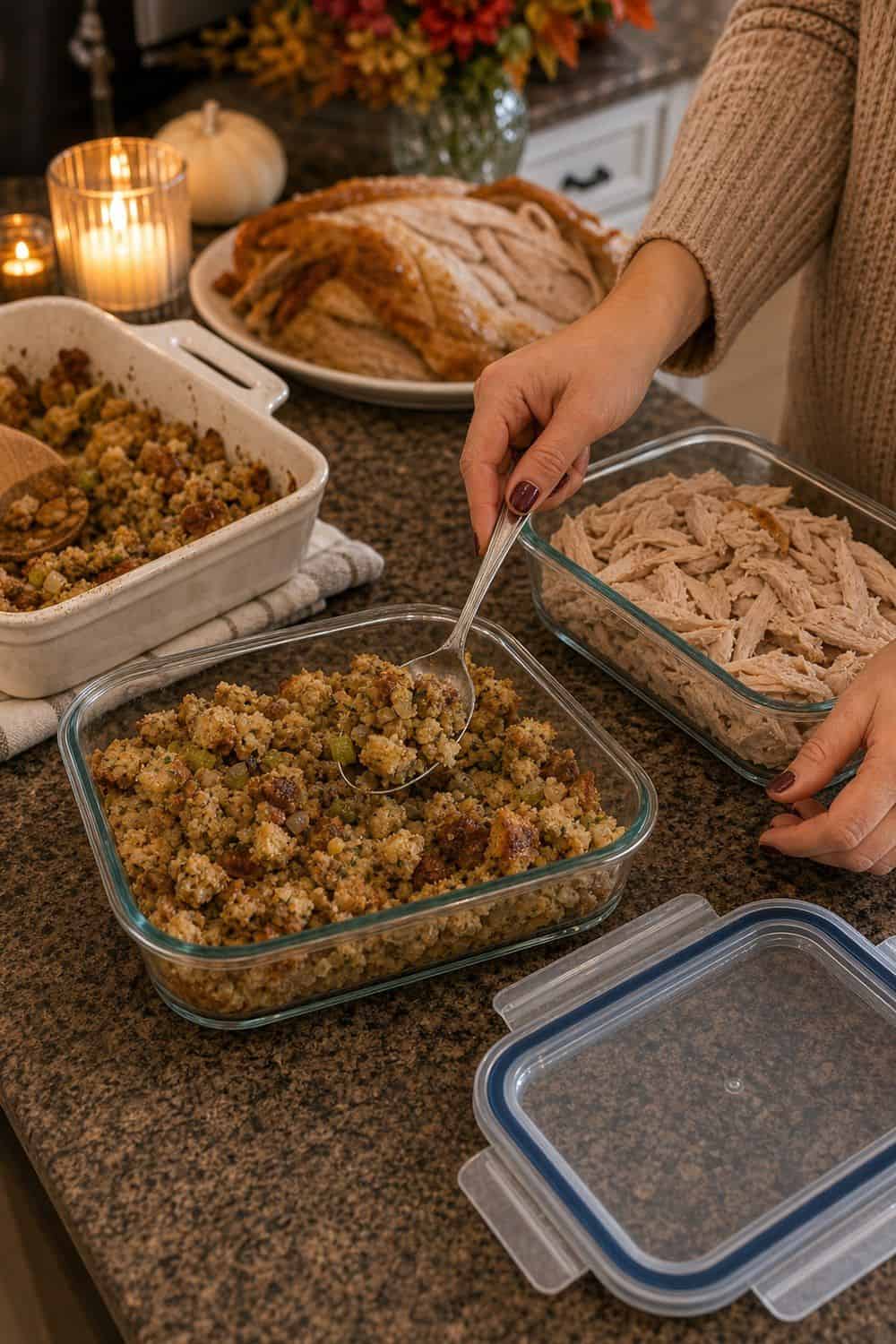
Stuffing and dressing deserve their own container, particularly if they were cooked inside the bird or served close to turkey juices. Dense bread mixtures cool slowly, so spread leftovers into a shallow airtight container instead of pressing them into one thick mound.
Keeping stuffing separate also makes reheating safer and cleaner. You can warm only the portion being served, check that it is hot throughout, and avoid turning a mixed turkey-and-stuffing box into something nobody wants after one day in the fridge.
6. Gravy in an Eat-First Container
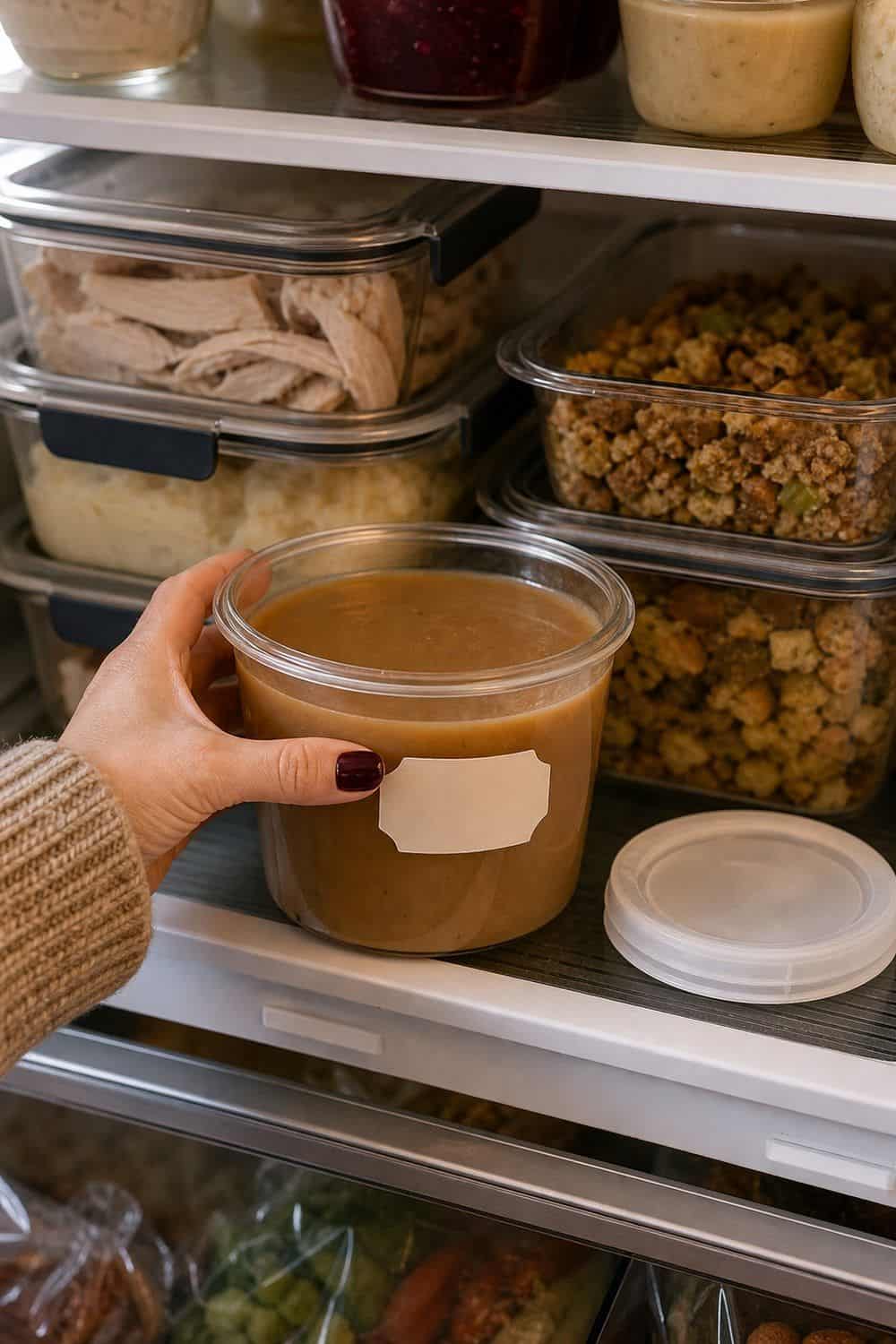
Gravy is one of the leftovers that should be easy to find right away. Pour it into a leakproof container, label it clearly, and place it near the front of the refrigerator so it gets used early with turkey, potatoes, stuffing, or a Friday open-faced sandwich.
Because gravy is often meat-based and sauce-heavy, reheat it carefully until it bubbles or boils on the stove. Do not let it hide behind casserole dishes for days, and discard it if the timing is unclear or the texture, smell, or surface looks off.
7. Dense Sides in Shallow Containers
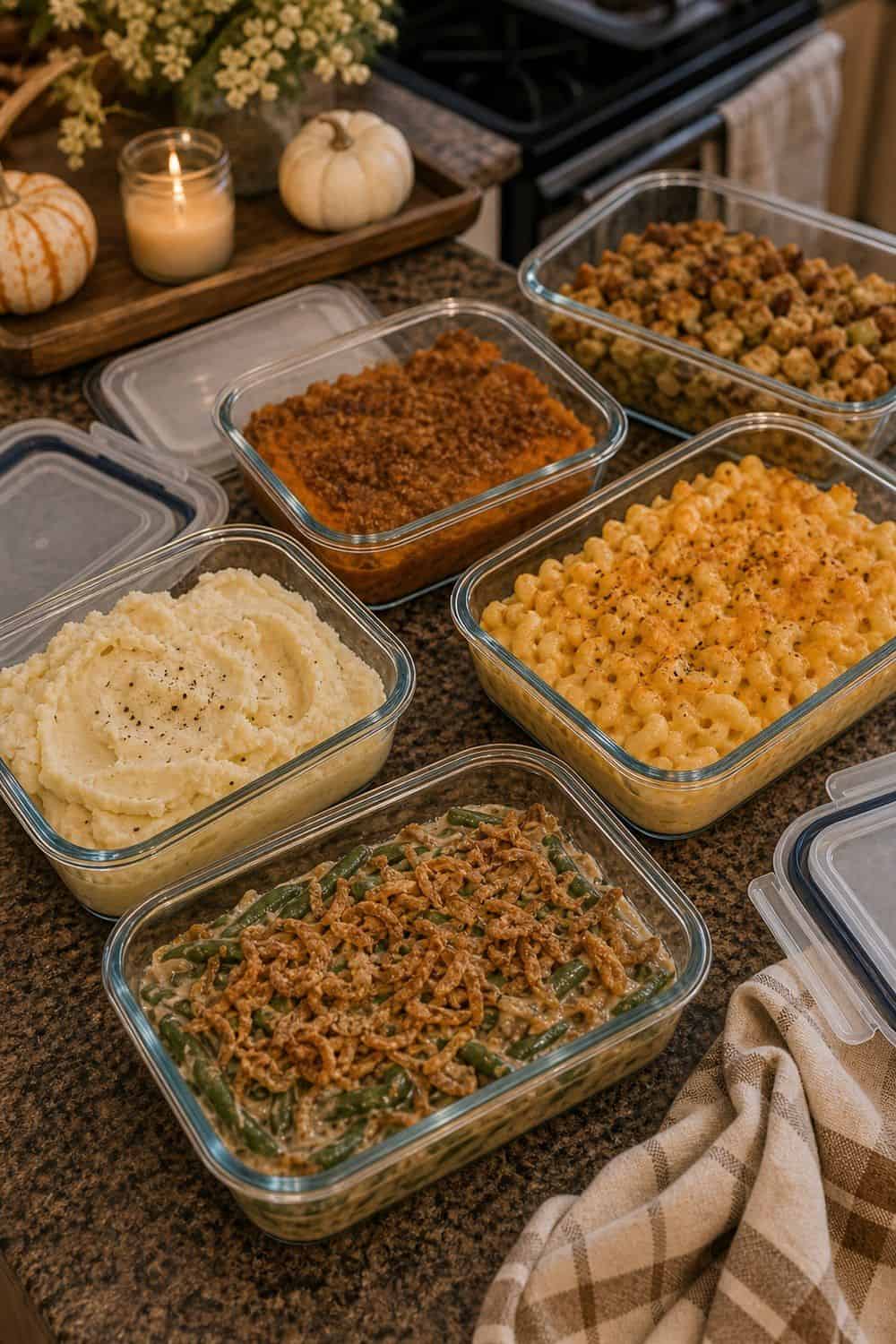
Mashed potatoes, mac and cheese, rice dishes, green bean casserole, sweet potato casserole, roasted vegetables, and stuffing-style sides cool better when they are divided. Transfer them into shallow containers instead of sliding a deep serving dish straight into the refrigerator.
This is especially helpful after a large holiday meal, when the fridge is crowded and hot food can hold warmth in the center. Smaller, flatter portions chill faster and stack more neatly.
Use shallow storage for the foods people will eat in small scoops, too. It makes it easier to reheat a single lunch portion without disturbing every side dish in the refrigerator.
8. Cranberry Sauce in a Small Jar
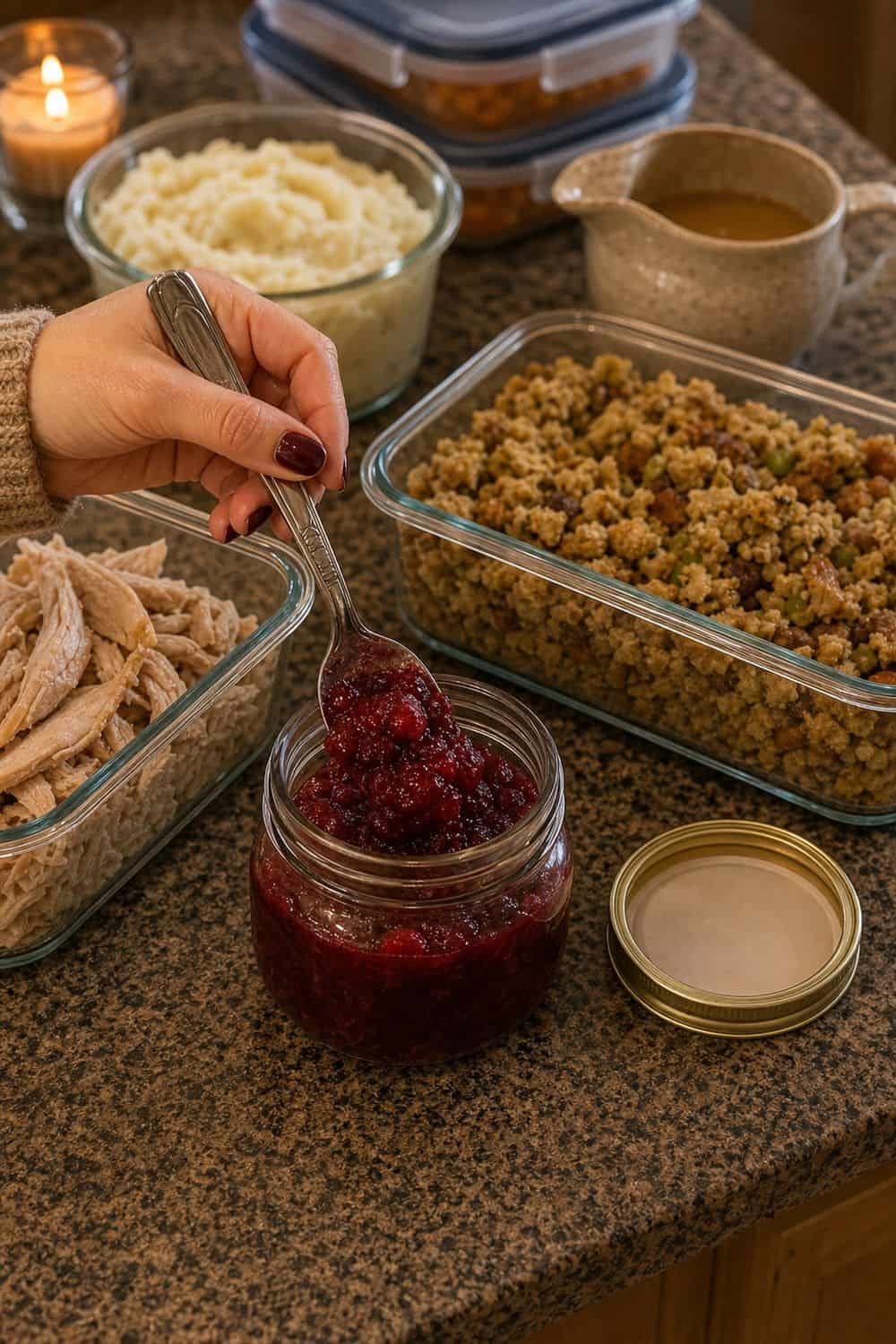
Cranberry sauce is easy to lose behind bigger containers, even though it can be one of the most useful leftovers. Spoon it into a clean small jar once it leaves the table so it stays visible for turkey sandwiches, yogurt bowls, cheese boards, or quick leftover plates. Many cranberry sauces hold longer than meat, gravy, or dairy-heavy sides because of sugar and acidity, but storage still depends on the recipe and how it was served, so refrigerate it in a sealed jar and avoid dipping used serving spoons back into the leftovers.
9. Pie Storage by Filling Type
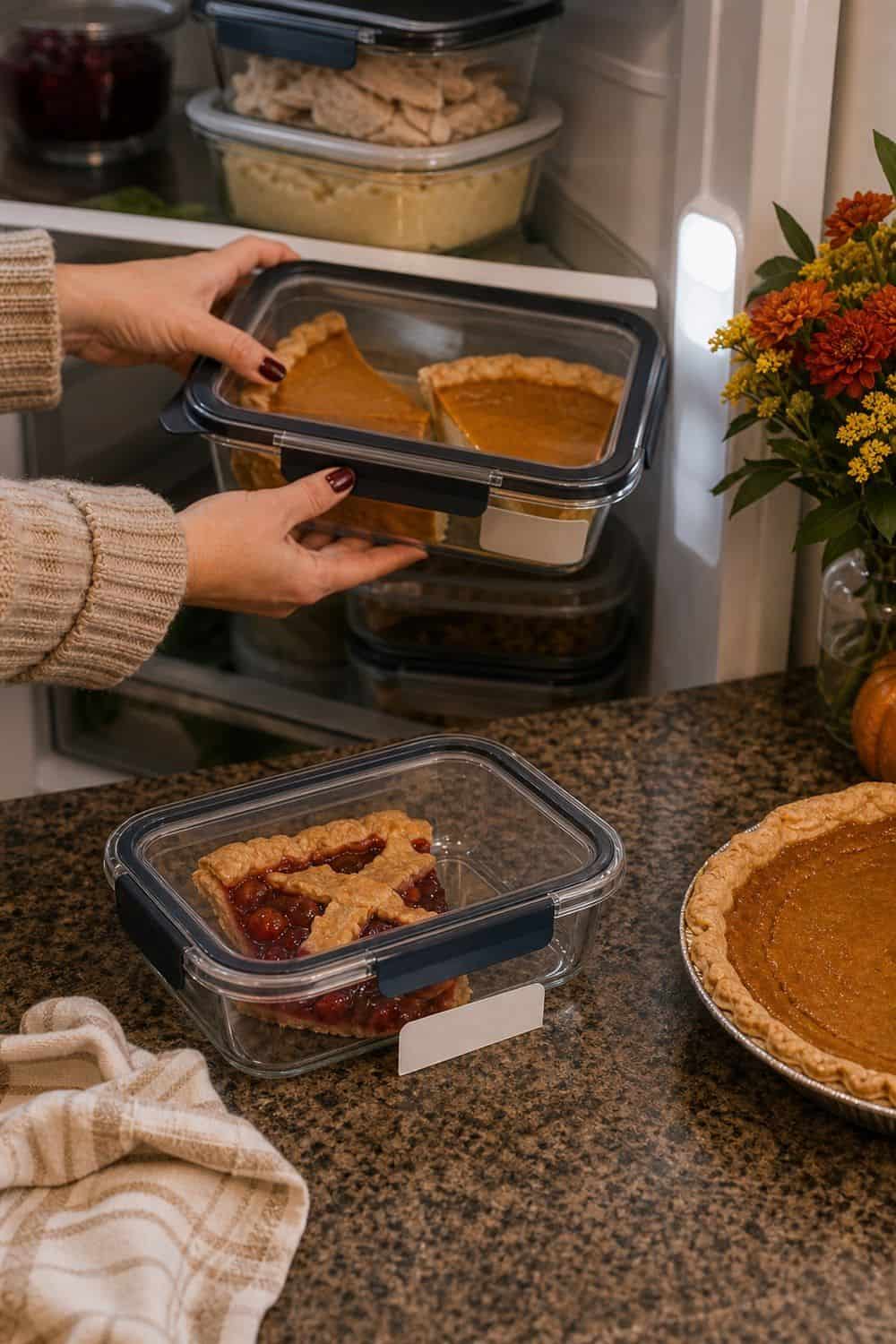
Pie storage is not one-size-fits-all. Pumpkin, custard, cream, and other egg-rich pies need refrigerator space after they cool, while many fruit pies behave differently and may hold briefly at room temperature depending on the recipe and your kitchen conditions.
Use a pie container or a covered plate that protects the filling without crushing the crust. Do not stack heavy leftover boxes on top of pie slices, and keep dessert away from strong-smelling savory containers so the last slice does not taste like onions, gravy, or turkey stock.
10. Friday Leftover Sandwich Kit
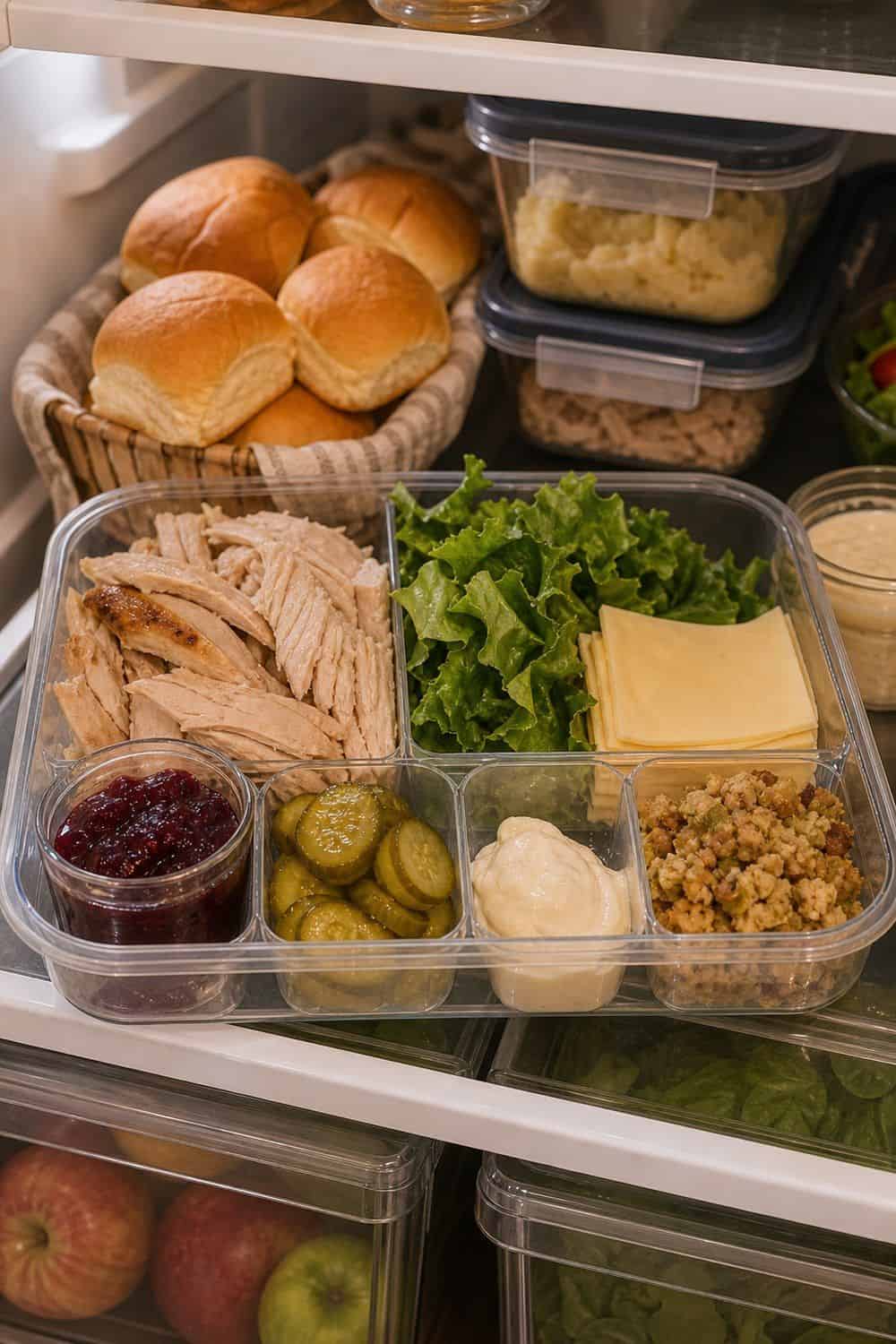
A sandwich kit makes the best Thanksgiving leftovers feel like lunch instead of another round of reheated plates. Set aside turkey, cranberry sauce, rolls, greens, cheese, pickles, mayo, and a small portion of stuffing if your family likes it tucked into sandwiches. Store wet ingredients separately so bread does not turn soggy overnight, and use a container that protects the bread if someone is packing lunch to go. The easier the kit is to assemble, the less likely the turkey gets forgotten.
11. Complete Leftover Plates for Quick Meals
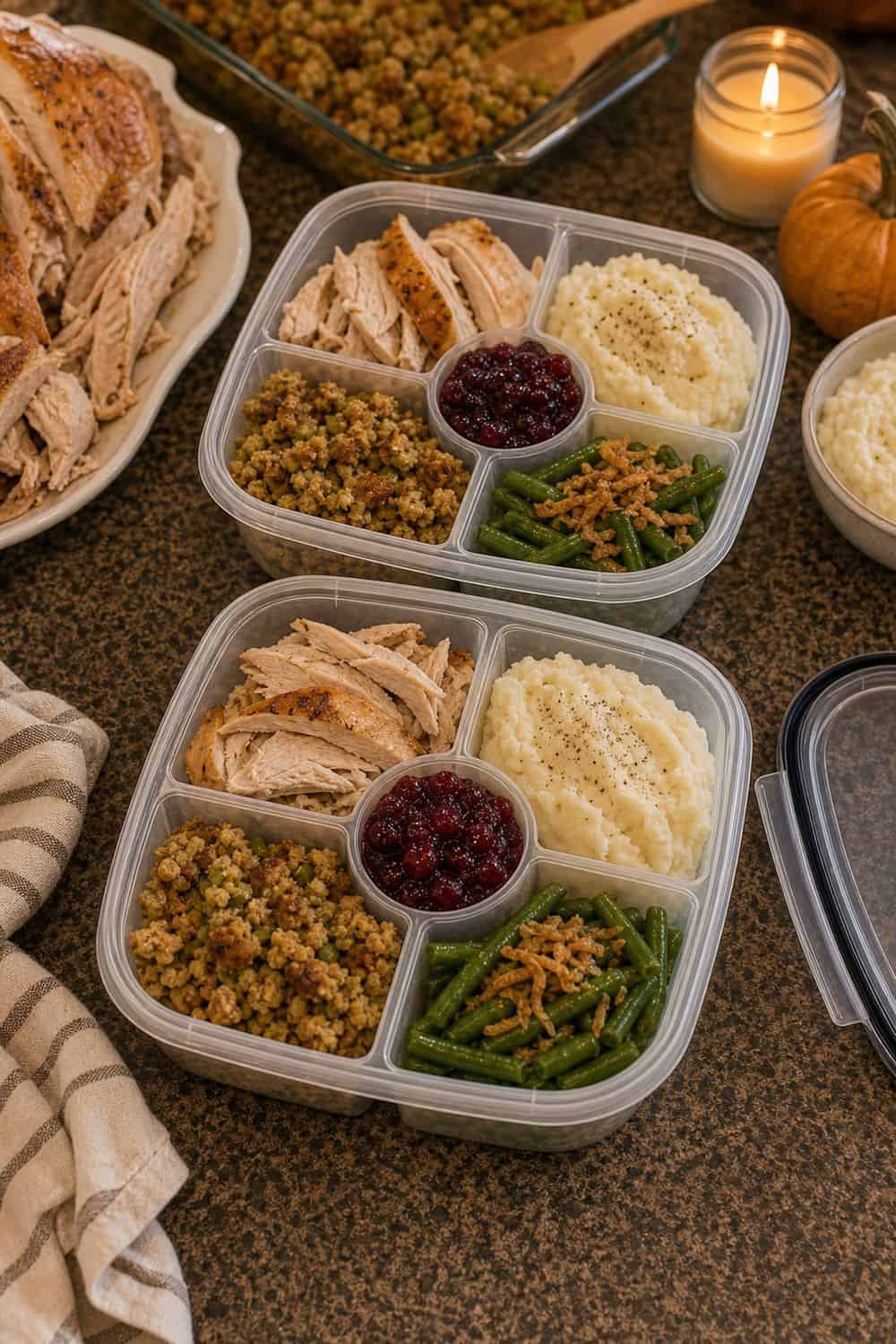
Make one or two ready-to-reheat plates while the food is already out. A divided container can hold turkey, vegetables, potatoes, stuffing, and cranberry sauce in separate sections, which keeps textures clearer and saves everyone from opening six large containers for one meal.
Keep gravy in its own small container so it can be reheated properly and added after the plate is hot. Complete portions work especially well for the day after Thanksgiving, when people want lunch quickly and the fridge is still crowded with serving-size leftovers.
12. Freezer Turkey Portions Before the Weekend Ends
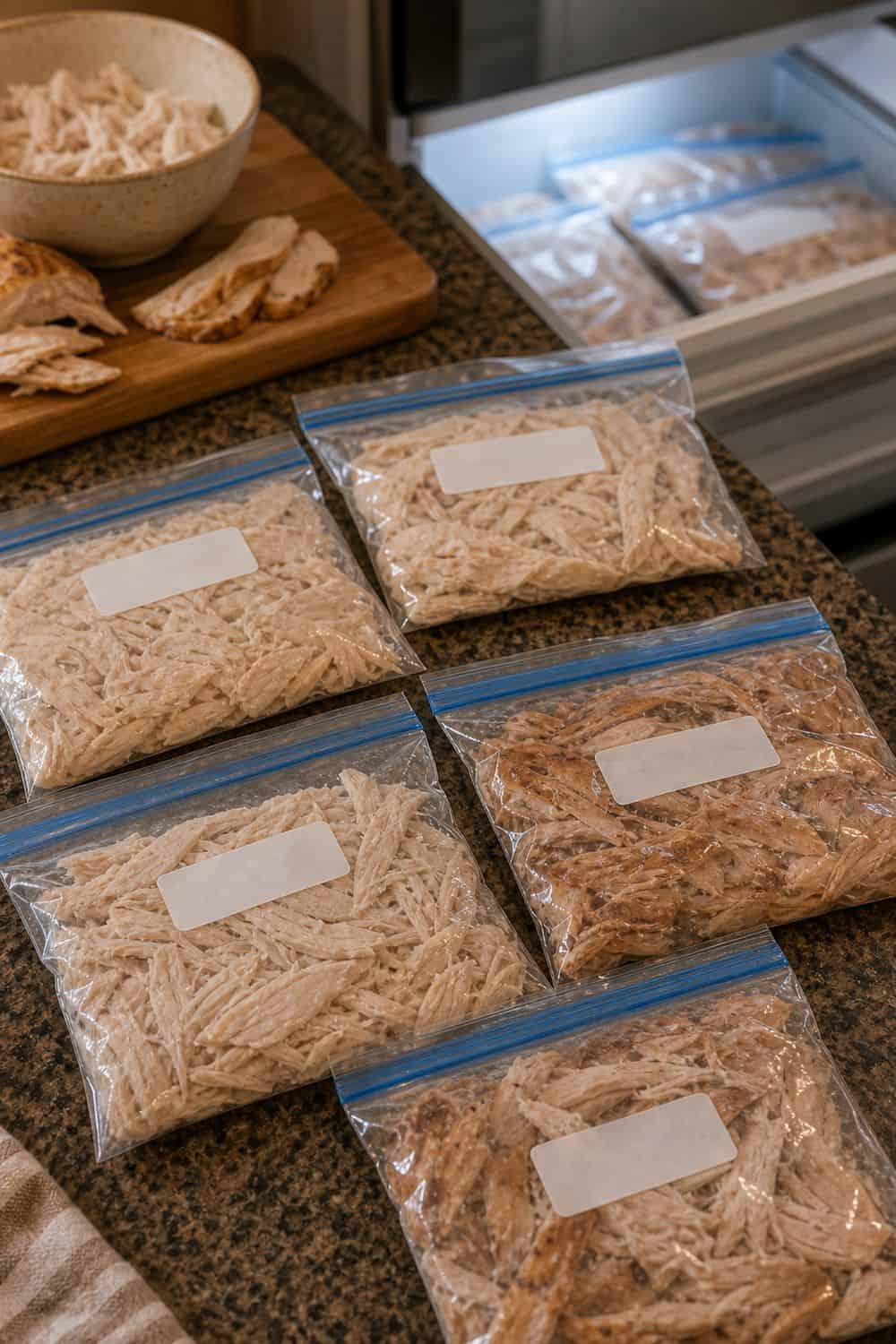
Extra turkey should move to the freezer before the safe refrigerator window closes. Pack meal-size portions in freezer-safe bags, press out excess air, and label each one by use, such as white meat, dark meat, sandwich slices, soup meat, or casserole turkey.
A little broth can help turkey stay moist if you know it will be reheated later. Freeze flatter bags so they thaw more evenly and fit beside holiday stock or casserole portions.
Plan to thaw frozen turkey in the refrigerator when possible. Delicate salads and crisp toppings are usually better eaten fresh than frozen, so give freezer space to the foods that can handle it and keep the rest in the eat-first rotation.
13. Turkey Bones for Stock Stored Separately
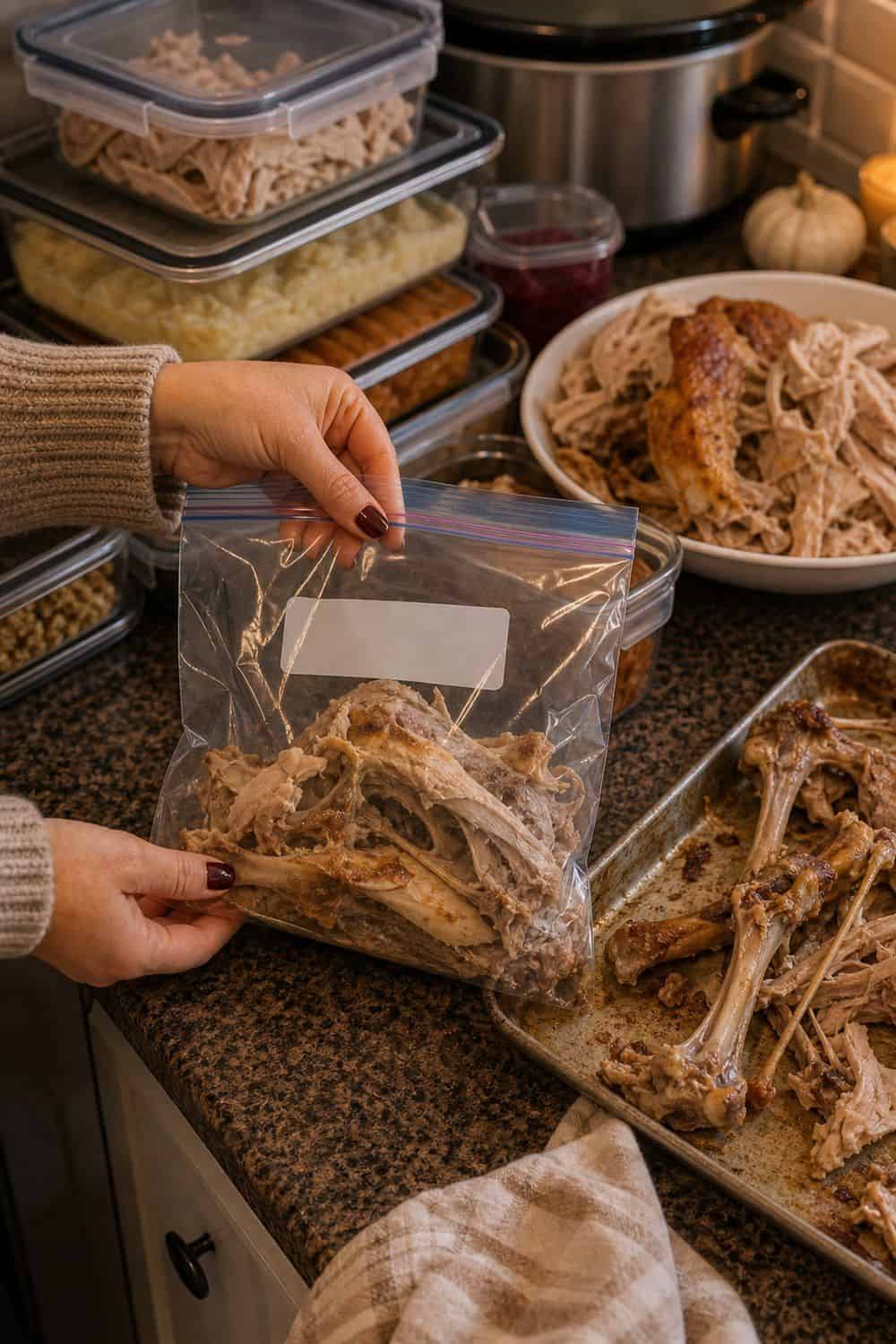
Turkey bones, the neck, and clean pan scraps can become stock, but they should not crowd the ready-to-eat leftovers. Pack them in a separate gallon freezer bag or stock container after the meal, then freeze them if you will not simmer stock soon.
Keep this separate from carved turkey meat so bones are not mixed into sandwich portions or quick plates. Skip any bones that sat out too long or were handled messily at the table. Stock is only worth making when the starting pieces have been kept safe.
14. Eat-First Labels for Leftovers
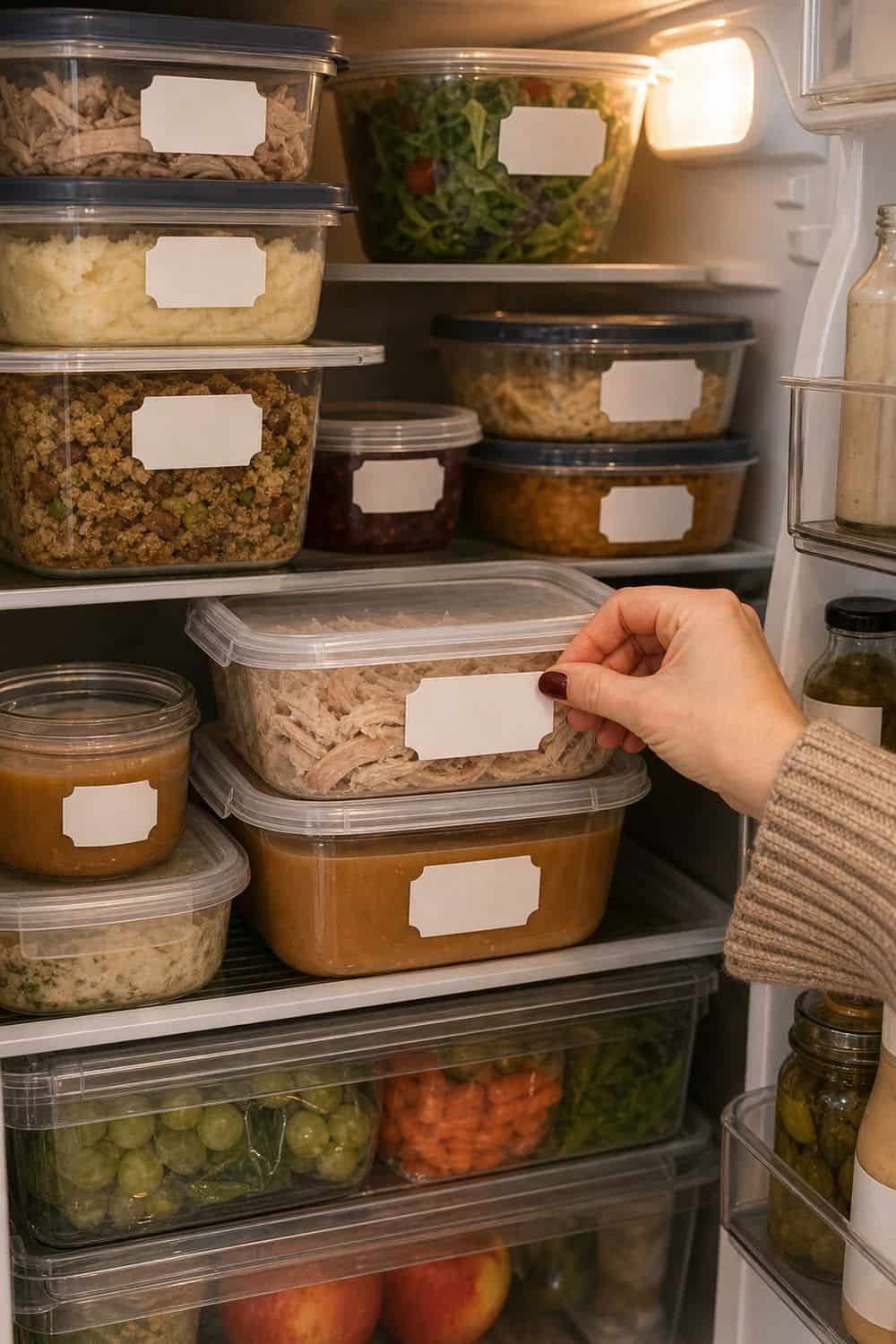
A Thanksgiving fridge fills up fast, and unlabeled containers quickly become a guessing game. Add removable labels with the dish name, date, and priority, such as gravy first, salad first, turkey by Monday, freeze today, sandwich kit, or pie. That priority note is as useful as the date because it tells everyone what should be eaten soon, what can wait, and what needs to move to the freezer before the weekend ends, especially when several people are opening the fridge.
15. Single-Portion Reheating
Storage only helps if leftovers are reheated safely later. Reheat the portion you plan to serve, not the entire container, and bring leftovers to 165 F. Stir dense foods like potatoes, casseroles, rice dishes, and stuffing so the center gets hot too.
Gravy should be reheated until bubbling or boiling, and turkey stays better when warmed with a little moisture. Discard leftovers with unknown timing, off smells, mold, odd texture, or food that sat out too long. When in doubt, do not stretch one more plate from questionable holiday food.

More Thanksgiving Leftover Storage Tips
Most cooked Thanksgiving leftovers belong in a short 3- to 4-day refrigerator window, but not every food should be treated the same way. Gravy, dressed salads, and anything creamy or meat-heavy should be near the front of your eat-first plan, while cranberry sauce may hold longer depending on the recipe and how cleanly it was served.
Keep the refrigerator at 40 F or below and the freezer at 0 F. Use shallow containers for dense dishes, thaw frozen leftovers in the refrigerator when possible, and freeze foods before the fridge window closes. Turkey, gravy, stock, stuffing, some casseroles, and some pie slices usually handle freezing better than delicate salads or crisp toppings.
Frequently Asked Questions
How long can Thanksgiving leftovers stay in the fridge?
Most cooked Thanksgiving leftovers are best treated as 3- to 4-day refrigerator foods when they were cooled and stored properly. Turkey, stuffing, casseroles, mashed potatoes, and many cooked sides fit that short window. Gravy, dressed salads, and cream-heavy dishes should usually be prioritized earlier, while cranberry sauce may last longer depending on the recipe.
How soon should Thanksgiving leftovers be refrigerated?
Perishable Thanksgiving leftovers should go into the refrigerator within two hours of serving unless they are being held safely hot or cold. Holiday tables often stay out while people talk, serve dessert, or pack food for guests, so use a timer if you know cleanup tends to drift.
What Thanksgiving leftovers should be eaten first?
Eat gravy, dressed salads, creamy sides, and opened dairy-heavy dishes early because they are more sensitive and often lose quality quickly. Turkey and stuffing should also be used within a few days. Labeling containers with eat-first notes helps the household reach for the foods that should not sit until the end of the weekend.
Can you freeze Thanksgiving leftovers?
Yes, many Thanksgiving leftovers can be frozen, especially turkey, gravy, stock, stuffing, some casseroles, and certain pie slices. Freeze them in meal-size portions before the refrigerator window closes. Quality varies by food, so delicate salads, crisp toppings, and some dairy-heavy sides may not thaw with the same texture.
How should you store leftover turkey?
Carve turkey from the bone, divide it into smaller portions, and refrigerate it in sealed containers within the safe cleanup window. Add a little broth, pan juice, or gravy if you want to help sliced meat stay moist. Freeze extra turkey in labeled portions if it will not be eaten within a few days.
How should you store Thanksgiving gravy?
Store gravy in a clean leakproof container near the front of the refrigerator and label it as an eat-first leftover. Reheat it until bubbling or boiling before serving. If the gravy sat out too long, smells off, separates strangely, or has unclear timing, it is safer to discard it.
How do you store leftover Thanksgiving pie?
Store pie based on the filling. Pumpkin, custard, cream, and egg-rich pies need refrigeration once cooled, while many fruit pies have different storage needs. Cover slices gently, avoid stacking heavy containers on top, and keep pie away from strong-smelling savory leftovers in the fridge.
What temperature should Thanksgiving leftovers be reheated to?
Reheat Thanksgiving leftovers to 165 F before eating. Use an instant read thermometer for turkey, stuffing, casseroles, and other dense foods, and stir thick leftovers so the center heats evenly. Gravy should bubble or boil before serving, and you should only reheat the portion you plan to eat.
Final Thoughts
The best Thanksgiving leftover storage ideas make the day-after meal easier before the holiday kitchen gets messy. Set out containers early, follow the two-hour rule, separate turkey, stuffing, gravy, sides, cranberry sauce, pies, and bones by purpose, then label what needs to be eaten or frozen first. A little order at the end of dinner keeps the leftovers safer, fresher, and much more useful.
Last update on 2026-09-18 / Affiliate links / Images from Amazon Product Advertising API