
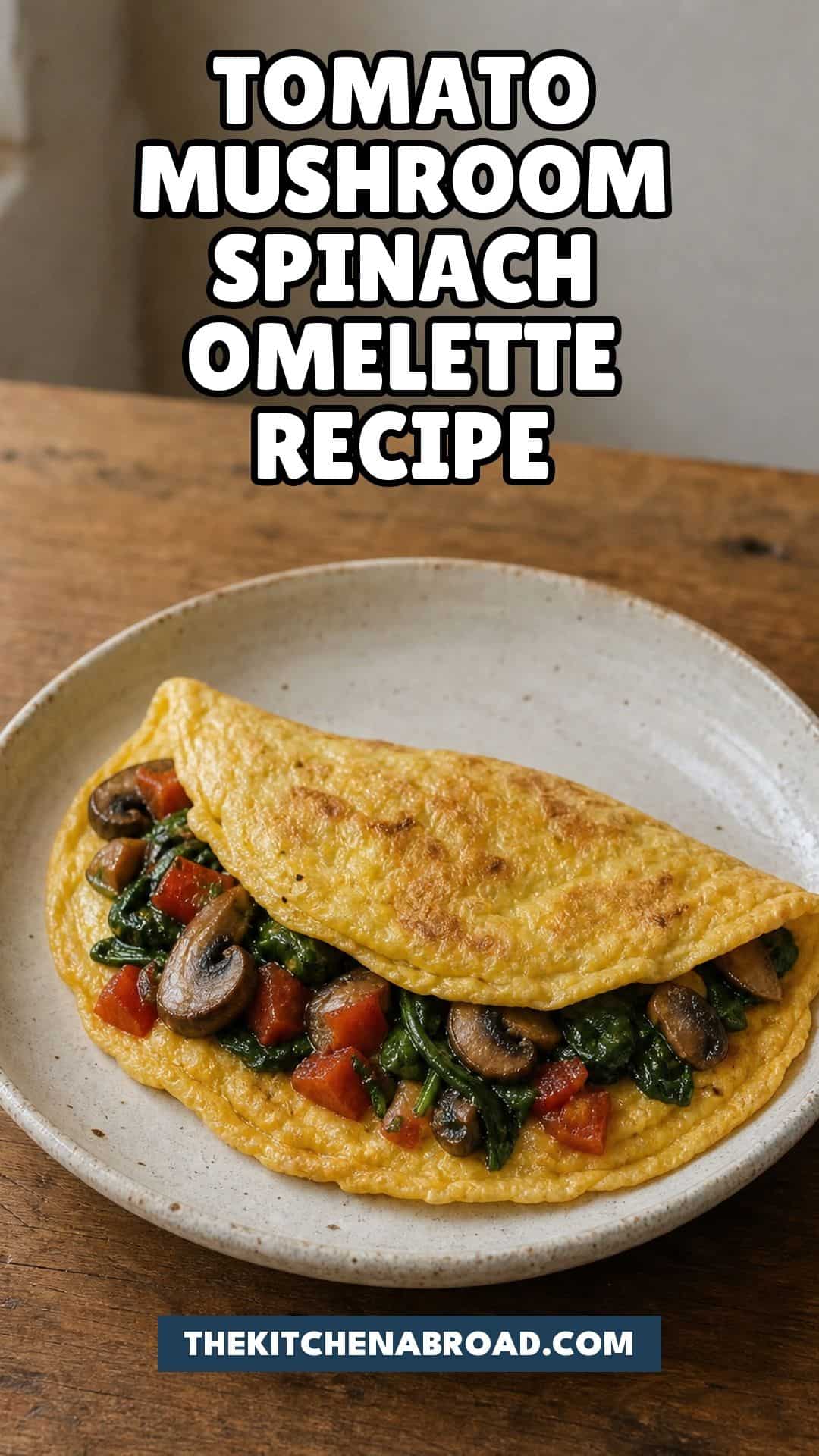
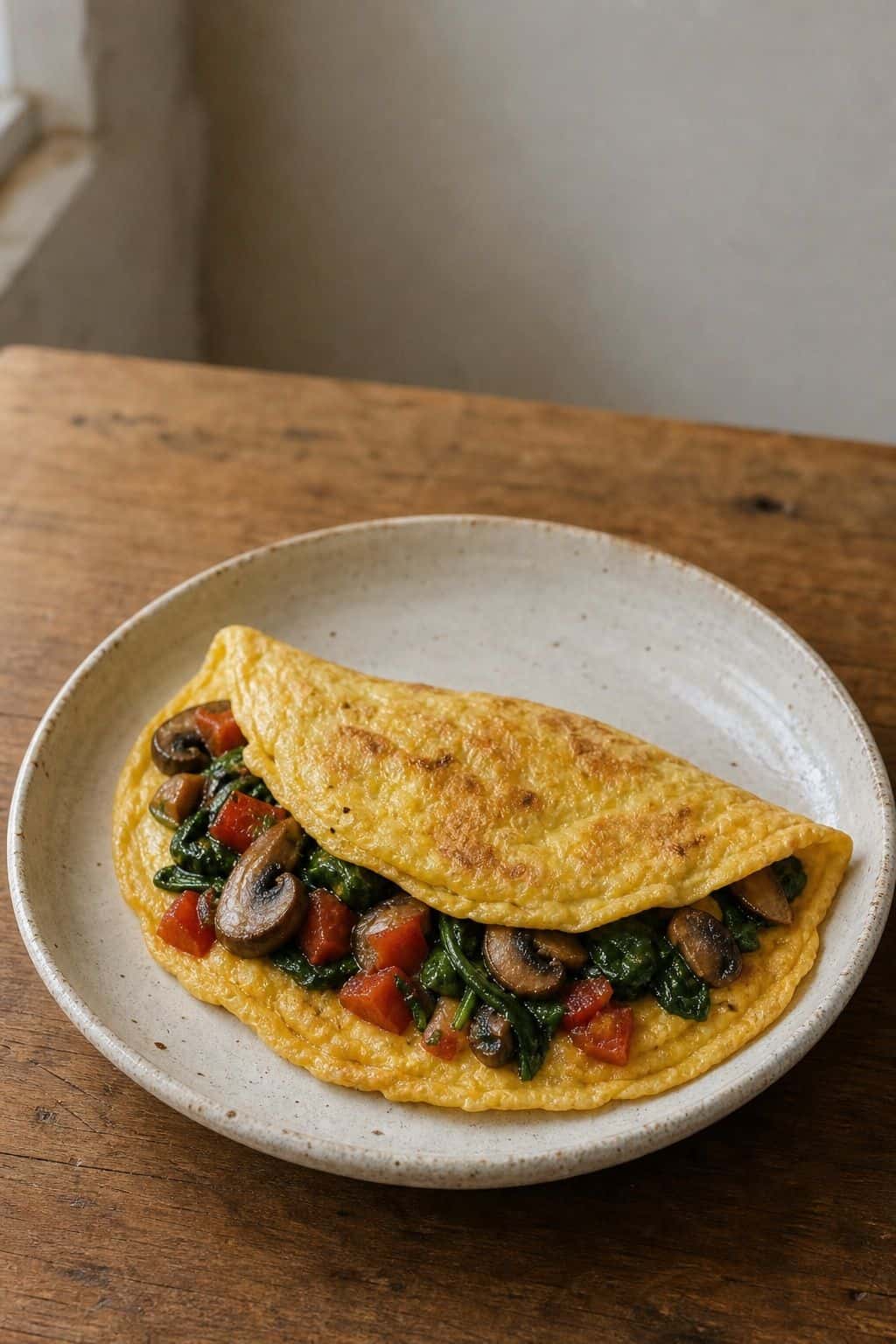
A tomato mushroom spinach omelette is made by pre-cooking sliced mushrooms, tomato, and spinach in a pan, seasoning the mixture, and then pouring beaten egg over the top and folding once the edges set. Pre-cooking the vegetables removes excess moisture that would otherwise make the egg watery and difficult to fold. The result is a fluffy, well-structured omelette ready in under 15 minutes.
This tomato mushroom spinach omelette recipe gets a lot right in a very short time. The combination of umami-rich mushrooms, sweet cooked tomato, and wilted spinach inside a creamy egg shell works well for breakfast, lunch, or a light dinner. The technique is more important than the ingredients here. Egg cookery is unforgiving of high heat and impatience, and understanding why each step exists is what separates a rubbery, torn omelette from a soft, cohesive one. This guide covers the full method, the science behind pre-cooking the vegetables, cheese options that actually work, and common mistakes to avoid.

Recommended Products


Why You Should Pre-Cook the Vegetables
Mushrooms, tomatoes, and spinach all release significant amounts of water when they cook. If you add them raw to an omelette, that water releases directly into the egg as it cooks. The result is a wet, steaming interior that prevents the egg from setting cleanly and makes folding without tearing almost impossible. The outside cooks while the inside stays runny, and you end up with a soggy omelette that falls apart as soon as you try to plate it.
Pre-cooking the vegetables in the pan before adding the egg solves this entirely. The moisture releases and evaporates during the saute step, leaving concentrated, flavorful vegetables that go into the omelette dry. Mushrooms in particular shrink dramatically when cooked, losing up to 50 percent of their volume as water evaporates. Cooking them first also develops a deeper, nuttier flavor through browning that you cannot get from adding them raw. Spinach wilts down to almost nothing, which is why you can use what looks like a large handful and end up with just a thin layer inside the finished omelette. The tomato softens and loses its watery rawness, becoming sweeter and more concentrated. All three vegetables are better in the omelette after a brief saute than they would be added fresh. According to The Spruce Eats, removing moisture from fillings before folding them into eggs is one of the most fundamental techniques for omelette success.
How to Get a Fluffy, Non-Rubbery Omelette
Rubbery omelettes have two causes: too much heat and too much time on the pan. Egg proteins begin denaturing at around 63C (145F) and are fully set and firm by 73C (163F). Cooking over high heat pushes through both temperatures quickly, resulting in tight, squeezed protein strands that expel moisture and create a dense, rubbery texture. Low to medium heat keeps the egg cooking slowly and evenly, so it sets from the outside in and remains moist inside.
The other key is knowing when to fold. The omelette is ready to fold when the edges are set and the center is still slightly glossy and moves slightly when you tilt the pan. This is the point at which residual heat will finish the cooking inside the fold without drying it out. If you wait until the surface looks completely matte and dry, the omelette is already overcooked and will be dense. Remove from heat, fold, and let it sit on the plate for 30 seconds; the interior will finish cooking from the retained heat. A non-stick pan eliminates the risk of sticking, which is the most common cause of tearing during folding. A well-seasoned cast iron pan works, but a non-stick surface gives more control for a first attempt. For another egg dish that relies on similar heat control and patience, the tortang talong uses the same principle of letting the egg set fully on one side before flipping to prevent tearing.
How to Make Tomato Mushroom Spinach Omelette Recipe
Ingredients
- 3 large eggs
- 1 tablespoon milk or water (optional, for extra fluffiness)
- Salt and black pepper to taste
- 1 tablespoon butter or olive oil
- 100g (3.5 oz) mushrooms, sliced (cremini, button, or portobello)
- 1 medium tomato, deseeded and diced
- 50g (2 large handfuls) fresh spinach
- 30g (1 oz) cheese, grated, optional (gruyere, cheddar, or feta work well)
Instructions
- Beat the eggs with the milk or water (if using), a pinch of salt, and a few grinds of black pepper. Beat until the yolks and whites are fully combined with no streaks. Set aside.
- Heat a non-stick pan over medium-high heat. Add a small drizzle of oil and cook the mushrooms for 3 to 4 minutes, stirring occasionally, until they release their liquid and brown slightly. Season lightly with salt.
- Add the diced tomato and cook for 2 minutes until softened. Add the spinach and stir for 30 to 60 seconds until just wilted. Remove the vegetable mixture from the pan and set aside. Wipe the pan clean if needed.
- Reduce heat to medium. Add the butter and swirl to coat the pan. Pour in the beaten egg and let it sit undisturbed for 20 to 30 seconds until the edges begin to set.
- Using a spatula, gently push the set edges toward the center while tilting the pan to let uncooked egg flow to the edges. Do this around the pan once or twice until most of the egg is just set but the surface is still slightly glossy.
- Scatter the vegetable filling over half of the omelette. If using cheese, add it now on top of the vegetables.
- Fold the omelette in half over the filling. Slide it onto a plate and let it rest for 30 seconds before eating. The residual heat will finish cooking the interior.
Notes
The most important variable in this recipe is pan temperature during the egg step. The pan should be warm but not hot enough to sizzle aggressively when the egg goes in. If the egg sets immediately on contact with the pan rather than spreading out slowly, the heat is too high. Pull it off the burner for 30 seconds and try again. Using butter rather than oil gives a slightly richer flavor and helps you gauge the temperature; if the butter foams gently when added, the heat is right. For a quick vegetable side that pairs well alongside this omelette for a more substantial meal, green beans in oyster sauce adds a savory, saucy element that rounds out an egg-based plate. According to The Roasted Root, adding omega-3 rich ingredients like spinach to egg dishes is one of the simplest nutritional upgrades you can make to everyday cooking.
Variations, Cheese Options, and Serving
Cheese is optional in this recipe but it adds richness and acts as a binder that holds the filling together inside the fold. Gruyere melts cleanly and has a mild nutty flavor that does not overwhelm the vegetables. Cheddar is sharper and more assertive. Feta does not melt but crumbles into the filling and adds a salty, tangy note that works particularly well with the tomato. Fresh mozzarella melts beautifully but releases moisture during cooking, so add it immediately before folding to minimize this. Pre-shredded cheese contains anti-caking agents that affect melting quality; always grate from a block. If you want a dairy-free version, skip the cheese and use a drizzle of good quality olive oil in the egg step instead of butter.
The filling in this recipe is a base to build from. Herb additions like fresh thyme, chives, or flat-leaf parsley stirred into the beaten egg or scattered over the filling before folding add brightness without complexity. A small amount of garlic, cooked briefly with the mushrooms, deepens the savory quality of the filling. Sun-dried tomatoes can replace the fresh tomato for a more concentrated, slightly chewy texture. Roasted red peppers from a jar are another good substitute that add sweetness. Caramelized onions stirred into the filling make the omelette considerably richer and sweeter. All of these variations work within the same technique; the vegetable pre-cook step applies regardless of what goes inside.
This omelette works as a standalone meal or as part of a larger spread. For breakfast it pairs well with toast or roasted potatoes. For lunch or dinner it works alongside a simple green salad or a broth-based soup. It also pairs well with other simple dishes; a bowl of vegetarian monggo guisado alongside an egg-based dish makes a satisfying and complete plant-based meal that covers protein, vegetables, and complex carbohydrates without requiring much active cooking time. Leftover omelette does not reheat well; the egg becomes rubbery in a microwave. Make it fresh and eat it immediately for the best result.
FAQ
How do you prevent an omelette from being rubbery?
Cook over medium heat rather than high, and fold when the surface is still slightly glossy rather than fully matte. Rubbery texture comes from overcooking: egg proteins tighten and expel moisture when exposed to too much heat for too long. Residual heat after folding will finish cooking the interior without overcooking the exterior.
Should you pre-cook mushrooms and spinach before adding to omelette?
Yes. Both release significant water during cooking. Adding them raw means that water goes directly into the egg, making the interior wet and preventing a clean fold. Pre-cooking removes the moisture and concentrates the flavor of both vegetables before they go inside the omelette.
What type of cheese melts best in omelettes?
Gruyere, cheddar, and fontina all melt smoothly and evenly. Gruyere is the classic French choice and has a mild flavor that does not compete with the vegetables. Feta does not melt but adds a salty, crumbly texture that works well with tomato. Avoid pre-shredded cheese; the anti-caking agents affect melting quality.
Can you make omelettes ahead of time?
No. Omelettes should be made and eaten immediately. They become rubbery when refrigerated and do not reheat well in a microwave or pan. You can pre-cook the vegetable filling up to 2 days ahead and refrigerate it; the actual egg cooking should be done fresh at serving time and takes only 3 to 4 minutes.
What fresh herbs work well in vegetable omelettes?
Chives add a mild onion note without overpowering the egg. Flat-leaf parsley adds freshness. Fresh thyme pairs particularly well with mushrooms and gives the filling an earthy, savory depth. Tarragon is classic in French omelettes and works well with tomato. Stir delicate herbs into the beaten egg rather than adding them to the hot pan, where they can burn and turn bitter.
Key Takeaways
- Always pre-cook the mushrooms, tomato, and spinach to remove moisture before adding them to the egg; raw vegetables will make the omelette wet and impossible to fold cleanly.
- Cook the egg over medium heat only; high heat causes the proteins to seize and creates the rubbery texture that makes omelettes unpleasant.
- Fold when the surface is still slightly glossy; the interior will finish cooking from residual heat after folding and the result will be creamy rather than dry.
- Use a non-stick pan for the egg step; sticking is the primary cause of omelettes tearing during the fold.
- Grate cheese from a block immediately before using; pre-shredded cheese contains anti-caking agents that prevent proper melting.
Final Thoughts
A good tomato mushroom spinach omelette is a technique exercise as much as it is a recipe. Once you understand why the vegetables need to be pre-cooked, why the heat must stay moderate, and why folding at the right moment matters, you can apply that understanding to any omelette filling combination. The specific vegetables in this recipe are chosen because they work well together and are almost always available, but the approach transfers directly to whatever you have on hand. Get the technique right once and it becomes fast and reliable. This is the kind of recipe that pays off differently each time because the technique, once understood, opens up an entire category of fast, satisfying meals built on a base of eggs and whatever vegetables need using.
Tomato Mushroom Spinach Omelette
A tomato mushroom spinach omelette is made by pre-cooking sliced mushrooms, tomato, and spinach in a pan, seasoning the mixture, and then pouring beaten egg over the top and folding once the edges set.
Ingredients
- 3 large eggs
- 1 tablespoon milk or water (optional, for extra fluffiness)
- Salt and black pepper to taste
- 1 tablespoon butter or olive oil
- 100g (3.5 oz) mushrooms, sliced (cremini, button, or portobello)
- 1 medium tomato, deseeded and diced
- 50g (2 large handfuls) fresh spinach
- 30g (1 oz) cheese, grated, optional (gruyere, cheddar, or feta work well)
Instructions
- Beat the eggs with the milk or water (if using), a pinch of salt, and a few grinds of black pepper. Beat until the yolks and whites are fully combined with no streaks. Set aside.
- Heat a non-stick pan over medium-high heat. Add a small drizzle of oil and cook the mushrooms for 3 to 4 minutes, stirring occasionally, until they release their liquid and brown slightly. Season lightly with salt.
- Add the diced tomato and cook for 2 minutes until softened. Add the spinach and stir for 30 to 60 seconds until just wilted. Remove the vegetable mixture from the pan and set aside. Wipe the pan clean if needed.
- Reduce heat to medium. Add the butter and swirl to coat the pan. Pour in the beaten egg and let it sit undisturbed for 20 to 30 seconds until the edges begin to set.
- Using a spatula, gently push the set edges toward the center while tilting the pan to let uncooked egg flow to the edges. Do this around the pan once or twice until most of the egg is just set but the surface is still slightly glossy.
- Scatter the vegetable filling over half of the omelette. If using cheese, add it now on top of the vegetables.
- Fold the omelette in half over the filling. Slide it onto a plate and let it rest for 30 seconds before eating. The residual heat will finish cooking the interior.
Notes
The most important variable in this recipe is pan temperature during the egg step. The pan should be warm but not hot enough to sizzle aggressively when the egg goes in. If the egg sets immediately on contact with the pan rather than spreading out slowly, the heat is too high. Pull it off the burner for 30 seconds and try again. Using butter rather than oil gives a slightly richer flavor and helps you gauge the temperature; if the butter foams gently when added, the heat is right. For a quick vegetable side that pairs well alongside this omelette for a more substantial meal, green beans in oyster sauce adds a savory, saucy element that rounds out an egg-based plate. According to The Roasted Root , adding omega-3 rich ingredients like spinach to egg dishes is one of the simplest nutritional upgrades you can make to everyday cooking.
Last update on 2026-08-08 / Affiliate links / Images from Amazon Product Advertising API