
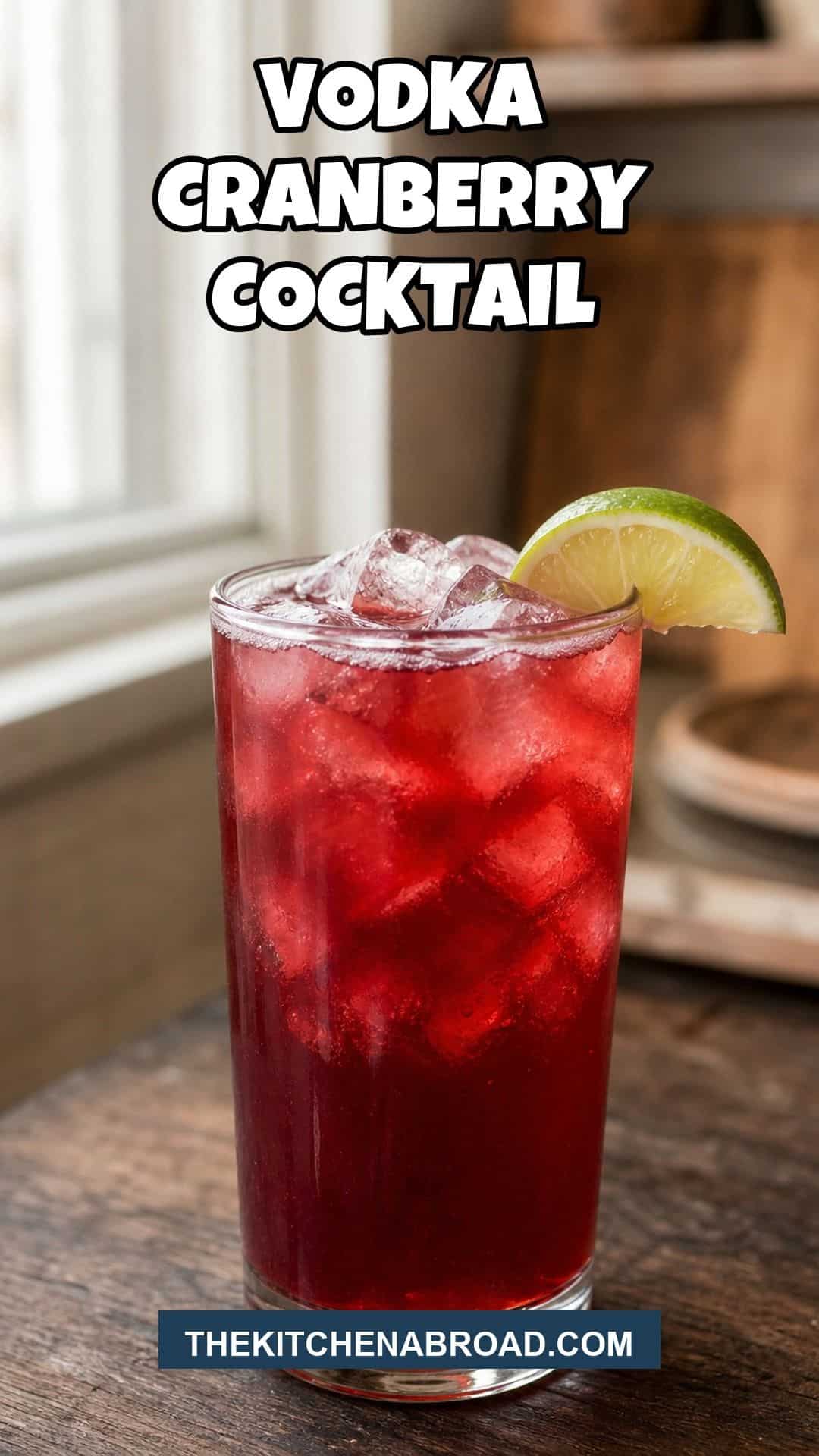
A proper vodka cranberry is built on a 1 to 2 ratio: 1.5 to 2 oz vodka, 3 to 4 oz unsweetened 100 percent cranberry juice, and the squeeze from half a lime, served in a highball over ice with a lime wedge. The 100 percent juice and the lime are the two things almost every recipe online drops, and both are what separate the drink from sugar water. Ocean Spray invented it in 1945 as the Red Devil to push their cranberry stock; the bar trade renamed it the Cape Codder in the 1960s.
A vodka cranberry tastes like sugar water without the lime, and almost every recipe online forgets it. The drink is built on a 1 to 2 vodka-to-cranberry ratio with a hard rule about which juice to use (100 percent cranberry, not the supermarket cocktail blend), and the fresh lime is the third leg that keeps the whole thing from collapsing into syrup. Get those three things right and a vodka cranberry is one of the cleanest highballs in the cocktail canon. Get one wrong and it is the drink most people remember from a 2005 sorority party.
Gear That Helps Here
The vodka cranberry is a built drink, which means no shaker, no strainer, and no glass other than a tall highball. The single piece of gear that matters is a jigger. Eyeballing the vodka pour from the bottle is what turns a 1.5 oz pour into a 3 oz pour, and that is the difference between a drink and an accident. A small handheld lime juicer is the second nice thing to own; it presses every drop out of half a lime in under five seconds.
The vodka does not need to be top shelf. A mid-range bottle is the sweet spot. The cranberry juice does most of the flavor work and the lime does the brightness; a luxury vodka is wasted here. The cranberry juice is where the budget matters, because the supermarket cocktail blend is a different drink entirely.


Recommended Reads
- Cosmopolitan Cocktail
- Purple Rain Cocktail
- White Russian Cocktail
- Best Fall Cocktails
- Best Halloween Cocktail Ideas
Where the Vodka Cranberry (and the Cape Codder) Came From
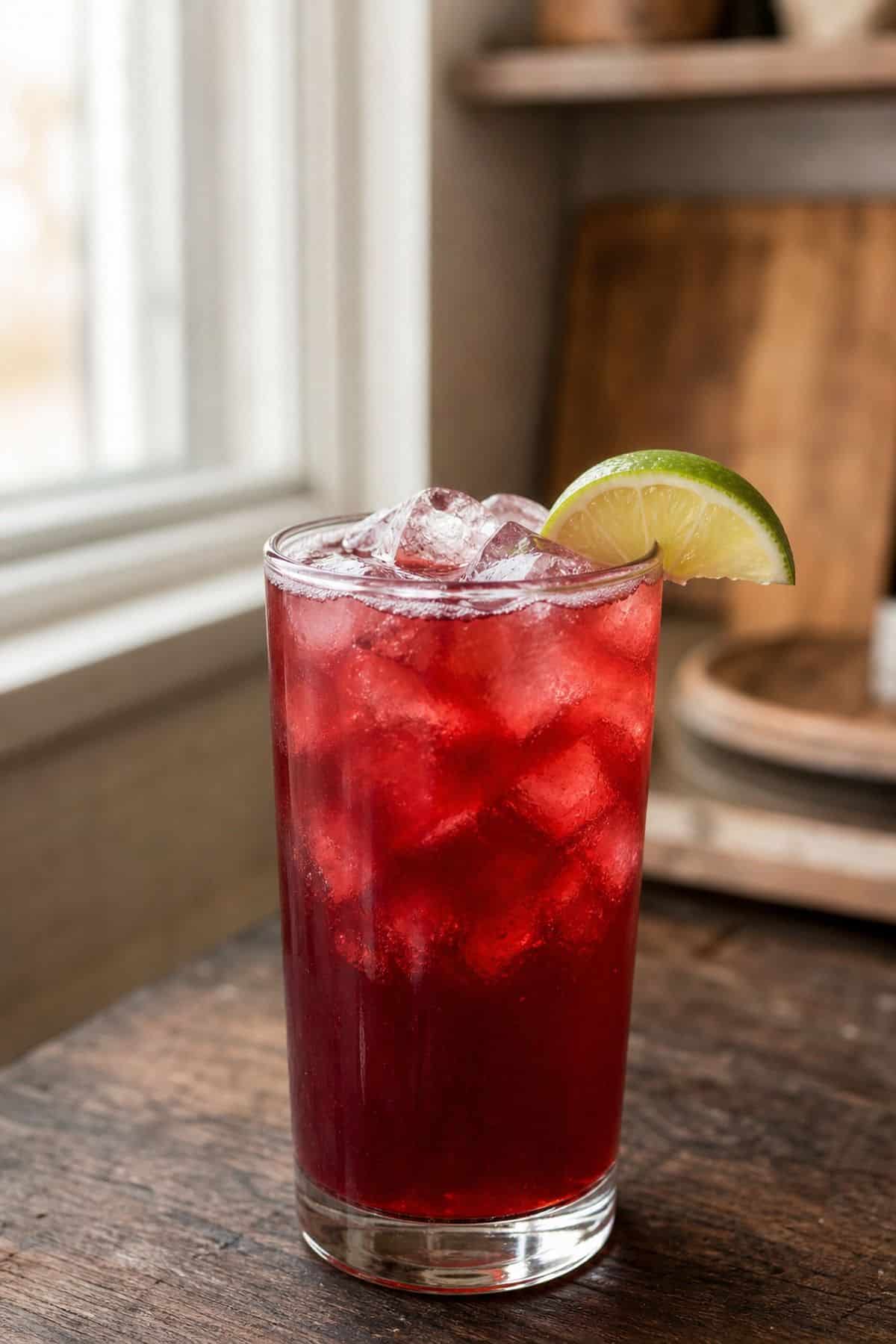
The drink was a marketing exercise before it was a cocktail. Ocean Spray, the New England farmer cooperative that had been pressing cranberries on Cape Cod since 1930, was sitting on a glut of unsold juice in 1945 and went looking for ways to move it. Their answer was a two-ingredient mixed drink they called the Red Devil: vodka and cranberry juice over ice. They put it on a promotional flyer, talked it up to bar accounts, and waited.
The name did not survive the next decade. By the early 1950s the McCarthy hearings had made “Red” a politically loaded word in America, and the Red Devil, with its red juice and its accidental association, was not going to stay on a printed cocktail menu. The bar trade quietly renamed it. By the time the New Yorker ran a print mention in 1965, the drink was called the Cape Codder, after the New England place where the cranberry came from. The new name held.
The “vodka cranberry” label that most home bartenders use today is the casual short form. Order one in a bar that takes its cocktails seriously and you will get a Cape Codder, made with the lime that almost every home recipe drops. The two names refer to the same drink. The lime is the silent test of which version a bartender is making.
A Few Notes on the Ingredients
The vodka is the simplest decision in the recipe. Any clean, mid-shelf bottle works (Tito’s, Smirnoff, Ketel One, Absolut, Stoli are all fine). The drink does not reward a luxury bottle; the cranberry juice flattens any subtle flavor differences a premium vodka might bring. Save the top-shelf bottle for a martini, where the spirit is the entire point.
The cranberry juice is the decision that breaks the drink. There are two products on the shelf that look almost identical: 100 percent cranberry juice (extremely tart, no added sugar, sometimes labeled “pure” or “unsweetened”) and cranberry juice cocktail (sweetened with sugar or apple juice, much lighter color, far sweeter). Recipe writers and home bartenders frequently grab the cocktail blend without checking the label. The cocktail blend turns the drink into liquid candy. The 100 percent juice is what gives the cocktail its signature edge of bitterness and the deep ruby color. Ocean Spray sells both; the bottle to look for says “100% Juice” in the corner. If you can only find the cocktail blend, cut the sweetness by adding extra lime and skipping the sugary garnishes.
The lime is non-negotiable, and it must be fresh. Bottled lime juice from the supermarket has a flat, slightly metallic flavor that fights with the cranberry instead of brightening it. Half a fresh lime, squeezed at the moment of building, is what turns a sweet two-ingredient drink into a balanced cocktail. The acid is what lets you taste the cranberry as a flavor instead of as a wall of sugar. Skip the lime and the drink is incomplete.
Recipe: Vodka Cranberry
Prep time: 3 minutes | Cook time: 0 minutes | Total time: 3 minutes | Serves: 1
Ingredients
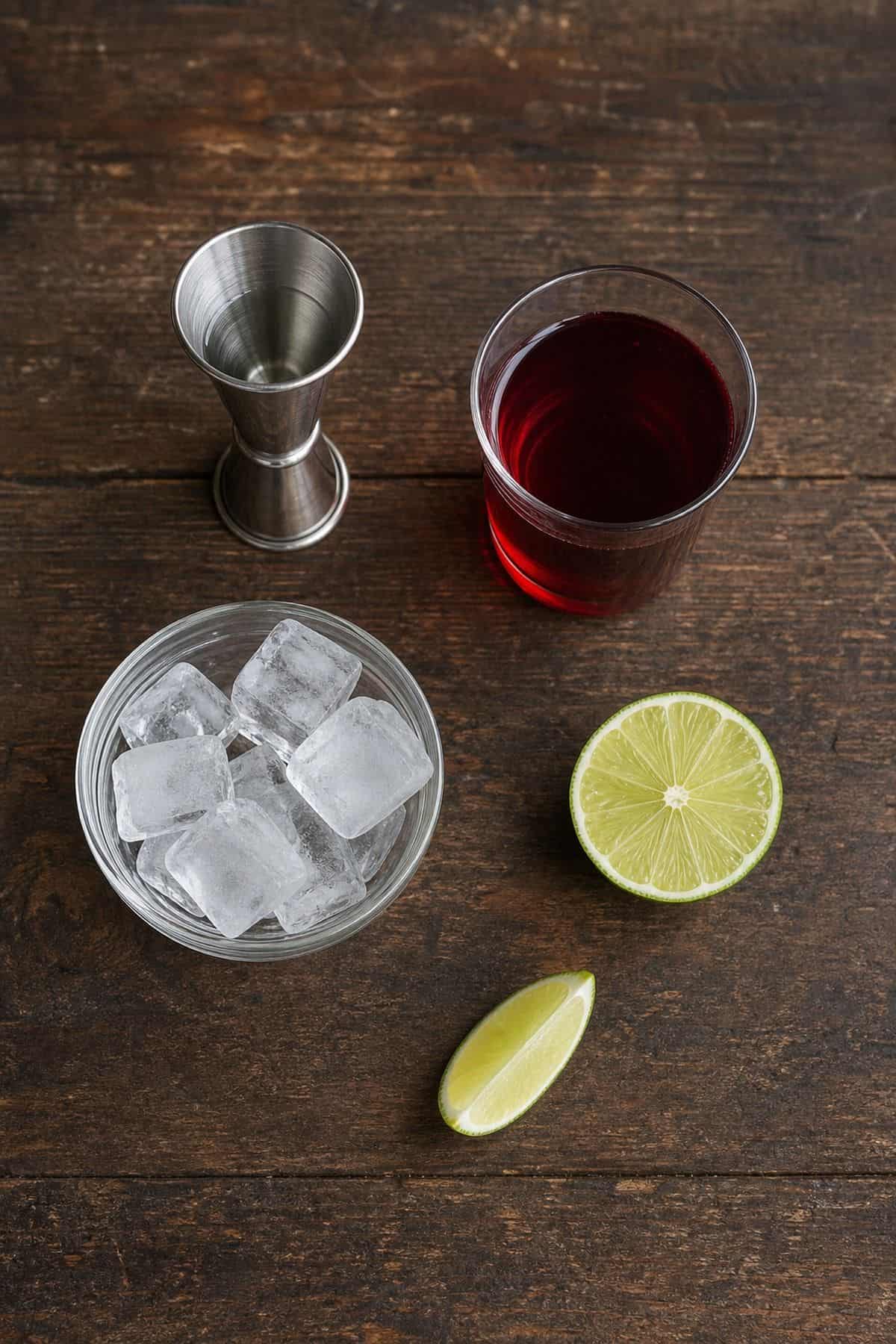
- 45 to 60 ml (1.5 to 2 oz) vodka
- 90 to 120 ml (3 to 4 oz) 100 percent cranberry juice, unsweetened, well chilled
- 15 ml (0.5 oz) fresh lime juice, from about half a lime
- 1 lime wedge, for garnish
- Ice, for the glass
Instructions
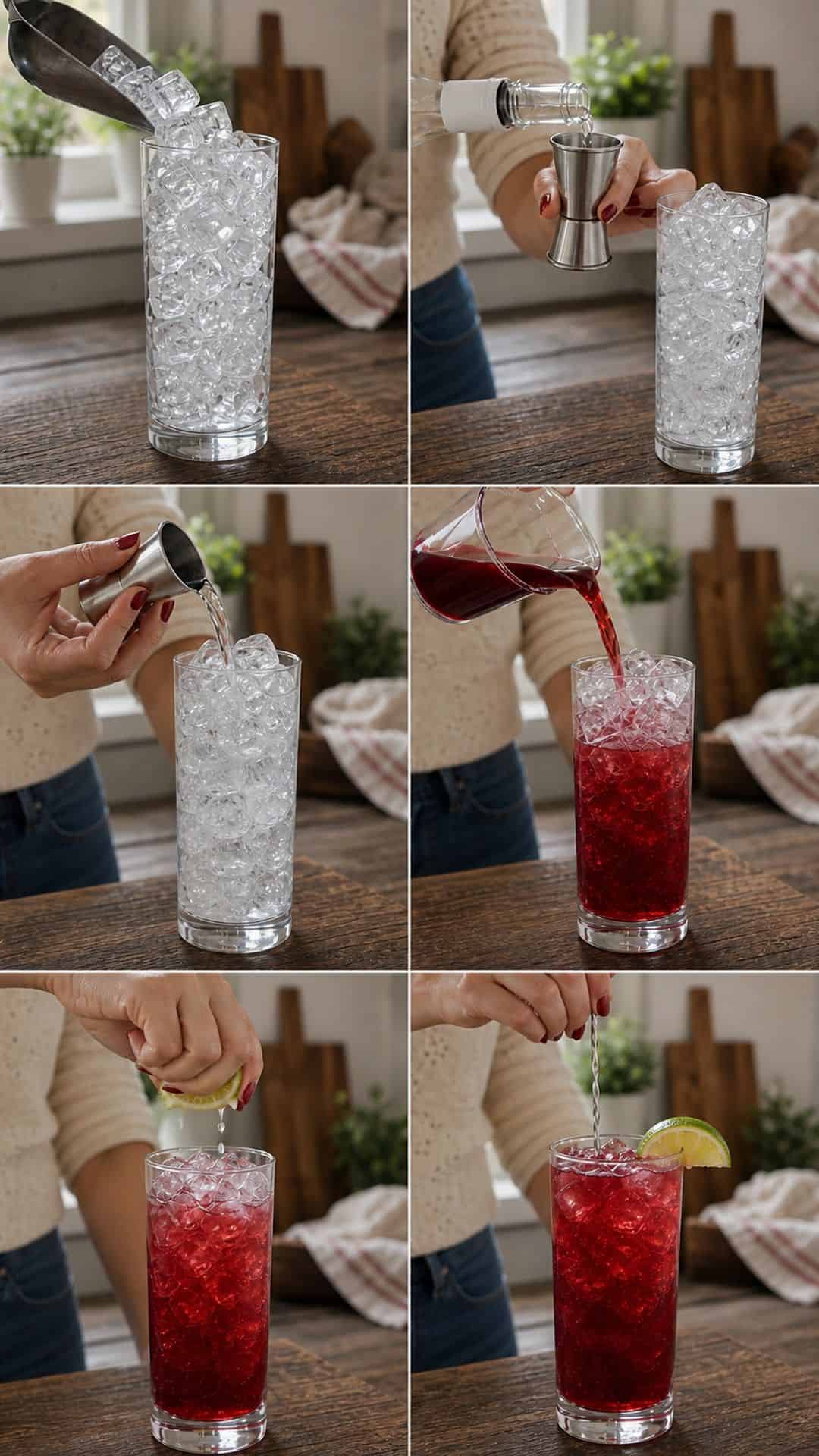
- Fill a tall highball or Collins glass to the rim with ice. The drink is built (not shaken), so the ice in the glass is what does the chilling and dilution work.
- Measure 45 to 60 ml (1.5 to 2 oz) vodka with a jigger and pour over the ice. The lower end of the range gives a balanced drink; the upper end gives a stiff one.
- Add 90 to 120 ml (3 to 4 oz) chilled 100 percent cranberry juice. Pour to within about a centimeter of the rim, leaving room for the lime.
- Squeeze the juice from half a fresh lime (about 15 ml or 0.5 oz) directly into the glass. Drop the spent lime half in or pull it out, depending on how much pith bitterness you want.
- Stir gently with a bar spoon for 5 to 8 seconds, just enough to integrate the juice and vodka. Over-stirring waters the drink down.
- Garnish with a fresh lime wedge on the rim. Serve immediately, with a short straw if you like.
Notes
The ratio is the spec. A 1 to 2 vodka-to-cranberry is the classic; a 1 to 3 is the lighter, longer version some bars pour. Anything tighter than 1 to 2 starts to taste like a vodka shot with juice on top; anything looser than 1 to 3 is a cranberry juice with vodka memory.
If 100 percent cranberry juice is too tart for your palate, add 0.25 oz simple syrup or a small bar spoon of sugar. That is closer to the original 1945 Red Devil spec, before bars started leaning on the cocktail blend. The added sugar lets you keep the deep flavor of the real juice while softening the edge.
For a stronger drink without throwing off the ratio, use the same proportions and scale up: 60 ml (2 oz) vodka, 120 ml (4 oz) cranberry, 15 ml (0.5 oz) lime in a larger glass with more ice. The 1 to 2 spec holds.
Tips and Variations
Sea Breeze (Add Grapefruit Juice)
The Sea Breeze is the Cape Codder with grapefruit juice subbed for some of the cranberry. The classic build is 45 ml (1.5 oz) vodka, 60 ml (2 oz) cranberry juice, 60 ml (2 oz) fresh grapefruit juice, served in a highball over ice with a lime wedge. The grapefruit cuts the cranberry sweetness and pushes the drink toward something that reads more like a citrus highball than a juice cocktail.
Fresh grapefruit is worth the extra step here. Bottled grapefruit juice is generally too sweet for this drink. A pink or ruby grapefruit gives the prettiest color.
Bay Breeze (Add Pineapple Juice)
The Bay Breeze swaps part of the cranberry for pineapple juice. The build is 45 ml (1.5 oz) vodka, 60 ml (2 oz) cranberry juice, 60 ml (2 oz) pineapple juice, in a highball with ice and a lime wedge. The pineapple turns the drink rounder and more tropical, and the resulting color is a pink-gold rather than ruby red.
Shake this one in a shaker before straining over fresh ice if you want the signature foam cap that pineapple juice creates. Built and stirred is fine too; the foam is optional.
Cosmopolitan Crossover
The Cosmopolitan is the up-glass cousin of the vodka cranberry: vodka, cranberry juice, fresh lime, plus triple sec, shaken hard and strained into a chilled coupe. The drink is the same flavor family with a different format and one extra ingredient. If you have a bottle of triple sec on the bar, the Cosmo is the natural upgrade.
Use the same 100 percent cranberry juice rule. The triple sec brings the orange note and a little extra sweetness that lets the drink work in coupe size, where the highball dilution is no longer there to soften the spirit.
Holiday Rosemary Cranberry
For Thanksgiving or Christmas service, add a rosemary sprig and a few fresh cranberries to the glass before pouring. Press the rosemary against the side of the glass with the bar spoon to release the oils, then build the drink as written. The result is a savory-herbal note that pairs with roast turkey, baked ham, or anything off a winter table.
A second holiday-friendly move is a frozen-cranberry garnish. Float four or five fresh cranberries on top of the drink; they look like jewels in the ruby juice and chill the glass a little extra as they sit.
Batch for a Pitcher
The drink batches cleanly for parties. For six servings, combine 270 ml (9 oz) vodka, 540 ml (18 oz) chilled 100 percent cranberry juice, and 90 ml (3 oz) fresh lime juice in a large pitcher. Stir, taste, and adjust with a touch of simple syrup if the cranberry is too tart for the group. Serve over ice in individual highball glasses with a lime wedge on each rim.
Add the cranberry juice at the last possible moment if the pitcher is sitting out for more than an hour. The juice oxidizes and the bright ruby color dulls toward brown after long exposure to air. A pitcher is best built within 30 minutes of serving.
What to Serve It With
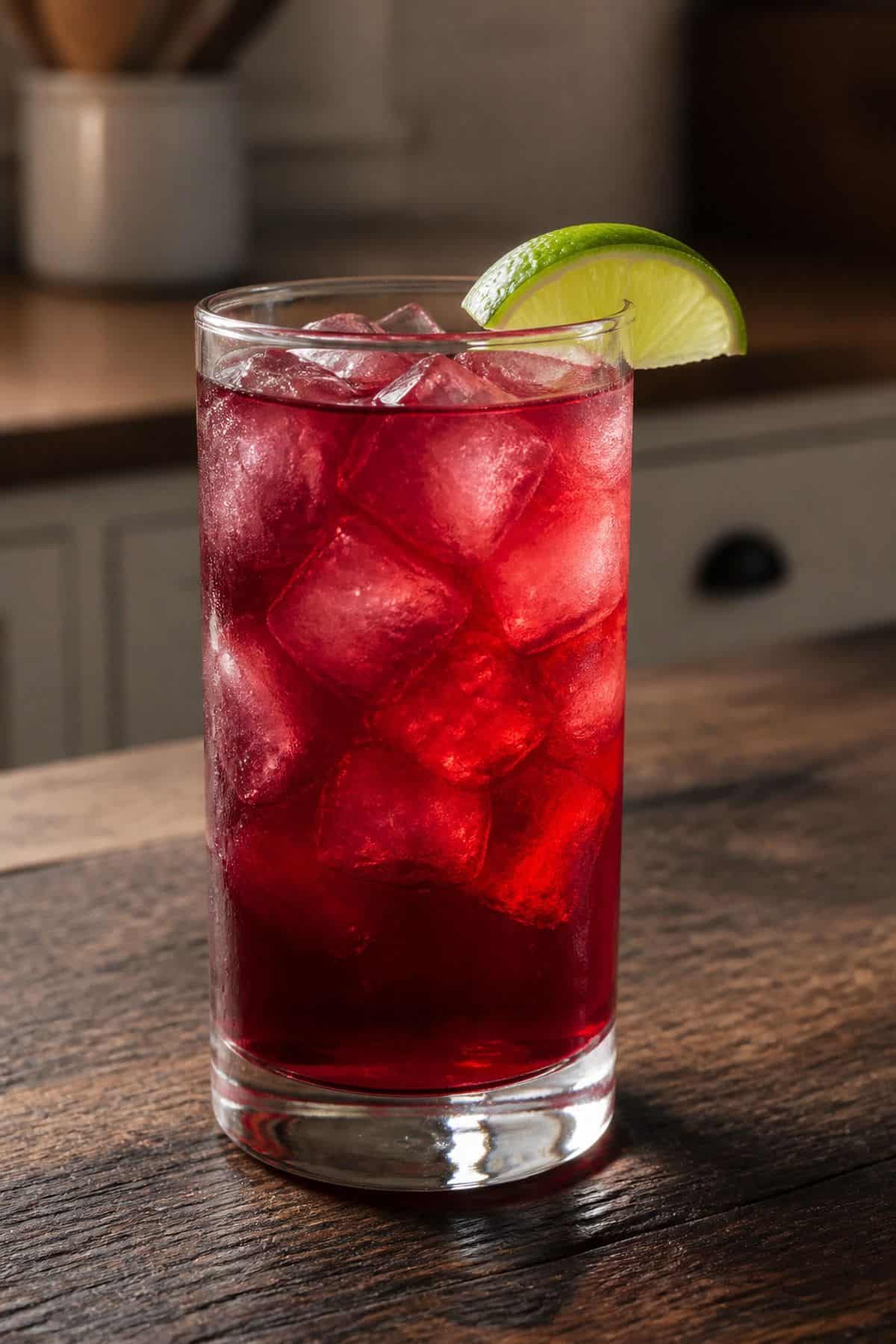
The vodka cranberry is a clean, acidic highball that pairs with salty, savory food the way a good lager does. Thanksgiving and Christmas meals are the obvious match: roast turkey, baked ham, cranberry sauce on the plate (yes, the cranberry redundancy is part of the appeal), green bean casserole, stuffing. The drink reads as a refresher between bites of rich food, which is exactly what a long holiday table needs.
Outside the holidays, pour one alongside a charcuterie plate (hard cheeses, dry-cured ham, olives, almonds), a sushi platter, a Thai or Vietnamese meal, or a simple grilled chicken dinner. The acid in the cranberry and lime cuts through fat and the vodka stays out of the way.
What the drink does not love is heavily sweet or saucy food. Barbecue with a sticky glaze, dessert, syrupy stir-fries; the drink is already carrying sugar from the juice, and stacking more sweetness against it tips everything into one-note territory.
Frequently Asked Questions
What’s the ratio of vodka to cranberry juice?
The classic ratio is 1 to 2: one part vodka to two parts 100 percent cranberry juice, plus 0.5 oz fresh lime juice. A 1 to 3 build (1.5 oz vodka to 4.5 oz cranberry) is the lighter, longer version. Anything tighter than 1 to 2 tastes like a vodka shot with juice on top.
Is a vodka cranberry the same as a Cape Codder?
Yes. The Cape Codder is the formal bar name for the drink; the vodka cranberry is the casual home name. Both refer to vodka, cranberry juice, and a fresh lime wedge over ice in a highball glass. The drink was originally called the Red Devil when Ocean Spray invented it in 1945 and was renamed the Cape Codder during the McCarthy era of the early 1950s.
What kind of cranberry juice is best for a vodka cranberry?
100 percent unsweetened cranberry juice, not the supermarket cocktail blend. The cocktail blend is sweetened with sugar or apple juice and turns the drink into liquid candy. Ocean Spray sells both; look for the bottle that says “100% Juice” in the corner of the label. The 100 percent juice is tart on its own, and the vodka and lime are what balance it into a cocktail.
What vodka is best for a Cape Codder?
A mid-shelf vodka is the sweet spot. Tito’s, Smirnoff, Ketel One, Absolut, and Stoli are all fine. The cranberry juice flattens any subtle differences a top-shelf bottle might bring, so the premium spend is wasted here. Skip the bargain-bin bottles; the flavor floor matters, but the ceiling does not.
What’s the difference between a Cape Codder, a Sea Breeze, and a Bay Breeze?
All three are vodka highballs from the same family. The Cape Codder is vodka and cranberry juice. The Sea Breeze adds grapefruit juice to the cranberry. The Bay Breeze adds pineapple juice instead. A fourth sibling, the Madras, adds orange juice to the cranberry. The vodka base and the lime wedge garnish stay constant; the second juice is what changes the drink.
Key Takeaways
- Use a 1 to 2 ratio: 1.5 to 2 oz vodka, 3 to 4 oz cranberry juice, plus the juice from half a lime.
- Buy 100 percent unsweetened cranberry juice, not cranberry juice cocktail. Check the label for “100% Juice.”
- The fresh lime is the third leg of the recipe. Bottled lime juice is not the same; squeeze a real one.
- Build the drink in a tall highball over ice. No shaker, no strainer, no chilled glass needed.
- Ocean Spray invented the drink in 1945 as the Red Devil; it was renamed the Cape Codder in the early 1950s during the McCarthy era.
Final Thoughts
The vodka cranberry has had a rough public reputation for about two decades, mostly because the version people remember from college bars used cranberry juice cocktail with no lime and a heavy vodka pour. The 1945 spec, built with the real juice and the fresh citrus, is a different drink. It is one of the cleanest, easiest highballs to put together, and the ingredient list is short enough to keep stocked at home year-round.
The single hardest decision happens at the grocery store, in front of the Ocean Spray shelf. Pick the “100% Juice” bottle and the rest of the recipe takes care of itself. Pick the cocktail blend and you have signed up for a different, sweeter drink no matter how much lime you add.
Pour one on Thanksgiving, on a Friday night with takeout, alongside a charcuterie plate, or at the end of a long week when a cold highball with three ingredients sounds like exactly the right idea. The drink has been doing its job since 1945. The spec has not changed; the name on the printed menu has.
Vodka Cranberry
A proper vodka cranberry is built on a 1 to 2 ratio: 1.5 to 2 oz vodka, 3 to 4 oz unsweetened 100 percent cranberry juice, and the squeeze from half a lime, served in a highball over ice with a lime wedge.
Ingredients
- 45 to 60 ml (1.5 to 2 oz) vodka
- 90 to 120 ml (3 to 4 oz) 100 percent cranberry juice, unsweetened, well chilled
- 15 ml (0.5 oz) fresh lime juice, from about half a lime
- 1 lime wedge, for garnish
- Ice, for the glass
Instructions
- Fill a tall highball or Collins glass to the rim with ice. The drink is built (not shaken), so the ice in the glass is what does the chilling and dilution work.
- Measure 45 to 60 ml (1.5 to 2 oz) vodka with a jigger and pour over the ice. The lower end of the range gives a balanced drink; the upper end gives a stiff one.
- Add 90 to 120 ml (3 to 4 oz) chilled 100 percent cranberry juice. Pour to within about a centimeter of the rim, leaving room for the lime.
- Squeeze the juice from half a fresh lime (about 15 ml or 0.5 oz) directly into the glass. Drop the spent lime half in or pull it out, depending on how much pith bitterness you want.
- Stir gently with a bar spoon for 5 to 8 seconds, just enough to integrate the juice and vodka. Over-stirring waters the drink down.
- Garnish with a fresh lime wedge on the rim. Serve immediately, with a short straw if you like.
Notes
The ratio is the spec. A 1 to 2 vodka-to-cranberry is the classic; a 1 to 3 is the lighter, longer version some bars pour. Anything tighter than 1 to 2 starts to taste like a vodka shot with juice on top; anything looser than 1 to 3 is a cranberry juice with vodka memory.
If 100 percent cranberry juice is too tart for your palate, add 0.25 oz simple syrup or a small bar spoon of sugar. That is closer to the original 1945 Red Devil spec, before bars started leaning on the cocktail blend. The added sugar lets you keep the deep flavor of the real juice while softening the edge.
Last update on 2026-08-24 / Affiliate links / Images from Amazon Product Advertising API