

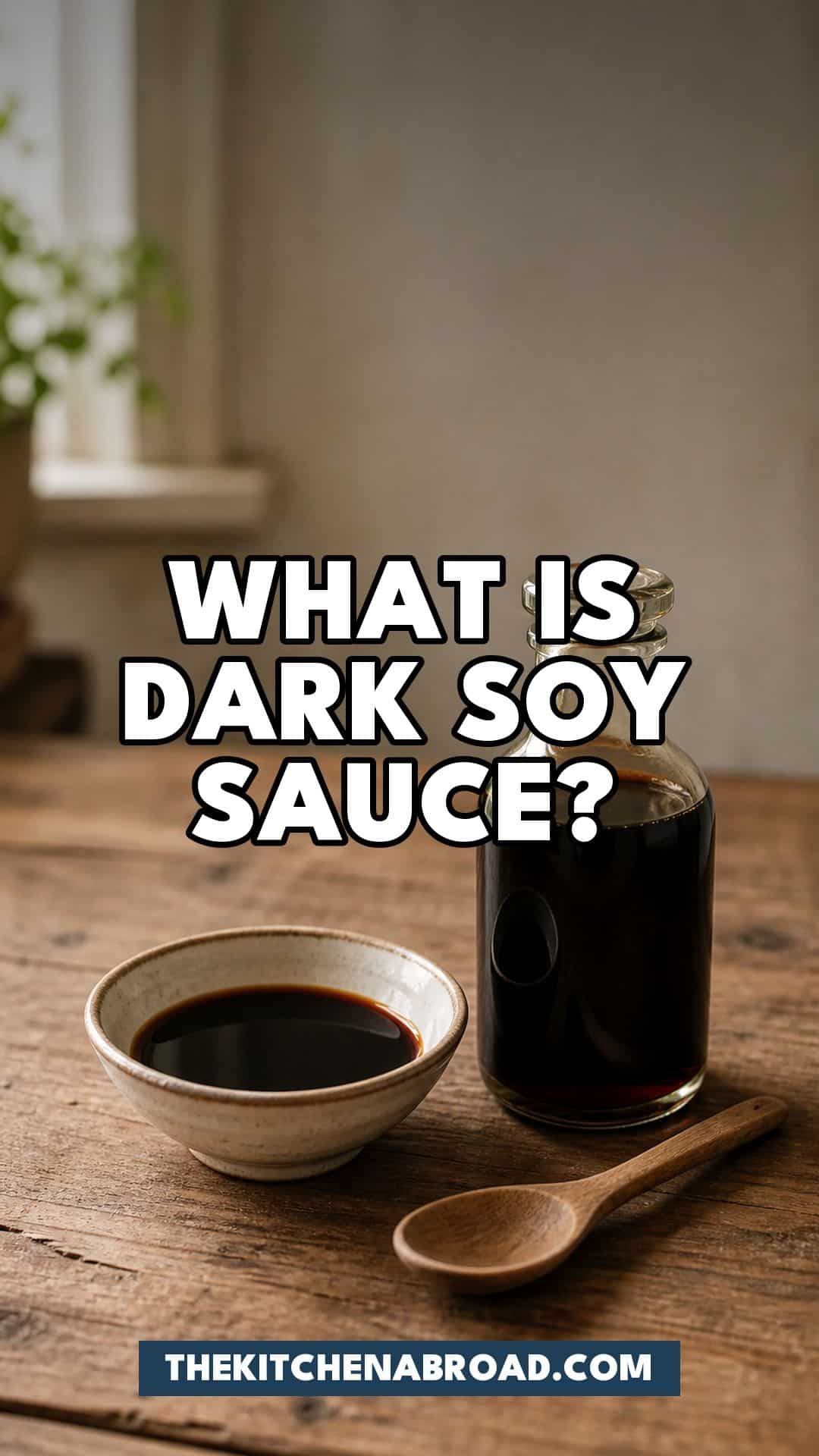
Dark soy sauce is a Chinese-style soy sauce that’s thicker, darker and a little sweeter than light soy, usually because it’s aged longer and has molasses or caramel added. Cooks use it mainly for color and gloss in braises, noodles and fried rice, and lean on light soy for the salt. No bottle? A tablespoon of regular soy sauce with a teaspoon of molasses is the closest swap.
Fried rice that comes out pale beige instead of that deep, even brown. Red-braised pork that tastes right but looks washed out. Both are usually missing the same bottle.
Dark soy sauce is the soy sauce you use for color first and flavor second. A teaspoon turns a whole wok of noodles mahogany and leaves a soft, almost caramel sweetness behind. Below: what it is, how it differs from light soy, how to cook with it, and five substitutes that work when the shop is out.
If you want to stock the pantry properly, these cover the main styles: Chinese dark soy, mushroom dark soy, sweet soy and light soy for seasoning.


What is dark soy sauce made of?
The same base as other soy sauces: fermented soybeans, usually wheat, salt and water. What changes is the finish. Dark soy is fermented and aged longer, and most brands add molasses, caramel or sugar, which is what makes it nearly black and slightly syrupy. The Michelin Guide’s soy sauce explainer describes it as light soy sauce taken further with added sugar and longer sun exposure.
Mushroom dark soy is the same idea infused with straw mushroom flavor. It’s a little earthier and works anywhere regular dark soy does.
How is it different from light soy sauce?
Think of them as a pair with separate jobs. Light soy is thin, reddish-brown and sharply salty, and it does most of the seasoning. Dark soy is thick, nearly black and rounder, and it does most of the coloring.
Saltiness is where labels get confusing. Dark soy tastes less sharply salty on the tongue because the sugar softens it, but sodium levels vary a lot between brands, so read the nutrition panel if you’re cooking for someone watching salt. Either way, don’t swap one for the other one-to-one. Use only dark soy in a stir-fry and it turns muddy and sweet. Use only light soy in red-braised pork and it never gets that lacquered look.
A note on names: “dark soy sauce” is not the same as Indonesian sweet soy (kecap manis), which is much thicker and sweeter. TKA has a separate guide to dark sweet soy sauce if that’s the bottle you’re holding.
How do you cook with dark soy sauce?
Start small. A teaspoon or two in a dish for four is normal, and food can look over-seasoned before it tastes it. Add it in stages and judge by color.
It earns its place in a few kinds of cooking:
- Fried rice and chow mein, added near the end so it coats every grain or noodle evenly
- Red-cooked and soy-braised pork, chicken or eggs, where it builds a glossy, dark sauce
- Char siu-style glazes and marinades for roast meat
- Brown stir-fry sauces, alongside light soy and a little stock
Pair it with light soy rather than replacing it. A common split in Chinese home cooking is roughly two or three parts light soy to one part dark. If you want more ways to use the everyday stuff, this guide to cooking with soy sauce goes through marinades, dressings and dipping sauces.
For a dish where that color matters, try it in Thai chicken with cashew nuts.
5 best dark soy sauce alternatives
Each ratio below replaces 1 tablespoon of dark soy sauce. Taste before adding more salt anywhere else in the recipe.
1. Light or regular soy sauce plus molasses
The closest match. Stir 1 tablespoon soy sauce with 1 teaspoon molasses until smooth. You get the dark color and a hint of bitter sweetness that tastes very close to the real thing.
2. Regular soy sauce plus brown sugar
The pantry backup when there’s no molasses. Mix 1 tablespoon soy sauce with 1/2 teaspoon dark brown sugar and warm it briefly so the sugar dissolves. The color is lighter, so it suits fried rice better than a braise that needs to look black.
3. Kecap manis
Indonesian sweet soy is thick and dark, so the color comes through, but it’s much sweeter. Use about half the amount and add a splash of light soy for salt. If you’re going the other way and need to replace kecap manis, here’s a list of kecap manis substitutes.
4. Tamari plus a little sugar
Tamari is darker and richer than most regular soy sauces, and many brands are wheat-free. Mix 1 tablespoon tamari with 1/2 teaspoon sugar. A good choice for gluten-free cooking, as long as the label says so.
5. Oyster sauce thinned with soy sauce
Oyster sauce brings thickness, gloss and a savory-sweet depth. Mix 2 teaspoons oyster sauce with 1 teaspoon soy sauce. It works in stir-fries and noodles but adds a seafood note, so skip it for vegetarian dishes.
Does dark soy sauce need to go in the fridge?
No, an opened bottle is fine in a cool, dark cupboard for months, because salt keeps it stable. The fridge keeps the flavor fresher for longer if you only use it now and then. Wipe the rim after pouring, since the thick sauce dries into a crust around the cap. For dates and signs it’s past its best, see how long soy sauce lasts.
You’ll find dark soy in Asian grocery stores, usually labeled “dark soy sauce,” “superior dark soy” or “mushroom dark soy,” often on the shelf right next to light soy from the same brand.
Dark soy sauce questions
Is dark soy sauce gluten-free?
Usually not. Most dark soy sauce is brewed with wheat, so check the label; some brands make a wheat-free version, and tamari with a little sugar is the safest swap.
Can I use dark soy sauce instead of regular soy sauce?
Only in small amounts. Dark soy is sweeter and much darker, so replacing regular soy one-to-one makes food look muddy and taste flat; use a little for color and keep light or regular soy for seasoning.
Is dark soy sauce saltier than light soy sauce?
Dark soy usually tastes less salty than light soy because of its added sugar, but sodium varies by brand. Light soy is the one cooks rely on for seasoning.
What is the closest substitute for dark soy sauce?
Regular or light soy sauce mixed with a little molasses is the closest substitute. Use 1 tablespoon soy sauce plus 1 teaspoon molasses for each tablespoon of dark soy.
Is dark soy sauce the same as black soy sauce?
Often, yes. Chinese labels and recipes use both names for the same thick, dark style, though some Southeast Asian “black soy sauces” are much sweeter, closer to kecap manis.
Key takeaways
- Dark soy sauce is aged longer and usually contains molasses or caramel, so it’s thicker, darker and sweeter than light soy.
- Use it mainly for color and gloss; let light soy do the salting.
- Start with a teaspoon or two and add more by eye.
- The best substitute is 1 tablespoon soy sauce plus 1 teaspoon molasses.
- Store it in a cool cupboard and wipe the rim so the cap doesn’t stick.
Give your fried rice that deep brown color
The fastest way to understand dark soy is to split one batch of fried rice in two and add half a teaspoon to only one pan. You’ll see the difference before you taste it. Once you’ve got the bottle, it’s worth knowing how it compares with other pantry seasonings too; this breakdown of coconut aminos vs soy sauce is the next read if you’re cooking for someone who avoids soy.
Last update on 2026-10-05 / Affiliate links / Images from Amazon Product Advertising API