

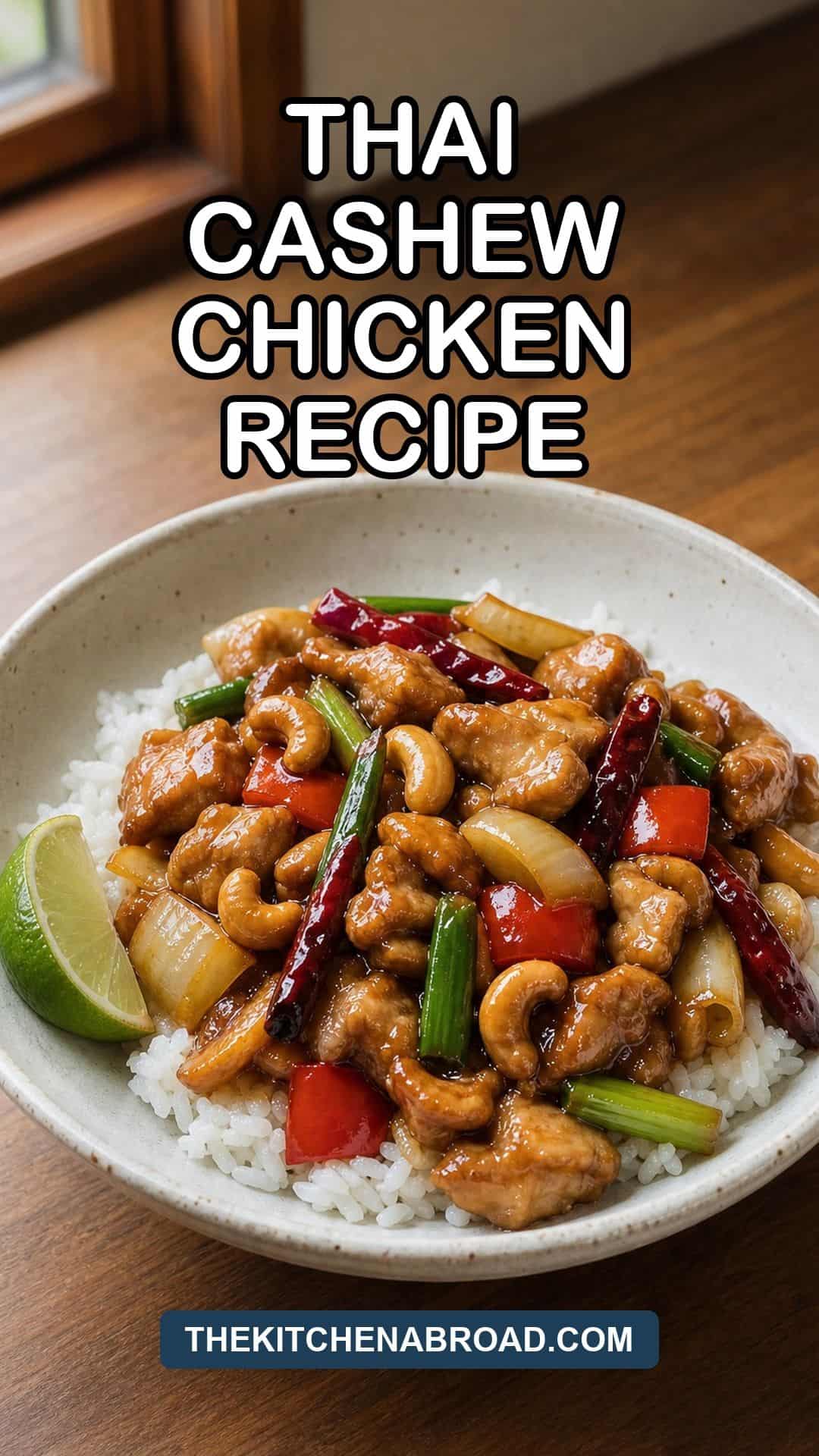
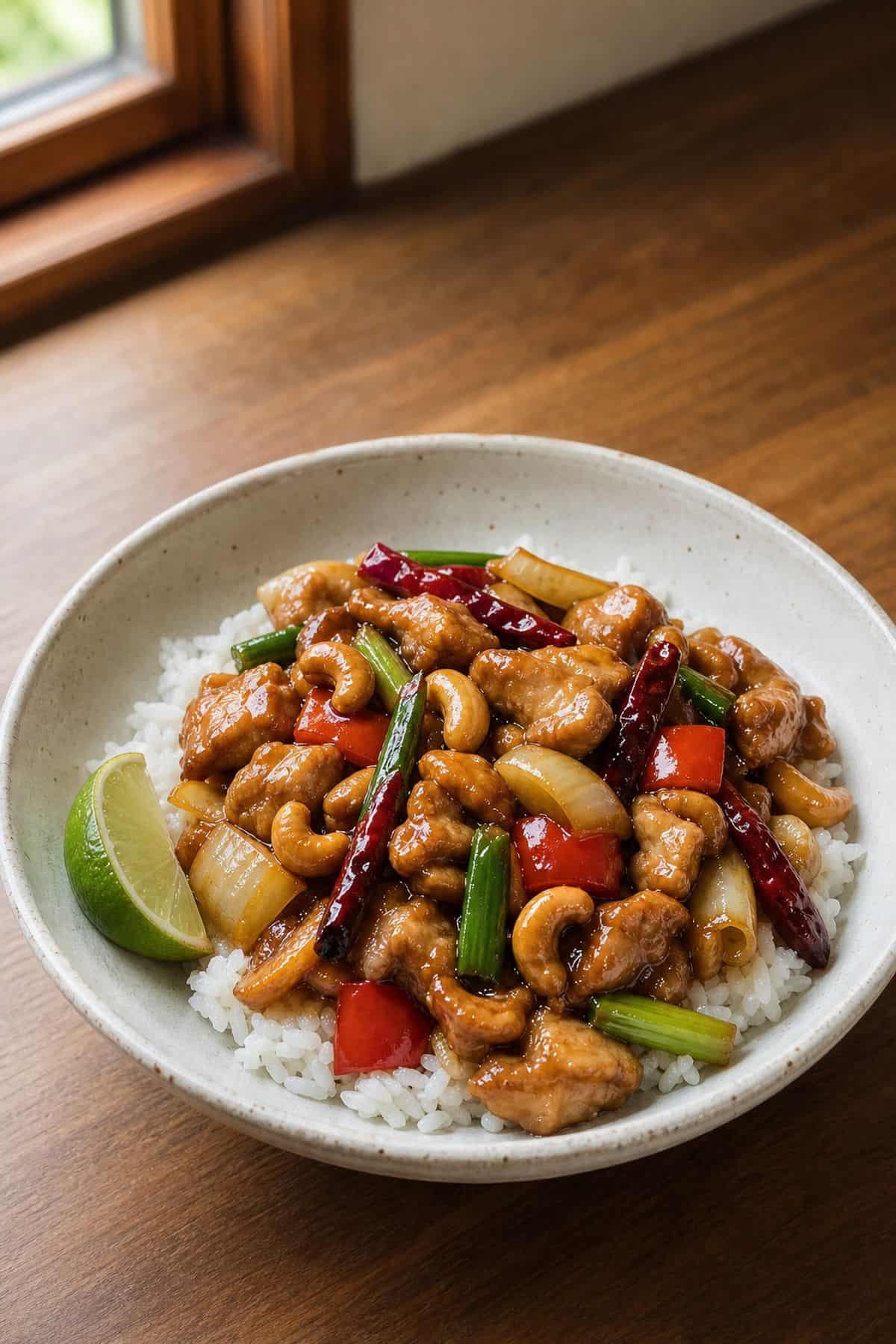
Thai chicken with cashew nuts (gai phad med mamuang) is a Thai-Chinese wok stir-fry built on dried chilies bloomed in hot oil, velveted chicken, and an oyster-soy-fish sauce trinity. The chicken takes a quick cornstarch slurry so it stays tender against the wok heat, and the roasted cashews fold in at the very end so they stay crunchy. Twenty minutes from start to plate. Serves four over jasmine rice.
Gai phad med mamuang is the cashew-chicken stir-fry served at almost every wok stall in Bangkok, a Thai-Chinese dish that lives on dried-chili oil and oyster sauce. The chicken gets a quick cornstarch velvet so it stays tender against the heat of the wok, and the cashews fold in at the very end so they keep their crunch. Serve it over jasmine rice with a wedge of lime.
Gear That Helps Here
A carbon-steel wok is the right pan for this. A heavy 12-inch skillet works if a wok is not in the kitchen. The other useful tools are a small bowl for the sauce, a spider strainer for the chicken, and a wooden spatula that can take the heat.

Recommended Reads
- Roasted Cashew Nuts
- Salted Cashew Nuts
- Vietnamese Nuoc Cham
- Coconut Rice in a Rice Cooker
- Sweet Soy Glaze
Where Thai Cashew Chicken Came From
Cashew chicken is a Thai-Chinese hybrid dish, born in the Chinese-influenced wok kitchens of Bangkok and adopted into the broader Thai stir-fry repertoire over the last century. Cashew trees grow well in southern Thailand, which is why the nut reads as native to the dish rather than imported. You will find some version of gai phad med mamuang at almost every street-side wok stall in the country, usually next to pad krapow and pad see ew on the laminated menu board.
The dish is not American-Chinese cashew chicken (that one is a Springfield, Missouri creation with a brown gravy). The Thai version is brighter and hotter, built on dried red chilies bloomed in oil at the start, with fish sauce in the seasoning. The sauce coats rather than smothers; the chicken stays in distinct pieces; the cashews stay crunchy. It is a wok-stall dish, not a royal-cuisine one, and it eats best from a plate with a soup spoon and a fork in the Thai style.
A Few Notes on the Ingredients
Boneless skinless chicken thighs are the right cut. They stay juicy through the high heat of the wok and the brief cornstarch velvet keeps them tender even if the timing slips a little. Breast works in a pinch but dries out faster, so cut it smaller and pull it from the wok the moment it turns opaque. The cornstarch slurry, just a teaspoon of cornstarch and a splash of soy and oil, is the velveting move that gives Thai stir-fries their signature tender bite.
The cashews should be roasted, not raw. Raw cashews stay starchy and chalky in a stir-fry, while roasted ones bring the buttery, toasted note the dish is named for. Use store-bought roasted unsalted cashews if you have them, or roast a batch yourself the night before (see our roasted cashews recipe linked above). They go in at the very end, off the heat, so they keep their crunch instead of softening in the sauce.
Dried red Thai chilies (prik haeng) are the chili of record here. They get bloomed in oil at the start of the cook, infusing the fat with their fruity-smoky heat. Six to eight whole chilies will season the whole wok without setting your mouth on fire. The sauce is the oyster-soy-fish sauce trinity in a rough 2:1:1 ratio with a teaspoon of sugar to balance, plus a splash of water to keep it pourable. Light soy for salt and color, oyster sauce for body, fish sauce for funk. Substitute mushroom-stir-fry sauce or a vegetarian oyster sauce for a no-fish-sauce version.
Recipe: Thai Chicken with Cashew Nuts
Prep time: 15 minutes | Cook time: 8 minutes | Total time: 23 minutes | Serves: 4
For the Chicken and Velvet
- 500 g (1.1 lb) boneless skinless chicken thighs, cut into 2.5 cm (1 inch) pieces
- 1 tsp cornstarch
- 1 tsp light soy sauce
- 1 tsp neutral oil (canola, peanut, or grapeseed)
For the Stir-Fry Sauce
- 2 Tbsp oyster sauce
- 1 Tbsp light soy sauce
- 1 Tbsp fish sauce
- 1 tsp granulated sugar (or palm sugar, finely chopped)
- 2 Tbsp water
For the Wok
- 3 Tbsp neutral oil, divided
- 6 to 8 dried red Thai chilies, kept whole
- 4 cloves garlic, finely minced
- 1 small yellow onion (about 120 g / 4 oz), cut into 2 cm (3/4 inch) wedges
- 1 medium red bell pepper, cut into 2 cm (3/4 inch) squares
- 4 green onions, white and light green parts cut into 4 cm (1.5 inch) lengths
- 120 g (1 cup) roasted unsalted cashews
- Steamed jasmine rice, for serving
- Lime wedges, for serving
Instructions
- Velvet the chicken first. In a medium bowl, toss the chicken pieces with 1 tsp cornstarch, 1 tsp light soy sauce, and 1 tsp neutral oil. Stir until the cornstarch is fully dissolved into the chicken and every piece is coated. Let sit at room temperature for 10 minutes while you prep the rest.
- Make the sauce. In a small bowl, whisk together 2 Tbsp oyster sauce, 1 Tbsp light soy sauce, 1 Tbsp fish sauce, 1 tsp sugar, and 2 Tbsp water until the sugar dissolves. Set next to the wok.
- Heat 1 Tbsp neutral oil in a wok over medium heat. Add the dried red chilies and toast, stirring constantly, for about 30 to 45 seconds until the chilies turn a shade darker and the kitchen starts to smell hot and fruity. Pull the chilies out with a spider strainer or slotted spoon and set aside; leave the chili-infused oil in the wok.
- Turn the heat up to high. Add 1 more Tbsp neutral oil and let it shimmer. Add the chicken in a single layer and let it sear undisturbed for 60 to 90 seconds. Then stir-fry for another 2 minutes, tossing constantly, until the chicken is just cooked through and lightly browned in spots. Transfer to a plate.
- Add the last 1 Tbsp neutral oil to the wok. Toss in the garlic and stir for 15 seconds until fragrant but not browned. Add the onion wedges and bell pepper. Stir-fry for about 90 seconds, keeping the vegetables moving so they sear but stay crisp.
- Return the chicken to the wok along with the green onion lengths. Pour the sauce around the edge of the pan so it hits the hot metal first. Toss everything for about 30 seconds until the sauce reduces slightly and coats every piece.
- Pull the wok off the heat. Add the roasted cashews and the reserved dried chilies. Toss two or three times to combine. Plate immediately over jasmine rice with lime wedges on the side.
Notes
The cornstarch velvet is the move that separates restaurant-style Thai stir-fry from the home version. Do not skip it; it takes one minute and protects the chicken from drying out at high heat.
The cashews go in OFF the heat. If they cook in the sauce for more than 10 seconds, they soften. Pull the wok off the burner first, then fold them in.
Leftovers keep 2 days in the fridge. Reheat in a hot wok or skillet with a splash of water, not the microwave, or the cashews go soft.
Tips and Variations
Why the Cashews Go In Last
The cashew in this dish is doing texture work, not flavor work. The roasted nut needs to stay audibly crunchy against the soft chicken and the saucy vegetables, and the only way to guarantee that is to add it off the heat at the very end. Cashews stirred in while the wok is still on the burner will absorb sauce within 30 seconds and turn from crisp to soft. The difference shows up in the first bite.
Bloom the Dried Chilies, Don’t Just Throw Them In
Most home versions of this dish just toss the dried chilies in with the garlic. The Bangkok wok-stall move is to bloom them in oil first, on their own, with nothing else in the pan. The 30 to 45 seconds of solo toasting in fat is what extracts the chili flavor into the cooking oil so the whole stir-fry tastes faintly of dried chili, not just the bites where you get a whole pod.
Keep the heat at medium for the bloom, not high. Burnt chilies turn bitter fast.
The Sauce Ratio Is Forgiving, the Pan Heat Is Not
The oyster-soy-fish sauce ratio in this recipe is the standard Bangkok wok-stall ratio, but a tablespoon either way will not break the dish. What WILL break it is cooking on medium heat. The wok needs to be screaming hot so the sauce reduces and clings to the chicken in 30 seconds rather than pooling at the bottom of the pan.
If your stove cannot push a wok past 230°C (450°F), use a cast-iron skillet instead. It holds heat better than a thin wok on an underpowered burner.
Vegetarian and Tofu Versions
Swap the chicken for 400 g (14 oz) extra-firm tofu, pressed and cubed. Velvet the tofu the same way (cornstarch + soy + oil) and pan-fry it first until golden on all sides, then proceed with the recipe. Use vegetarian oyster sauce (mushroom-based) instead of regular, and skip the fish sauce or substitute soy sauce.
For a mushroom version, use 400 g (14 oz) mixed mushrooms (shiitake, oyster, cremini) cut into bite-size pieces. Skip the velvet step; mushrooms only need a hard sear.
Heat Calibration
Six to eight whole dried chilies seasons the oil but does not make the dish aggressively spicy. The chilies themselves are eaten by the chili-tolerant; everyone else can push them to the side of the plate.
For a milder version, use 3 to 4 chilies and remove them before adding the vegetables. For a hotter version, add 1 fresh red Thai chili (prik chee fa) sliced and tossed in with the garlic.
What to Serve It With
Jasmine rice is the default Thai pairing. Coconut rice works if you want a slightly richer base. A wedge of lime on the side of the plate is non-negotiable; the acid cuts the salt of the sauce and brightens the cashews. A cold Singha, Chang, or any clean lager is the drink of record. For a fuller meal, add a plate of sliced cucumber with a small bowl of nuoc cham for dipping, and a simple Thai-style fried egg on top of each portion of rice for the full street-stall plate.
Frequently Asked Questions
What’s the difference between Thai and Chinese cashew chicken?
Thai cashew chicken (gai phad med mamuang) is a wok stir-fry with a light coating sauce, dried chilies, fish sauce, and crunchy roasted cashews folded in at the end. American-Chinese cashew chicken, especially the Springfield, Missouri style, is closer to a brown-gravy dish with battered fried chicken. Different dishes that share a name.
Should I use raw or roasted cashews?
Roasted. Raw cashews stay starchy and chalky in a stir-fry; roasted cashews bring the toasted, buttery note the dish needs. Unsalted is preferable because the sauce is already salty, but lightly salted works in a pinch.
What can I substitute for oyster sauce?
Vegetarian mushroom-stir-fry sauce is the closest one-for-one swap. If neither is on hand, use 2 Tbsp soy sauce plus 1 tsp sugar and 1 tsp tomato paste mixed together. The result is slightly less rich but the dish still works.
How do I keep the chicken tender in a stir-fry?
Velvet it. The 10-minute cornstarch-soy-oil toss before cooking is the Chinese-Thai technique that coats each piece in a thin protective layer. The cornstarch helps the chicken brown without overcooking, and the oil keeps the surface from drying out at high heat.
Can I make this without fish sauce?
Yes. Replace the fish sauce with an extra teaspoon of light soy sauce plus a few drops of rice vinegar for brightness. The dish loses a bit of the funk but stays squarely in the Thai stir-fry family.
Can I prep this ahead?
Yes for the prep, no for the cook. Cut and velvet the chicken, mix the sauce, and chop the vegetables up to 4 hours ahead and keep everything covered in the fridge. The stir-fry itself takes 8 minutes and has to be cooked just before serving; it does not hold well.
Key Takeaways
- Velvet the chicken with cornstarch, soy, and oil for restaurant-style tender bite.
- Bloom the dried Thai chilies in oil first, then pull them out before stir-frying.
- Sauce is a 2:1:1 oyster-soy-fish sauce ratio with a teaspoon of sugar.
- Cashews go in OFF the heat at the very end to keep their crunch.
- Serve over jasmine rice with lime wedges and a cold Thai lager.
Final Thoughts
Thai cashew chicken is a 23-minute dinner once the prep is done, which is most of why it earned its place on every wok-stall menu in Bangkok. Velvet, bloom, stir, fold; the moves are simple, but the order matters more than the ratio.
Make it for a weeknight when the alternative is takeout, or for a casual dinner when one wok and one rice pot is the whole kitchen plan. A bowl of jasmine, a wedge of lime, a cold lager.
Once the velvet and the sauce ratio are in muscle memory, the whole dish becomes a 10-minute weeknight reflex.
Thai Chicken with Cashew Nuts
Thai chicken with cashew nuts (gai phad med mamuang) is a Thai-Chinese wok stir-fry built on dried chilies bloomed in hot oil, velveted chicken, and an oyster-soy-fish sauce trinity.
Ingredients
- 500 g (1.1 lb) boneless skinless chicken thighs, cut into 2.5 cm (1 inch) pieces
- 1 tsp cornstarch
- 1 tsp light soy sauce
- 1 tsp neutral oil (canola, peanut, or grapeseed)
- 2 Tbsp oyster sauce
- 1 Tbsp light soy sauce
- 1 Tbsp fish sauce
- 1 tsp granulated sugar (or palm sugar, finely chopped)
- 2 Tbsp water
- 3 Tbsp neutral oil, divided
- 6 to 8 dried red Thai chilies, kept whole
- 4 cloves garlic, finely minced
- 1 small yellow onion (about 120 g / 4 oz), cut into 2 cm (3/4 inch) wedges
- 1 medium red bell pepper, cut into 2 cm (3/4 inch) squares
- 4 green onions, white and light green parts cut into 4 cm (1.5 inch) lengths
- 120 g (1 cup) roasted unsalted cashews
- Steamed jasmine rice, for serving
- Lime wedges, for serving
Instructions
- Velvet the chicken first. In a medium bowl, toss the chicken pieces with 1 tsp cornstarch, 1 tsp light soy sauce, and 1 tsp neutral oil. Stir until the cornstarch is fully dissolved into the chicken and every piece is coated.
- Make the sauce. In a small bowl, whisk together 2 Tbsp oyster sauce, 1 Tbsp light soy sauce, 1 Tbsp fish sauce, 1 tsp sugar, and 2 Tbsp water until the sugar dissolves. Set next to the wok.
- Heat 1 Tbsp neutral oil in a wok over medium heat. Add the dried red chilies and toast, stirring constantly, for about 30 to 45 seconds until the chilies turn a shade darker and the kitchen starts to smell hot and fruity.
- Turn the heat up to high. Add 1 more Tbsp neutral oil and let it shimmer. Add the chicken in a single layer and let it sear undisturbed for 60 to 90 seconds.
- Add the last 1 Tbsp neutral oil to the wok. Toss in the garlic and stir for 15 seconds until fragrant but not browned. Add the onion wedges and bell pepper. Stir-fry for about 90 seconds, keeping the vegetables moving so they sear but stay crisp.
- Return the chicken to the wok along with the green onion lengths. Pour the sauce around the edge of the pan so it hits the hot metal first. Toss everything for about 30 seconds until the sauce reduces slightly and coats every piece.
- Pull the wok off the heat. Add the roasted cashews and the reserved dried chilies. Toss two or three times to combine. Plate immediately over jasmine rice with lime wedges on the side.
Notes
The cornstarch velvet is the move that separates restaurant-style Thai stir-fry from the home version. Do not skip it; it takes one minute and protects the chicken from drying out at high heat.
The cashews go in OFF the heat. If they cook in the sauce for more than 10 seconds, they soften. Pull the wok off the burner first, then fold them in.
Last update on 2026-10-03 / Affiliate links / Images from Amazon Product Advertising API