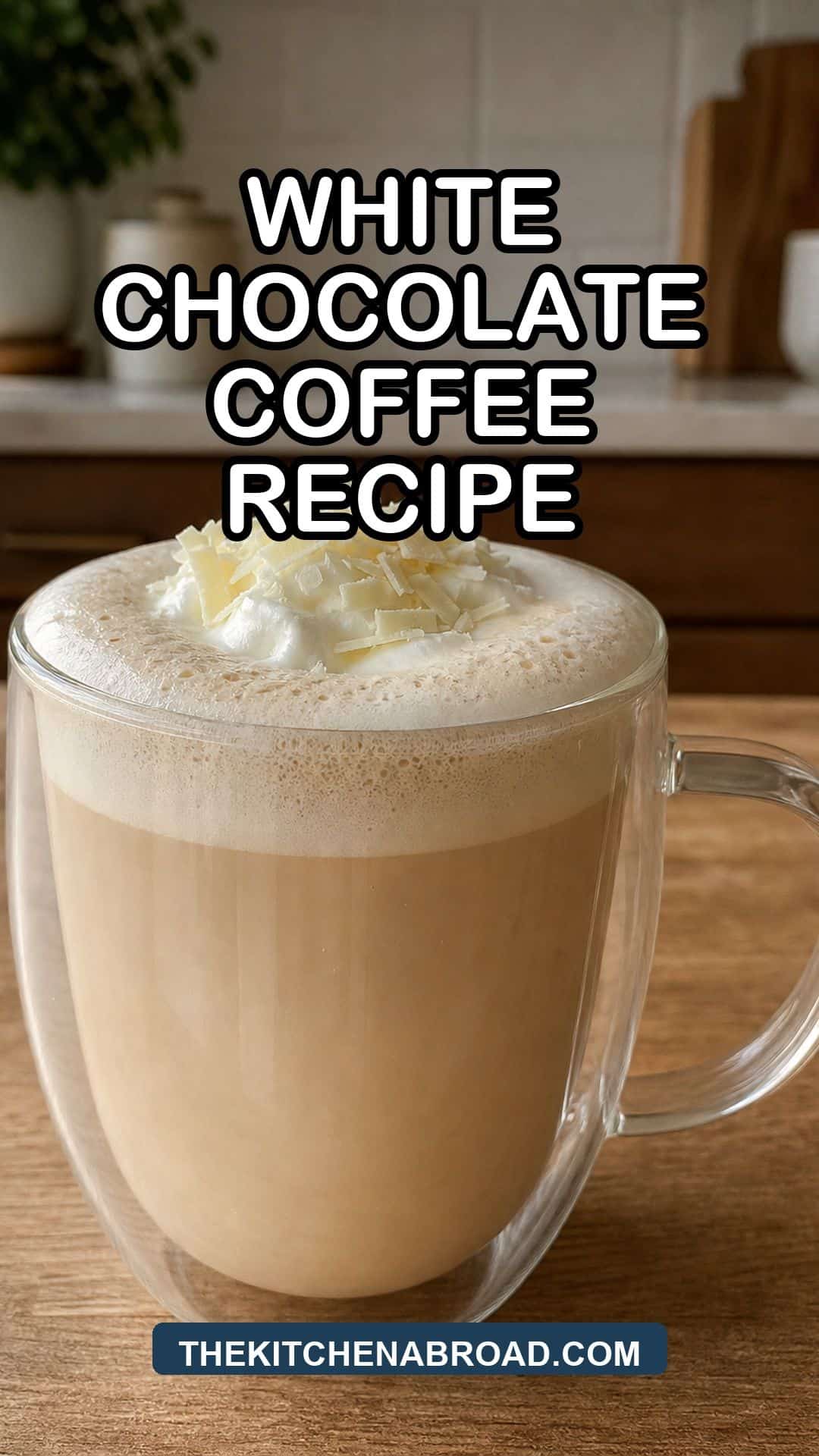
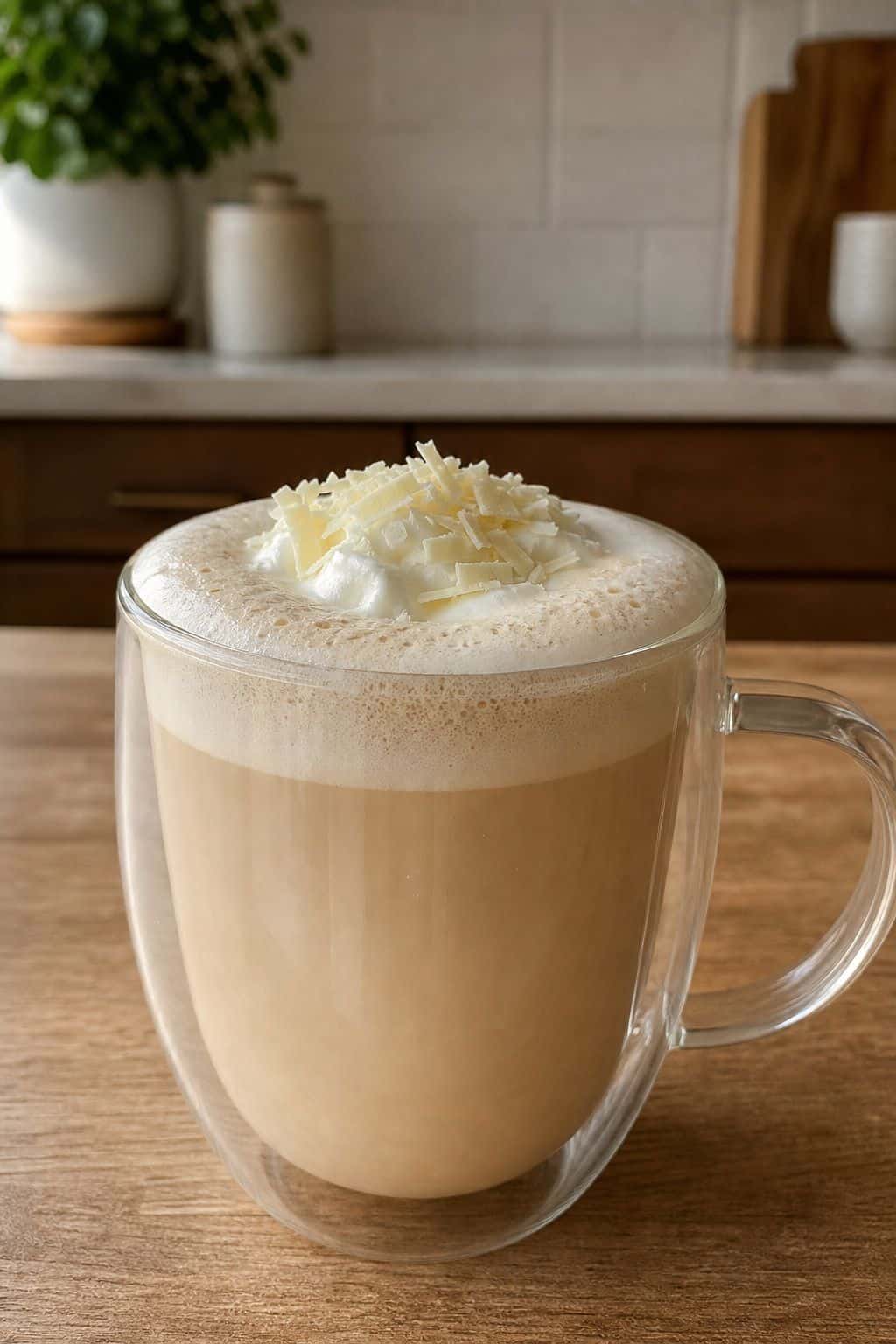
White chocolate coffee is a hot espresso drink built with real melted white chocolate baking bars instead of syrup. The technique hinges on temperature: white chocolate is mostly cocoa butter, milk solids, and sugar, with no cocoa solids, so it seizes if you hit it with water or take it past 115F. Melt the chopped bar into warm milk between 140F and 160F, pour 2 ounces of fresh espresso, and finish with steamed milk frothed to a wet-paint texture. The whole drink lands in about 10 minutes for one mug.
The Starbucks White Chocolate Mocha turned 25 in 2025. The chain launched it in 2000 as a cold-weather drink and never pulled it from the menu, which means a whole generation grew up thinking white mocha tastes like that sweet, vanilla-leaning, slightly thin pump of syrup over espresso. The home version sits in a different category once you swap the syrup for real white chocolate; the cocoa butter brings body and the milk solids round out the espresso the way a custard does. The tradeoff is that the bar will seize if you mishandle heat or moisture, so this recipe walks the melt-and-temper step in plain language.
What You’ll Want On Hand
A small saucepan and a wooden spoon will get you through the recipe, but a few pieces of gear sharpen the result. An espresso machine pulls a real shot in 30 seconds; a Moka pot or AeroPress is the workaround if you do not have one. A handheld milk frother turns warm milk into the wet-paint foam that floats over the espresso, and a double-wall glass mug keeps the drink hot without burning your hand. The thermometer is the quiet hero: white chocolate melts cleanly between 140F and 160F, and an instant-read tells you when to pull off the heat.




Recommended Reads
- Hot Mocha Coffee Recipe
- Homemade Caramel Macchiato Recipe
- Iced Caramel Latte Recipe
- Vanilla Sweet Cream Cold Brew Recipe
- Salted Caramel Iced Coffee
Where White Chocolate Coffee Got Its Start
Starbucks rolled out the White Chocolate Mocha in 2000 as a cold-weather menu addition. The drink stuck around as a year-round option but kept its holiday halo; the red-cup season still leans on it as the sweeter, vanilla-forward counterpart to the regular mocha. The original chain version uses a proprietary white chocolate sauce, which is closer to a thickened sweetened syrup than to melted chocolate. That decision keeps the espresso bar moving fast, but it gives up the body that real chocolate brings.
The science is worth a paragraph because it explains every choice in this recipe. White chocolate contains cocoa butter, milk solids, sugar, and lecithin, but it skips the cocoa solids that give dark and milk chocolate their bitter backbone and their dark color. That makes it sweeter, paler, and structurally fragile. Cocoa butter starts to melt at body temperature near 110F and burns above 115F. A single drop of water in the bowl triggers the sugar to clump and pull the cocoa butter out of suspension; the result reads grainy and broken. If you prefer a darker, bitter-balanced cup, the hot mocha coffee recipe is the cocoa-forward cousin to this one. For a caramel-led drink, try the homemade caramel macchiato.
A Few Notes on the Ingredients
- Real white chocolate baking bars: Ghirardelli, Lindt, and Callebaut all list cocoa butter in the first three ingredients and melt into milk without resistance. The bar is the version of this drink you came here for.
- Skip the chips: White chocolate chips contain stabilizers like soy lecithin and added vegetable fats that hold their shape in a cookie at 350F, which means they fight the melt at 150F.
- Bottled syrup as last resort: Delivers a thinner, one-note sweet flavor. Use it if the bar is not in the cupboard, but the texture and body suffer.
- Temperature window: 140F to 160F when the chopped bar goes into the warm milk. Pull the pan off the heat the moment the last piece slips into the liquid. Above 115F the cocoa butter burns.
- Chop small: Pieces no bigger than a pencil eraser before they touch the milk, so the melt finishes in 30 to 45 seconds.
- Espresso, with backups: A 2-ounce double shot is the canonical pull. 1/3 cup of strong drip or French press coffee works at a slightly lower caffeine level.
- Whole milk: The default because the fat carries the cocoa butter and rounds out the sweetness. 2 percent reads a touch thinner but holds up.
- Non-dairy swap: Oat milk barista blend is the strongest pick because the protein froths cleanly. A tablespoon of coconut cream stirred in mimics the cocoa-butter body.
Recipe: White Chocolate Coffee
Prep: 5 min | Cook: 5 min | Total: 10 min | Serves: 1
Ingredients
- 2 oz (60 ml) freshly pulled espresso (or 1/3 cup strong brewed coffee)
- 1.5 oz (45 g) real white chocolate baking bar, chopped into small even pieces
- 1/2 cup (120 ml) whole milk, for melting and steaming
- 1 splash pure vanilla extract (optional, about 1/4 tsp)
- 2 tbsp whipped cream, for topping (optional)
- 1 pinch white chocolate shavings, for garnish (optional)
Instructions
- Chop the white chocolate bar into small even pieces, roughly the size of a pencil eraser. Set them on a dry plate; any moisture on the cutting board or knife will seize the chocolate the moment it hits warm milk.
- Pour the whole milk into a small dry saucepan and warm it over medium-low heat. Watch for the first wisp of steam and pull the pan off the burner when the milk reads about 150F on an instant-read thermometer. Do not let it boil.
- Add the chopped white chocolate to the warm milk and stir slowly with a dry wooden spoon. The pieces dissolve in about 30 to 45 seconds. If the mixture cools too fast, return the pan to the lowest heat setting for 10 seconds at a time. The target after blending is 140F to 160F; the texture should read smooth and slightly thickened, never grainy.
- While the chocolate melts, pull a 2-ounce double shot of espresso into a warmed mug. If you are using strong drip or French press coffee instead, brew 1/3 cup at full strength.
- Pour the warm white chocolate milk into the espresso in a slow steady stream and stir once with a spoon to blend. Add the vanilla extract if using.
- For the top layer, froth an extra 2 tablespoons of warm whole milk with a handheld frother for about 15 seconds, until the foam holds a wet-paint texture rather than stiff peaks. Spoon the foam over the drink.
- Finish with whipped cream and a pinch of white chocolate shavings if you want the full holiday-cafe look. Serve right away while the foam still sits high on top.
Notes
For an iced version, cool the espresso-and-white-chocolate base in the fridge for 10 minutes, then pour it over a tall glass of ice and finish with cold whole milk. Skip the whipped cream or use a cold dollop. Build the drink in this order or the chocolate will solidify against the ice and clump along the side of the glass.
To scale for two mugs, double everything (3 ounces of white chocolate, 1 cup of milk, 4 ounces of espresso) and use a slightly larger saucepan. The melt still takes about 45 seconds because the chocolate is in direct contact with more warm milk.
This drink does not hold up made ahead. The cocoa butter cools and separates inside 30 minutes, so the base reads grainy and the foam collapses. Make it the moment you plan to drink it; the upside is that the whole recipe runs in 10 minutes from a cold start.
Tips and Variations
The Iced White Chocolate Mocha Build
The iced version is the same recipe with one rule: assemble the warm base first and pour over ice last. Combine the 2 ounces of espresso with the warm melted white chocolate milk in a measuring cup and let it rest for 5 to 10 minutes off the heat. Fill a tall glass with 6 to 8 ice cubes, top with 1/2 cup of cold whole milk, then pour the chocolate base down the side. The result lands closer to the warm-weather Starbucks build with a clean layered look.
No Espresso Machine? Use Moka Pot or AeroPress
A 3-cup Moka pot produces about 4 ounces of concentrated coffee that reads close to espresso for this drink; halve the yield for a single serving. An AeroPress with the standard recipe (17 g coffee, 50 ml water, 30-second steep, slow press) lands roughly the same. Drip coffee works as a last resort at full strength brewed at a 1:15 ratio. The flavor reads a touch less syrupy than a real shot, but the white chocolate carries the body.
Holiday Variation: Peppermint White Mocha
Add 1/4 teaspoon of pure peppermint extract to the warm milk before the chocolate goes in. Skip the vanilla. Finish with whipped cream and crushed candy cane instead of shavings. This is the December version of the drink and the one that earned the white mocha its holiday-staple status; the mint cuts the sweetness and the candy cane gives the photo a focal point.
Dairy-Free Swaps That Actually Work
Oat milk barista blend is the strongest non-dairy swap because the higher protein content froths cleanly and carries the cocoa butter without splitting. Stir 1 tablespoon of full-fat canned coconut cream into the oat milk before warming to mimic the body that whole milk brings. Almond milk reads thin and tends to separate when the chocolate hits it; if you want to use it, add 1 teaspoon of cornstarch slurry to the saucepan to thicken the base. Read the white chocolate label too; some baking bars contain milk solids, so a strictly dairy-free version needs a dedicated dairy-free white chocolate bar like Pascha or Hu Kitchen.
Why Syrup Versions Read Flat
Bottled white chocolate syrup is a sugar-water suspension with flavoring and a small percentage of cocoa butter. It dissolves cleanly because there is almost no fat to manage, but the flavor is single-note sweet and the drink lacks body. The melted-bar version delivers cocoa butter, vanilla, and dairy solids in the right proportions for a drink that reads custard-adjacent rather than syrup-sweet. If you taste both side by side, the syrup version comes off as a flavored latte and the real-chocolate version reads like a dessert in a mug.
What to Serve It With
White chocolate coffee lives in dessert-coffee territory. The sweetness wants a counterweight from something buttery or lightly toasted. Shortbread is the canonical pairing; the vanilla in the cookie echoes the vanilla in the chocolate. Biscotti dipped in the foam works for a slower afternoon. In December, the drink runs alongside the cookie tray, gingerbread, and sugar cookies all hold up. For brunch, follow savory eggs with this mug as the dessert course, the way you would a cappuccino after pasta. A slow holiday morning with presents under the tree and an oversized mug is the canonical use case for the drink the chain built its winter menu around.
Frequently Asked Questions
What is the difference between white chocolate mocha and regular mocha?
A regular mocha uses dark chocolate or cocoa powder, which contains cocoa solids and reads bitter against the espresso. A white chocolate mocha uses cocoa butter, milk solids, and sugar with no cocoa solids, so the drink is sweeter, paler in color, and creamier on the palate. The body is different too; cocoa butter coats the tongue the way custard does, while a regular mocha reads cleaner and more chocolate-bitter.
Can I use white chocolate chips instead of a baking bar?
You can, but baking bars are the better choice. Chips contain stabilizers like soy lecithin and added vegetable fats that hold their shape at high temperatures in cookies; that same engineering resists the melt at 150F in this recipe. Bars list cocoa butter near the top of the ingredient label and dissolve into warm milk in 30 to 45 seconds. If you only have chips, add an extra tablespoon to compensate for the lower cocoa-butter content.
Why did my white chocolate seize?
Two culprits. First, a drop of water hit the chocolate; the bowl, spoon, or chopping board carried moisture into the bar. White chocolate is mostly fat and sugar, so water clumps the sugar and breaks the suspension. Second, the heat went above 115F before the chocolate met the milk. Start over with a dry pan and dry tools, and add the chopped chocolate to milk that already reads 140F to 160F rather than melting it in a dry pan first.
Can I make this without an espresso machine?
Yes. A 3-cup Moka pot yields about 4 ounces of strong concentrated coffee that reads close to espresso; halve the yield for one mug. An AeroPress at the standard recipe (17 g coffee, 50 ml water, 30-second steep) lands roughly the same. Strong drip or French press at a 1:15 ratio works as the third option; the flavor reads a touch less syrupy but the white chocolate carries the body of the drink.
How much caffeine is in a white chocolate coffee?
About 150 mg if you pull a 2-ounce double shot of espresso, which is the recipe default. Around 95 mg if you use 1/3 cup of strong drip or French press in place of the espresso. For a lighter version, pull a single 1-ounce shot for roughly 75 mg.
Is white chocolate mocha sweeter than regular mocha?
Yes. White chocolate is roughly 50 percent sugar by weight, while dark chocolate runs closer to 30 percent. The white version also lacks cocoa solids, which carry the bitter compounds that balance a regular mocha. The drink reads dessert-sweet against the espresso, which is part of why peppermint or a heavy hand on the espresso pull both work as counterweights.
Key Takeaways
- White chocolate is cocoa butter, milk solids, and sugar with no cocoa solids; that is what makes the drink sweeter, paler, and creamier than a regular mocha.
- Use real baking bars from Ghirardelli, Lindt, or Callebaut. Chips contain stabilizers that resist the melt at 150F, and bottled syrup gives up the cocoa-butter body.
- Keep the temperature between 140F and 160F. Above 115F the cocoa butter burns, and a single drop of water seizes the bar into a grainy paste.
- The canonical ratio is 1.5 oz white chocolate to 2 oz espresso to 1/2 cup whole milk, which lands close to a Starbucks Grande dilution.
- No espresso machine? A Moka pot or AeroPress at full strength stands in cleanly; strong drip is the fallback.
- The drink does not hold up made ahead; the cocoa butter separates inside 30 minutes, so build it right before you drink it.
Final Thoughts
The Starbucks White Chocolate Mocha is 25 years into its run and shows no sign of leaving the menu. The home version earns its place because the swap from syrup to a real baking bar changes the texture of the drink; cocoa butter brings a body that no bottle of flavoring can replicate, and the milk solids in the bar round out the espresso the way a custard does. The whole build runs in 10 minutes from a cold start.
Keep a good bar of Ghirardelli or Lindt in the pantry through the cold months, and the rest of the recipe pulls together from things already on the counter: espresso machine or Moka pot, whole milk, a handheld frother. Pair the mug with shortbread on a Sunday, biscotti on a weekday afternoon, or the cookie tray in December.
If the bar seizes the first time, you got water in the pan or the heat ran too high. Start over with dry tools, add the chopped chocolate to milk that already sits at 140F to 160F, and the second pass lands clean.
Last update on 2026-10-15 / Affiliate links / Images from Amazon Product Advertising API