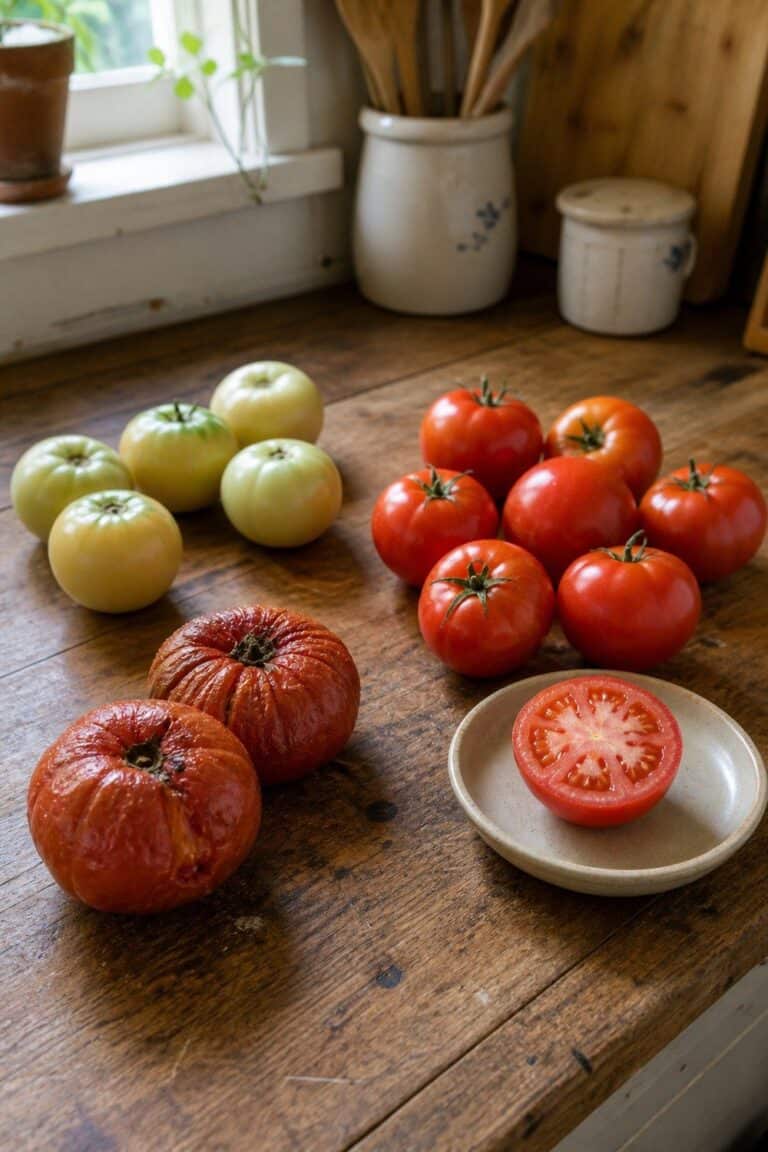
The best berry storage ideas depend on berry type, eating timeline, moisture, airflow, and whether the fruit is for fresh eating or freezer use. Sort berries first, keep them dry unless you wash and dry them thoroughly, store fragile berries gently, and freeze safe berries before they spoil.
A clamshell of berries is not one problem. Raspberries collapse when stacked, blueberries tolerate more handling, strawberries need their hulls left on until use, and blackberries can turn quickly if they sit damp. Good storage starts with noticing those differences instead of forcing every berry into the same container.
This guide is a menu of berry storage ideas for real kitchens: low-effort clamshell fixes, shallow trays, front-shelf fridge zones, rinse and dry setups, freezer portions, breakfast containers, labels, and rescue cooking. Containers can help, but they do not replace sorting, drying, cold storage, and clear discard rules.

You Might Also Like These Blog Posts
1. Berry Sorting Bowl

The first storage decision happens before any container comes out. Use a wide bowl or colander to sort strawberries, blueberries, raspberries, and blackberries right after shopping. Discard moldy fruit, anything slimy, or berries that smell fermented. Soft but safe berries can move into an eat-today group, while firm berries can go into the storage setup that matches their type.
Check the bottom of the clamshell, too, because the wettest or most bruised berries often hide under the top layer. Tip berries gently into a wide bowl instead of pouring them from high up, and use your fingers to lift raspberries or blackberries rather than stirring through them. Keep berries in a single layer when possible, and skip the full rinse unless you have time to dry the fruit thoroughly.
2. Original Clamshell With a Fresh Towel

Store packaging can work better with one small adjustment. If the original clamshell is clean, not overcrowded, and not dripping wet, slip a dry paper towel underneath the berries or replace a soaked absorbent pad before refrigerating.
The towel helps catch surface moisture without forcing you to transfer every berry into a new container. Leave the clamshell vents open, and do not pack the berries down just to make the lid close. This is the lowest-effort berry storage idea for a busy grocery day, but wet corners still need sorting.
Place the towel where moisture collects, not mashed into delicate fruit, and use the package vents instead of sealing the clamshell tightly. If the bottom pad is stained with berry juice, sort first so one messy corner does not spoil the rest.
3. Shallow Tray for Raspberries
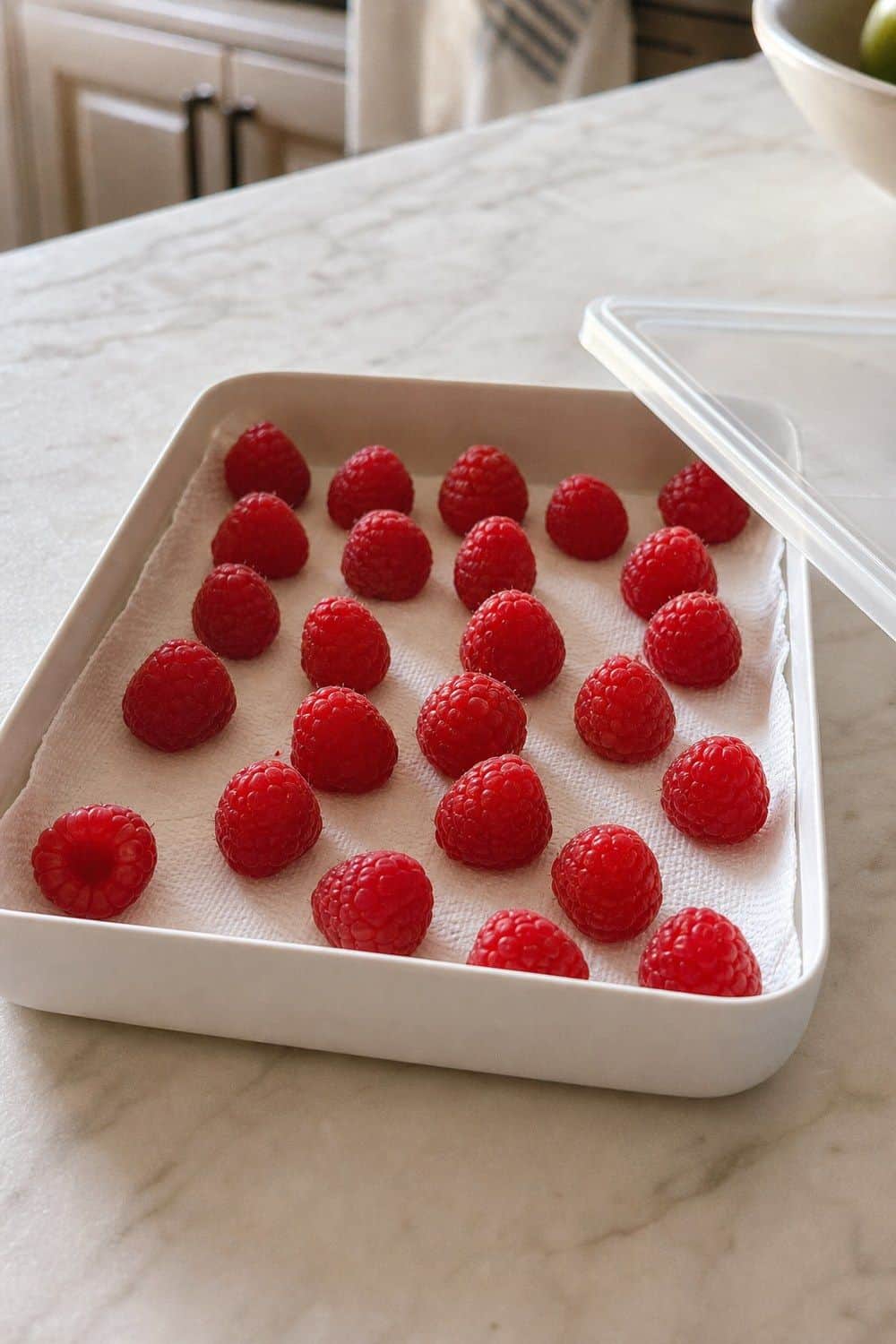
Fragile berries need space more than they need a fancy container. Raspberries and blackberries collapse when they are stacked, so a shallow food storage container lined with a dry paper towel is often better than a deep bin. Spread the berries loosely in one layer, pick out any wet or crushed fruit, and avoid shaking the container. If you need a second layer, use another shallow container rather than pressing berries into a pile.
This setup is best for raspberries and blackberries because the shallow shape protects them from pressure. Keep the lid slightly breathable if the container allows it, use the fruit on a shorter timeline than blueberries or firm strawberries, and place the tray on a front shelf where it will not be bumped by milk jugs or leftovers.
4. Strawberries in a Ventilated Berry Keeper
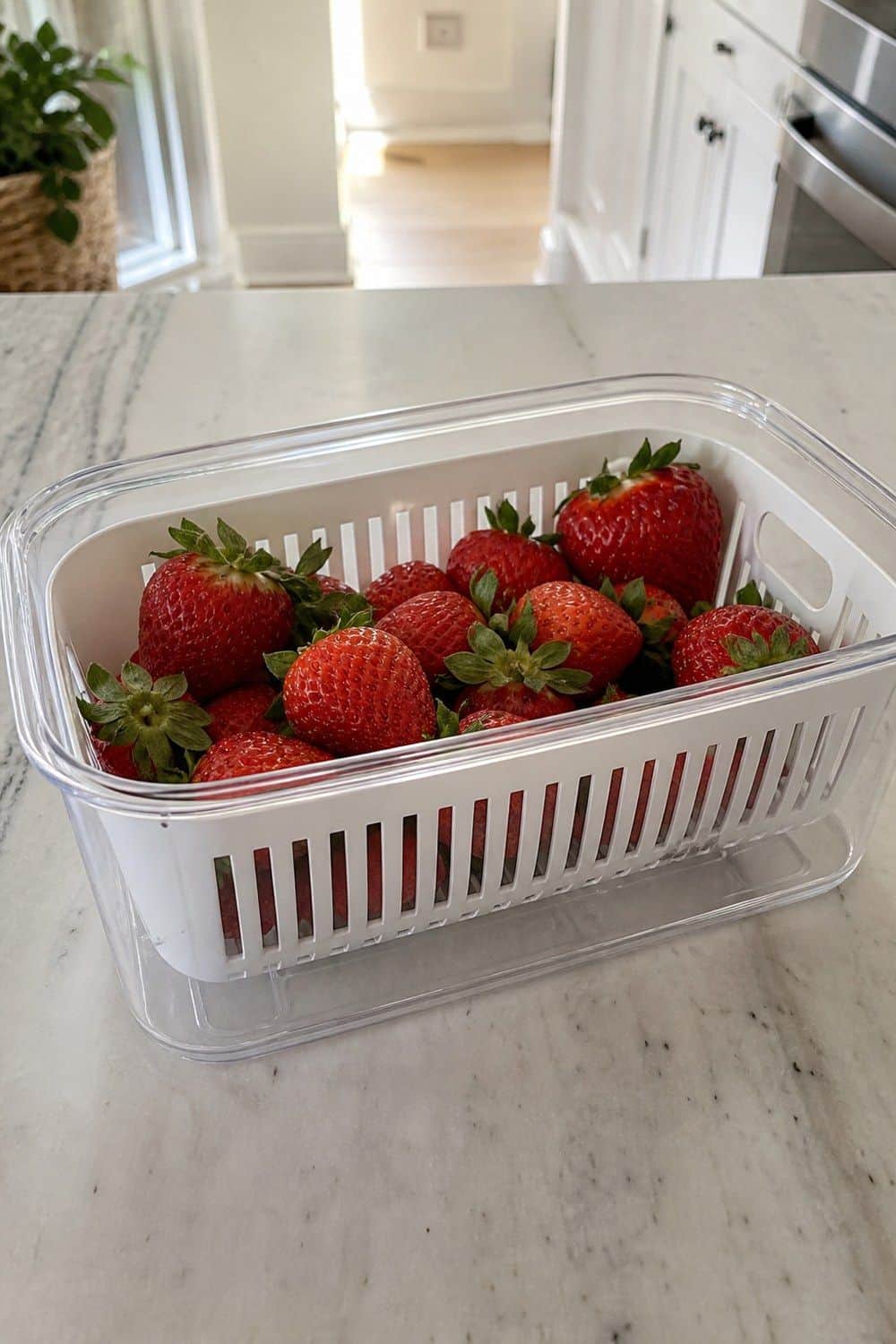
Strawberries are sturdy enough for a berry keeper when they are firm, dry, and sorted first. A container with a raised insert or basket can keep fruit slightly lifted so moisture does not pool underneath, which is especially helpful after a big grocery run. Do not cram the container full, because packed layers can bruise the berries at the bottom before the top layer looks bad.
Leave the hulls on until you are ready to eat or prep them. A berry keeper can help manage moisture and visibility, but it will not make wet, damaged berries last for an unrealistic length of time. If the berries vary in size, put the firmest larger ones on the bottom and the most delicate ripe ones near the top so they are eaten first.
5. Blueberries in a Produce Saver
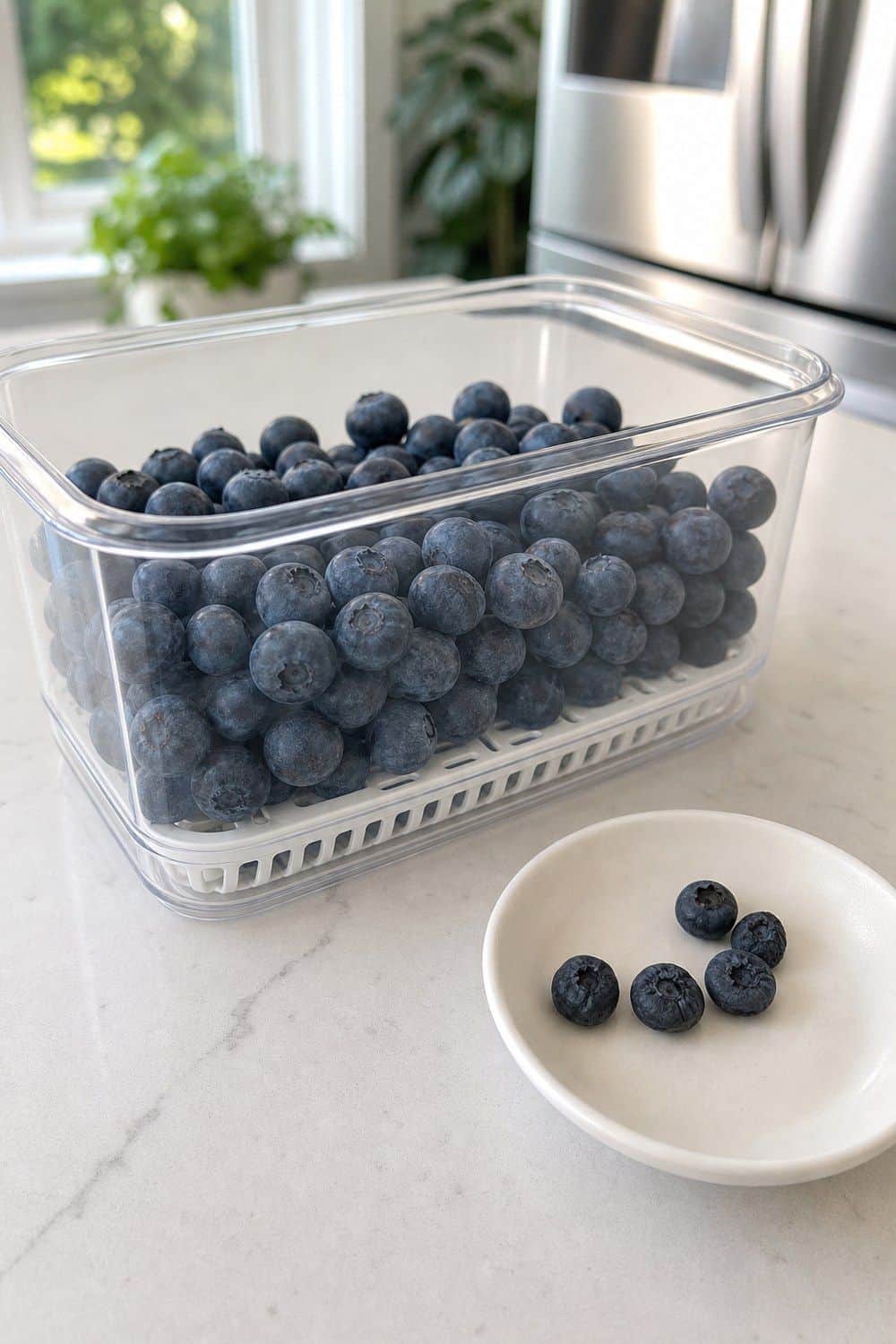
Blueberries are usually more forgiving than raspberries because their skins are firmer. A produce saver can work well when you remove shriveled, leaking, or soft berries first and give the rest enough airflow to stay dry. Use a container that is easy to open for snacking, because blueberries often disappear when they are too hidden.
Sort before storing, keep the berries dry unless you wash and dry them fully, and use a front fridge spot if blueberries are meant for daily snacks. Give the container a quick shake only when checking, not every time the fridge opens.
6. Same-Day Berries in a Counter Basket
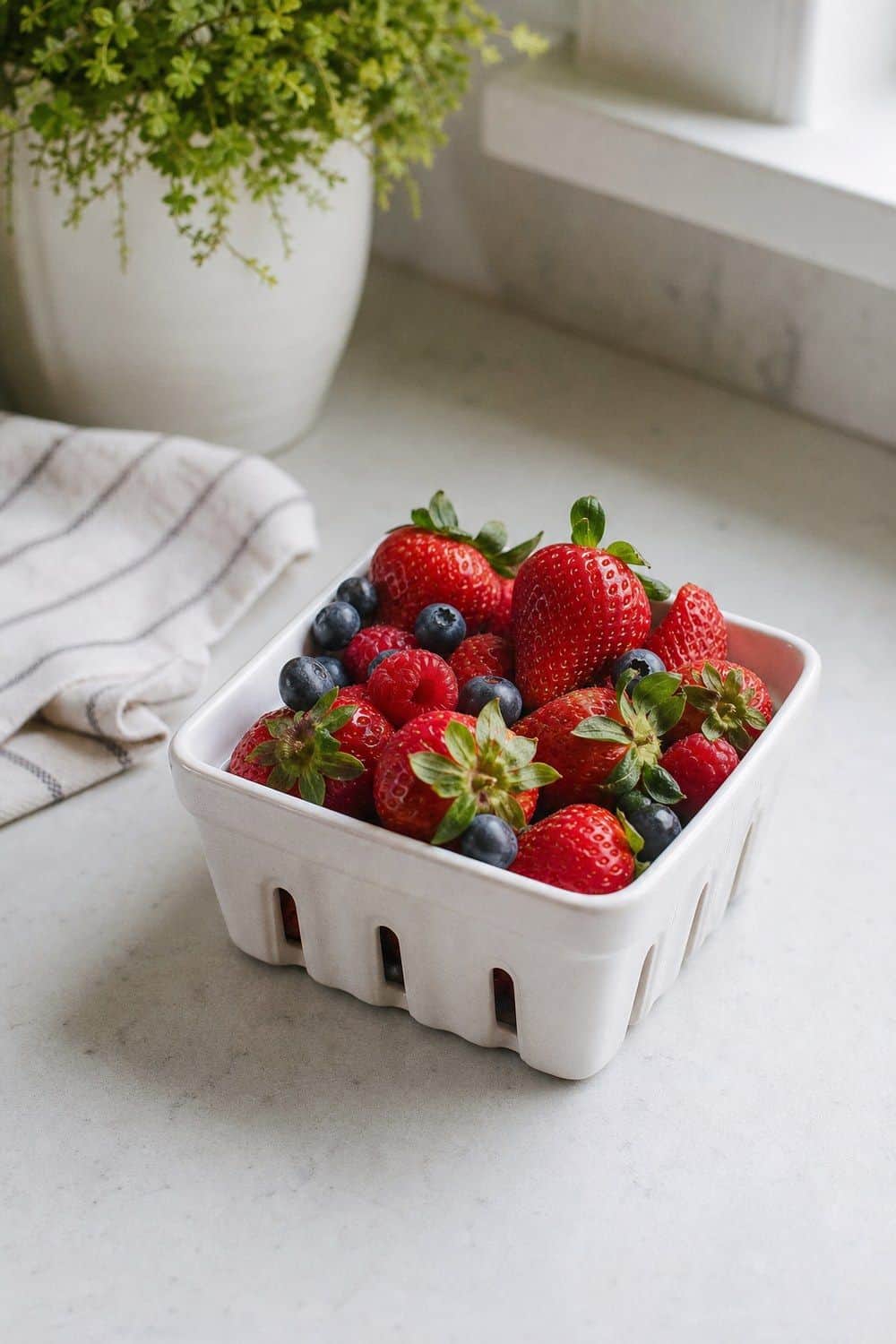
Excellent market strawberries or berries served with breakfast may taste better when they are not ice-cold. A ceramic berry basket is useful for same-day holding, especially when the fruit will be eaten within a few hours, but it should be treated as a serving cue rather than long-term storage.
Keep the basket out of direct sun, away from the stove, and off a damp sink ledge. If the berries will not be eaten soon, move them to the fridge before they start to sweat or collapse.
Use a single layer or a loose mound, not a deep pile. Room-temperature berries soften faster than refrigerated berries, so if condensation appears or the kitchen is hot, move the basket to the fridge and bring berries back out for a short rest before serving.
7. Front-Shelf Berry Zone
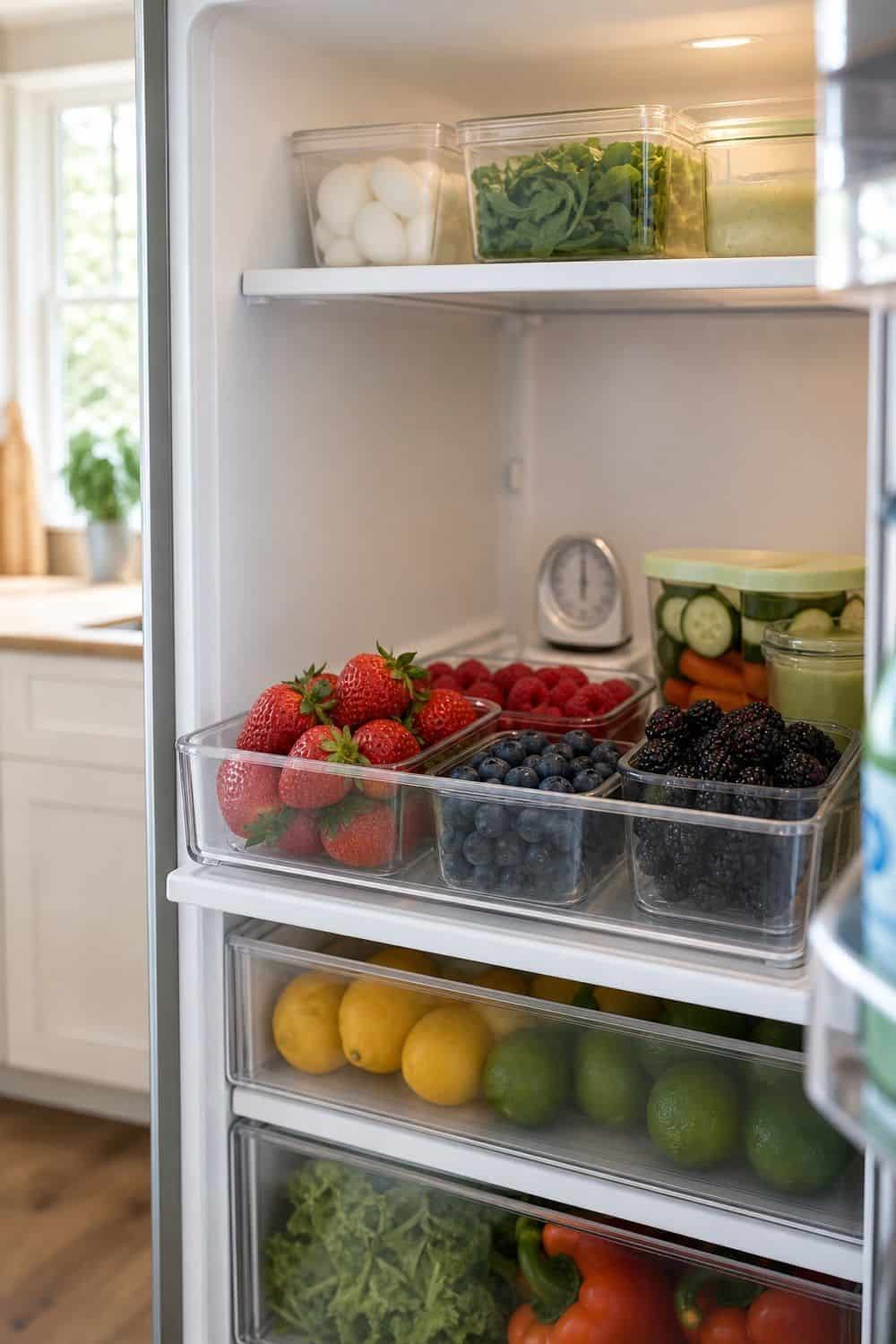
The front of the fridge is often the best place for berries because they stay visible and are less likely to freeze against the back wall. A refrigerator thermometer helps you notice whether the shelf is actually cold enough for fragile fruit.
Aim for a fridge at or below 40 F. If berries freeze near the back or soften quickly near the door, shift them to a steadier shelf and use the thermometer to learn the appliance instead of guessing.
This zone is especially helpful for raspberries, blackberries, and eat-first strawberries. Visibility reduces waste because the berries are seen before they become a hidden clamshell in a humid drawer, and a small front zone helps anyone making breakfast see what should be eaten first.
8. No-Wash Storage Bin
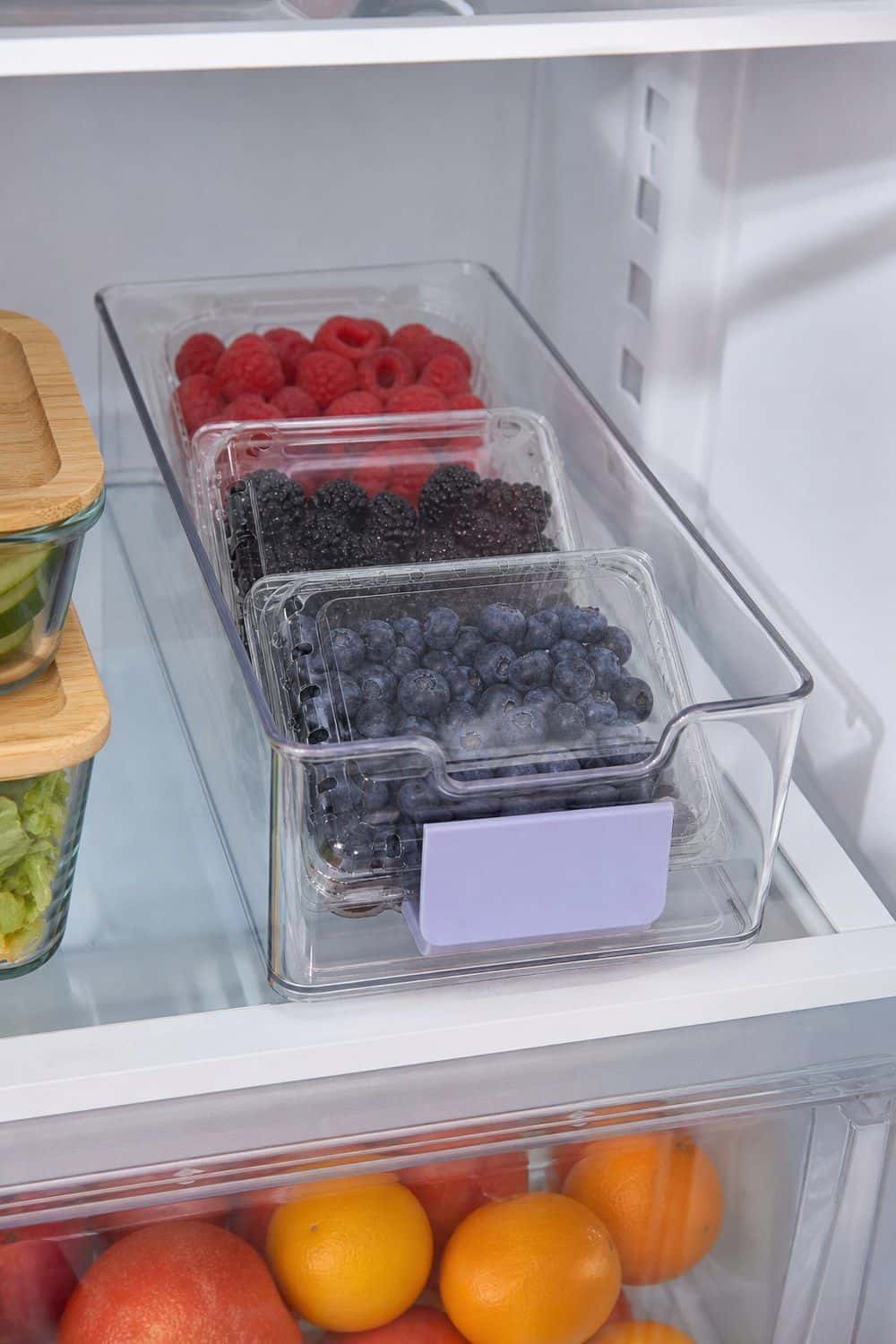
Dry berries need a clear signal when other people share the fridge. A refrigerator organizer bin can hold unwashed berries so kids, roommates, or snack grazers know they are stored for later, not ready to eat immediately. Choose a clear bin that pulls forward easily and does not trap berries in a damp corner.
Label the bin if the household needs the reminder, store washed berries somewhere separate, and avoid a deep bin that hides fragile fruit at the back. Keep a small towel in the bin only if berries are dry enough that it will not become damp.
9. Gentle Rinse Station
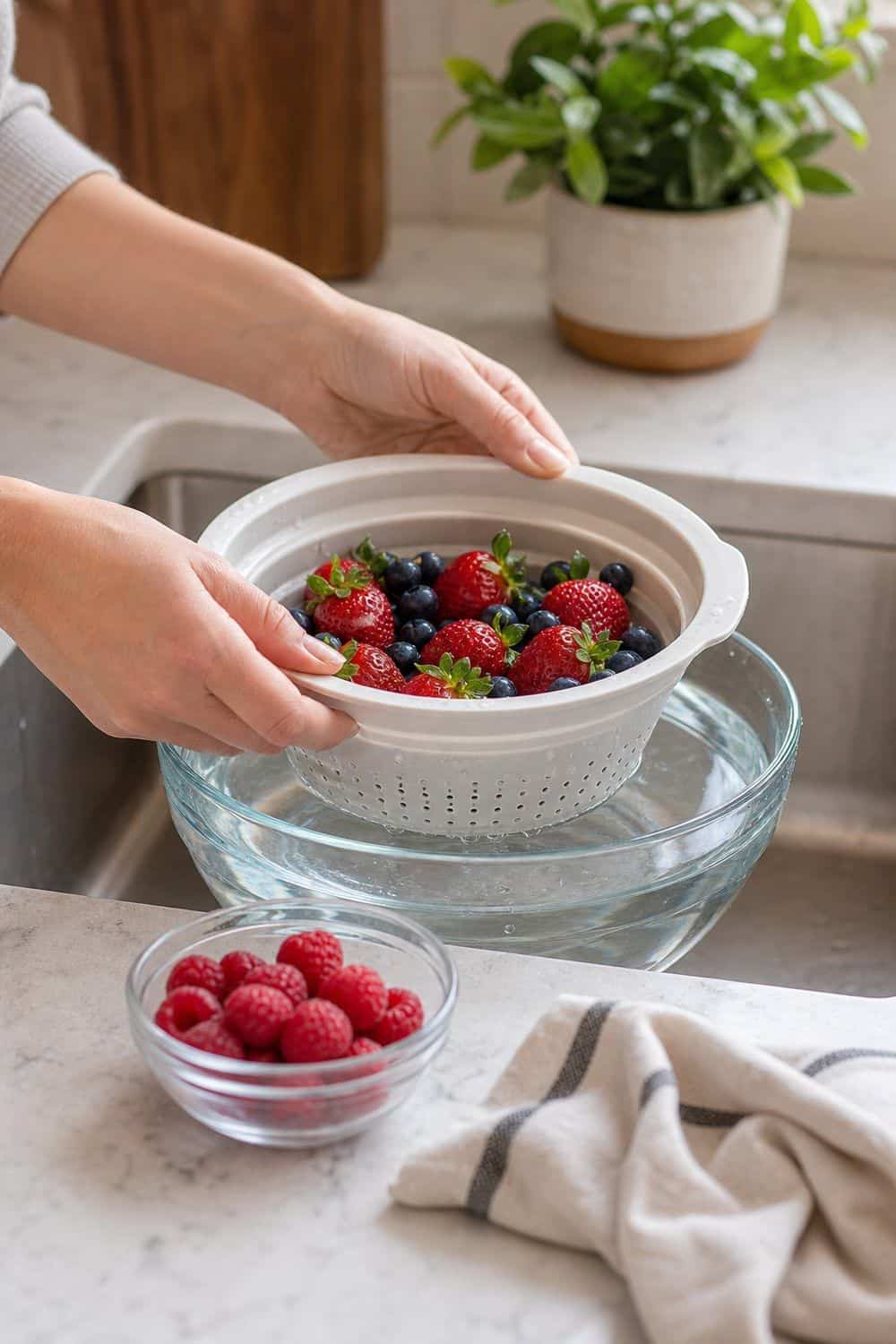
A small rinse setup helps you wash only the berries being eaten now. A collapsible colander works well in tight kitchens because it can sit in the sink for a quick portion of blueberries or strawberries, then fold away.
For delicate raspberries and blackberries, avoid a hard blast of water. Use gentle water flow, or place the berries in the colander and lift them through a bowl of clean water before draining. Do not use soap, bleach, or commercial produce washes; plain water and careful handling are enough for normal fresh eating.
Rinse over a bowl if berries are very ripe so the water pressure stays soft. Drain for a moment, then move berries to a towel instead of letting them sit in the colander wet.
10. Fully Dry Washed Berries
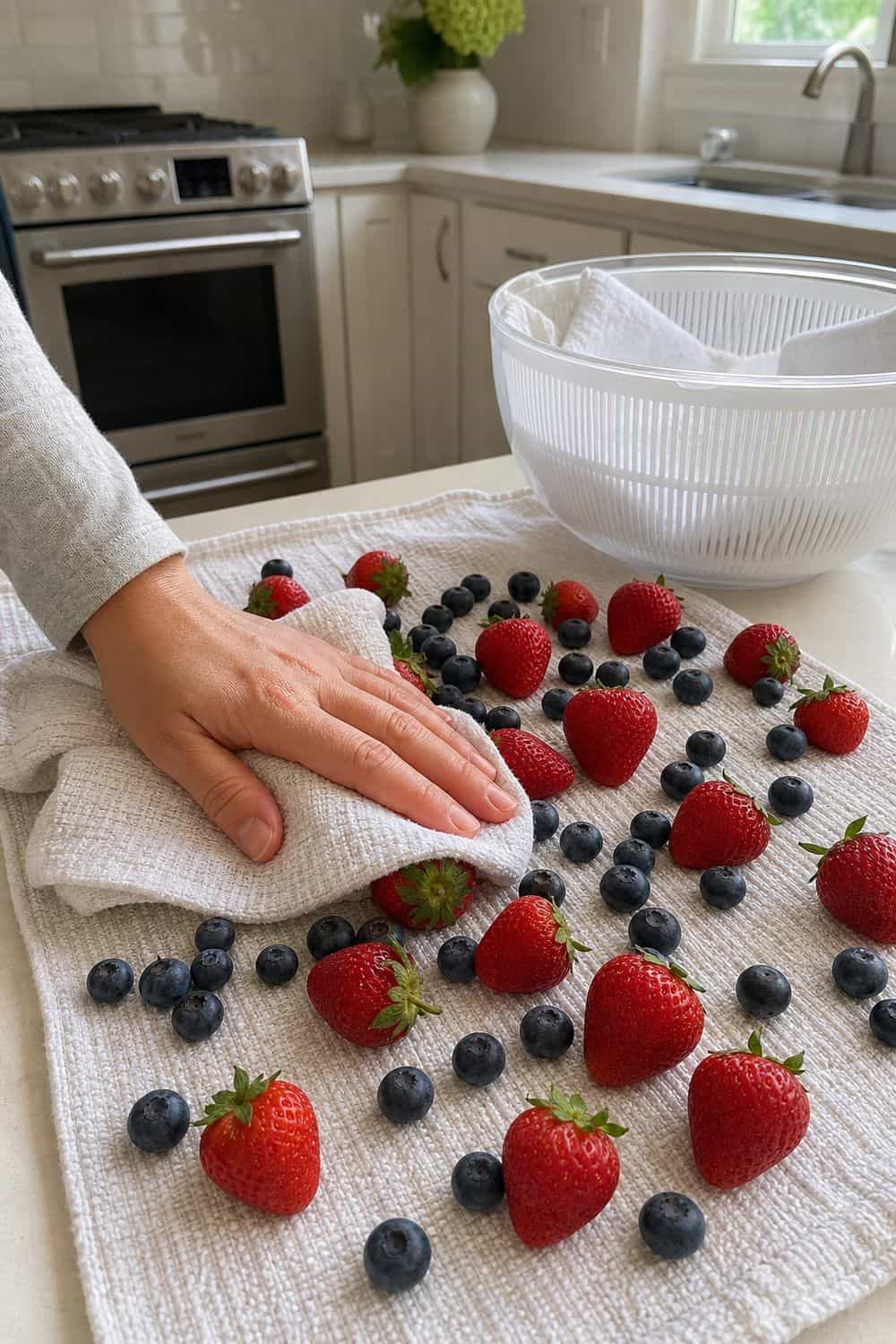
Washed berries need to be dry before they go back into the fridge. A salad spinner can help with sturdy strawberries or blueberries if you line it with a clean towel and use a gentle spin rather than rough tumbling.
Raspberries and blackberries need a softer approach. Let them drain for a moment, then spread them on a towel and pat around them instead of pressing on the fruit. Wet berries can mold faster even if the storage container is good, so wait until surfaces are dry before moving washed berries into a keeper, shallow tray, or snack cup.
If you wash ahead for snacks, check the towel after a few minutes and replace it if it is damp. Dry berries should feel cool and clean, not slick or wet, before they go into a container.
11. Vinegar Rinse for Sturdier Berries

A diluted vinegar rinse can be useful for sturdy berries when mold pressure is a recurring problem. It is most reasonable for strawberries and blueberries, which can handle more movement than raspberries.
Rinse thoroughly afterward and dry the berries completely before storage. The drying step matters as much as the rinse, because wet berries packed into a container can undo any benefit. Use this method only when the berries are firm enough to handle. Skip it for fragile raspberries that are already soft, leaking, or collapsing, and discard berries with mold, slime, or a fermented smell.
Test a small batch before rinsing every berry, dry the fruit completely before storage, and use bruised rinsed berries quickly instead of returning them to long storage.
12. Strawberry Hulls Left On Until Use
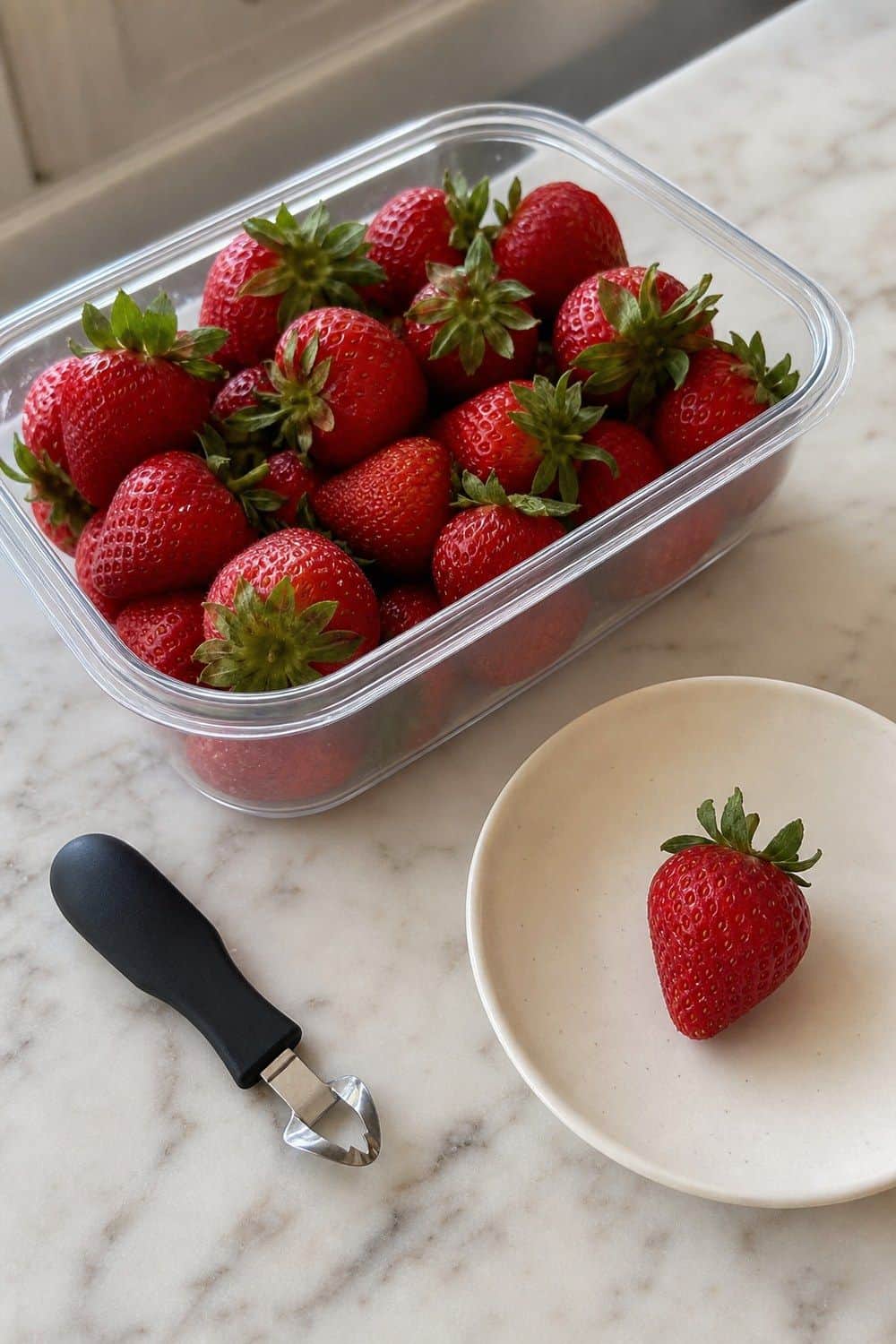
Whole strawberries store better than hulled or sliced strawberries because the cut surface releases juice. Keep the hulls on during storage, then use a strawberry huller only when you are ready to eat, bake, or prep breakfast. This small delay prevents watery containers and keeps the fruit from bleeding onto towels, yogurt, or other berries.
Hull right before eating, slice only what you need, and freeze extras if the berries are soft but still safe. If one berry has a bruised shoulder, trim it when serving rather than hulling the whole batch early. The fewer cut surfaces in the container, the less juice collects around the fruit.
13. Snack Cups for Eat-First Berries
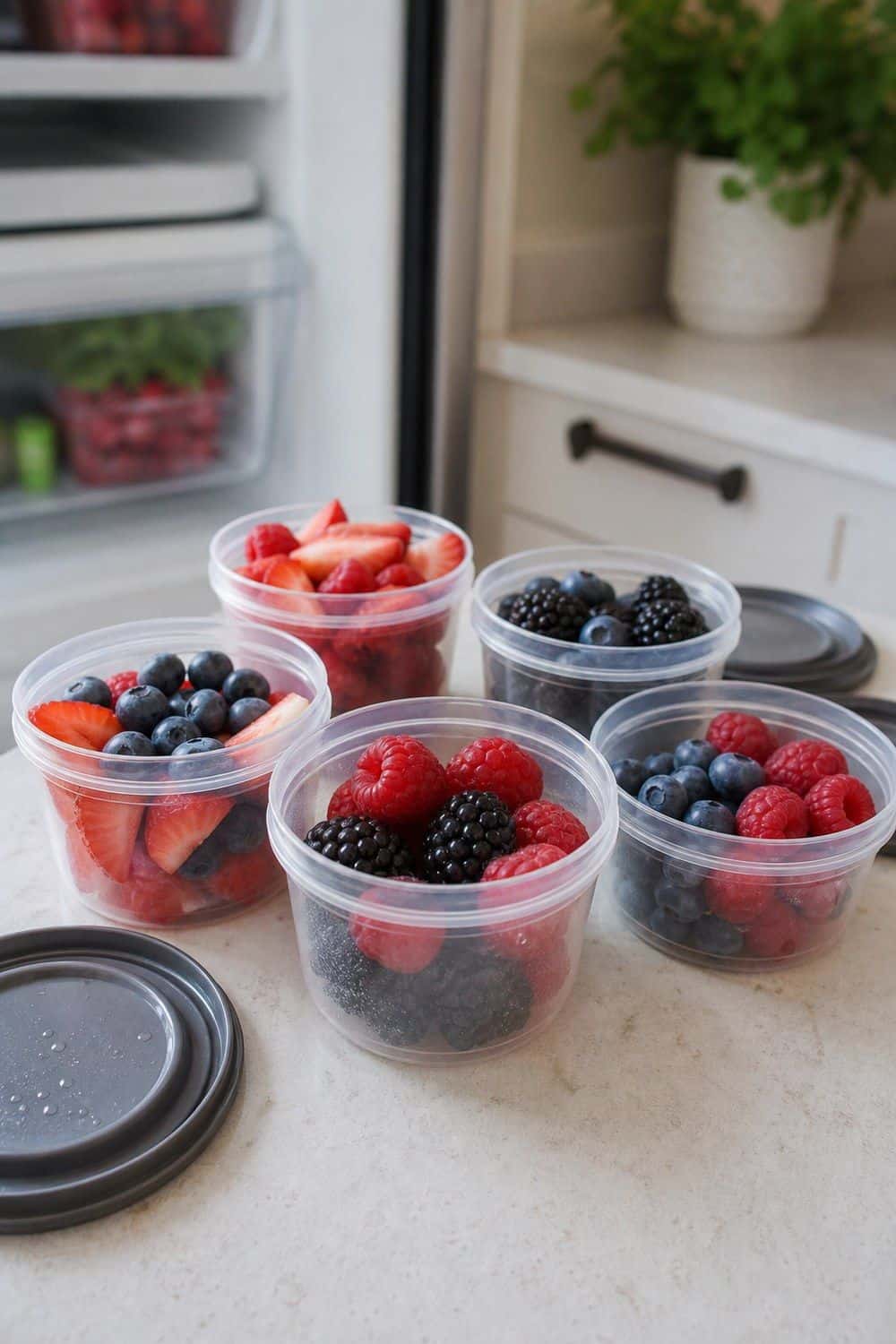
Berries that are soft but still wholesome need a job quickly. Snack cups with lids can turn eat-first berries into yogurt toppers, oatmeal fruit, cottage-cheese sides, lunchbox additions, or small snack portions before they are forgotten.
Keep the safety line firm. This is for berries that are soft, slightly bruised, or close to their best day, not fruit with mold, slime, leaking decay, or an off smell. Portions should be small enough to finish in one sitting.
If a cup collects juice, use it soon or move the berries into a cooked rescue plan rather than returning them to long storage. Put the cups at eye level, not behind newer fruit, so the soft berries become the obvious first choice for breakfast or lunch.
14. Yogurt Berry Prep Box

Breakfast berries get soggy when they sit directly in yogurt, granola, or nuts too early. Divided breakfast containers let berries stay beside the add-ins without sharing moisture until the moment you eat, which makes the whole box feel fresher.
Use this for berries that are already clean and dry, or pack unwashed berries separately with a clear plan to rinse before eating. Keep granola and nuts dry in their own section.
This is storage for texture, not a full breakfast-prep system. The berry side should protect delicate fruit from heavy yogurt and keep crisp toppings from turning soft overnight. Use a shallow berry compartment so the fruit is not crushed by the lid, and add juicy berries the morning of eating if they are likely to bleed.
15. Berries Frozen Flat Before Bagging
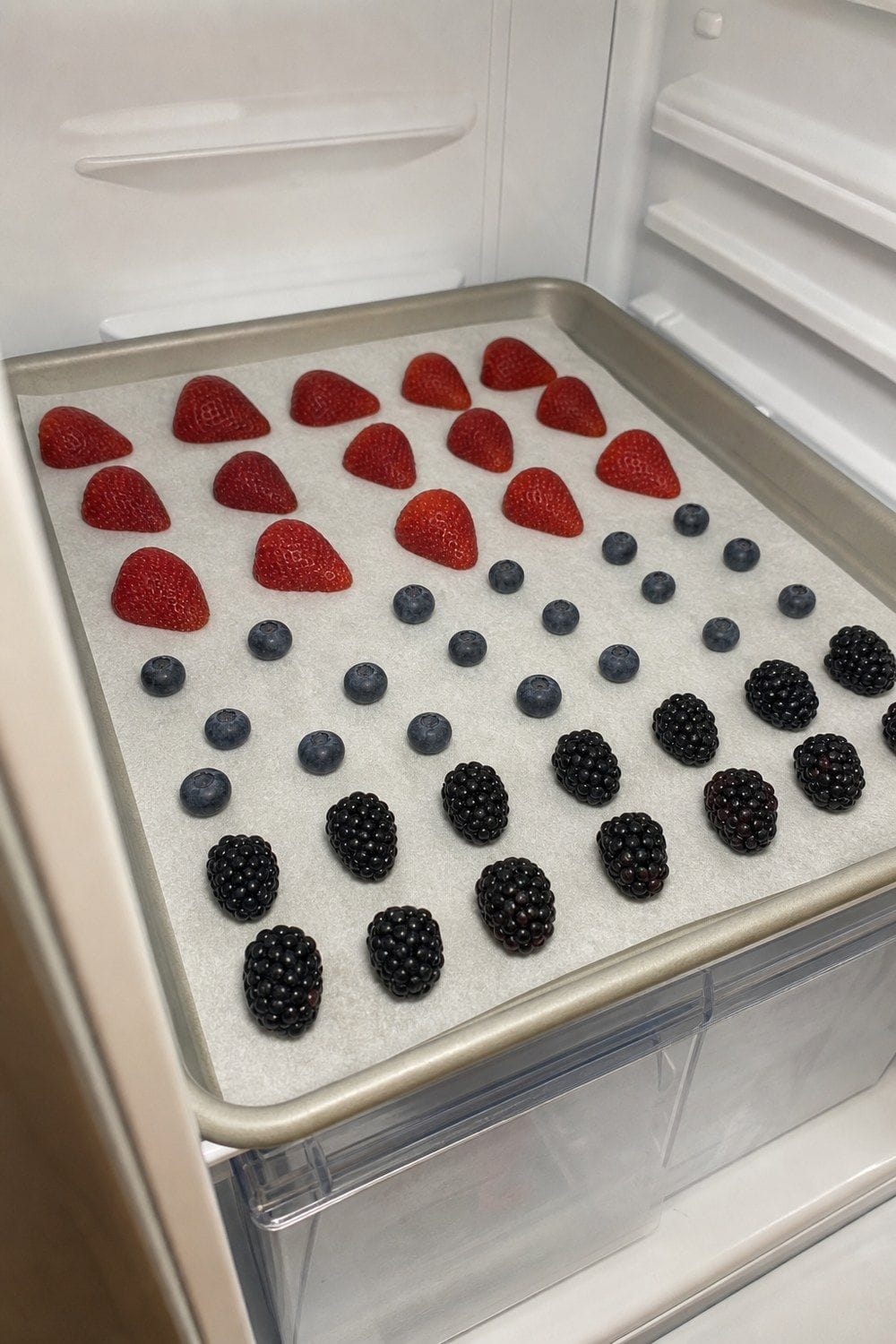
Freezing berries in a pile creates one hard block. A rimmed baking sheet lets clean, dry berries freeze in a single layer first, so they can move into a bag or container as separate pieces.
Use this when berries will not be eaten fresh in time. Remove moldy or decayed fruit, dry the safe berries well, and spread them with space between pieces. Parchment can help if the berries are very ripe. Once frozen, transfer quickly so the berries do not thaw and refreeze together.
A crowded sheet pan slows freezing and makes berries stick together. Use two pans if needed, or freeze in batches so each berry has room to harden on its own.
16. Parchment Between Sticky Berry Layers

Very ripe berries, sliced strawberries, or juicy freezer portions can stick together even after careful handling. Parchment paper sheets create separation between small layers so you can remove a portion without chiseling apart the whole container.
This is most useful when berries are going into the freezer for sauce, pancakes, compote, or baking. Keep layers thin and avoid stacking too high, since weight can crush soft fruit before it freezes solid. Cut parchment slightly smaller than the container so it lifts out easily.
Use parchment between sticky layers, label the container before freezing, and skip parchment for loose whole blueberries if they already freeze separately. For sauce berries, portion in thin layers instead of one deep block that takes too long to thaw.
17. Smoothie Berries in Freezer Bags
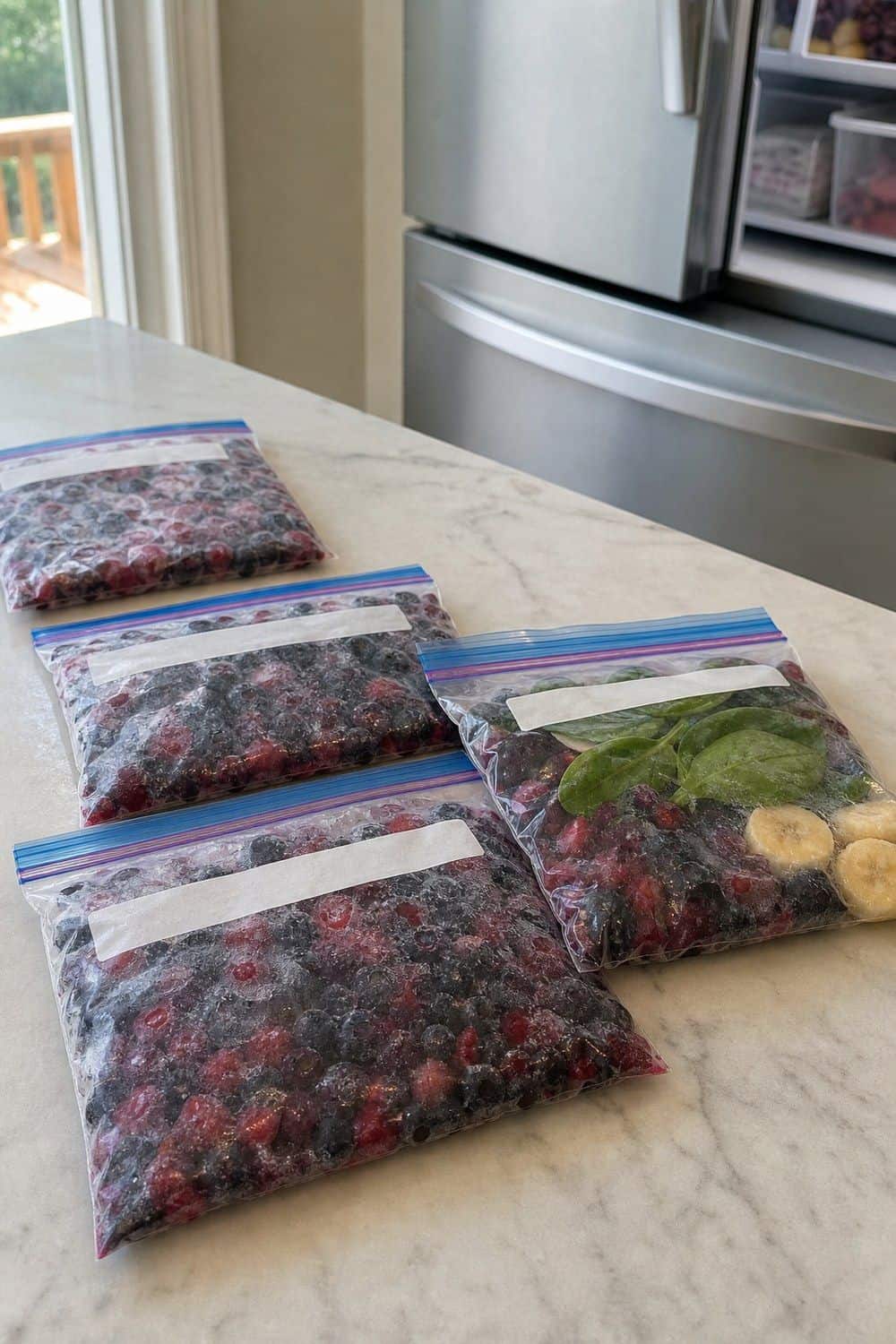
Smoothie berries are easiest to use when they are already portioned. Smoothie freezer bags can hold measured berries after they are frozen flat or fully dried, so breakfast does not start with prying fruit from a frosty clump.
Keep the focus on berries first. A few spinach leaves, banana slices, or yogurt cubes can join the bag if that is your routine, but the storage job is saving berries before they spoil. Press out excess air, flatten the bag, and label the berry mix and date.
Portion by blender size, not by how many berries fit in the bag. A smaller flat bag thaws around the edges faster and is easier to break up if the fruit sticks slightly.
18. Baking Berries in Freezer Containers
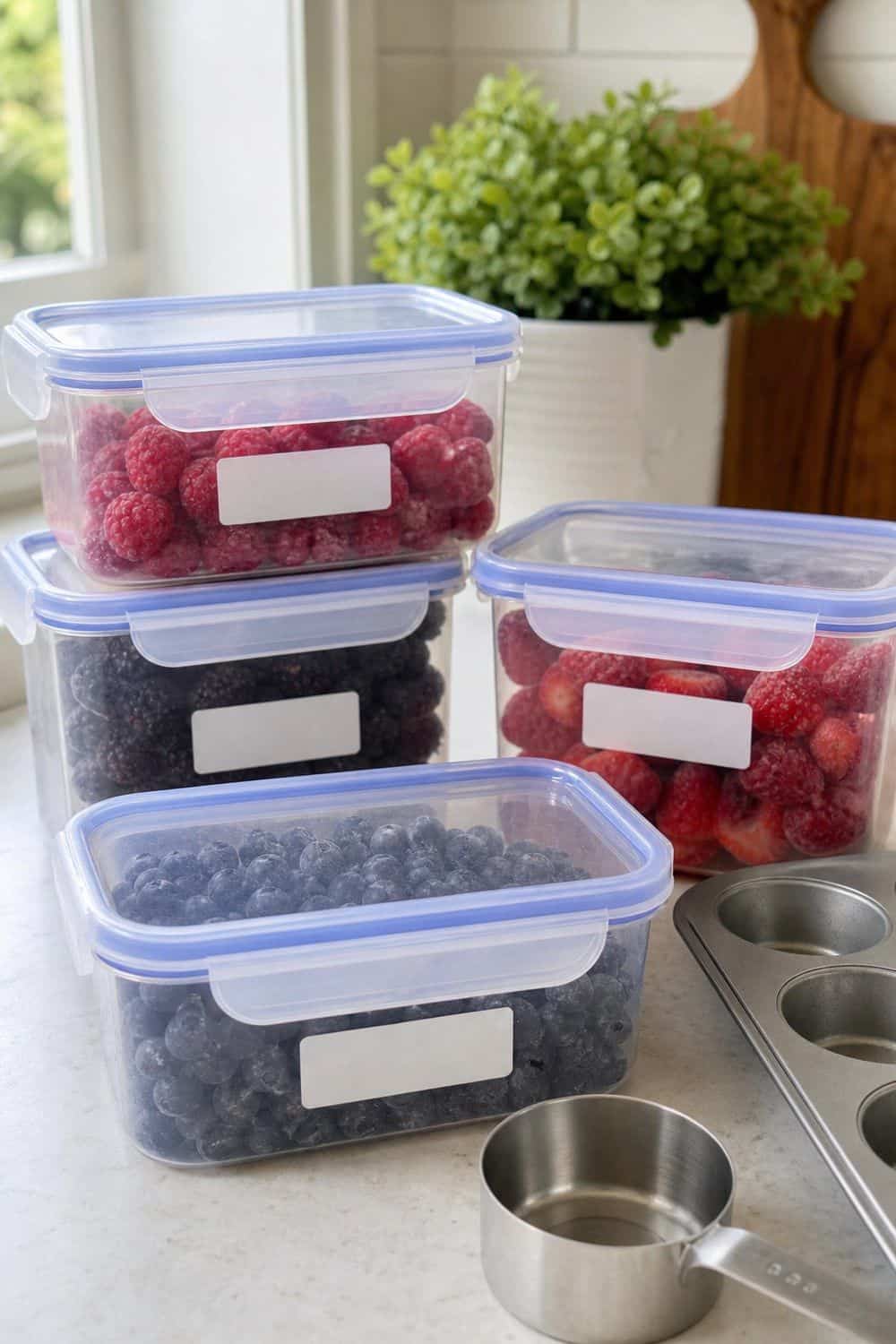
Baking berries do not need to look perfect, but they do need to be safe, clean, dry, and labeled. Freezer safe food containers can protect softer berries better than overstuffed bags when the fruit is destined for muffins, cobblers, pancakes, or sauce.
Use this path for berries that are a little soft but not spoiled. Moldy, slimy, fermented-smelling, or leaking-decayed berries should be discarded, not frozen for later.
Leave a little headspace, especially if the berries are juicy. Label the container for baking or sauce so you do not expect picture-perfect fresh fruit when you pull it from the freezer. For muffins or pancakes, freeze in portions close to the amount a recipe usually needs.
19. Berry Labels by Use and Date

Unlabeled berries become mystery freezer fruit surprisingly fast. Freezer labels should include berry type, freeze date, and intended use, such as smoothies, baking, sauce, pancakes, or oatmeal.
This keeps older berries moving and prevents small bags from turning into forgotten icy packets. It also helps you choose the right texture for the job: whole berries for smoothies, softer berries for sauce, and cleaner pieces for baking. Keep labels simple and visible on the front of the bag or lid.
Separate labels for smoothies and baking prevent disappointment later. A bag marked for sauce can hold softer berries, while a bag for garnish should contain the best-looking pieces.
20. Berry Rescue Plan
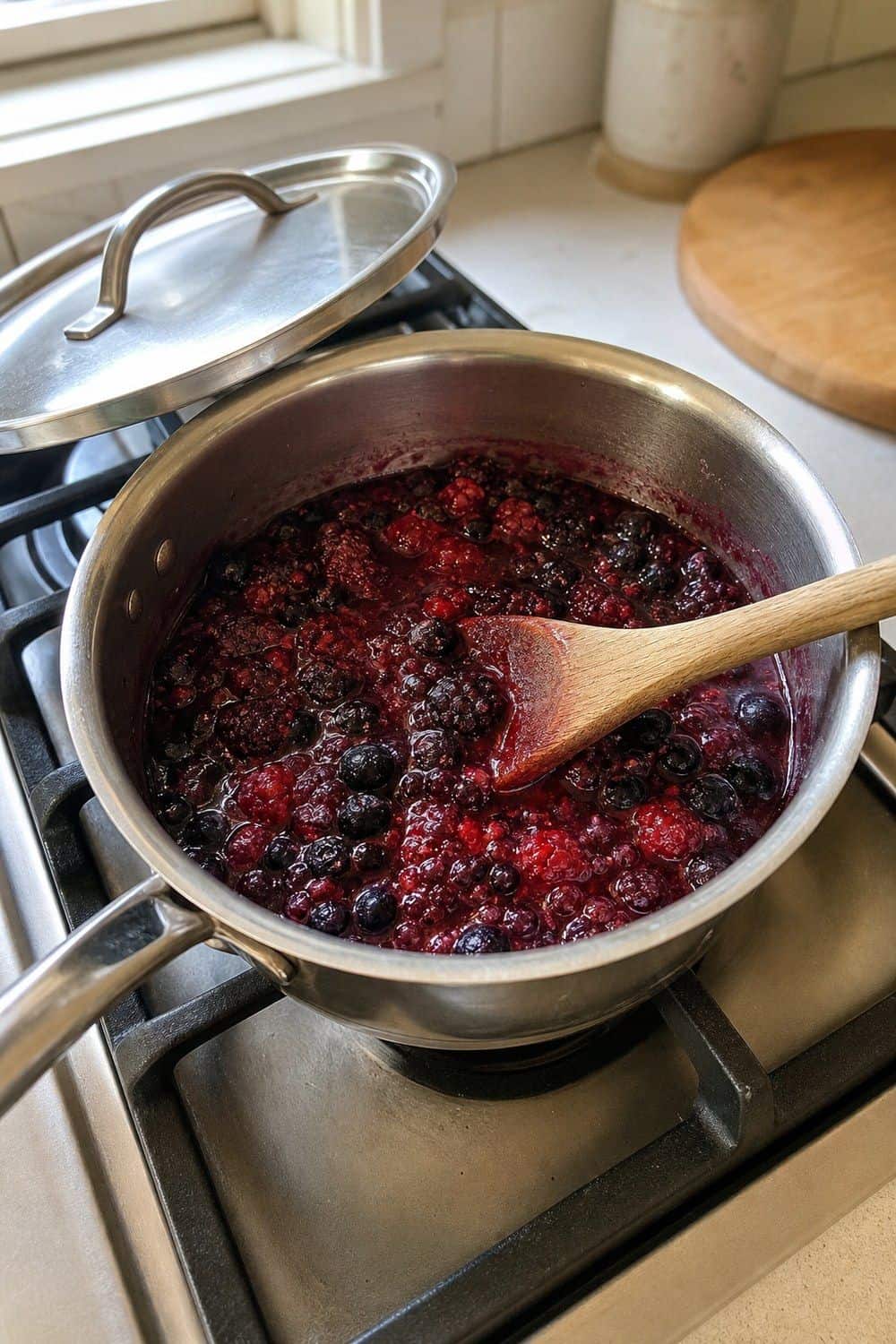
Soft berries can still be useful when they are safe. A small saucepan with a lid gives aging strawberries, blueberries, raspberries, or blackberries a fast path into compote, sauce, chia jam, pancake topping, or oatmeal fruit.
Cooked rescue is for berries that are soft or slightly bruised, not berries with mold, slime, leaking decay, or a fermented smell. When in doubt, discard the questionable fruit. Keep the batch small so it feels doable on a weeknight.
Use a lid if berries sputter as they cook, but leave it slightly ajar so steam can escape and the sauce does not turn watery. Cool the rescue batch before refrigerating.
Berry Storage Timing Notes
Berry storage works best when the setup matches the fruit. Raspberries and blackberries need shallow, gentle storage and fast use. Strawberries and blueberries can handle more container options, but they still need sorting, dryness, and airflow.
Dry storage is the default unless you are washing close to eating or drying the berries thoroughly before refrigeration. Fridge placement matters too: berries should stay cold, visible, and away from spots that freeze tender fruit against the back wall.
Freezing is the no-waste branch when berries will not be eaten fresh in time. Freeze clean, dry berries flat, then move them into labeled bags or containers by use. Moldy, slimy, fermented-smelling, or leaking-decayed berries should be discarded, while soft but safe berries can become sauce or compote.
FAQ
What are the best berry storage ideas?
The best berry storage ideas start with sorting, then matching the setup to the fruit. Use shallow storage for raspberries and blackberries, ventilated keepers for firm strawberries, produce savers for blueberries, front-shelf fridge zones for visibility, and freezer bags or containers when berries will not be eaten fresh in time.
What kind of container keeps berries fresh longer?
The best container depends on the berry. Fragile raspberries often need a shallow paper-towel-lined container. Strawberries can do well in a ventilated berry keeper. Blueberries often handle produce saver containers. No container can save wet, moldy, or decayed berries, so sorting and drying still matter.
Should berries be stored in airtight containers?
Berries usually need airflow and moisture control, not a fully airtight setup. Airtight storage can trap moisture and speed spoilage if berries are wet. Some freezer containers are airtight for frozen berries, but fresh fridge berries usually do better with ventilation, dry towels, or produce containers designed for airflow.
Should you wash berries before storing them?
For most berries, it is safest to wait and wash only the portion you plan to eat. If you wash ahead, dry the berries thoroughly before storage. Wet berries can mold faster in the fridge. Raspberries and blackberries need especially gentle rinsing and drying because they bruise easily.
How do you store raspberries without crushing them?
Store raspberries in a shallow container lined with a dry paper towel, ideally in a single layer. Handle them as little as possible, remove any moldy or leaking berries, and keep them cold and visible. Avoid deep containers, rough rinsing, and stacking heavy fruit on top.
How do you keep strawberries from getting moldy?
Sort strawberries when you bring them home, remove moldy or leaking berries, keep the hulls on until use, and store firm berries dry with airflow. A berry keeper can help, but it will not fix wet or damaged fruit. If you use a vinegar rinse, dry the berries very thoroughly afterward.
Can you freeze berries for later?
Yes. Sort the berries, discard anything unsafe, and freeze clean, dry berries in a single layer on a rimmed baking sheet before bagging. Once frozen, label the container or bag with the berry type, date, and use, such as smoothies, baking, sauce, or oatmeal.
What can you do with berries before they go bad?
Soft but safe berries can become compote, sauce, chia jam, pancake topping, oatmeal fruit, smoothie packs, or baking berries. Do not rescue berries that are moldy, slimy, fermented-smelling, or leaking from decay. When berries are just past their best texture, cooking or freezing is usually the fastest save.
Final Thoughts
Good berry storage ideas are really small decisions about timing, moisture, airflow, and texture. Keep delicate berries shallow, sturdy berries ventilated, washed berries fully dry, freezer berries labeled, and questionable fruit out of the container. That is how berries stay useful instead of becoming a hidden clamshell in the fridge.