

The best herb storage ideas match the herb type to the right system: jars or herb keepers for tender herbs, a counter station for basil, loose wraps for woody herbs, and freezing or drying for extras. Parsley, cilantro, mint, dill, basil, rosemary, thyme, sage, oregano, and chives do not all want the same treatment. A good setup keeps herbs visible, dry enough to avoid slime, and easy to use before they fade.
Fresh herbs are small, but they can quietly waste a lot of money. A bunch of parsley gets shoved behind lettuce, basil turns black in the fridge, rosemary stems disappear into a drawer, and the last spoonful of chopped dill becomes a mystery cup by Wednesday.
Useful herb storage ideas are less about one perfect method and more about choosing the right home for the herb in front of you. Tender bunches need water or protection. Woody stems need air and a gentle wrap. Basil needs the counter. Extras need a freezer, a drying setup, or a clear use-first plan.

AAWP Recommended Products
You Might Also Like These Blog Posts
- How to Store Herbs
- Summer Fruit Storage
- Healthy Fridge Prep
- How to Store Tomatoes
- Use-It-Up Fridge Meal Ideas
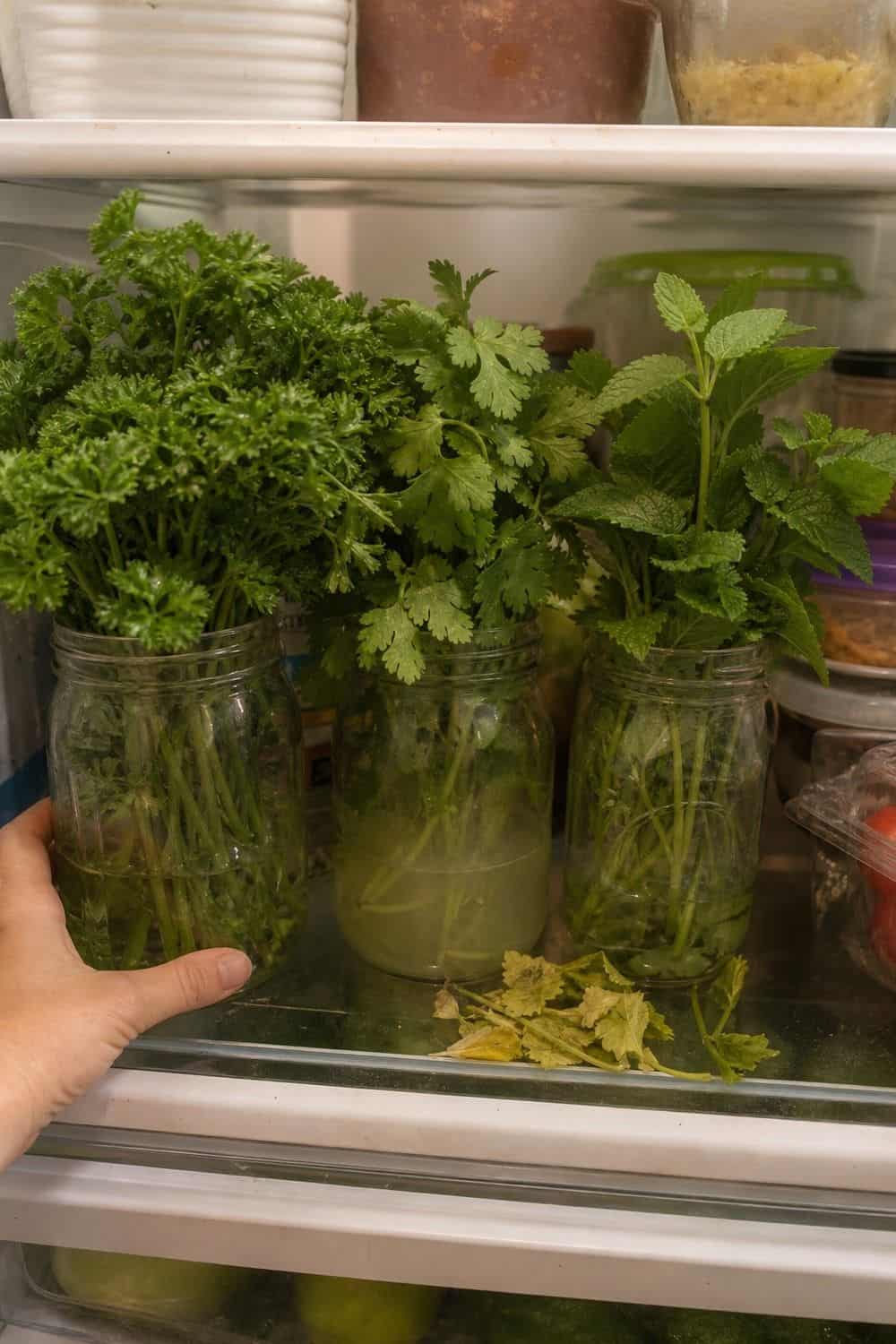
1. Create a Tender Herb Jar Zone
Tender herbs such as parsley, cilantro, and mint usually last better when their stems sit in a little water, almost like a small bouquet. Trim the stem ends, remove yellow or slimy leaves, and use a jar wide enough that the bunch is not crushed. Keep the leaves above the water line so they stay fresh instead of soggy.
Place the jar near the front of the fridge where you will see it before cooking. Change cloudy water and pull weak leaves every couple of days, especially if the herbs are packed tightly.
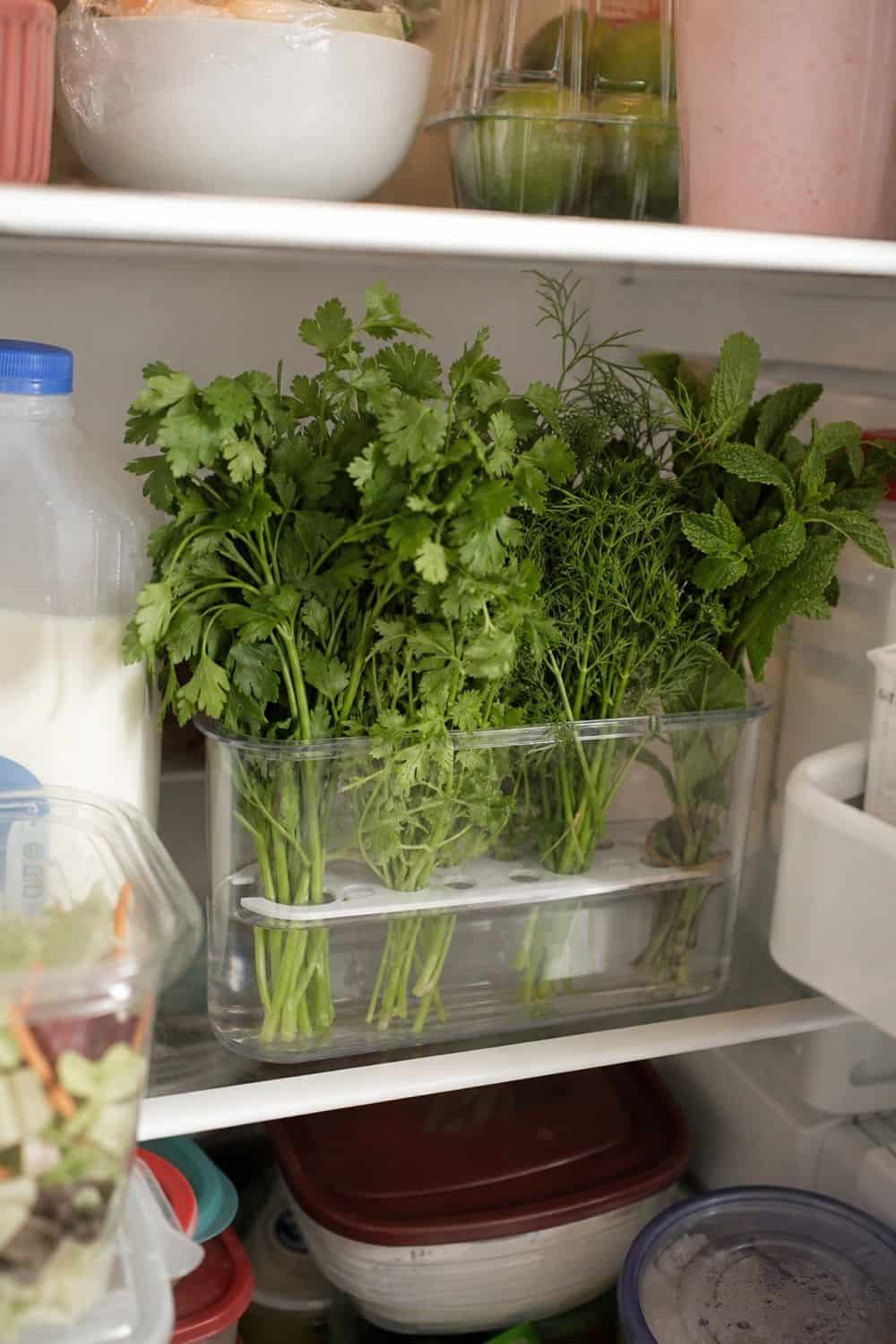
2. Use a Dedicated Herb Keeper
An herb keeper is useful when you buy parsley, cilantro, dill, or mint every week and want one repeatable fridge routine. It holds stems in water while protecting the leaves from being flattened by milk cartons, salad boxes, or leftover containers. Use it for bunches that still have sturdy stems and enough height to stand upright.
Do not treat the keeper as a magic freshness box. Trim stems first, remove damaged leaves, keep the water clean, and give the herbs enough space so air can move around the bunch.
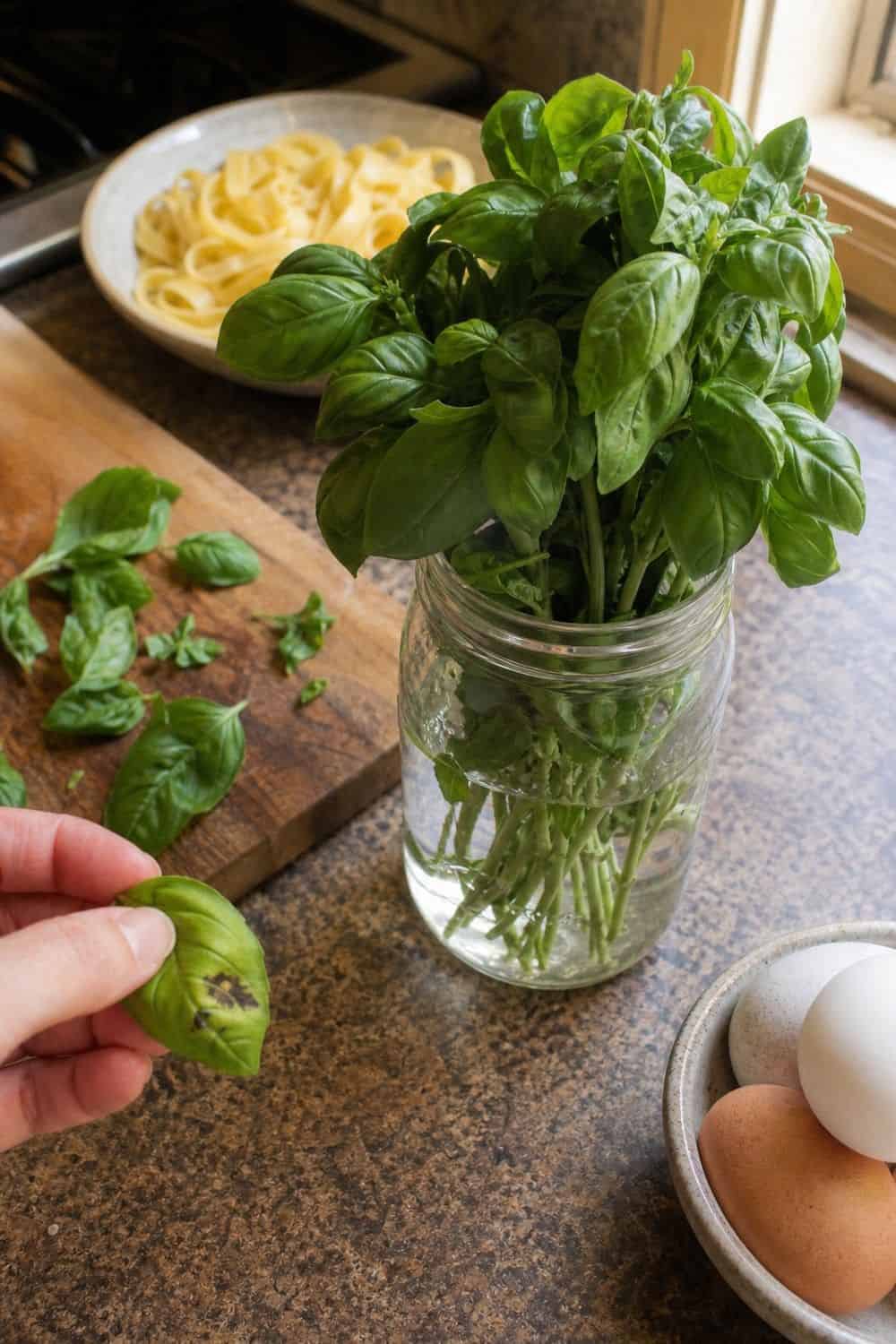
3. Make a Basil Counter Station
Basil usually dislikes the refrigerator, where cold air can turn the leaves black. Store it on the counter with the stems in water, away from direct sun, stove heat, and drafty windows. A small jar or basil keeper works well as long as the leaves have room and the stems stay hydrated.
Use basil early for pasta, eggs, sandwiches, salads, or pesto. If the leaves start spotting, pull them off and turn the rest into sauce or herb paste before the whole bunch fades.
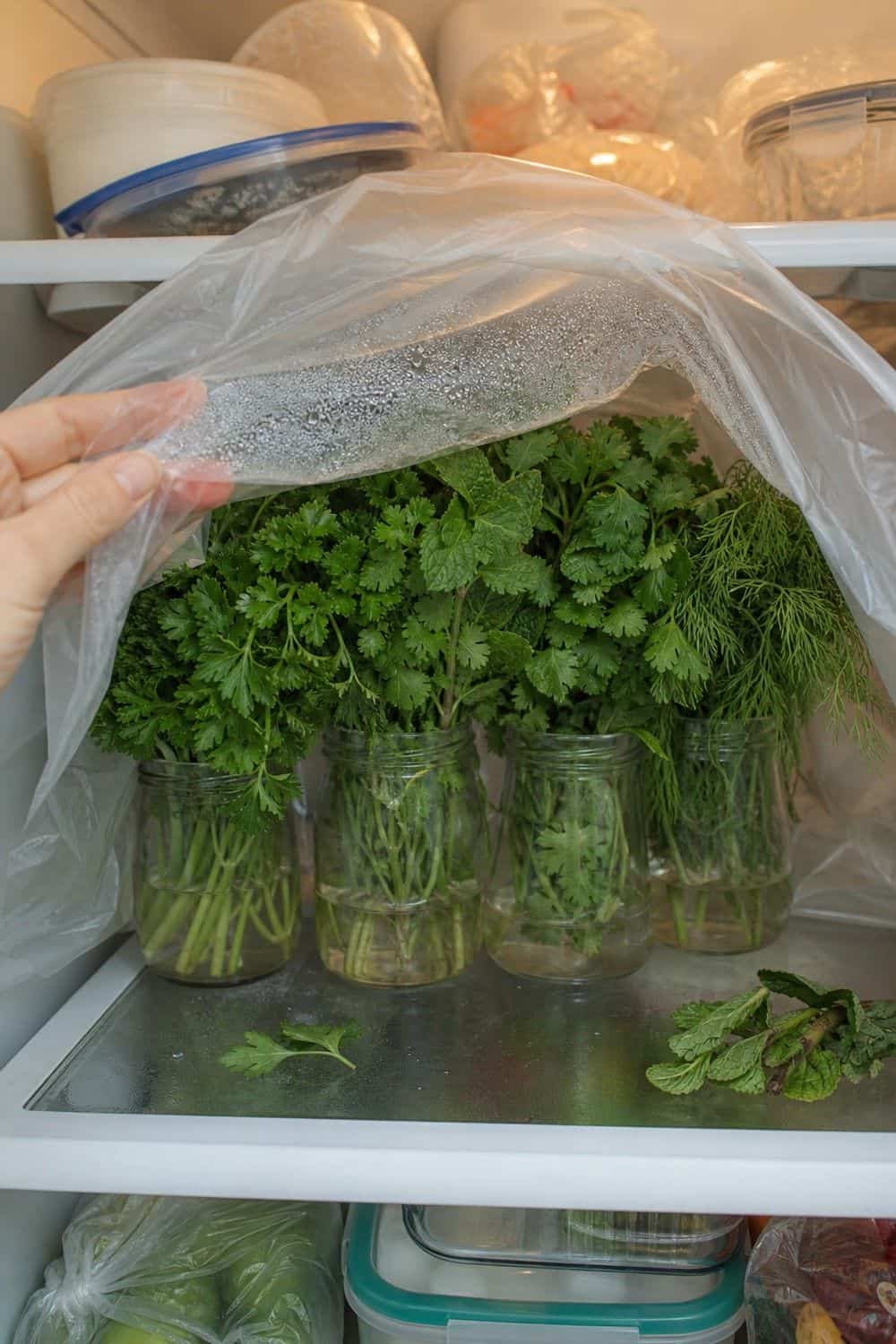
4. Add a Loose Cover for Fridge Herb Bouquets
A loose cover helps parsley, cilantro, mint, and dill stay hydrated without drying out at the leaf tips. Use a reusable produce bag or loose plastic bag as a soft tent over the jar, not as a tight seal. The cover should protect the leaves while still letting the bunch breathe.
Check for condensation inside the bag. If it looks wet, open it for a few minutes and remove any collapsing leaves so the whole bunch does not turn slimy.
5. Wrap Woody Herbs in a Towel
Rosemary, thyme, oregano, sage, and marjoram do not need the same water-jar treatment as tender herbs. A loose towel wrap protects the stems while absorbing small amounts of moisture. Use a dry or barely damp towel depending on your fridge, then tuck the bundle into a bag or shallow container.
Keep woody herbs loose rather than compressed. They last longer than tender herbs, but they still lose flavor when forgotten in the back of a drawer. Check the towel every few days and swap it if it starts feeling wet.
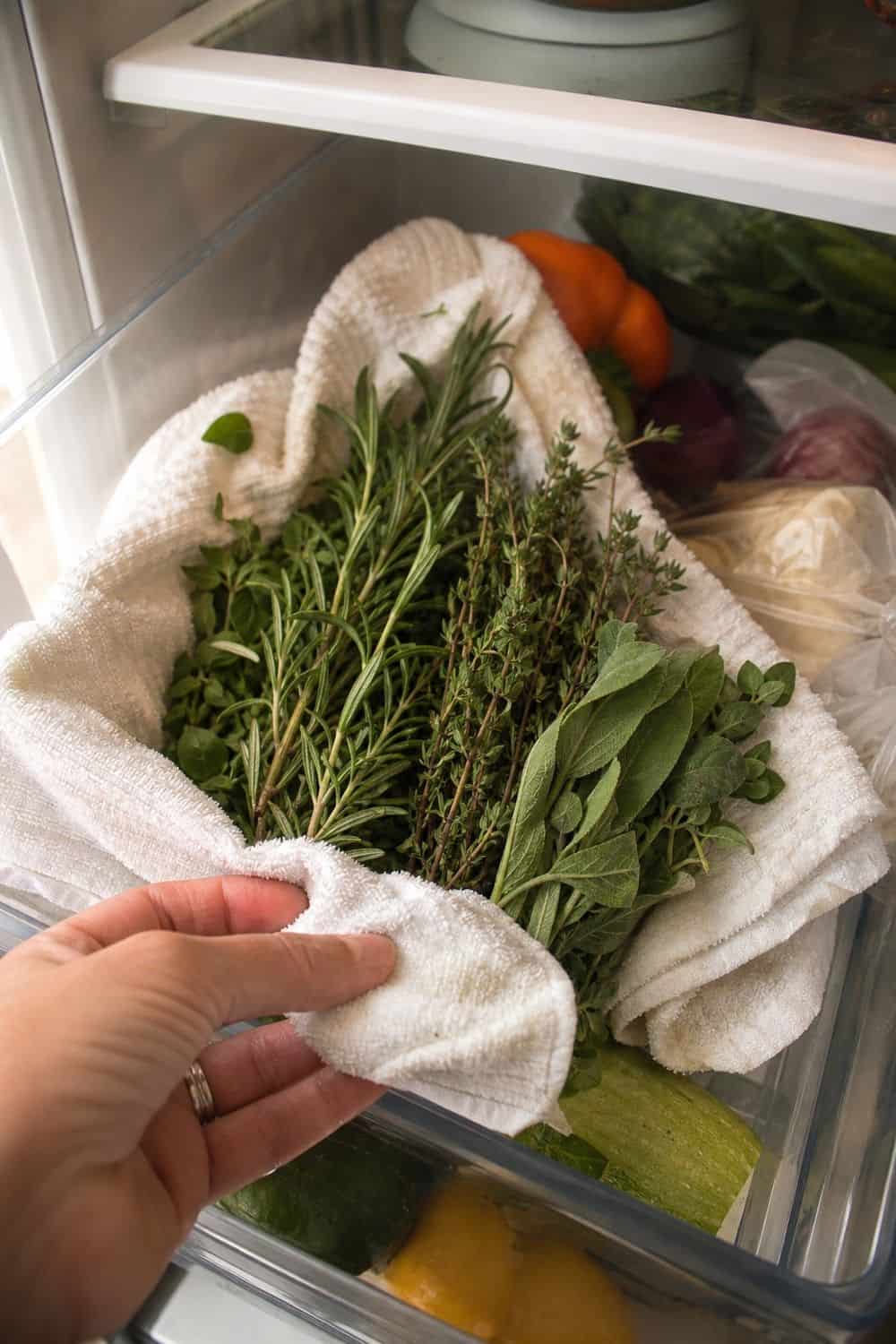
6. Use a Long Container for Rosemary Sprigs
Long rosemary and thyme sprigs can snap or disappear in a crowded produce drawer. A narrow container gives them a defined home and keeps the stems facing one direction. Line the container with a towel if the herbs need cushioning, then close it loosely enough that moisture does not build up.
This works well for sheet pan dinners, roast chicken, potatoes, beans, and soups where you only need a few sprigs. Keep wet tender herbs out of the same container.

7. Store Dill and Tarragon in a Shallow Tray
Dill, tarragon, chervil, and other delicate herbs mat down quickly when they are stuffed into deep bags. Spread them in a shallow container lined with a towel, then cover them without pressing the leaves flat. This protects the feathery texture and makes it easier to spot wilted stems before they spread moisture to the rest. Use these herbs quickly for eggs, fish, potatoes, cucumber salad, yogurt sauce, or chicken salad because their flavor and texture fade faster than rosemary or thyme.

8. Keep Chives in a Sleeve
Chives and scallion tops bend, bruise, and dry out at the tips when they are folded into a short bag. Store them lengthwise in a reusable silicone bag, narrow container, or towel sleeve so the stems stay straight. Add a light towel if the chives are damp, but do not seal them in wet. Keep the sleeve where it will not be crushed by heavier produce, then use the chives for eggs, potatoes, soups, dips, and salads while the stems still feel crisp.
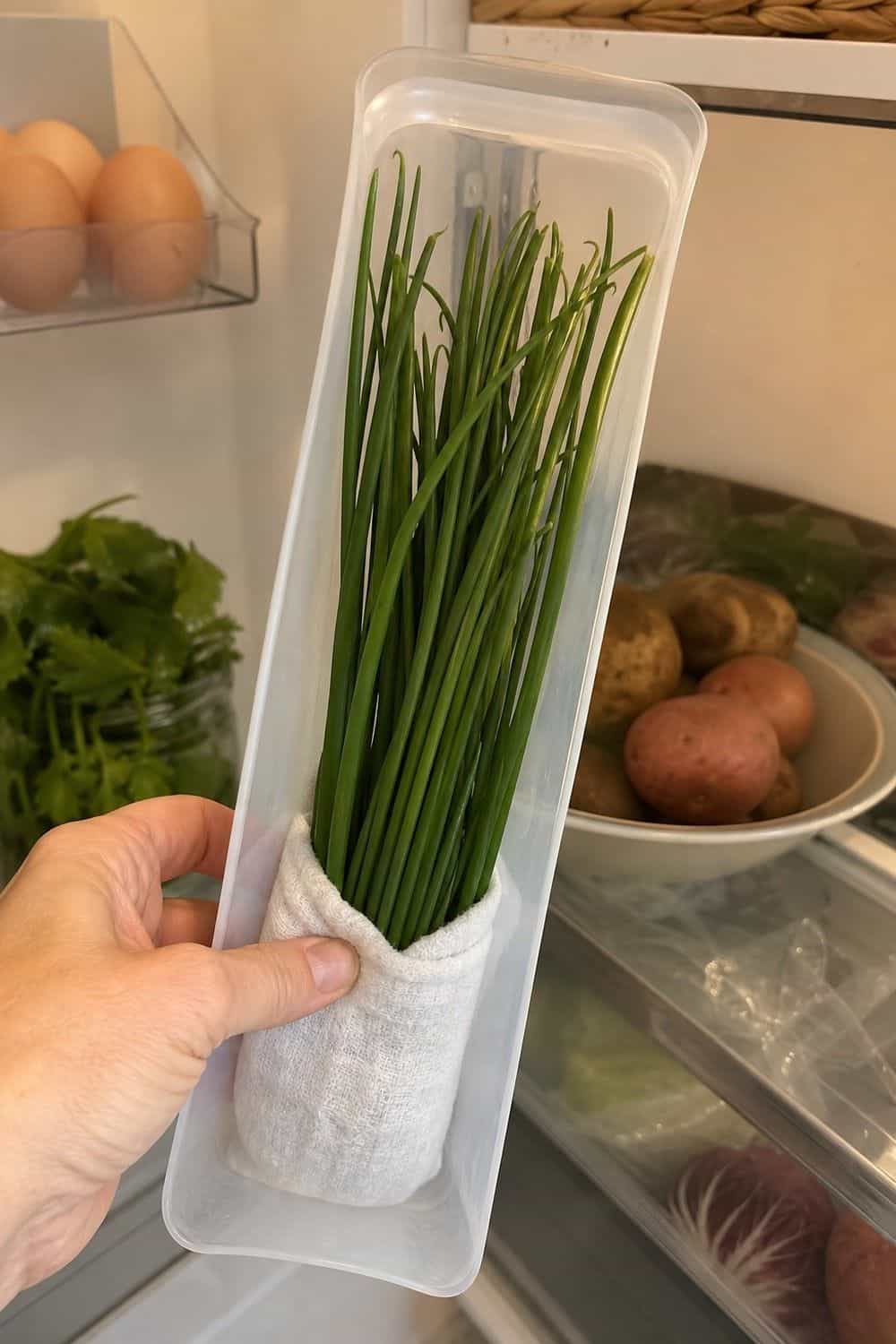
9. Dry Washed Herbs in a Spinner
Washed herbs need to be dried well before they go into jars, bags, or containers. Extra water clinging to parsley, cilantro, mint, basil, or dill can speed up slime once the bunch is covered. A salad spinner removes most of the water without bruising the leaves. Spin gently, check the bottom of the bowl, and finish with a towel if the herbs still feel wet. Store only after the leaves feel fresh and lightly dry, not dripping, and discard any pieces that already feel slick.
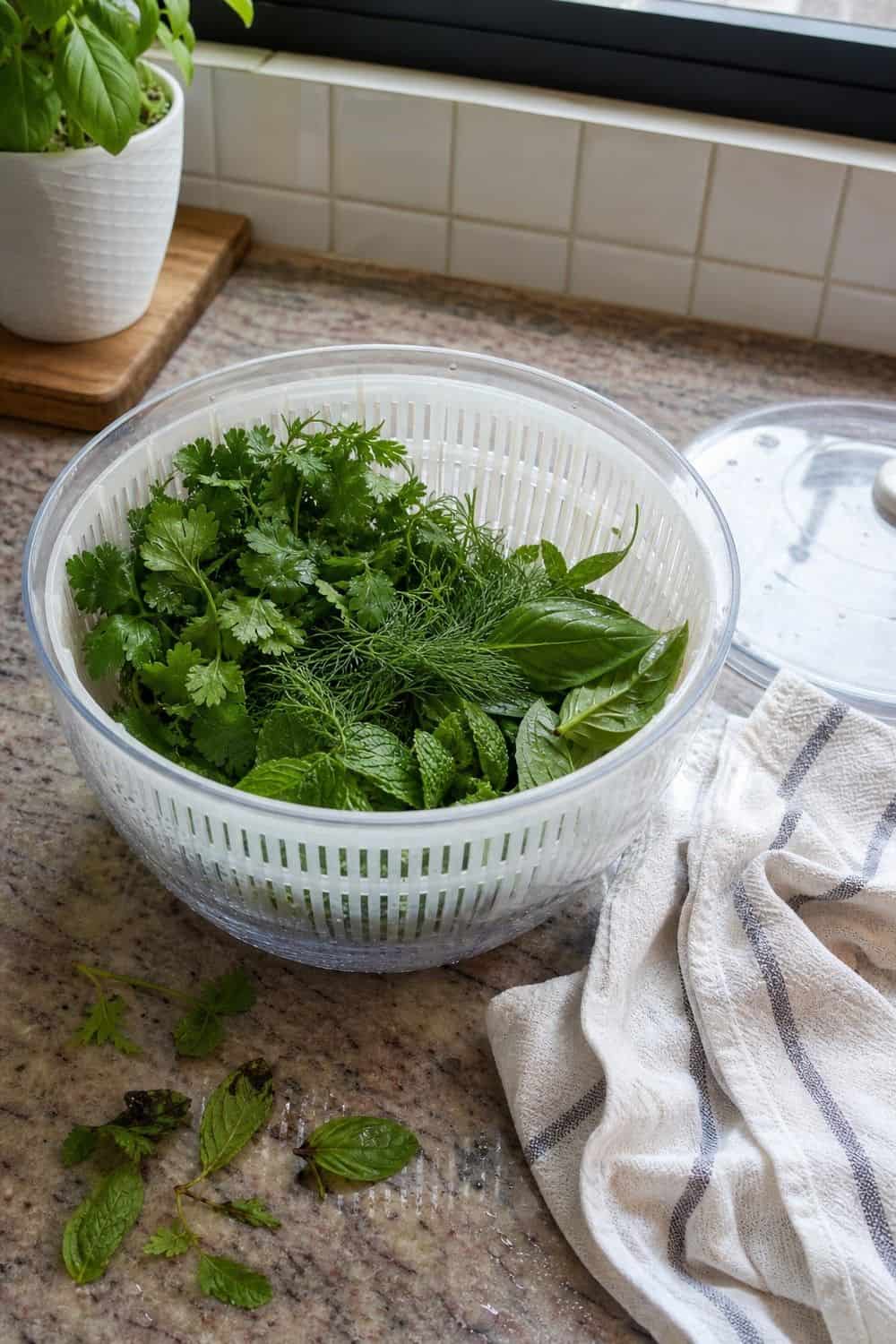
10. Roll Small Herb Bundles in Towels
A towel roll works well for small amounts of herbs left after cooking. Lay parsley, cilantro, mint, or woody stems on a clean towel, roll loosely, and place the bundle in a bag or container. This keeps the herbs from scattering through the fridge and gives them a little moisture control. Do not roll wet herbs tightly, because the center can turn slimy. Label the bundle if you have several herbs so dill does not become a mystery wrap, then use the smallest rolls first.

11. Build an Eat-First Herb Cup
An eat-first cup is for herbs that are still usable but no longer sturdy enough for long storage. Chop or loosely gather the remaining parsley, cilantro, dill, mint, or chives and place them in a small clear container near the front of the fridge. Use them for omelets, soups, grain bowls, tacos, yogurt sauce, or salad dressing within a day or two. This simple habit keeps tired herbs visible before they become compost, especially after a recipe leaves only a handful behind.

12. Make Herb Cubes for Soups and Sauces
Herb cubes are best for herbs that will be cooked later, not for herbs you want to use as a fresh garnish. Chop parsley, cilantro, dill, basil, or mixed herbs, pack them into an ice cube tray, and cover with olive oil, broth, or water depending on how you cook. Freeze until solid, then move the cubes into a labeled freezer bag. Use them in soups, sauces, stews, beans, marinades, or skillet dinners where texture matters less. Skip any herbs that already smell sour.
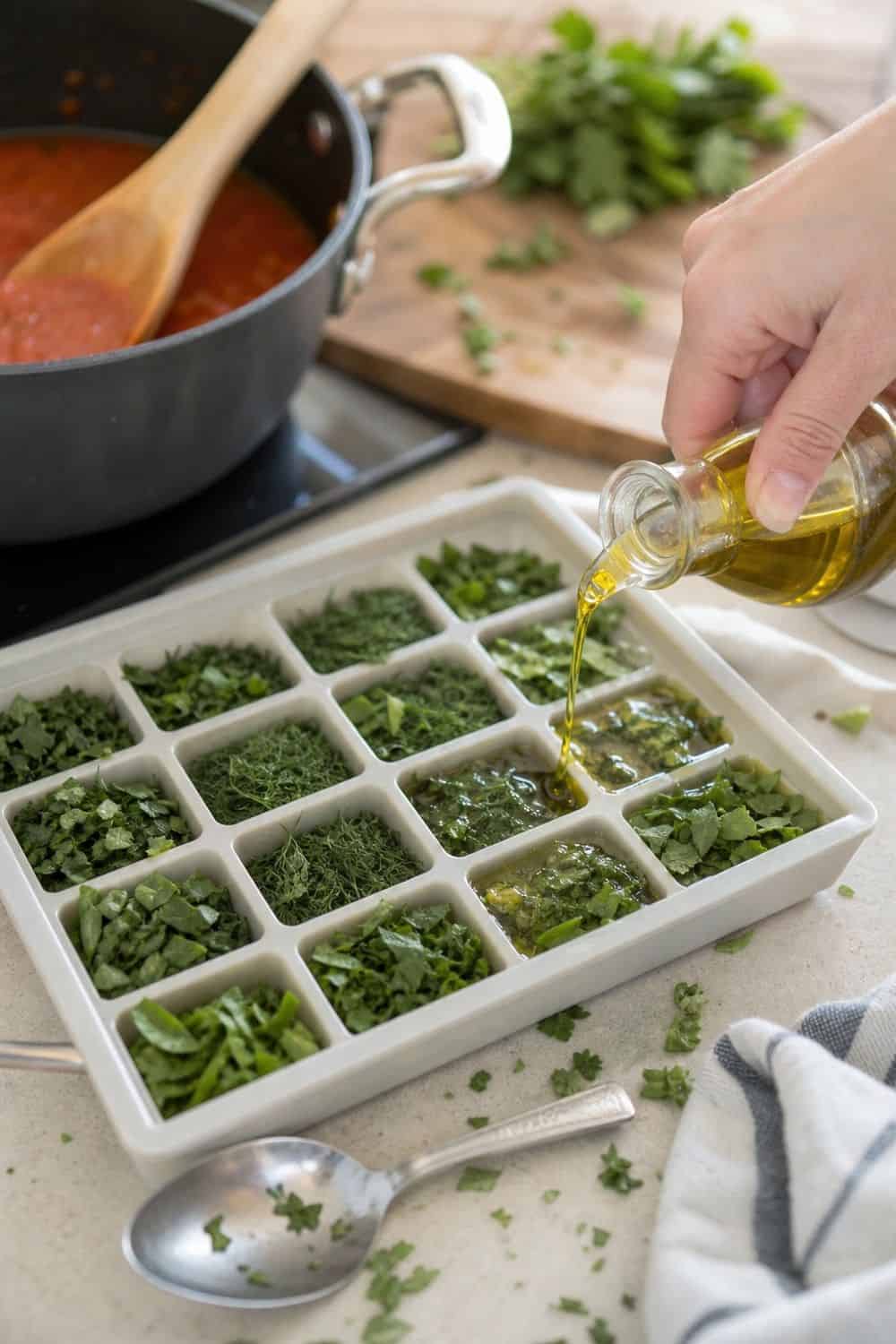
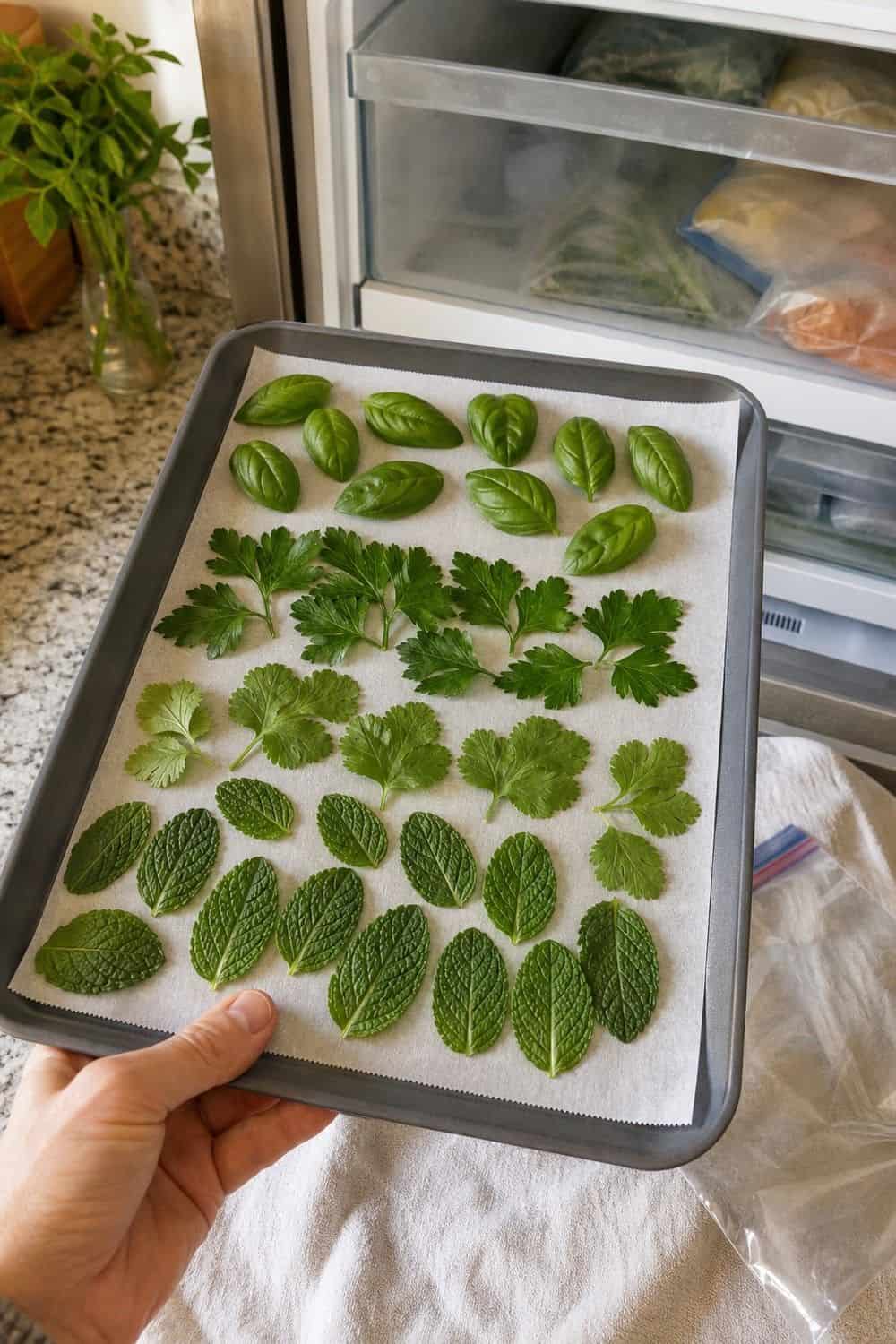
13. Freeze Whole Herb Leaves Flat
Whole herb leaves can be frozen flat when you want a faster option than chopping everything into cubes. Pat the leaves dry, spread them in a single layer on a small tray, and freeze before transferring them to a bag. This keeps basil, parsley, cilantro, or mint from freezing into one solid clump. The leaves will not thaw like fresh herbs, but they are useful for cooked dishes, blended sauces, and quick weeknight flavor. Date the bag so older leaves get used first.
14. File Frozen Herbs in Labeled Bags
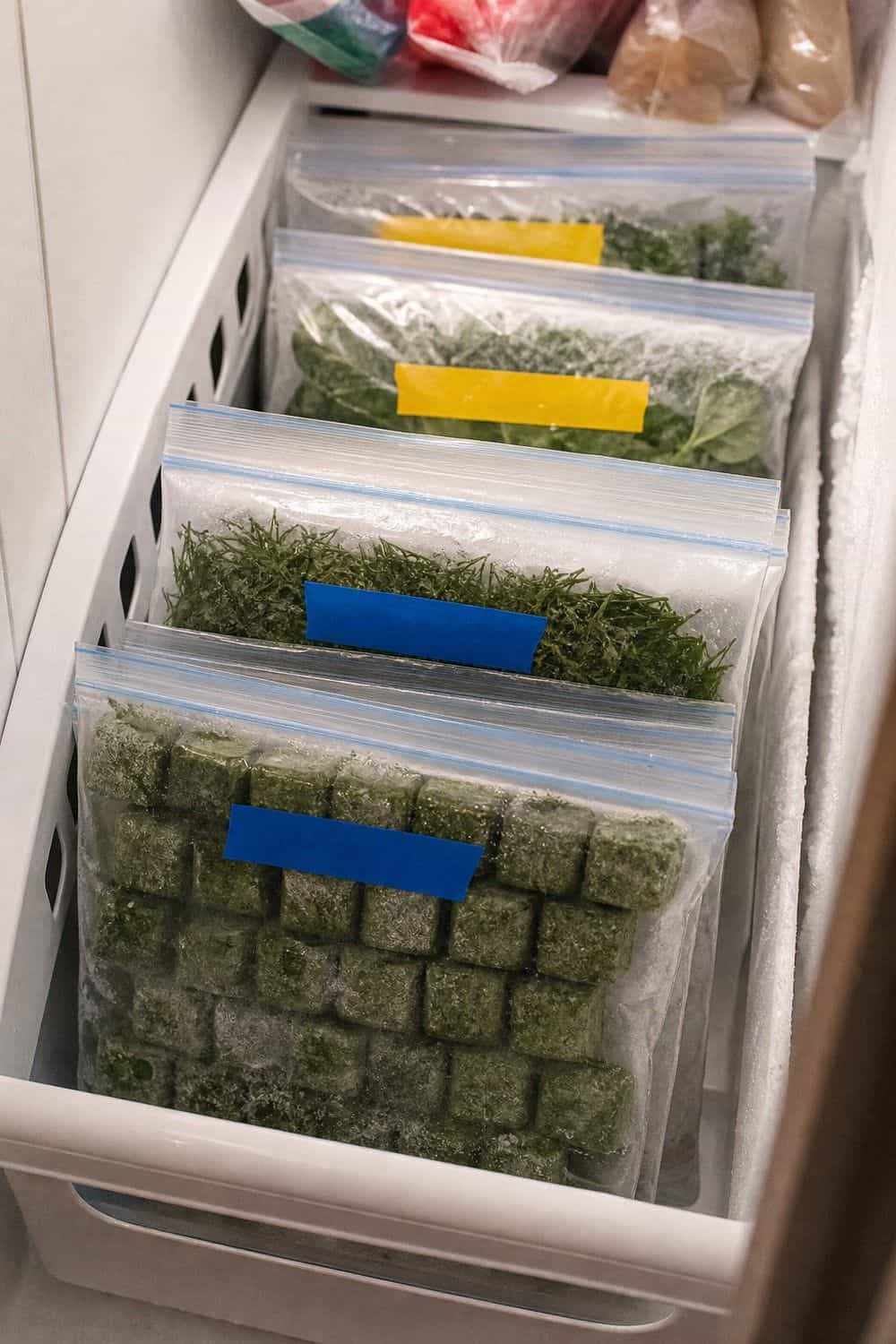
Frozen herbs are only helpful if you can identify them later. Move frozen cubes, chopped herbs, or flat leaves into labeled bags with the herb name and date. Press the bags flat before freezing so they stack like files and do not take over the freezer door. Keep strongly flavored herbs, such as dill or cilantro, separate from mild blends. Use older bags first, especially if the herbs are starting to lose color or smell muted. Toss freezer-burned herbs that no longer smell like anything.
15. Dry Woody Herbs on a Rack
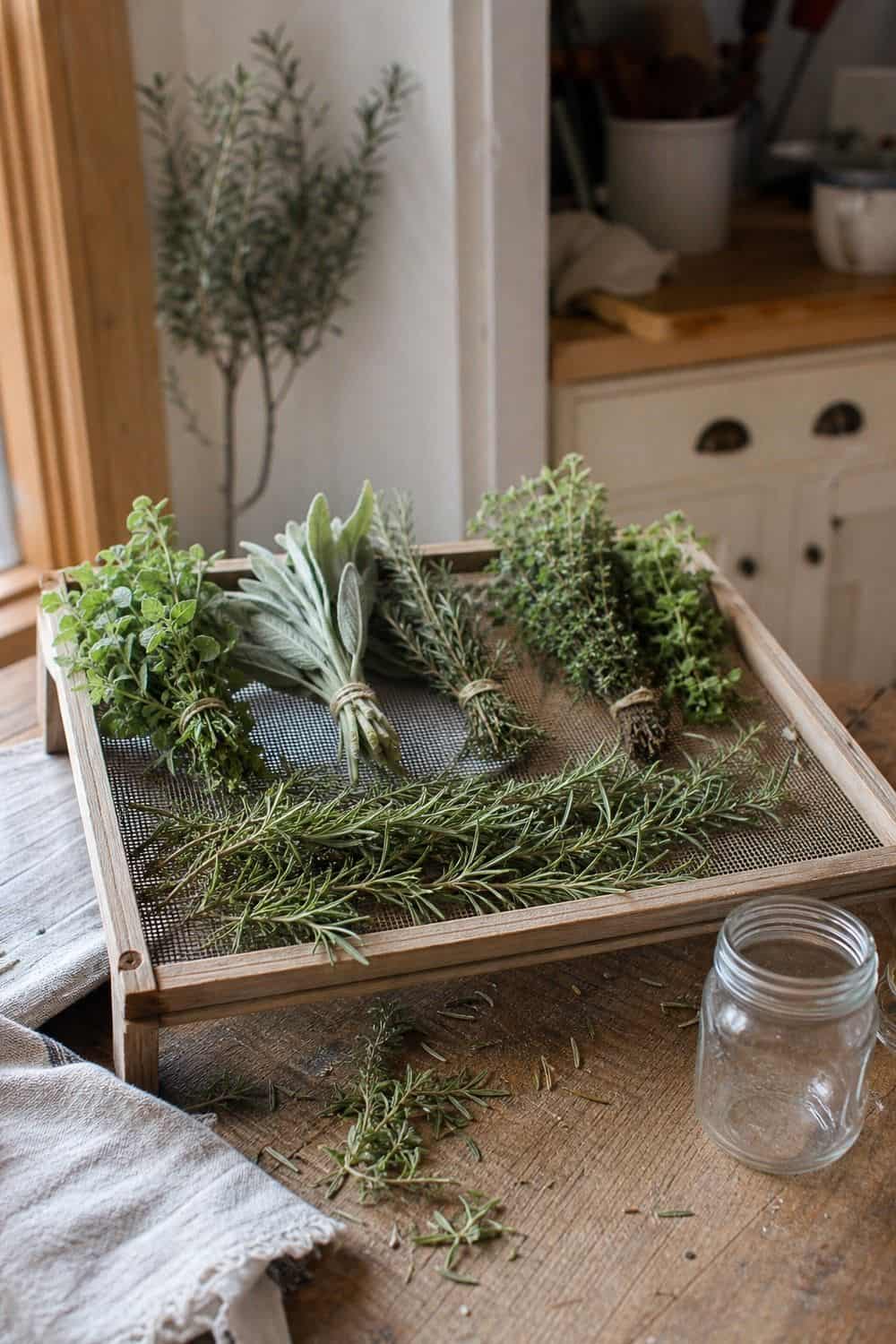
Woody herbs such as rosemary, thyme, sage, oregano, and marjoram dry better than tender herbs. Tie small bundles or spread sprigs on a drying rack in a warm, airy spot away from grease and direct sun. The herbs should feel fully dry before they go into jars; any trapped moisture can lead to mold. Strip the leaves only after drying if that is easier, then label the jar with the herb and month. Keep the rack away from the sink where humidity can slow drying.
16. Use a Dehydrator for Big Herb Harvests
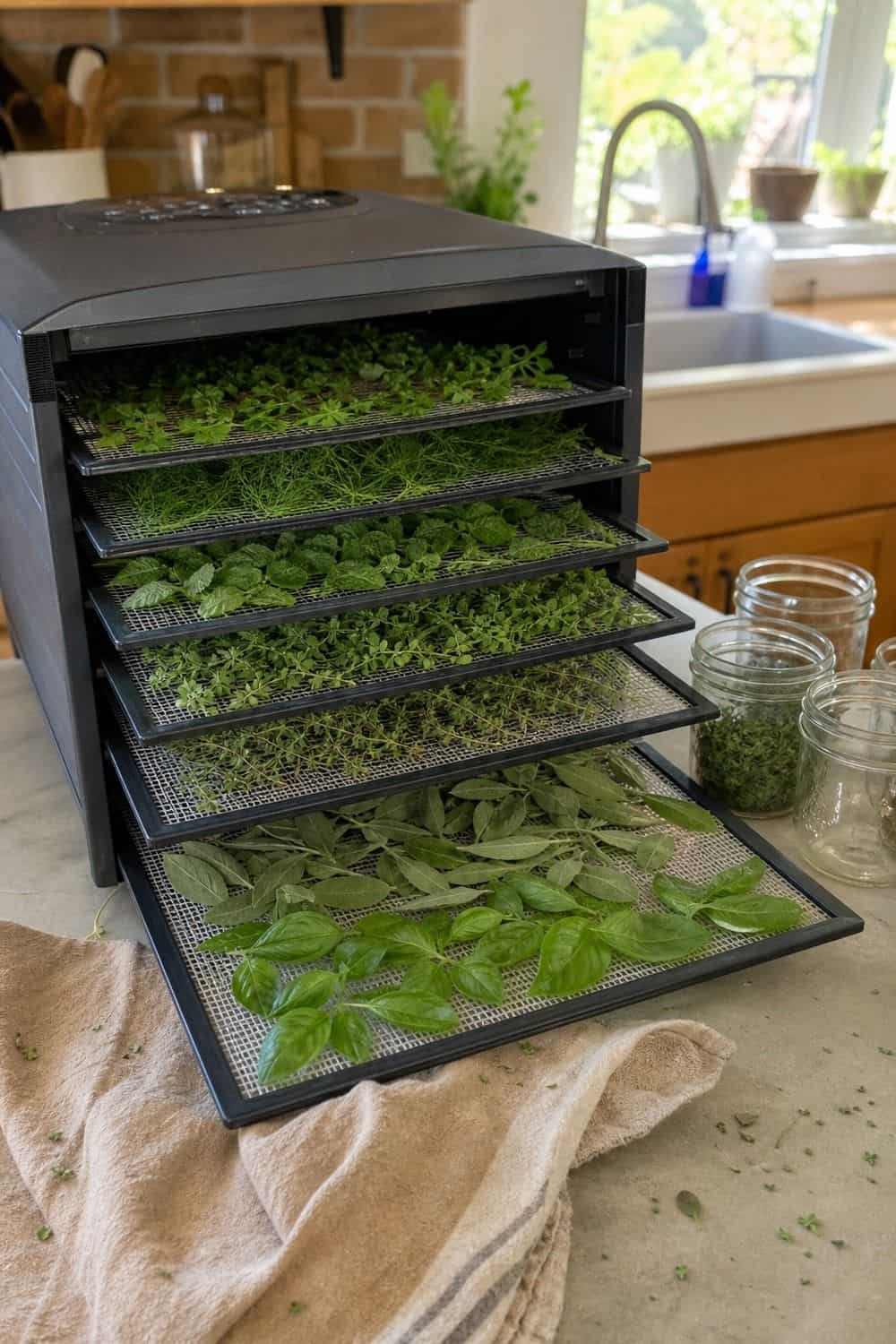
A dehydrator helps when you have more herbs than the fridge, freezer, or dinner plans can handle. Use it for larger harvests of parsley, dill, mint, oregano, thyme, sage, or basil when you want a cleaner, faster dry than air drying. Spread leaves in a thin layer and avoid mixing delicate herbs with strong-smelling ones if you want clear flavors. Let everything cool completely before jarring so condensation does not form inside the container. Label batches right away because dried leaves can look alike.
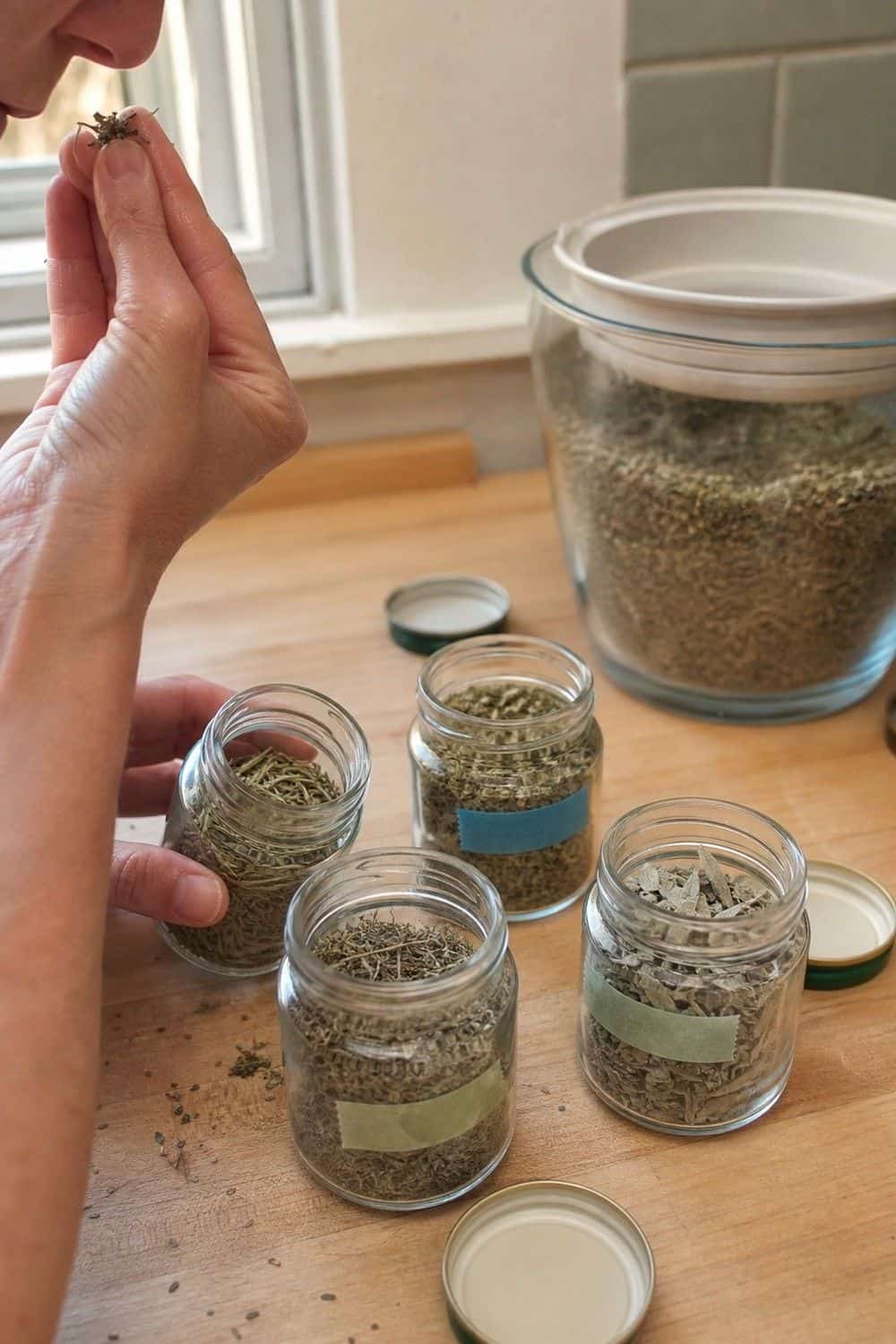
17. Store Dried Herbs in Small Jars
Dried herbs lose flavor faster when they sit in oversized jars with too much air. Store them in small, clean jars with tight lids, then keep the jars away from stove heat, steam, and direct sunlight. Label the herb and drying date so old oregano or thyme does not linger for years. Crush a small pinch before using; if it smells flat, it is better suited for compost than dinner. Refill tiny jars from larger pantry storage only when needed.
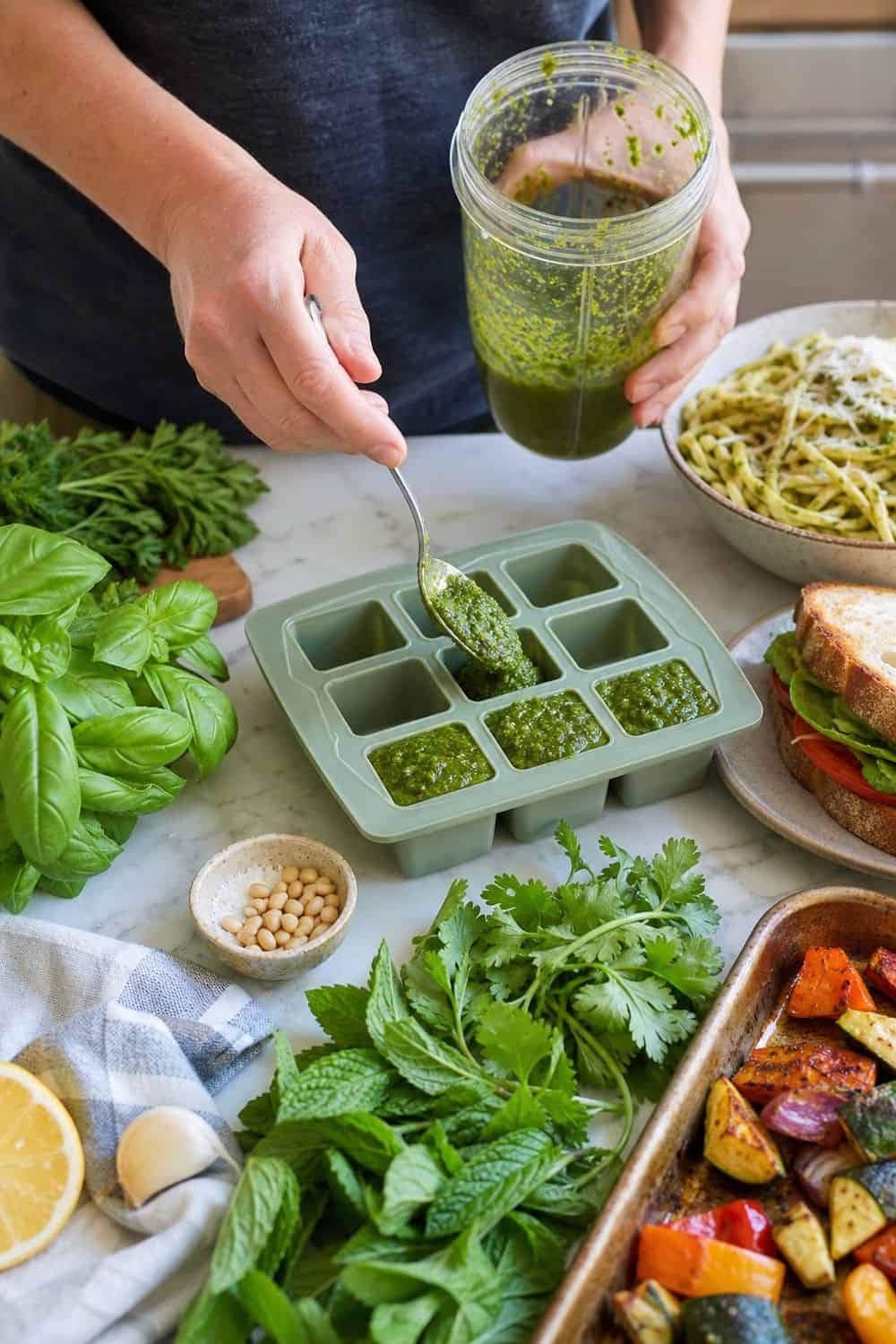
18. Make a Pesto Freezer Tray
Basil, parsley, cilantro, and mint can be rescued in a pesto-style freezer tray before they wilt. Blend the herbs with oil and the flavor base you actually use, then freeze in small portions. You can add nuts, cheese, garlic, lemon, or keep the mixture plain for more flexibility. Once frozen, move the portions into a labeled bag. These cubes are useful for pasta, sandwiches, soups, eggs, roasted vegetables, and quick sauces. Keep strong blends separate from mild ones nearby and clearly labeled.
19. Create a Fridge Door Herb Check Habit
Fresh herbs last longer when they are checked before they are forgotten. Make a quick herb check part of opening the fridge door: look at jar water, remove yellow leaves, move tired herbs to an eat-first cup, and decide what needs freezing or drying. This takes less than a minute and prevents one slimy bunch from spoiling the rest. It also helps you plan dinner around the herbs you already bought. Keep scissors nearby if you often trim stems or chop small leftovers.

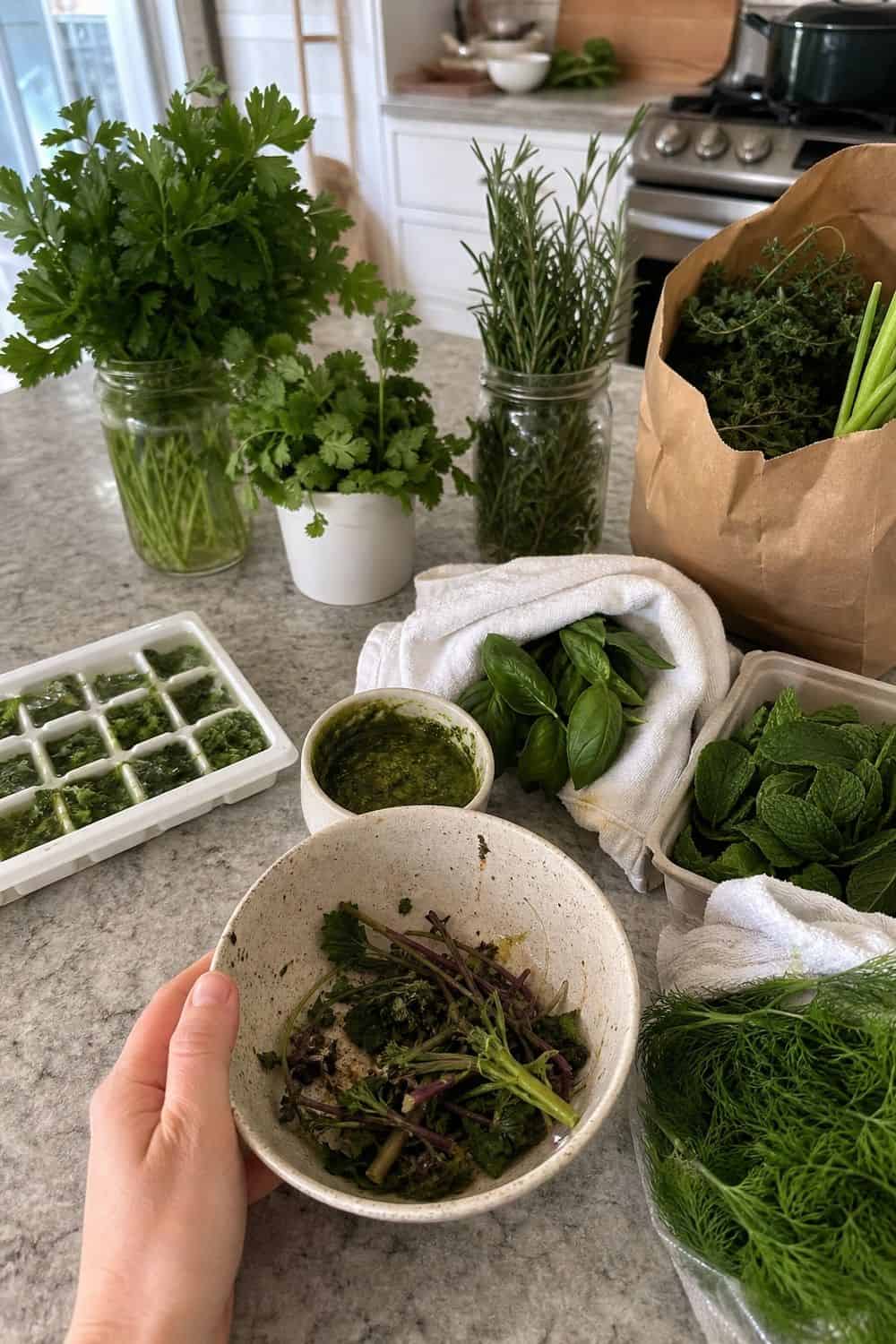
20. Keep a Herb Waste Bowl for Fast Rescue
Keep a small bowl nearby when you sort herbs so the rescue job feels quick instead of fussy. Good leaves can go into a jar, towel wrap, freezer tray, pesto, or eat-first cup, while slimy stems and blackened leaves go straight to compost. This is especially useful after grocery shopping or before cooking, when you can see which herbs need attention.
Do not save herbs that smell sour, feel slick, or have mold. The point is to rescue usable flavor fast, not stretch herbs past the point where they belong in food.
Other Topics to Cover
Good herb storage ideas begin with the herb type and the way you plan to use it. Tender herbs such as parsley, cilantro, mint, dill, tarragon, chives, and chervil often need water, gentle protection, or quick use. Woody herbs such as rosemary, thyme, sage, and oregano can usually handle a looser wrap, drying, or longer storage.
Basil needs special treatment because refrigerator cold can damage the leaves. Keep basil on the counter in water, away from direct sun and heat, then turn extra leaves into pesto or herb paste before they blacken.
Freezing and drying are planned storage systems, not last-minute punishment for herbs that are already gone. Wash herbs before use, dry them thoroughly if washing before storage, change jar water when needed, and discard herbs that are slimy, moldy, foul-smelling, or badly blackened.
FAQs
What are the best herb storage ideas?
The best herb storage ideas match the herb to the method. Store parsley, cilantro, and mint in jars or herb keepers; keep basil at room temperature; wrap woody herbs like rosemary and thyme; dry washed herbs thoroughly; freeze chopped herbs in cubes; and dry sturdy herbs for pantry use.
What container keeps fresh herbs fresh?
An herb keeper can help tender herbs stand upright with water while protecting the leaves from fridge crowding. Wide mouth jars also work well for parsley, cilantro, and mint. For delicate herbs like dill or tarragon, a shallow towel-lined container may protect texture better than a tall jar.
Should herbs be stored in water?
Some herbs store well in water, especially tender bunches with stems such as parsley, cilantro, mint, and sometimes dill. Woody herbs usually do better wrapped loosely instead. Basil can sit in water on the counter, but it should be kept away from cold refrigerator temperatures, direct sun, and stove heat.
Should basil go in the fridge?
Basil is usually better stored at room temperature with the stems in water. Refrigerator cold can blacken the leaves and shorten its useful life. Keep basil away from direct sunlight, hot windows, and the stove. If the leaves start to look tired, turn them into pesto or herb paste while they are still safe.
How do you store rosemary and thyme?
Rosemary and thyme are woody herbs, so they usually do not need a water jar. Wrap them loosely in a dry or barely damp towel, then place them in a bag or long container. Keep them visible, avoid crushing the stems, and remove any wet or blackened pieces before storing.
Can you freeze fresh herbs?
Yes, fresh herbs can be frozen if they are clean, dry, and still safe to use. Freeze chopped herbs in cubes with water, broth, or oil for cooked dishes, or freeze whole leaves flat before bagging. Frozen herbs are best for soups, sauces, beans, eggs, stews, and cooked meals.
What is the best way to dry fresh herbs?
Woody herbs such as rosemary, thyme, sage, and oregano are often the best candidates for drying. Use a drying rack in a dry, ventilated place, or a dehydrator for larger harvests. Store herbs only when they are fully dry and brittle, then label jars with the herb name and date.
How do you keep herbs from going slimy?
Keep herbs from going slimy by removing damaged leaves, drying washed herbs thoroughly, avoiding sealed wet bags, changing jar water when needed, and using small leftovers quickly. Do not rescue herbs that are slimy, moldy, foul-smelling, or badly blackened. Those should be discarded.
Final Thoughts
Herb storage ideas work best when they give each bunch a clear job: water for tender stems, the counter for basil, a towel for woody herbs, a tray for delicate leaves, and freezer or drying space for extras. Once the herbs are visible and matched to the right system, it becomes much easier to use them while they still taste fresh.