

The best black kitchen ideas use warm, useful kitchen-specific layers instead of clutter. Begin with one focused zone, then add texture, color, practical storage, and a few design or personal details that still leave room to cook. Counters, shelves, islands, and coffee corners should feel styled but easy to clean.
Black kitchens work best when the dark finish has a clear job. It might ground the lower cabinets, frame an island, sharpen the hardware, or add contrast against stone, tile, wood, and warm light.
This guide to black kitchen ideas focuses on balance: enough depth to feel dramatic, enough texture to feel lived-in, and enough light for cooking and cleanup. The strongest rooms do not make every surface black; they let black anchor the kitchen while cream, wood, brass, marble, greenery, and soft white surfaces keep it usable.

Top Recommended Products


You Might Also Like These Blog Posts
- 25 White Oak and Black Kitchen Ideas for High-Contrast Warmth
- 25 Dark Green Kitchen Ideas for a Beautiful Kitchen
- 25 Burgundy Kitchen Ideas for a Beautiful Kitchen
- 25 Cream Kitchen Ideas for a Beautiful Kitchen
- 25 Warm Wood Kitchen Ideas for a Cozy Home
1. Paint Lower Cabinets Black
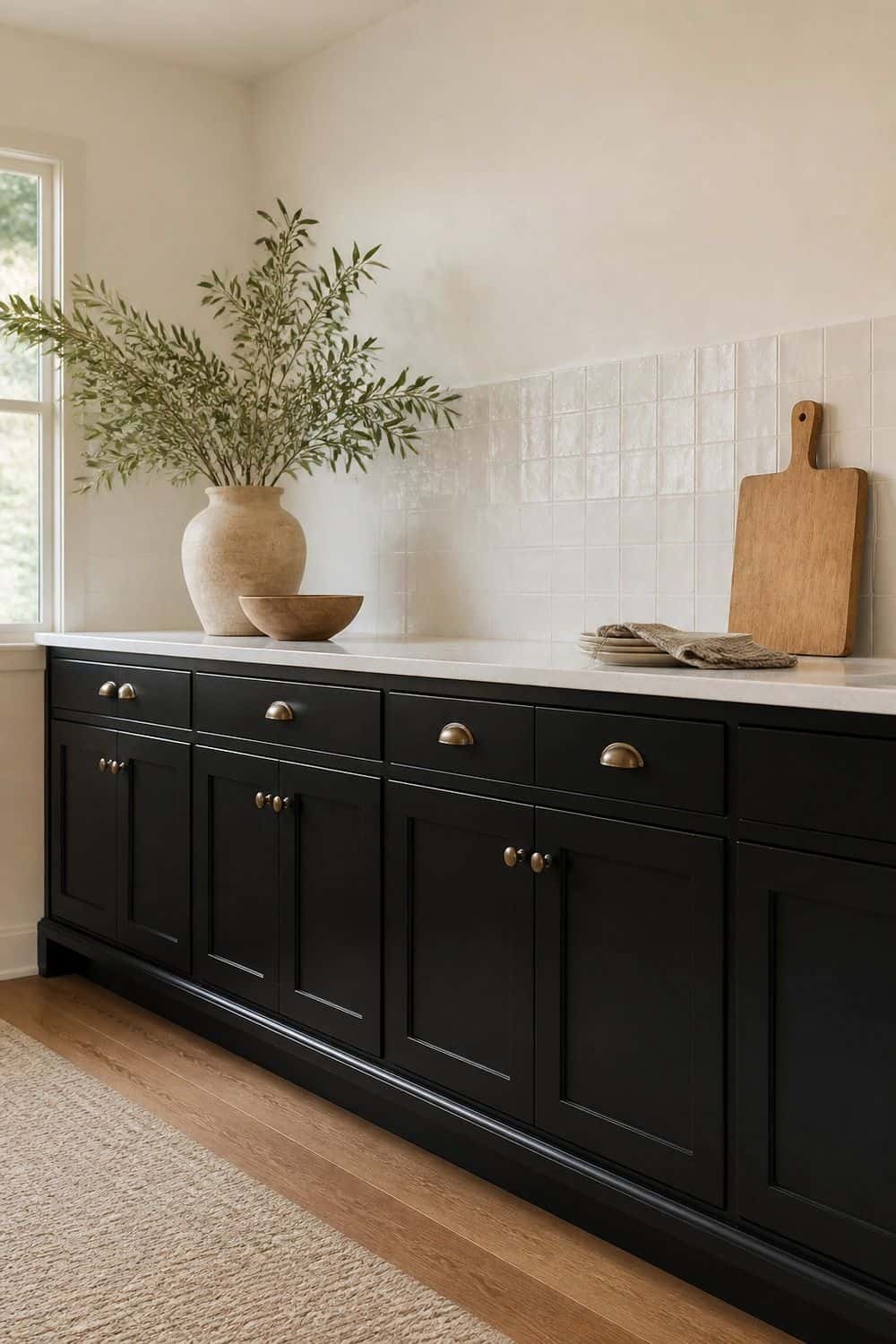
Lower cabinets are the safest place to start because they ground the room without closing in the upper walls. This works especially well with cream walls, open shelves, glass-front uppers, or a lighter backsplash that leaves the top half of the kitchen airy. Choose satin or soft matte paint instead of chalky flat black. It still looks calm, but it wipes down more easily around handles, sink splashes, and lower drawers. Test the color beside the floor and counter first, because black paint can lean blue, green, brown, or gray once it covers a full cabinet run.
2. Use a Black Island

A black island creates a strong center without turning every cabinet dark. It works with white perimeter cabinets, wood cabinets, taupe cabinetry, or deeper colors when the room needs a clear focal point that feels grounded.
Think about how the island is used before choosing the finish. A prep island needs good overhead lighting, a forgiving sheen, and seating that does not disappear into the base. Repeat black once nearby through a faucet, pendant, or small hardware detail so the island feels connected, not stranded.
3. Choose Matte Black Hardware
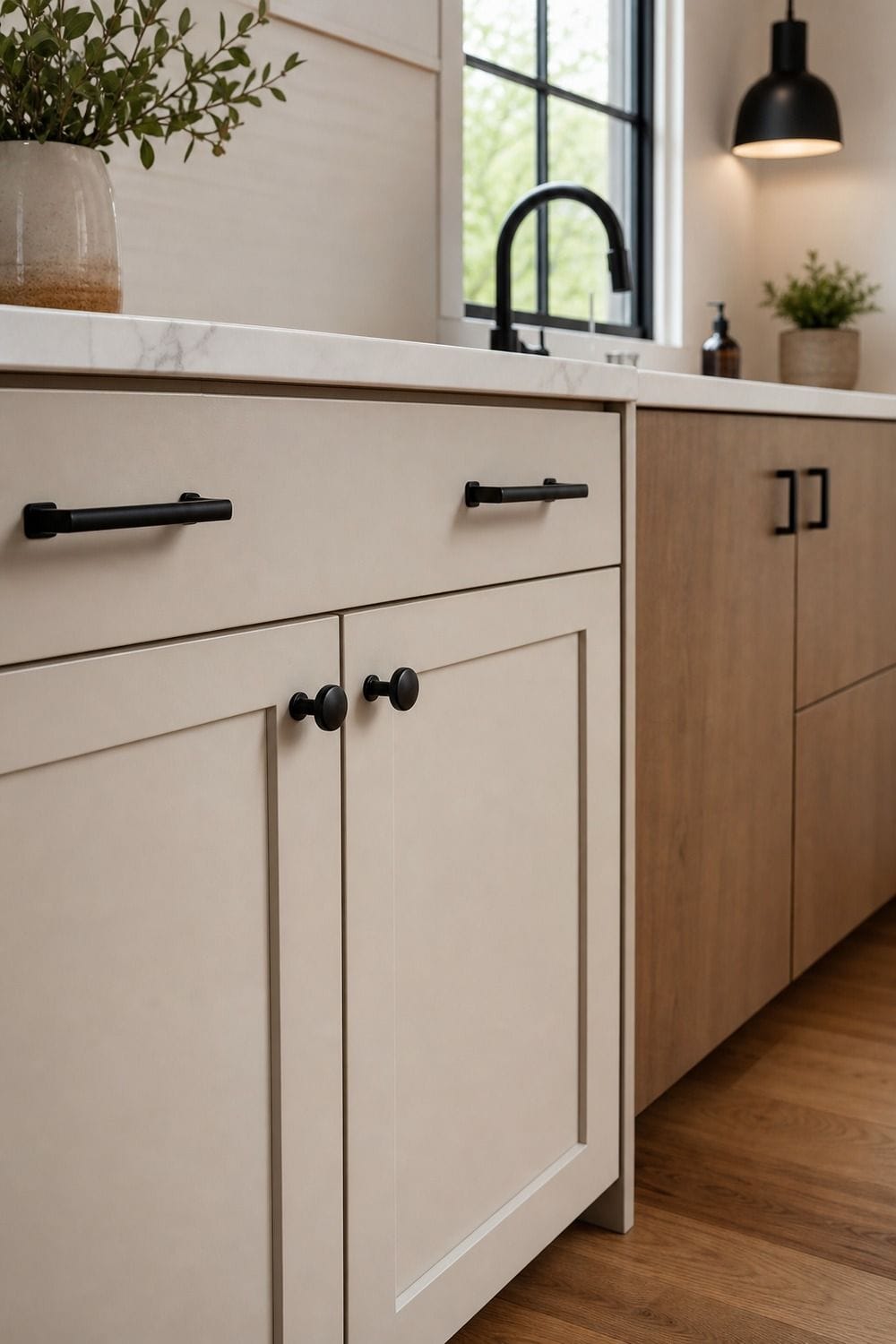
Matte black hardware is a small way to bring contrast into a kitchen without repainting cabinets. It looks crisp on white, oak, walnut, cream, greige, and painted color doors, and it can echo black lighting, faucets, window trim, or appliances.
Long pulls feel more graphic and modern, while smaller knobs feel softer on Shaker or vintage-inspired doors. If the cabinets are already black, matte black pulls can create a seamless look, but they may also disappear. In that case, brass, nickel, bronze, or a textured pull can make drawers easier to read.
4. Pair Black with Brass

Brass warms black cabinets without making the kitchen feel busy. It works best when the black has a soft, charcoal, brown, or green undertone rather than a cold blue-black cast on cabinet doors and drawers.
Use brass in one or two repeated places: cabinet pulls, a faucet, a rail, pendant interiors, or a small sconce. Too many shiny accents can compete with the cabinets, so choose the tone beside the black sample. Aged, brushed, or unlacquered brass usually feels calmer than a bright yellow finish.
5. Layer Walnut Boards
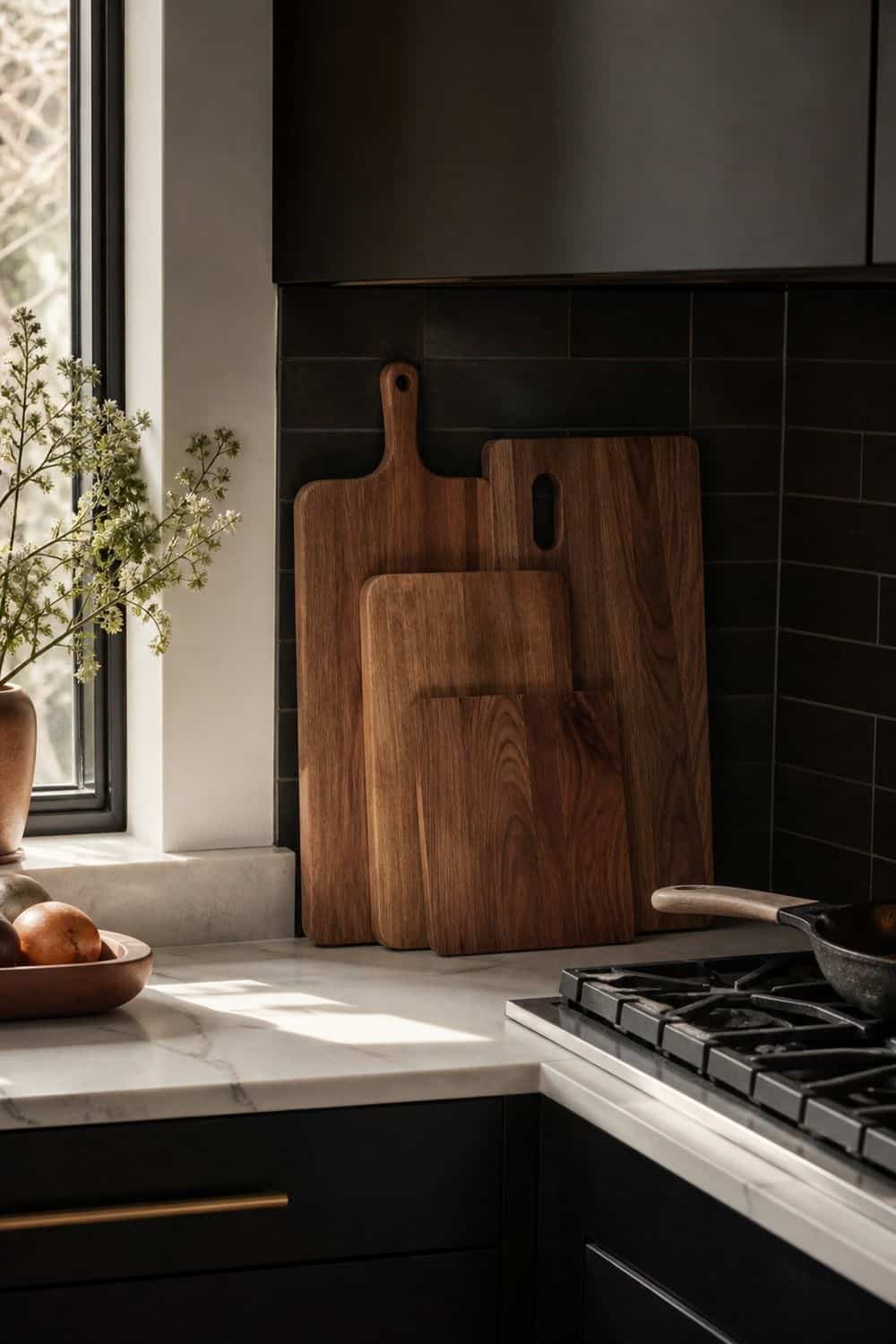
Black kitchens need material contrast, and walnut does that without adding visual clutter. A few boards near the range, prep counter, or backsplash can soften black cabinetry, black tile, or cool stone with a natural brown tone that still feels rich.
Keep the boards useful and uncluttered. One large board and one smaller board are often enough; a crowded stack can turn the counter into display storage. Oil them when they look dry, and avoid placing them where sink water or stove heat will damage the wood.
6. Add a Cream Runner

A cream runner brightens the long visual line between black lower cabinets and the floor. It is especially helpful when the kitchen has dark flooring, black appliances, or a narrow aisle that needs a little softness underfoot. Choose a washable, low-pile runner with enough pattern to hide crumbs but not so much contrast that it fights the cabinets. Cream, oatmeal, faded tan, muted rust, or charcoal details can all work. The rug should make the kitchen lighter and easier to stand in, not precious.
7. Use a Black Faucet
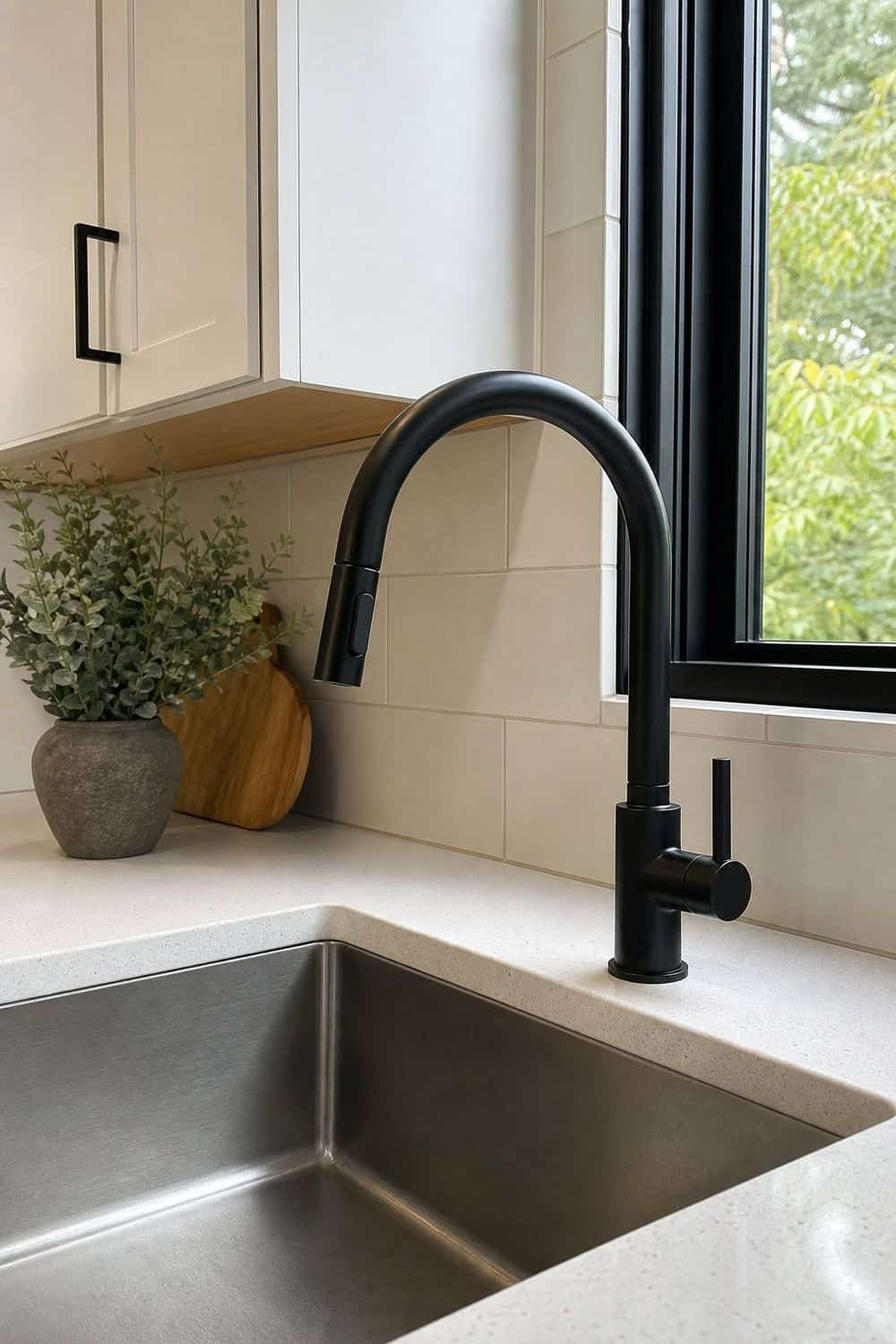
A black faucet can make the sink area feel finished, especially when the kitchen already has black cabinet hardware, black pendants, or dark window trim. It gives the counter a clean vertical line without requiring a larger renovation.
Check the sink and counter before choosing the finish. Matte black looks crisp against white quartz, marble-look counters, stainless sinks, and pale stone. Against a black sink and black counter, it can disappear unless the shape is distinctive, so contrast matters more than matching.
8. Install Warm Lighting

Warm lighting keeps black kitchens usable after dark. Under-cabinet lights brighten the counter, show crumbs and spills, and stop black cabinets from turning the work surface into a shadowy strip when you are actually cooking.
Choose warm white bulbs rather than harsh blue-white light. Black finishes can look cold under cool LEDs, while warmer light brings out wood, brass, cream tile, and stone movement. The room can stay moody, but the counter still needs enough light for chopping, packing lunches, and cleaning well.
9. Use Stoneware Dishes
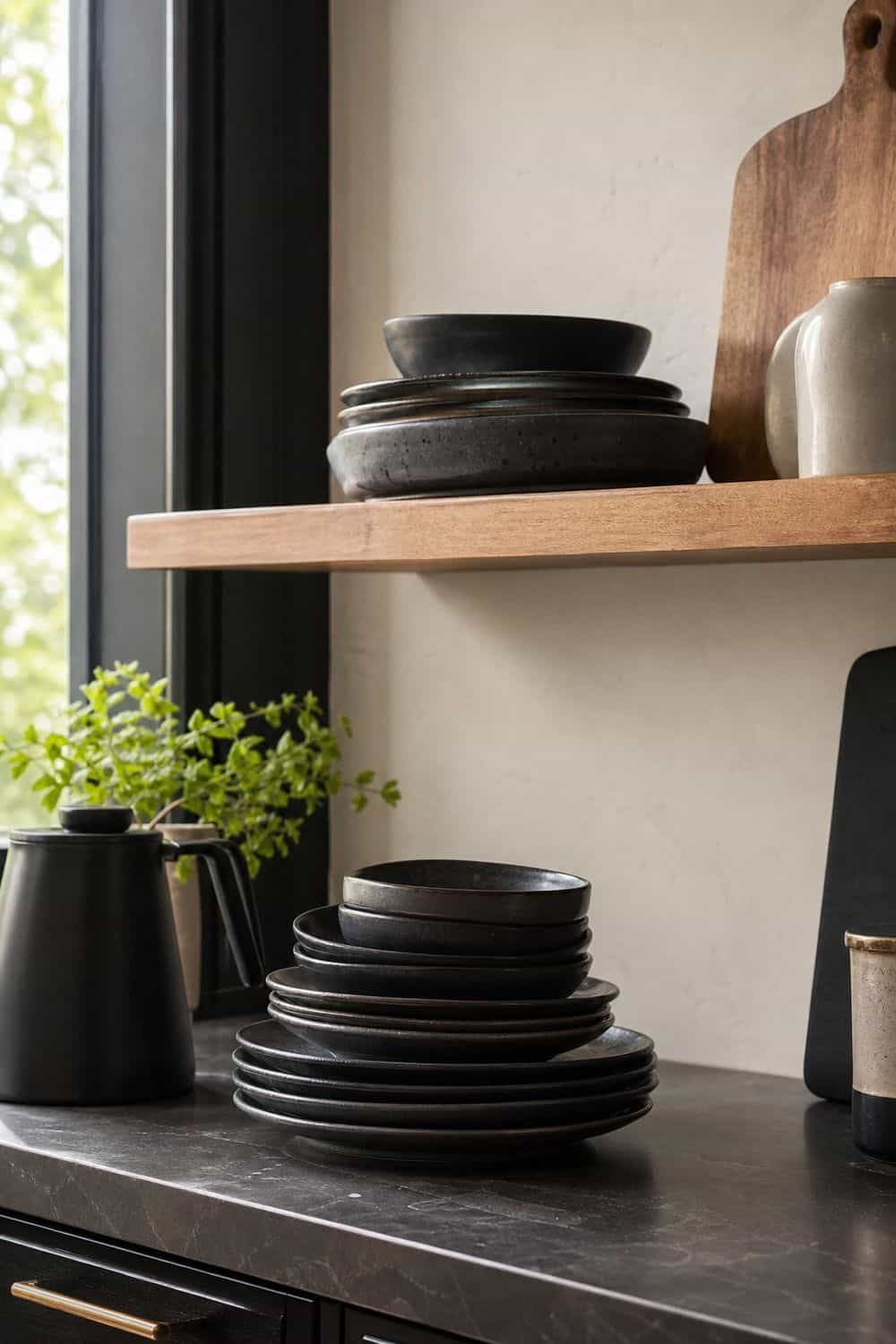
Stoneware is a useful way to repeat black without adding another permanent finish. Open shelves, glass-front cabinets, or a small stack near the coffee area can echo black cabinetry or lighting while still serving everyday meals. Keep the finish slightly varied if the kitchen already has a lot of black. Speckled glaze, ribbed edges, handmade shapes, charcoal, or black-brown tones add texture so the dishes do not read as one flat block. Mix in cream mugs or glass if the shelf starts to feel heavy.
10. Hang Black Pendants
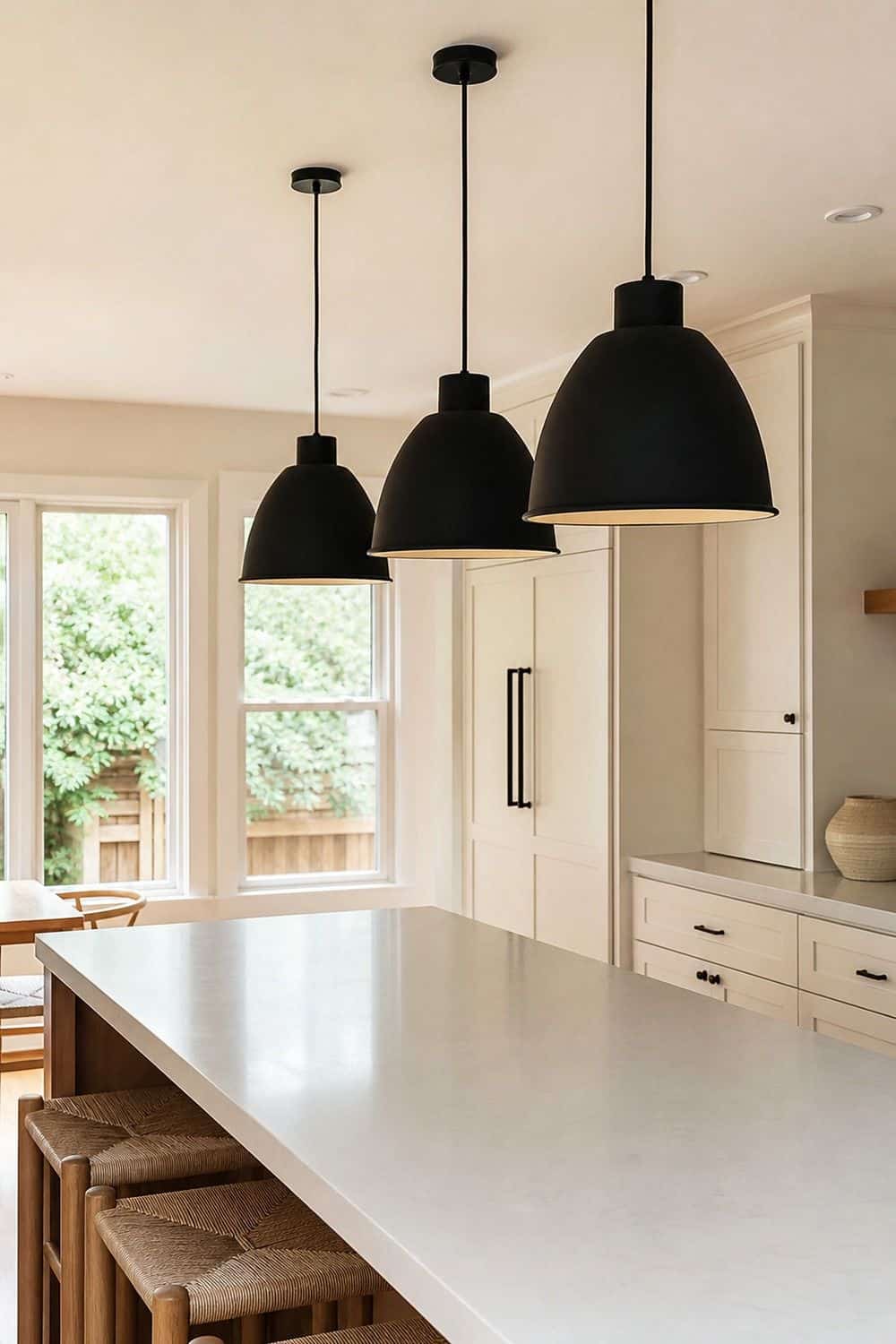
Black pendants can define an island, peninsula, or dining corner. They connect naturally to black hardware and faucets, or they can be the main dark detail in an otherwise light kitchen with quiet cabinets nearby.
Scale is more important than drama. Oversized black pendants can feel heavy over a narrow island, while tiny pendants can look lost under tall ceilings. Use the island length, ceiling height, and sightline from the doorway to choose the size, and make sure the bulbs are warm enough for evening cooking.
11. Pair with Zellige
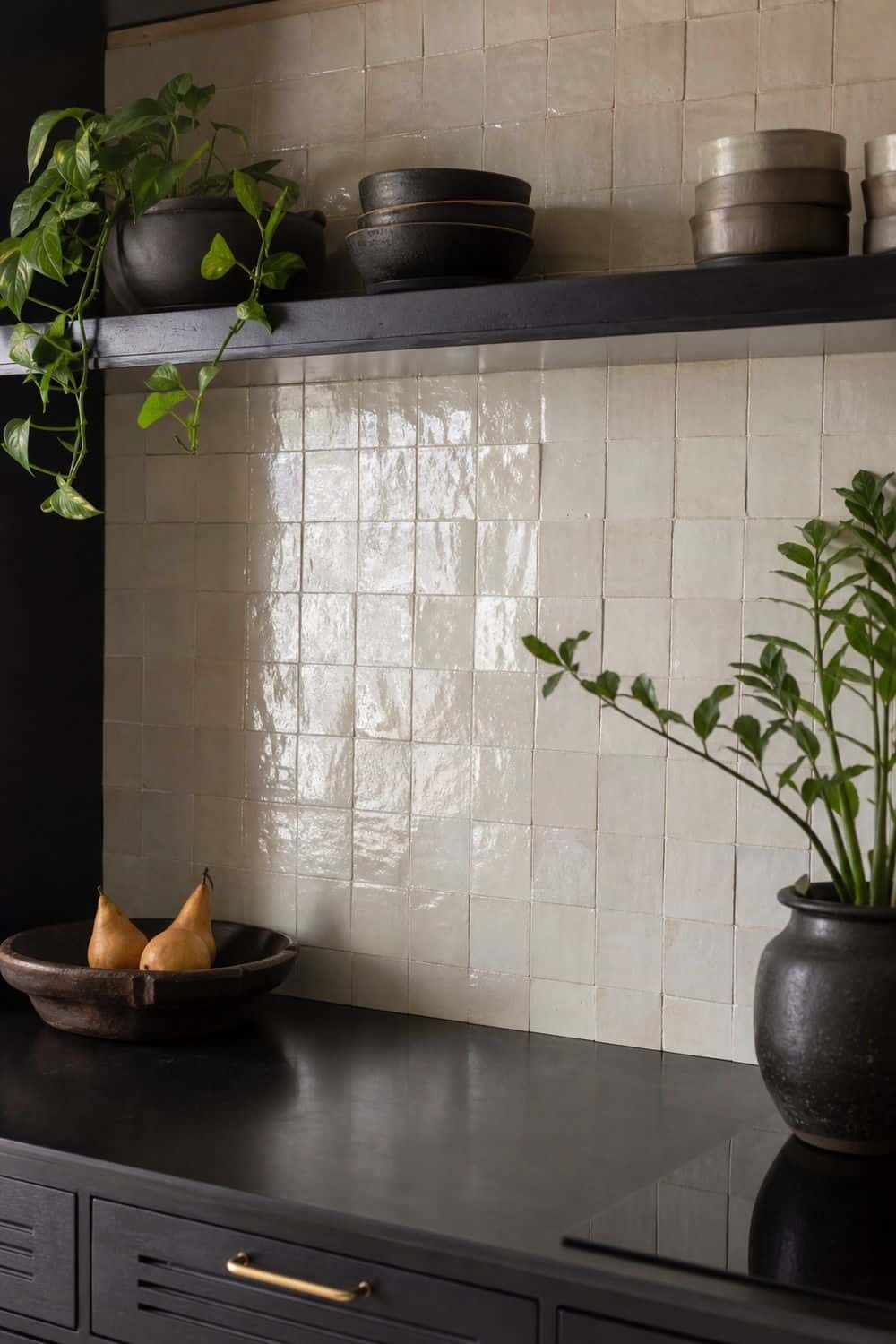
Handmade-style tile keeps black cabinets from feeling too perfect or severe. Slight color variation, uneven edges, and a glossy surface can bounce light around the room while softening the strong cabinet color behind counters and shelves.
Cream, white, greige, pale gray, olive, and muted blue tile can all work with black. The best choice depends on the undertone of the cabinets and the counter material. If the tile already has movement, keep the grout quieter so the backsplash does not become a busy grid.
12. Add Wood Stools
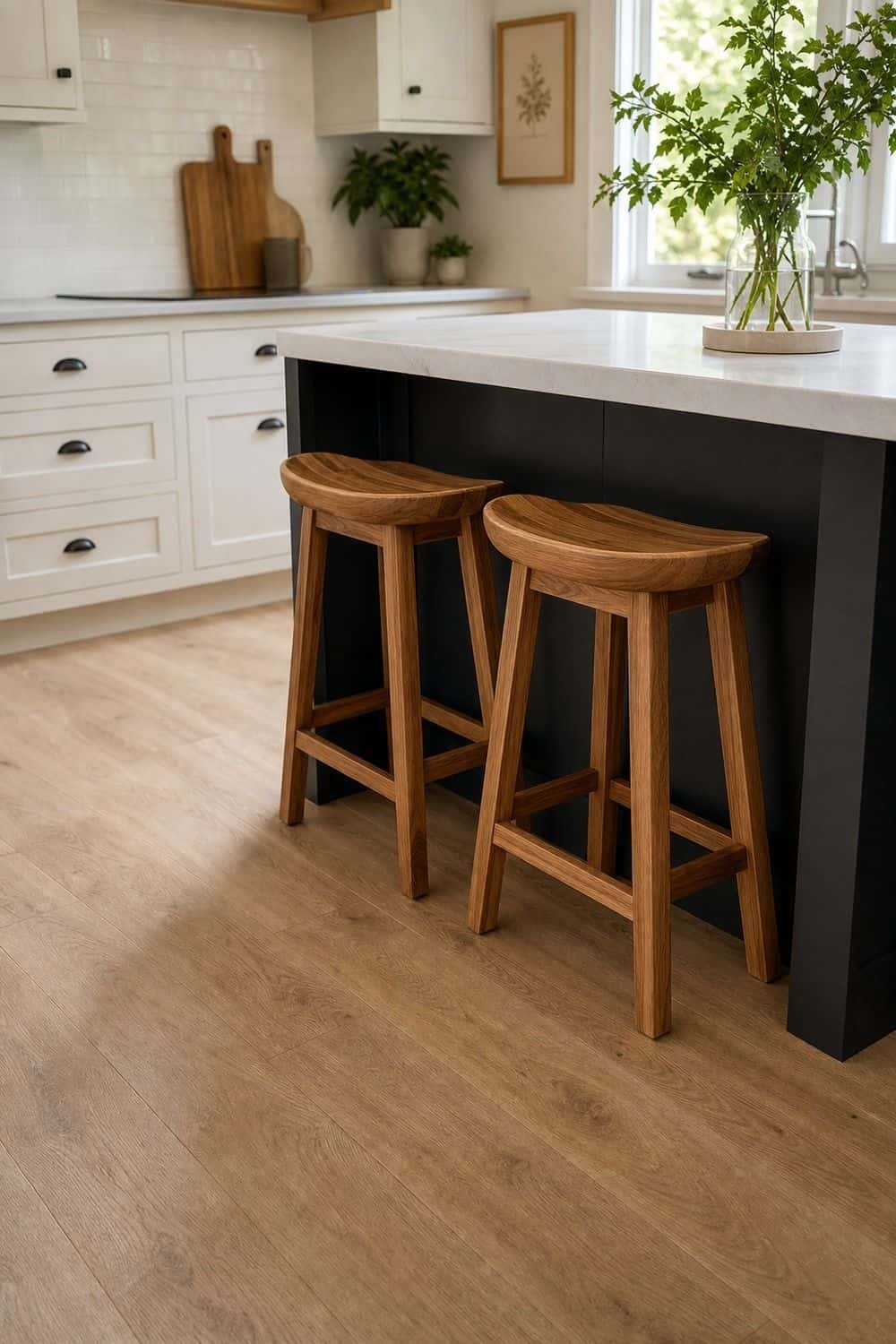
Wood stools bring warmth exactly where black kitchens often need it: at the island or peninsula. Oak, walnut, ash, or leather-and-wood seating can soften a black island while still letting it feel bold and tailored.
Choose the wood tone in conversation with the floor, not only the cabinet color. Matching exactly is not necessary, but the undertones should not fight. A cool gray floor with orange wood stools can feel accidental, while warmer oak or walnut usually looks more grounded and relaxed at breakfast.
13. Use Black Open Shelves

Black open shelves can look sharp, but they need breathing room. A long run of black shelves covered with dark objects can turn into a heavy wall, especially above black lower cabinets. Use them where the wall needs a clean horizontal line: beside a range hood, over a coffee station, or on a short empty stretch. Style them with useful dishes, glasses, cookbooks, or one small plant rather than tiny decor pieces. If the room already has black uppers, wood shelves may give the same openness with less weight.
14. Try Charcoal Cabinets

Charcoal gives the depth of black while feeling softer in natural light. It is especially useful in older homes, north-facing kitchens, or rooms where true black paint looks harsh beside the floor and counters.
Always sample charcoal on an actual cabinet door in the kitchen, not just paper, before choosing the final color for cabinets at home. Some shades lean blue, some green, some brown, and some purple. The right one should work with the counter, backsplash, floor, and appliance finish. Paint changes dramatically from morning to evening once it covers a full cabinet run in real light.
15. Pair with Marble
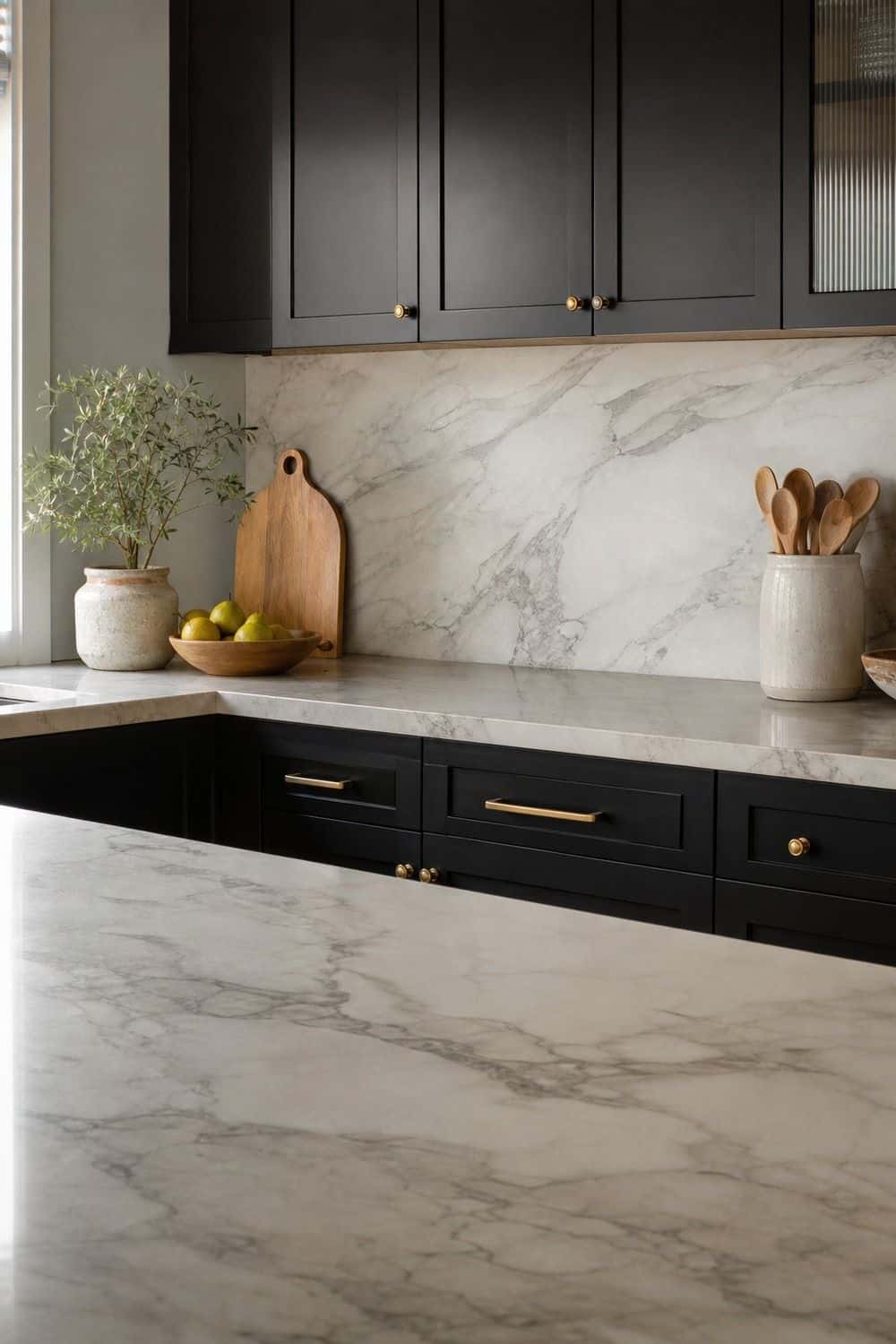
Marble, marble-look quartz, or even a marble board can interrupt black cabinetry with pale movement. The veining gives the dark cabinets something reflective to contrast against and keeps the palette from feeling flat near the counter.
If a full marble counter is not realistic, use smaller marble moments: a pastry board, tray, backsplash accent, or short shelf. Black and marble can look formal quickly, so balance them with relaxed materials such as wood stools, linen shades, brass knobs, or handmade tile nearby.
16. Use Soft White Walls

White walls can rescue a black kitchen, but stark white is not always the answer. A hard, cool white can make black cabinets look harsher and turn the contrast clinical. Soft white, warm white, or barely creamy walls often work better. Test wall paint beside the black finish and counter. If the black has a warm undertone, a warm white may feel natural; if it leans blue, a cleaner white or soft gray-white may fit better. The wall color should give the eye somewhere to rest.
17. Add Green Plants

Greenery gives black kitchens a shape that paint, stone, and metal cannot provide. Herbs, trailing plants, or a small planter near a window can break up straight cabinet lines and add a living color that works with almost every black finish. Put plants where they can actually survive. An herb pot near a sunny window is useful, while a plant in a dark corner above hot appliances will struggle. Choose clear silhouettes and easy-care varieties so the plant improves the kitchen instead of becoming another thing to rescue.
18. Create a Black Pantry
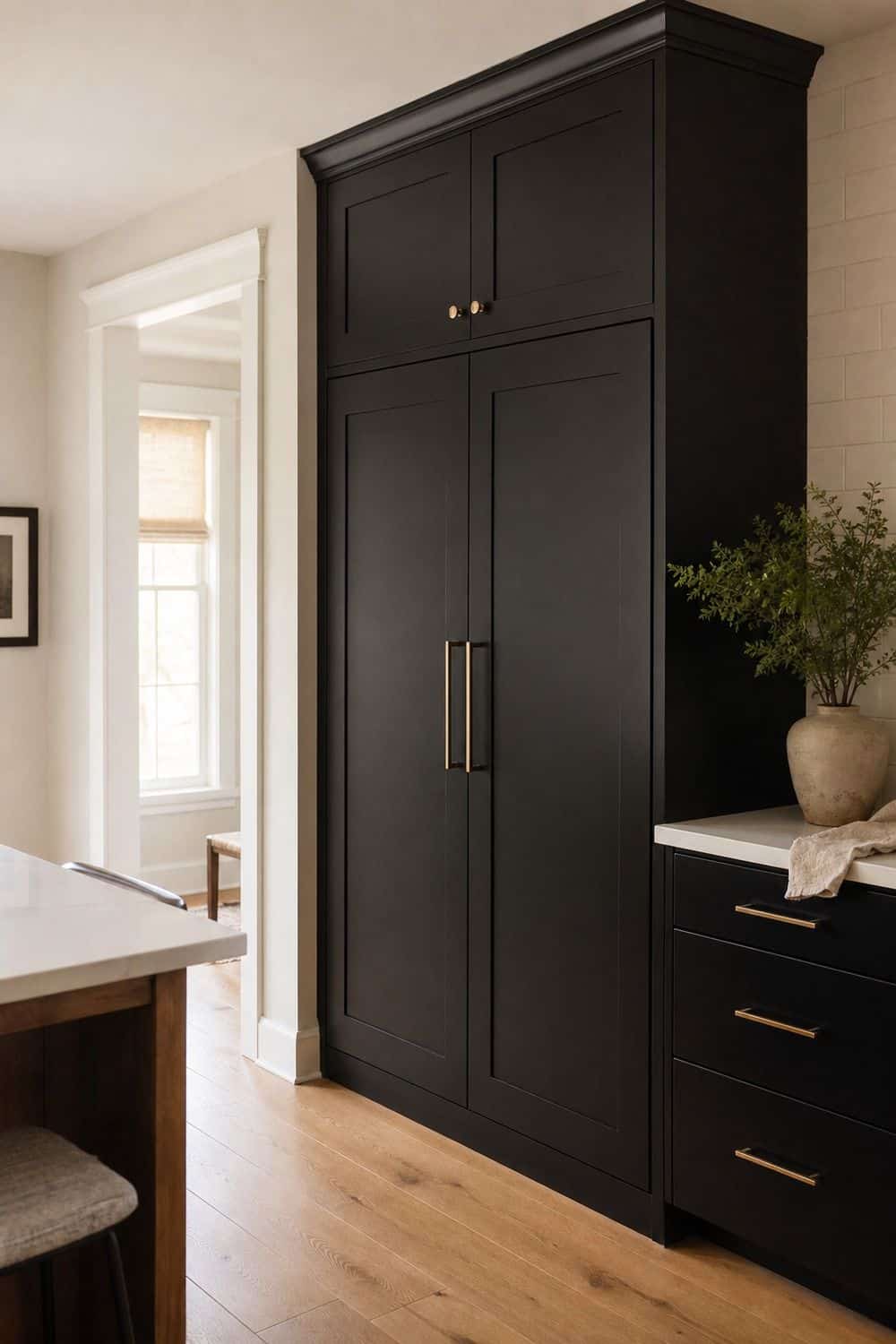
A pantry wall is a smart place to use black because it can read as one clean architectural block. Tall cabinets, appliance garages, or a built-in pantry often look calmer in one dark finish than in a busy mix of doors, shelves, and panels.
Give the wall a light break so it does not become a flat shadow. Brass pulls, a wood niche, interior lighting, a pale counter nearby, or glass jars inside an open cubby can make the pantry easier to read. The dark finish should organize the wall, not hide what you need.
19. Use Black Window Trim
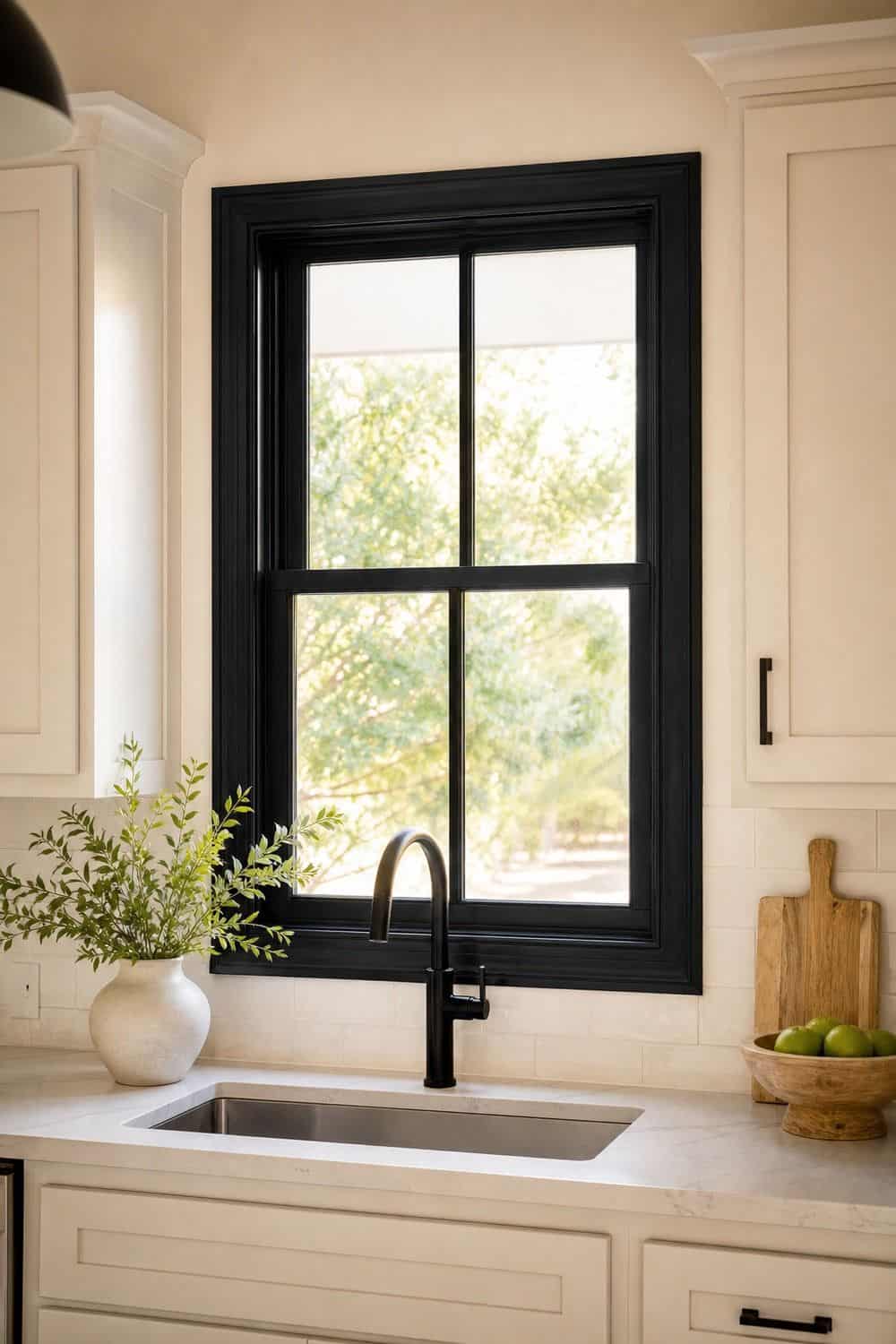
Black window trim frames the view and connects the kitchen to black hardware, faucets, pendants, or appliances. It can be a smaller commitment than black cabinets while still giving the room a crisp line. This works best when the wall color is light enough for contrast. On dark walls, black trim may disappear unless the window has strong natural light or a deeper frame profile. If the room already feels heavy, painting only the sash instead of the full casing can add definition without darkening the wall.
20. Add Leather Seating
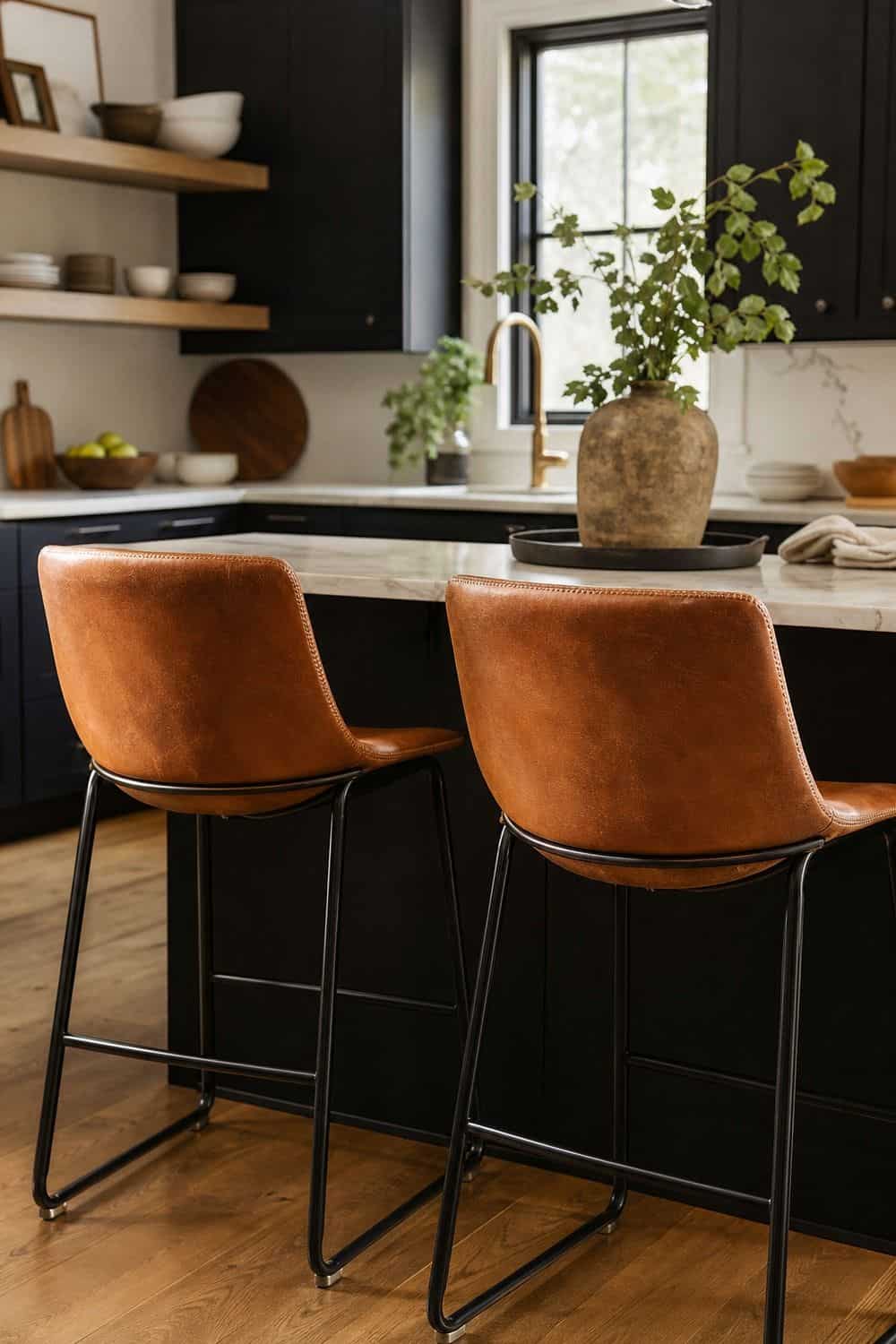
Leather seating adds warmth, texture, and softness to black kitchens. Cognac, saddle, dark brown, and oxblood tones sit nicely between the depth of black and the warmth of wood at the island or nook seating.
Use leather where people actually sit: island stools, a breakfast nook bench, or a small chair near a coffee corner. Choose wipeable finishes for everyday use. A gorgeous stool that cannot handle crumbs, denim, or morning coffee is better saved for another room, honestly, not the kitchen.
21. Balance Black With Open Wall Space
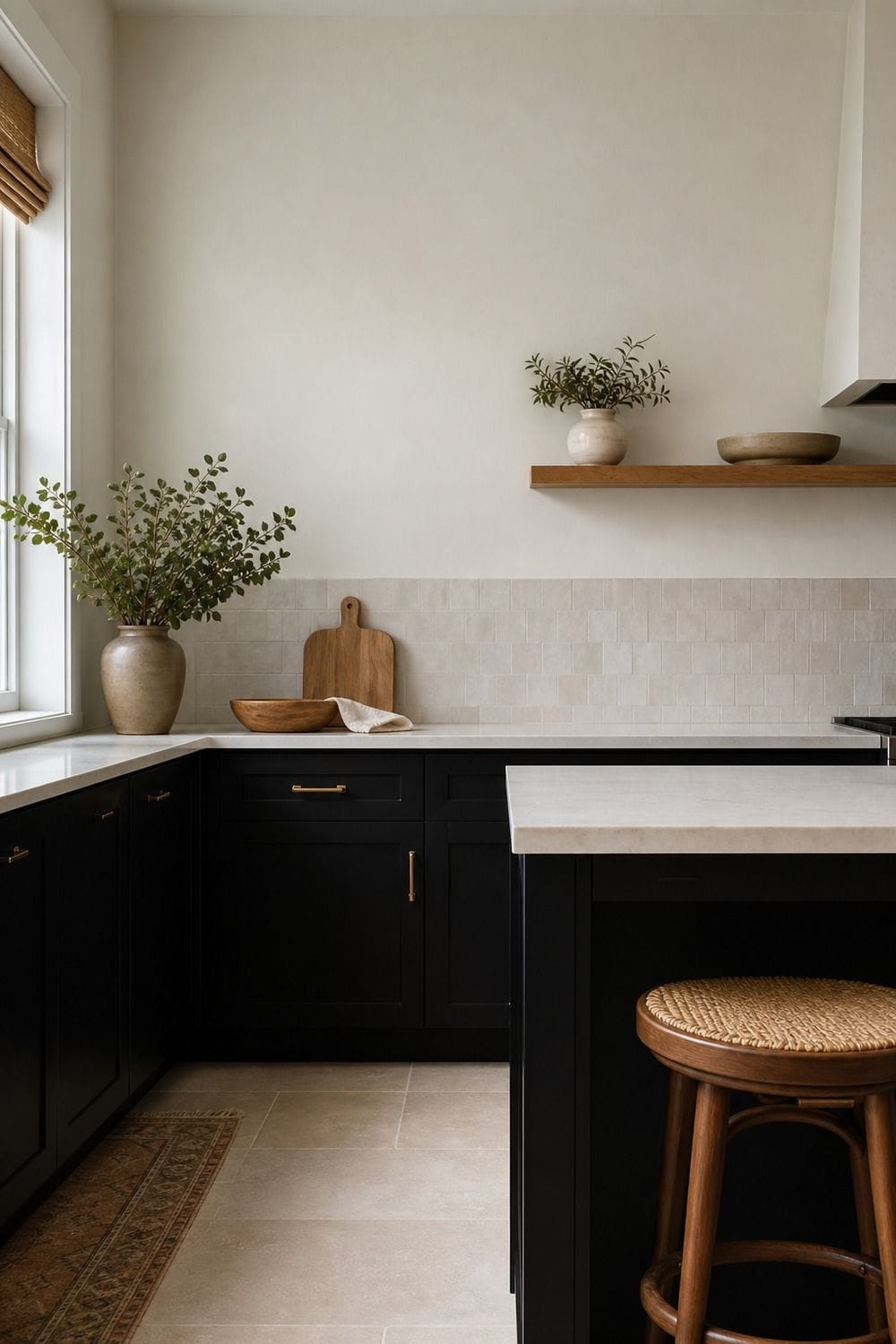
Black needs visual pauses so the room does not feel closed in. Open wall space, lighter tile, glass, pale counters, or a short wood shelf can keep dark cabinets from pressing in from every side.
Use black where it has the most impact, then let the upper wall or backsplash breathe. If black cabinets, black counters, and black walls meet in one corner, add a light surface, reflective tile, or task lighting to separate the planes. The goal is depth with enough air around it.
22. Use Low-Commitment Black Details
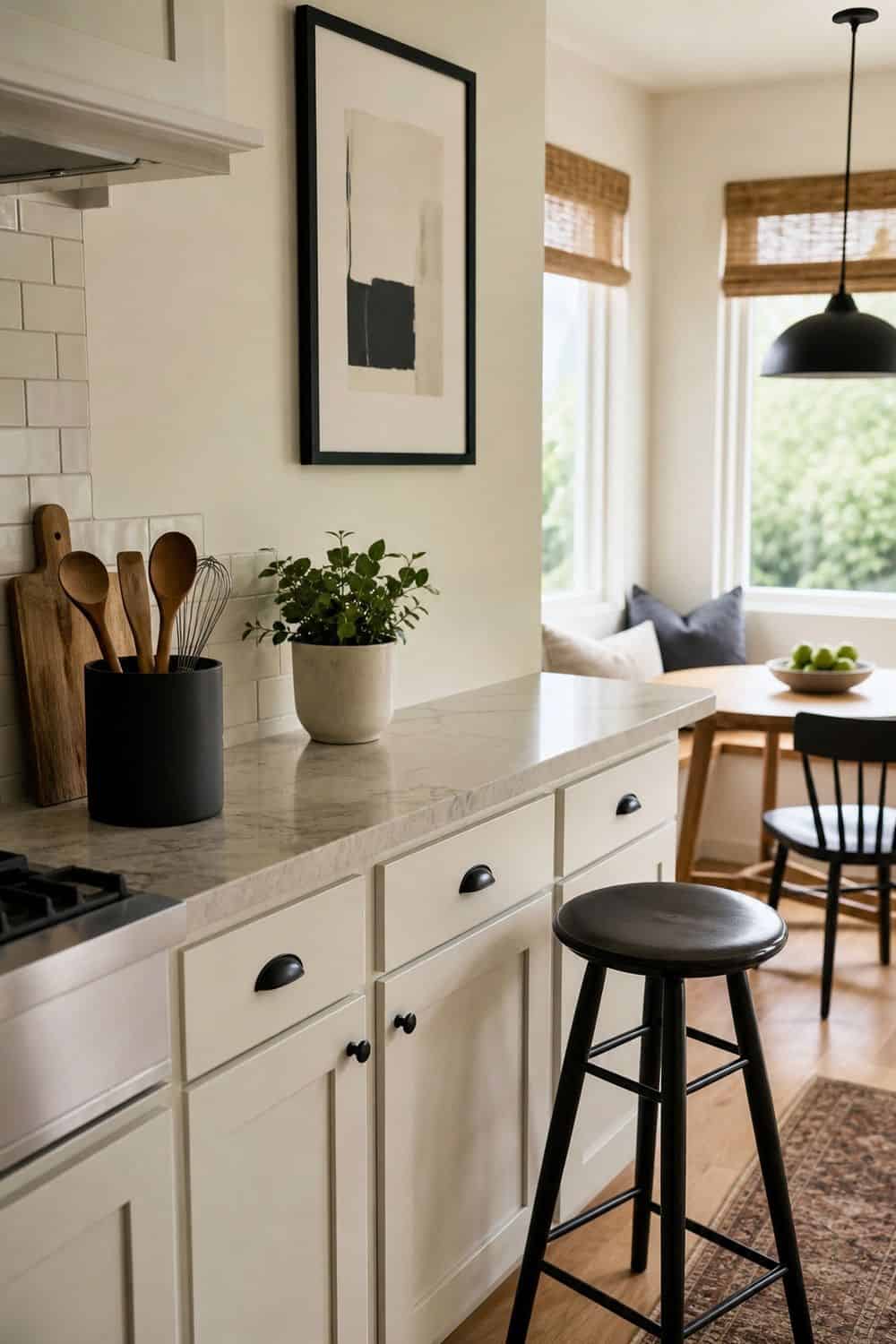
Low-commitment black details let you test the look before changing cabinets or tile. Try black stools, a runner with charcoal detail, black-framed art, matte hardware, a counter lamp, a utensil crock, or a small shelf moment. Keep the changes useful and limited. One black detail can sharpen a pale kitchen; five unrelated dark accents can make the room look dotted. Choose pieces that can handle cooking, wiping, splashes, and daily hands so the style does not become extra work later.
23. Avoid Jet-Black Floors
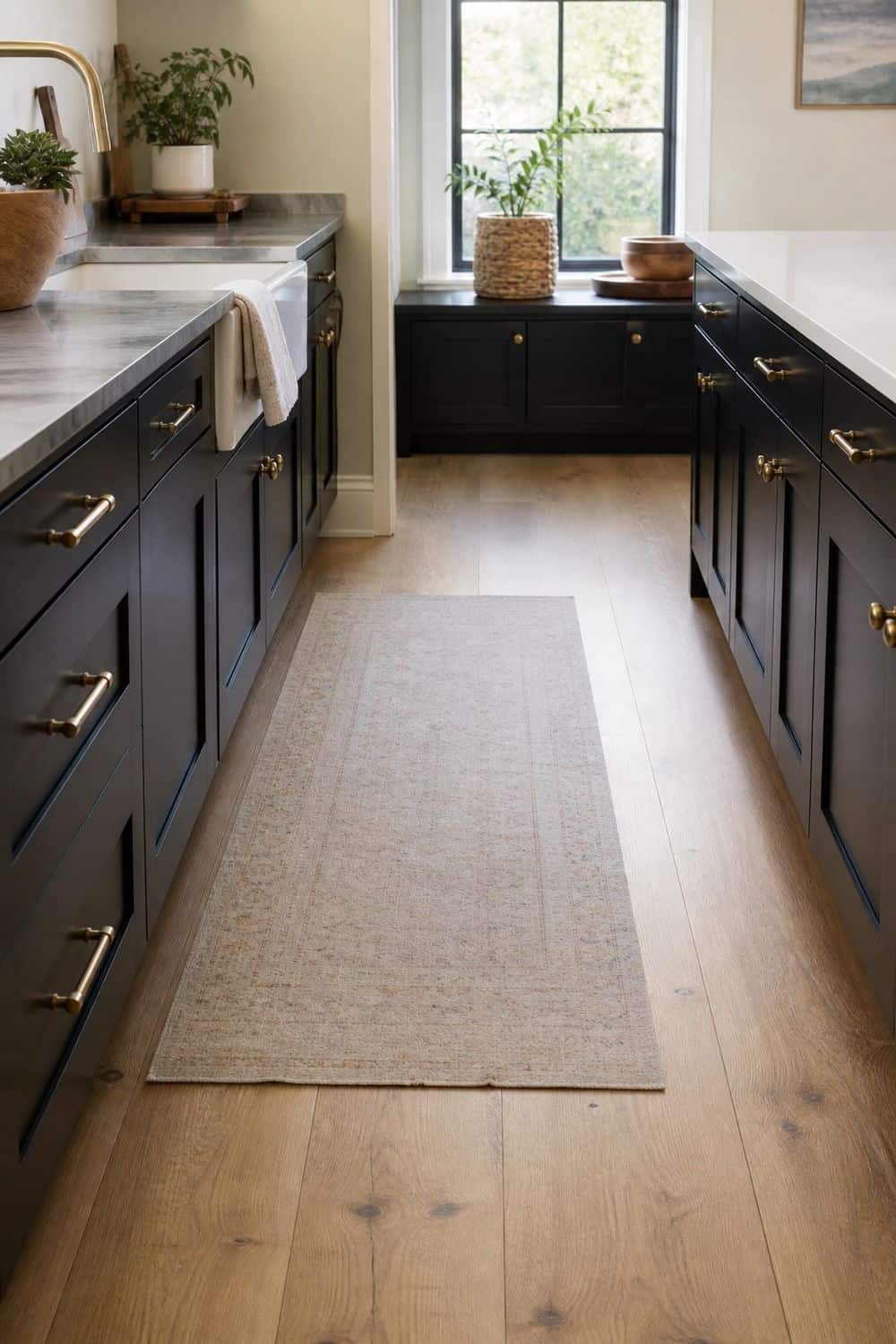
Jet-black floors can look dramatic in photos, but they often show dust, crumbs, water spots, and every footprint. They can also make a black kitchen feel bottom-heavy when the cabinets or appliances are dark too. If the floor is already very dark, soften it with a runner, lighter stools, pale walls, or wood accents. If you are choosing a new floor, consider charcoal, dark brown, slate, checkerboard, or patterned tile instead of pure flat black. Texture and variation make daily mess less obvious.
24. Avoid Cold Lighting
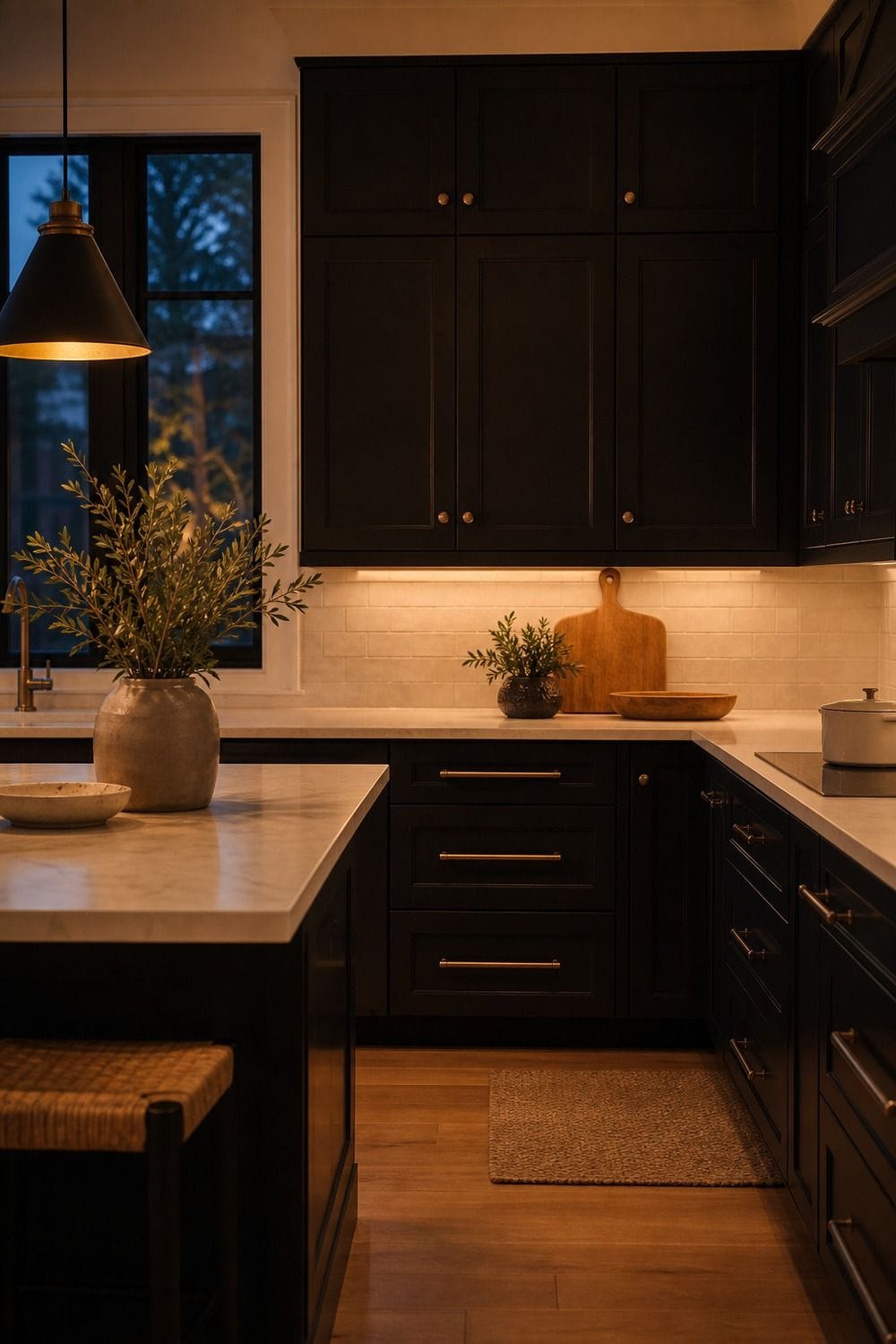
Bulb temperature changes how black reads. Warm bulbs can make black cabinets feel rich and inviting, while cool bulbs can make the same finish look harsh, gray, or bluish after sunset in the kitchen at night.
Look for warm white bulbs around 2700K to 3000K for most home kitchens, then test them at night. Black finishes depend heavily on artificial light after sunset. Good lighting lets the kitchen keep its mood without sacrificing function at the counter, sink, or range when dinner is happening.
25. Keep It Warm
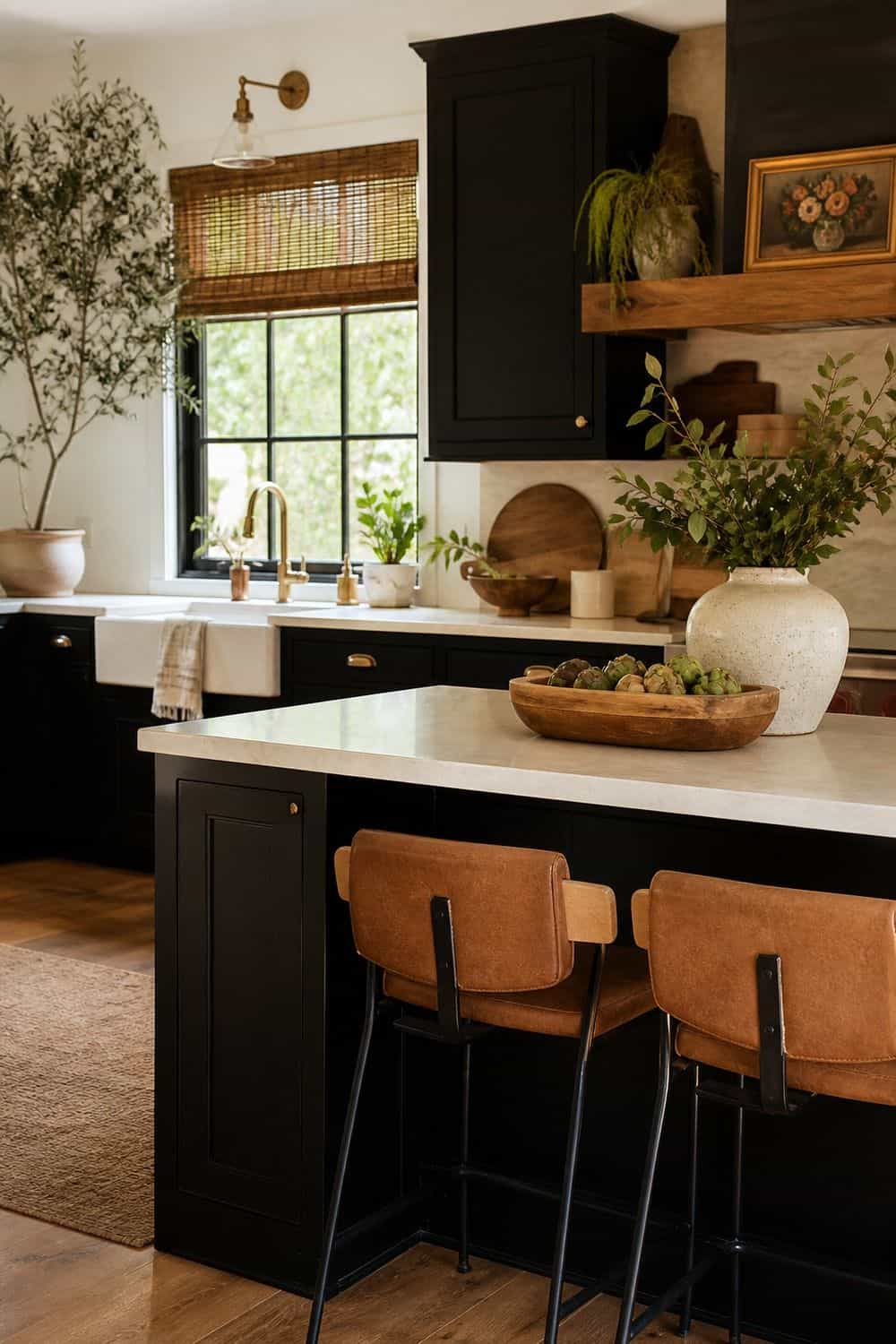
A black kitchen usually needs warmth from more than one source. Wood, cream, brass, stone movement, plants, leather, warm bulbs, and textured dishes can all soften the depth without watering it down or making it timid.
Repeat black in a few connected places, then stop. A faucet, cabinet pulls, pendants, window trim, and one or two accessories can create a quiet rhythm. If every object becomes black, the room can lose texture and start looking flat instead of layered and inviting.
Black Shade Guide
Soft black, charcoal, black-brown, and true black all behave differently in a kitchen. Soft black feels easier with warm wood and cream, charcoal is gentler in daylight, black-brown works well with brass and walnut, and true black gives the sharpest contrast.
Test samples beside the counter, floor, appliances, and lighting before using the color across cabinets or tile. A black that looks elegant on a paint card can turn cold, green, or flat once it covers cabinets.
How to Warm Black Kitchens With Wood, Cream, Brass, and Warm Light
The easiest way to warm a black kitchen is to repeat a few natural materials rather than adding more black. Wood boards, cream dishes, brass pulls, warm bulbs, leather seating, and pale stone all give the eye places to rest.
Choose two or three supporting materials and use them consistently. Black with walnut, cream, and brass often feels calmer than black surrounded by every metal, wood tone, and accent color at once.
Maintenance for Black Fixtures and Cabinets
Black fixtures and cabinets can show dust, fingerprints, water marks, and flour faster than mid-tone finishes. Satin or soft matte surfaces are usually easier to live with than high gloss or chalky flat paint.
Keep cleaning realistic around the sink, range, and lower drawers. Microfiber cloths, gentle cleaners, and quick wipe-down routines matter more here than adding more decorative objects.
Where to Place Black for the Best Balance
Black works best where it can anchor a clear feature: lower cabinets, an island, a pantry wall, pendants, window trim, or hardware. It becomes harder to live with when every plane turns dark at once.
If the room feels heavy, lighten the upper half first. Pale walls, warm under-cabinet lights, reflective tile, open shelves, or wood details can keep the depth without making the kitchen feel closed in.
What to Avoid
Avoid cold lighting, pure jet-black floors, too many glossy black surfaces, and black accents scattered randomly around the room. These choices can make the kitchen feel harsh, dusty, or visually busy.
Also avoid choosing black from a tiny sample alone. Look at the finish beside real counters, floors, appliances, and evening bulbs before using it across cabinets or tile.
Black Kitchen Ideas FAQs
How do I begin with black kitchen ideas?
Start with one clear role for black: lower cabinets, an island, hardware, lighting, a faucet, or window trim. Then balance that dark choice with warm wood, cream, stone, brass, greenery, or soft white walls so the kitchen still feels usable.
How do I keep the kitchen practical?
Keep the main prep counter bright and easy to wipe, choose finishes that can handle fingerprints and splashes, and use black where it supports the room instead of hiding everyday tasks. The sink, range, and main drawers should still be easy to see and clean.
What makes black kitchen ideas feel cohesive?
Black feels cohesive when it repeats in a few connected places, such as hardware, pendants, a faucet, or window trim. It should not appear randomly on every object. Use a limited palette of black, wood, cream, brass, stone, and warm light.
How can I try black without changing every finish?
Use lower-commitment details first: black stools, a runner with charcoal detail, matte hardware, framed art, a counter lamp, or a dark utensil crock. If the room still feels balanced after daily cooking, then larger choices like cabinets, tile, or a pantry wall will be easier to judge.
What should I avoid?
Avoid cold bulbs, flat jet-black floors, too much glossy black, and dark surfaces without nearby light relief. Black looks best when the kitchen has contrast, texture, and enough task lighting for real cooking and cleanup.
Final Thoughts
The best black kitchen ideas work because they respect the kitchen as a room that has to cook, clean, store, and gather. Choose a few strong details, repeat them with intention, and leave enough open space for the room to stay useful every day.
Last update on 2026-10-05 / Affiliate links / Images from Amazon Product Advertising API