
The best white oak and black kitchen ideas use contrast with restraint. Let white oak bring warmth, grain, and softness, then use black for shape, shadow, hardware, lighting, or one strong architectural moment.
White oak already has a quiet glow, so black does not need to dominate the room. A slim pull, dark island base, black hood, or soapstone-look counter can be enough to make the kitchen feel grounded without losing the warmth that makes oak so inviting.
The balance comes from deciding where the eye should land first. If the oak is beautiful, let it lead. If the room needs structure, give black one clear role and repeat it gently.

Top Recommended Products


You Might Also Like These Blog Posts
- Modern Organic Kitchen Ideas
- Neutral Modern Kitchen Ideas
- Natural Wood Kitchen Ideas
- Contemporary Kitchen Ideas
- Warm Wood Kitchen Ideas
1. Rift-Cut White Oak Cabinet Fronts

Rift-cut white oak is a beautiful starting point because the grain runs straighter and calmer than a busy cathedral pattern. That quiet grain lets black details feel deliberate instead of chaotic. Use the oak on full-height cabinets, lower cabinets, or a pantry wall, then keep the stain close to its natural tone. A clear or lightly warm finish usually works better than anything orange, gray, or overly glossy. Sample it beside your floor and backsplash before choosing the full run.
2. Slim Black Cabinet Pulls
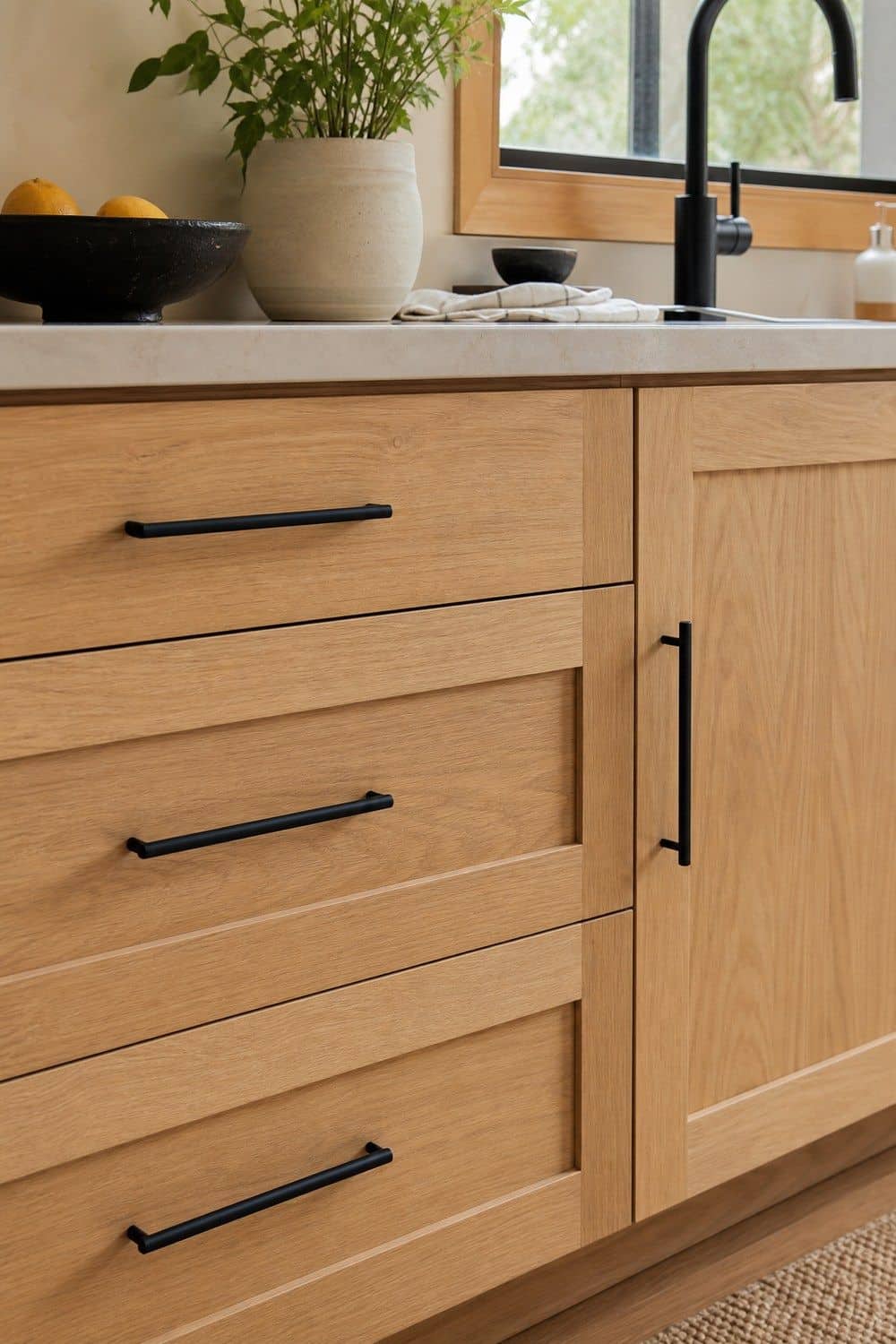
Slim black pulls are the easiest way to add contrast without making white oak cabinets feel heavy. Choose simple bars, edge pulls, or narrow knobs with a satin or matte finish, then repeat them consistently across doors and drawers.
The scale matters more than the trend. Oversized hardware can chop up the grain, while a thin pull gives the cabinet a clean line and still feels comfortable in daily use. Check the grip before buying, because pretty hardware still needs to work with wet hands.
3. Soft Black Faucet at the Sink
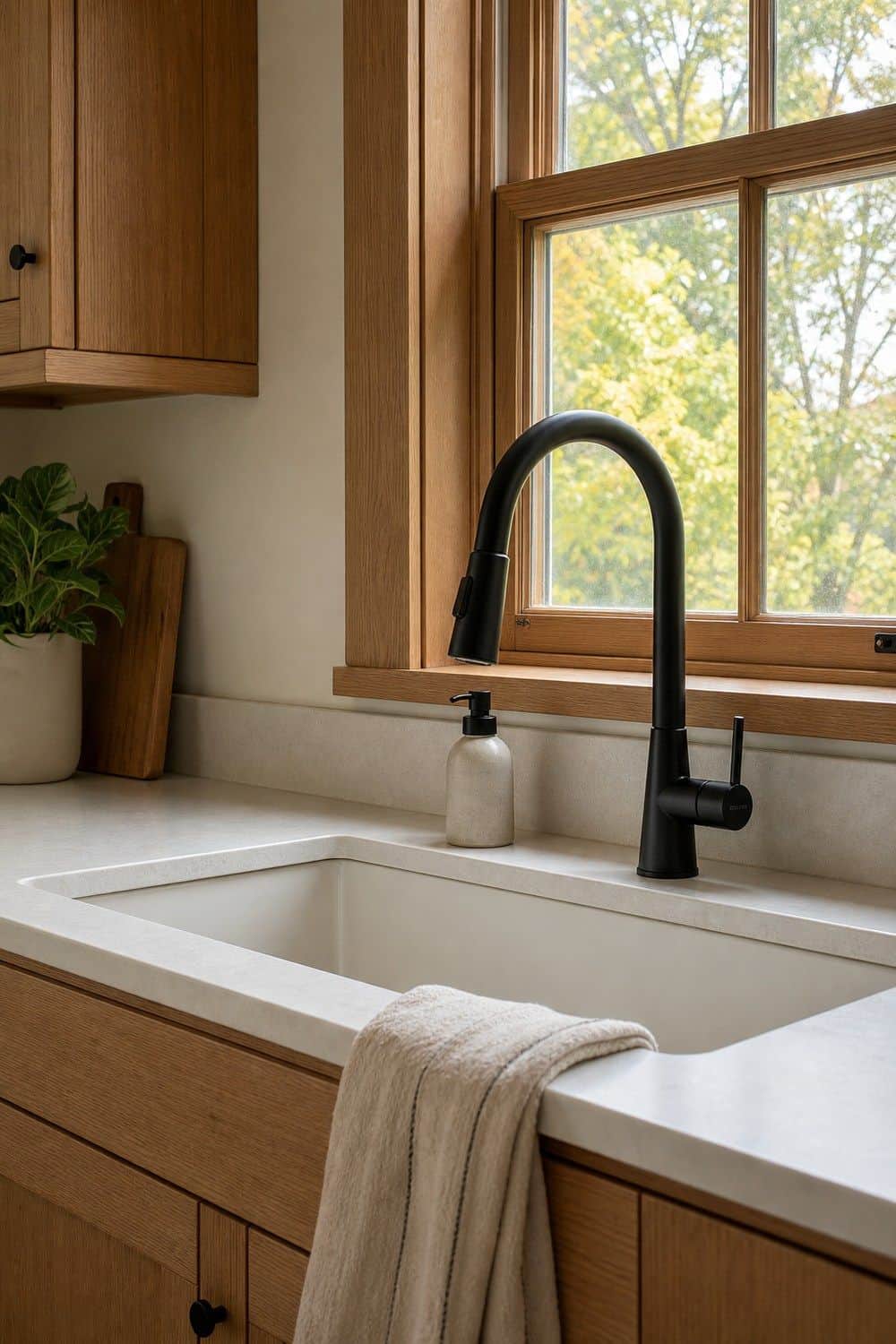
A soft black faucet can anchor the sink wall beautifully, especially when the surrounding cabinets or shelves are white oak. Look for a finish that reads satin rather than shiny, because glossy black shows water spots and can feel harsher beside warm wood.
Let the faucet be the dark note at the sink instead of adding black soap pumps, black trays, and black accessories all at once. If the sink wall already has dark tile, keep the counter pieces light.
A little breathing room makes the fixture look chosen, not crowded. That restraint is what keeps the sink area elegant, especially when the faucet is visible from the main doorway.
4. Black Island Base
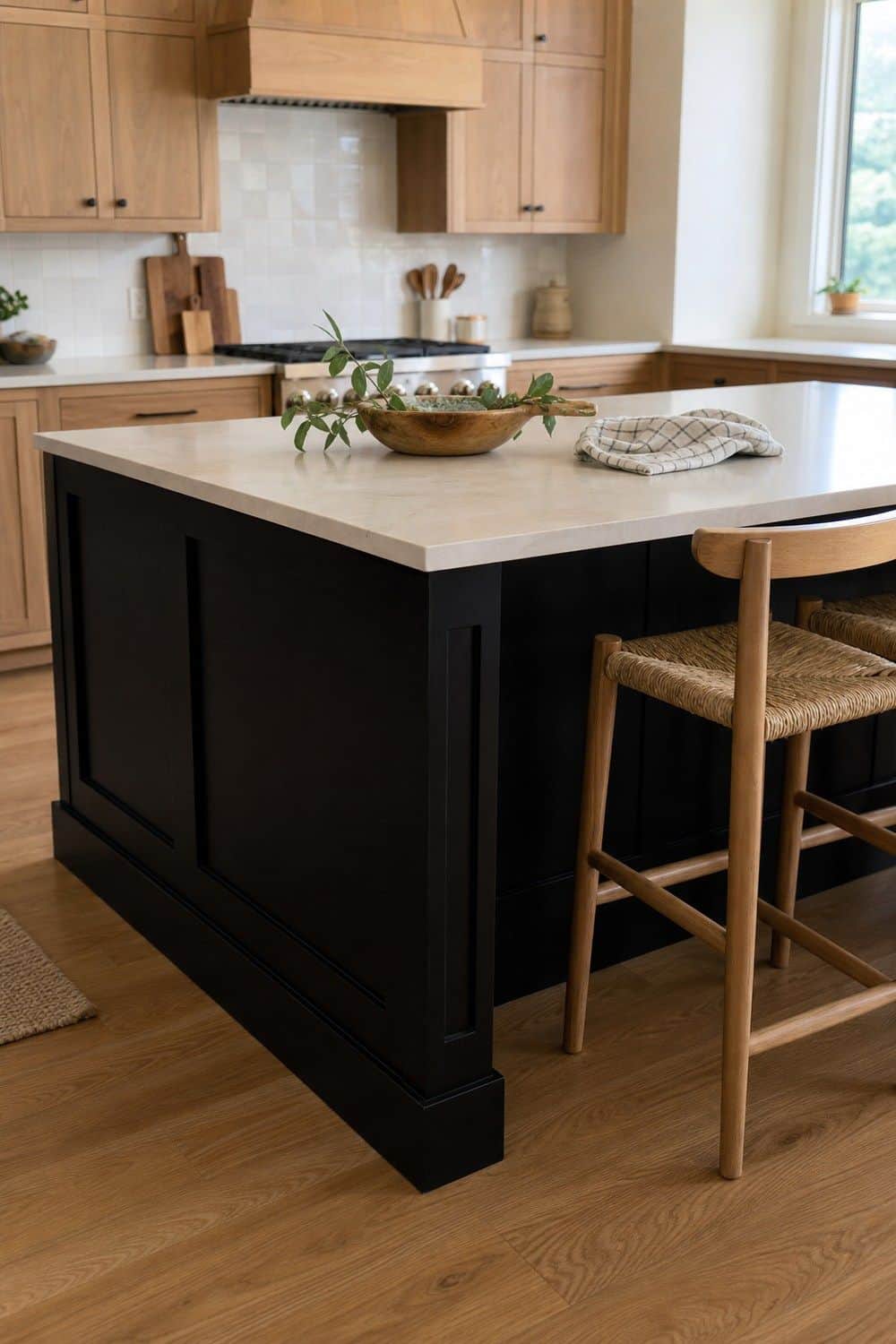
A black island base gives the kitchen weight while letting white oak stay warm around the perimeter. This works especially well when the island is large enough to feel like furniture, not just another row of cabinets. Keep the countertop lighter if you want the island to feel grounded but not bulky. Add oak stools, a wood tray, or warm pendant light so the black base does not feel isolated. Leave the toe kick simple for a cleaner line around the floor.
5. Black Lowers With White Oak Uppers
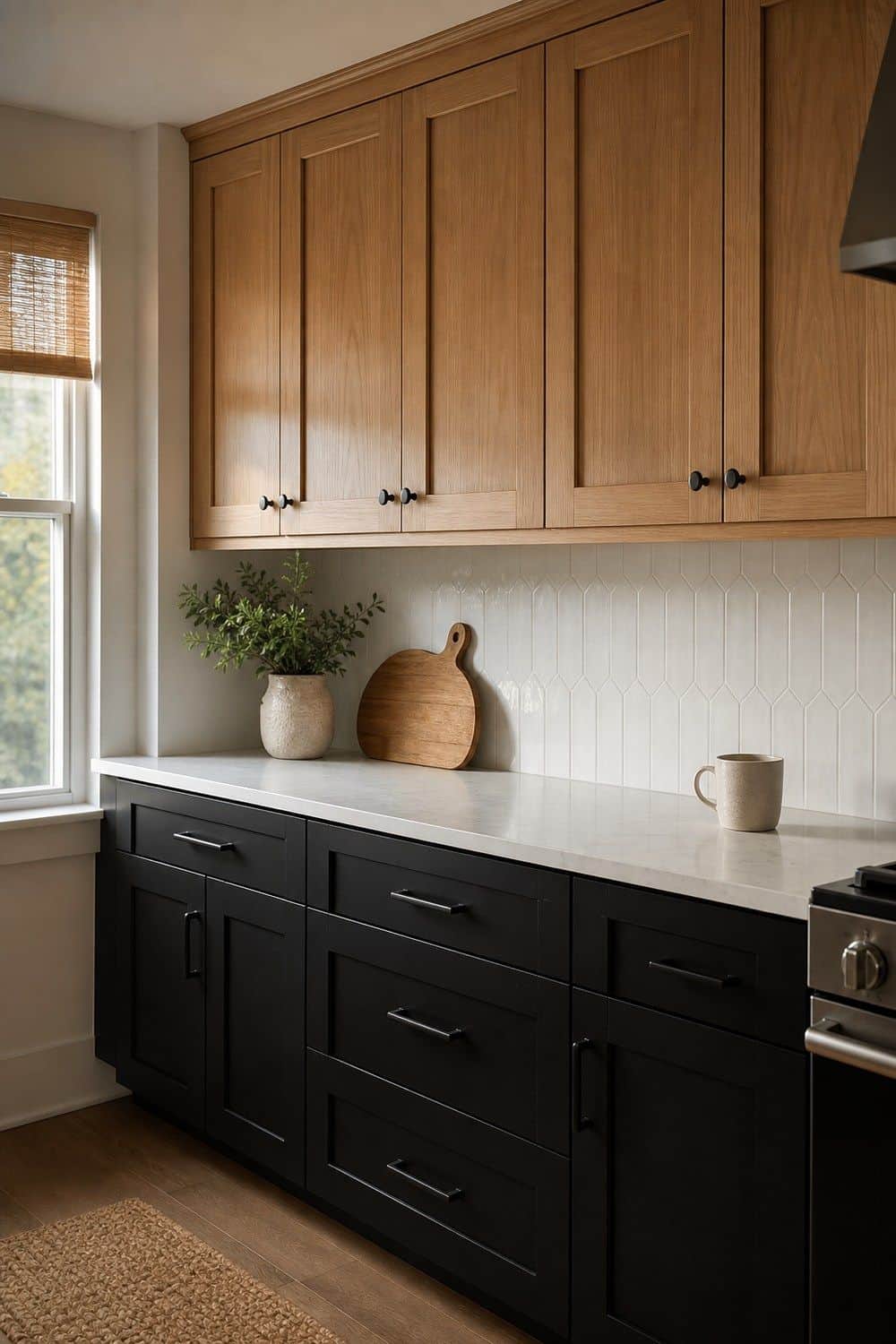
Black lower cabinets and white oak uppers can look rich when the room has enough light. The black lowers hide scuffs and give the kitchen a strong base, while the oak above keeps the upper half from feeling closed in.
Use a light backsplash between them so the two finishes have a pause. Warm white tile, creamy quartz, or a pale stone slab can keep the contrast from feeling too sharp. That middle layer is what makes the palette feel designed rather than split in half.
6. Black Range Hood Above White Oak
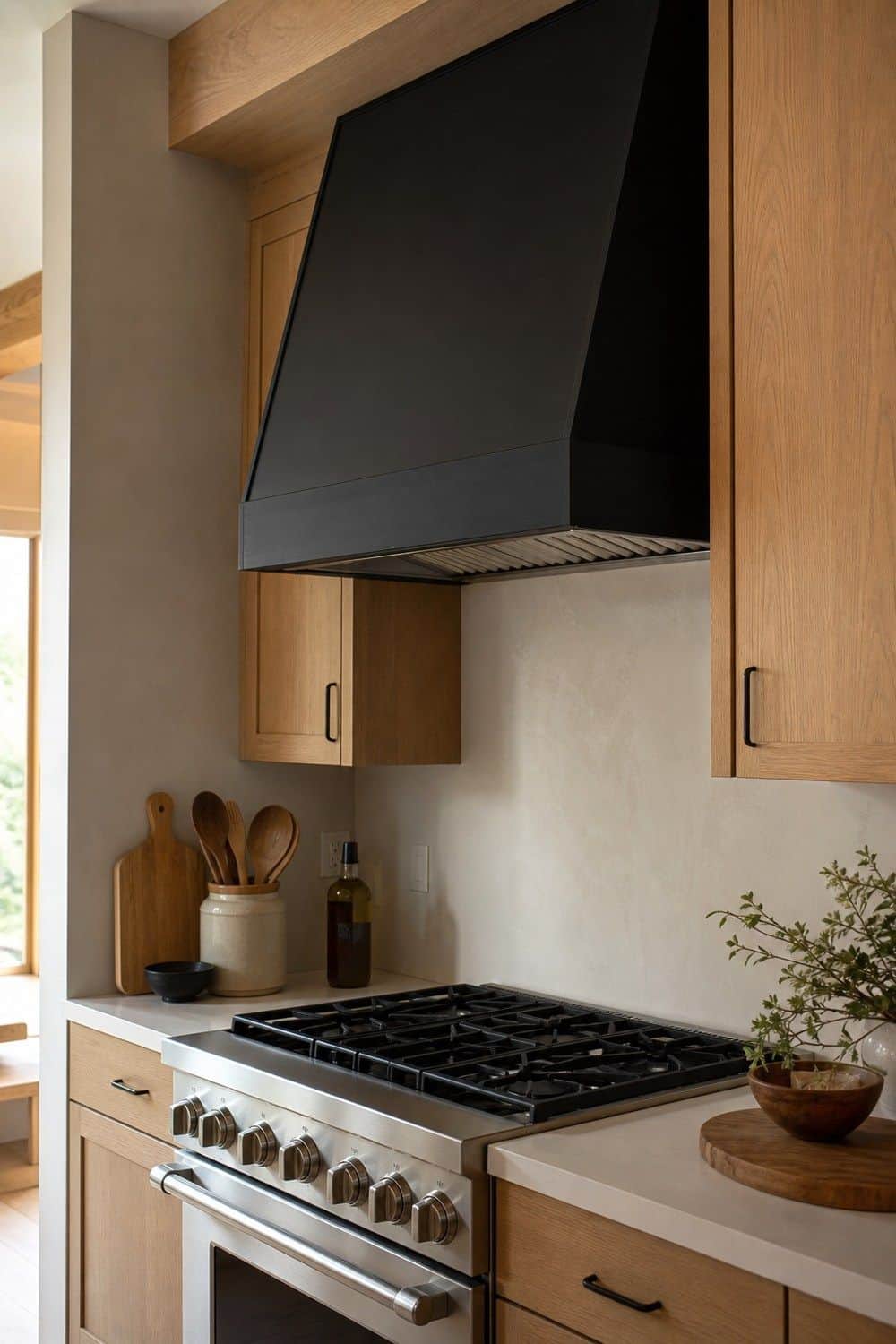
A black range hood can become the strongest shape in the kitchen, so treat it like an architectural feature. It looks best when the surrounding cabinets, shelves, or backsplash stay quieter and let the hood hold the center. If the hood is wide, keep nearby black accents slim.
Black pulls, a faucet, or a pendant can echo the color without making every surface dark. The goal is structure, not heaviness, especially over warm oak cabinets or shelving nearby in the same sightline.
7. Oak Shelves on a Dark Tile Wall
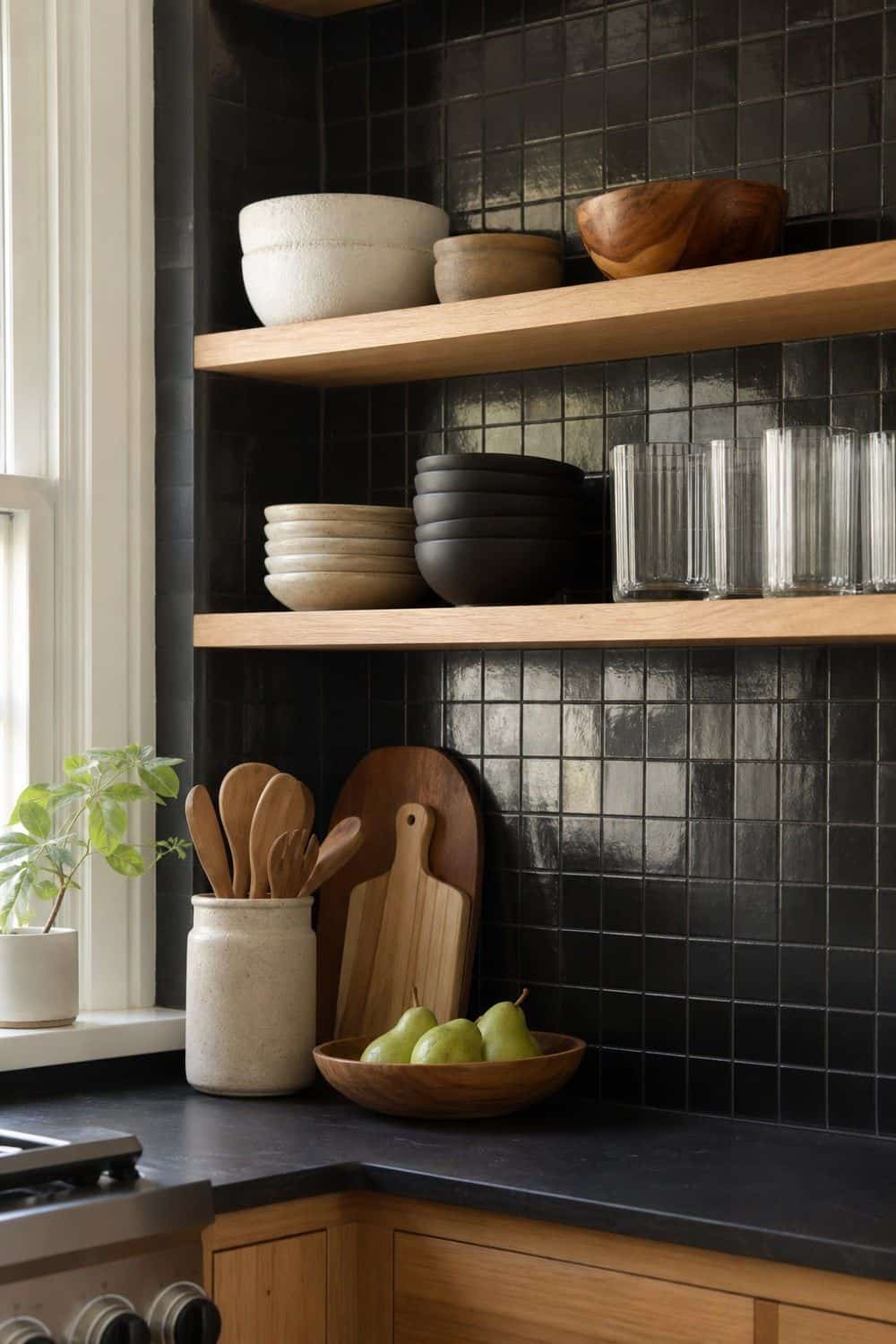
White oak shelves across a black backsplash create a gorgeous layered wall, but the shelves need enough thickness to look planned. Thin shelves can disappear against dark tile, while a slightly chunkier profile shows off the oak grain.
Keep the styling light with white dishes, clear glass, a small plant, or a few everyday bowls. Too many dark objects can make the shelf wall feel heavy fast, so let the black backsplash do most of the work.
The oak should soften the black, not become another crowded display zone. Leave some open shelf space so the contrast can breathe and the useful pieces stay easy to reach.
8. White Oak Shelves With Black Brackets
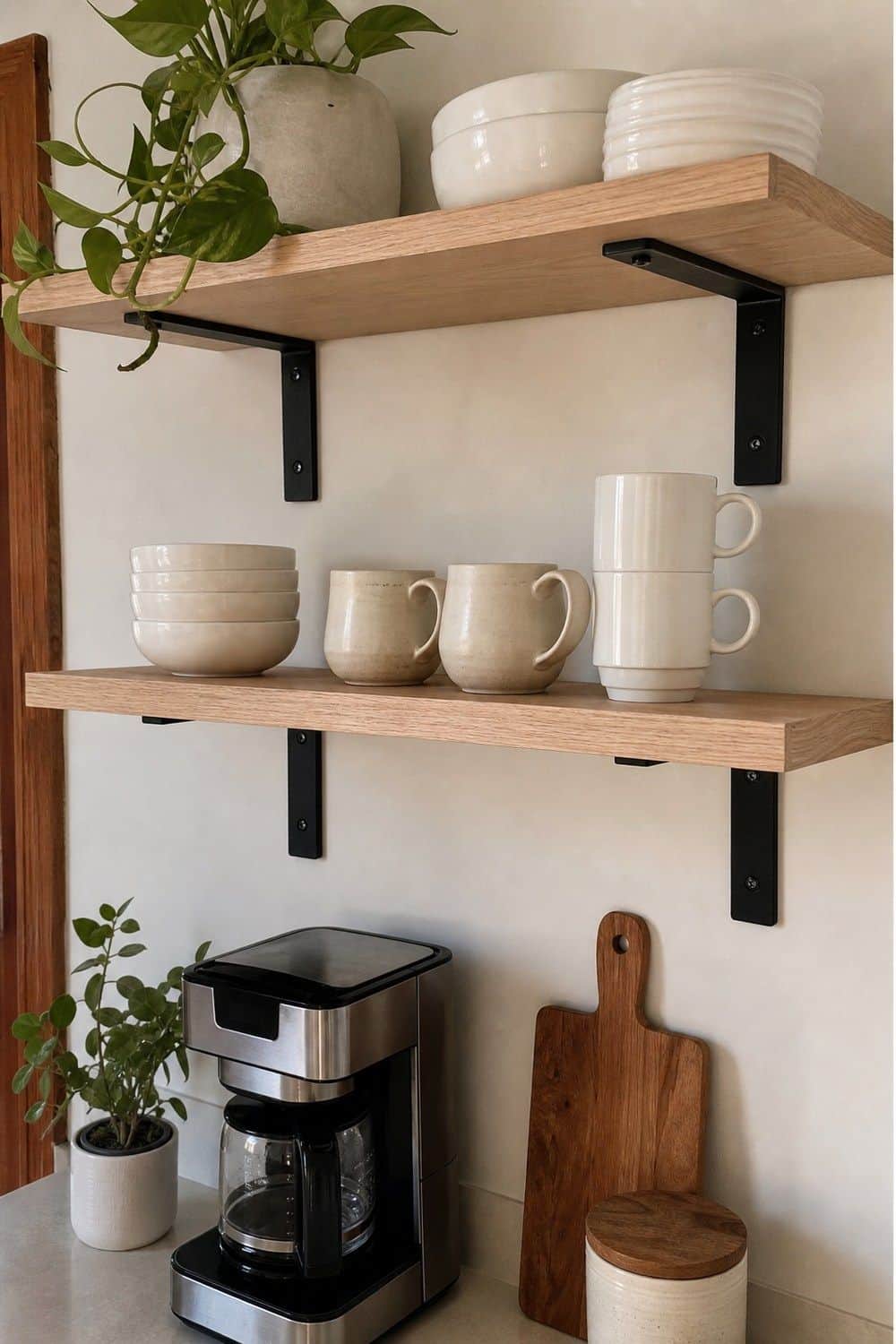
Black brackets are a smaller way to bring contrast to open shelving. They look strongest when the bracket shape is clean and sturdy, not overly decorative. Pair them with simple white oak shelves and give each shelf a real job: daily plates, glassware, mugs, or serving pieces.
If the brackets are visually strong, keep the shelf styling calm so the wall does not look busy. The contrast should feel useful and tailored, not like extra decoration added late afterward to fill space.
9. Black Pantry Wall Beside White Oak
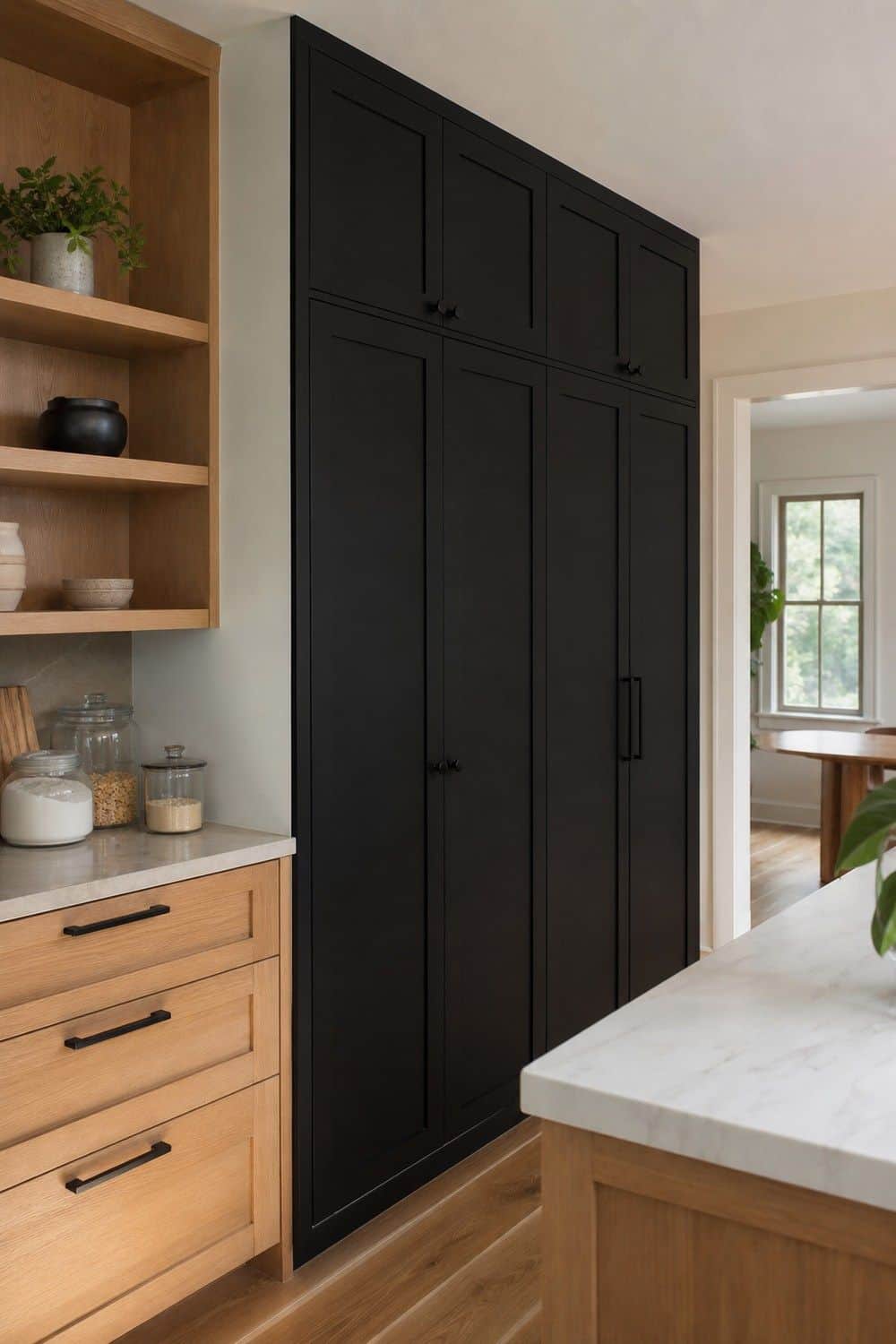
A black pantry wall can make white oak cabinets feel even warmer by comparison. Use it on tall storage, a built-in appliance wall, or a recessed pantry zone so the dark color has a clear boundary.
The best version has simple doors, quiet handles, and good lighting nearby. A tall dark wall needs soft light so it reads as depth, not a blank block.
If the pantry wall faces a window or light floor, the black will feel dramatic rather than flat. Keep the neighboring oak uncluttered so both finishes can stand on their own.
10. White Oak With Creamy Quartz Counters
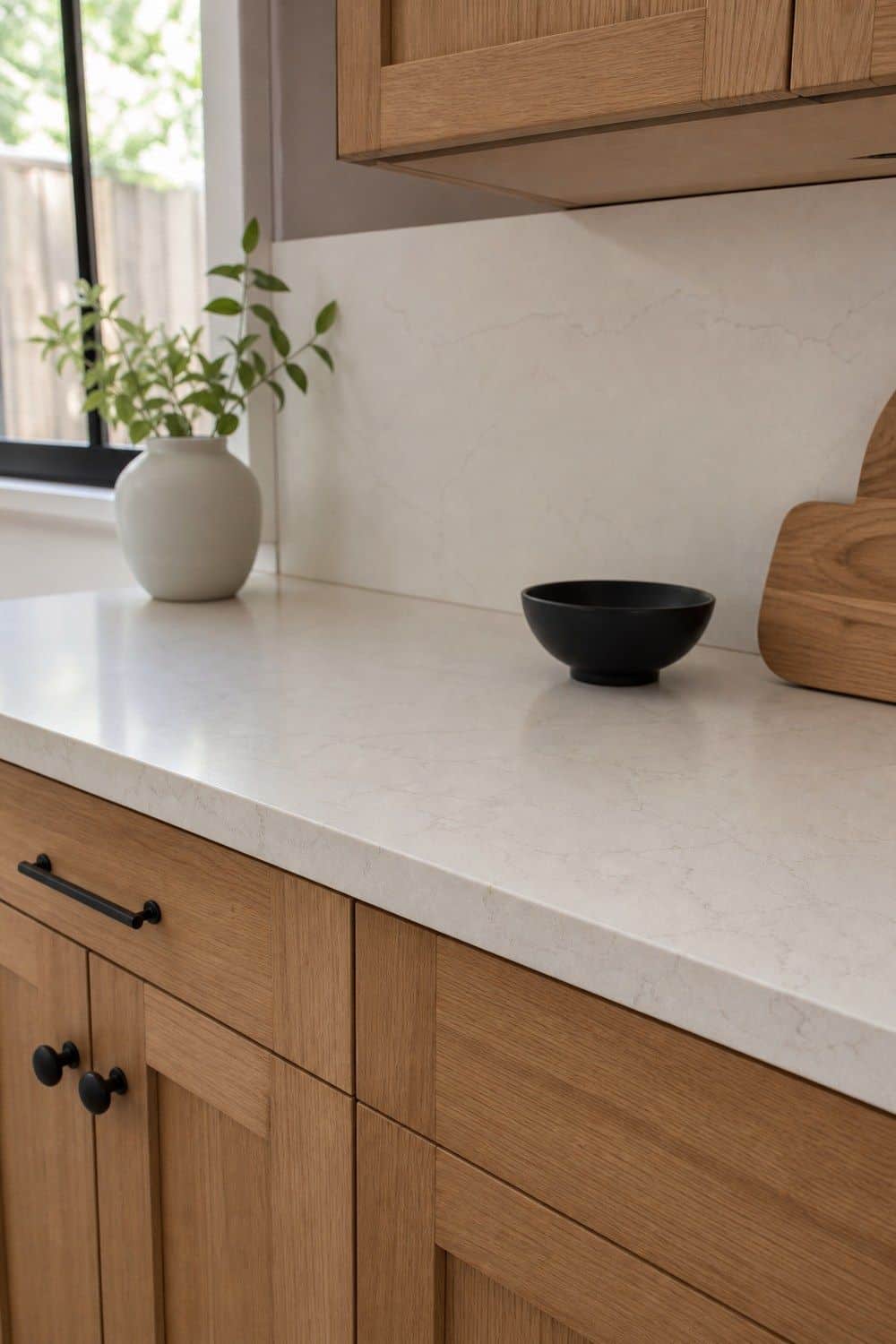
Creamy quartz is a soft bridge between white oak and black accents. It keeps the room bright, supports the warmth in the wood, and gives black hardware or lighting a clean place to land. Avoid counters that are too icy white if the oak is warm, because the contrast can make the cabinets look yellow. A faint warm vein or creamy base usually feels more natural and easier to live with. Test samples under evening light too, not only daylight.
11. Soapstone-Look Counters for Black Depth
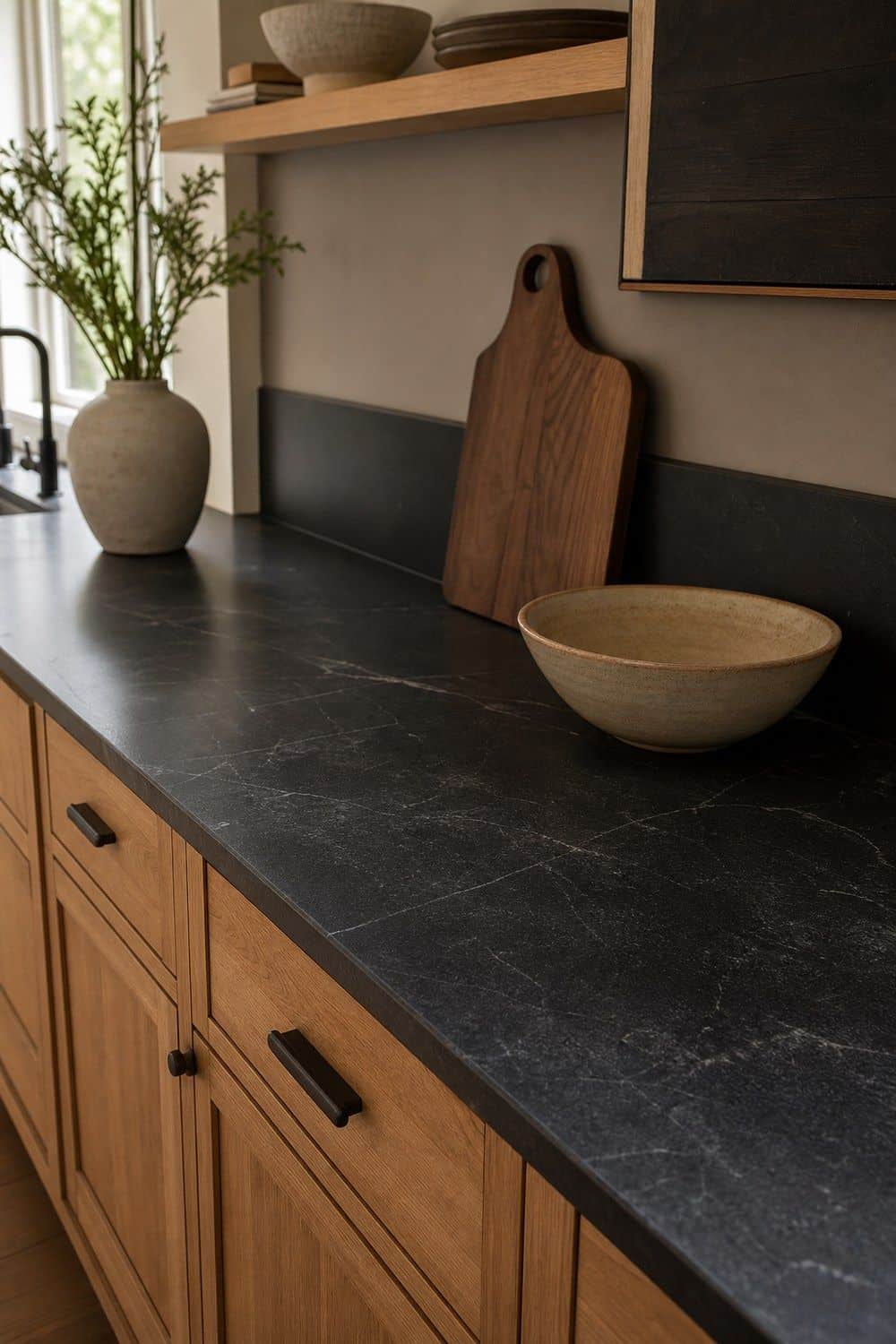
Soapstone-look counters add depth without requiring every cabinet to be black. The dark counter sits beautifully under white oak, especially when there is enough backsplash, wall color, or natural light to lift the room.
Choose a honed or satin finish if you want the kitchen to feel quiet and organic. A softer sheen pairs better with wood grain than a polished black surface.
A few pale dishes or wood boards on the counter can soften the darkness in everyday life. Keep the counter styling sparse so the material still feels calm.
12. Warm White Zellige Between Oak and Black
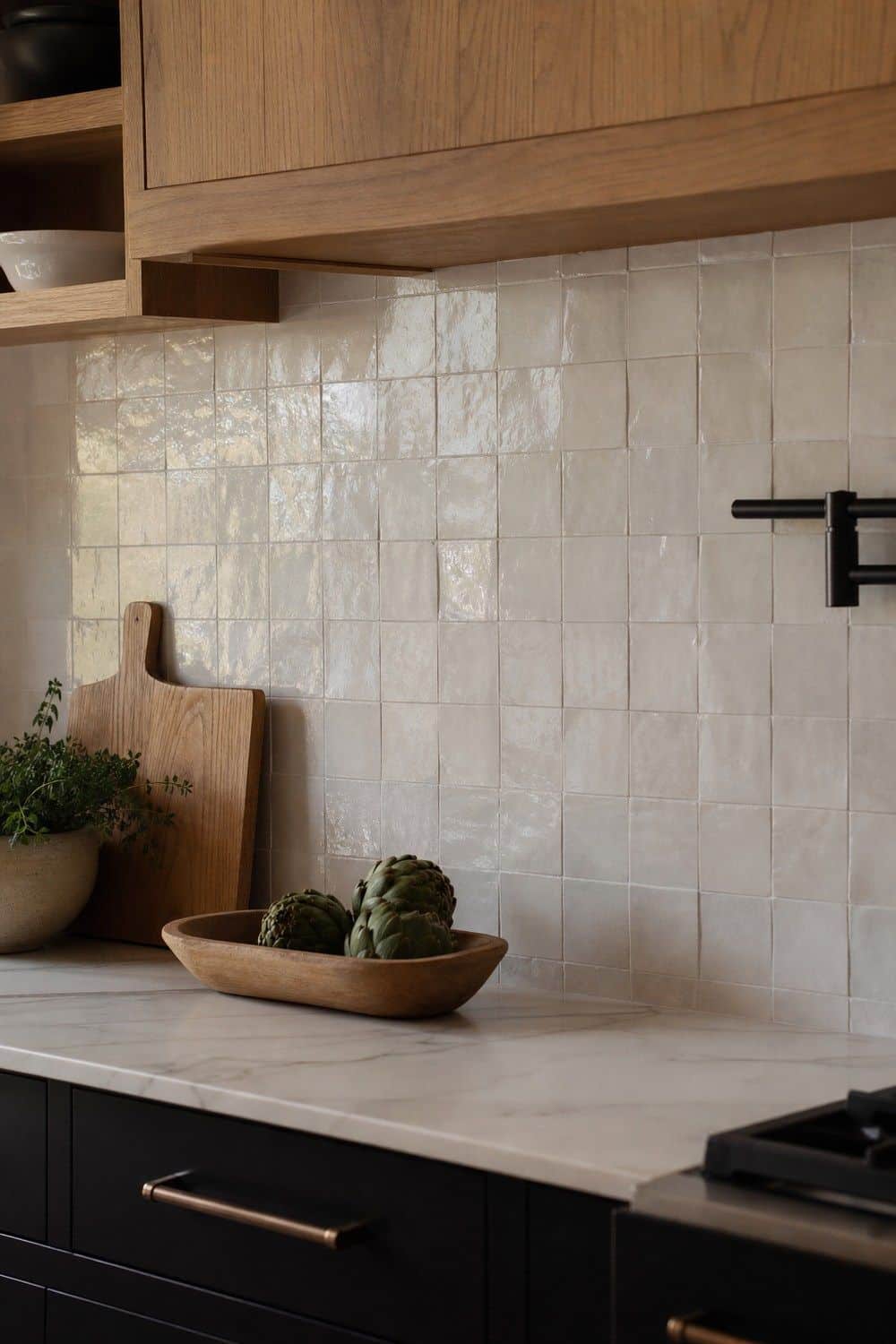
Warm white zellige tile is a lovely buffer between oak grain and black details. The uneven surface catches light, which keeps the kitchen from feeling too flat or graphic. Use it behind the range, around open shelves, or as a full backsplash if the room needs softness.
The handmade texture pairs well with natural wood, while the pale color stops black pulls, faucets, and lighting from feeling too severe. Choose warm grout for a softer finish between tiles too, especially near oak shelves.
13. Veined Stone Slab Backsplash
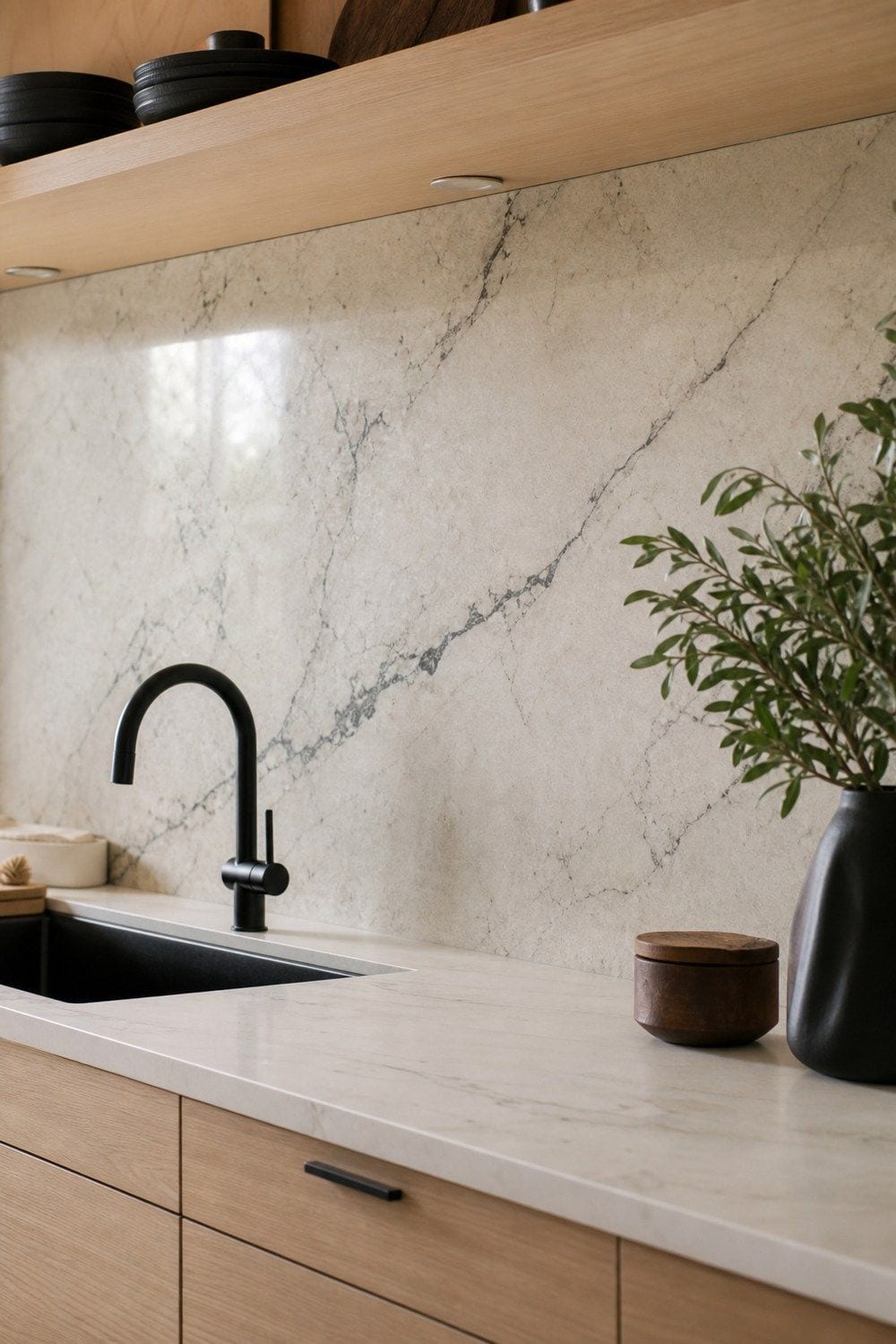
A slab backsplash with black veining can tie oak cabinets and black hardware together in one move. Look for veining that feels loose and natural rather than too sharp or printed. If the stone is busy, keep the cabinet hardware slim and the lighting simple.
The slab should feel like a bridge, not another competing statement. If the veining is bold, let the rest of the wall stay quiet and skip extra dark shelf styling.
Let a few oak cutting boards or white dishes repeat the warmer side of the palette. Those small repeats keep the stone from feeling detached from the rest of the kitchen.
14. Black Linear Pendants Over Oak Seating
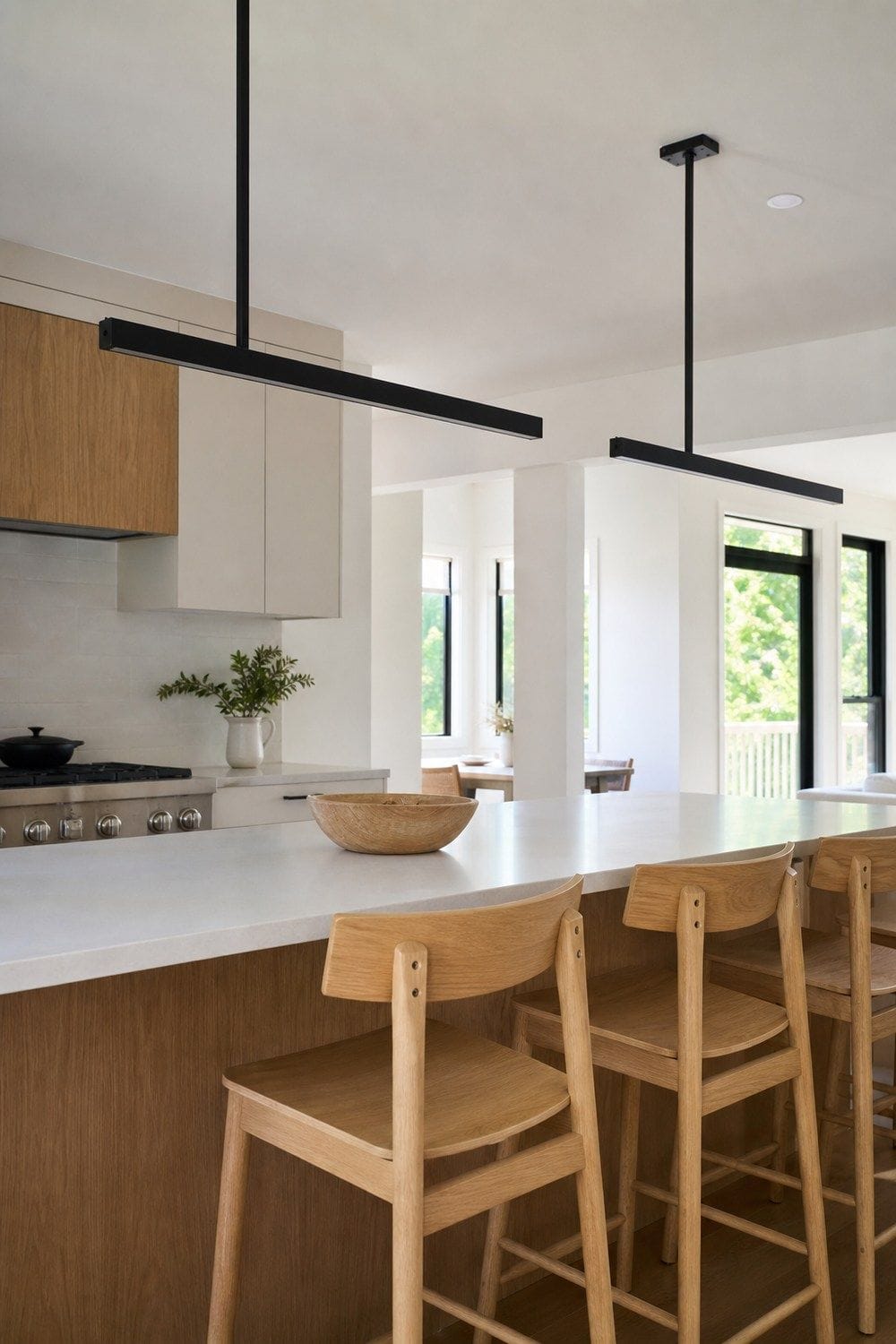
Black linear pendants look crisp over an island with white oak stools or an oak waterfall end. They draw a clean line through the room and can make the ceiling feel more finished. Keep the bulbs warm, not cool white, because cold light can drain the oak of its softness. If the pendants are long, choose quieter cabinet hardware so the room has one main black gesture instead of several loud ones. Hang them low enough to feel connected to the island.
15. Warm Under-Cabinet Light on Oak Grain
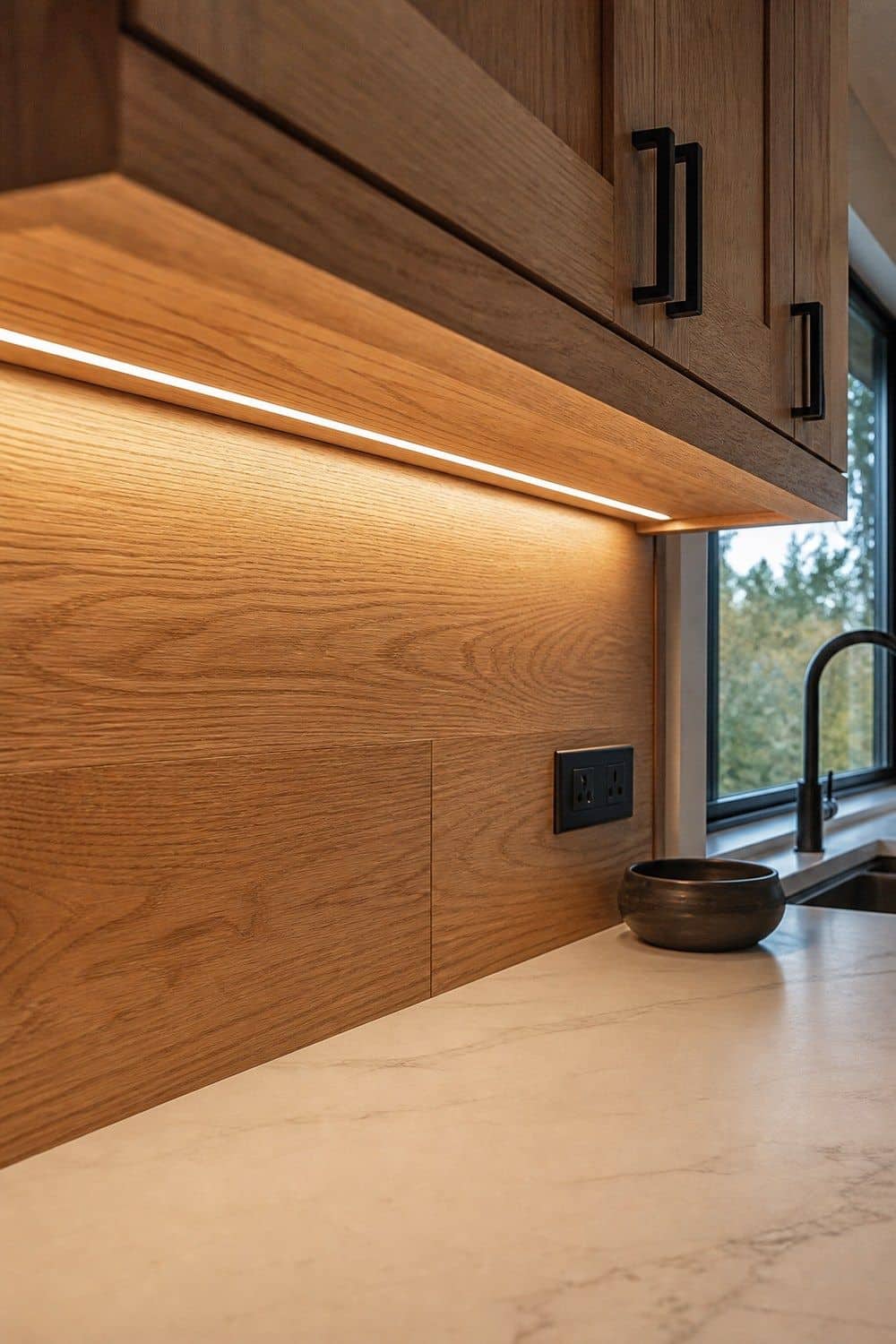
Warm under-cabinet lighting makes white oak grain look richer and keeps black accents from feeling stark at night. Use a warm temperature and place the light so it washes the backsplash and counter evenly.
This matters most in kitchens with black counters, black tile, or a dark hood. Without warm light, those finishes can flatten out after sunset and make the oak look dull.
Good lighting lets the black feel moody and deliberate, while the oak still feels alive. It is one of the quiet details that changes the whole room after dinner.
16. White Oak Counter Stools With Black Frames
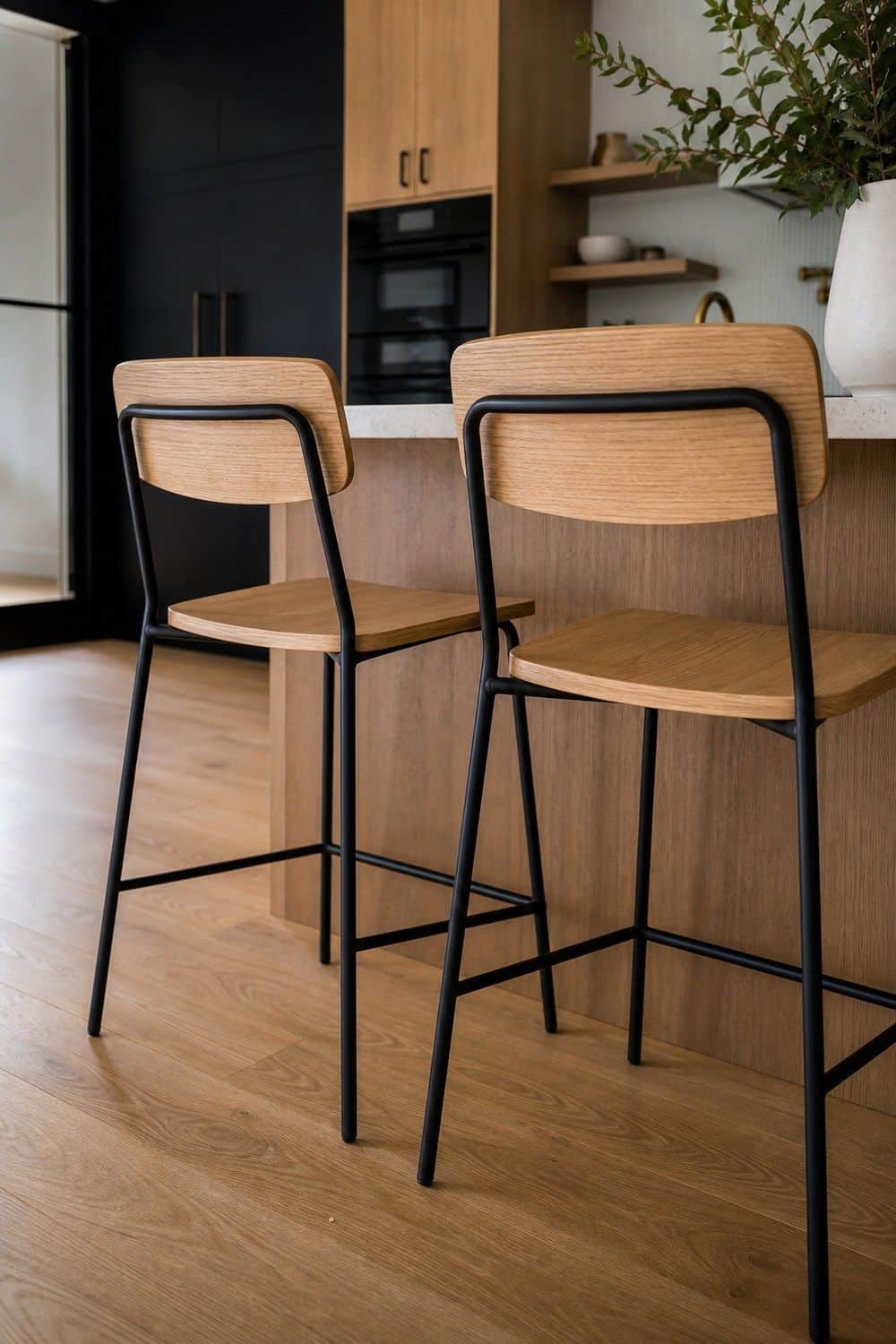
Counter stools are a practical place to repeat both finishes. A white oak seat with a black metal frame can echo the cabinets and hardware without adding another built-in decision. Check the undertone of the seat against the cabinets before buying, because oak finishes can shift yellow, pink, gray, or honey.
Keep the stool shape simple so the island still feels open. Comfortable foot rails matter more than a trendy silhouette, especially for everyday meals and coffee breaks at the counter.
17. Black Window Trim Without Dark Cabinets
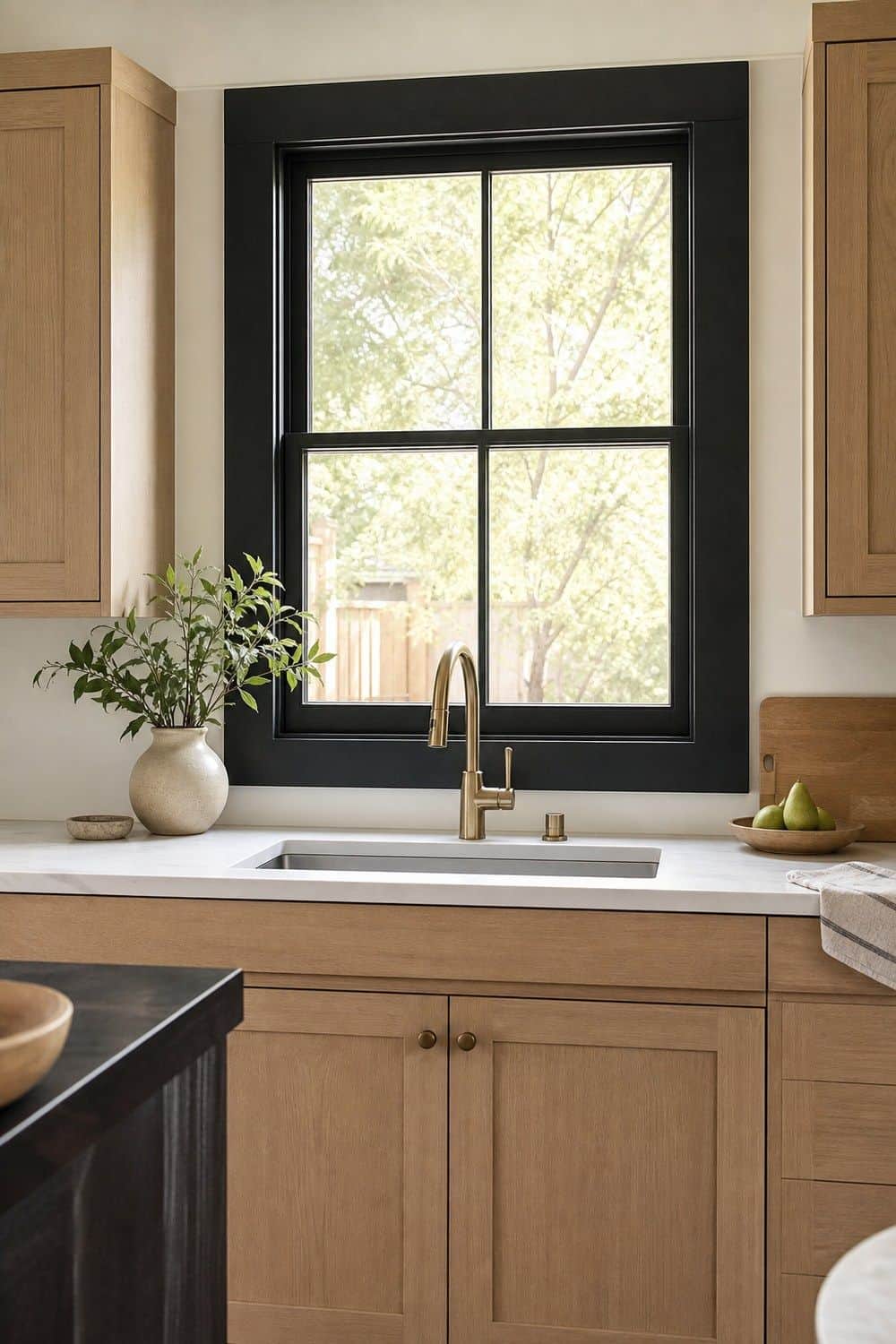
Black window trim can add contrast even if you keep every cabinet in white oak. It frames the view, sharpens the architecture, and gives the room a dark line that is not attached to storage. This works especially well with pale counters and natural wood floors.
If the trim feels too strong, repeat black once in a faucet or pendant. That small echo helps the room feel balanced without adding dark cabinets or changing the main storage.
A little repetition keeps the window from looking like an accident. It also lets the oak remain the softer finish in the room, which is usually the prettier balance.
18. Black Outlet Covers on a Dark Backsplash
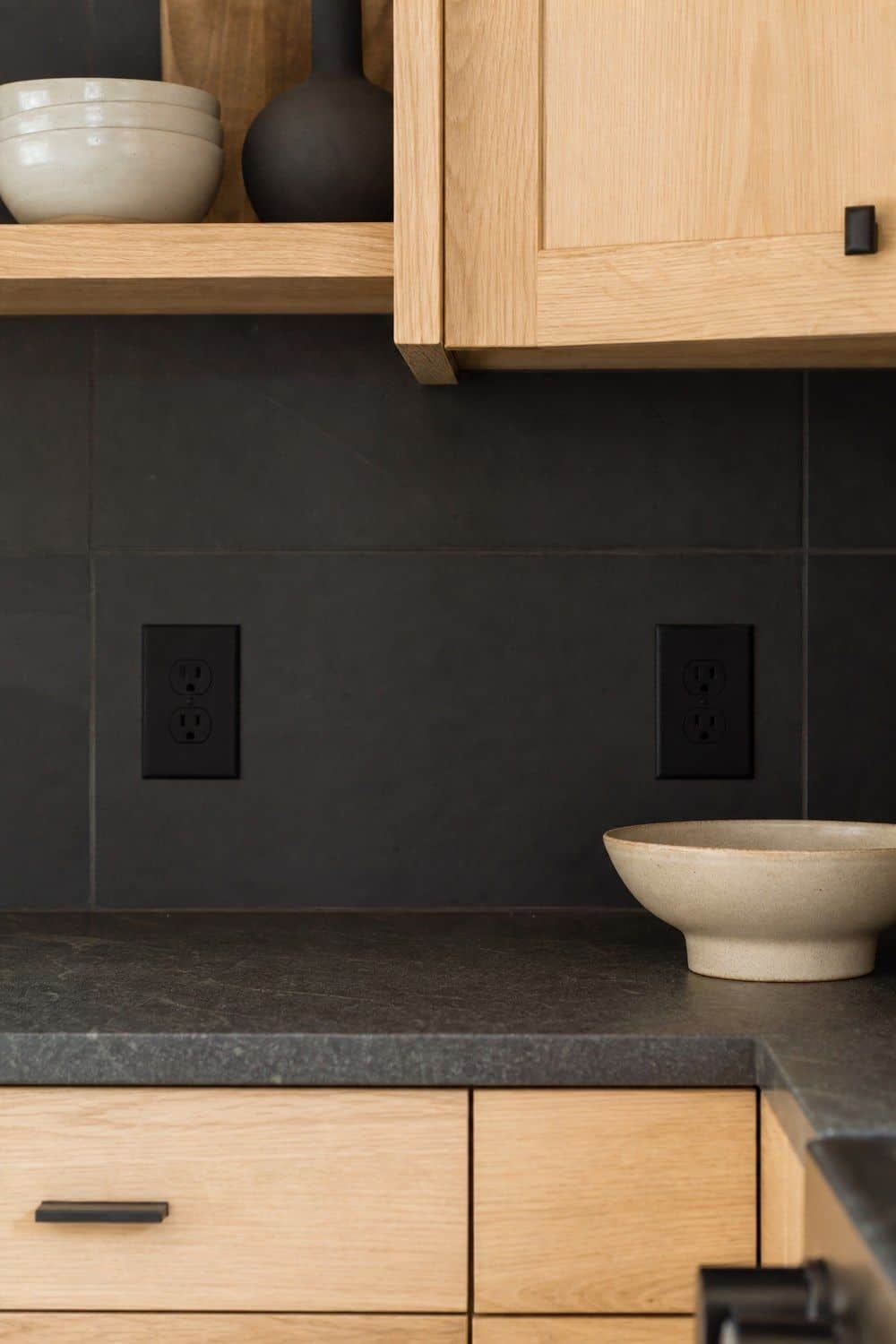
Black outlet covers can make a dark backsplash look cleaner, especially behind a coffee bar, range wall, or prep counter. The point is not to hide the outlets completely, but to avoid bright white rectangles interrupting the surface. Match the cover to the backsplash as closely as possible and keep the plate style simple.
If the backsplash is light, skip this and use a cover that blends with the tile instead. It is a small detail, but it matters when the wall is otherwise calm.
19. Brass With Black in Small Touches
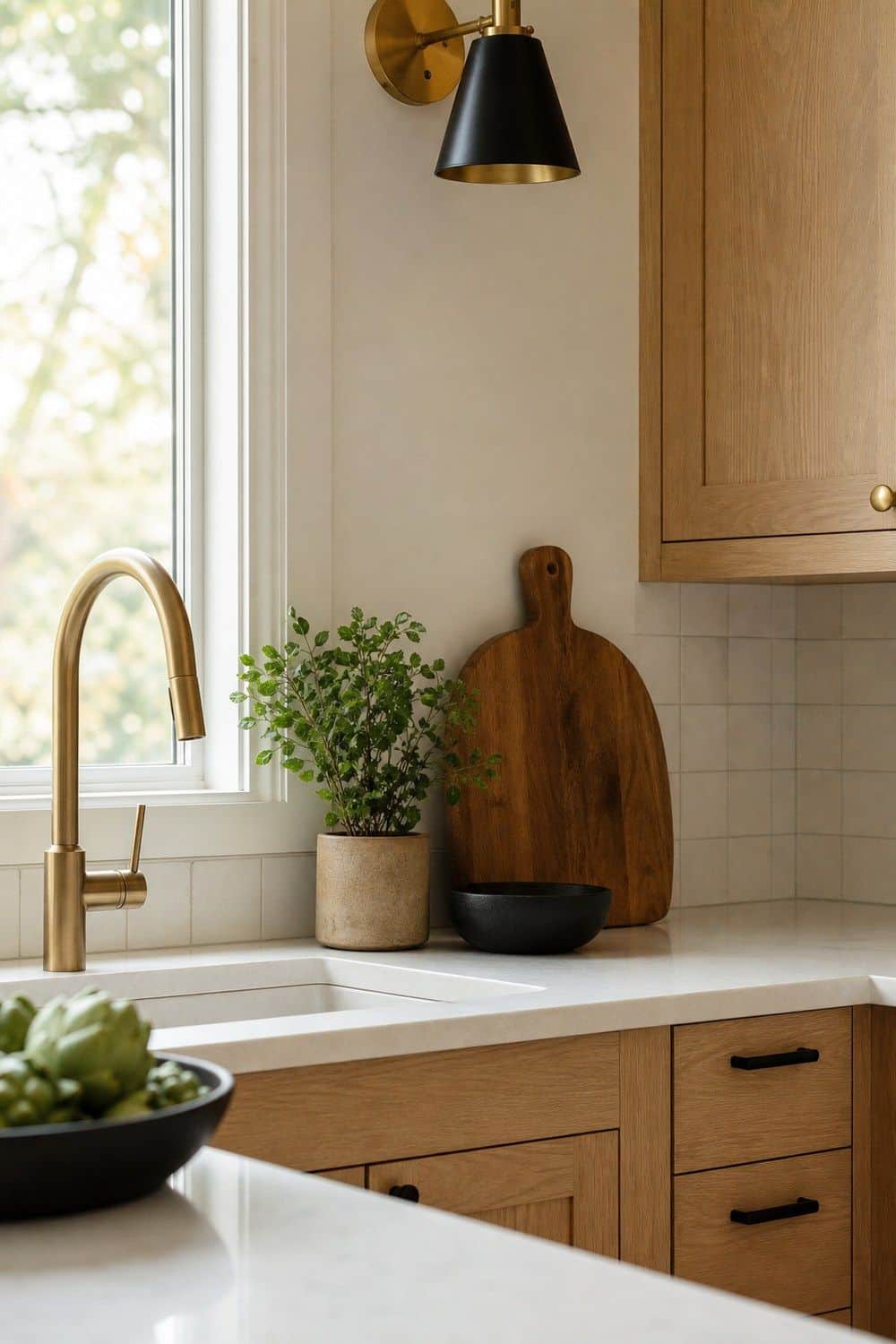
Brass can warm up this palette, but it belongs in small accents rather than becoming a third competing finish. Try brass inside pendant details, on a tray, in a picture frame, or as a tiny knob on a pantry cabinet.
Let black stay in charge of the contrast and white oak stay in charge of warmth. Brass should feel like a glint, not a whole new direction competing with both finishes.
When brass is limited, it feels collected and calm instead of busy. Repeat it only where the room needs a little softness, such as lighting or small accessories.
20. Neutral Runner Between Oak and Black
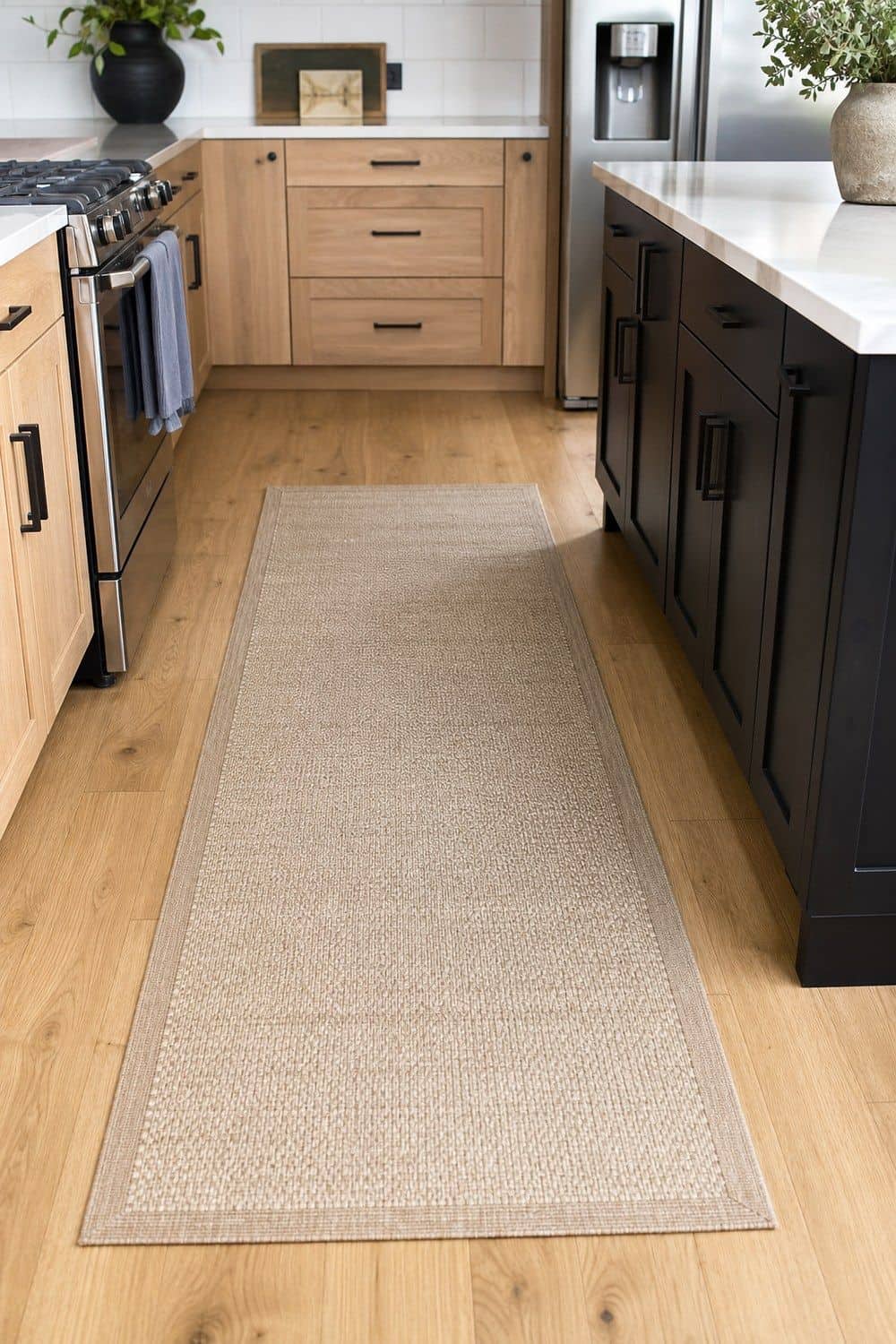
A neutral runner can soften the hard edges that often come with black and wood kitchens. Choose oatmeal, cream, charcoal, or a quiet stripe that relates to the cabinet and counter tones. Place it in the main walkway where it will actually help underfoot, not just fill a photo. Washable materials are easiest in a kitchen. The runner should calm the contrast and add texture without becoming the loudest pattern in the room. Keep the edges clear of appliance doors.
21. Black Stoneware on White Oak Shelves
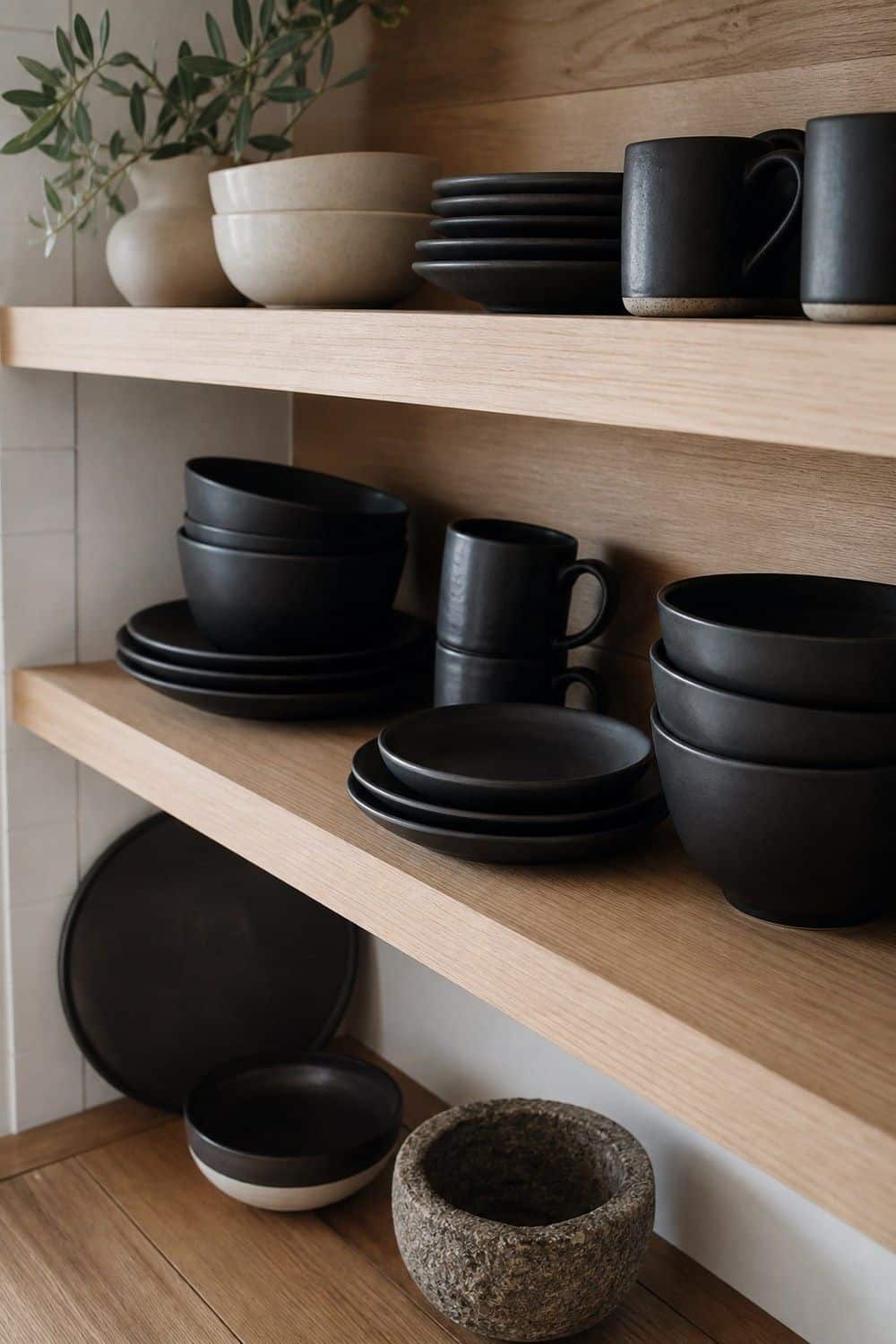
Black stoneware looks beautiful on white oak shelves, but it needs open space around it. Stack a few bowls or mugs together rather than scattering dark pieces across every shelf. Add white plates, clear glass, or a small wood object nearby so the display breathes.
This is one of the easiest ways to test the palette before choosing black tile or cabinets. If the shelves feel too dark, swap one stack for white plates or clear glasses instead of more black pieces.
22. Black Counter Essentials on White Oak
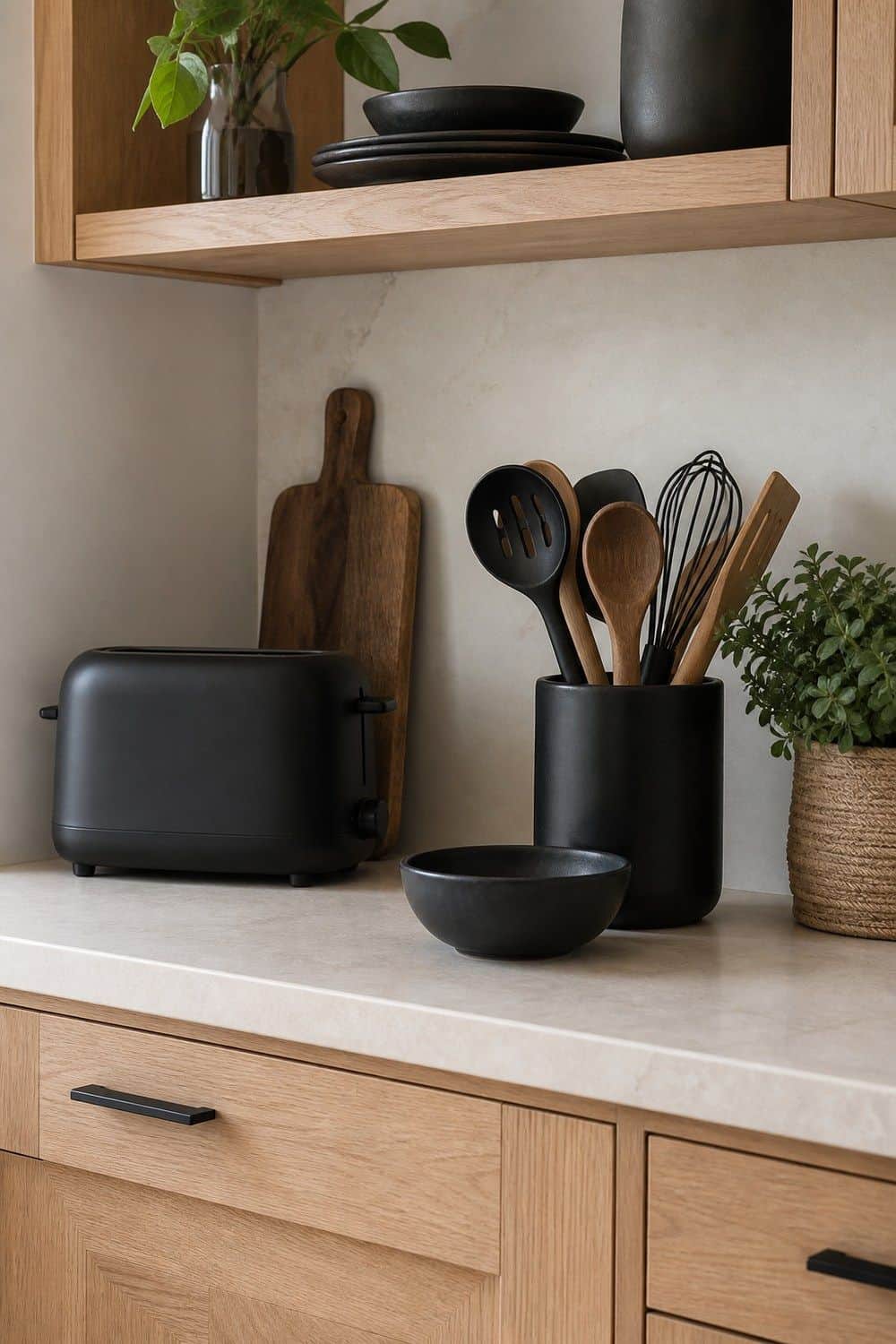
Black counter essentials can look polished when they are grouped instead of scattered. Put the pepper grinder, oil bottle, utensil crock, or coffee tools on a white oak tray or board. The wood base softens the black and makes the grouping feel like a station rather than clutter. Keep only the things you use daily. If the tray becomes a parking lot for random items, clear it back to the useful pieces. This trick works especially well near a coffee maker.
23. Black Peel-and-Stick Tile Behind a Coffee Bar
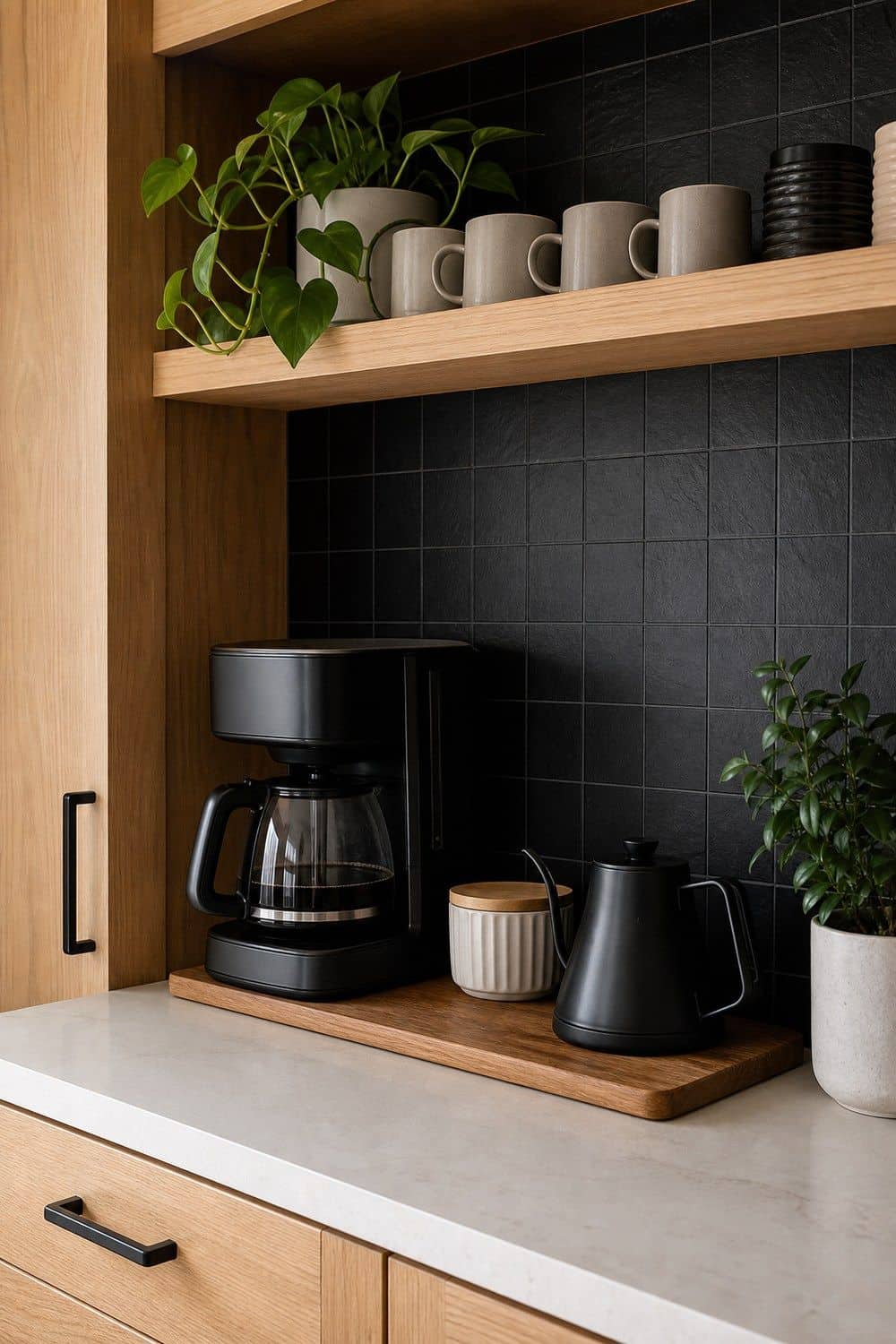
Black peel-and-stick tile can be a low-commitment way to test contrast behind a coffee bar or small alcove. Keep the area narrow so the black feels like a feature, not a sudden cave. Pair it with a white oak shelf, warm mugs, and a clear counter edge.
Clean the wall carefully before applying tile, and stop the pattern at a natural boundary. A shelf edge, cabinet side, or counter end will make the project look cleaner and more finished.
24. Satin Black Instead of Glossy Black
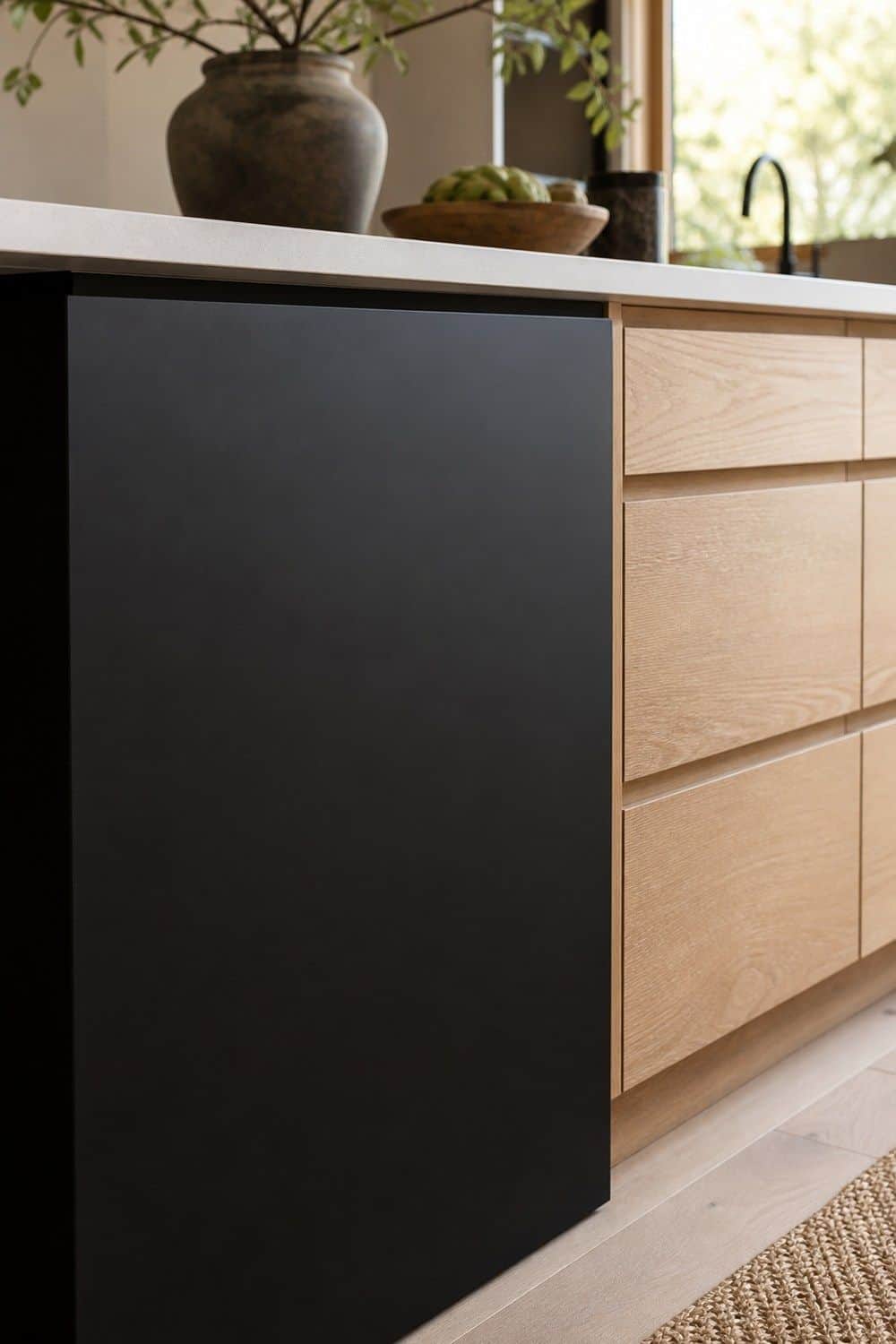
Satin black usually plays better with white oak than glossy black. It still gives contrast, but it does not bounce light in a way that makes the kitchen feel slick or harsh. Use satin or matte finishes for pulls, faucets, stools, lighting, and trim whenever possible.
Gloss can work on tile if the room needs reflected light, but keep it away from every surface. Too much shine can make the contrast feel colder and less connected to the oak grain.
25. Black-to-Oak Ratio Before Adding More
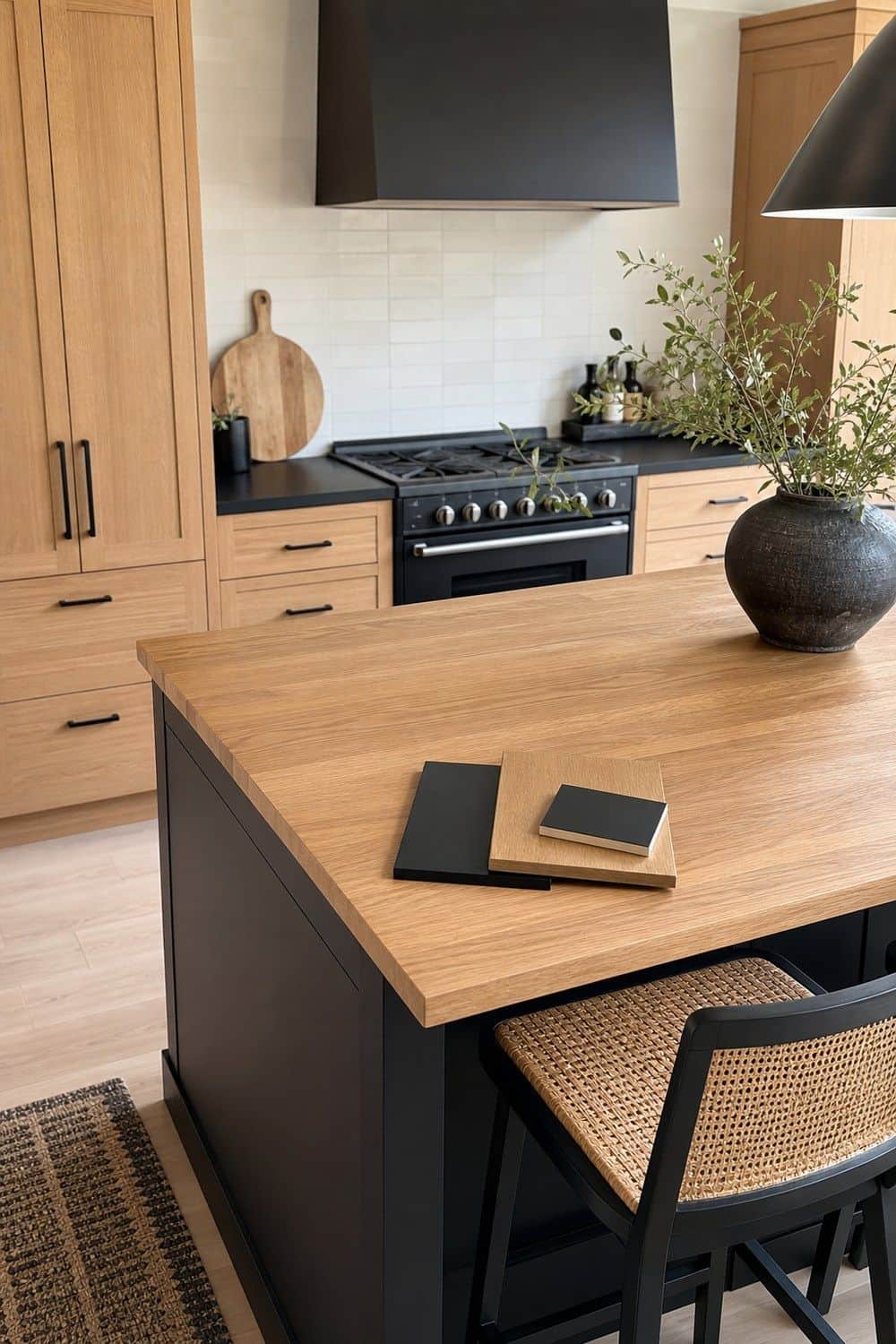
Before adding another black feature, stand in the doorway and look at the whole kitchen. If your eye jumps from hood to island to pendants to counters to stools without resting, the room may need more oak, cream, glass, or stone.
If the space feels too pale, one strong black moment can help. Try a pendant, island base, or range hood before changing every cabinet or adding dark tile.
The best balance usually comes from one major dark element, a few smaller repeats, and enough visible wood grain to keep everything warm. Stop when the room feels grounded, not boxed in or overly styled.
How to Balance White Oak and Black Finishes
Use white oak wherever you want warmth and black wherever you want structure. If the room has limited daylight, keep black to hardware, lighting, trim, or one grounded base. If the kitchen is bright and open, you can handle a darker island, hood, pantry wall, or counter.
Frequently Asked Questions
Does black go with white oak cabinets?
Yes, black works beautifully with white oak because it gives the warm wood a sharper edge. The key is restraint. Use black for hardware, lighting, a faucet, trim, a hood, or one cabinet zone rather than covering every surface with dark accents.
What countertop looks best with white oak and black?
Creamy quartz, warm white stone, soapstone-look counters, and slabs with soft black veining all work well. The best choice depends on how much contrast you want. Lighter counters keep the room airy, while darker counters add depth and drama.
How do I keep a black and oak kitchen from feeling too dark?
Keep black concentrated in a few clear places and give the room lighter breaks through counters, backsplash, walls, flooring, or open shelving. Warm lighting also matters. White oak needs light to show its grain, so avoid making every vertical surface dark.
What backsplash works with white oak cabinets and black hardware?
Warm white zellige, creamy tile, pale stone, slab backsplash, or black tile in a small feature area can all work. If the cabinets have strong grain, choose a quieter backsplash. If the cabinets are plain, a little texture can make the room feel more layered.
Should black hardware be matte or satin?
Satin or matte black is usually easier to live with than glossy black. It feels softer beside white oak and tends to look more natural in warm kitchens. Glossy black can show fingerprints and water marks more easily, especially on faucets and pulls.
Can I mix brass with black and white oak?
Yes, but keep brass small and considered. A little brass in lighting, frames, trays, or a few knobs can warm the palette. If brass, black, and oak all appear everywhere, the kitchen can start to feel busy instead of quietly layered.
Is white oak good for a modern kitchen?
White oak is excellent for modern kitchens because it adds warmth without needing ornate detail. Rift-cut or plain-sawn oak can both work, but straighter grain often feels calmer and more contemporary. Pair it with simple profiles, clean hardware, and good lighting.
What wall color works with black and white oak kitchens?
Warm white, soft cream, pale greige, muted taupe, and gentle stone tones usually pair well. Avoid cold gray if the oak has a honey or golden undertone. The wall color should support the wood and soften the black, not fight both finishes.
Final Thoughts
A white oak and black kitchen feels best when the contrast is calm, not forced. Let the oak bring warmth and movement, then use black to define the lines that matter most. With the right ratio, the room can feel modern, grounded, and still wonderfully livable.
Last update on 2026-09-18 / Affiliate links / Images from Amazon Product Advertising API